1. Reviving the Groovy Spirit: Bold Geometric Wallpaper Accent Walls
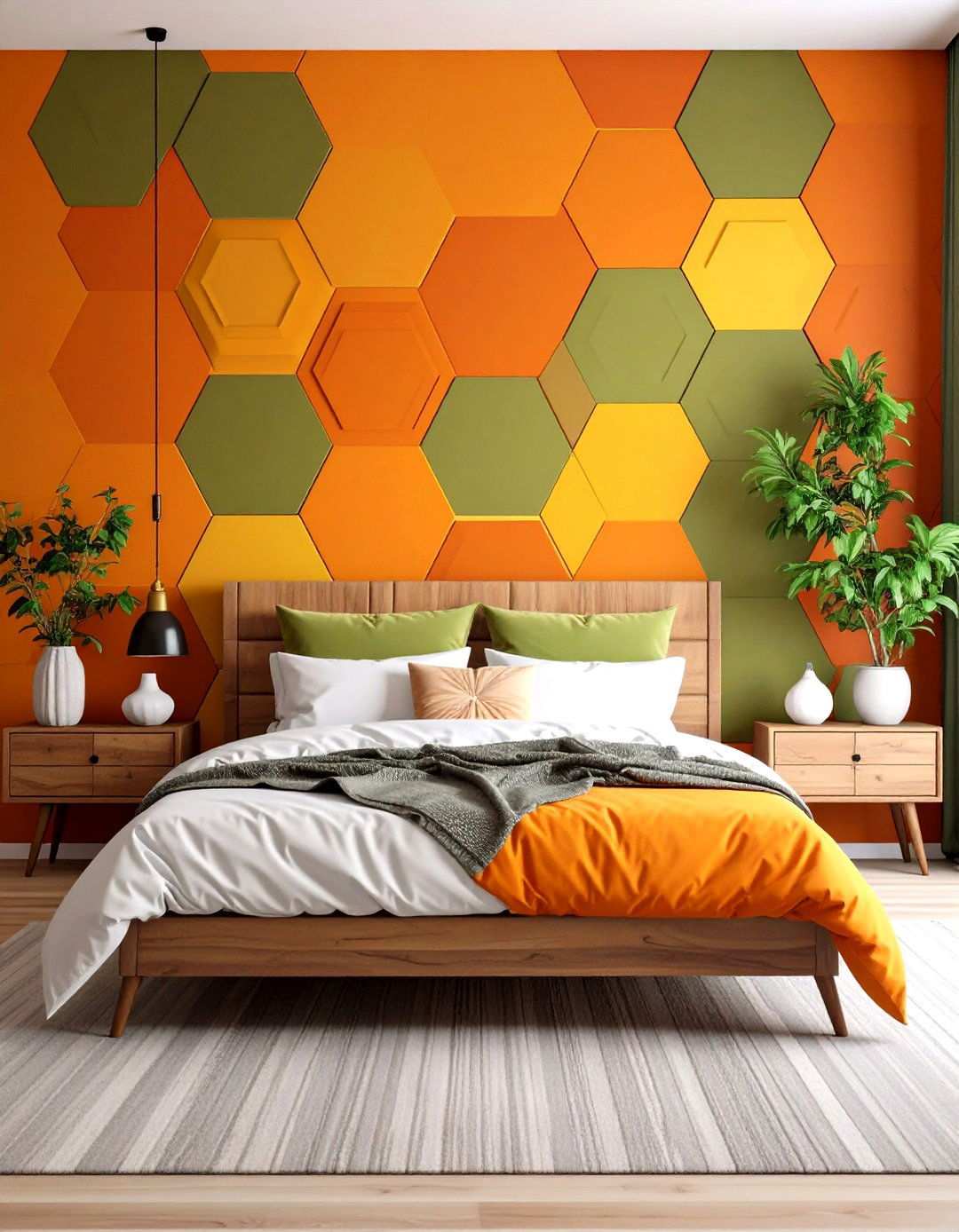
The 1970s bedroom decor trend was all about expressing oneself through bold, vibrant colors, luxurious textures, and unconventional patterns. As a result, designers of the era created spaces that were not only visually striking but also deeply personal, reflecting the free-spirited and eclectic nature of the decade. By embracing earthy tones and geometric patterns, homeowners could create warm and cozy ambiances that embodied the bohemian lifestyle. One of the standout features of 1970s decor is the use of shag carpets, velvet, and corduroy fabrics to create sensory-rich environments that were both comfortable and visually appealing. The decade’s design movement emphasized experimentation with color, pattern, shape, and texture, resulting in a look that continues to inspire contemporary interiors to this day.
Transform your bedroom into a retro oasis by incorporating bold, geometric wallpaper patterns in warm tones like burnt orange, mustard, and olive. By selecting one accent wall behind your headboard, you can create a focal point that instantly evokes the spirit of the 1970s. Pairing these eye-catching designs with neutral bedding allows the wallpaper to take center stage, while patterns featuring hexagons, diamonds, or abstract shapes capture the era’s psychedelic essence. Large, repeating patterns add energy and visual interest, while covering an entire room creates an immersive, nostalgic atmosphere. To balance bold wallpaper with simpler furnishings, consider pairing it with understated pieces to maintain an authentic seventies aesthetic that defines bedroom personality.

As an Amazon Associate I earn from qualifying purchases.
2. Luxurious Velvet Bedding and Throw Combinations
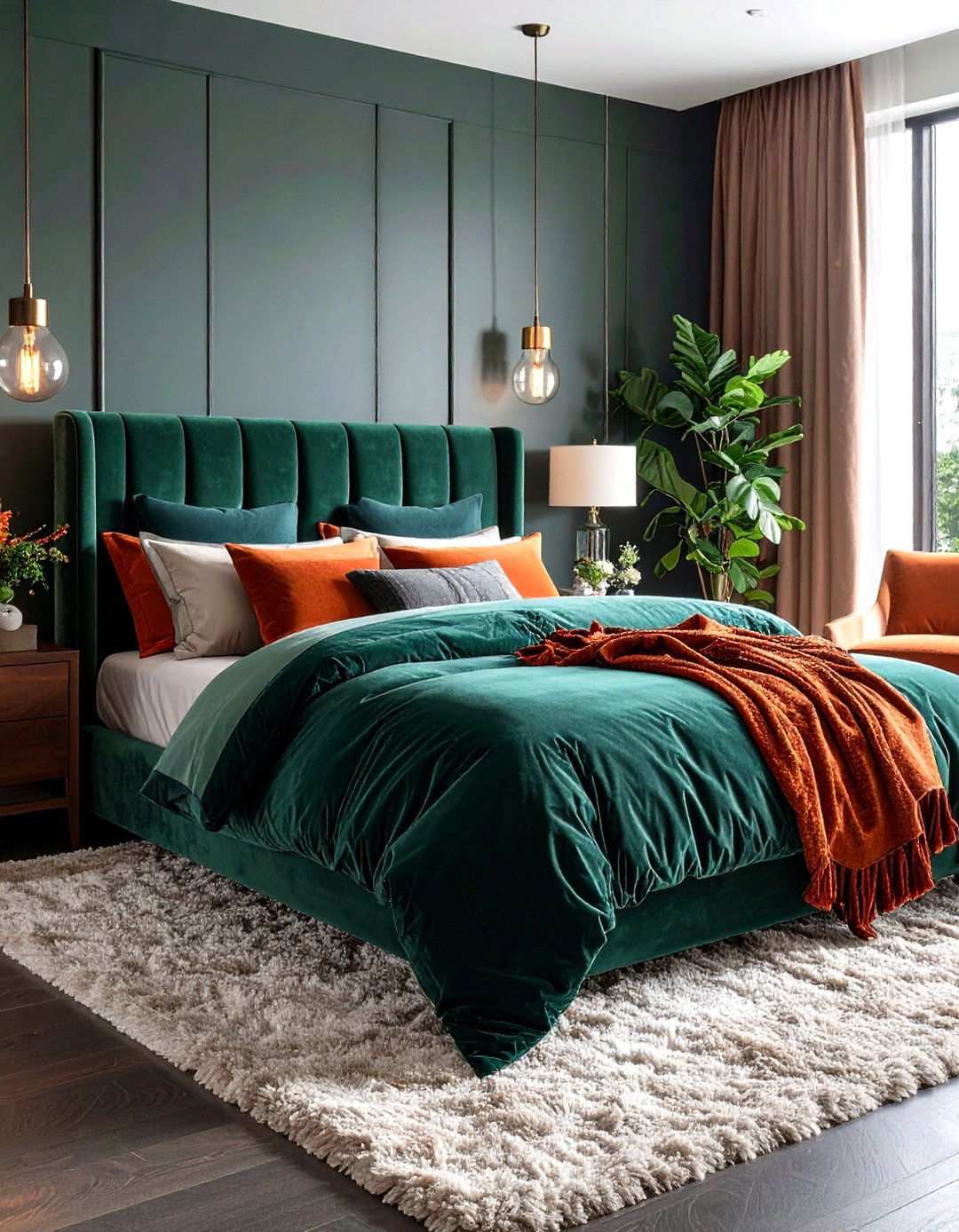
Creating a rich and inviting ambiance in your 70s-inspired bedroom is as simple as incorporating luxurious velvet textiles into your décor. A fusion of velvet and corduroy was a hallmark of 1970s design, adding an extra layer of depth and visual interest to upholstery, throw pillows, and bedspreads. To replicate this look, opt for deep, jewel-toned hues such as emerald green, burnt orange, or rich burgundy for your duvet covers and pillow shams. Mixing different velvet textures – think smooth and crushed varieties – will add an extra layer of visual depth to your bedroom space. This combination of textures will beautifully complement shag carpets, adding softness, warmth, and a cozy textural contrast. The natural sheen of velvet will catch and reflect light, creating a dynamic visual effect that changes throughout the day. Complete your luxurious velvet bedroom ensemble with matching curtains or a plush velvet headboard that serves as both functional furniture and stunning wall art.
3. Iconic Shag Carpet Bedroom Foundations
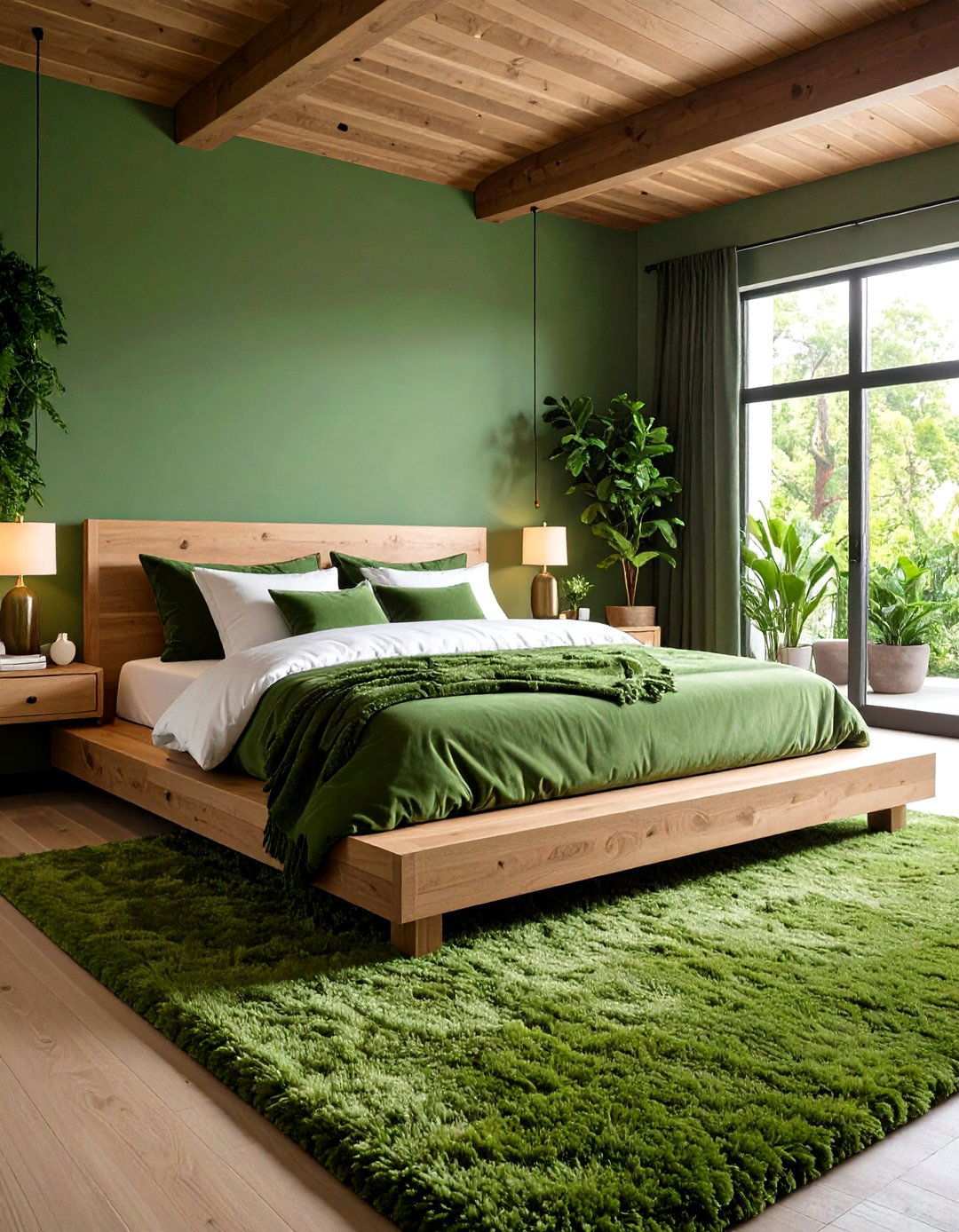
Shag carpets were a defining feature of 1970s bedroom design, providing a plush and cozy surface underfoot in a range of colors from neutral tones to bold hues. True shag rugs evoke the authentic, groovy vibe of the era, available in custom sizes and shapes, including wall-to-wall installations. To anchor your bedroom’s color scheme and provide incredible comfort for bare feet, choose rich earth tones like avocado green or burnt orange. Shag carpets create visually rich atmospheres when mixed with other textiles, emphasizing 1970s vibes through cozy textural contrast. Consider placing smaller shag rugs strategically around your bed area or committing fully to wall-to-wall shag carpeting for maximum retro impact. The deep pile texture of shag carpets invites relaxation and serves as your bedroom’s plush foundation for authentic seventies styling.
4. Hanging Macramé Plant Holders and Wall Art
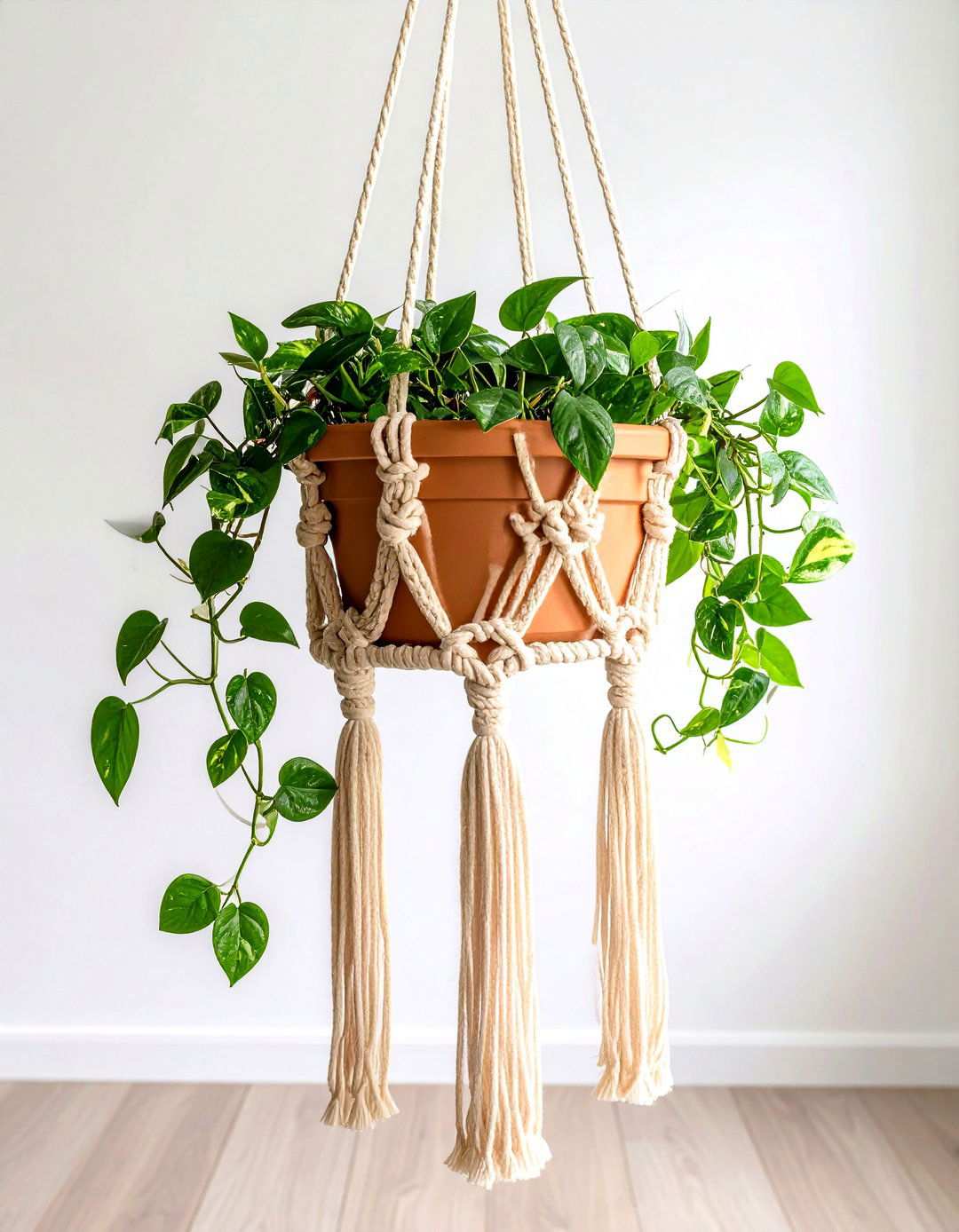
Macramé was a popular craft in the 1970s, with intricate knotted designs finding their way into bedroom décor through wall hangings, plant holders, and curtains that added texture and visual interest. In bohemian bedrooms, macramé introduces texture and warmth, emphasizing connection to nature and appreciation for craftsmanship through multisensory approaches to decor. Install ceiling hooks to suspend trailing plants like pothos or spider plants in handwoven macramé holders, creating living artwork that naturally purifies your air. Hanging planters add greenery without taking up floor space, using macramé hangers to give rooms lush, natural feels. Combine different macramé patterns and cord thicknesses for visual variety, positioning plants at varying heights to create dynamic compositions. These handcrafted elements celebrate the seventies emphasis on natural materials while adding organic beauty to modern bedroom spaces.
5. Luminous Accents Evoke a Groovy Glow
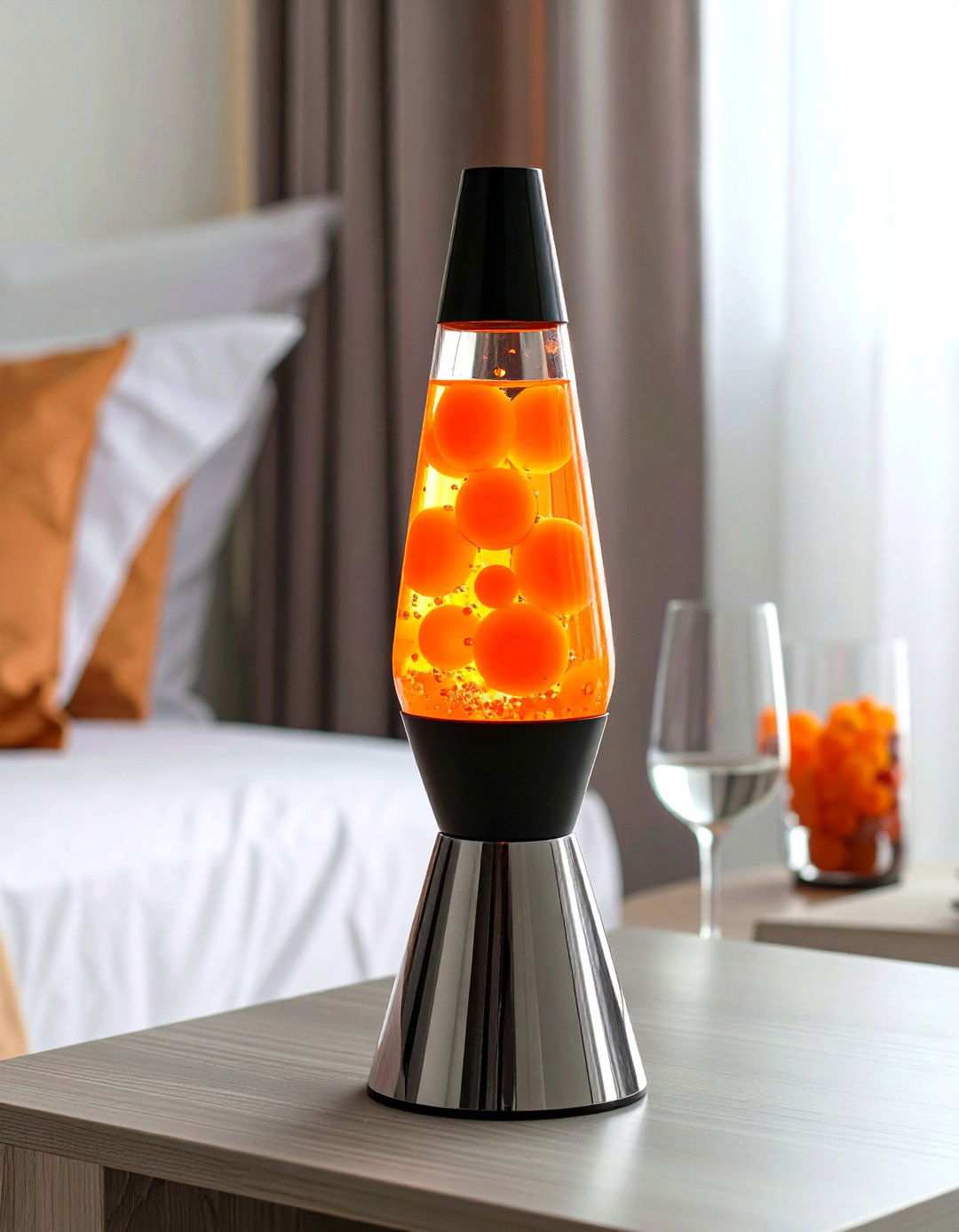
The nostalgic allure of lava lamps is undeniable, transporting us back to the psychedelic ambiance of 70s bedrooms. Characterized by their colorful wax blobs floating in clear liquid, lava lamps created mesmerizing displays that captivated the senses. As a quintessential 70s decor piece, lava lamps bring a playful, retro touch to modern spaces, thanks to their slow, hypnotic motion and vibrant glow. By positioning these iconic lighting fixtures on bedside tables or floating shelves, you can fully appreciate their soothing effects from the comfort of your bed. The unique design of lava lamps features tall glass globes filled with colorful wax and liquid, producing stunning displays of light and color that continue to captivate hearts and minds. Whether you opt for classic combinations like orange and yellow or soothing pairings like blue and clear, lava lamps stand out as timeless symbols of the era’s enduring legacy, offering nostalgic nods to the past while making stylish additions to contemporary homes.
6. Timeless Textures Bring Warmth to Bedrooms
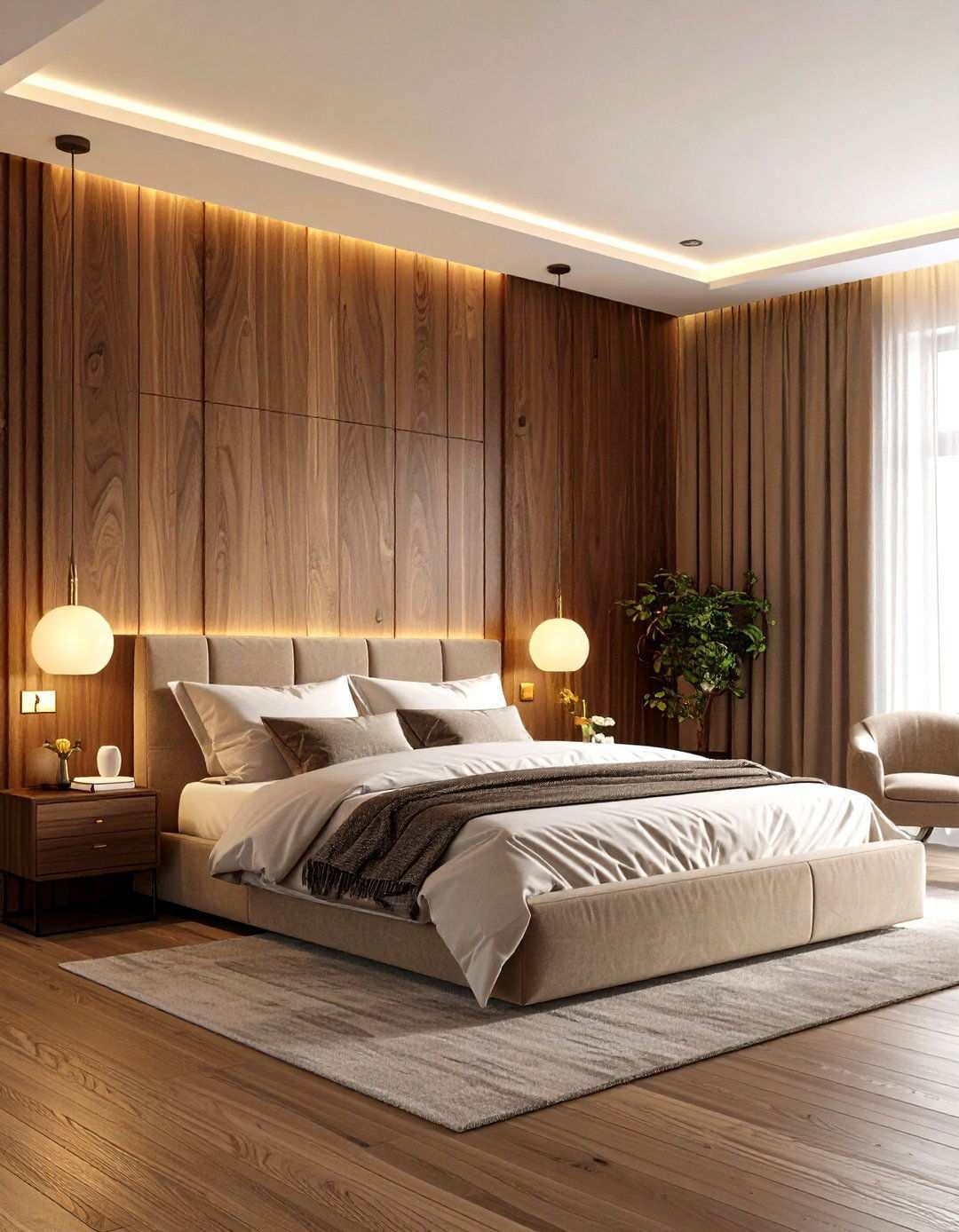
Wood paneling was a staple wall treatment in 70s homes, adding warmth and texture to bedrooms while giving rooms an earthy, grounded feel true to the decade’s aesthetic. For a budget-friendly update, consider modern alternatives like peel-and-stick wood planks, which capture the vintage charm of authentic wood paneling. The back-to-nature movement of the 70s emphasized the importance of natural materials, making wood, bamboo, and wicker essential for creating cozy ambiances. Choose between darker walnut tones for dramatic sophistication or lighter oak finishes for a brighter, airier feel, and pair wood paneling with earth-toned textiles and natural fiber rugs for a cohesive bedroom environment. To complete the look, incorporate vintage brass hardware and warm incandescent lighting for an authentic period ambiance that reflects the era’s emphasis on natural materials.
7. Low-Profile Statements Make a Bedtime Scene
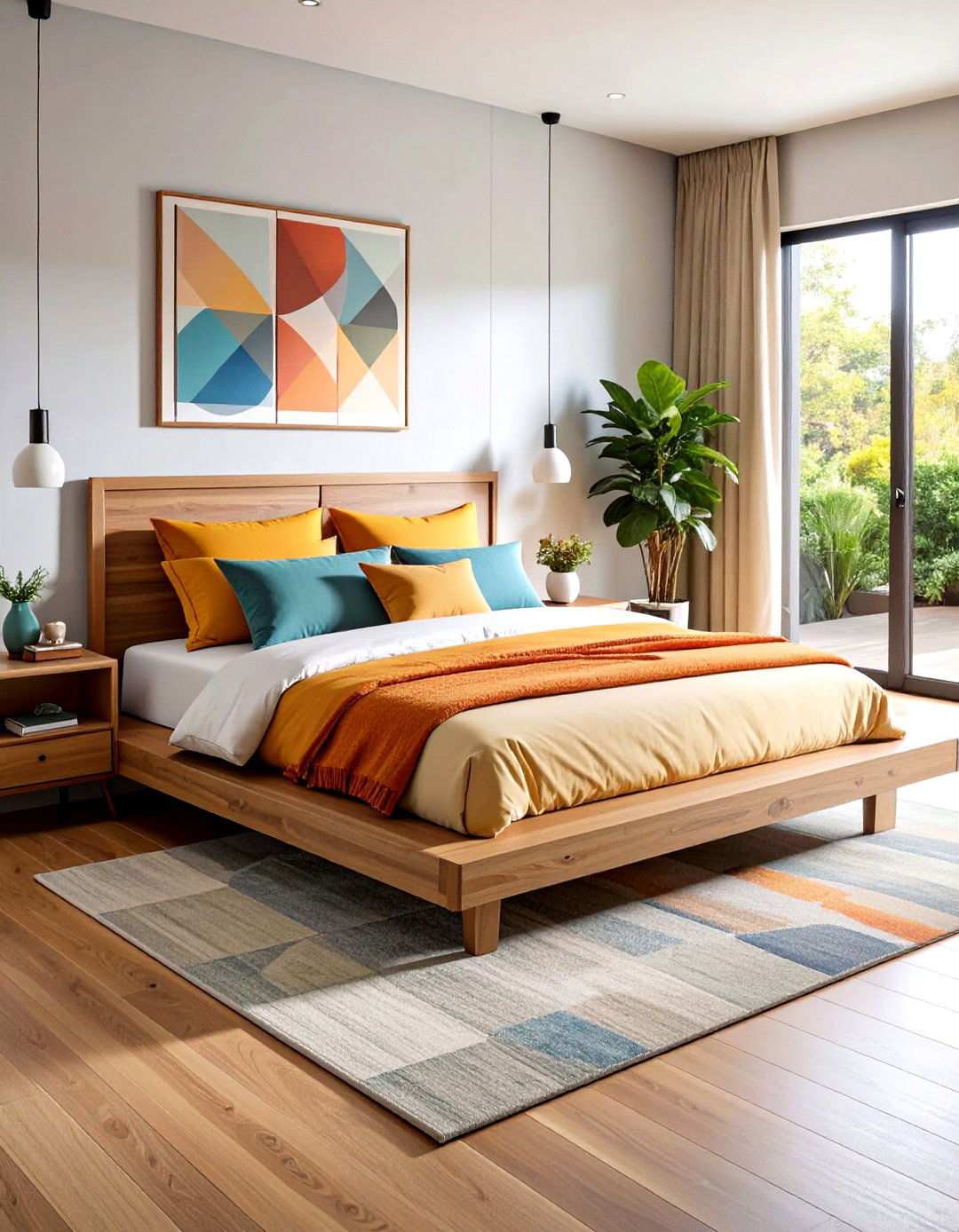
Platform beds were a staple of 70s bedroom design, creating casual, laid-back atmospheres and providing the perfect canvas for colorful bedding and textiles. These low-profile sleeping solutions epitomize the decade’s relaxed approach to living, offering modern functionality while embracing the era’s love of unconventional shapes and organic forms. Inspired by nature or futuristic aesthetics, 70s furniture designs often featured curved or asymmetrical pieces that contributed to the overall laid-back and groovy vibes of the era. To enhance functionality, select platform beds with built-in storage compartments or floating nightstand attachments, and style your bedroom with geometric bedding patterns, velvet throw pillows, and natural fiber blankets. The minimal height of platform beds creates intimate sleeping environments while emphasizing your bedroom’s horizontal lines and spacious feel.
8. Captivating Rattan Peacock Chair Reading Nooks
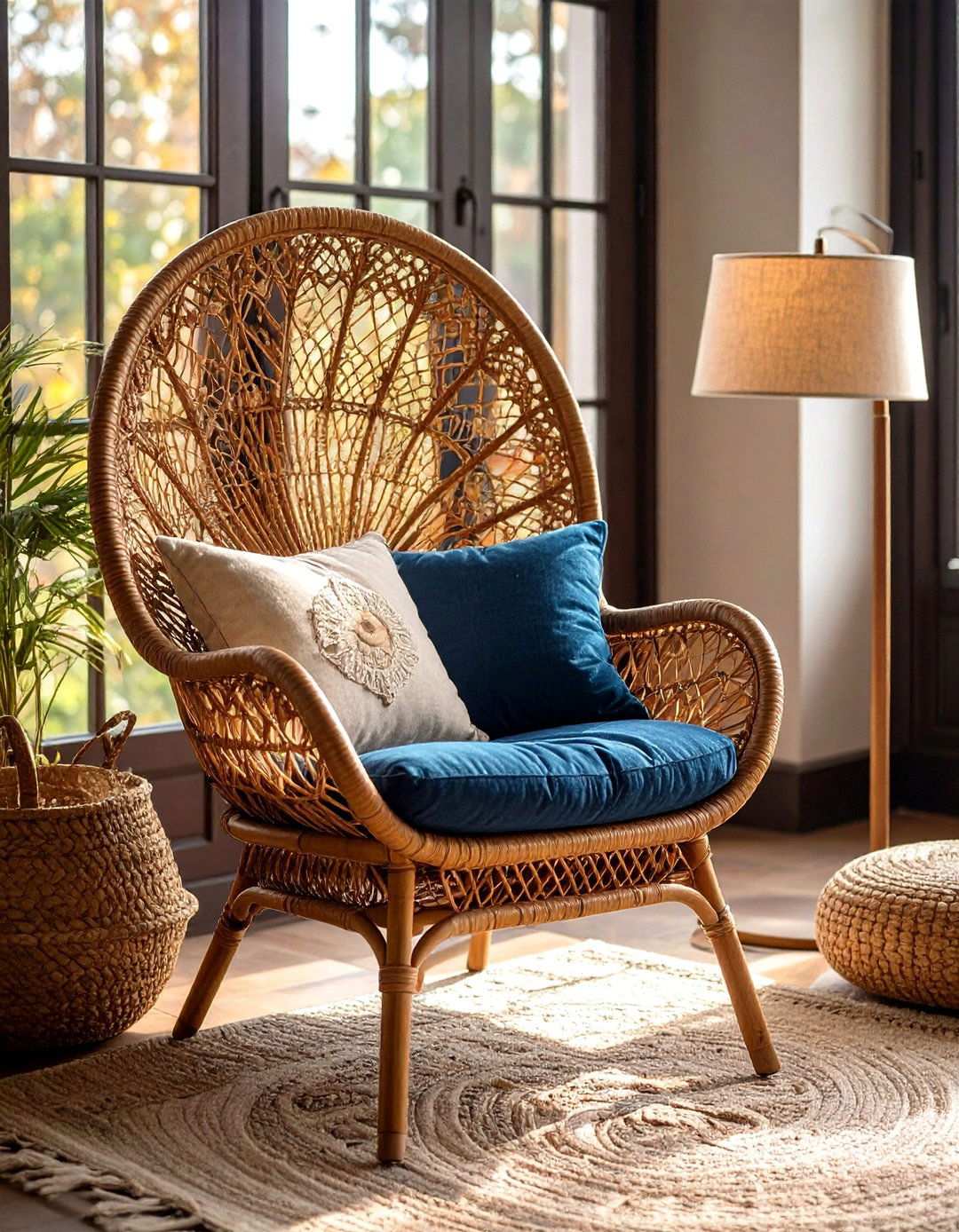
Peacock chairs have been a staple in interior design for over a century, their unique curves and radial backs captivating attention with their refined, exotic charm. The 1970s saw a surge in popularity for rattan furniture, often paired with other natural materials to bring the outdoors in and evoke a bohemian lifestyle. Consider placing one of these throne-like chairs in a quiet bedroom corner to create an intimate reading space or meditation area. Bamboo versions of peacock chairs emerged in the 1960s and 1970s, becoming a staple for both indoor and outdoor use and instantly transporting users to a bygone era. The distinctive fan-shaped back of these chairs adds a touch of drama while providing unexpected comfort for extended periods of sitting. Wicker and rattan became go-to mediums for their lightweight, wood-free construction, with intricate fretwork adding a decorative flair. Complete the look by adding plush cushions in earthy tones and a nearby floor lamp for the perfect reading atmosphere.
9. Hanging Egg Chair Sanctuary Retreats
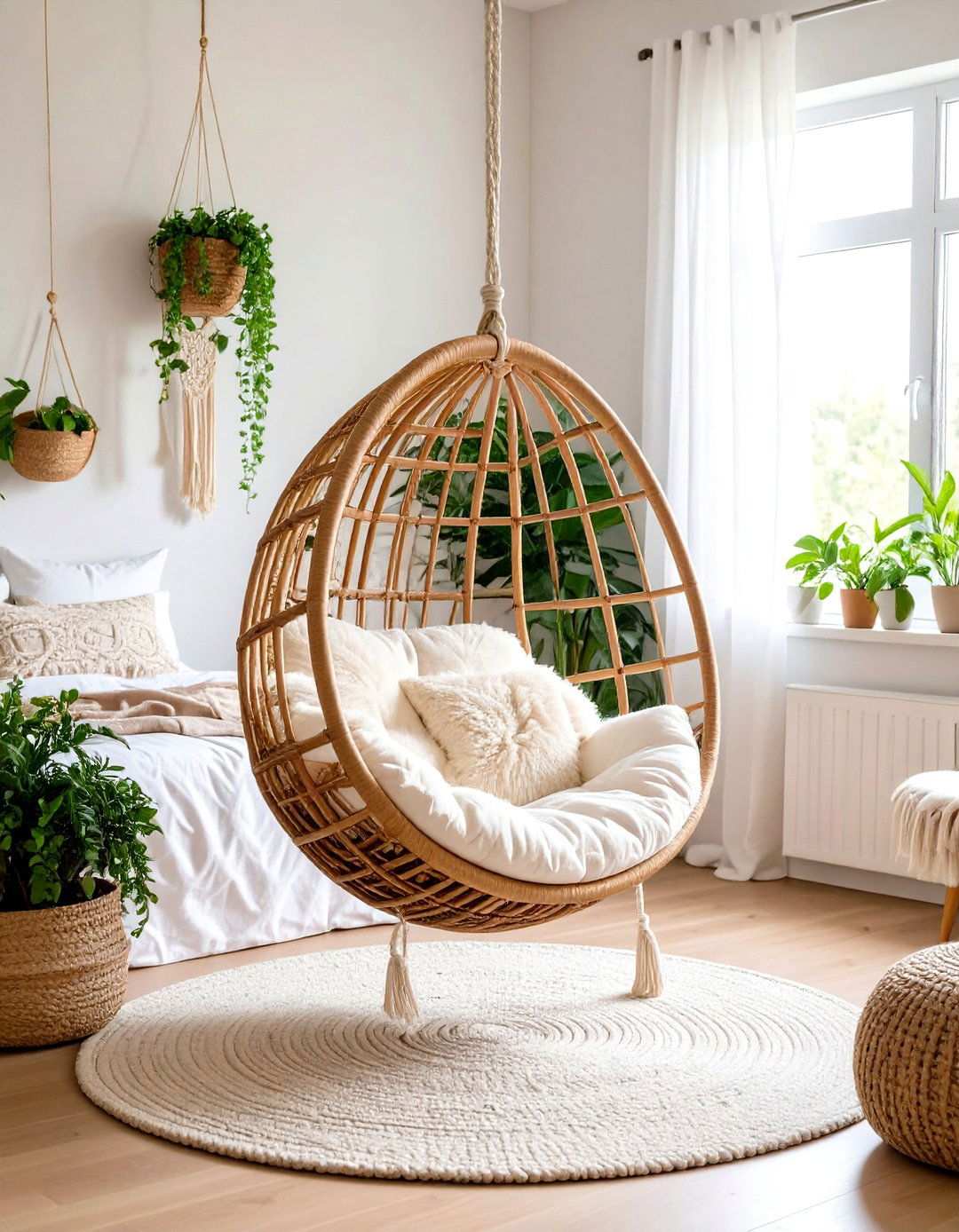
Hanging egg chairs have been a perennial favorite for both indoor and outdoor use, offering a unique experience that’s hard to resist. By installing ceiling mounting hardware, you can suspend one of these cocoon-like chairs in a bedroom corner, creating a secluded retreat for relaxation and contemplation. These accent chairs make a statement in bedrooms, especially when paired with macrame swings and shaggy cushions that enhance bohemian home aesthetics. Choose from natural rattan for an authentic seventies look, or opt for modern synthetic versions for easier upkeep. The foldable basket design makes it easy to transport the chair to find the perfect relaxation spot, while the lightweight construction allows for seamless seasonal transitions. Position your hanging egg chair near a window for natural light reading, or create a cozy corner with floor cushions and soft throws. The gentle swaying motion of these suspended seats promotes stress relief and peaceful contemplation, transforming your bedroom into a serene sanctuary.
10. Harmonizing with the Earth: Earth-Tone Color Palette Bedroom Schemes
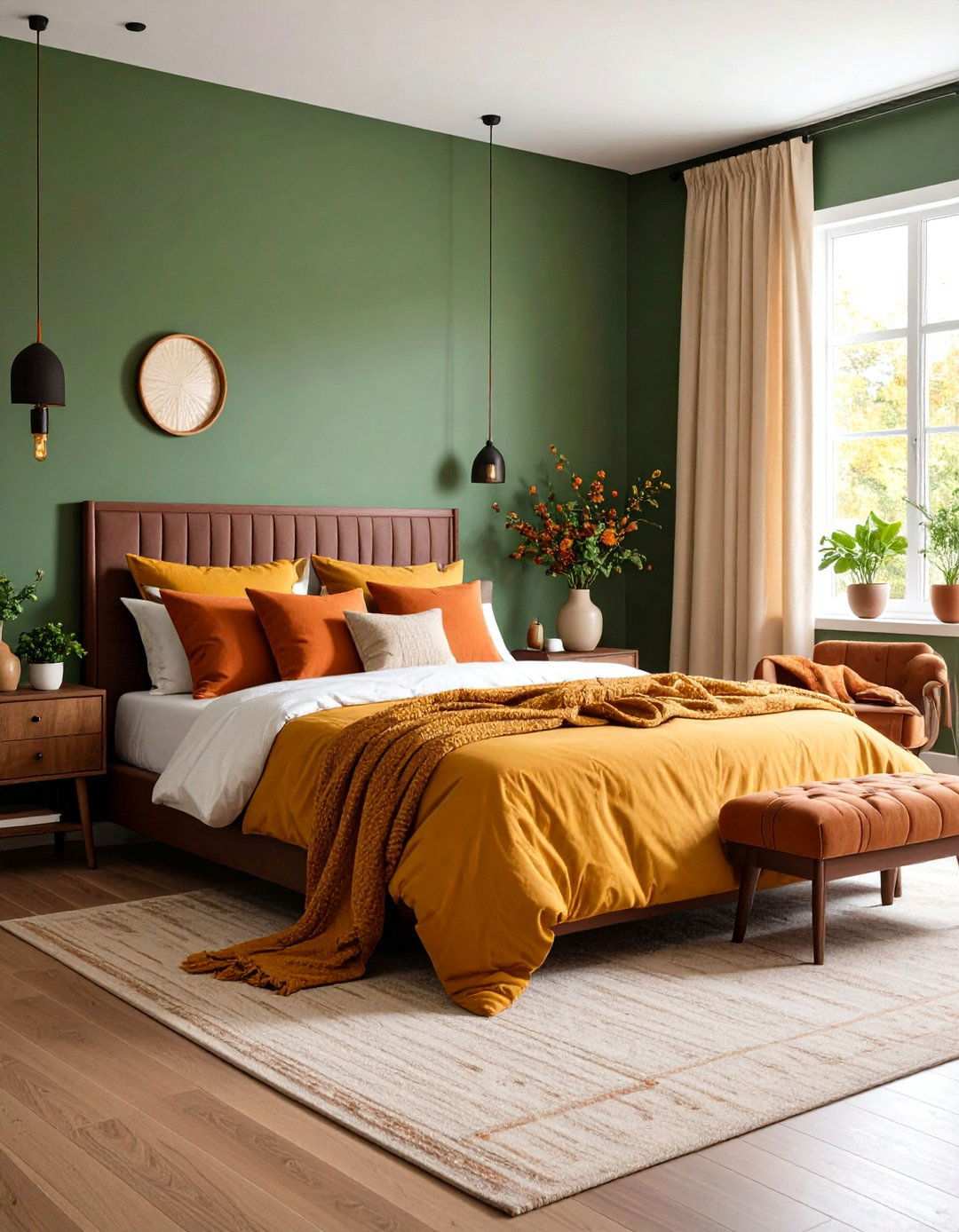
Furniture from the 1970s showcased an earthy aesthetic with a wide range of tones, from avocado green and burnt orange to mustard yellow and rich brown, incorporated into upholstery fabrics, carpets, and wood finishes. Earthy tones such as avocado green, mustard yellow, bright orange, and teal were a staple of 1970s style, inviting you to weave a bedroom color story around these warm, natural hues that celebrated the era’s affinity for nature and organic living. A warm and inviting ambiance is created by rich, earthy colours like browns, oranges, and greens, making them perfect for bedrooms. For a cohesive look, layer different shades within the same color family by using lighter tones on walls and deeper hues for accent pieces. This approach pays homage to the retro era without overwhelming the space, allowing hints of green and yellow to peek through in varying tile designs. To prevent bold earth tones from dominating the room, balance them with neutral whites or creams to maintain the authentic, warm atmosphere of the 1970s.
11. Psychedelic Art and the Free-Spirited Bedroom
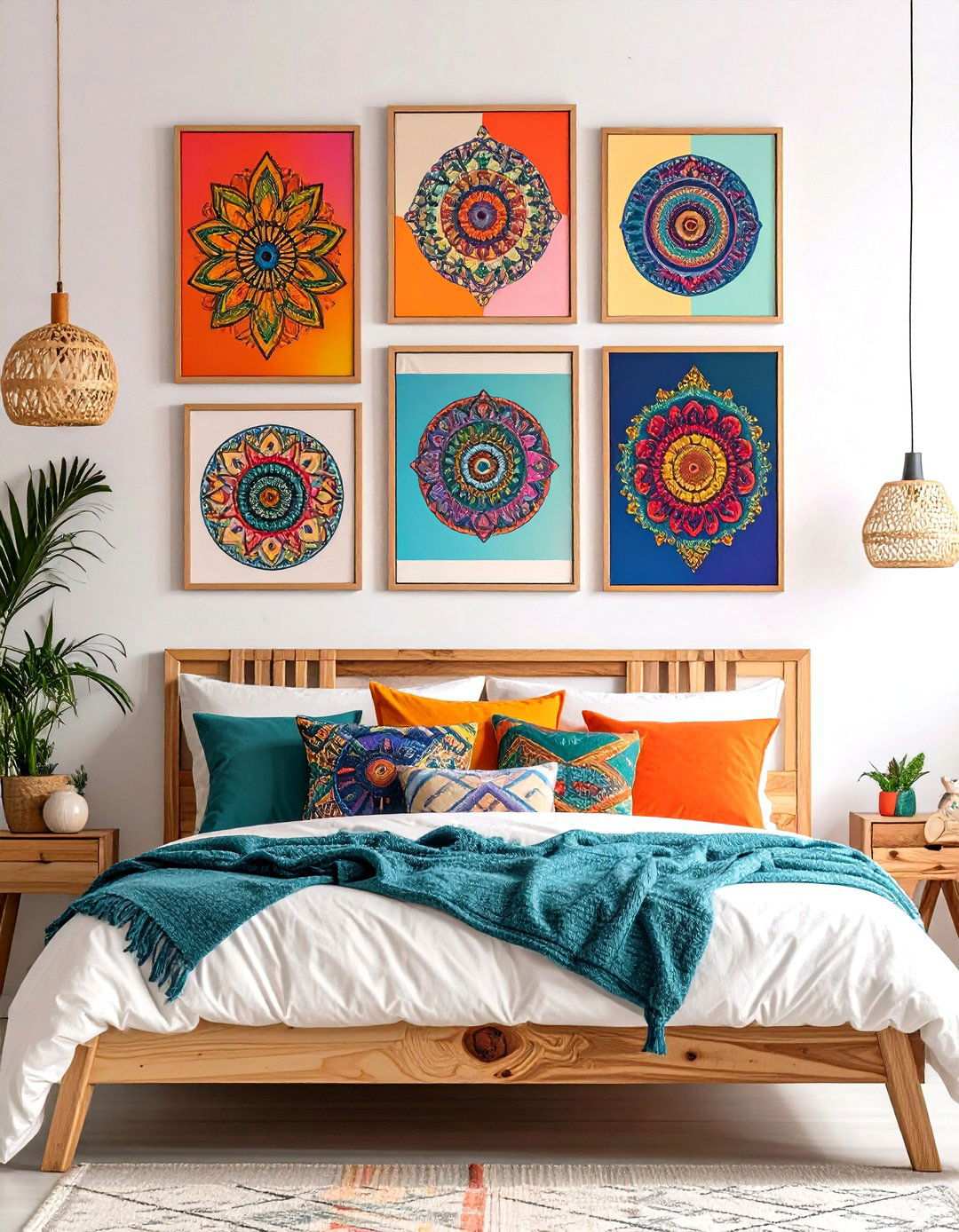
Retro posters and psychedelic prints were an integral part of 1970s bedroom décor, adding splashes of color and personality to walls while revealing the interests and passions of room occupants. Bohemian styles and psychedelic album covers were a defining feature of the 1970s, with prints of popular bands’ covers and geometric art with bold splashes of color creating edgy looks. Create a gallery wall featuring vintage concert posters, abstract geometric artwork, and colorful mandala designs that capture the era’s carefree creativity. Funky artwork adds visual appeal to a room while embracing the era’s playful vibe through unique decor elements. To complement other bedroom elements, frame your collection in natural wood or brass frames. Posters featuring musical icons, movie stars, and cultural figures were popular choices that reflected the era’s cultural movements. To add a touch of drama, mix different sizes and orientations for dynamic wall compositions that serve as conversation starters and personal expression statements.
12. Whimsical Wonders: Creating an Indoor Garden Oasis
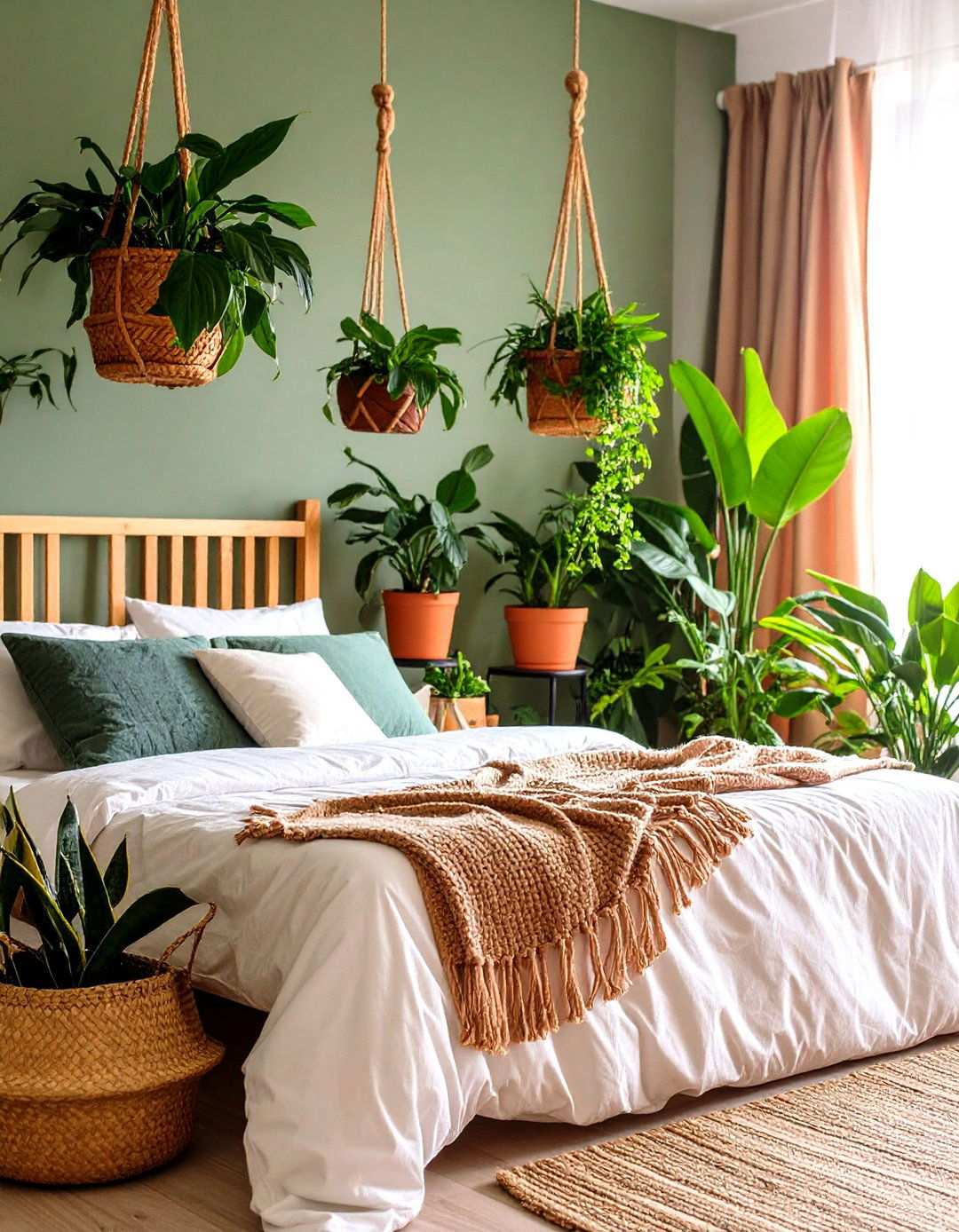
Bedrooms in the 1970s became verdant havens, with low-maintenance plants like pothos, spider plants, and ferns reigning supreme for their air-purifying prowess . To recreate this tranquil atmosphere, incorporate a diverse array of plants at various heights and locations, weaving together a lush tapestry of natural beauty. The charm of indoor plants lies in their ability to breathe life into bedrooms, crafting serene and calming environments . A hallmark of 1970s interiors, hanging planters enabled homeowners to add lush greenery without sacrificing precious floor space, imbuing rooms with a sense of natural harmony . Opt for plants that thrive in low-light conditions, such as snake plants, ZZ plants, and peace lilies, which flourish in bedroom environments. Position larger floor plants like fiddle leaf figs or rubber trees in corners, while smaller specimens adorn windowsills and shelving. The marriage of natural materials like wood, bamboo, and wicker furniture with indoor plants creates an authentic, inviting aesthetic .
13. Radiant Revival: The Allure of Tiffany-Style Lighting
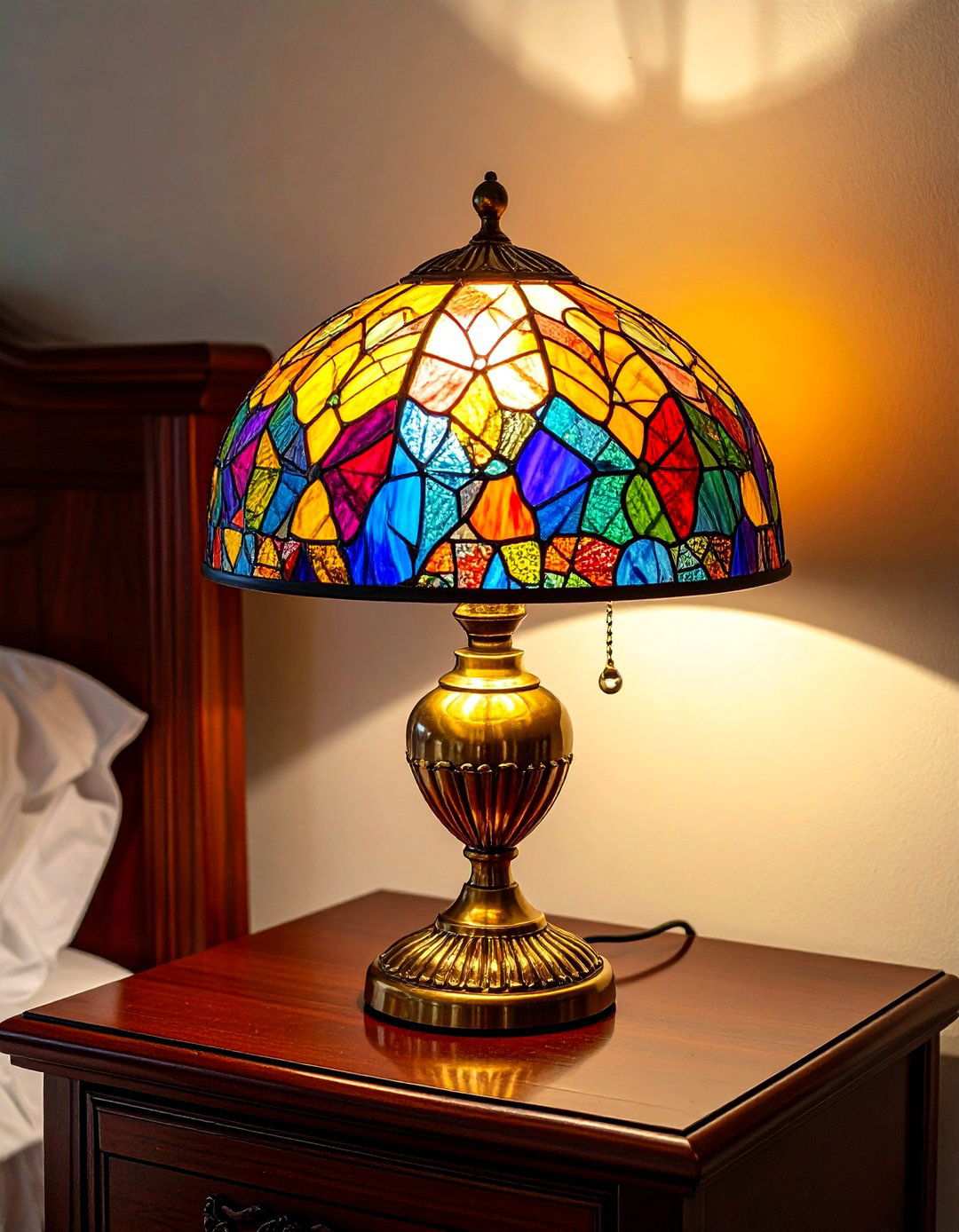
Tiffany-style lamps with their intricate stained glass shades were the epitome of 1970s bedroom lighting, injecting elegance and sophistication into the space while celebrating bold, vibrant colors . Bring this artistic flair to your bedroom with bedside table lamps or hanging pendant lights that cast colorful patterns throughout the room. Lighting played a pivotal role in shaping the mood and atmosphere of 1970s bedrooms, with choices as bold and expressive as the décor itself . Choose designs featuring geometric patterns, floral motifs, or abstract compositions that harmonize with your bedroom color scheme. These lamps emit a warm, inviting glow, perfect for creating an atmospheric ambiance in the evening, while their handcrafted glass components create beautiful light diffusion that enhances relaxation and serves as stunning decorative art during the day. For added versatility, pair Tiffany-style lighting with dimmer switches to control ambiance throughout different bedroom activities.
14. Modular Furniture Systems for Bedroom Storage
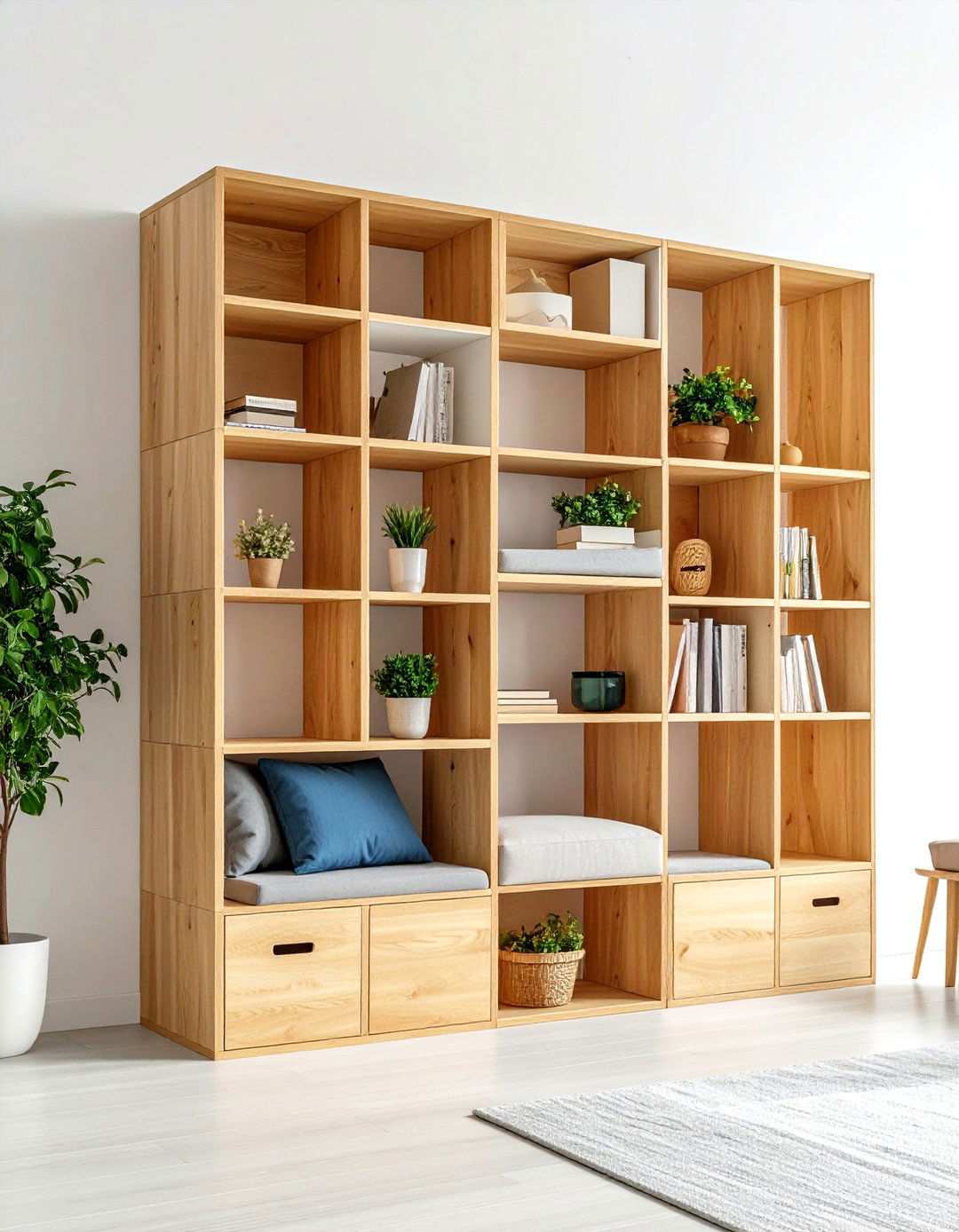
By prioritizing adaptability and flexibility, 70s furniture often incorporated modular designs that could be rearranged to suit diverse spatial configurations, such as modular sofas and multifunctional storage units. Effective incorporation of cube storage systems, stackable shelving units, and convertible furniture pieces embodies the era’s innovative approach to living solutions. This included stackable seating options and multifunctional storage units, reflecting the era’s bold and innovative living solutions. Select pieces in warm wood tones or bold painted finishes that harmonize with your bedroom’s overall color palette, allowing these flexible systems to adapt to changing needs while maintaining a distinct seventies aesthetic through clean lines and geometric forms. 70s style furniture is characterized by vibrant colors, playful shapes, natural materials, and a fearless spirit, echoing cultural and design trends of the era. Strategically position modular elements to create room dividers, display areas, or functional storage that optimizes your bedroom’s efficiency without sacrificing style.
15. Chrome and Plastic Accent Bedroom Details
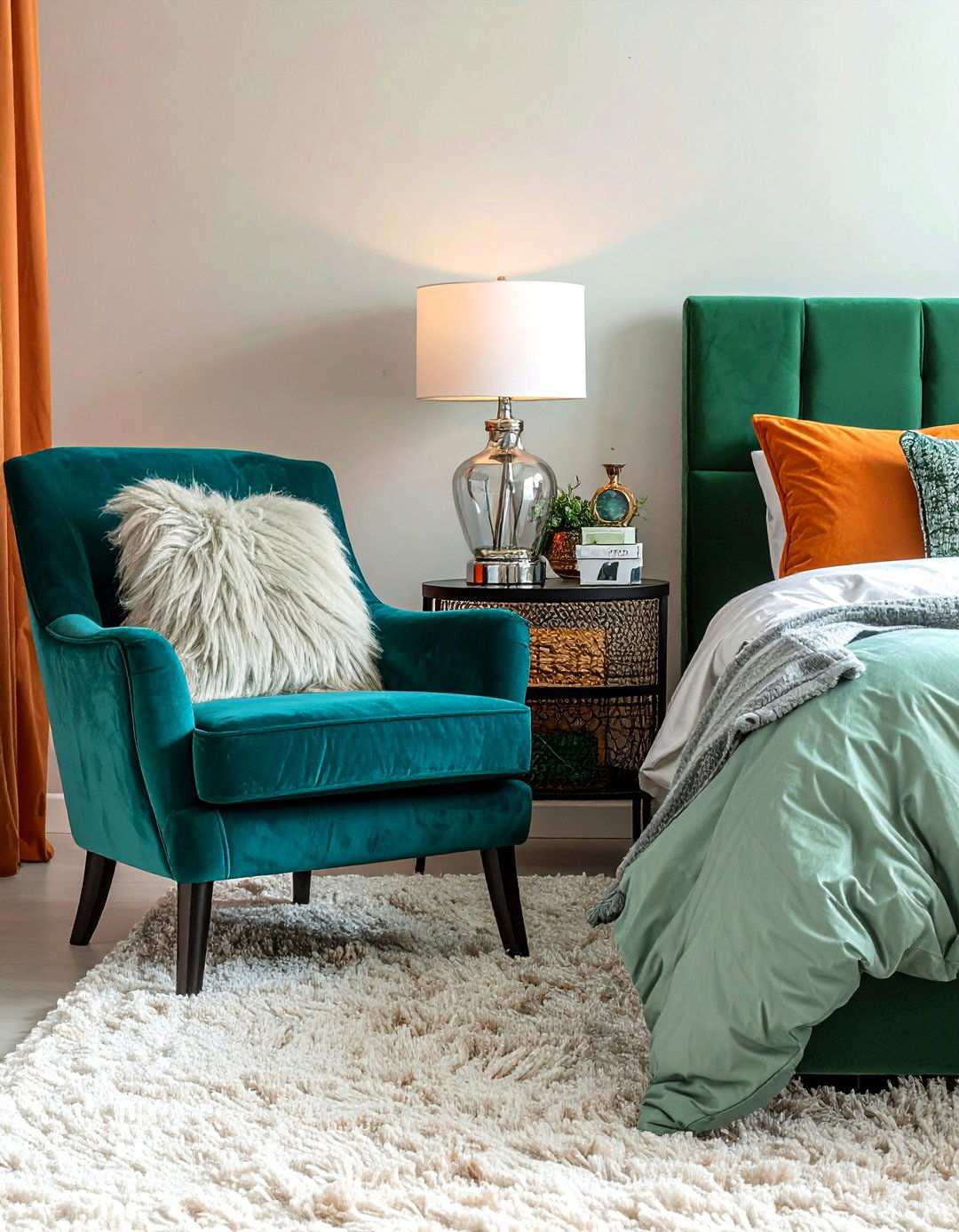
Reflecting the influence of Space Age design trends, 70s furniture sometimes incorporated cutting-edge materials such as chrome and plastic for chair legs, table bases, and decorative accents. The revival skillfully combines polished chrome accents with rattan, retro lighting, and shag rugs to recreate authentic 70s styling. Introduce these sleek metallic elements through lamp bases, picture frames, mirror surrounds, and furniture hardware that beautifully contrast with natural materials. These materials added a touch of modernity and sleekness to furniture designs while reflecting the futuristic aesthetics of the era. Select chrome bedside tables, plastic accent chairs, or lucite storage boxes that inject Space Age glamour into your bedroom environment. Smoked Lucite elements provide sophisticated metallic textures characteristic of the free-spirited, earthy 1970s interior design revival. Achieve a harmonious balance between these high-tech materials and organic textures like wood and rattan to create the perfect blend of futuristic and natural elements.
16. Revival of a Vintage Icon: Sunburst Mirrors
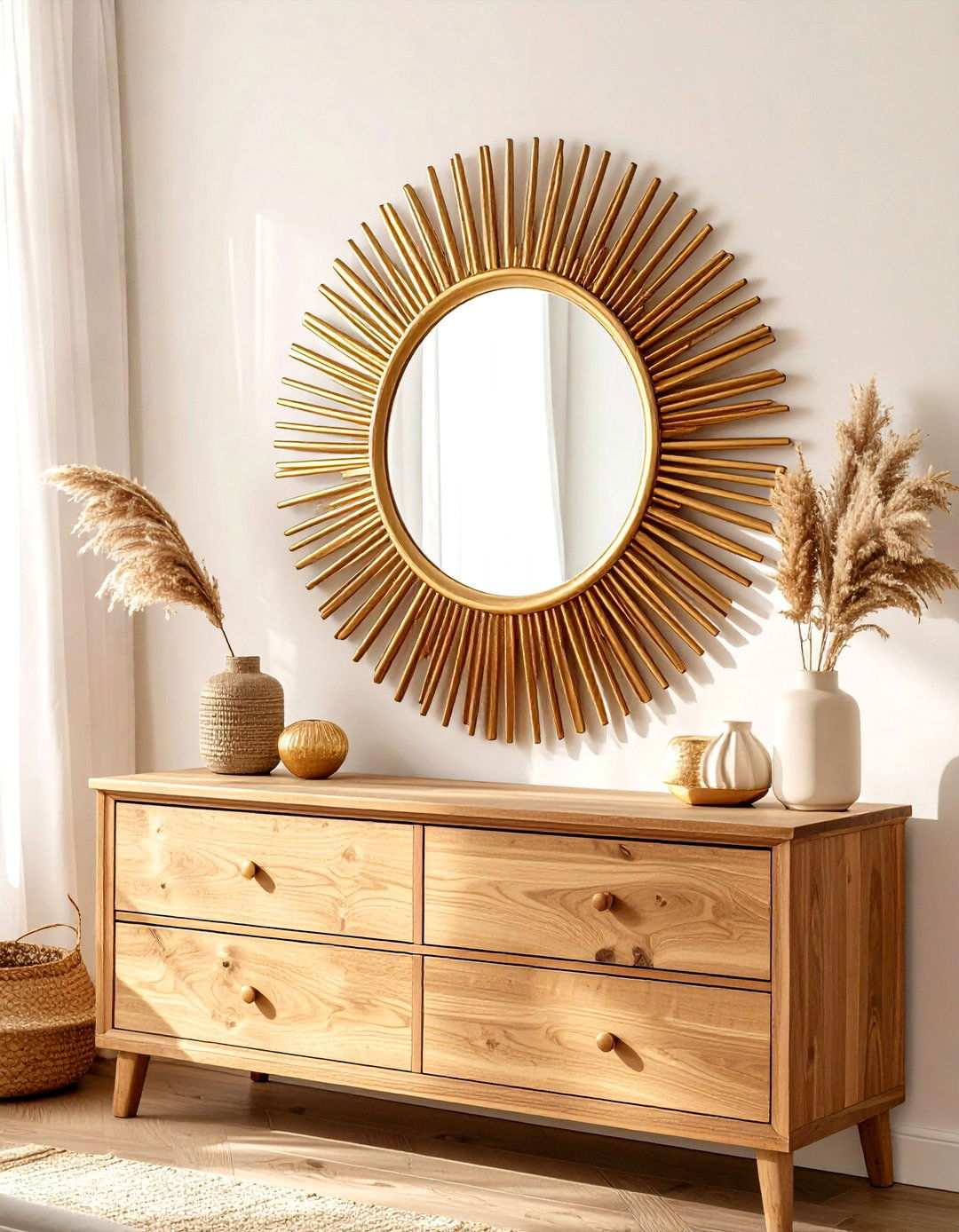
Elegant sunburst mirrors are once again bringing a touch of nostalgia to bedroom spaces, their unique blend of functionality and style recalling the playful, carefree essence of the 1970s. As both decorative art and practical mirrors, these radiating metallic sculptures captivate with their dramatic flair, drawing inspiration from the era’s affinity for abstract art and celestial themes. By selecting brass, copper, or gold finishes that harmonize with the warm color palette of the bedroom, homeowners can create a cohesive look that also maximizes natural light. The incorporation of planters and decorative elements adds an extra layer of seventies-inspired charm to these distinctive pieces. Strategically placing sunburst mirrors above dressers, beside beds, or in dynamic groupings of varying sizes allows for a creative, eye-catching approach to bedroom decor. Furthermore, their sculptural design works particularly well in combination with other metallic accents and warm lighting to create a cohesive, stylish atmosphere.
17. Bringing Disco Glam Back: Bedroom Ceiling Features
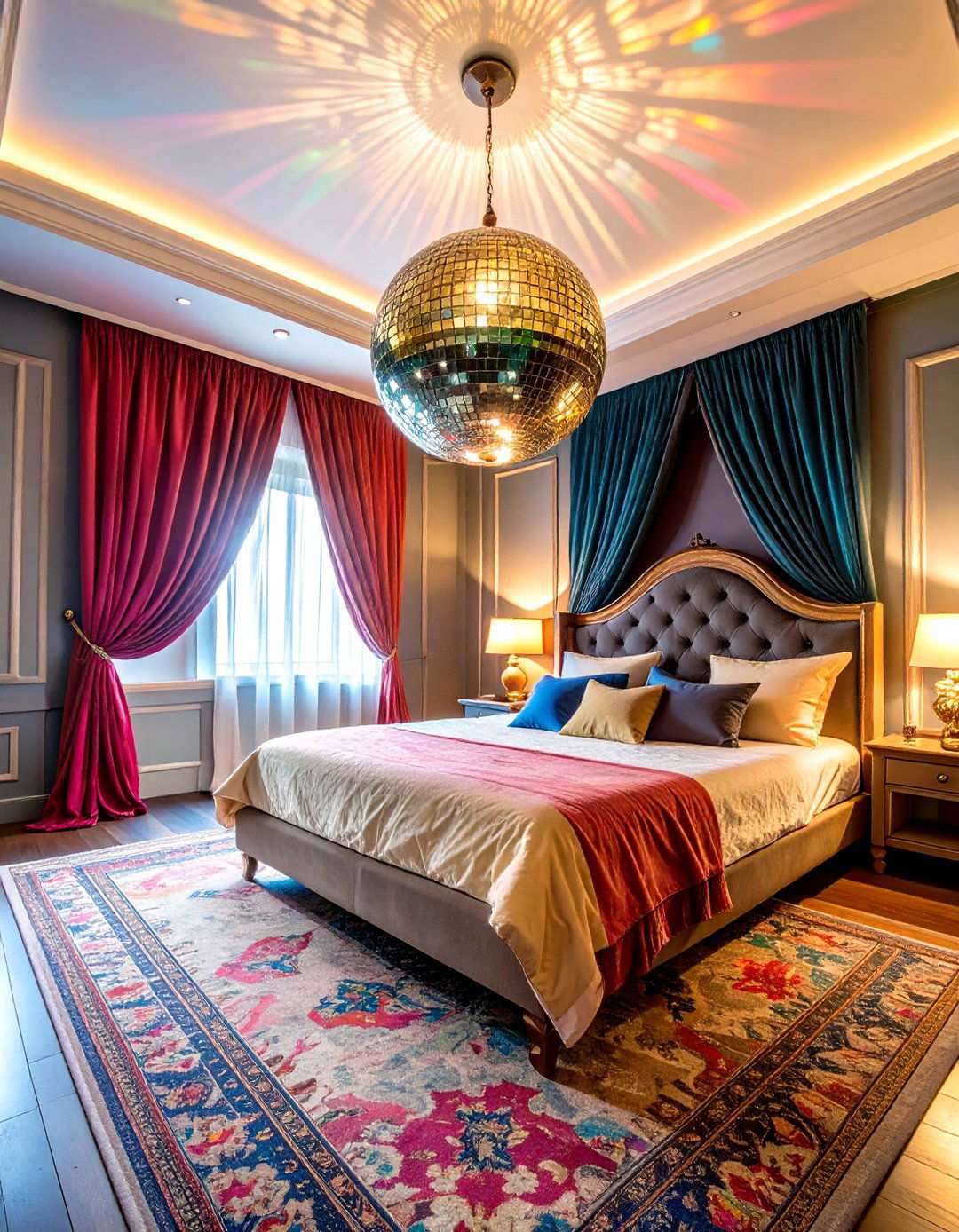
In recent years, the use of disco balls as decorative elements in bedrooms has experienced a significant resurgence, infusing living spaces with vibrant energy and joyful ambiance. By installing these glittering spheres as ceiling-mounted art pieces, homeowners can create a mesmerizing display of light patterns that dance across bedroom walls and surfaces. Whether it’s a small, accent piece or a statement installation, disco balls offer endless possibilities for adding a touch of whimsy and excitement to bedroom decor. This retro trend not only injects physical disco glam into homes but also celebrates the carefree, pleasure-seeking spirit of the era. To maximize their impact, consider positioning disco balls near windows for a sparkling daytime effect or illuminating them with spotlights for a dramatic evening ambiance. By embracing this vintage trend, homeowners can add a dash of fun and personality to their bedroom environments.
18. Weaving Texture into Your Space
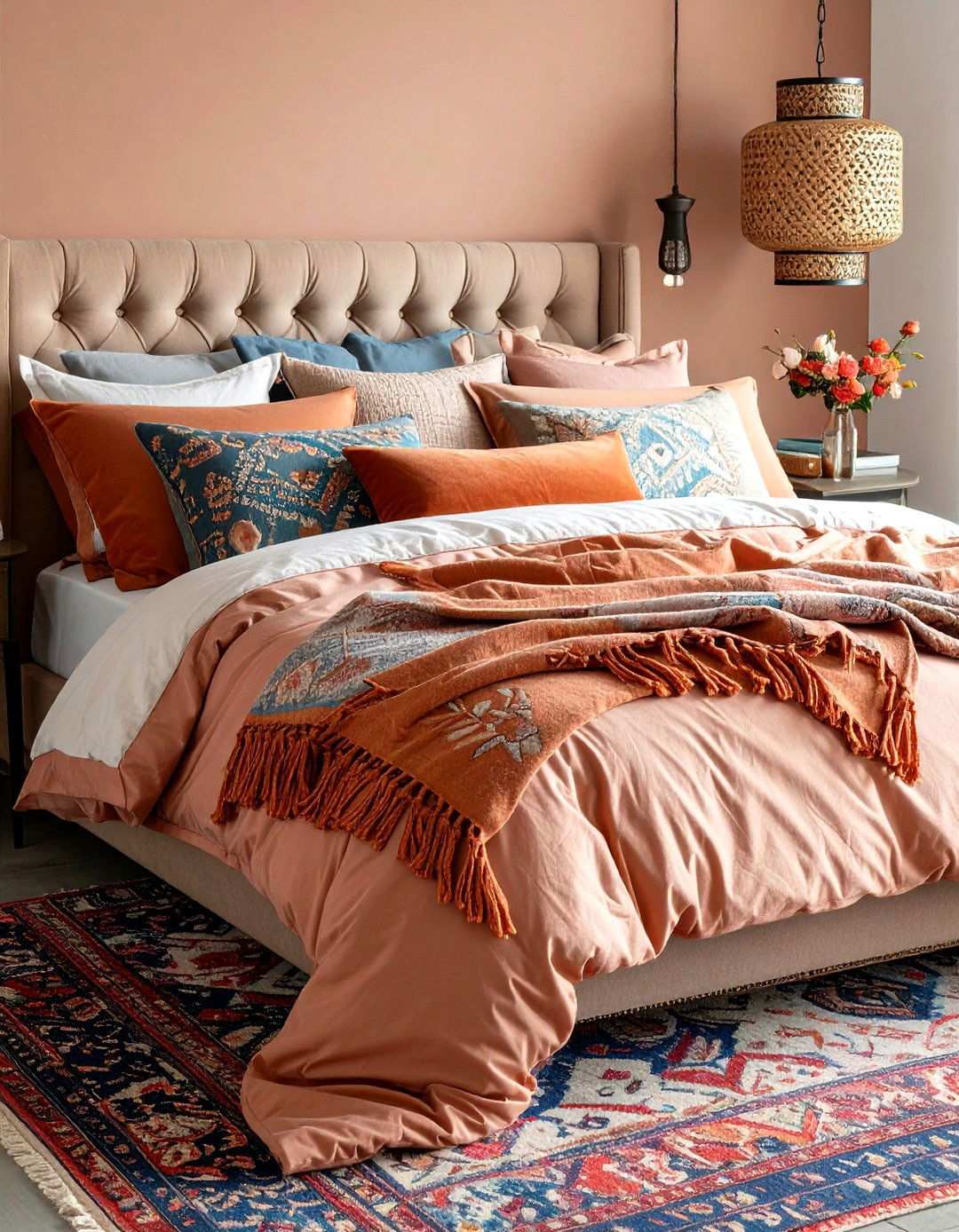
By embracing a multitude of textiles, homeowners can add depth and visual interest to their bedroom environments, reminiscent of the layered, eclectic aesthetic of the 1970s. This era’s penchant for mixing rough and smooth textures is still prevalent today, with designers combining contrasting materials like woven rattan furniture and plush velvet armchairs to create a unique space. Bold patterns and vibrant colors were staples of 70s furniture upholstery, from geometric prints to psychedelic motifs, often paired with soft, shaggy textiles. To replicate this look, homeowners can layer different textures throughout their bedroom space, pairing smooth satins with nubby bouclés and crisp cottons. This diverse collection of materials can be concentrated in specific areas, such as the bed, where wooden frames are paired with soft throw cushions and velvet bedspreads. By carefully mixing patterns and maintaining consistent color stories, homeowners can create a harmonious, visually appealing space that invites interaction.
19. Reviving the Spirit of '70s Music Culture
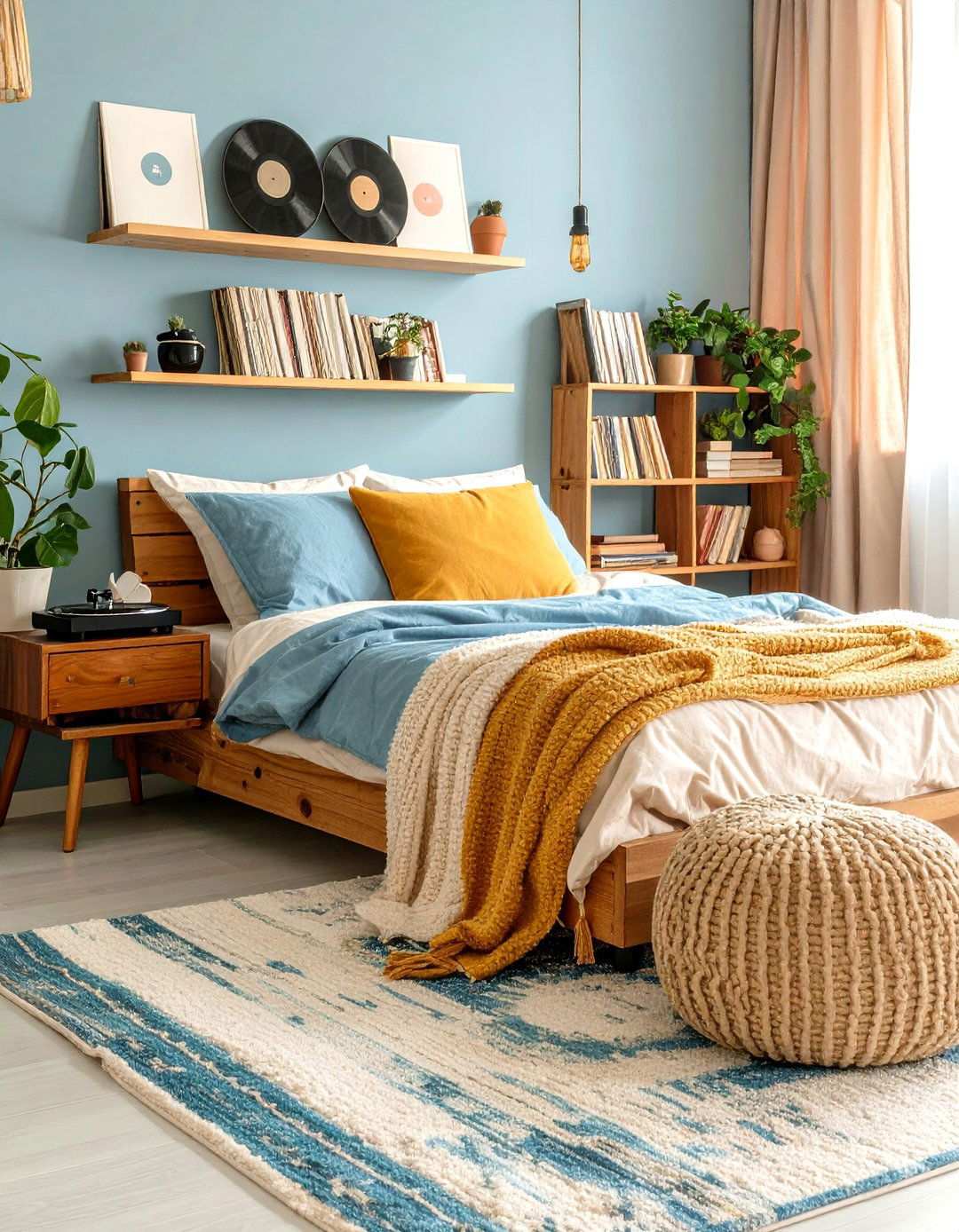
Homeowners looking to tap into the carefree spirit of the 1970s can do so by incorporating vintage record players and vinyl displays into their bedroom environment. These retro accents blend style and nostalgia seamlessly, creating a unique space that celebrates the era’s musical revolution. By setting up a dedicated music corner featuring vintage turntables, album collections, and listening chairs, homeowners can relive the magic of the decade. As they sink into shag rugs and listen to their favorite vinyl records, the groovy vibes of the 1970s will transport them back to a time of disco balls and bell bottoms. To add an extra layer of visual interest, homeowners can display album covers as rotating artwork, showcasing iconic designs and colorful graphics that defined the era’s visual culture. Posters featuring musical icons can also be used to reflect the interests and passions of room occupants during this culturally rich period. By incorporating vintage record crates or floating shelves for organized storage, homeowners can create a space that not only looks great but also serves a functional purpose. The finishing touches can be achieved with warm wood finishes for turntable stands and storage units that coordinate with other bedroom furniture, effectively bringing the era’s mood-boosting rhythms into the home, both physically and metaphorically.
20. Corduroy and Suede Bedroom Soft Furnishings
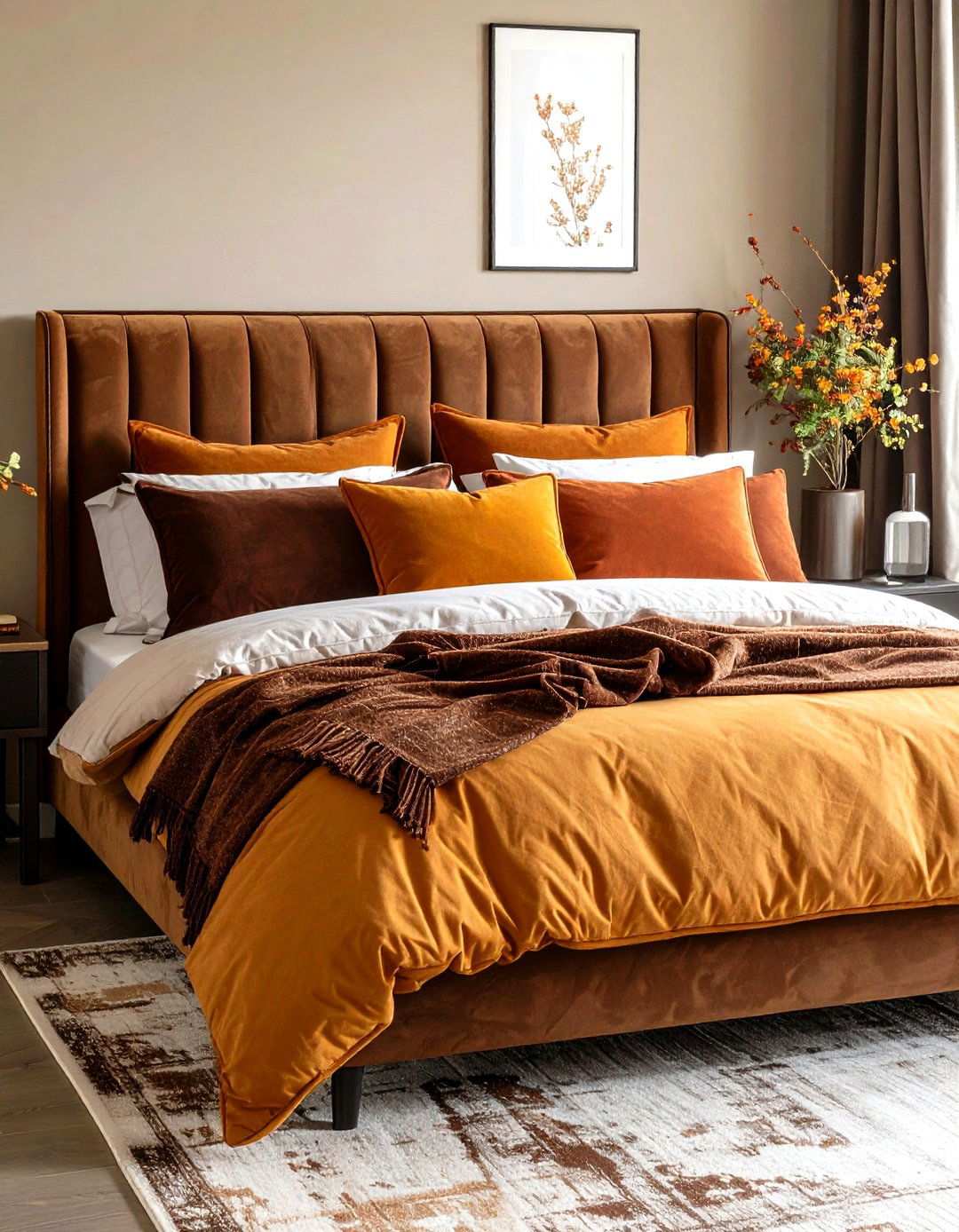
The fusion of luxurious fabrics with 1970s shag carpets created a unique and inviting atmosphere in bedrooms, where comfort and style converged. Rich and tactile textiles, such as velvet and corduroy, played a pivotal role in establishing this trend, adding depth and visual warmth to the space. These plush materials, often incorporated into throw pillows, bedspreads, upholstered headboards, and window treatments, not only enhanced comfort but also invited tactile exploration. By choosing autumnal hues like rust, chocolate brown, or deep mustard, homeowners could tap into the era’s affinity for earthy tones, creating a cozy ambiance that softened the overall aesthetic.
The textured ribbing of corduroy caught the light beautifully, generating subtle visual interest that evolved throughout the day. This era’s emphasis on comfort and texture led to the widespread use of luxurious fabrics for upholstery, throw pillows, and bedspreads. By layering different nap directions and pile heights, designers could create sophisticated textile compositions that epitomized authentic seventies bedroom luxury, elevating the space into a true sanctuary.