1. Unconventional Color Statements
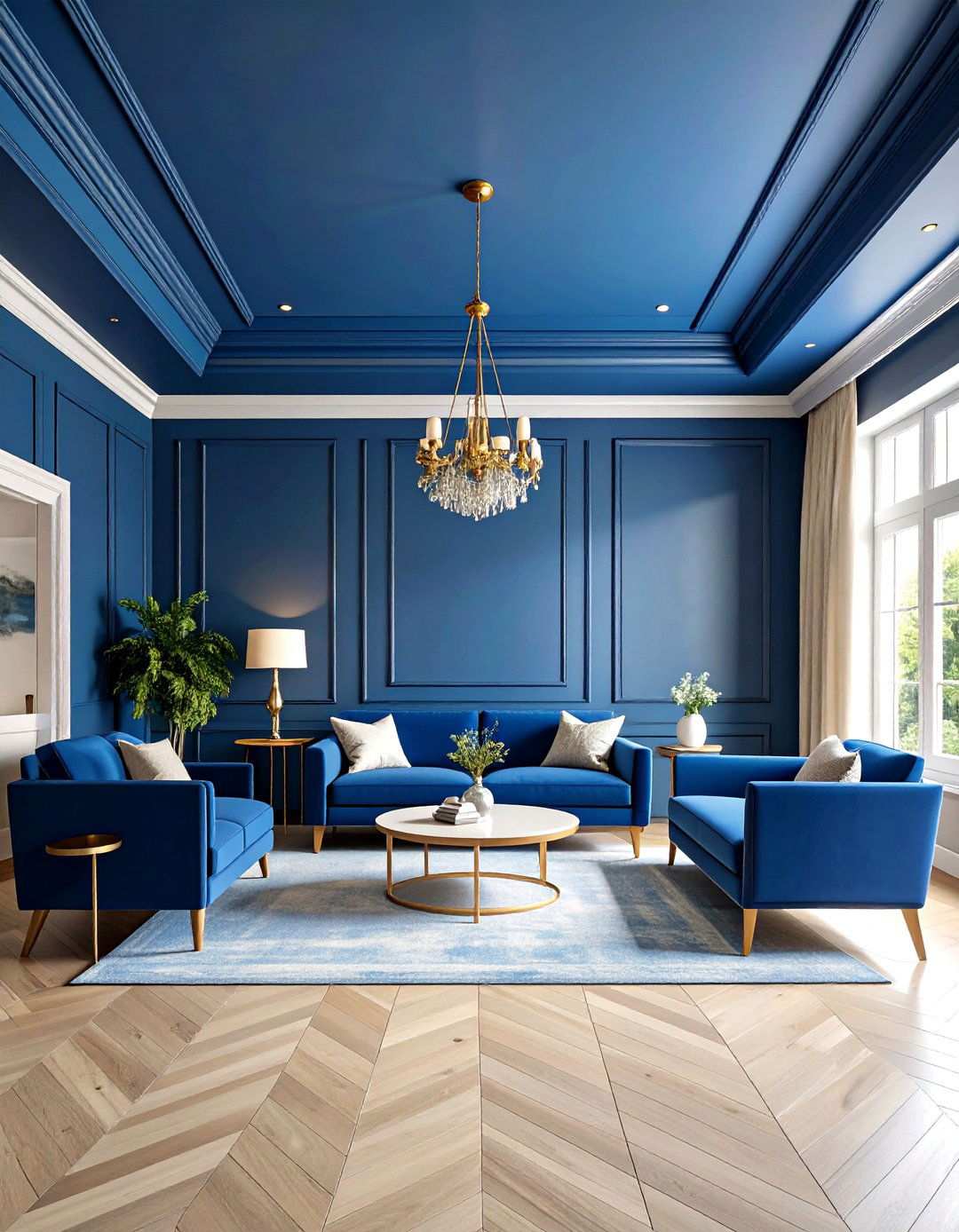
A statement piece of saturated color on the ceiling instantly restructures the room’s scale, visually elevating it while introducing a dramatic contrast to the surrounding walls. Consider a deep, rich hue like Newburyport Blue, which effectively makes a bright room feel taller.
Integrating the ceiling with the rest of the space is crucial, so use a flat or matte finish to conceal minor blemishes and echo the color in small accessories. This subtle approach helps the ceiling blend in, rather than feel isolated. For a seamless look, opt for low-VOC paints and extend the color to the upper two inches of the walls. To ensure long-lasting results, invest in proper prep, including light sanding, primer, and two thin coats.

As an Amazon Associate I earn from qualifying purchases.
2. Two-Tone Dimensional Accent Ceiling
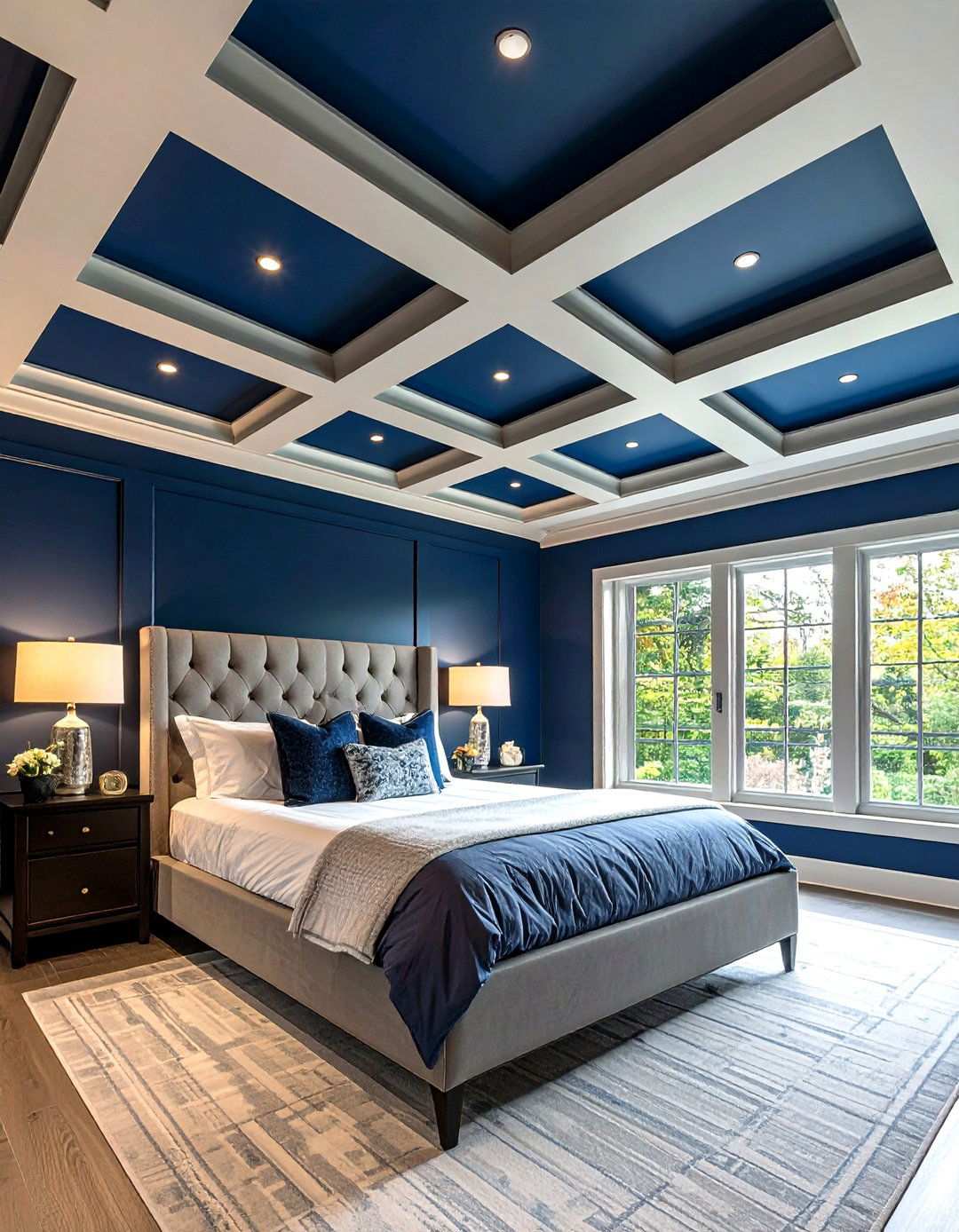
The two-tone coffered accent ceiling is a masterclass in contrasting color and texture. By painting the interior of each coffer a different hue, you create depth and draw attention to the grid’s shadow lines, giving this classic carpentry detail a fresh twist. Textured coffers, whether made from beadboard or plaster, tap into the broader trend of tactile ceilings, offering warmth and character.
To amplify the effect, paint the beams a lighter tint to emphasize the structure, and slip LED tape into the recesses for a soft halo that accentuates the dimensional pattern after dark. This approach works just as well with drywall coffers made from simple 1×4 lumber, keeping costs low while delivering high returns in terms of visual appeal and resale value.
3. Warmth of Wooden Accents
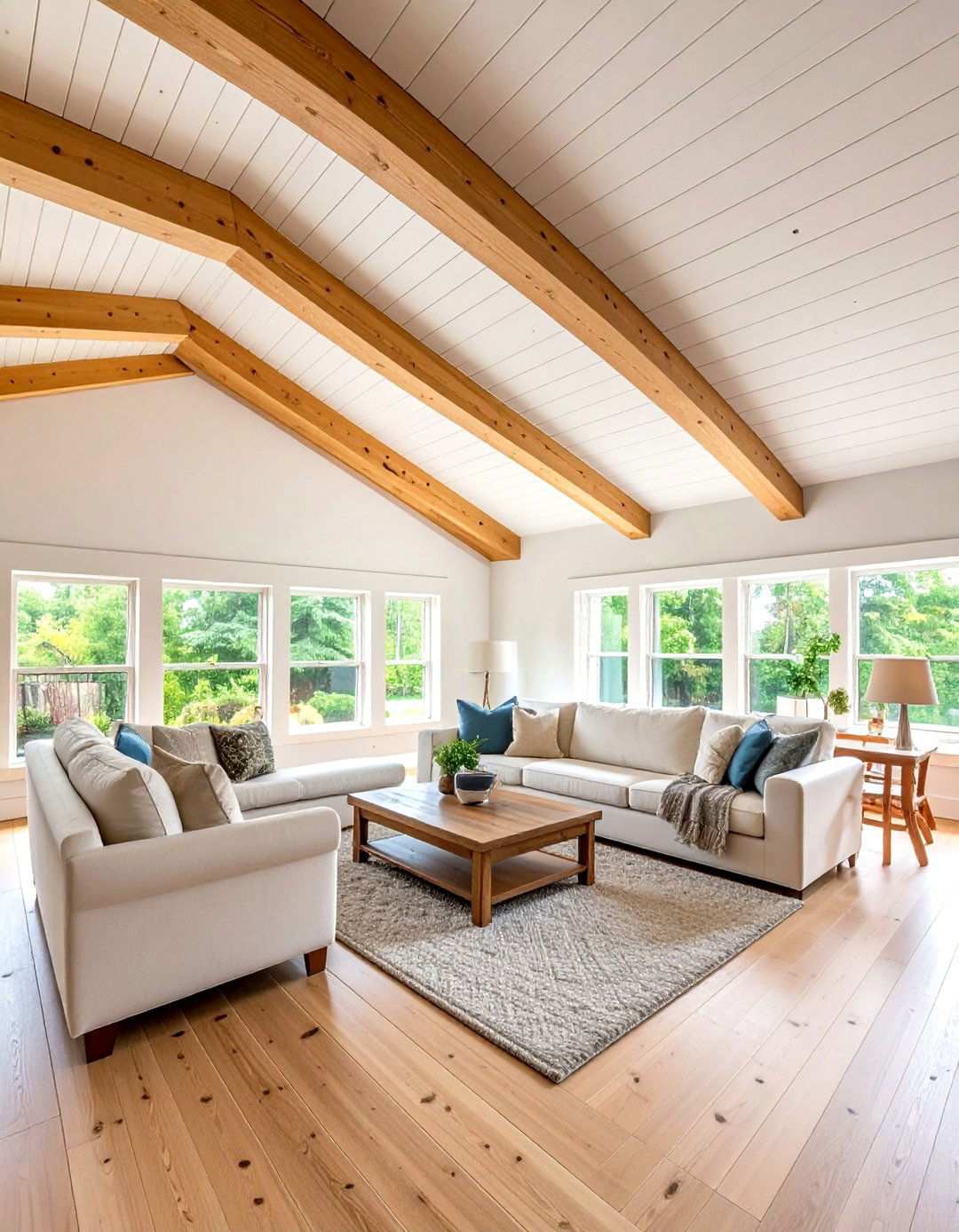
The tongue-and-groove accent ceiling is a design staple that wraps the room in cozy texture and muffles sound. Designers on Houzz showcase a range of boards, from pine and cedar for a Scandinavian lightness to walnut for a luxe depth. This versatile treatment can swing from rustic to refined, depending on the finish and style.
To speed up installation, consider a hidden cleat system, and opt for factory-primed boards to prevent pitch bleed. Finish with breathable, water-based polyurethane to keep the grain visible. For vaulted spaces, orient the boards along the roofline to draw the eye upward, and add a slim ridge beam for subtle architecture without heavy timber.
4. Shimmering Metal Accents
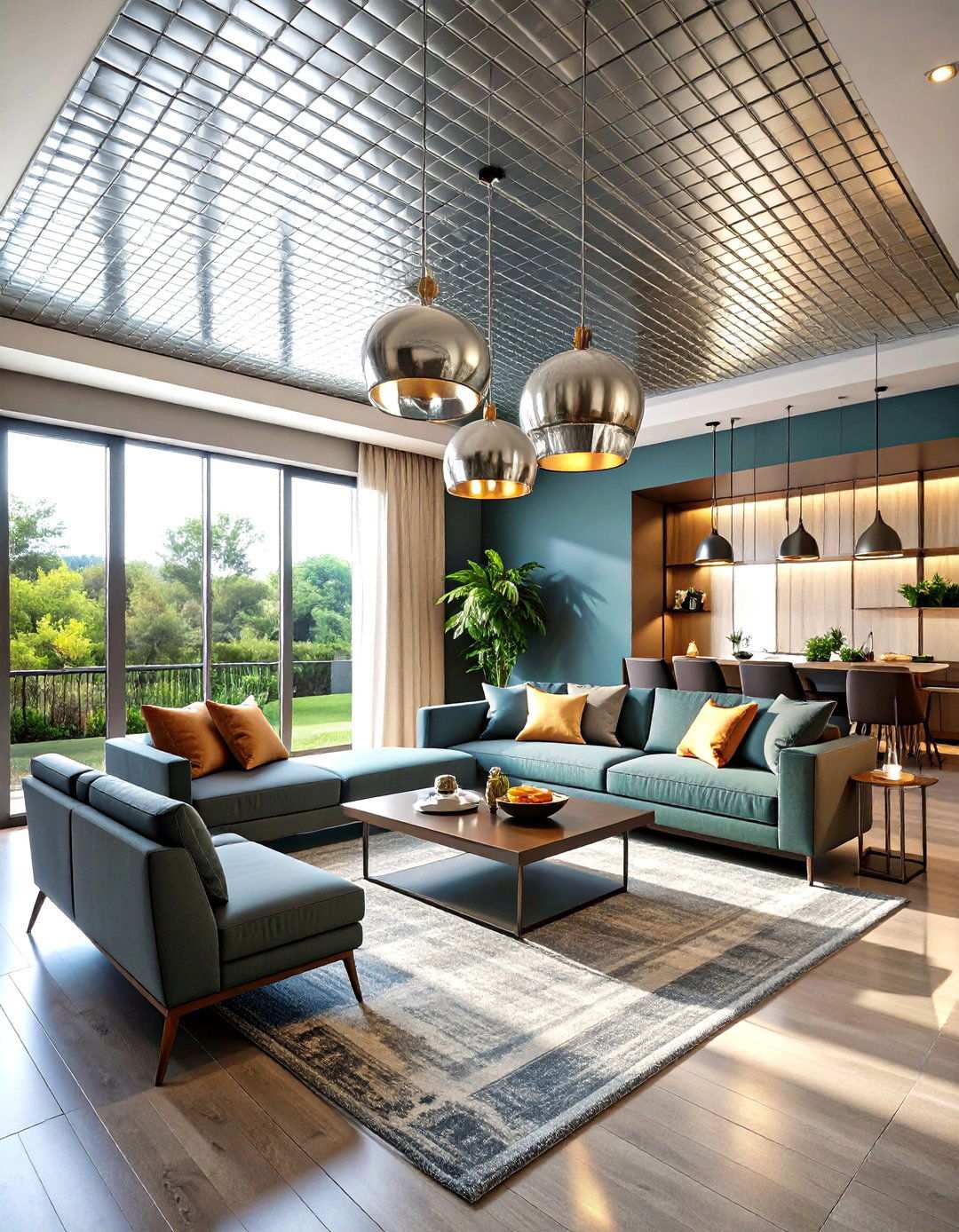
Pressed-metal tiles are making a comeback, adding a touch of sparkle to kitchens and powder rooms. Patterned nickel or brass sheets from specialty suppliers can be clipped into DIY grids, while brushed-matte finishes feel current and sophisticated. These tiles are remarkably lightweight, requiring minimal reinforcement; simply add fire-rated backer board above ranges.
To modernize the look, paint the tiles the exact wall color, allowing their relief to cast tonal shadows by day and gleam under pendants at night. This understated approach adds a touch of glamour to the space without overwhelming the senses.
5. Transforming Ceilings into Artistic Statements
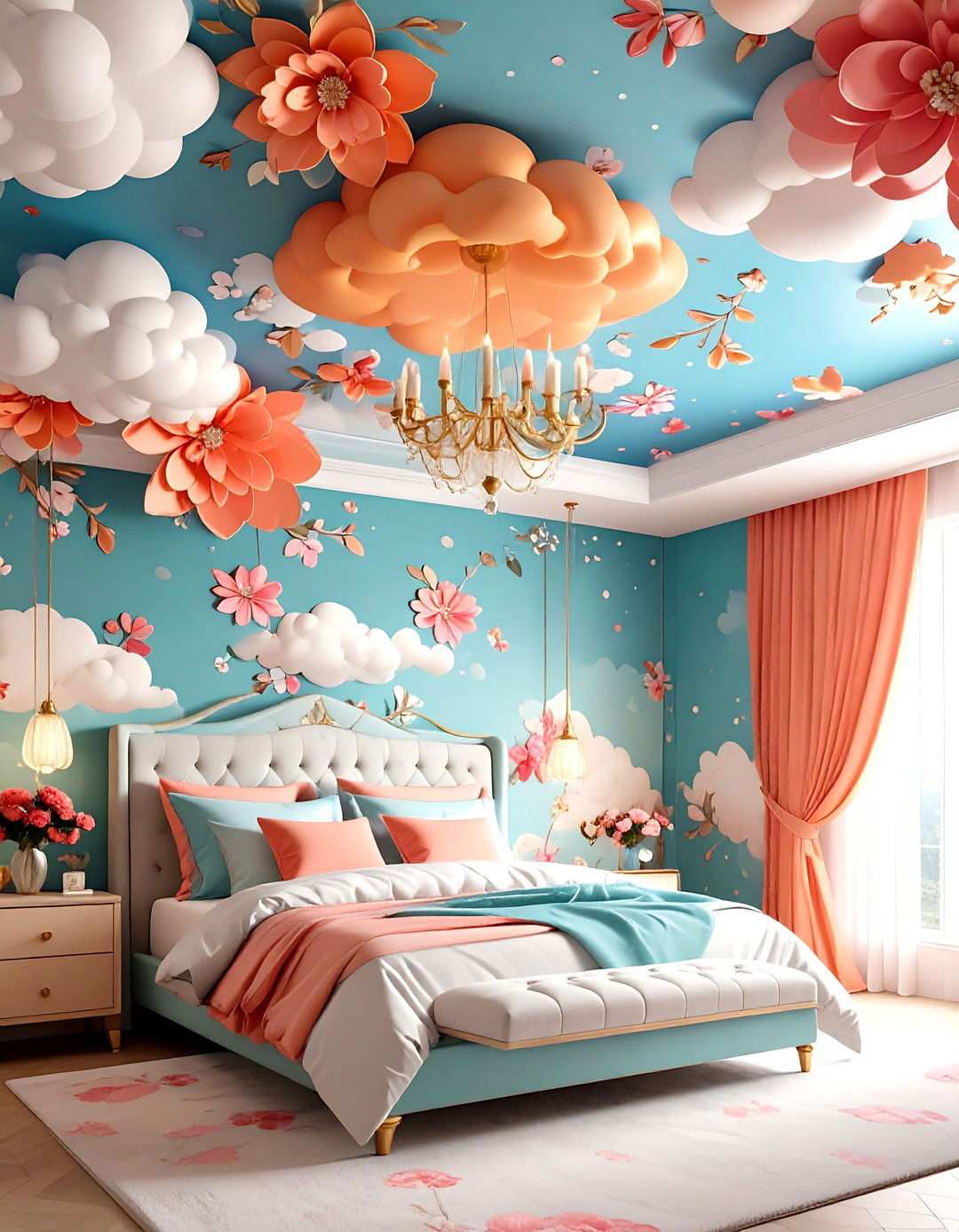
As we predicted, 2025 is shaping up to be the year of the ceiling, with wallpaper, in particular, gaining traction as a bold design statement. With florals, geometrics, and metallic clouds, designers are turning ceilings into immersive art installations that make a lasting impression. To achieve this look, opt for lightweight, paste-the-wall papers that conform to your needs as you position each strip. Having a helper stabilize the ladder will also come in handy. For a cohesive look, ensure that large patterns read well on broad planes, while more subdued textures can effectively calm lower ceilings. For added protection, a satin-finish clearcoat will shield seams from moisture in humid areas.
To ground the exuberance of a bold ceiling pattern, consider echoing the motif color in trim or textiles. This thoughtful touch will prevent the space from feeling overwhelming, while adding a level of sophistication to the overall design.
6. The Rhythm of Geometric Wood Slat Ceilings
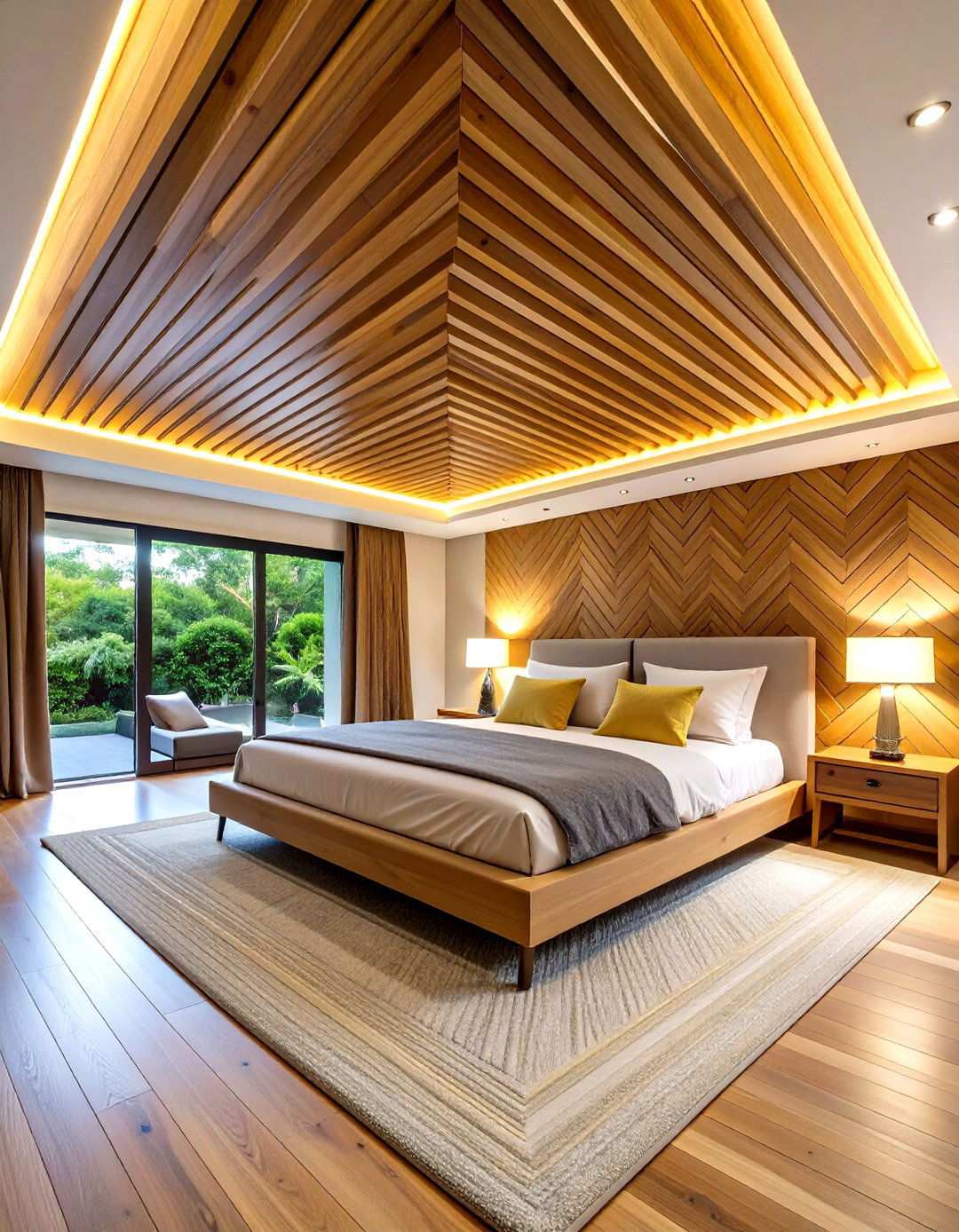
Custom acoustic slat panels in warm oak or maple are a popular design choice for creating a sense of harmony in open-plan rooms. By incorporating custom slots behind each batten, manufacturers like Geometrik can effectively absorb echo, marrying aesthetics with functionality. The result is a space that not only looks beautiful but also feels more serene.
For a more dynamic look, consider laying battens in chevrons, which will create a sense of movement and energy in the space. Alternatively, running them lengthwise can help visually elongate the ceiling, making the space feel more expansive. To maintain a sense of mystery, opt for black acoustic fleece, which will recede in shadows, allowing the wood to take center stage. Adding recessed micro-downlights between slats will provide discreet illumination, while sustainably sourced veneers will keep the carbon footprint of the design remarkably low.
7. The Art of LED-Backlit Ceiling Drops
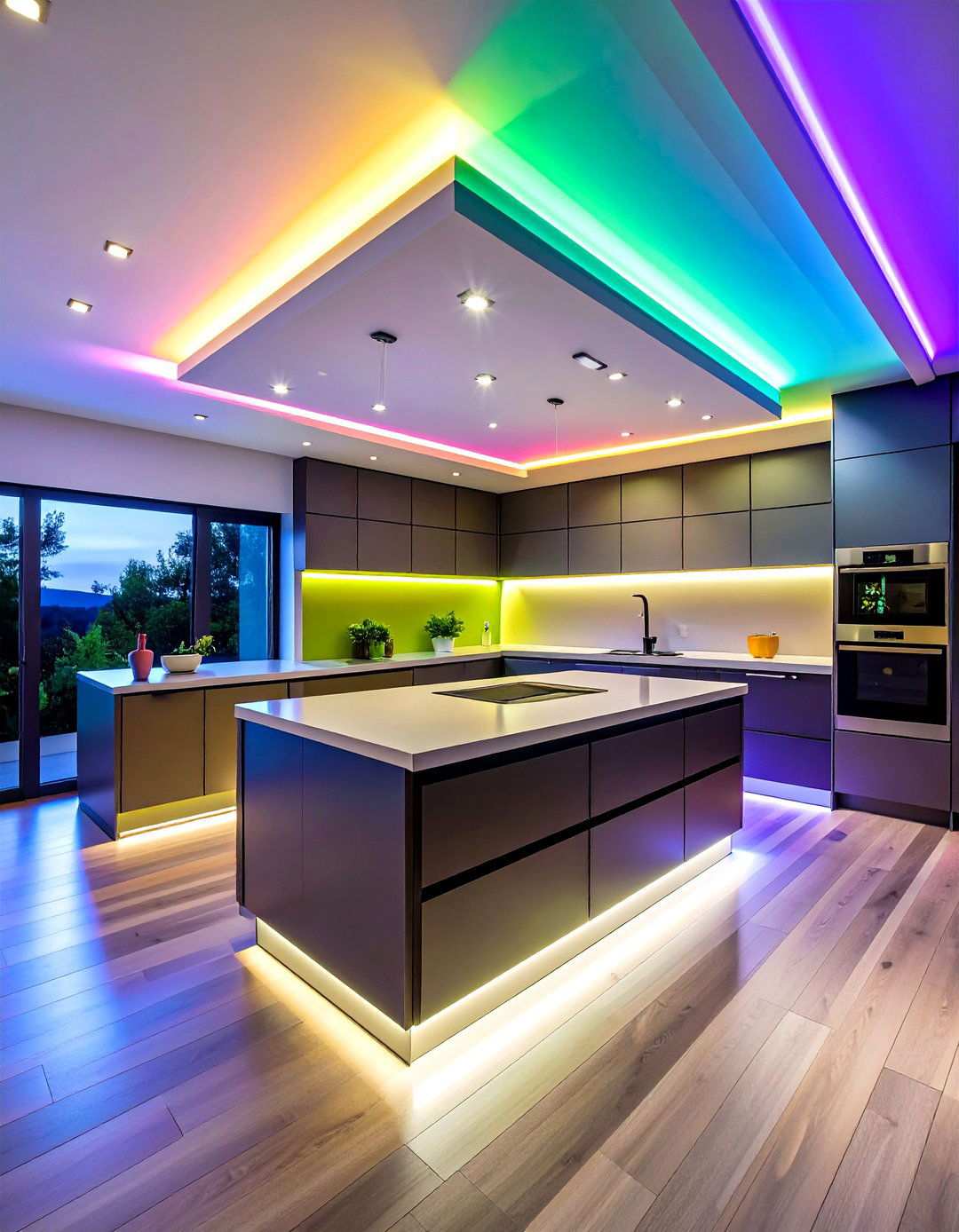
A cleverly designed “soffit” lined with RGB-tunable LED strips can create a stunning visual effect, transforming the ceiling into a floating canvas of light. With the touch of an app, the color of the LED strips can shift seamlessly from sunrise hues to midnight blues, creating a captivating atmosphere that’s sure to impress.
To maximize the impact of the LED lighting, keep the drop to a shallow two inches deep, preserving the height of the ceiling. Painting the underside of the drop with a high-reflectance white will also help to bounce light farther, creating a more even and radiant glow. In media rooms, syncing the color fades with movie scenes can create an immersive experience that transports viewers to new worlds.
8. The Power of Hand-Painted Mural Ceilings
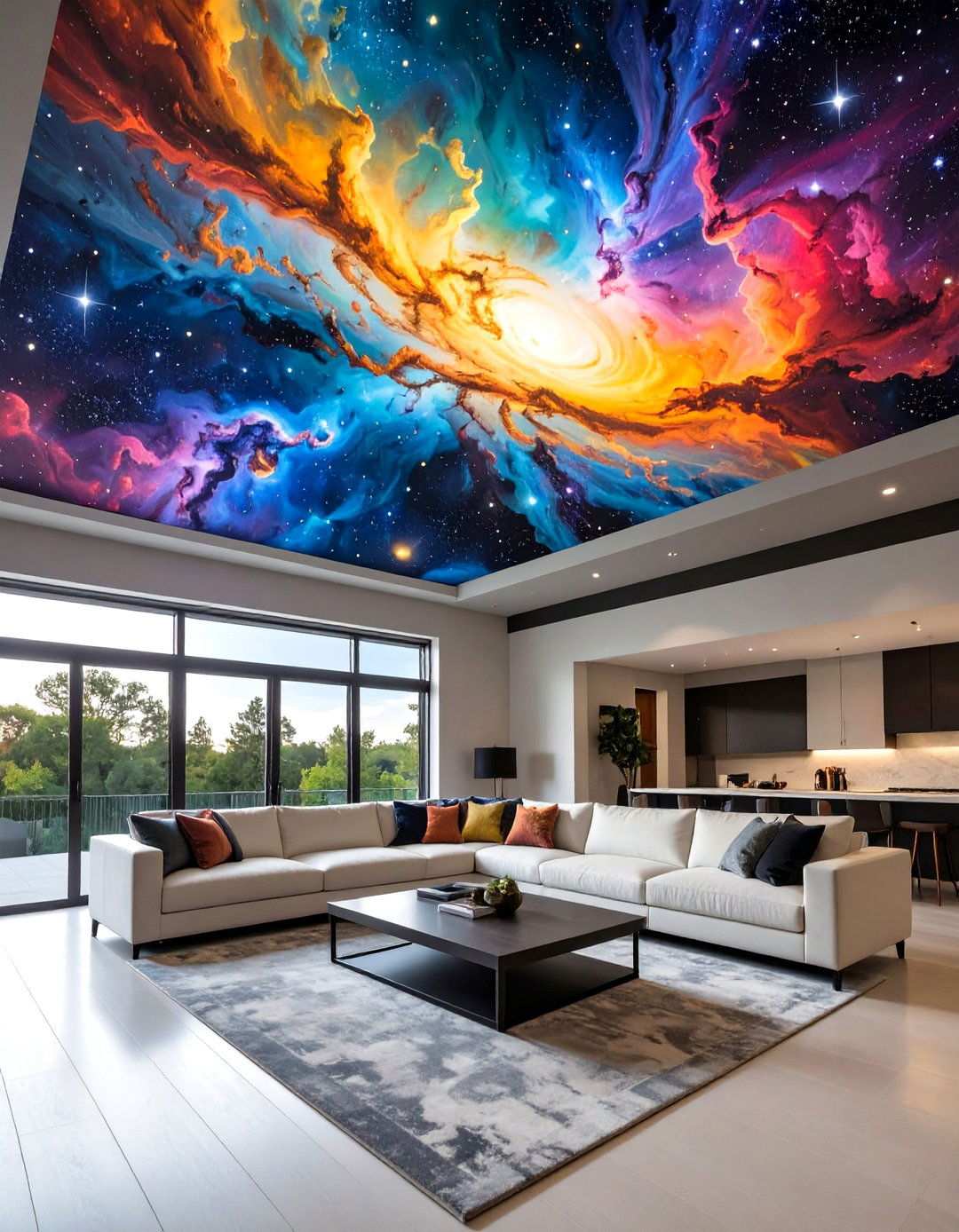
A hand-painted mural ceiling is a unique and personalized way to transform a space into a work of art. By incorporating custom brushwork, designers can create a storybook sky or graphic tribute that’s truly one-of-a-kind. As demonstrated by a TikTok creator who turned a broken fixture into an Iron-Man-inspired nebula, the possibilities are endless.
To achieve this look, start by outlining the design with projector-thrown chalk to get a clear vision of the final result. Then, fill in the details with flat, scrub-resistant acrylics that will withstand the wear and tear of daily use. To protect the art from moisture in humid areas, apply a clear matte varnish. For renters, removable peel-and-stick canvas panels offer a convenient solution that can relocate when you move.
9. The Classic Allure of Coastal Shiplap Ceilings
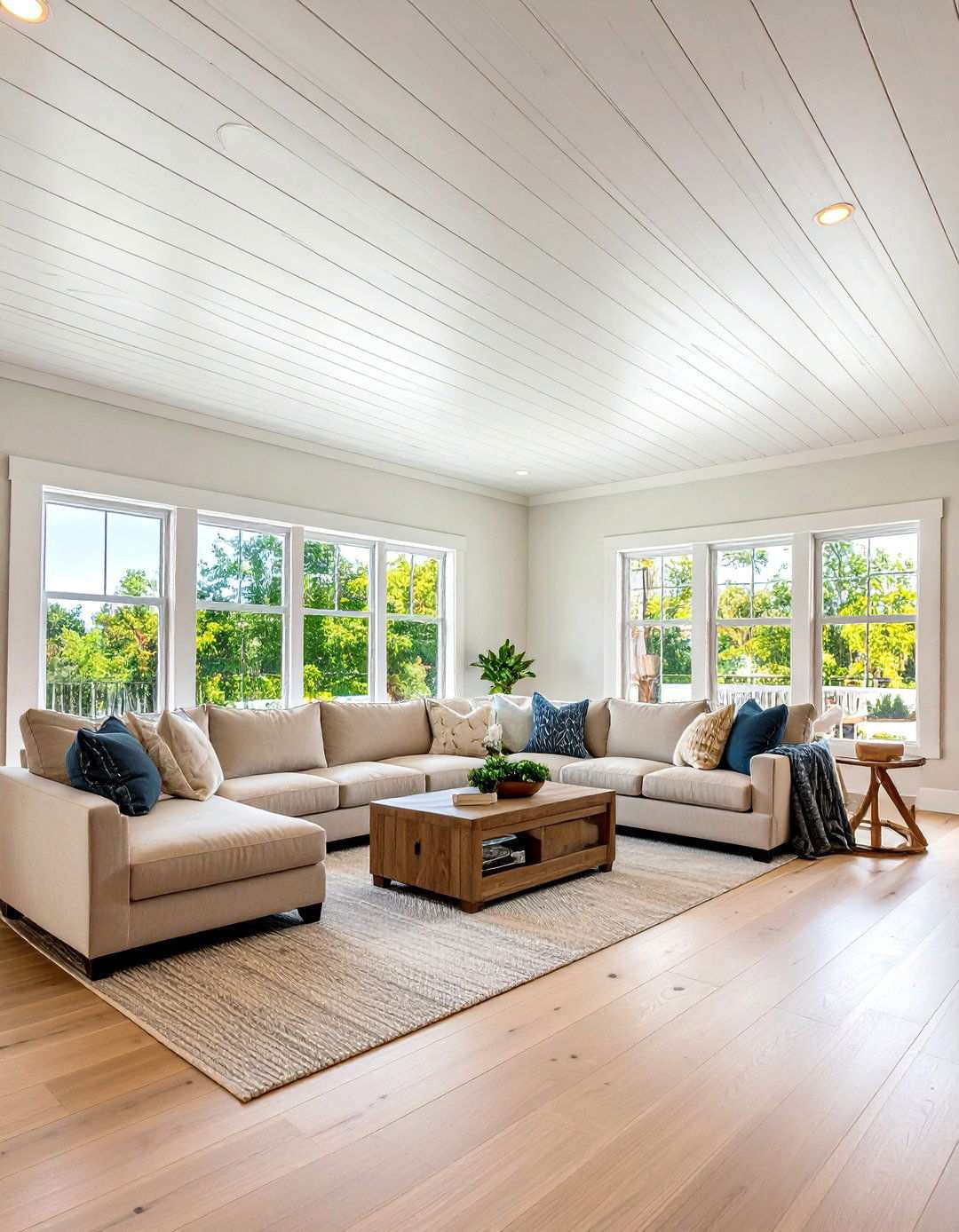
Extending classic shiplap boards overhead is a timeless design choice that draws attention to generous ceiling heights and reinforces breezy, seaside style. By pairing whitewashed planks with woven stools and soft sage cabinetry, Southern Living designers have created an easy, airy vibe that’s perfect for tempering heat in southern climates.
To ensure the longevity of the design, use MDF shiplap in conditioned interiors to avoid warping, spacing boards with a nickel for crisp shadow lines. A subtle semi-gloss finish will bounce daylight, while inset can lights will maintain clean sightlines, allowing the beauty of the shiplap to shine.
10. The Glamour of High-Gloss Lacquer Ceilings
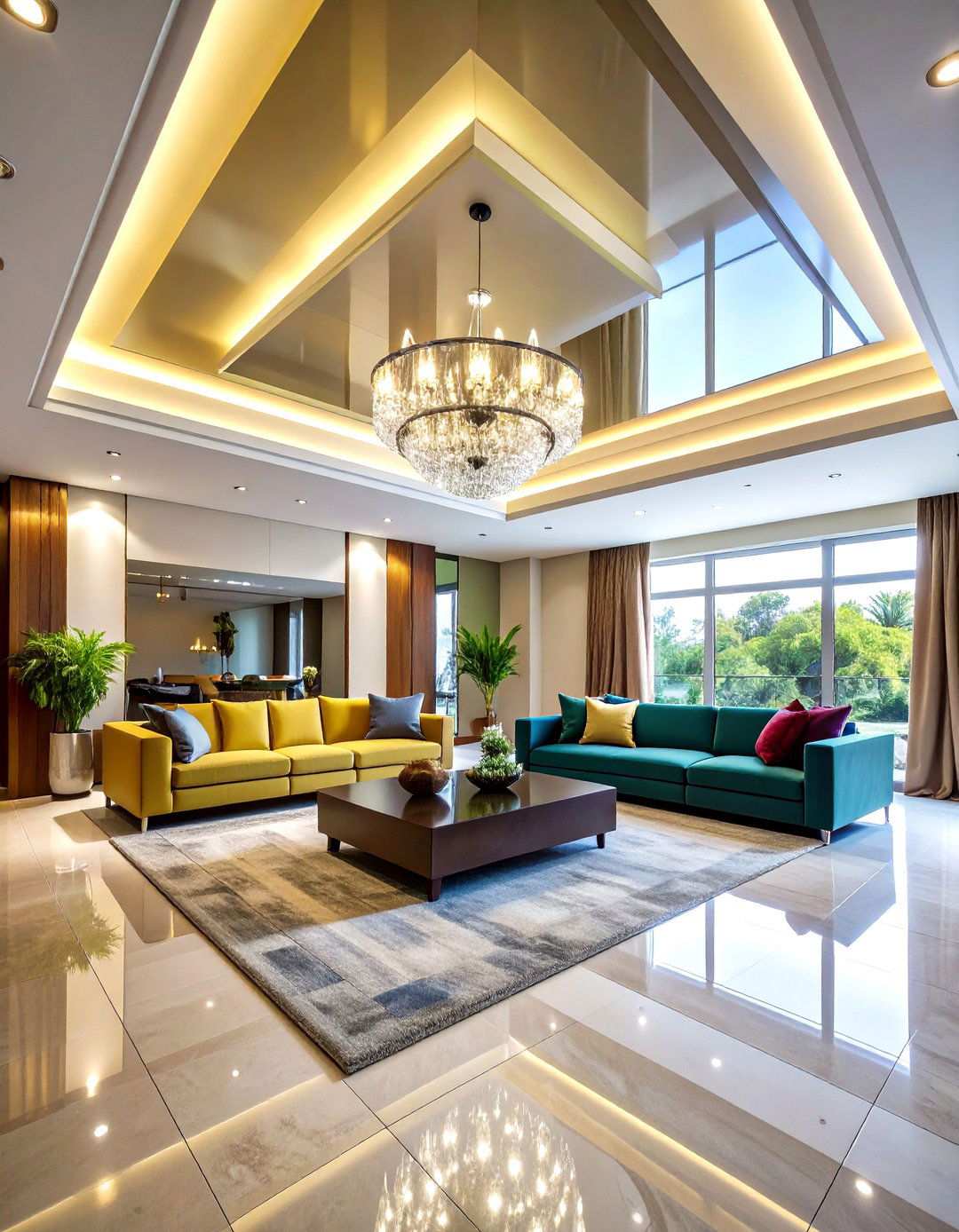
A mirror-like lacquer finish can instantly inject old-Hollywood glamour into a space – but it demands perfect prep to achieve a flawless result. Designers advise fine-grit sanding, spray application, and specialty enamels such as Fine Paints of Europe to avoid roller marks and ensure a smooth finish.
The payoff is well worth the extra effort: reflections will make small rooms feel double-height, and the accent ceiling will shimmer after dusk, creating a truly captivating effect. To balance the sheen of the lacquer, pair it with matte walls and plush textiles to create a design that truly sings.
11. Elevating Ceiling Designs with Stenciled Patterns
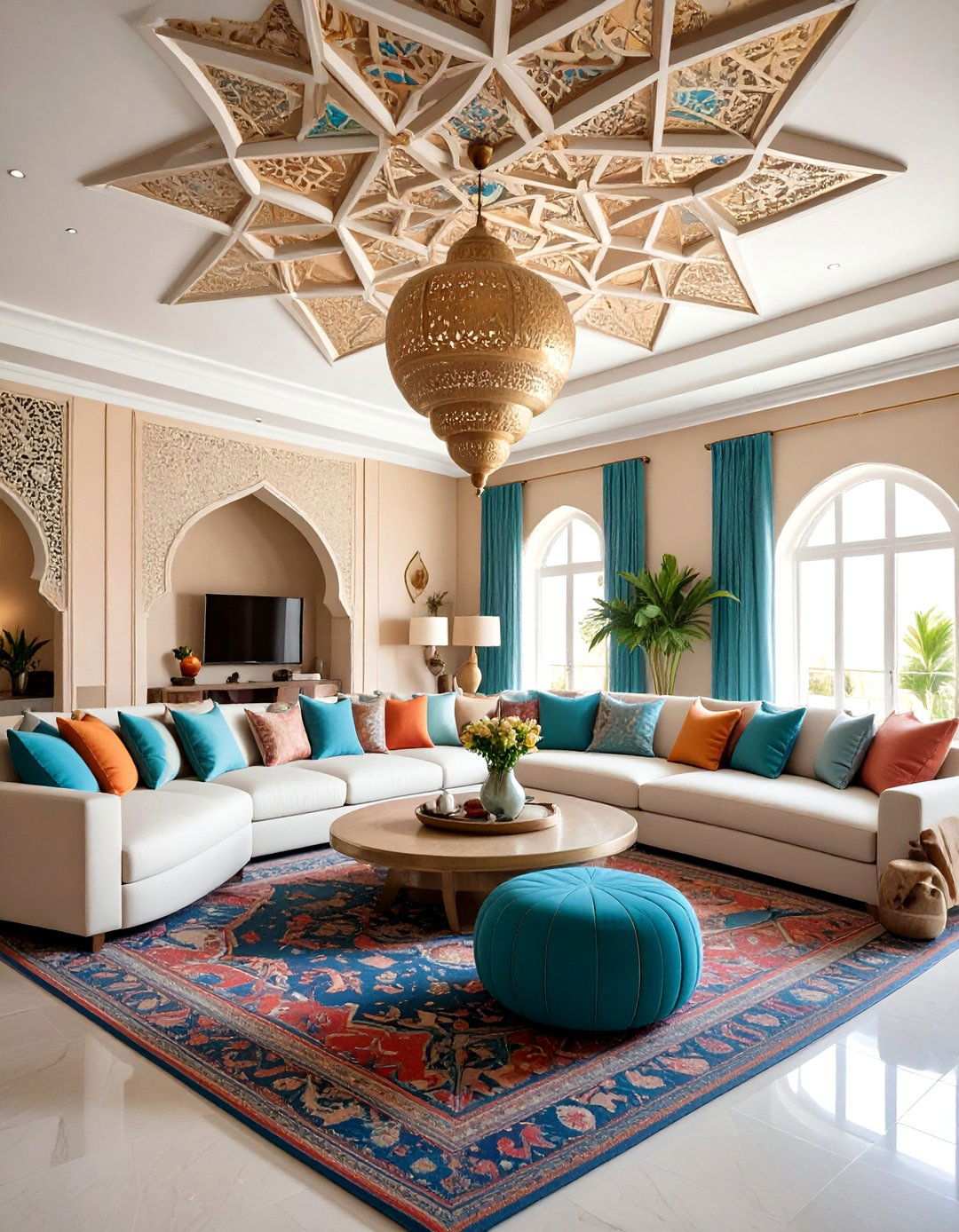
Stenciling is an affordable way to add personal touches to your ceiling, allowing you to create intricate designs with minimal investment. By using a reusable stencil and a pint of paint, homeowners can achieve a unique look without breaking the bank. House Beautiful notes that the technique is surprisingly DIY-friendly, requiring only a little tape, a dense foam roller, and some patience.
The use of metallic creams can add a touch of subtlety, while contrast colors can create a dramatic effect. To ensure durability, consider sealing your stenciled design with water-based polyurethane, perfect for kitchens where messes can happen.
12. Amalgamating Textures with Layered Trays and Cove Lighting
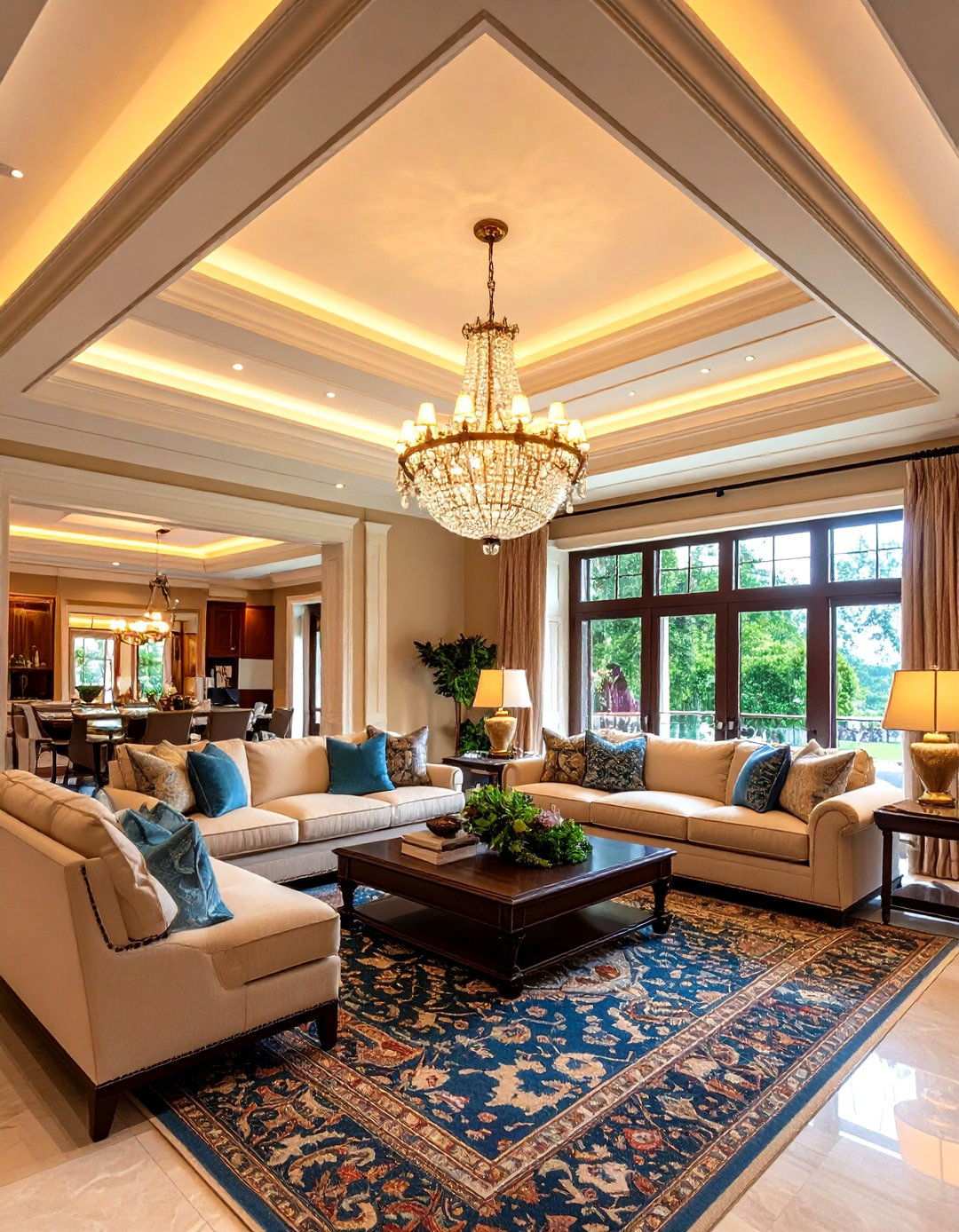
A layered tray accent ceiling combines architectural gravitas with the allure of concealed LEDs or chandeliers. Lighting specialists recommend blending cove glow and pendant sparkle to create an ambient atmosphere that flat ceilings often lack. By adding a deeper tone to the inner trays, homeowners can heighten the sense of depth, while crown molding along each step adds a polished finish.
With smart dimmers, you can seamlessly transition from a bright, task-oriented light to a softer, more dinner-party-friendly ambiance in the blink of an eye. This flexibility makes layered trays with cove lighting a versatile choice for any room.
13. Reviving Sustainability with Reclaimed-Wood Patchwork Ceilings
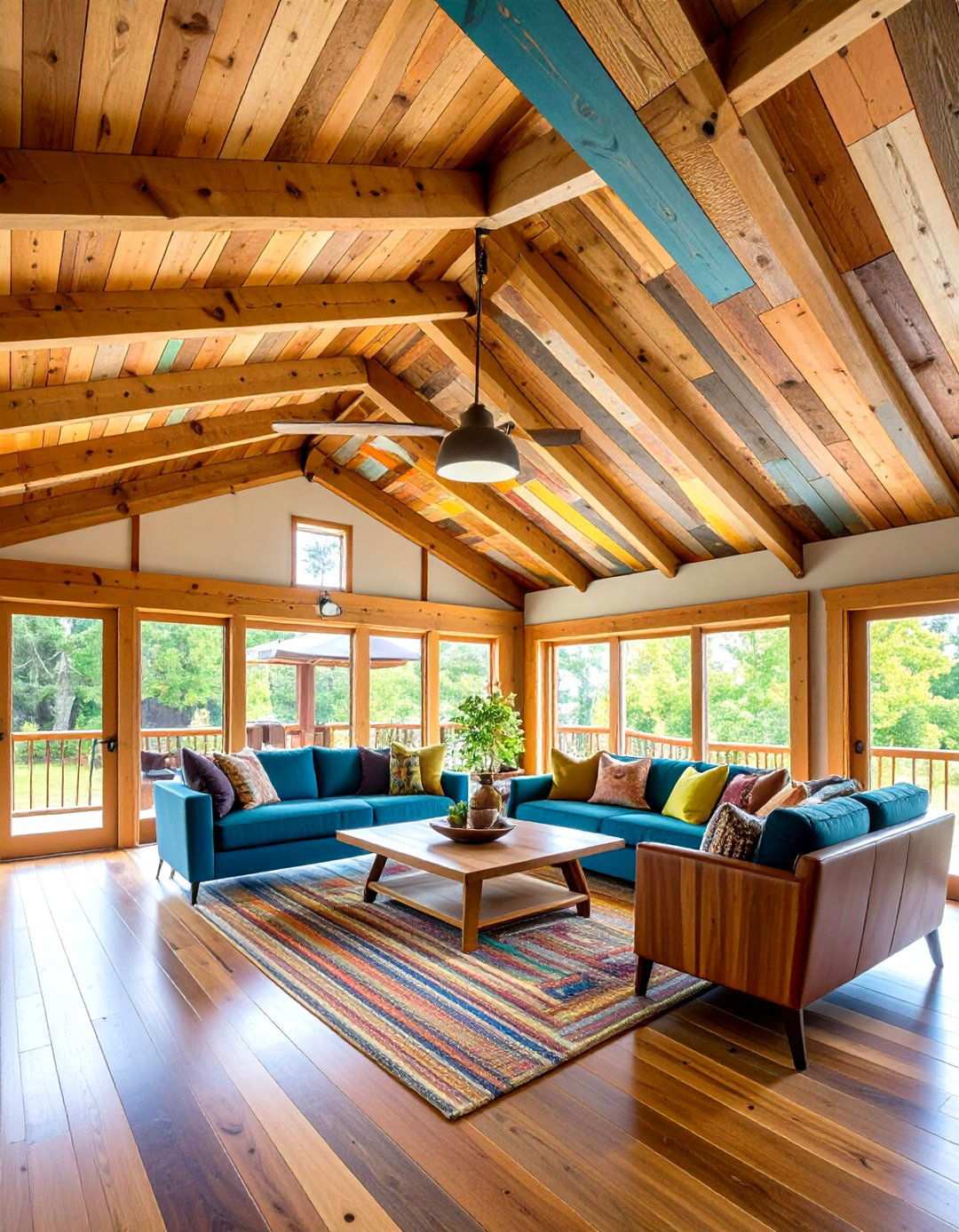
Stitching together salvaged barn planks or gym-floor boards creates a unique narrative overhead, celebrating sustainability and adding a touch of history to your space. The resurgence of wood-clad interiors, noted by Architectural Digest, has made reclaimed wood a popular choice for 2025’s top interior trends.
To clean and prepare your reclaimed boards, use borax to deter pests, then face-screw them into blocking, staggering lengths for a quilt-like effect. A low-VOC satin sealer will protect your wood without adding a glossy finish that could feel overwhelming.
14. Bringing the Outdoors In with Bamboo or Rattan Eco-Accent Ceilings

Lightweight bamboo panels offer a rapid-renewable material option that showcases the strength, flexibility, and carbon sequestration of bamboo. Inhabitat’s profile of bamboo-centric hotels highlights the grass’s many benefits, making it a smart choice for accent ceilings.
Combine narrow slats with darker binding strips for an island-inspired look, or install woven rattan mats inside coffers for subtle pattern. Finish your bamboo panels in clear, plant-based oil to preserve the natural honey tones and bring a touch of the outdoors into your space.
15. Creating the Illusion of Height with Mirror-Inset Reflective Ceilings
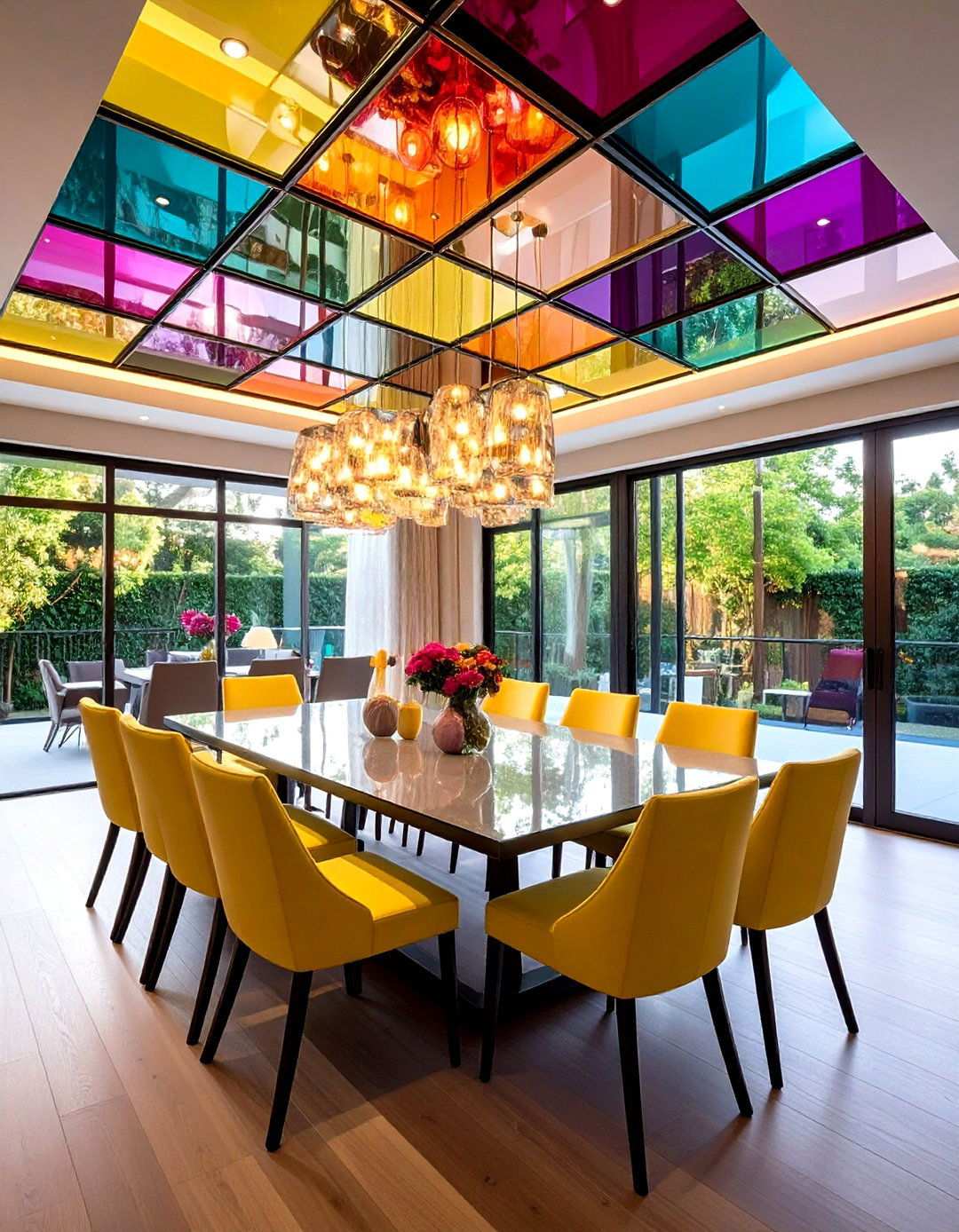
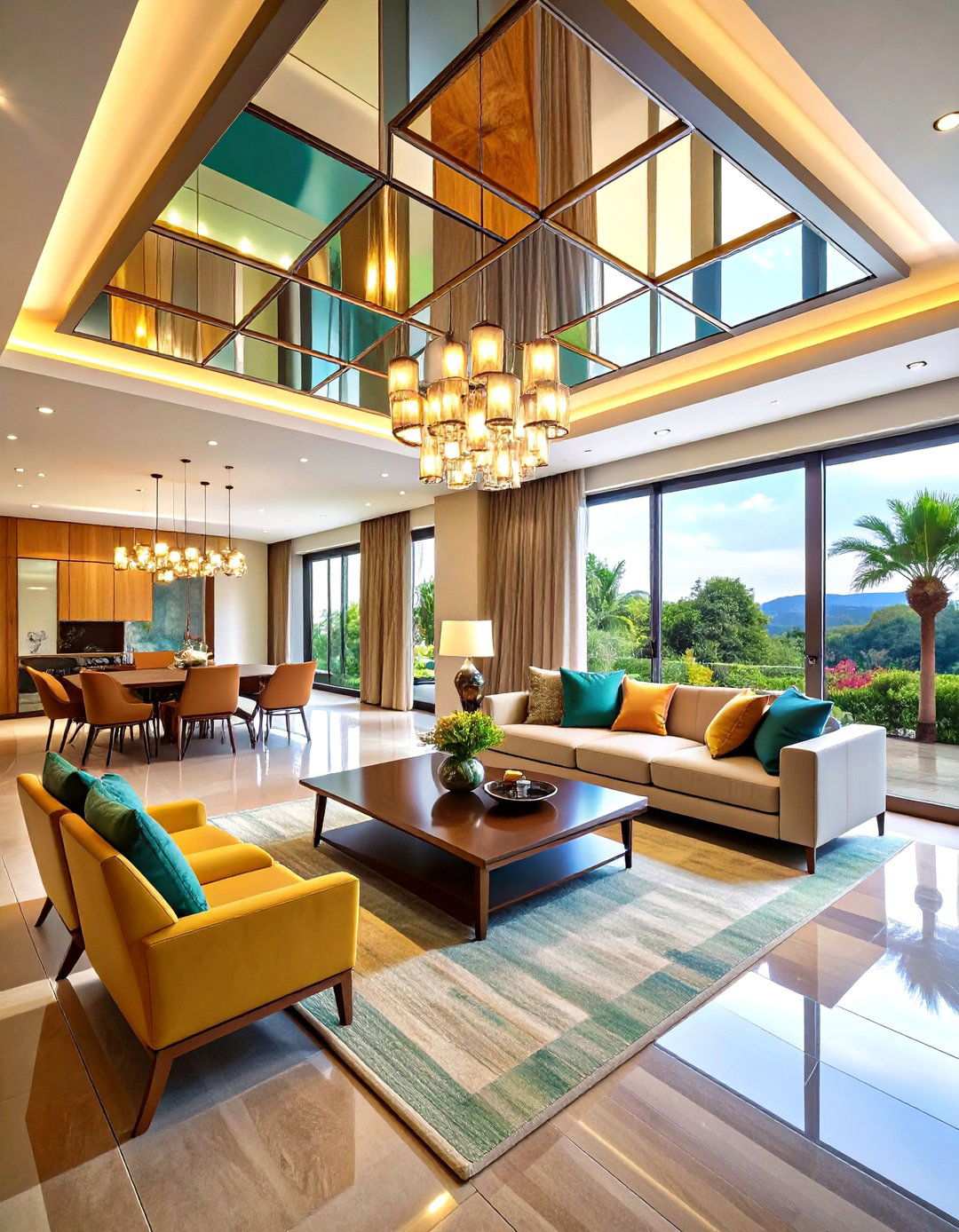
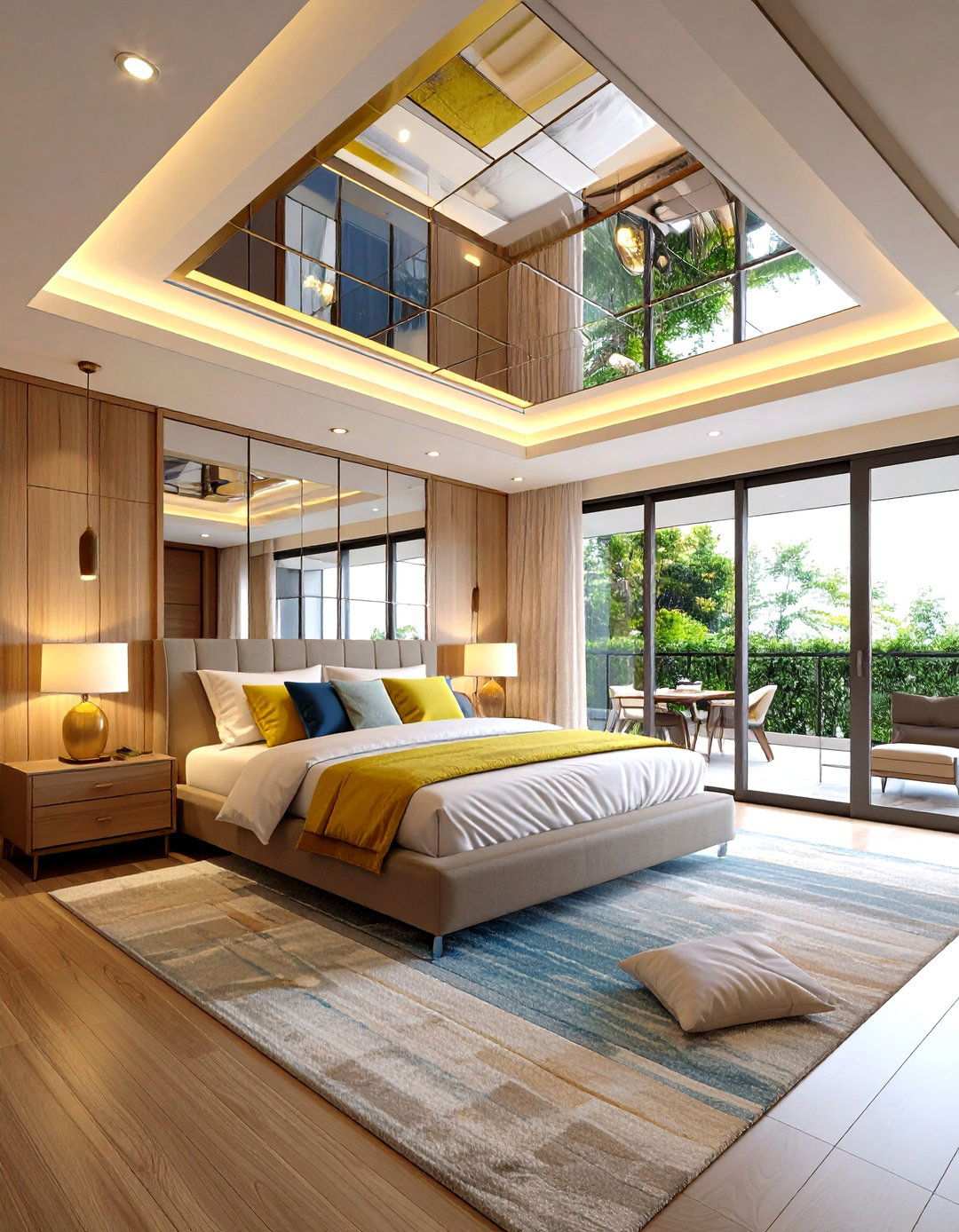
Strategically placed mirror panels can amplify daylight, blur boundaries, and make low rooms feel palatial. Designers recommend hanging mirrors slightly higher than eye level to trick the brain into perceiving extra height, while Architectural Digest touts high-gloss and mirrored elements for looping light through monochromatic schemes.
To avoid the weight and potential hazards of heavy glass overhead, use lightweight acrylic mirror squares affixed with construction tape. Bevel the edges to deter cracks, and pair your mirror ceiling with dimmable sconces to ensure reflections never glare.
16. Acoustic Felt-Baffle Accent Ceiling
Echoes in open offices and modern lofts can be calmed by suspended PET-felt fins, which also introduce a playful rhythm. The result is a visually striking and effective sound trap. Companies like CSI Creative and Frasch offer a range of colors for their blade arrays, which clip to simple suspension rails and can be used as both an accent ceiling and a sound-absorbing solution.
These arrays can be arranged in waves or herringbone patterns to create a dynamic movement, and linear LEDs can be integrated between rows for a striking all-in-one acoustic-lighting statement. The fact that felt is resistant to dust and 100% recyclable makes it an attractive option for many designers.
17. Custom-Printed Photo-Panel Accent Ceiling
Imagine being surrounded by a breathtaking sunset or a company’s brand graphic: with custom-printed photo-panels, the possibilities are endless. These panels can be printed with high-resolution images and are made up of lightweight acoustic tiles or light-diffuser panels. Architizer’s Ceiling Scenes project showcases the potential of printing skies onto drop-ceiling grids, transforming bland tiles into experiential art.
To ensure the longevity of the panels, UV-stable inks should be used to prevent fading, and Class-A fire-rated cores should be specified for code compliance. The best part is that swapping a few tiles later can refresh the design without requiring a full renovation.
18. Fabric-Stretch Seamless Accent Ceiling
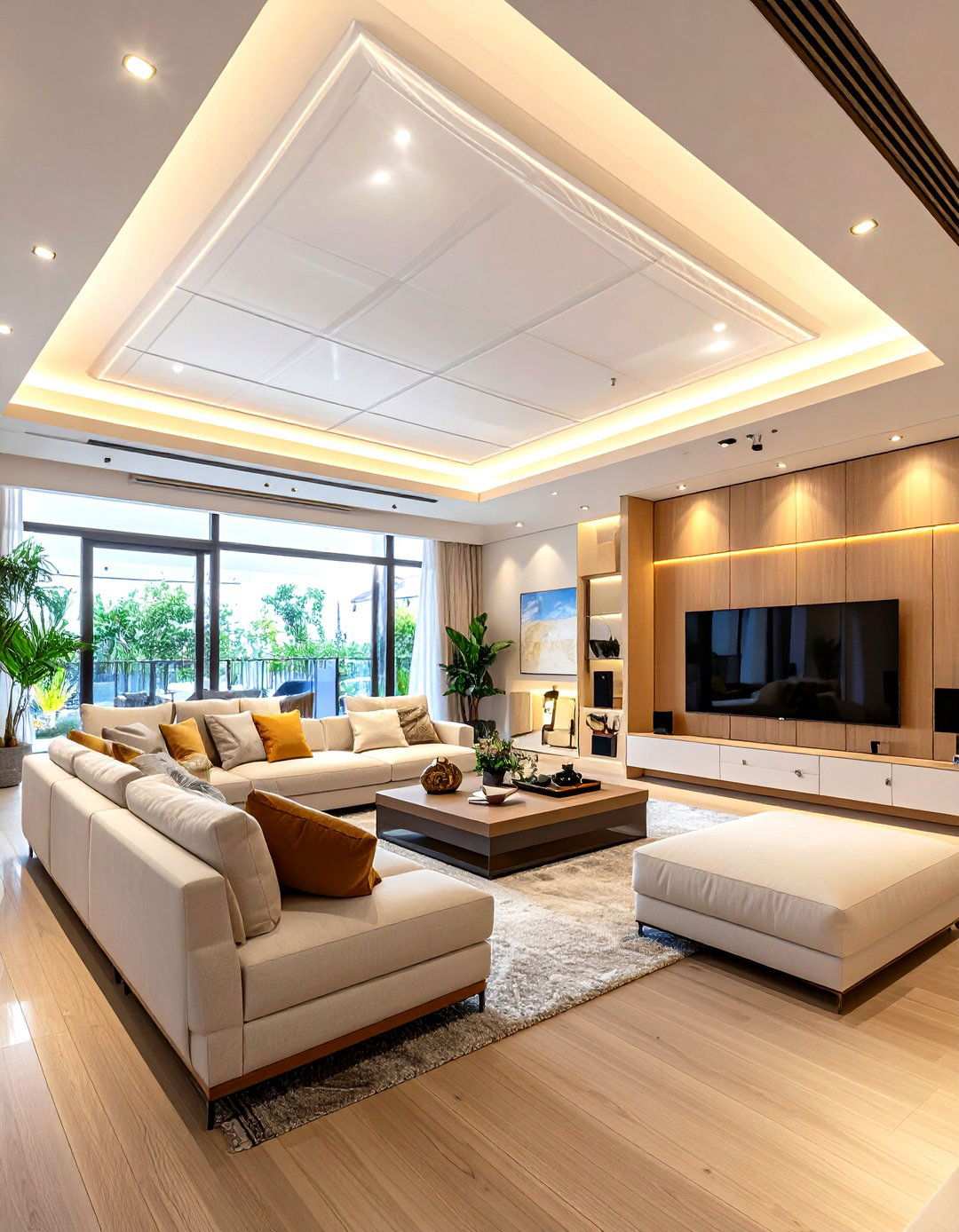
A flawless, acoustically tuned accent ceiling can be achieved with stretch fabrics that span up to 16 feet without joints. FabriTRAK’s FabriSPAN system secures the cloth in perimeter tracks, hiding speakers, sprinklers, and wiring behind a smooth plane. This sleek design is perfect for those who want to minimize visual distractions.
Homeowners can choose from a variety of light-diffusing or translucent fabrics to achieve the desired look, from an even glow to a backlit effect that mimics skylights. Because the membrane weighs next to nothing, it can be installed late in the schedule, preserving finishes below without any issues.
19. Living Moss Green Accent Ceiling
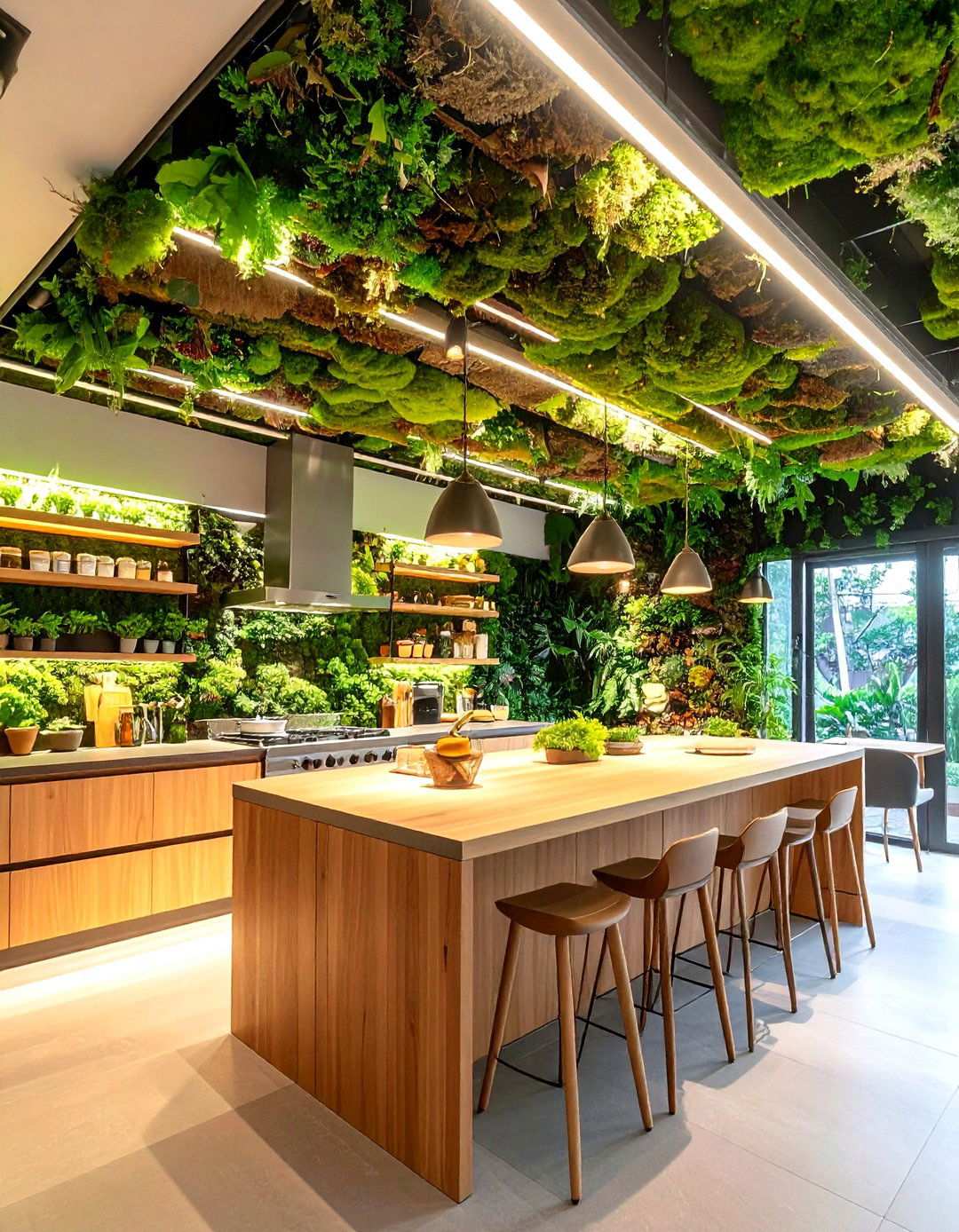
Biophilic design takes center stage with preserved-moss panels that bring the tranquility of the outdoors indoors without the need for watering. Inhabitat showcases 100% natural lichen walls that can be adapted to ceilings, while décor experts share creative ideas for hanging plant shelves near rafters to form a “green canopy.”
To add depth to the design, homeowners can mix flat bun moss with tufted pillow moss, and embed low-heat LED spots to keep the foliage vibrant. A glycerin-based preservation keeps pests away and ensures the color remains true for years to come.
20. Exposed-Beam Accent Ceiling For Texture
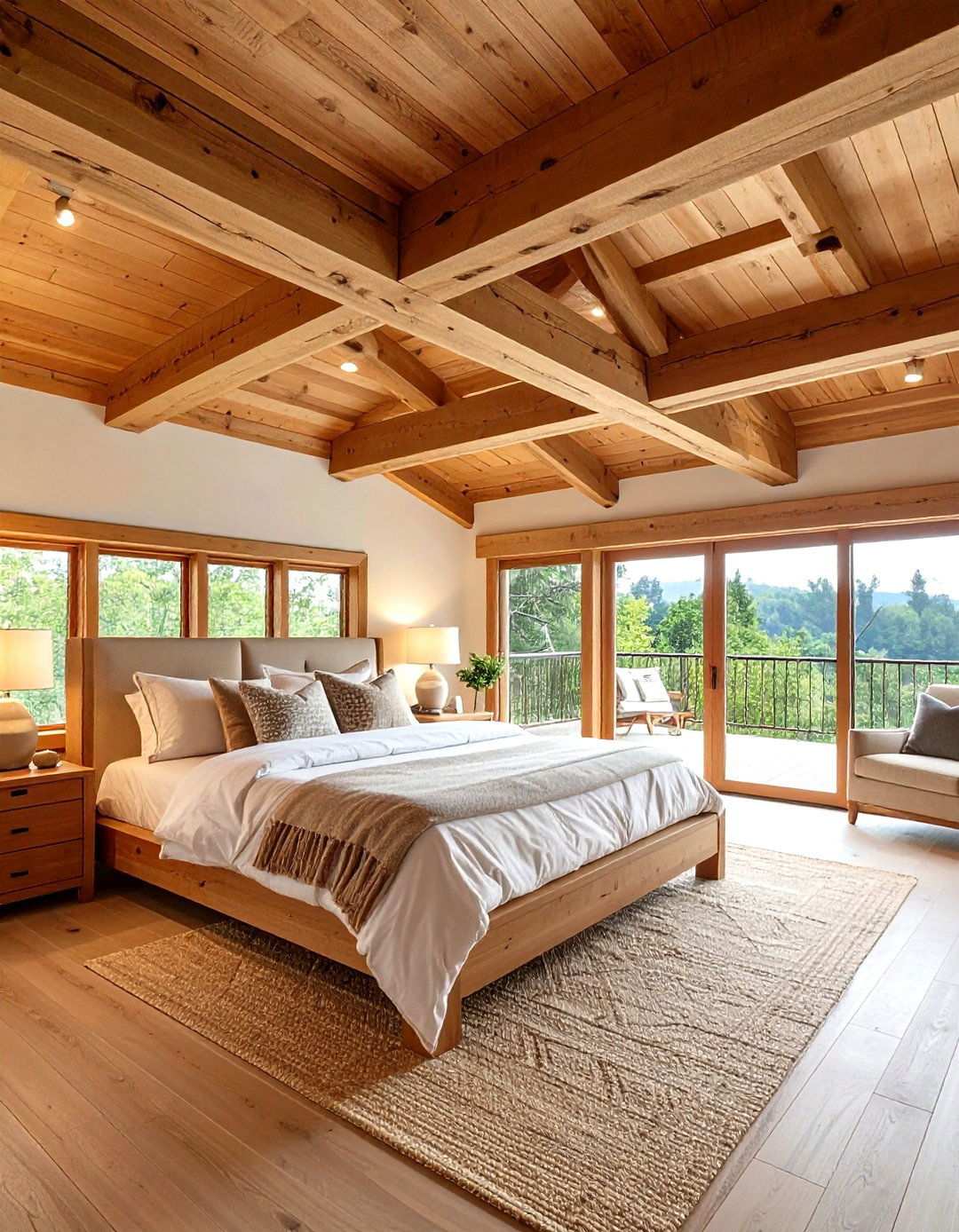
Exposed beams are a great way to add architectural rhythm to a space without lowering the ceiling height. Whether it’s chunky reclaimed oak or slim painted pine, the possibilities are endless. Houzz’s 2025 trend roundup lists beams among the most-saved ceiling treatments, echoing House Digest’s call for tactile surfaces over plain drywall.
For those who want to add texture to their space without the hassle of a full renovation, fake-beam kits are available. These kits consist of hollow box sections that can be slipped over existing joists for easy retrofits. Homeowners can choose a contrasting stain to make the pattern pop, and conceal conduit inside cavities for effortless sconce or pendant placement.