1. Reviving the Elegance of Art Deco in Your Dining Room
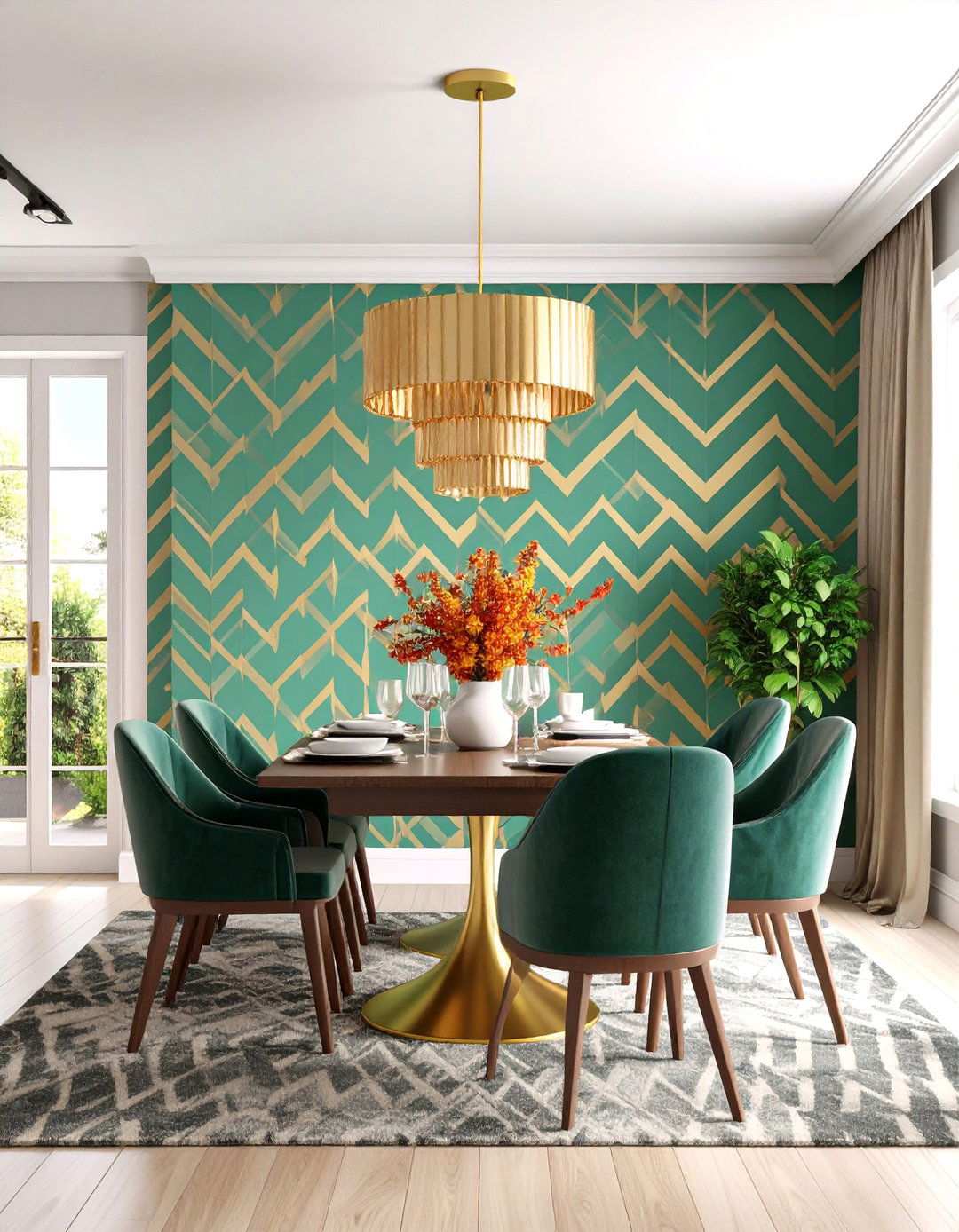
Elevate your dining space with the glamour and sophistication of the 1920s and 1930s, as Art Deco’s bold geometric patterns and rich colors transport you back to a bygone era. Characterized by clean lines, sharp angles, and opulent materials, Art Deco interiors have long been synonymous with luxury and style. From chrome to stainless steel, glass, and exotic woods like ebony, these high-end materials come together to create a space that exudes glamour and refinement. Born out of the post-war era’s call for luxury and extravagance, Art Deco’s striking designs have stood the test of time, continuing to captivate homeowners with their timeless elegance and sleek, streamlined forms.
2. Centerpieces of Elegance: Art Deco Dining Room Lighting
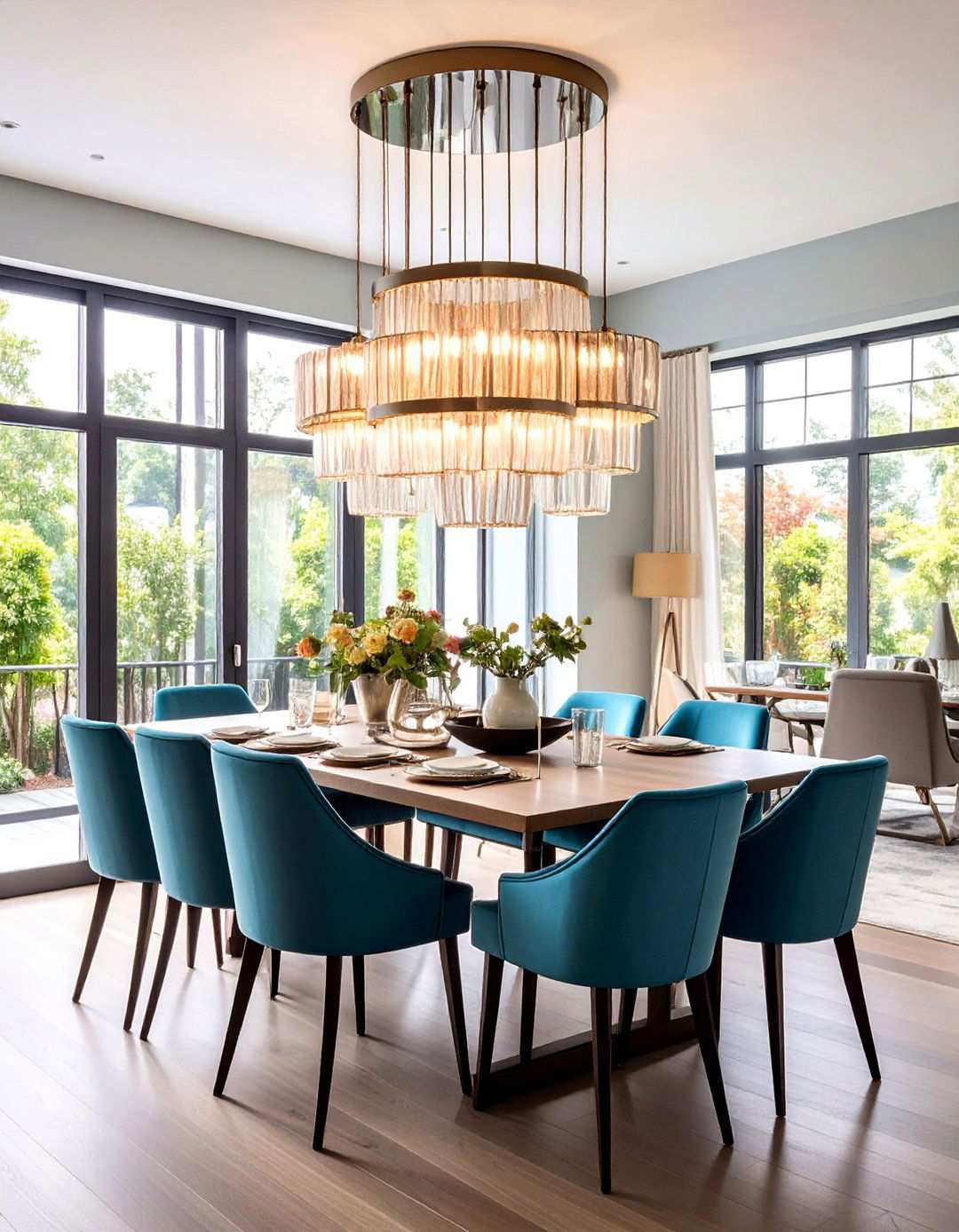
Art Deco chandeliers are the epitome of early 20th-century sophistication, blending luxurious materials, repeating geometries, and streamlined symmetry to create truly show-stopping focal points. With their bold geometric shapes and opulent designs, these fixtures elevate any space while drawing the eye with their striking colors and finishes. Premium materials such as solid metal, glass, and crystal ensure not only durability but also an unparalleled level of aesthetic appeal. Whether you opt for the dramatic, frosted glass skyscraper globes delicately lined in clear glass or something else entirely, an Art Deco chandelier will undoubtedly take center stage in your dining room, casting a warm, luxurious glow over the space and its geometric design elements.

As an Amazon Associate I earn from qualifying purchases.
3. Captivating Art Deco Dining Rooms with Chrome and Metallic Accents
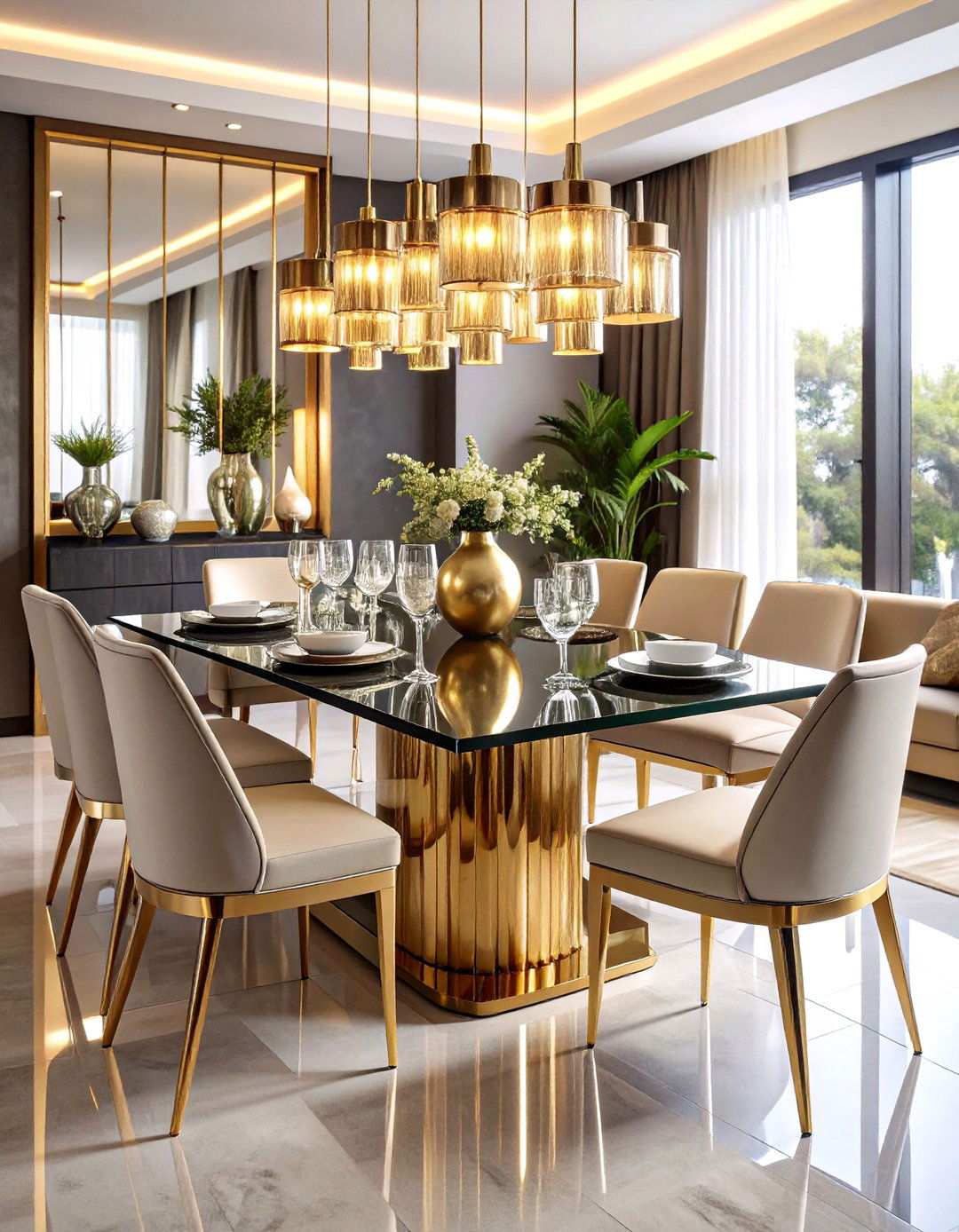
The unmistakable sparkle of Art Deco design comes alive through chrome hardware on furniture and lighting fixtures. Chrome, bronze, and brass in a range of matte and super shiny finishes create a sense of glamour and extravagance that defines the style. By pairing high-end materials like chrome and stainless steel with glass and lacquered wood, you can elevate the aesthetic of your dining room and create a truly unique space. Metallic accents in gold, silver, and chrome add a touch of luxury to lighting fixtures, furniture, and decor, setting the tone for an authentic Art Deco dining room. Sleek chrome frames paired with glass tops for dining tables and metallic details work in harmony with mirrored surfaces to create a sense of light and space. To avoid overwhelming the space, balance these metallic elements throughout the room, maintaining the sophisticated machine-age aesthetic.
4. The Luxurious Art Deco Dining Room with Velvet Upholstered Furniture
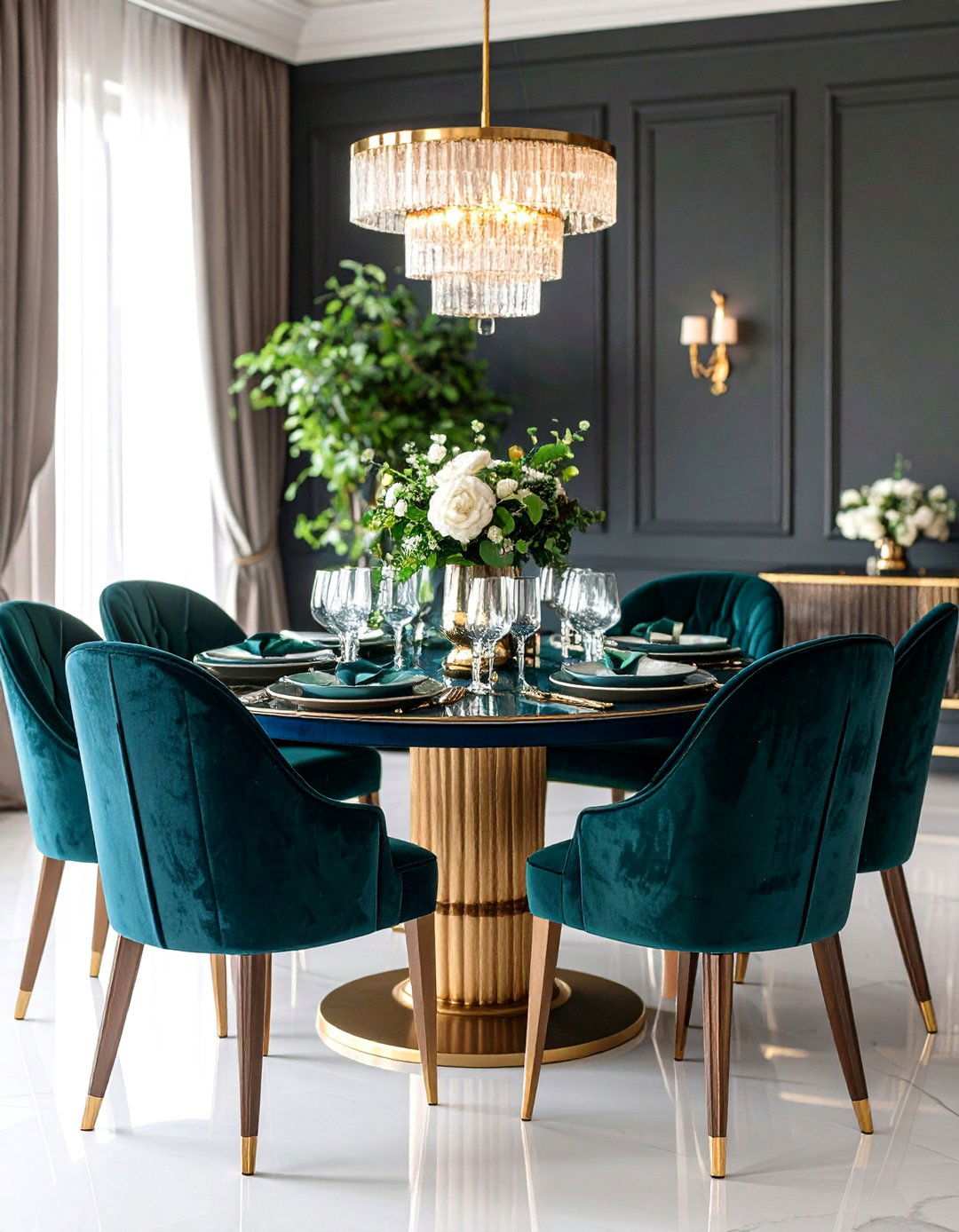
Rich fabrics like velvet are a staple of Art Deco design, adding a sense of opulence to dining chairs and furniture. Velvet upholstery in deep jewel tones like emerald green and sapphire blue creates a cozy and inviting atmosphere, perfect for extended conversations. When paired with geometric Art Deco wallpaper backdrops, velvet fabrics become a statement piece that adds depth and character to your dining space. Elegant dining chairs in rich velvet fabrics become the focal point of high-end spaces, blending glamour and coziness in perfect harmony. Chairs with curved backs or angular silhouettes echo the geometric principles of the era, providing comfortable seating that encourages leisurely dining experiences.
5. Art Deco Dining Rooms that Shine with Mirrored and Glass Elements
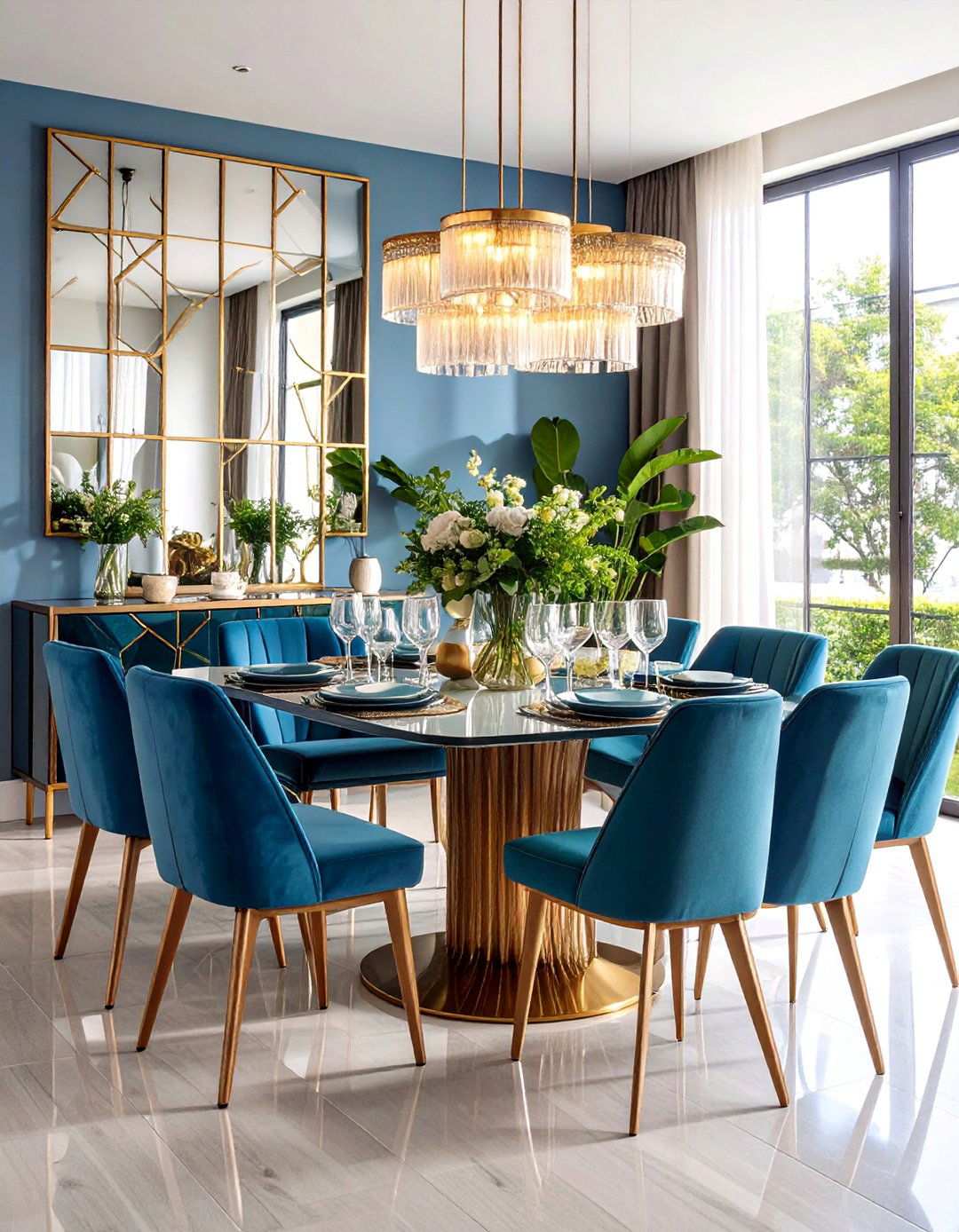
Large mirrors with distinctive Art Deco frames and mirrored furniture pieces can instantly add glamour and light to your dining space. Mirrored surfaces work in tandem with metallic details to create a sense of light and space, making any room feel more expansive. By incorporating glass blocks in partitions or windows alongside wall panels with intricate designs, you can maximize the interplay of light and reflection. Round glass coffee tables or sideboards with mirrored finishes complement geometric Art Deco patterns beautifully, adding a touch of sophistication to your dining space. Leaded glass bi-fold doors and mirrored backsplashes behind bars or serving areas enhance the luxurious atmosphere, creating an inviting space that’s perfect for special occasions. Strategically placing mirrors can amplify natural light and create the illusion of expanded space, maintaining the era’s emphasis on geometric forms.
6. Exuding Elegance: Art Deco Dining Room with Exotic Wood Furniture
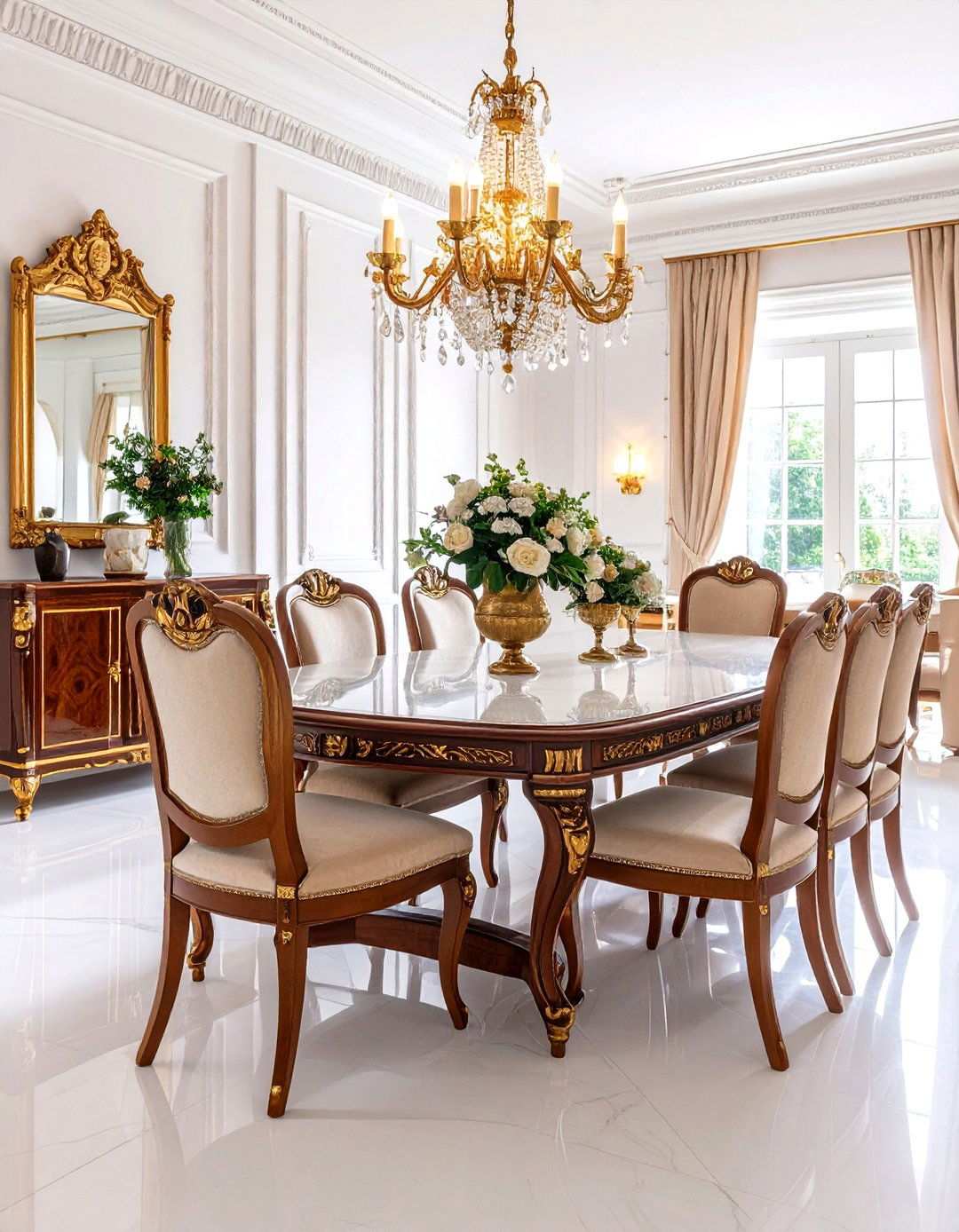
Luxurious ebony and mahogany woods paired with intricate inlaid wood patterns on tables and cabinets evoke the epitome of Art Deco sophistication. Walnut wood with stair-stepped legs and precision-crafted edge details exemplify the exceptional craftsmanship of the era. Stately oversized grand French Art Deco buffets crafted from the finest materials available during the period showcase unparalleled quality. Opt for furniture featuring the dramatic contrast of book-matched walnut veneer or amboyna burl wood to create a show-stopping visual effect. Lacquered furniture played a pivotal role in luxury Art Deco design, available in classic black and white or bold, deep shades for a personalized touch. Select dining tables and buffets that harmoniously combine the natural beauty of exotic wood grains with the geometric inlay work that defines refined Art Deco furniture design.
7. Harmony in Design: Art Deco Dining Room with Symmetrical Layout
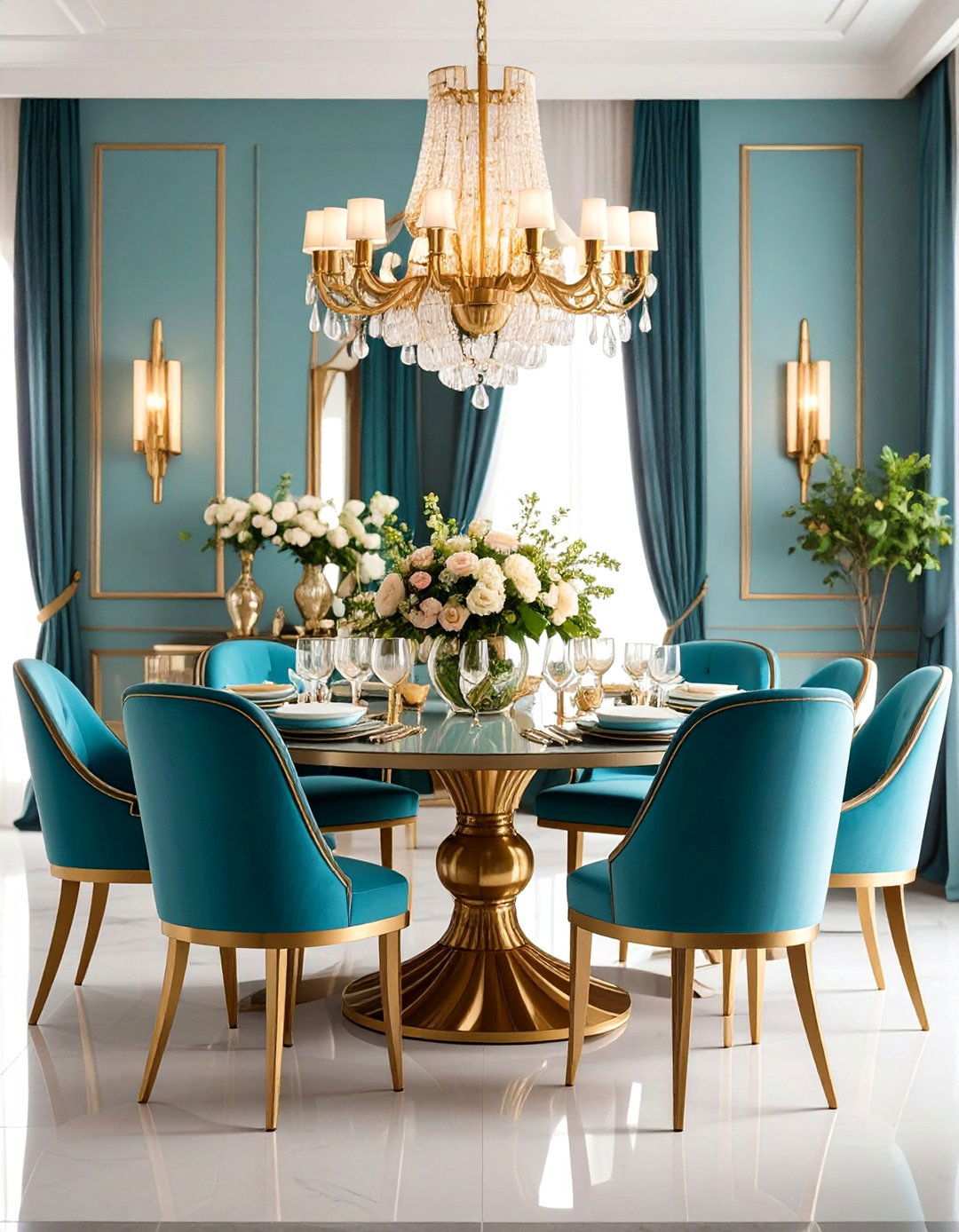
During the Art Deco period, organic shapes were replaced by more precise, symmetrical forms with an emphasis on exaggerated symmetry. A balanced look, essential to authentic Art Deco design, is achieved by arranging furniture, art, and decor items in symmetrical layouts that exude precision and harmony. To embody the principles of balance and symmetry, thoughtfully position furniture, art, and decor items in layouts that showcase a sense of mathematical precision. Symmetry in layout creates a harmonious atmosphere while incorporating geometric shapes into accent walls or furniture arrangements for a striking effect. Plan your dining room layout with matching pairs of lighting fixtures, artwork, or decorative elements strategically positioned on either side of central focal points. Arrange furniture and artwork in balanced ways to ensure that no side of the room feels overpowered or cluttered, achieving the sophisticated design movement’s hallmark precision.
8. Vibrant Splendor: Art Deco Dining Room with Bold Color Palette Schemes
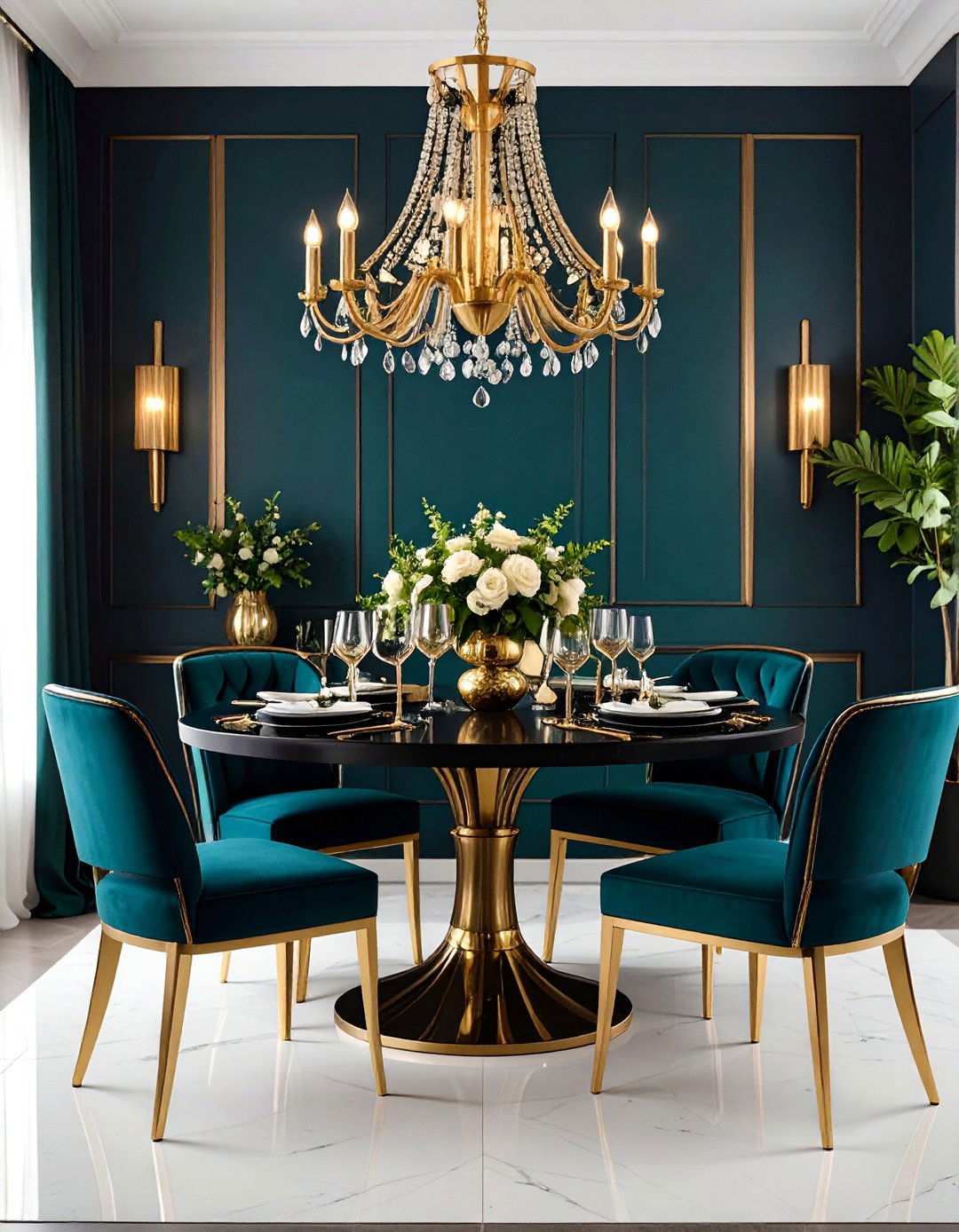
Dramatic color contrasts and bold hues like black, gold, and jewel tones define the opulent Art Deco aesthetic. High-contrast color palettes were a hallmark of the 1920s and 30s and remain an effective way to evoke the Deco feeling. Art Deco color palettes are characterized by bold, luxurious hues like gold, silver, black, emerald green, and deep blues combined in striking high-contrast combinations. Warm, dark shades of red with hints of brown take center stage, while gold, silver, black, and white can be paired with various red hues for harmonious results. Bold, vibrant colors create dining room color trends that make bold statements rather than neutral tones. To achieve the opulent atmosphere that defines this glamorous era, layer these dramatic colors throughout your dining room using wall paint, upholstery, artwork, and accessories.
9. Elevating Art Deco Dining Rooms with Terrazzo and Marble Flooring
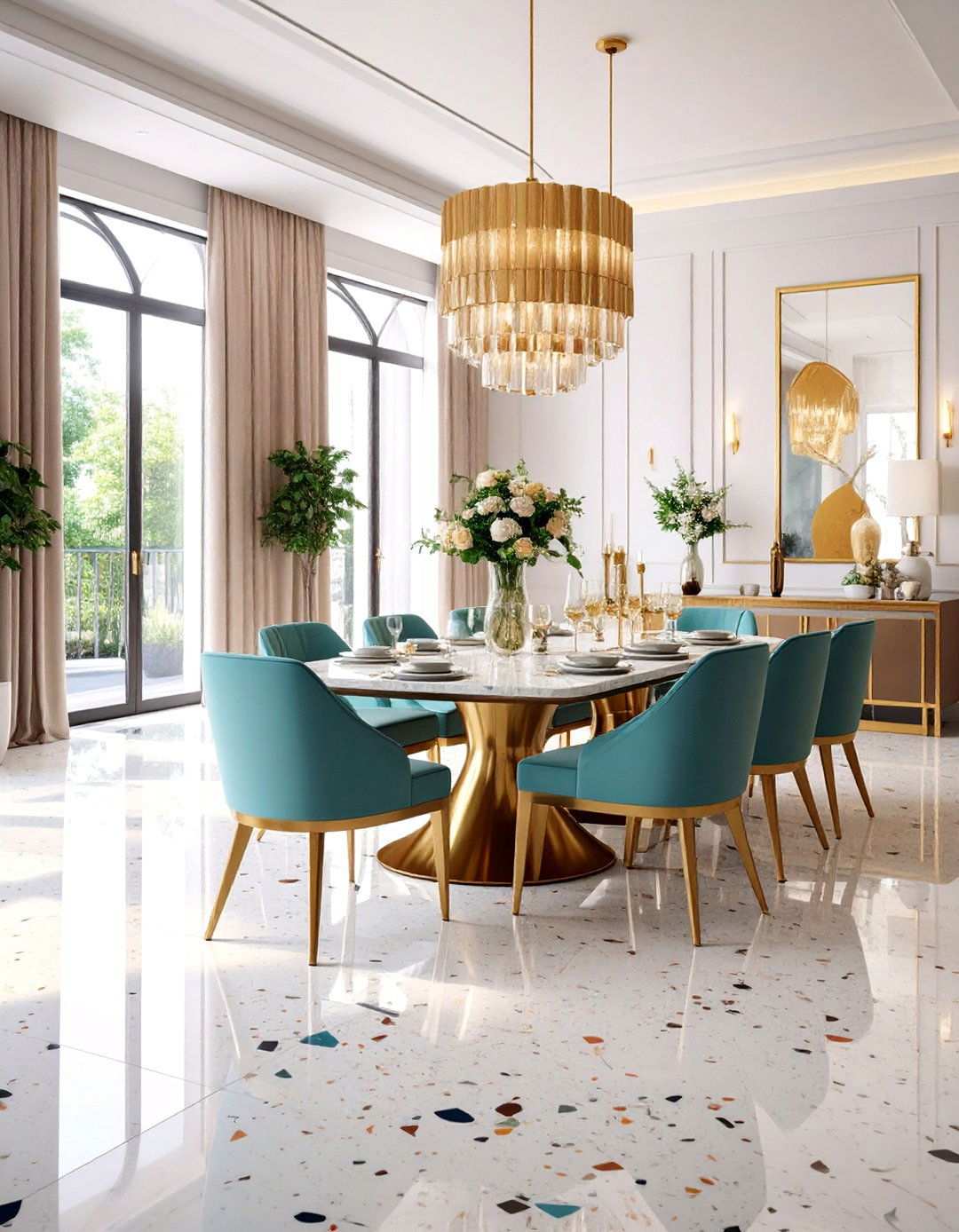
Incorporating terrazzo floors featuring marble or glass chips creates a sophisticated foundation for Art Deco dining rooms. Architectural innovations of the era are echoed in terrazzo flooring that incorporates chips of marble, quartz, or glass, offering a unique aesthetic. To amplify the geometric theme, opt for patterns that complement your room’s design, including checkerboard or geometric patterned floors that elevate the overall design. Pairing high-gloss flooring with sharp angles on furniture and ornate chandeliers achieves the quintessential Art Deco look. Marble-look wallpapers serve as a versatile design element, particularly in half-height wall coverings, and can inspire similar treatments in dining areas. The reflective quality of polished terrazzo or marble surfaces not only amplifies light throughout the room but also provides a durable and luxurious foundation that stands the test of time. Select patterns and colors that harmonize with your overall design scheme while maintaining the geometric precision essential to authentic Art Deco style.
10. Sculptural Furniture Pieces that Define Art Deco Dining Rooms
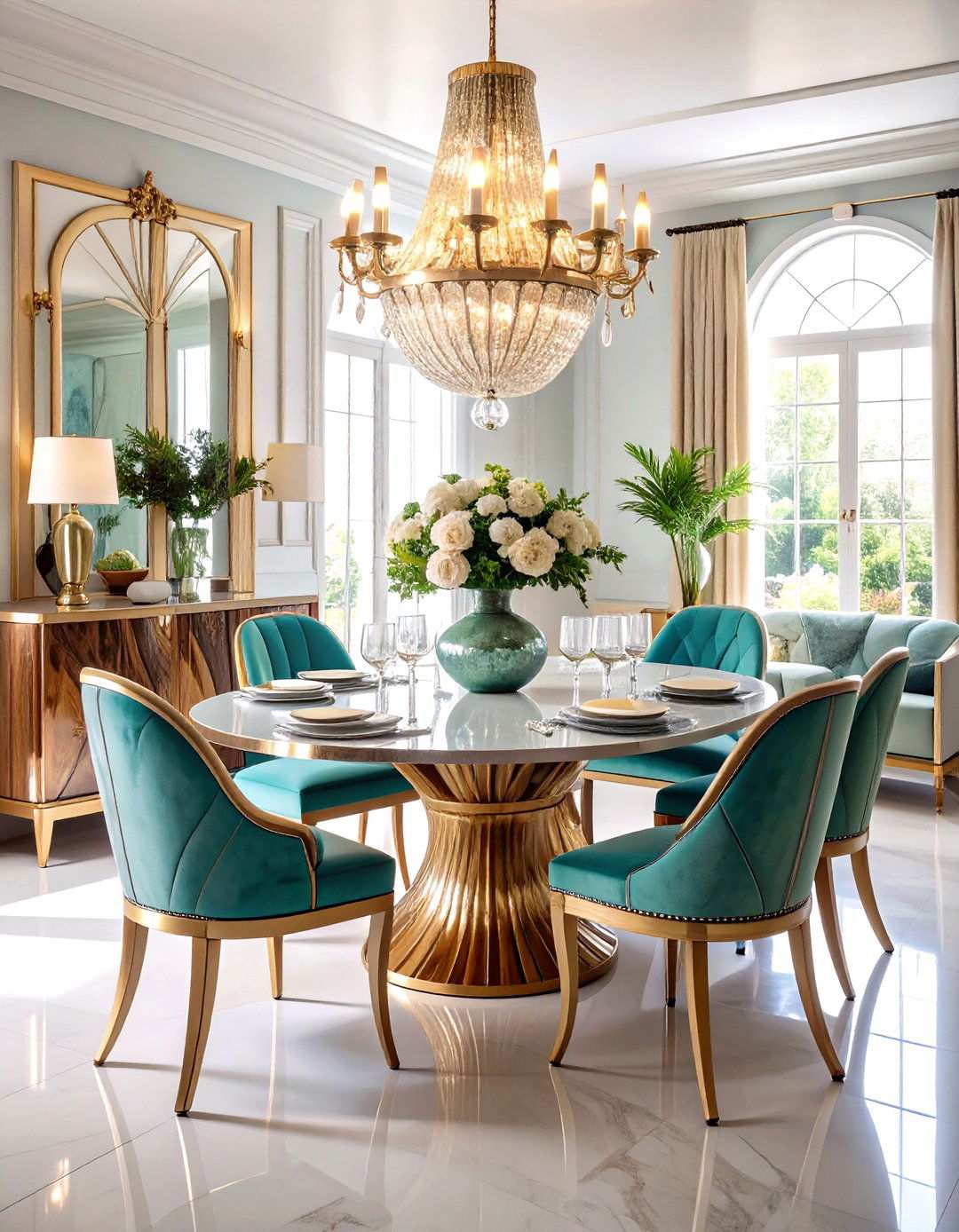
Art Deco spaces thrive on sculptural art pieces and furniture that embody artistic expression. Seeking furniture that transcends functionality and embodies sculptural artistry with streamlined designs, bold curves, and materials like lacquer and chrome can greatly enhance the artistic ambiance. Furniture with sleek, sculptural, and luxurious feel, featuring curved lines and surfaces finished in lacquer, is a great way to elevate the room’s aesthetic. Decorative focal points, often figurative bronze or chrome sculptures, can be strategically placed to enhance the artistic atmosphere. Clean lines, sharp angles, and high-gloss finishes characterize Modern Art Deco, imbuing rooms with sleek, contemporary appeal. Dining tables with unique radiating wood patterns, chairs with exaggerated geometric backs, or buffets featuring stepped designs can function as both furniture and artistic statements, contributing to the grandeur and opulence characteristic of Art Deco design.
11. Captivating Art Deco Dining Rooms with Tiered and Stepped Aesthetic
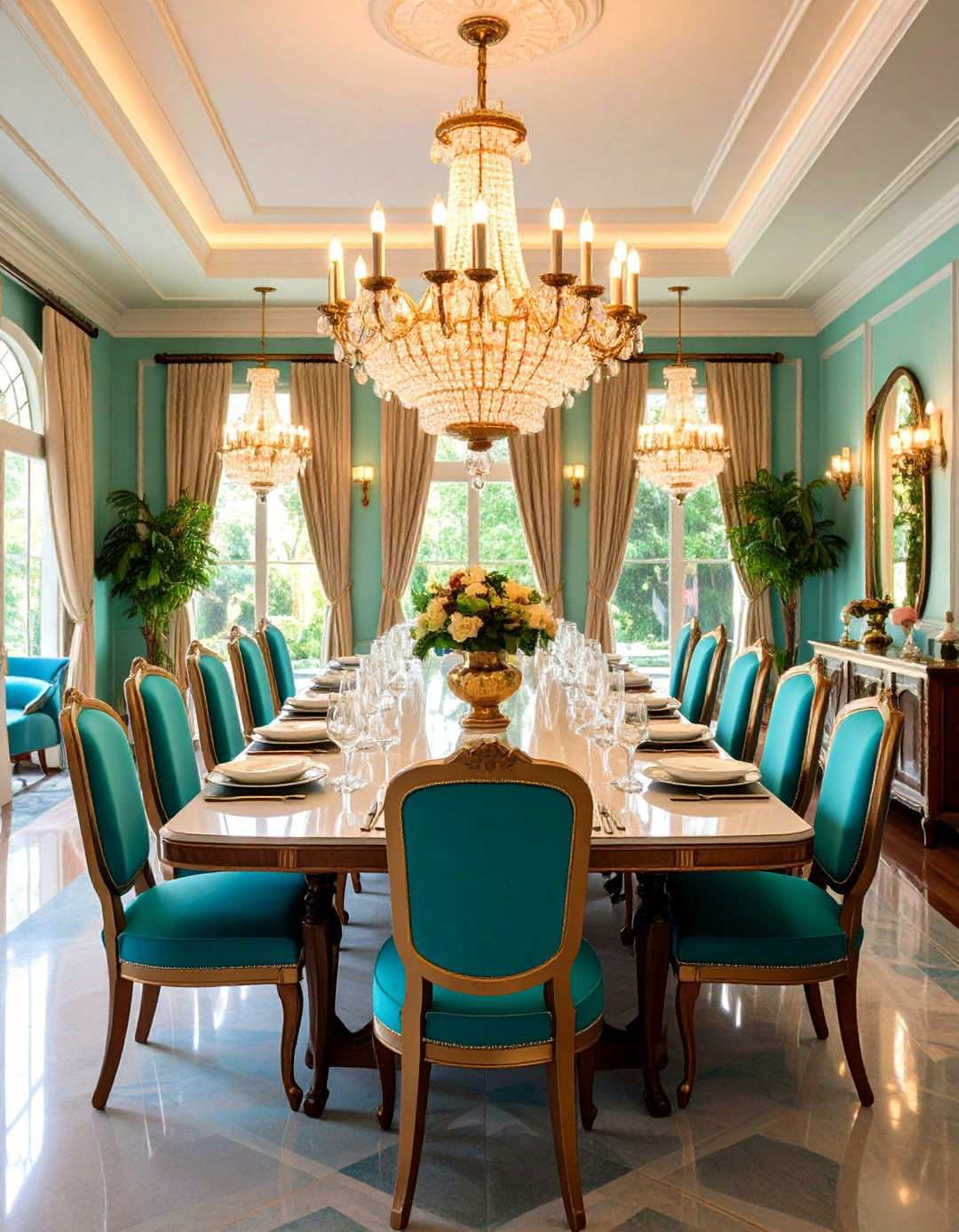
Tiered designs in lighting fixtures and furniture embody the distinctive architectural essence of Art Deco style, characterized by stepped elements. Art Deco storage tables boasting stair-stepped legs and subtle edge details showcase the influence of this architectural trend on interior design. Cabinets with V-shaped, zig-zag, or chevron patterns in beveled mirrors generate an energetic visual response. French dining tables adorned with carved and stepped details on four facets, accompanied by matching chairs, exemplify authentic period craftsmanship. Decorative objects featuring stepped and skyscraper forms evoke the era’s architectural advancements and urban sophistication. In Art Deco design, incorporate stepped elements through a range of decorative items, such as buffets, lighting fixtures, and even architectural details like crown molding or ceiling treatments. This tiered approach creates a visual rhythm, emphasizing the vertical lines that define Art Deco’s machine-age aesthetic and urban architectural influence.
12. Art Deco Dining Rooms that Celebrate International Flair through Egyptian and Exotic Motifs
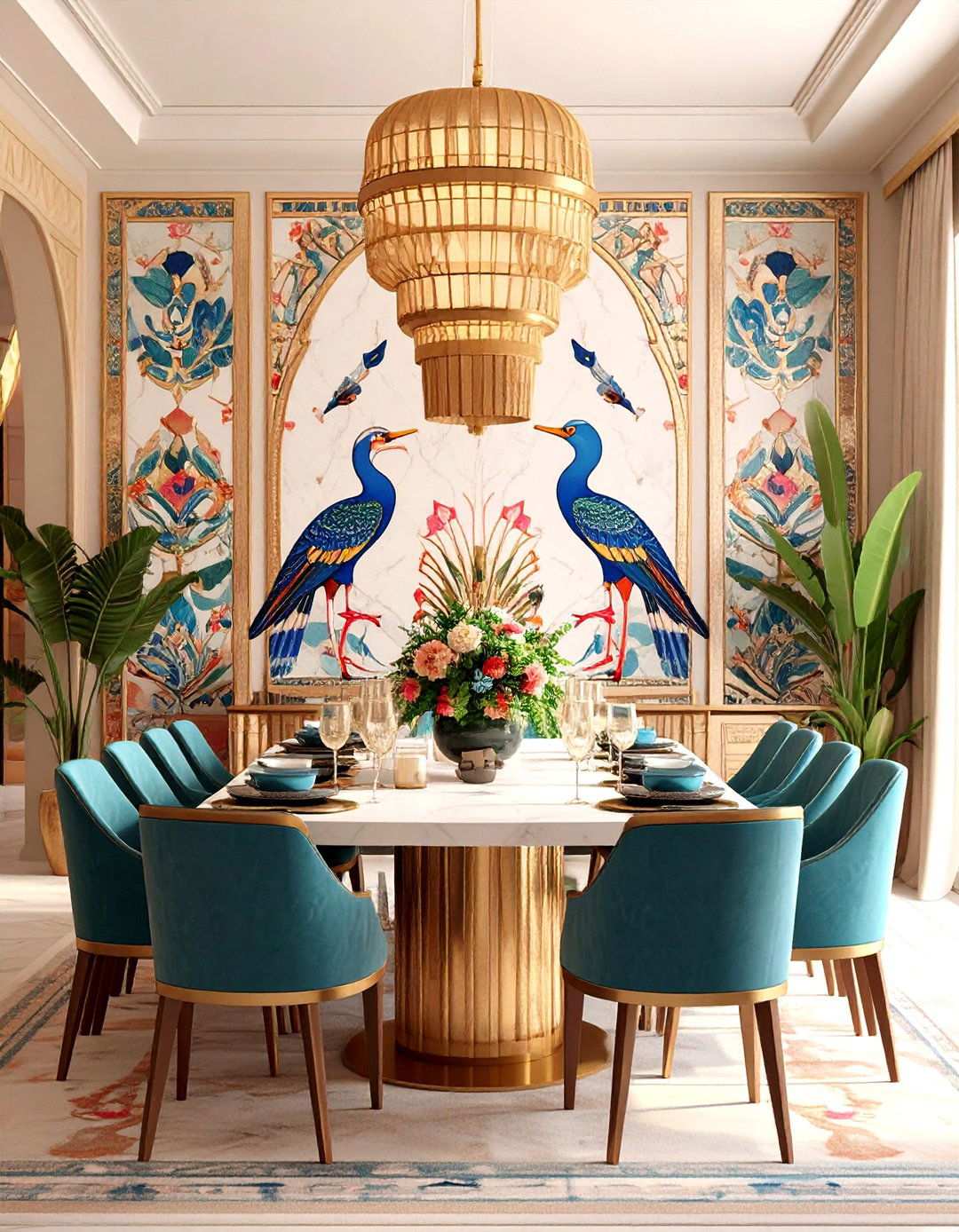
Cultural depth is added to Art Deco dining rooms through motifs and symbols inspired by ancient Egypt. Art Deco seamlessly blends French, Egyptian, and Mediterranean elements with intricate geometric patterns, resulting in a sophisticated international aesthetic. Natural themes, including laurels of leaves, branches, feathers, and stylized animal motifs like bird sculptures, coexist harmoniously with Egyptian influences. The integration of clear-lined geometry and refined gold accents in tropical sceneries exemplifies successful Art Deco design. For a touch of exotic flair, incorporate animal prints in upholstery or rugs, ensuring they do not overwhelm the geometric foundation. Art Deco design also allows for florals and nature-inspired elements when presented with geometric precision and luxurious materials, striking a harmonious balance between machinery and futurism.
13. Elevating Art Deco Elegance with Frosted and Etched Glass Accents
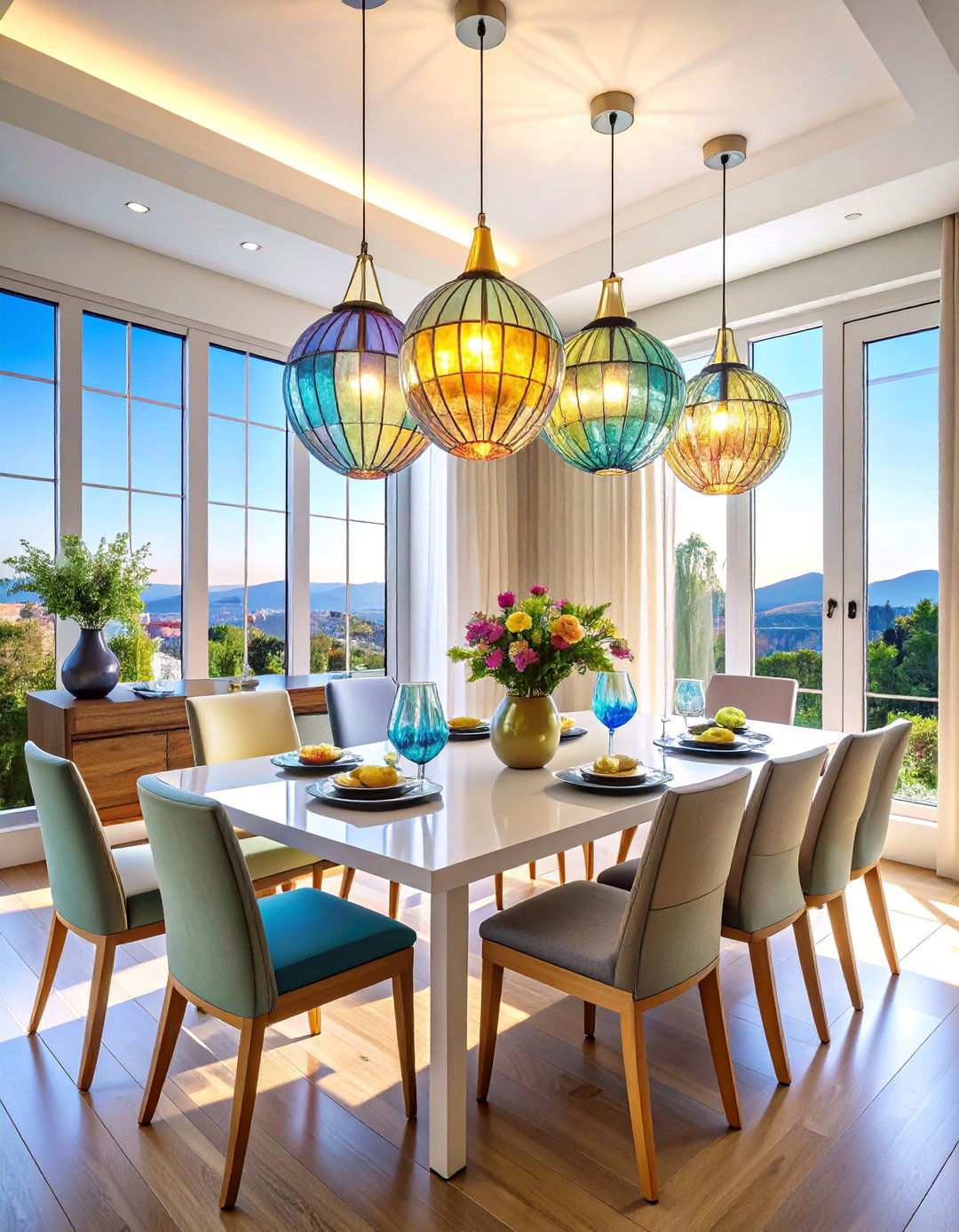
Elegant lighting and glassware designs with frosted or etched patterns create a soft, sophisticated ambiance that’s quintessential to Art Deco spaces. Skyscraper globes with delicate frosted glass trim and clear glass accents evoke the refined elegance of this iconic design style. Round, frosted glass lamps and stained glass inserts in windows or cabinet doors add a luxurious touch, while stained glass panels in decorative inserts or windows bring in vibrant artistic elements that beautifully filter light. Lighting fixtures featuring crystals or frosted glass create a captivating interplay of light and shadow, amplifying the dramatic ambiance. Choose pendant lights, chandeliers, or sconces with etched patterns that mirror your room’s geometric themes, adding a sense of cohesion to the space. Cabinet doors with frosted glass inserts provide a glimpse of beautiful dishware while maintaining visual continuity, and the soft glow of frosted glass balances the harder metallic and geometric elements that are fundamental to Art Deco design.
14. Art Deco Opulence: High-Gloss Lacquered Surfaces and Finishes
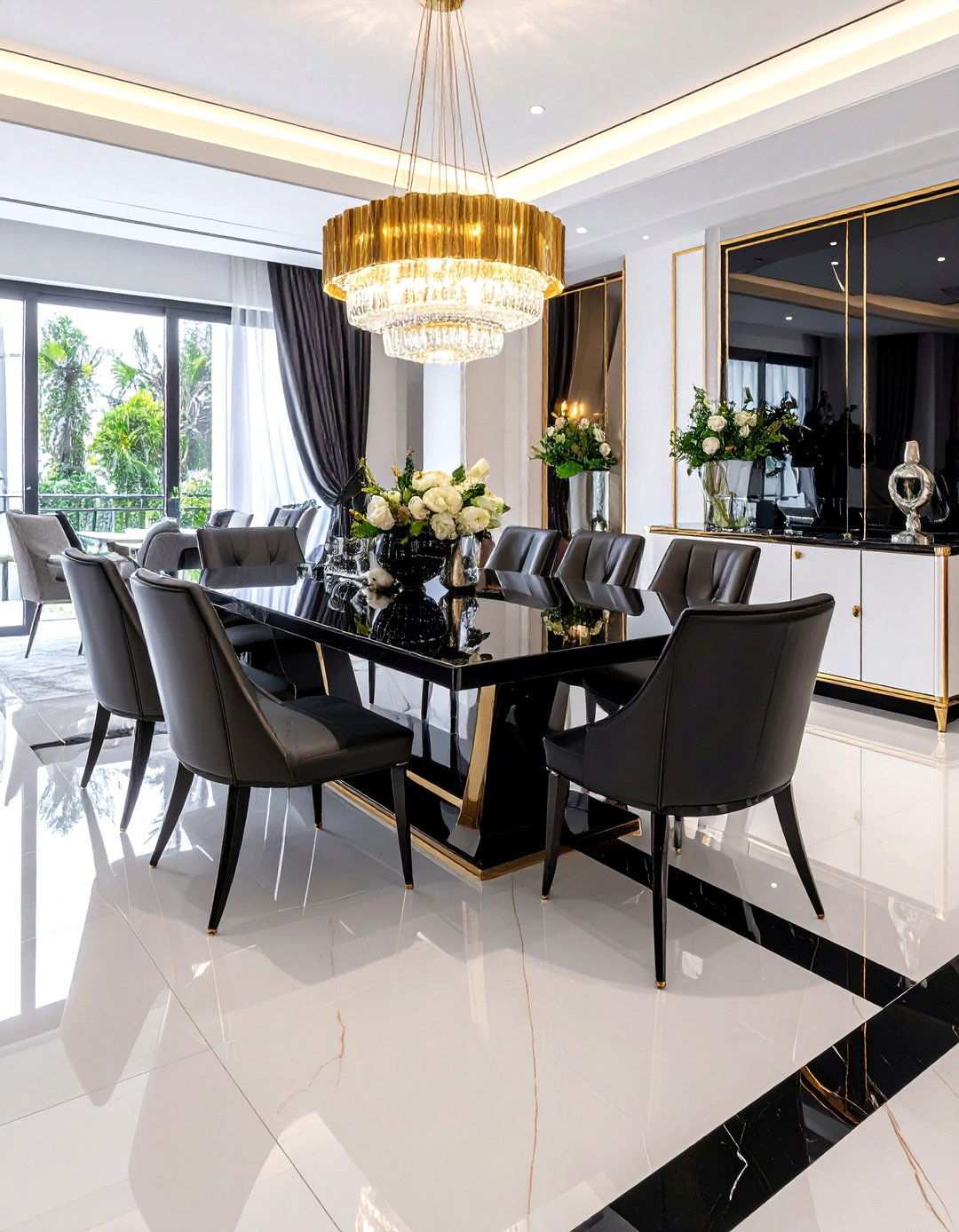
In luxury Art Deco design, lacquered furniture was a defining feature, available in classic black and white or bold colors to suit personal tastes. Furniture with high-gloss finishes in black, white, or vibrant hues enhances the streamlined aesthetic, while high-gloss table tops and flooring paired with sharp angles create a sleek, contemporary feel. High-shine lacquered flooring or polished dark wood parquet complements geometric elements perfectly, creating a sophisticated look that’s both modern and nostalgic. Freshly refinished surfaces with stunning modernist style showcase the exceptional finish work characteristic of the period, while selecting dining tables, buffets, or chairs with mirror-like lacquered finishes that reflect light and amplify the room’s geometric patterns adds depth and drama. The reflective surfaces emphasize the machine-age precision and luxury that define authentic Art Deco interior design, creating an opulent atmosphere that’s nothing short of breathtaking.
15. Harmonious Fusion of Art Deco Motifs in Dining Rooms
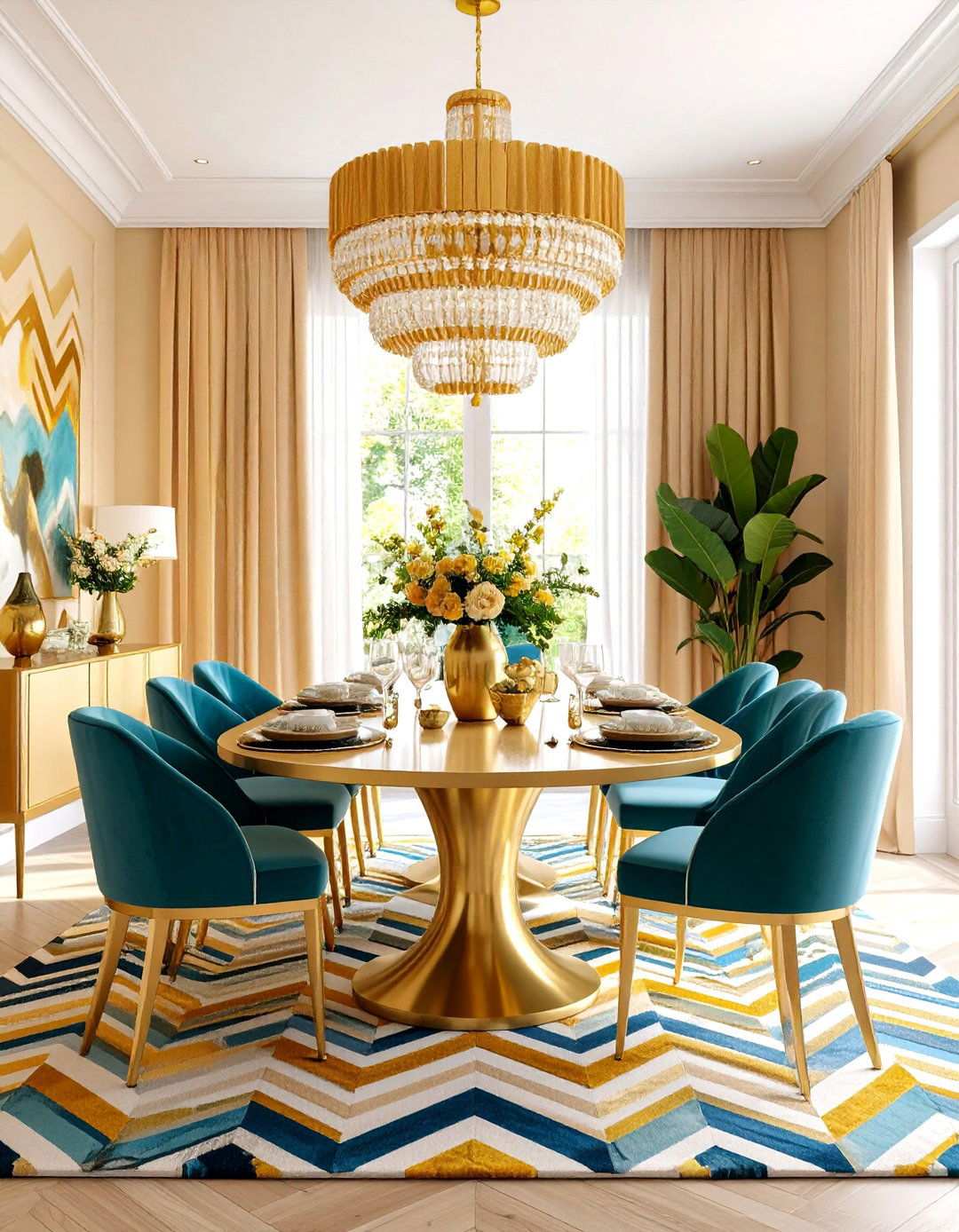
The dynamic visual movement characteristic of Art Deco style is expertly captured through the use of zigzag designs in textiles, tile work, or wall art. Chevron patterns in flooring, textiles, or wall treatments add geometric interest with their distinctive, repetitive lines. Art Deco’s bold geometric patterns, featuring zigzags and chevrons in rugs, upholstery, and accent pillows, create symmetrical visual compositions. Classic motif applications include cabinets with V-shaped, zig-zag, or chevron patterns reflected in beveled mirrors. Common motifs, such as zigzags, chevrons, sunbursts, and fan shapes, define the geometric foundation of Art Deco. These motifs are often offset with metallic colors or dramatic hues, giving the space a sense of visual energy and sophistication.
16. Sunburst and Fan Decorative Elements in the Art Deco Dining Room
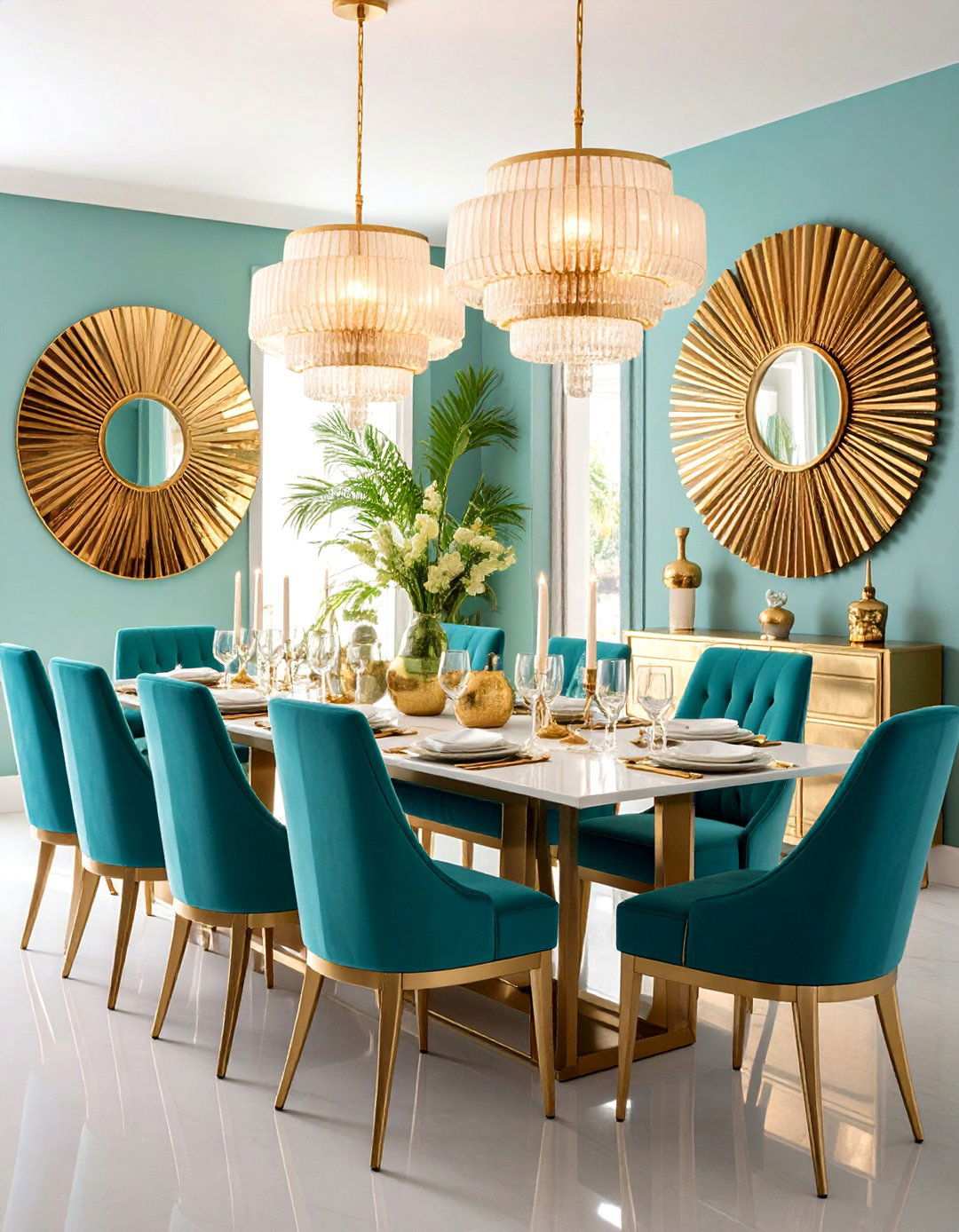
The optimistic spirit of the Art Deco era is embodied in sunburst and fan shapes, which create striking focal points that elevate the dining room. Fan patterns can appear in a range of shapes, from oval to triangle, with sharp or rounded edges, arranged to create a sense of visual flow. Fan shapes in lighting, wallpaper, or decorative accents add the distinctive geometric elements that are hallmarks of authentic Art Deco style. Sunburst motifs often appear in mirrors, wall art, and decorative accents, radiating energy throughout the space. Look for pieces with exaggerated symmetry, such as tables with unique radiating wood patterns that showcase the sunburst aesthetic. By incorporating these elements through mirror designs, lighting fixtures, wall art, or furniture details, you can create a balanced composition that celebrates the era’s focus on progress and technological advancement.
17. Elevating the Dining Experience with Art Deco Luxury
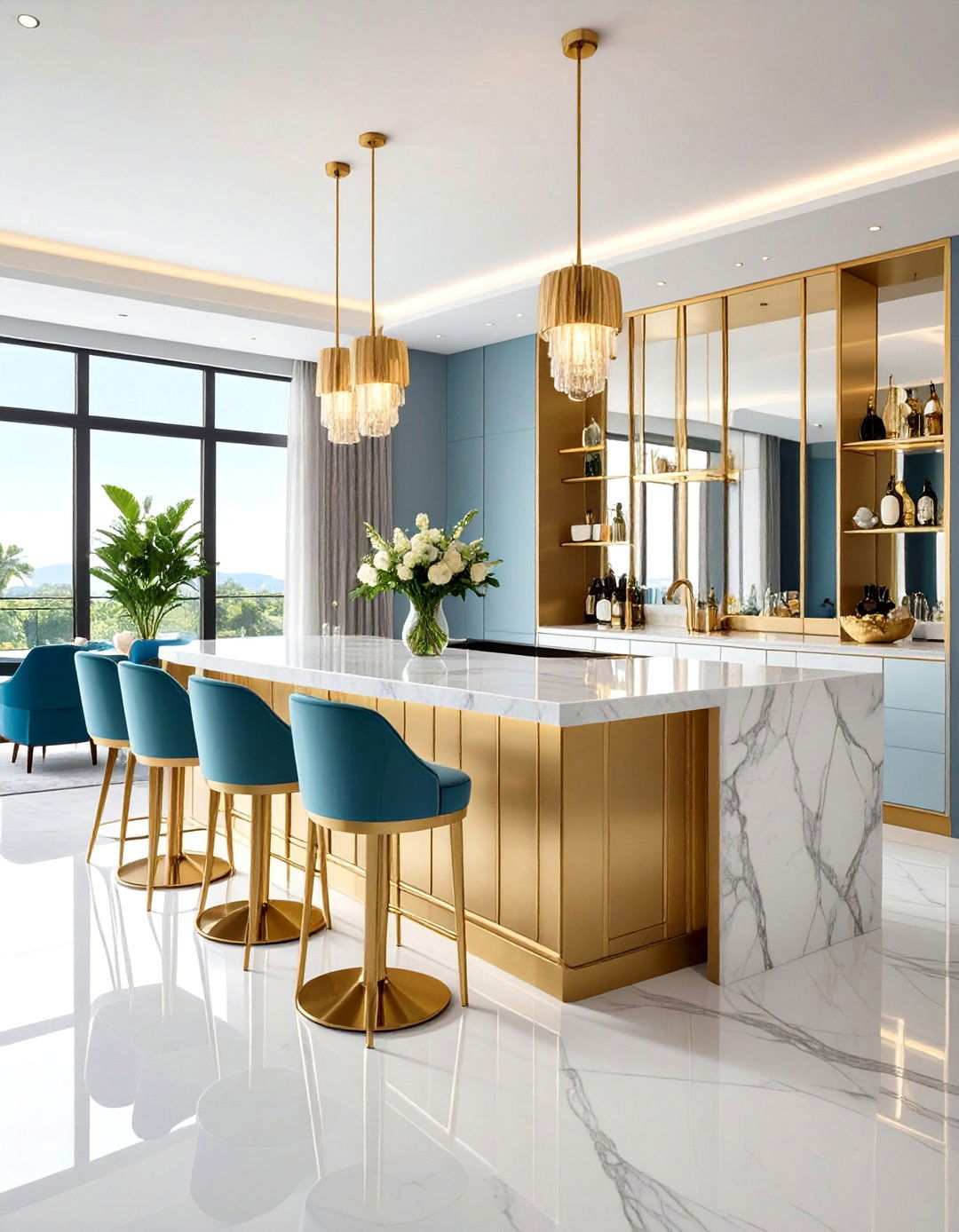
Reimagine dining rooms as sophisticated, high-energy entertainment spaces with bespoke wine walls, built-in bars, and curated bar carts. These thoughtful features transform underutilized rooms into stylish havens that beckon guests to linger and socialize. Chic, black-and-gold Art Deco style bars boast sleek cabinets clad in thick marble countertops, which are cleverly set against mirrored backsplashes and complemented by coordinating shelves. Art Deco bars, paired with matching stools, exemplify exceptional craftsmanship in custom furniture design. L-shaped stand-behind bars, replete with multiple storage features, pay homage to the era’s emphasis on functionality and style. Lavish home bars, complete with plush seating, create the perfect environment for convivial gatherings and relaxed drinks-with-friends moments. Integrate built-in elements that celebrate geometric patterns, mirrored surfaces, and rich materials like marble and exotic woods. Grand, restored bars, boasting one-of-a-kind designs and unique features, offer refined entertaining solutions that masterfully blend period authenticity with modern functionality.
18. Art Deco Dining Rooms with Dazzling Ceiling Design
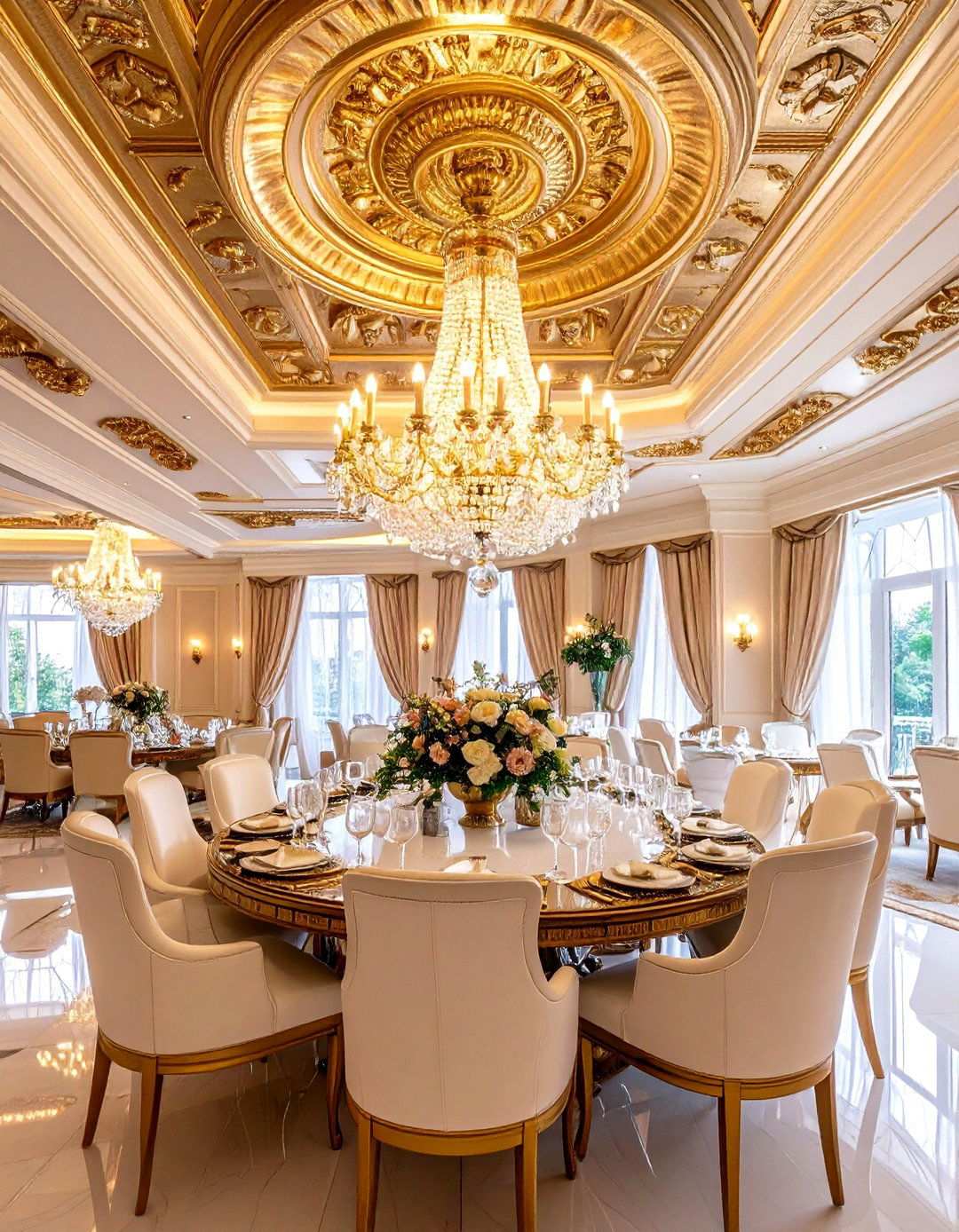
Adding decorative plasterwork or molding to ceilings injects architectural flair that expertly enhances the room’s geometric theme. The ceiling, long overlooked, becomes an unexpected style focal point with Art Deco design. Geometric patterns on ceilings, beautifully anchored by angular dining tables, create bold, show-stopping statements in Art Deco dining rooms. Decorative molding brings personality and dimension to dining spaces, while emphasizing the era’s architectural sophistication. Accent ceilings, highlighted by striking light fixtures, offer modern yet elegant appeal. Consider incorporating coffered ceilings with geometric patterns, metallic leafing, or stepped molding details that thoughtfully echo the room’s overall design theme. The ceiling treatment should harmonize with, rather than compete against, other elements while providing captivating visual interest that draws the eye upward. To achieve a cohesive design, coordinate ceiling colors and patterns with your lighting fixtures, thus exemplifying Art Deco’s emphasis on architectural grandeur.
19. Streamlined Moderne Elegance for the Modern Dining Room
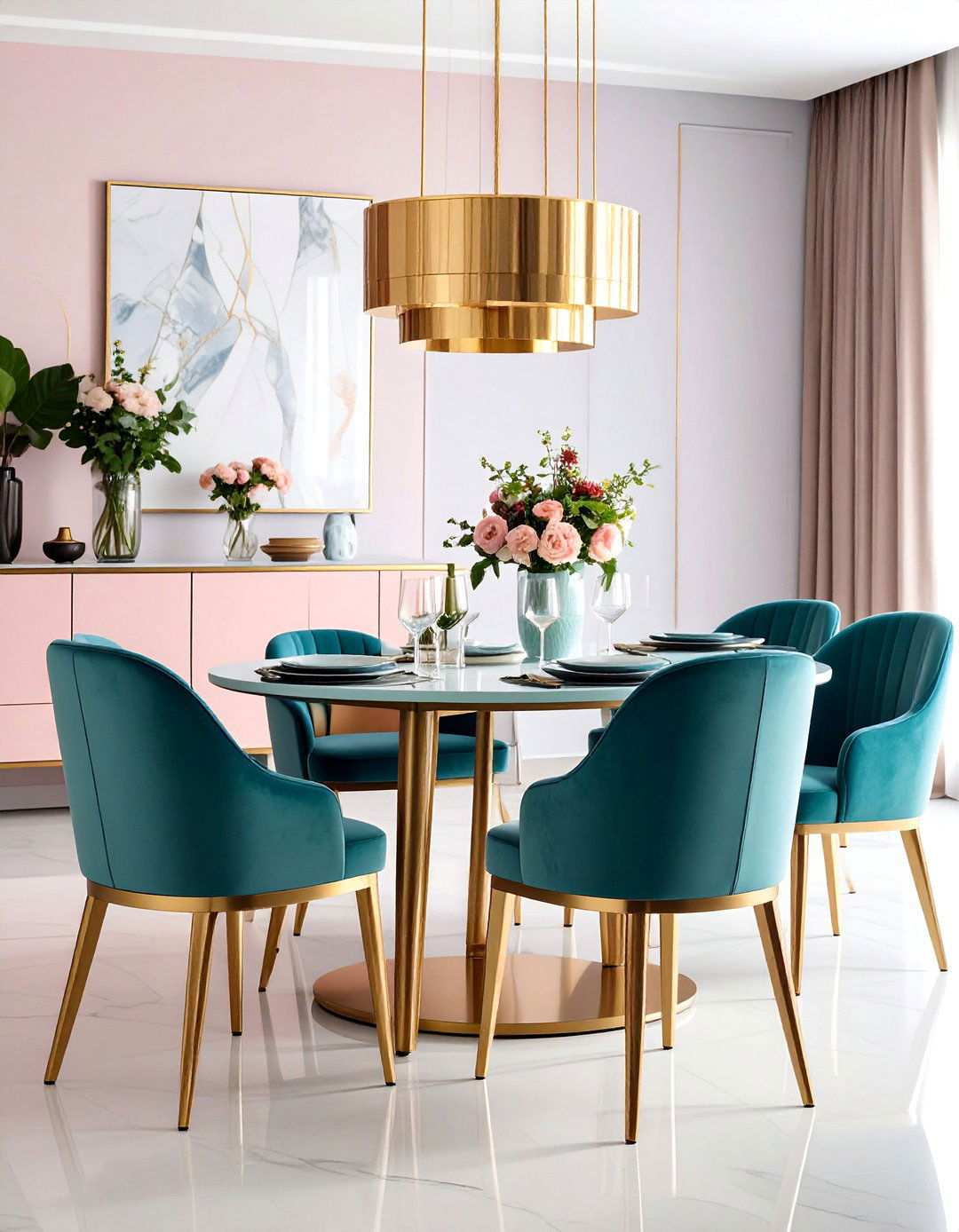
Streamlined Moderne, a refined iteration of Art Deco, boasts curved walls and minimal color palettes, evoking the machine age’s clean aesthetic. Characterized by smooth surfaces and streamlined forms, this style emphasizes functional yet minimalist furniture design. Inspired by the aerodynamics of the 1930s, Streamline Moderne captures the era’s essence with fluid shapes and high-gloss finishes, producing sleek rooms with a contemporary twist. Incorporating furniture pieces with curved edges, horizontal emphasis, and integrated storage solutions pays homage to the era’s fascination with transportation design and industrial efficiency. By combining Art Deco’s elegance with midcentury modern simplicity, you can create sophisticated spaces that not only honor the movement’s technological optimism but also meet the needs of contemporary living.
20. Custom Cabinetry and Storage Solutions Elevate Art Deco Elegance
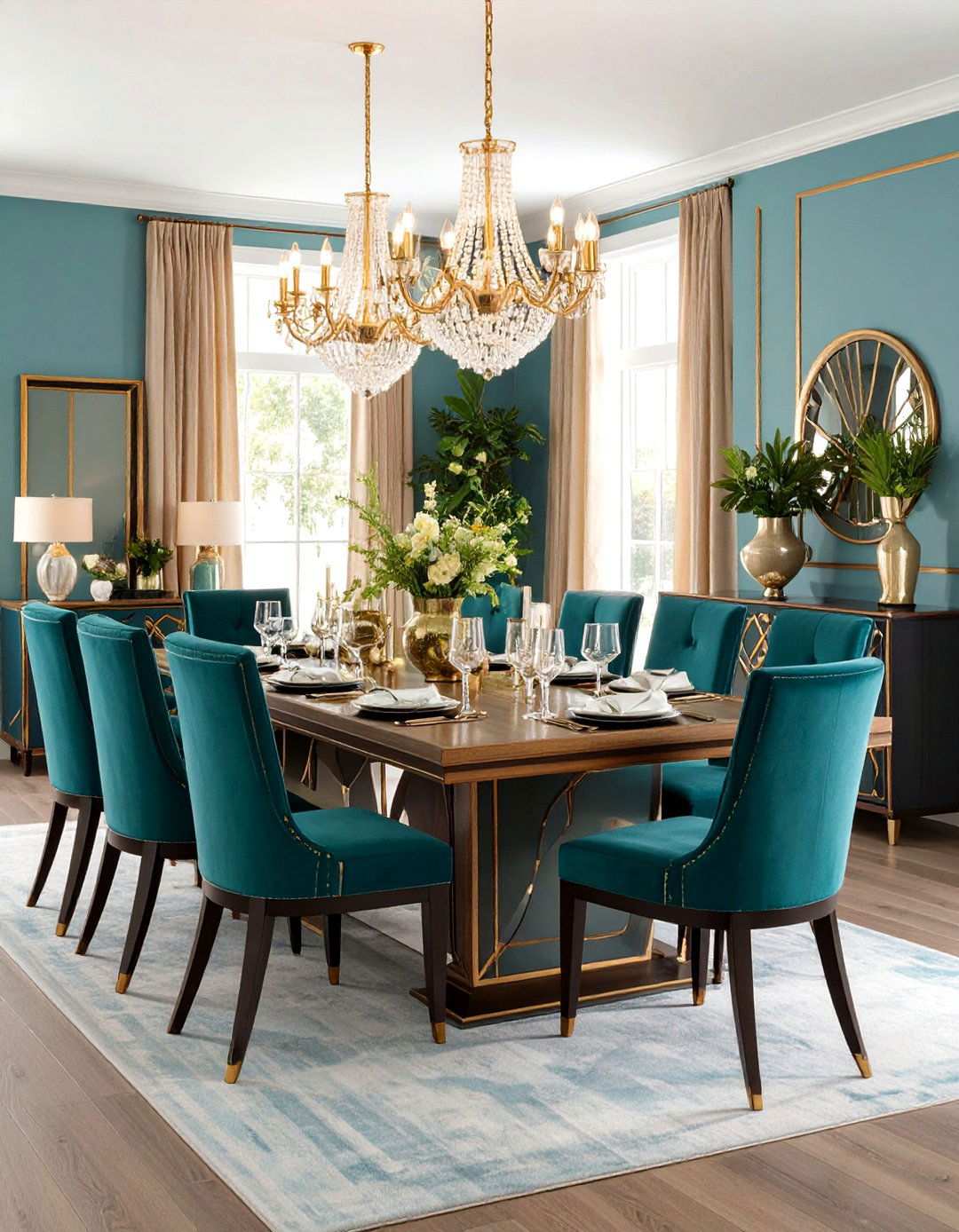
Custom-built cabinets featuring Art Deco motifs and hardware provide both style and functionality, adding a touch of sophistication to elegant dining room designs. Intricate details of cabinetry bring warmth and character to luxurious spaces, while the use of earthy color schemes adds a sense of coziness to refined environments. Exceptional craftsmanship is showcased through custom design cabinets in spectacular woods, both inside and out. Art Deco drawer cabinets, accentuated with black ebonized bases and birdseye maple wood, demonstrate the highest level of custom quality. Ornate or geometrically shaped door handles further enhance the authentic period aesthetic, while design storage solutions that incorporate stepped profiles, geometric inlay work, and rich wood combinations provide both practical dining room storage and period authenticity. Built-in cabinets with geometric patterns serve as interesting backdrops that also double as functional storage and decorative focal points. By choosing hardware with angular designs and metallic finishes, you can complement your room’s overall aesthetic theme and create a cohesive look.