1. Embracing Zen Aesthetics in Japanese-Style Bedrooms
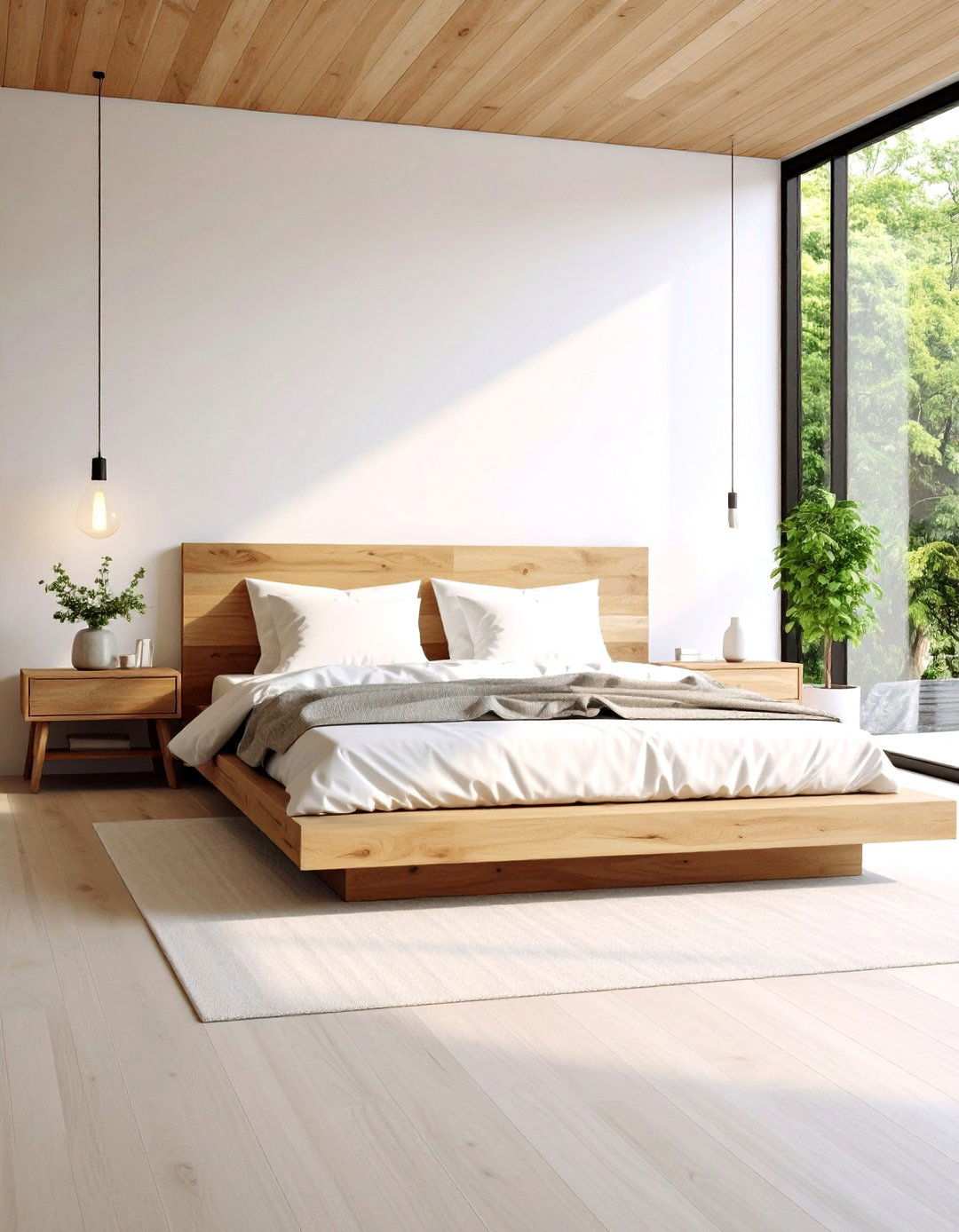
By incorporating a low platform bed, you can instantly elevate your bedroom to a serene oasis inspired by Japanese design traditions. This minimalist approach grounds you in simplicity, fostering a sense of mental clarity and peaceful slumber. Opt for a solid wood platform with an unadorned aesthetic, allowing the natural grain to take center stage. The absence of a traditional bed frame creates an airy, uncluttered atmosphere that makes even compact bedrooms feel expansive. To maintain the essence of Japanese bedroom design, pair your platform bed with crisp white linens and a single decorative accent pillow.
2. Harnessing the Power of Feng Shui in the Command Position
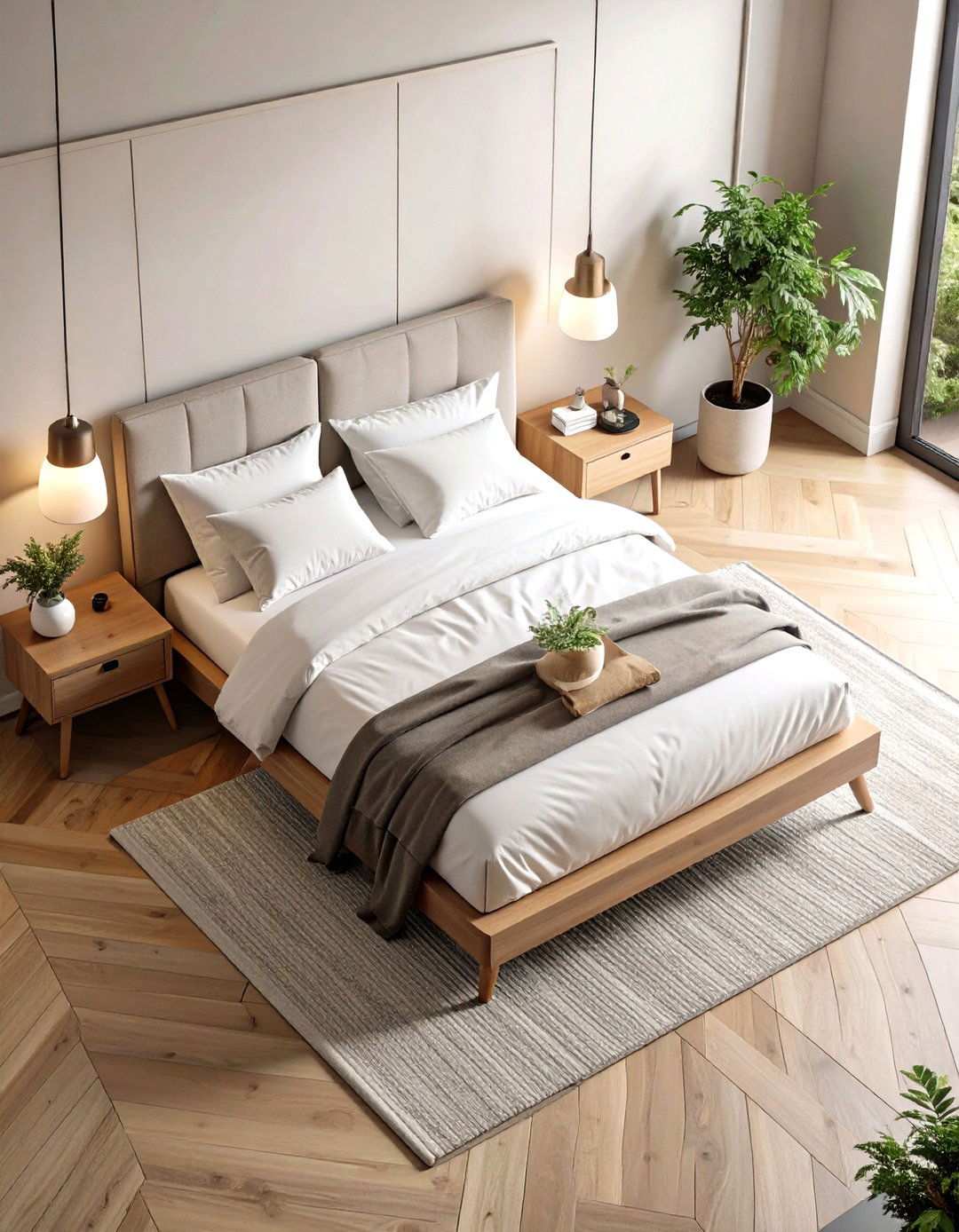
A well-planned bedroom layout can significantly impact the energy flow, and positioning your bed in the commanding position is a crucial aspect of feng shui principles. By placing your bed diagonally across from the door, you create a sense of security and control that promotes restful sleep. To avoid disrupting sleep patterns, steer clear of placing your bed directly in line with the door, as this can create rushing energy. Ensure that equal space is allocated on both sides of the bed to maintain balance and harmony, reflecting the importance of equality in relationships. Furthermore, placing a solid wall behind the headboard provides support and stability, symbolizing strength in personal and professional endeavors.

As an Amazon Associate I earn from qualifying purchases.
3. Traditional Korean Ondol Heated Floor System: Embodying Cultural Authenticity
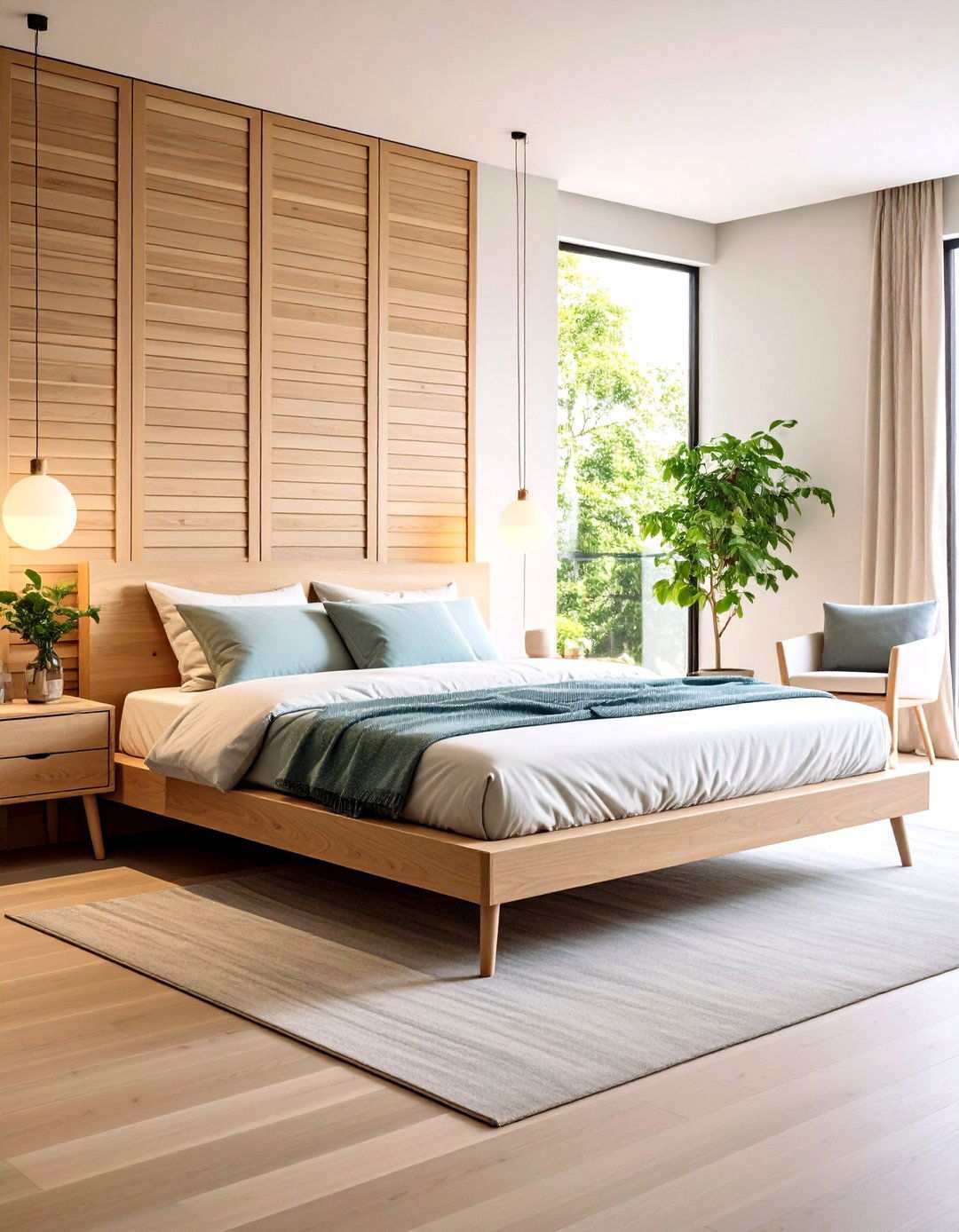
In the heart of Korean hanok architecture lies the ondol heating system, a centuries-old innovation that subtly warms your bedroom from the ground up. As the cold months descend, this radiant floor heating method ensures a comfortable sleeping environment, while its integration maintains the authentic essence of traditional Korean design. The ondol experience, though rooted in the past, has found modern adaptations, including electric radiant floor heating systems that replicate the warmth without the need for traditional wood-burning methods. By incorporating these heated floors, you can bid farewell to bulky heating equipment, preserving the uncluttered aesthetic prized in Korean bedroom design. Notably, this system also fosters better air quality compared to forced-air heating methods.
4. Captivating Thai Tropical Canopy: A Retreat from the Ordinary

Thai-inspired design finds perfect expression in the flowing white curtains suspended from the ceiling, transforming your bedroom into a serene, tropical sanctuary. This innovative element provides an intimate atmosphere while ensuring air circulation, a crucial factor for comfortable sleep in warm climates. Choose lightweight fabrics that gently flutter with air movement, such as cotton or linen, to create a soothing ambiance. The canopy not only offers privacy but also serves as an efficient room divider in open-concept spaces, defining the sleeping area without the need for permanent walls. To maintain the light, airy feeling characteristic of Southeast Asian design, opt for natural fiber fabrics in white or cream.
5. Cultivating Mindfulness in a Zen Garden Bedroom Retreat
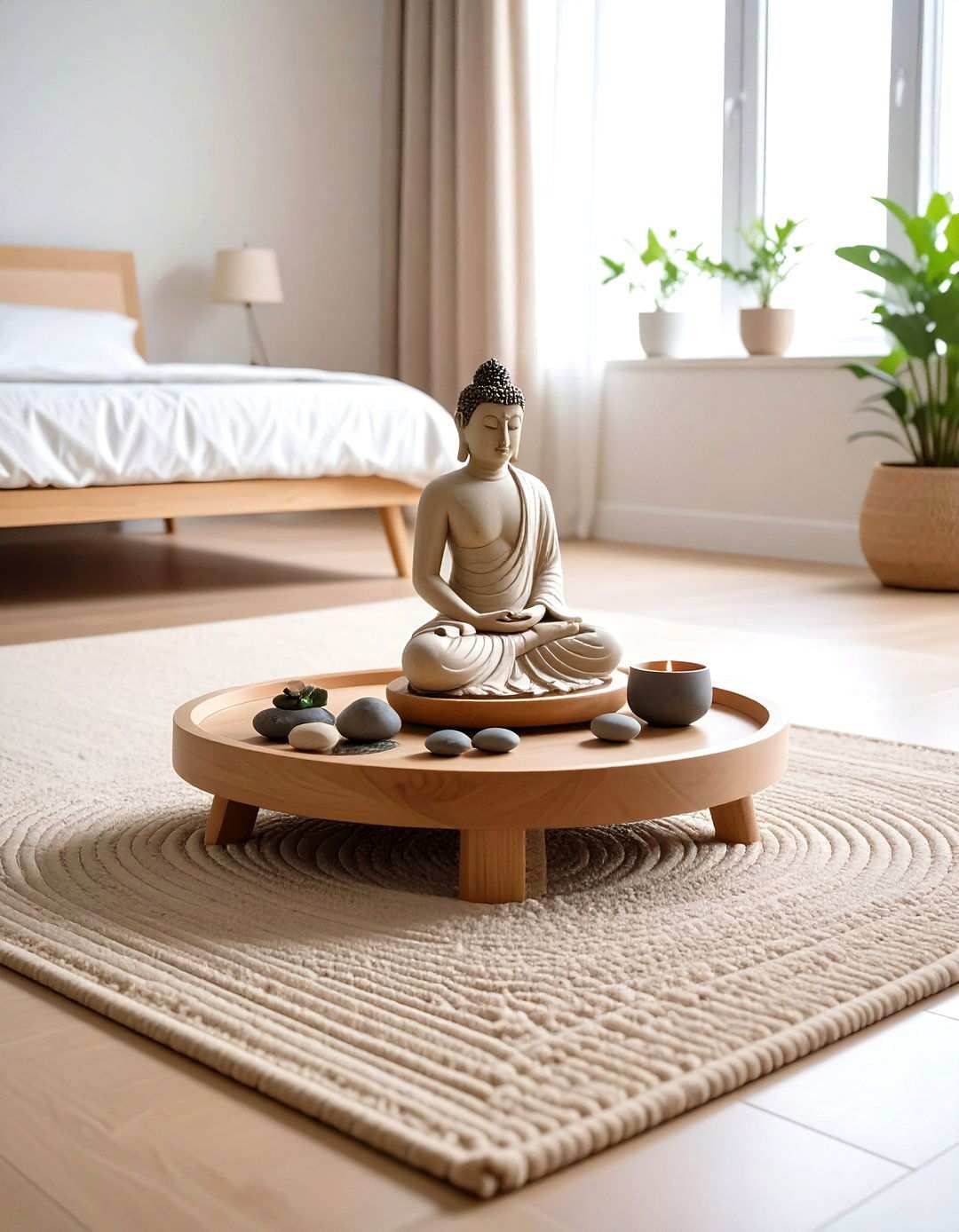
Creating a dedicated meditation space within your bedroom using a small zen garden with raked sand and carefully placed stones can be a powerful tool for mindfulness practice. This serene corner becomes a focal point for morning reflections and evening gratitude, supporting your overall well-being and spiritual growth. A wooden tray filled with fine sand and a small rake allows you to create patterns that represent flowing water or ocean waves. To enhance the meditative experience, add a single stone or small Buddha statue, keeping decorations minimal to avoid distraction during contemplative moments. The act of raking the sand itself becomes a meditative ritual, helping to transition your mind from daily stresses to peaceful rest.
6. Balancing the Five Elements for Serenity
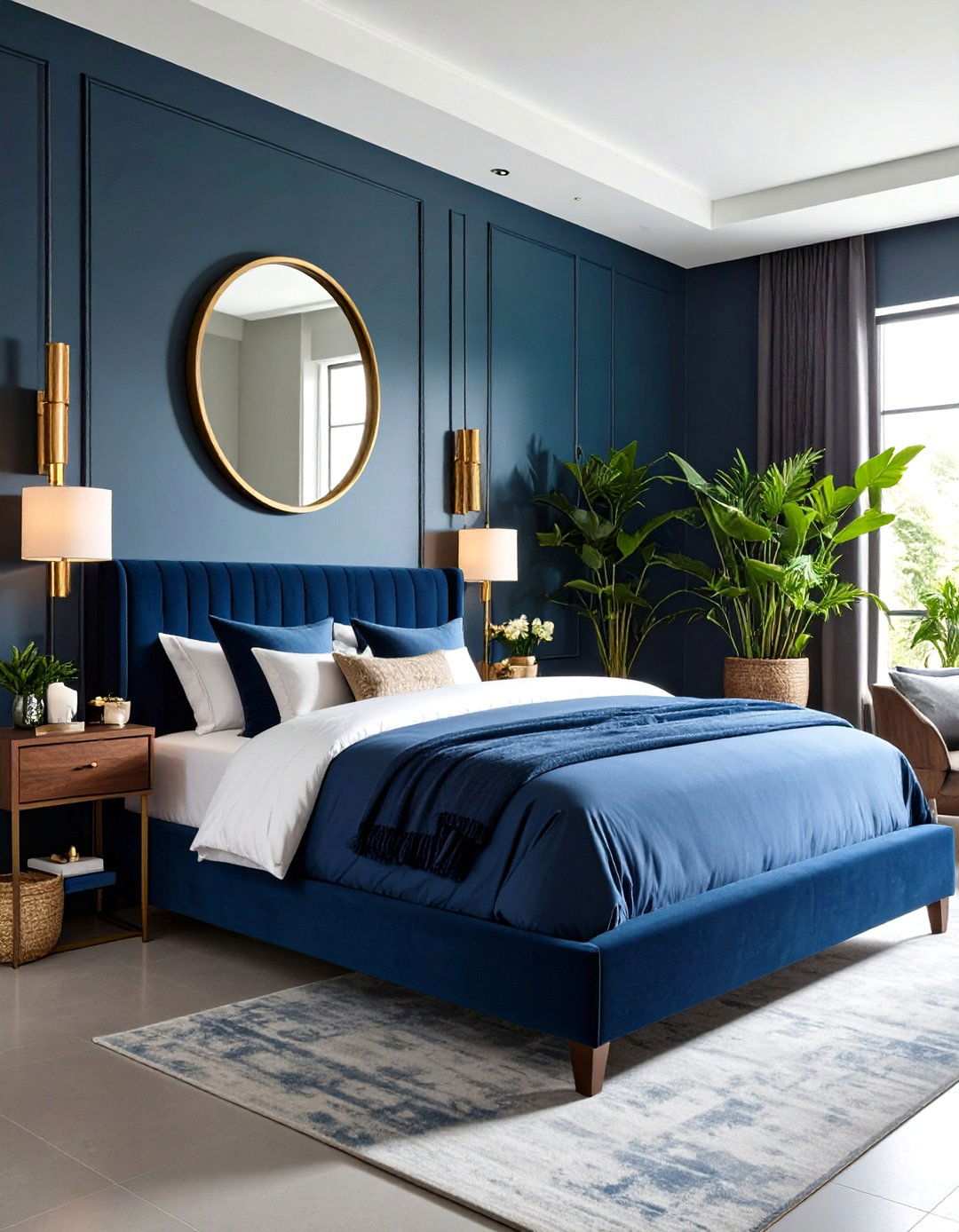
To achieve a harmonious atmosphere in your bedroom, draw inspiration from traditional Chinese feng shui principles and incorporate the five essential elements: wood, fire, earth, metal, and water. By thoughtfully incorporating each element, you can foster a space that supports personal growth, creativity, and overall well-being. Wood elements, such as bamboo furniture and lush greenery, can be used to nurture relationships and encourage vitality. Meanwhile, fire elements – including candles, warm lighting, and bold red accents – can energize your space with passion and creativity. Earth elements, found in clay pottery, stone sculptures, and soothing neutral tones, can ground your energy and promote stability. Metal elements, represented by brass fixtures, silver frames, and crisp white color schemes, can enhance clarity and organization. Lastly, water elements, such as small fountains, mirrors, and dark blue accents, can attract abundance and wisdom, creating a sense of tranquility throughout the space.
7. Shoji Screens for Boundary-Free Design
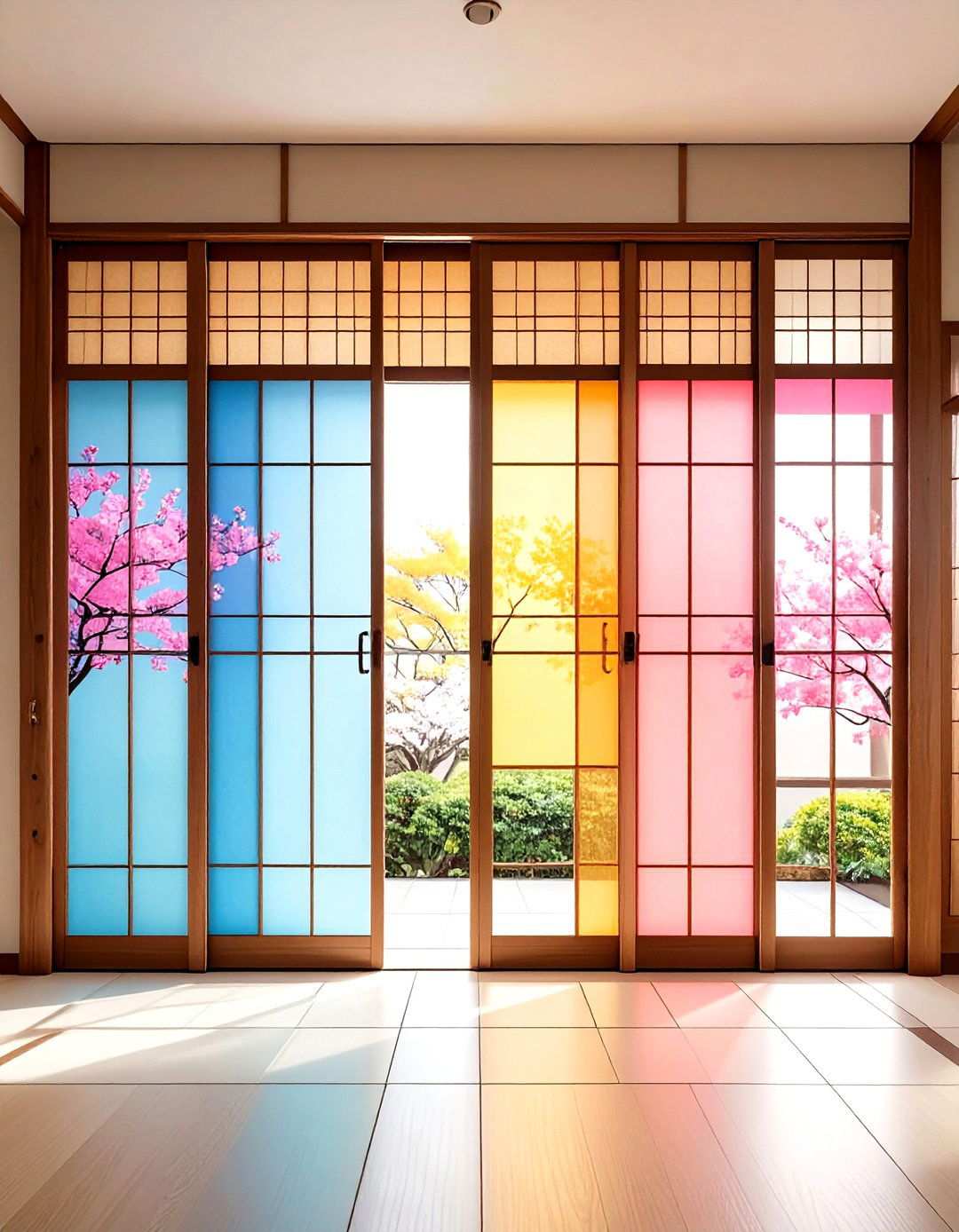
Traditional shoji screens, crafted from wooden frames and delicate rice paper, offer a unique solution for creating flexible room divisions while maintaining an open flow. These elegant panels can be easily reconfigured to suit different activities, such as sleep, meditation, or reading. As the soft, diffused light filtering through the rice paper changes throughout the day, a calming ambiance is created, perfect for promoting relaxation. Modern interpretations of shoji screens utilize frosted glass or fabric panels, providing similar aesthetic benefits while offering greater durability for everyday use. By strategically positioning these screens, you can create separate areas for sleeping and dressing, or conceal storage spaces while maintaining visual harmony.
8. Hanji Paper for a Cultural Touch
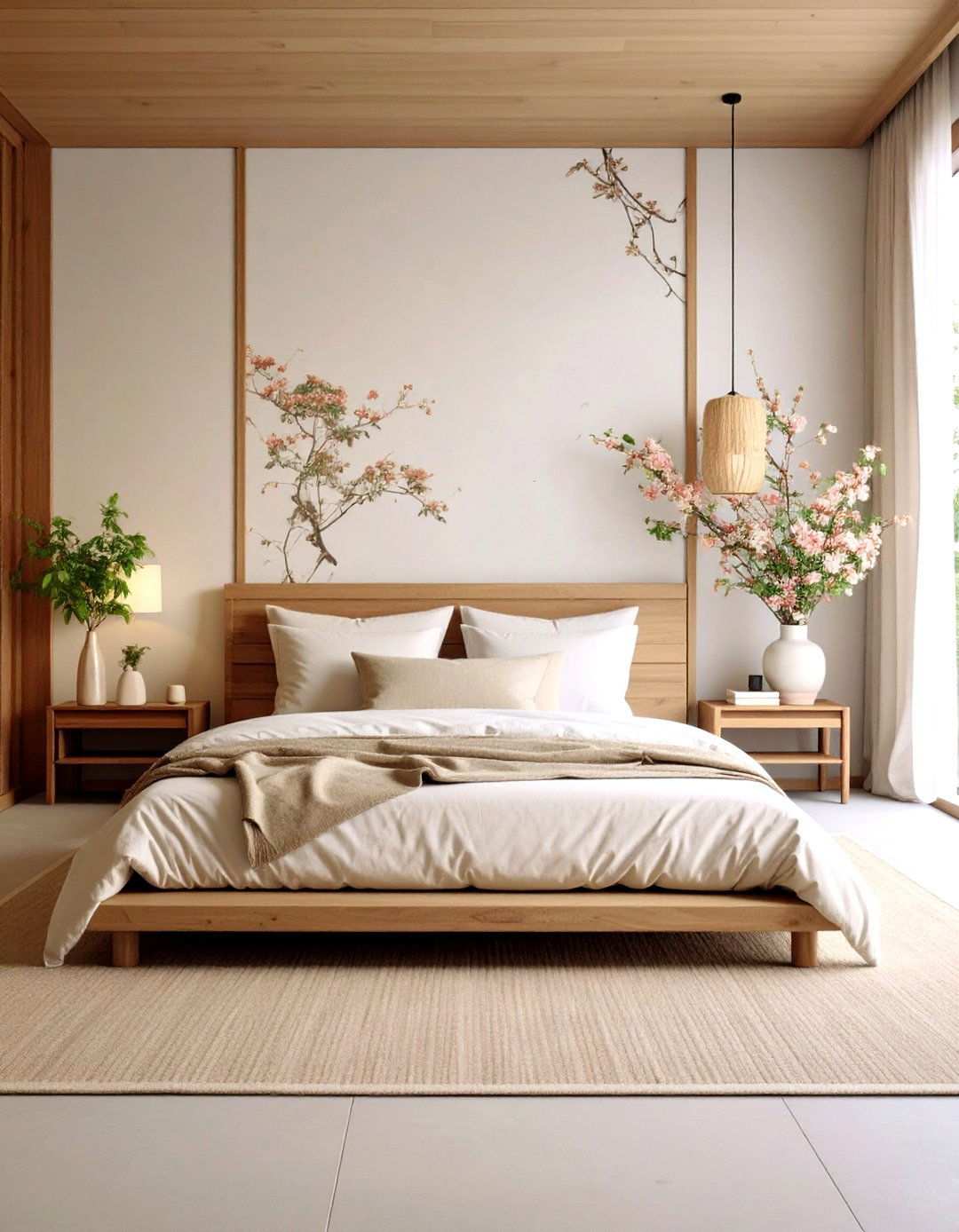
Traditional Korean hanji paper, made from sustainable mulberry bark, offers a unique opportunity to add authentic cultural elements to your bedroom design. This natural material not only regulates humidity but also changes subtly with lighting conditions, creating dynamic visual interest throughout the day. Hanji paper acts as a natural air purifier, trapping dust particles and improving indoor air quality for better sleep and respiratory health. To maintain the serene atmosphere characteristic of Korean bedroom aesthetics, choose neutral colors like cream, soft gray, or natural white. The paper’s natural texture adds warmth and depth to walls, creating an inviting atmosphere that promotes peaceful sleep.
9. Exotic Teak Wood Furniture Elevates Thai-Inspired Bedrooms
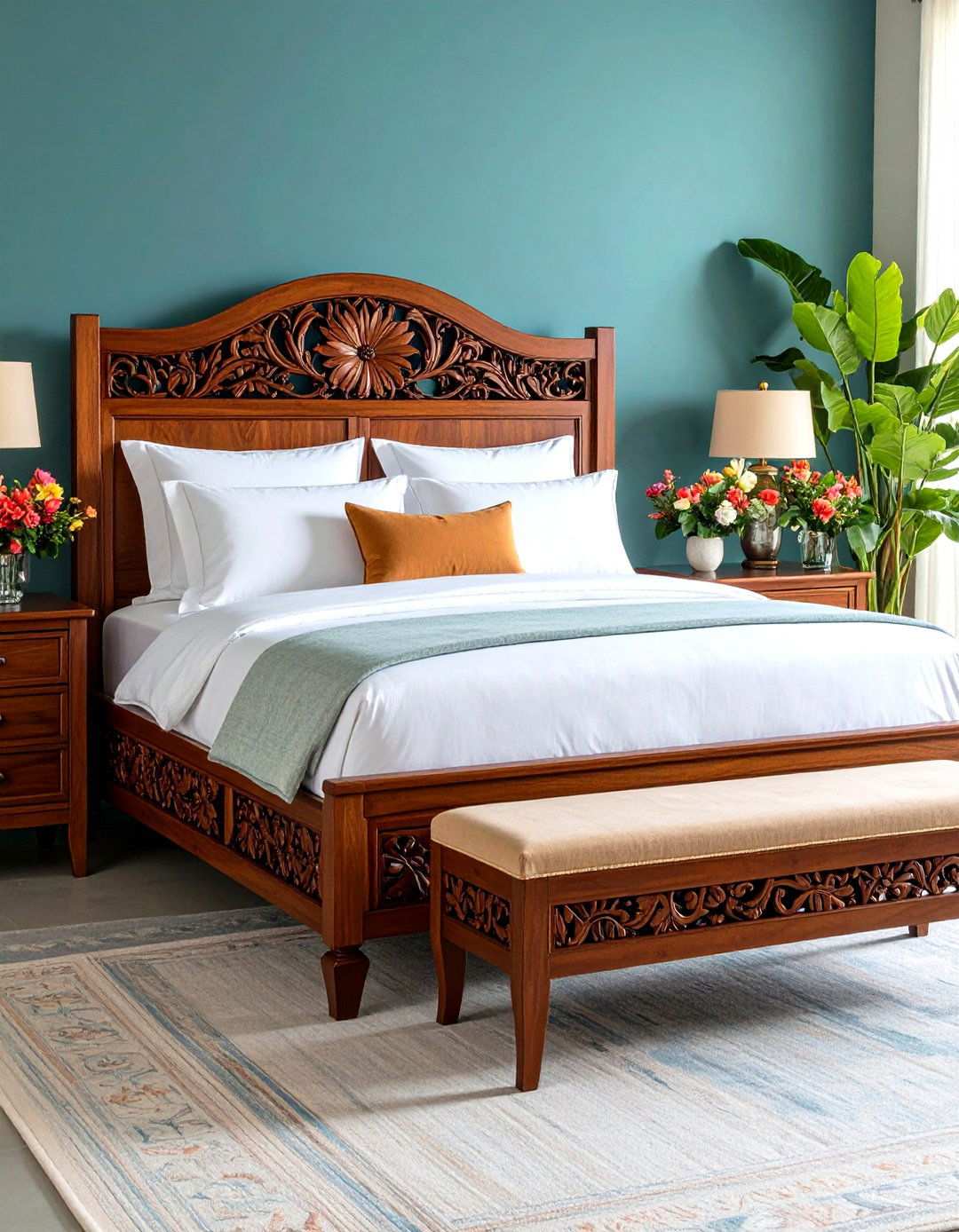
Teak wood furniture imbues Thai-inspired bedrooms with a warm, organic ambiance that effortlessly withstands the humid tropical climates, all while exuding an unparalleled sense of durability. For an authentic touch, opt for pieces adorned with intricate details, such as floral motifs or geometric patterns that introduce visual interest without overwhelming the space. A majestic teak bed frame featuring an elevated headboard makes a striking statement while seamlessly embracing the natural materials philosophy that underlies Southeast Asian design principles. To further enhance the aesthetic, pair teak furniture with matching nightstands and a compact bench at the foot of the bed, thereby achieving an authentic and harmonious appearance. The natural oils present in teak wood serve as a remarkable defense against moisture and insects, making it an ideal choice for bedroom furniture that will stand the test of time.
10. Traditional Tatami Mat Flooring Systems Offer Zen-Inspired Comfort
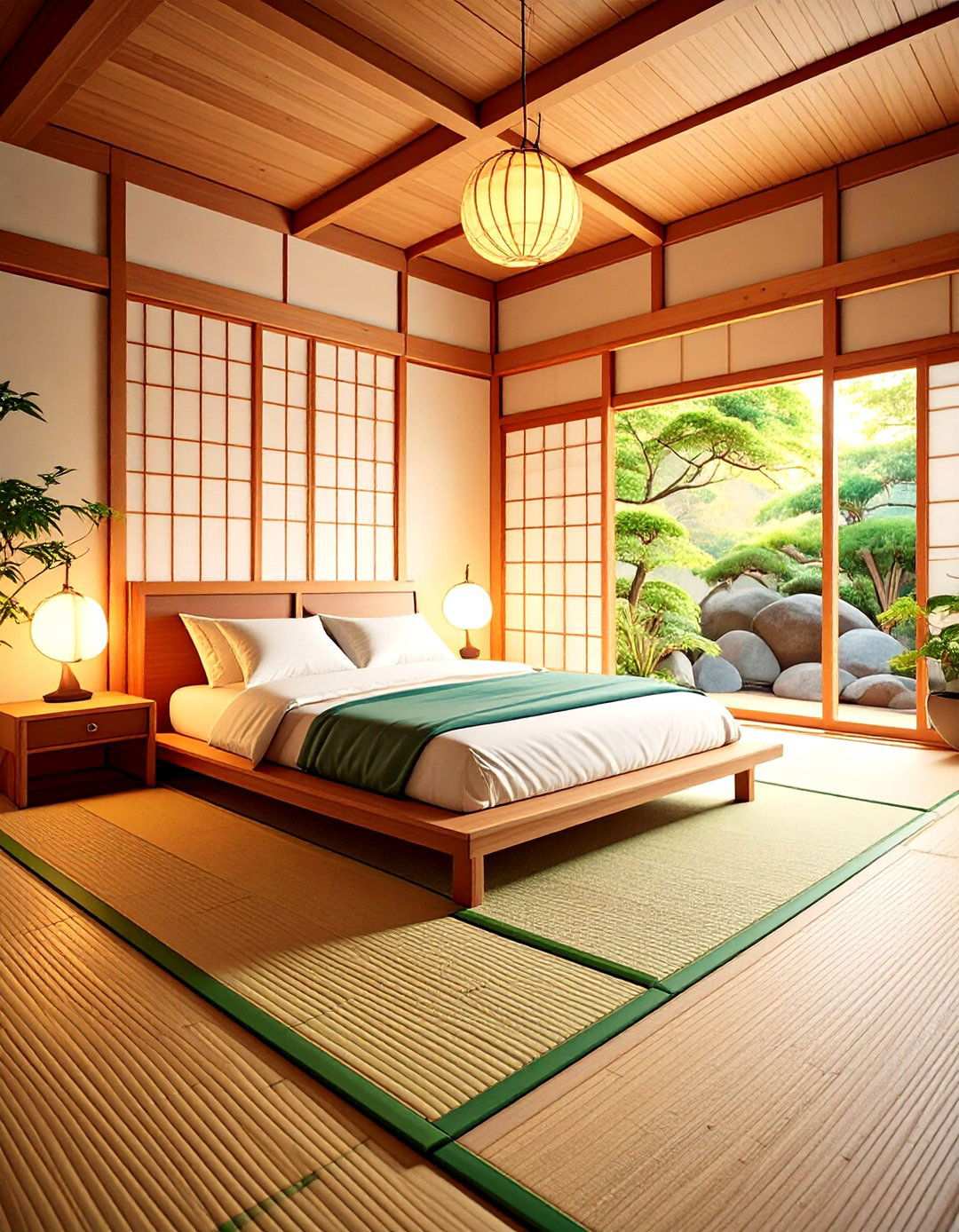
Incorporating traditional Japanese tatami mats into your bedroom creates a natural, soft flooring surface that subtly cushions your footsteps while maintaining a profound connection to the earth, a fundamental aspect of zen bedroom design. These woven rush mats not only provide natural insulation but also excel at regulating temperature, staying refreshingly cool during the summer months and retaining warmth during the winter for an unparalleled year-round comfort. The standardized size of tatami mats plays a crucial role in determining room proportions in traditional Japanese architecture, resulting in harmonious spatial relationships throughout your bedroom. For those seeking a more modern take, alternatives like bamboo mats or natural fiber rugs are available, offering similar aesthetic benefits with the added convenience of easier maintenance requirements. The distinctive fragrance of fresh tatami mats offers an authentic sensory experience that beautifully enhances the peaceful atmosphere found in Asian-inspired bedrooms.
11. Creating a Serene Buddhist Meditation Altar Space in Your Bedroom
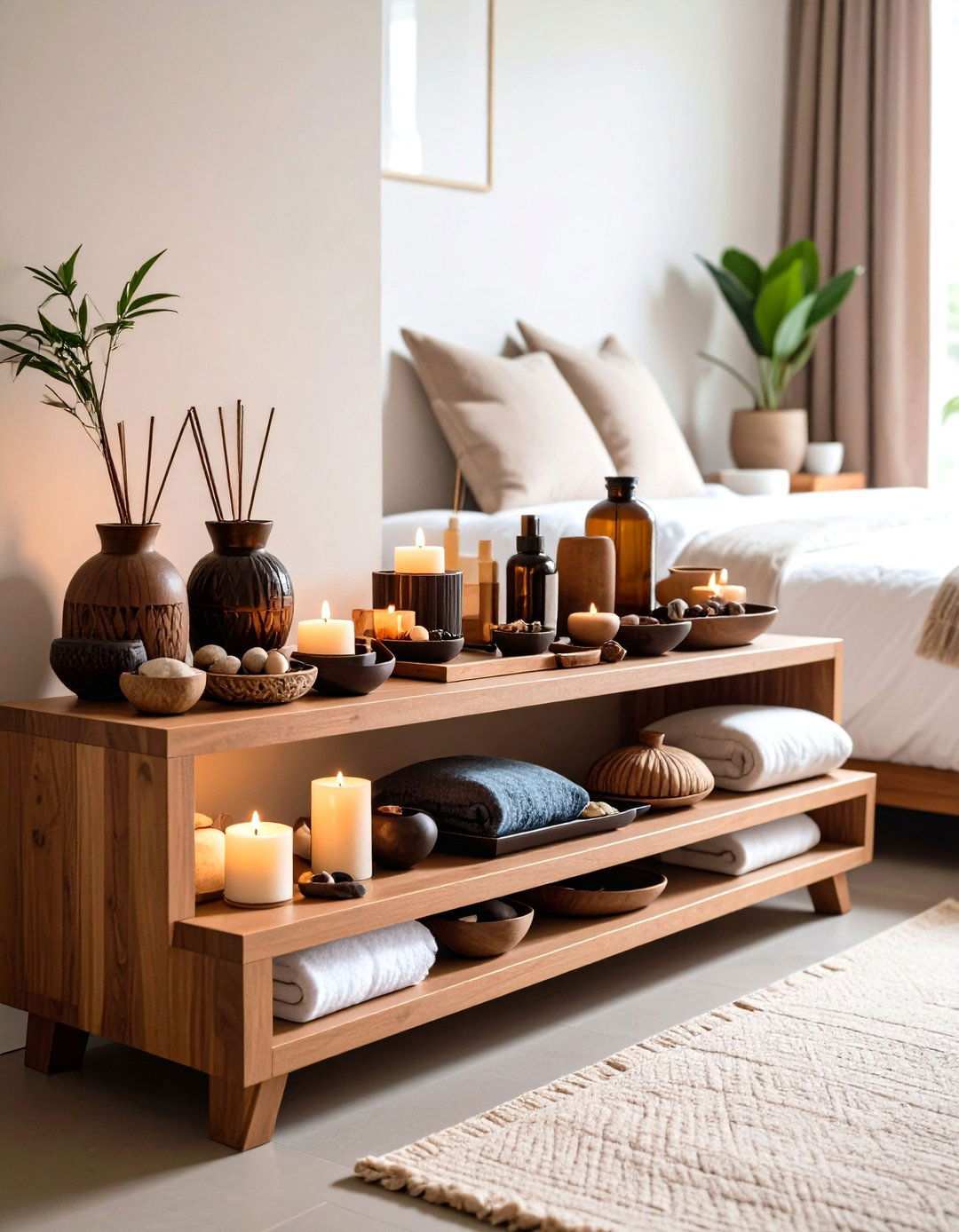
Designate a small, tranquil area within your bedroom as a dedicated space for meditation and spiritual practice, incorporating elements that support your spiritual journey, such as incense holders, small statues, and meaningful objects. This sacred space serves as a daily reminder of your intentions and values, creating a focal point for morning and evening reflection. Use a low wooden table or shelf to display carefully curated items that hold personal significance, maintaining a simple and uncluttered arrangement. As this altar becomes a place for setting intentions, expressing gratitude, and maintaining spiritual balance in your daily life, it’s essential to position it away from the bed to establish a clear distinction between sleep and spiritual practice.
12. Integrating Eastern Elegance
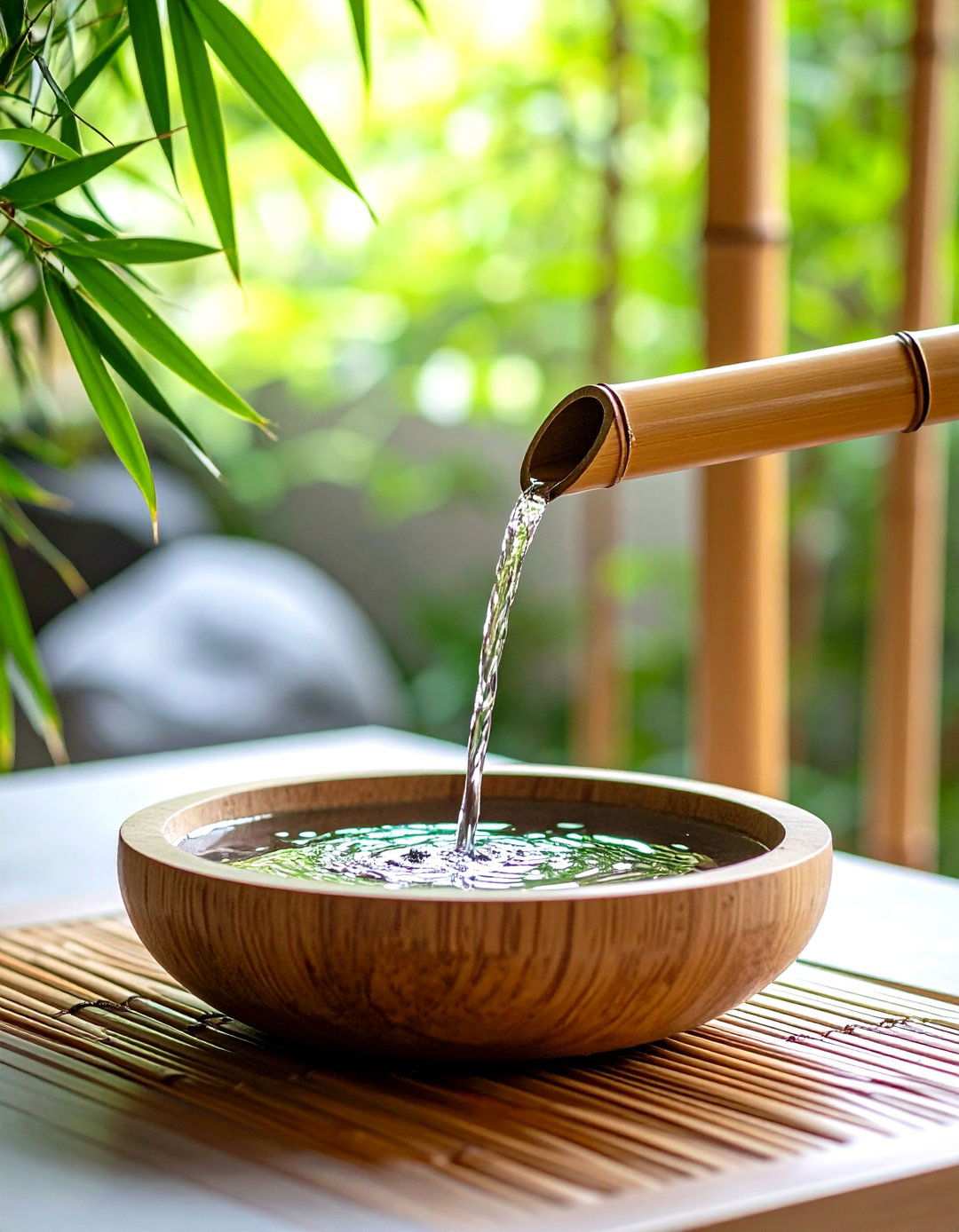
A tabletop fountain or wall-mounted water feature can bring serenity to your bedroom by introducing the soothing sound of flowing water. Water is a crucial element in feng shui design, promoting relaxation and restful sleep. For a harmonious fusion of style and functionality, select designs that mirror your bedroom’s aesthetic, such as a bamboo fountain for a Japanese-inspired space or a carved stone feature for a Chinese-themed room. The gentle movement of water represents the continuous flow of positive energy, inviting abundance and good fortune into your bedroom. To ensure safe installation, position the water feature away from electrical outlets and consider battery-operated options for added peace of mind.
13. Maru-Inspired Wooden Platforms
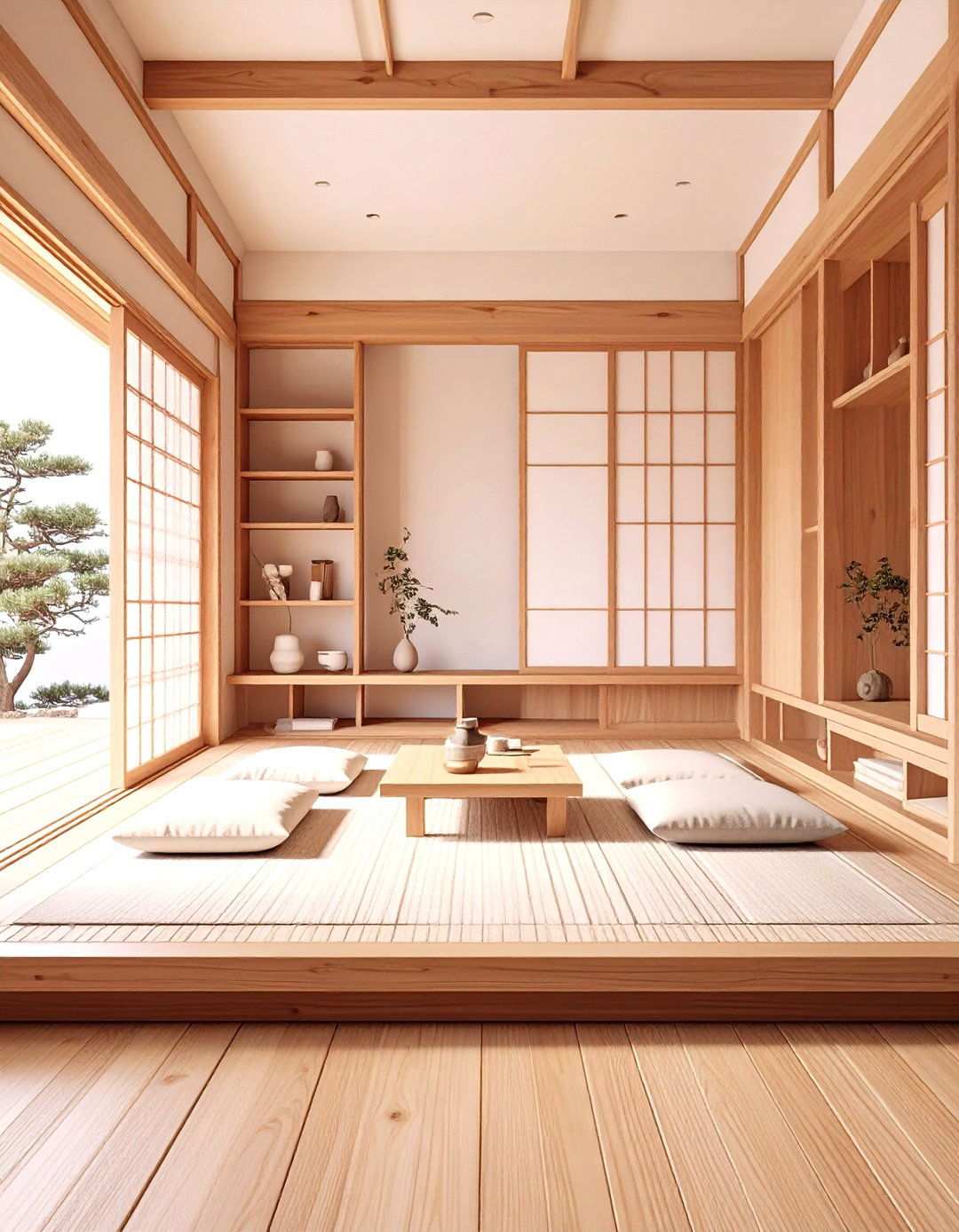
Drawing inspiration from traditional Korean hanok design, create a cozy reading nook, meditation space, or casual seating area within your bedroom. The elevated wooden platform not only defines different zones but also maintains the open, flowing layout characteristic of Korean architecture. Warm wood tones like pine or oak will complement your existing furniture and create visual cohesion throughout the space. To maximize functionality without compromising aesthetics, incorporate hidden storage compartments for seasonal bedding, personal items, or linens. Complete the look by adding floor cushions or a low table to create a comfortable seating area perfect for morning tea or evening reflection.
14. Exuding Asian Luxe with Silk Textiles
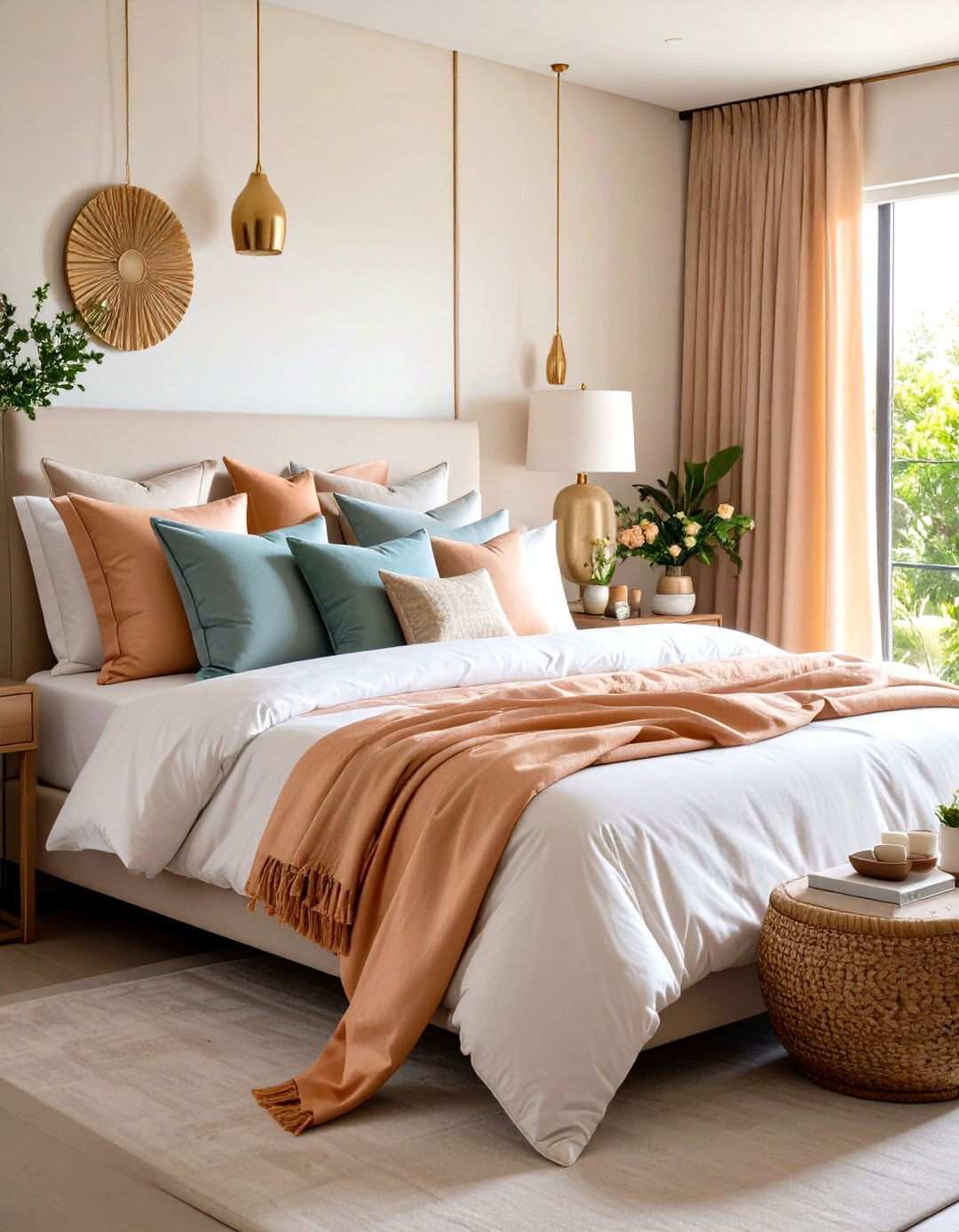
Add an air of sophistication to your bedroom with luxurious silk textiles that reflect the rich textile traditions of Asian cultures. Incorporate silk throw pillows, curtains, and decorative wall hangings that bring color, texture, and warmth to the space. Choose colors inspired by traditional Asian palettes, such as deep green, golden yellow, or rich burgundy, which create a cozy ambiance without overwhelming the serene atmosphere. Silk is an excellent choice for bedroom textiles, as it naturally regulates temperature and provides a cooling sensation against the skin. The subtle sheen of silk changes with lighting conditions, creating a captivating visual effect that evolves throughout the day. To add depth and interest, mix silk with natural fibers like cotton or linen, maintaining the authentic material philosophy of Asian design.
15. Elegant Bamboo Accents for a Harmonious Retreat
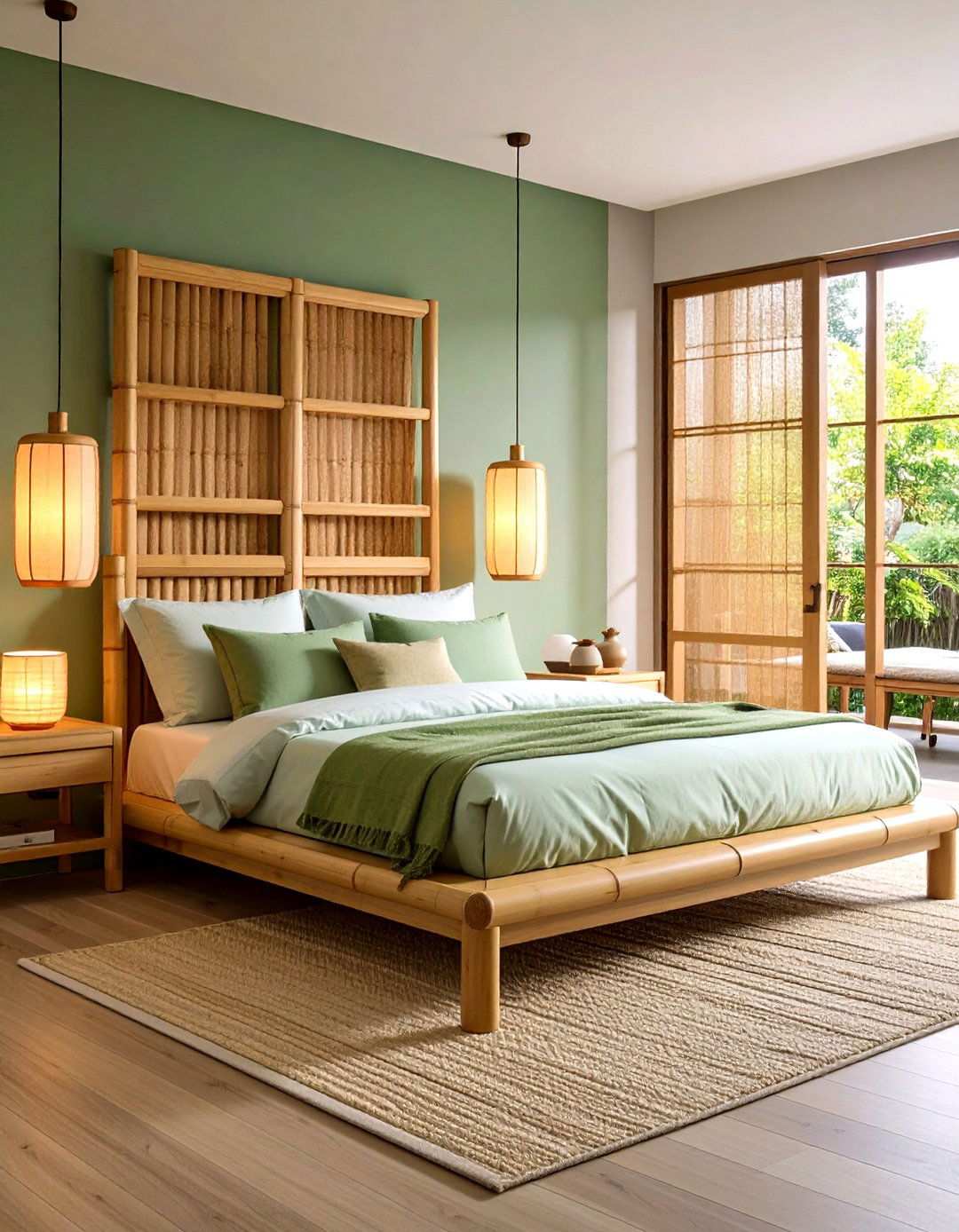
Elegant bamboo accents can seamlessly integrate sustainable natural beauty into your bedroom, reflecting the importance of growth, flexibility, and harmony-with-nature principles in Asian philosophy. By incorporating bamboo containers for storage, lamp bases for soft luminescence, and decorative screens for seclusion or space division, you can create a serene ambiance that celebrates the organic simplicity of this versatile material. The rich variations in bamboo grain and color provide dynamic visual interest without requiring bold patterns or artificial embellishments. Furthermore, bamboo’s rapid growth and regenerative properties make it an eco-friendly choice that aligns with the core principles of Asian design. To enhance visual cohesion, select accessories in harmonious tones; for a more subtle look, combine different bamboo finishes for nuanced texture variation that maintains the natural aesthetic.
16. Minimalist Japanese Futon Design for Adaptive Spaces
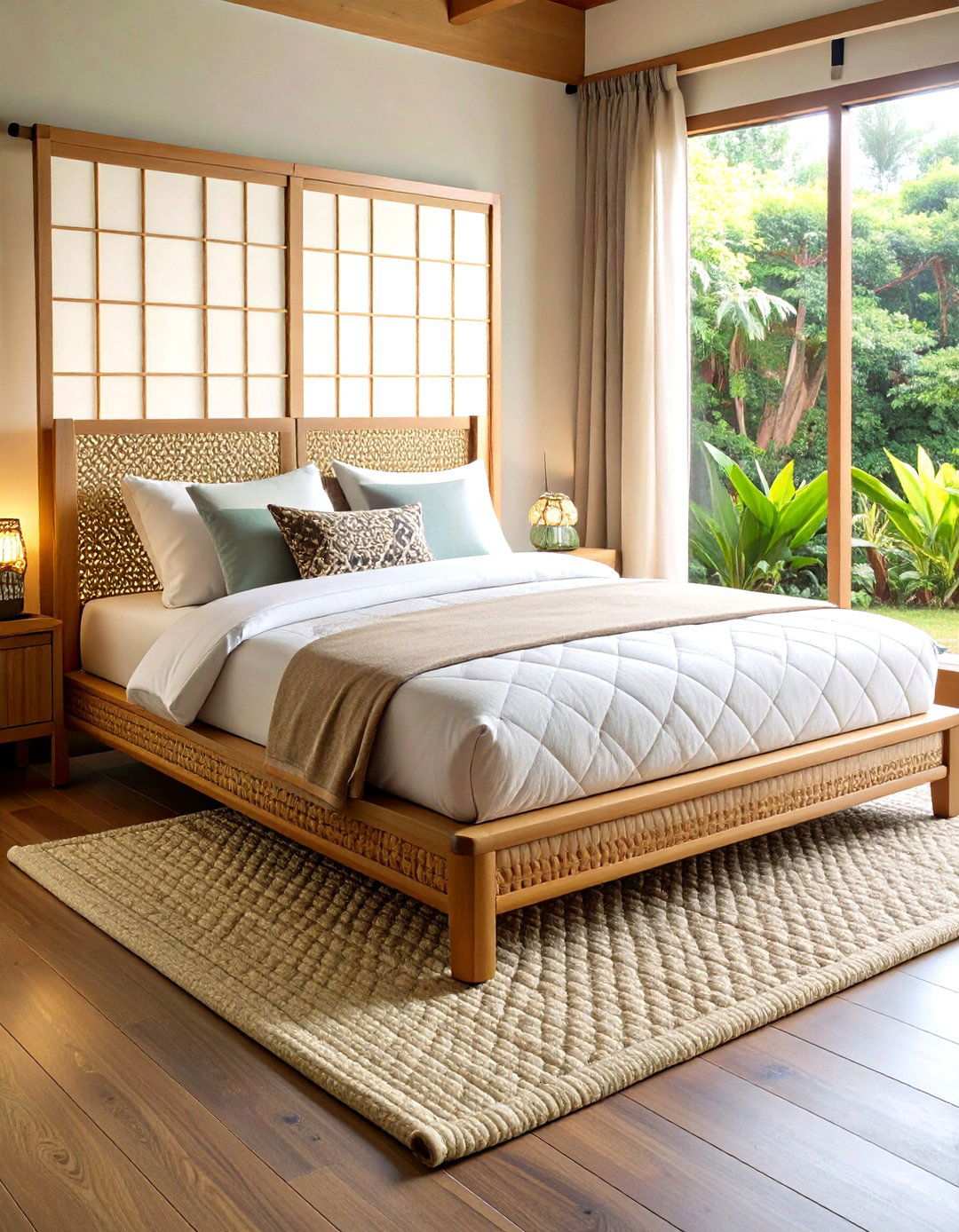
A traditional Japanese futon offers a thoughtfully minimalist sleeping solution that can be compactly folded and stored during the day, allowing your bedroom to effortlessly adapt to changing needs. This space-saving approach eliminates the need for a permanent bed frame, enabling your bedroom to serve as a tranquil meditation space, exercise area, or study during daylight hours. High-quality futons crafted from natural materials like cotton or buckwheat hulls provide comfortable support while honoring the authentic Japanese aesthetic. Establishing a mindful routine of setting up and putting away your bedding each day can help create a seamless transition between sleep and wakefulness states, promoting a sense of balance and calm. Opt for neutral colors and understated patterns that harmonize with your overall bedroom design, embracing the minimalist philosophy.
17. Artful Mirror Placement for Positive Energy Flow
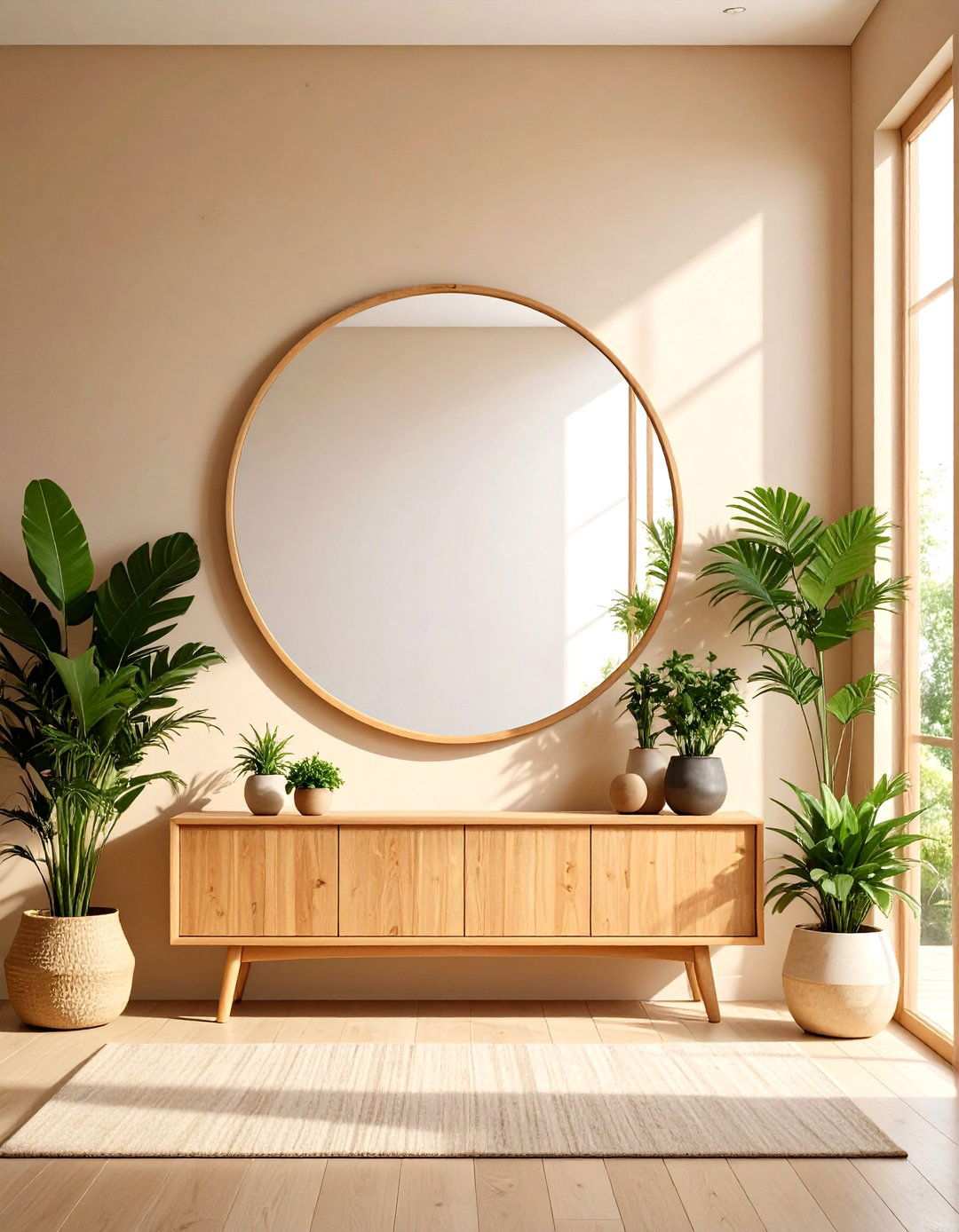
Strategically placing mirrors in your bedroom can amplify natural light, create the illusion of expanded space, and follow feng shui principles that foster positive energy flow in your retreat. Position mirrors to reflect captivating views or artwork rather than the bed itself, which can generate restless energy that disrupts sleep patterns. Use mirrors with decorative frames that complement your Asian-inspired theme, such as intricately carved wood or bamboo-style designs that add visual allure. The reflection of light throughout the room can create a brighter, more expansive feeling that elevates the ambiance. To maintain energy balance and enhance sleep quality and relationship harmony, avoid placing mirrors directly opposite the bed or facing doors.
18. Harmonious Symbolism with Thai Lotus Flower Motifs
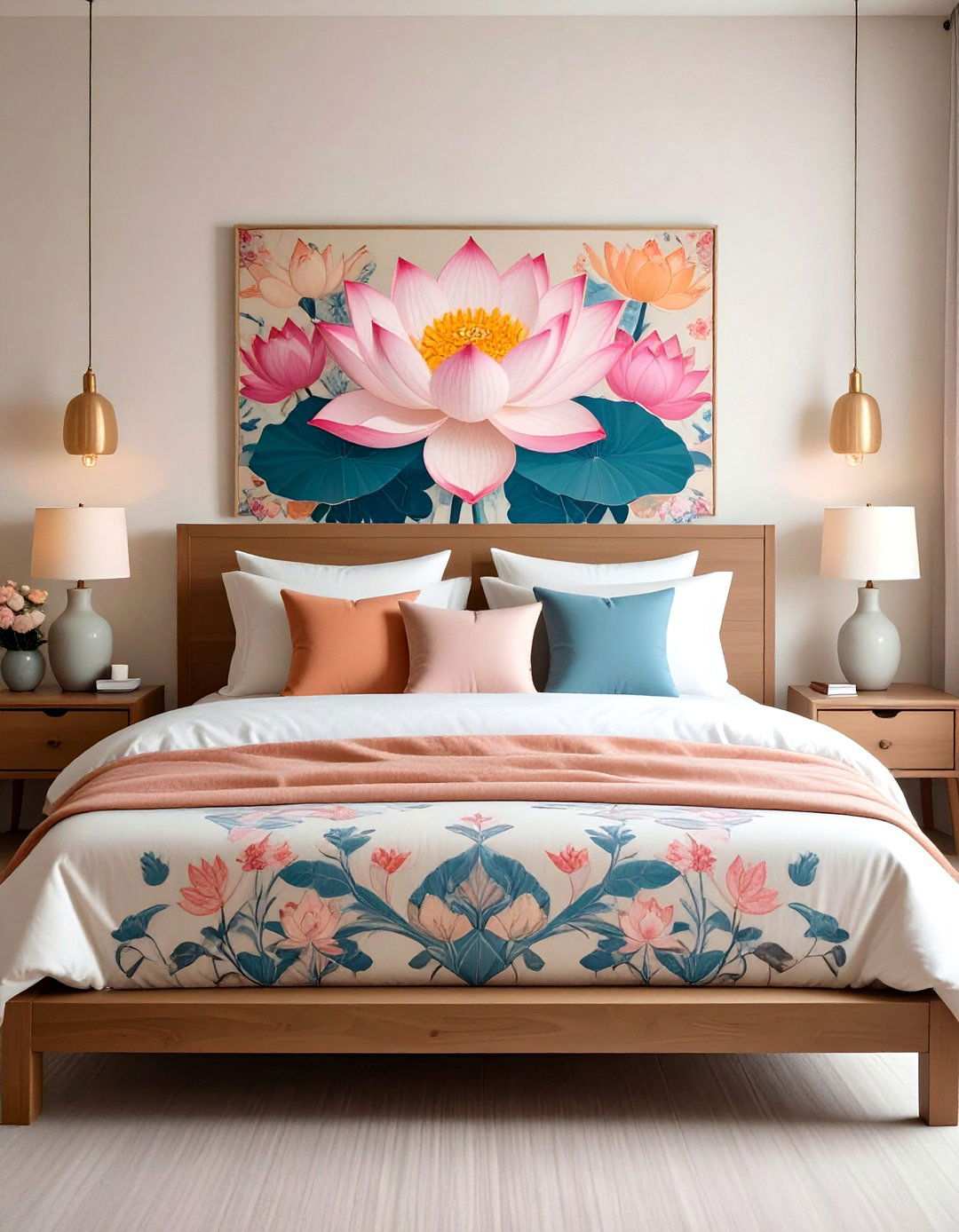
Incorporate the majestic Thai lotus flower design into your bedroom through various artwork, textiles, and decorative items, each embodying the essence of purity, enlightenment, and spiritual growth in Buddhist tradition. These subtle motifs can unfold in calming forms, such as pillow patterns, wall art, and ceramic accessories that lend valuable symbolism without compromising the tranquil atmosphere of your bedroom. This revered flower stands for rising above adversity to achieve wisdom and beauty, making it an ideal symbol for the bedroom, where you rest and recharge. Soft, natural hues that blend with your overall color scheme maintain the serene ambiance essential for restful sleep. For a more ephemeral connection to this powerful symbol, consider placing fresh lotus flowers in a simple vase when available seasonally.
19. Elegant Lighting Design Inspired by Asia
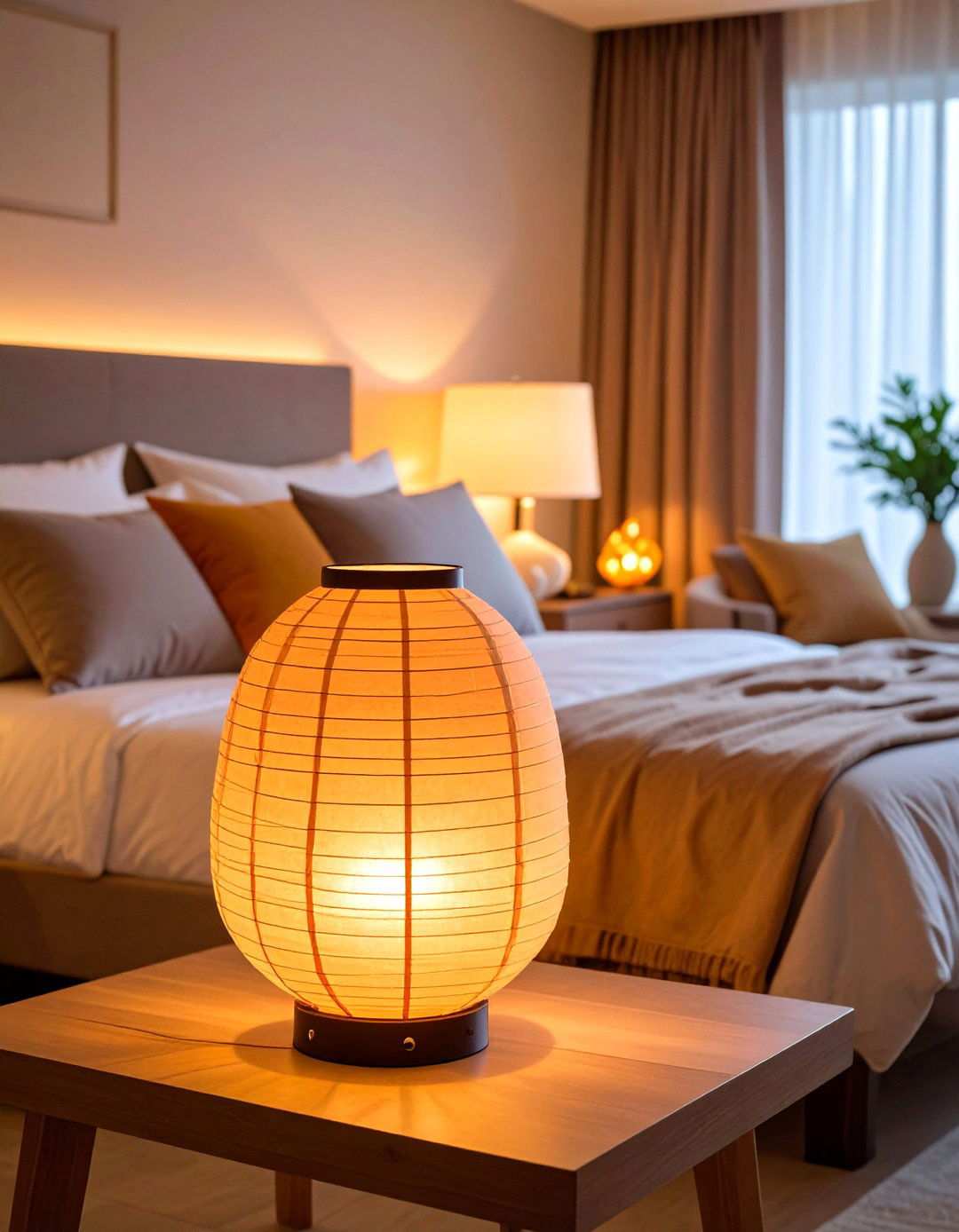
To create a soothing atmosphere that supports both relaxation and functional requirements, incorporate multiple lighting sources in harmony within your bedroom space. Soft, ambient lighting reminiscent of traditional Asian design can be achieved through the use of paper lanterns. Supplement table lamps with fabric or paper shades on nightstands for focused lighting during reading and evening tasks. Incorporate candles for meditation and relaxation purposes, selecting unscented varieties to avoid overwhelming the natural fragrances present in your bedroom. The combination of warm, gentle lighting sources minimizes harsh shadows, resulting in a peaceful environment that fosters better sleep quality. For an added layer of convenience, consider integrating smart lighting systems that allow you to adjust brightness and color temperature according to your daily needs.
20. Elegant and Practical Storage Solutions in Modern Asian Style
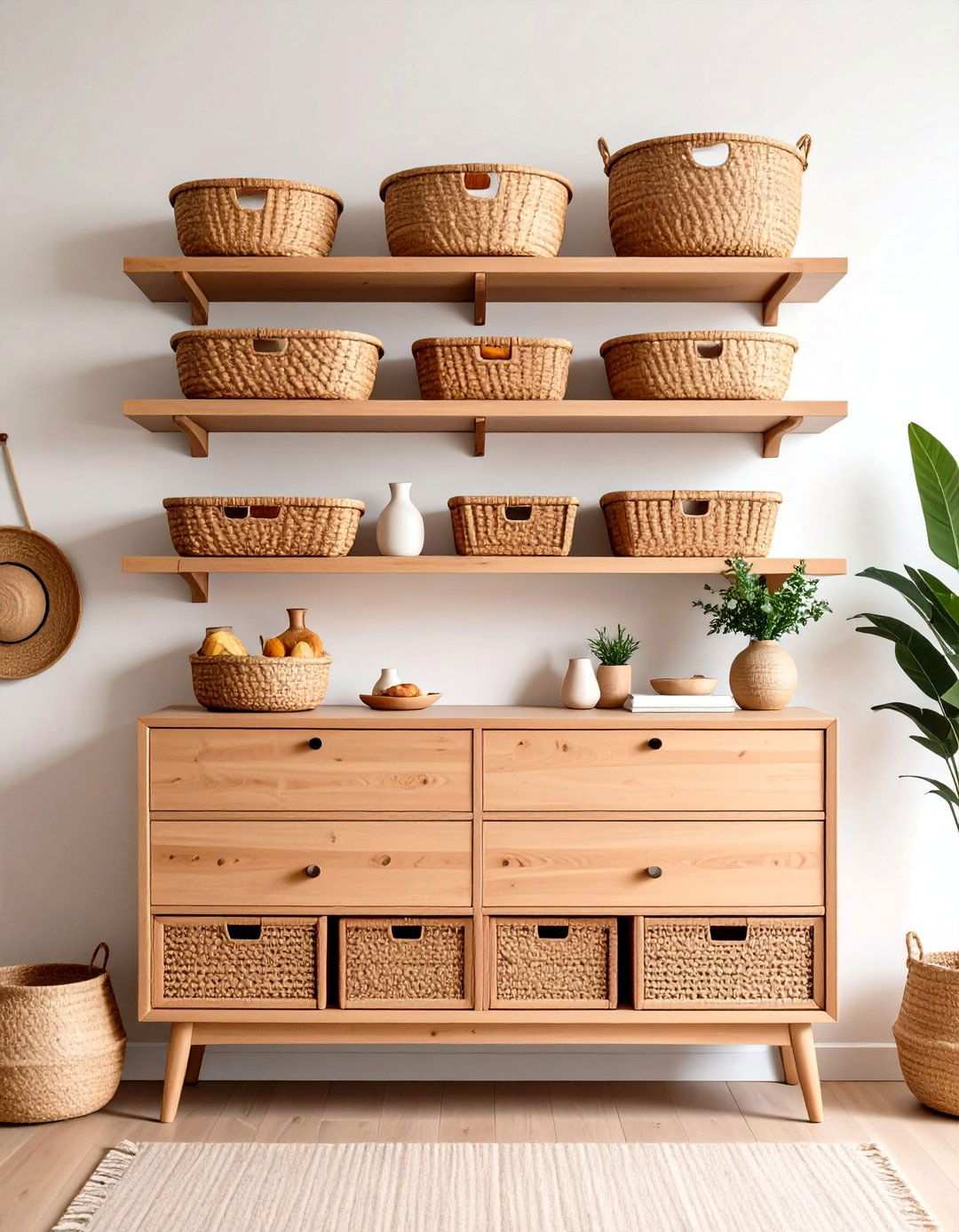
To seamlessly blend functionality with the clean, uncluttered aesthetic characteristic of Asian bedroom design, integrate hidden storage solutions that cater to modern living needs. Opt for low dressers with simple hardware and natural wood finishes that complement your overall design theme. Incorporate floating shelves in natural materials like bamboo or wood to display cherished objects while keeping surfaces clear and organized. Select storage containers crafted from natural materials such as woven baskets or wooden boxes that add texture while concealing everyday items. Maintaining visual simplicity is crucial in Asian-inspired storage solutions, where ensuring every item has a designated place is essential for sustaining a peaceful, organized environment conducive to restful sleep.