1. Attic Bedroom Illumination Strategies
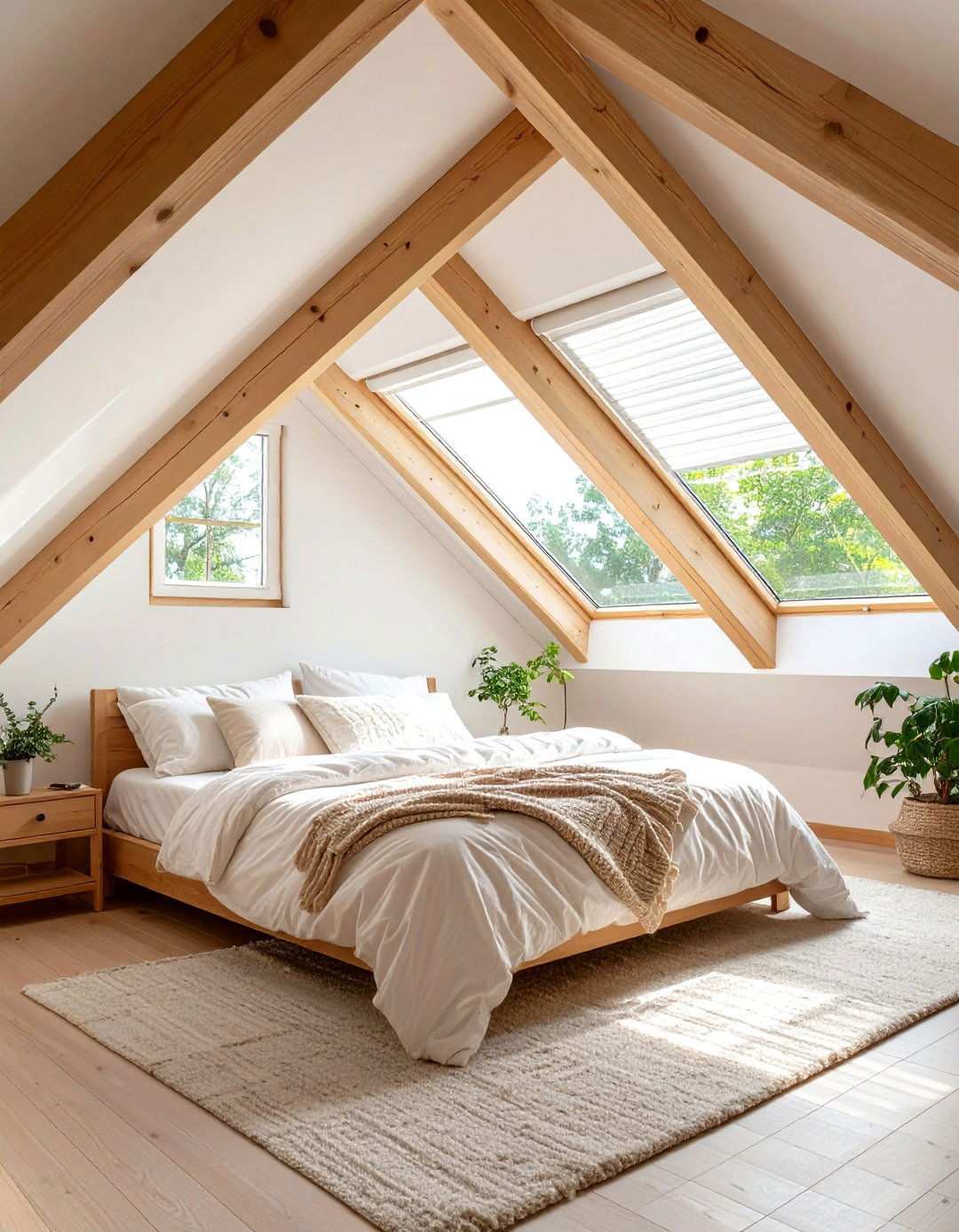
Unlock the full potential of your attic by harnessing the power of natural light. Strategically placed skylights can elevate even the darkest attic spaces, transforming them into airy sanctuaries that feel deeply connected to the outdoors. By installing multiple skylights in a thoughtful arrangement, you can create a sense of continuity and openness, drawing the eye upwards and outwards. Positioning skylights above the bed area can create a captivating focal point, inviting you to gaze at the stars or watch clouds drift lazily by. To maintain optimal light levels and preserve the architectural integrity of your attic bedroom, consider installing fitted blinds or automated shades that can be easily controlled throughout the day.
2. Tailored Attic Bedroom Storage and Organization Solutions
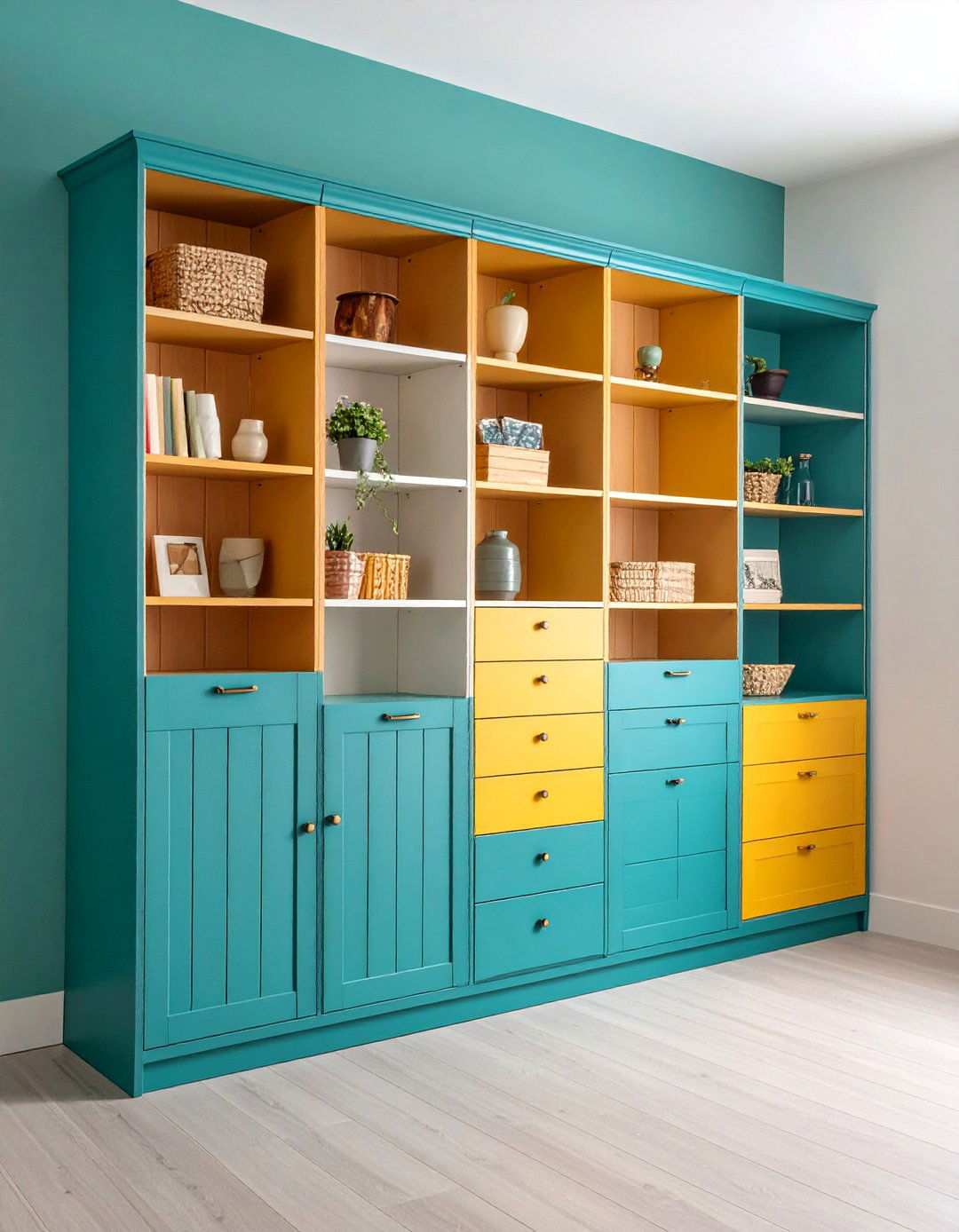
Maximize every available inch of your attic by incorporating custom-designed storage units that seamlessly integrate with the unique angles and slopes of your space. Open shelves, drawers, and cabinets work in harmony to create a clutter-free environment, while also providing ample space for clothes, books, and personal items. Where space is limited, built-in storage becomes the ultimate solution, cleverly utilizing every centimeter to keep your attic bedroom organized and functional. Design your storage to strike a balance between display and concealment, incorporating features such as rails for hanging clothes, pull-out drawers, and hidden compartments behind tongue-and-groove paneling with touch-latch doors. By merging form and function, these integrated storage solutions maintain the aesthetic appeal of your attic while providing the practical support you need.

As an Amazon Associate I earn from qualifying purchases.
3. Serene Attic Retreats
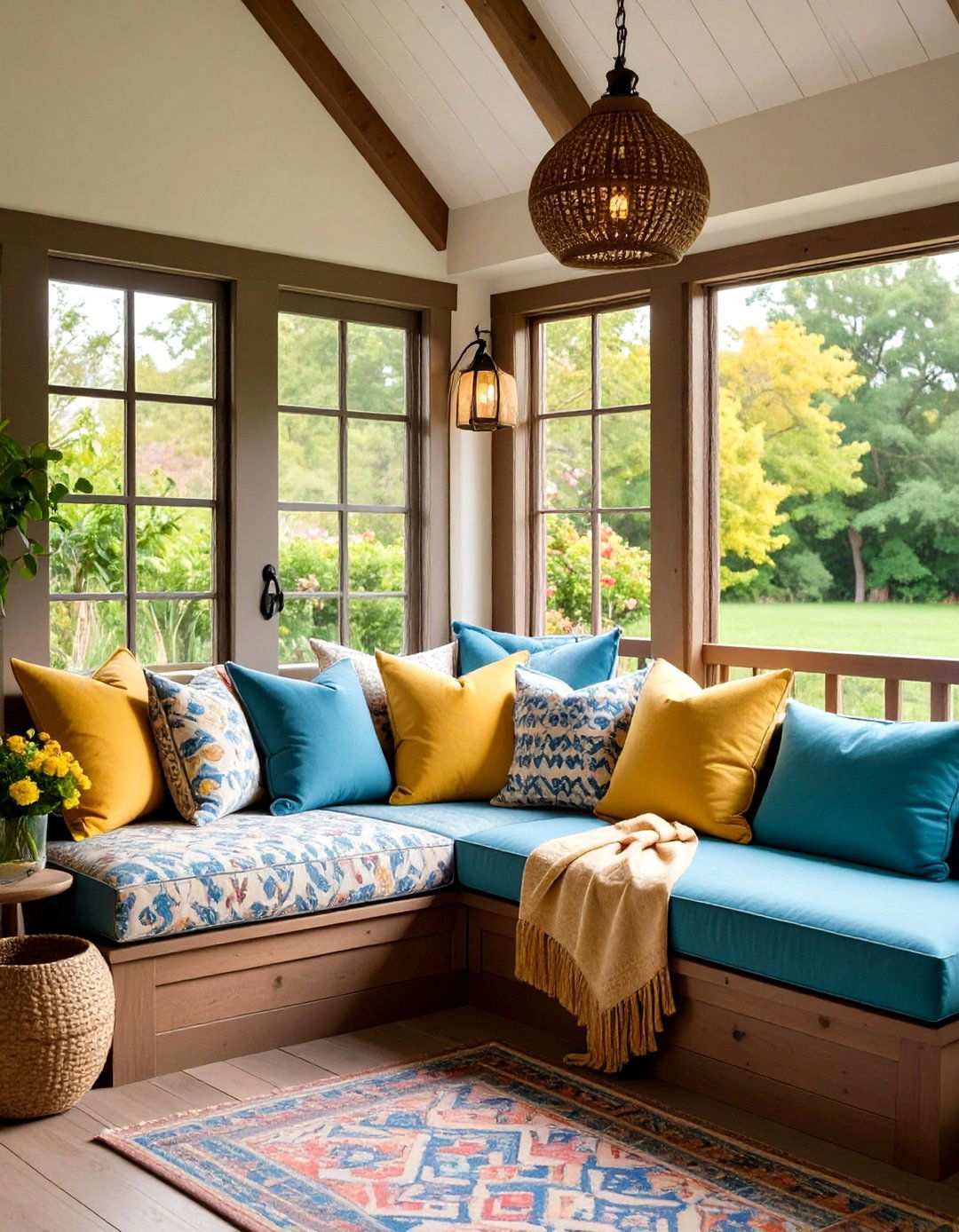
Transforming attic corners into intimate reading havens is a genius way to optimize small spaces while indulging in your love for books. By incorporating built-in seating with plush cushions and soft throws, you can turn awkward low-ceiling areas into inviting retreats. Strategically position task lighting with swing-arm wall sconces or pendant lights to ensure a comfortable reading experience. Creating a cozy bed nook is one of the most effective attic room ideas, allowing you to maximize usable floor space while repurposing an otherwise awkward area into a charming feature. Including small built-in shelves within arm’s reach for storing books, beverages, or personal items creates a self-contained sanctuary within your attic bedroom.
4. Embracing Sloped Ceilings in Attic Bedroom Design
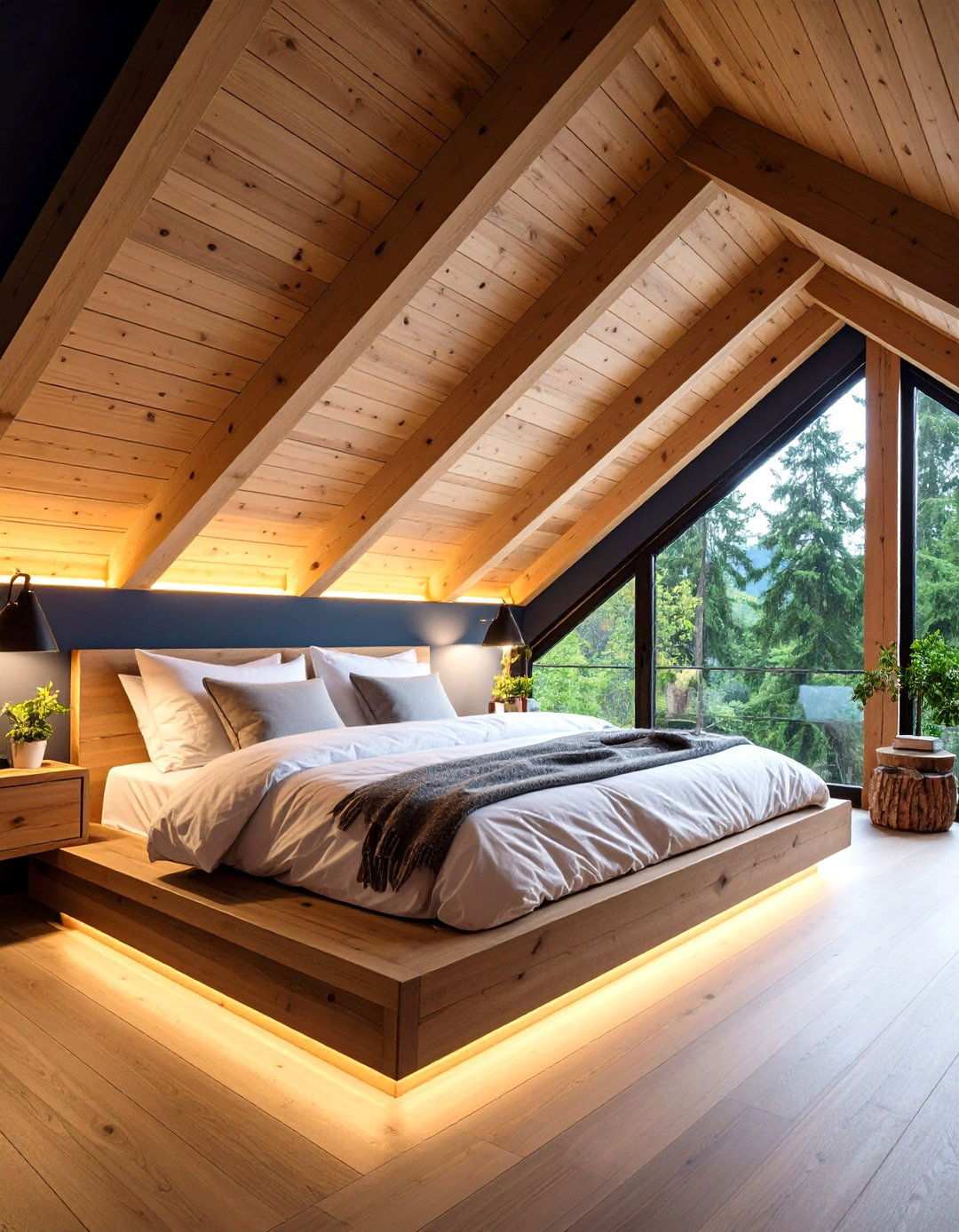
Rather than trying to conceal your attic’s distinctive sloped ceilings, why not celebrate them as unique architectural elements that add character and visual interest to your bedroom? The design of attic bedrooms with sloped ceilings presents remarkable opportunities for carved-out openings and cozy sleeping alcoves. By painting your sloped surfaces in warm, embracing colors, you can create a space that feels cozy and intimate. To further enhance the cocoon-like feel of your space, consider a dark paint color that adds an extra layer of coziness to small areas. By using neutral decor, you can let unique wood beams or rooflines take center stage, highlighting the space’s architectural charm. Installing LED strip lighting along the angles where walls meet ceilings can not only accentuate these unique features but also provide ambient illumination.
5. Creative Window Treatments for Attic Bedrooms
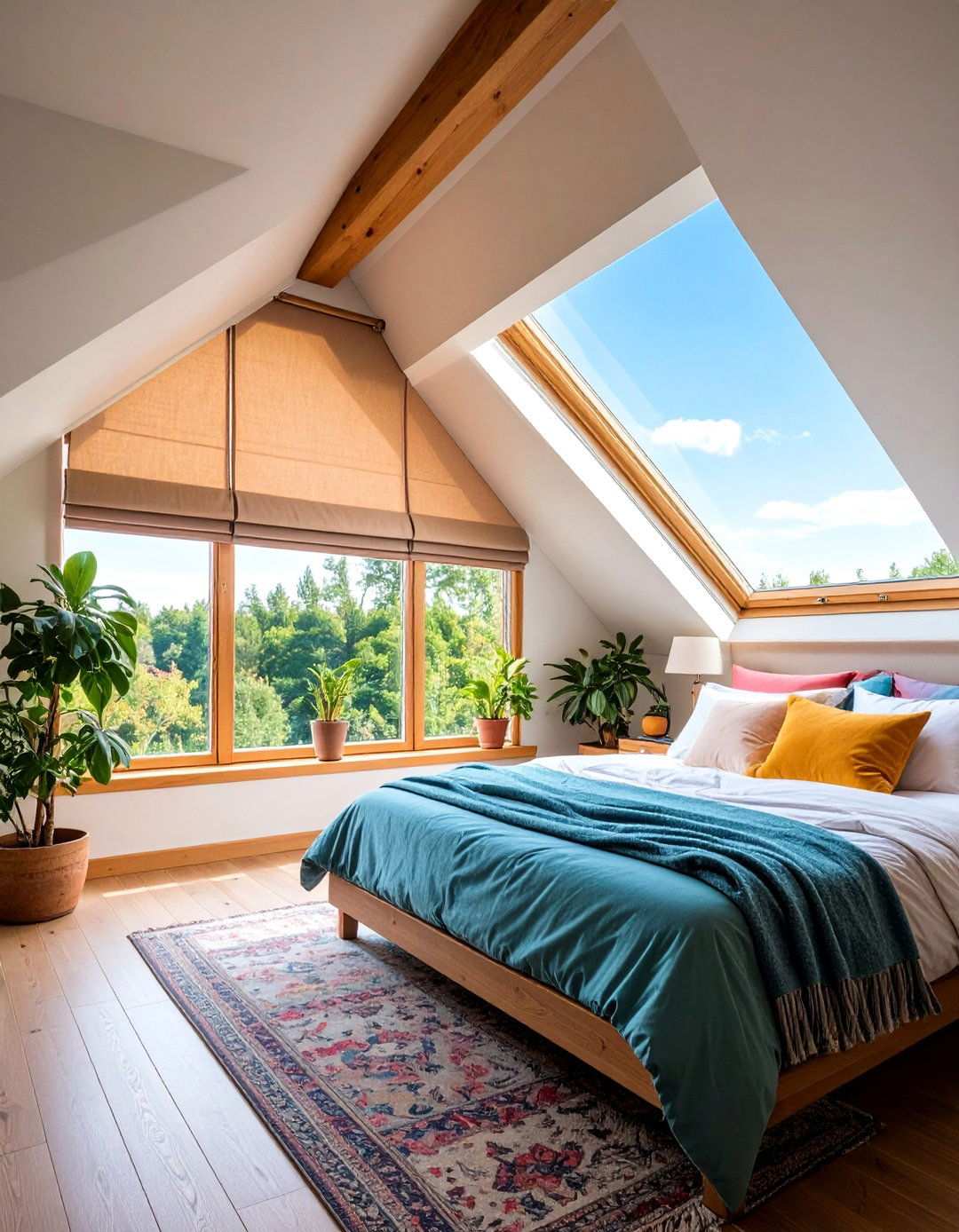
Attic bedrooms often feature quirky-yet-charming windows, requiring some creative thinking when it comes to window coverings. Dormer windows, in particular, demand specially fitted treatments that accommodate their unique angles and proportions. Relaxed Roman shades can provide light filtration while adding softness against angular features. Alternatively, custom-made curtains that follow the window’s shape can create dramatic framing effects while offering privacy and light control. When selecting window treatments, consider those that can be opened fully to maximize natural light during the day, then closed for privacy and darkness at night. Remember to keep your windows spotless, as dirty windows can block natural light, making the room appear darker and more oppressive. By choosing fabrics and colors that complement your overall design scheme, you can enhance the room’s cozy atmosphere and create a haven that’s both peaceful and visually appealing.
6. Unlocking Hidden Storage Potential in Under-Eaves Attics
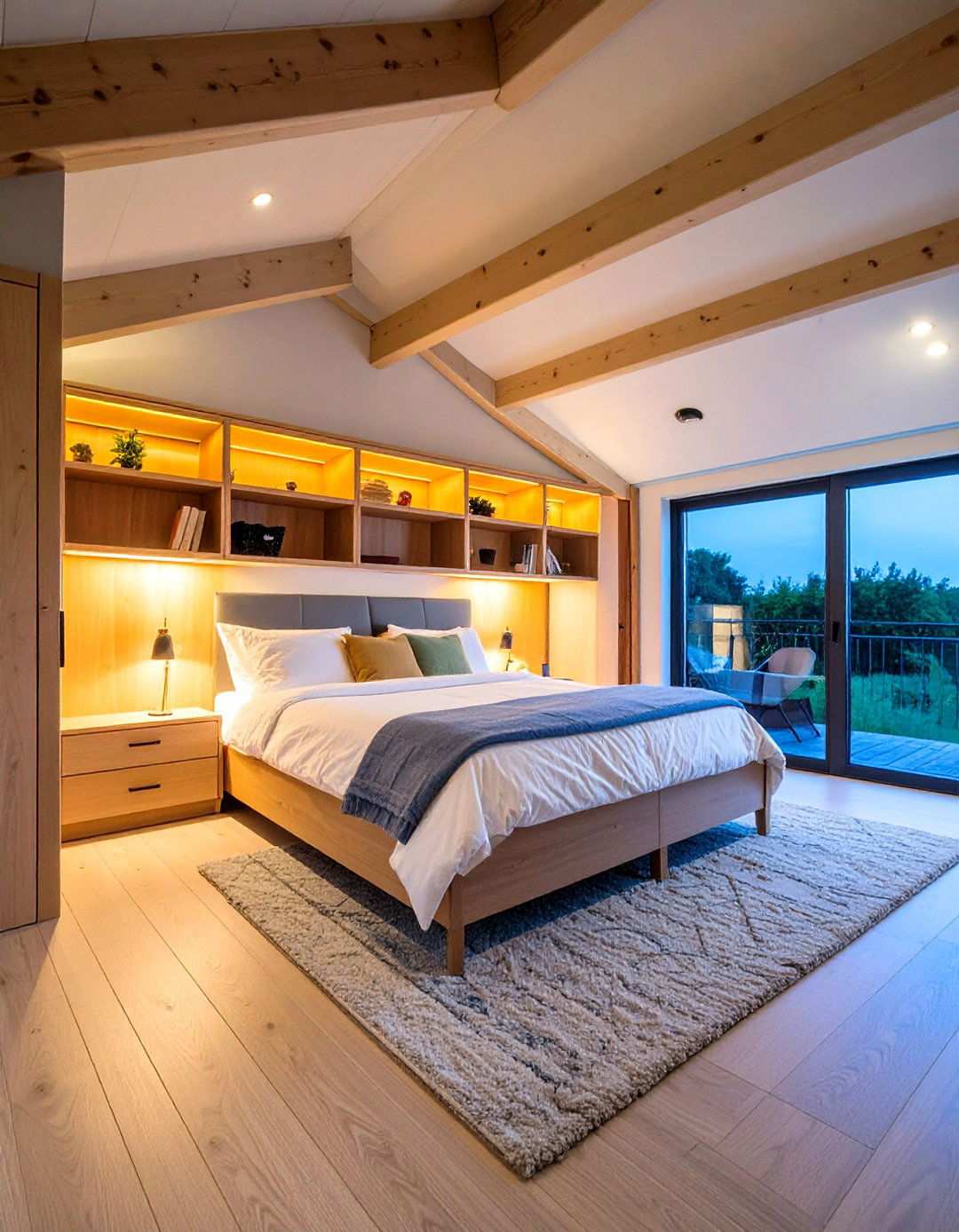
Attics with under-eaves spaces often go underutilized, but this area can be transformed into functional storage compartments by installing access hatches or recessed shelves. Typically, these hard-to-reach spaces are perfect for storing less frequently used items, such as seasonal decorations, extra bedding, or personal belongings. Built-in shelf storage or closets, cleverly integrated into knee walls, can help maximize space and create a seamless visual flow. Incorporate sliding doors or hinged panels that blend harmoniously with the surrounding walls, creating concealed storage areas that maintain clean lines. To optimize attic storage, consider incorporating open niches and closed storage compartments that make the most of every available inch. Finally, add interior lighting to these storage spaces to improve accessibility, and use clear containers or labels to maintain organization in these often-dark areas.
7. Crafting Attic Bedroom Bed Designs Around Steep Slopes
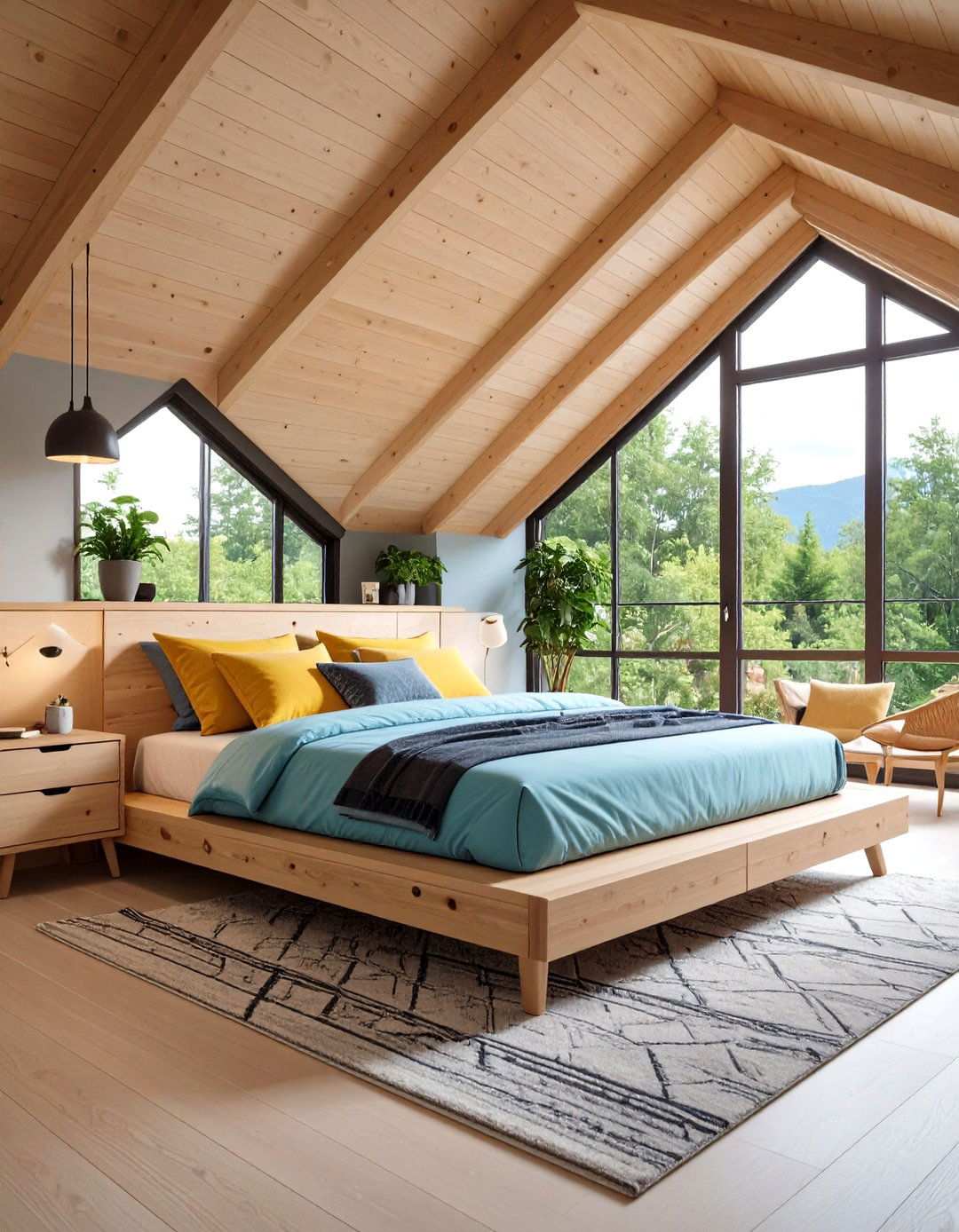
In attics with steep pitched roofs, space is often at a premium. However, creative solutions can make the most of this challenge, such as platform beds that are low to the ground yet still offer ample room for sleeping and storage. Platform beds are well-suited to attic environments, requiring minimal vertical clearance while providing modern, clean aesthetics. By incorporating built-in storage drawers beneath the platform, functionality is elevated without increasing footprint. Conversely, utilizing the space against sloped walls for bed nooks that don’t demand significant vertical clearance can be an effective approach. Combine this with built-in drawers under the bed frame to store clothing or personal items. These bespoke solutions can be tailored to fit the attic’s exact dimensions, resulting in a uniquely designed sleeping area that feels intentional and expertly crafted, while delivering essential storage capabilities.
8. Crafting a Harmonious Attic Bedroom Lighting Scheme
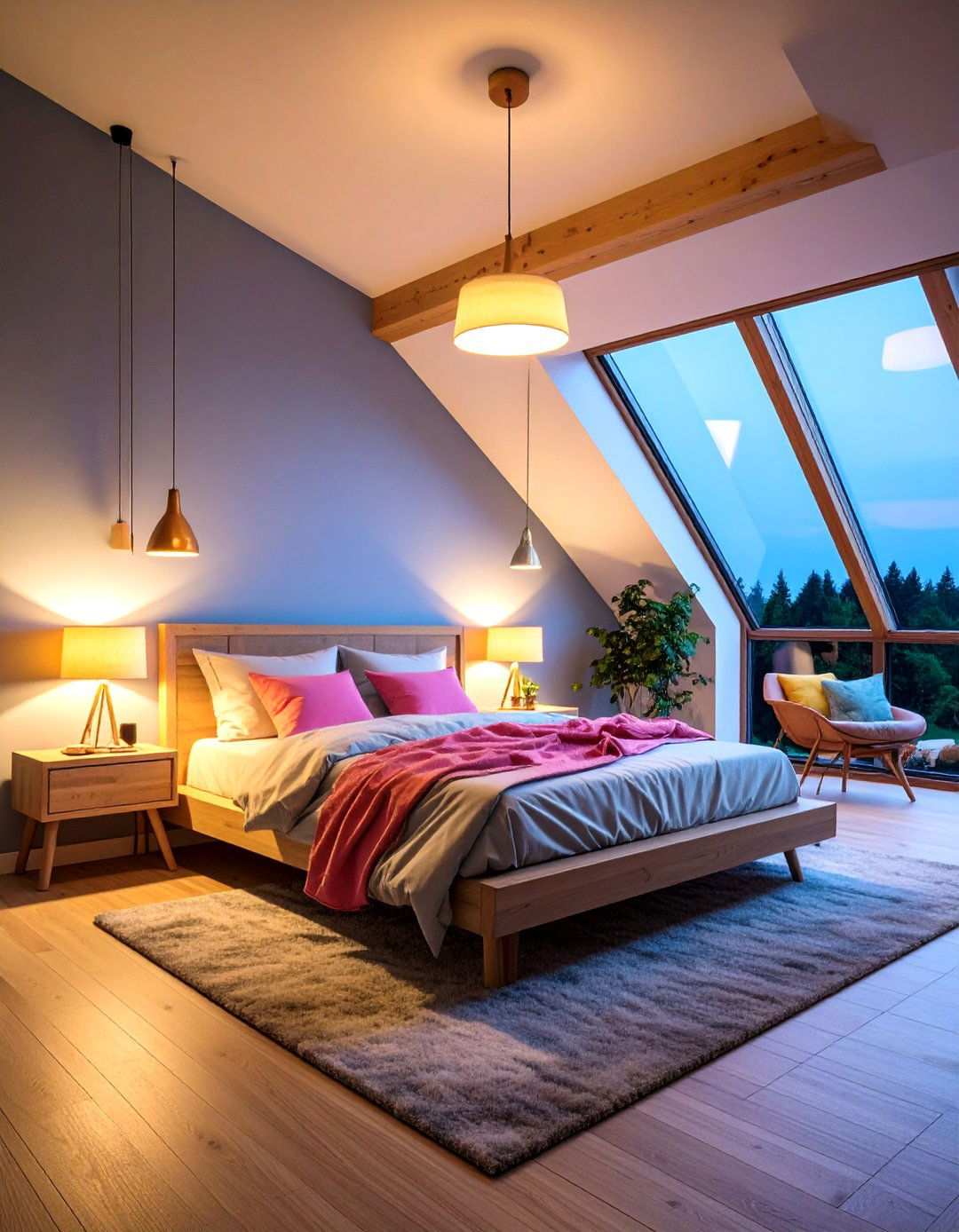
The most effective lighting systems combine multiple types of lighting, including ambient lighting, task lighting, and accent lighting. When designing an attic conversion, a diverse range of light sources should be employed, such as flush-mounted or low ceiling lights, wall lights, and freestanding lamps. By incorporating layered lighting, comprising dimmable overhead fixtures, bedside lamps, and ambient light sources, a versatile atmosphere can be created. Installing dimmer switches throughout allows for adjustments in lighting levels, catering to different activities and times of day. Wall-washer lights and wall-mounted lanterns are particularly effective for generating a softly lit ambiance in bedrooms, avoiding harsh, bright light. Consider incorporating pendant lights hung from higher ceiling areas to provide task lighting while adding visual interest to the attic bedroom’s unique architecture.
9. Attic Bedroom Color Drenching Techniques
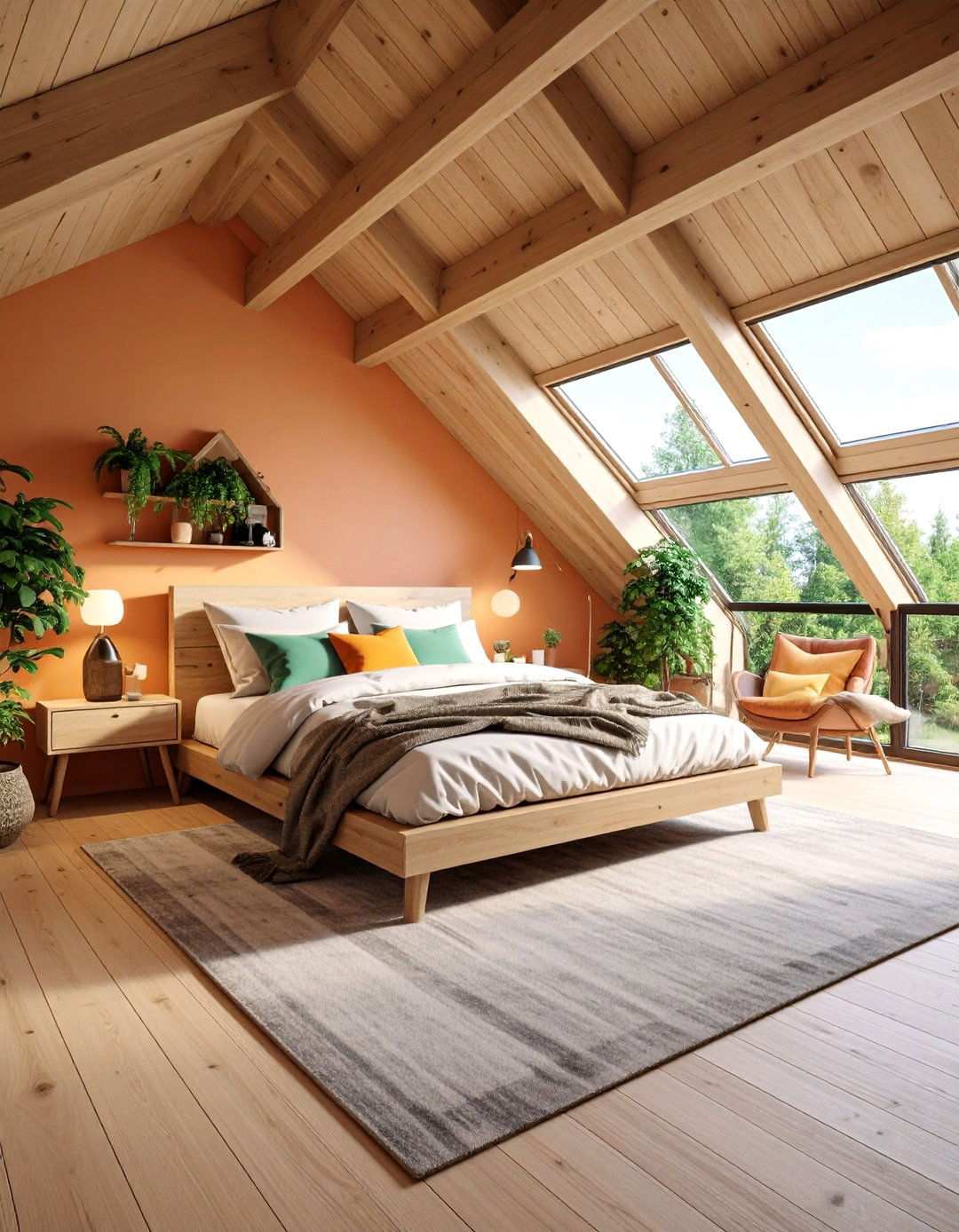
By embracing a single dominant hue, color drenching creates a soothing ambiance in attic bedrooms. This approach is distinct from bold, saturated looks achieved with wallpaper, which overlays intricate patterns to saturate the space. To achieve a double drench effect, pair analogous colors of equal intensity, generating layered looks with subtle contrast that feels engaging and visually captivating. For a cohesive appearance, paint everything from walls to woodwork in your signature color, including skirting boards, radiators, doors, window frames, and ceilings. This technique is particularly effective in attic bedrooms as it minimizes the visual disruption caused by multiple angles and surfaces. Additionally, wallpapered ceilings in attic bedrooms can create whimsical, tent-like effects that transform awkward spaces into inviting retreats. When selecting a color scheme, consider warm, earthy tones that align with current design trends while creating cozy, embracing environments.
10. Attic Bedroom Textile Layering
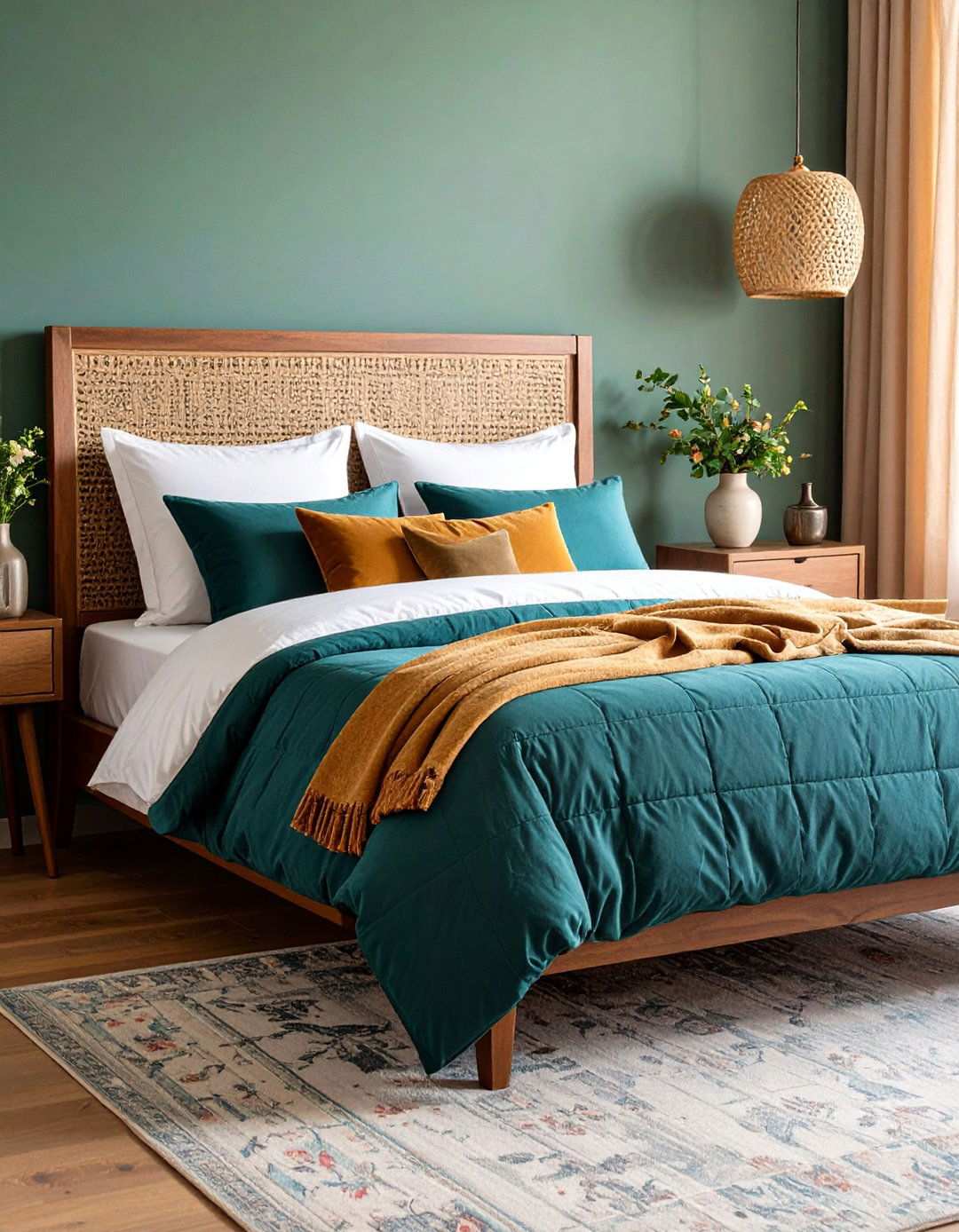
Create a sumptuous bed by layering various textures, such as smooth cotton sateen sheets, jacquard-patterned duvet covers, and luxurious throw blankets. Textured fabrics like bouclé, velvet, and jacquard add depth while fostering comfort-focused environments. This deliberate layering technique imparts a polished look to the bed without compromising comfort, with all elements maintaining tonal unity while providing varied textures. By combining natural fibers with synthetic materials, you can create visual and tactile interest that invites relaxation. Woven textiles and natural materials complement original wooden beams and floors, magnifying rustic feelings while maintaining neutral, calming color palettes. A successful combination should feel luxurious and welcoming, while maintaining the cozy atmosphere that makes attic bedrooms so special.
11. Exposed Beam Attic Bedroom Styling
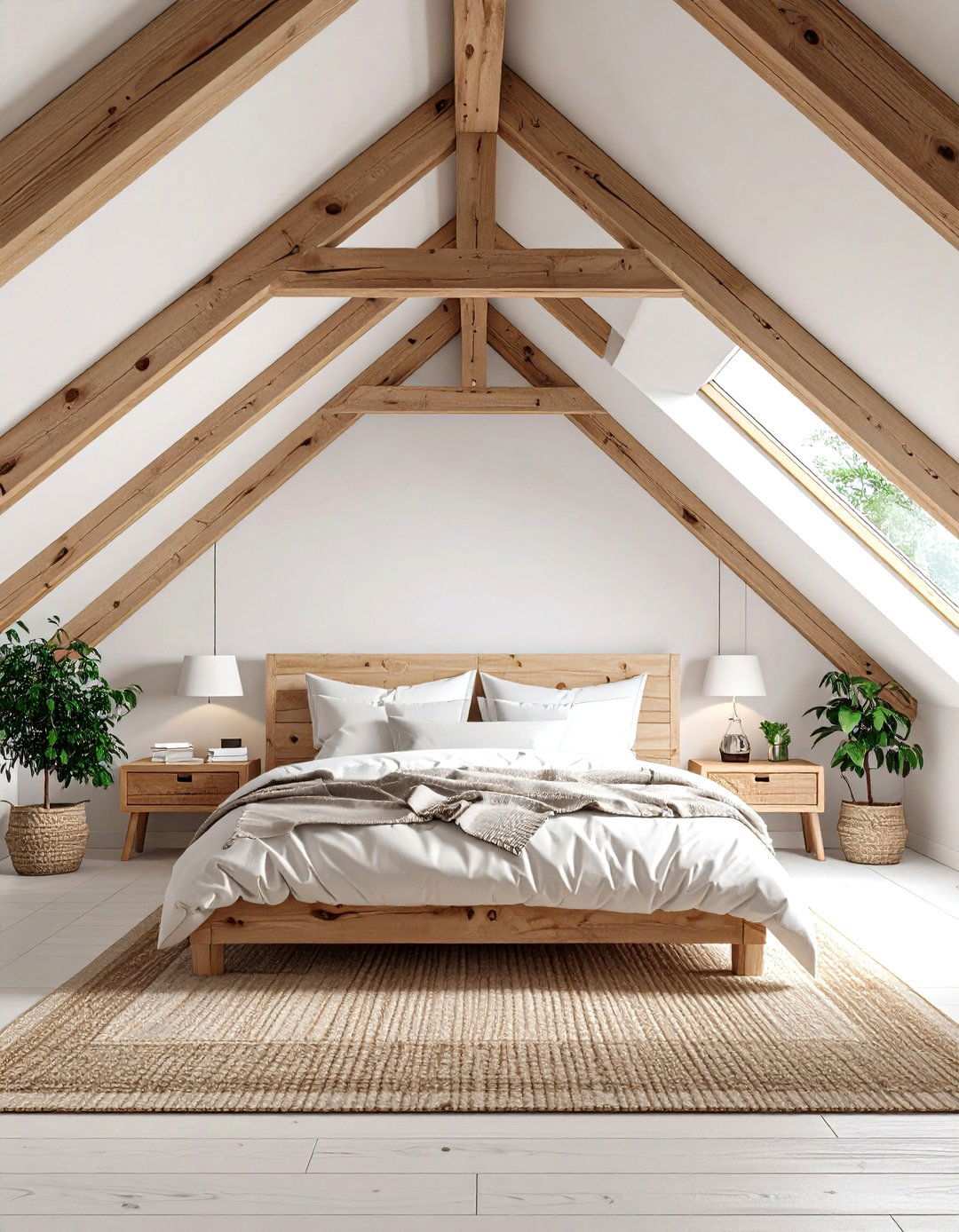
Rather than concealing beams in your attic, try finishing the ceiling around them to create a sense of spaciousness while allowing natural wood to lend rustic charm. The charm of attic bedrooms often centers on exposed wood, which homeowners can leave unpainted to add cozy warmth. Wood paneling creates ideal backdrops for cozy bedrooms, with natural wood tones providing unique feelings that harmonize with almost any decor style. To highlight these architectural features, use lighting that casts interesting shadows and emphasizes the wood’s natural grain. White sloping walls and ceilings create striking contrasts against exposed beams, making rustic elements pop while maintaining bright, airy atmospheres. When choosing furnishings and decor, select items that complement rather than compete with these natural elements, creating harmonious designs that celebrate your attic’s character.
12. Maximizing Space with Functional Attic Furniture
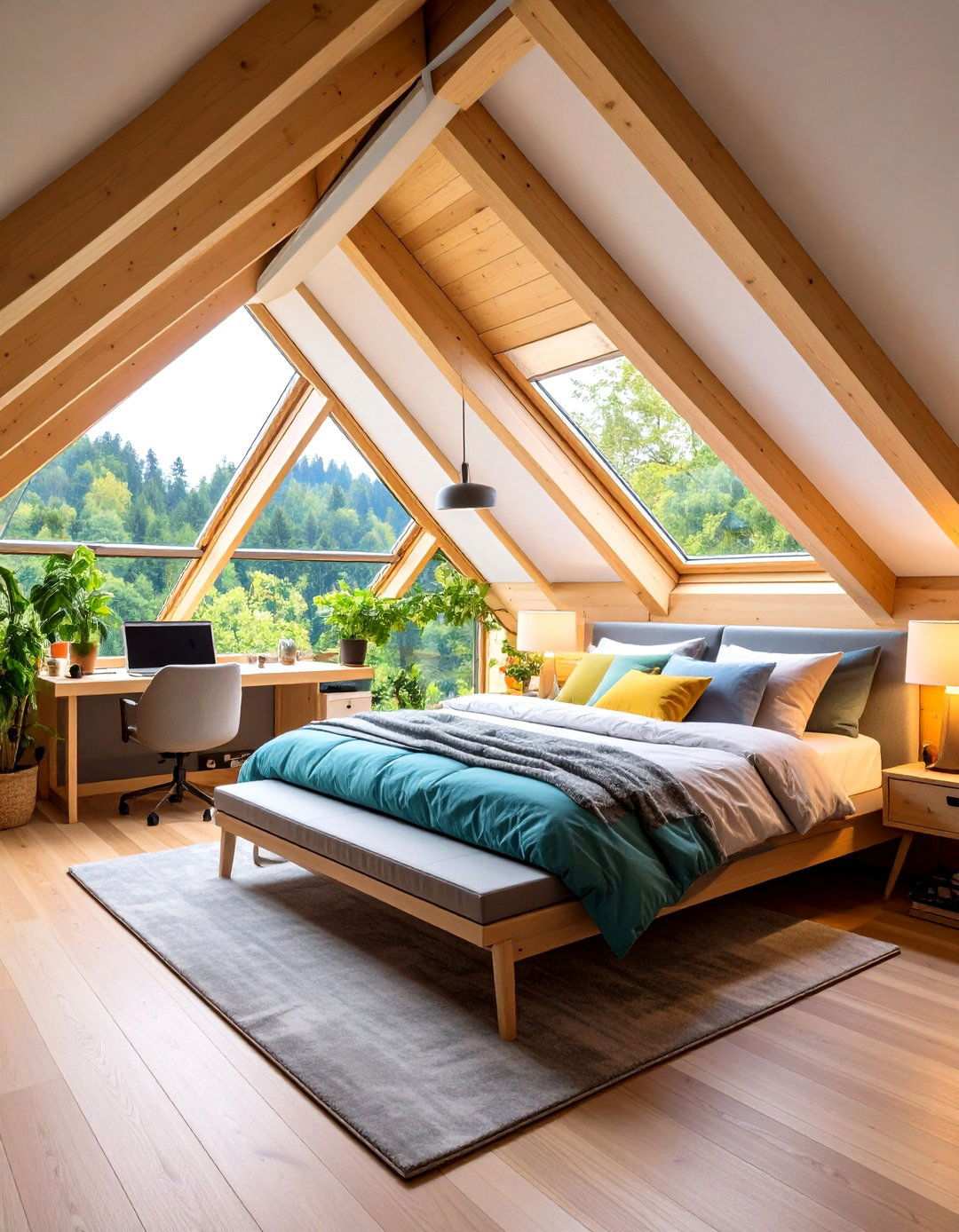
To make the most of limited attic space, interior designers are incorporating multi-functional furniture pieces that serve multiple purposes. This might include a storage ottoman or a desk that can be closed when not in use. By cleverly repurposing furniture, attics can be effortlessly transformed to suit different needs throughout the day. For instance, a desk area can be positioned near a window to create a designated workspace, while the adjacent section can be converted into a cozy guest room. Similarly, a storage bench at the foot of a bed can double as a seating area, concealing extra linens or seasonal clothing. Murphy beds can be folded up when not in use, making the space ideal for hangout areas or reading nooks. Floating desks mounted on the wall not only save floor space but also provide ample workspace functionality. As a result, attic bedrooms can be both functional and visually appealing, boasting a clean and uncluttered aesthetic.
13. Elegant Attic Flooring Solutions
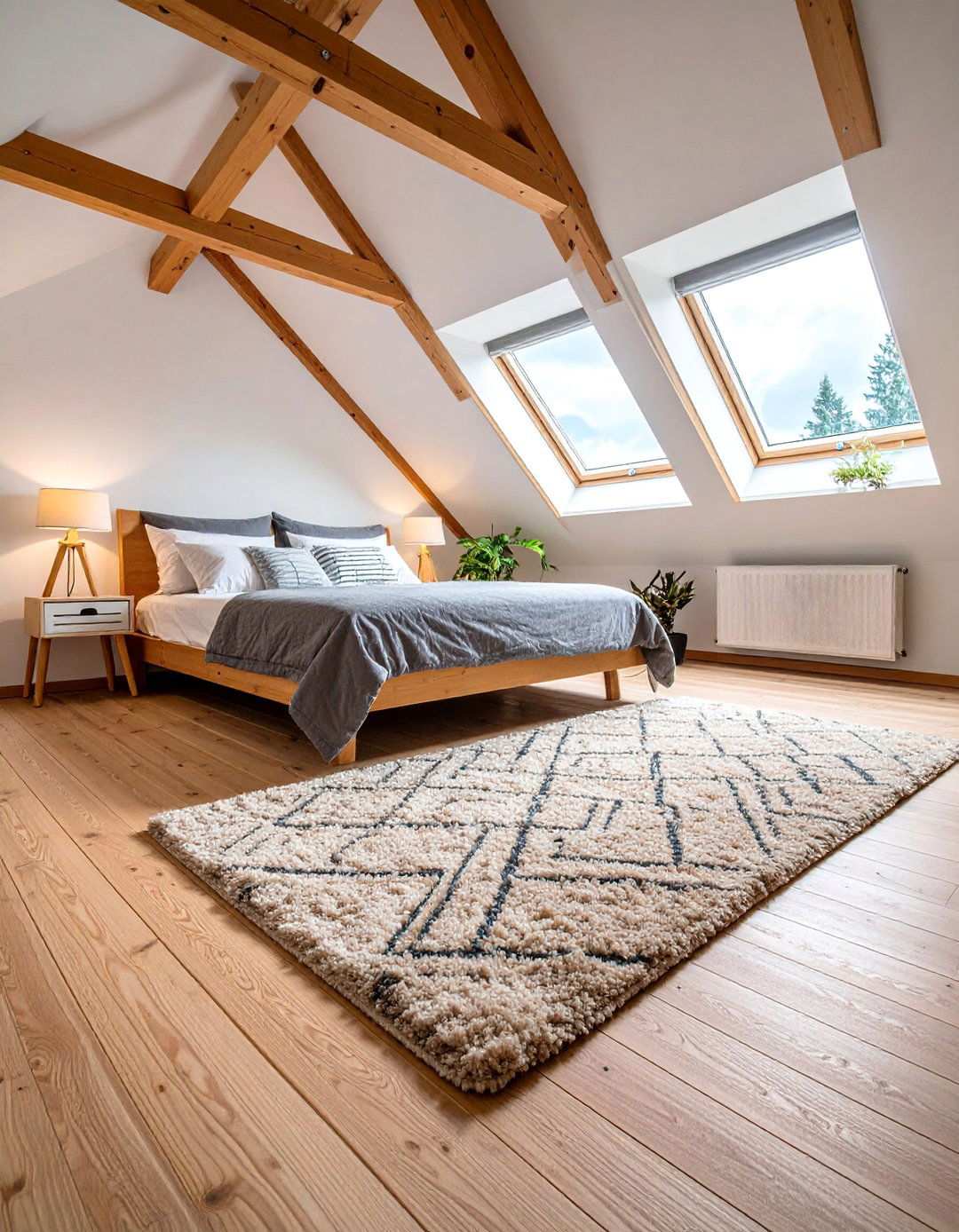
When it comes to attic flooring, carpet and area rugs can work wonders in creating a polished and inviting atmosphere. The soft texture and warmth underfoot make spaces feel cozy and inviting, while also providing excellent sound absorption. Natural wood floors are another popular choice, as they bring a touch of warmth and character to attic bedrooms. The addition of area rugs helps to define different areas within the space, such as sleeping and seating zones. However, before commencing any flooring project, it’s essential to assess the structural integrity of the attic. This involves checking if the space can support the weight of the flooring materials and ensuring the area is safe and stable. To create a secure and level surface, laying down sheets of plywood between rafters is an excellent solution. Furthermore, installing radiant heating systems beneath the flooring can provide warmth and comfort during the colder months, making the attic bedroom a delightful retreat throughout the year.
14. The Rise of Personalized Vintage Attic Aesthetics
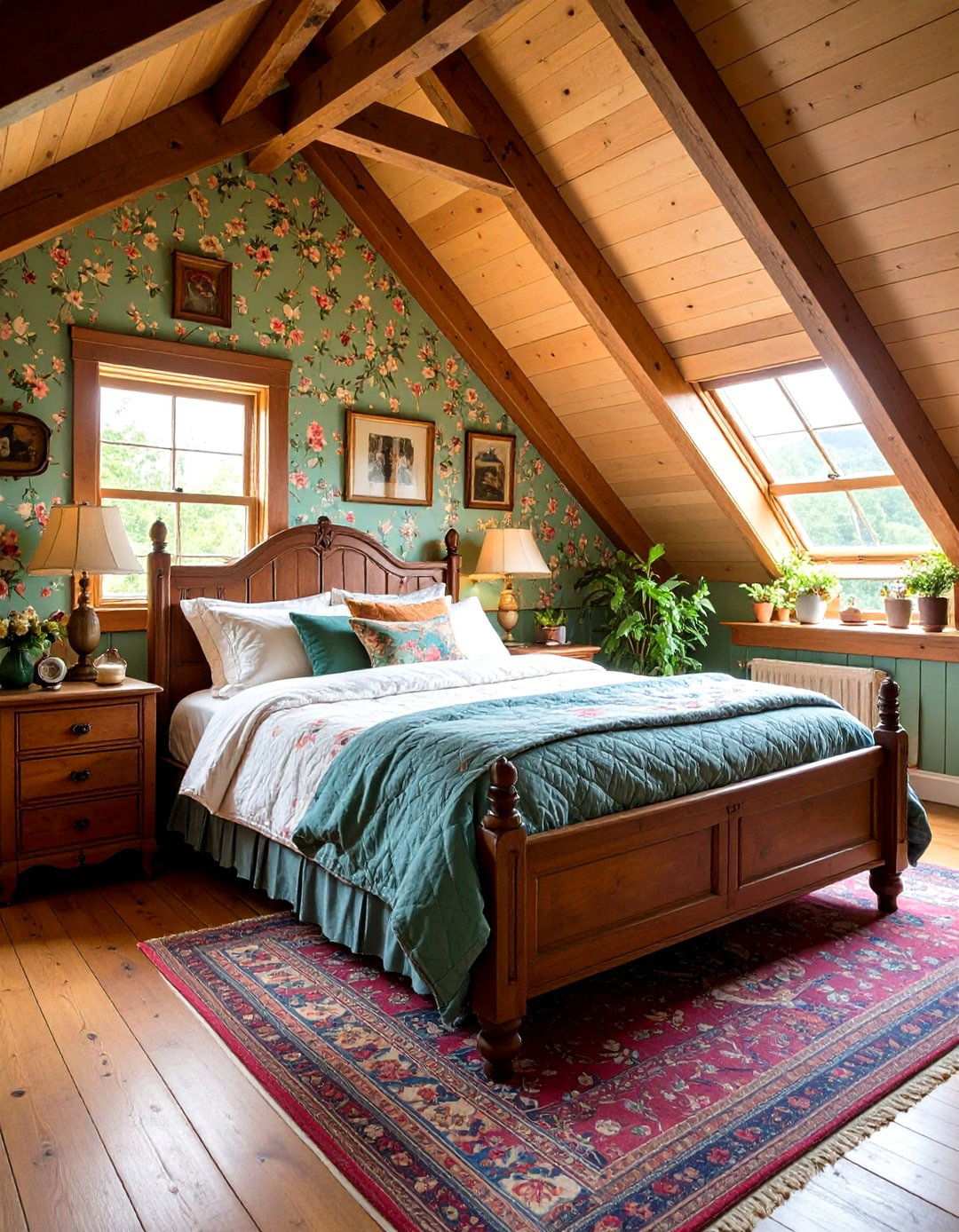
The latest interior design trend for 2025 revolves around creating personalized, story-driven spaces that reflect the occupants’ history and personality. This can be achieved by incorporating genuine vintage finds, family heirlooms, and antique pieces into the design. Vintage-inspired attic bedrooms, complete with toile wallpapers, intricate stitching on comforters, and matching bedside tables, evoke a charming, traditional ambiance. By combining vintage elements with contemporary pieces, homeowners can create unique, eclectic interiors that tell a compelling narrative. For those seeking authentic vintage items, thrift stores and antique shops are treasure troves of hidden gems. Expect to see second-hand nightstands, antique mirrors, handmade quilts, and eclectic mixes of collected textiles adding character and history to attic bedrooms. These thoughtful touches create genuine, welcoming spaces that genuinely reflect the people who inhabit them.
15. Attic Bedroom Workspace Integration
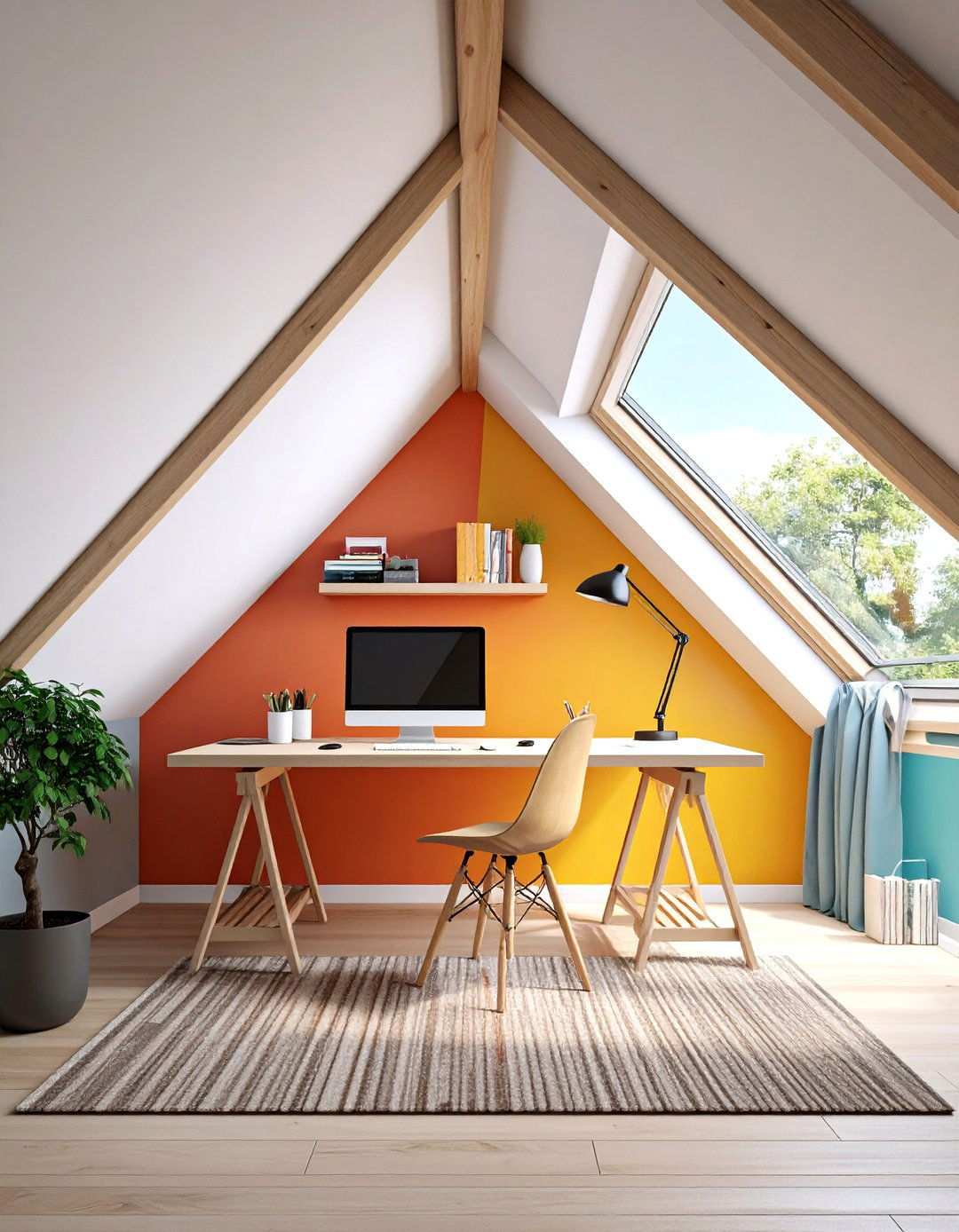
Transform cramped attic nooks into functional workspaces by incorporating floor-to-ceiling wallpaper, creating intentional spaces that spark creativity. For office areas, prioritize natural light and airy ambiance to enhance focus and productivity. Built-in desks that seamlessly adapt to the attic’s unique angles maximize surface area while maintaining a sleek, streamlined aesthetic. Custom-fitted pieces ensure optimal use of available space, as standard furniture often falls short in attic spaces. Adequate task lighting is crucial, and adjustable desk lamps or under-cabinet LED strips provide flexibility. Desks with closure capabilities allow for a peaceful transition from work to sleep, preserving the bedroom’s serene atmosphere. Integrated soundproofing elements can effectively separate work and sleep functions, maintaining a harmonious balance within the space.
16. Attic Bedroom Ventilation and Climate Control
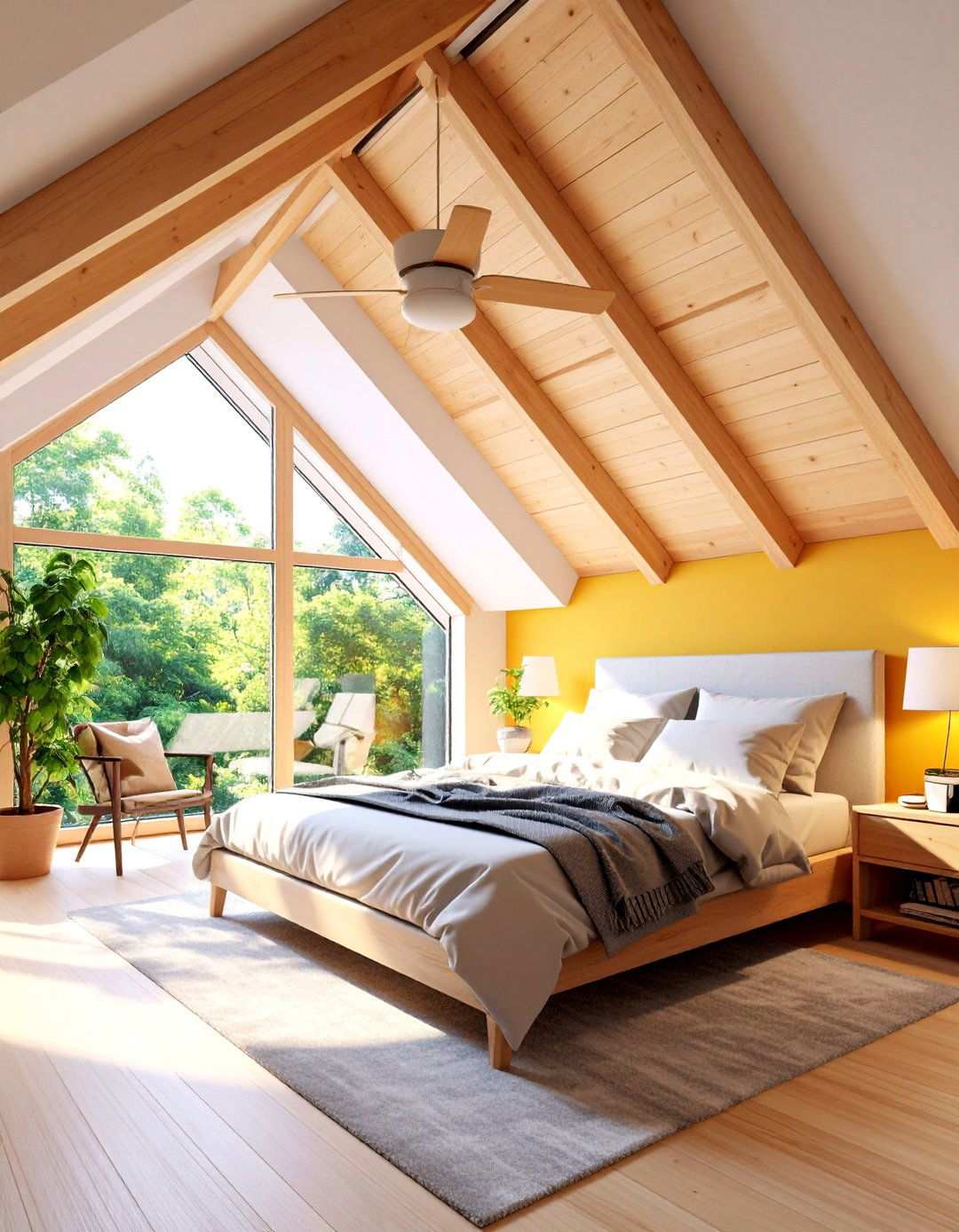
Subtle integration of technology can significantly enhance the functionality of attic bedrooms without compromising aesthetics. Hidden speakers, under-bed lighting, and concealed charging stations are just a few examples of clever design elements that can be seamlessly incorporated. However, proper ventilation is essential in attic bedrooms, as they are prone to heat buildup due to their elevated position. Installing ceiling fans with remote controls can improve air circulation without sacrificing valuable floor space. In addition to ventilation, consider the importance of good plumbing to prevent moisture buildup in attic bathrooms and bedrooms. Mini-split systems offer an efficient solution for heating and cooling, while maintaining a quiet operation that ensures better sleep quality. Smart furniture, such as beds with integrated USB ports, can help maintain a sleek, cable-free environment. Effective insulation and temperature control systems are vital for maintaining a comfortable attic bedroom throughout the year.
17. Compact Attic Bedroom Guest Accommodations
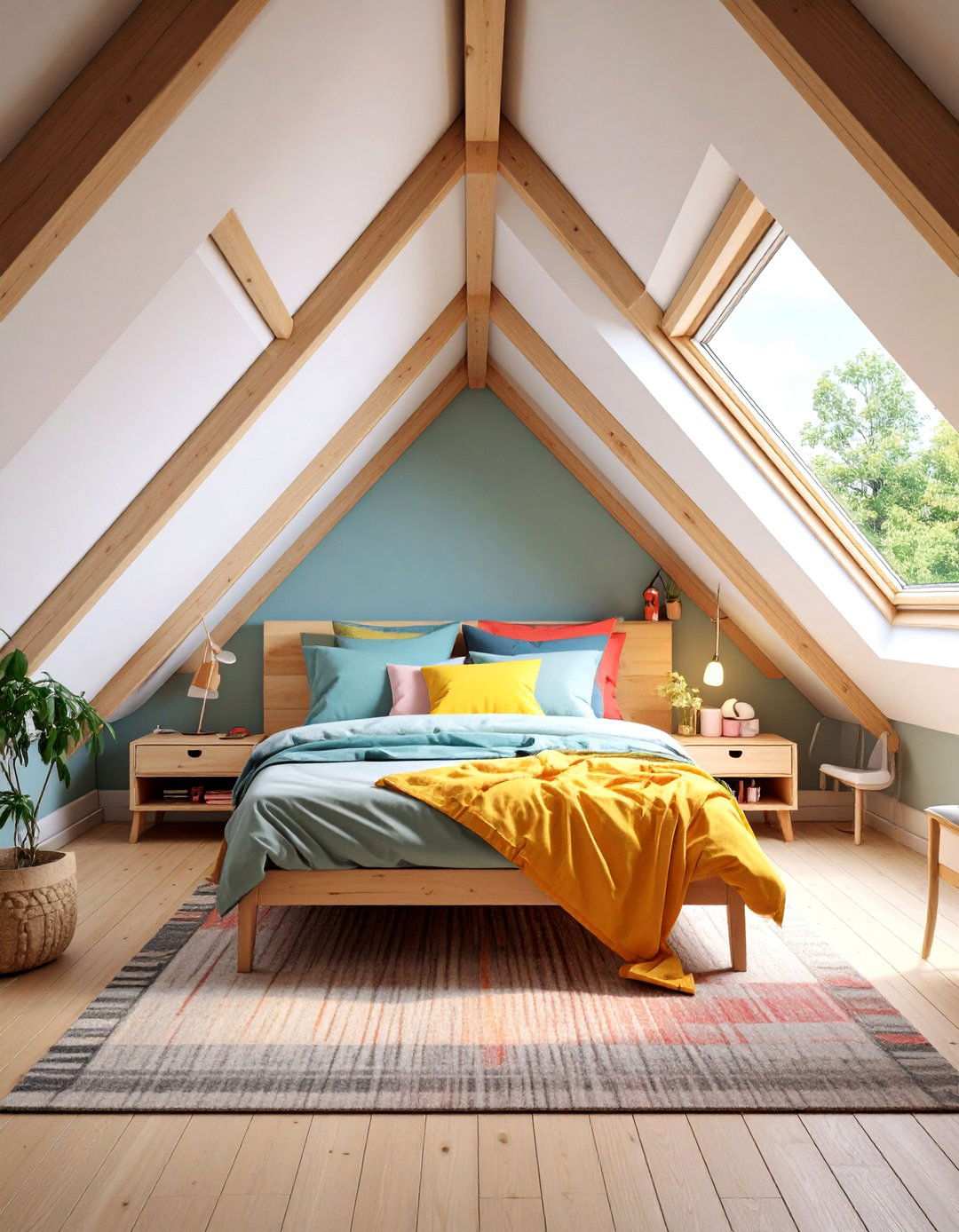
Having an extra bedroom can be a significant advantage, especially for frequent hosts, allowing for a more welcoming and inclusive atmosphere. Daybeds, particularly those with trundles, can be an excellent option for attics that serve as both playrooms and guest rooms. Built-in bunk beds are another space-saving solution for kids’ attic bedrooms, providing comfortable sleeping arrangements while maximizing floor space. To ensure guests feel at ease, provide ample space for luggage and relaxation, along with practical amenities like bedside tables, sufficient lighting, and storage space for personal belongings. Adding a comfortable seating area, such as an antique settee, can create a cozy spot for guests to unwind and enjoy the views. By incorporating thoughtful design elements and amenities, you can create a welcoming environment that makes guests feel valued and appreciated, rather than relegating them to a secondary space.
18. Crafting a Bigger Ambiance in Attic Bedrooms with Mirror Placement
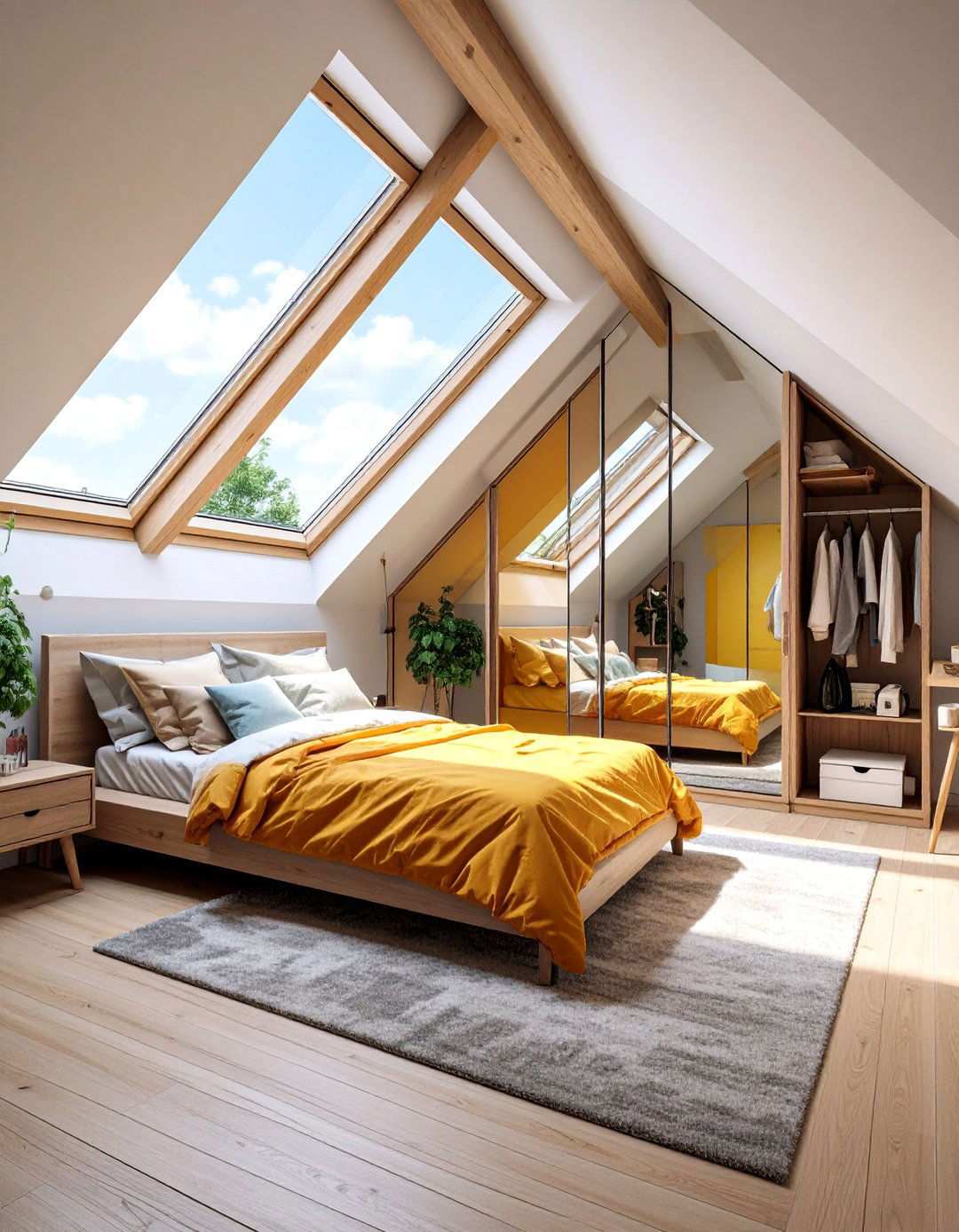
Attic bedrooms can greatly benefit from clever mirror placement, as it helps to naturally reflect light and create a sense of openness. When installing mirrors, consider pairing them with space-saving features like fitted wardrobes to maximize your bedroom’s potential. Strategically placing mirrors opposite windows can visually expand the perceived size of your attic bedroom while distributing natural light more evenly. Skylights or dormer windows can be amplified by full-length mirrors, providing additional light sources throughout the day. Adding texture through wicker headboards and incorporating small pops of color through pillows and rugs can elevate the ambiance of predominantly white spaces. To promote restful sleep, position mirrors to reflect beautiful views or architectural features rather than directly opposite beds.
19. Making Your Attic Bedroom a Reflection of You
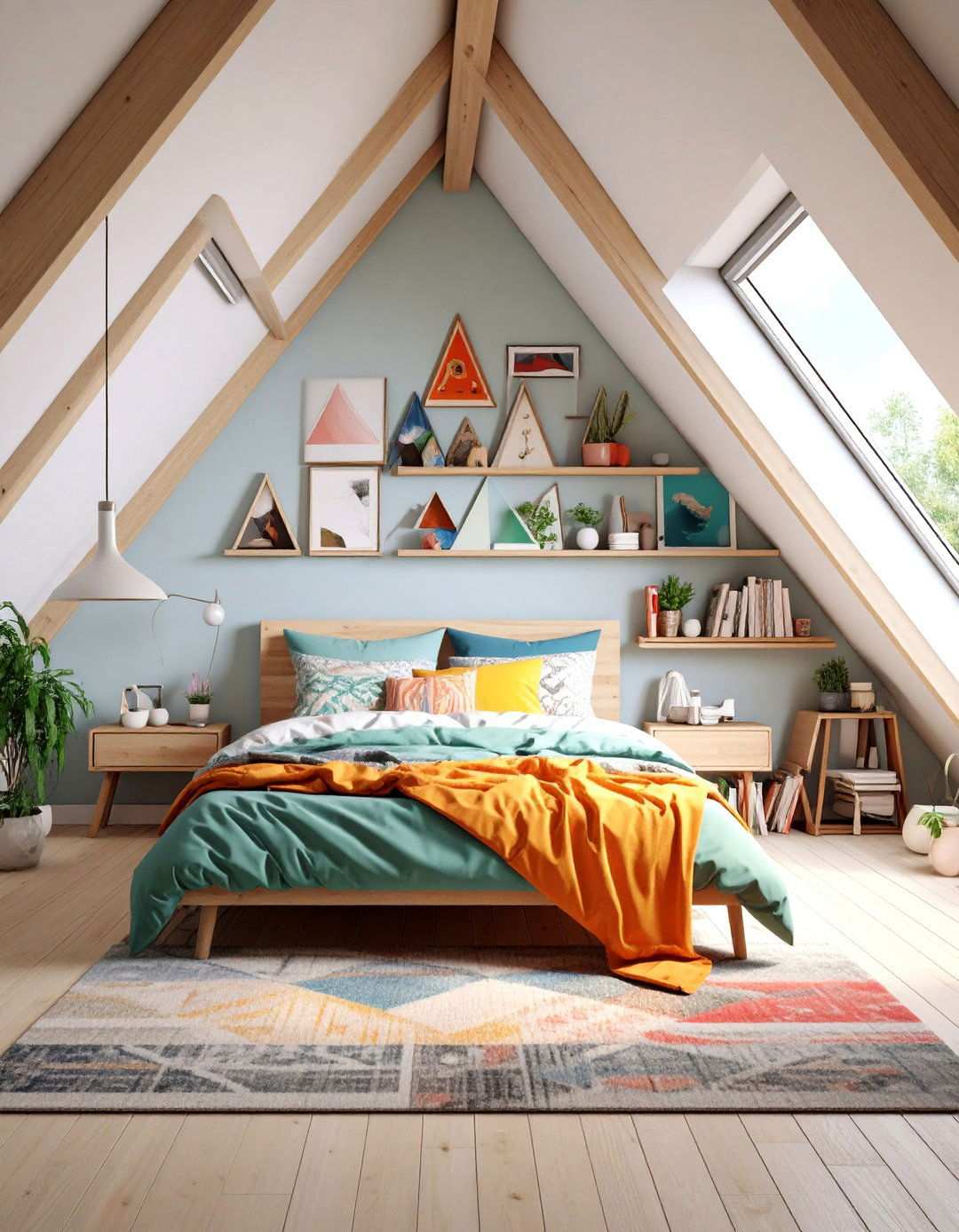
In 2025, personalized bedroom trends are gaining momentum, with a focus on moving away from cookie-cutter solutions and embracing emotional comfort. Customization is key to creating a unique bedroom space that reflects your personality and preferences. Bespoke furniture and decor can be tailored to individual tastes, while gallery walls and mix-and-match bedding create a nostalgic atmosphere in mostly white spaces. Displaying meaningful artwork, photographs, and personal collections can tell your story and add depth to your attic bedroom. Collaborate with local artisans to create one-of-a-kind furniture pieces or incorporate DIY projects that reflect your individual style. By incorporating personal touches, you can transform a generic attic space into a cozy, uniquely yours sanctuary.
20. Prioritizing Safety and Structural Integrity in Attic Bedroom Conversions
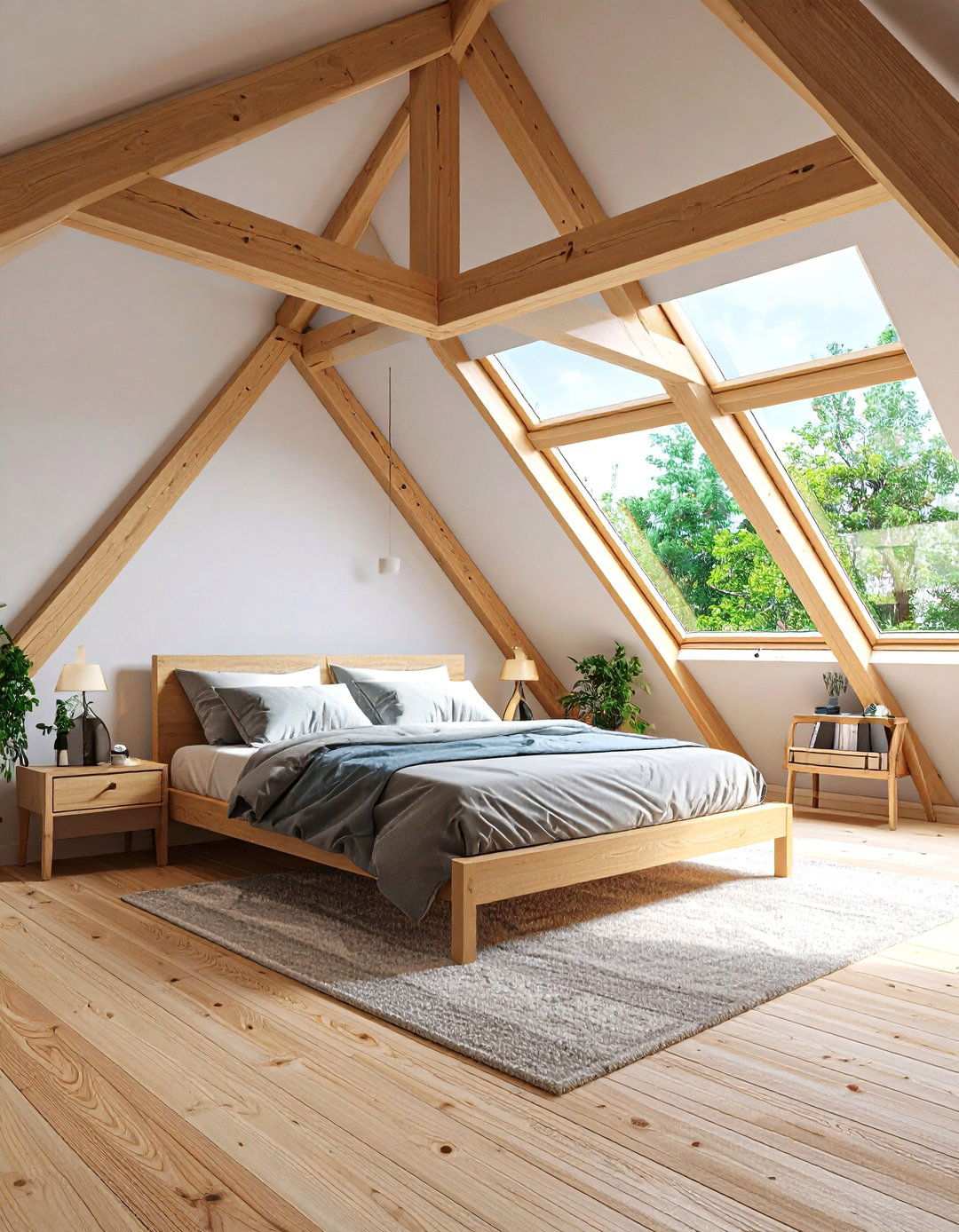
When converting an attic into a bedroom, it’s essential to consider safety and structural aspects. Many local building codes require minimum ceiling heights of 7 feet for habitable rooms, which can be challenging when working with sloped attic ceilings. To create a functional focal point, position your bed in the center of the attic where the ceiling height is at its maximum, ensuring at least 7.5 feet of clearance. It’s crucial to weigh your bed and its occupants, as queen-sized beds with frames can weigh between 800-1000 pounds. Consult professionals before using your attic for bedroom purposes to determine if the space can support the weight and ensure structural soundness. Inspect your attic for potential hazards such as leaky roofs, holes in walls, rodent droppings, or exposed wires before proceeding with bedroom conversions. By prioritizing safety and structural integrity, you can create a comfortable and functional living space that meets building standards.