1. Elevating Curb Appeal with Nature-Inspired Textures
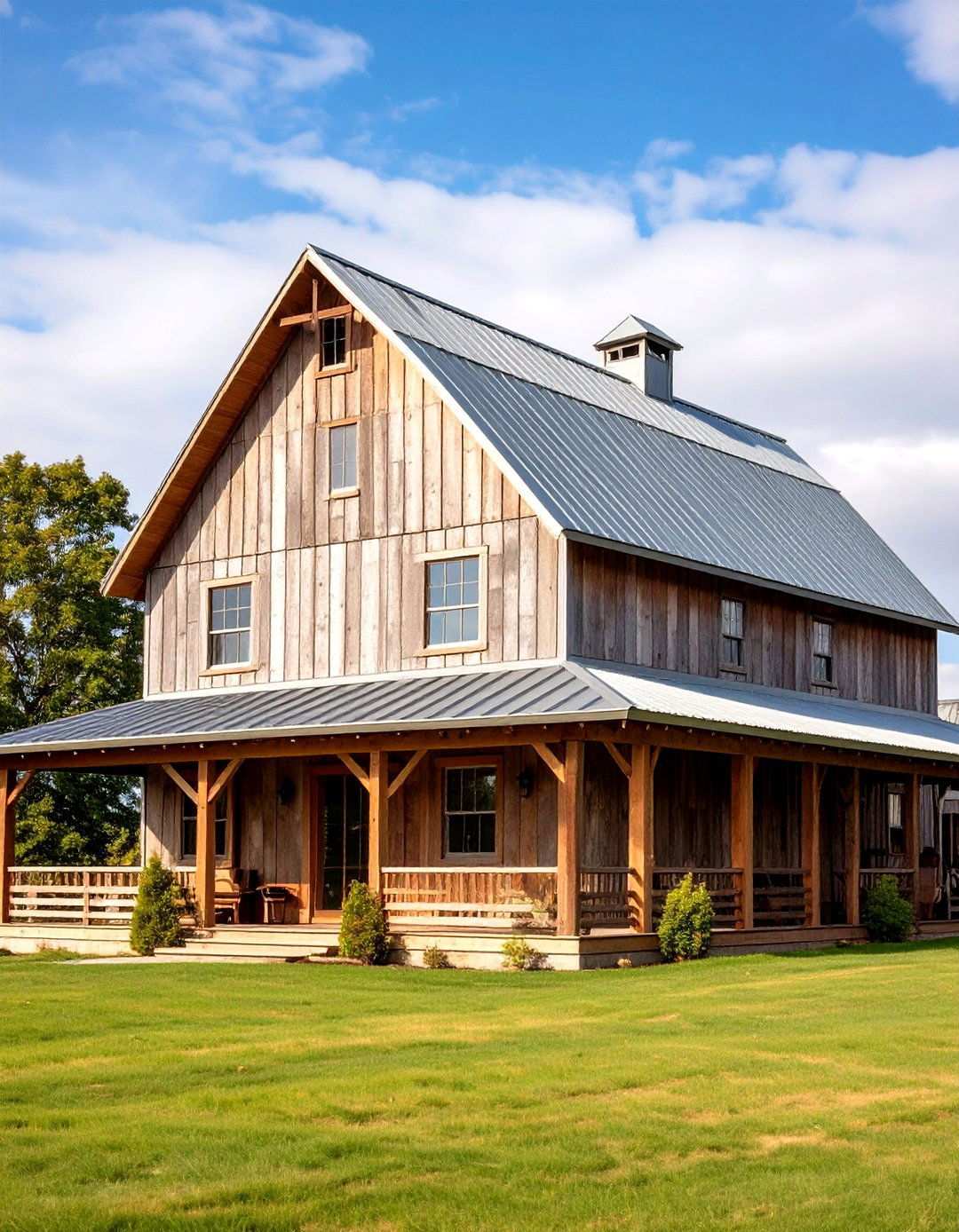
The allure of barn houses has catapulted humble farm buildings into the spotlight of contemporary design, and it’s the exterior that sets the tone for this aesthetic transformation. Emerging trends in cladding and color reveal that combining natural timber, metal, and modern dark paint finishes is fueling curb appeal in 2025, offering homeowners a durable exterior and a significant boost to resale value. Whether you’re drawn to a nostalgic red gambrel or a sleek black barndominium, the ideas outlined below distill fresh trends into practical and achievable design moves that can be incorporated into your weekend plans, complete with performance benefits such as enhanced insulation, ventilation, and energy efficiency.
2. Embracing the Timeless Beauty of Vertical Cedar
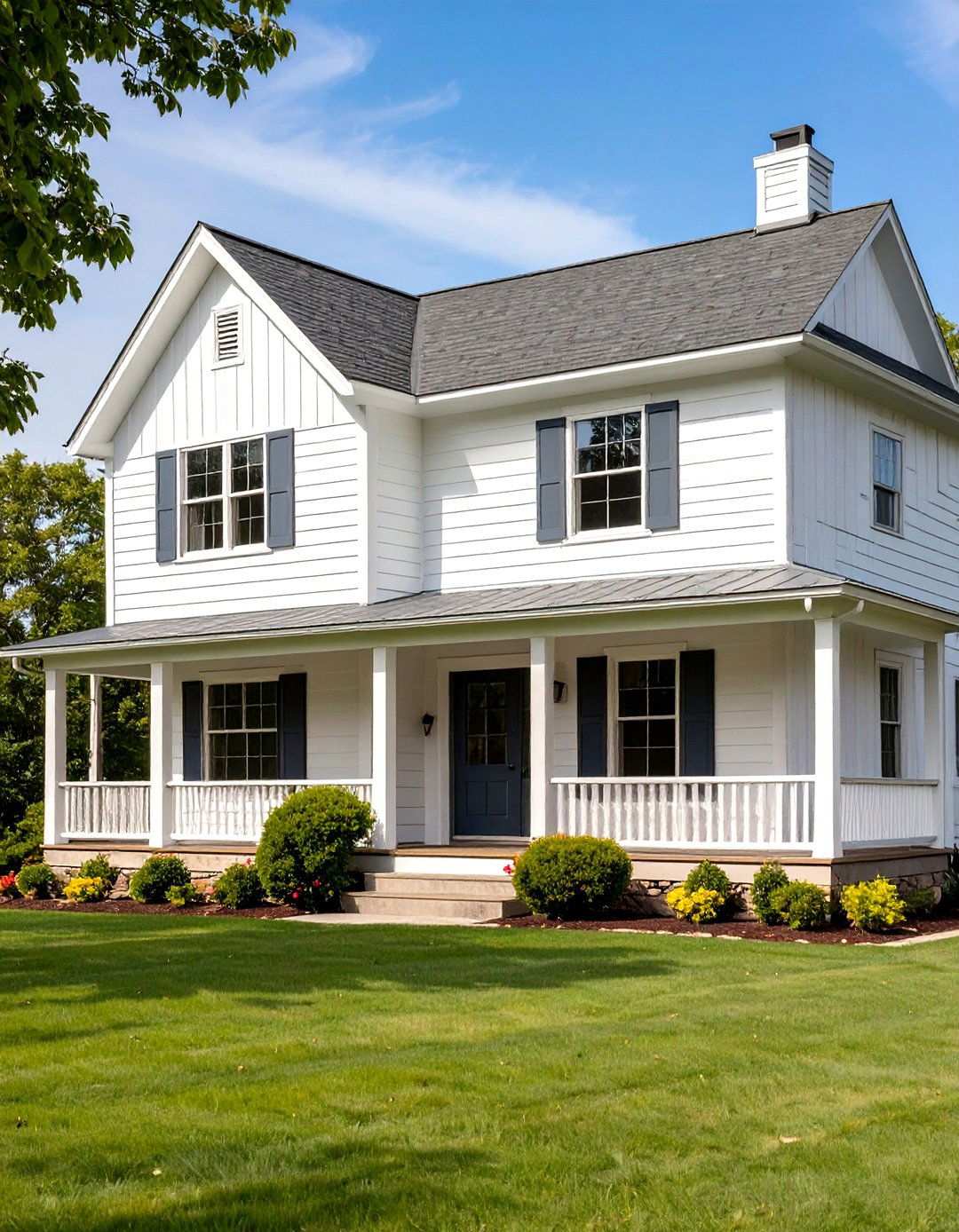
A sunlit expanse of vertically arranged cedar boards can infuse any barn house facade with the warmth and coziness of freshly stacked lumber, while also serving as a breathable rain-screen that shields the sheathing from moisture. By rotating the boards upright, you can draw the eye towards the soaring rooflines, creating an optical illusion that makes single-story masses appear taller – a simple yet effective trick favored by designers when space is at a premium. To preserve the honey-colored finish, seal the boards with a low-VOC oil that allows the wood to age into a silvery patina instead of peeling paint, saving years of scraping and maintenance. The added touch of staggering board widths in a random rhythm introduces a subtle texture that exudes a sense of handcrafted quality without breaking the bank.

As an Amazon Associate I earn from qualifying purchases.
3. Achieving Farmhouse Charm with Board-and-Batten Siding
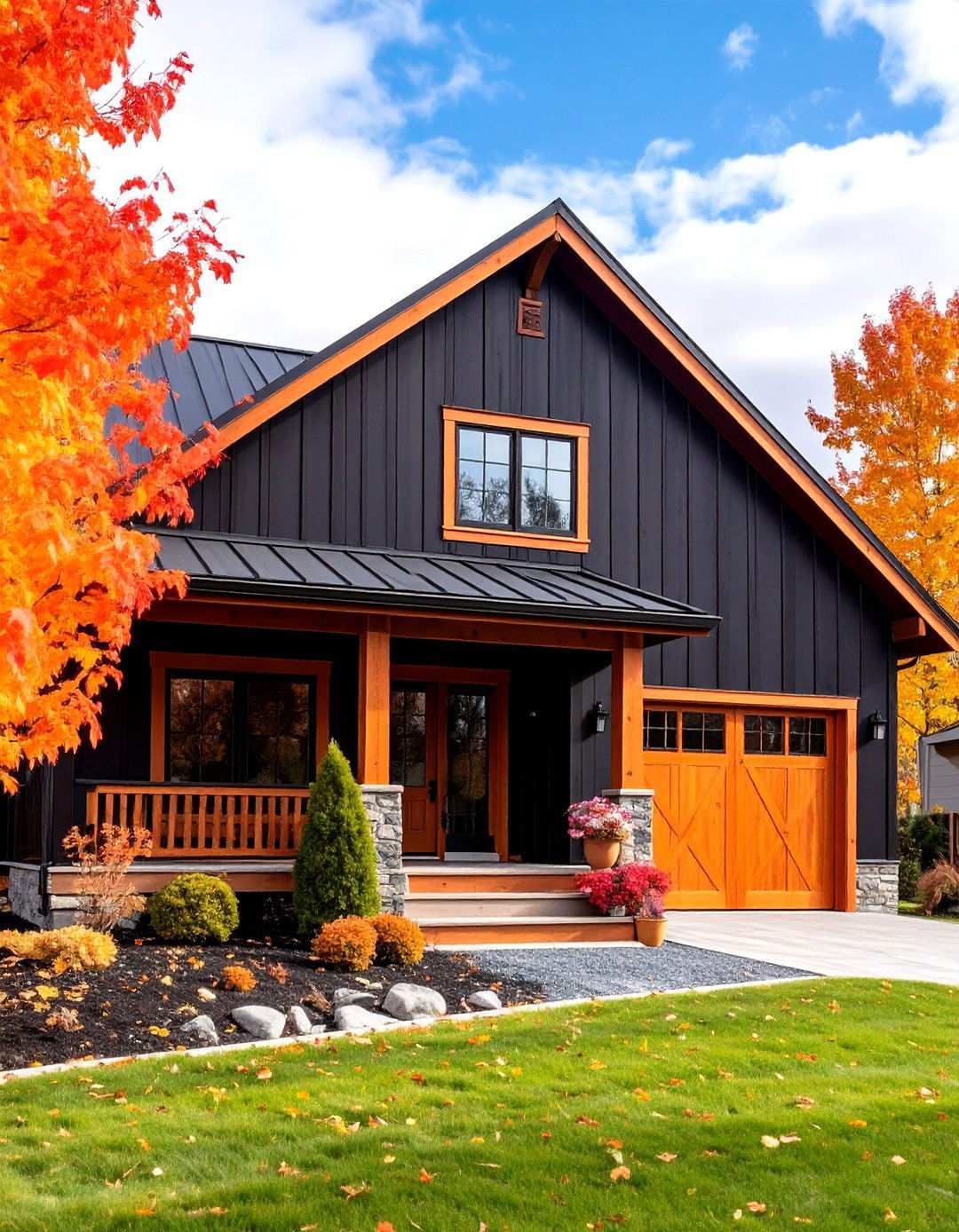
The crisp vertical rhythm of board-and-batten siding instantly imbues a barn house with the classic charm of a traditional farmhouse while cleverly concealing expansion gaps behind slender battens. By painting the broad boards a soft white and the battens one shade deeper, you create subtle shadow lines that make the walls appear thicker and more substantial. If termite or fire resistance is a concern, consider using fiber-cement planks, which mimic the look of real wood while offering decades of low-maintenance living. To ensure easy repairs and minimal upkeep, nail battens over every joint and at corners, allowing for the occasional touch-up rather than full replacement, keeping maintenance costs comfortably low.
4. Harmonizing Cedar and Metal
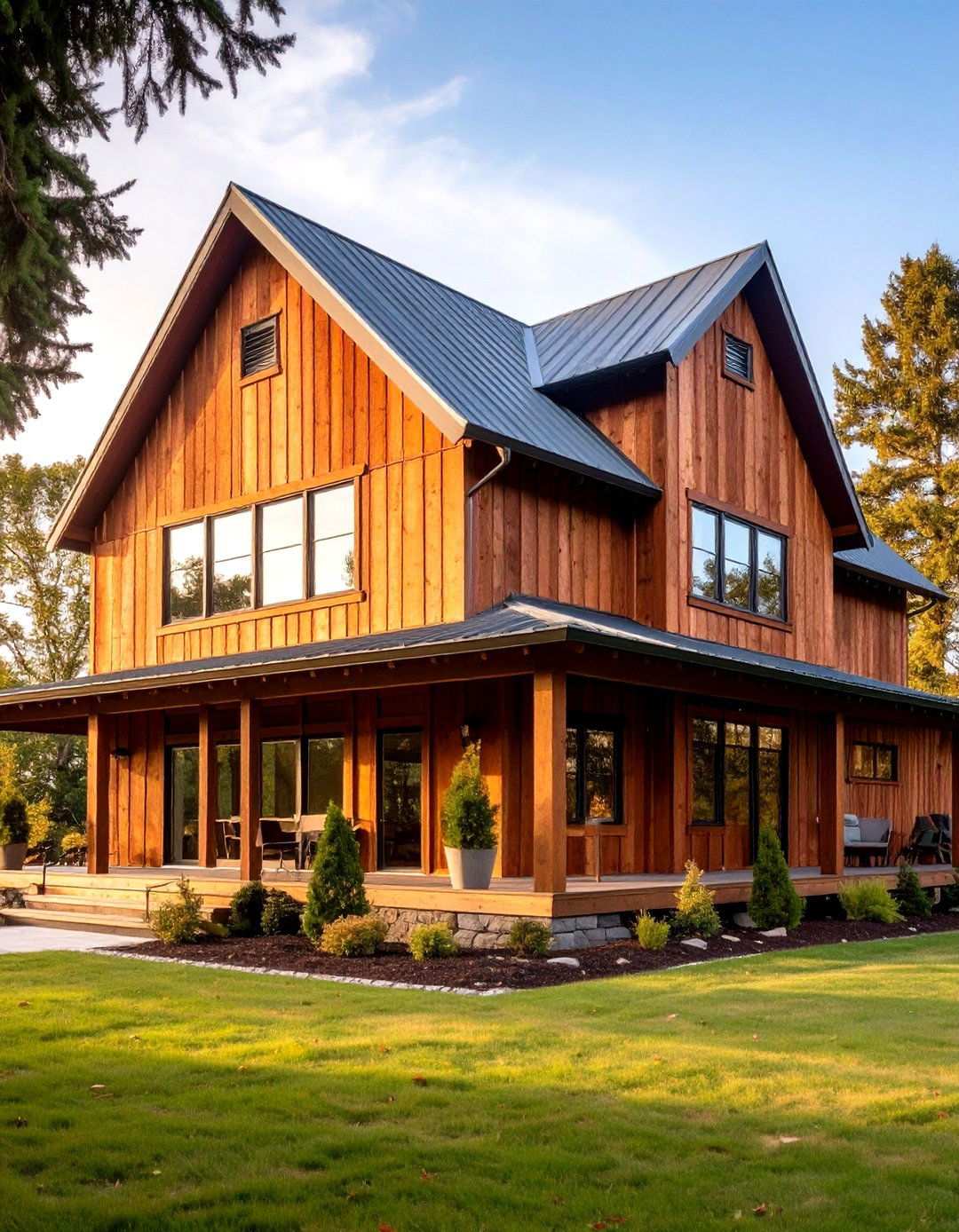
Pairing warm cedar plank siding with sleek standing-seam metal on a Barn House exterior creates a striking visual contrast. The vertical grain of the wood tempers the steel’s reflective finish, while the metal cladding shields lower sections from the elements, thereby lengthening the lifespan of the cedar. To avoid a monotonous look, stagger the materials at window openings, allowing sunlight to dance across two different finishes throughout the day. This approach also helps to prevent the façade from appearing boxy. Factory-finished panels arrive pre-cut, enabling installers to quickly dry-in the structure, reducing the risk of moisture damage to the framing. Periodic re-oilings of the cedar every two years can be balanced with simple hosing down of the metal, establishing a practical maintenance routine that beautifully marries form and function.
5. Capturing the Barn House Aesthetic
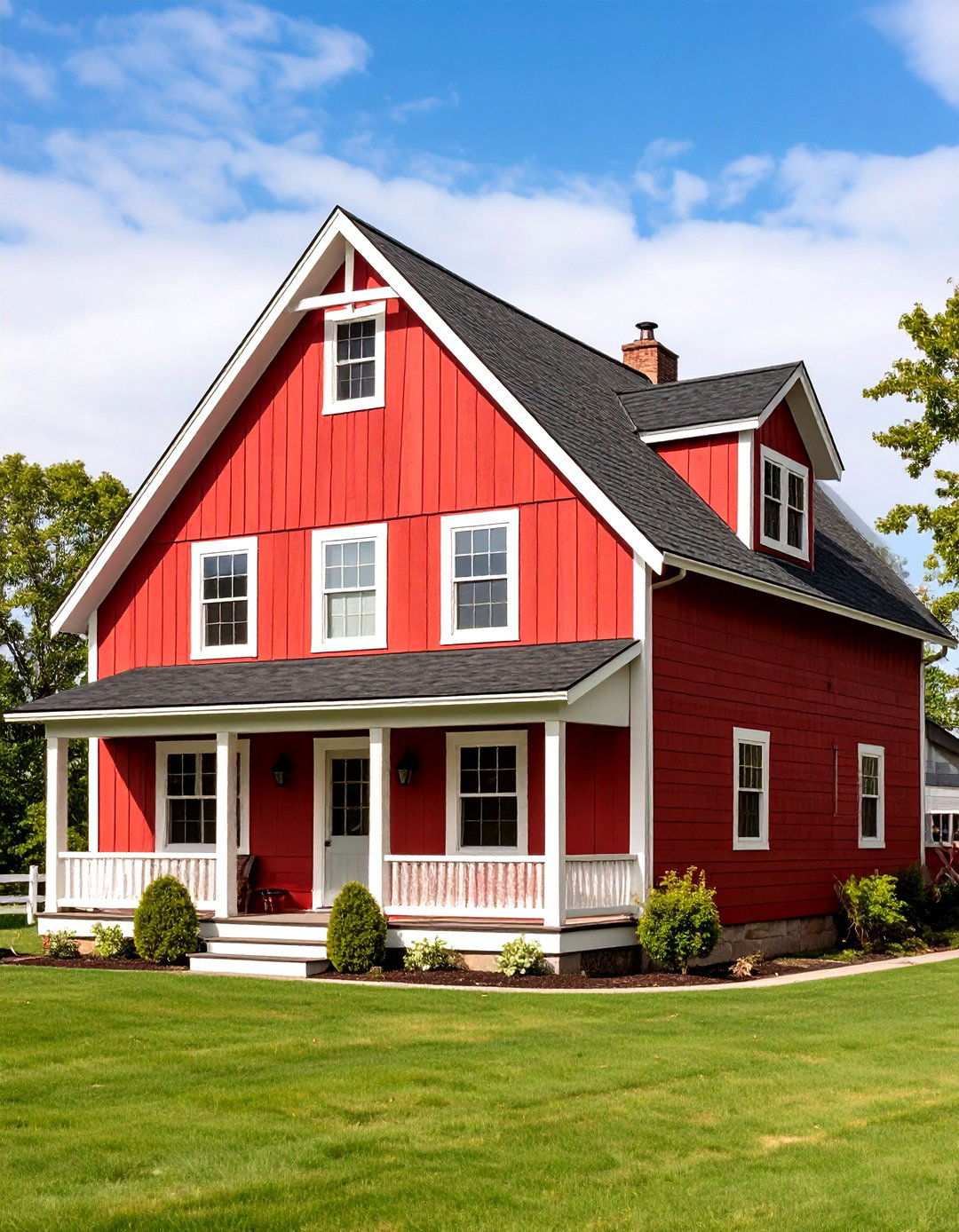
A gambrel roof is a defining feature of a Barn House, endowing it with an instantly recognizable profile while providing ample loft space inside. This design’s distinctive characteristics allow rain and snow to be shed quickly from the lower slopes, thereby minimizing the risk of ice dams. Meanwhile, the gentler upper slopes accommodate skylights without complicating the flashing. Builders appreciate the efficient use of rafters in this design, which helps keep material costs in check and allocates budget for improved insulation. By installing double dormers at the peak, cross-breezes can flow through the attic, naturally cooling summer evenings and reducing air-conditioning expenses. If local building codes permit, consider overhanging the eaves slightly to provide shade for south-facing windows while maintaining the classic barn-red peak.
6. Embracing the Cupola Tradition
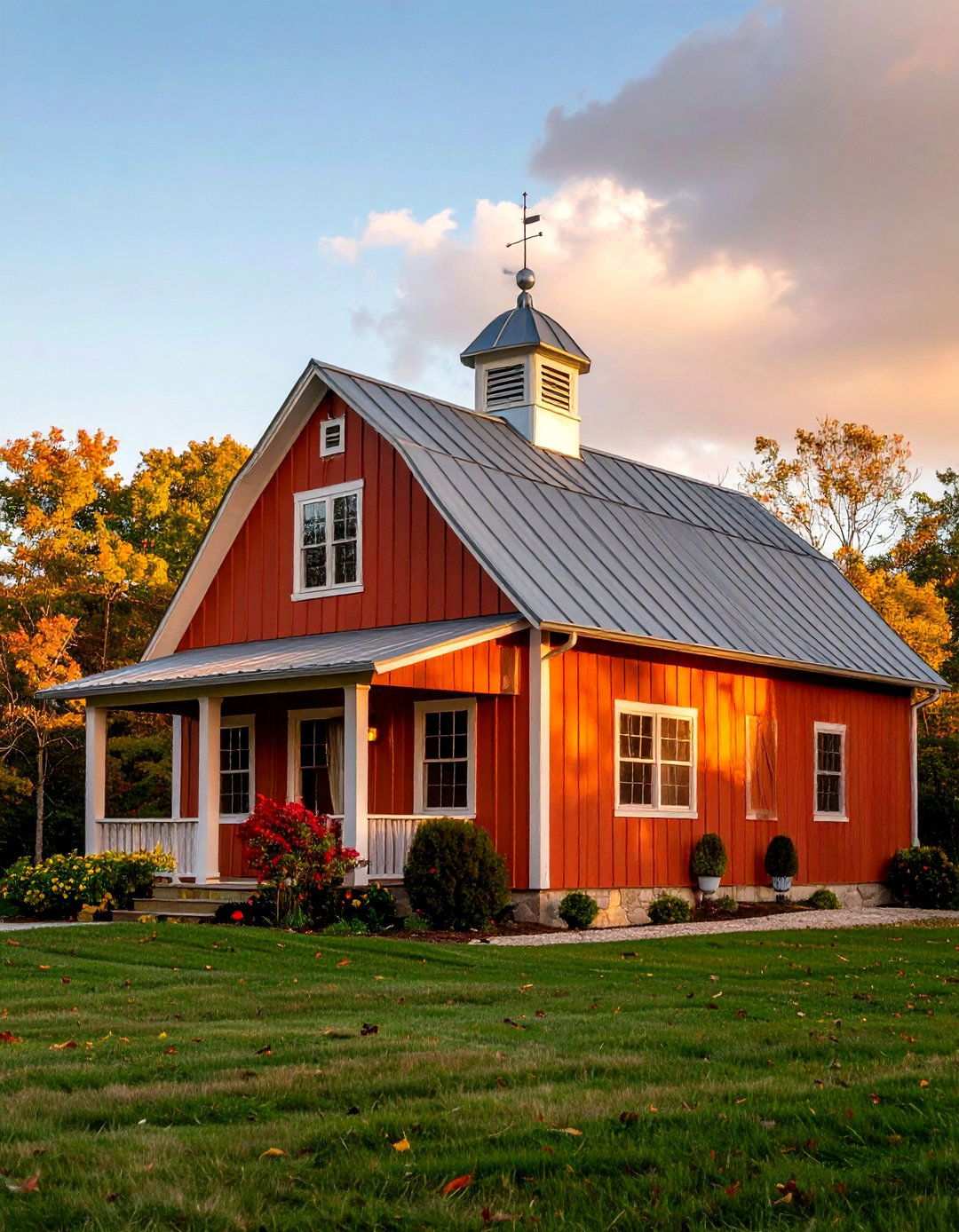
A gleaming cupola topped with a playful weathervane is a proud declaration of a Barn House’s unique character, while quietly venting hot attic air to prevent overheating. The louvered sides of the cupola draw rising heat out of the structure year-round, protecting the rafters from moisture and easing the load on mechanical fans. For a modern twist, consider installing low-wattage LEDs within the lantern, which can glow after dusk and serve as a neighborhood beacon. Aluminum or composite construction offers low-rust longevity, but ensure the base flashing is made from matching metal for simple maintenance. It is essential to carefully measure the roof pitch to avoid awkward gaps, which can compromise the structure’s integrity.
7. Unfettered Openings with Sliding Doors
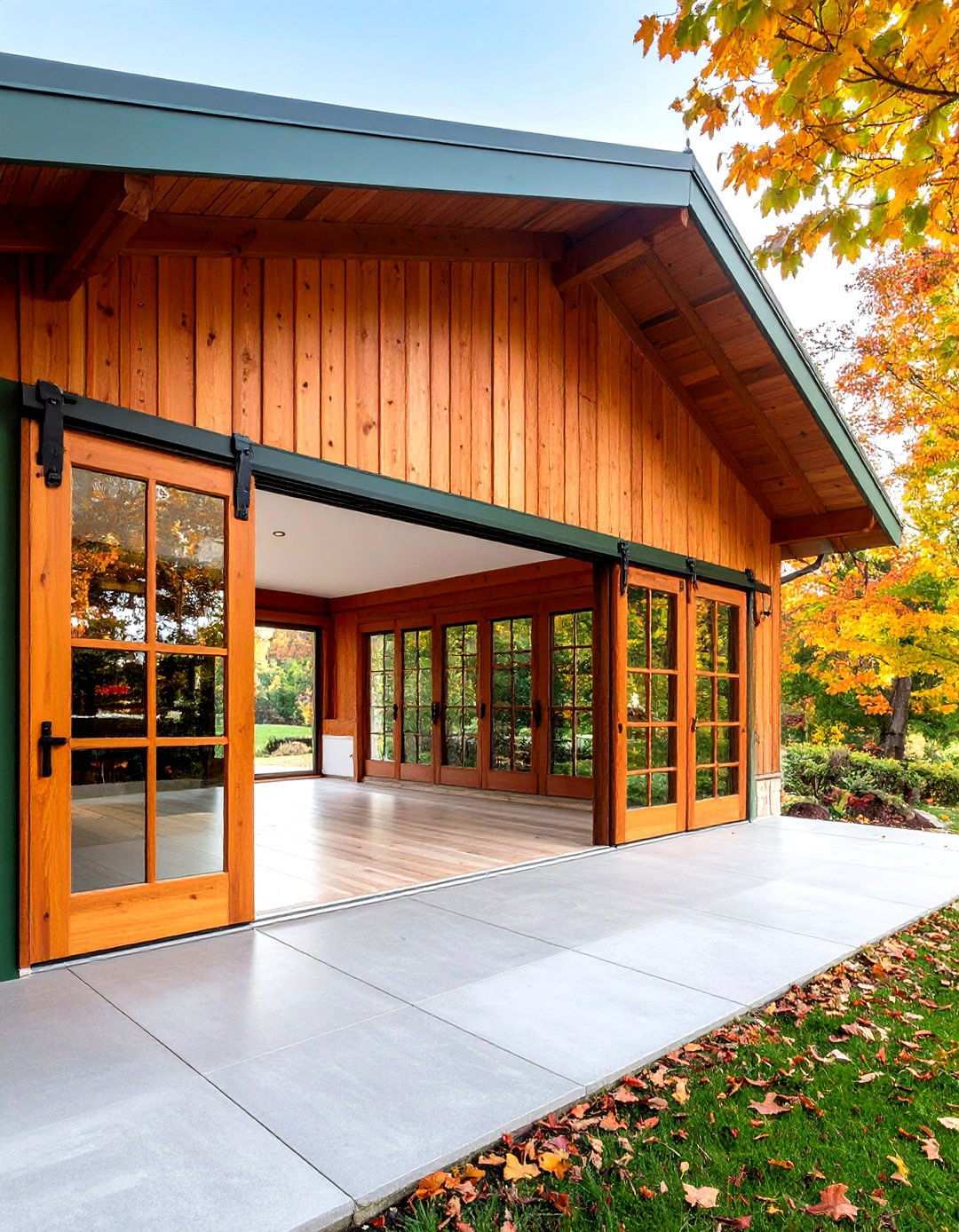
For flexible transition between day and night, large exterior sliding barn doors remain a timeless choice for Barn Houses in 2025, even as minimalist hardware trends refine the aesthetic. By mounting the door on a hidden ceiling track, the surrounding cladding remains unobstructed, allowing paint or timber to be the focal point. Specify tempered-glass inserts within the panels to allow natural light to flood the interior when the door is closed, a feature borrowed from contemporary patio-door designs. When the weather permits, open both doors to blur the boundaries between indoor and outdoor spaces; the extra width makes it easy to move furniture and large items through the opening. Ensure that at least three feet of clear deck space is reserved for the door’s travel arc.
8. Enhancing Hospitality with a Wraparound Porch
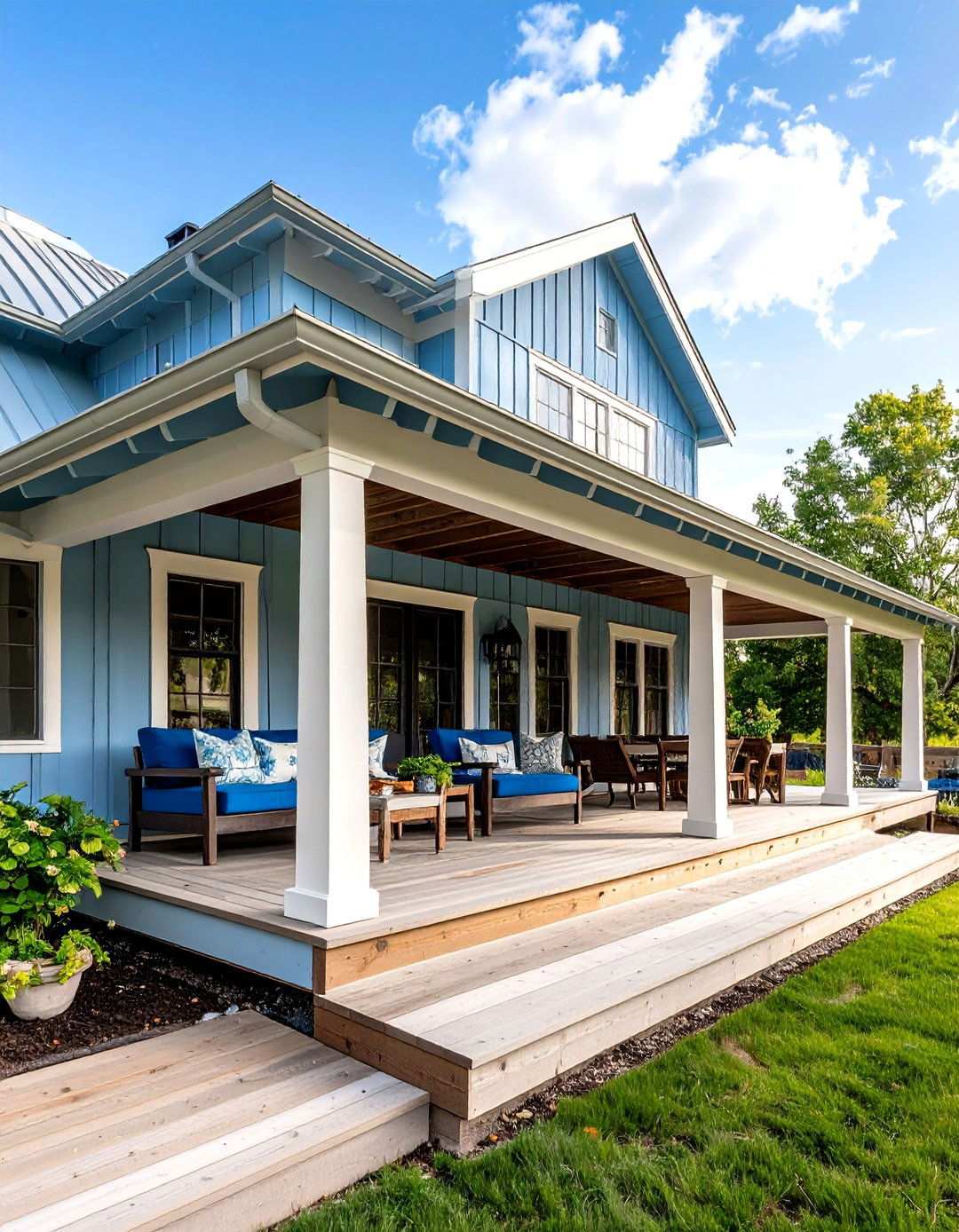
Transforming your Barn House into a warm and inviting haven is as simple as incorporating a generously sized wraparound porch that seamlessly integrates living and mudroom spaces. By doing so, you create a fresh and airy area where guests can lounge year-round, courtesy of weather-resistant seating. Strategically placed fire tables extend the outdoor living season, eliminating the need for messy wood piles. A pale blue ceiling finish not only reflects light into interior rooms but also discourages insects, a clever trick borrowed from regional wisdom. To maximize cross-breezes and capture the sun’s rays, stretch the decking around at least two elevations. Oversized gutters along the porch’s edges will protect the delicate board-and-batten below, ensuring a well-maintained facade.
9. Seamless Connection with Glass-Wall Barn House Design
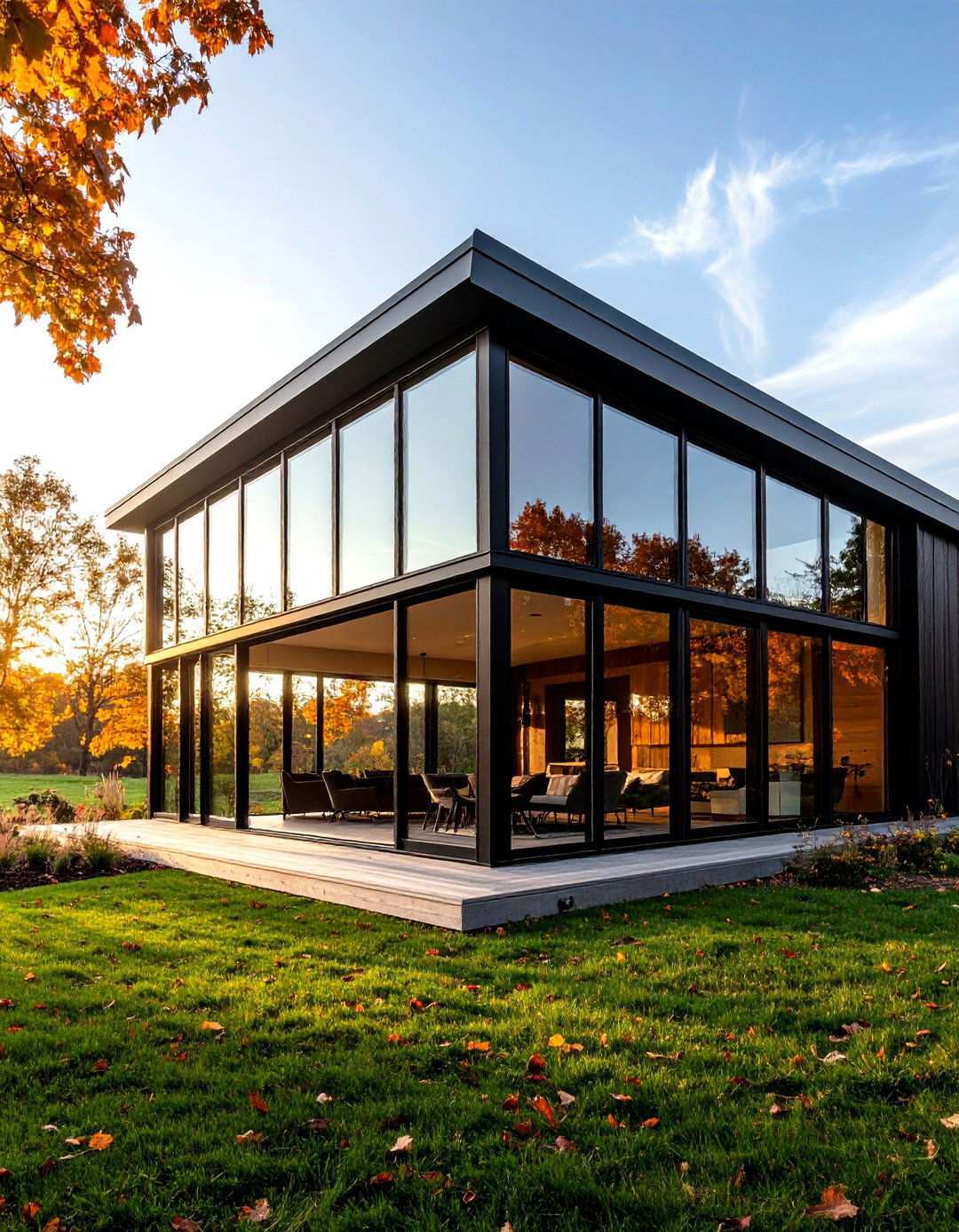
As the value of natural light becomes increasingly apparent, floor-to-ceiling glass walls offer a stunning way to blur the lines between pasture and living space. Multi-panel systems have evolved to include sliding, pivoting, or folding sections that disappear entirely, eliminating the separation between the porch and great room. Double- or triple-glazed units ensure that you can enjoy panoramic views without the distraction of condensation or drafts. To maintain a sleek aesthetic, use slim black frames that echo traditional barn sash windows, allowing the scenery to take center stage. When designing your glass wall, remember to strategically position the largest openings east or north to reduce glare while soaking in the warmth and light of morning sunrises.
10. Corrugated Metal Accentuates the Barn House's Edge
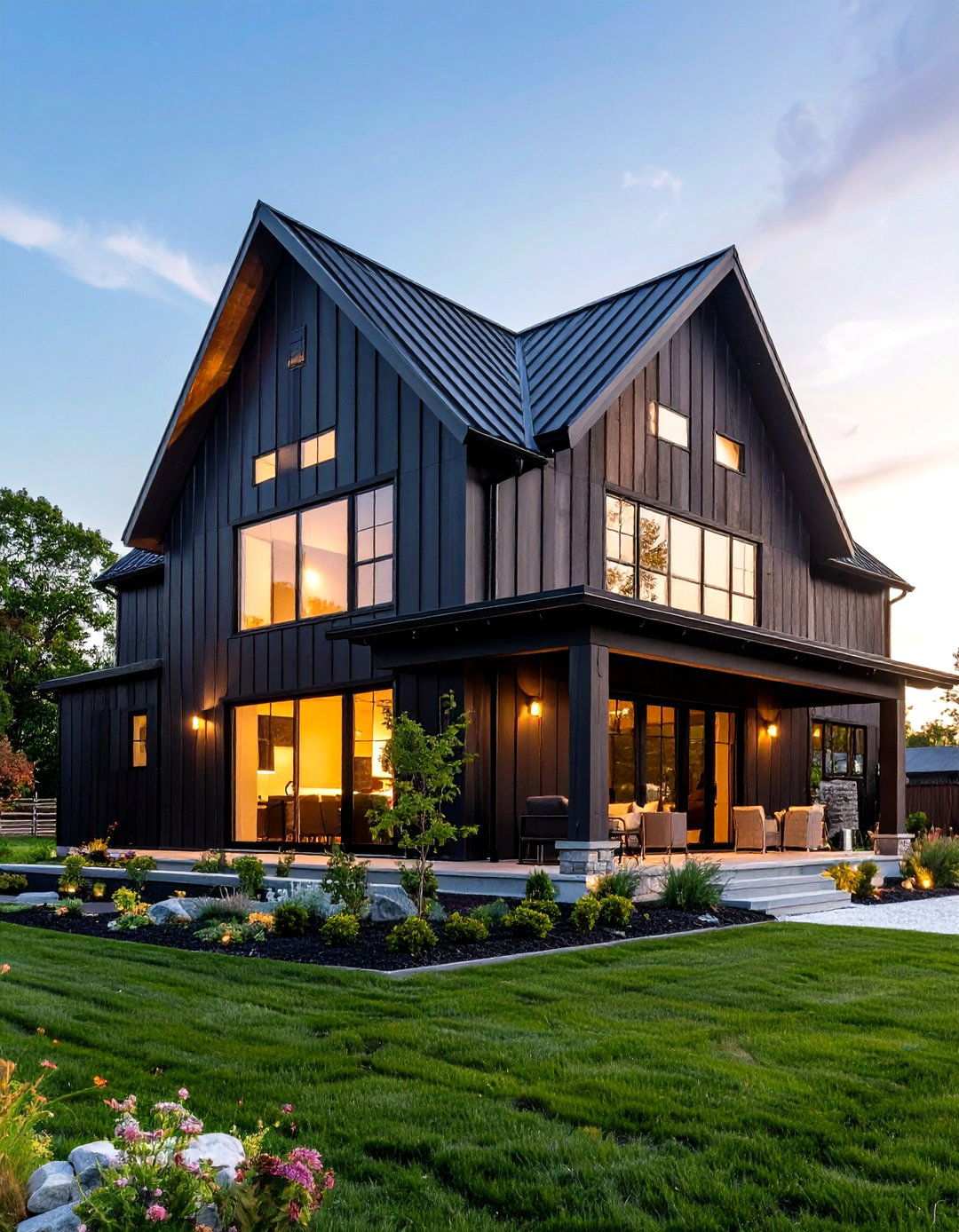
Surprisingly, corrugated metal’s distinctive lines can add a touch of sophistication when employed as a crisp accent on a Barn House. Use it to break up timber expanses on upper gables or bump-outs, providing a functional shield against wind-driven rain. Dark charcoal or forest-green coatings can help hide the metal’s ribs at a distance, revealing a subtle texture only upon closer inspection—a clever trick borrowed from industrial-modern design. Pair the corrugated metal with minimalist landscaping to create an ever-changing light show as reflections from the grooves catch grasses and gravel. Annual maintenance is a breeze, requiring only a simple garden-hose rinse due to the metal’s baked-on, rust-resistant finish.
11. A Rugged Foundation: Board-Formed Concrete Base
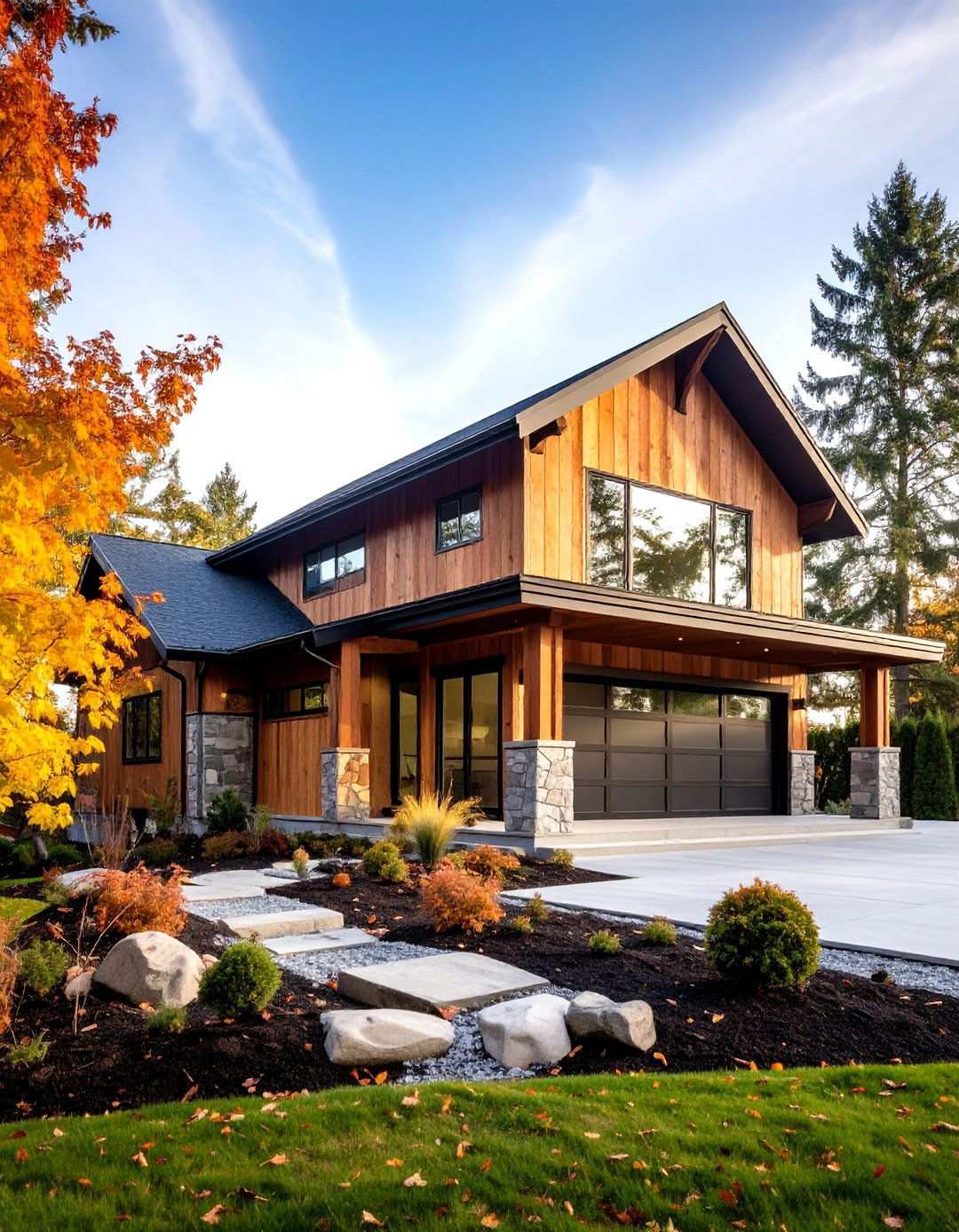
As the demand for texture and natural materials continues to grow, board-formed concrete offers a unique opportunity to create a rugged base that anchors your Barn House without sacrificing warmth. By pressing cedar planks against wet concrete, builders can transfer the grain, resulting in walls that resist rot and termites while maintaining the appearance of seasoned lumber. Consider extending this material just to window-sill height, then transitioning to timber or metal for a rich, tactile stack that tells a story. The concrete’s inherent fire resistance can also lead to lower insurance premiums—a hidden budget benefit. A clear matte sealer will protect the concrete from darkening while preserving the organic imprint for decades to come.
12. Mastering Stone Texture for the Barn House Legacy
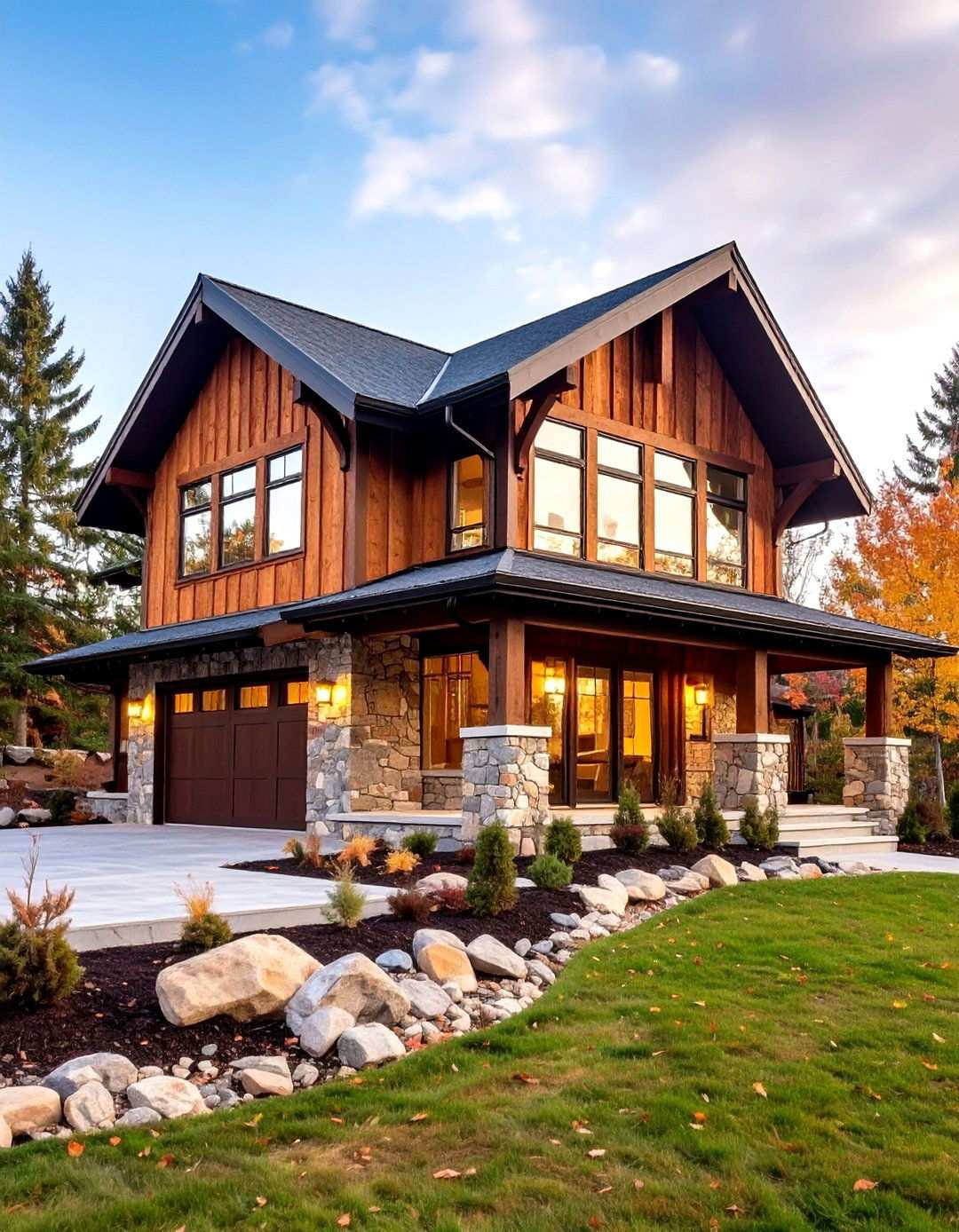
To infuse a Barn House with unparalleled strength and protection, consider a stone veneer wrap that shields vulnerable siding from potential damage. By blending stacked fieldstone with vertical timber above, a harmonious yin-yang of textures emerges, striking a balance between raw and refined elements. The imposing stone skirt not only provides a visual anchor but also serves as thermal mass, absorbing heat during the day and releasing it gradually at night, helping to regulate temperatures in transitional seasons. Moreover, mortarless panel systems now boast hidden fasteners, enabling even novice DIY enthusiasts to install them confidently over a weekend. To complete the look, finish the top edge with a sleek flashing ledge, ensuring a crisp line between the stone and the rest of the structure.
13. Unveiling the Storytelling Potential of Reclaimed Wood
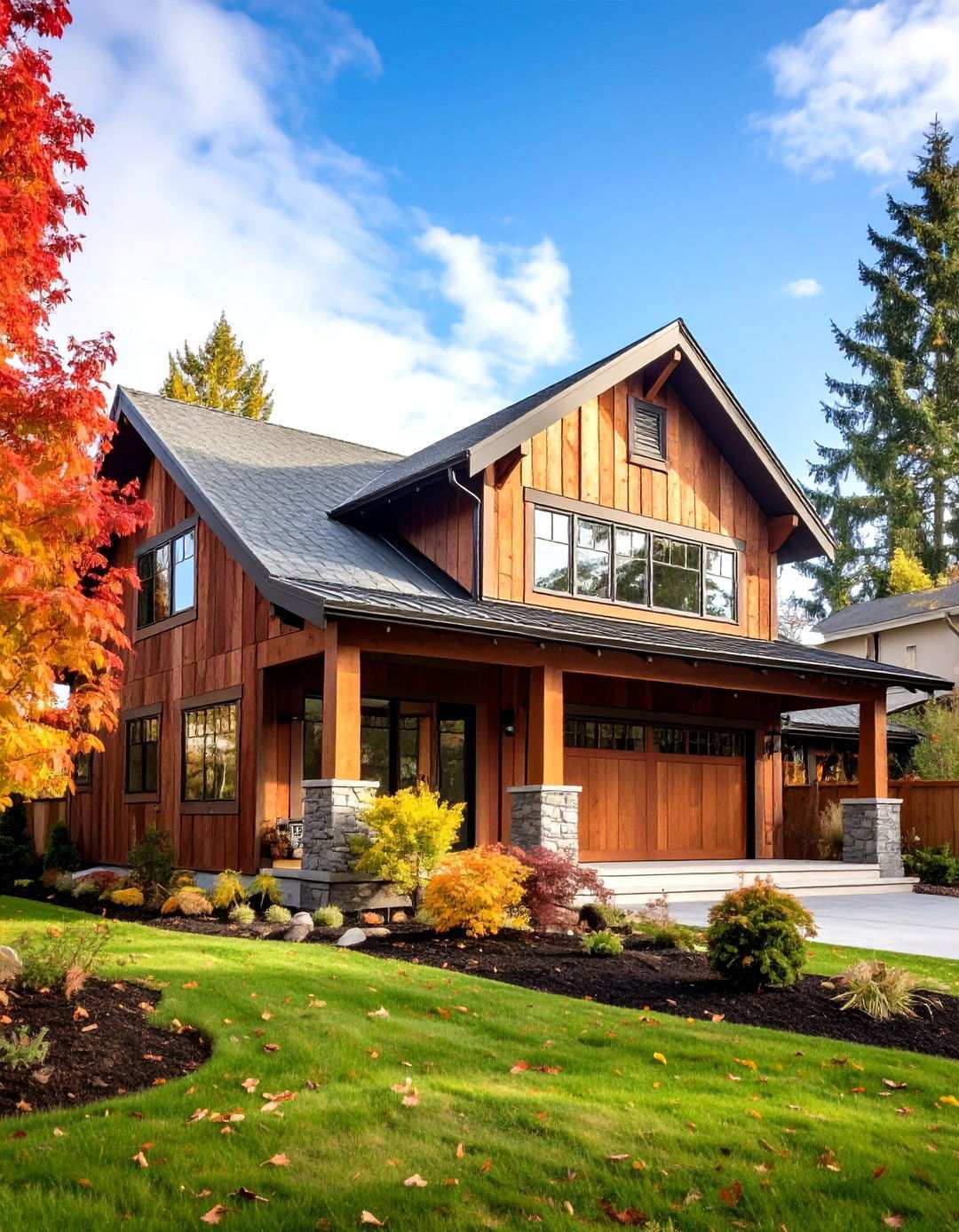
Surprisingly, adding a touch of history to a Barn House can be as simple as using reclaimed wood for the gable siding. This approach not only creates a unique visual narrative but also allows homeowners to select weathered tones that blend seamlessly with the surrounding landscape. By choosing boards from century-old barns, you’re reducing the demand for fresh timber, resulting in a lower carbon footprint for your project. Furthermore, local building codes may offer green-building credits for such eco-friendly practices. To ensure the longevity of the reclaimed wood, firmly secure the boards to a ventilated rain-screen, allowing trapped moisture to escape, and apply a clear borate treatment to ward off any lingering insects. Finally, seal the ends with wax to prevent splitting under the intense new sun exposure.
14. Embracing the Power of a Bold Front Door
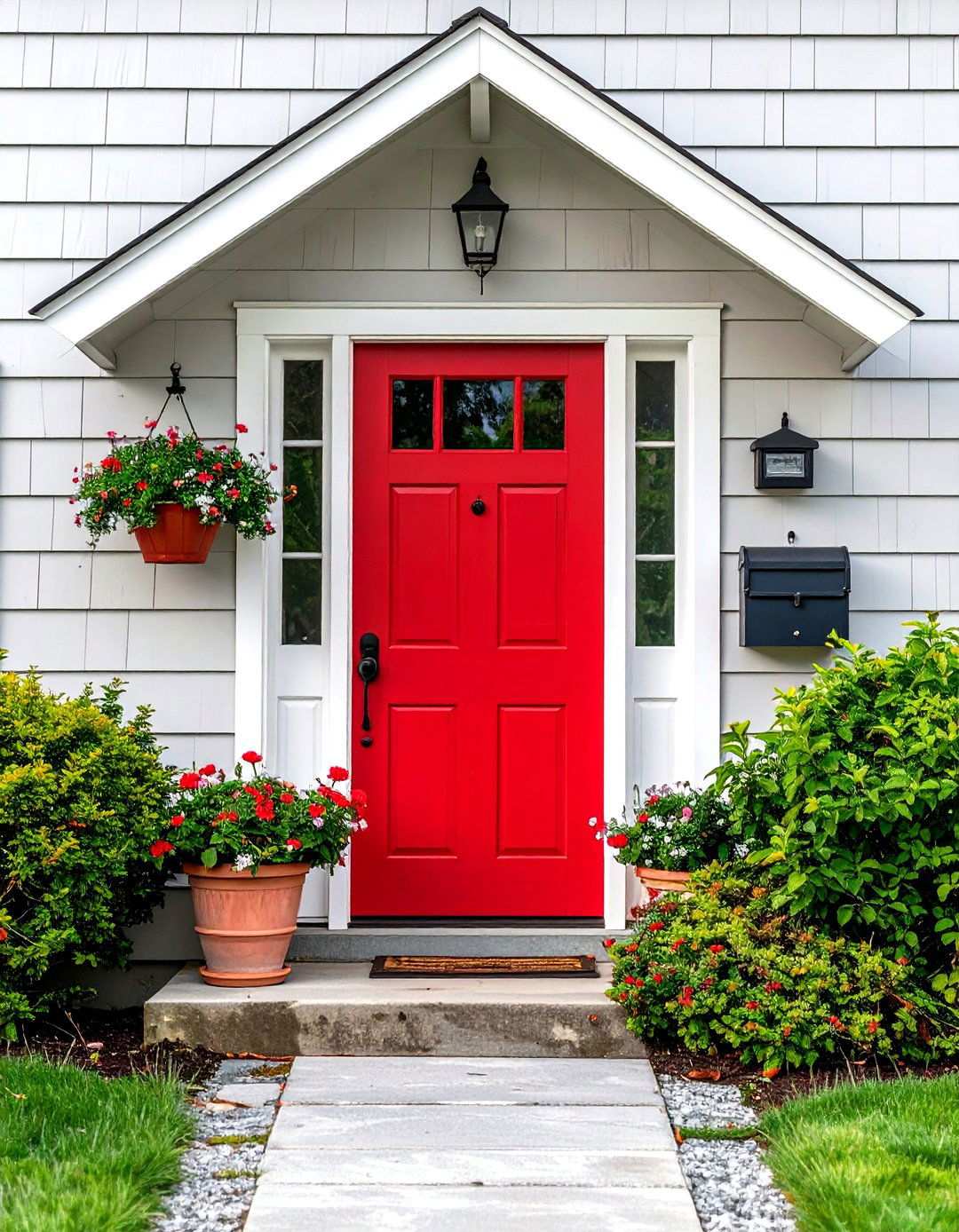
What better way to make a lasting impression than with a vibrant, contrasting front door that slices through the neutral facade of a Barn House? A bold door acts as a beacon, guiding visitors to the correct entry point, even on sprawling rural lots. To ensure long-lasting results, opt for a durable enamel coating rated for exterior use and repeat the color on mailbox flags or planter bands to create cohesion without overwhelming the senses. If you reside in a region with harsh climates, look for formulations with built-in UV blockers to maintain the door’s vivid hue for years to come. Swapping door colors is an easy, cost-effective way to refresh the façade without major renovations.
15. Repurposing Silo-Tower Barn House Landmarks
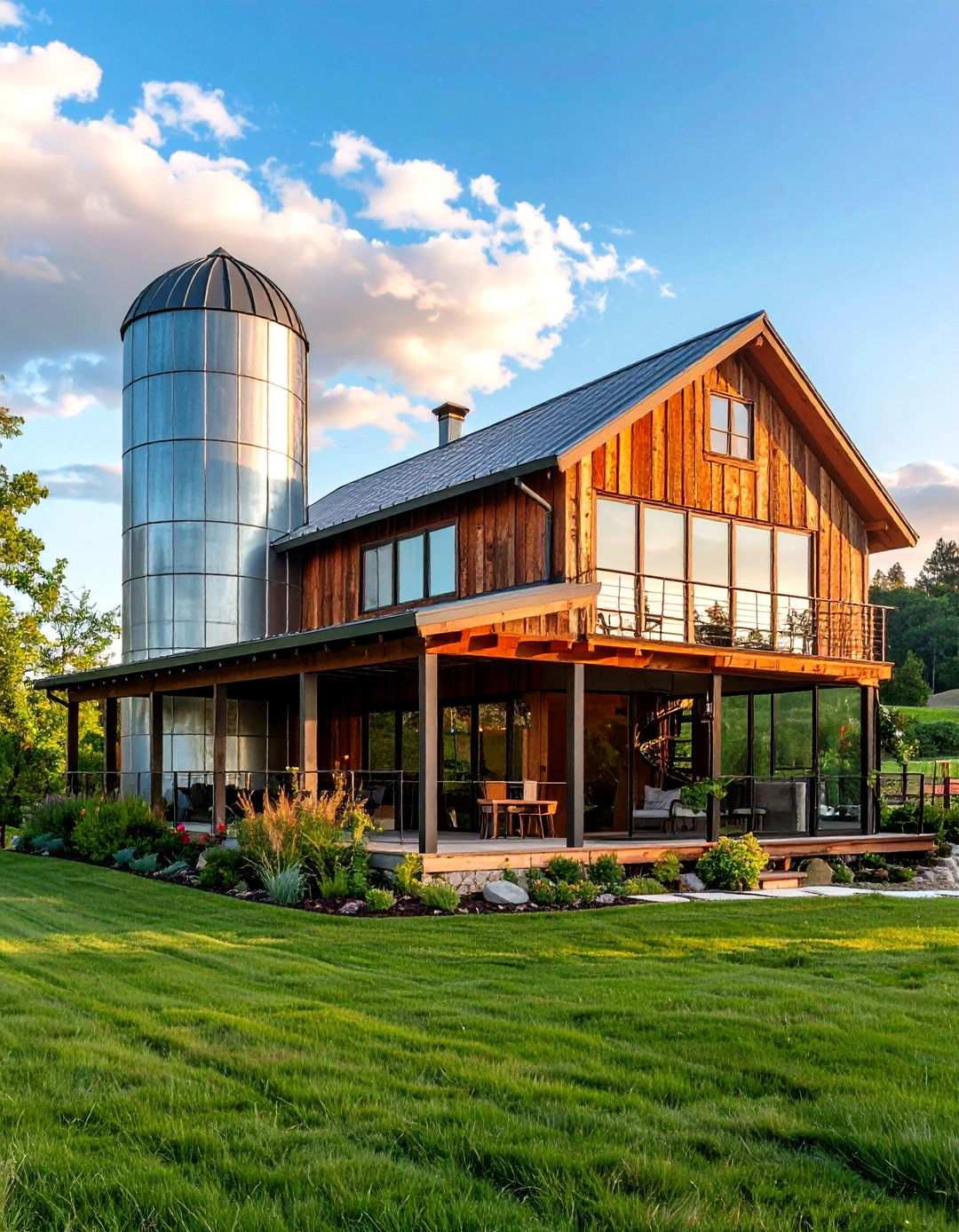
For those seeking a statement piece, consider repurposing a converted grain silo as a stair tower, reading nook, or guest suite. The cylindrical form breaks free from the traditional boxiness of barndominiums, offering 360-degree views from a compact footprint. Builders often position the tower adjacent to the main ridge, allowing structural independence while linking floors through a glass-walled breezeway. Corrugated steel shells can be easily insulated with spray foam, transforming what was once a grain bin into a cozy, energy-efficient retreat. To add a touch of whimsy, cut new windows with a plasma torch and frame their edges in reclaimed timber for a captivating blend of raw metal and warm wood.
16. Living-Roof Barn House Ecology
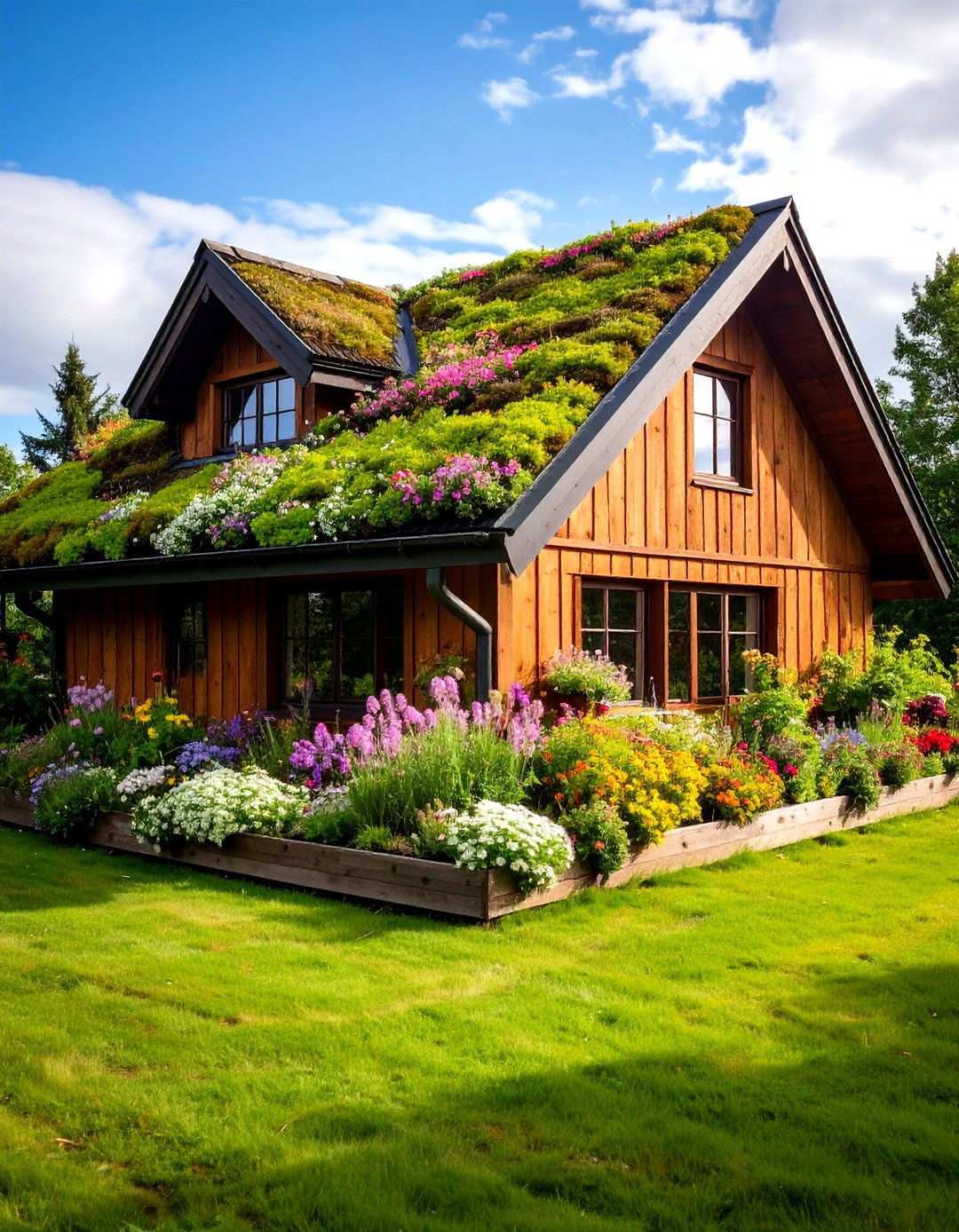
A living roof on a Barn House not only softens the building’s appearance but also contributes to a thriving ecosystem, supporting pollinators and enhancing biodiversity. By incorporating extensive sedum mats, homeowners can capture stormwater, reducing the pressure on rural drainage systems and minimizing the risk of flooding. These green roofs also offer a natural insulation solution, regulating interior temperatures by reducing summer peaks and winter chills. To simplify maintenance, steepness is limited to under nine degrees or structural elements are enhanced with stepped retention grids anchored to rafters. Regular upkeep involves thinning the thatch with a rake and replenishing it with compost to maintain its vitality, ultimately creating a harmonious coexistence between the Barn House and local wildlife.
17. Exposed-Beam Barn House Overhangs
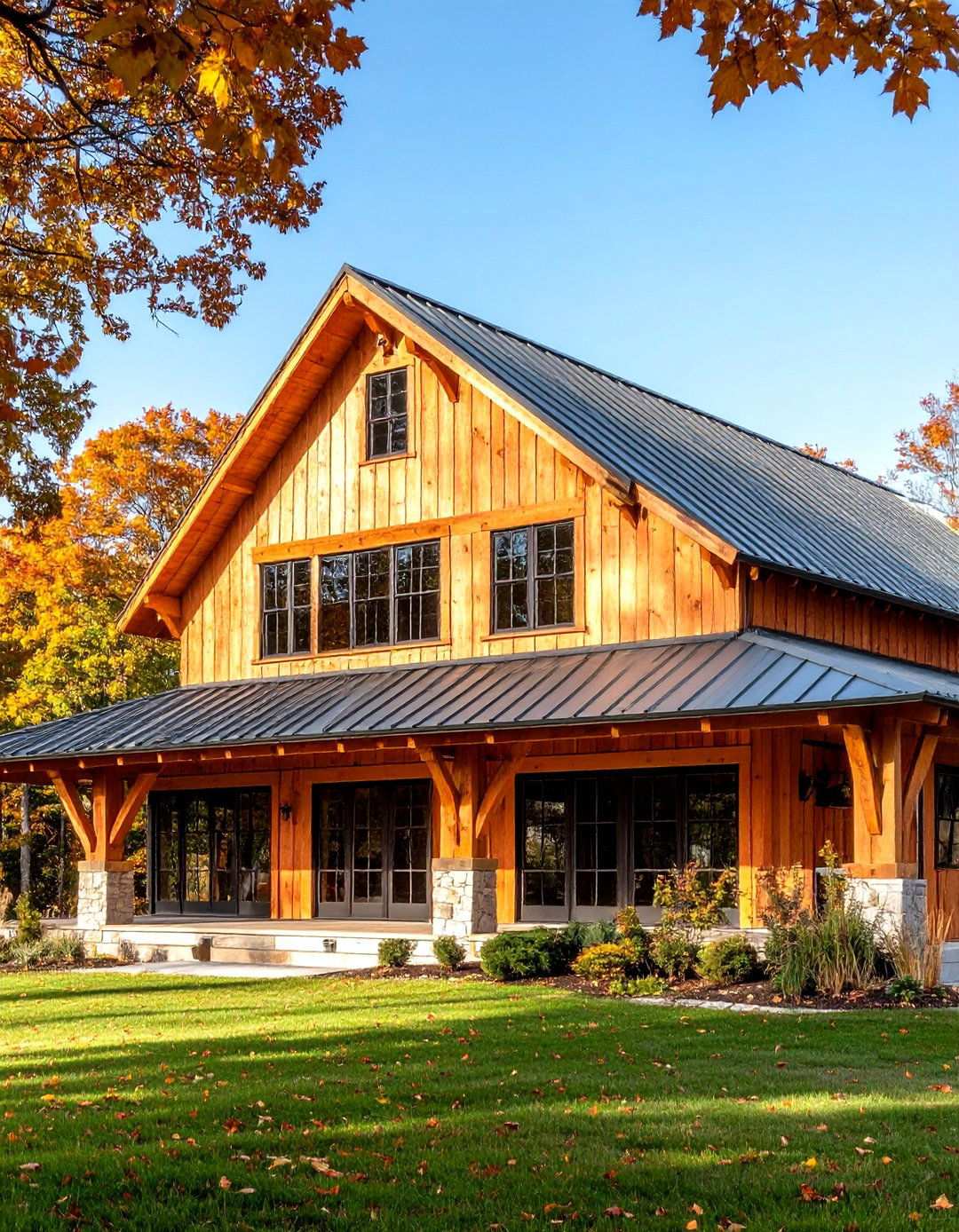
The exposed-beam concept allows structural timbers to flow beyond the walls, creating dramatic overhangs that frame the Barn House like a majestic pergola. These structural elements not only provide shade for windows and reduce solar gain but also serve as a shelter for walkways from summer storms. By incorporating decorative chamfers into the edges of the beams, homeowners can add a touch of craftsmanship without incurring additional material costs. However, it’s essential to maintain simplicity in the cuts to prevent water accumulation. Concealed steel plates can be installed inside mortises for added strength, and the wood can be stained to match the porch columns for a cohesive look. The accessibility of the beams also makes it possible to string pendant lights or hang plants from eyebolts, elevating the Barn House’s design to a personal, whimsical level.
18. Integrated Solar-Roof Barn House Power
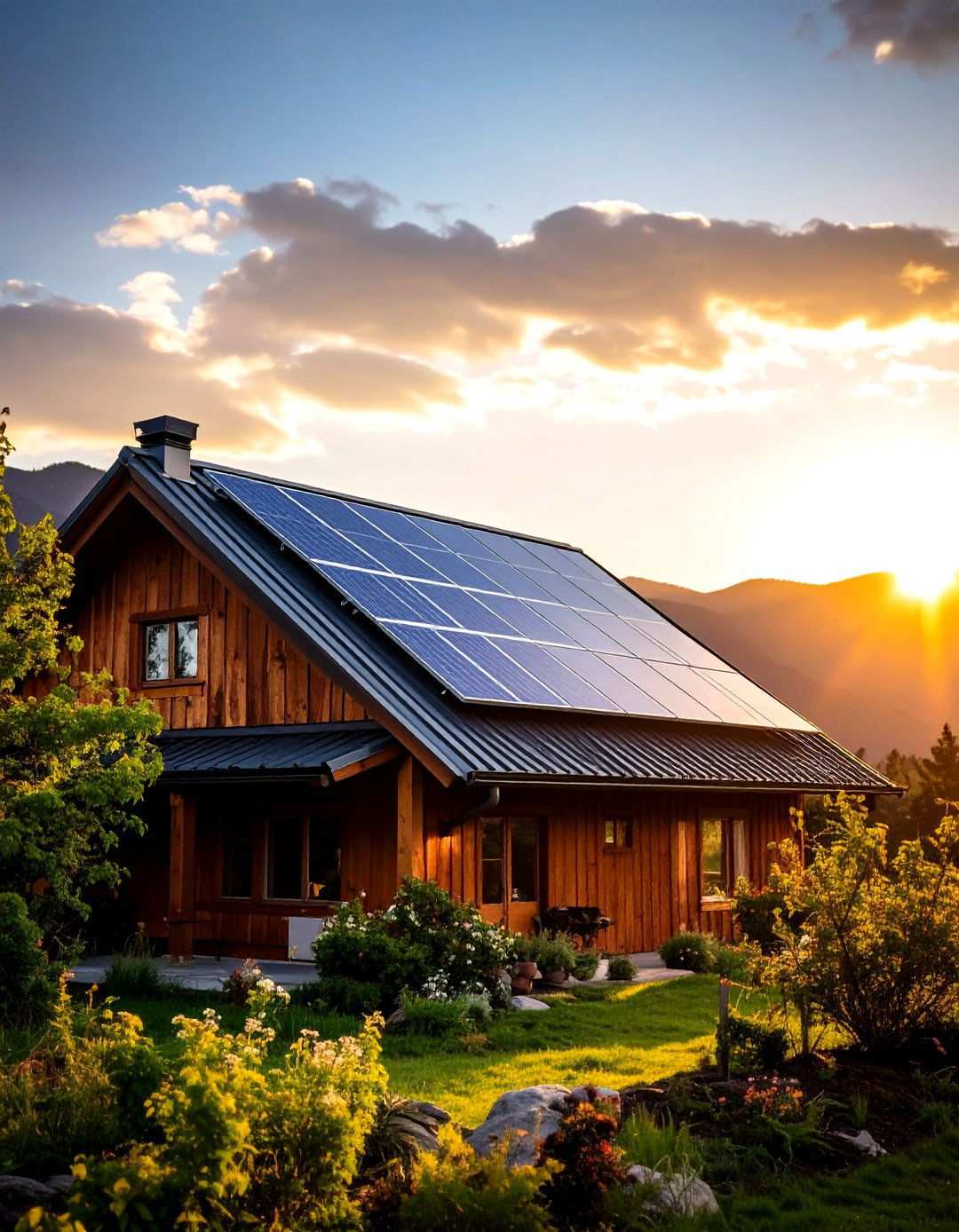
Recent innovations in metal roofing have made it possible to seamlessly integrate solar cells into standing-seam panels, allowing a Barn House to generate energy without compromising its aesthetic appeal. These factory-bonded laminates snap into place between seams, concealing wiring beneath the roof and protecting it from potential damage. By orienting the panels at a 30-degree pitch or adjusting the racks to match local latitude, homeowners can maximize energy output while adhering to guidelines common in metal-home kits. The benefits include lower electricity bills and a roofline that retains its classic barn appearance, unobstructed by bulky solar panels. By installing a smart inverter in the mudroom, homeowners can monitor energy production on their phone while checking on their paddock stock.
19. Rustic-Lighting Barn House Glow
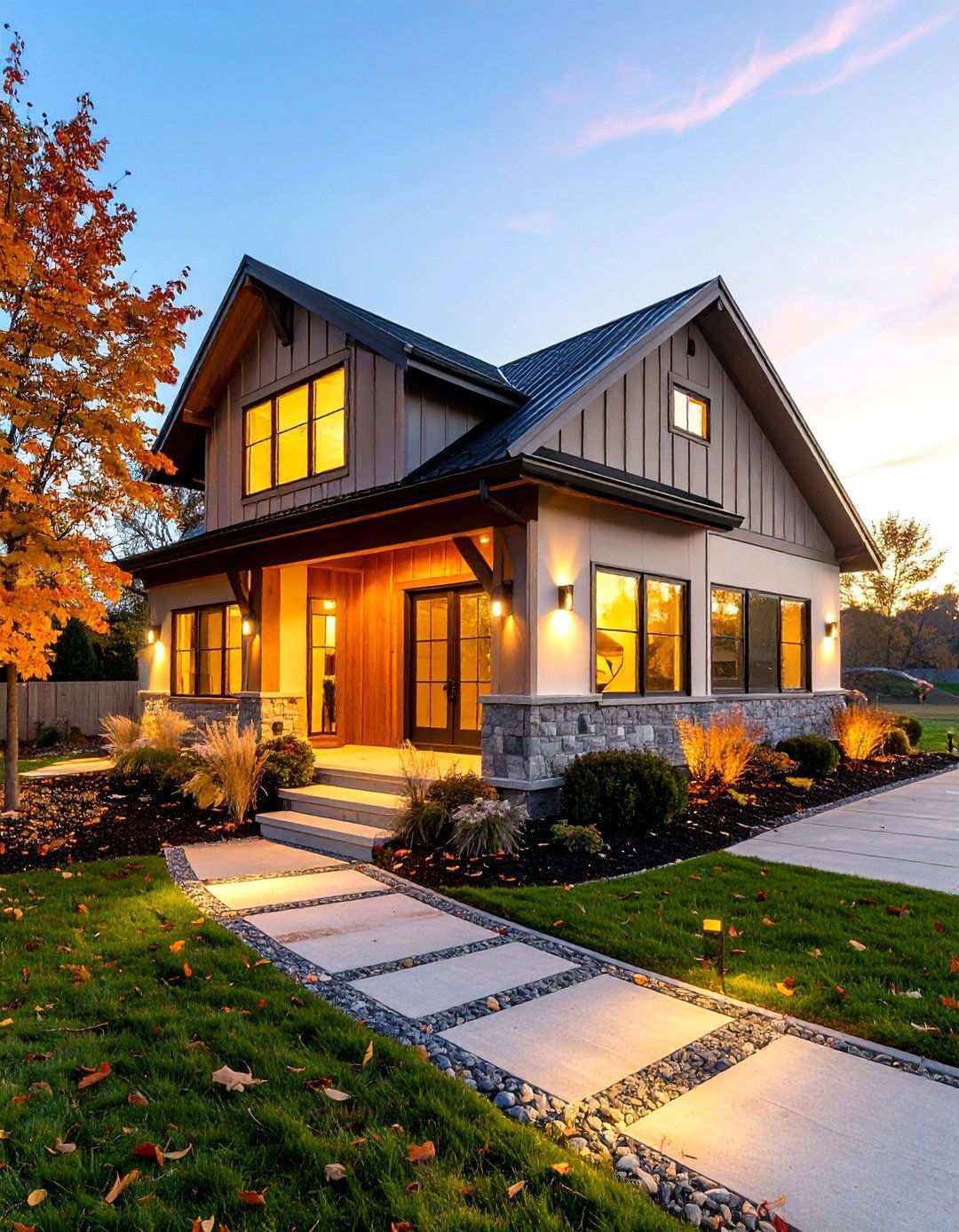
As the sun sets, the warm glow of a Barn House is often attributed to the rustic lighting that illuminates its porch and surrounding areas. Barn-style gooseneck sconces are particularly effective in creating this ambiance, extending the usability of the porch into the evening hours. To minimize light pollution, fixtures should be aimed downward, preserving the darkness of the night sky and keeping bugs at bay. Powder-coated aluminum sconces can provide a durable, corrosion-resistant option, while hand-spun steel alternatives can add an authentic, rustic touch. By installing lights on switched photo-cells, the lights can automatically fade in at dusk and switch off at dawn, optimizing energy efficiency. For driveways, stakeholders can install low-voltage path lights at six-foot intervals to create a safe, welcoming environment for pedestrians and vehicles, using warm 2700-Kelvin bulbs to mimic the soft glow of traditional lanterns.
20. Ancient Defense for the Modern Barn House
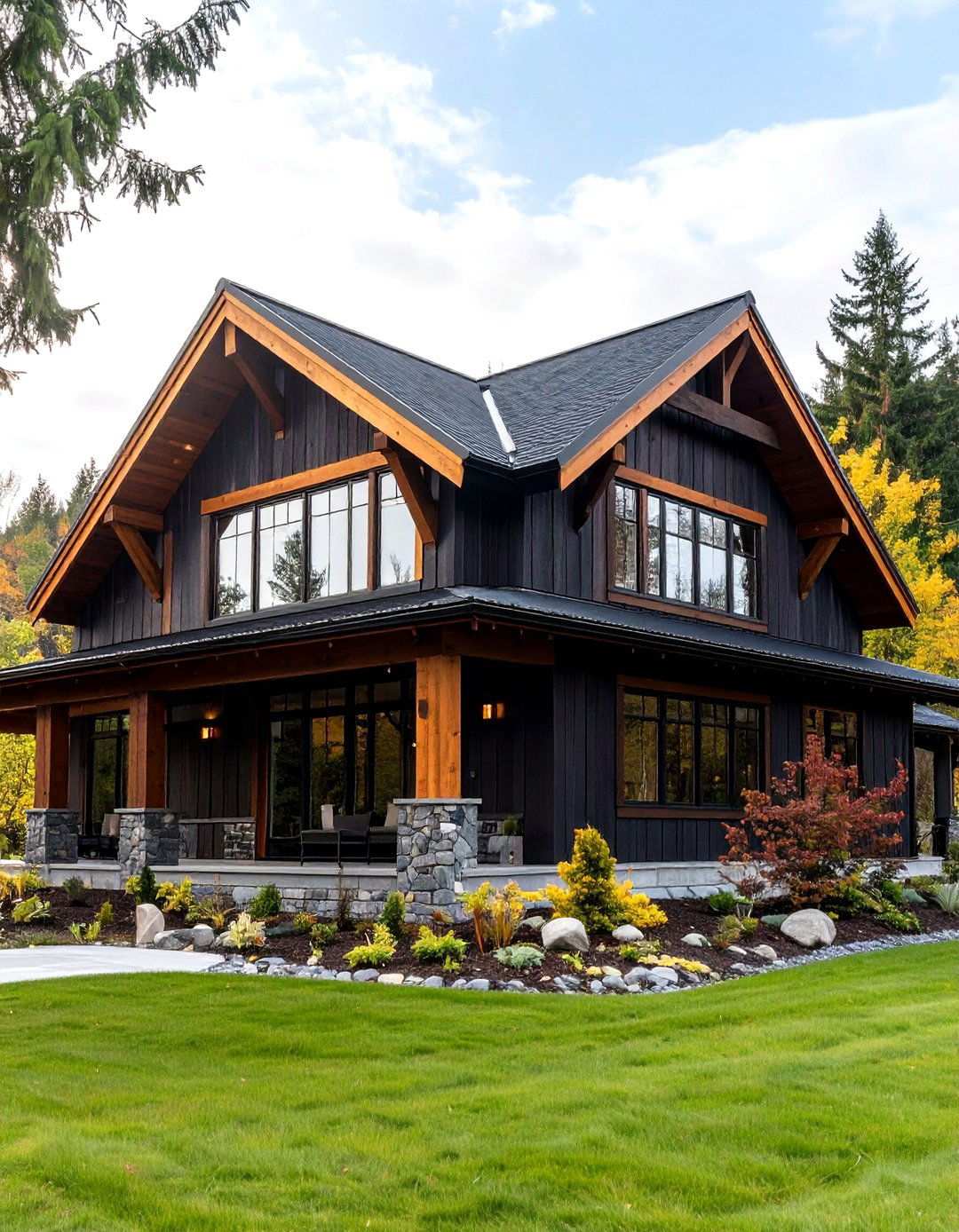
For a distinctive finish that appears ancient yet remains durable, cedar planks can be transformed into a shou sugi ban through a process of charring. This results in a deep-black exterior that shields a Barn House, providing natural protection akin to armor. As the charring process seals wood pores and infuses carbon, planks become resistant to insects, fire, and rot without the need for chemical additives. Once treated with tung oil and a gentle brush, the surface develops a silky texture that can withstand decades of harsh weather conditions. Designers often combine charred walls with warm bronze accents, creating a striking contrast between matte and shiny elements. With maintenance requiring only occasional re-oil applications every five years to preserve the color, this ancient Japanese technique proves surprisingly practical for modern rural living.