1. Elevating Basements with Modern Flooring Options
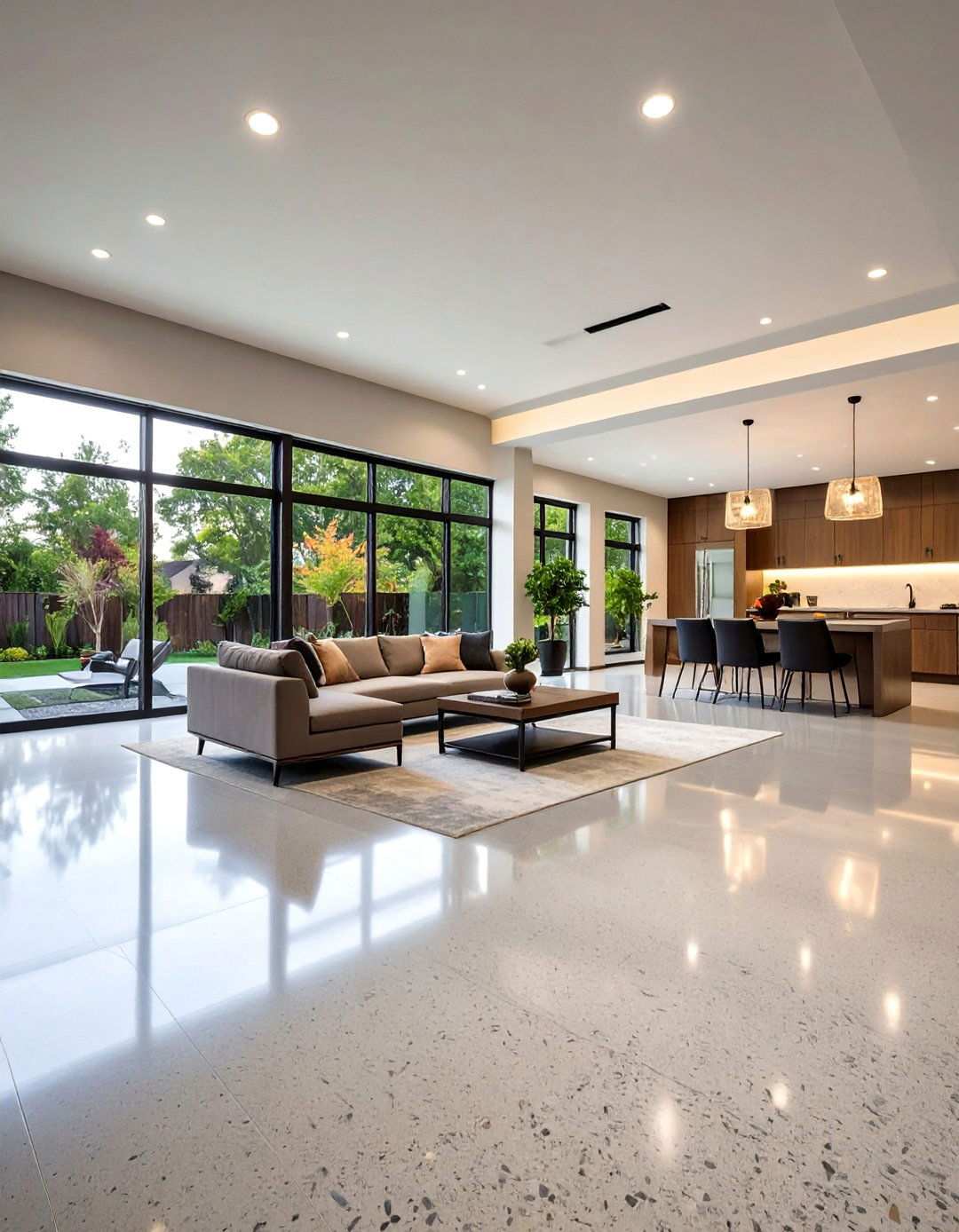
The humble basement has evolved into a vibrant oasis, boasting a home theater, gym, or art studio – all thanks to the perfect foundation: a state-of-the-art basement floor. However, tackling moisture-related challenges below-grade level demands innovative solutions that prioritize waterproof cores, breathable assemblies, and easy-swappable tiles. Today’s landscape is dotted with an array of budget-friendly, skill-level-friendly, and décor-savvy options, from refined polished concrete to composite planks that click together like a puzzle piece. The 20 ideas presented here dissect each material’s standout benefits – durability, warmth, acoustic comfort, eco-friendliness, or design flair – to help homeowners tailor a floor to their unique lifestyle.
2. Polished Concrete: The Triple Threat Basement Floor
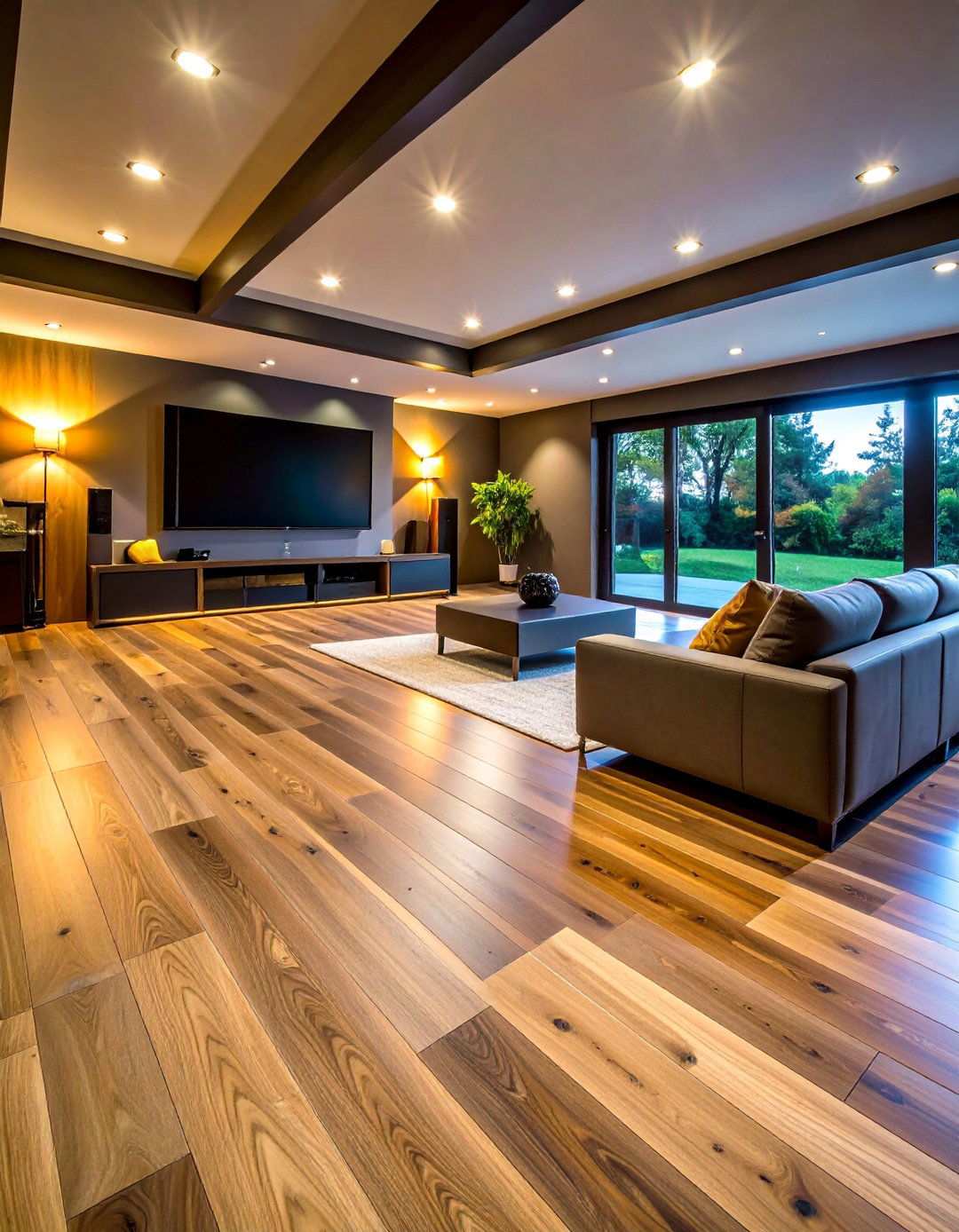
A polished concrete basement floor presents a winning combination of strength, shine, and savings. By capitalizing on the existing slab, contractors hone the surface to perfection, polishing it until it radiates light and makes the space feel more expansive. This treatment not only seals the pores but also densifies the concrete, rendering it impermeable to dust, scratches, and moisture without requiring additional layers. One of the most appealing aspects of polished concrete is its affordability, as it often proves less expensive than many alternative coverings. Furthermore, its open surface prevents allergens from accumulating, making it an excellent choice for areas like home gyms or craft rooms. For those seeking a customized appearance, stains or dyes can be applied before the final polish, allowing homeowners to add a personal touch without compromising the material’s durability.

As an Amazon Associate I earn from qualifying purchases.
3. Luxury Vinyl Plank Flooring: Waterproofing with Warmth
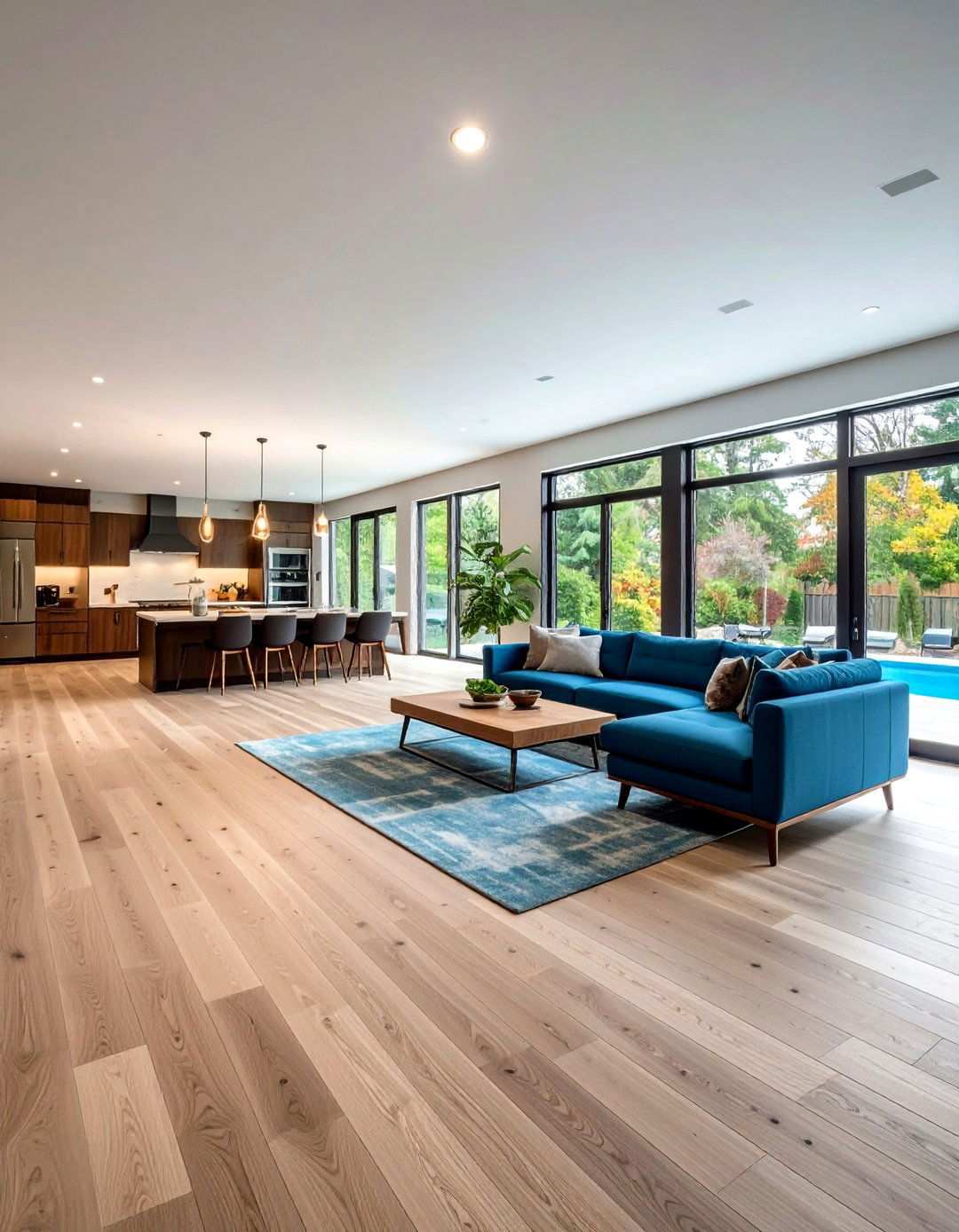
In stark contrast to traditional hardwood, luxury vinyl plank basement flooring offers an attractive hardwood aesthetic without the vulnerability to leaks that often plagues organic boards. Constructed on a robust PVC or SPC core, each plank interlocks seamlessly, forming a floating surface that is entirely waterproof – rendering the occasional sump-pump hiccup a minor inconvenience. The textured wear layer on these planks effectively resists scratches from pets and rolling toys, while the attached underlayment effectively dampens footfall and contributes a hint of insulation. For DIY enthusiasts, the simple score-and-snap installation process and the effortless replacement of damaged planks without specialized tools make this option an attractive choice. Homeowners can choose lighter hues to amplify scarce daylight or deeper tones to create a dramatic ambiance for a home theater.
4. Durable Rubber Tiles for Family-Friendly Play Areas
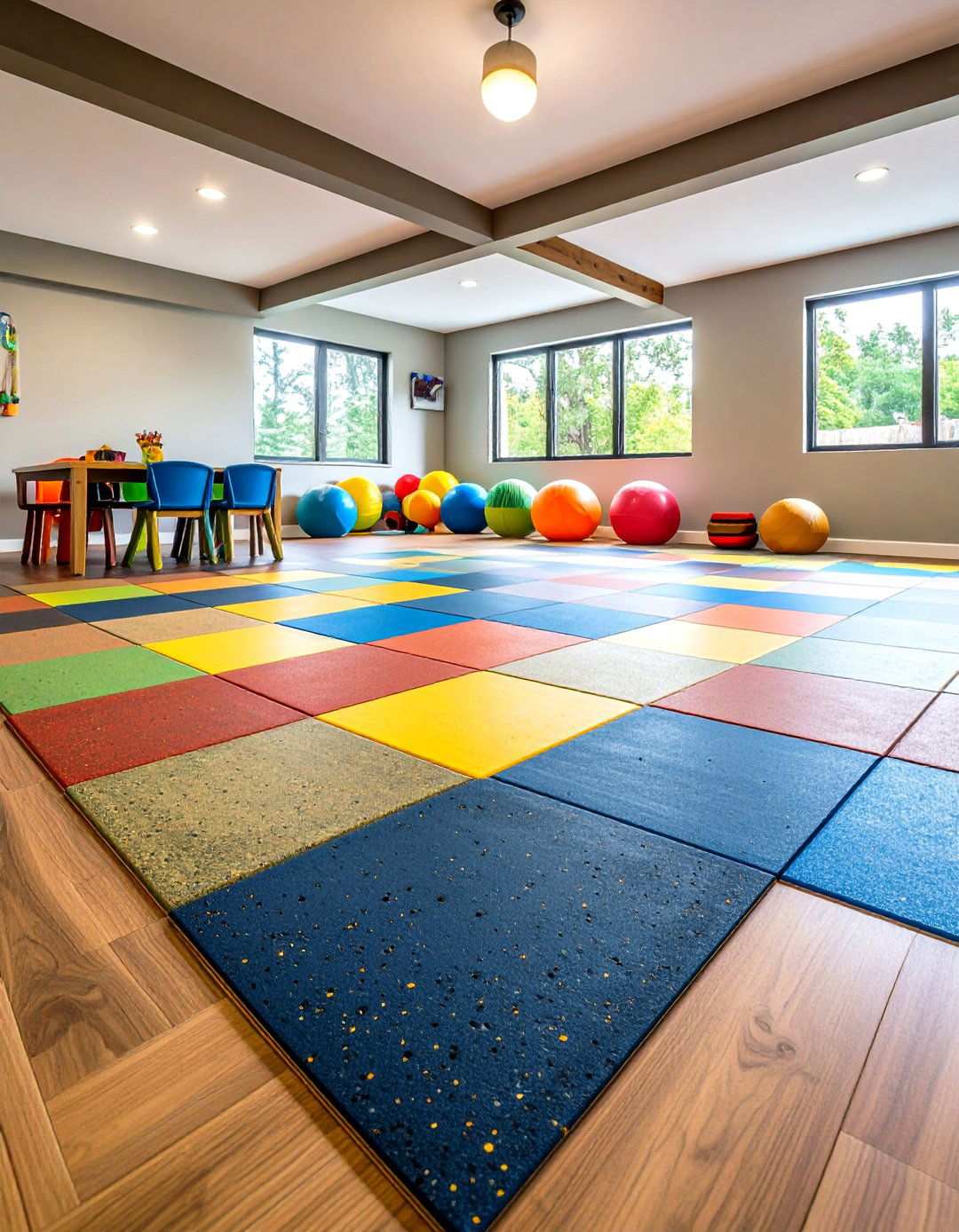
For parents who prioritize a safe and fun play zone, a rubber tile basement floor offers a forgiving surface that cushions falls, mutes noise, and installs quickly within an afternoon. Interlocking squares crafted from recycled, gym-grade rubber create a seamless, water-resistant mat that resists mold and can be easily rolled up for deep cleaning after unexpected plumbing mishaps. Thicknesses range from 6 mm for a soft, yoga-like feel to 12 mm for a denser, weight-room-inspired option, allowing you to match the density to your activities. The dark speckled colors of these tiles effectively conceal craft paint splatters, while beveled transition edges prevent stroller wheels from getting caught. To minimize odors, simply rinse the tiles outside and let them air-dry for a day before installing them indoors.
5. Budget-Friendly Painted Stenciled Basement Floor Designs
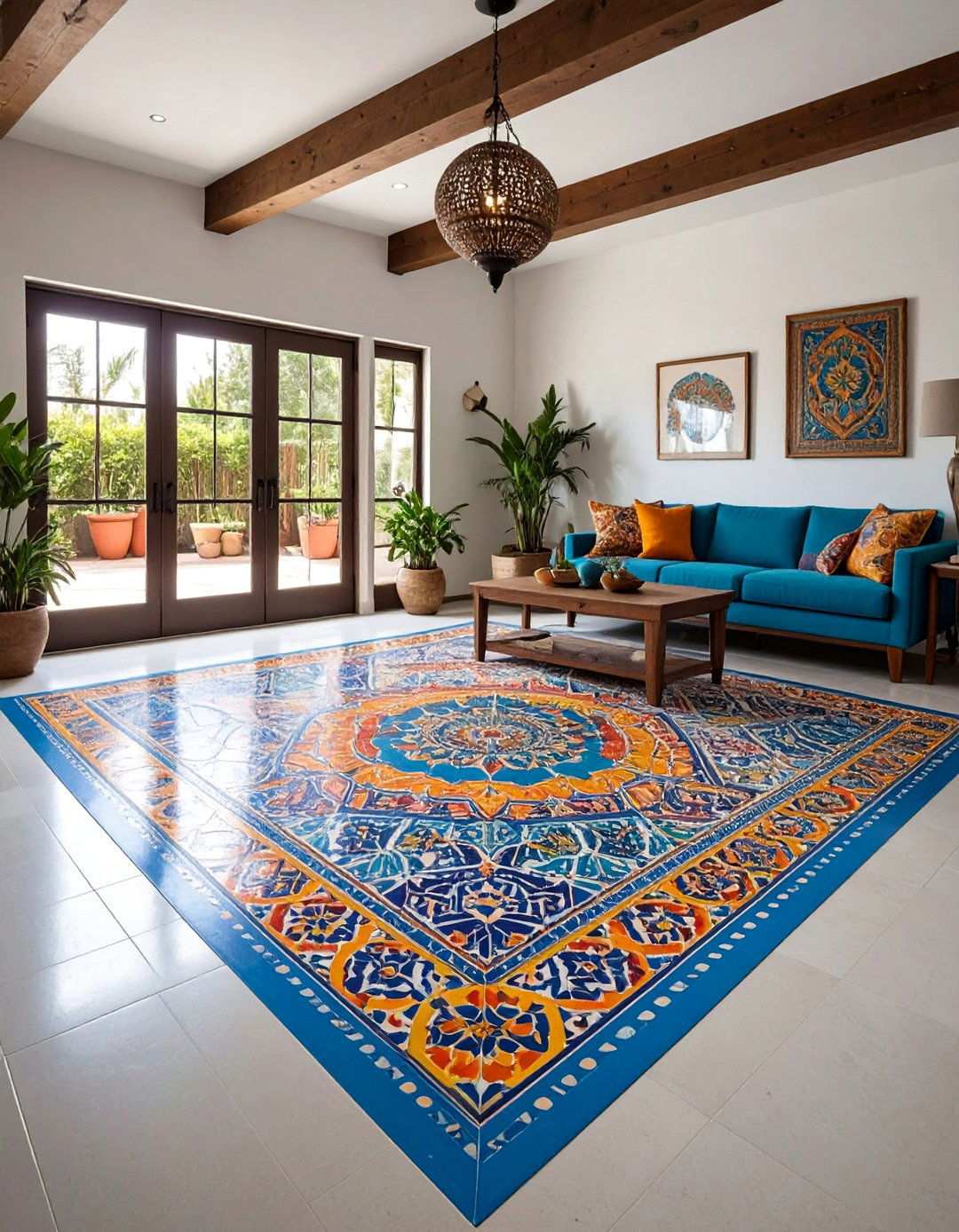
Looking for a budget-friendly makeover that still exudes personality? A painted stenciled basement floor offers a unique opportunity to add character to plain concrete at a fraction of the cost. After thoroughly cleaning and etching the surface, roll on a durable porch enamel and then press an oversized tile stencil to create striking patterns and designs. Water-based polycrylic topcoats ensure the design remains vibrant and intact under foot traffic, and touch-ups are as simple as using a foam brush. To create a cohesive look, tape off a broad border in a coordinating color and apply it around the room to disguise uneven walls and concrete slab joints.
6. Eco-Friendly Cork Basement Flooring Options
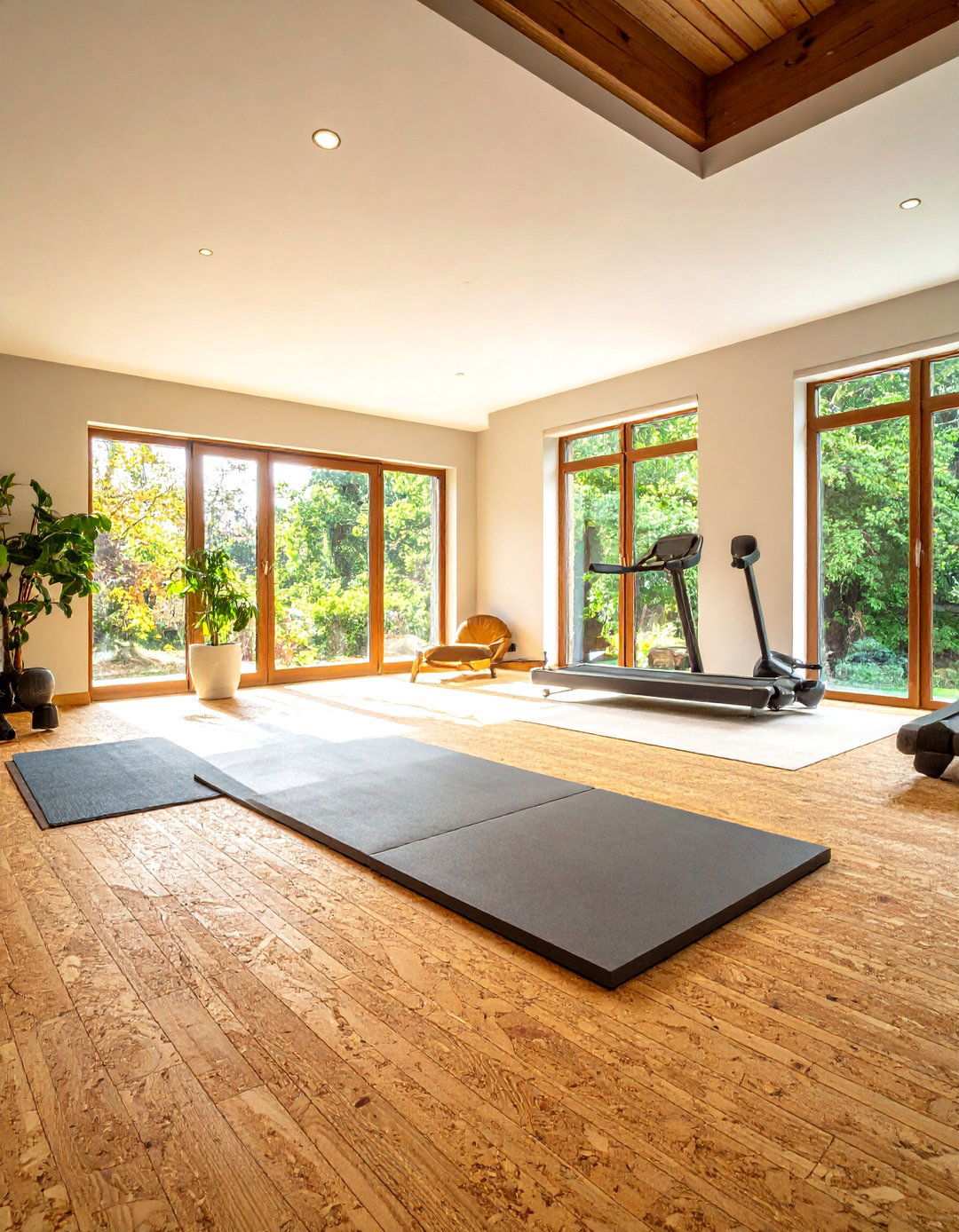
Considering a cork basement floor can provide a warm, inviting underfoot experience and significantly reduced acoustics. The unique cellular structure of cork traps millions of air pockets, delivering a soft, springy feel that reduces fatigue during exercise sessions and prolonged play. Because cork is naturally resistant to insects and mold, tiles can handle moderate humidity when installed as a click-together floating system over a moisture barrier. To maintain the surface, apply a durable water-based polyurethane every few years to prevent swelling. The light honey tones of cork can help brighten low ceilings, while plank formats effectively disguise seams. To prevent dents, keep furniture on wide felt pads.
7. Porcelain Tile Basement Flooring for Flood-Resistant Style
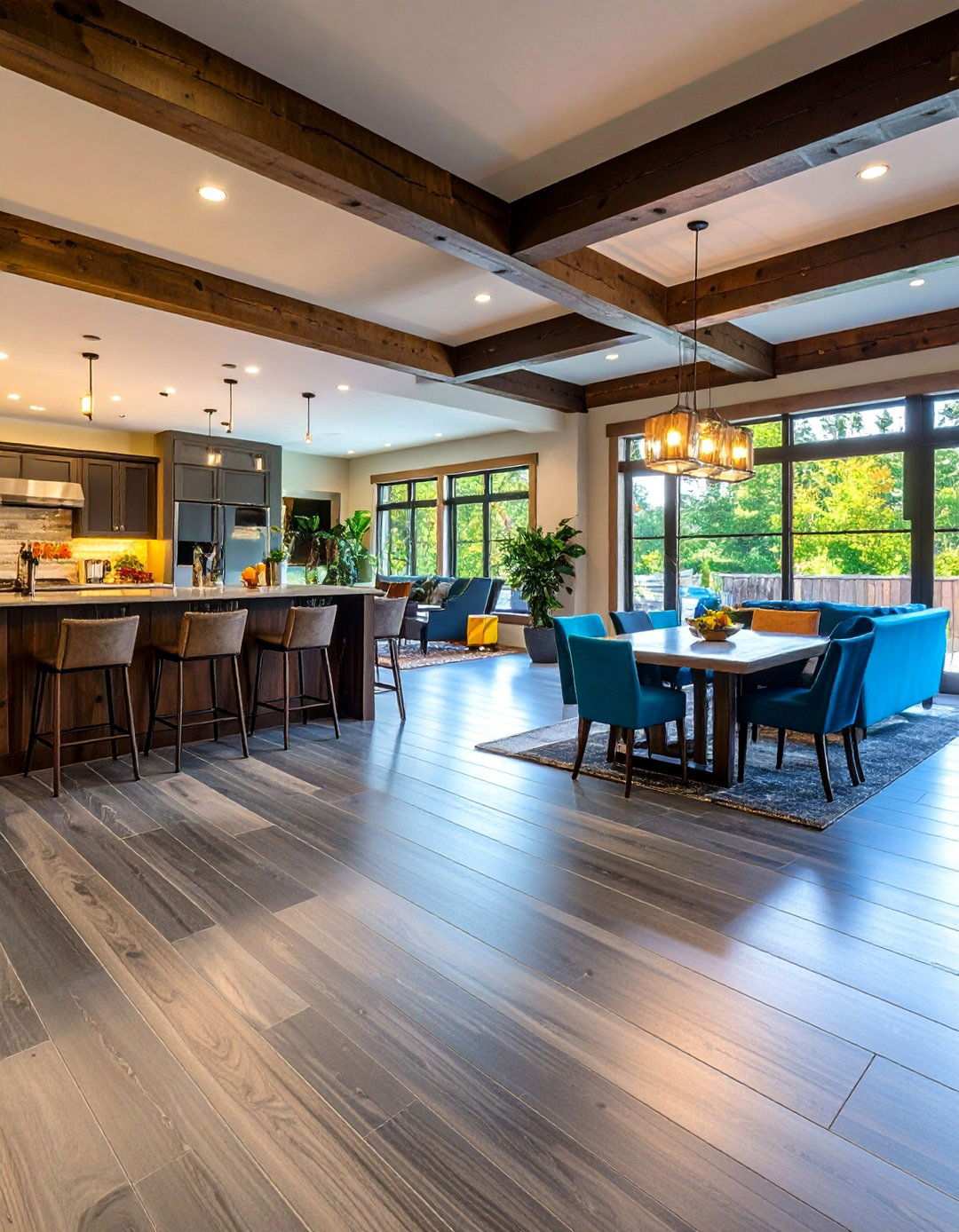
By choosing a porcelain tile basement floor, you gain near-absolute protection against water, pets, and spills without sacrificing style. Porcelain’s exceptionally low absorption rate often falls below 0.5 percent, ensuring even minor seepage cannot reach the clay body, significantly reducing the risk of mildew smells. Large-format planks that mimic oak or slate reduce grout lines and install over uncoupling mats that isolate subfloor cracks. If your slab experiences excessive sweating in summer, select a slip-resistant finish rated at least DCOF 0.42. Pair with an electric heat mat for cozy movie nights, and remember to use epoxy grout in case future leaks require bleach cleanup for fast sanitizing.
8. Modular Marvels: Carpet Tiles for a Cozy Basement Floor
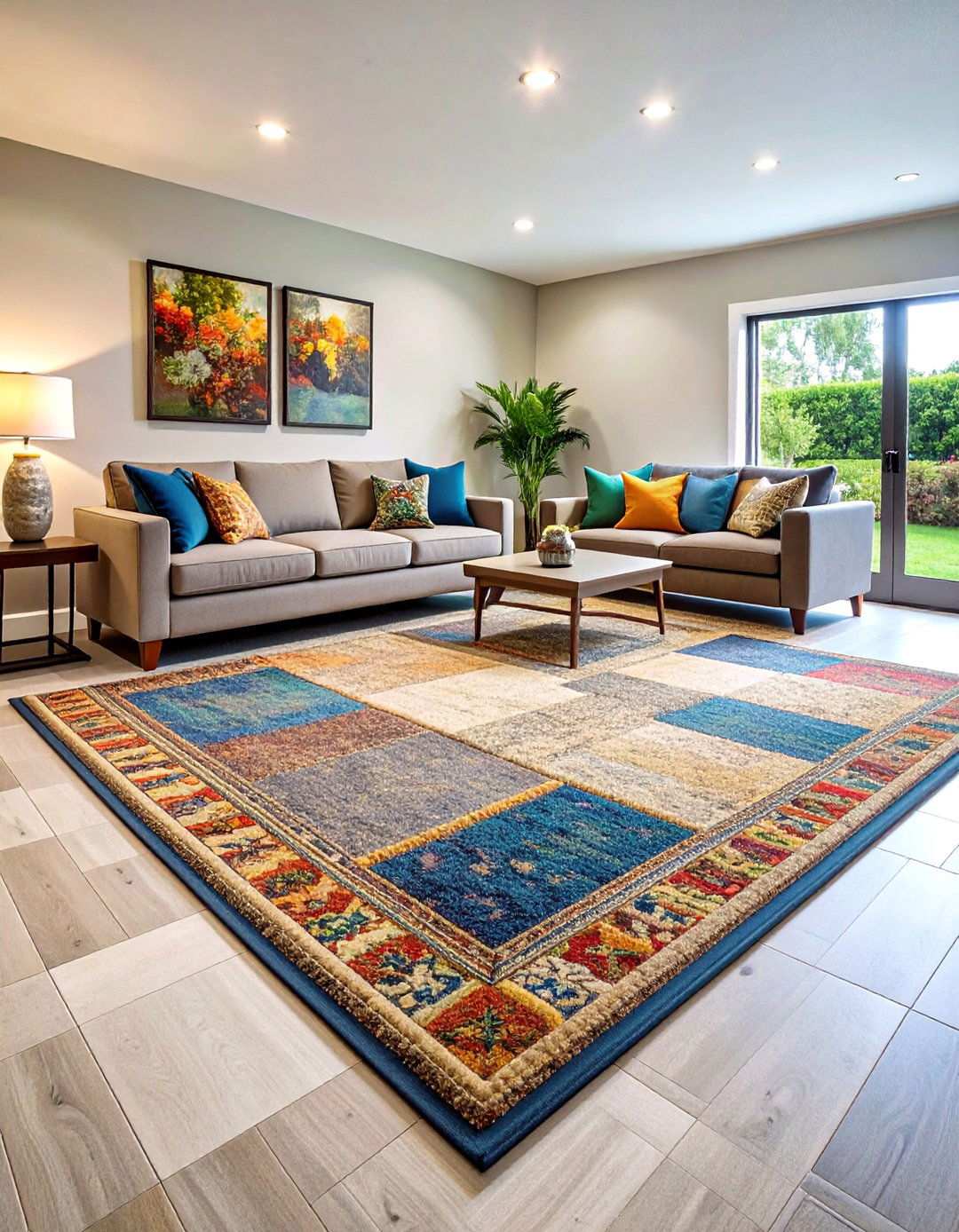
Carpet tiles offer a practical and cozy solution for a basement floor, featuring a raised plastic grid that clicks together with ease. Under each 12-inch square, vents allow damp concrete to breathe, preventing the buildup of moisture that can feed mold. Individual tiles can be lifted for vacuuming or replacement after spills, making them perfect for gaming nights with friends. By mixing two colors, you can create a unique and affordable patterned rug, or snap stair-nose pieces onto steps for a seamless look. For a more immersive experience, consider installing a thin acoustic pad first, which can help minimize noise and create a movie-theater-like atmosphere. In the event of a flood, simply pop up the squares, dry the slab, and reinstall – it’s that easy.
9. showroom-quality Flooring: The Appeal of Epoxy-Coated Basements
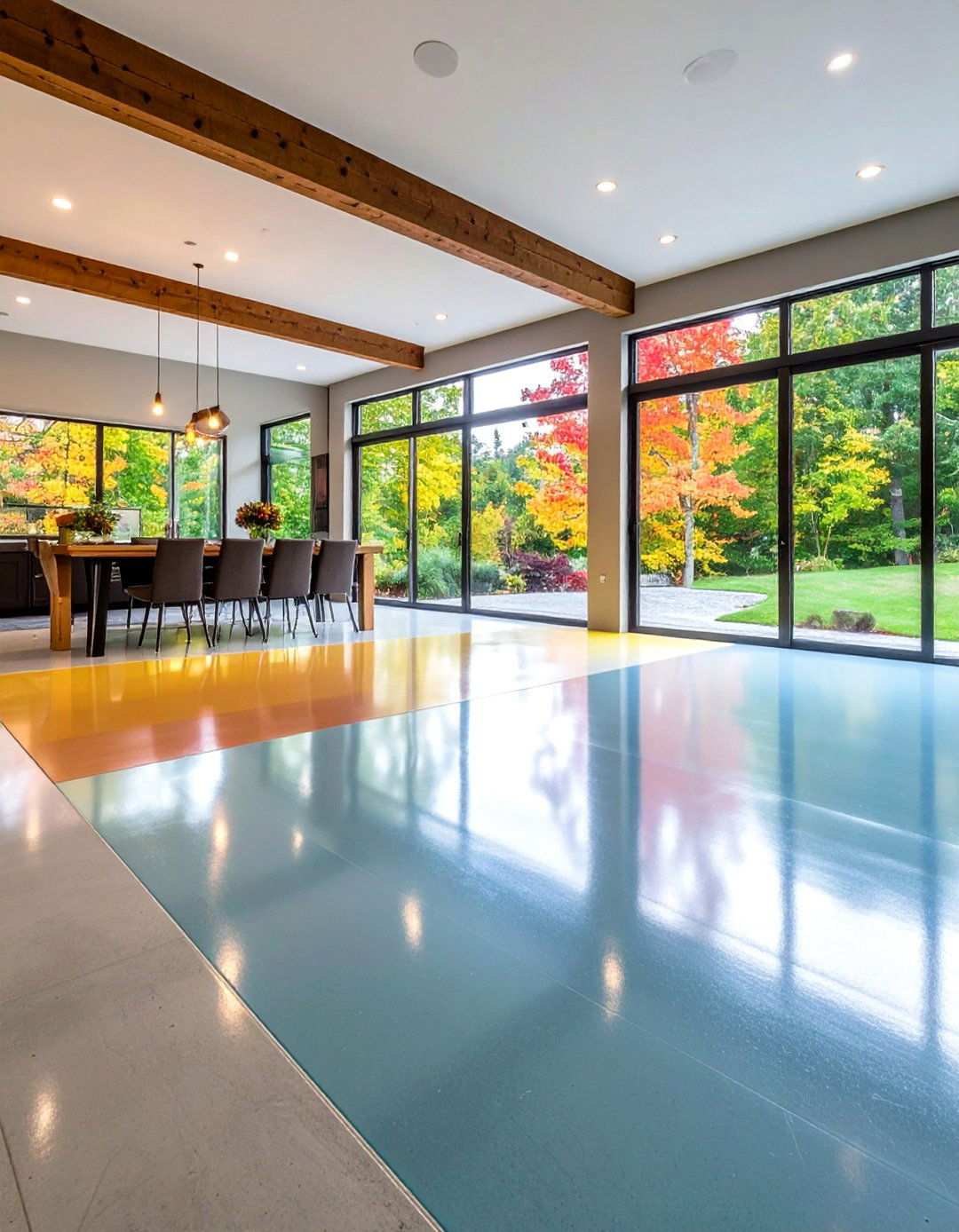
Epoxy-coated basement floors are surprisingly low-maintenance and offer a showroom-quality gloss that resists dirt and stains. A two-part, 100 percent-solids formula cures into a thick, chemical-resistant shell that can withstand the wear and tear of hot-tire marks, bleach, and kids’ scooter wheels. To add depth and slip resistance, you can mix in metallic pigments or vinyl chips, finishing with a UV-stable polyaspartic clear coat to prevent the surface from yellowing over time. However, it’s essential to plan for proper ventilation during the curing process or choose a lower-odor waterborne kit. If the slab shows hairline cracks, consider patching with an epoxy filler first to ensure a smooth finish that will last for years.
10. Laminate Flooring: A Quick and Affordable Upgrade for Basements
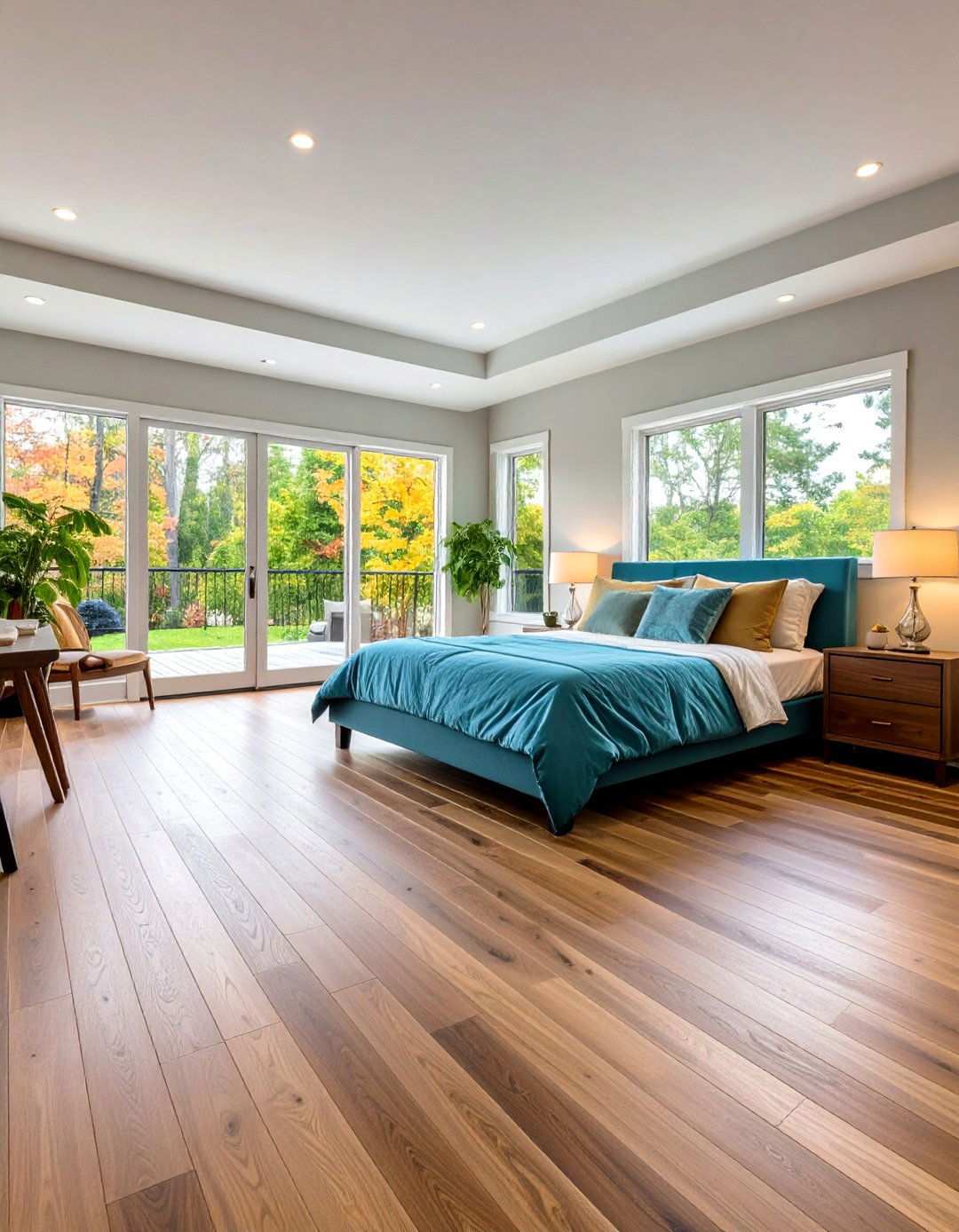
In recent years, laminate flooring has made significant strides in terms of moisture resistance, offering a water-resistant option that rivals vinyl for protection. The core of modern laminate flooring is infused with resins that slow down swelling, allowing it to be used in below-grade areas. To ensure a successful installation, it’s crucial to float the planks over a 6-mil vapor barrier and seal every expansion gap. Integrated padding provides a comfortable underfoot experience, while attached locking systems enable you to finish a spare bedroom in a single evening. For a more visually appealing look, consider choosing wide 8-inch boards that can stretch the sense of space in your basement. Additionally, keep a few extra cartons on hand, as slipping a laminate tongue under existing boards makes spot repairs painless down the line.
11. Sustainable Strength: Bamboo Basement Flooring
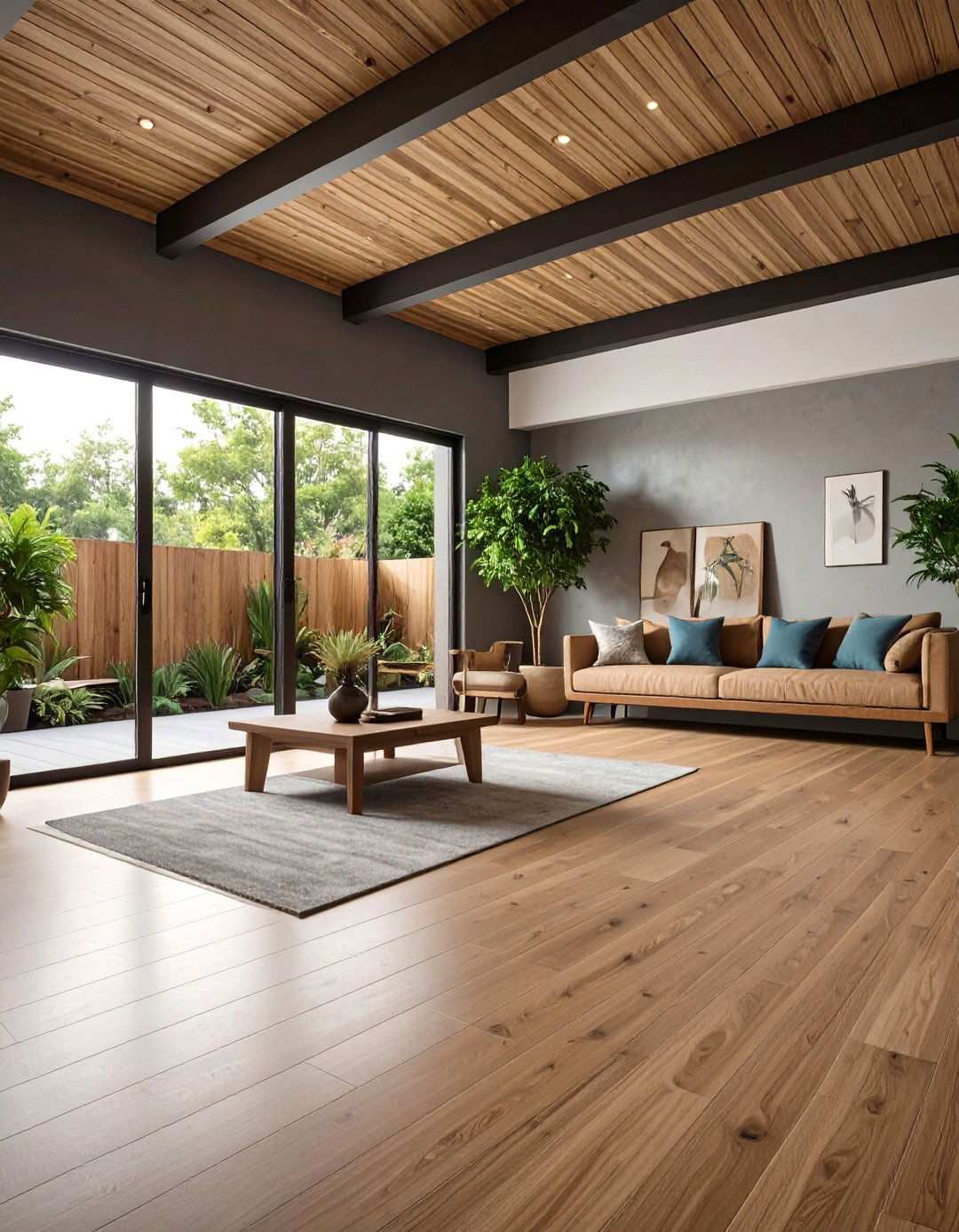
For homeowners looking for a sustainable and eco-friendly option, a bamboo basement floor is an attractive choice. Engineered to withstand moisture, strand-woven bamboo fibers are compressed with resin to create a dimensionally stable plank that’s harder than many oaks. Click-lock designs install over acoustic underlayment, providing a soft thud instead of an echo when kids jump. When selecting a bamboo floor, look for certifications from reputable eco-labels, which can ensure that the adhesives used emit minimal VOCs. To maintain the integrity of your bamboo floor, remember to run a dehumidifier during the wet season to keep the wood happy and resilient. If you’re after a dramatic look, consider pairing carbonized espresso tones with white walls for a striking contrast.
12. Elevating Winter Comfort with Heated Radiant Flooring
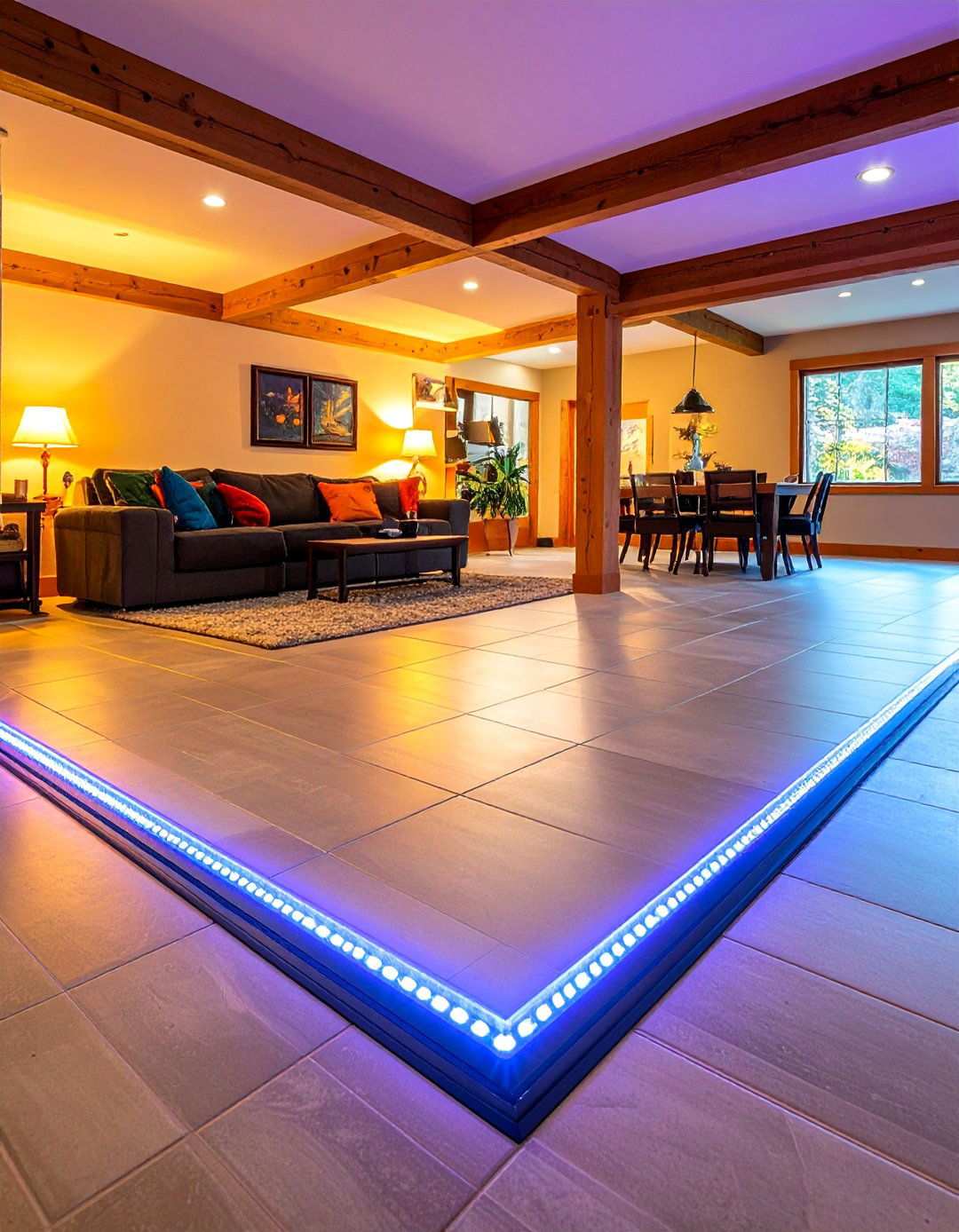
A heated radiant basement floor offers year-round comfort, circulating warm water or electricity beneath a chosen surface to transform the entire space into a soothing radiator. Hydronic tubes embedded in new slabs provide optimal efficiency for those undertaking a full concrete re-pouring, while electric mats can be easily installed over existing floors, integrating seamlessly with smart thermostats. The consistent warmth not only combats winter chills but also helps mitigate condensation, as surfaces remain above the dew point. Strategically placing sensors at door thresholds enables the system to anticipate cold air drafts, and incorporating a thermal break under the tubing directs energy upward, warming the room rather than sinking into the ground.
13. Instant Revitalization with Peel-and-Stick Vinyl Flooring
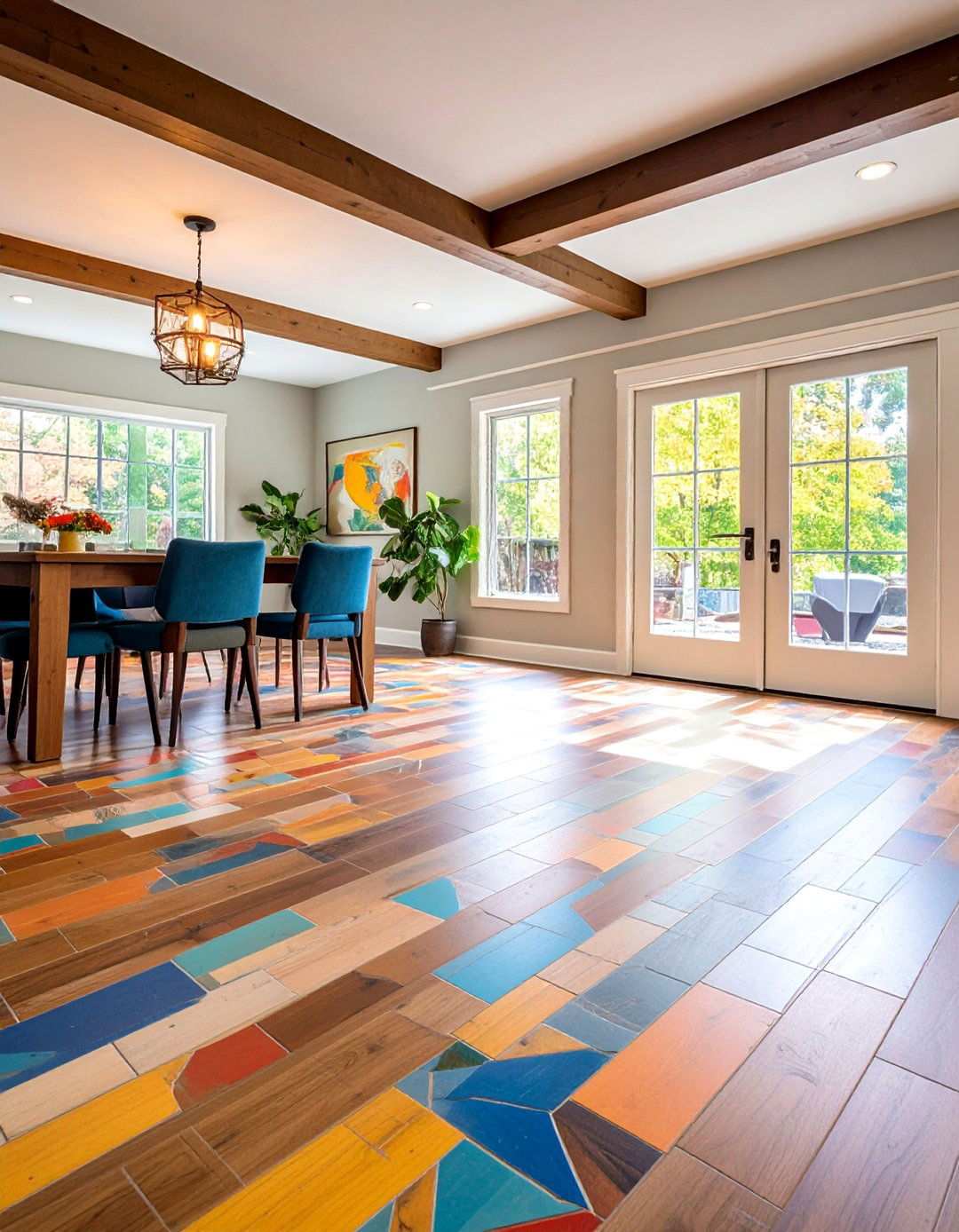
A peel-and-stick vinyl basement floor brings instant gratification and a dash of flood protection. Self-adhesive tiles come pre-coated with pressure-sensitive adhesive, requiring only a snap of a chalk line, peel, and press. Due to their thin profile of merely 2–3 mm, thorough subfloor preparation is crucial – meticulously scraping high spots and applying primer to ensure strong bonding. In the event of a plumbing leak causing a corner to curl, gently warm it with a hair dryer and re-press, avoiding the need for a complete floor replacement. Wood-look planks can revitalize a laundry area in a single afternoon, while bold encaustic patterns can transform a drab utility space into a vibrant mudroom with ease.
14. Timeless Beauty of Terrazzo Flooring
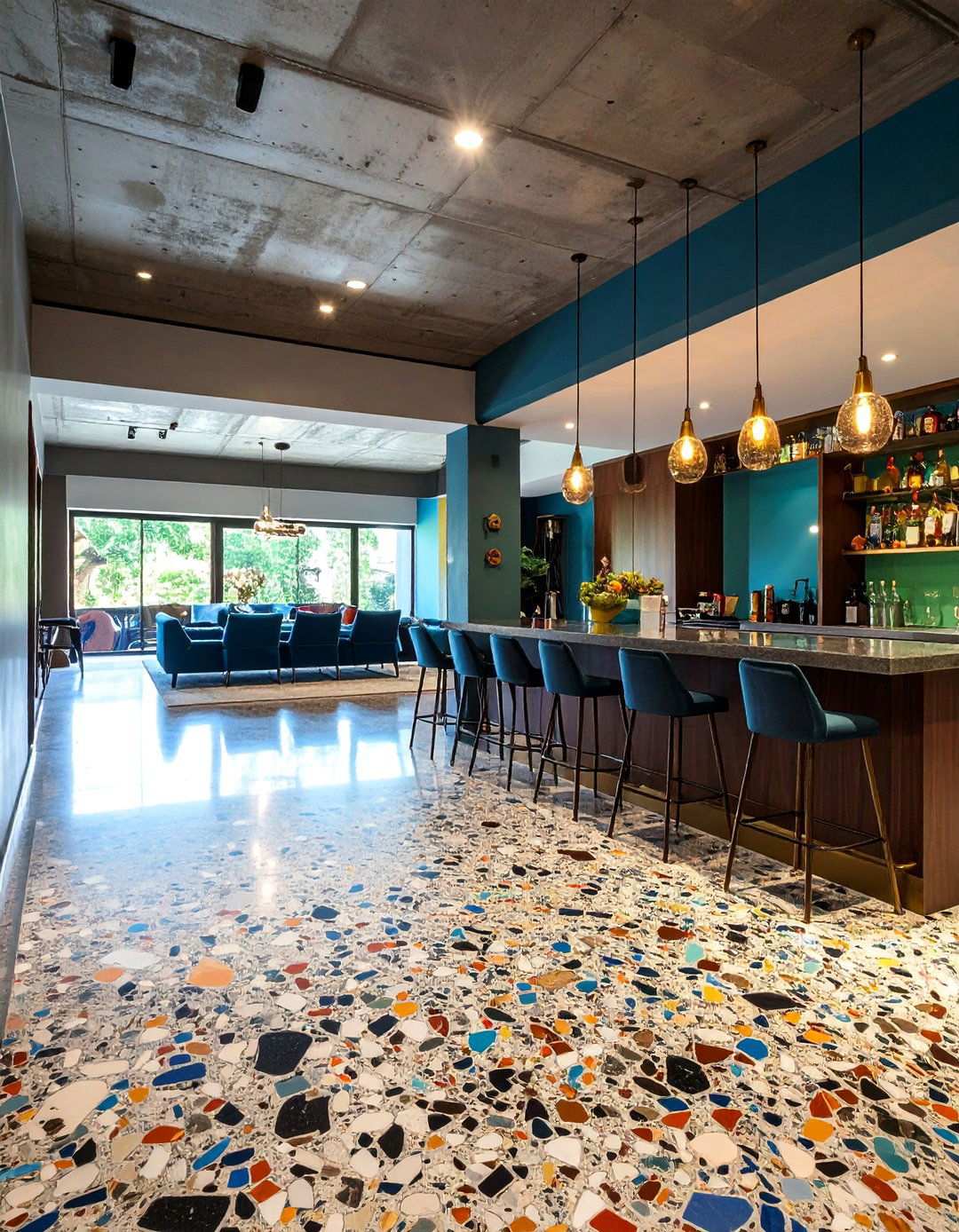
A terrazzo basement floor boasts a unique mosaic of marble chips locked in cement or epoxy, rendering it a functional work of art that can withstand the test of time. Properly sealed, terrazzo is remarkably resistant to stains and water damage, rendering basement humidity a minimal concern. Contractors pour the mix on-site, then grind, polish, and seal the surface, creating a seamless and easily maintainable slab. You can also embed brass divider strips to define zones – ideal for separating a bar area from a playroom without erecting walls. Although the initial investment is substantial, refinishing decades later can restore the original sheen at a fraction of the cost of a new installation, providing long-term budget savings.
15. Authentic Rustic Charm with Reclaimed Wood Flooring
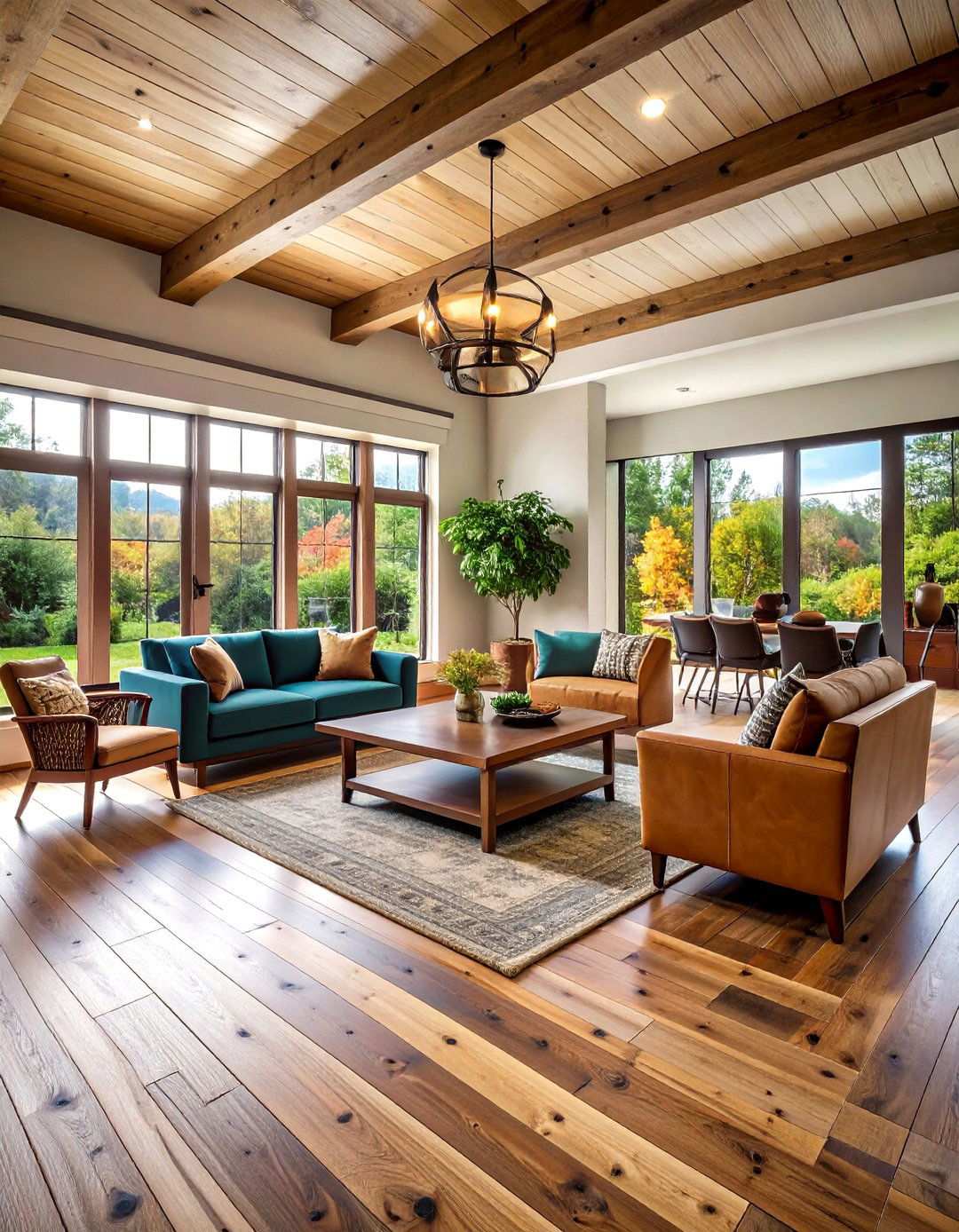
Despite the inherent challenges of moisture, a reclaimed-wood basement floor can infuse history and warmth when paired with modern safeguards. Boards salvaged from old barns arrive kiln-dried and milled with tongue-and-groove edges, yet their nail holes and saw kerfs remain intact, telling stories beneath your feet. Applying a fluid-applied vapor barrier to the slab first ensures a secure foundation, followed by gluing the planks down with elastomeric adhesive that accommodates seasonal movement. For added insurance, choose engineered reclaimed veneers on plywood cores. Finishing with hard-wax oil preserves the character rather than applying a plastic-looking polyurethane finish. Expect to pay more per square foot, but each scratch simply adds to the narrative.
16. Reinforced PVC Basement Floor: A Durable Solution for Workshops
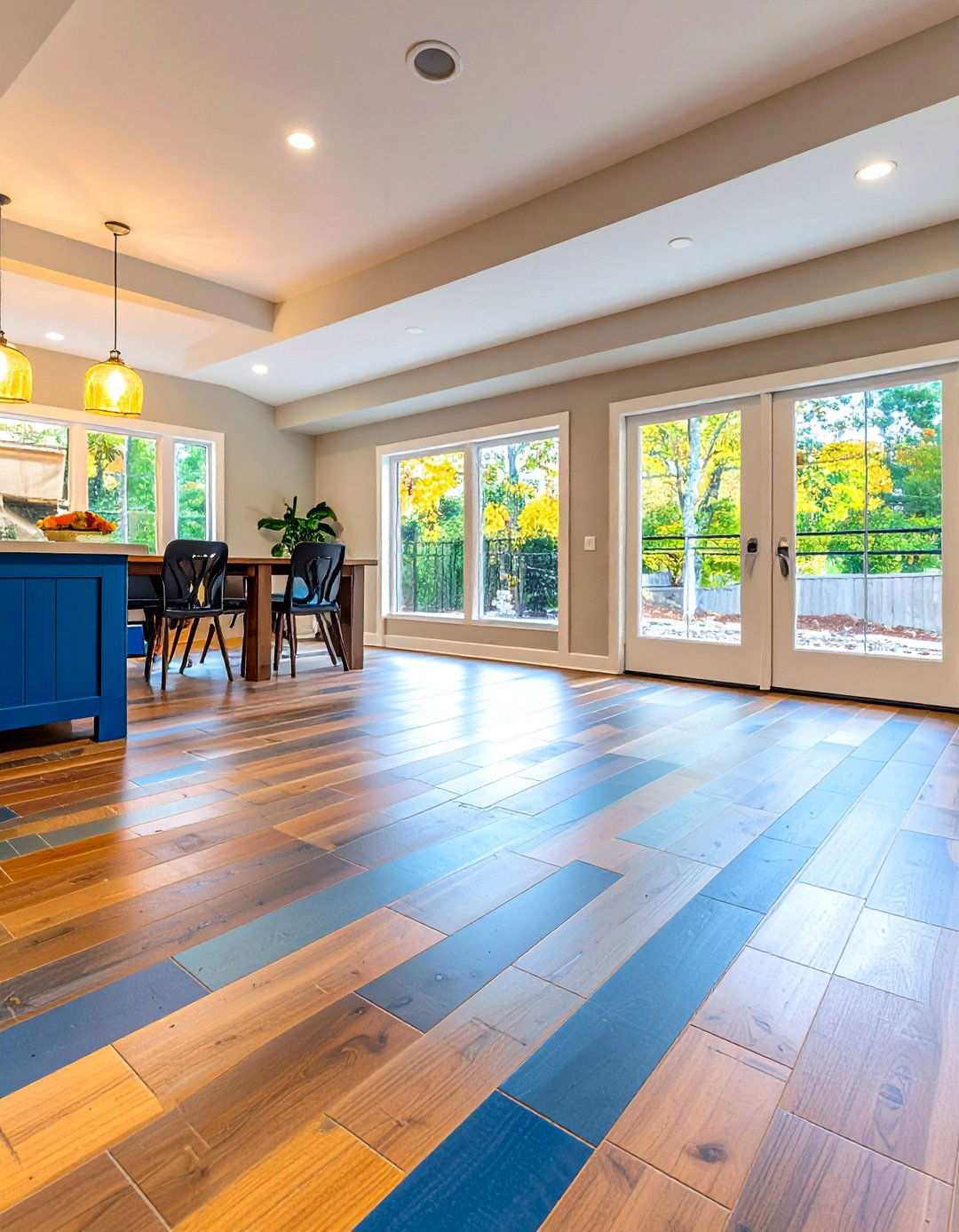
A basement floor that can withstand the rigors of a workshop or home gym is a must-have for many homeowners. An interlocking PVC basement floor delivers the necessary durability, featuring hidden dovetail or T-joints that click together with ease using a rubber mallet. This floating system allows for minor cracks in the slab to be concealed without the need for fasteners. The PVC material is not only flexible but also resistant to chemicals, making post-project cleanup a breeze. Furthermore, each tile is water-resistant, ensuring that any leaks remain on the surface until they’re wiped up with a mop. To enhance traction under wet conditions, choose raised-coin textures, and finish the edges with snap-on ramps for a seamless transition.
17. SPC Stone Composite Basement Floor: A Rigid Waterproof Solution
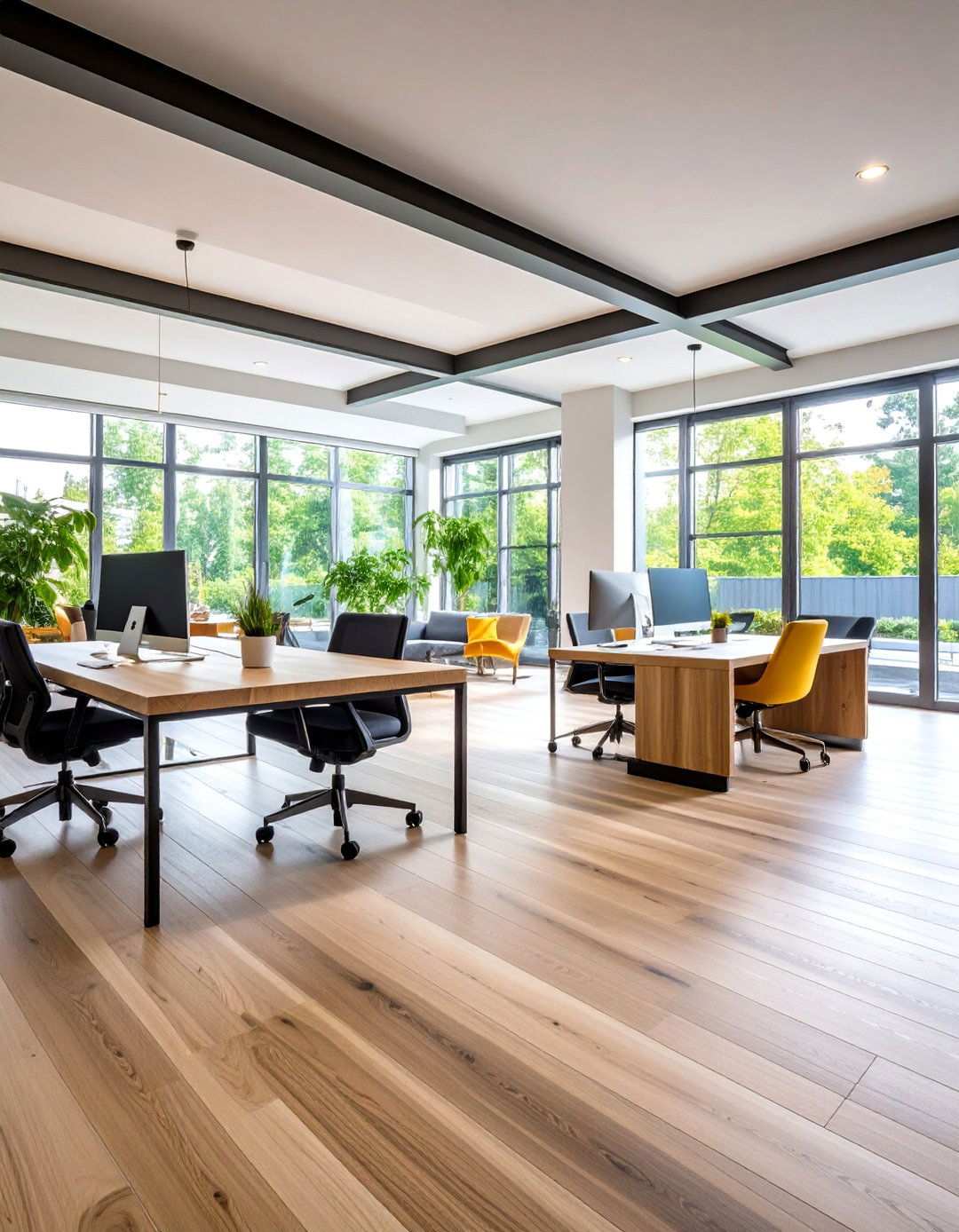
For those seeking a basement floor that combines the best qualities of tile and plank, an SPC stone-composite floor is an excellent choice. This innovative material features a rigid waterproof core, made by fusing limestone dust into the vinyl core, resulting in panels that remain ultra-stable despite exposure to sunlight from walk-out doors. The built-in IXPE foam underlayment effectively muffles echo, and the click edges come equipped with gaskets that prevent spills from seeping below. With wear layers up to 20 mil, SPC floors can withstand the rigors of desk chairs and free weights, and they can even be cut with a simple jigsaw. If you plan to install heated floors, SPC’s thin profile will allow for efficient warmth conduction; just make sure to verify the product’s maximum temperature rating to ensure longevity.
18. Checkerboard Painted Basement Floor: A Timeless Design Element
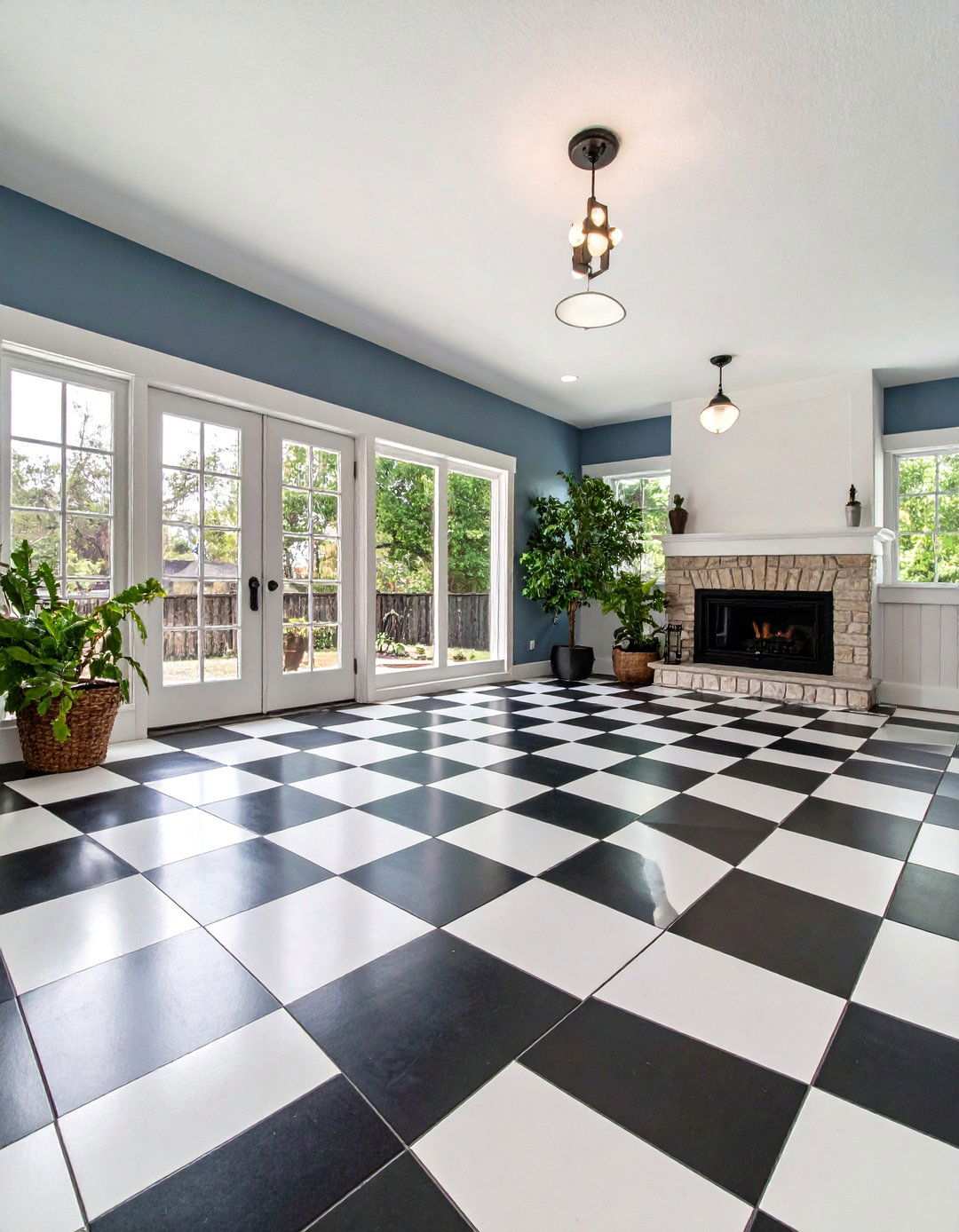
A checkerboard painted basement floor is an effective way to add visual interest to a windowless rec room. To create this design, start by priming the concrete and then apply one base color using a roller. Snap chalk lines to create a grid and mask alternating squares with low-tack tape or a laser-cut stencil. Choose contrasting satin porch paints for a visually appealing effect that still cleans easily. The high-contrast grid will reflect overhead LEDs, brightening up corners that may have previously felt cave-like. To ensure the design lasts for years to come, apply two coats of water-based polyurethane and wait a full week before placing furniture. If you decide to change the look in the future, simply scuff-sand the surface and repaint over it – no messy tile removal required.
19. Concrete Microtopping Basement Floor: A Flexible and Versatile Finish
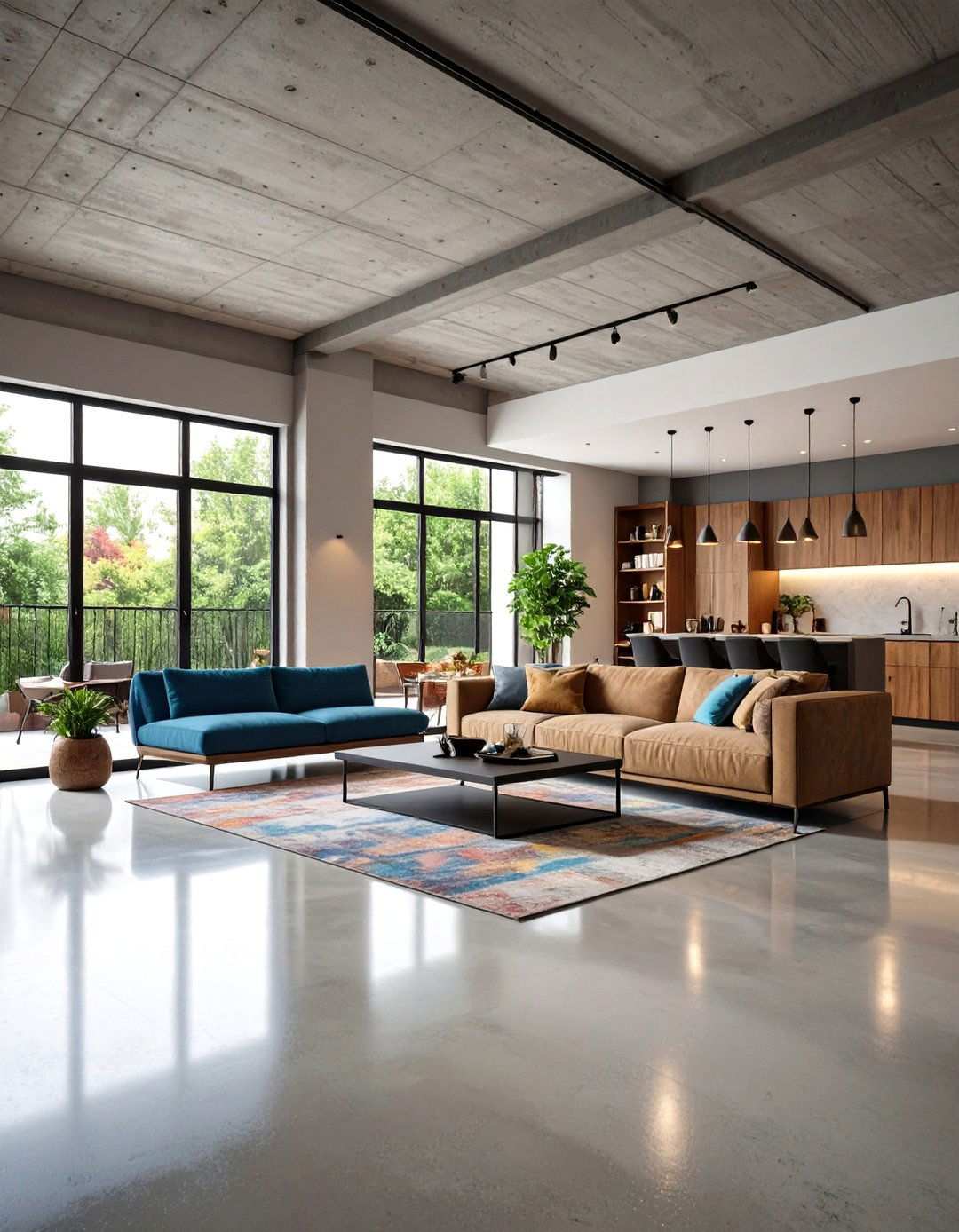
When structural cracks or mismatched patches have compromised the aesthetics of your basement floor, a concrete microtopping can provide a fresh, seamless canvas. This credit-card thin layer of polymer-modified cement skim coats the slab at a thickness of 1–3 mm, bonding tightly to even old adhesive residues. Once cured, the surface can be burnished to a satin finish, acid-stained for a variegated color scheme, or sealed with matte polyurethane for a minimalist loft vibe. The microtopping’s flexibility allows it to absorb minor movements, concealing hairline cracks for longer than rigid tiles. To ensure a smooth finish, maintain a dust-free environment during application and keep the surface clean with regular sweeping and occasional pH-neutral mopping.
Transformed Basement Space: Artificial Turf for Sports and Play
A basement conversion project can now transform unused square footage into an all-weather sports zone or a vibrant play area with the installation of an artificial-turf basement floor. This innovative space offers a versatile area for various activities, including yoga, mini-soccer drills, and other sports. The artificial turf’s built-in foam padding provides a cushion for falls, absorbs sound, and invites a variety of equipment, such as yoga mats or mini-soccer goals. Installation is also hassle-free, relying on double-sided tape along perimeter walls, although high-impact gyms may opt for gluing seams for added security. The bright green pile not only adds a pop of color but also bounces light and effectively conceals utility pipes, making the space feel less confined. Maintenance is also a breeze, requiring only occasional vacuuming to keep fibers fluffy and the use of enzyme cleaner to tackle sweaty-sneaker odors. If the space ever needs to be reverted, most artificial turf can be lifted without leaving any residue, allowing for reuse outdoors as a putting green.