1. Elevating Your Basement Gym with Impact-Resistant Flooring
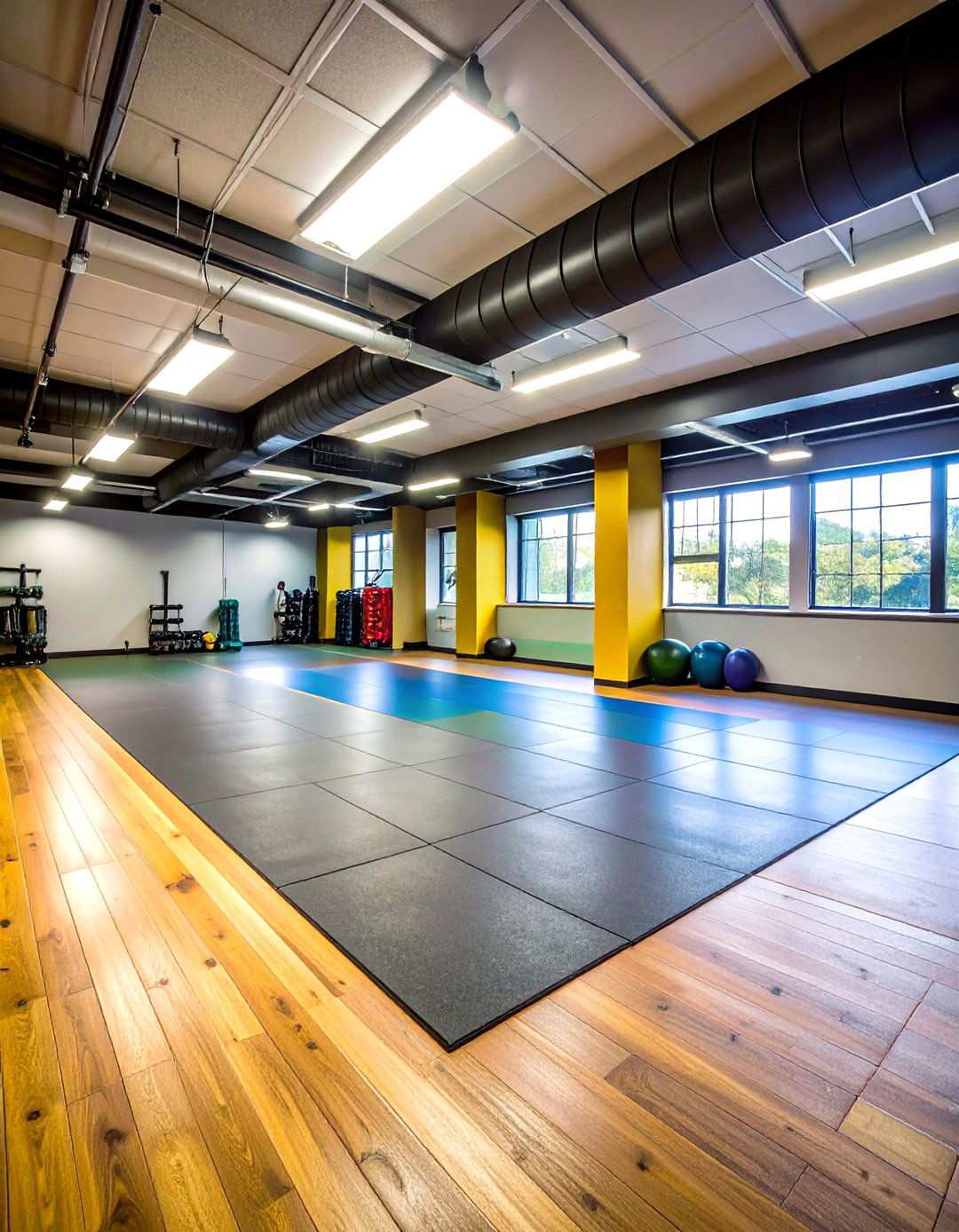
A well-designed basement gym relies heavily on a floor that can withstand the rigors of intense workouts, providing a safe and durable surface for users. According to experts, rubber flooring stands out as a top choice for its ability to absorb shock, reduce noise, and protect the underlying concrete slab. Specifically, rubber tiles or rolls with a thickness of at least 3/8 inch offer exceptional durability and joint protection, making them an ideal option for basement gyms. Moreover, rubber flooring can withstand dropped weights better than foam, providing sufficient traction for plyometric exercises—a benefit that professional installers emphasize in their notes on fatigue reduction. For heavy Olympic lifting, consider double-layering rubber over a plywood platform, a combination that has been shown to limit barbell bounce and spare the flooring from damage. To ensure smooth movement in and out, finish the edges with beveled transition strips, and keep the area clean by frequently vacuuming crumbs, which can accumulate quickly due to rubber’s grippy texture, trapping chalk dust fast.
2. Creating a Breathable Basement Gym Environment with Effective Ventilation and Humidity Control

Even in the cooler environment of a basement gym, stale air and excess moisture can still become a concern during intense workouts. Fitness equipment suppliers recommend pairing an oscillating fan with a dehumidifier that can handle spaces around 800 ft², maintaining a relative humidity level of 50 %. Laboratory tests have confirmed that this range is sufficient to prevent mold growth while preserving metal plates from flash rust. If possible, consider adding a small-duct energy-recovery ventilator (ERV) to the ceiling, which can pull in fresh outdoor air and exhaust CO₂-rich indoor air on a timed schedule, ensuring that users never have to endure a stuffy environment during their workouts.

As an Amazon Associate I earn from qualifying purchases.
3. Elevating the Ambiance with Layered LED Lighting
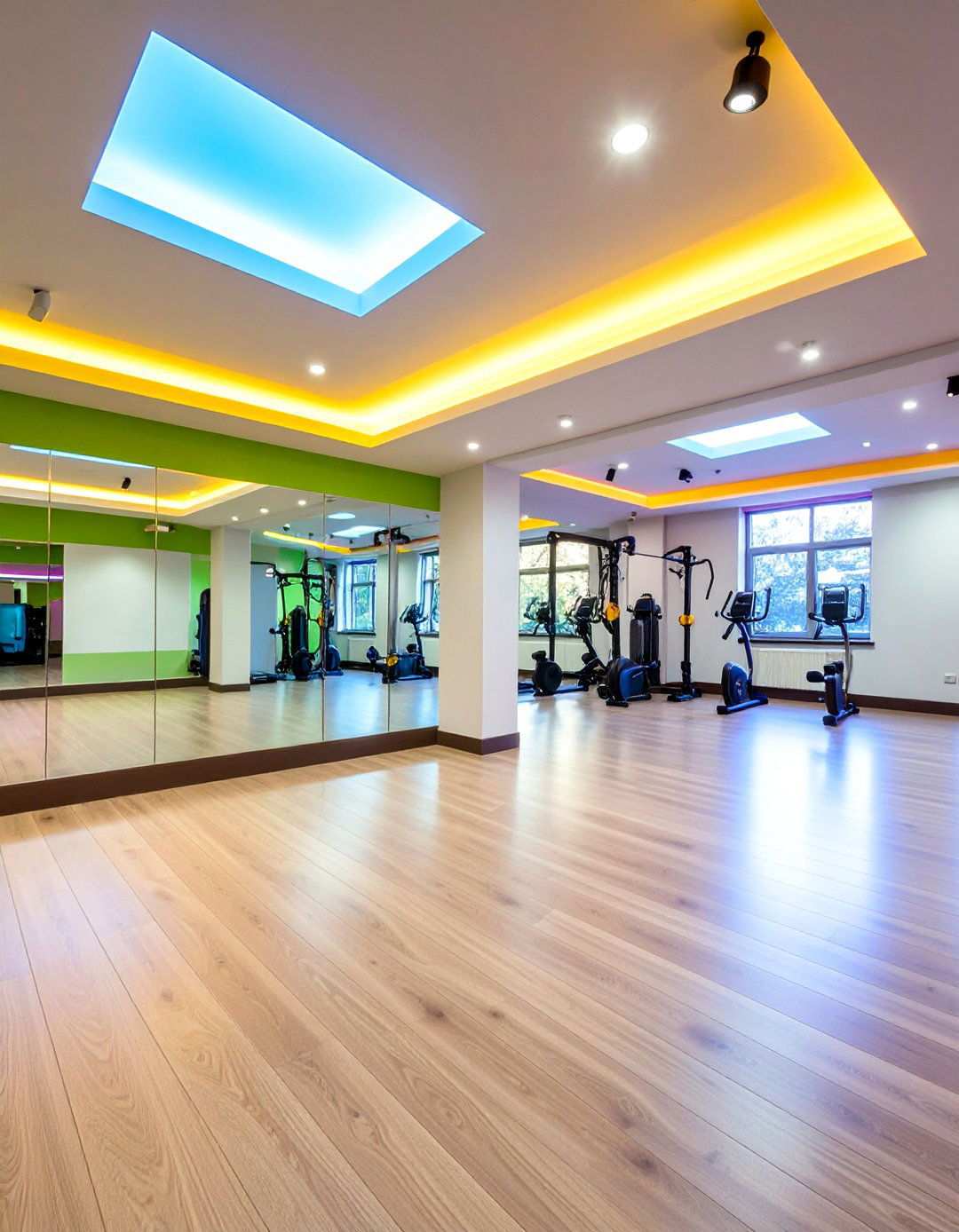
In basements, natural light is scarce, making the choice of lighting critical. To create a well-lit and inviting space, consider a multi-layered approach, combining bright 4000 K LEDs in recessed cans, dimmable strips around mirrors, and color-tunable accents behind equipment. This carefully calibrated strategy not only provides optimal illumination but also enhances the overall aesthetic appeal of the basement gym. By incorporating reflective white walls and a simple satin ceiling finish, the space becomes more welcoming, and the low ceiling feels less oppressive. The addition of motion sensors ensures that lights are turned off between sessions, resulting in energy savings and a more sustainable space.
4. Minimizing Noise Pollution with Effective Soundproofing
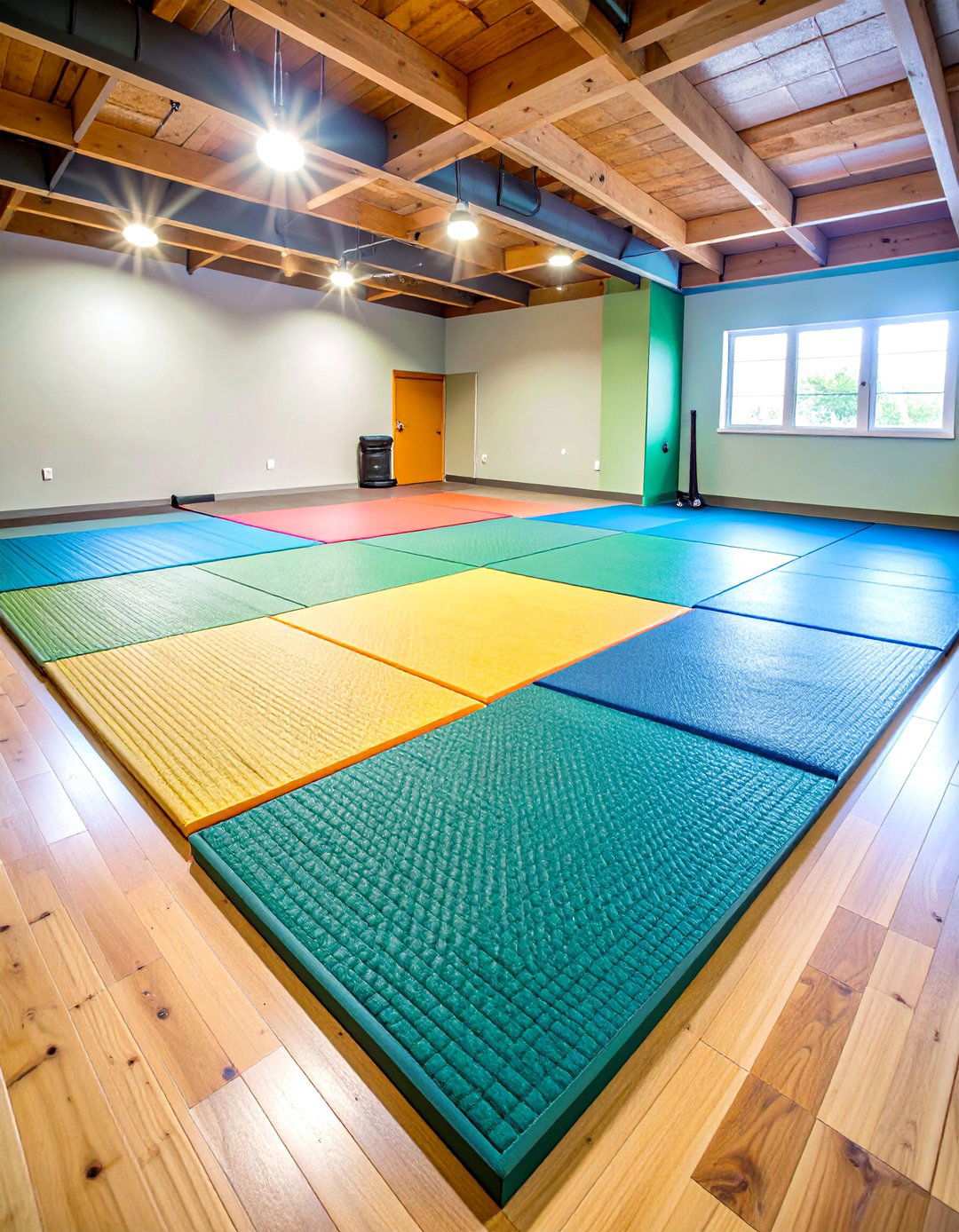
Echoes and vibrations can be a nuisance in basement gyms, disturbing household members above. To mitigate this issue, consider layering 8 mm rubber over a ¾-inch subfloor, followed by dense crash pads over high-impact zones. This dual-layer protection significantly reduces noise transmission. For cardio machines, installing anti-vibration risers under each foot can further reduce decibel levels by 25-30% during intense workouts. In cases where family rooms are directly above, incorporating mineral-wool batts between joists and resilient channels into the ceiling before finishing with drywall can prevent structure-borne vibration from turning your workout into a disturbance.
5. Expanding Sightlines with Safety Mirrors
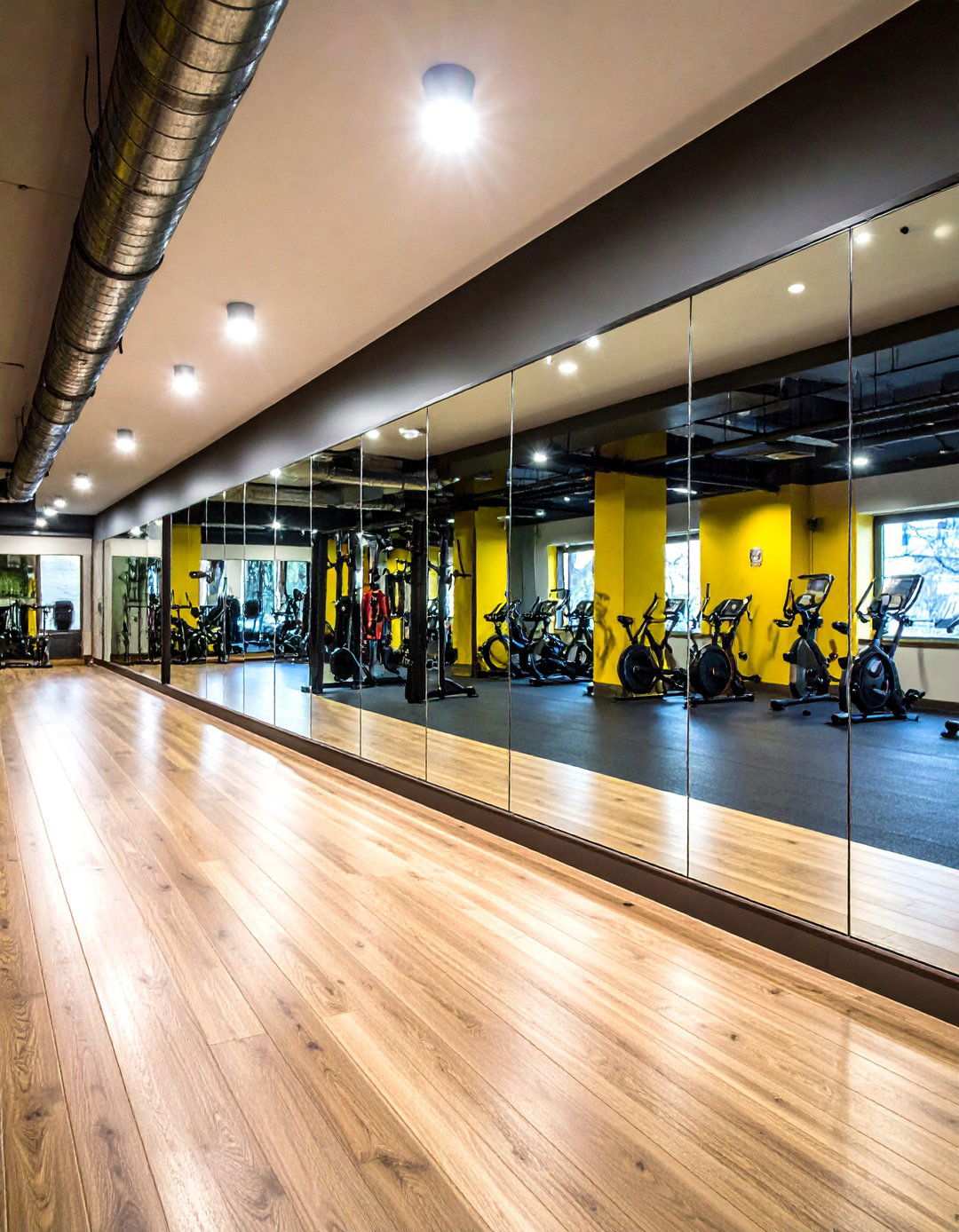
Fitness-grade glass mirrors that span at least six feet high provide immediate technique feedback and visually double the space in a basement gym. Glass experts recommend mounting mirrors on a stud-backed wall opposite the primary lifting lane, leaving a four-inch gap above the floor to prevent dropped dumbbells from cracking the glass. To create the illusion of more space, consider placing mirrors to reflect a window or a narrow window well, effectively multiplying natural light and preventing the space from feeling claustrophobic. Using J-channel tracks instead of adhesive allows for easy replacement should a plate ever glance the glass.
6. Maximizing Space with Fold-Away Cardio Machines
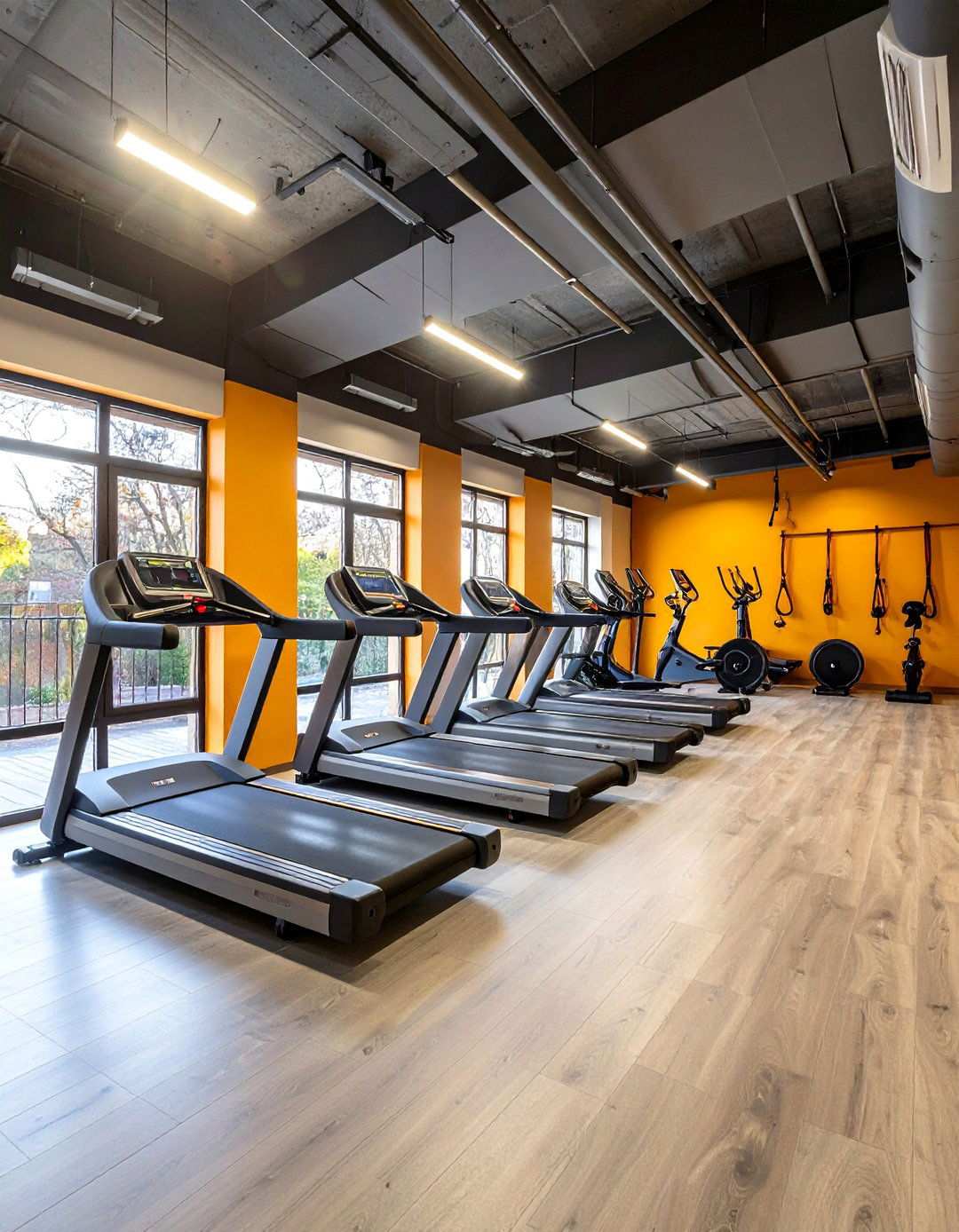
Compact treadmills, rowers, and bikes now fold flat against a wall or roll beneath shelving, enabling a basement gym to quickly transition from conditioning to strength work. When selecting models, consider the footprint both in use and stowed, and look for hydraulic assists that lower decks slowly, essential on concrete floors where sudden drops can damage components. Mounting a simple wall hook for resistance bands nearby ensures that warm-ups remain easy, even after the machine is folded away.
7. Elevate Your Home Workout Experience with Smart Technology Integration
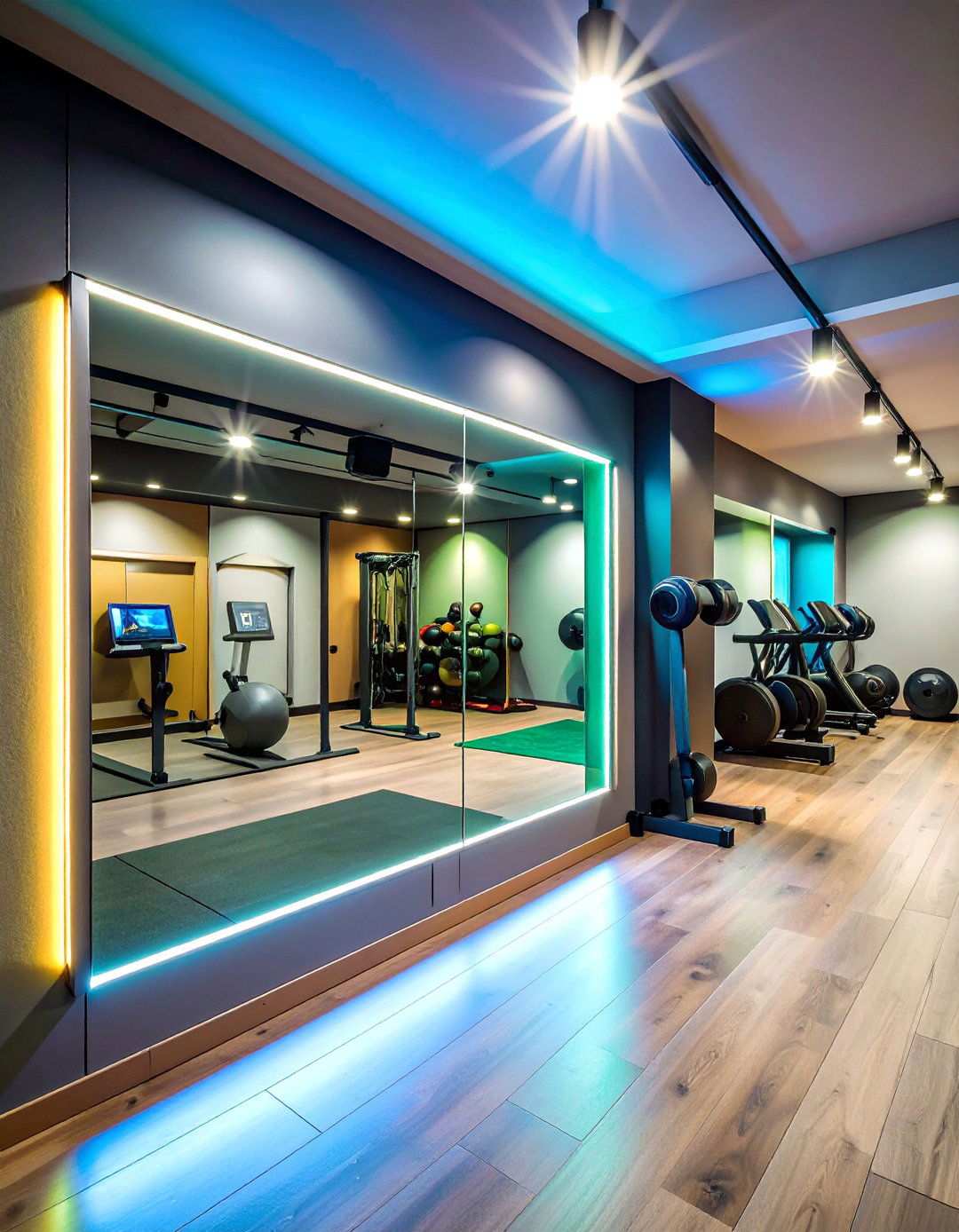
Interactive fitness mirrors and smart app-linked racks revolutionize home workouts by providing on-screen feedback, heart-rate integration, and leaderboards without compromising valuable space. Testers rave about the latest models that seamlessly recess into the wall, while incorporating Bluetooth soundbars for an immersive audio experience during classes. Position the screen to create a clear workout lane, ensuring exercises like lunges and burpees remain in view, and hard-wire the unit to eliminate Wi-Fi lags during live coaching sessions.
8. Optimize Your Basement Gym's Storage Capacity with Wall-Mounted Racks
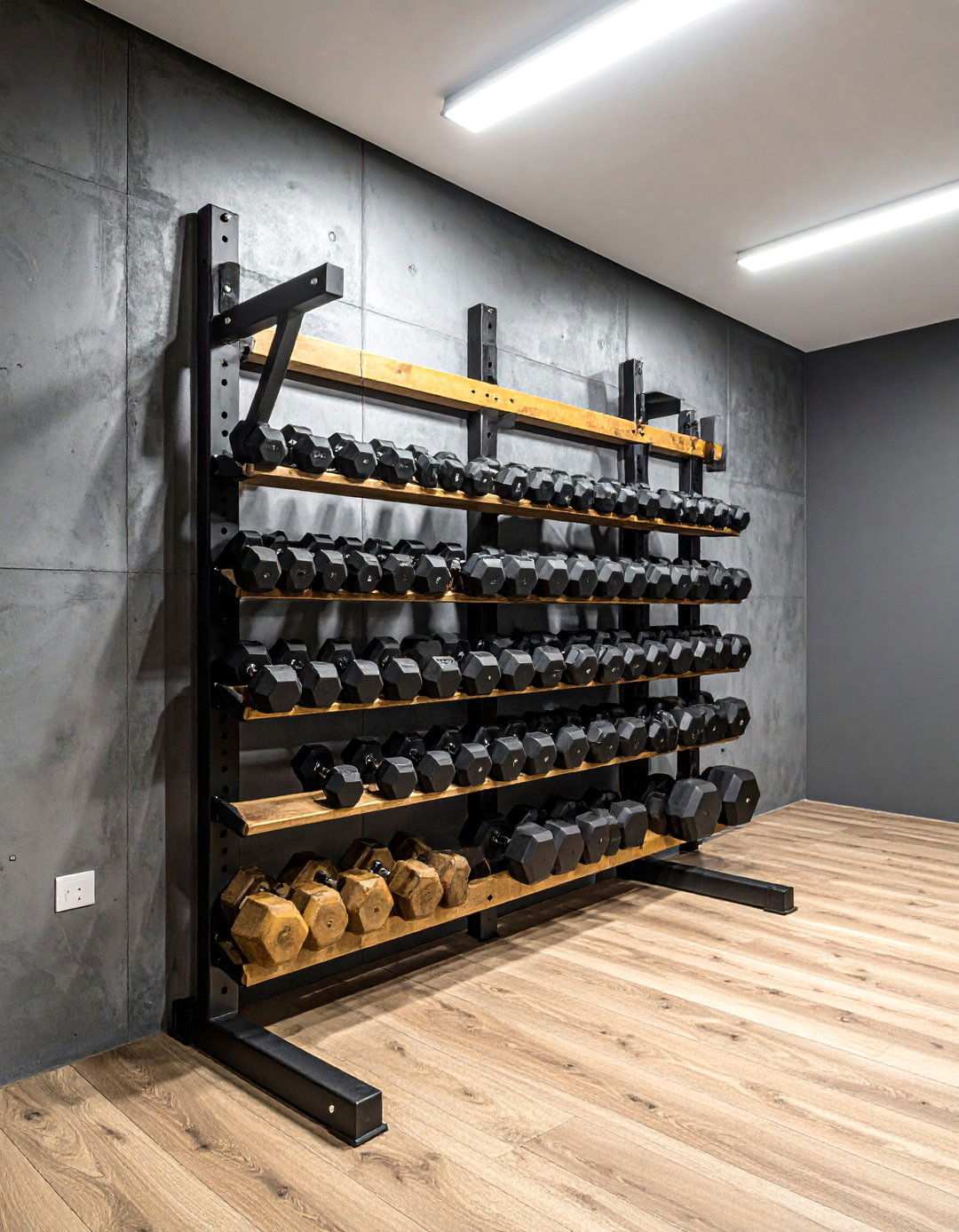
Vertical storage solutions transform bare foundation walls into organized displays of equipment. Reviews of heavy-duty steel shelving demonstrate that wall-mount dumbbell racks can support up to 500 lb while collapsing to a mere four inches when empty. Home trainees who have installed slat walls report streamlined cleanup, effortless vacuuming, and reduced tripping hazards on lift days. To ensure stability, install rack screws into blocking or masonry anchors rated for twice the loaded weight, safeguarding brittle block foundations from damage.
9. Build a Strong Foundation for Your Home Gym with a Power Rack & Anchored Pull-Up Bar
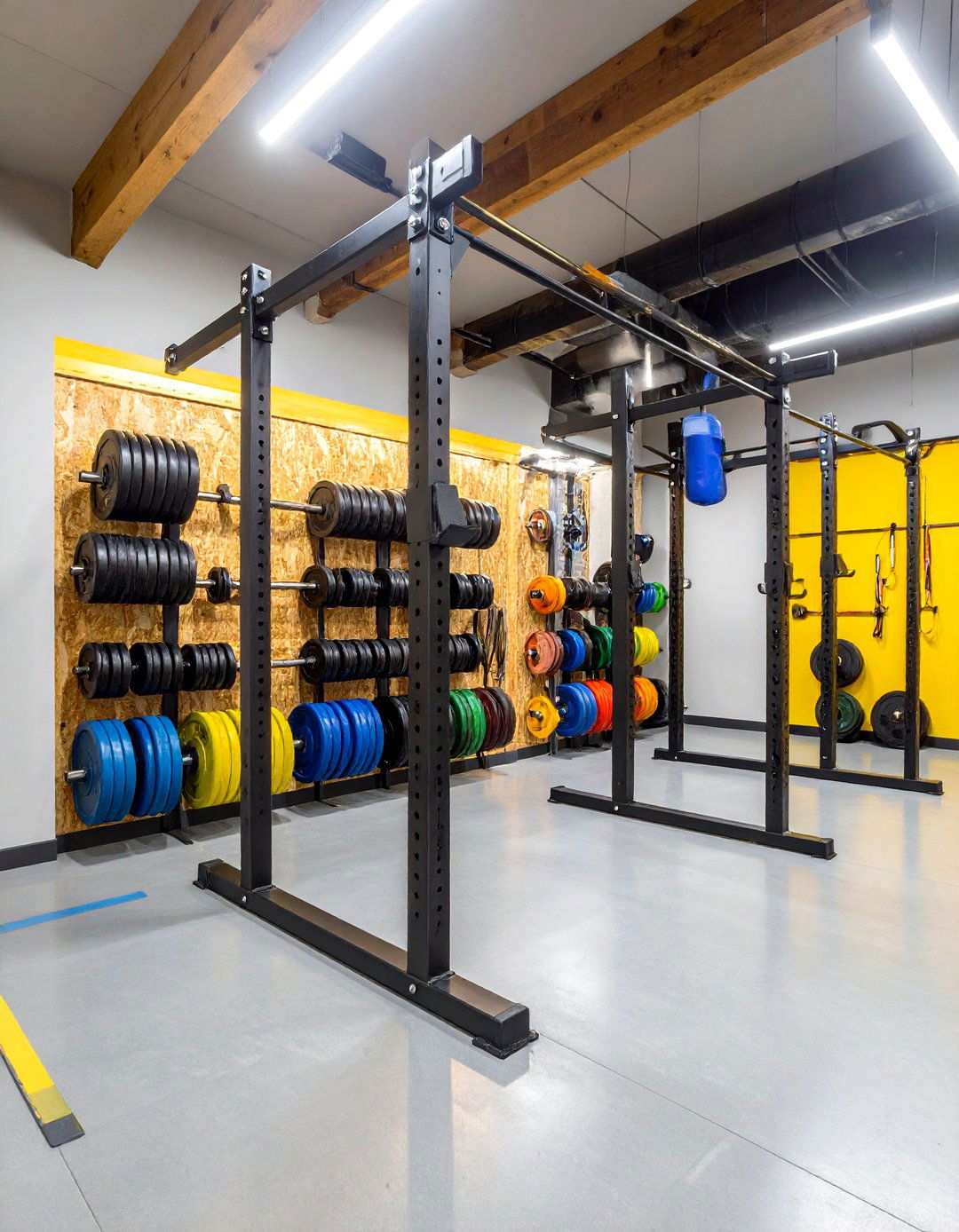
A sturdy rack with an integrated pull-up bar offers a multifunctional workout space, accommodating squats, presses, and suspension moves in a compact footprint. Seasoned installers recommend lagging 2 × 4 blocking horizontally across studs before bolting the bar into that beam for enhanced load distribution, which is particularly crucial for dynamic kipping movements. Space-saving folding power racks with swing-up designs conserve aisle space while still supporting over 1000 lb when open, ideal for basements with narrow access stairs. Adding spotter arms and numbered uprights streamlines adjustments between users.
10. Ignite Your Workout Motivation with a Vibrant Paint Palette
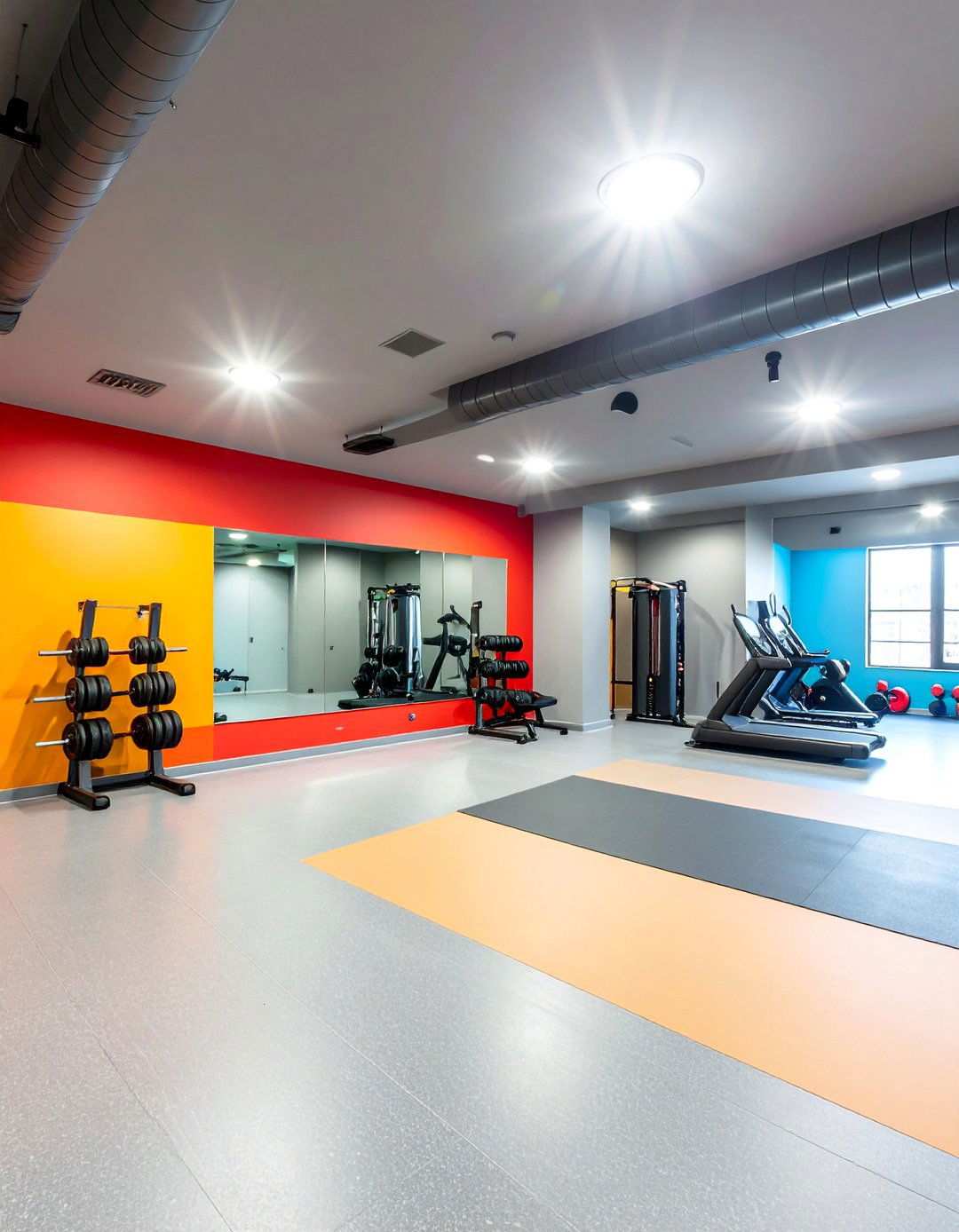
Research in color psychology reveals that warm reds and oranges boost perceived energy during high-intensity intervals, while cooler greens and blues calm the nervous system for yoga or recovery work. Designers favor pairing a neutral gray base with a single vivid accent wall to create an engaging yet balanced atmosphere in windowless basements. Low-VOC paints in a satin finish reflect LED light evenly and wipe clean after chalky workouts, and professionals recommend testing swatches under your actual gym lighting before committing to a specific hue.
11. Visualize Your Progress with a Chalkboard or Whiteboard Wall
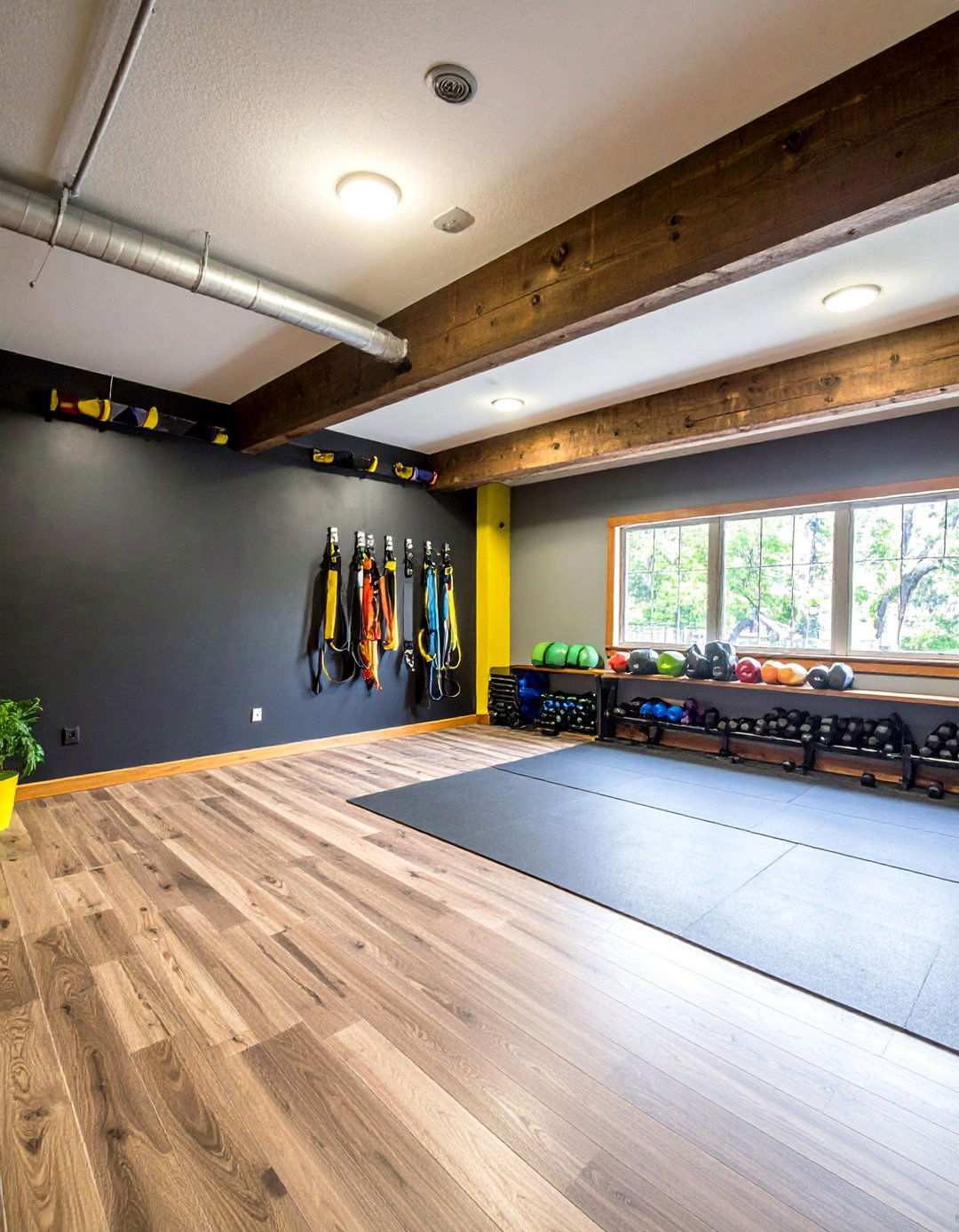
Tracking your goals visually boosts consistency, and small-space gym makeovers showcase entire chalkboard walls used for WOD lists, PR charts, and mobility reminders. Choose moisture-resistant board paint to withstand humidity swings without peeling, and frame the border with simple pine trim to catch stray chalk dust. Erasing yesterday’s numbers and writing new targets becomes a motivational ritual that keeps you engaged and focused on your fitness goals.
12. Zoned Layout Optimizes Efficiency in Basement Gyms
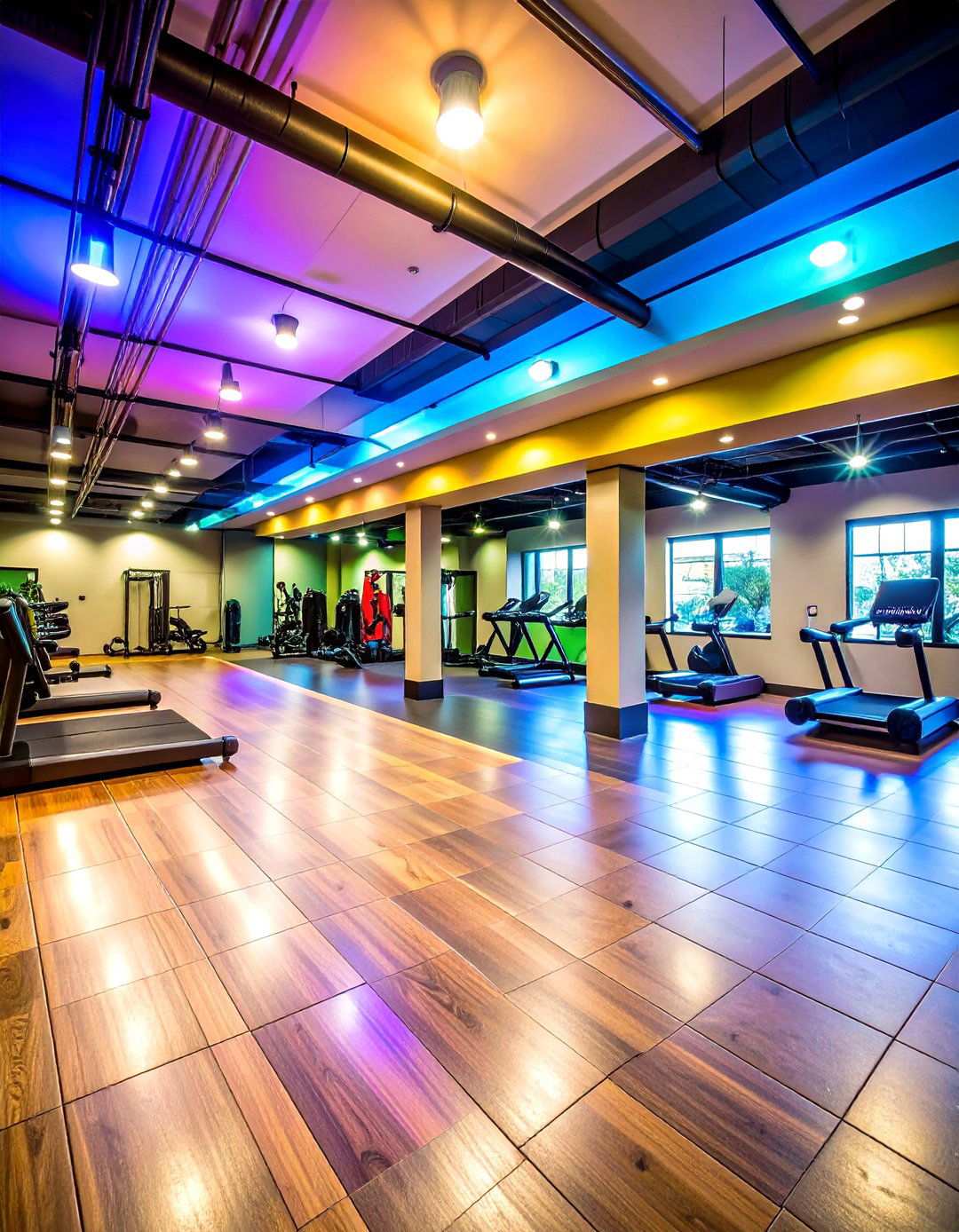
A well-planned layout is crucial for maximizing space in a 12 × 20-foot basement gym. By separating cardio, strength, and stretch areas, congestion can be minimized, even in smaller workout spaces. According to design experts, zones can be distinguished with contrasting floor tiles or a change in ceiling-mounted lighting color, which helps the mind intuitively switch modes. To prevent post-workout dizziness, consider placing the recovery corner nearest the door, as cool-downs can be done before climbing stairs.
13. Personalized Backdrops Boost Motivation in Basement Gyms
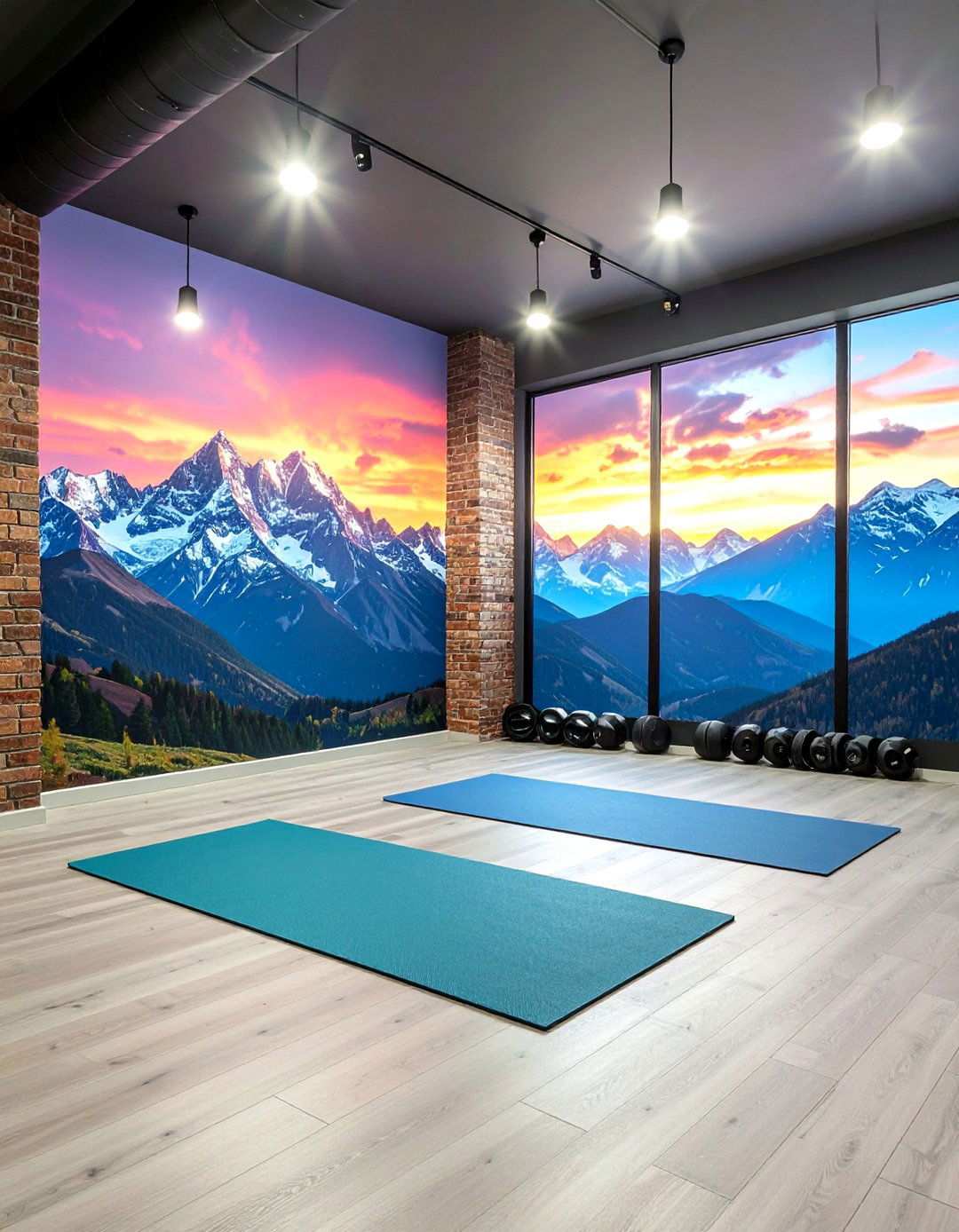
A single supersized decal can transform a dull basement gym into a motivating space. Users report that a large, eye-catching image – whether it’s a mountain vista or a favorite mantra – can be a game-changer. Peel-and-stick vinyl decals are a great option, as they withstand sweat better than framed posters. To make the image pop, consider adding LED uplights at the base, which don’t require a high ceiling. Ensure that any adhesive used is rated for masonry so it won’t peel under humidity.
14. Heavy-Duty Zones Protect Basement Gyms and Surrounding Spaces
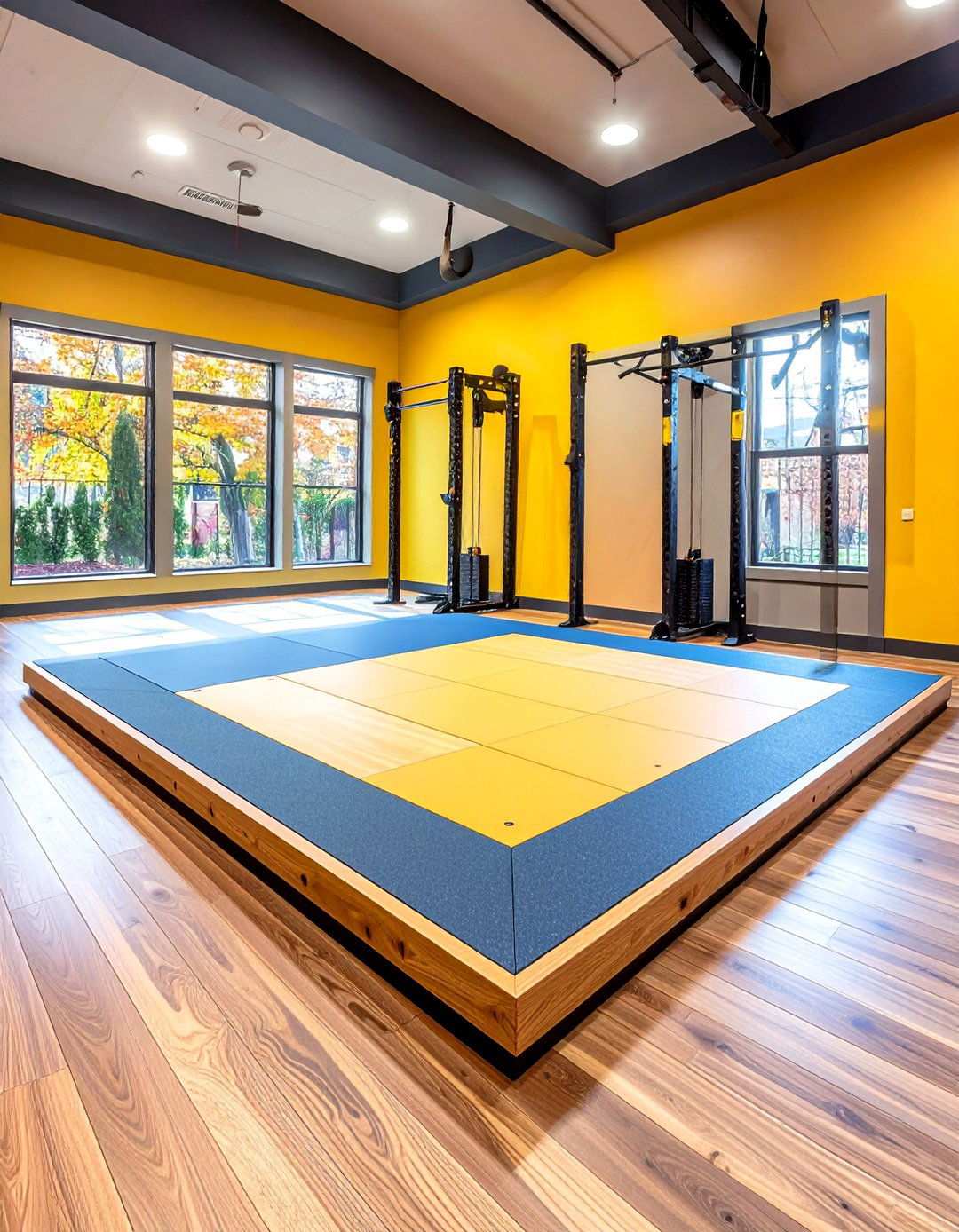
If you perform heavy lifts like cleans or snatches, it’s essential to isolate a heavy-lift zone. A plywood-and-rubber platform recessed into thicker shock pads can significantly reduce rebound and vibration, protecting both the basement gym and surrounding spaces. Impact studies have shown that this type of setup can make a significant difference. Budget-friendly upgrades, such as recycled stall mats, can also extend the life of barbell sleeves and guard the concrete slab beneath.
15. Suspension Trainers Offer Full-Body Workouts in Compact Spaces
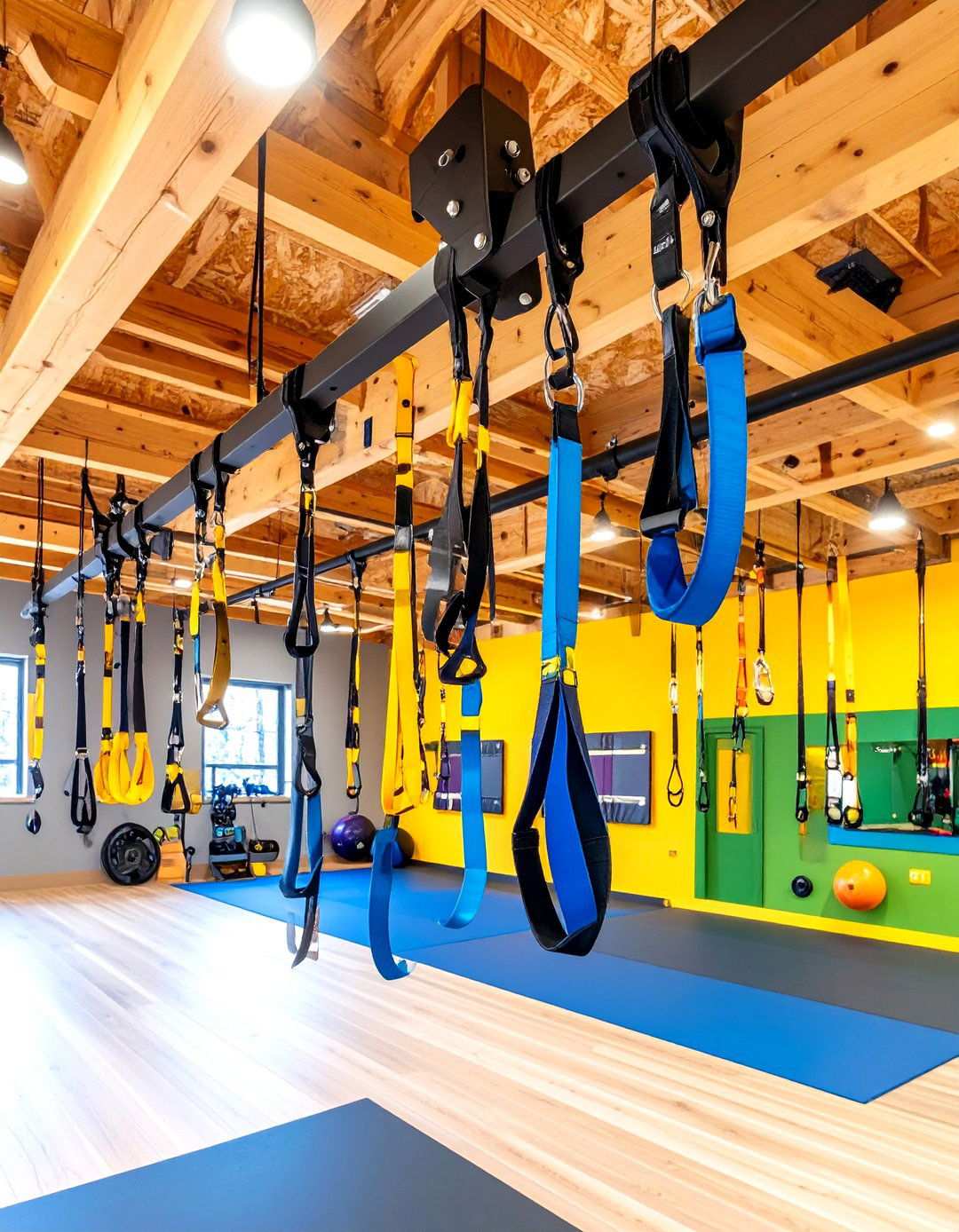
A simple ceiling-mounted eye bolt rated for 400+ lb can open up hundreds of body-weight movements, eliminating the need for bulky machines. Compact-gym guides recommend anchoring the suspension trainer beside the pull-up bar, allowing straps to tuck away after use and keeping the basement gym floor clear. Before installation, it’s crucial to verify joist direction and use a through-bolt with a backing plate to prevent pull-out during explosive moves.
16. Discreet Audio Systems Maintain Focus without Disturbing Households
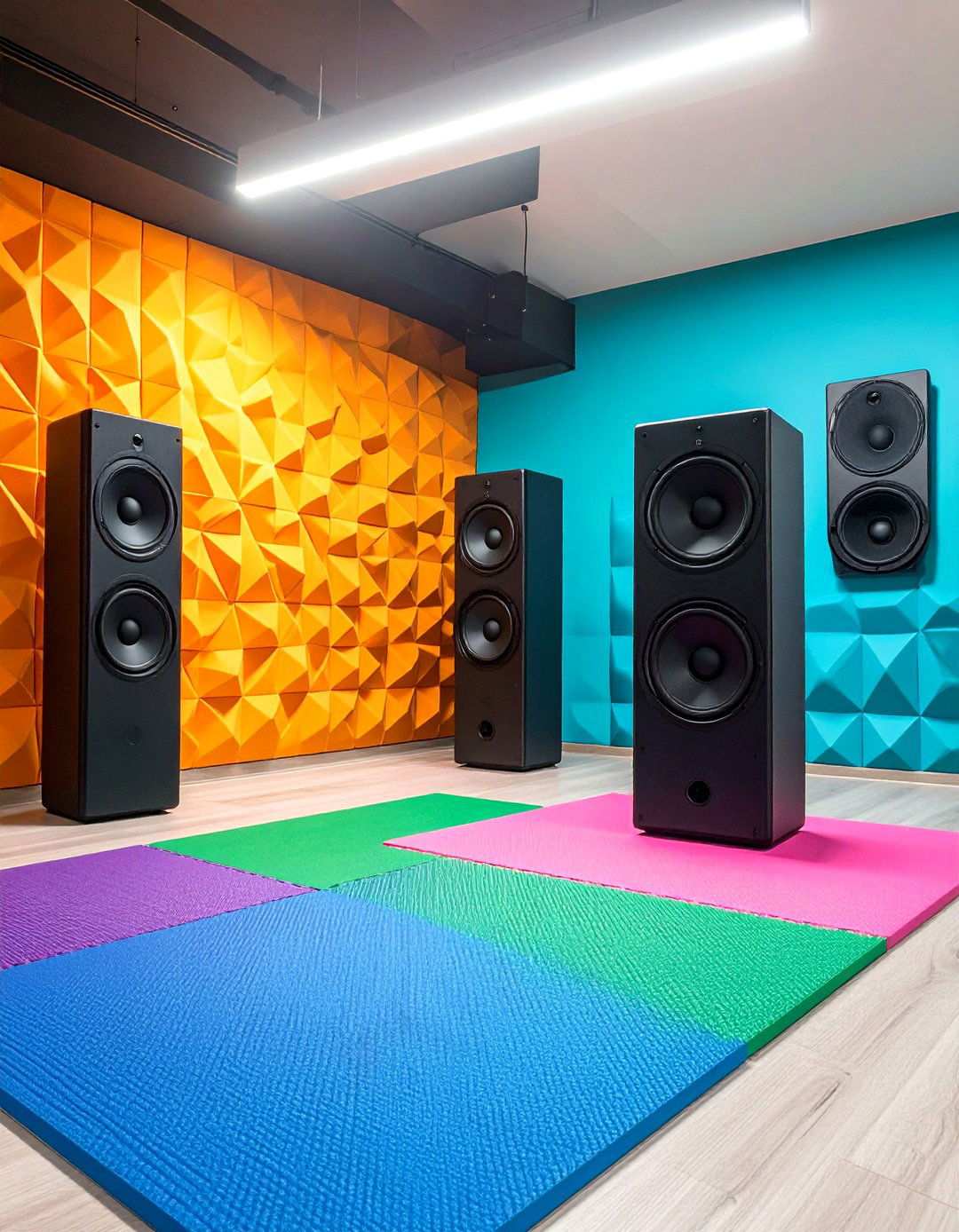
Lifters on noise-sensitive floors can benefit from placing slim Bluetooth speakers in ceiling corners, streaming playlists at lower overall decibels. This approach avoids the echo created by floor-standing units and maintains a peaceful environment. To enhance sound quality and add a decorative touch, consider foam acoustic panels behind the speakers, which can be cut into geometric shapes that match your color palette.
17. Climate Control Systems Keep Basement Gyms Airy and Refreshing
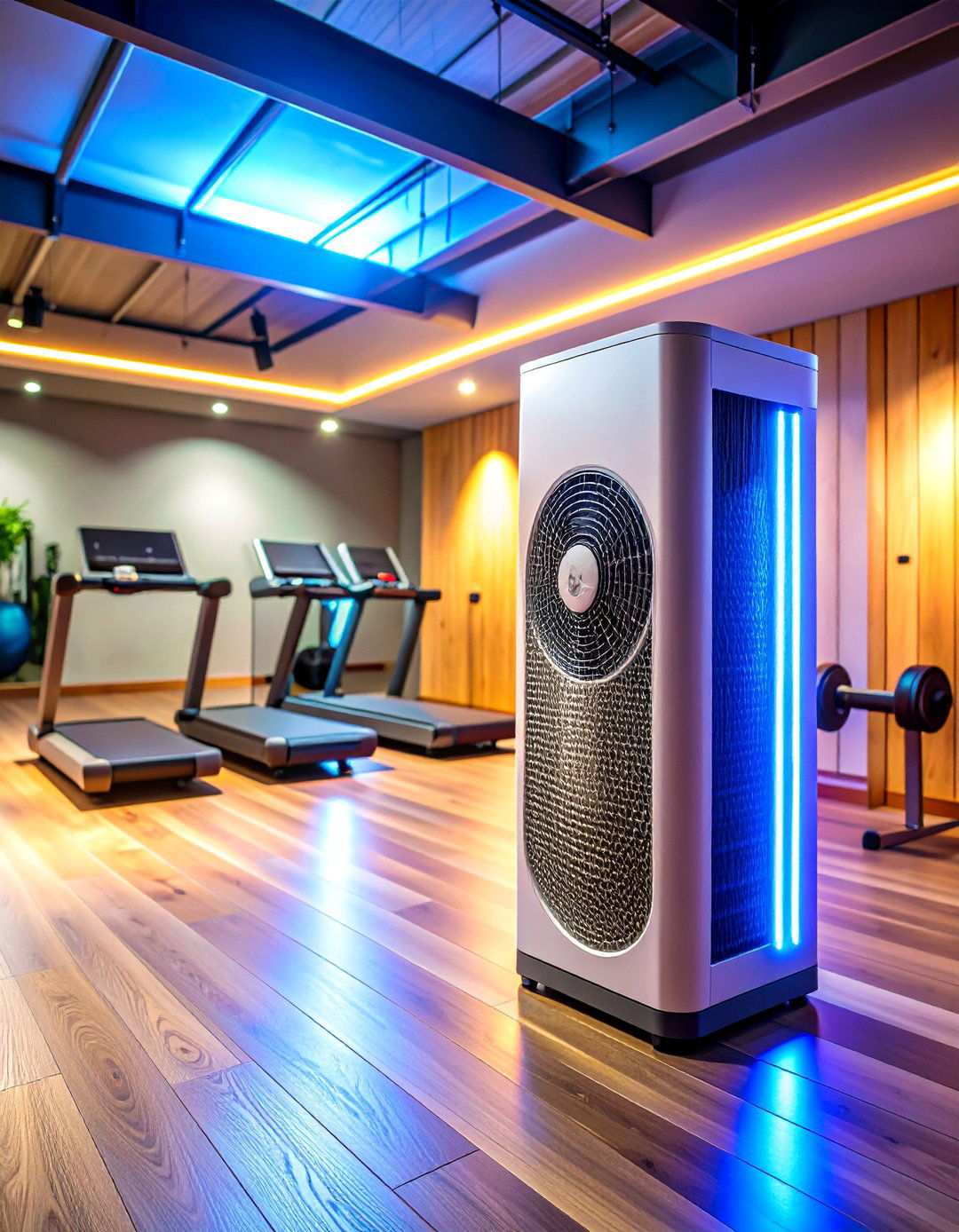
Rotating fans aimed diagonally across the workout lane can disrupt stagnant air, while HEPA purifiers can nab chalk dust before it settles on plates. Appliance testers note that purifiers with washable pre-filters excel in basements, where concrete fines often drift in through cracks. To optimize airflow, place sensors at shoulder height – the zone where you breathe hardest – to auto-adjust fan speed and keep the air crisp.
18. Transforming Window Wells and Light Tubes into a Basement Gym Oasis
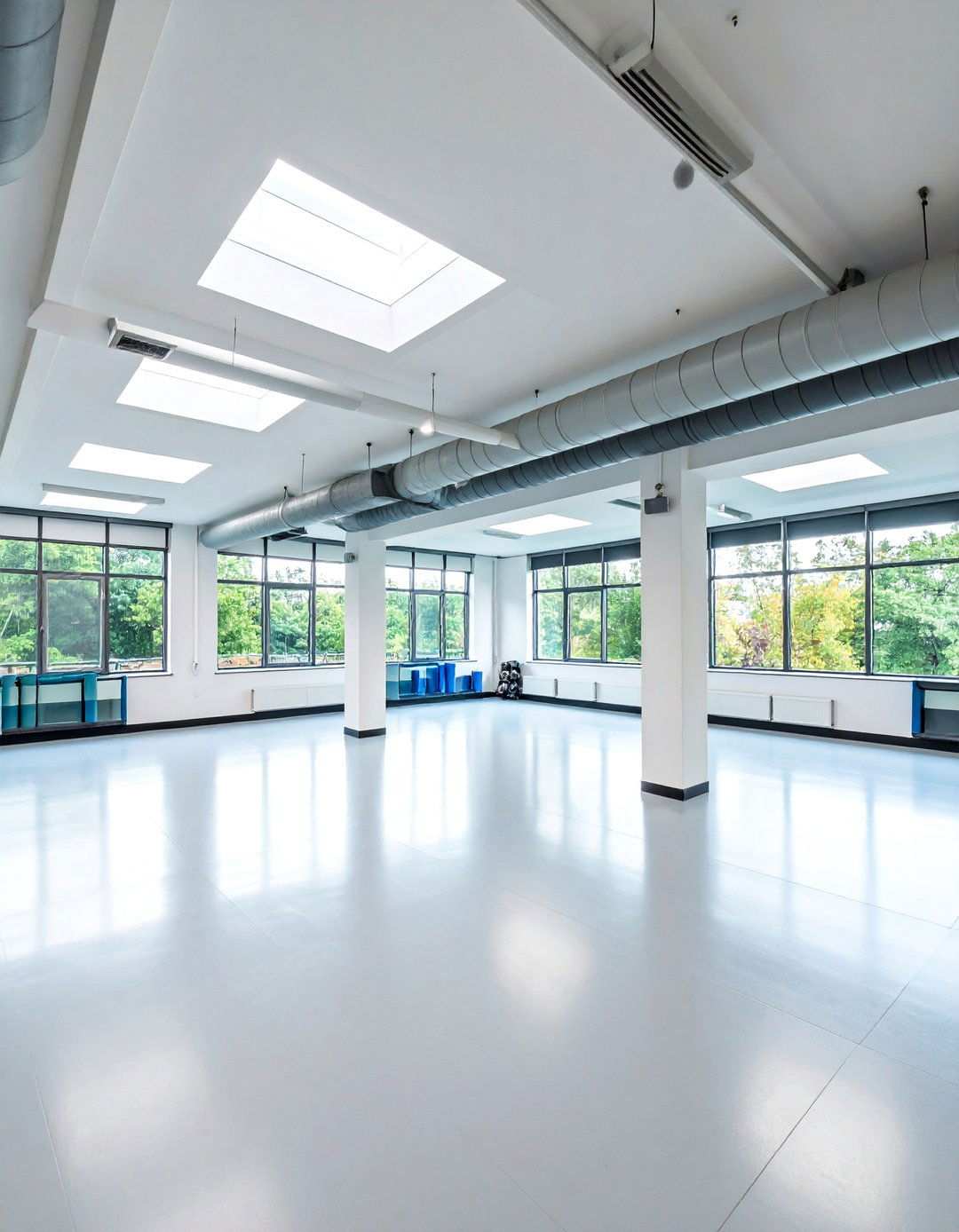
Natural light has a profound impact on our mood and circadian rhythm. By enlarging window wells and painting their walls a crisp white, designers can effectively bounce sunlight deeper into a basement gym, creating a more uplifting atmosphere. To further enhance this effect, consider installing affordable tubular skylights that channel outside light through reflective ducts, illuminating even the darkest corners. This can be complemented with blackout shades for screen-based workouts that require a more controlled lighting environment.
19. Modular Kettlebell and Dumbbell Systems Revolutionize Basement Gym Design
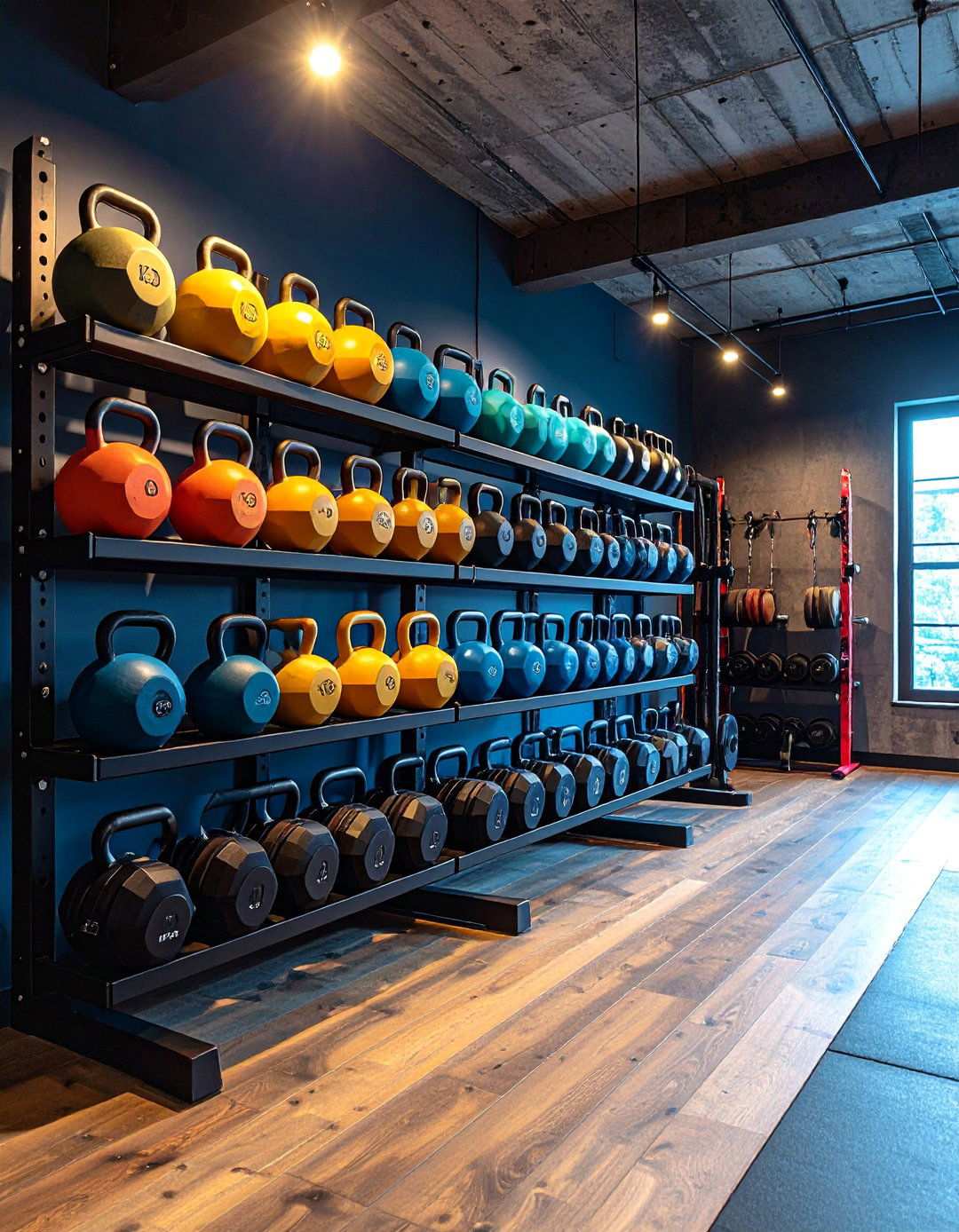
The versatility of a modular dumbbell system is unparalleled. Adjustable dumbbells that click from 5 pounds to 50 pounds can replace an entire rack, not only saving space but also reducing the overall cost. According to reviewers, these modern selectors offer a balanced feel that’s only marginally different from fixed iron bells. Pairing them with color-coded adjustable kettlebells allows users to seamlessly switch between swings and presses without cluttering the space. Store both on the wall rack described earlier to maintain a clear floor for foot-work drills and other exercises.
20. Creating a Recovery Corner to Complete the Basement Gym Experience
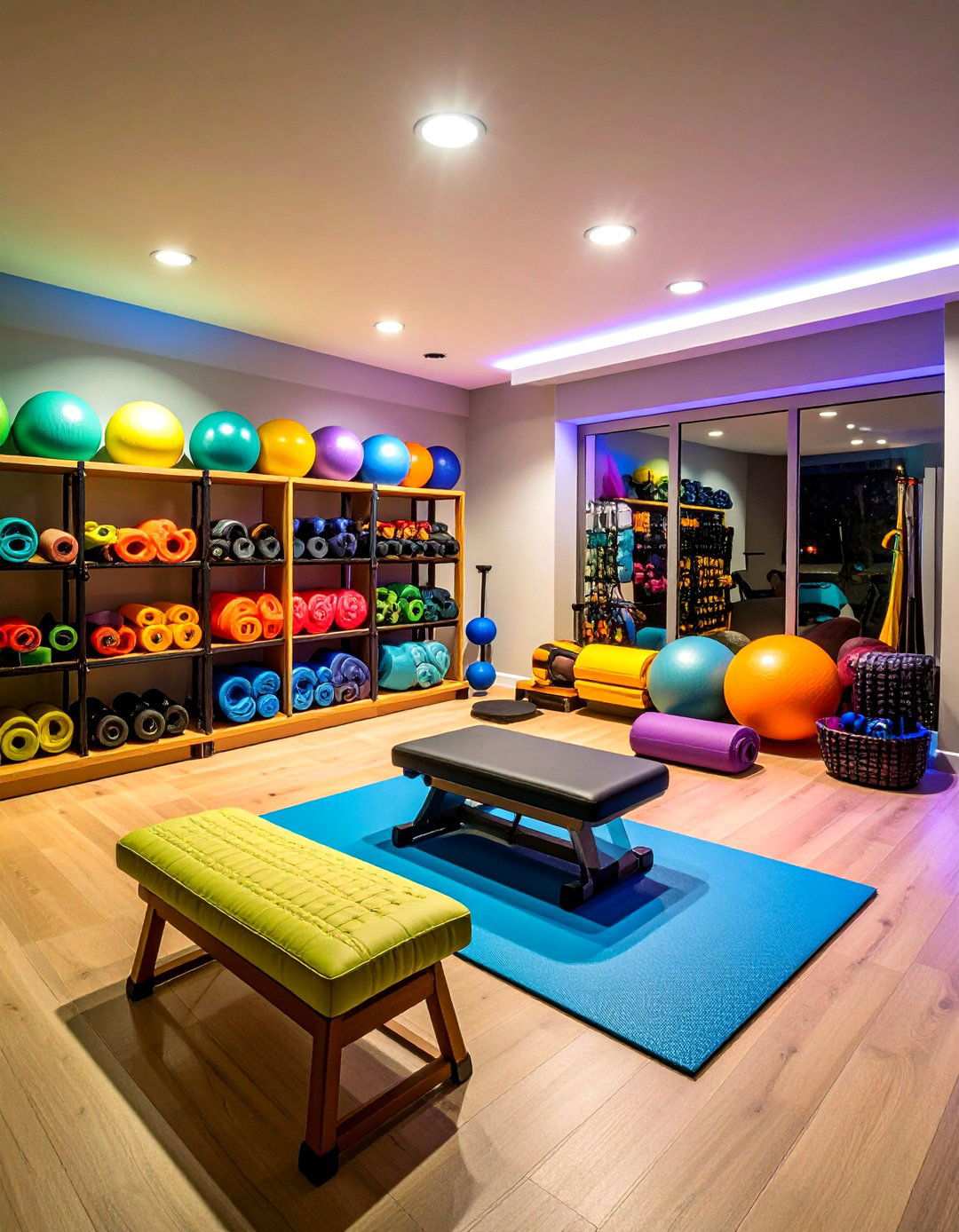
Incorporating a recovery nook into your small-gym layout can be a game-changer. A dense foam roller paired with a low stool allows users to roll out after vigorous sets, promoting flexibility and reducing muscle soreness. A mat, massage ball basket, and smart tablet streaming mobility routines can be strategically placed to encourage on-site cooldowns, eliminating the need to head upstairs. Soft LED strip lighting set to a warm white hue signals to the brain that it’s time to transition from high-intensity output to restorative stretching, effectively closing the loop on a productive session.