1. Elevating the Art of Basement Stairs
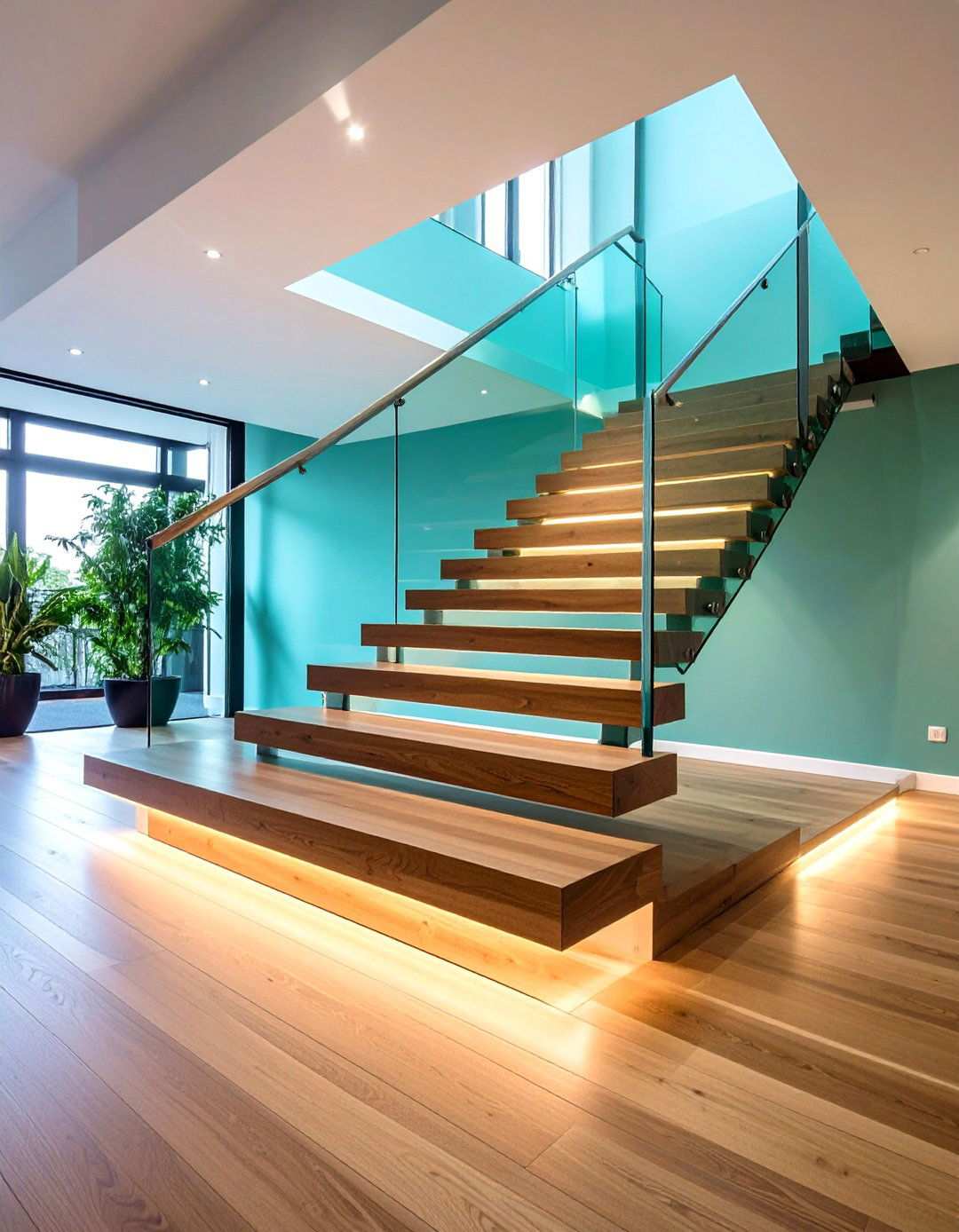
Basement staircases are no longer relegated to the status of afterthought. Today, they serve as design statements, safety upgrades, and creative storage solutions, transforming the oft-overlooked space into a feature that showcases your personal style. From sleek, modern designs to budget-friendly paint tricks, possibilities abound, limited only by your imagination and the constraints of local building codes. By embracing the latest trends in materials, lighting, and space-saving innovations, even the smallest basement can pack a big punch.
2. The Timeless Appeal of Floating Glass-Railed Stairs
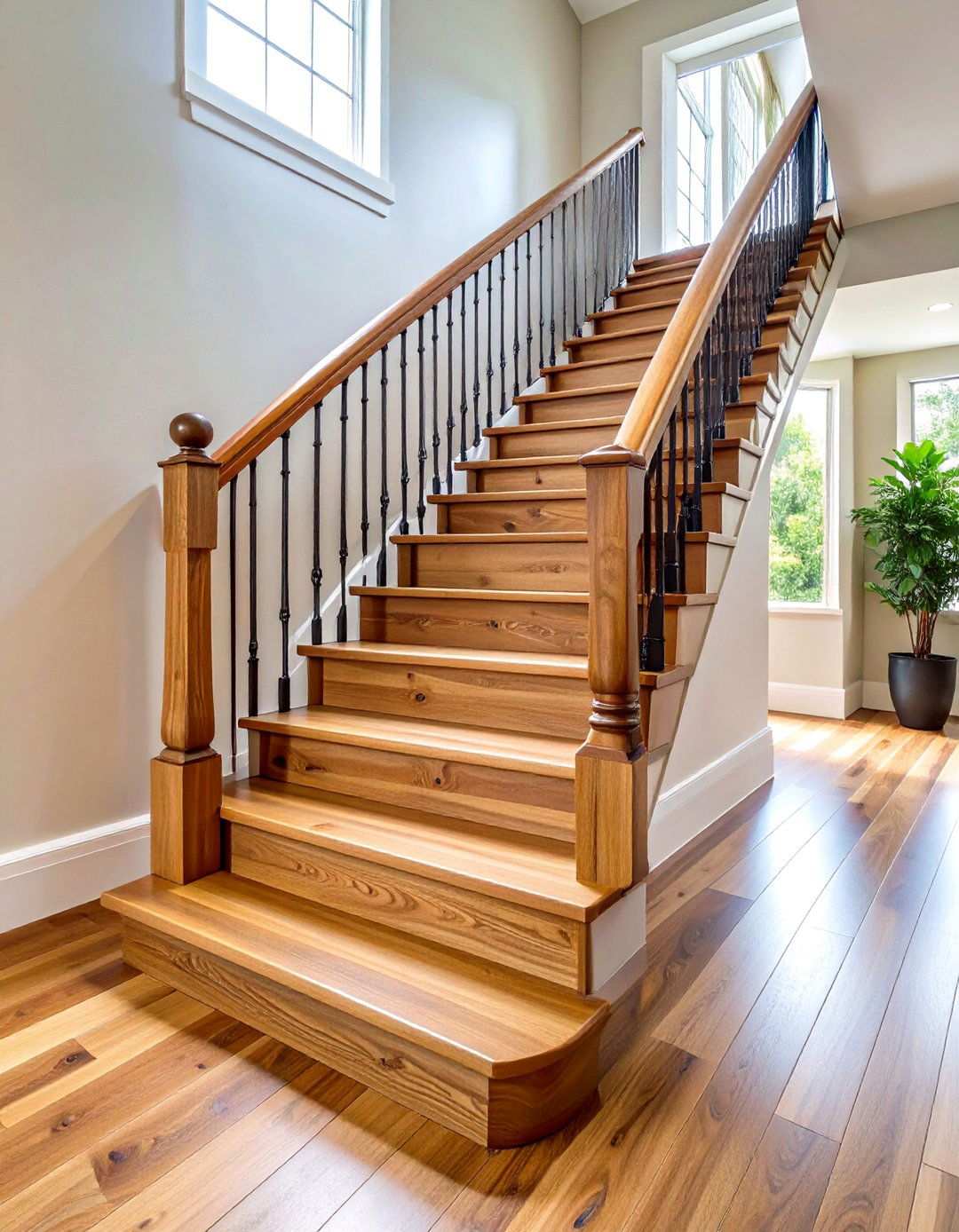
Creating a sense of airiness and connection to the surrounding space begins with the striking combination of glass and timber in a floating glass-railed stair. By suspending thick hardwood treads from a concealed steel stringer and enclosing the run with tempered glass panels, you eliminate the need for bulky supports and allow natural light to flow unobstructed into the lower level – a particularly welcome feature in spaces with limited window exposure. To amplify the visual impact, pair the rich wood grain with a low-sheen clear finish and line each tread with LED strips to create a soft, ethereal glow. This configuration still meets residential code requirements, ensuring a safe and stylish descent.

As an Amazon Associate I earn from qualifying purchases.
3. Embracing the Cozy Charm of Closed-Riser Stairs
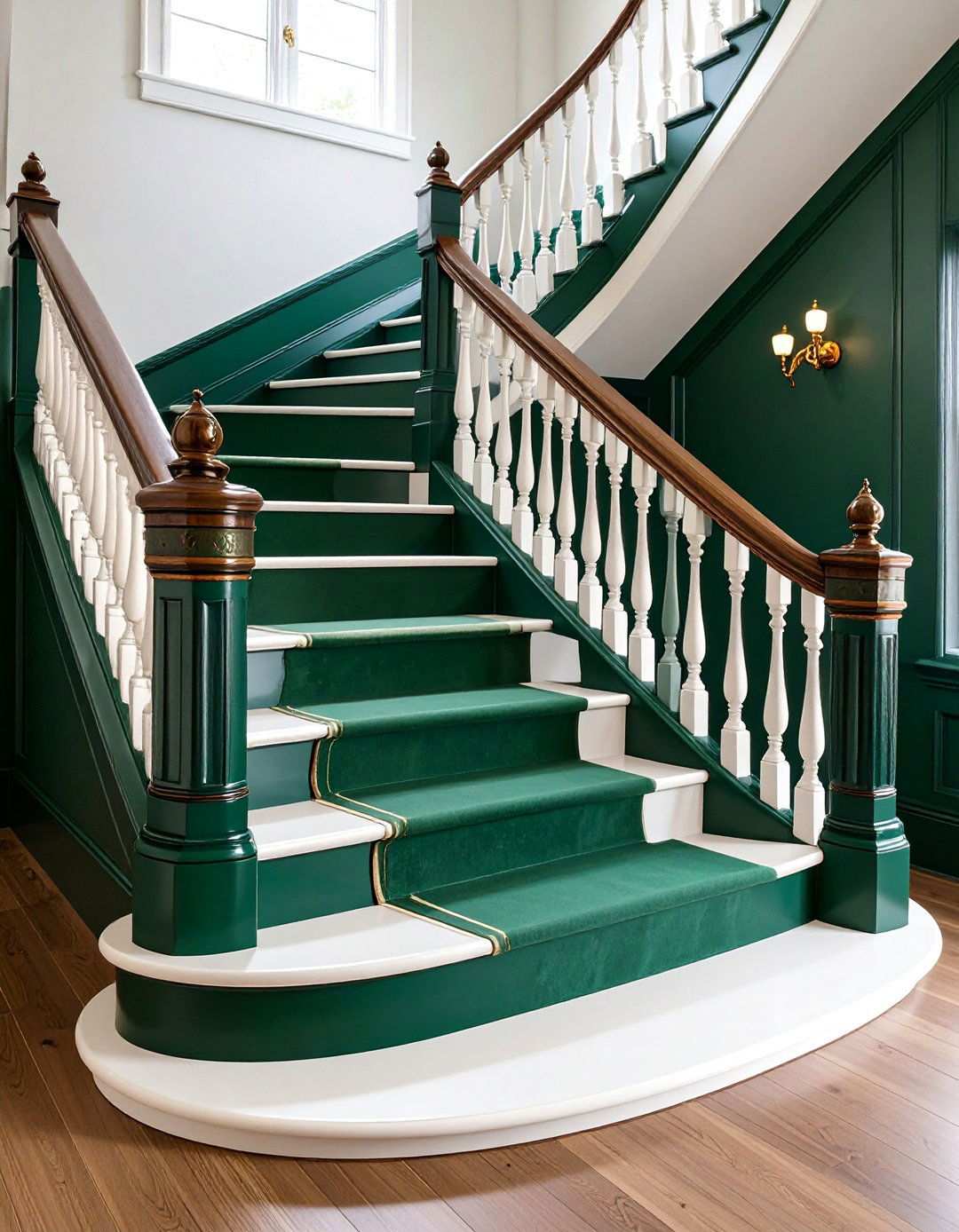
In contrast to open risers, a closed-riser wood basement stair envelops each step in the warm, inviting character of solid timber, cleverly concealing the storage or mechanical elements that lie beneath. To ensure durability in humid environments, select white oak or ash and apply a sealant to all exposed faces to minimize movement. Adding visual interest to the tread tops, stain them two tones darker than the matching risers and skirting, creating a subtle yet effective contrast that helps users navigate descents in low-light conditions. For a streamlined look, pair square wood newels with slender black metal balusters – a design combination that remains highly popular in 2025. By maintaining a consistent tread depth of at least 10 inches, you’ll meet essential code requirements while creating a safe and inviting descent.
4. Plush Runner-Clad Basement Stairs
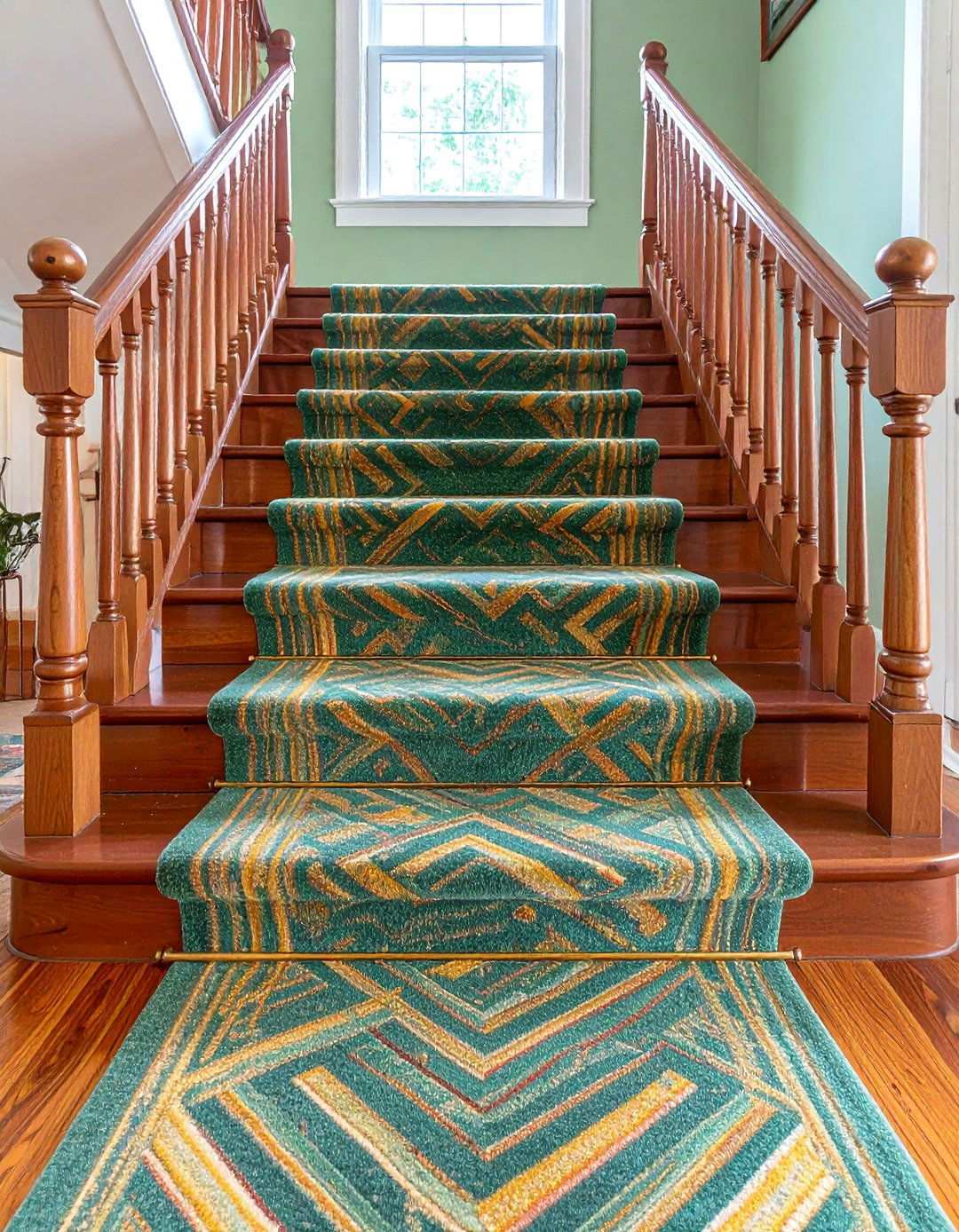
Installing a plush carpet runner on basement stairs can significantly reduce echo and soften footsteps. Opt for a high-quality dense nylon or ECONYL weave with a minimum rating of 40 ounces for optimal durability. Synthetic materials dry faster than wool if a dehumidifier fails to operate properly. To maintain a sleek appearance, ensure the runner wraps snugly around each tread and secure it with hidden staples and slim brass stair rods. A 1½-inch reveal of finished wood on both sides will keep the profile slim and visually appealing. For added visual interest, consider alternating a subtle herringbone pattern at landings with a complementary stripe down the main run. A high-traction pad underneath the runner meets anti-slip standards and reduces noise transfer to upper floors.
5. Under-Stair Bookcase Basement Stairs
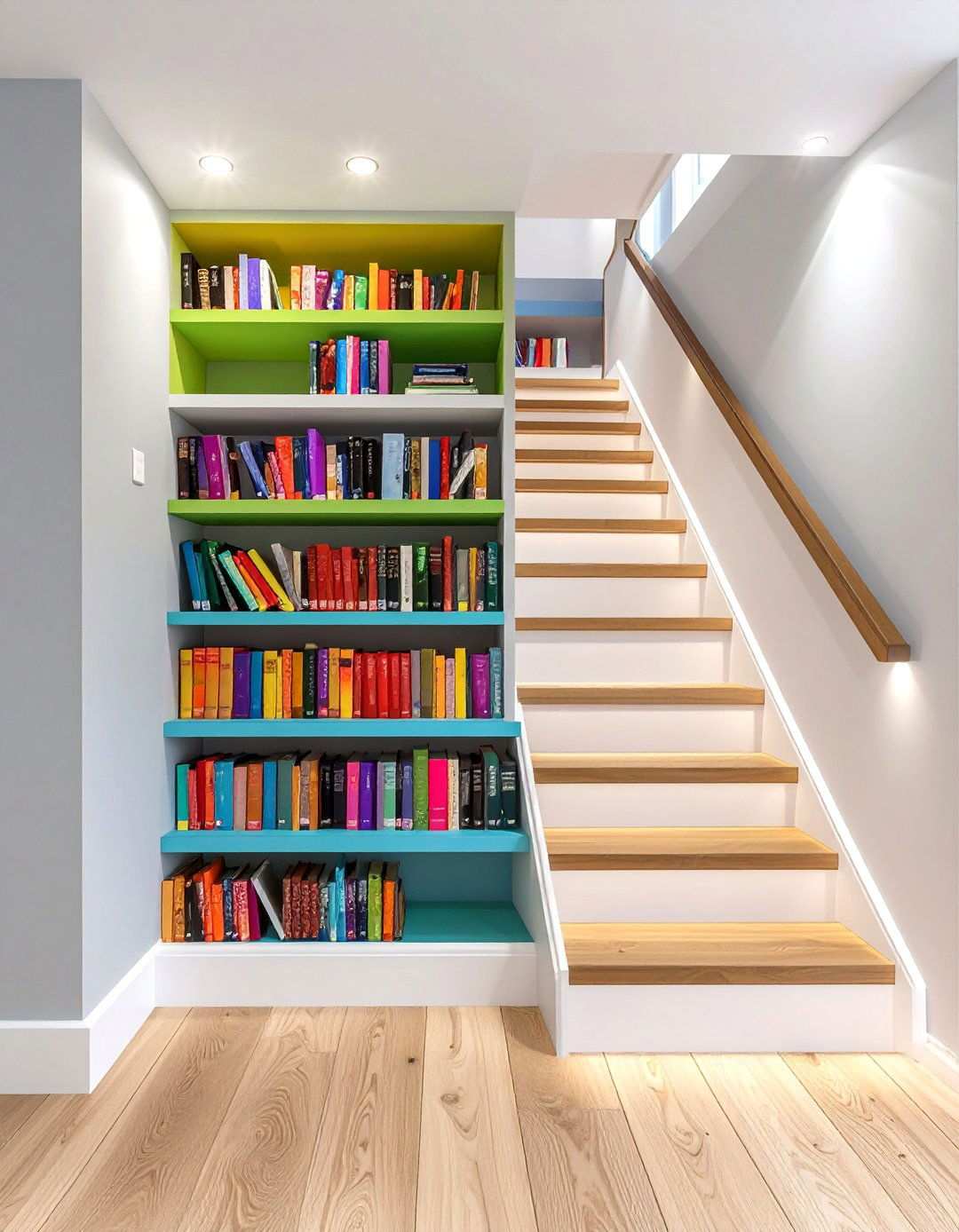
For book lovers, transforming the closed flank of basement stairs into a built-in bookcase can be a fantastic idea. This design element not only saves floor space but also adds a touch of literary flair to the area. To create this feature, frame shallow 8-inch-deep cavities between studs, then sheath the tread side with ¾-inch plywood to support adjustable shelves. For visual cohesion, paint the shelves the same shade as the risers, allowing colorful book spines to provide a pop of contrast. Consider installing low-voltage puck lights on a motion sensor to illuminate titles as someone starts down the stairs. Since the cavity sits outside the stair’s support path, this design won’t compromise the structure, and you’ll gain up to 40 linear feet of storage in an average 13-step run.
6. Sleek Open-Riser Metal Basement Stairs

For those who appreciate industrial chic, open-riser steel basement stairs powder-coated in matte charcoal can be a stunning addition. The welded plate stringers hidden beneath each tread create a continuous metal spine that slices through the space, providing a sleek and modern look. To temper the acoustic harshness associated with metal staircases, bolt 1½-inch reclaimed oak planks atop the steel and apply a wax finish for a touch of warmth. Building codes permit open risers as long as the gap doesn’t allow a 4-inch sphere to pass; simply weld a narrow kick plate at the back of each tread to comply without sacrificing transparency. Add a minimalist cable rail anchored to steel posts for an edgy guard that keeps sightlines open while staying on-trend.
7. LED-Lit Tread Basement Stairs
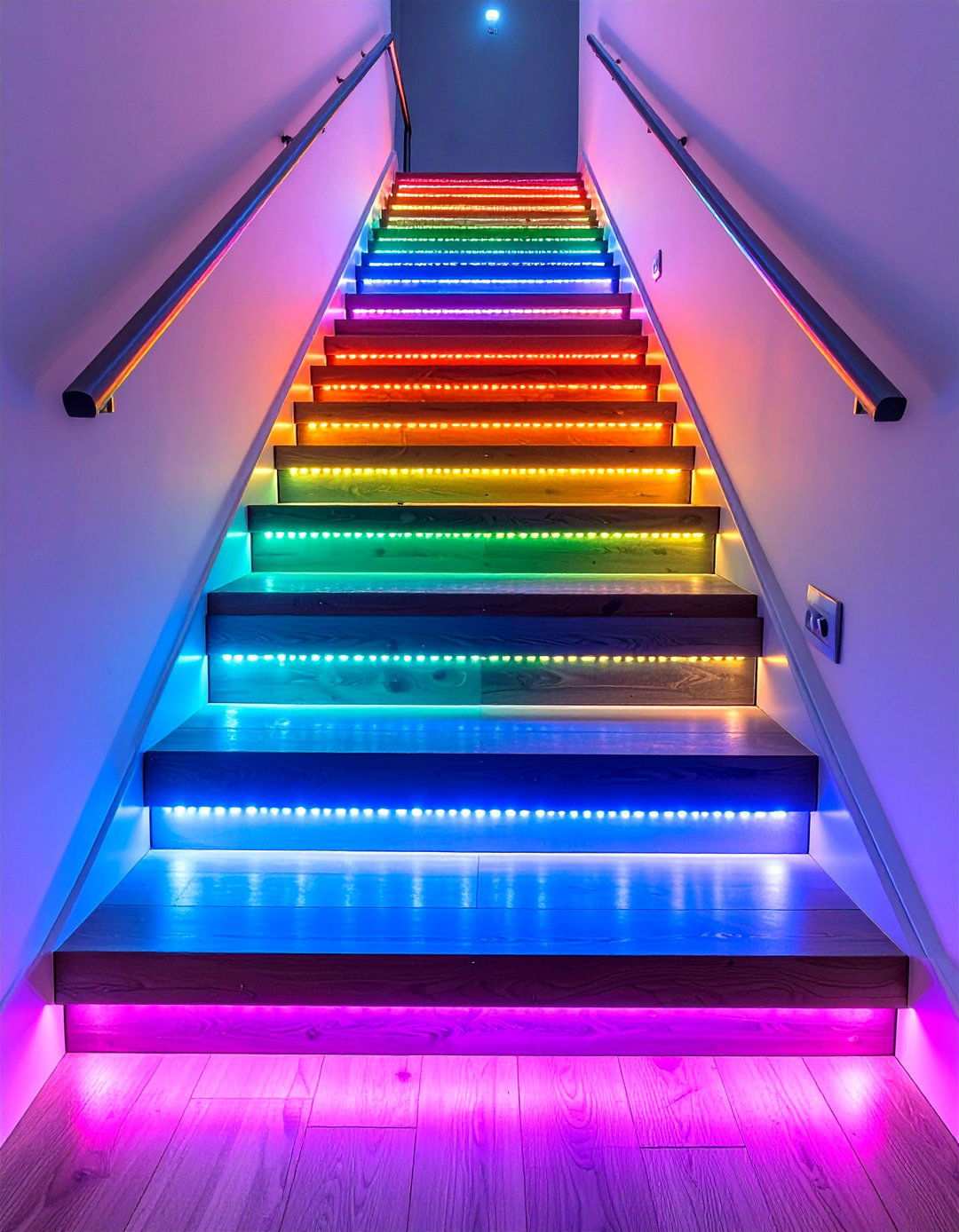
As the sun sets, integrated LEDs can transform ordinary basement stairs into a welcoming pathway. By mounting flexible 2700 K tape light in routed channels under each tread nosing, you can create a warm and inviting ambiance. A 45-degree anodized aluminum diffuser ensures the beam grazes the riser evenly and avoids glare. Tie the strip to a motion sensor at the top landing so illumination follows you down and automatically shuts off after a set interval to conserve energy. When choosing strips, opt for those rated IP65 or better to protect diodes from the occasional damp draft. Keep the driver accessible behind a removable stair skirt for hassle-free maintenance. Even in the event of a power outage, low-wattage backup batteries can keep the path safely lit.
8. Compact Spiral Basement Stairs
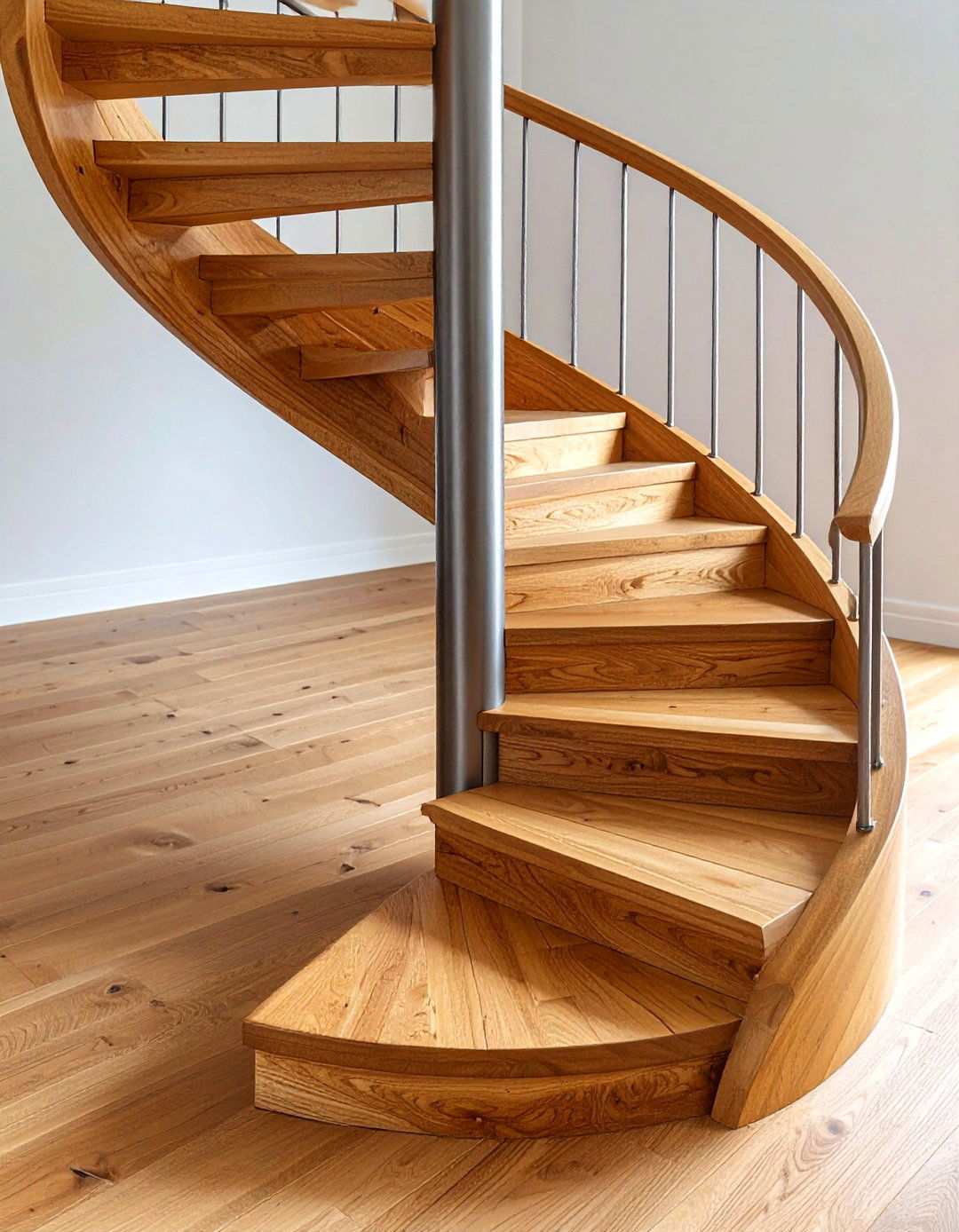
Opting for a spiral design enables homeowners to access the basement without sacrificing valuable space above. By choosing a modular kit that includes a 48-inch-diameter powder-coated steel center pole, wedge-shaped beech treads, and a minimalist round handrail, individuals can assemble the spiral staircase in a relatively short timeframe, typically within an afternoon. While spirals are permitted by the IRC for secondary access when the diameter is 5 feet or less and the clear tread depth is at least 7.5 inches, it’s essential to confirm that the stair serves non-egress needs only. To enhance safety, add grip-tape strips along the outer walking line, and consider hanging a single pendant light inside the column to create a striking visual effect after dark.
9. Drawer-Riser Storage Basement Stairs
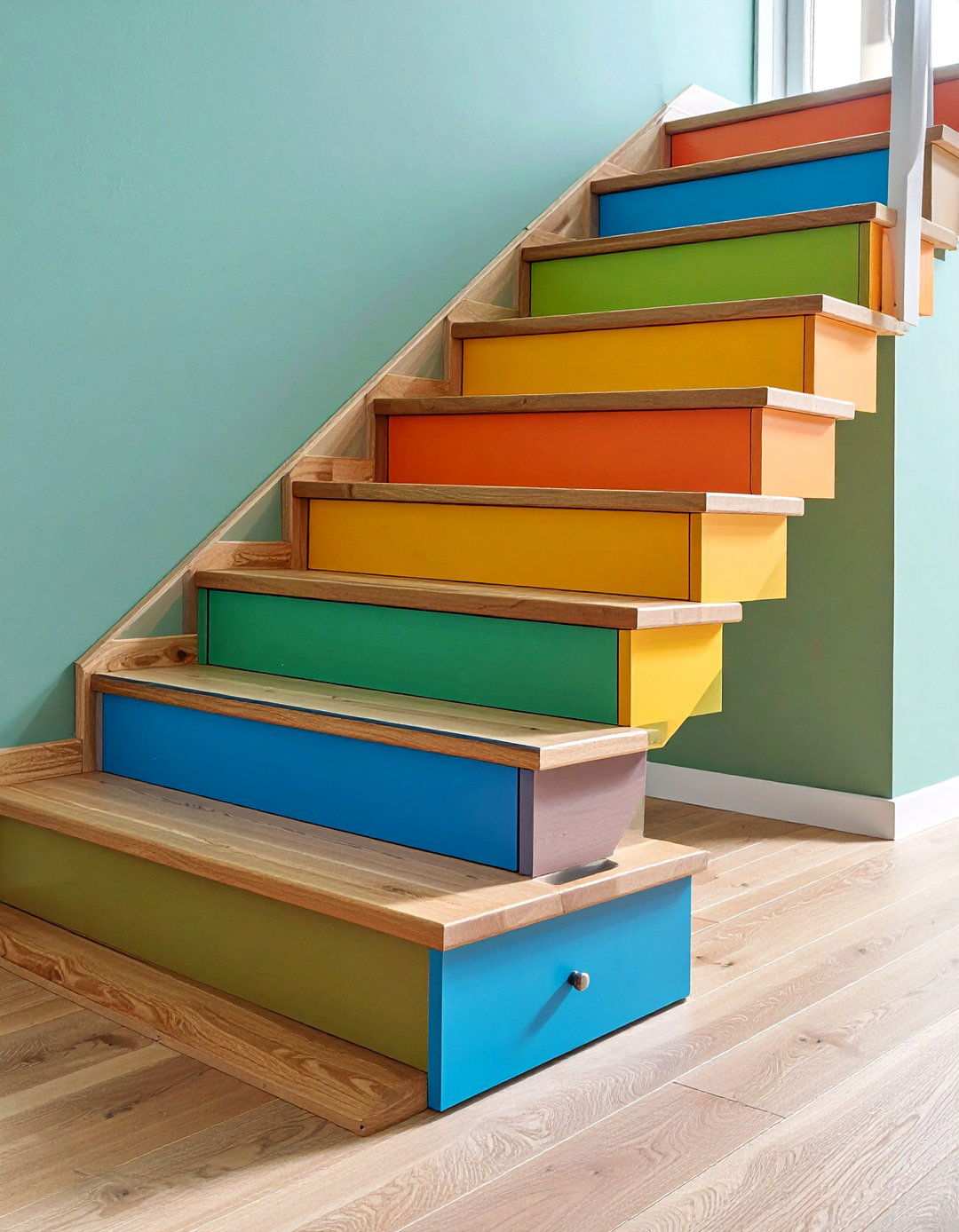
A clever twist on traditional basement stair design involves converting risers into pull-out drawers, ideal for stashing holiday decorations or workout gear. Construct each drawer box from ½-inch Baltic birch and secure it to the stringers using 100-pound full-extension slides anchored firmly in place. To maintain a seamless look, ensure the drawer faces are flush with the painted risers, incorporating finger grooves to prevent hardware from snagging toes. Organize items by season using dividers, and label the underside of each tread for easy inventory management. Due to the structural implications of removing material from risers, reinforce every third tread with a steel angle before cutting, and limit the drawer depth to 7 inches to preserve the long-term reliability and integrity of the staircase.
10. Industrial Concrete-and-Steel Basement Stairs
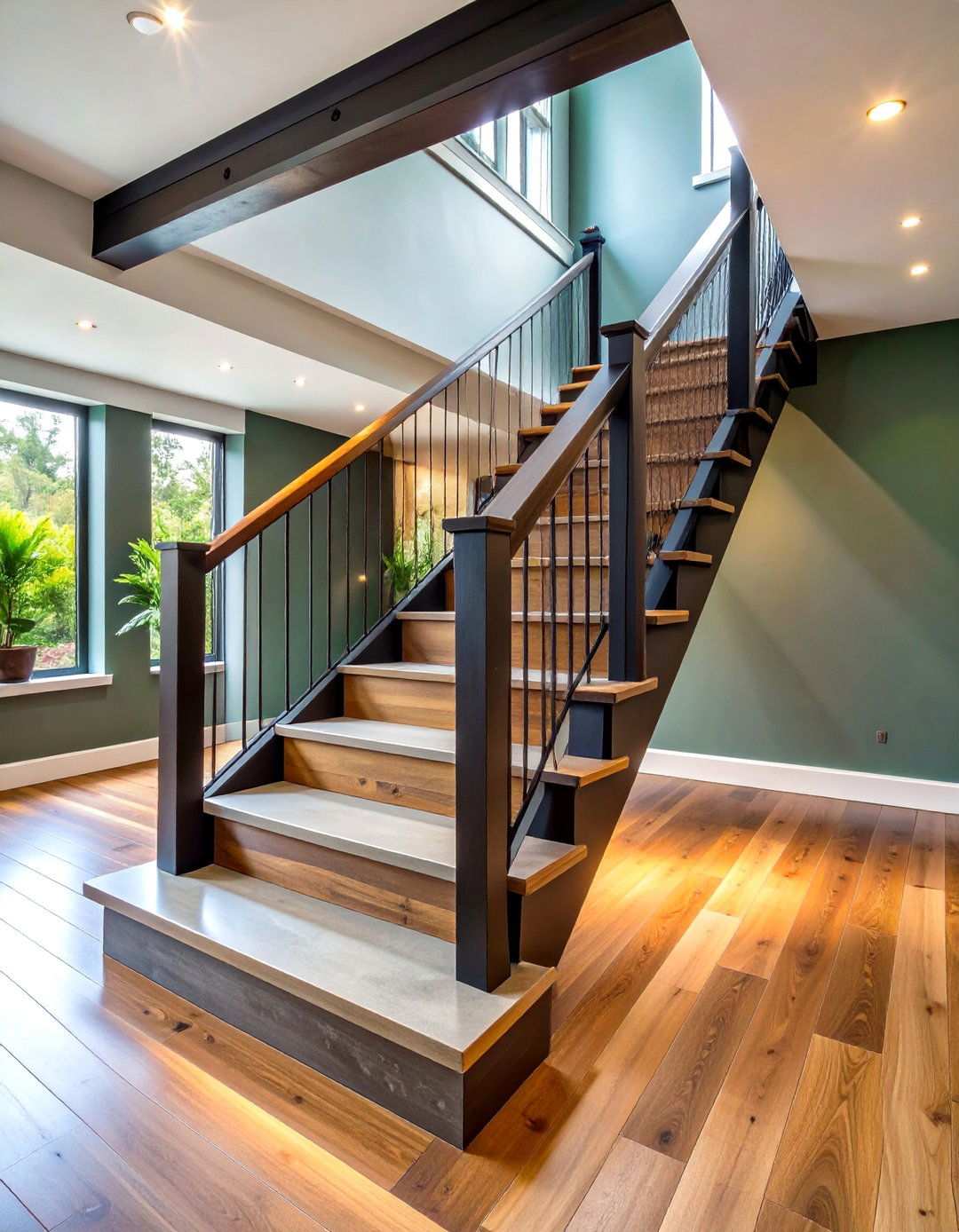
The raw durability of cast-in-place concrete treads combined with hot-rolled steel plate stringers gives basement stairs an unmistakable, industrial loft vibe. After stripping the forms, polish the concrete to 400 grit for a soft, matte finish and seal it with a penetrating silicate hardener that resists moisture wicking. Secure the ¼-inch blackened plate stringers on either side using expansion anchors set in the slab, leaving a slim 3-inch gap from the walls to create the illusion that the staircase is floating. To balance the industrial aesthetic, consider installing a reclaimed barn-beam handrail that has been torch-brushed for texture. This robust assembly is capable of shrugging off basement humidity swings and exceeds 300-pound load requirements for residential steps.
11. Code-Friendly Wide-Tread Basement Stairs

Wider basement stair treads can be a game-changer for households with aging members or young children. By extending each run to 11 inches deep, the maximum allowed before increasing the overall rise, and keeping risers at a gentle 7.75 inches high, homeowners can decrease trip risk. Where existing framing constraints limit length, consider adding a bullnose overhang and inset stringer to steal an extra inch. Finish treads with a beveled aluminum stair-edge strip to protect plywood cores from kicks. Pair the generous steps with a continuous 1.5-inch-diameter rail set 34 inches above every nosing, providing smaller hands with a secure grip without sacrificing modern proportions.
12. Illuminated Basement Stairs with Motion Sensors
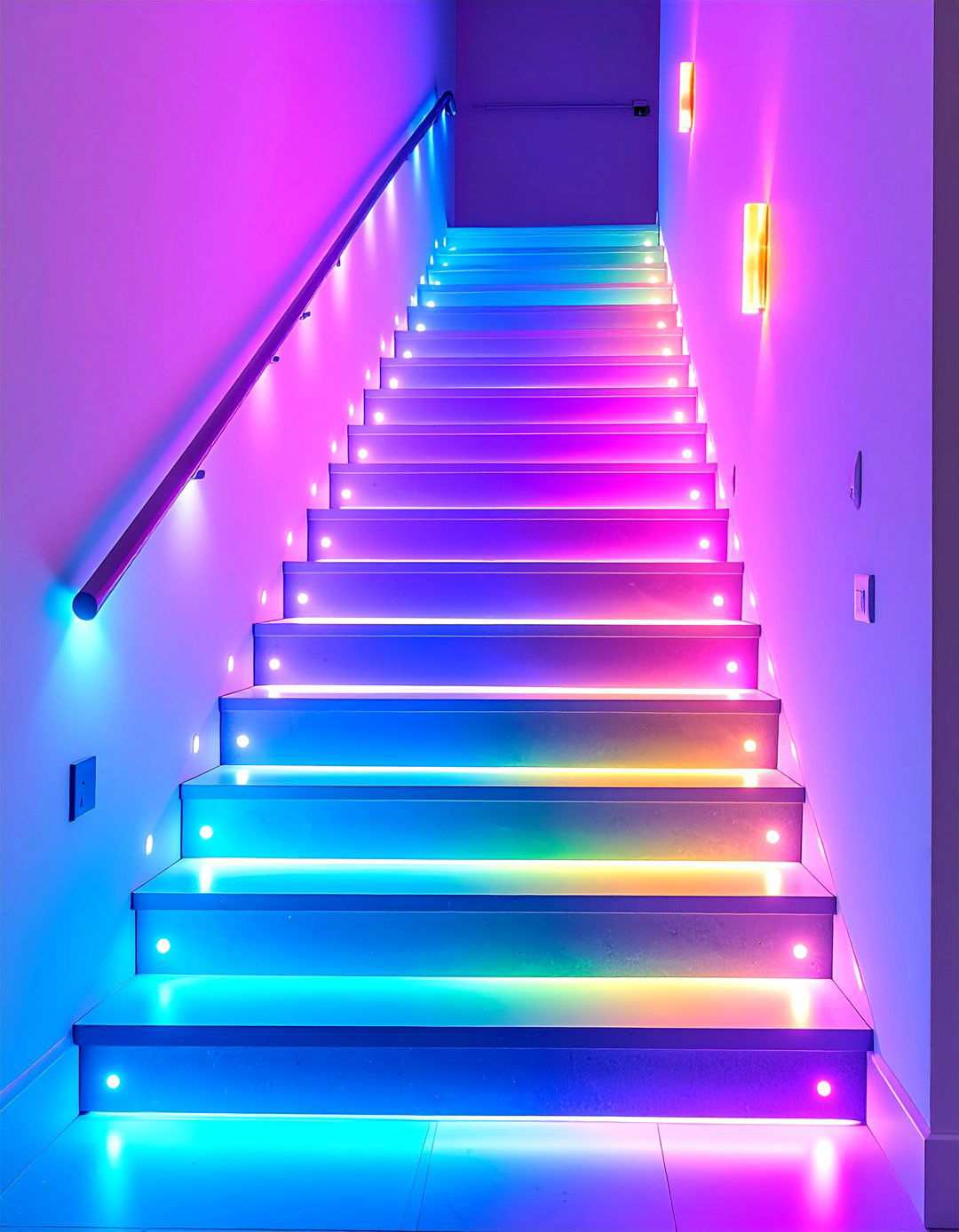
Research has shown that many accidents occur in basements when individuals fumble for a light switch. To prevent this, consider replacing traditional wall switches with dual-circuit motion sensors that trigger both tread LEDs and a low-glare wall sconce whenever someone approaches either landing. This setup can be further enhanced by hard-wiring the sensors to the lighting transformer for seamless control, and adding a Wi-Fi bridge for app-based scheduling. Sensors mounted 48 inches above the first and last treads are an effective solution, as they stay out of accidental kicks yet still detect movement. By automating the lighting, homeowners can potentially reduce yearly stairwell energy use by 20%, according to recent lighting audits.
13. Accentuating the Stairwell with a Bold Wall Color
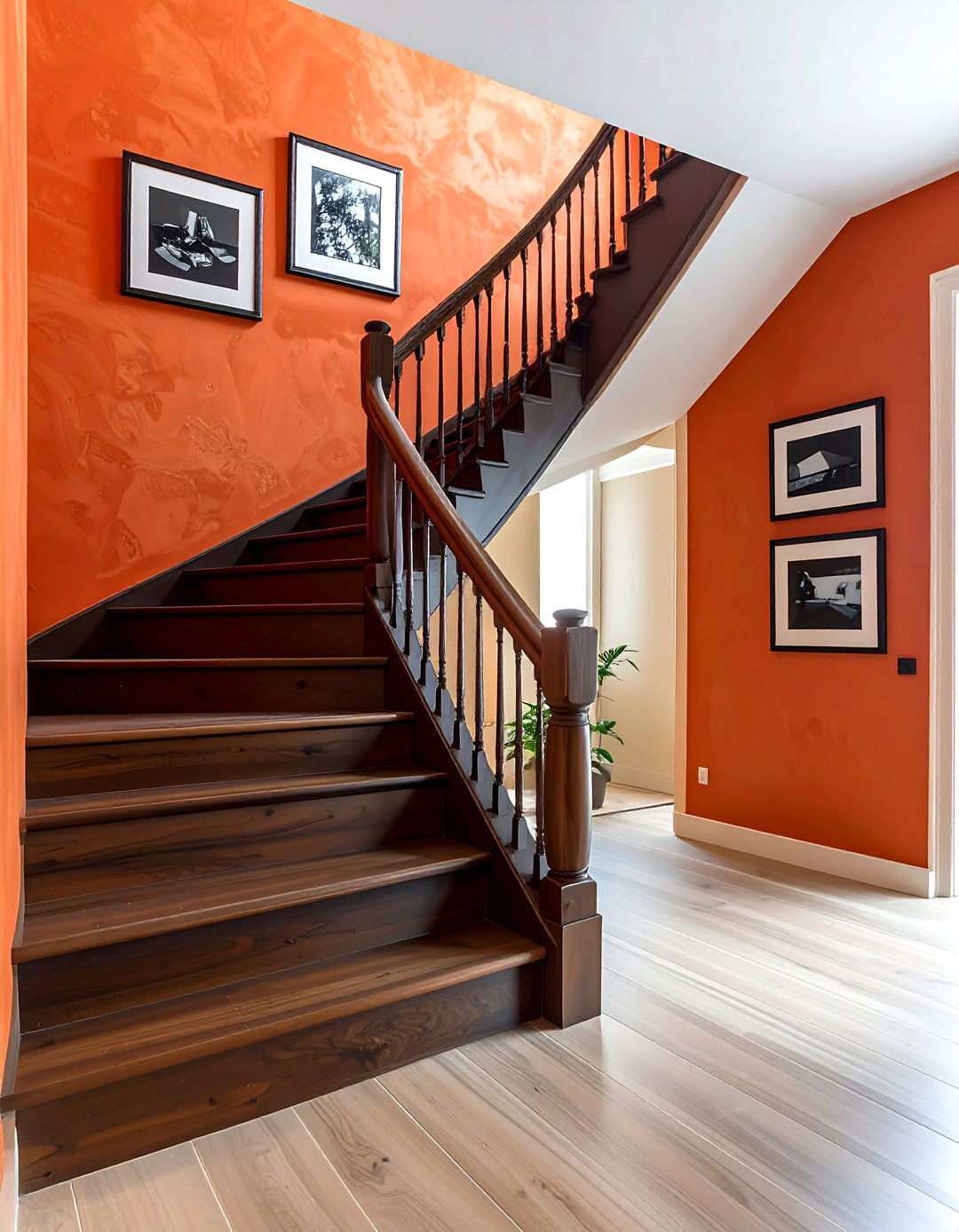
A single bold wall can have a profound impact on the basement approach. Covering the long side of the flight with a warm clay-terracotta microfiber plaster that diffuses daylight rather than absorbing it can create a striking visual effect. Pairing this with complementary muted cream-colored walls on the opposite side can add a sense of cohesion and balance to the space. By choosing an earthy tint, homeowners can avoid the trend of cool bright whites and instead inject a cozy, dramatic ambiance into their basement. To further enhance the aesthetic, stain the stair handrail a mid-tone walnut, creating harmony between the wood grain and rich color. Finally, hang a linear gallery of black-and-white family photos to frame each frame and turn everyday transit into a memorable experience.
14. Combining Materials for a Unique Railing Design
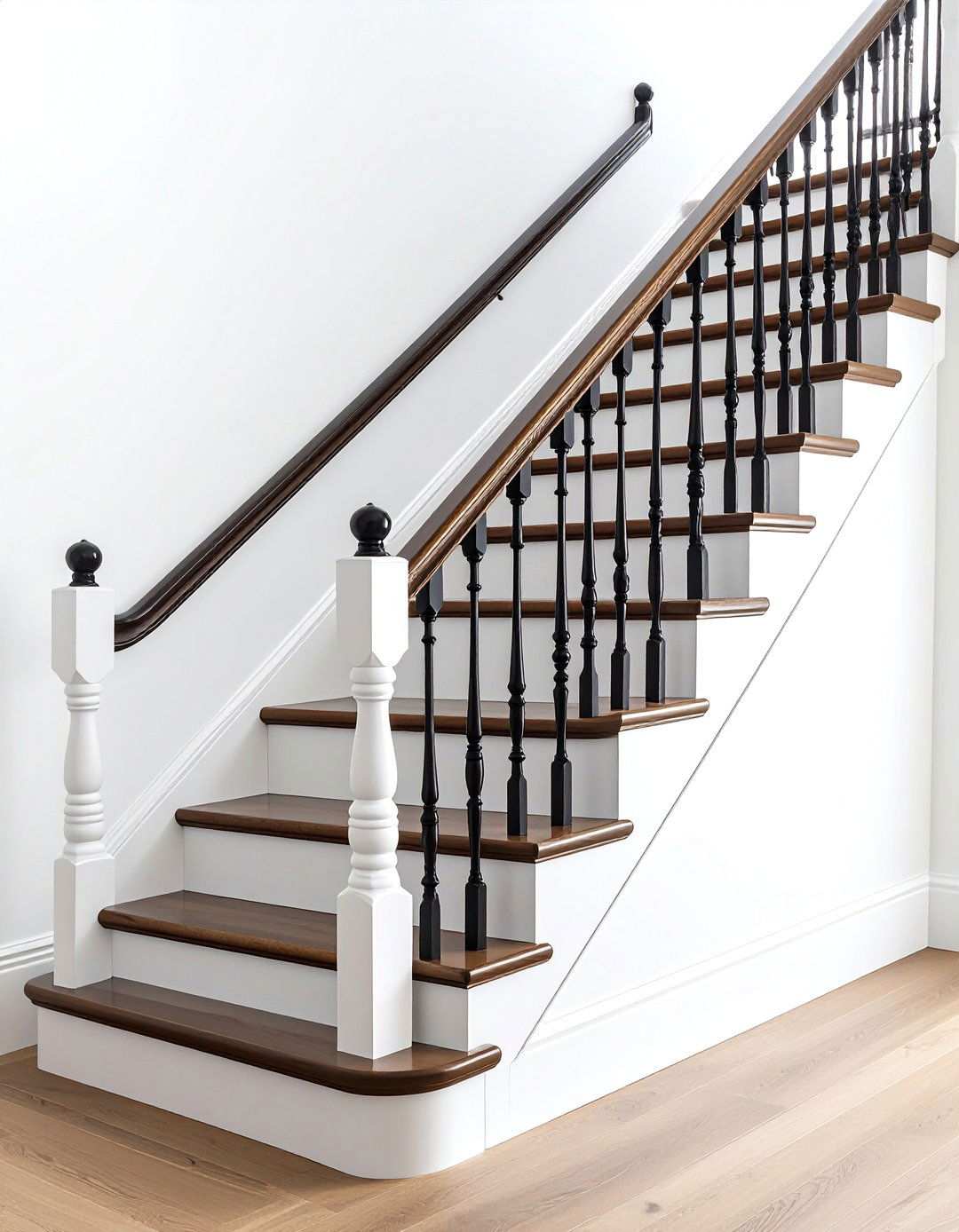
The blend of warmth and edge can continue with a mixed-material railing design, where wood rails meet slender metal spindles. Mill 2×3 white-oak planks into a rectangular handrail, ease the edges, and finish them in a low-VOC oil that deepens grain without gloss. Next, install pre-drilled steel shoes into each tread for ½-inch round black balusters spaced just under 4 inches on center, meeting guard requirements while maximizing sightlines. Accent the contrast by staining newel caps three shades darker than the railing, and terminate the rail in a curved return to prevent snagging clothing. This resulting mix can elevate even builder-grade stairs into a bespoke architectural focal point.
15. Enhancing Safety with a Slip-Resistant Finish
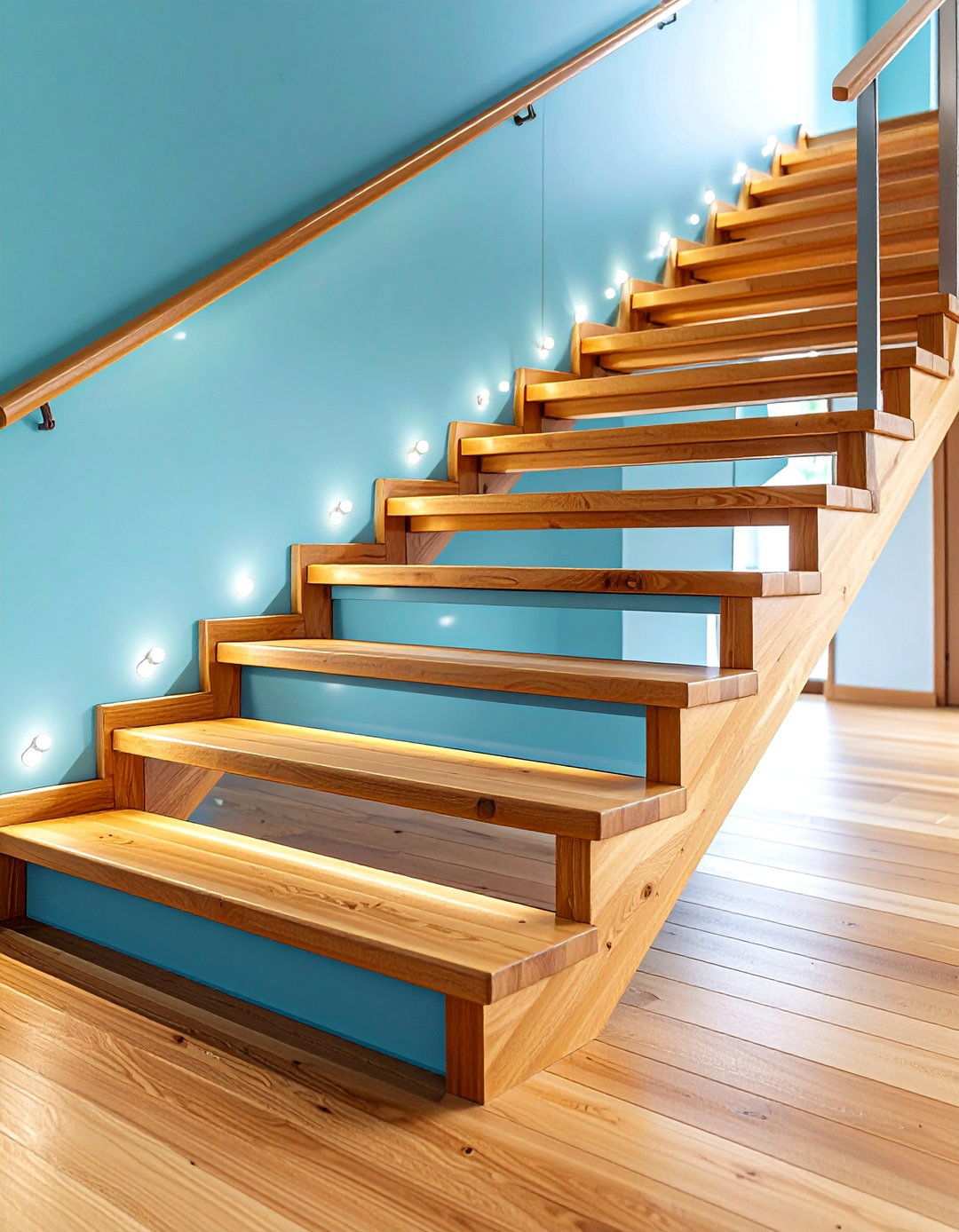
By the time wet umbrellas and muddy boots reach the basement, slippery treads can become a significant hazard. To mitigate this risk, apply a clear anti-slip nano-grit coating formulated for wood or concrete and rated to increase dynamic coefficient of friction to at least 0.6, the threshold recommended for stairs. For painted surfaces, de-gloss first with 150-grit sandpaper to ensure a strong bond. Tape a neat 2-inch band of non-skid just behind each nosing to preserve the look of stained wood while protecting the main walking zone. Given that many products cure within eight hours, homeowners can apply the coating after dinner and regain use by morning without any inconvenience.
16. Built-In Child Gate Solutions for Basement Stairs
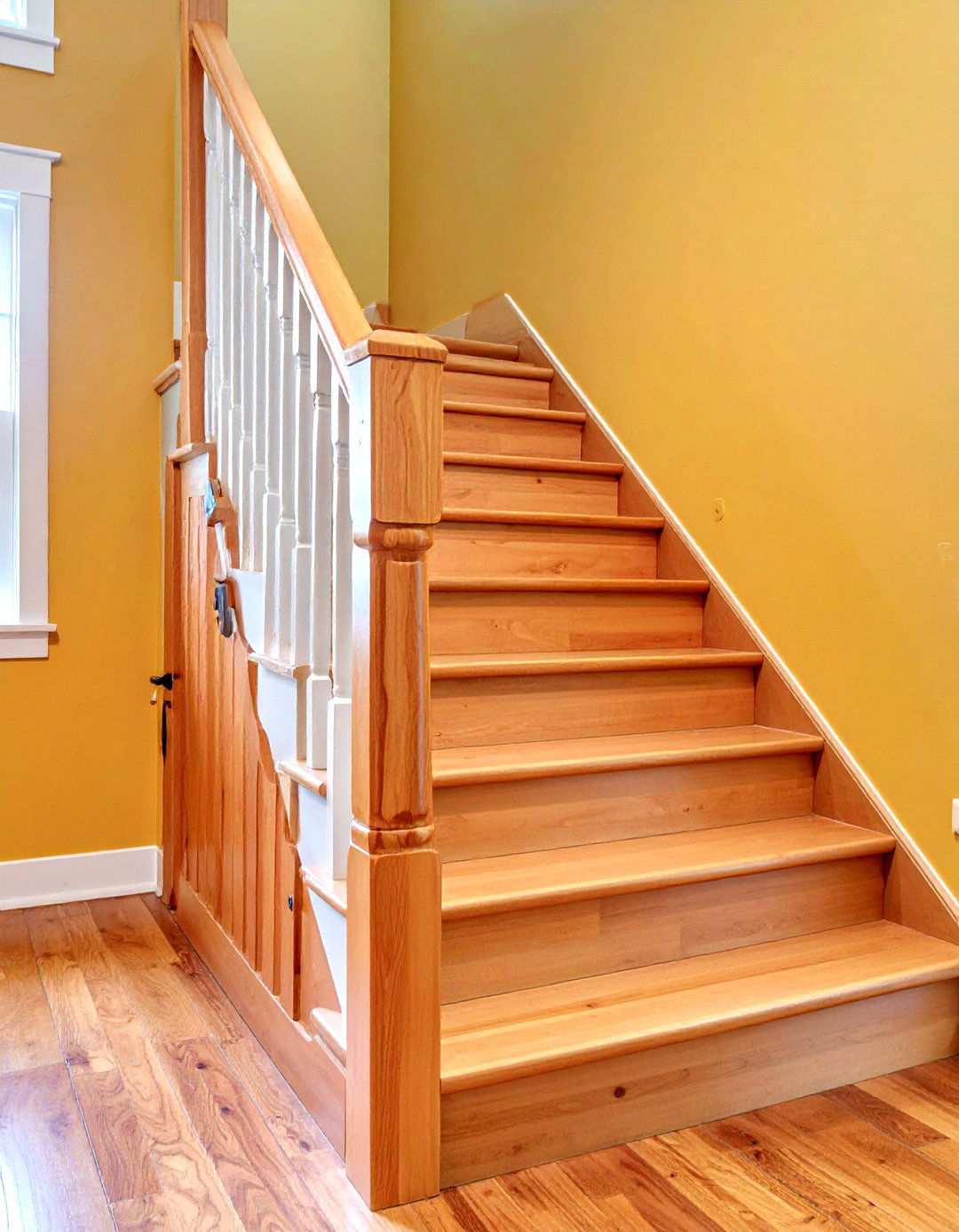
Families with young children often find themselves navigating the delicate balance between safety and aesthetics in their home’s design. A built-in child gate can be an elegant solution to this problem, especially when situated near play areas in the basement. One innovative approach involves creating a 36-inch-tall wood-slat gate that seamlessly integrates with the surrounding balusters. By routing hidden barrel hinges into the back edge of the first newel post, homeowners can achieve a sleek and clutter-free design. Magnetic push-latches provide an added layer of security, preventing little hands from accidentally opening the gate. The clever positioning of the latch side flush with the adjacent wall eliminates the need for a floor track, minimizing tripping hazards. When the need for the gate passes, the entire system can be removed, leaving behind a smooth, flush surface that perfectly blends with the existing trim work.
17. Elevating Basement Stairs with Iron Balusters
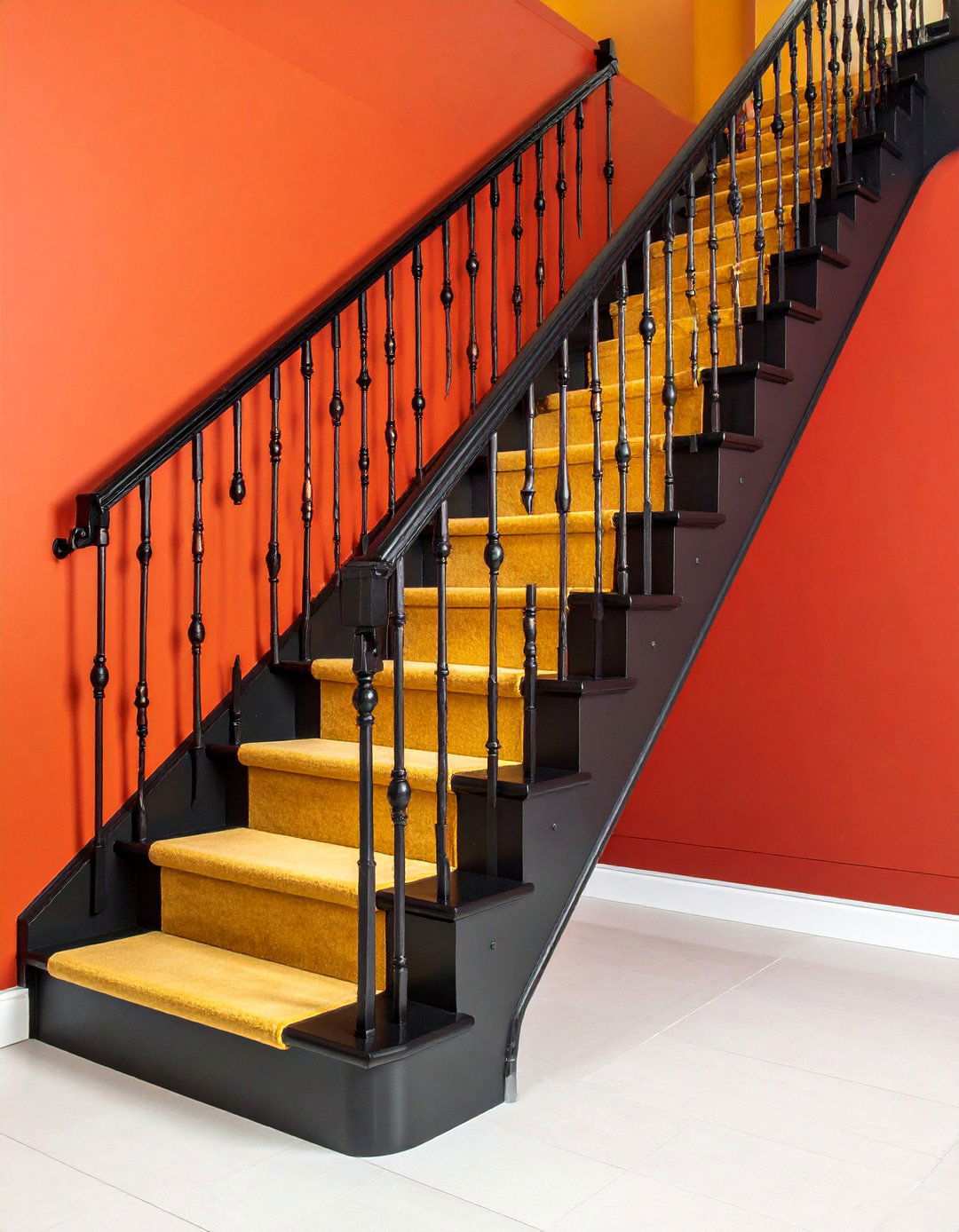
Transforming dated wood spindles into modern iron balusters can breathe new life into a basement stair rail. This stylish upgrade requires minimal effort and expertise, making it an ideal DIY project for weekend warriors. The process begins with cutting the old balusters flush at both ends and extracting them, followed by drilling ½-inch holes centered ½ inch from each tread’s back edge. By inserting shoes and adding a dab of epoxy, homeowners can then slide in the new metal balusters, carefully spinning them to ensure a secure fit. To achieve an eye-catching pattern, consider setting the new balusters in a three-one-three configuration, striking a balance between negative space and visual interest. As iron is heavier than pine, it’s essential to reinforce the underside of the handrail with hidden steel flat bar before reinstalling. A touch-up with black enamel can then be applied to the screw heads, creating a seamless finish that showcases the homeowner’s handiwork.
18. Alternating-Tread Ladders for Constricted Spaces
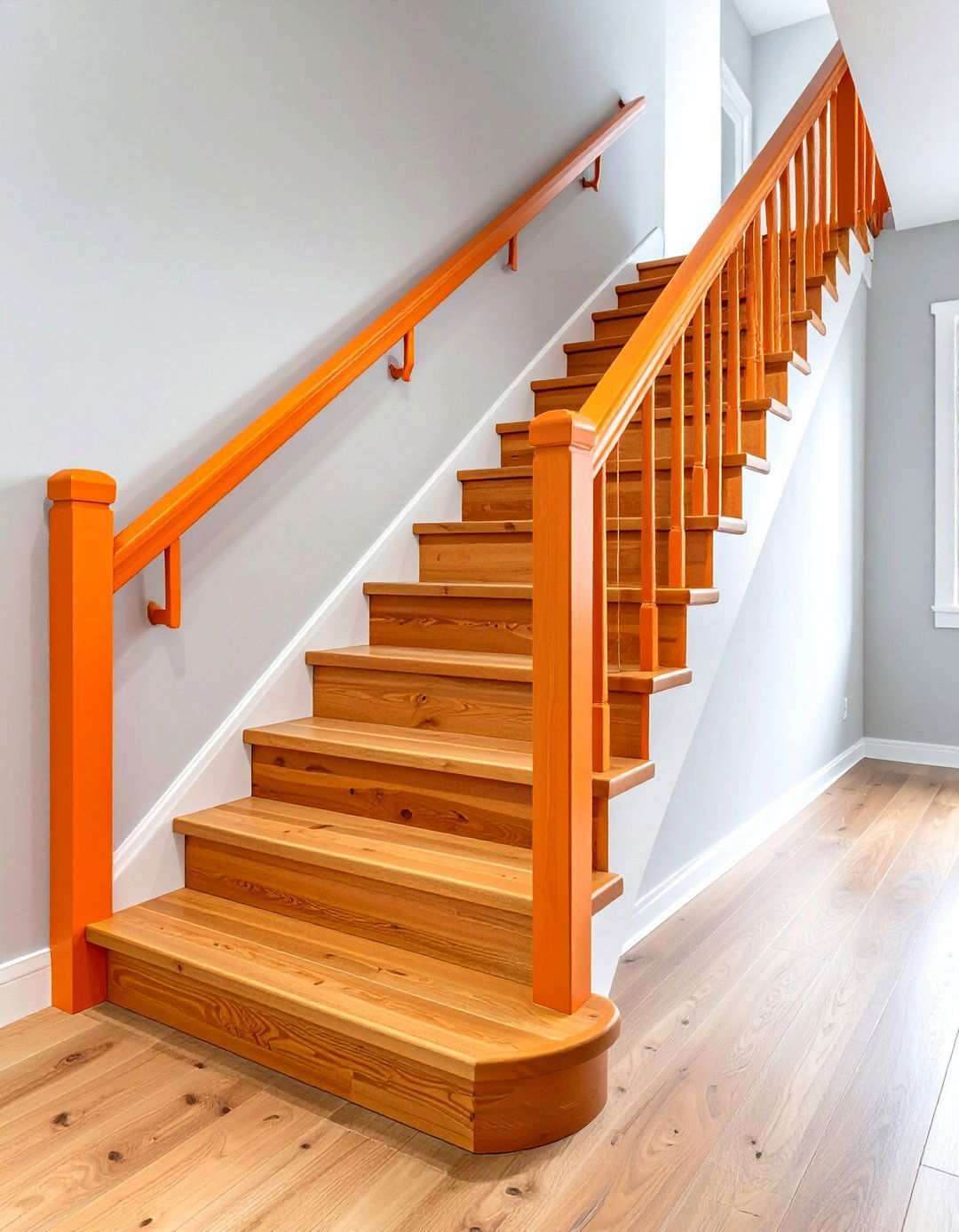
When a hobby room or furnace closet leaves limited space for access, an alternating-tread ladder can be a game-changer. This innovative type of stair offset each tread, allowing only one foot to use each side of the step, thereby reducing the horizontal run by roughly half. According to the 2021 International Residential Code (IRC), alternating-tread devices are permitted where they’re not the sole means of egress, provided the projected tread depth meets or exceeds 8½ inches and handrails are installed on both sides. To soften the climb and create a safer user experience, consider milling each tread from 1¼-inch maple and rounding over the front edge. Finishing the side rails in bold safety orange can also help guests navigate the narrow shaft with confidence, reducing the risk of misstepping.
19. Eco-Friendly Basement Stair Runners Made from Recycled Materials

In an era where sustainability is increasingly taking center stage, outfitting basement stairs with a runner woven from recycled fishing nets or plastic bottles can make a powerful eco-statement. ECONYL® nylon fibers, for instance, offer the same softness as virgin material while diverting waste from oceans and landfills. A subtle salt-and-pepper weave can help mask dirt between vacuum sessions, while also complementing both painted and stained treads. The added benefit of solution-dyed recycled yarns is their enhanced fade resistance under stair lights, ensuring the runner’s vibrant colors remain intact for years to come. To complete the look, consider binding the edges with a matching recycled polyester tape and installing with low-VOC adhesive strips instead of traditional tack strips, creating a cleaner, healthier indoor environment.
20. Elevating Ambiance with a Biophilic Stair Feature
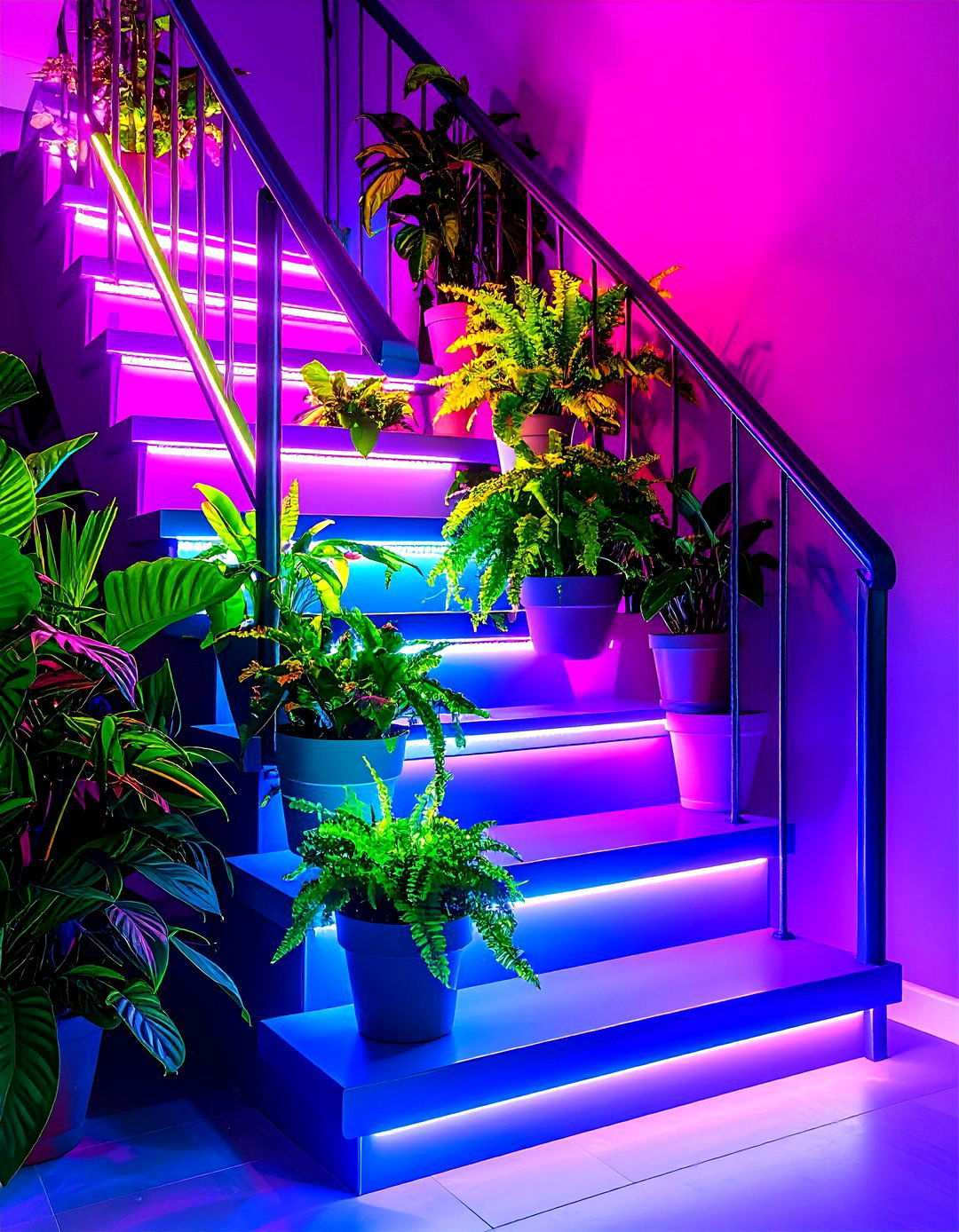
Transform the basement stairs into a natural oasis by incorporating a tiered plant shelf along the outer wall. Secure 4-inch-deep powder-coated steel ledges between the stringers and drywall, spacing them to harmonize with the tread rhythm. This allows trailing plants like pothos or string-of-turtles vines to mirror the staircase’s slope, creating a visually stunning effect.
Thriving even in low-light conditions, ZZ or snake plants are perfect for basement environments, requiring infrequent watering of every few weeks. To prevent water from accumulating, add a slim drip edge to each shelf. For optimal growth, install a concealed grow-light strip behind the handrail, providing consistent photosynthetic lighting. As the lush greenery softens the industrial lines, it also helps purify the stale air and presents an unexpected natural welcome to visitors.