1. Elevating Bathroom Style with Durable Flooring Options
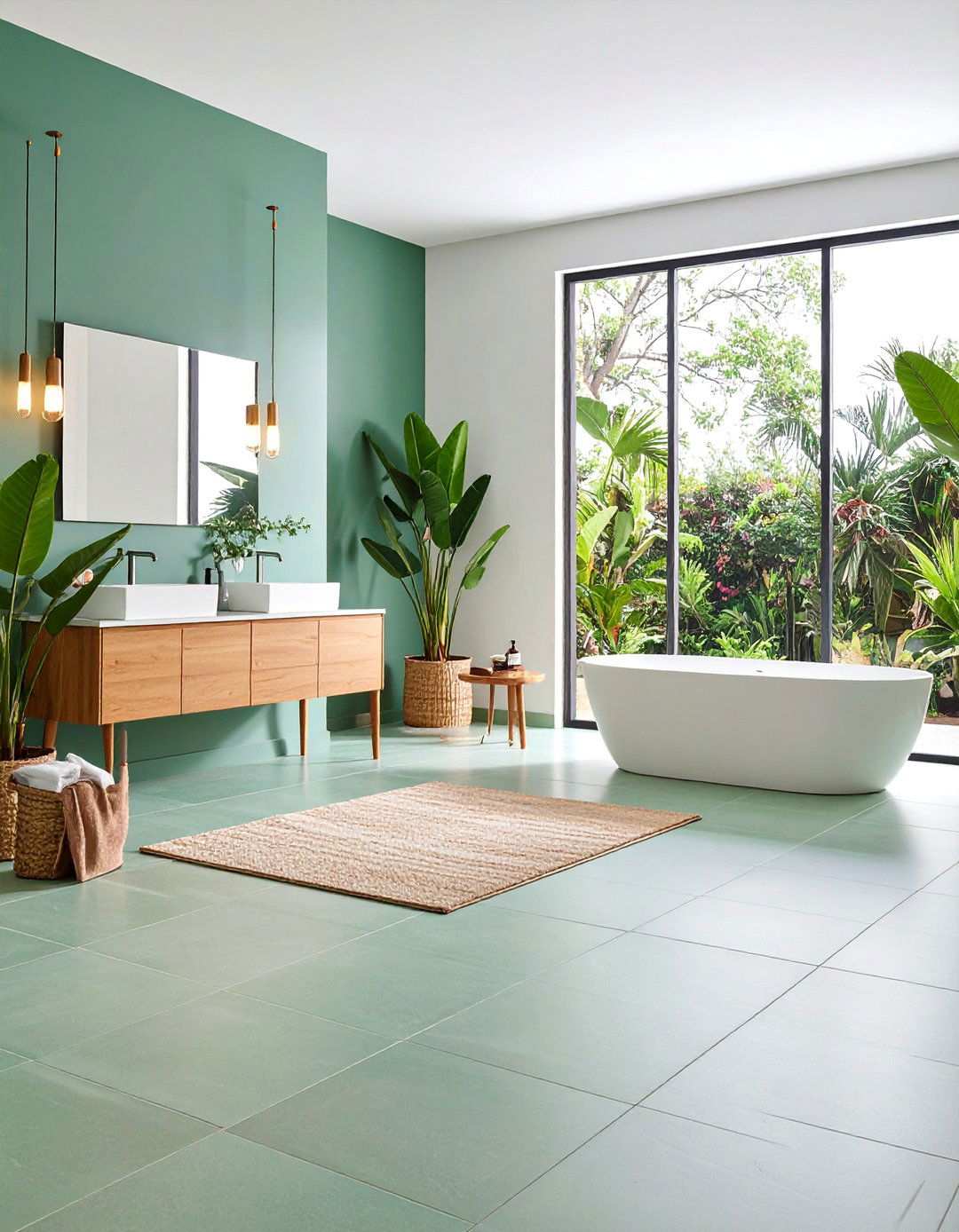
Bathroom flooring has evolved into a vital component of home design, transforming a potentially hazardous area into a sleek, safe space. After a comprehensive review of the latest research on durability, eco-friendliness, slip-resistance, and 2025 design trends, twenty practical ideas were distilled to strike a balance between aesthetics and real-world performance. From classic materials to cutting-edge innovations, each option below sheds light on its unique strengths, potential drawbacks, and expert tips to guide your decision-making process.
2. Porcelain Tile Bathroom Flooring: A Timeless Choice
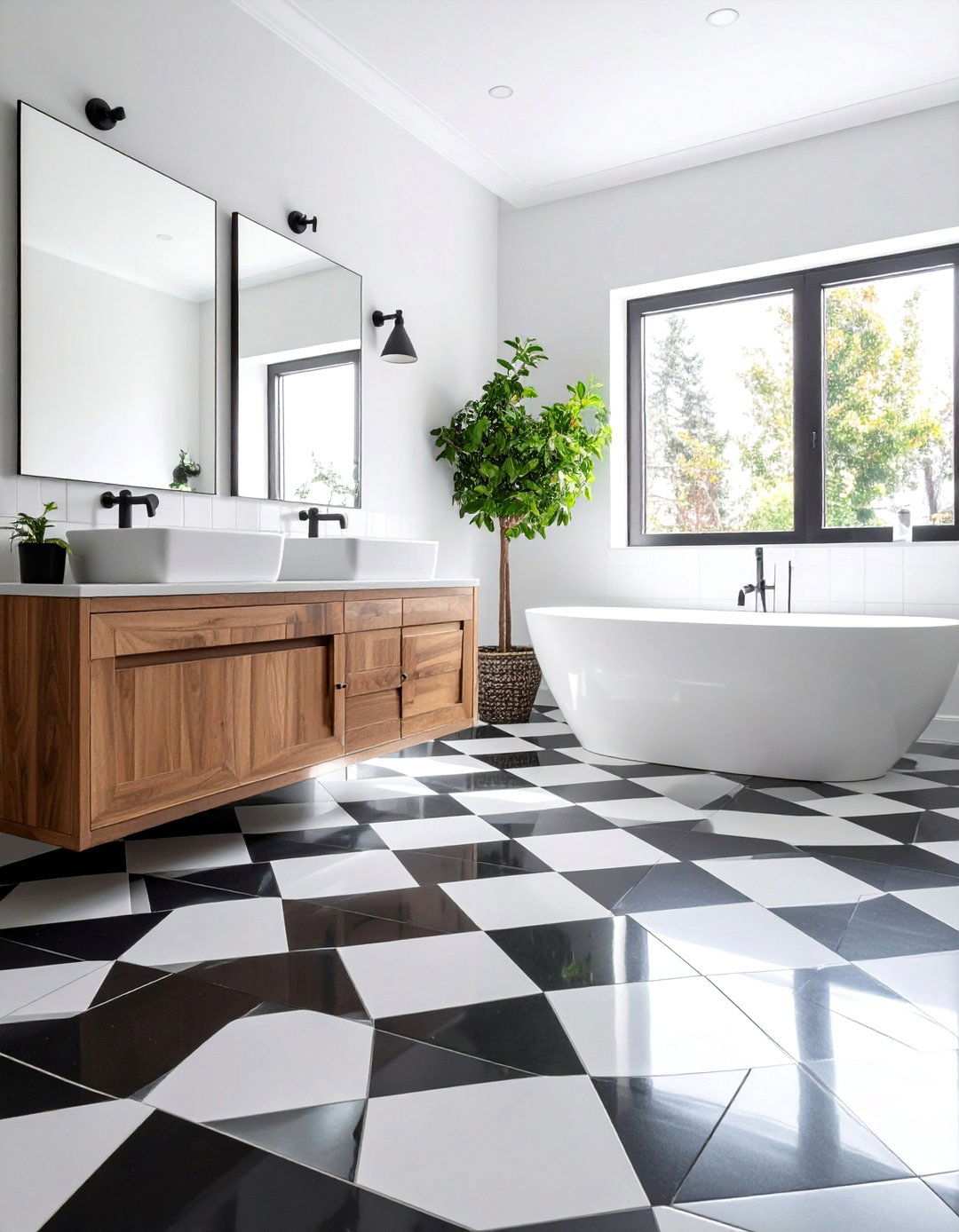
Porcelain tile flooring stands out as a top contender due to its remarkable water-resistance and durability. With a water-absorption rate of less than 0.5 percent, it effortlessly shrugs off splashes and spills. The high-temperature firing process that sets porcelain apart from ceramic tile makes it highly resistant to scratches, stains, and dents, including those caused by pets or high-heeled shoes. To achieve a spa-like ambiance, consider opting for rectified edges and large modules, measuring 24 inches or more, which reduce grout lines and create a sense of expanse. Don’t forget to seal the grout to minimize cleaning time and enhance its durability. Additionally, pairing porcelain tile with an uncoupling membrane helps mitigate cracks caused by seasonal subfloor movement in homes with shifting foundations.

As an Amazon Associate I earn from qualifying purchases.
3. Revitalizing Spaces with Bold Ceramic Patterns
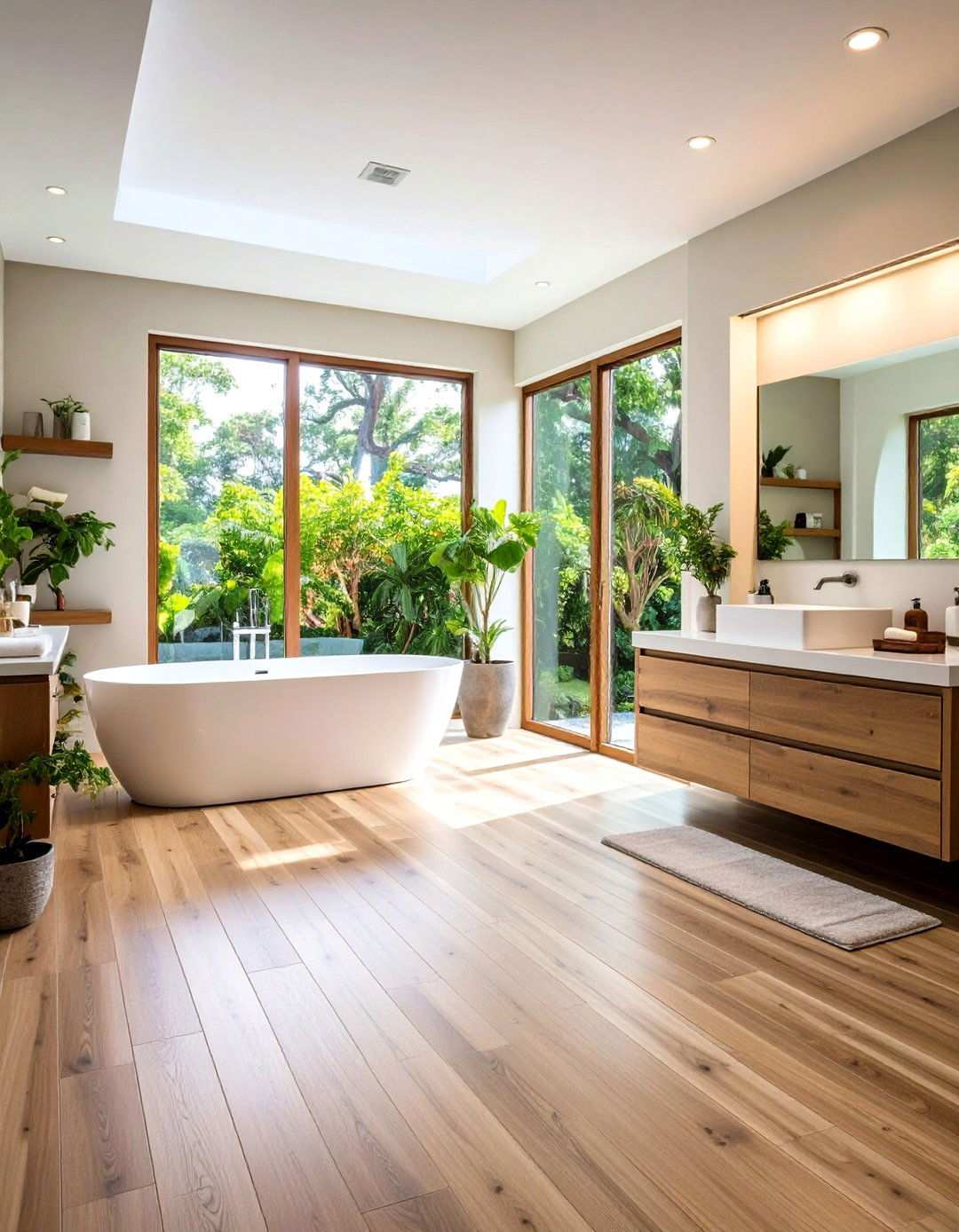
A bold black-and-white checkerboard ceramic floor has the power to instantly breathe new life into a tired space, offering a vintage flair that’s refreshingly modern in 2025 design forecasting. Unlike earlier decades’ slippery tile options, today’s ceramic floors boast high DCOF ratings, ensuring a secure footing without sacrificing graphic appeal. The installation process is streamlined thanks to budget-friendly 12-inch squares, and diagonal layouts effectively widen narrow en-suite spaces. To prevent pattern distortion, it’s essential to snap chalk lines frequently and start tiling from the room’s center.
4. Luxury Vinyl Plank Bathroom Flooring: A Versatile Solution
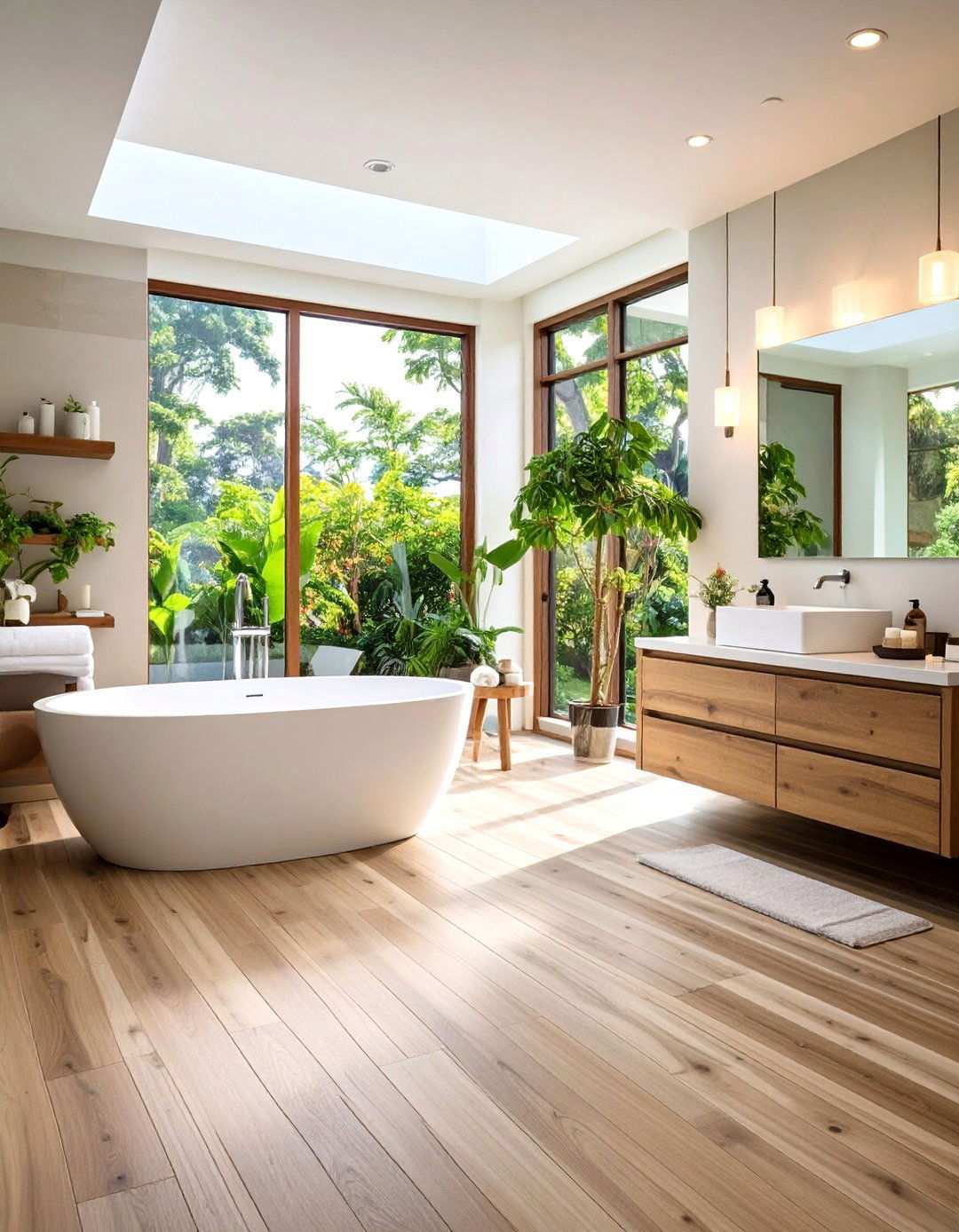
For homeowners seeking a warm, inviting, and convincingly natural look underfoot, luxury vinyl plank (LVP) flooring has become a go-to choice. Its PVC core and UV-cured wear layer make it 100 percent waterproof, while click-lock edges simplify DIY installations. To further enhance its performance, look for products featuring an attached antimicrobial pad, which helps to muffle footsteps on hollow subfloors and resist mildew in humid climates. When installing LVP, be sure to leave a 1⁄4-inch gap around walls and tuck the edges under baseboards for a polished finish.
5. WPC Waterproof Vinyl Bathroom Flooring
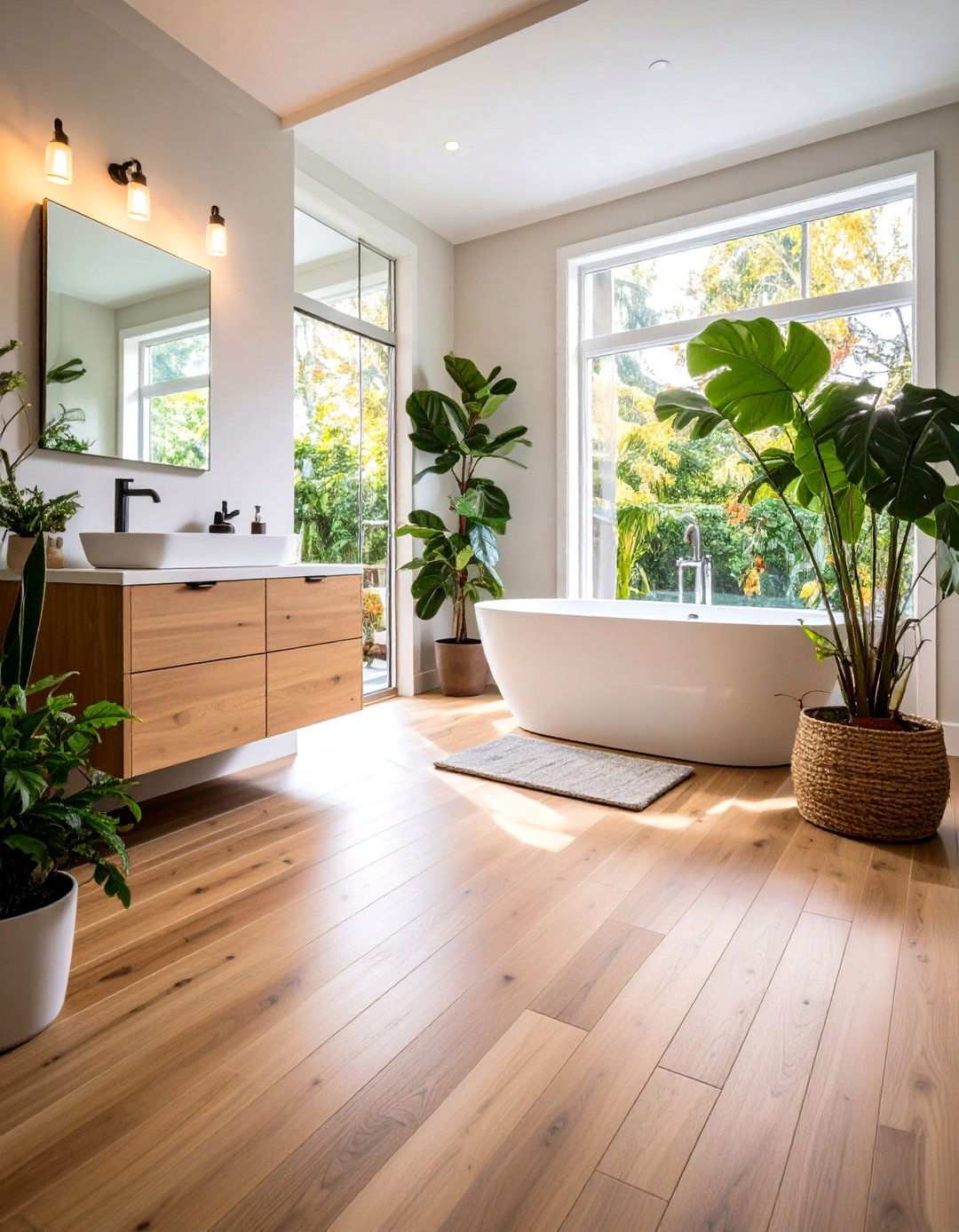
A key advantage of wood plastic composite (WPC) planks lies in their airy comfort, thanks to a foamed core that offers a softer and warmer feel compared to SPC or tile. However, this comfort comes at a cost – marginally lower impact resistance. As such, WPC is best suited for powder rooms or principal suites, rather than high-traffic kids’ bathrooms. One of the benefits of WPC is its ease of installation, as it clicks together quickly, making it an ideal choice for renters and first-time DIYers. In fact, a standard bathroom can often be finished in under a day.
6. Waterproof Laminate Bathroom Flooring
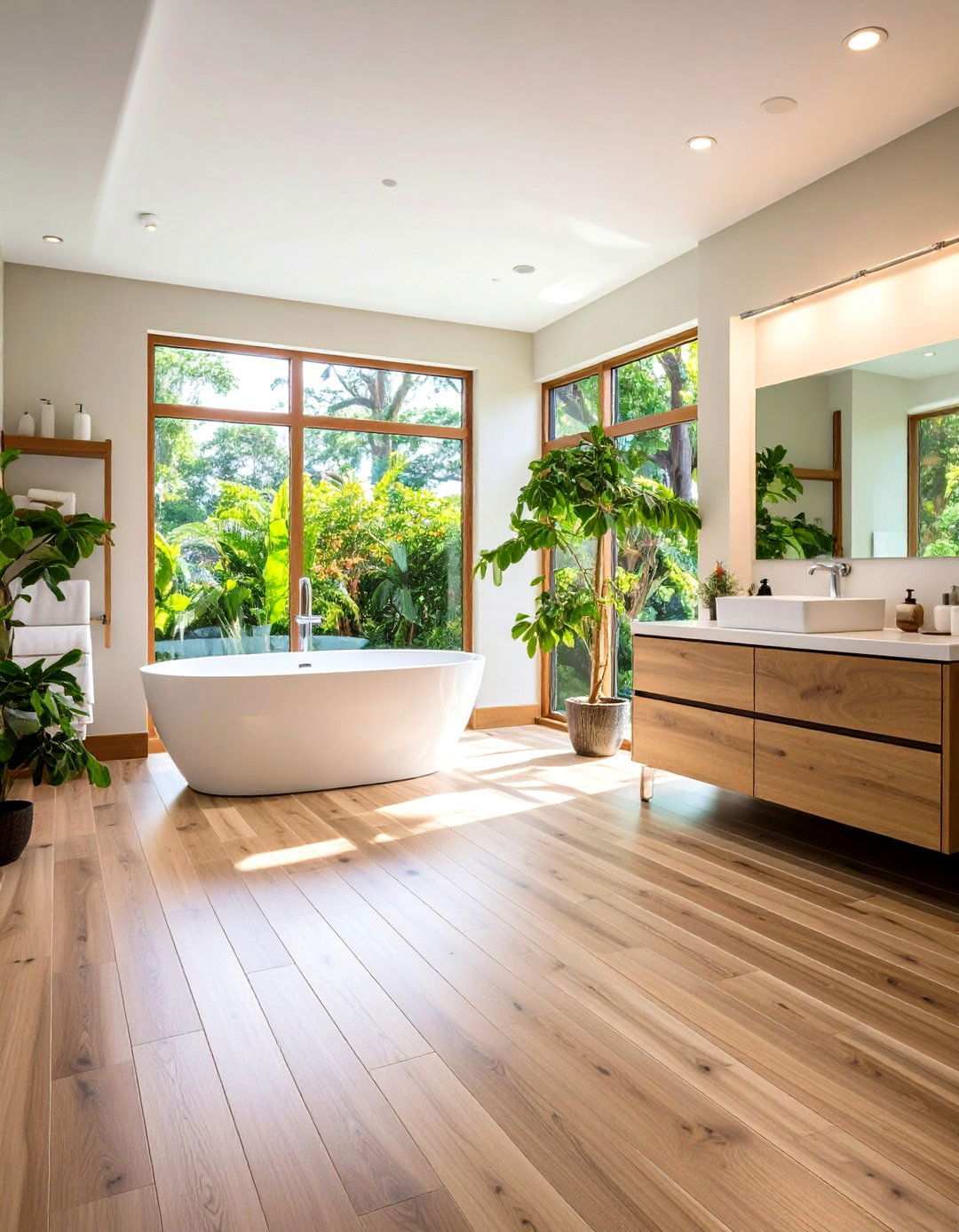
Laminates have undergone significant advancements in recent years, and are now capable of rivaling vinyl in terms of water resistance. New edge coatings have allowed many products to withstand puddles for 24-30 hours without swelling. For those who expect to have rolling laundry carts or wheeled vanity stools in their bathroom, look for laminates with AC4 or AC5 wear ratings. Regular maintenance is crucial to maintaining the warranty of laminate flooring – simply peel away the perimeter planks every few years to inspect for hidden leaks, a task that takes mere minutes.
7. Marble Bathroom Flooring
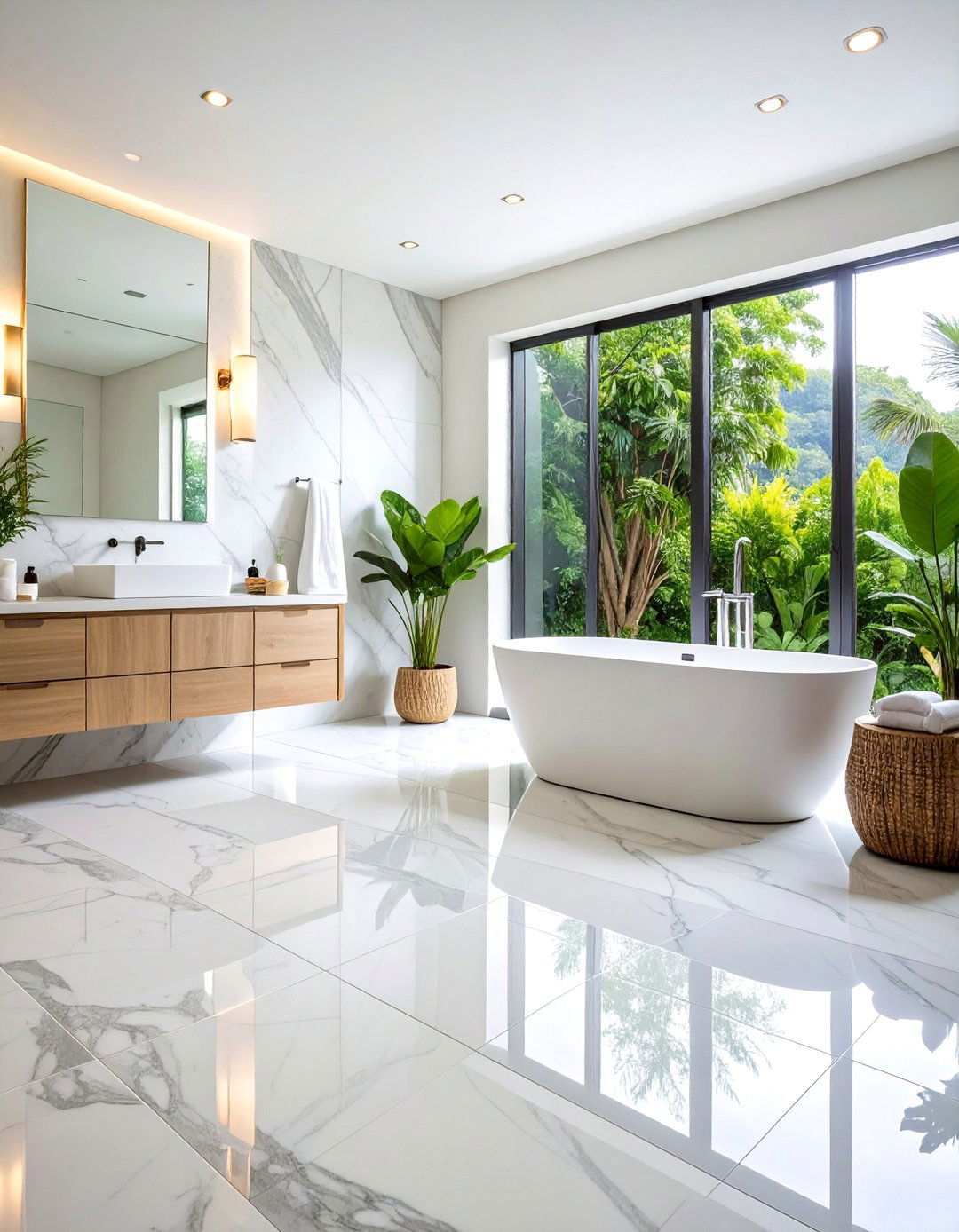
Marble bathroom flooring exudes luxury, with its subtle veining that never repeats, adding timeless value to any bathroom. However, its porous nature means that a penetrating sealer and tight grout joints are essential. A honed finish can help to hide etches from dropped cosmetics, making it a more practical choice than high polish. To offset the naturally cool feel of marble on winter mornings, pair it with towel warmer rails that provide gentle radiant heat.
8. Slate Bathroom Flooring
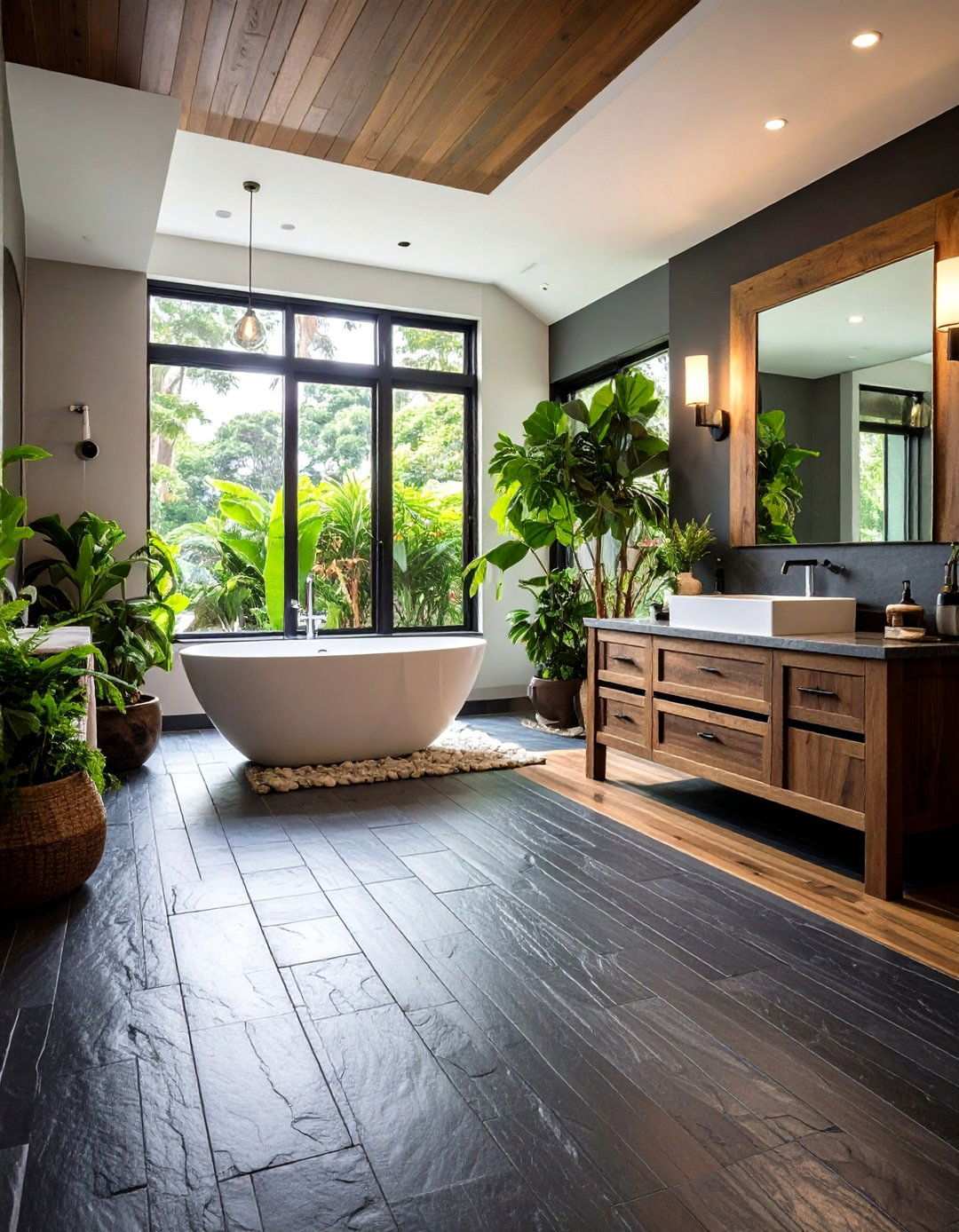
Slate may appear rugged, but it boasts a water-absorption rate as low as 0.4 percent, outperforming many man-made tiles in terms of moisture defense. Its subtle clefting offers natural slip resistance even when soapy water spills. Dark charcoal or multicolor varieties can also help to disguise dirt between cleanings, making it a practical choice for family spaces. Yet, slate can be prone to flaking if installed over uneven concrete; using leveling compounds and back-buttering each tile can help to eliminate voids that trigger delamination.
9. Terrazzo Bathroom Flooring
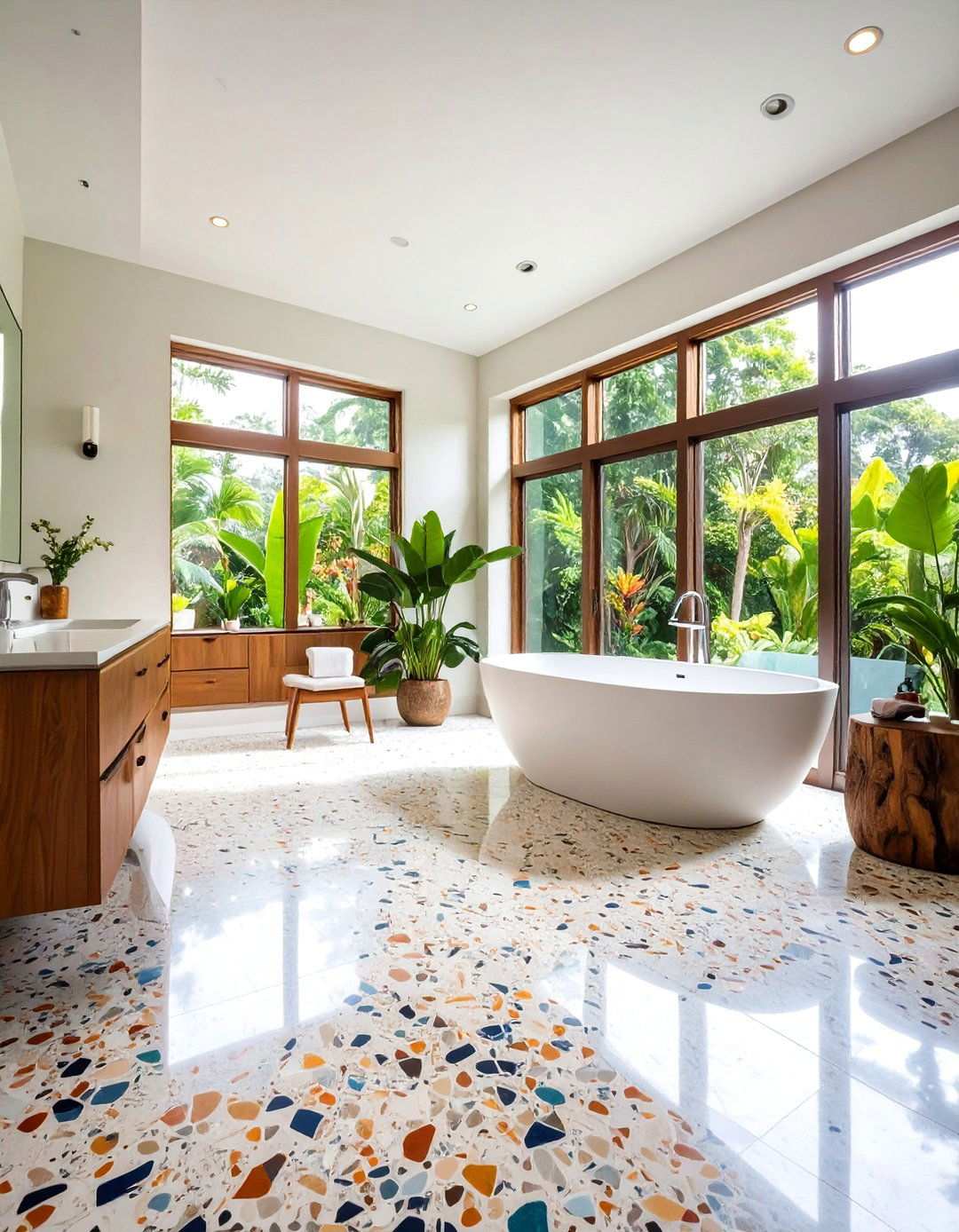
Terrazzo – whether poured or made from ready-made porcelain slabs – can revive mid-century glamour in any bathroom with its speckled chips that hide everyday lint. Its non-porous nature makes it resistant to puddles, and its seamless surface makes wheelchair access effortless. Prefabricated terrazzo-effect tiles can also help to cut costs dramatically; simply grout with a matching epoxy to keep the pattern uninterrupted. For chilly climates, combining terrazzo with electric heat mats can help to distribute warmth evenly, thanks to its thermal mass.
10. Recycled Glass Mosaic Bathroom Flooring
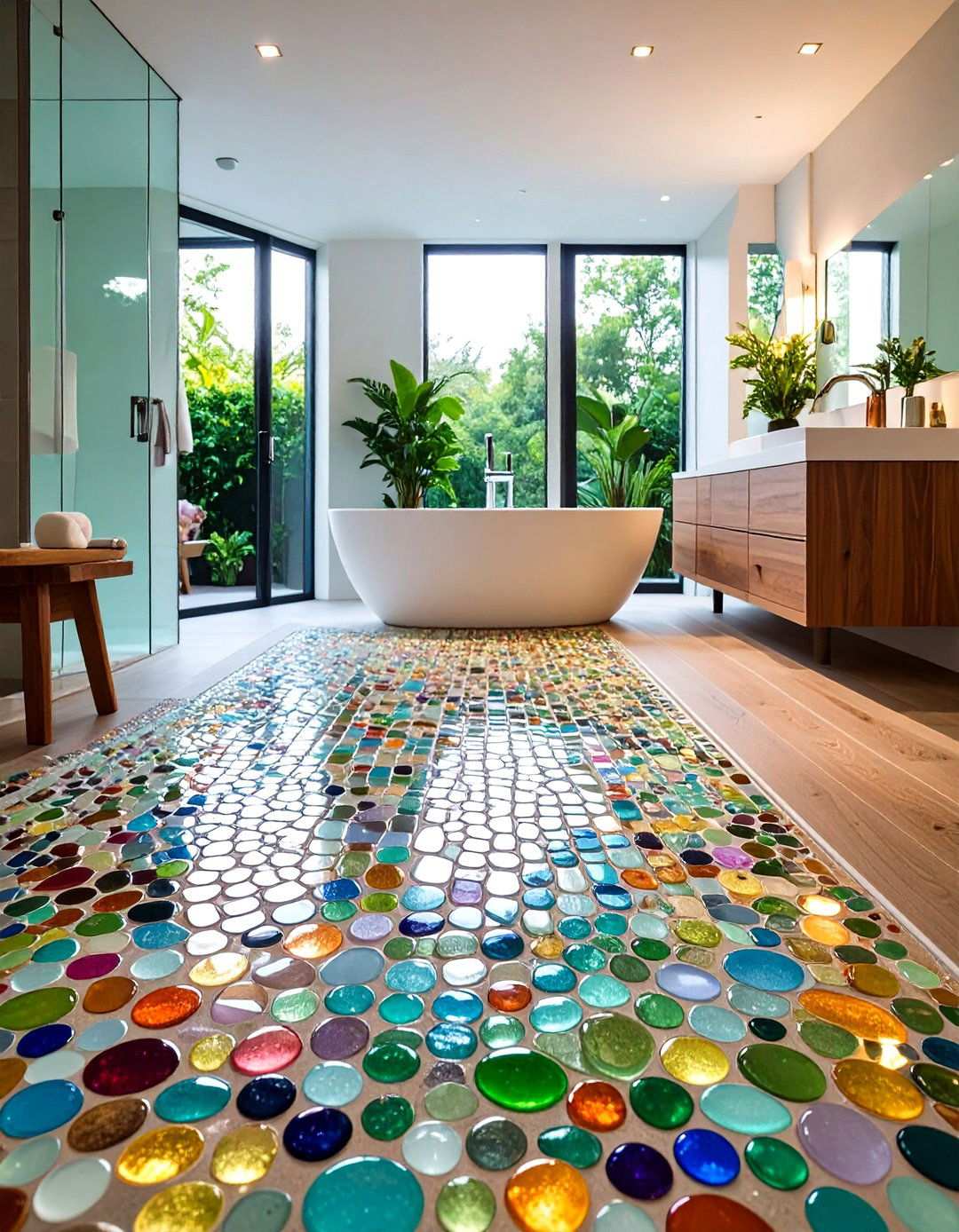
Recycled glass mosaics fashioned from post-consumer bottles can score high on sustainability charts while shimmering like water itself. Textured wafer-back dots can increase grip, and multiple grout lines can create micro-traction across the floor. Since grout color can alter the overall tone, it’s essential to test a small board with your lighting before committing. A premium latex additive in the thin-set can also help to guard against glass expansion and prevent cracking.
11. River-Pebble Bathroom Flooring
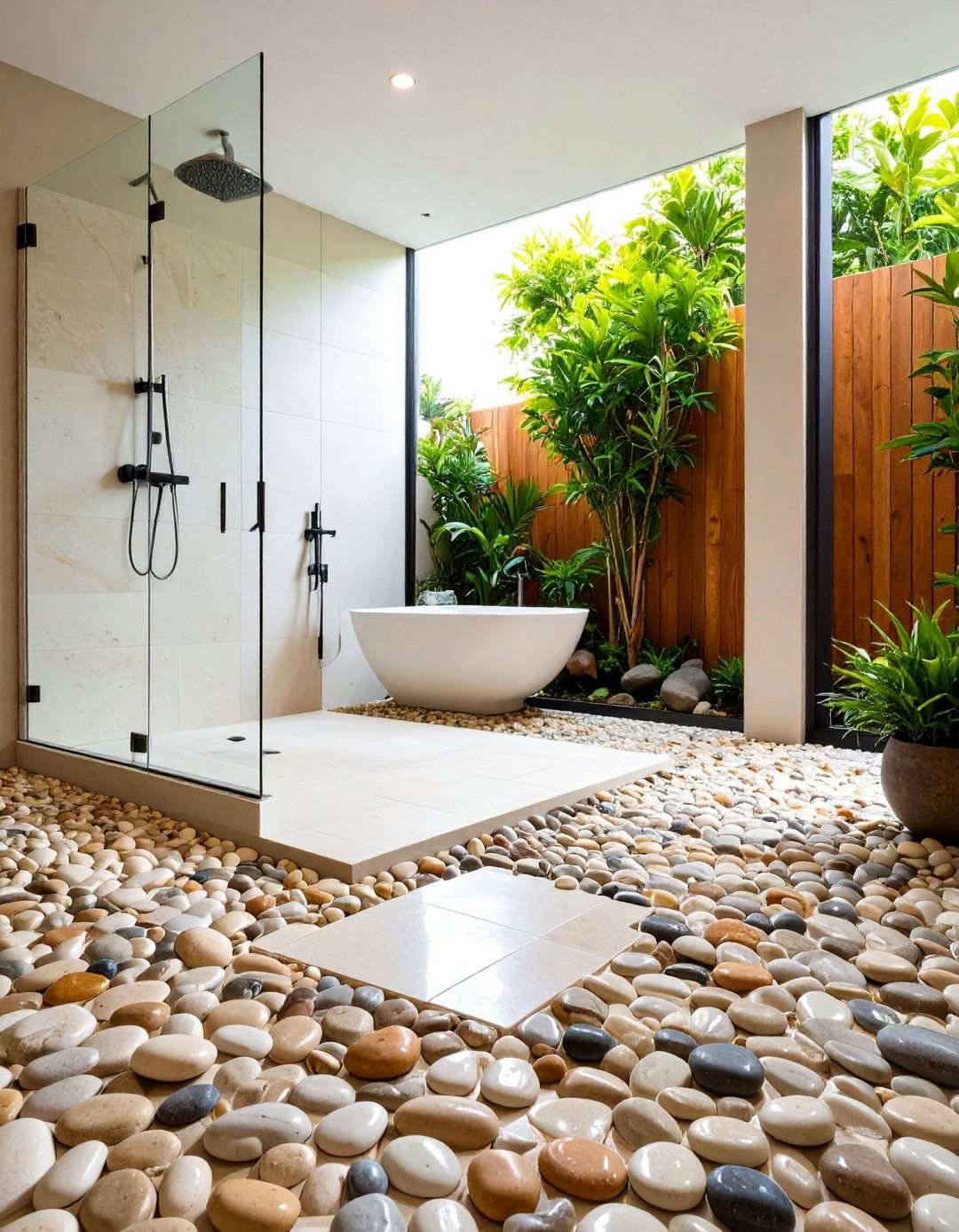
River pebble flooring in bathrooms presents an intriguing contrast to traditional flat tiles. Not only does it offer a gentle foot massage, but the natural anti-slip texture also reduces the risk of slips and falls. To maintain the aesthetic appeal, pebbles should be sealed diligently, particularly in areas where soap-film stains tend to accumulate in grout valleys. By using penetrating sealers, homeowners can ensure a longer-lasting solution compared to topical versions. Furthermore, to facilitate efficient drainage, sliced (flat-top) sheets should be ordered and installed on a consistent 1⁄4-inch-per-foot slope.
12. Sealed Cork Bathroom Flooring
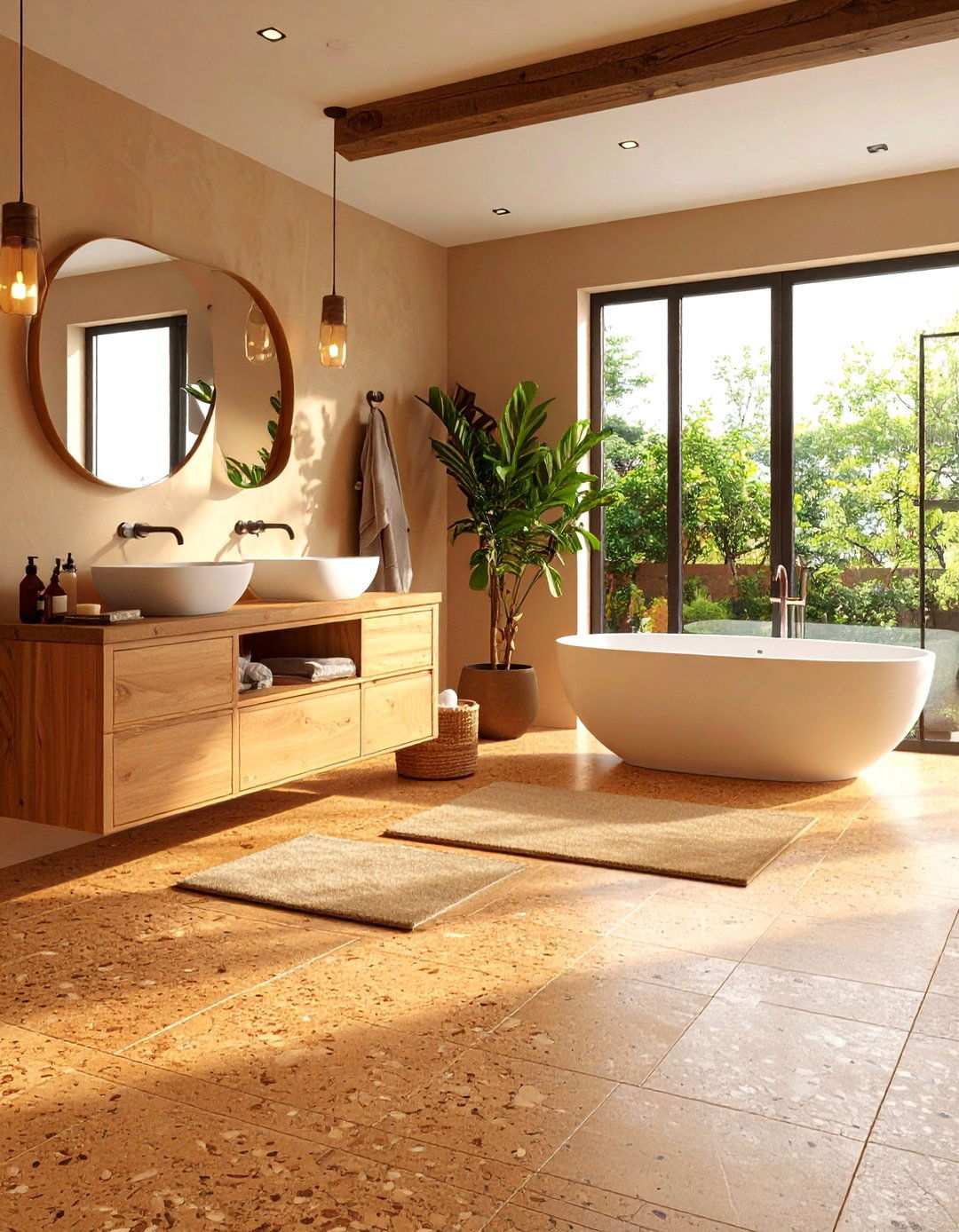
Cork bathroom flooring has garnered significant attention in recent years due to its soft, springy texture, which feels almost like a yoga mat underfoot. The material’s ability to absorb sound makes it a popular choice for bathrooms, while its renewable bark harvest also appeals to environmentally conscious homeowners. Modern polyurethane finishes can enhance the water resistance of cork, but it’s still crucial to wipe spills quickly to prevent staining. To minimize the risk of moisture seeping under the flooring, glue-down tiles are recommended; float them only if the subfloor is completely dry.
13. Engineered Bamboo Bathroom Flooring
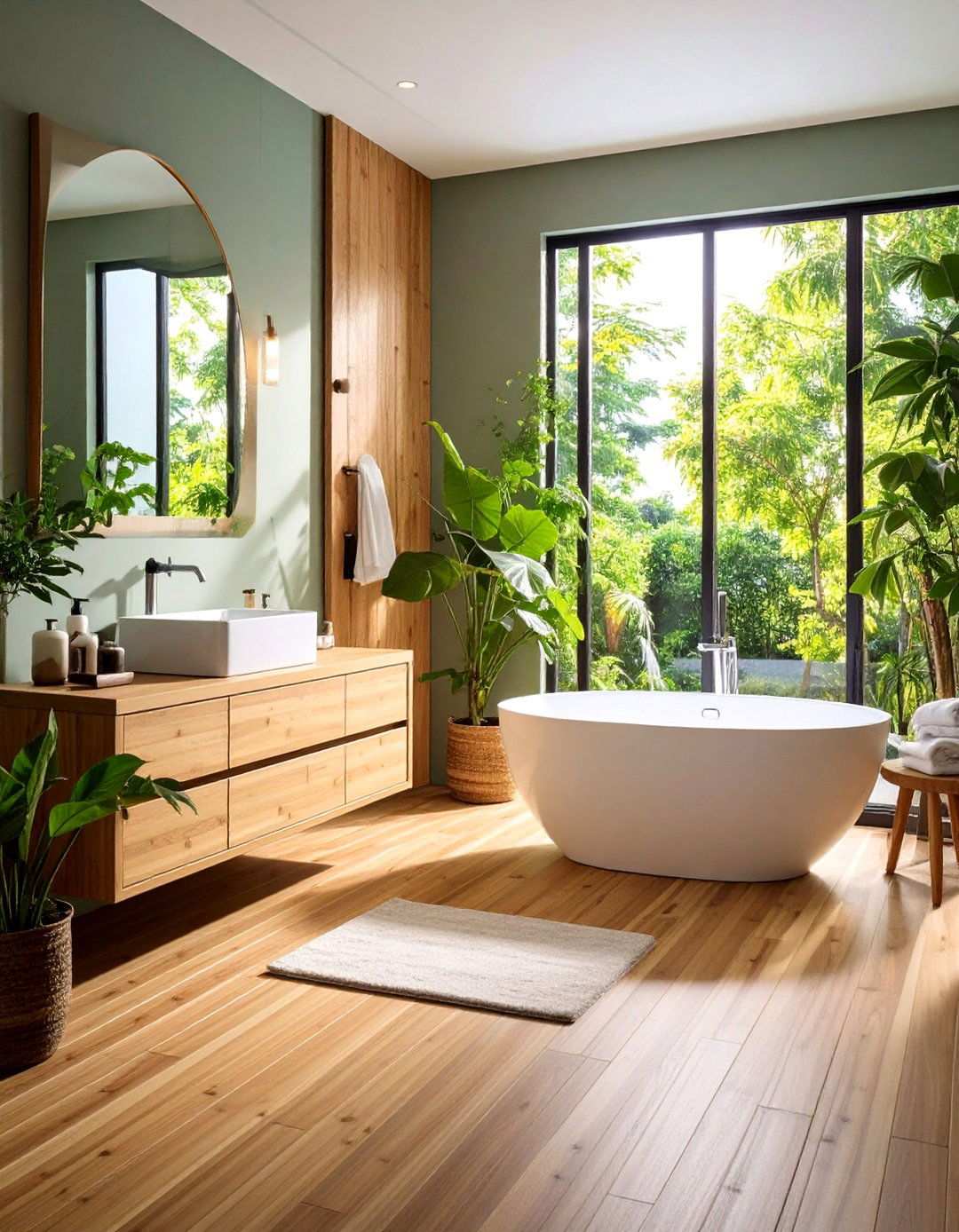
Engineered bamboo bathroom flooring has made significant strides in terms of water resistance. By compressing bamboo strands with resin, certain planks can withstand standing water for up to 30 hours, a substantial improvement over traditional bamboo. When selecting engineered bamboo flooring, look for labels that indicate “strand-woven” construction and a click-lock SPC or magnesium-oxide core. When choosing colors, it’s essential to note that big-box samples often exhibit variations, so mixing cartons randomly during installation will help to achieve a balanced tone.
14. Engineered Hardwood Bathroom Flooring
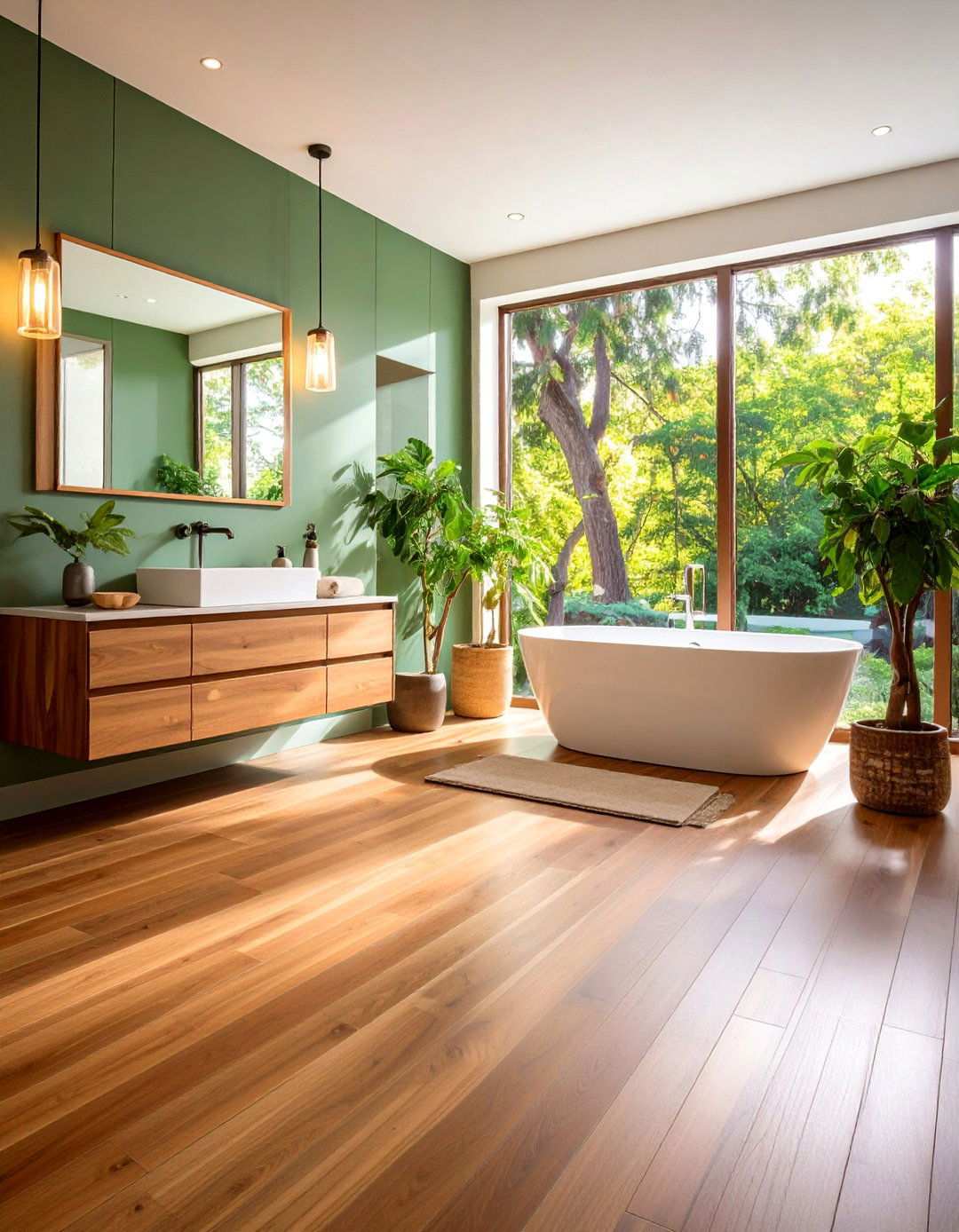
Advances in edge-sealants and hyper-dense cores have led to the development of select engineered hardwood systems that offer 36-hour waterproof protection without sacrificing the beauty of real-wood veneer. While these systems have made significant progress, it’s still prudent to place a bath-mat runner near tubs to prevent puddles from accumulating and seeping through micro-gaps. In the unlikely event of a nick or scratch, using the manufacturer’s matching touch-up pen can help to keep moisture from penetrating the raw wood.
15. Microcement Bathroom Flooring
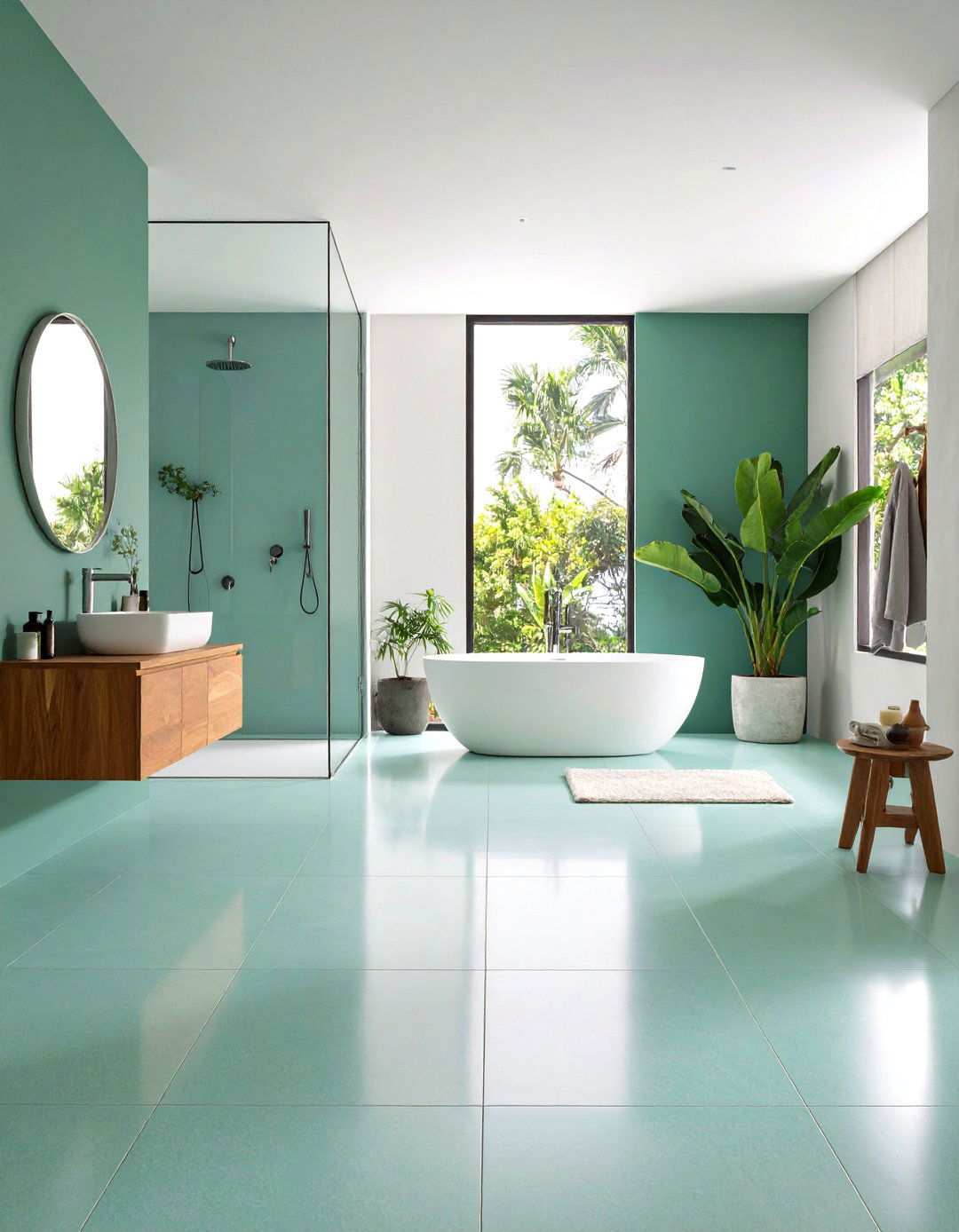
Microcement bathroom flooring offers a sleek and seamless aesthetic that eliminates the need for grout maintenance. With its thin profile of just 2–3 millimeters, it can be applied to floors, curbs, and even walls to create a wet-room effect. The pigment is mixed into the material, ensuring that any minor chips remain the same color. For added slip resistance, a two-part polyurethane topcoat can be applied; a satin finish is recommended over high-gloss to reduce glare and hide footmarks. Due to its sensitivity to humidity, it’s crucial to ensure good ventilation or run a dehumidifier during installation.
16. Rubber Bathroom Flooring
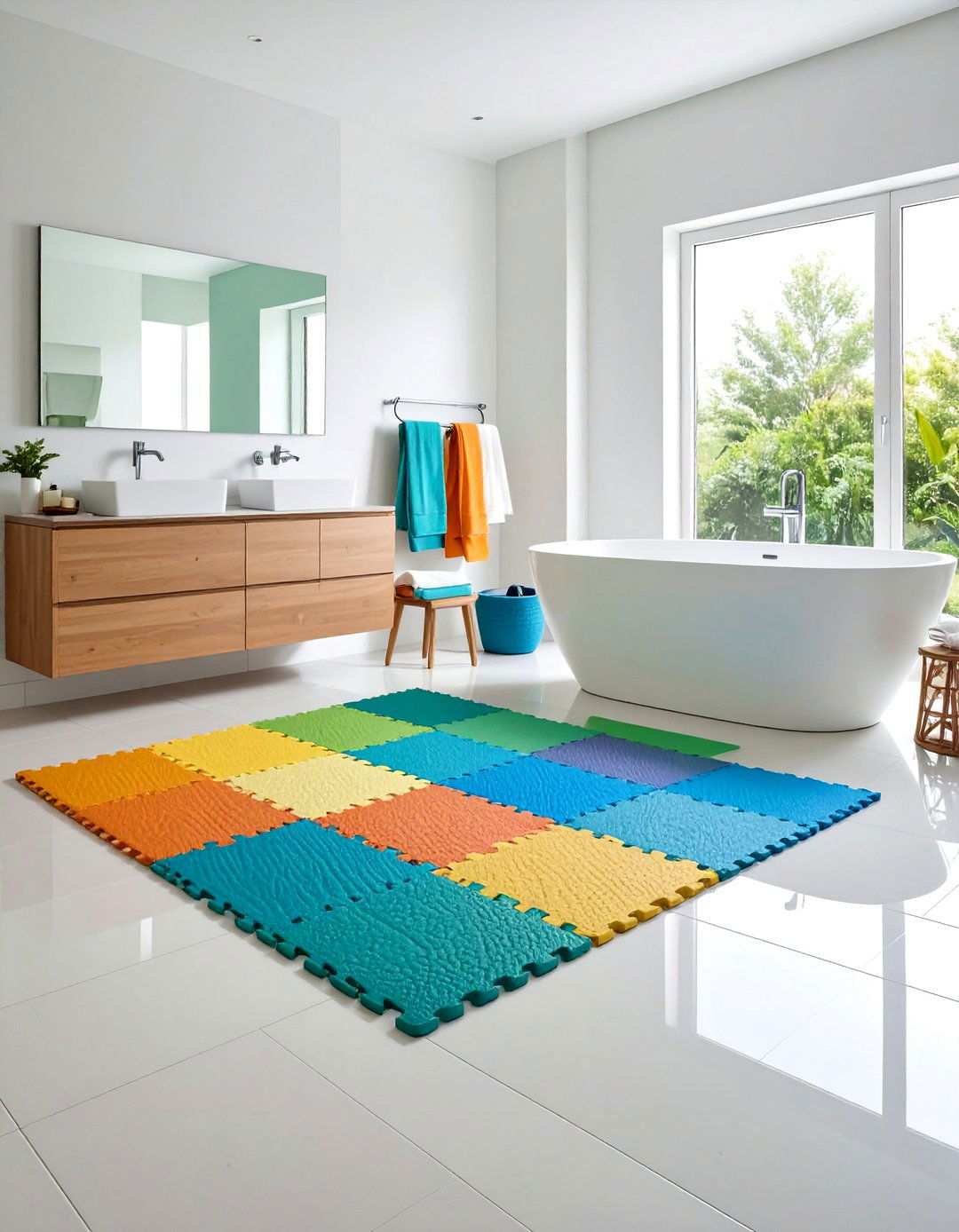
Rubber bathroom flooring offers numerous benefits, including natural elasticity that cushions joints and deadens sound. Its built-in traction provides peace of mind when the floor is wet, making it an attractive option for bathrooms. Available in rolls or puzzle-piece tiles, rubber flooring comes in a range of cheerful hues that can brighten up even the most windowless spaces. Commercial-grade variants resist UV yellowing, but they can darken under certain chemicals, such as hair dyes; having an alcohol-based cleaner on hand can help with quick wipe-ups.
17. Enhanced Thermal Experience via Radiant Flooring in Bathrooms
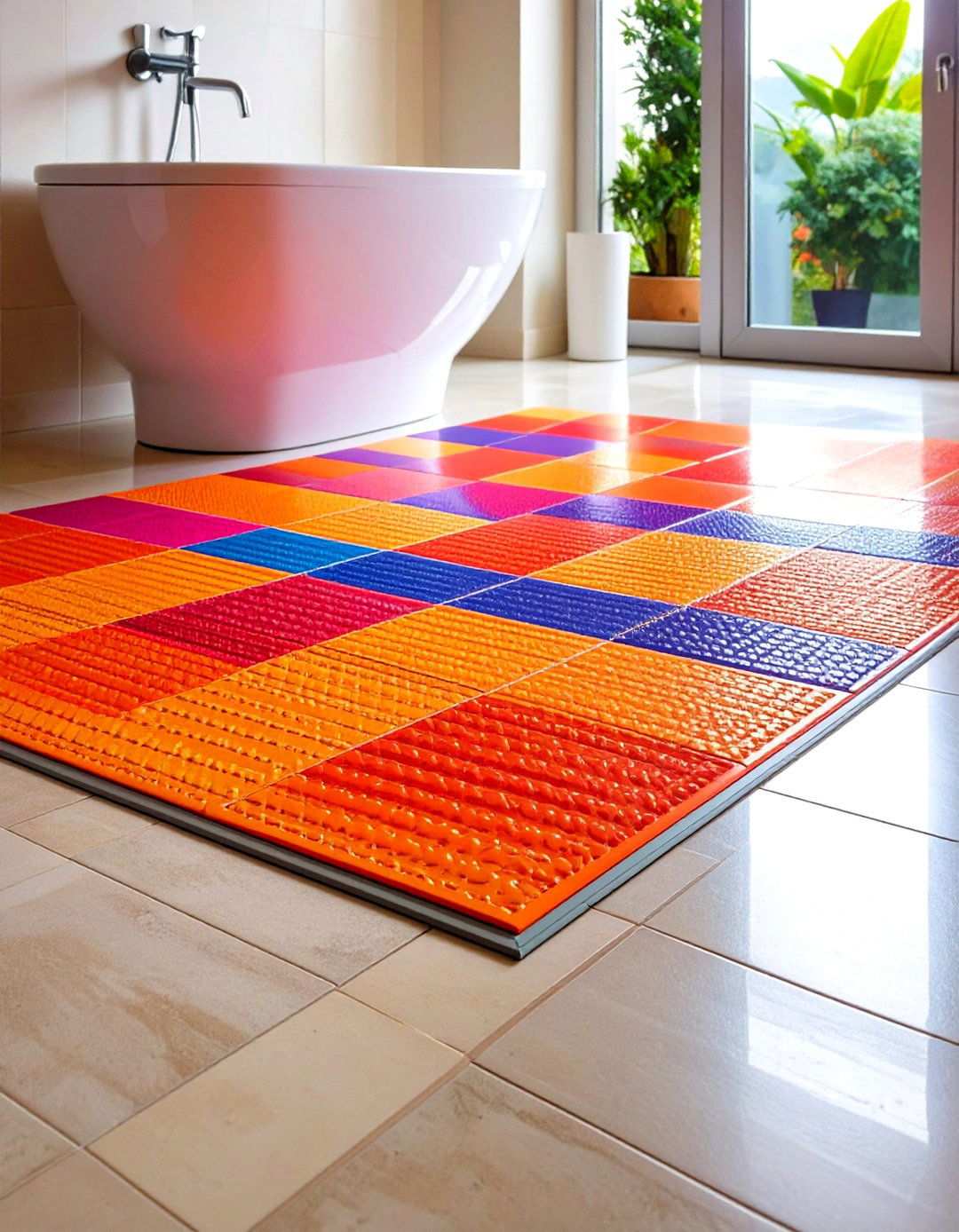
Radiant floor mats that are paired with robust sub-floors provide instant warmth to both tile and toes in mere minutes. By comparison, these mats operate 15–30 percent more efficiently than traditional forced-air duct heat systems. Installing an occupancy-sensor thermostat allows homeowners to cut energy costs, while embedding cables in self-leveling compound creates a perfectly flat base that supports even the largest format tiles without any grout lines becoming uneven.
18. Textured Porcelain Flooring for Safety and Style
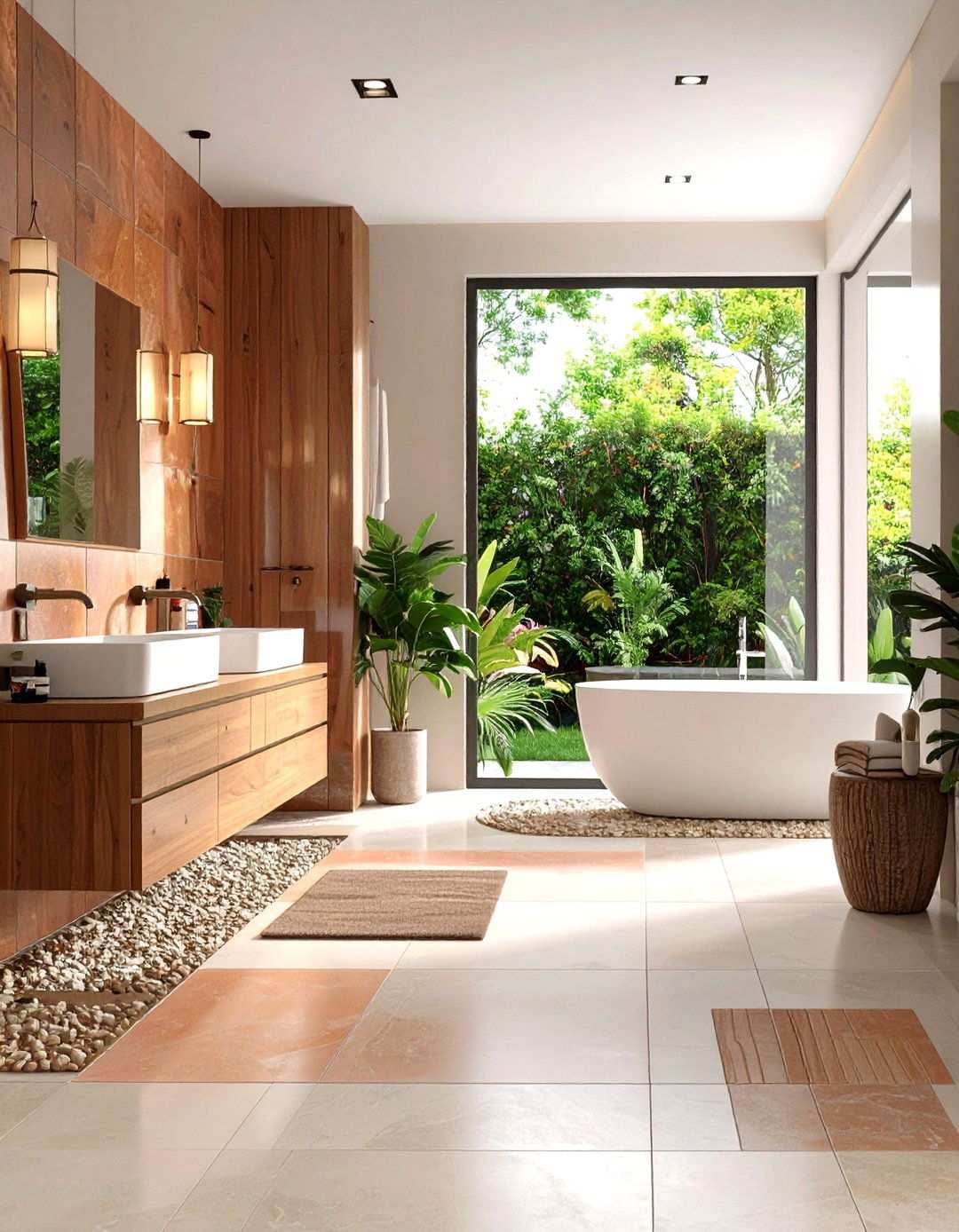
Textured porcelain flooring comes with impressive slip ratings, often at R11 or higher, which meets the guidelines for universal design aimed at ensuring accessibility for older adults. This type of flooring offers a stylish aesthetic while maintaining ease of maintenance, particularly when compared to rubber floors. Furthermore, specifying rounded bullnose edges on steps and thresholds can minimize trip hazards, thereby enhancing bathroom safety.
19. Large-Format Tile Flooring as a Space-Enhancing Option
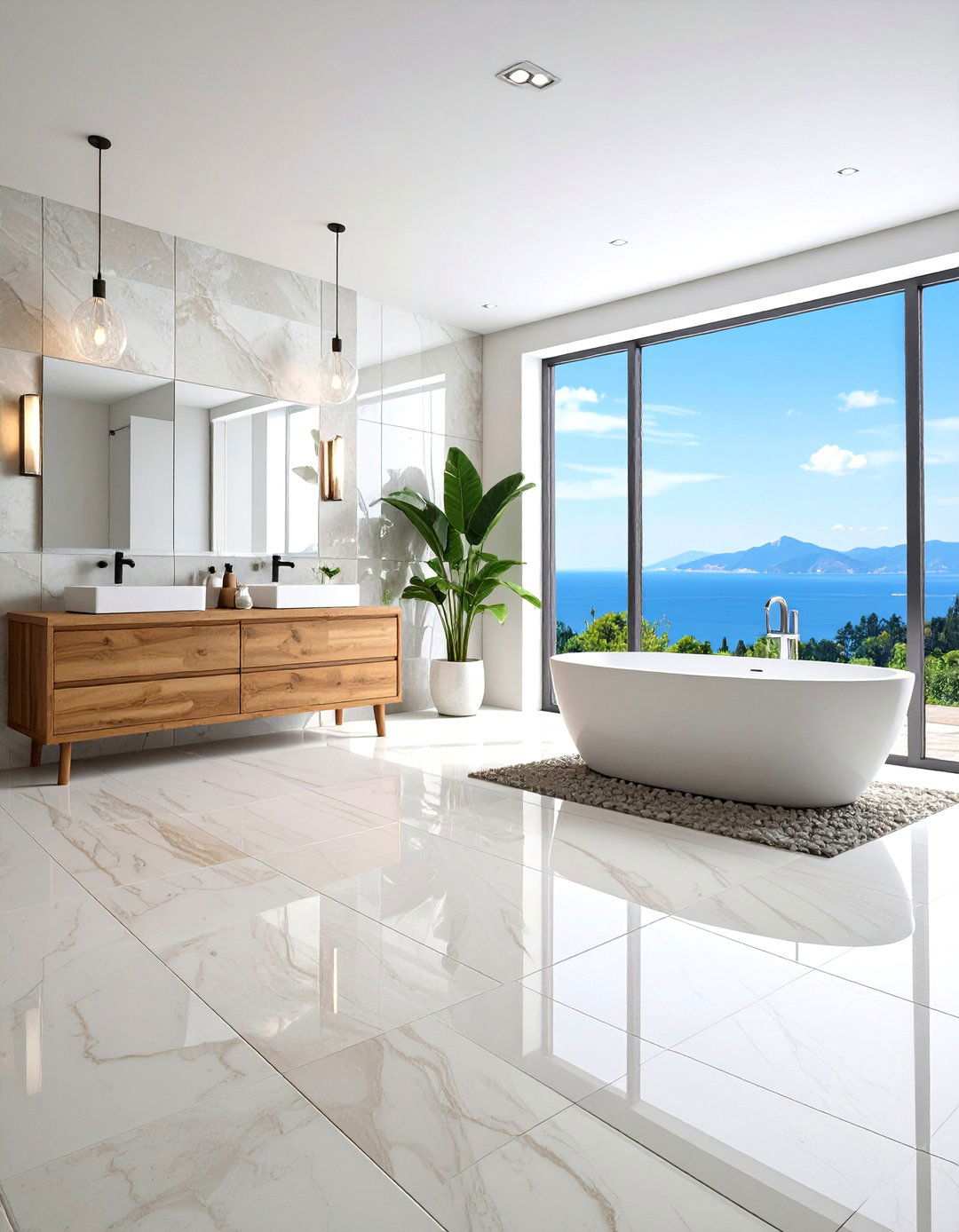
Large-format slabs, often measuring 30 × 60 inches or larger, contribute to a visually expansive bathroom by minimizing grout lines to almost imperceptible levels. Utilizing an “LFT”-rated thin-set mortar and a leveling-clip system ensures that such large panels remain perfectly plane. Employing two installers and continuous suction cups may require a rental fee, but the peace of mind derived from the reduced risk of cracked tiles is invaluable, as replacing a single large tile can prove costly.
20. Herringbone Pattern as a Budget-Friendly yet Custom Bathroom Flooring Solution
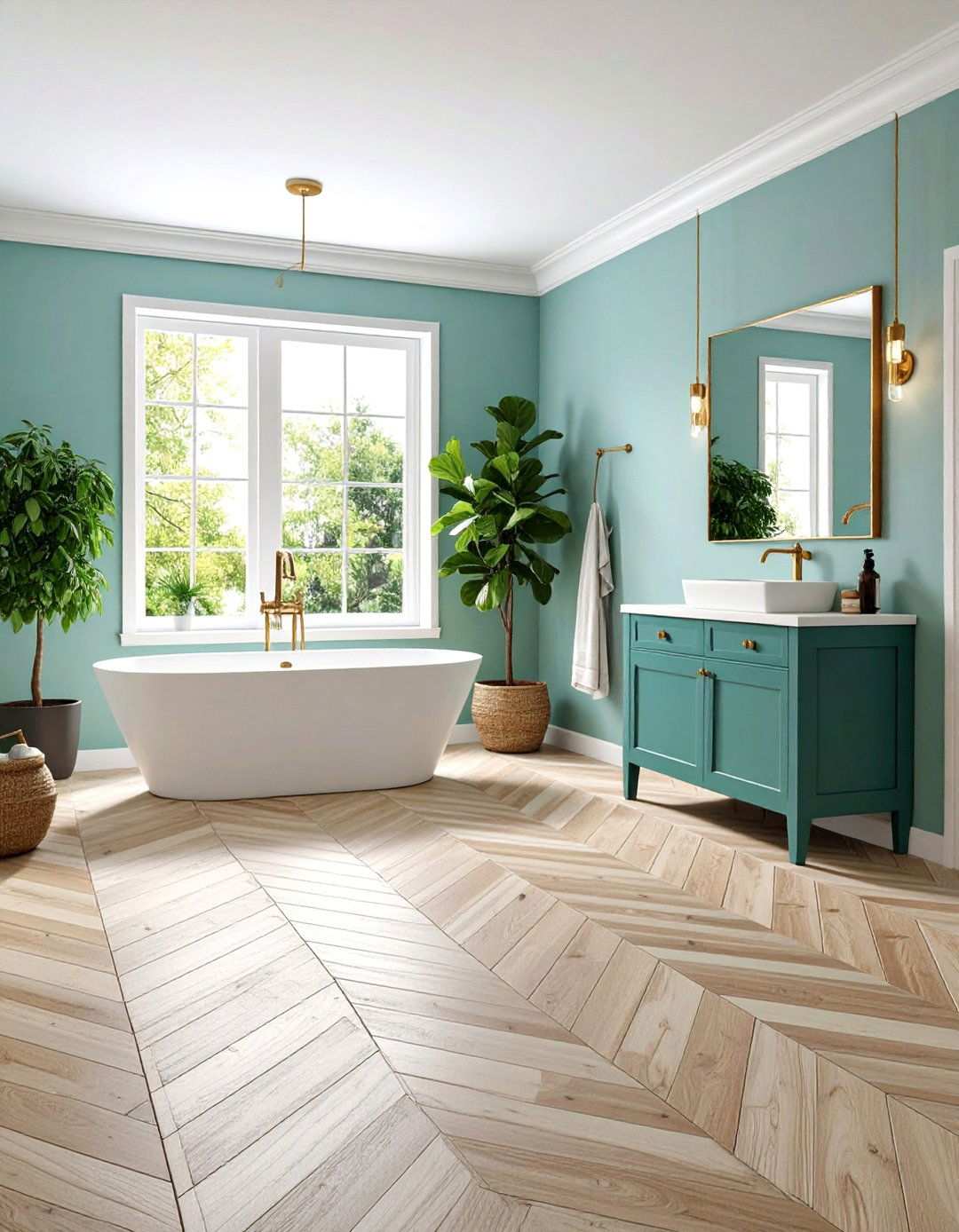
Bathroom flooring that exudes a custom feel can be achieved without breaking the bank by creating a classic herringbone pattern using porcelain, vinyl, or stone planks. This distinctive arrangement not only distracts the eye from narrow room proportions but also discreetly conceals any minor plank color variations. A crucial step before final installation is to dry-lay a few rows first and determine the exact 45-degree starting point, as a slight skew can become noticeable over the entire floor.