1. Mastering Contrast with Intention
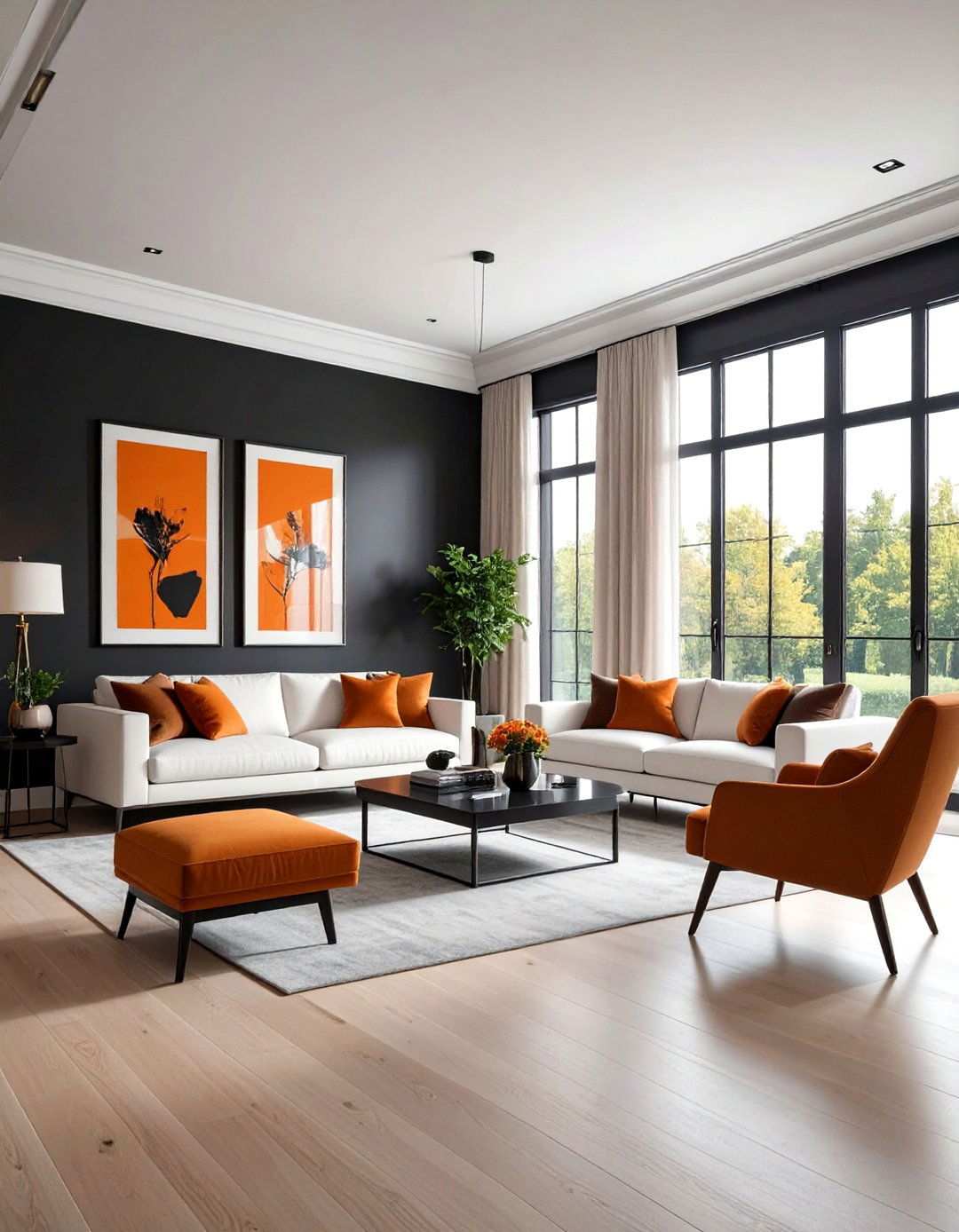
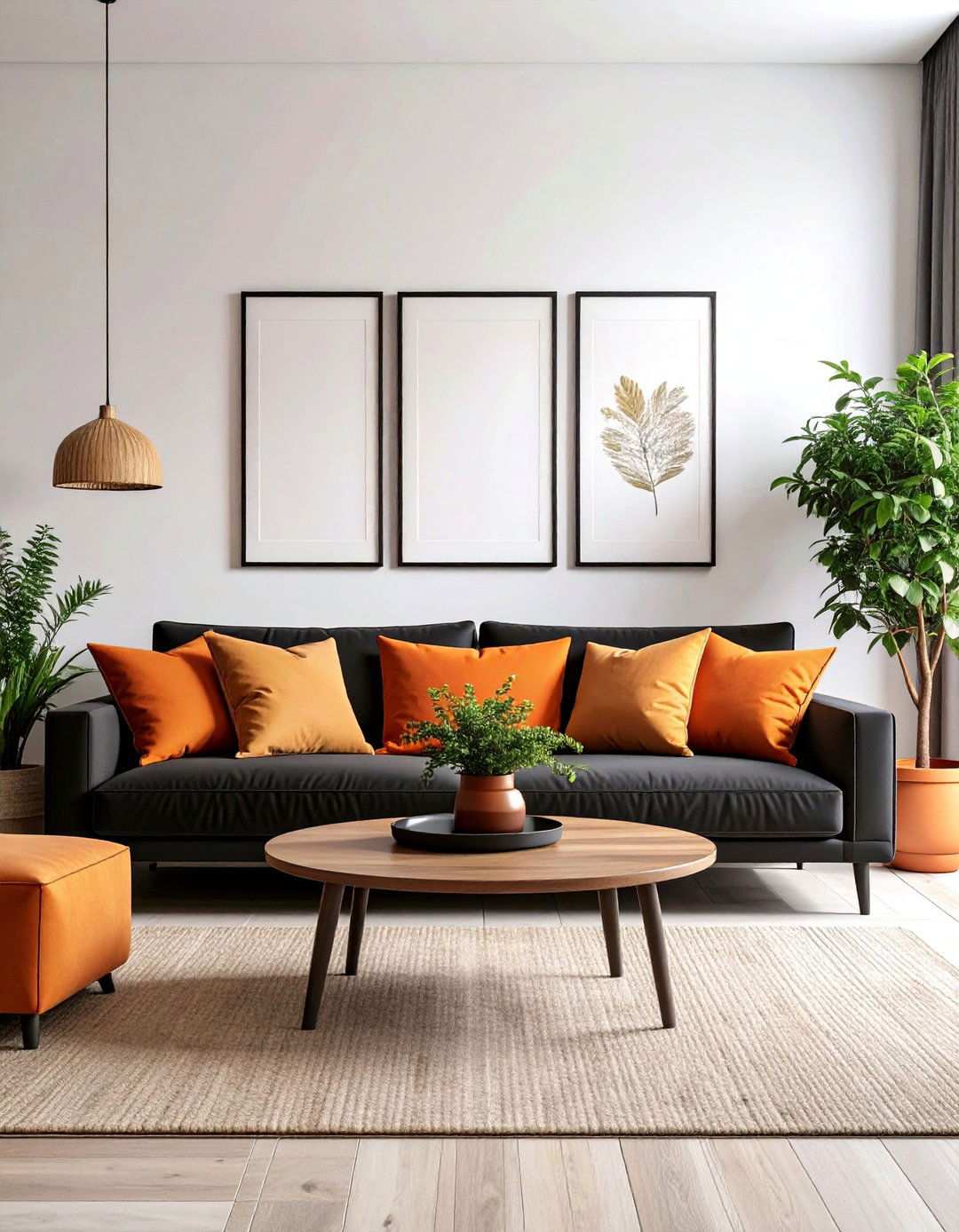
When it comes to creating a harmonious living space, the strategic use of contrasting colors is key. Combining the grounding presence of black with the uplifting warmth of orange allows for a visual dance that can adapt to any interior style. By balancing dark accents with lighter furnishings and reflective surfaces, the space avoids feeling cave-like and instead becomes a vibrant, inviting atmosphere. To achieve this, consider incorporating a matte-black feature wall as a backdrop for your orange accents. A slim timber moulding or picture ledge can add a touch of sophistication, while pops of orange on cushions, pottery, or a statement armchair inject energy and warmth into the space.
2. Turning Heads with a Bold Sofa
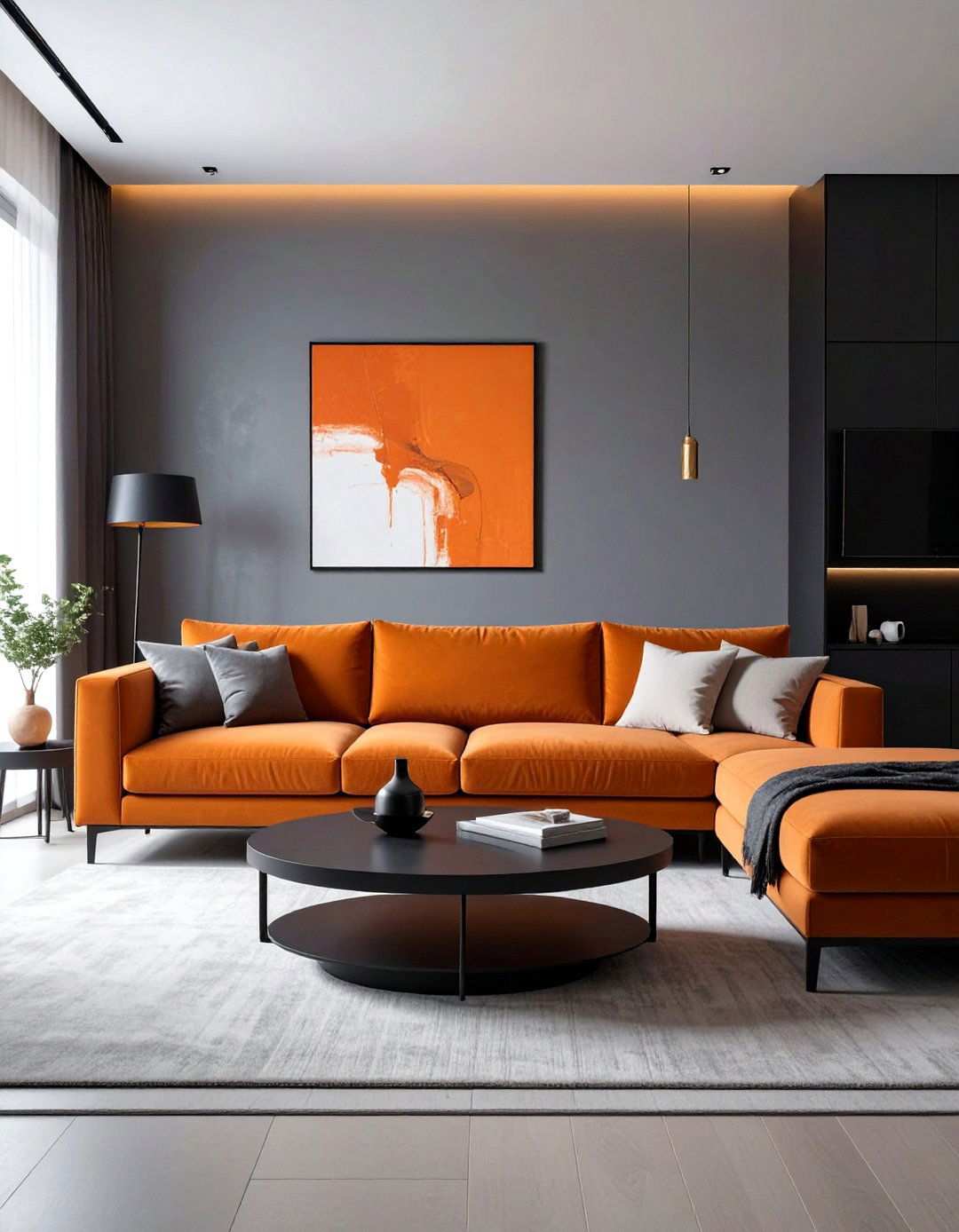
A sumptuous orange sofa can instantly elevate a black-accented living room from subtle to show-stopping. Recent color trend analyses have highlighted the appeal of burnt-orange upholstery, which brings an inviting, retro warmth that pairs beautifully with matte-black walls or a charcoal media unit. To create a curated look rather than a chaotic one, designers recommend grounding the sofa with a low black coffee table and carefully repeating orange only once or twice, perhaps through an abstract painting or terracotta planter. Completing the scene with creamy throw blankets and hidden LED strip lights beneath the sofa base adds depth and visual interest after dark.

As an Amazon Associate I earn from qualifying purchases.
3. Weaving Textures for Visual Rhythm
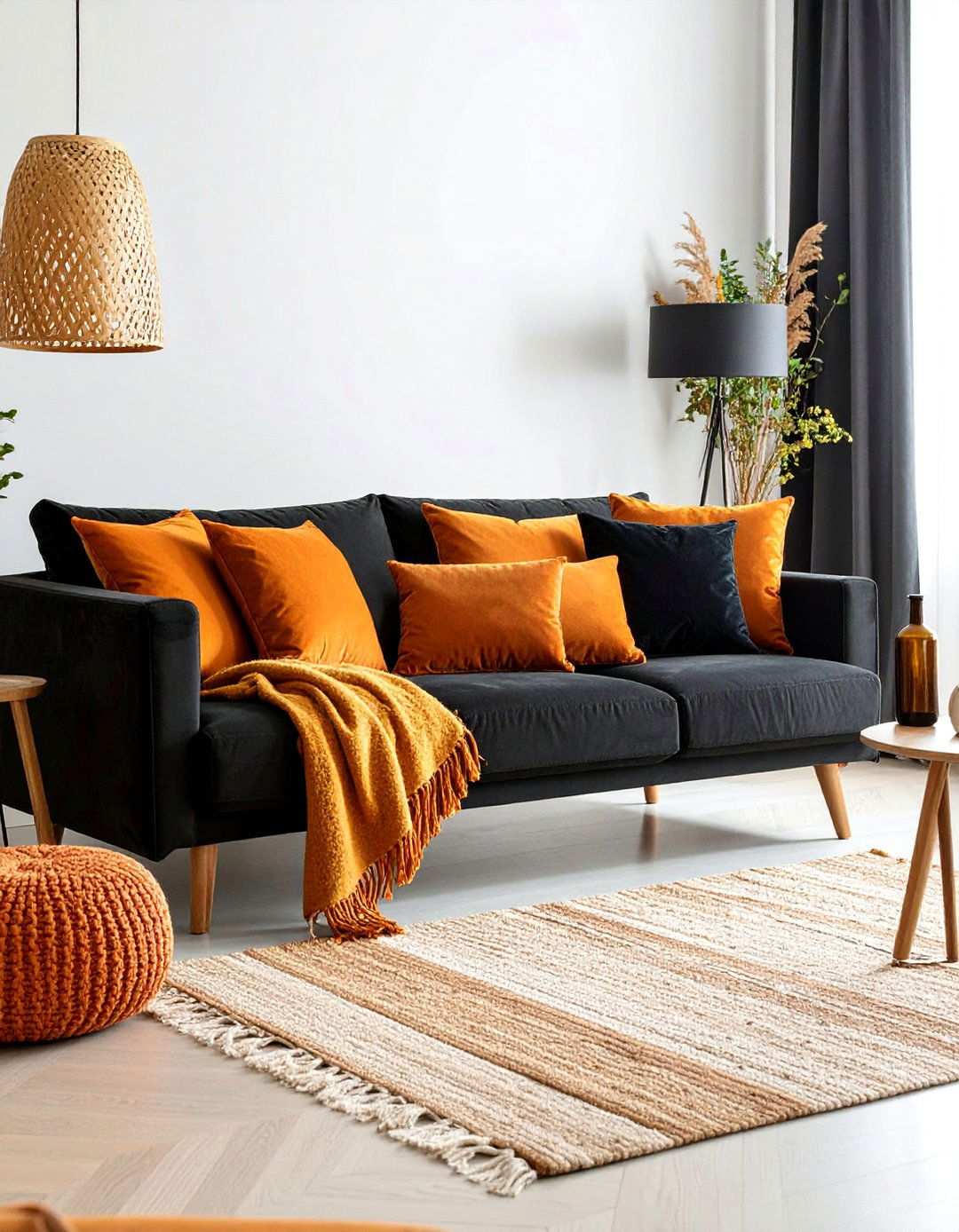
Textiles offer a versatile gateway into a black-and-orange living room, allowing you to adjust the palette according to the seasons. By pairing an inky sofa with cushions in varying orange shades, from ginger to tangerine, you can create depth without introducing new furniture. Design experts also suggest adding a single jet-black velvet pillow to the warm tones, which ties the palette together and adds tactile richness. Completing the layers with a woven jute throw in neutral flax bridges the colors and prevents visual heaviness. When textures vary, think boucle, linen, or leather, and the room takes on a collected, inviting feel rather than a literal theme.
4. Graphic Artwork Duo
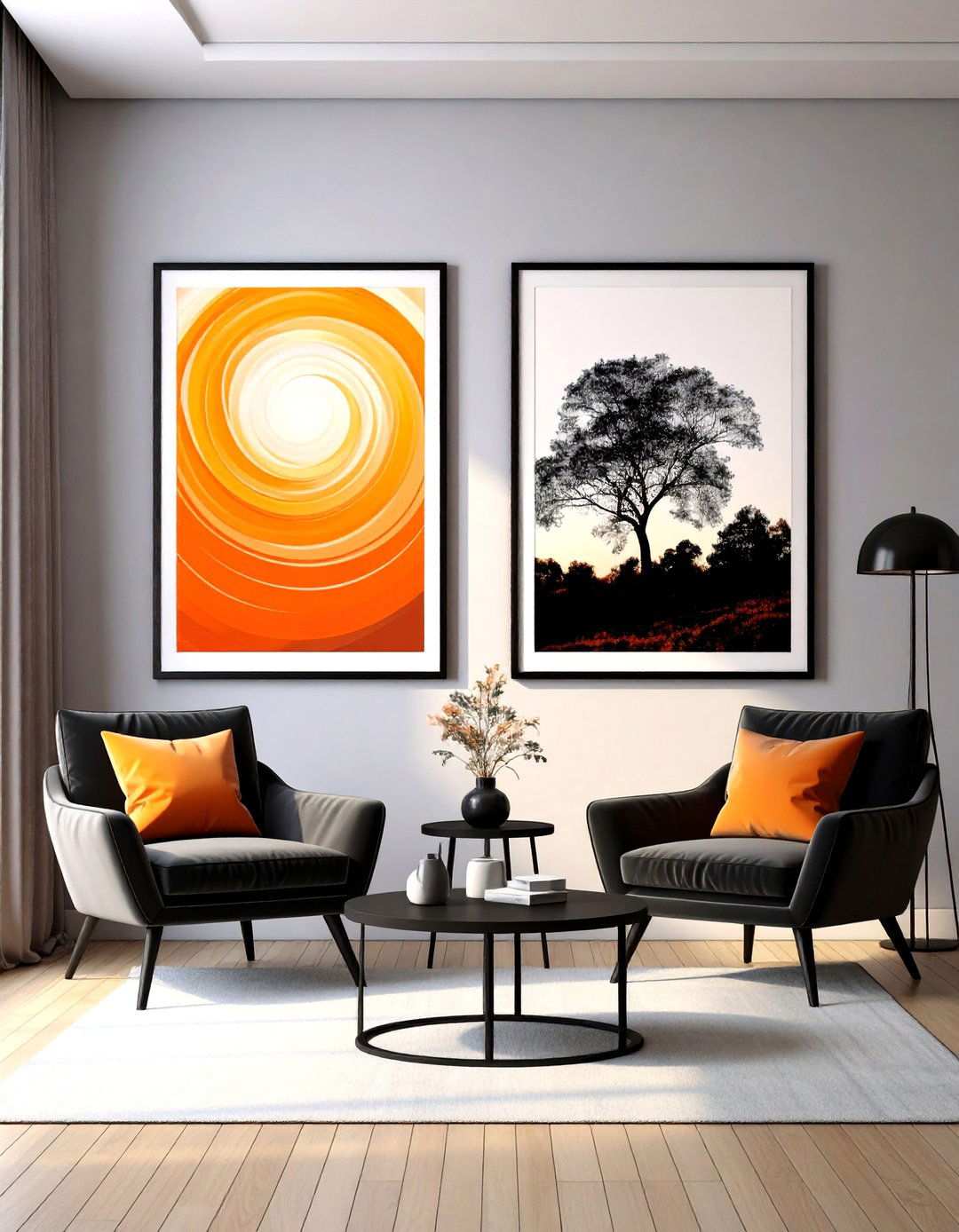
When it comes to making a statement in a living room, consider pairing oversized prints side by side on mid-tone walls. This setup creates a gallery-like focal point that draws the eye. By combining an abstract swirl of sunset orange with a black ink sketch, you can add visual interest to your space. To amplify the effect, keep mats crisp white, allowing the artwork to pop rather than blend in. For a budget-friendly alternative, try repurposing vintage fruit-crate labels with orange typography and paint inexpensive frames high-gloss black. This hack injects instant personality and color continuity into your room.
5. Metallic Accents for Warmth
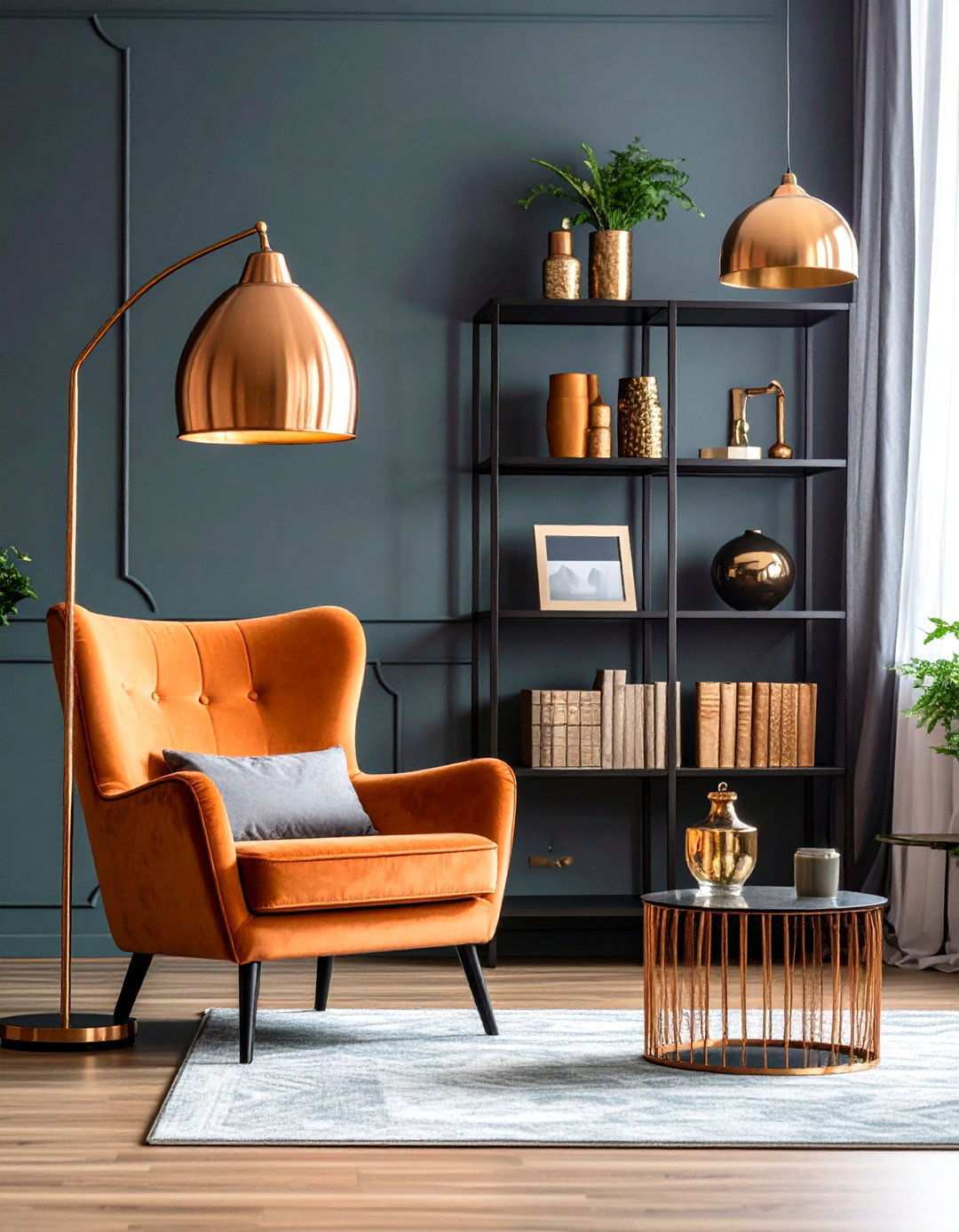
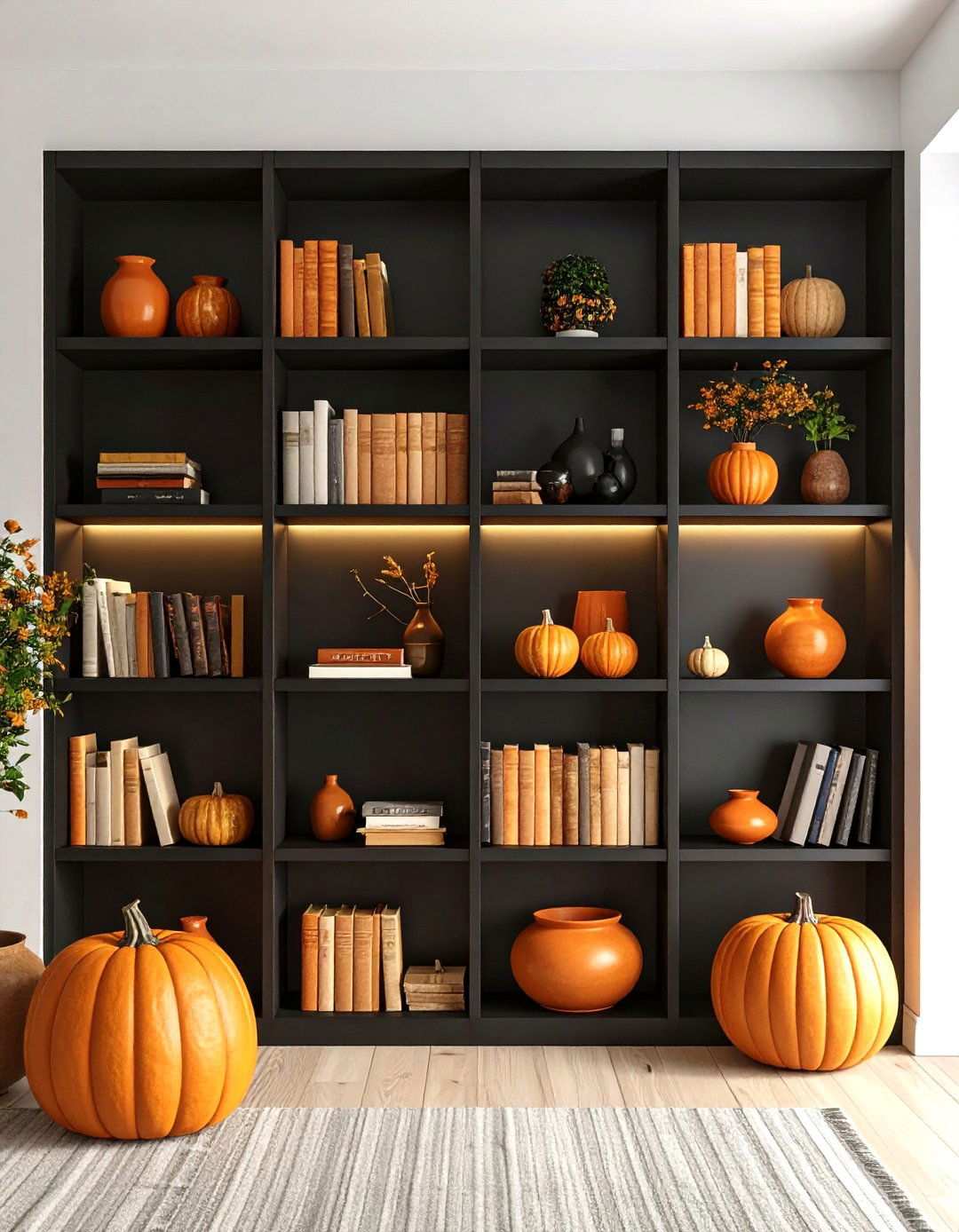
Incorporating warm metals like bronze, copper, or antique brass can beautifully bridge the gap between black and orange, injecting a subtle glow that softens stark contrasts. According to lighting specialists, black rooms often rely on reflective accents to maintain a welcoming atmosphere; a hammered-copper floor lamp positioned behind an orange armchair creates a cozy ambiance by bouncing amber light across dark walls. To add more metallic touches, consider swapping chrome cabinet pulls for brushed gold or slender brass picture lights above black shelving. These sophisticated details elevate the palette from sporty to luxurious while respecting the color story.
6. Velvet Burnt-Orange Sectional
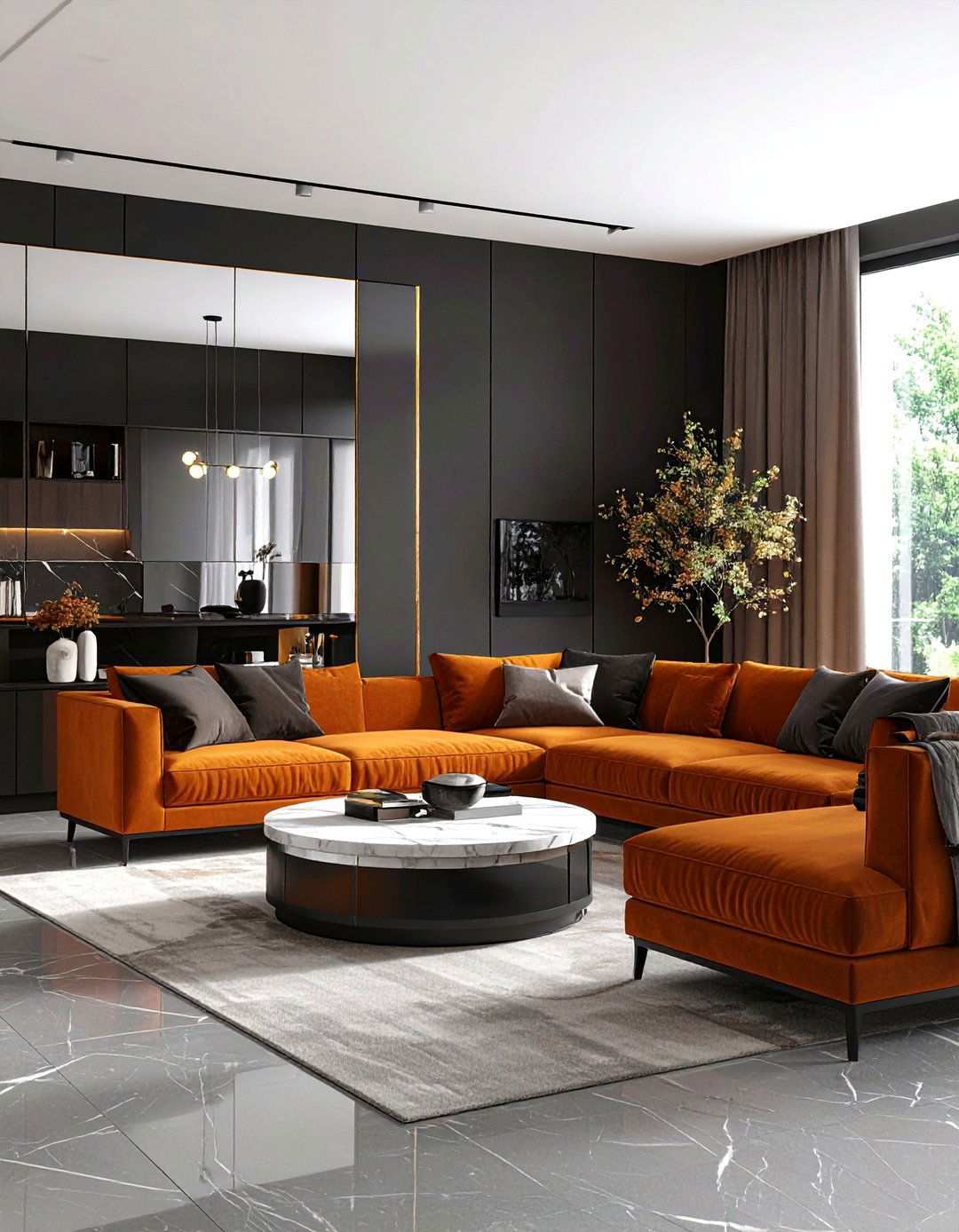
A plush burnt-orange velvet sectional sofa exudes retro glamour while feeling remarkably current when paired with a crisp black-and-white aesthetic. Designers recommend selecting a sofa with clean, low lines to prevent overwhelming the living room’s proportions. To echo the velvet’s subtle sheen, pair it with a black-lacquer media console and a round marble coffee table that adds a touch of lightness. If space permits, float the sectional slightly off a black jute rug to prevent visual heaviness. Balance comfort and chic by layering a slim ebony side table and a charcoal-edge mirror, allowing the eye to move freely.
7. Mid-Century Pops of Tangerine
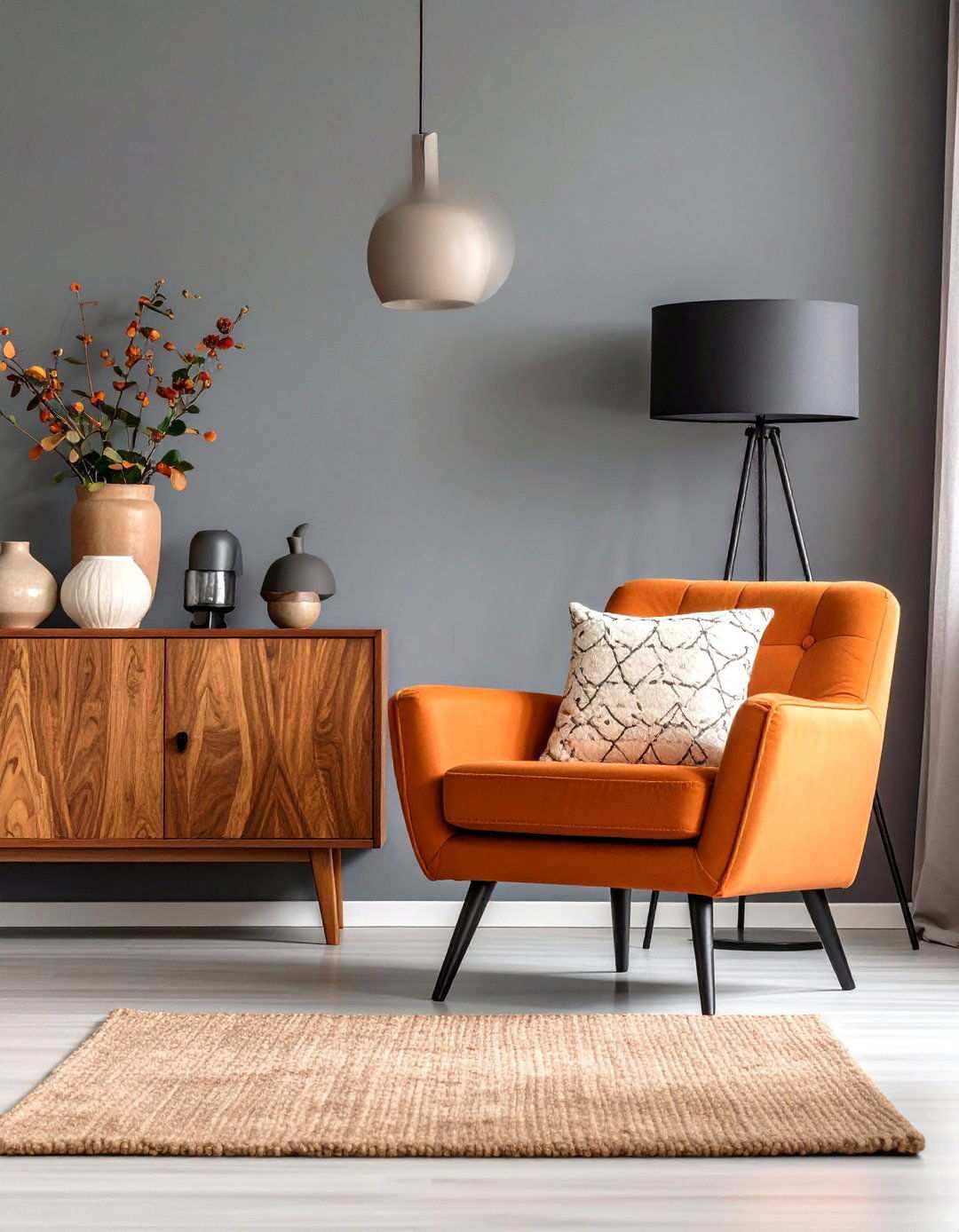
Fans of mid-century style can tap into orange’s optimistic 1960s vibe through accent chairs, geometric cushions, and teak sideboards, all of which pair naturally with black hairpin legs or matte metal lighting. Color trend editors note that pairing tangerine upholstery with walnut wood introduces earthy depth and prevents the palette from feeling too graphic. A tapered black tripod lamp echoes chair legs, while an orange-and-cream shag rug anchors the seating area. To keep the focus on furniture silhouettes and color, choose light greige or palest clay for the walls, allowing the room’s visual interest to shine.
8. Industrial Loft Vibe
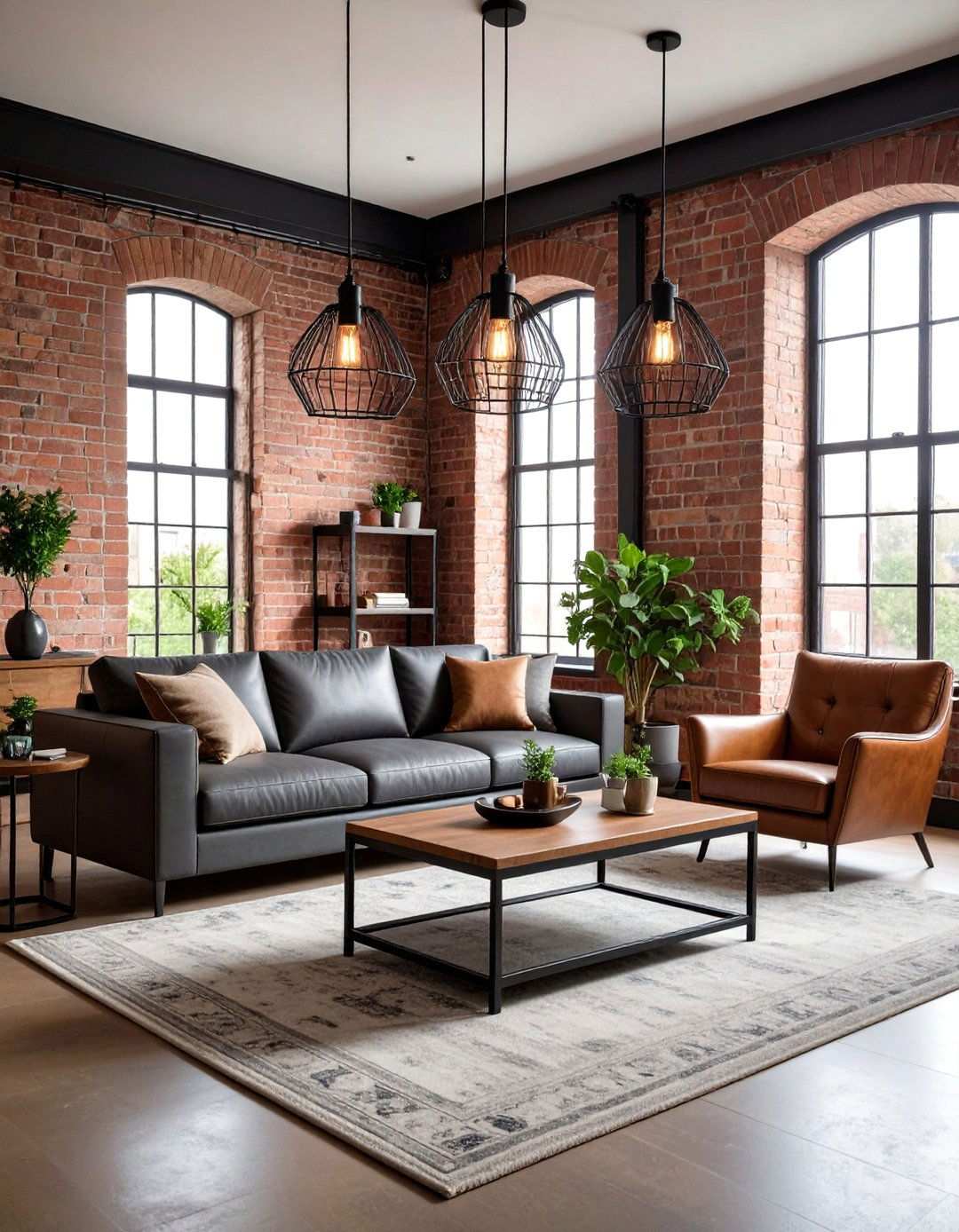
In an industrial-style living space, exposed brick, steel beams, and ceiling heights create a dramatic backdrop that begs for warmth. Orange injects a splash of color against the cold, black metal frameworks. Begin with a charcoal sectional sofa and blackened steel coffee table, then add a throw in a pumpkin hue draped over the sofa. A cognac leather butterfly chair introduces tonal variety, while Edison-bulb pendants with black cages casting amber light unify the space. The light subtly echoes the orange textiles, creating a cozy atmosphere in the midst of old factory bones.
Concrete floors often feel cold and uninviting, but a distressed orange Persian rug adds a touch of history and warmth. The rug’s partial coverage also subtly draws attention to the industrial aesthetic. By introducing a splash of color, orange transforms the space from austere to inviting.
9. Art Deco Geometry
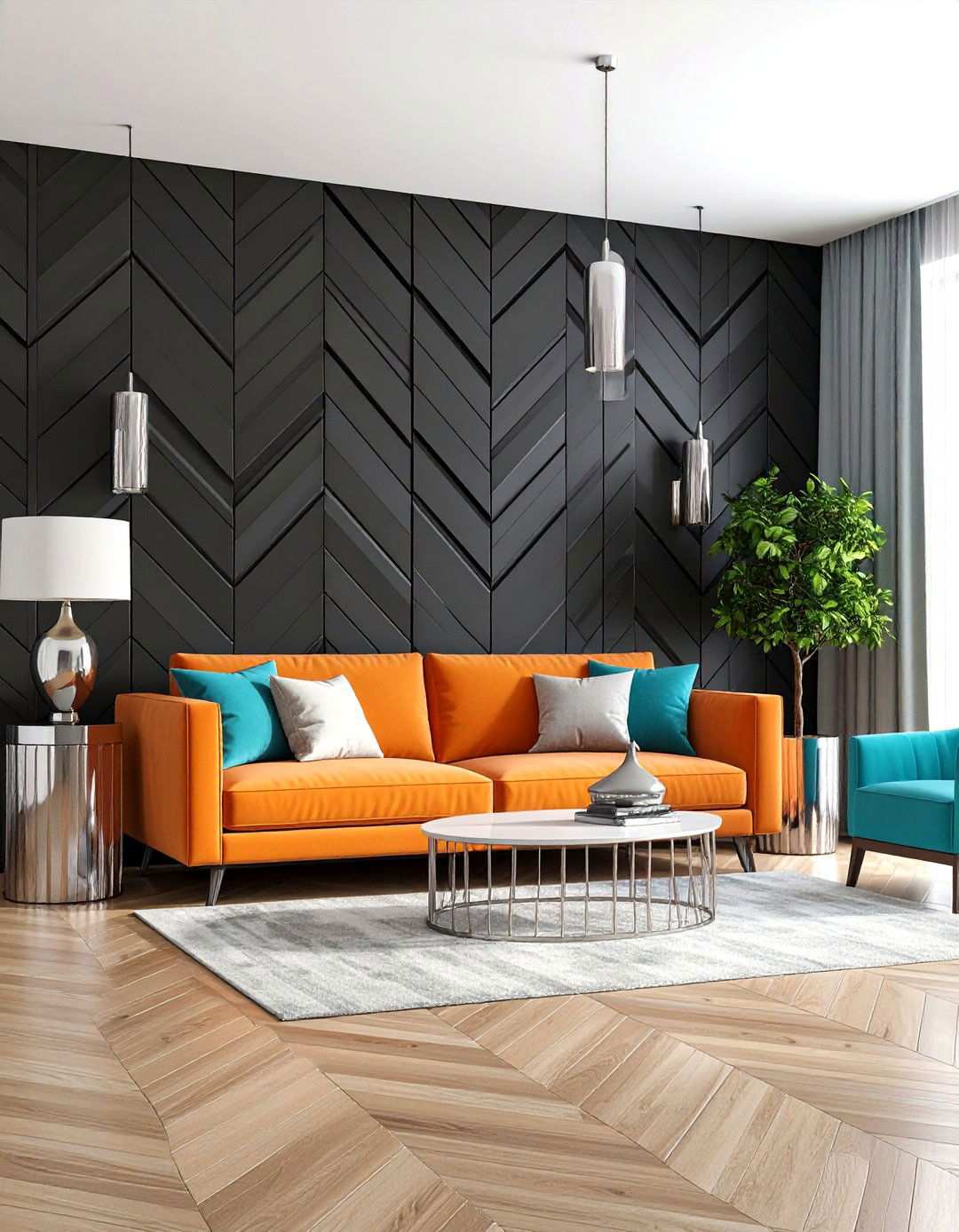
Early-twentieth-century Art Deco design celebrates bold geometric patterns, glossy finishes, and bold color combinations. Orange and black are a match made in heaven, evoking the glamour of bygone eras. To recreate this look, install a black chevron-patterned wallpaper behind a sleek orange settee. Adding chrome sconces completes the look, while symmetry – two identical side tables, twin mirrors – reinforces the era’s orderly elegance. Design enthusiasts note that introducing a third hue, such as turquoise or jade, adds depth and avoids a seasonal “Halloween” impression.
The color psychology of orange underscores its energizing, sociable vibe, making it perfect for a cocktail-ready living room. By embracing geometric patterns and symmetry, you can create a space that exudes the glamour of a bygone era.
10. Monochrome Base with Citrus Scatter
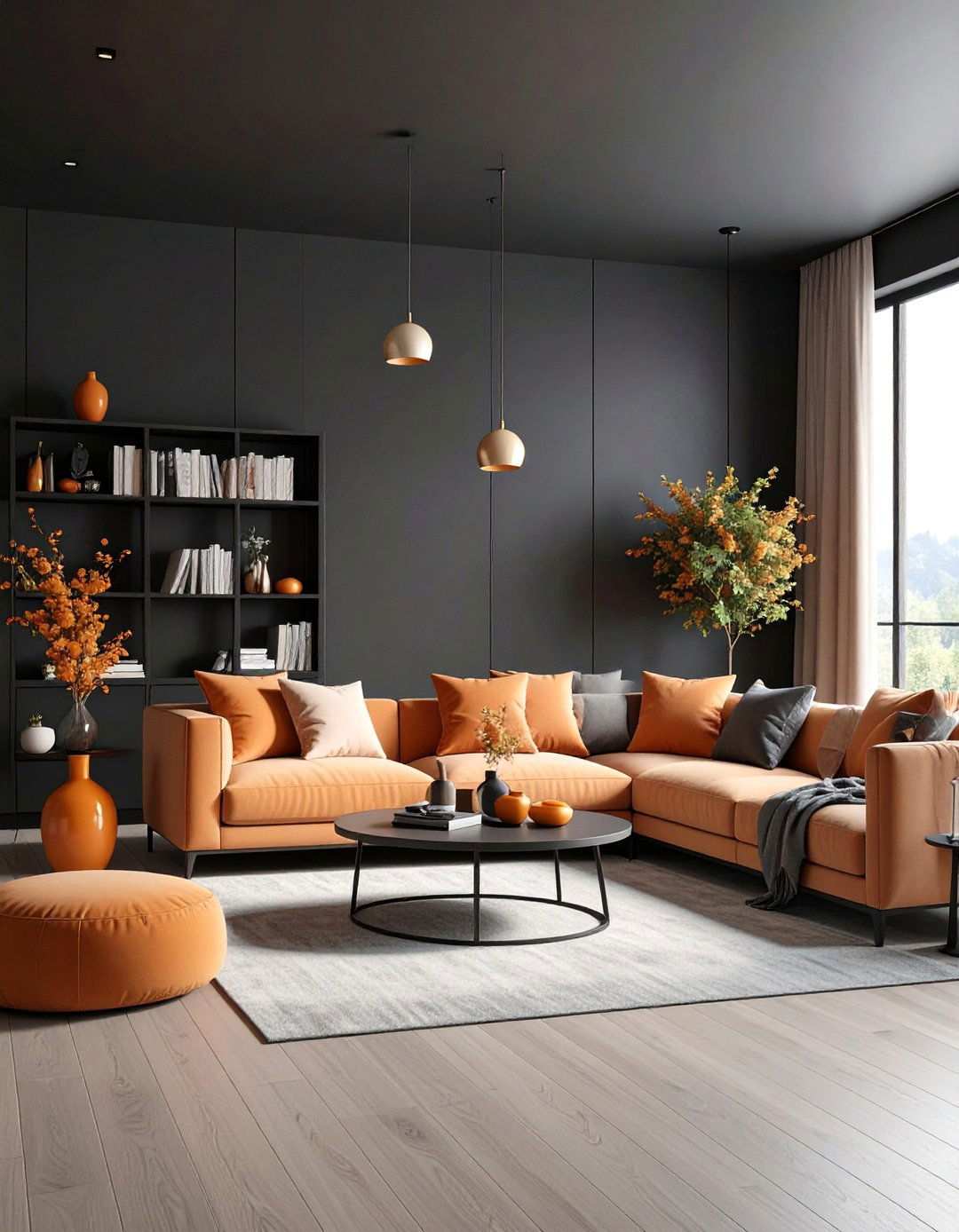
By applying the monochromatic principle to black – walls, trim, and even the ceiling – you create a cohesive canvas that allows orange accents to shine. Design trend watchers explain that tonal layering of one shade builds depth, letting accessory colors sing rather than fight for attention. Scatter cushions, vases, and books in gradations from peach to persimmon around the living room, ensuring each sits against the dark background for maximum impact. For cohesion, leave a whisper of negative space between objects so the eye rests and the room avoids clutter.
Expert advice emphasizes keeping orange to roughly 10-15 percent of the palette for balance. By striking this delicate balance, you can create a space that’s both visually striking and harmonious.
12. Orange Rug Anchoring
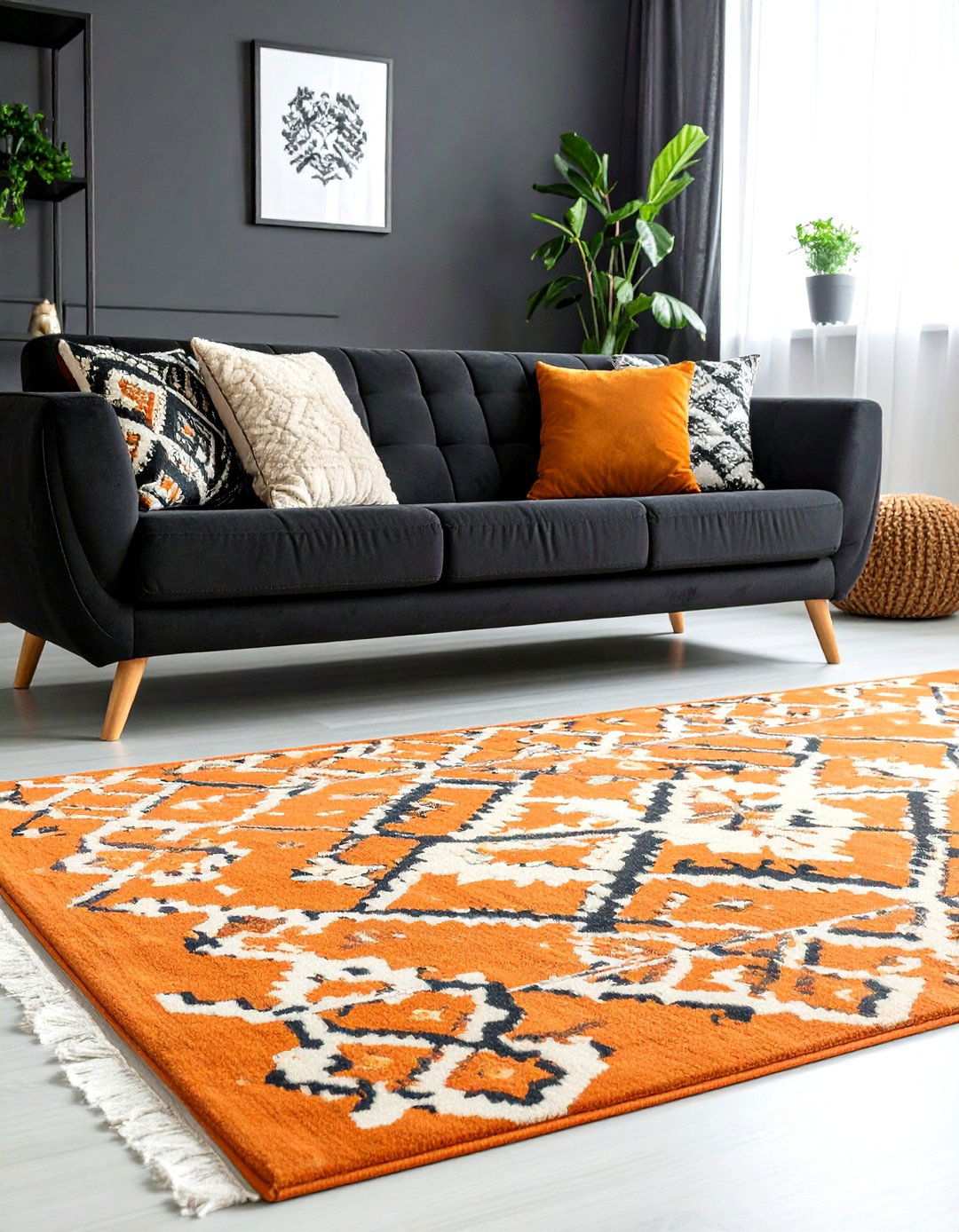
A dynamic orange rug can become the focal point in a living room by balancing the harshness of black accents without needing any drastic paint changes. To create a cohesive look, interior designers recommend choosing a rug that incorporates multiple secondary tones, such as creamy whites and rich charcoals. This strategic approach helps tie in existing furniture pieces, rather than clashing with them. By placing the front legs of seating on the rug, a designated conversation zone is created, with the orange pattern subtly peeking out from beneath the furniture. If black walls already dominate the space, opting for a rug with a lighter base can help brighten the atmosphere and bounce light from lamps.
13. Natural Wood Warmth
Introducing natural wood elements can help temper the jarring contrast between black and orange, infusing the space with an organic sense of warmth that feels timeless. A rich walnut credenza or a sturdy oak coffee table brings a subtle, textured quality that elegantly bridges the divide between dark walls and vibrant accents. According to design experts, the inherent red-orange undertones in wood can create a harmonious resonance with burnt-orange cushions or a marigold throw. To further reinforce the earthy feel, black-framed artwork can be strategically placed above the credenza to tie in with architectural elements, while simple, earth-toned planters in terracotta add a touch of natural charm. As a result, the living room feels balanced and composed, rather than binary.
14. Pattern Play with Charcoal and Citrus
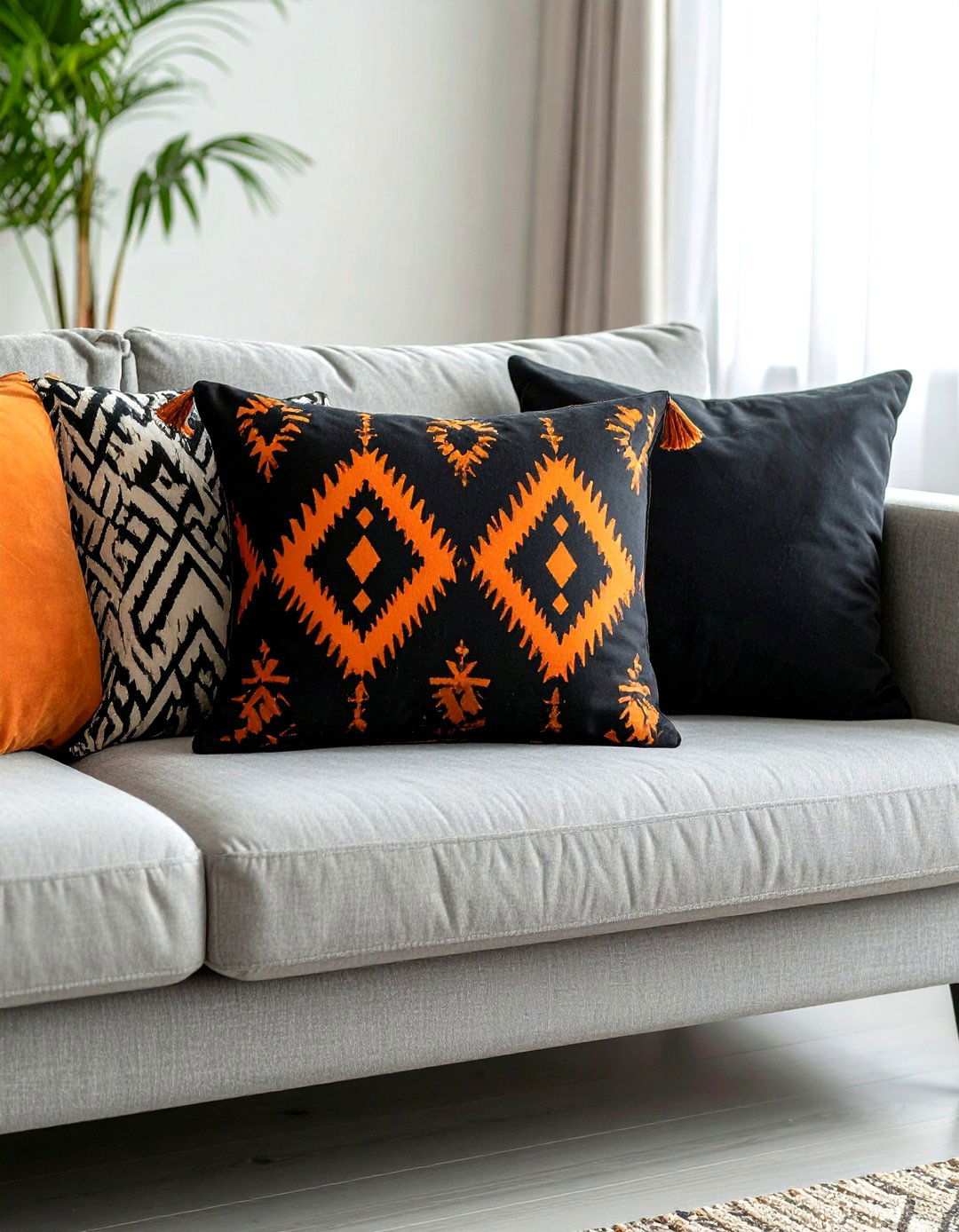
By incorporating patterns that feature both black and orange, such as tribal mud cloth or ikat designs, a neutral sofa can be enlivened and made more engaging. Textile stylists advise balancing a statement patterned pillow with two solid companions – one in black and one in a pale neutral – to create a sense of rhythm and visual interest. To extend the motif without overwhelming the space, consider adding a throw or curtain trim with the same pattern, but avoid covering every surface. For those with interchangeable slipcovers, switching to an orange-on-cream pattern in summer and a deeper rust-and-charcoal pattern in winter can add a touch of seasonal freshness without requiring new purchases.
15. Mood Lighting Layers
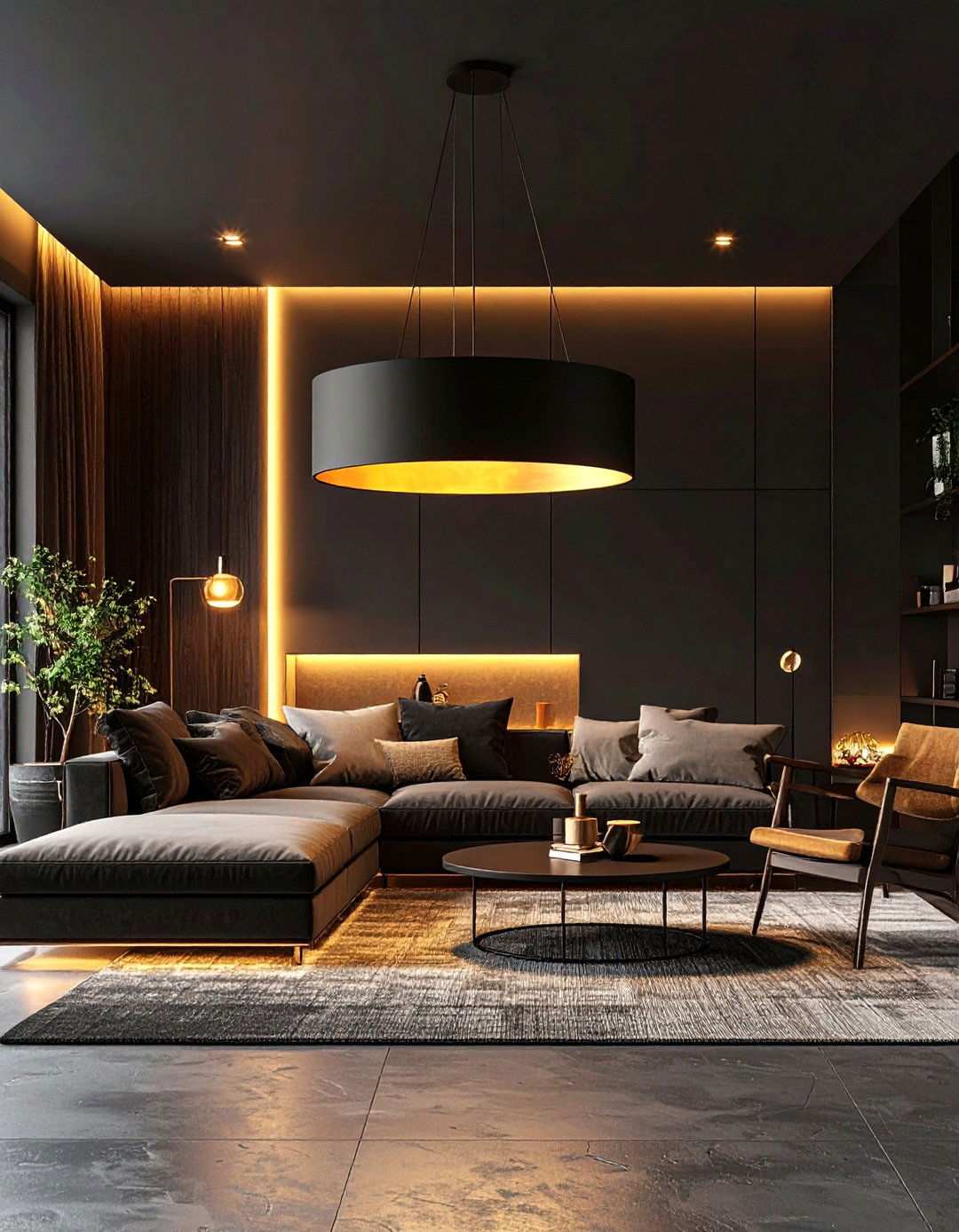
Lighting is instrumental in bringing a black-and-orange living room to life. Specialists recommend creating a layered lighting effect by combining three distinct tiers: overhead pendants on dimmers, mid-level lamps, and low-level glow from a fireplace or LED strip. Warm-white bulbs help maintain the rich, saturated color of orange fabrics, while bouncing off matte-black walls to create a beautiful visual effect. According to psychologists, poorly lit black spaces can feel oppressive, so ensuring layered illumination is crucial in maintaining a cozy and secure atmosphere. Consider installing a black drum shade with a gold interior; when lit, it casts a warm, amber glow that amplifies orange accents and flatters skin tones.
16. Botanical Green Breaks
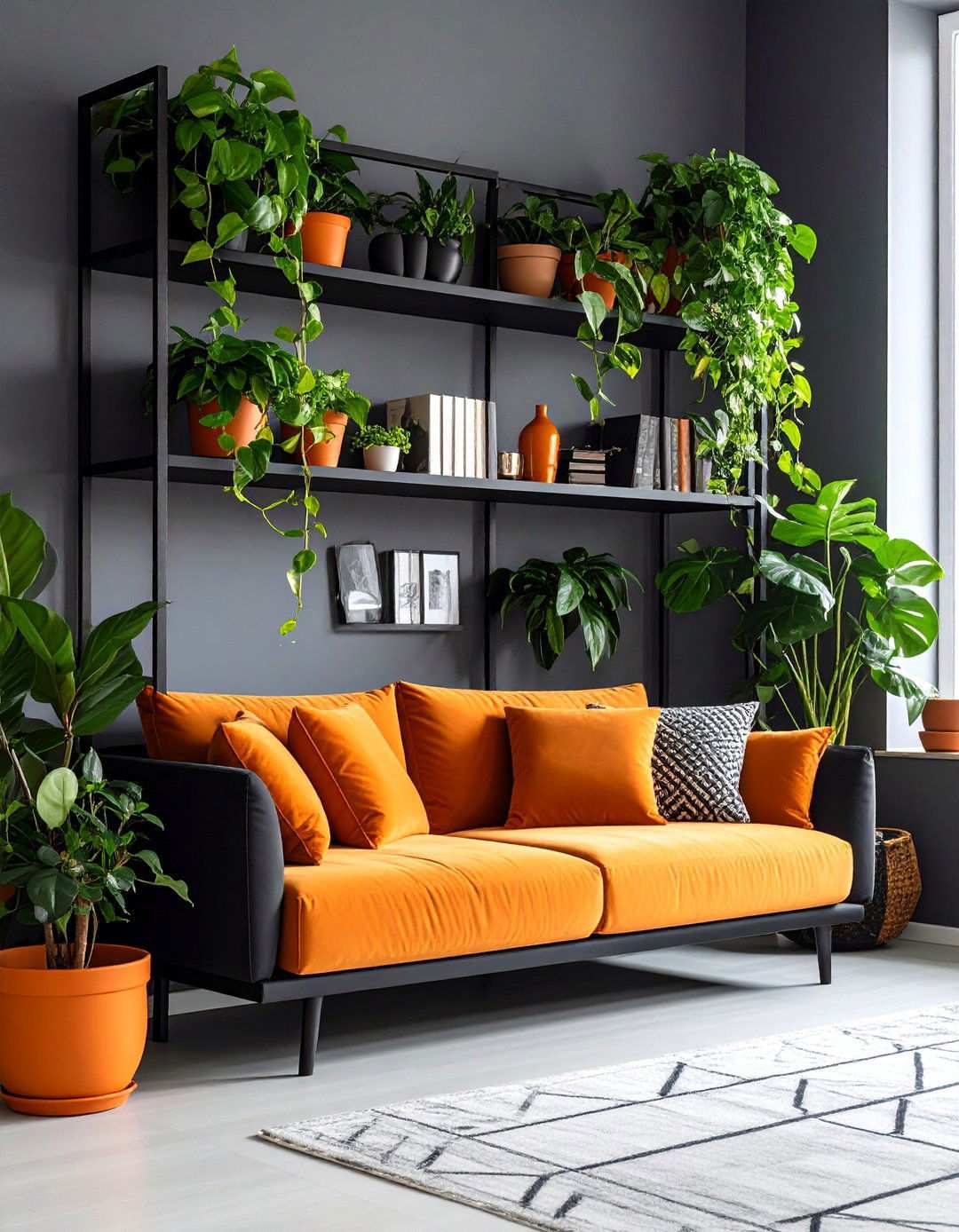
A splash of vibrant greenery can instantly revamp an autumnal-inspired living room, deflecting the boldness of black and orange. Interior environmental research highlights the stress-reducing effects of houseplants, which visually freshen heavy color schemes. By placing a trailing pothos on a black shelf, its chartreuse leaves create a natural triadic color harmony that tempers the stimulating effect of orange and the seriousness of black, fostering a balanced atmosphere. Rustic terracotta pots or sleek black planters complement the space, echoing existing tones and textures.
17. Seasonal Swaps for Flexibility
For those hesitant to commit to a bold orange paint job, adopting a seasonal-swap strategy offers a flexible solution: store seasonal orange accents such as pillows, throws, and artwork in a tote for autumn and game-day gatherings. Trend analysts note that orange enjoys its highest popularity during cooler months, as its warmth counters the darker days. By replacing these accents with softer shades like sage or blush in the spring, you can refresh your living room while maintaining the black foundation. Small-scale items like candles, vases, and even hardcover books offer high impact for a low cost and can be easily stored away when not in use.
18. Minimalist Lines, Maximum Impact
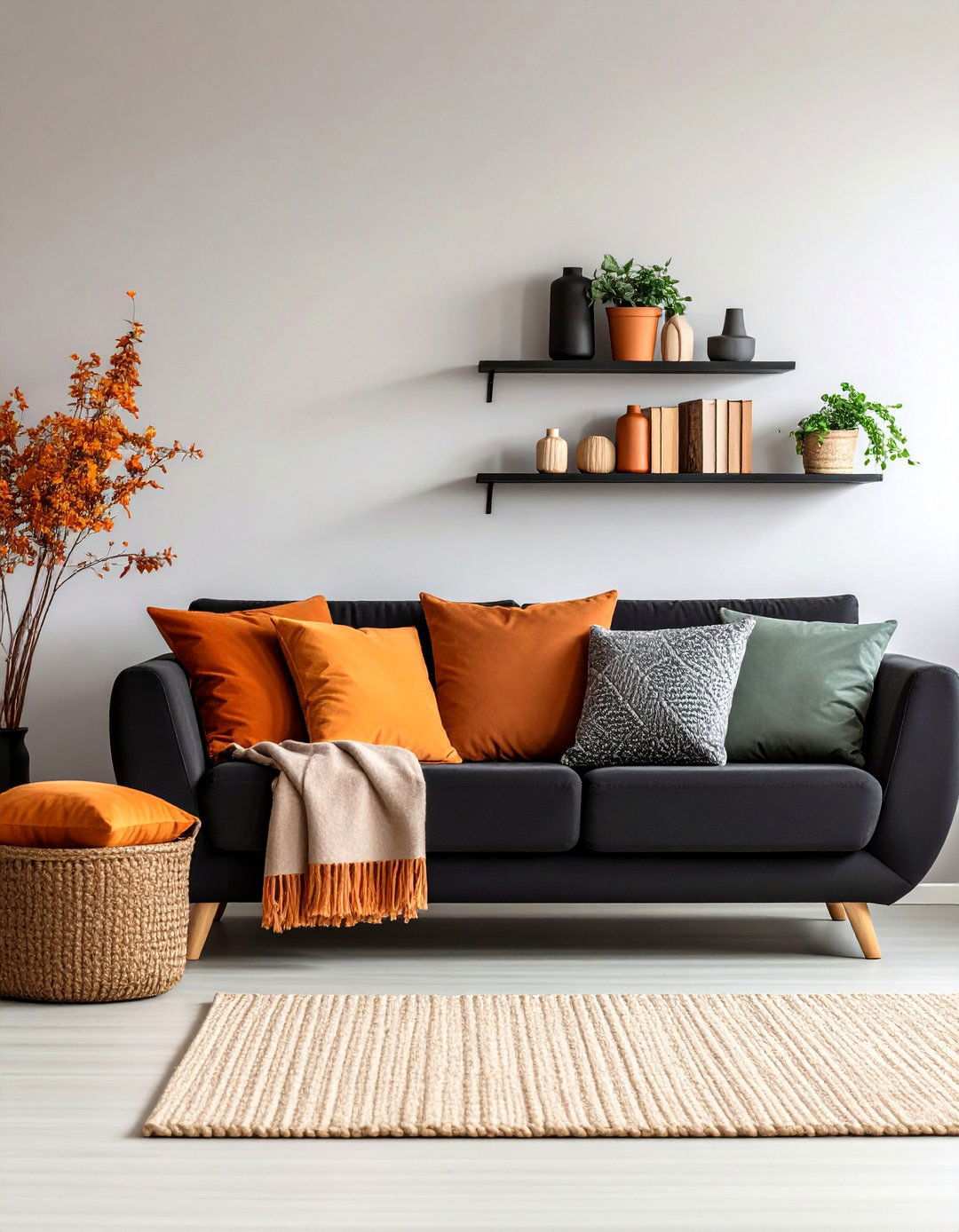
Minimalist enthusiasts can still appreciate the black and orange aesthetic by focusing on streamlined silhouettes and a thoughtful use of negative space. A single tangerine chair against a black lime-wash wall becomes a statement piece, its sculptural lines speaking louder than any clutter. Interior design experts emphasize that black palettes are most effective when furniture layouts are orderly and symmetrical, preventing the room from feeling chaotic. Pairing black with a single bold accent, however small, delivers crisp and deliberate style that psychologists associate with sophistication and power.
19. Vintage Boho Mix
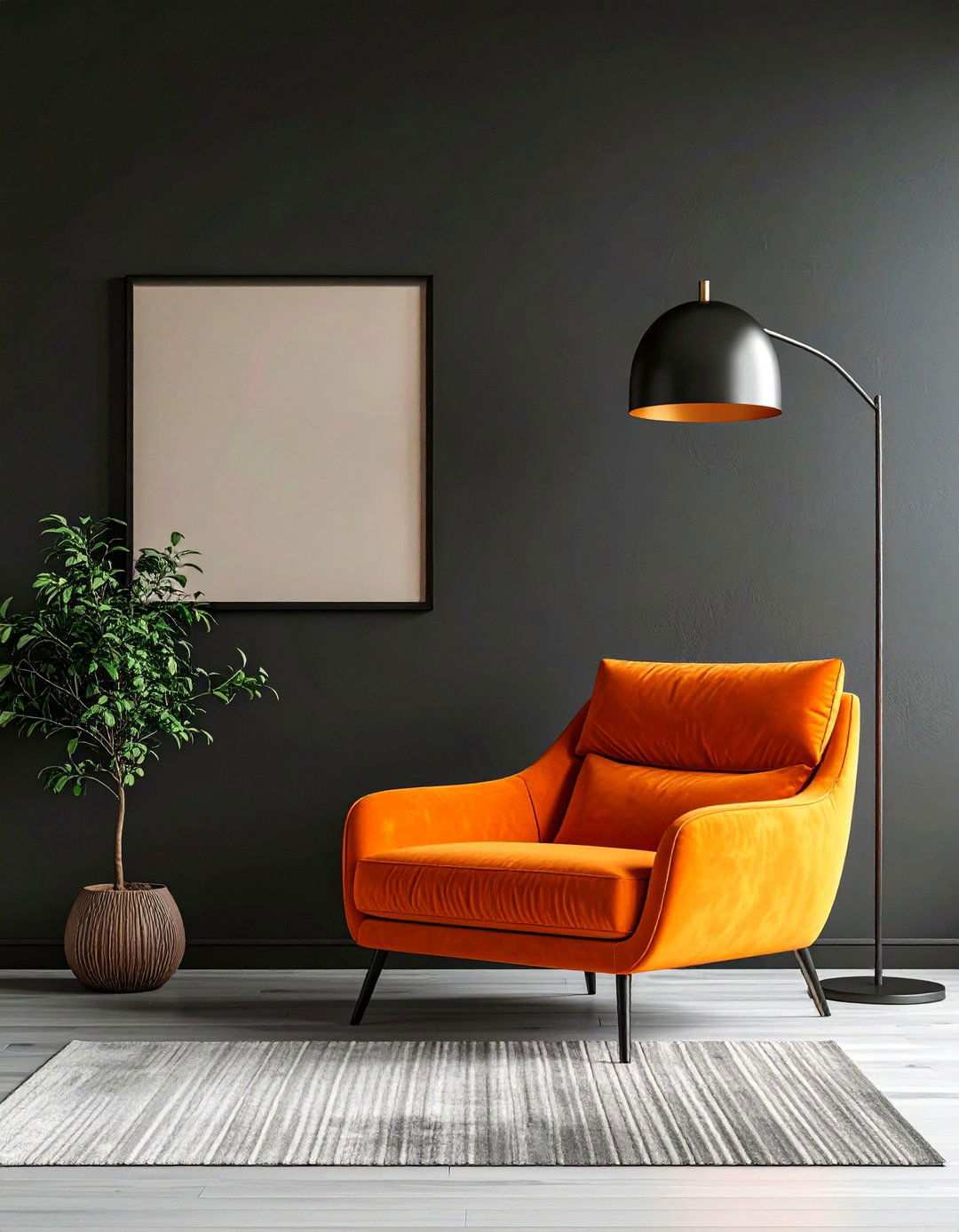
For those who crave eclectic flair, layering patterned orange kilim pillows, a black rattan peacock chair, and stacked vintage trunks as coffee tables creates an unstudied boho mood. Case-study lofts demonstrate that combining global textiles with modern black joinery results in spaces that feel collected rather than curated. To avoid potential chaos, repeat motifs – such as a zigzag in both pillow and rug – or limit metallics to warm brass, echoing orange undertones. A macramé wall hanging in undyed cotton introduces lightness, preventing the dark color block from dominating the space.
20. Elevating Elegance with High-Gloss Ceilings
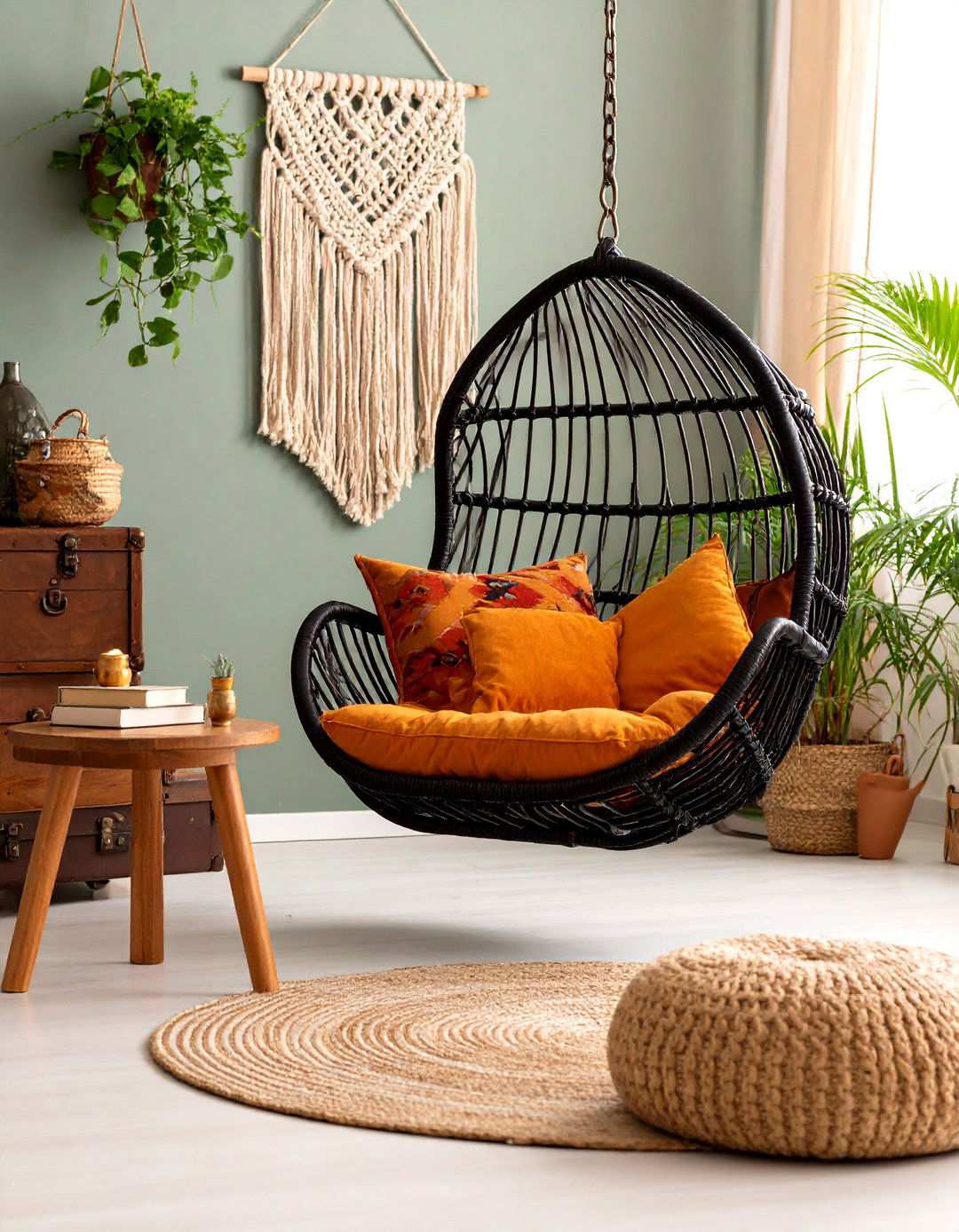
Transforming a living room’s ceiling with a high-gloss black finish can instantly imbue a sense of glamour, effectively creating the illusion of increased space by skillfully reflecting light. This effect is reminiscent of a starry night sky, and is sure to captivate the imagination. When executed thoughtfully, this dramatic statement can be elegantly balanced by incorporating vibrant elements below, such as a striking orange chandelier or pendant light. By doing so, the eye is drawn upward, instantly making small rooms feel more expansive and energizing gatherings. According to color psychology, saturated orange hues possess the unique ability to stimulate conversation and appetite, making them an ideal choice for open-plan living-dining areas. To maintain a sense of visual balance, it is essential to keep the surrounding walls lighter in tone, such as charcoal or dove gray, thereby preventing the ceiling from appearing overwhelming and instead allowing it to read as a deliberate, intentional design choice.