1. Setting the Stage for a Timeless Living Room
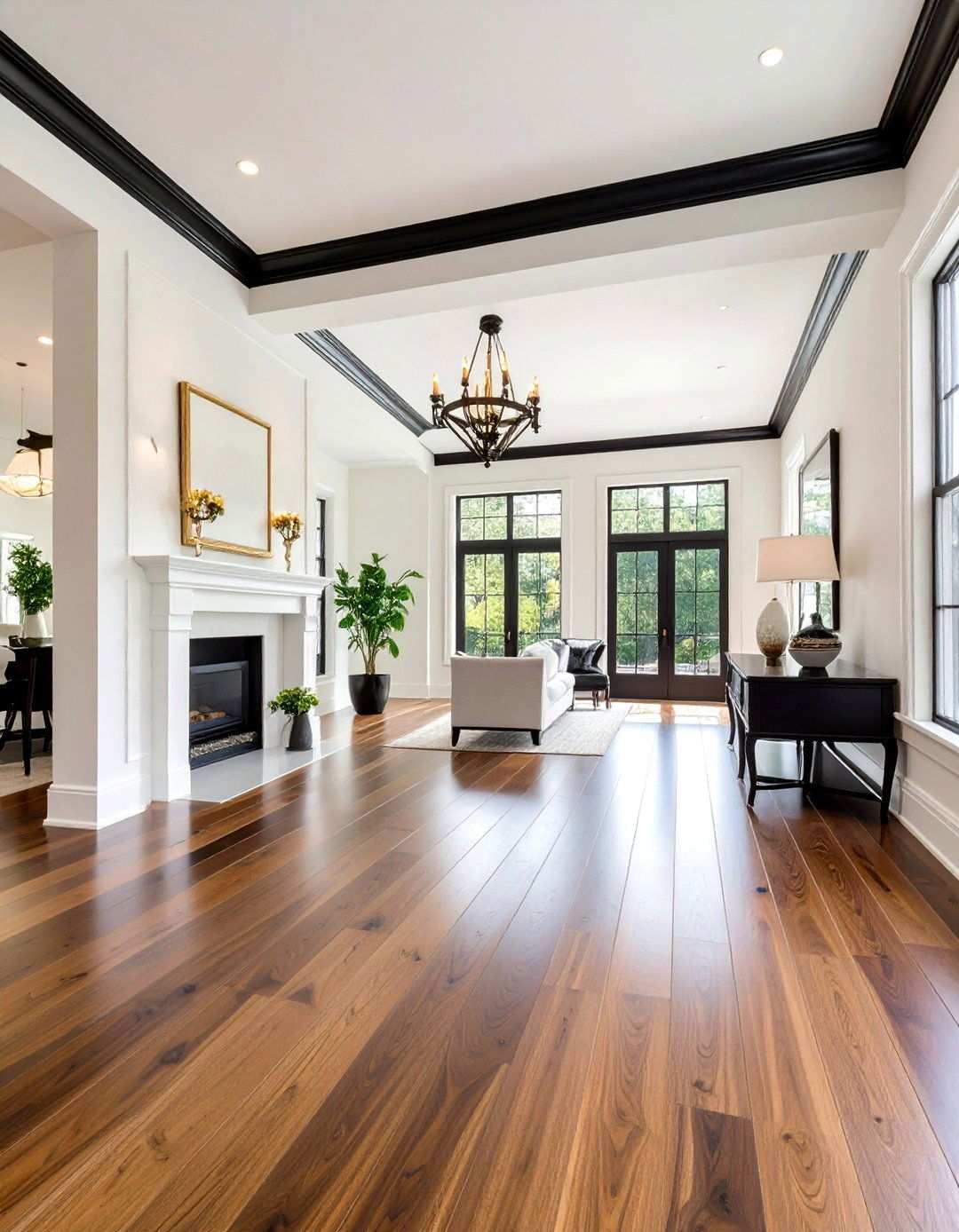
A well-crafted canvas is essential for a black and white living room that exudes modernity and enduring style. The harmonious duet of black and white creates a sophisticated backdrop for showcasing architectural features, textures, and unique pieces. According to recent design trends, monochromatic rooms consistently outshine their colorful counterparts in digital showcases and real estate listings, underscoring the scheme’s widespread appeal. However, achieving balance is crucial, as success hinges on more than simply selecting a pair of paint shades. Contrast must be expertly paired with warmth, rhythm, and distinct personality traits. The following ideas, drawn from recent professional projects, will help you create a high-contrast palette that is inviting, livable, and uniquely yours.
A solid foundation sets the tone for a black and white living room. A beautifully refinished ebony floor instantly grounds the space, while bright, gallery-style walls reflect natural light deeper into the room. Pairing this duo with snow-white baseboards and a slender, ink-black picture rail unifies any awkward alcoves or nooks without requiring extensive construction. Designers recommend choosing one dominant color, typically white, to prevent visual claustrophobia, and then repeating the darker shade three to five times at eye level to create a sense of intentional contrast. Completing the look with a cloud-white ceiling provides a restful pause for the eye. With this framework established, decorating choices become much more intuitive.

As an Amazon Associate I earn from qualifying purchases.
2. Adding Depth with Texture in a Monochromatic Space
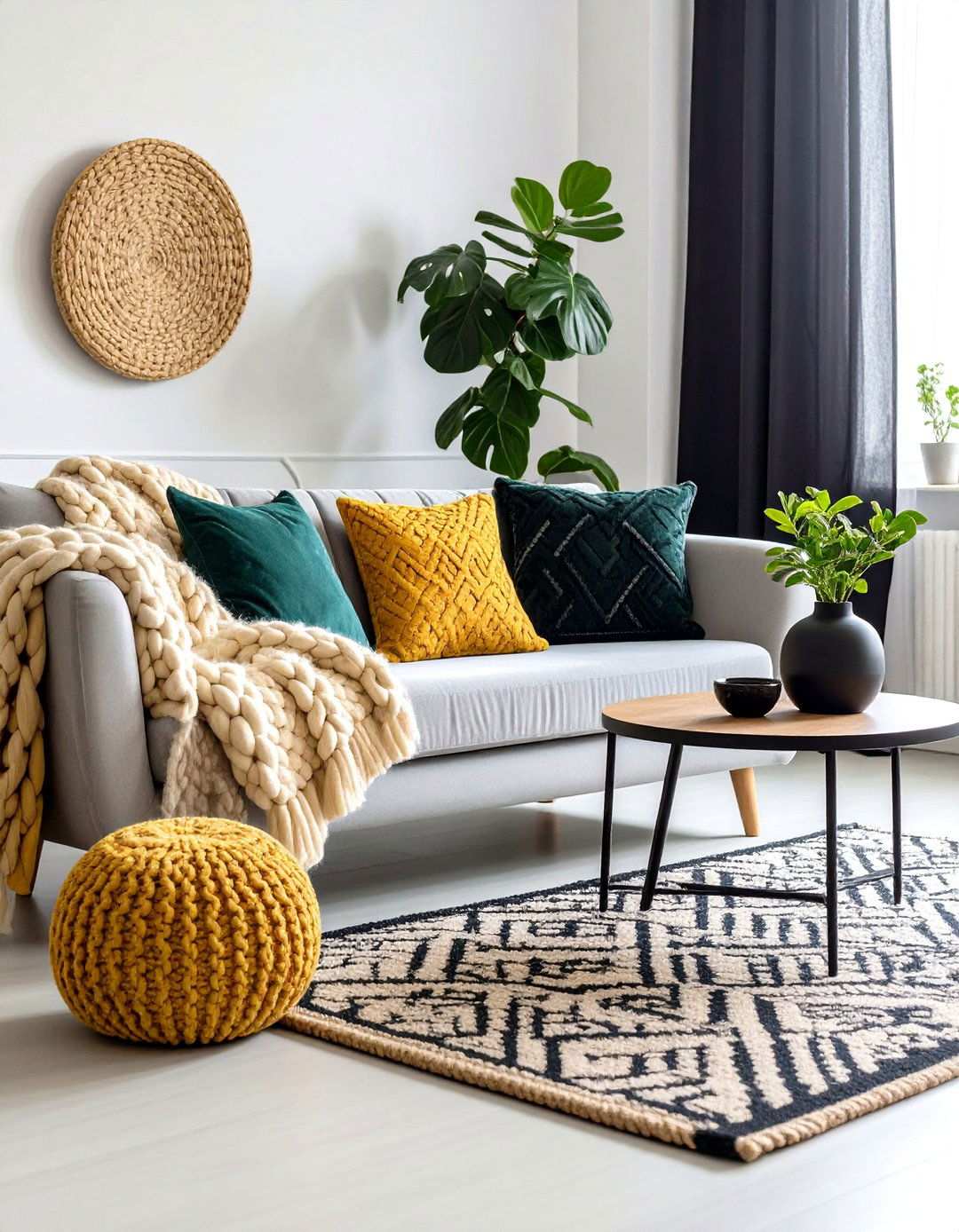
Unlike multicolored schemes, a monochromatic palette relies on texture to create depth and dimension. With the incorporation of cozy bouclé, chunky knits, ribbed ceramics, and nubby jute, texture brings the warmth and tactility missing from hue in a black and white living room. Interior stylists suggest combining at least three distinct tactile finishes, such as smooth leather, matte linen, and high-pile wool, to avoid the sterile atmosphere that high contrast can create. Aiming for one lustrous surface per grouping, perhaps a glazed planter, allows light to dance across the space. Textural layering not only creates an inviting atmosphere but also absorbs sound, making conversation easier and the ambiance feel more cocoon-like. Guests are naturally drawn to explore the varied surfaces.
3. Creating a Focal Point with Oversized Artwork
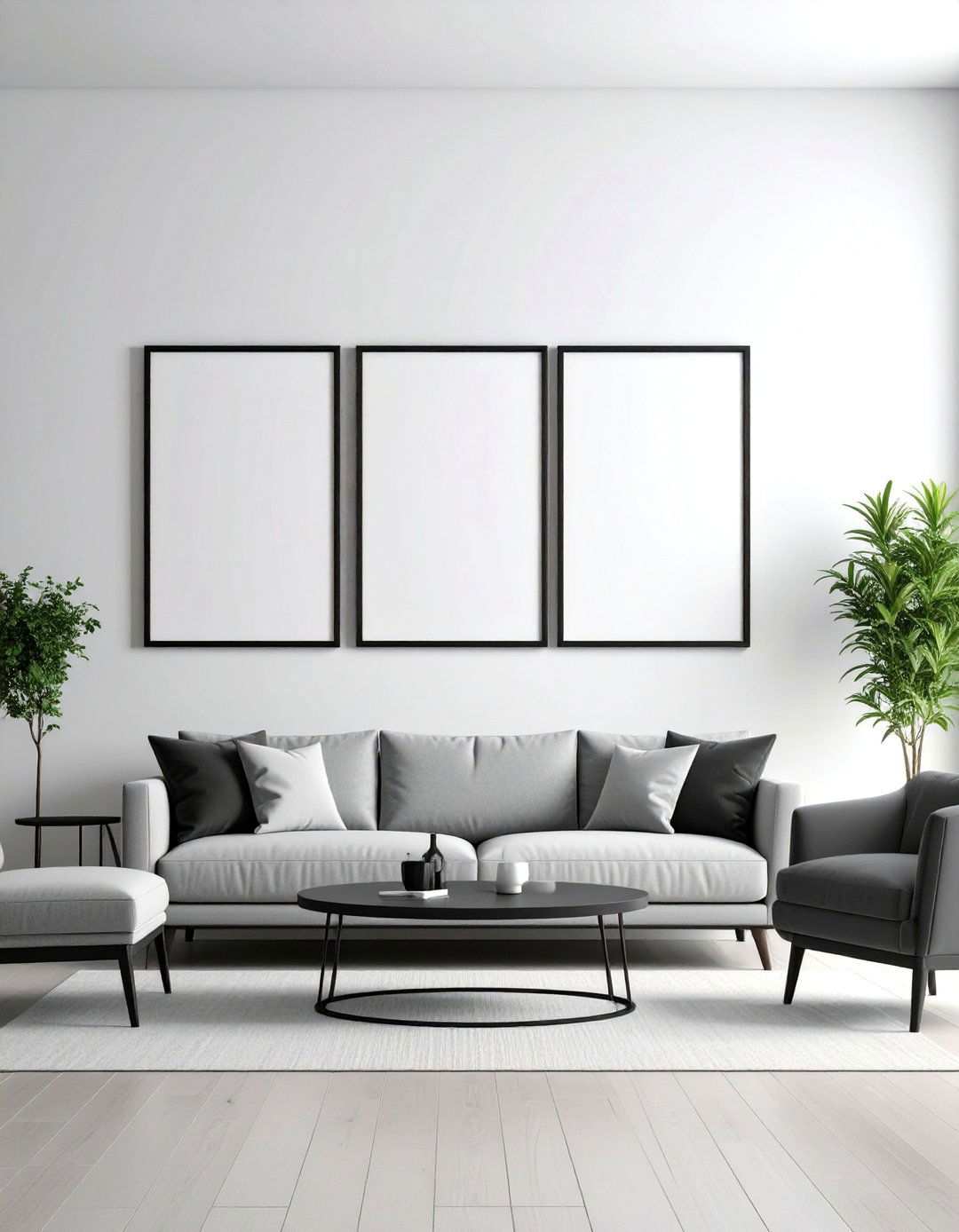
To instantly elevate a black and white living room, look for a single, oversized canvas or a bold graphic print in grayscale. This eye-catching piece draws the eye upward, creating a curated rather than stark atmosphere. According to design experts, large-scale art effectively absorbs empty wall space, minimizing the urge to scatter small frames that can dilute impact. Positioning the piece slightly lower than usual allows dark-on-light edges to read crisply and rewards closer viewing. If budget is a concern, consider a DIY black-and-white photograph printed at a large scale—a trick decorators use to cover big walls at minimal cost. A simple, matte black frame crowns the statement, adding a touch of sophistication to the overall design.
4. Graphic Rugs Set the Stage for a Harmonious Living Room
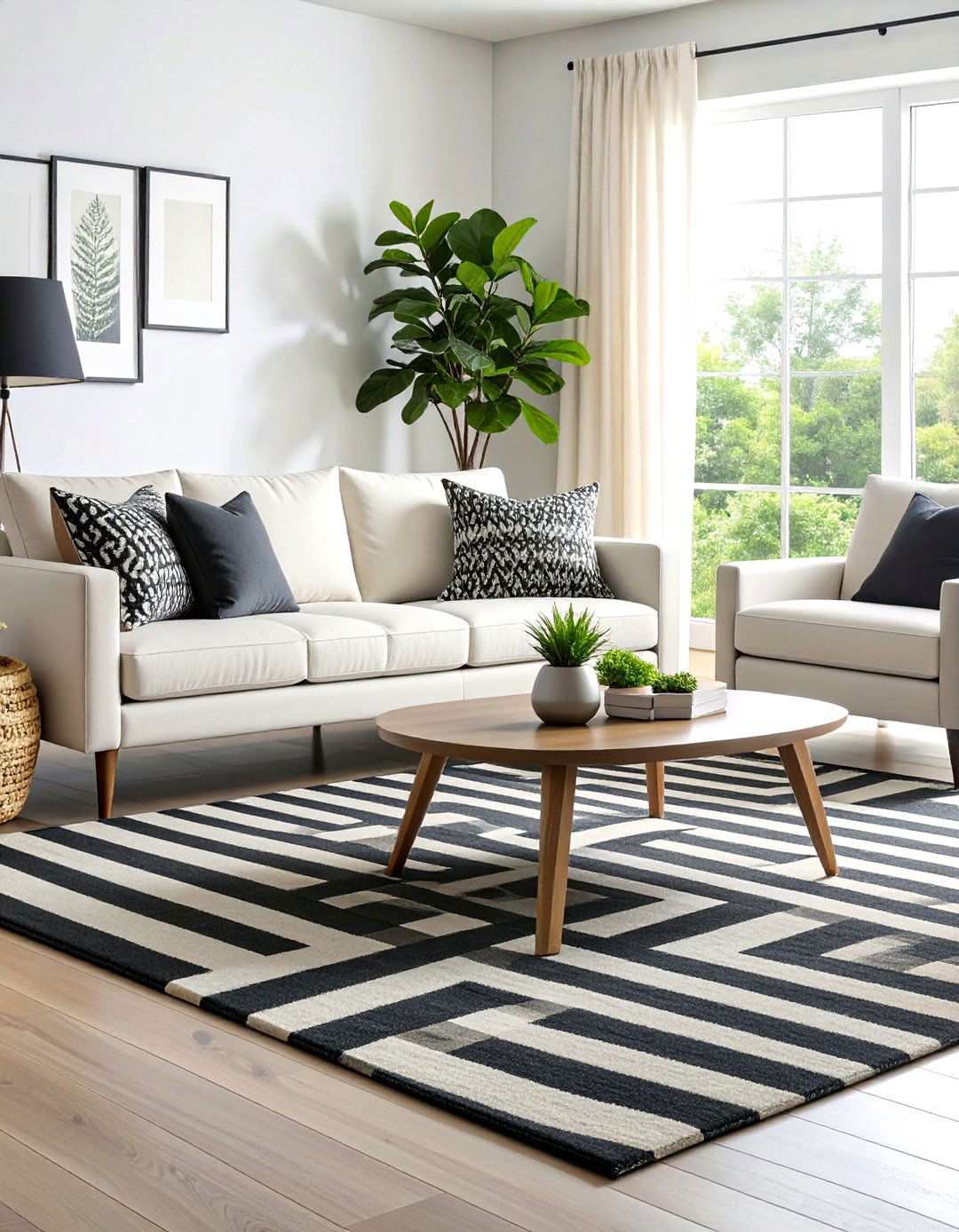
A well-placed rug can be a visual anchor, creating a sense of balance in an open-plan living space. By incorporating bold stripes, chevrons, or tribal diamonds in black and white, you can define the seating area and distract from everyday wear. Design experts recommend choosing patterns with at least 30% white to maintain a sense of brightness and prevent the floor from feeling overwhelming. To add an extra layer of cohesion, consider echoing one line weight in throw pillows. Scale is also crucial – in an average lounge, an 8×10 pattern allows the sofa’s front legs to sit on the rug, creating a deliberate and intentional arrangement. A low coffee table with open legs is ideal for showcasing the rug’s print without breaking the visual flow. For those who rent, a peel-and-stick vinyl rug can achieve a similar impact without the long-term commitment.
5. Warm Wood Accents Add Depth and Character
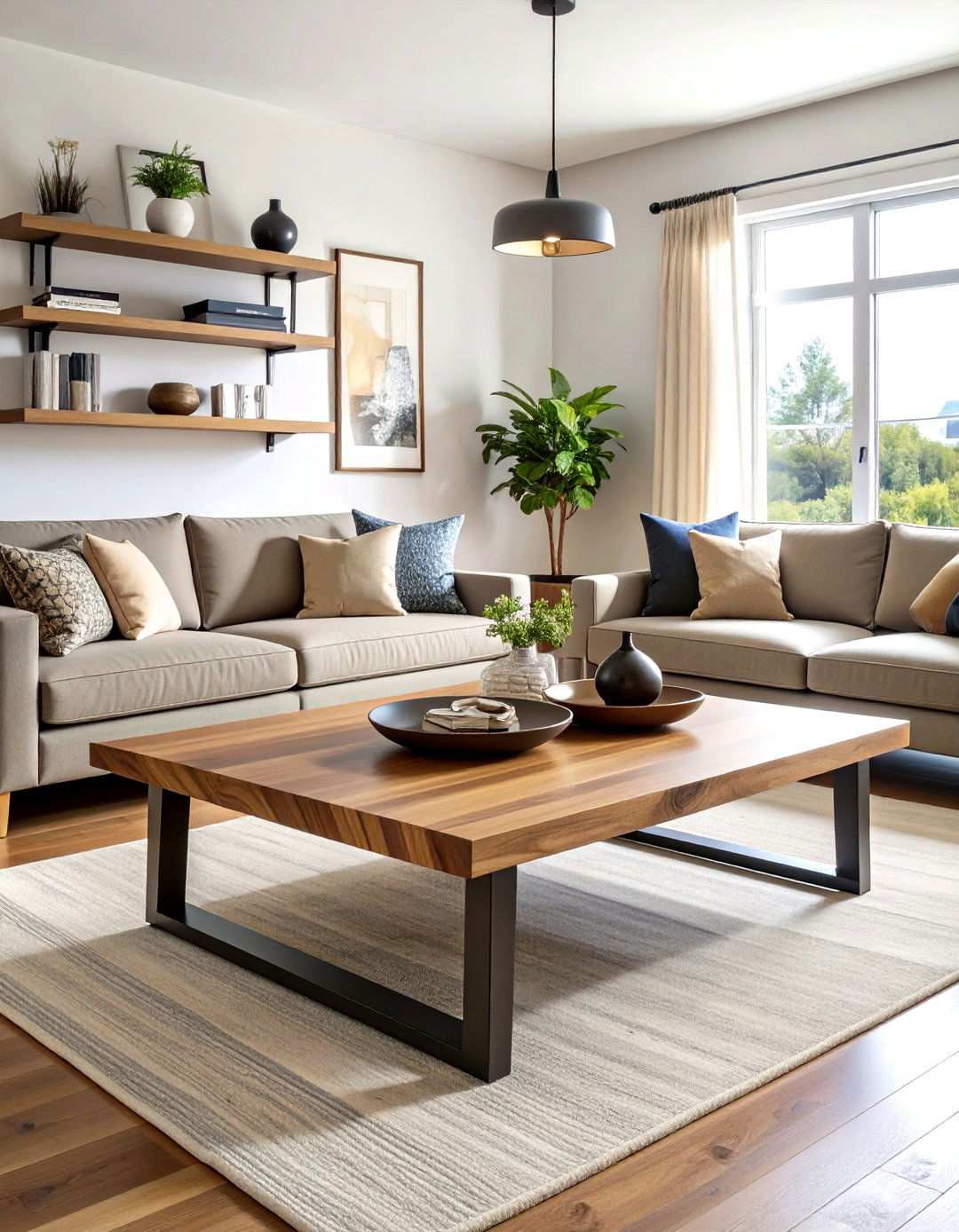
A black and white living room can sometimes feel sterile, but incorporating natural wood accents can help infuse warmth and contrast. By introducing medium-tone woods, such as walnut side tables, ash shelving, or oak frames, you can create a cozy atmosphere without introducing new colors. Trend forecasters note that even a single live-edge coffee table can transform the space from a gallery to a lounge, inviting people to linger and socialize. To make the most of the wood accents, keep the finishes matte and pair them with charcoal metal hardware. This will allow the natural beauty of the wood to take center stage rather than serving as a mere ornament. The subtle movement of the wood grain will also add an extra layer of texture to the space, giving the eye something to appreciate over time.
6. Shimmering Metals Bring Evening Elegance
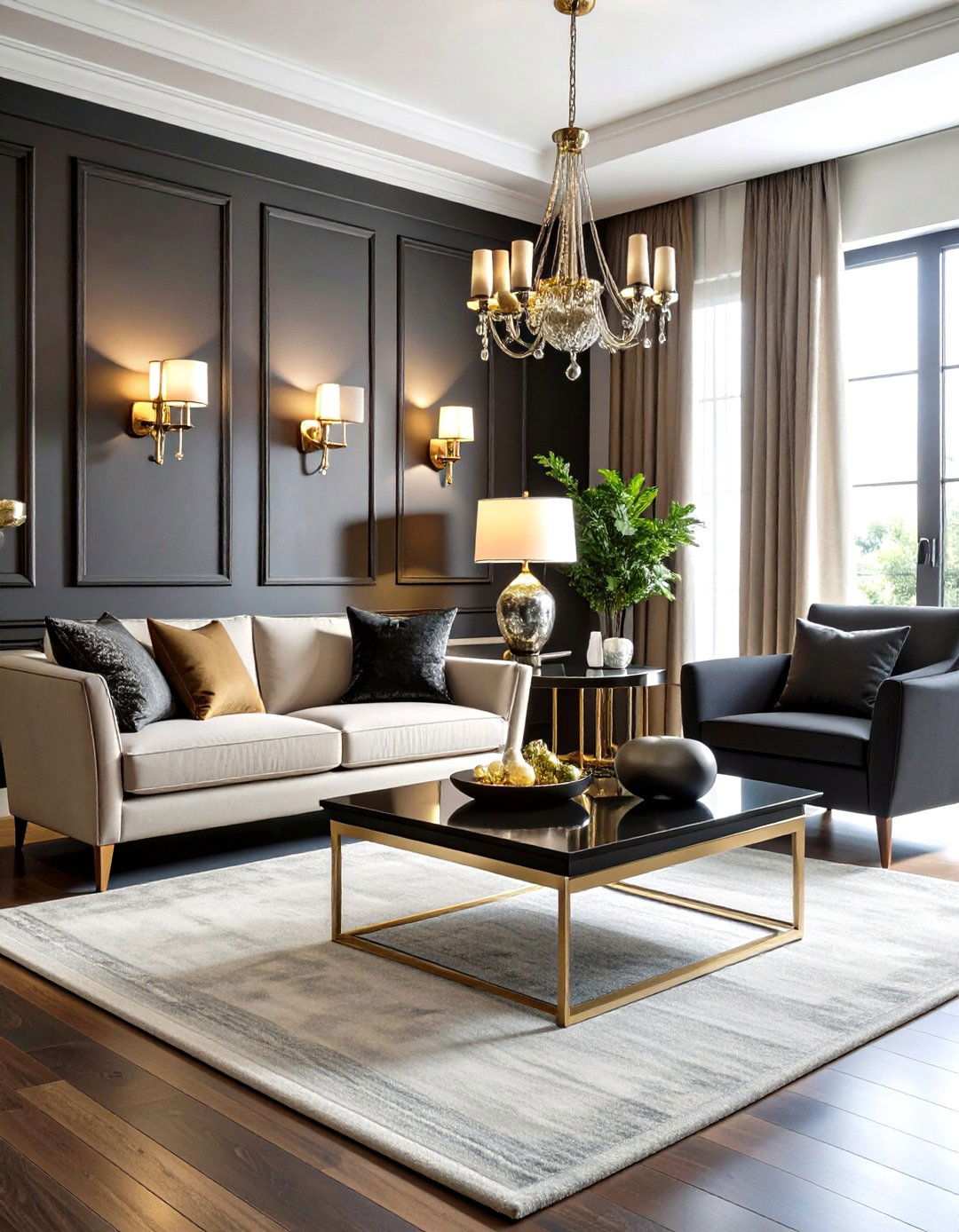
As the day comes to a close, reflective metals can add a touch of glamour to a monochrome living room. By incorporating polished chrome floor lamps, aged brass sconces, or a nickel cocktail table, you can scatter pinpoints of light across the space, countering any nighttime heaviness. Designers recommend sticking to a single metal family to create a sense of cohesion; repeat it three times – lamp base, mirror frame, tray – to create a sense of rhythm and flow. To maximize the impact of the metallic accents, pair them with matte black candlesticks to create a striking contrast. By using dimmable bulbs aimed toward walls rather than faces, you can create a flattering and practical lighting scheme that proves shimmer can be both beautiful and functional. This touch of glamour will make evenings feel special without overwhelming the daily function of the space.
7. Energizing Geometric Patterns Add Visual Interest
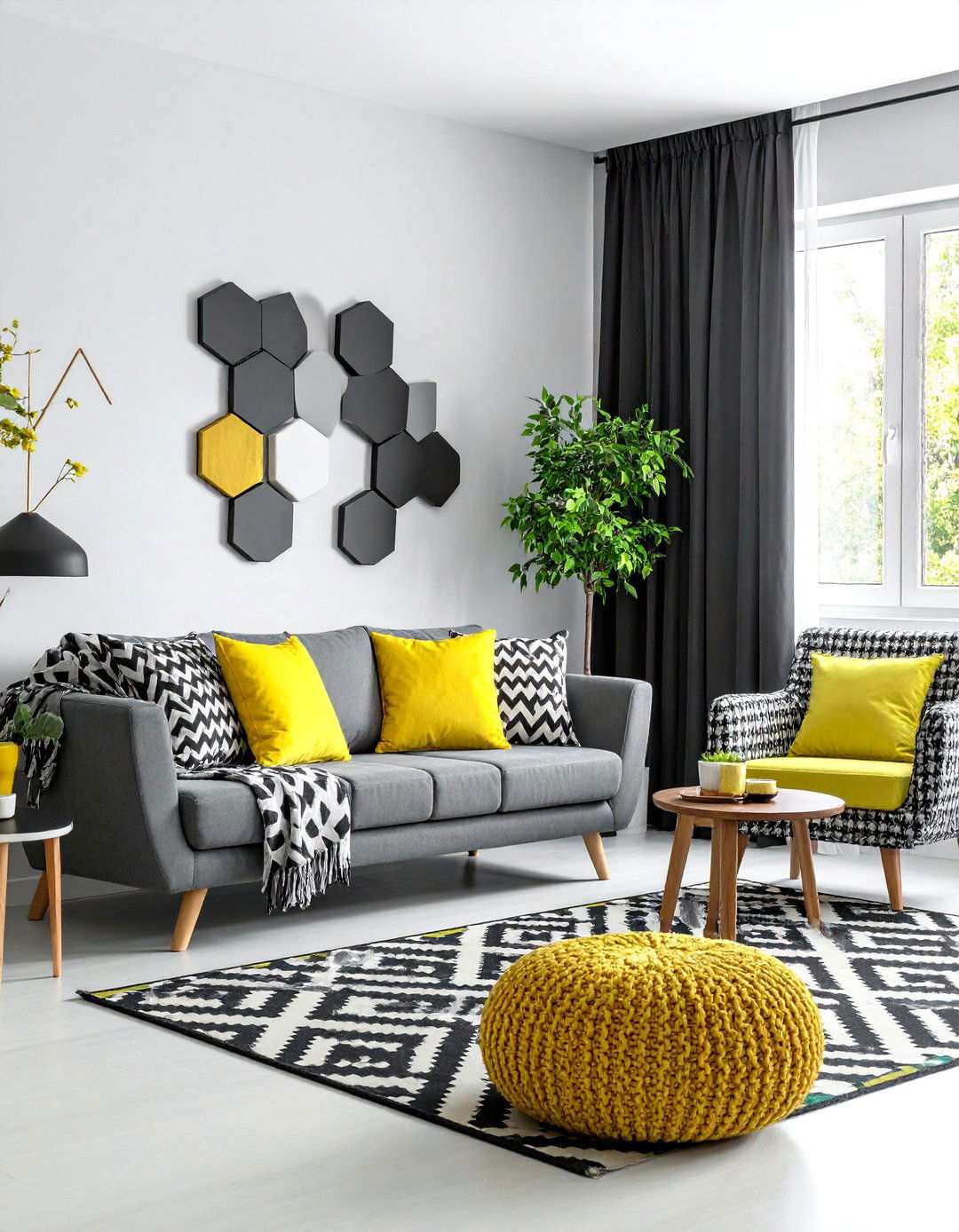
By introducing geometry through pillows, window treatments, or accent chairs, you can create movement and energy without abandoning the monochrome discipline. Horizontal stripes can elongate small living rooms, while houndstooth or hexagon prints deliver a classic edge that stands the test of time. To prevent visual clutter, use no more than two different motifs and vary their scale – one large, one small – to create a sense of balance. The Spruce advises reserving the busiest pattern for a low-traffic object, like drapery, to make maintenance easy. By repeating a thin black line elsewhere – perhaps a chair rail – you can connect the motifs and create a sense of continuity. This strategy brings energy to the eye while keeping the palette honest and cohesive.
8. Mastering Ambience Through Layered Lighting
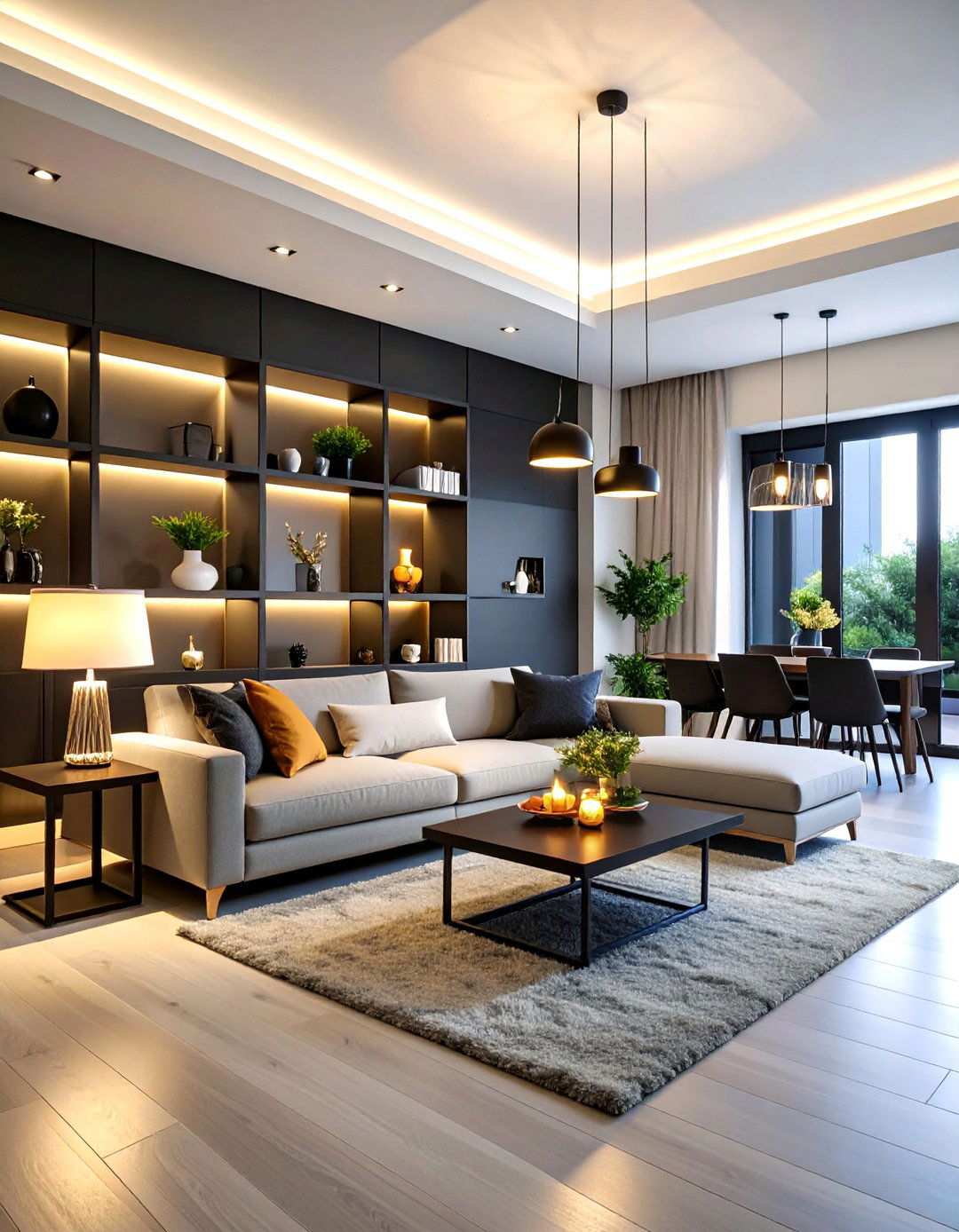
To create a warm and inviting atmosphere in a black and white living room, it’s essential to implement a thoughtful lighting strategy. By incorporating multiple lighting sources, such as wall washers, table lamps, and a dimmable ceiling fixture, you can successfully balance ambient, task, and accent lighting. This harmonious blend prevents harsh overhead lighting from dominating the space, allowing the room to glow instead of glare. When selecting bulbs, consider options with a color temperature of around 2700–3000 K to maintain the warmth of white tones, avoiding the often-unflattering blue undertones that can occur in more intense lighting. Furthermore, incorporating reflective metal shades or glossy black drum pendants can double the luminous output while ensuring energy efficiency. To add an extra layer of depth and visual interest, consider incorporating candles or LED strips behind shelves, creating a halo effect that enhances the overall aesthetic of your décor.
9. Emphasizing Clean Lines for a Timeless Look
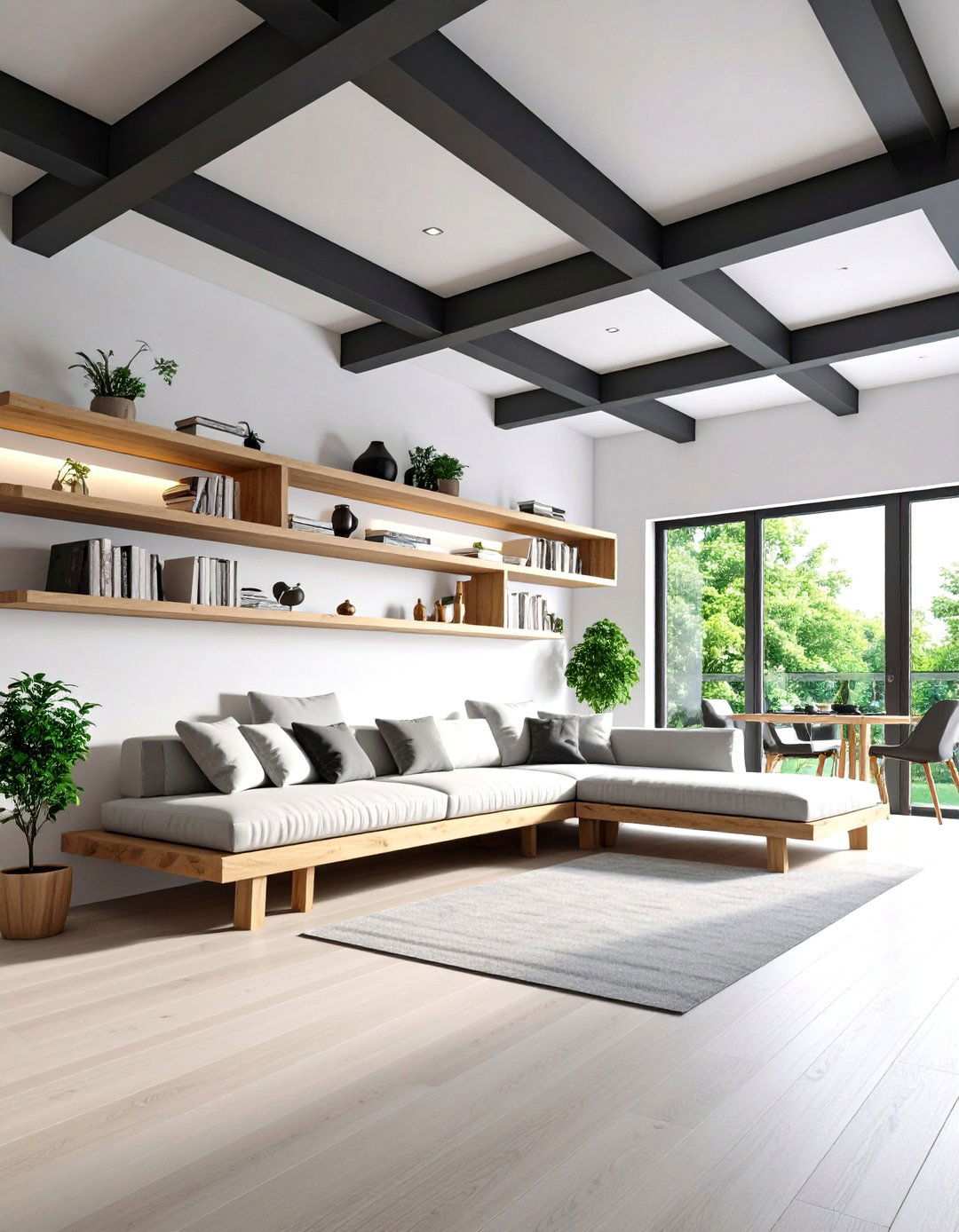
In a black and white living room, clean silhouettes can serve as a powerful storytelling device, creating a sense of order and cohesion throughout the space. By incorporating crisp horizontals, such as low benches and linear shelving, you can create a sense of continuity with the window mullions, drawing the eye horizontally and creating a sense of depth. One effective way to achieve this is by painting dark ceiling beams to match a charcoal sofa, which can help draw the eye upward without introducing new materials into the space. Additionally, painting gaps between built-ins white can create a sense of floating shelves, further enhancing the architectural rhythm of the room. By prioritizing clear lines and clean silhouettes, even compact rooms can appear grander and more spacious.
10. The Calming Effect of Scandinavian Simplicity
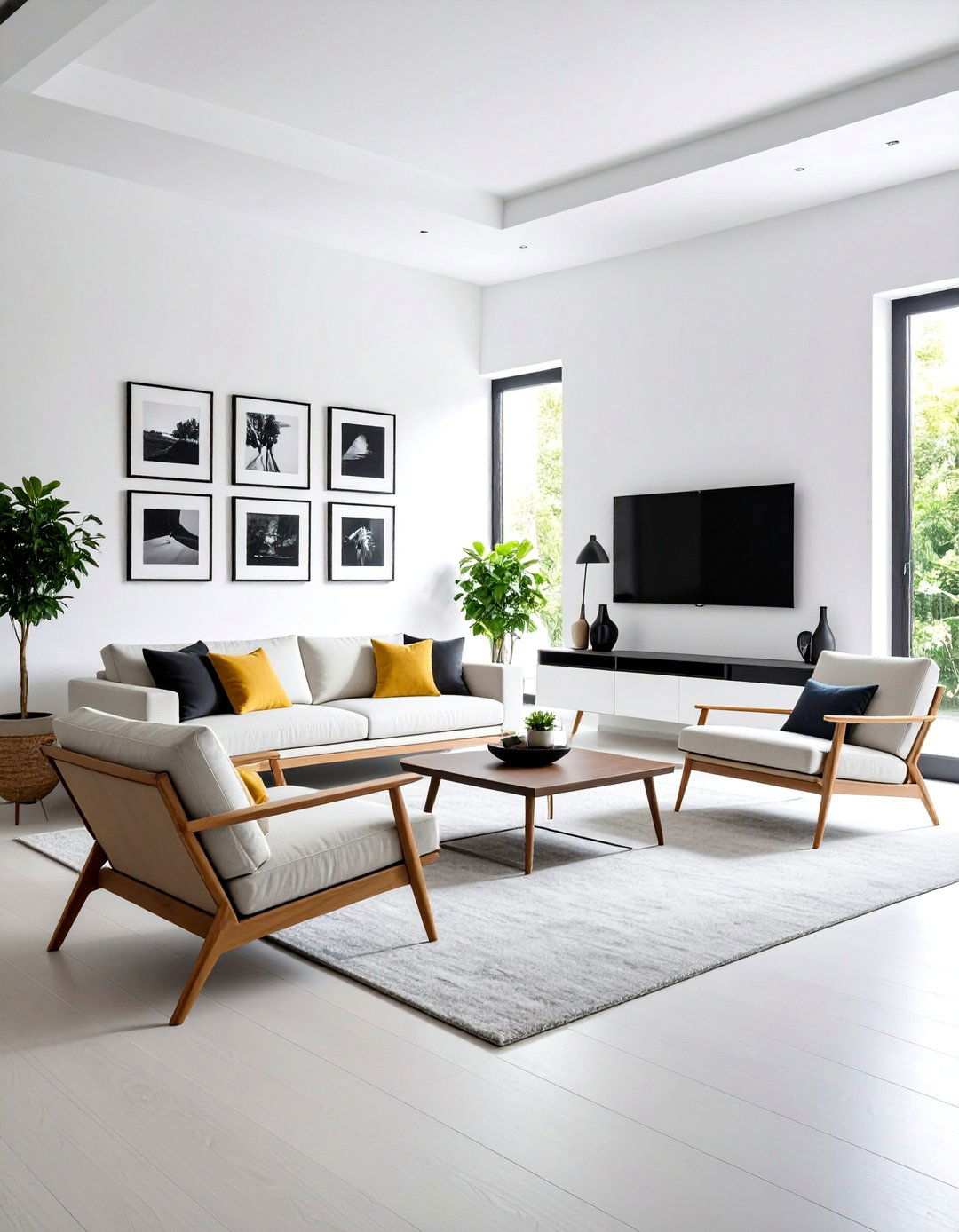
Drawing inspiration from Nordic aesthetics, incorporating furniture with spare silhouettes can help create a sense of serenity and calm in your living room. Armless loungers, tapered-leg nesting tables, and floating media consoles are all effective choices, as they provide a sense of openness and minimalism. When paired with ample natural light and white walls, these elements can create a sense of tranquility, while strategically placed black accents can add graphic punctuation and visual interest to the space. To further enhance the tactile experience, incorporate textiles with varied textures, such as bouclé or wool felt, to prevent the space from feeling cold or sterile. A single black-and-white photo gallery, hung in regimented rows, can provide a sense of order and personal storytelling, adding depth to the space without overwhelming the senses.
11. Infusing Art Deco Drama into Your Living Room
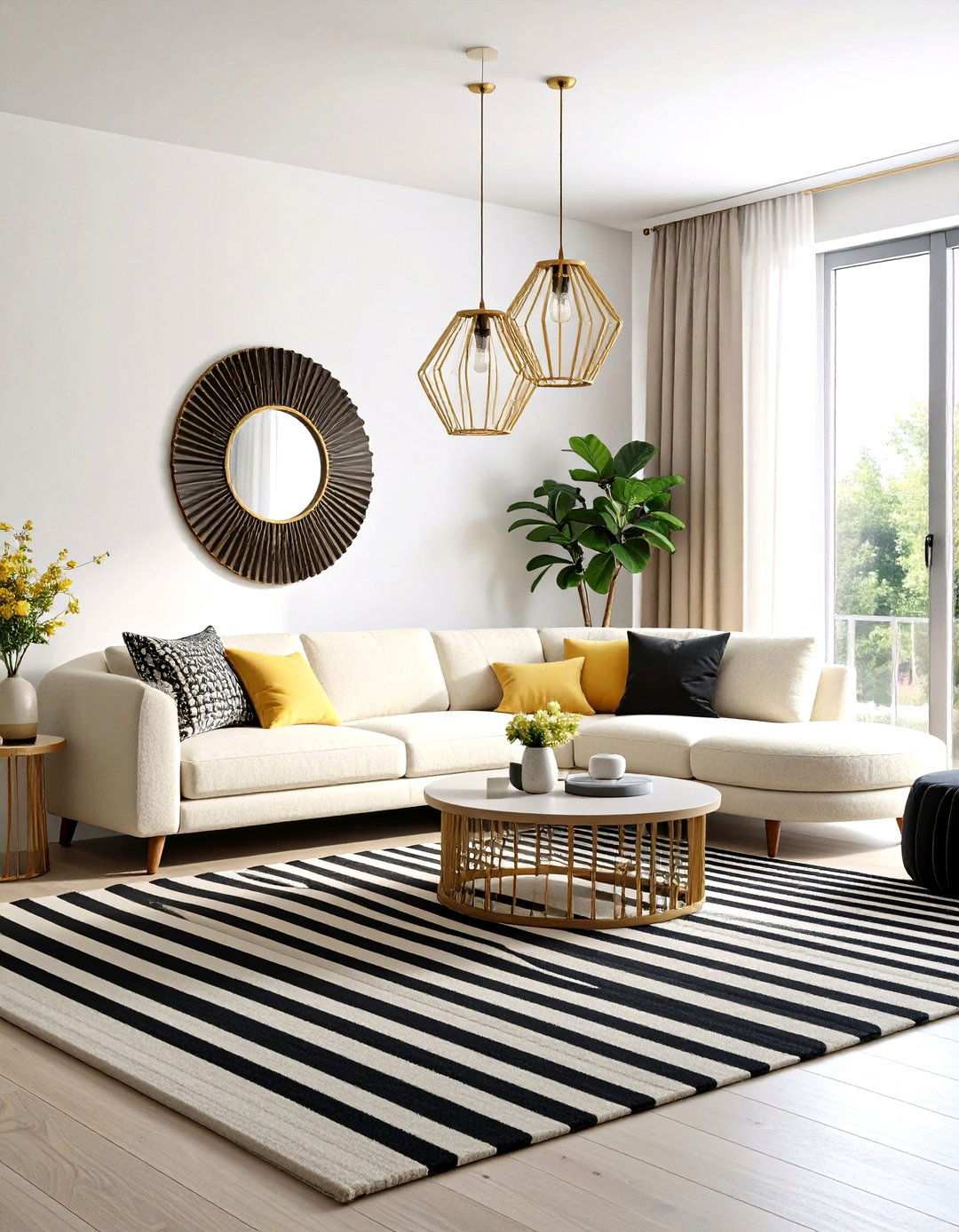
For a bold and glamorous look, consider incorporating curved and geometric elements into your black and white living room design. A curved ivory bouclé sofa, stepped mirrors, and a striped black-and-white rug can all evoke the opulence of the 1920s without feeling kitschy or over-the-top. By pairing these elements with glossy lacquered side tables and geometric brass lighting, you can create a sense of 1920s optimism and flair. To take the look to the next level, consider painting an accent wall deep charcoal, allowing the metal and glass elements in the space to sparkle and shine. Ultimately, it’s essential to strike a balance between ornamentation and restraint, as symmetry and discipline are key to defining the Art Deco style.
12. The Beauty of Minimalist Furniture in a Monochromatic Space
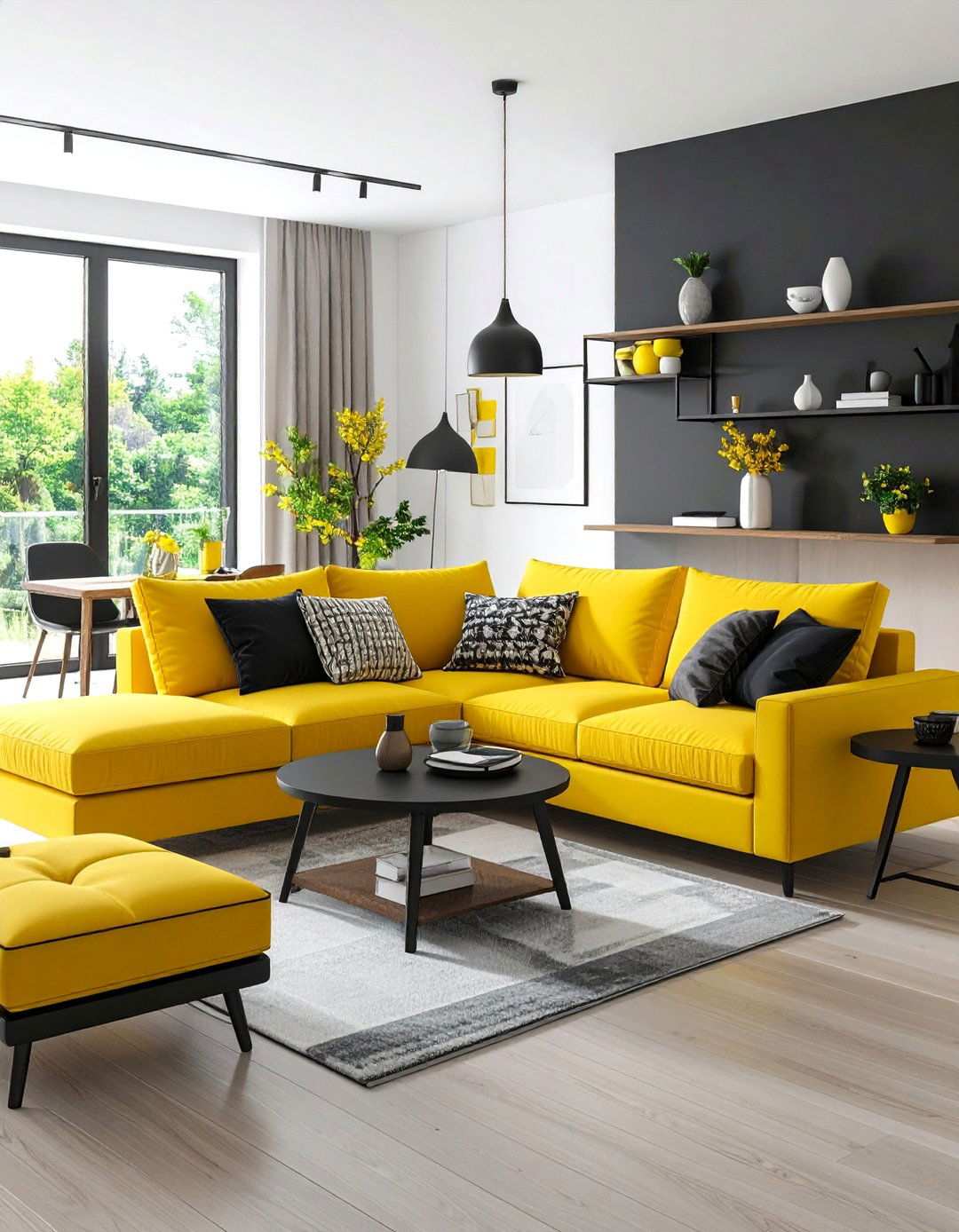
Surprisingly, less is often more in a black and white living room design. By incorporating minimalist furniture, such as low-profile sectionals with thin arms and integrated storage ottomans, you can create a sense of flow and openness in the space. Rather than filling every inch with furniture, consider staggering clusters of decorative items on shelves, creating quiet pauses between contrasts that allow the eye to rest. This strategic approach can help create a sense of calm and serenity, even in a compact space. To further enhance the functionality and adaptability of your living room, consider incorporating smart, multifunctional pieces, such as a nesting side table or a fold-away bench, that can seamlessly transition between different uses and activities.
13. Greenery Brings the Living Room to Vibrant Life
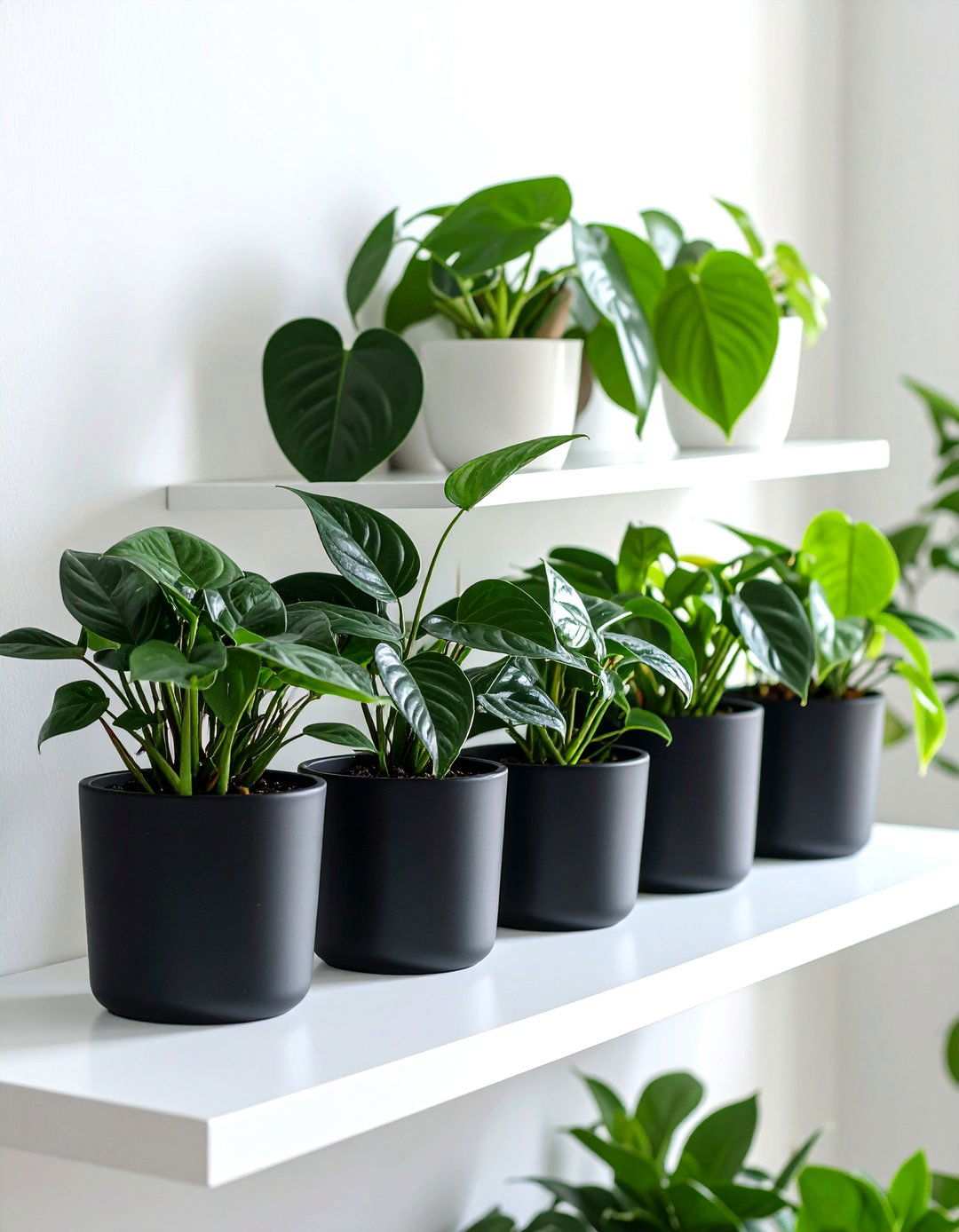
Infusing a space with lush greenery is a simple yet effective way to humanize a stark environment. The interplay between foliage and monochromatic hues creates visual harmony, while also contributing to a healthier atmosphere. By grouping planters in irregular numbers and opting for matte black planters, the focus remains on the verdant additions. For added drama, a floor-standing fiddle-leaf fig can serve as a striking focal point, its towering presence elevating the space to an art form. Beyond aesthetic considerations, the air-purifying properties of plants also have a tangible impact on guests, making them feel more at ease.
14. Timeless Checkered Floors Revitalize the Living Room
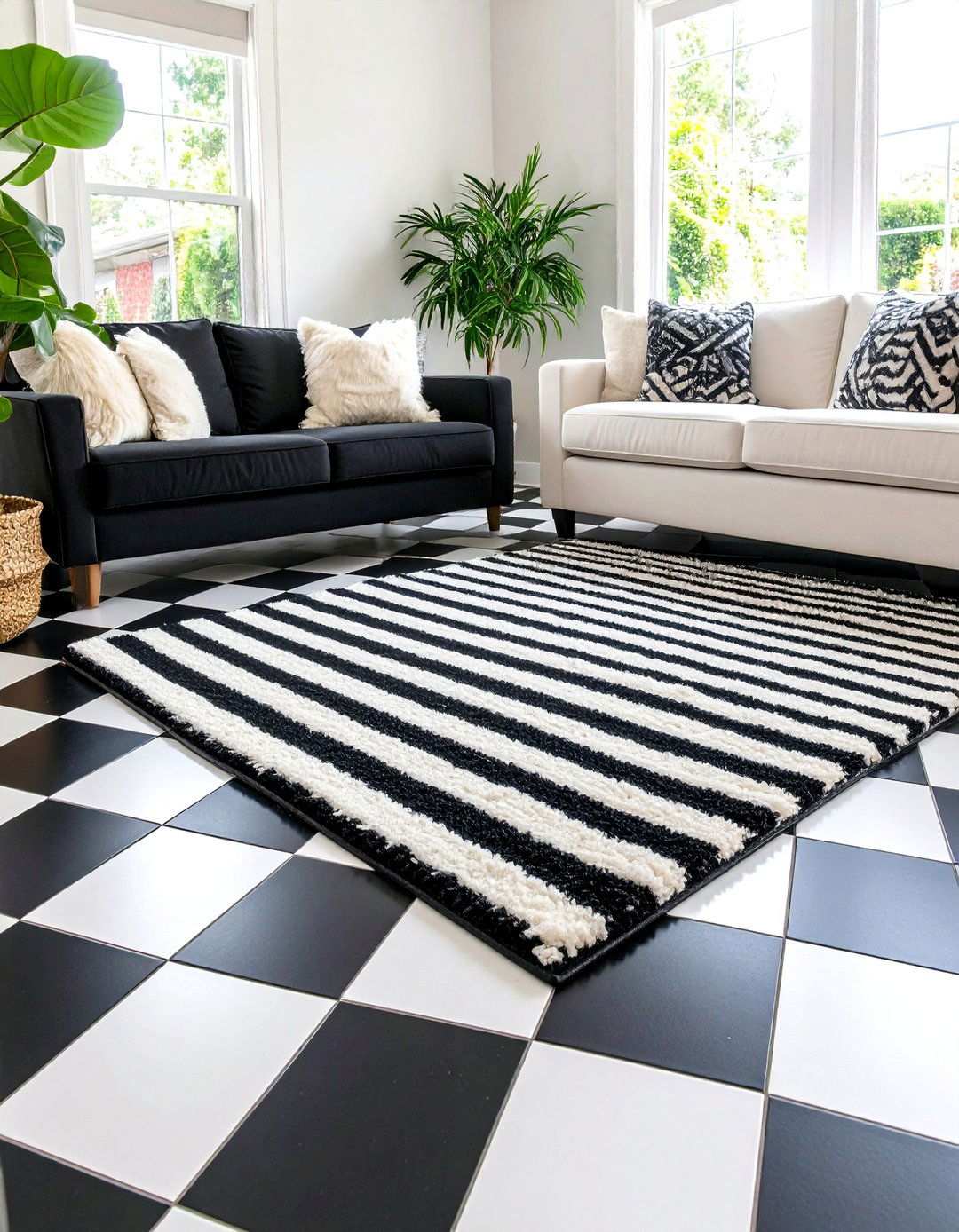
Introducing a classic checkered pattern through twelve-inch square tiles in alternating black and white hues instantly imbues the space with a sense of history and dynamism. Designers praise this budget-friendly approach as a means to disguise uneven flooring while infusing the living room with the charm of a Parisian café. To enhance visual interest, use high-contrast grout to accentuate the grid pattern or opt for color-matched grout for a more understated look. If cold floors are a concern, layering a plush wool rug above the tile work in a crisp white stripe adds warmth and texture to the space.
15. Thoughtful Accent Colors Elevate Contrast
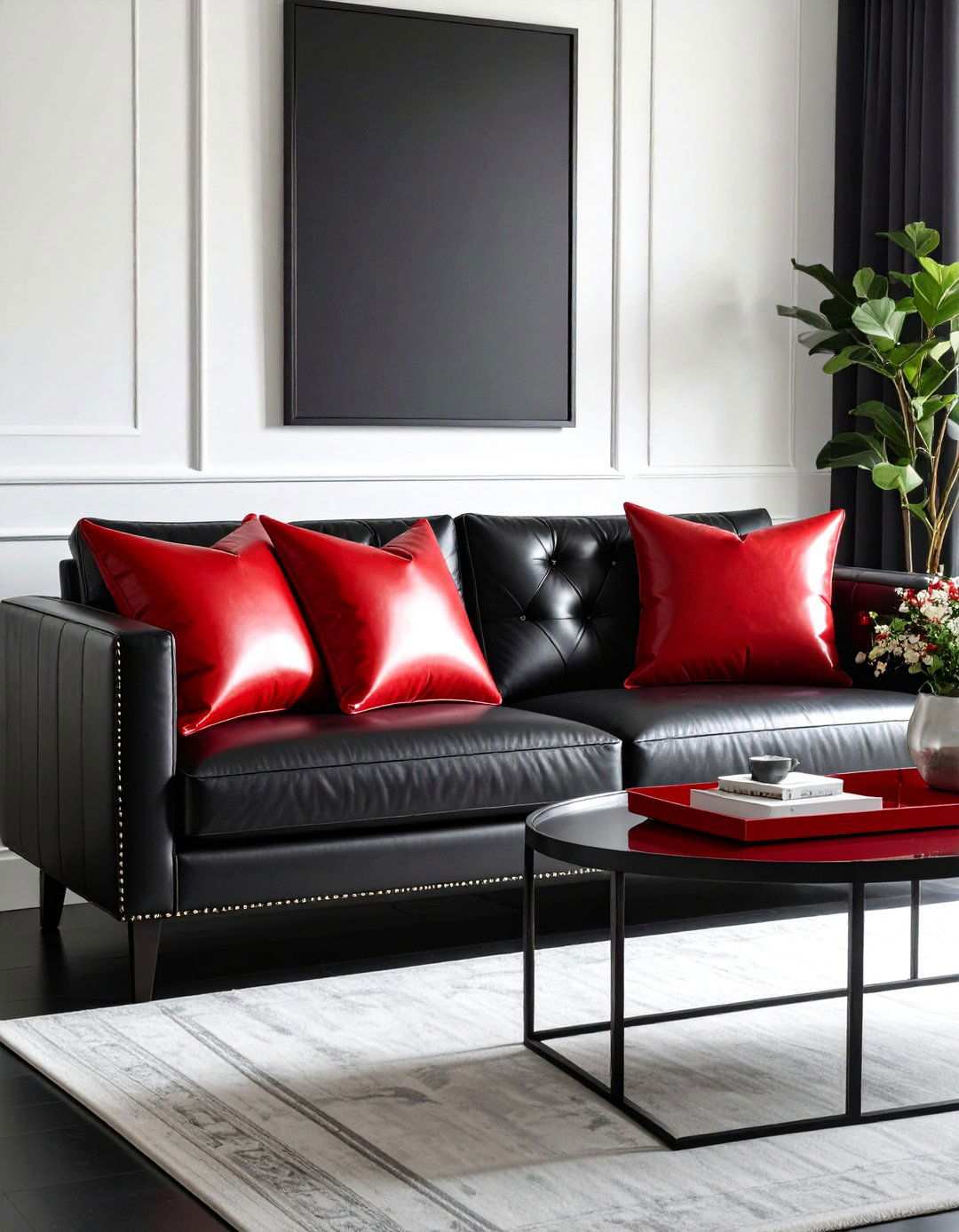
While traditionalists stick to a two-tone palette, incorporating a single bold hue can dramatically amplify the visual impact. Experts recommend lime green, cobalt blue, or cherry red due to their high saturation levels, which can stand up to black without muddying the overall aesthetic. An accent pillow or a lacquered tray can be the sole representation of this statement color; repeating it once more in artwork or decor helps to reinforce the cohesive theme. Instagram-worthy rooms often feature glossy red leather cushions contrasted against monochromatic upholstery, injecting a bold and rebellious energy into the space. To maintain visual balance, keep the accent color to no more than five percent of the room’s visual footprint.
16. Authentic Mid-Century Accents Ground the Living Room
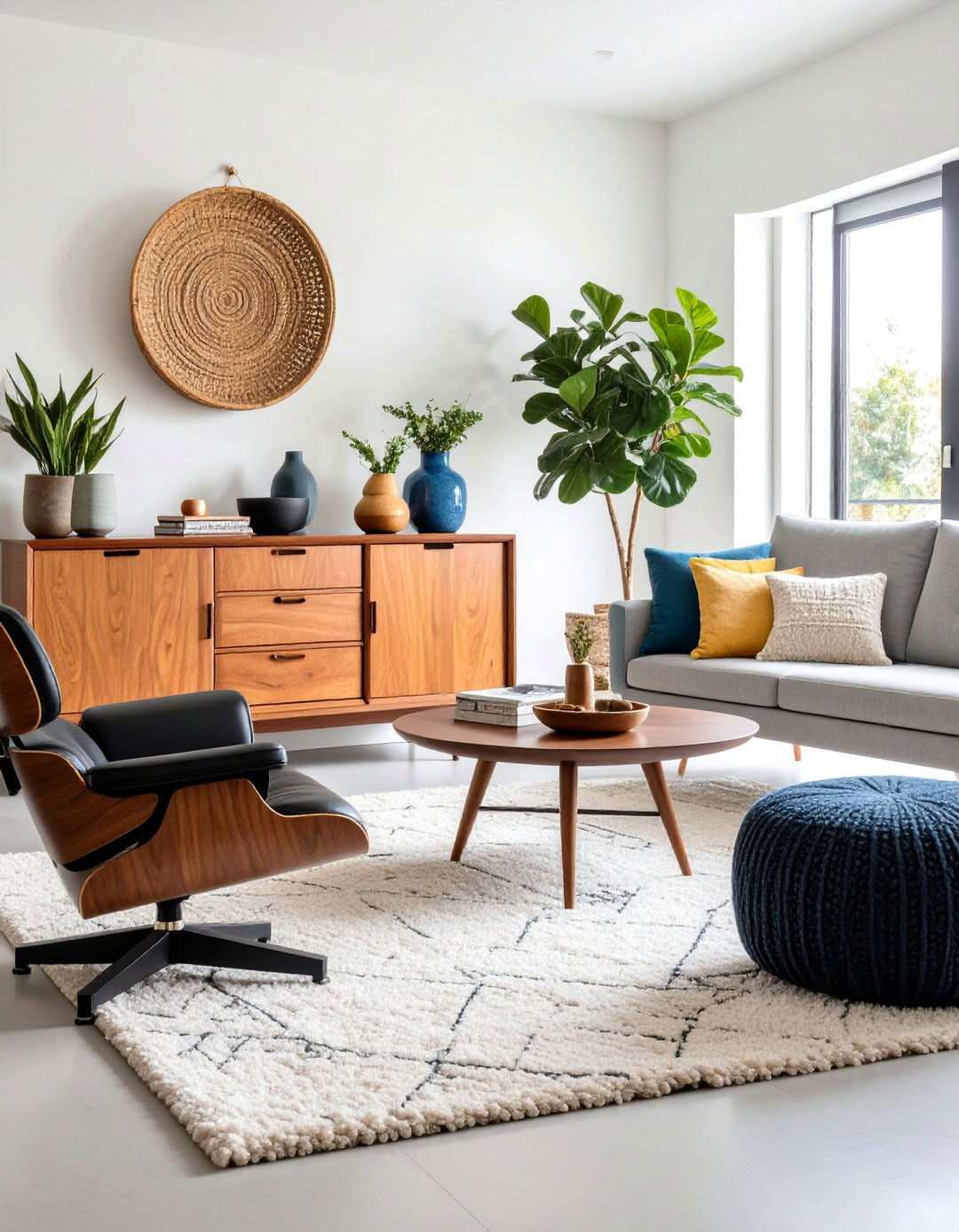
Incorporating vintage mid-century silhouettes, such as rosewood credenzas or black leather Eames loungers, injects a sense of heritage and character into a contemporary black and white living room. Their organic curves soften harsh contrasts, while authentic patina prevents the space from feeling overly polished. Mixing grainy woods with matte-black steel lamps helps to bridge eras, creating a unique visual narrative. Upholstering cushions in off-white tweed adds tactile depth, inviting guests to engage with the space on a deeper level. By carefully layering historical elements, the space signals refined taste and sparks meaningful conversation.
17. Strategic Empty Space Amplifies Visual Clarity
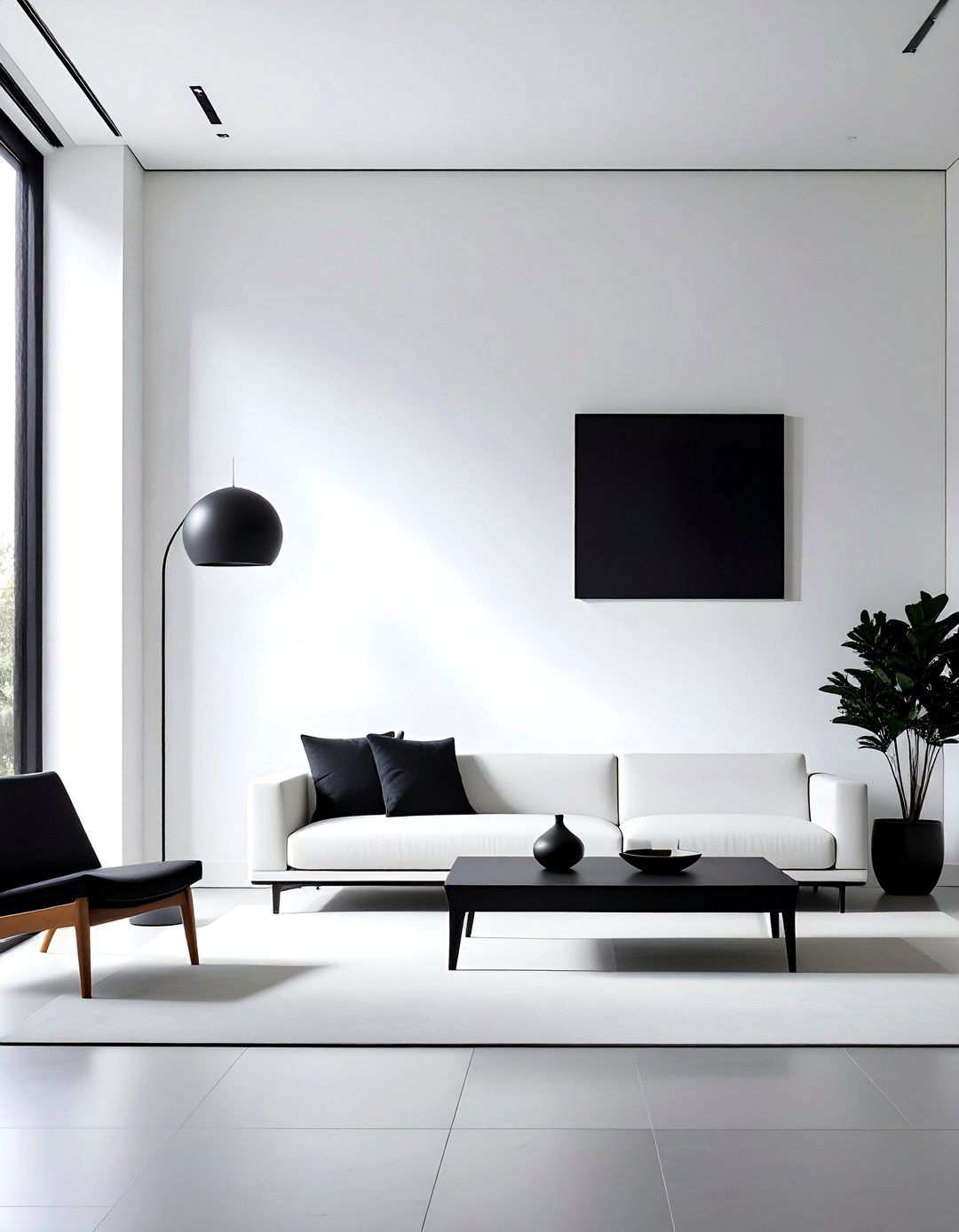
Designers often employ white walls as a breathing space to allow black accents to read crisp and unencumbered, much like the margins around printed text. Architectural photographers note that empty zones provide the mind with a sense of visual rest, preventing sensory fatigue in a predominantly monochromatic environment. Allowing at least one expanse to remain unadorned lets daylight freely dance across the space. When the temptation to fill every surface arises, remember that restraint is a deliberate design choice, not a lack of intention.
18. Refining the Framework
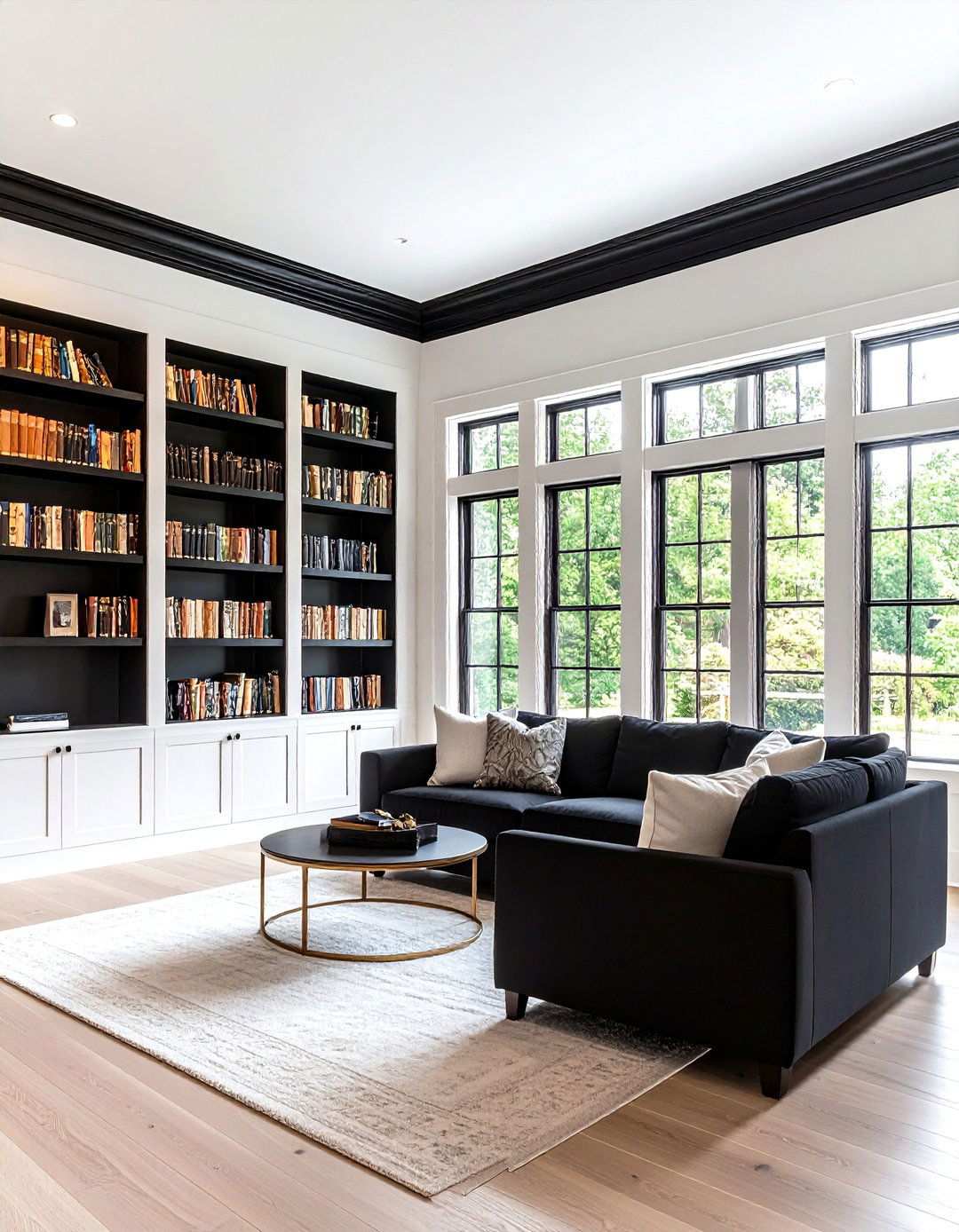
Using a deep, rich tone for the trim in a living room has a profound impact on the space’s overall aesthetic. By painting window casings, doorframes, or built-in bookcases a sleek black while keeping the walls a crisp white, homeowners can create a striking visual contrast that highlights the architectural details of the room. This technique is particularly effective when paired with hardware in a matching dark tone, as it creates a cohesive look that envelops the space. To further enhance the effect, consider adding black curtain rods, which will help to conceal functional details and allow textiles to take center stage.
19. Balancing Contrast with Texture
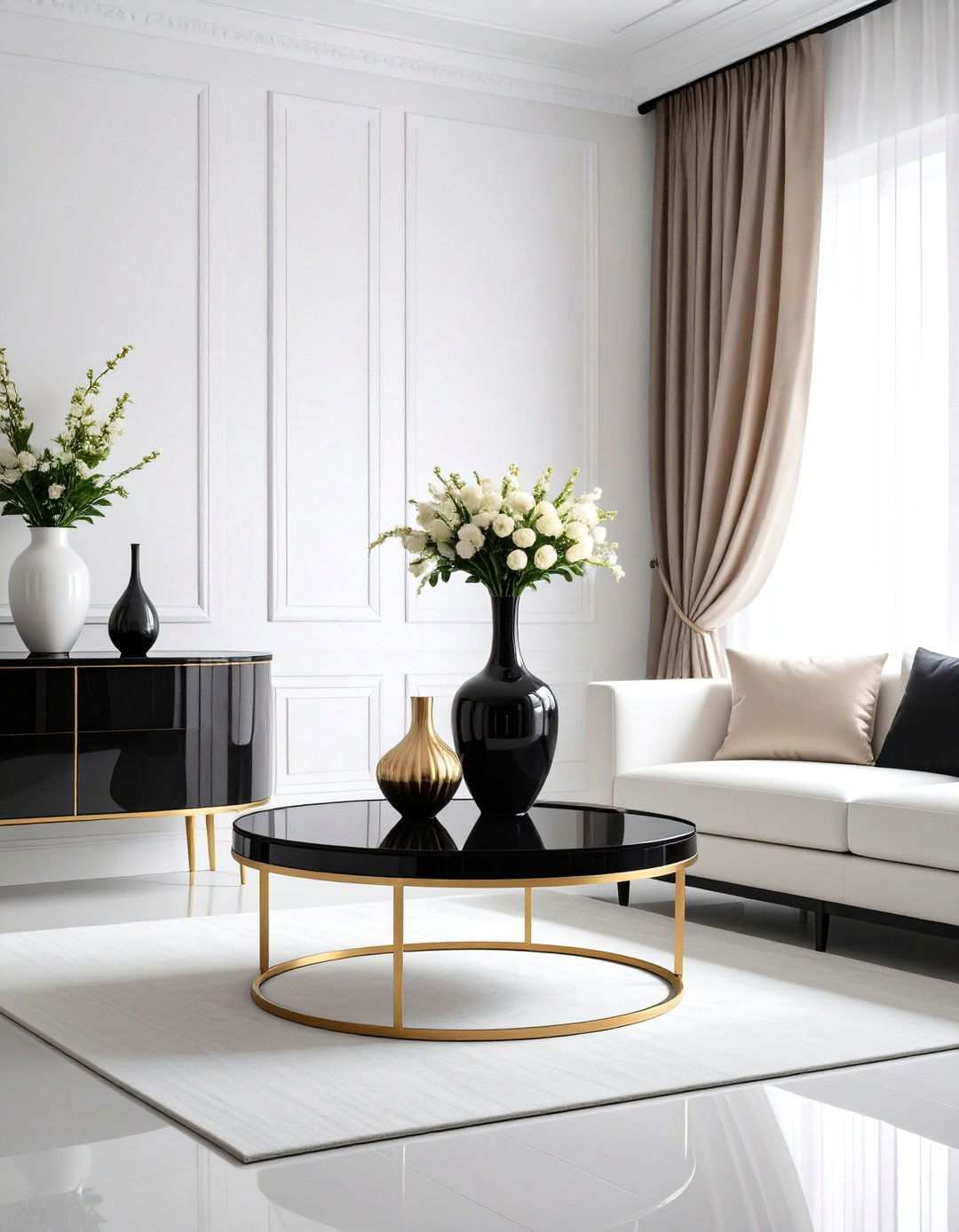
A black and white color scheme is a timeless choice for a living room, but it can also be a bit one-dimensional if not balanced with varying textures and sheens. One way to add depth and visual interest to the space is to combine matte walls with high-gloss lacquered side tables or satin drapes with chalky ceramics. This will create a delightful tension between the different surfaces, as light dances across them in a way that’s both captivating and subtle. By reserving reflectivity for accents, homeowners can avoid glare and fingerprints, and create a more inviting atmosphere.
20. Defining Spaces with Color Blocking
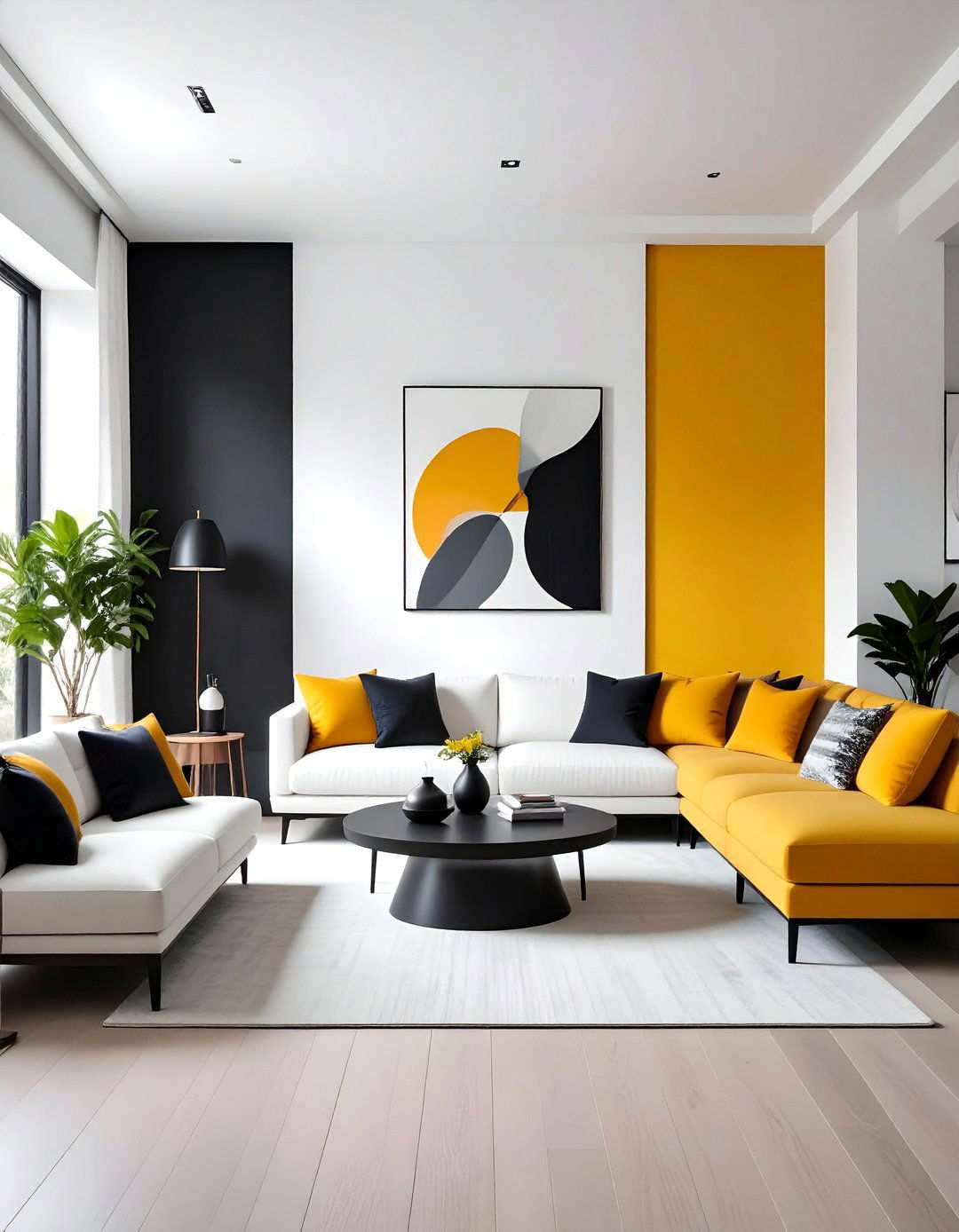
In open-plan homes or lofts, defining the living room from adjacent spaces can be a challenge. One effective solution is to use a two-tone wall treatment, where the lower third of the wall is painted black and the upper portion is white. This creates a clear visual divide between the two areas, and can be further enhanced by aligning the horizontal line with window sills for added architectural logic. To add an extra layer of definition, consider mounting artwork in a way that its midpoint straddles both colors, unifying the scheme. This technique not only creates a cohesive look, but also doubles as scuff protection in busy households. For an extra touch of elegance, run a narrow chair-rail molding along the divide and paint it crisp white, so the transition looks intentional.