1. Elevating Black House Entries with Cedar Cladding
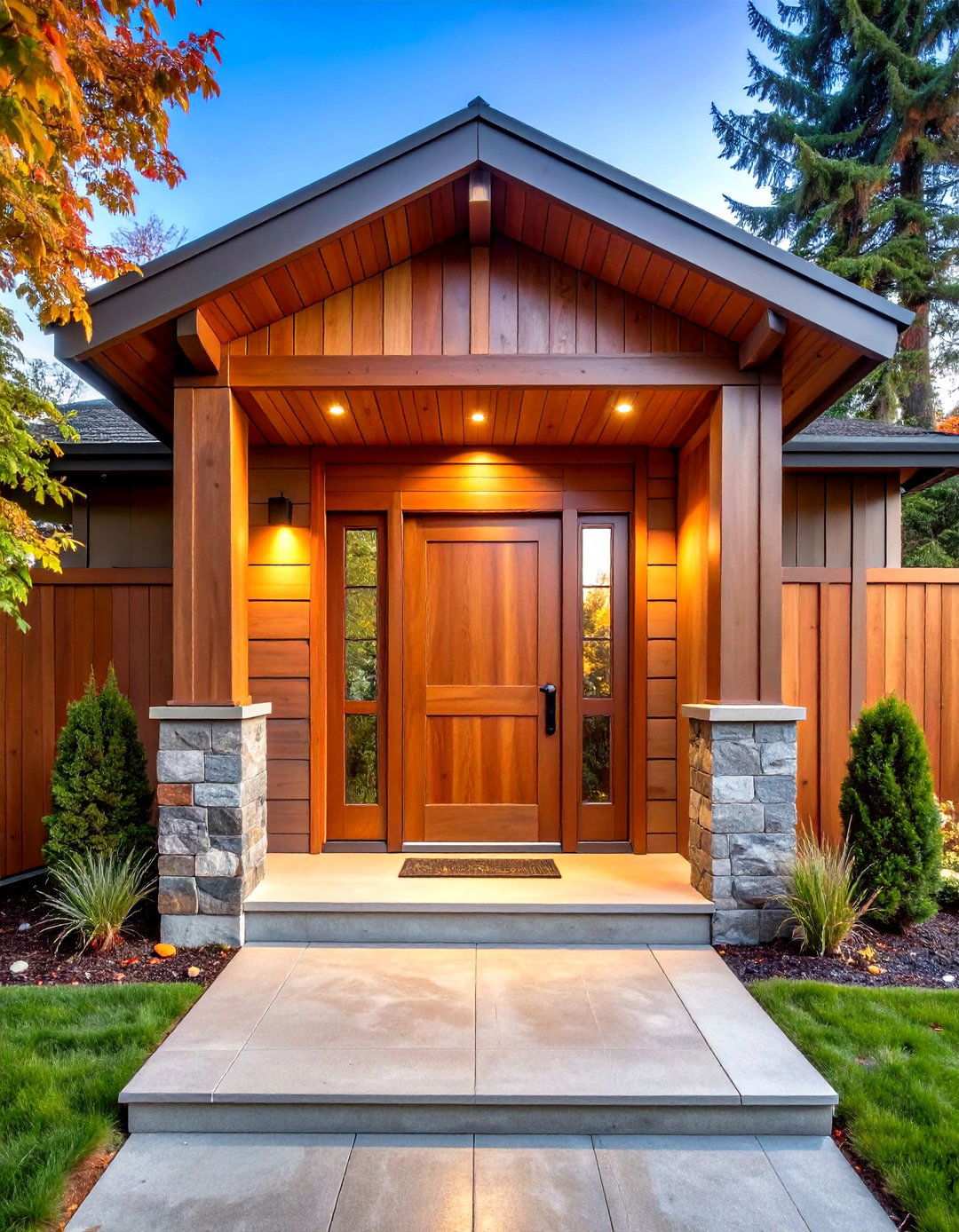
Striking the perfect balance between drama and elegance, a beautifully designed entryway can set the tone for the entire black house. Consider incorporating a striking portal-style entry, where thick cedar boards are installed vertically to create a stunning visual contrast against the dark façade. As the eye is drawn to the glowing grain of the cedar, the entrance becomes an inviting focal point, guiding guests to the front door. To further enhance the ambiance, extend the same cedar boards across the soffit, effectively blurring the threshold between interior and exterior spaces. This not only creates a seamless transition but also shields the door from the elements, prolonging its finish. As an added bonus, cedar’s natural decay-resistant oils ensure a low-maintenance finish, allowing you to leave it bare and watch it weather to a beautiful silvery patina. The perfect finishing touch? Warm LED downlights that accentuate the timber at night, casting a warm glow over the entrance.
2. Transforming Black House Soffits into Design Features
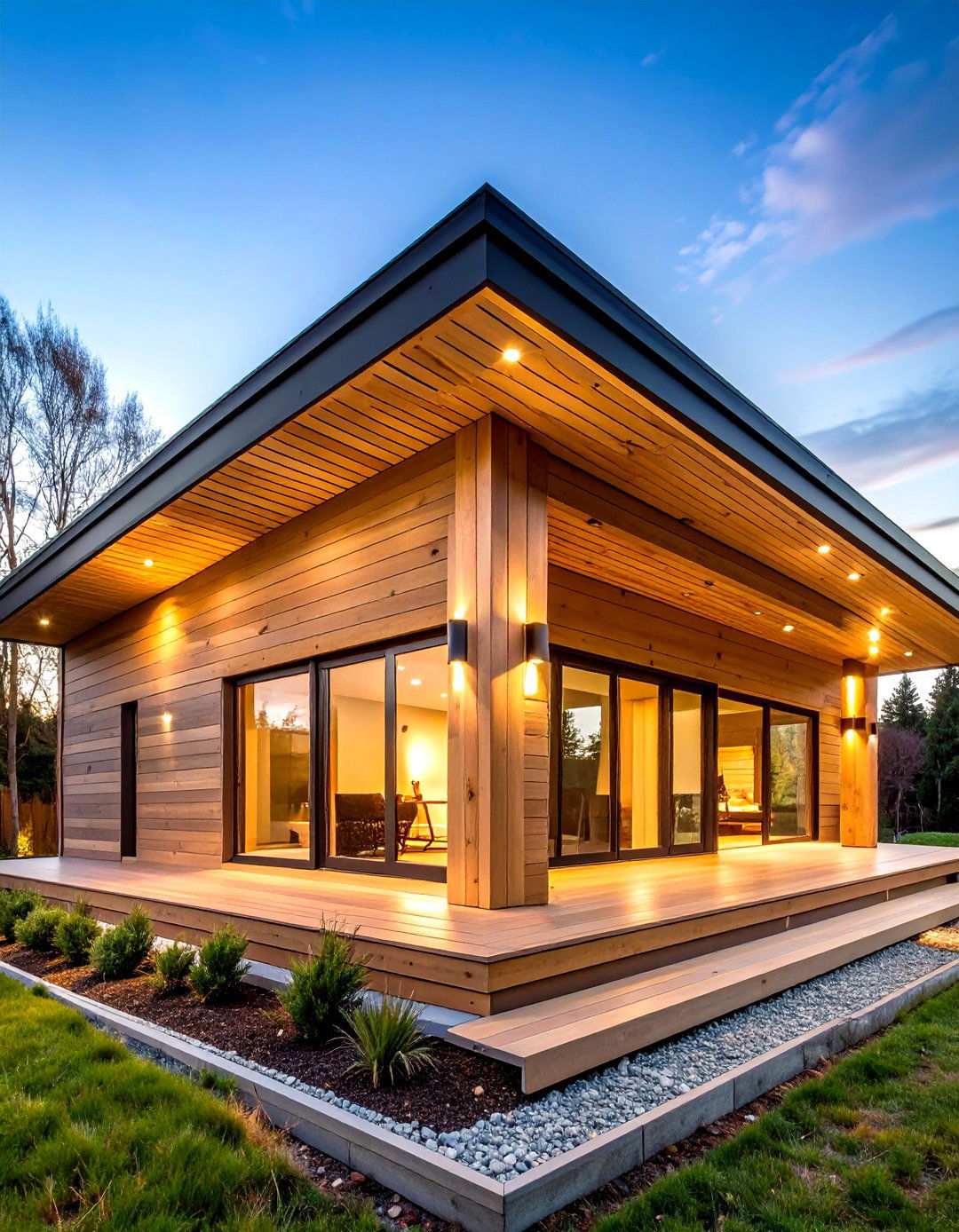
Traditionally, the underside of a black house’s eaves has been overlooked, but with a little creativity, it can become a design statement. Why not line the space with tongue-and-groove pine or cedar, creating a visually appealing contrast against the dark rooflines? The horizontal planks stretch sightlines outward, making narrow façades appear wider and more expansive, while the tight-gap vertical strips emphasize lofty gables, adding a touch of drama to the design. To enhance the aesthetic, apply a penetrating UV oil instead of solid stain, allowing the golden grain to radiate at twilight and offset the matte darkness above. This thoughtful approach not only injects warmth into the space but also reduces upkeep, as the finish ages more gracefully in the shaded area. As a final touch, subtle soffit lighting transforms the plank ceiling into a beautiful evening feature, perfect for creating ambiance and setting the tone for the evening.

As an Amazon Associate I earn from qualifying purchases.
3. Adding Depth with Shou Sugi Ban Accent Panels
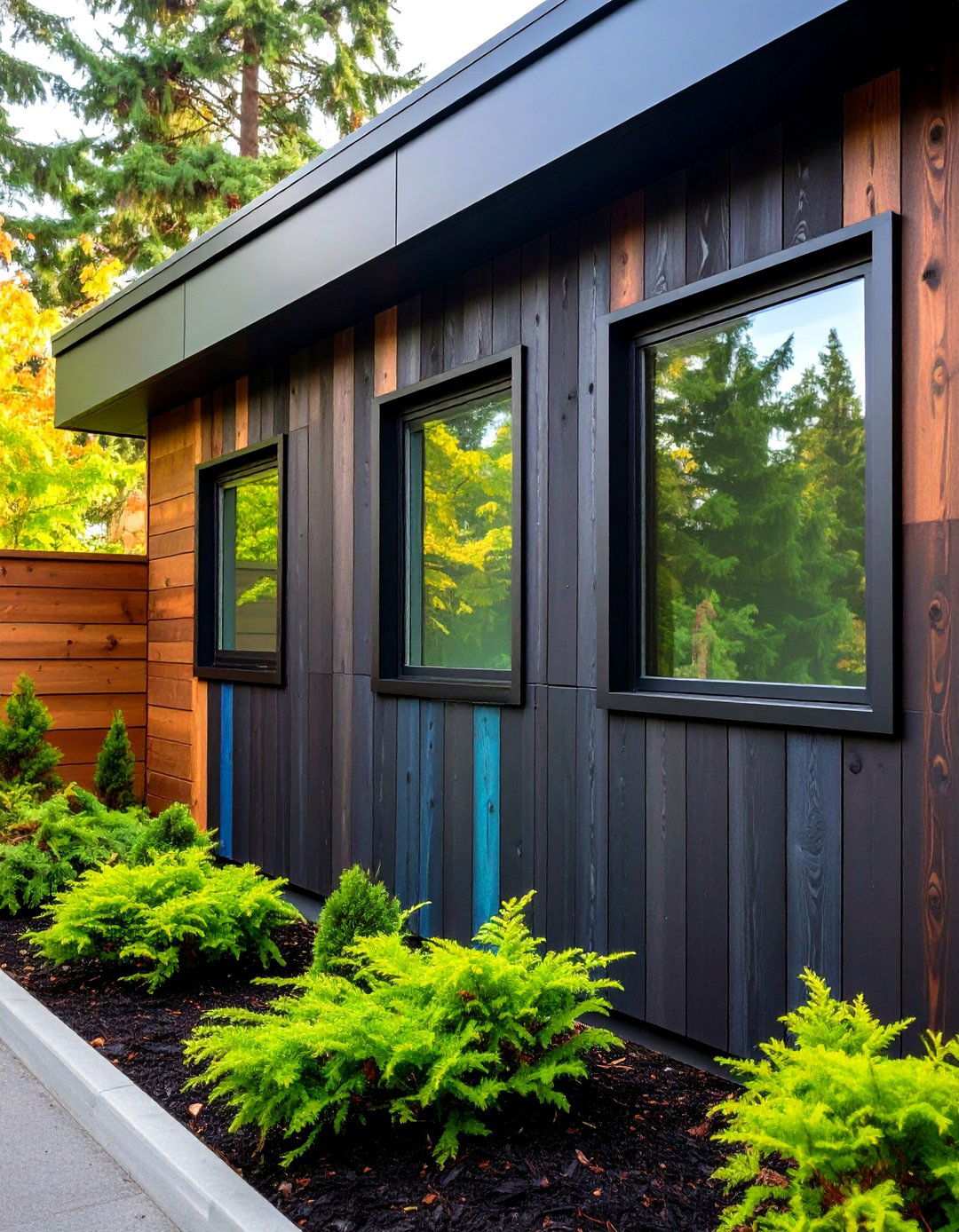
For homeowners who crave depth and visual interest without resorting to bold color changes, consider incorporating Shou Sugi Ban accent panels onto black walls. This traditional Japanese method involves charring the wood itself, creating beautiful jet-black boards with iridescent texture that contrast beautifully against smoother cladding. To create a striking visual effect, mount narrow charred-wood panels in vertical stacks beside picture windows or across a second-story bump-out, breaking up massing and adding a touch of sophistication to the design. The carbonized surface is not only beautiful but also naturally insect and rot resistant, eliminating the need for chemical preservatives. To maintain its durability, simply re-oil the panels every few years, or leave them to weather matte for a soft, charcoal-dusted finish that pairs effortlessly with raw timber highlights. By incorporating Shou Sugi Ban accent panels, homeowners can add a touch of elegance and sophistication to their black house design.
4. Cedar Accents Elevate A Black Façade
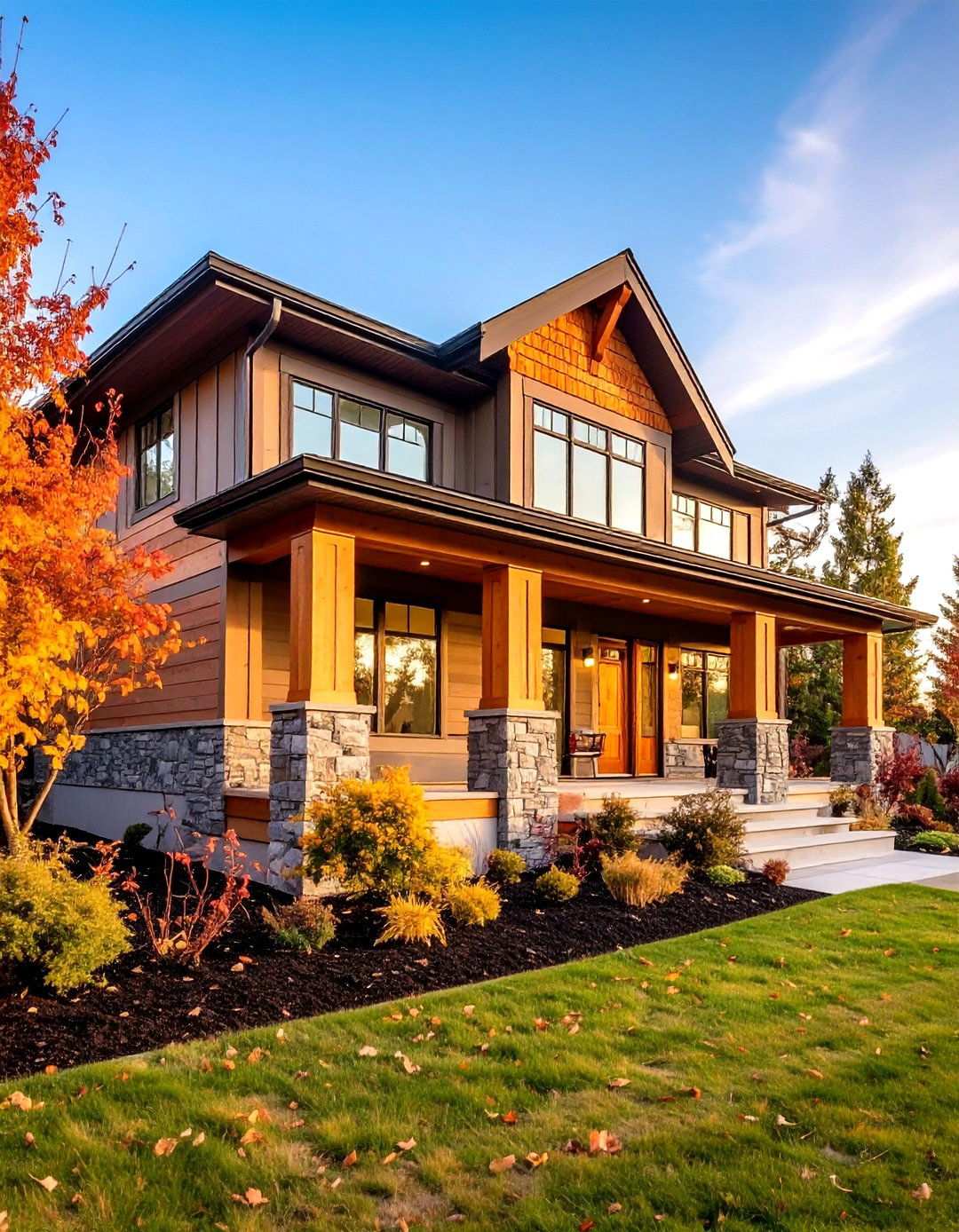
Adding a horizontal cedar band around a black house at mid-wall height or just below rooflines injects instant visual interest. This warm band effectively separates upper and lower volumes, conceals floor-level changes, and provides a built-in ledge for soft downlights, creating a seamless transition between indoors and outdoors.
When designing the cedar band, consider using two-by-one tongue-and-groove boards spaced with a deliberate shadow gap to cast delicate lines reminiscent of window mullions. Position the band proud of cladding on concealed clips to promote rear ventilation, thereby extending the lifespan of the wood. To ensure the wood remains healthy, seal the underside with breathable exterior oil and avoid trapping moisture.
To achieve a cohesive look, align the cedar band with interior sill or ceiling levels for visual flow inside. This thoughtful approach ensures a seamless transition between the exterior and interior design elements.
5. Timber Pergolas Bring Dimension to Black Exterior Spaces
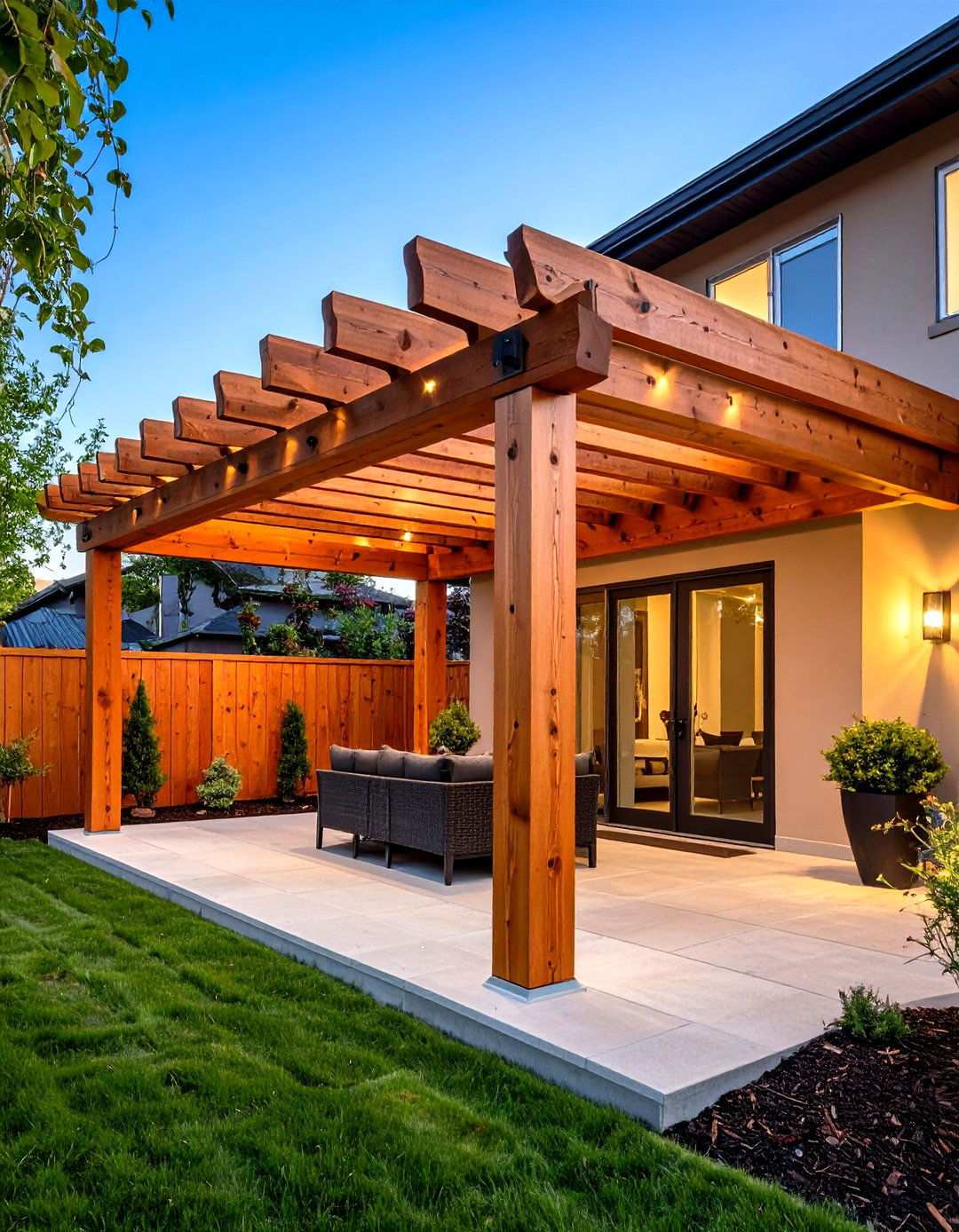
A timber pergola attached to the sun-facing façade introduces dimensional shade and expands the livable square footage just outside sliding doors. By using laminated fir or cedar beams stained a shade lighter than the black siding, you can accentuate contrast and showcase the craftsmanship of the joinery.
When designing the pergola, consider setting slats at 8-inch centers to filter afternoon sun, reducing cooling loads while creating dynamic shadow patterns across dark walls. Anchor columns on concealed steel shoes and pull electrical conduit before decking so festoon lighting can be installed without visible wires, maintaining the clean aesthetic of the pergola.
To soften the edges of the pergola and create a living canopy, plan the installation of climbing vines such as wisteria, grape, or passionflower, which will add a scented, lush dimension to the space over time.
6. Rustic Charm of a Timber-Framed Porch on a Black Farmhouse
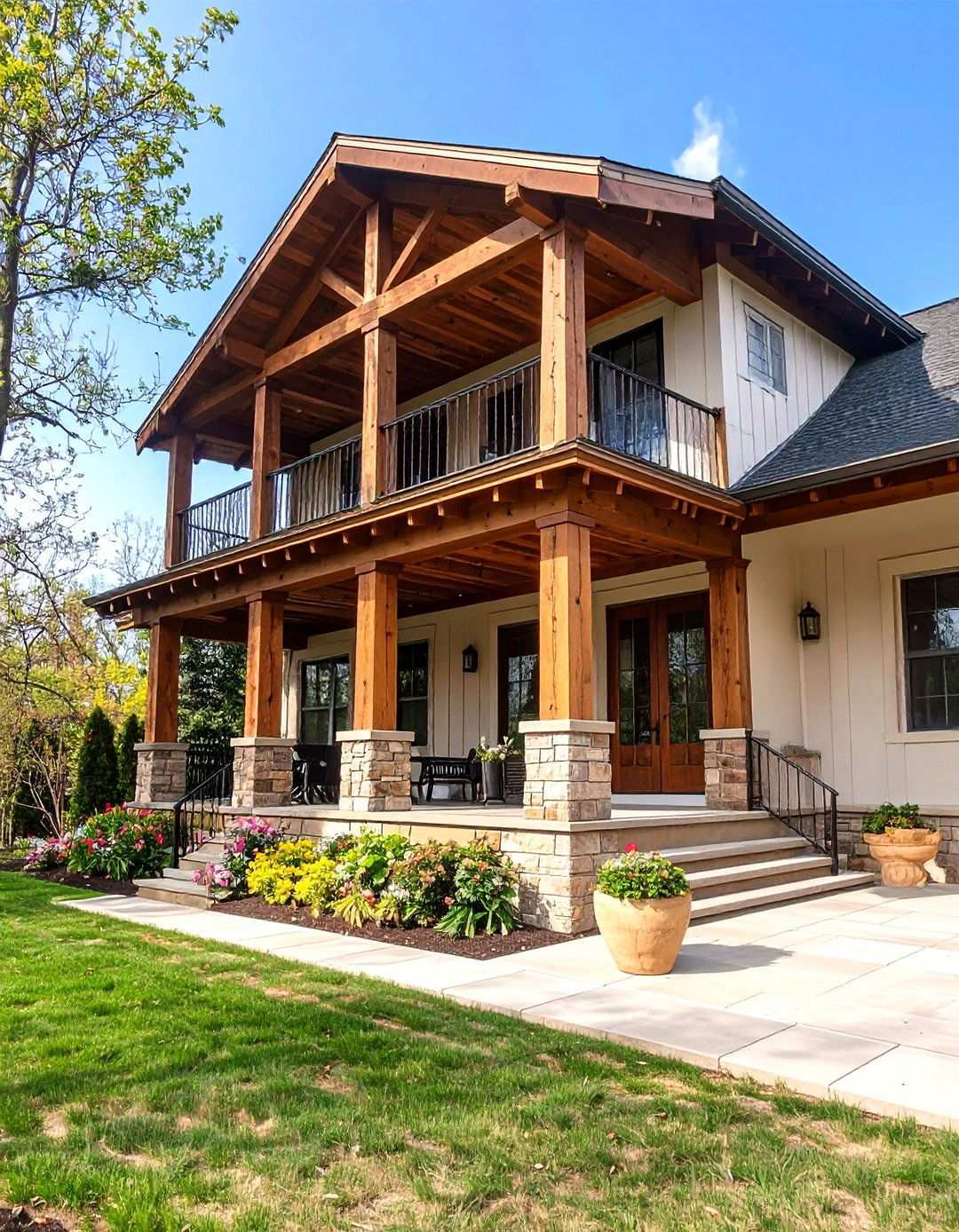
For those who crave the warmth and character of a vernacular design, a full-width porch framed in chunky reclaimed posts can anchor a black farmhouse within its landscape. The dramatic contrast between the natural checking and knots of the reclaimed wood and the dark backdrop creates a striking visual effect, proving that rustic textures can be both timeless and contemporary.
When designing the porch, consider using tongue-and-groove cedar ceiling boards and cable railings to maintain a light and airy silhouette, while wide steps invite summer gatherings and create a sense of community. Installing the frame on helical piers minimizes excavation and protects tree roots, making it an ecological advantage on established lots.
To ensure the stability and longevity of the porch, clear-coat the posts annually for the first three years to counter uneven sun exposure; after stabilization, maintenance intervals can lengthen.
7. Wood-Wrapped Window Trim Adds Definition to Black Walls
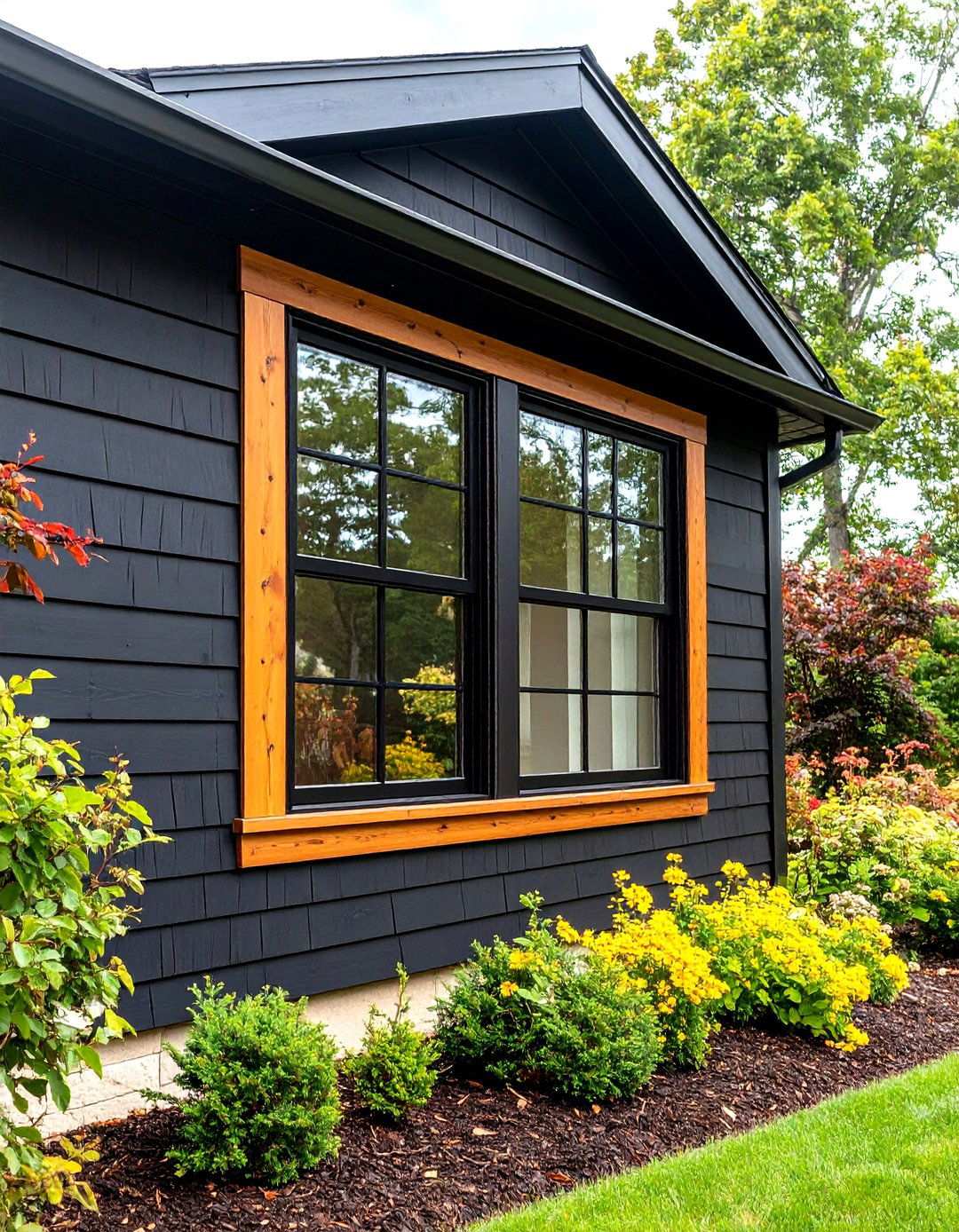
Black walls can make glass disappear, but framing that void with two-inch natural wood trim reintroduces definition and highlights sightlines. When selecting the wood, choose decay-resistant cypress or cedar, back-prime all faces, and mount on spacer blocks to ensure air circulation behind the trim.
To create a cohesive look, slightly wider head casings than jambs can emphasize horizontality and prevent rain streaks. When mitring inside corners, bed them in flexible sealant to accommodate movement without cracking the dark paint. Finish the trim in a neutral semi-transparent stain that complements both black surfaces and surrounding greenery, creating a seamless transition between the interior and exterior design elements.
8. Elevating a Black Home's Street Face with Wooden Garage Doors
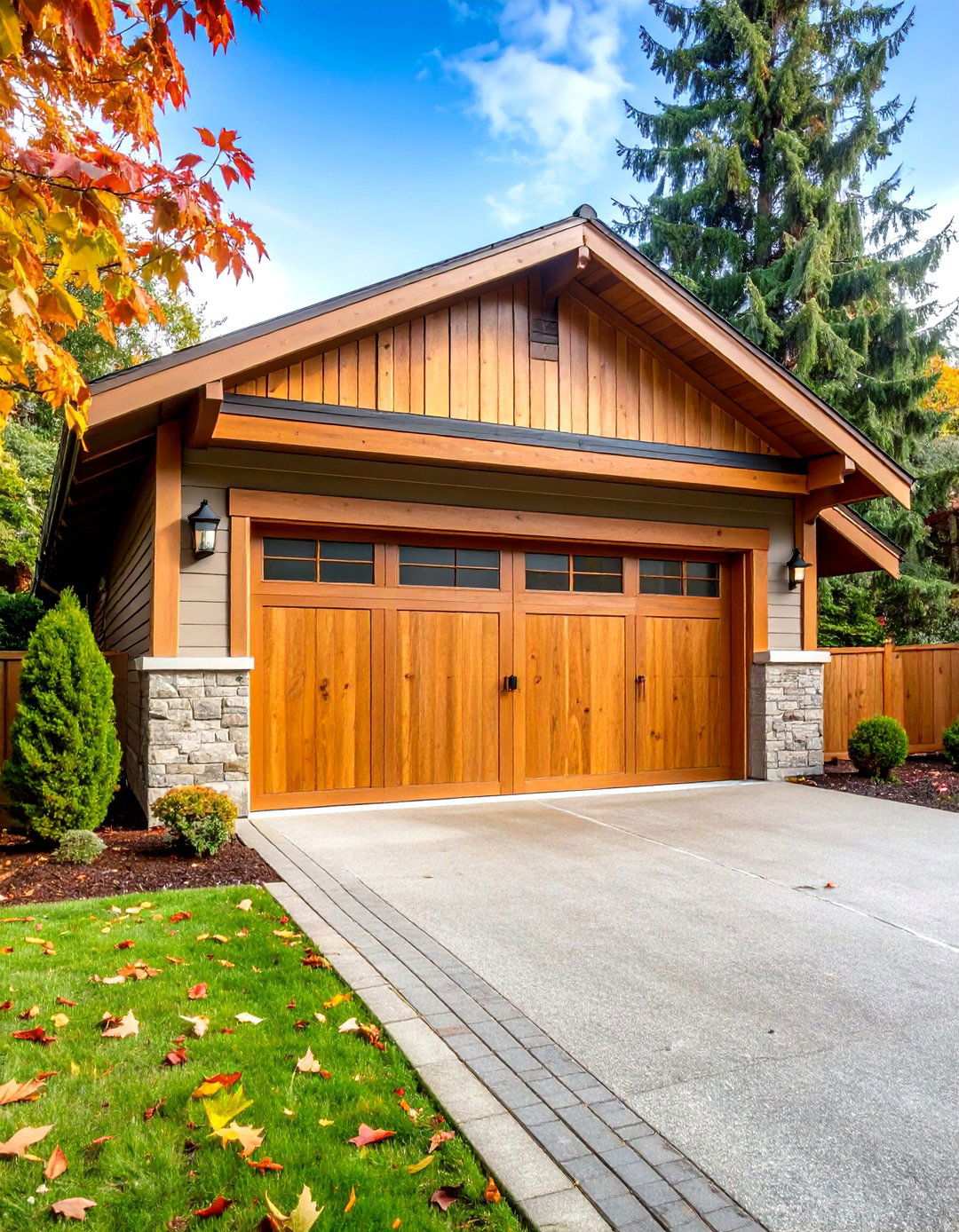
Replacing stamped-steel panels with genuine vertical-grain cedar or hemlock doors can transform a black house’s street presence into a bespoke masterpiece. Flush designs maintain a modern aesthetic, while raised-slat patterns introduce a touch of subtle relief. Factory-insulated wood-clad doors not only achieve competitive R-values but also weigh less, reducing stress on openers. By specifying hidden tracks, daylight is prevented from peeking around panel edges, preserving the bold silhouette. A deliberate choice of stain, two tones lighter than adjacent siding, keeps the doors focal without overwhelming the visual impact. Regular wash-downs and a clear top-coat help ward off the effects of road-salt residue and UV fading.
9. Cedar Decks and Glass Balconies: A Harmonious Contrast to Black Siding
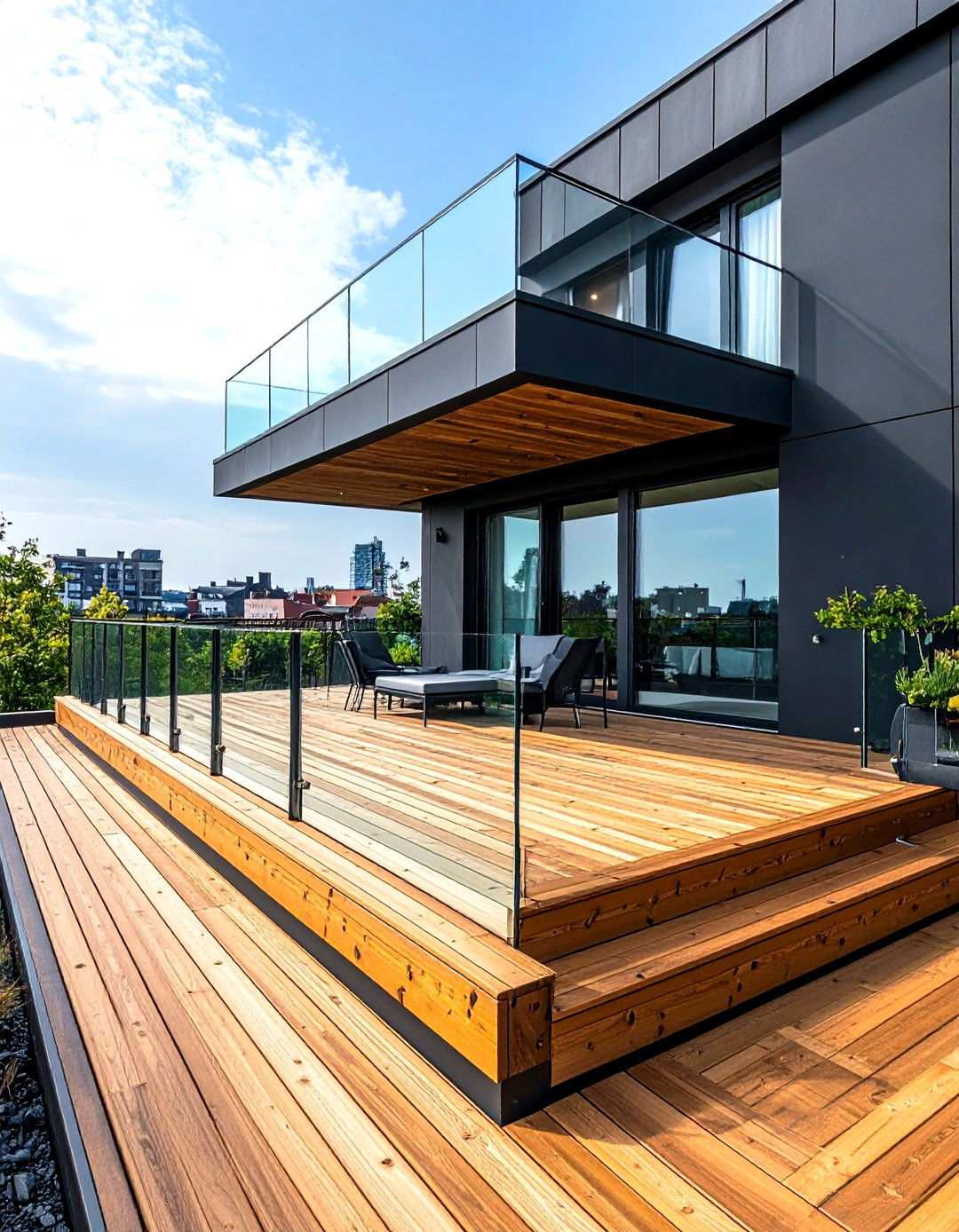
Extending living space outward with a cedar deck, or upward with a cantilevered glass-railed balcony, introduces human-scale planes that provide a striking contrast to the monolithic feel of black walls. Pre-grooved hidden-fastener boards maintain surfaces free of screw heads and preserve crisp lines. The combination of timber flooring and frameless glass rails maintains an unobstructed view while bouncing warm light onto interior ceilings. A well-executed detail is chamfering deck edges 45° where they meet the house, both to shed water and visually lighten the mass. To preserve oils and color, clean with oxygenated bleach and re-oil every two years on traffic paths.
10. Rethinking Privacy with Floating Wood-Slat Screens on Black Houses
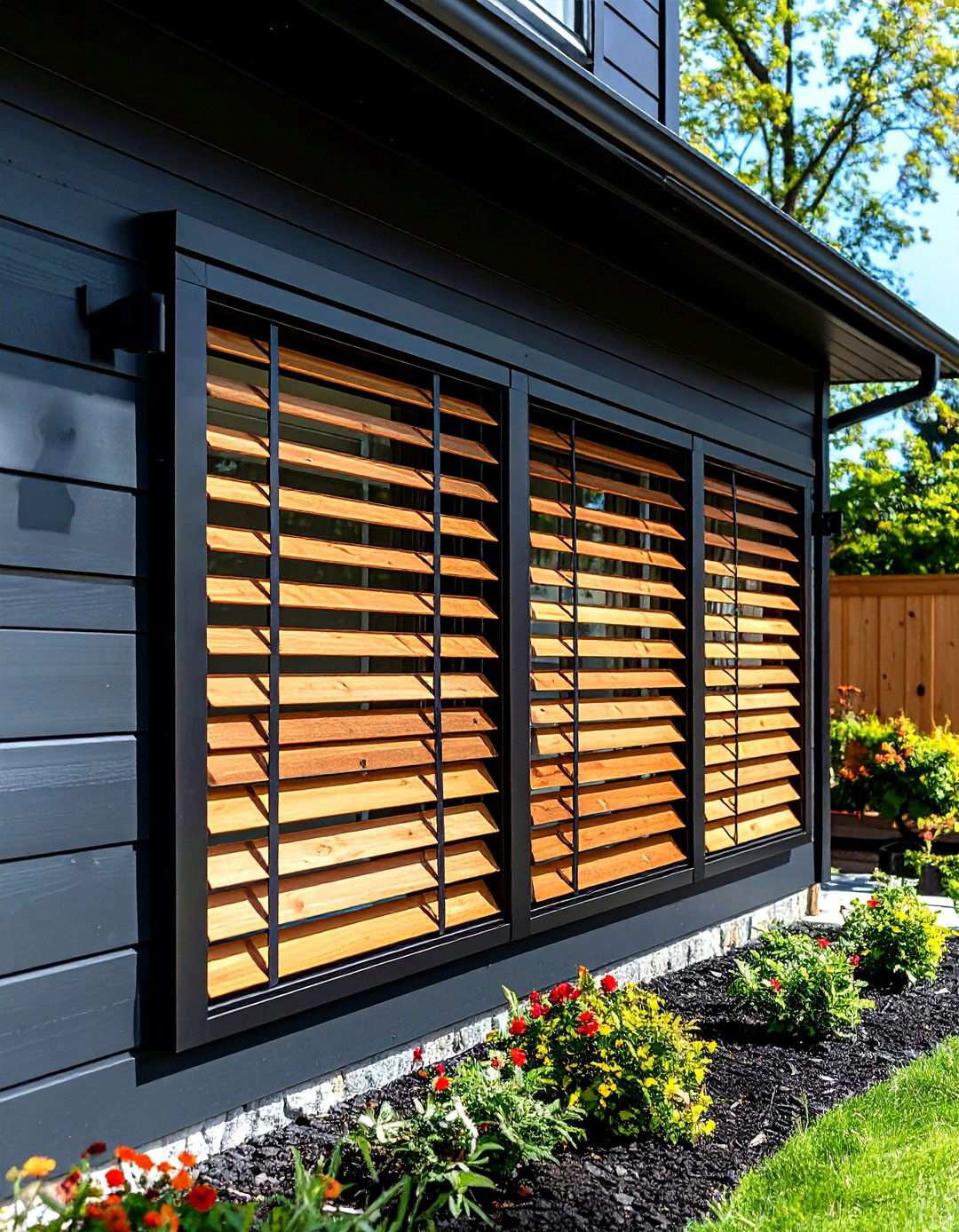
Screens built from two-by-two cedar slats, set two inches off the black façade, create layered depth, hide utility meters, and shape outdoor rooms without the need for full fences. Black powder-coated steel brackets cantilever the frame, allowing sunlight to paint striped shadows across siding. Alternating 1½-inch and ½-inch gaps achieves a rhythmic patterning while meeting fall-protection codes near windows. To prevent sagging, through-bolt into structural sheathing, and only oil the outward-facing surfaces so the backs can patinate naturally and breathe.
11. Making an Entrance with a Solid Wood Front Door in a Black Entry
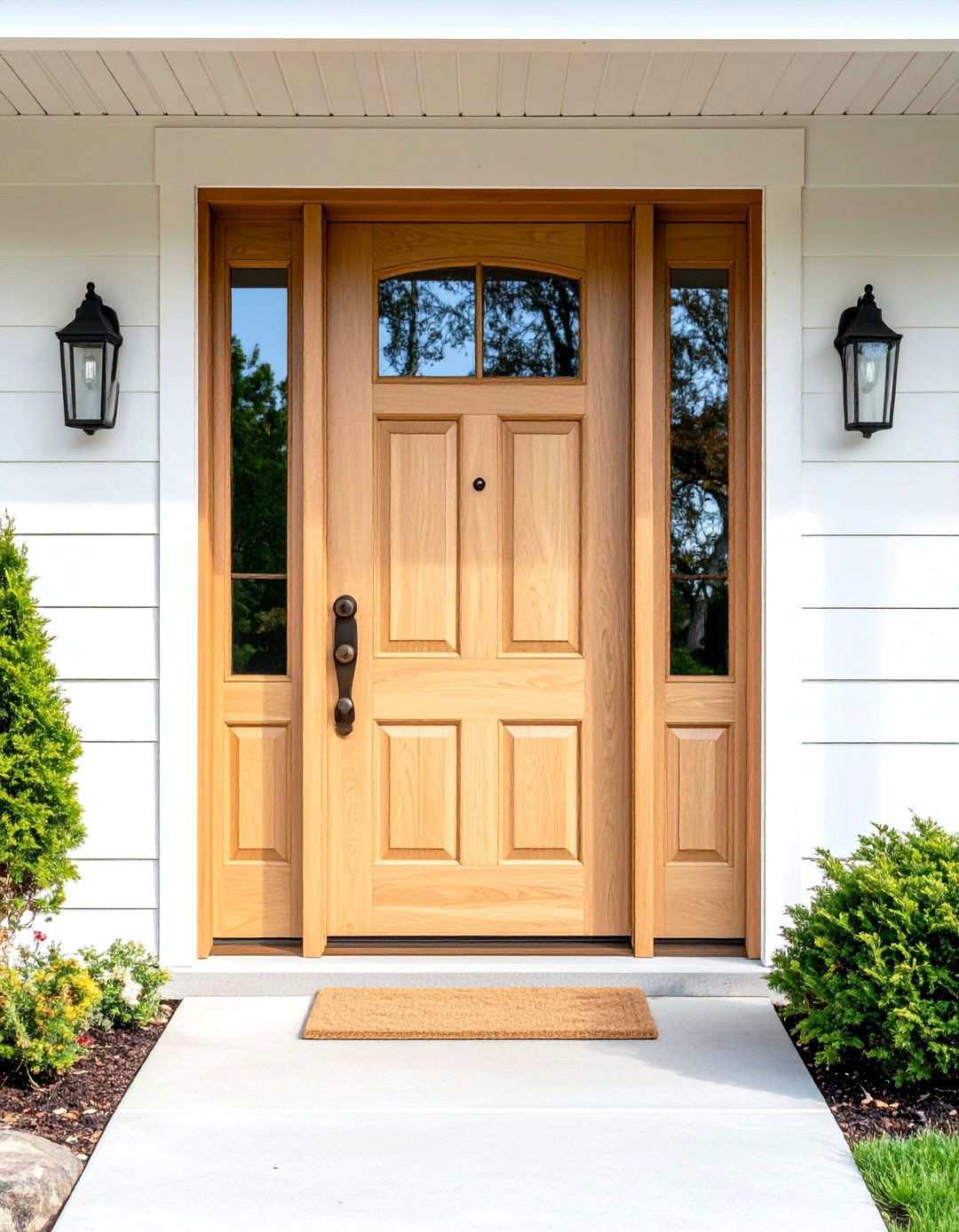
If one wood accent is chosen, it should be a massy, slab-style front door in mahogany or white oak. The rich tone commands attention amid dark cladding and signals craftsmanship before visitors even knock. A clear, furniture-grade finish is specified to showcase medullary rays, while ball-bearing hinges rated for heavy panels are used. A recessed bronze pull keeps sightlines uncluttered, while a low-iron glass transom introduces glare-free daylight. By back-sealing jamb gaps with compressible gaskets, thermal bridging is prevented, which could cause condensation streaks on black siding in humid climates.
12. Living Cedar Trellis Enhancing Black Exteriors
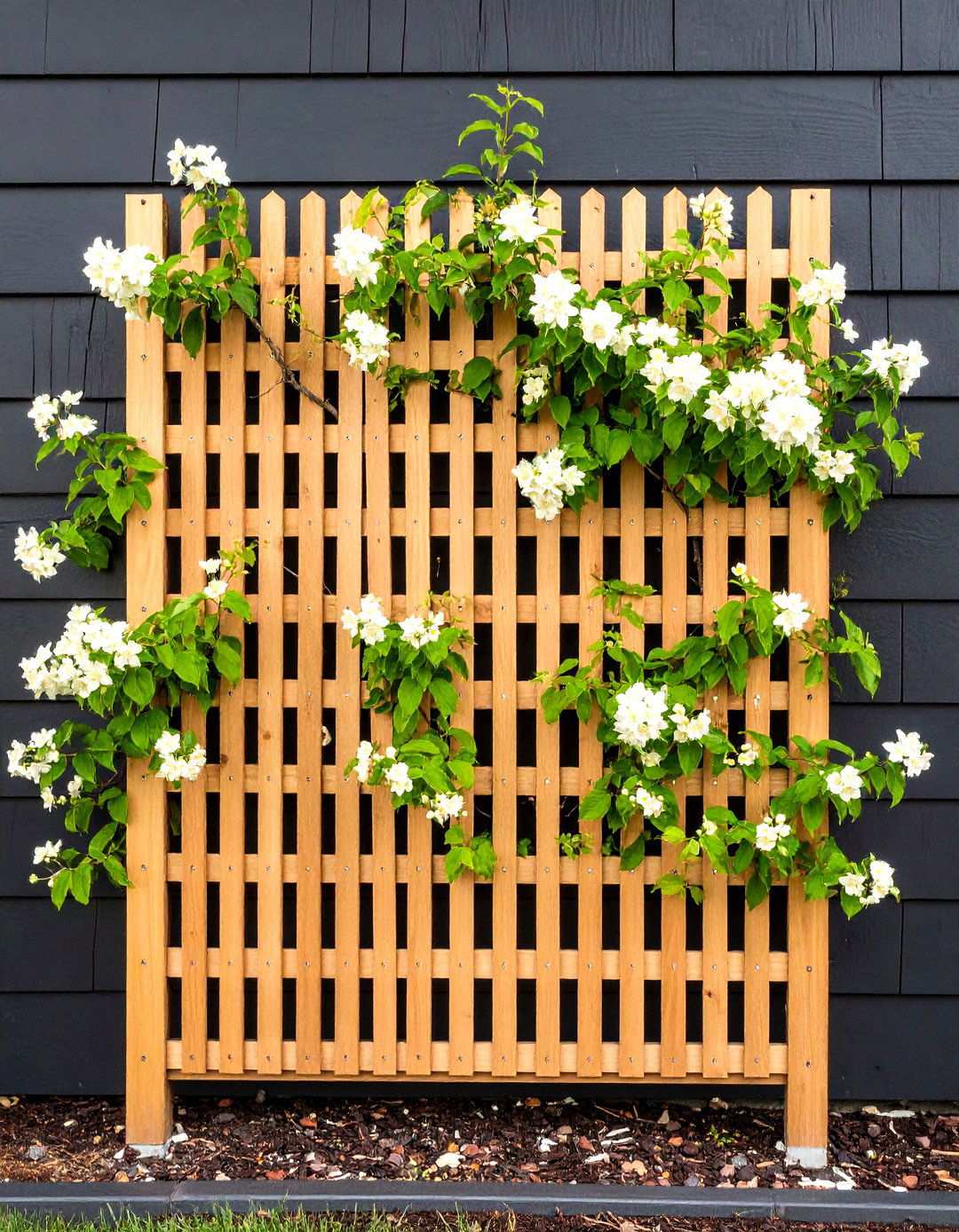
A freestanding cedar trellis installed with a six-inch setback from the black wall fosters an ideal environment for vines to flourish without compromising the home’s exterior. As the greenery thickens, the trellis provides dappled shade, effectively cooling the interior spaces while offsetting the heat absorbed by the dark paint. For year-round foliage, consider star jasmine or evergreen clematis. The trellis grid can be constructed from 1 × 2 battens using half-lap joints, allowing maintenance crews to easily inspect the walls. To prevent rust stains, use stainless screws and concealed lag shields. Regular pruning ensures optimal airflow and visual appeal.
13. Exposed Wood Beams Adding Depth to Black Gables
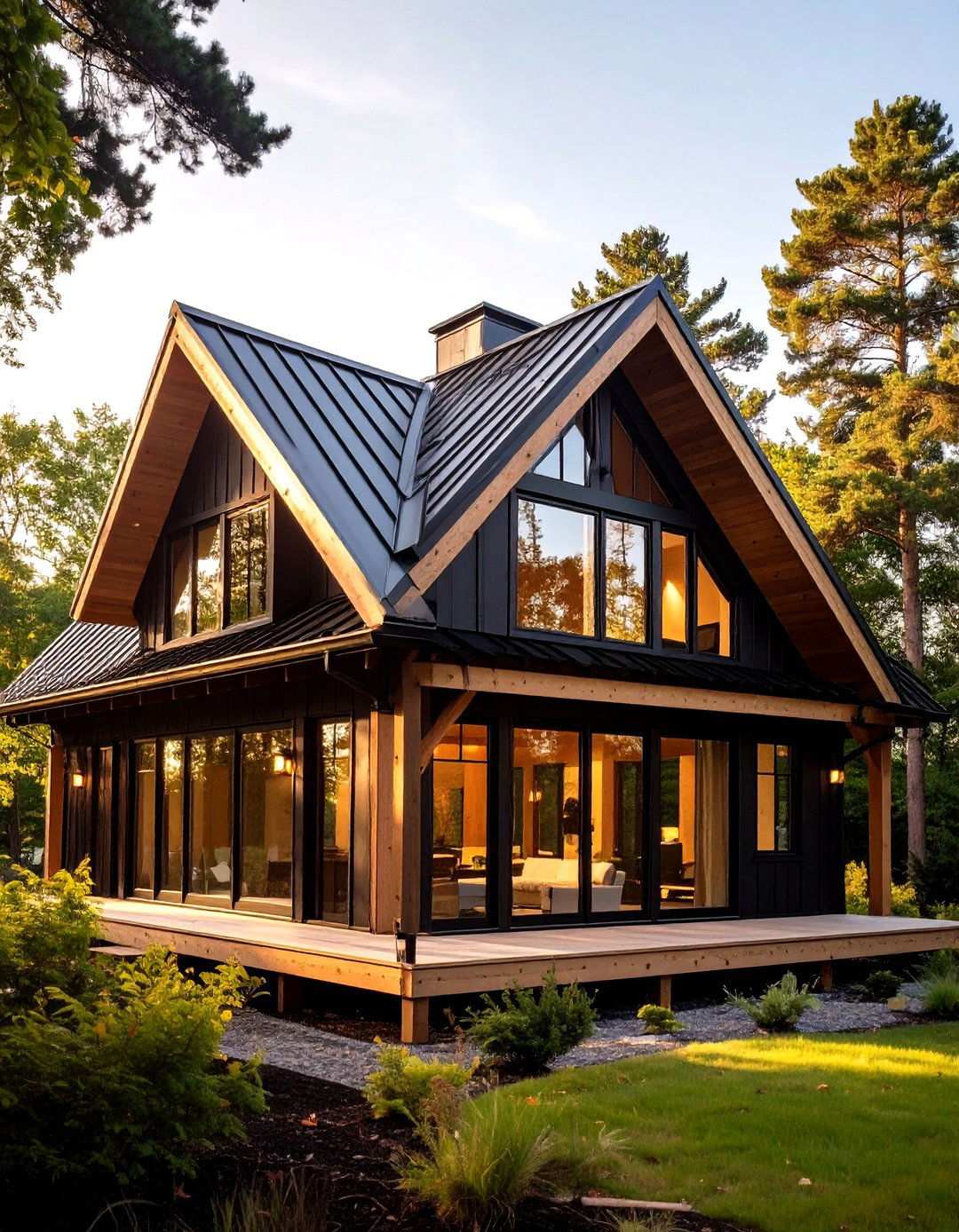
Darkened gables create a striking visual contrast, accentuating the roof’s geometric lines, while exposing structural glulam or reclaimed beams beneath them adds an authentic touch. To further enhance the aesthetic, chamfer the beam ends and apply a satin finish, allowing the golden flecks to reflect light and break up the dark voids. The same beams can be used indoors to span cathedral ceilings, visually tying the interior spaces to the exterior framework. For added durability, use concealed steel knife plates to carry loads while keeping the timber surfaces clean. To prevent water damage, seal the end-grain and elevate the beams on stainless stand-off pins, ensuring the fasteners remain tight even in the face of seasonal changes.
14. Thermally Modified Ash Accent Boards on Black Siding
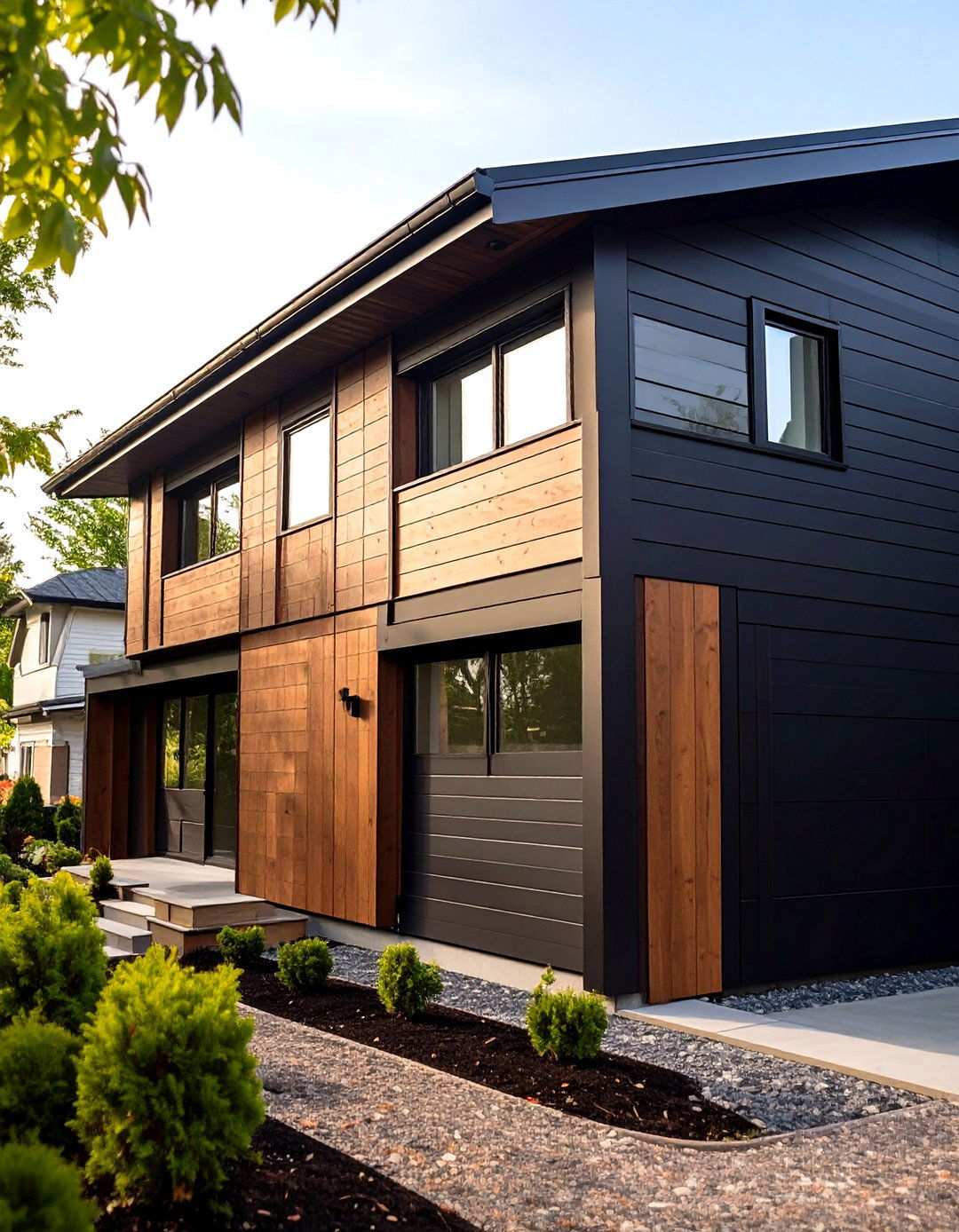
Thermally modified ash offers the color stability of exotic hardwoods without the environmental costs associated with their sourcing. This eco-friendly process involves driving out sugars using heat and steam, resulting in rot-resistant boards comparable to cedar, while also darkening them to a rich mocha hue that complements black walls seamlessly. The chemical-free process means that off-cuts can be easily composted, reducing waste. Use this versatile timber for accent rain-screens on high-splash zones where pine would be quickly degraded. Pre-drill to avoid splitting the brittle fibers, and finish with a low-gloss penetrating oil specifically designed for modified wood to prevent surface checking.
15. Budget-Friendly Cedar Shake Accent Walls on Black Elevations
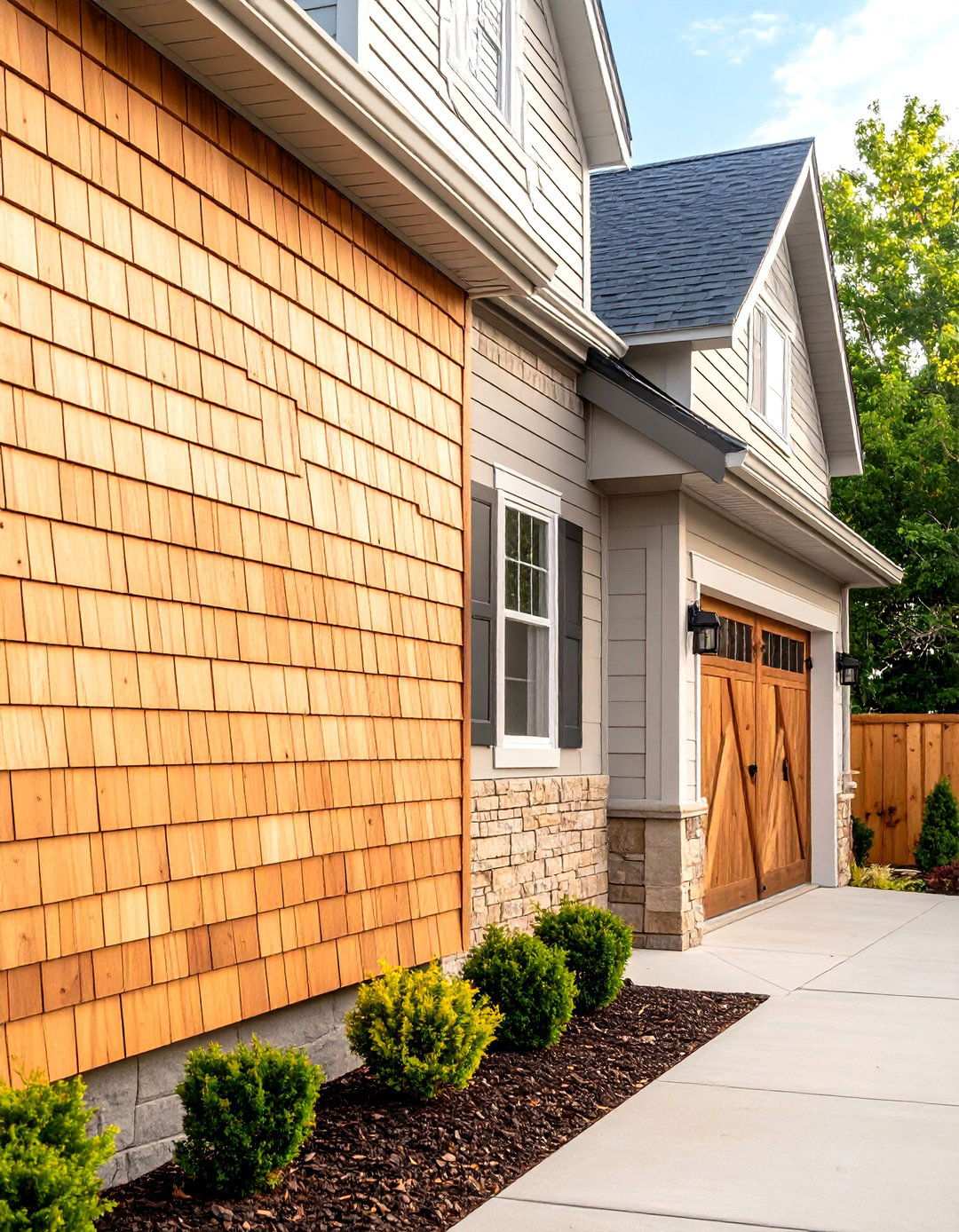
Achieving a budget-friendly solution involves installing a cedar-shake accent on one elevation, such as the garage gable, against sleek black siding. Staggered rows prevent a uniform, too-tidy appearance, while pre-finished shakes save time and effort. To ensure durability, hand-nail the shakes to avoid over-driving fragile edges, leaving a ⅛-inch gap for expansion. Instead of using a film-forming stain, spray the shakes with a breathable water-repellent to allow moisture to escape and minimize cupping. By keeping the shake field narrow, the accent wall will read as a thoughtful design detail rather than a secondary cladding layer, preserving the minimalist intent while adding historic texture. Before hanging the shakes, spot-prime any knot pockets for added protection.
16. Harmonizing Stone and Black Walls
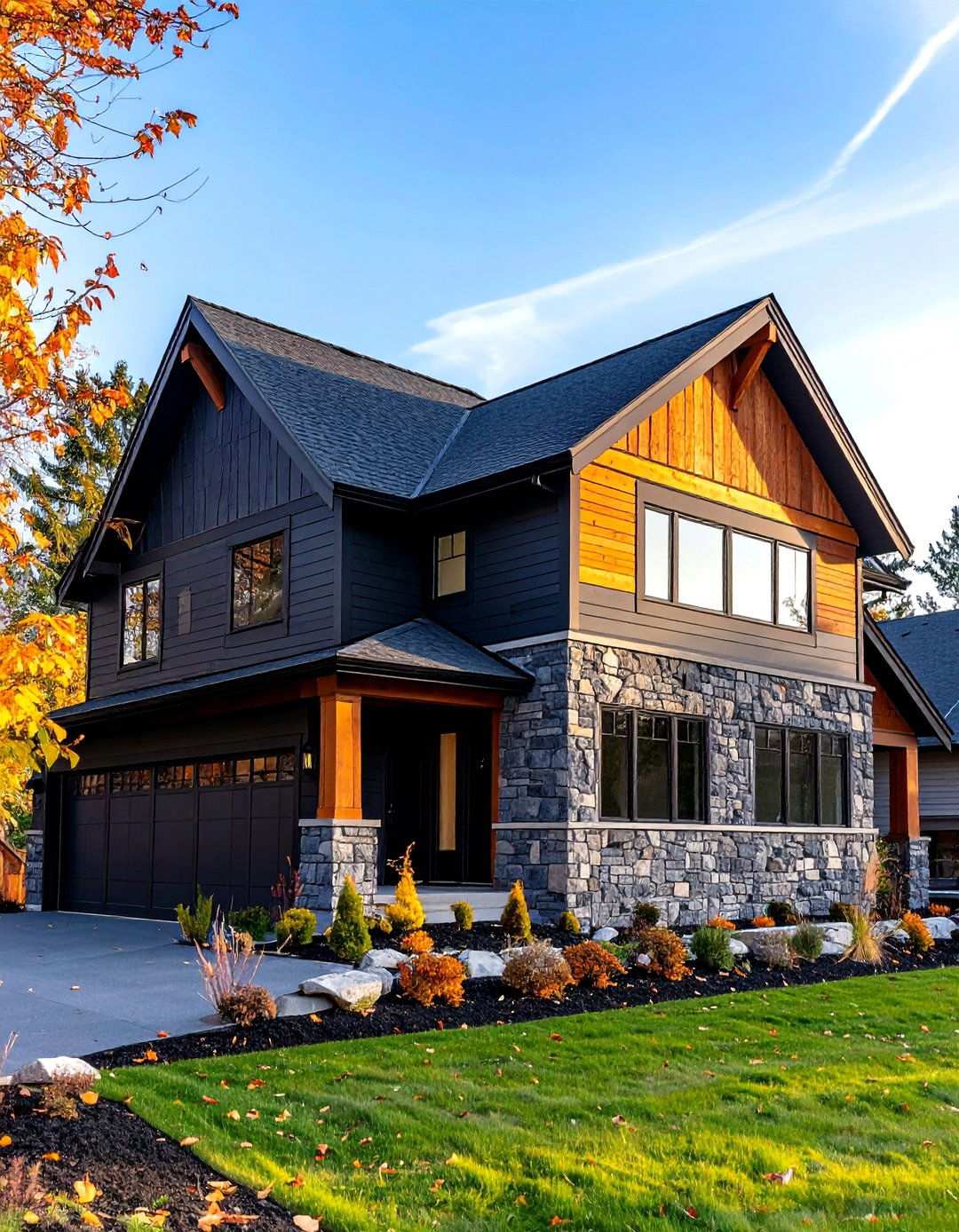
Incorporating a stacked-stone wainscot with cedar accents above black cladding creates a striking visual contrast that grounds the house while adding a tactile element. The substantial stone base provides resistance against water splashes and plow debris, allowing the valuable wood to begin higher up where it can weather at a slower pace. Strategically placing step ledgers a inch back creates a slight projection of capstones, thereby shielding the junction with a protective drip. To seamlessly tie the materials together, run vertical cedar battens between stone returns. To create a cohesive look, keep the mortar charcoal-tinted to blend with the dark paint. Regularly sealing the stone annually can prevent unsightly efflorescence stains from forming.
17. Unifying Timber Indoors and Outdoors
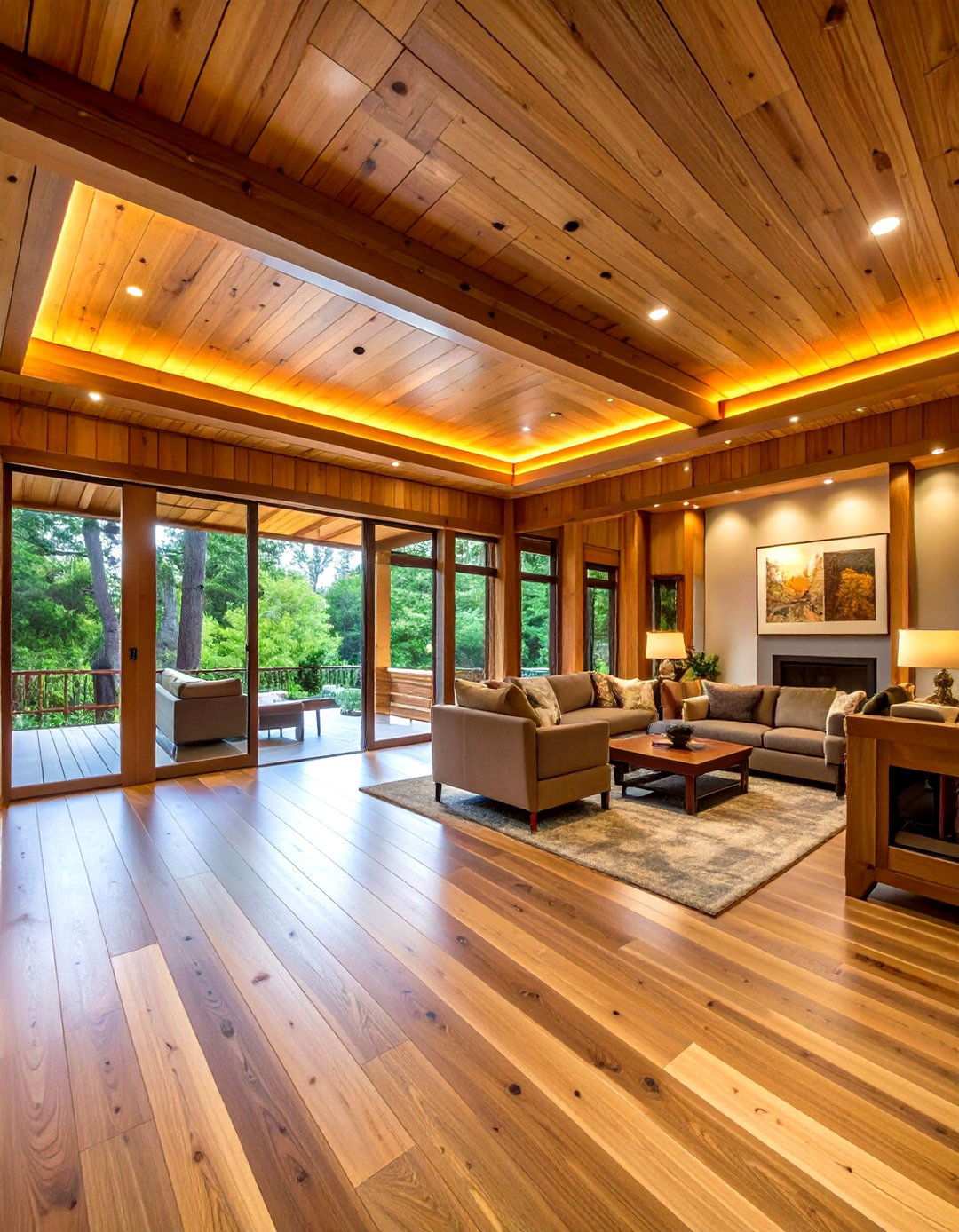
The continuity created by extending the same cedar boards from the exterior to a vestibule ceiling or a feature wall effectively ties the interior and exterior spaces together, making smaller black houses feel more expansive. Concealing tongue-and-groove clips ensures a sleek appearance by keeping fixings invisible. To achieve a seamless look, install electrical chases before the boards go up, allowing for the placement of sconces or LED strips that can highlight the grain without visible surface conduits. By using a low-VOC water-based finish, you can preserve indoor air quality while protecting the wood from the humidity swings caused by the heating and cooling systems. Matching board widths at thresholds guides the eye outward, visually extending the living areas. The result is a continuous ribbon of daylight.
18. Mastering Heat Control with Overhangs
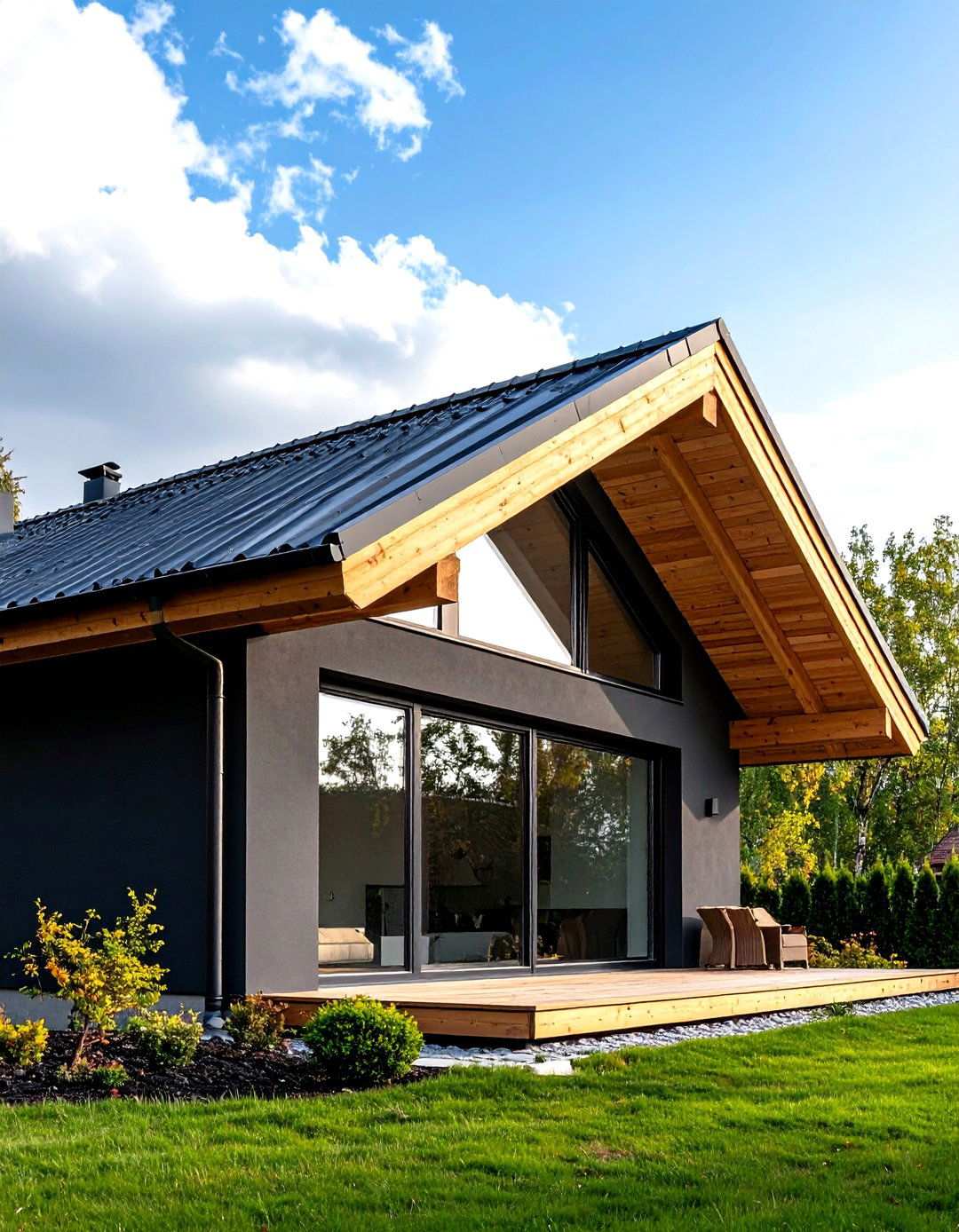
Dark paint can absorb up to ninety-five percent of solar radiation, significantly increasing wall temperatures by over fifteen °C. Implementing generous wood overhangs can mitigate peak heat gain, safeguarding the cladding and interiors. When sizing projections, use the sun-angle method: the depth should equal half the distance from the window head to the sill to block high summer sun while allowing winter rays to enter. Additionally, light-toned soffit boards beneath the overhangs can bounce indirect light inside, reducing the need for artificial lighting. A cross-ventilated wood rain-screen batten system can further cool the walls. Energy models predict that this approach can result in up to ten-percent savings.
19. Preserving the Integrity of Black Paint and Wood Accents
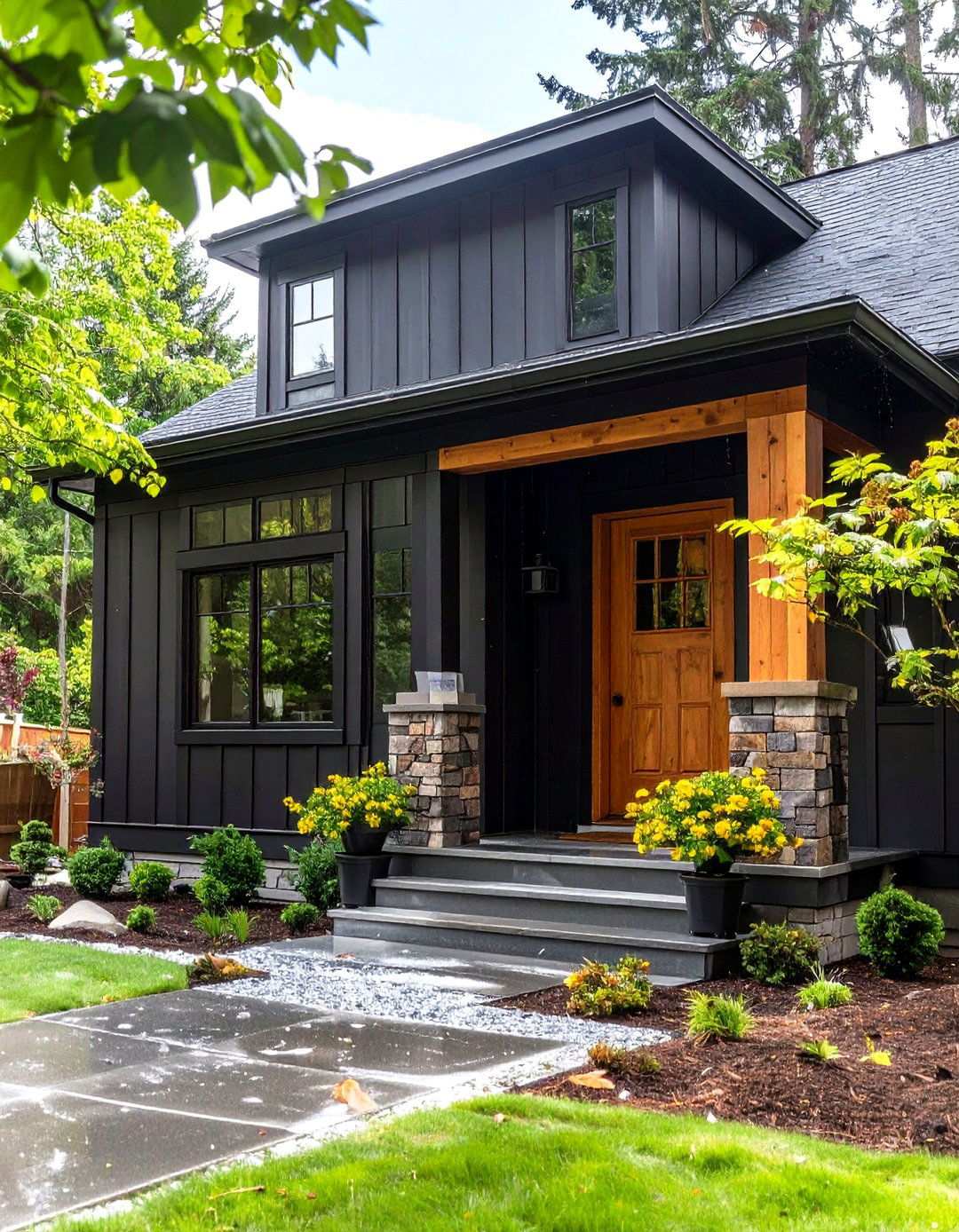
A black house with wood accents can age beautifully when the finishes are properly maintained. Dark paint shows signs of chalking sooner than neutral colors; plan for biannual inspections and gentle detergent washes to remove pollen and salt. It’s essential to touch up micro-cracks before they become larger and more noticeable due to UV exposure. You can expect to re-oil horizontal timber every two years and vertical faces every four, although shaded elevations may require less frequent maintenance. To ensure airflow, keep gutters clear and vegetation trimmed fifteen cm away. Recording tasks in a simple spreadsheet can help future owners understand the routine. To achieve seamless repairs, use matte touch-up kits.
20. Enhancing Harmony: Seasonal Stain Refresh for Black-and-Wood Accents
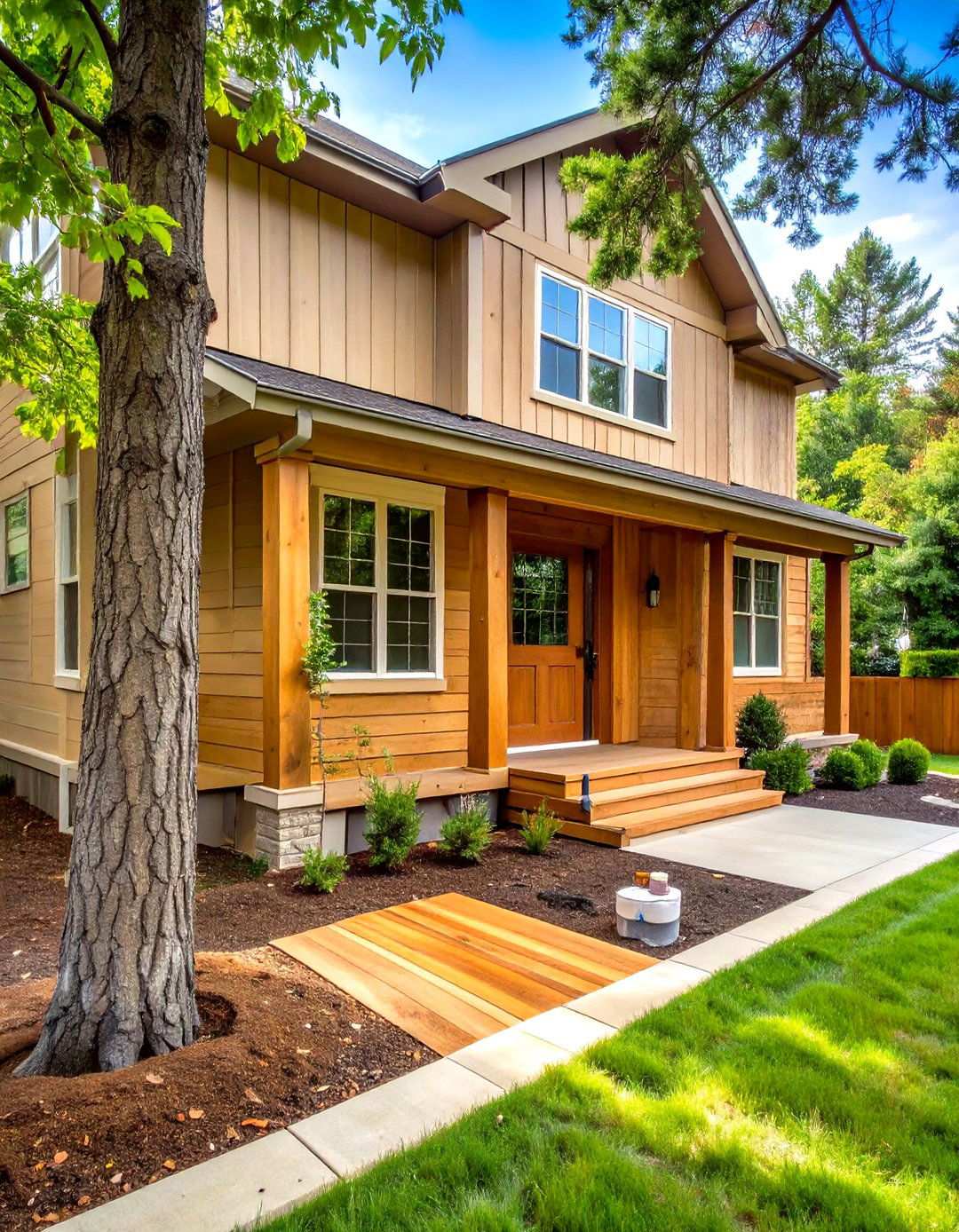
Embracing the symbiotic relationship between black architecture and wood elements, homeowners can revive their exterior’s aesthetic by implementing a seasonal stain refresh. This ritual, typically undertaken when overnight temperatures consistently exceed ten °C, ensures proper curing and a long-lasting finish. To begin, lightly sand horizontal wood accents with 120-grit sandpaper to open the fibers, then carefully wipe the surface with denatured alcohol to remove any dust or debris. Next, apply a semi-transparent stain, selecting a new tone to harmonize with emerging plant life or outdoor furniture, such as transitioning from honey to walnut. By recording the batch number for reordering purposes and maintaining a wet edge to prevent lap marks, homeowners can protect their timber features from moisture and UV damage while rekindling a sense of connection to the tactile beauty of their exterior’s natural elements.