1. A Subtle Shift: How Matte Finish Black Cabinets Redefine Kitchen Style
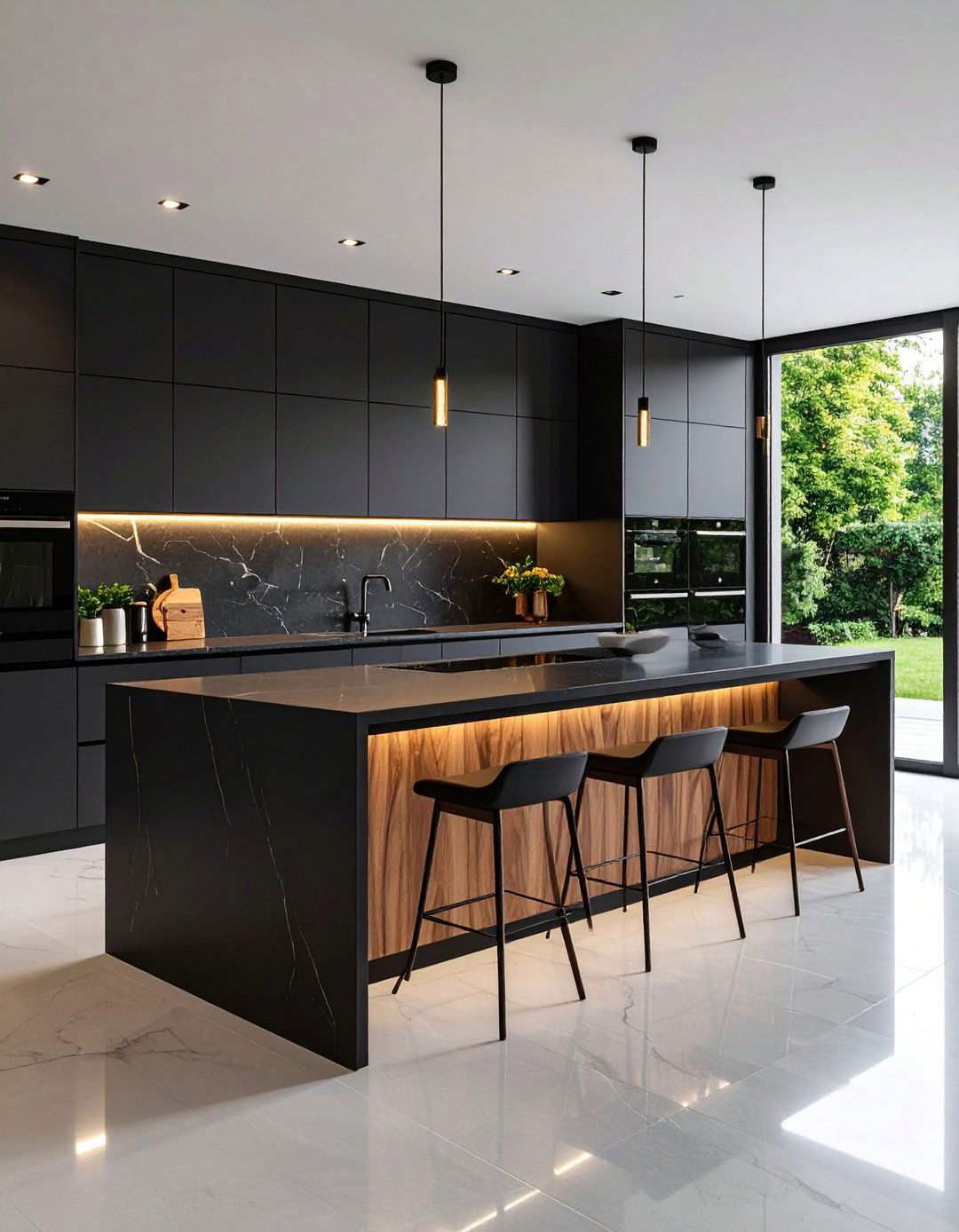
Matte black cabinets are a masterclass in understated sophistication, their soft, light-absorbing finish providing a chic, drama-free alternative to high-gloss lacquers. By diffusing reflections, the matte finish also renders fingerprints and micro-scratches largely invisible, making it an ideal choice for busy households. To add depth to this monochromatic look, consider pairing the doors with ultra-thin stone countertops, and introduce a natural element – such as a reclaimed wood bar stool – to soften the palette. Maintenance is a breeze: simply wipe with a cotton cloth and pH-neutral cleaner to preserve the allure of these cabinets for years to come.
2. Wood Accents: The Art of Balancing Contrast
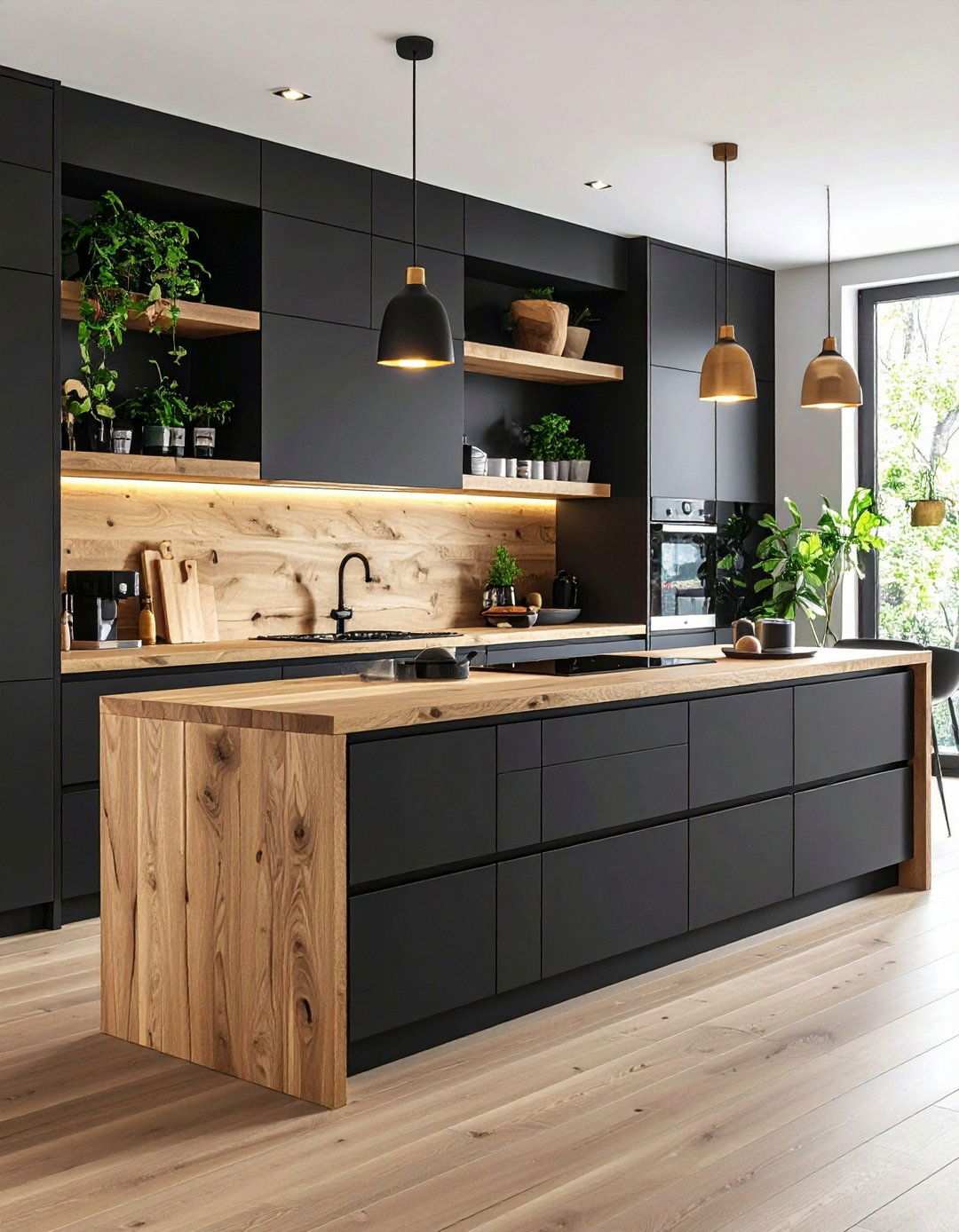
To prevent black kitchen cabinets from feeling oppressive, designers often turn to warm, medium-toned timber accents. The juxtaposition of organic grain patterns with smooth cabinet planes creates a visually appealing contrast that catches the eye. By repeating the wood tone in smaller accessories, such as a bowl or bar-backing panel, the addition can be made to feel integral to the overall design. For cohesive look, choose a distinct but complementary species for your hardwood floors, ensuring that surfaces don’t blend together.

As an Amazon Associate I earn from qualifying purchases.
3. Harnessing the Power of Strategic Lighting
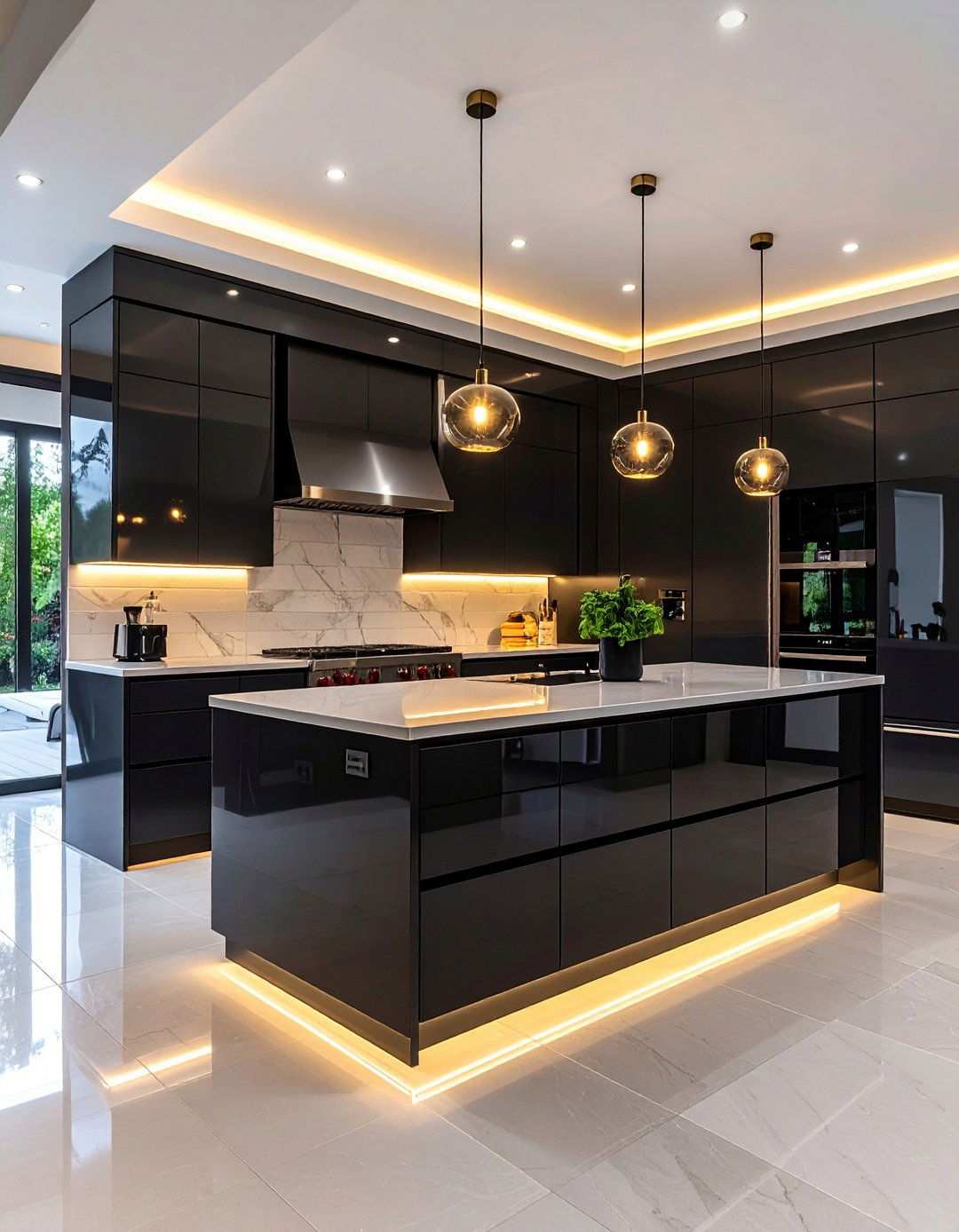
Lighting is the unsung hero of the kitchen, and when it comes to black cabinets, it’s the key to unlocking their full potential. By layering different types of illumination – from ceiling spots to slim under-cabinet LEDs and statement pendants – you can create a bright, inviting atmosphere that showcases your kitchen’s best features. Warm white bulbs (2700-3000 K) bring out the natural beauty of wood accents, while a high color-rendering index ensures that food still looks its best under the lights. To take your lighting game to the next level, consider installing magnetic LED strips on shelf undersides – they’re easy to retrofit and require no wiring headaches.
4. Harmonizing Black Cabinets With Open Shelving
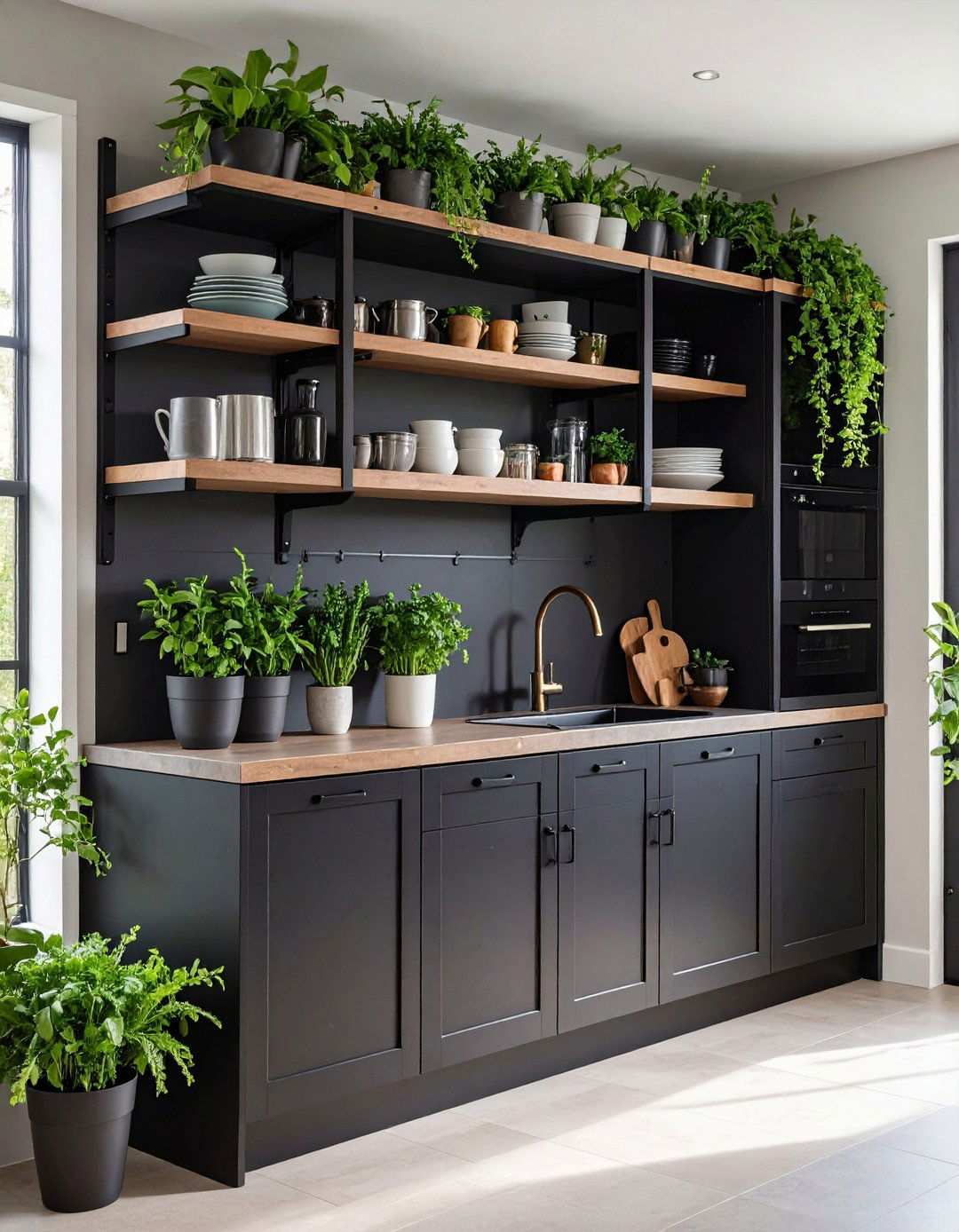
To prevent the room from feeling confined, consider installing open shelves above a run of full-height black kitchen cabinets. This thoughtful design choice creates a sense of airiness by leaving select wall spaces unobstructed, allowing you to showcase your favorite crockery and plants. By highlighting pops of color, you can break up the dark expanse and create a visually appealing contrast. To achieve a seamless transition, select sturdy metal brackets that match the cabinet paint in powder-coated finish, or opt for concealed supports for a floating look. For a curated display, limit your items to a cohesive palette to avoid visual clutter. For renters, rail-mounted shelf systems that screw into studs yet come down cleanly at move-out provide a convenient way to trial the aesthetic commitment-free.
5. Elevated Luxe with Brass and Gold Hardware
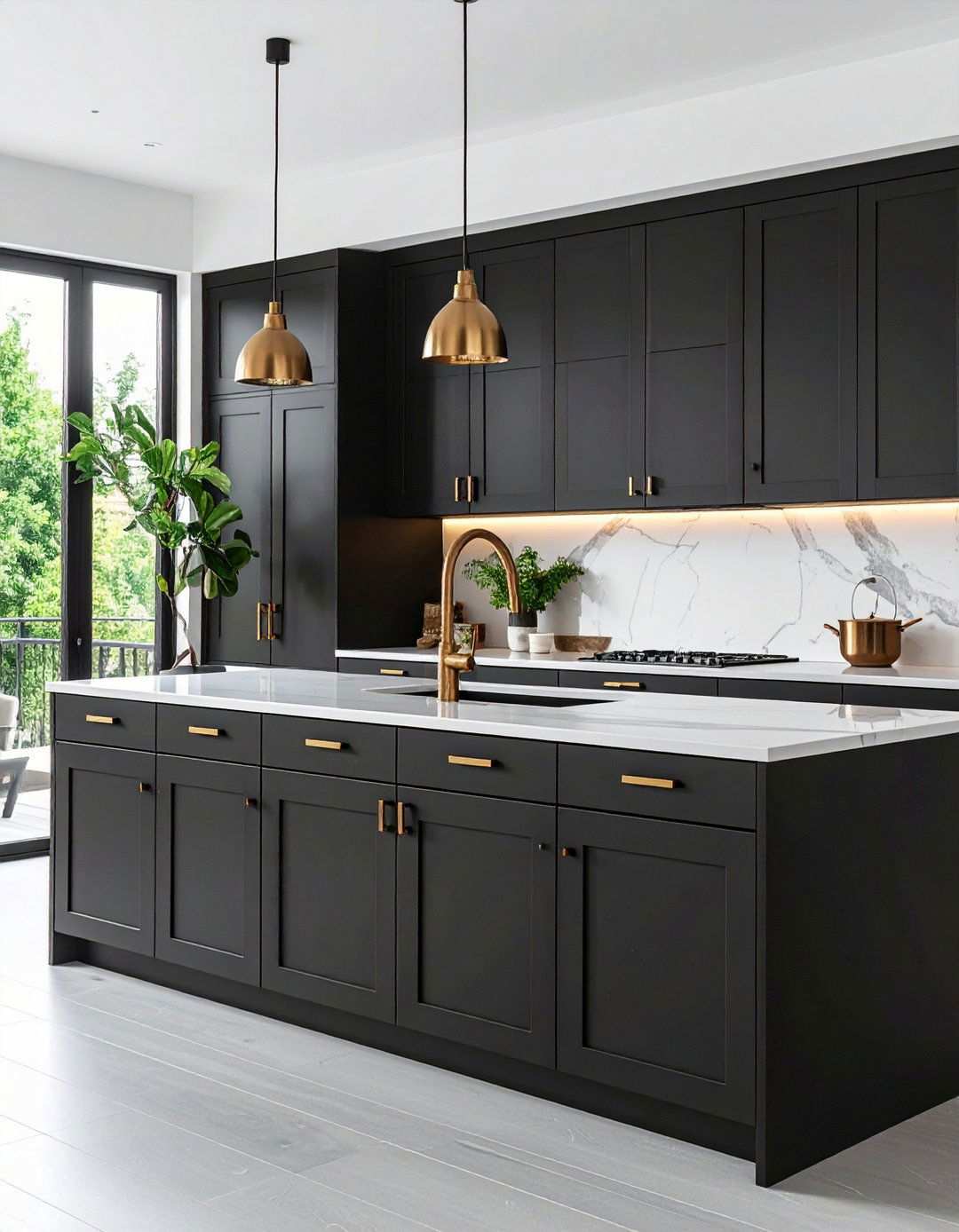
Upgrading your standard pulls to warm metallics that gleam against a black cabinet door is an instant way to add a touch of luxury to your space. Brushed brass, champagne bronze, or unlacquered copper each lend unique vibes, from glamour to aged patina, but all share a common trait – dimensional sparkle. Consistency is key: echo the tone in faucet necks or a sconce frame so accents feel intentional and not random. If you’re concerned about fingerprints, consider choosing a satin or antique finish that mutes smudges. For a budget-friendly option, you can even spray-paint existing knobs with high-heat metallic paint and seal with clear coat—a weekend project that yields impressive results.
6. Timeless Contrast with Crisp White Countertops
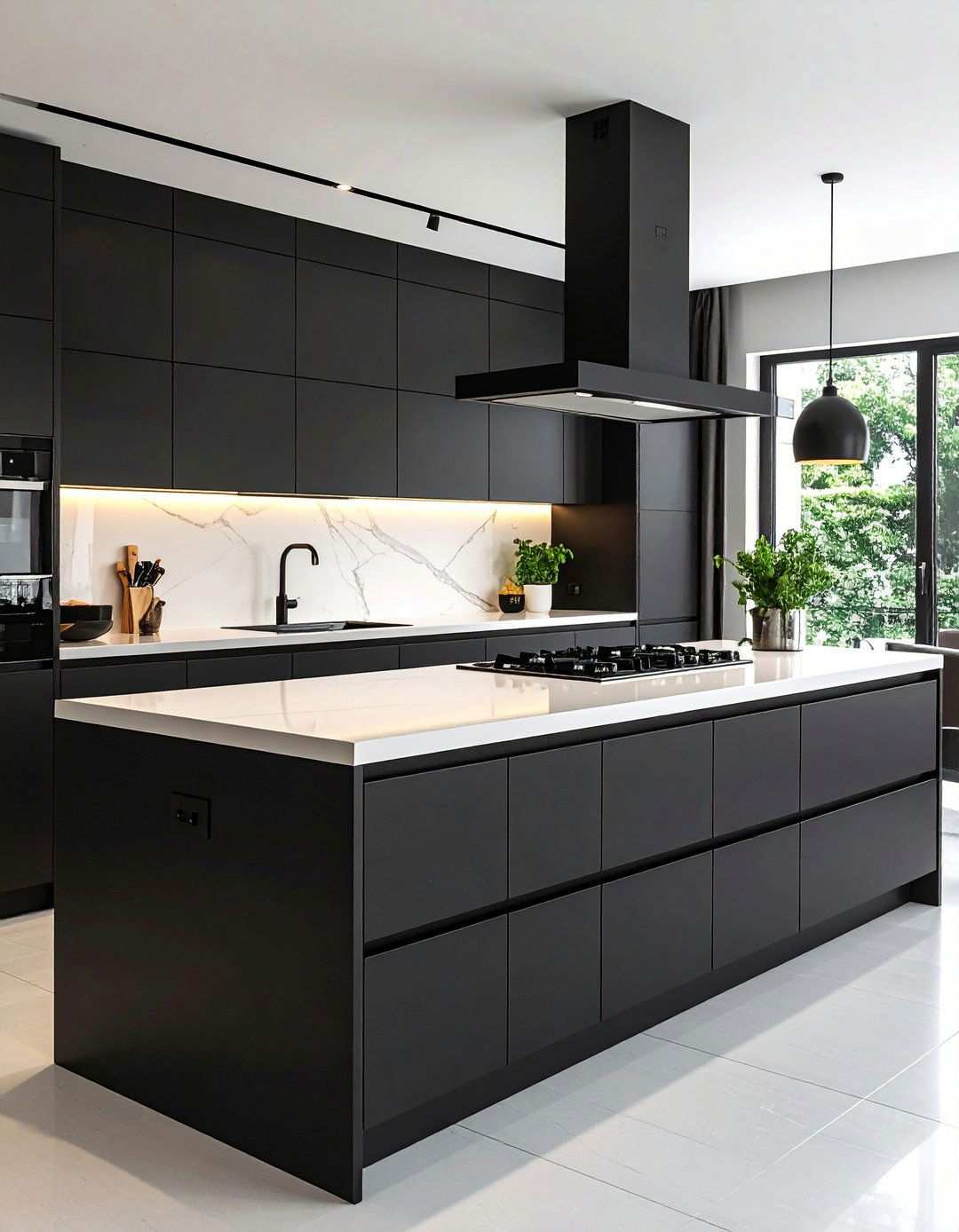
The classic black-and-white pairing remains timeless because it effectively balances depth with brightness. Engineered quartz or solid-surface slabs in pure white or subtle veining create a dramatic, graphic line atop black kitchen cabinets. The reflective counter plane also helps to bounce ambient light, visually enlarging the workspace. To emphasize the color break, consider keeping grout lines paper-thin or opting for waterfall edges. If pure white feels too stark, off-whites with faint gray marbling can soften the effect while preserving clarity. To complete the look, incorporate matte black electrical outlets along the backsplash, ensuring that functional elements don’t interrupt the bold contrast.
7. Adding Movement with Two-Tone Cabinetry
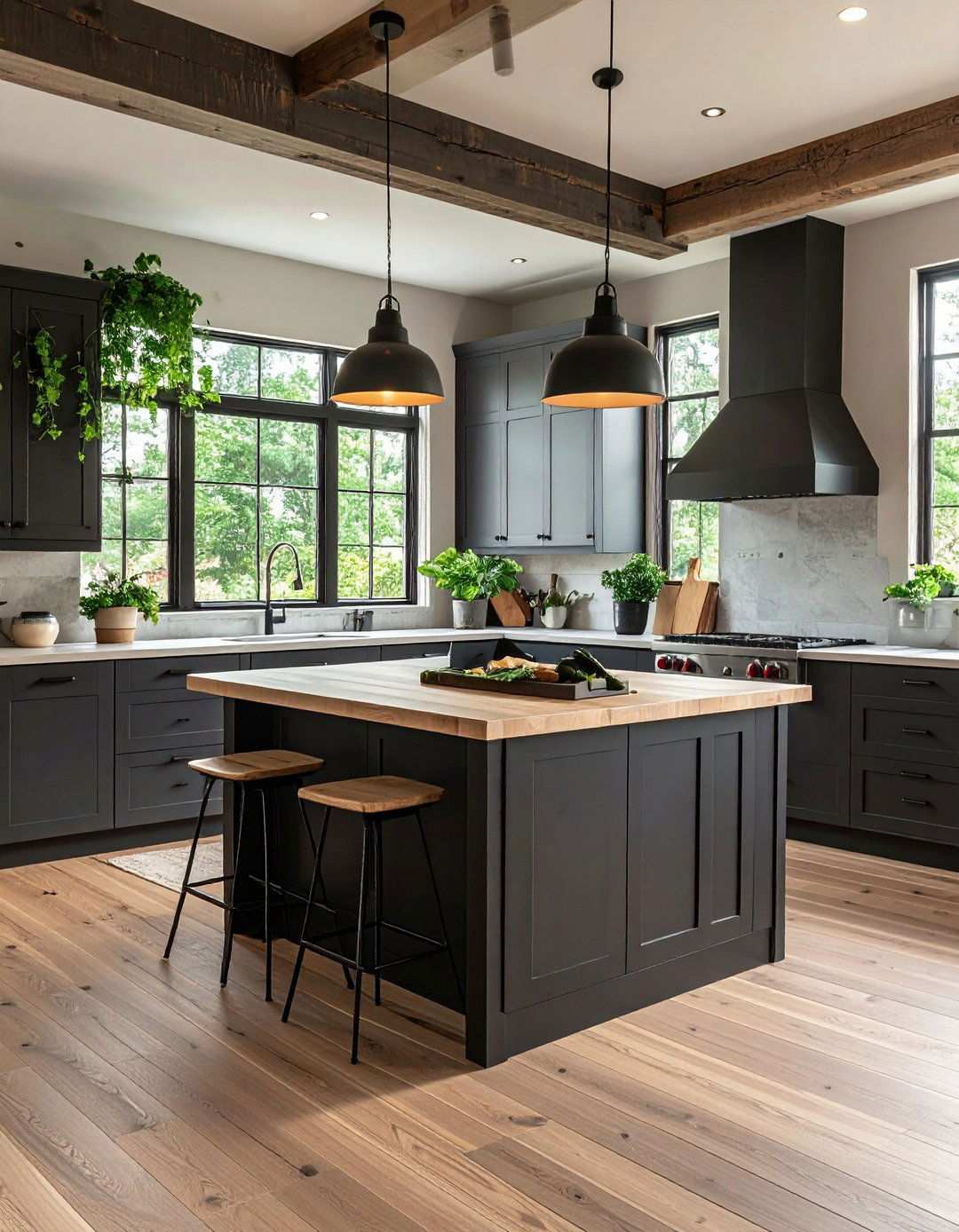
Staggering color—dark bases with lighter uppers—is a 2025 trend that injects instant movement into kitchen walls. By letting lower black kitchen cabinets anchor the room, you can create a grounded composition that suits both soaring lofts and modest apartments. Introduce pale gray, cream, or fluted wood wall units to lift sightlines and add visual interest. To tie the palette together, consider a mixed-material island featuring black on the cook-side and bleached oak toward the breakfast stools. If you’re hesitant, start by painting just one tall pantry door; living with the change will make the leap to full two-tone glory easier to take.
8. Maximizing the Illusion of Space in Small Kitchens
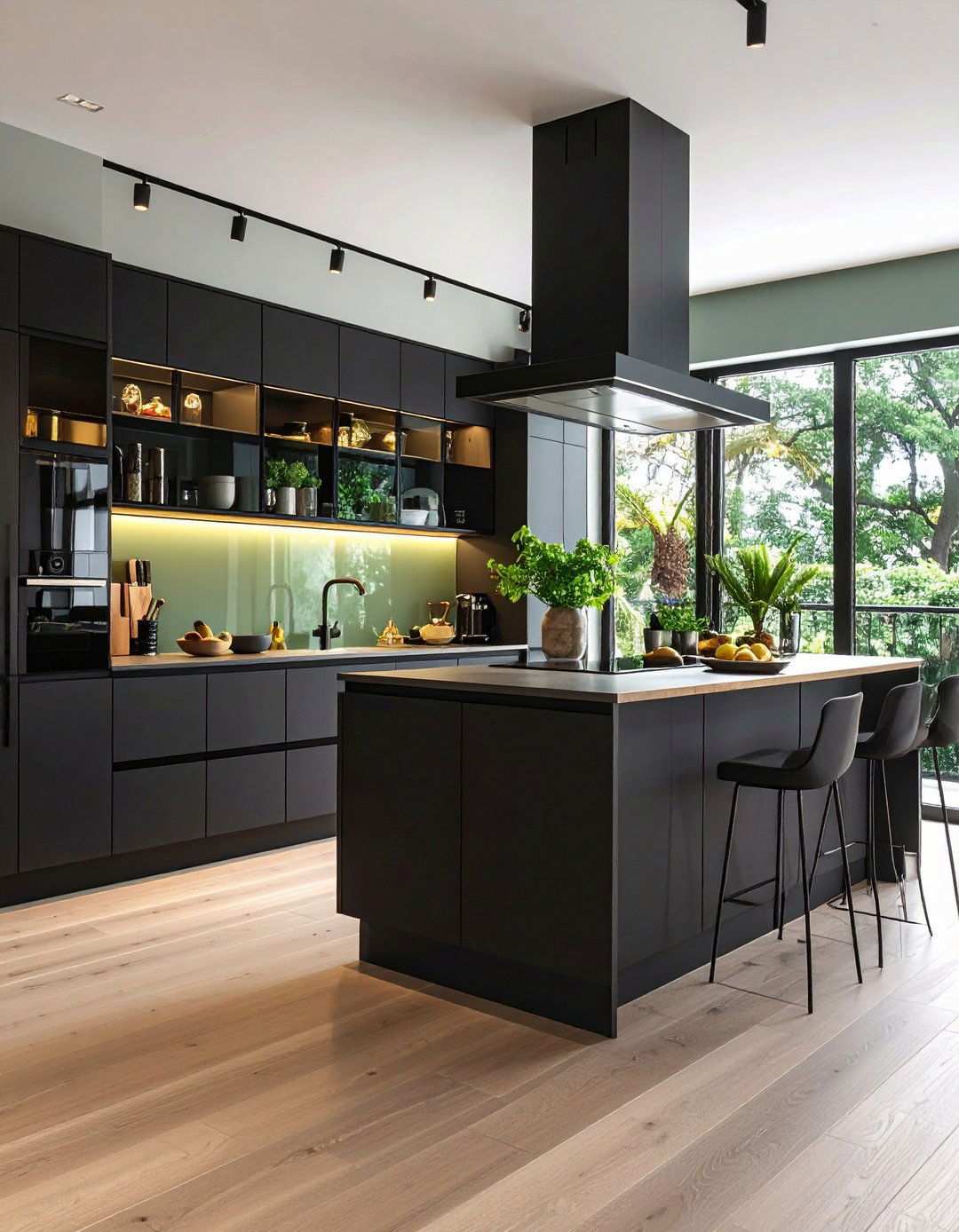
Dark cabinetry can be daunting, but clever design can counter its effect. To create the illusion of a more spacious kitchen, designers recommend keeping upper cabinets to a minimum. Open shelving or glass inserts can achieve this, while slab-style doors without rails create a continuous visual flow. By incorporating LED strip lights under counters and strategically placing mirrors or reflective backsplashes opposite windows, daylight is bounced deeper into the room. To further enhance the floating effect, cabinetry can be grounded on legs or toe-kicks painted to match the wall color. This thoughtful approach can transform a compact galley kitchen into a more expansive space.
9. The Impact of High-Gloss Finishes on Modern Interiors
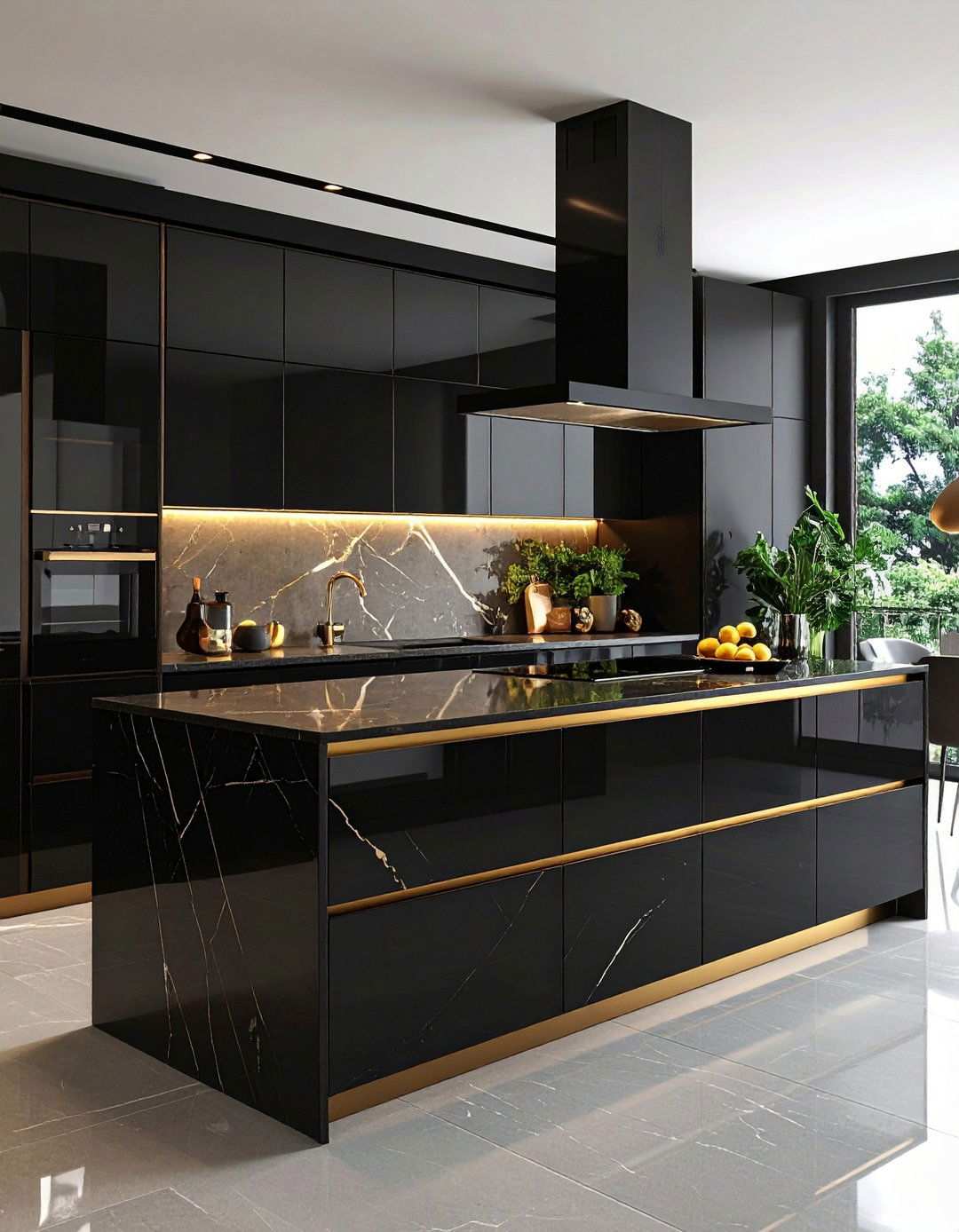
Homeowners seeking a touch of high-end glamour can achieve this with piano-gloss black lacquer cabinets. These reflective surfaces have the power to double the perceived brightness of a room, thanks to their ability to reflect pendant and under-cabinet lighting. However, darker hues can accentuate imperfections on the surface, necessitating a professional finish or a DIY approach involving high-build primer and meticulous sanding. When paired with matte stone counters, ultra-shiny cabinets create a nuanced contrast that prevents sensory overload. As a final touch, soft-close hinges are essential, protecting the pristine surface from scratches and ensuring the cabinet’s longevity.
10. Blending Black Cabinets with Rustic Charm
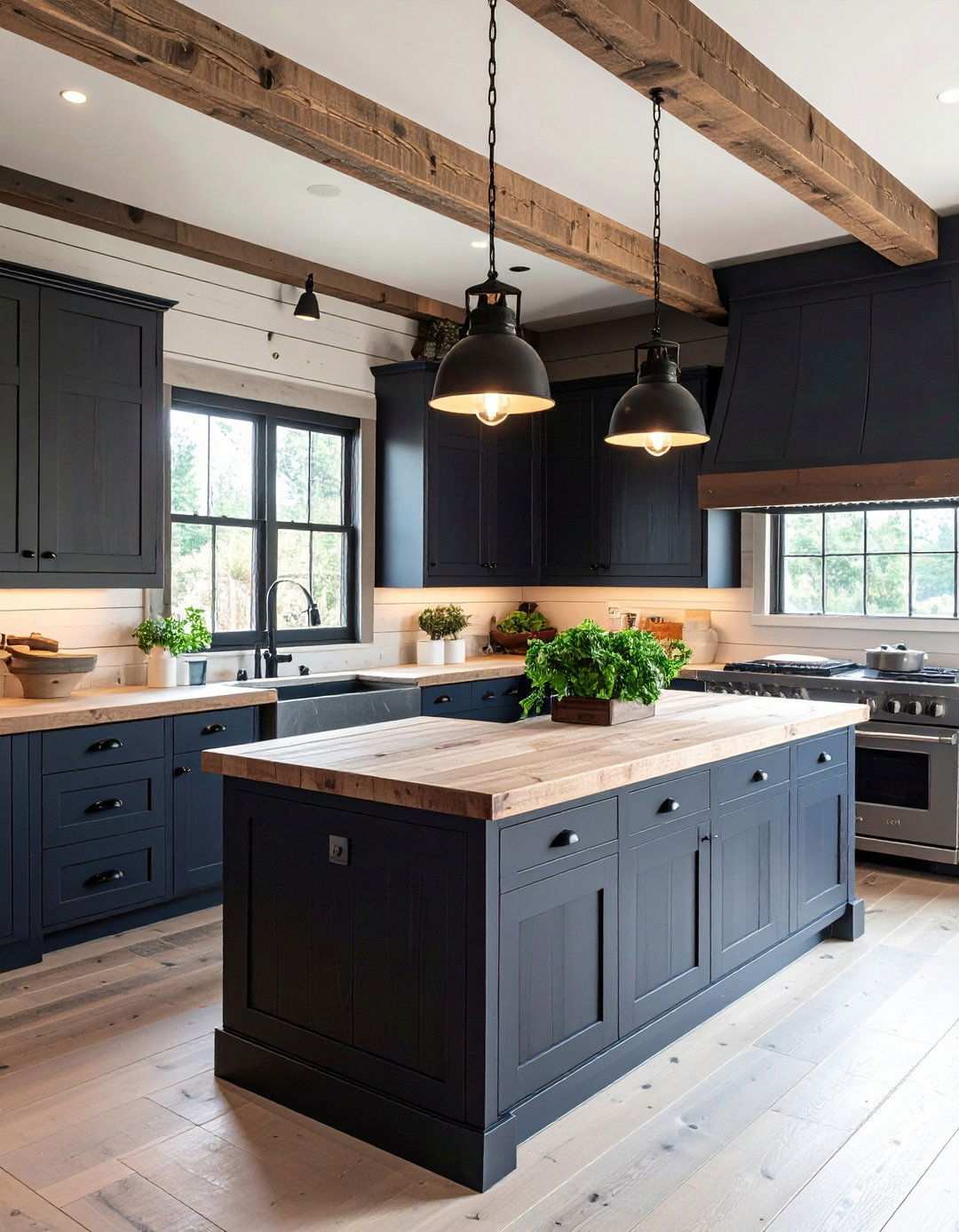
Black kitchen cabinets don’t have to evoke a sterile, modern aesthetic; they can be beautifully integrated with shiplap walls, vintage pendants, and apron sinks to create a unique farmhouse vibe. Distressed or brushed finishes that reveal the underlying wood grain add a timeworn charm to the space. Complement this with weathered bronze bin pulls, antique-style taps, and butcher-block counters to create a warm, inviting palette. A patterned cement tile floor can ground the dark furniture while incorporating traditional motifs. The key to achieving balance is to incorporate a polished material, such as glossy subway tile, to prevent the space from feeling too rustic.
11. Layering Textures for Earthy Interest
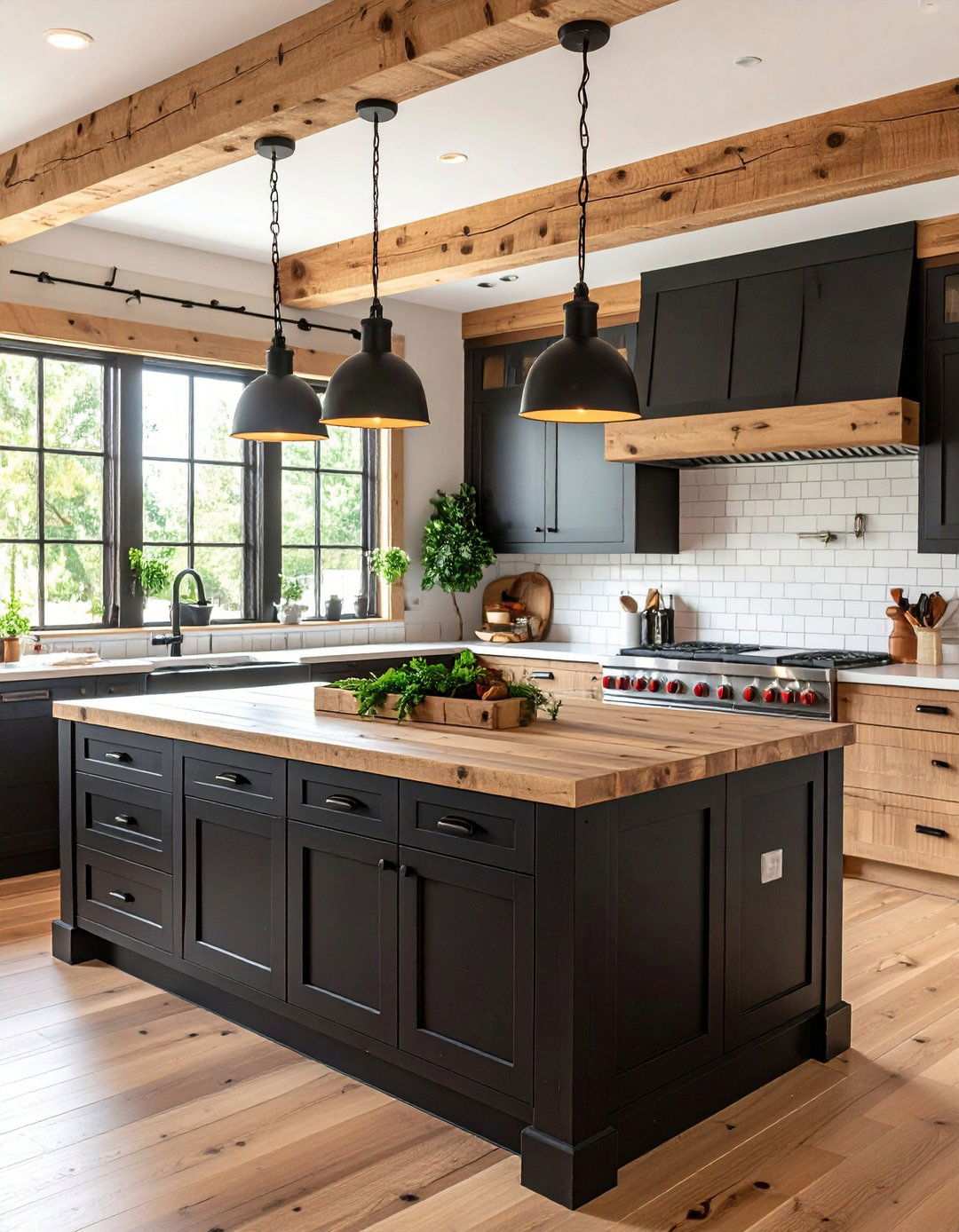
Pairing sleek black cabinets with reclaimed beams, salvaged shelving, or rough-sawn island panels creates a visually appealing contrast that adds tactile intrigue to the space. Weathered pine or oak brings a sense of history and nuance, with its grain and knots providing a beautiful contrast to the matte dark paint. To maintain the patina of the reclaimed wood, apply a low-luster polyurethane sealant, avoiding splinters. For cohesion, repeat the aged timber in a range hood trim or breakfast-nook bench, striking a balance between urban sophistication and countryside soul. The juxtaposition of natural and urban elements creates a thoughtfully curated space.
12. Unbroken Horizontals: Handleless Minimalism
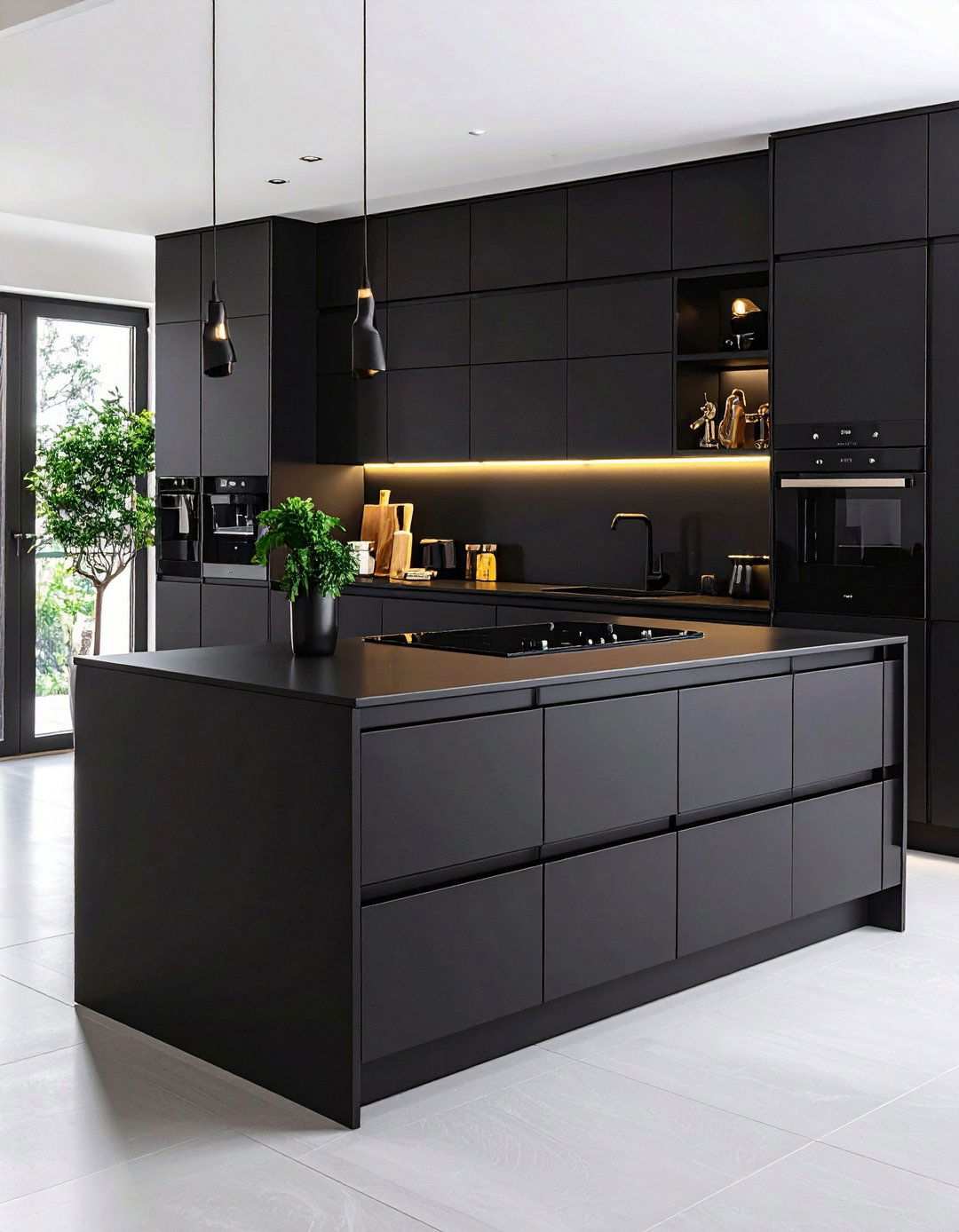
In a handleless kitchen, sleek cabinet planes become the focal point, unencumbered by visual distractions. Rail hardware is replaced by minimalist alternatives like push-to-open mechanisms, allowing the kitchen’s clean lines to speak for themselves. Integrated aluminum channels, often finished in the same color as the cabinets, provide a subtle yet functional grip. For wall units, mechanical push latches take the place of knobs, freeing up precious space in the galley. To maintain a low-maintenance aesthetic, soft-touch laminates or nano-coated acrylics can be chosen for their ability to repel oils. Elevate the space with a sculptural ceiling hood that mirrors the kitchen’s streamlined style.
13. Black Cabinet Makeover: The Art of Durability
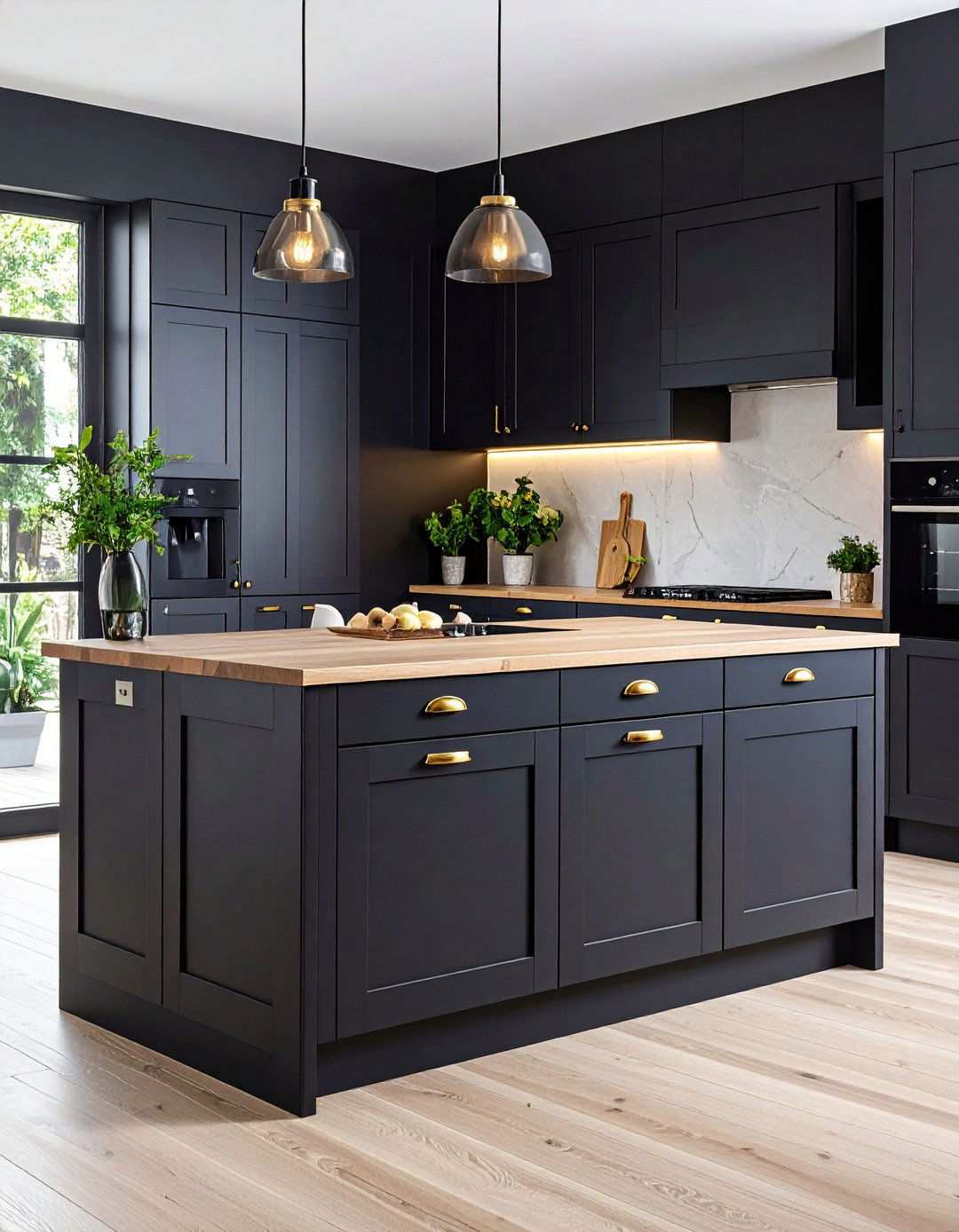
Updating dated oak cabinets with a bold black finish can be a budget-friendly option when approached with care. Preparation is key: lightly sand the surfaces to remove existing gloss, apply a bonding primer specifically designed for wood, and select a high-quality, furniture-grade enamel or cabinet-specific polyurethane paint for maximum durability. For a smooth finish, consider spray application using an HVLP gun or aerosol, although high-density foam rollers can also produce satisfactory results on a tighter budget. Crucially, allow the paint to fully cure before rehanging doors, usually taking seven days. Enhance the longevity of your newly painted cabinets by installing soft-close hinges and finishing with a protective clear coat if the kitchen is prone to heavy use.
14. Visual Drama: Statement Backsplash as Art
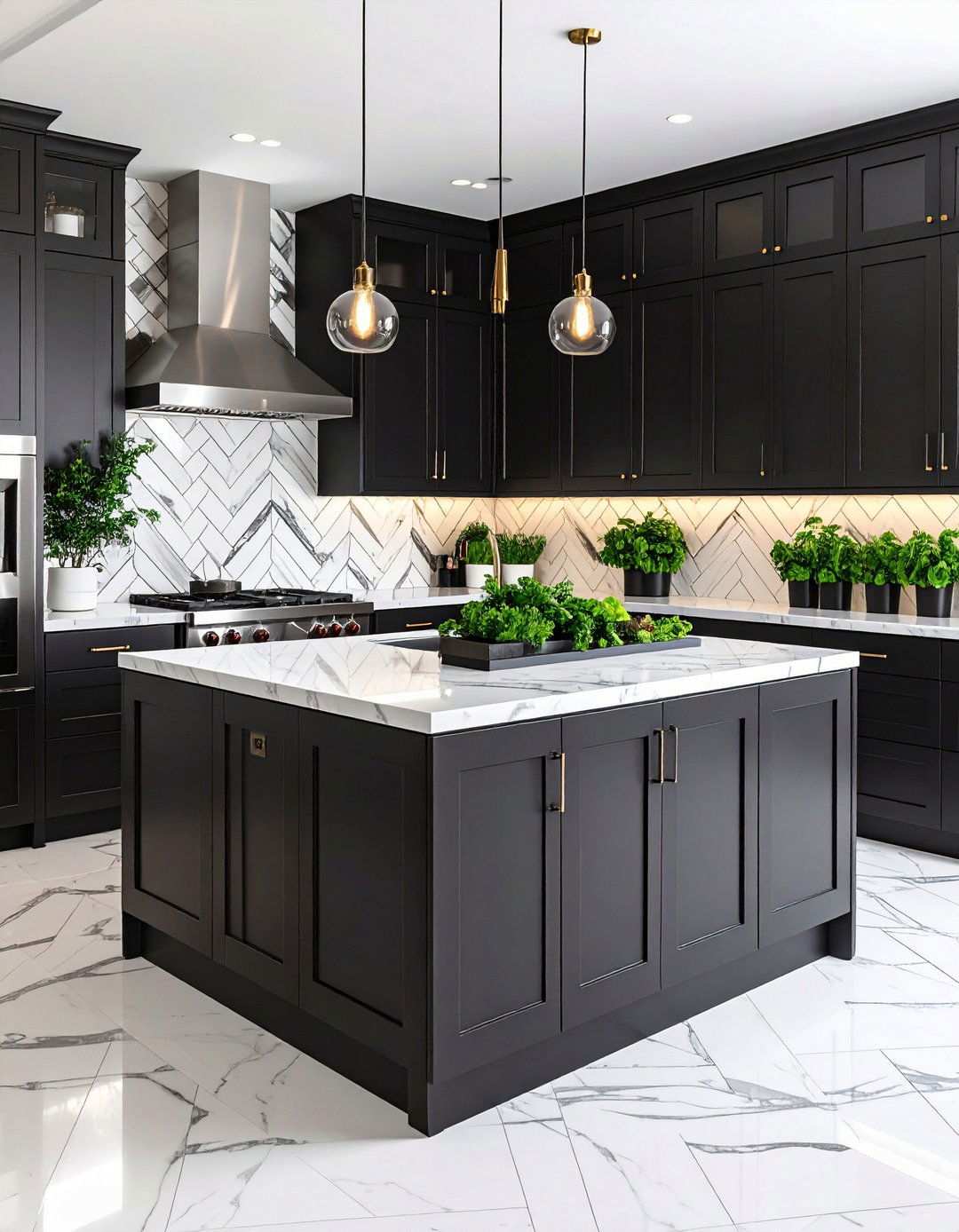
When dark cabinets take center stage, the backsplash becomes the perfect opportunity to add visual interest. Designers often recommend bold patterns like marble chevrons, zellige squares, or graphic encaustic motifs behind the range to create movement and energy. To let the tile shine, surround the backsplash with quieter walls, and consider running the tile up to the ceiling for a loft-like ambiance. Carefully select the grout color to either deliver a crisp grid drama with white lines or let the tile shapes sing without interruption using charcoal seams. A stainless or powder-coated ledge at eye level can display herbs, adding both functionality and decorative flair.
15. Lightening the Load: Balancing the Palette
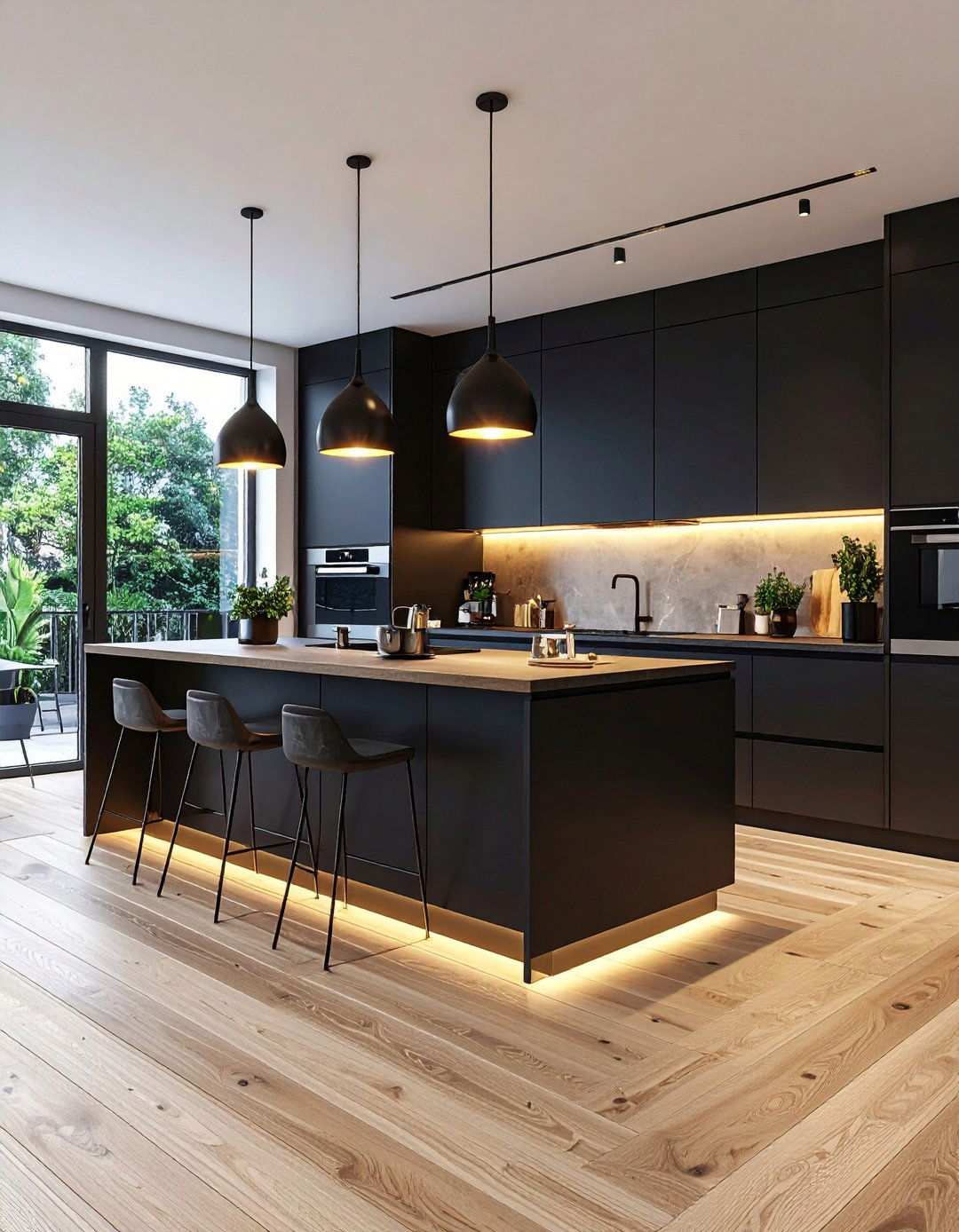
Swapping dark floors for lighter hues like pale oak, maple, or honed concrete can instantly brighten up the space and create a harmonious balance with black kitchen cabinets. The added benefit of lighter planks is that they can reflect under-cabinet LEDs, visually expanding the floor area. Wider boards (ranging from 7 to 9 inches) minimize seams, creating an unbroken canvas that calms the strong cabinet color. For a more budget-friendly option, luxury vinyl planks in bleached tones can convincingly mimic real wood grain while resisting spills. To maintain color harmony, ensure that the floor undertones match the countertop veining for a pulled-together look.
16. Unveiling Personality Through Glass Inserts
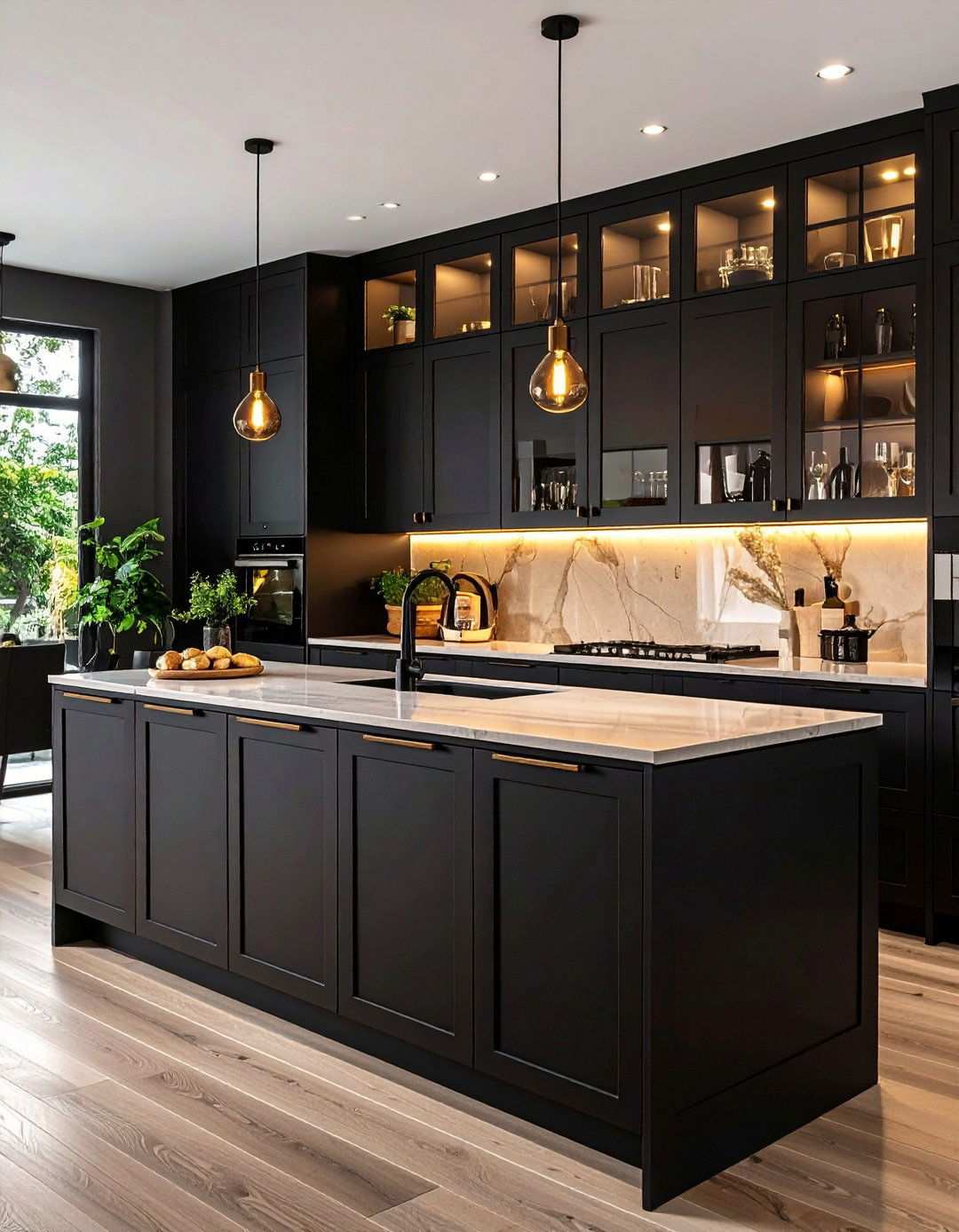
When it comes to injecting relief and display space into a black kitchen cabinet theme, swapping a few solid doors for clear or reeded glass is a thoughtful move. This thoughtful touch provides ample opportunity to showcase cherished ceramics, doubling as a subtle form of mood lighting in the evening. Consider incorporating bronze-tinted glass for a delicate reflection if complete transparency feels too exposing, or opt for frosted panes to obscure everyday clutter from view. To maintain the cabinet’s sleek profile, frame the insert with slim stiles and paint the interior box a lighter shade to create a striking contrast with the dark exterior.
17. Monolithic Black Islands as Focal Points
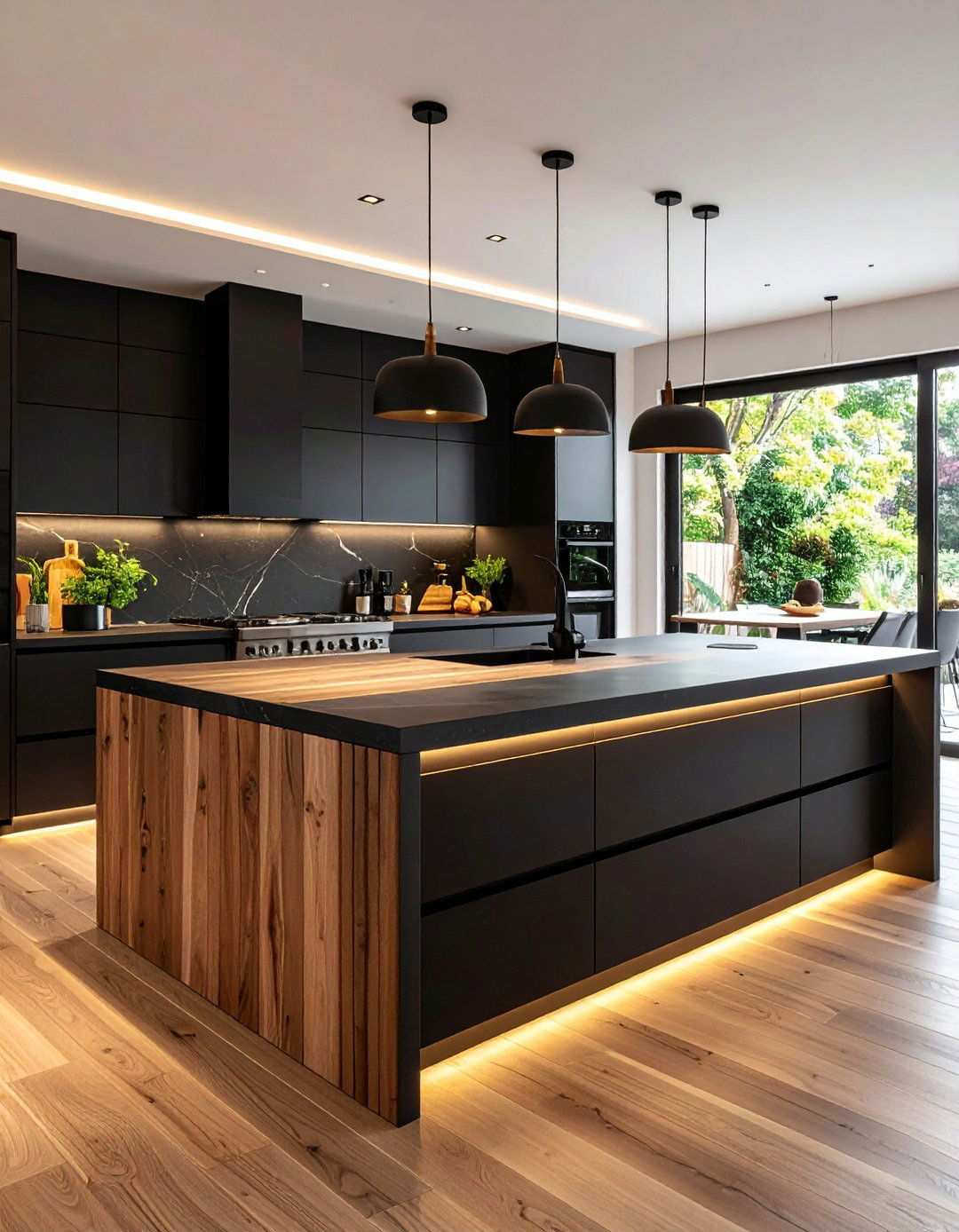
A towering black island is sure to command attention, serving as a dynamic focal point in an open-plan space and a social hub for gatherings. Waterfall countertops cleverly elongate the mass of the island, while bar seating on the utensil-free side invites casual dining. To mitigate the visual weight of the island, integrate a slatted wood detail on the stool face or incorporate recessed toe-kick lighting that creates the illusion of floating the block above the floor. In compact layouts, a black rolling island offers a statement-making solution while retaining flexibility – simply park it against the wall when extra space is needed.
18. Enduring Elegance with Marble Combinations
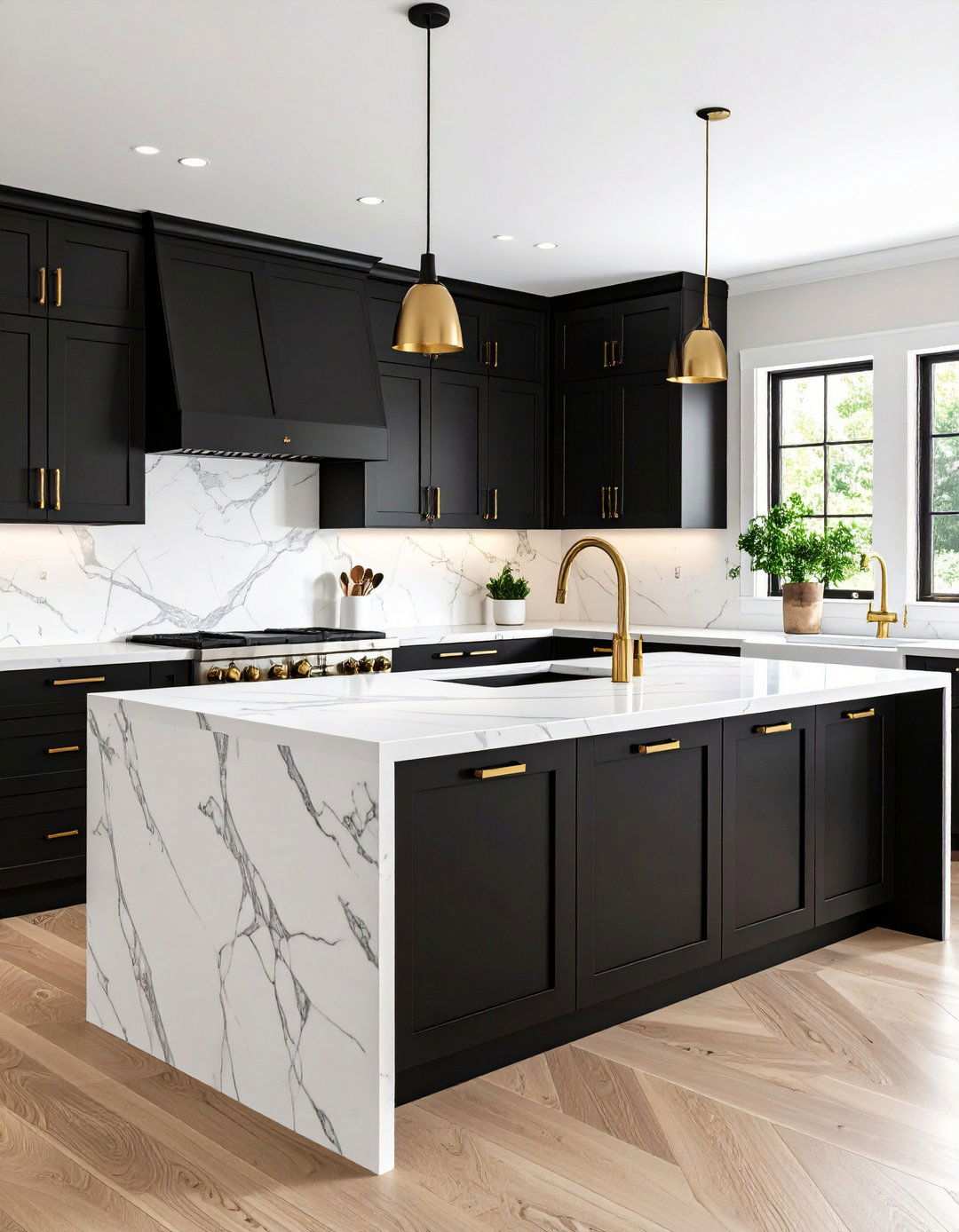
Pairing black kitchen cabinets with white, gray, or even green-veined marble countertops is a sophisticated combination reminiscent of high-end hotels. Honed finishes effectively mute glare, allowing the natural movement of the stone to take center stage. Polished slabs, on the other hand, reflect light for a heightened sense of drama. For those who prefer low-maintenance options, large-format porcelain looks replicate marble veining without requiring any sealing. Extending the stone onto backsplash slabs creates an unbroken sweep, effectively framing the natural beauty of the cabinets with their dark hue.
19. Maximizing Storage Potential Behind Dark Doors
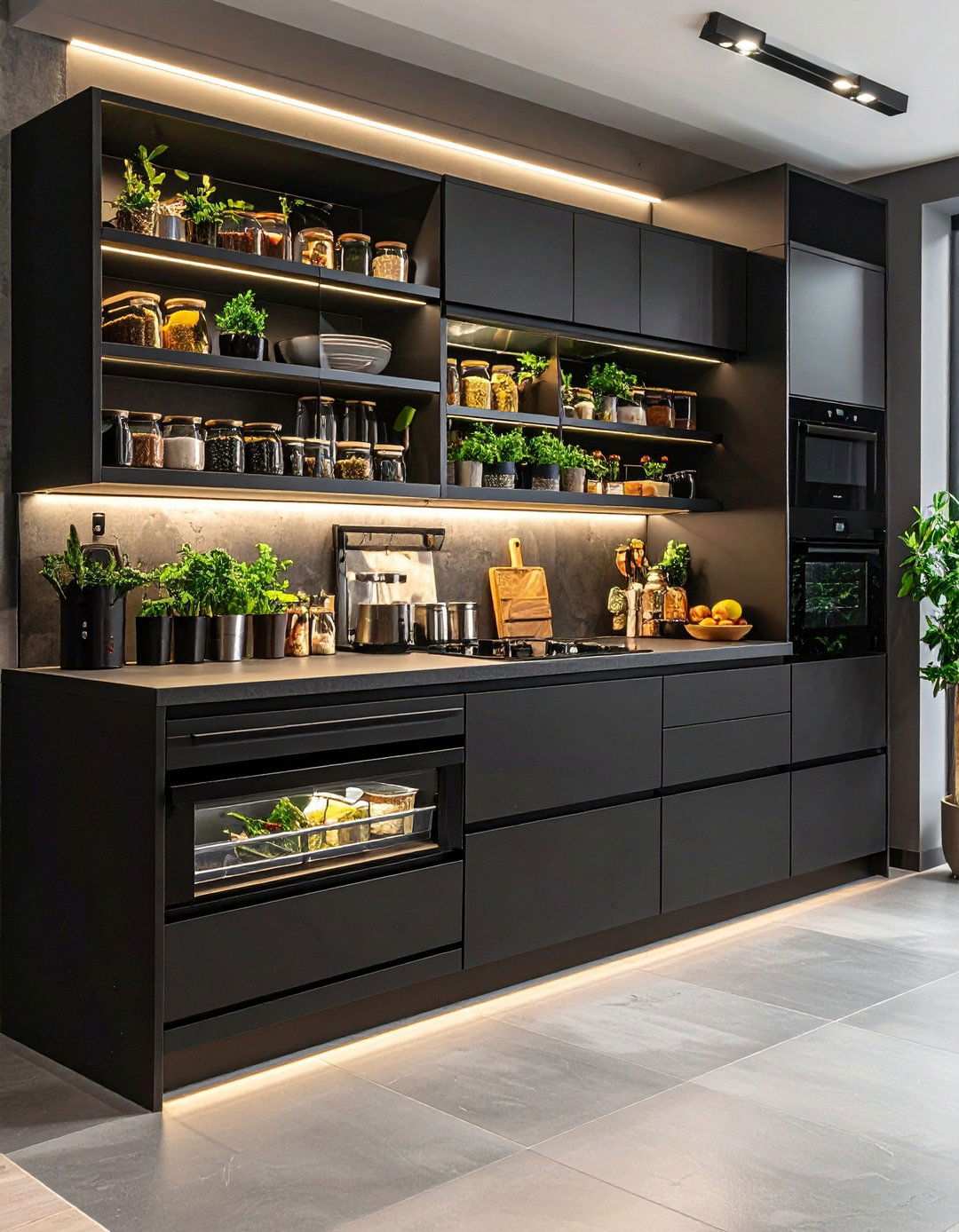
Dark-fronted cabinets shouldn’t necessarily imply a lack of organization. Consider installing pull-out pantries, tiered spice trays, and clear bins to keep contents visible. Affordable turntables and stacking risers ensure that everything remains accessible, as recent organizing guides emphasize. For deep base cabinets, full-extension drawers eliminate the need to hunt in the shadows. Adding motion-sensor LED strips inside drawers – battery-powered versions stick on without any wiring required – adds an extra layer of convenience. By maintaining a clutter-free interior, the sleek exterior remains the true star of the show.
20. Sustainable Options for a Clear Conscience
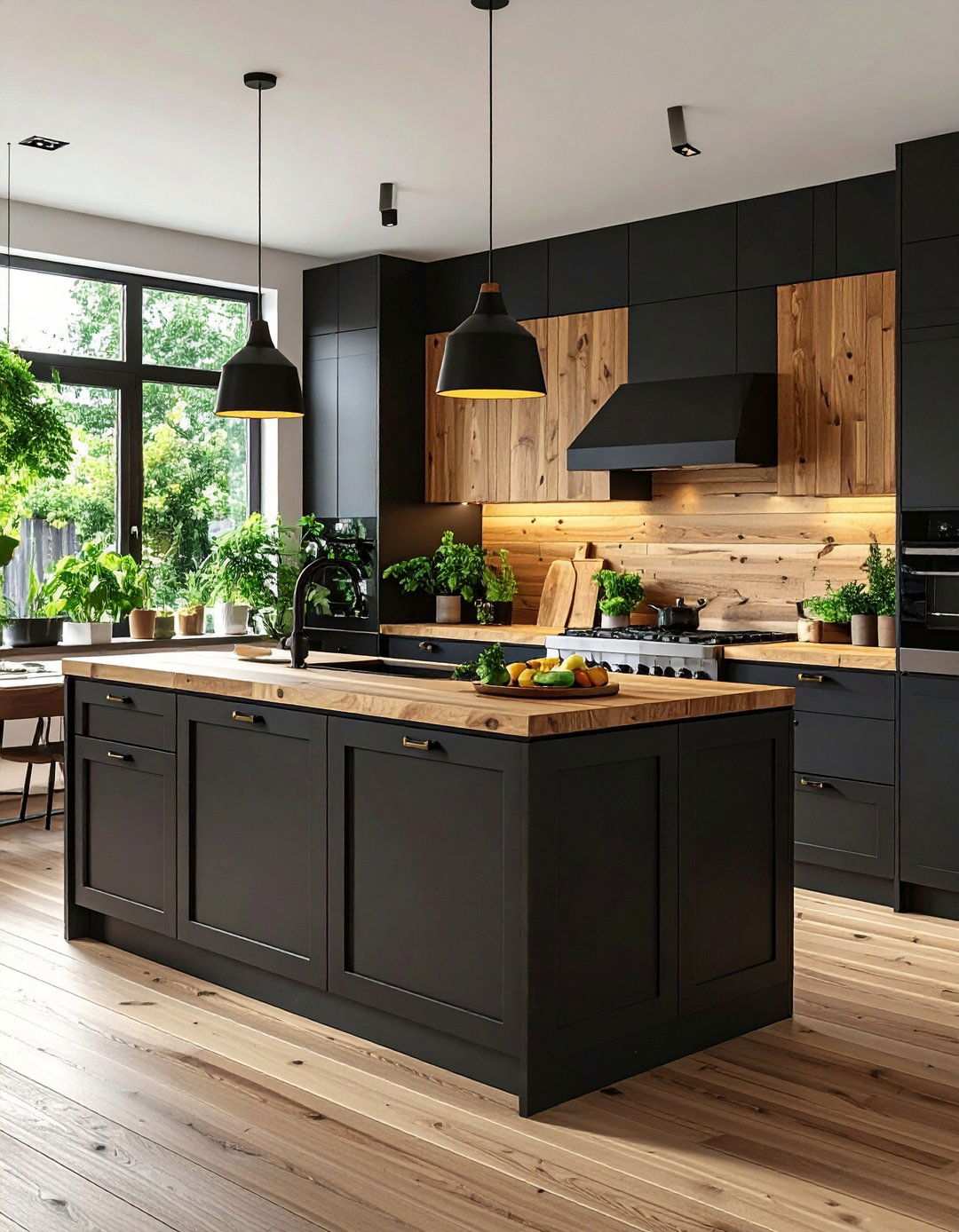
With low-VOC or zero-VOC paints now available in saturated black tones, it’s easier than ever to refresh cabinets without inhaling harsh solvents. These eco-friendly formulations significantly reduce indoor toxins and off-gassing time, meaning you can cook dinner the same night the last coat dries. Combine this with sustainably sourced FSC-certified cabinet boxes or bamboo plywood for an earth-minded makeover. Top the paint with a water-based clear coat for durability that still meets green standards. Even the boldest aesthetic can be gentle on the planet, making it easier to create a harmonious balance between style and sustainability.