1. Elevating Ambiance: Black Kitchen Cabinets with White Countertops
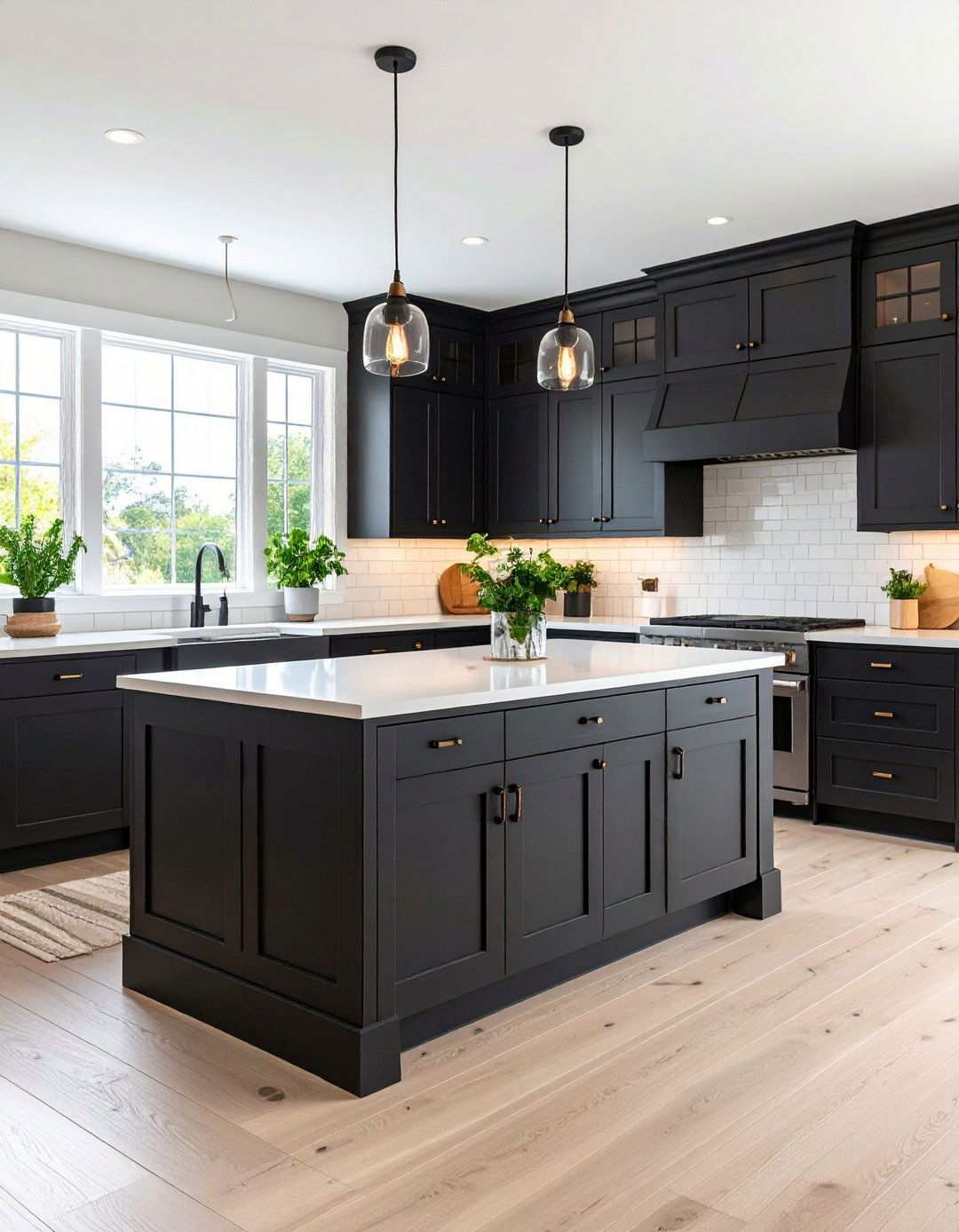
Designs once considered bold are now embracing classic status, with black kitchen cabinets poised to continue their upward trajectory through 2025. Market trends and color analyses reveal a strong correlation between deep, rich palettes and increased selling prices, as well as a reduced time to closing. Meanwhile, color forecasters celebrate this combination for its dramatic flair, cleanliness, and versatility. Against this backdrop, combining black kitchen cabinets with white countertops proves a winning formula that can transform small spaces, ground expansive areas, and adapt seamlessly across styles from minimalist to industrial without sacrificing functionality.
2. Strategies for Achieving Radiance Under Black Kitchen Cabinets
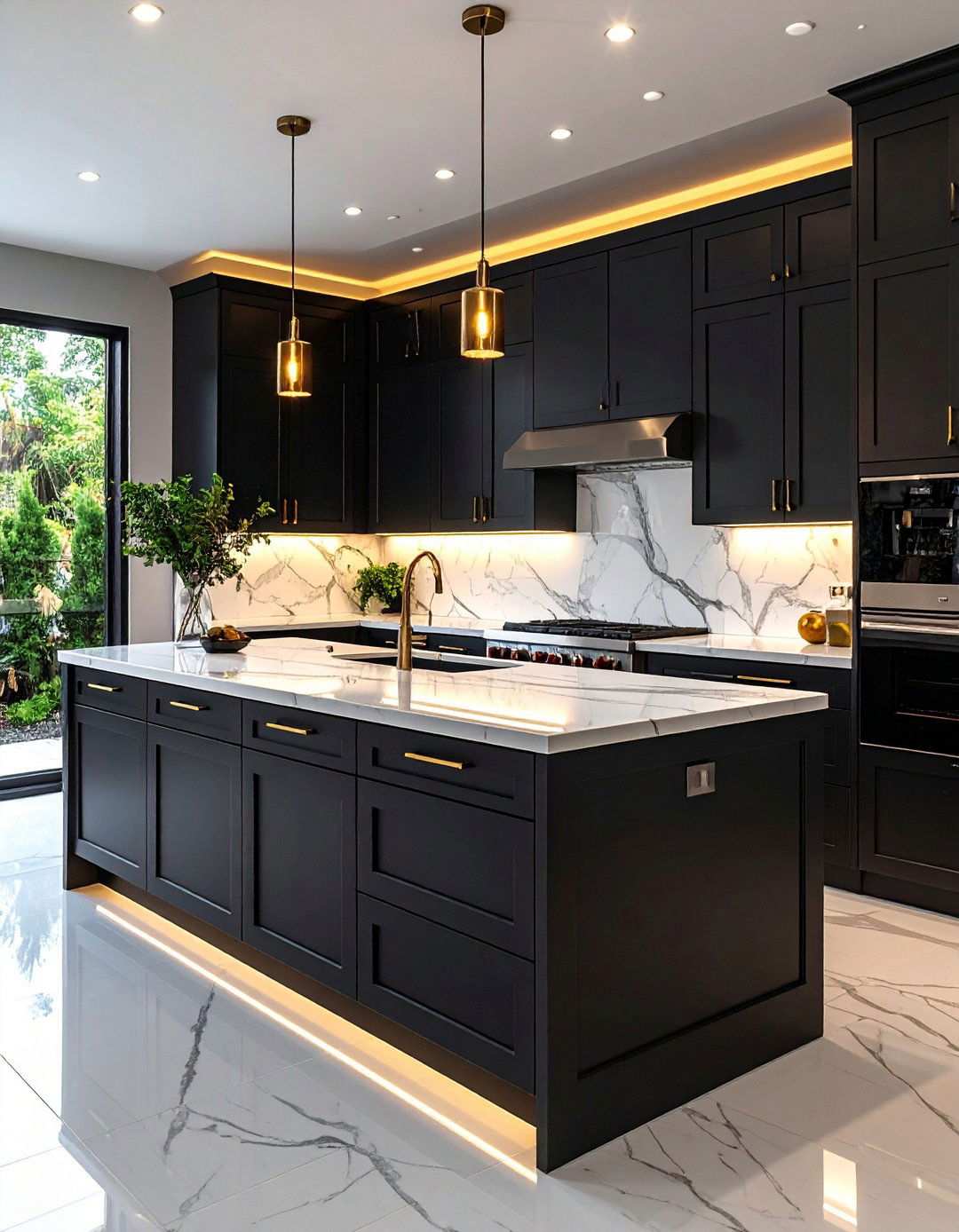
Despite the dark tone of black kitchen cabinets, incorporating strategically placed reflective materials can significantly enhance the luminosity of white countertops and maintain a sense of airiness within the room. Consider replacing heavy drapes with translucent blinds, incorporating a high-gloss subway-tile backsplash, and utilizing polished nickel faucets to bounce daylight and create a more radiant environment. If natural light is limited, installing LED strip lights along the toe kicks and under shelves can produce a subtle yet effective illumination, outlining the form of the cabinets without any glare. Additionally, selecting lighter flooring options, such as bleached oak, pale terrazzo, or travertine-look porcelain, can counteract the potential visual “shrink” created by dark cabinetry, preventing a cave-like atmosphere.

As an Amazon Associate I earn from qualifying purchases.
3. Selecting Accents that Uplift Black Kitchen Cabinets
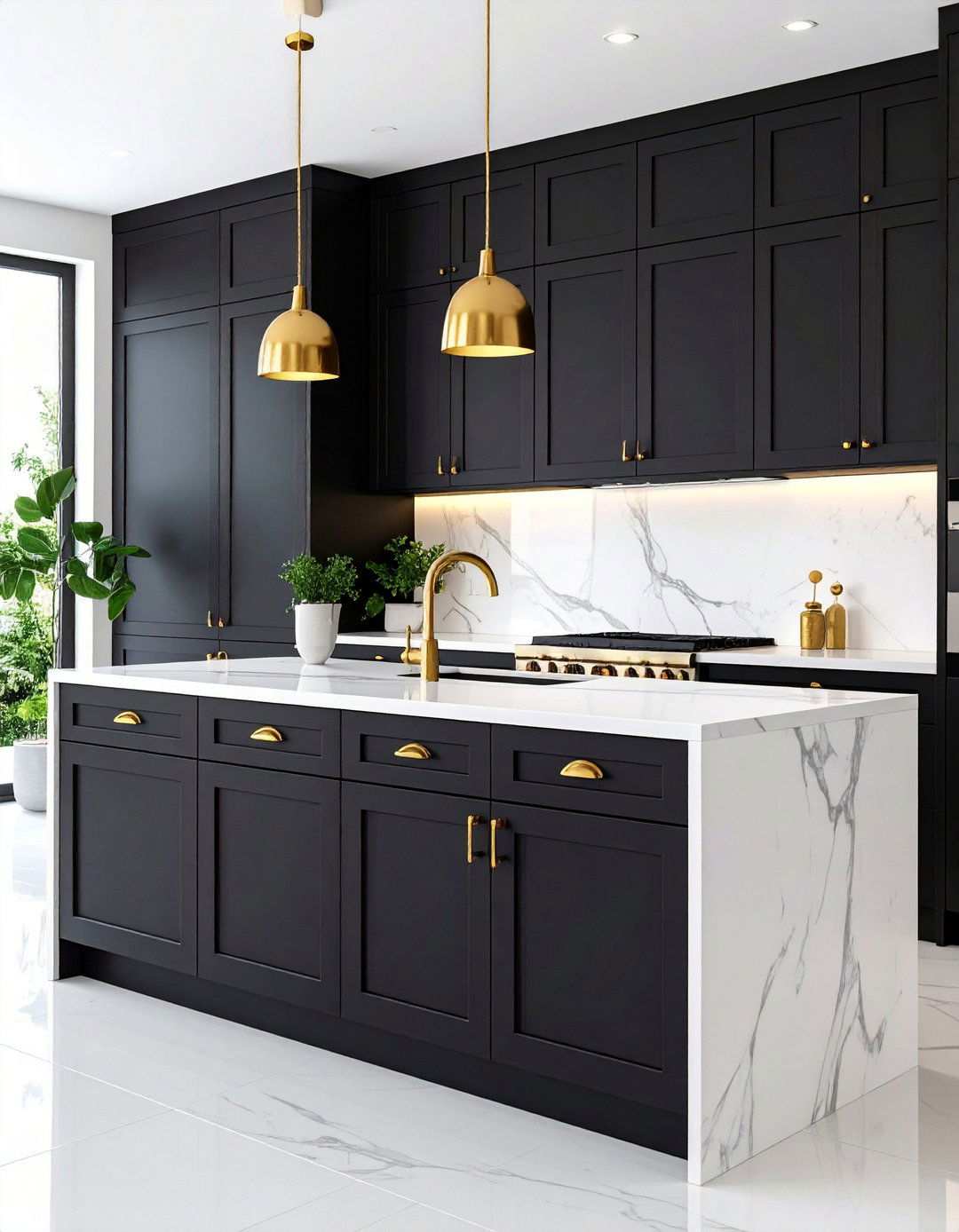
Hardware choices play a pivotal role in transforming black kitchen cabinets from ordinary to exceptional. Matte black hardware can create a seamless monolithic effect, while burnished brass or brushed gold accents add a touch of sophistication with their fingerprint-resistant finish and modern aesthetic. When selecting hardware, test different sizes to achieve the desired look, with oversized bar pulls conveying a contemporary feel, dainty latches evoking a heritage-inspired vibe, and mix-and-match suites adding a crafted element to the design. To maintain cohesion, align finishes on faucets and lighting, but don’t be afraid to introduce a secondary metal for added depth – a balanced mix of finishes can convey a curated aesthetic rather than chaos.
4. Elevating Black Kitchen Cabinets with Warm Metallic Accents
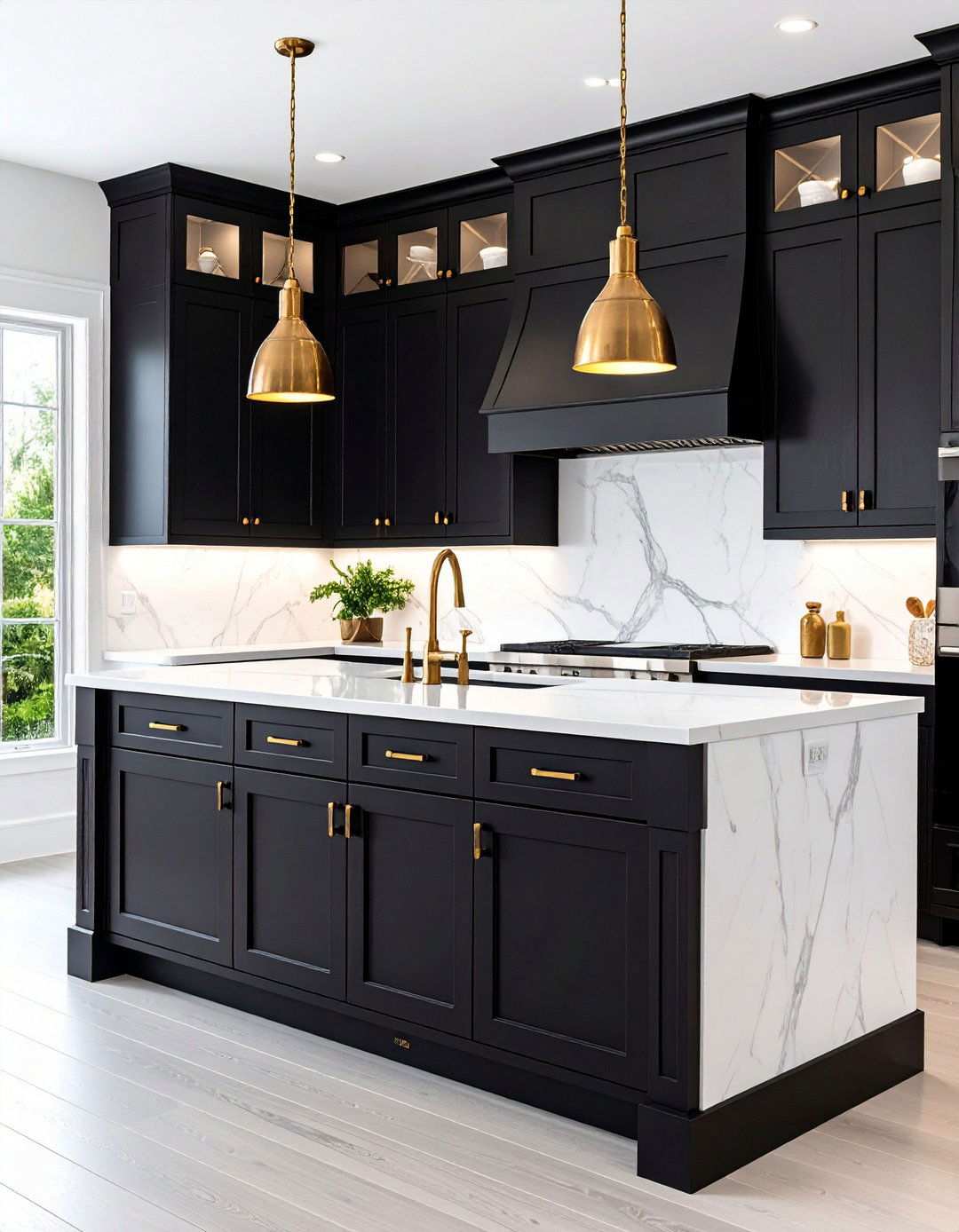
Warm metallic accents can effortlessly transform black kitchen cabinets without sacrificing their richness. Designers advise against using uniform metals, as matching every hinge, knob, and light fixture can ultimately date a room. Instead, treat brass or copper as an accent sprinkled across eye-level and countertop zones to create visual interest. Satin brass pulls paired with ebony shaker doors evoke a sense of classic sophistication, while hammered copper pendants cast a flattering glow over glossy white countertops. To prevent an overly yellow scheme, introduce a secondary cooler metal, such as stainless steel, on appliances, and balance both tones with matte black door hinges.
5. Merging Black Kitchen Cabinets with Open Shelving
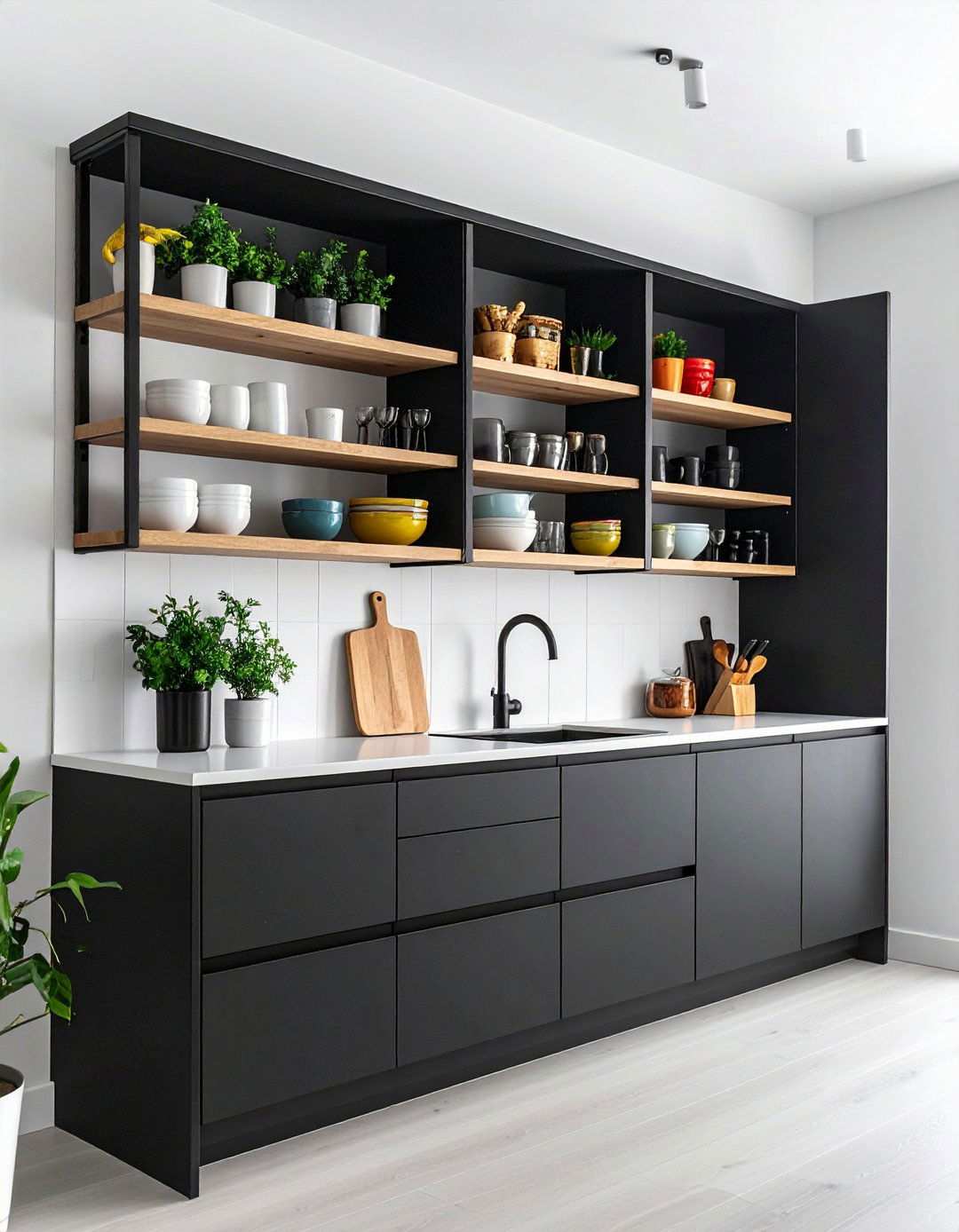
Open shelves can disrupt the uniformity of large blocks of black kitchen cabinets and provide a striking contrast against white countertops. By swapping two or three upper doors for chunky white oak planks or slim powder-coated steel brackets, you can create negative space that lightens the composition and offers quick-grab storage for daily essentials. Effective styling is key; cluster items by color or material to create a visually intentional display. For renters, temporarily removing doors and storing them safely can be a great way to test the concept. Interior cabinet boxes painted white enhance contrast and bounce light deep into shelves, creating a brighter, more welcoming space.
6. Finish Sheen: A Key Element in Black Kitchen Cabinets
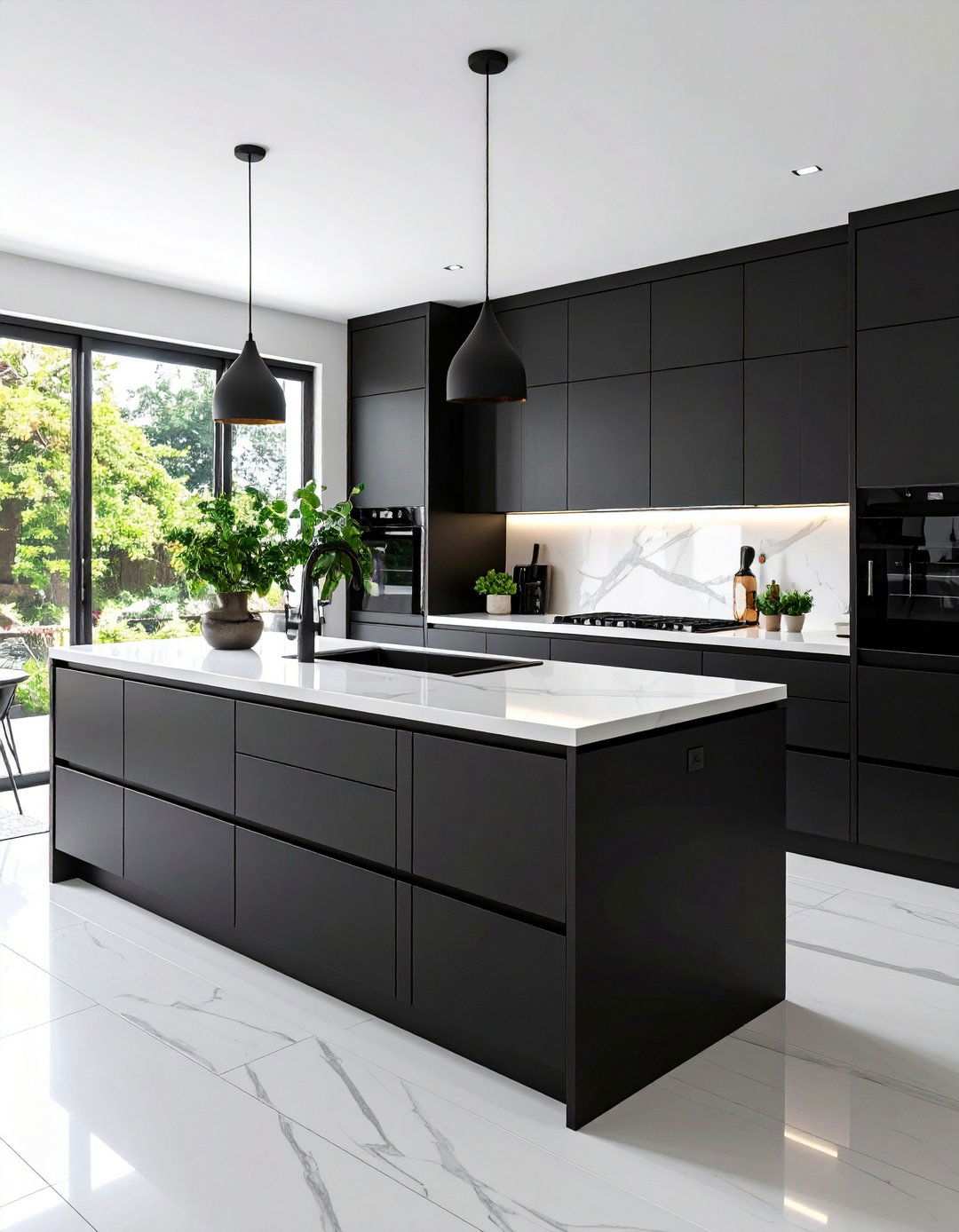
The finish sheen of black kitchen cabinets has a profound impact on both maintenance and mood. Matte finishes exude modern calm and hide minor scuffs, yet they can accentuate oily fingerprints. High-gloss lacquer, on the other hand, reflects window light, visually expanding tight footprints and creating a sense of brightness. However, it can show scratches sooner and requires more frequent cleaning. A middle-ground satin or semi-gloss finish offers an ideal balance of durability and easy wipe-downs, making it especially suitable for areas near cooktops where splatter strikes. To protect your chosen finish, seal edges with a clear acrylic topcoat and ensure your cleaning products match the finish to prevent cloudiness.
7. Introducing Texture with Shaker-Style Black Kitchen Cabinets
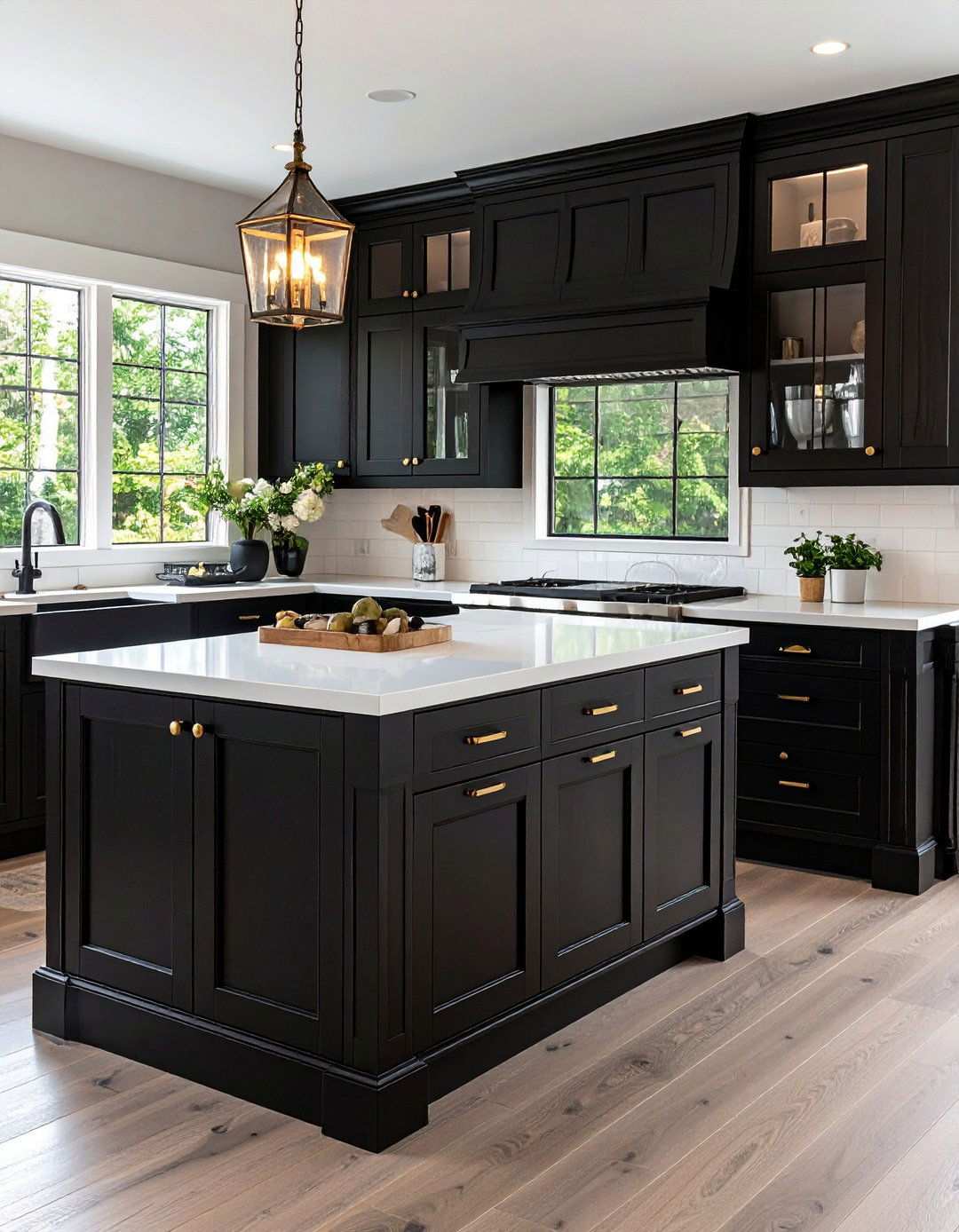
While flat-panel doors create a sleek, modern look, shaker-style black kitchen cabinets introduce subtle shadow lines that soften the scheme and create a more approachable atmosphere. The added dimension helps prevent a wall of black from feeling oppressive, particularly in windowless kitchens. Designers predict that dark cabinetry, particularly with visible rails and stiles, will dominate 2025 remodels for its tailored yet effortless look. To add extra character to your design, swap one shaker door for fluted glass, which reflects just enough countertop brightness back into the room, creating a beautiful interplay of light and texture.
8. Illuminating Balance for Black Kitchen Cabinets Over White Tops
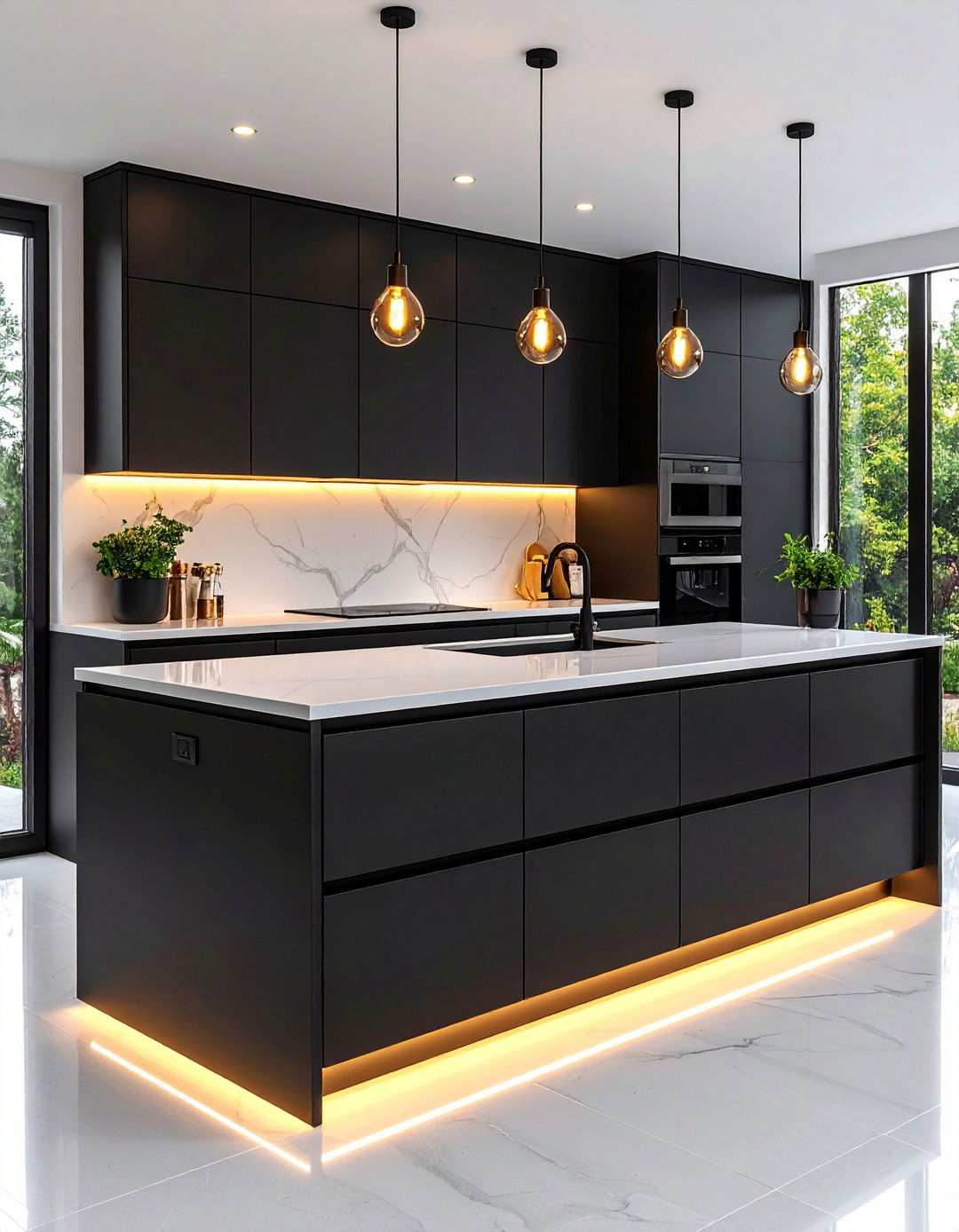
When black kitchen cabinets meet white countertops, task, ambient, and accent lighting layers come into play. Strategically placing hardwired LED puck lights under uppers helps to dispel shadows from prep zones, while strip lights inside drawers make utensils easily visible against dark interiors. Adding decorative pendants in warm tones can soften the lines of the cabinetry and bounce light off glossy counters, creating a more inviting atmosphere. Under-cabinet kits have recently been touted as a cost-effective, energy-efficient upgrade option that can be installed in minutes and significantly improve visibility. To avoid a stark contrast against white stone, aim for 3000–4000 K bulbs, and consider dimmers to adjust the mood from a bright, bustling kitchen to a warm, intimate space.
9. Grounding Black Kitchen Cabinets with Floor Selection
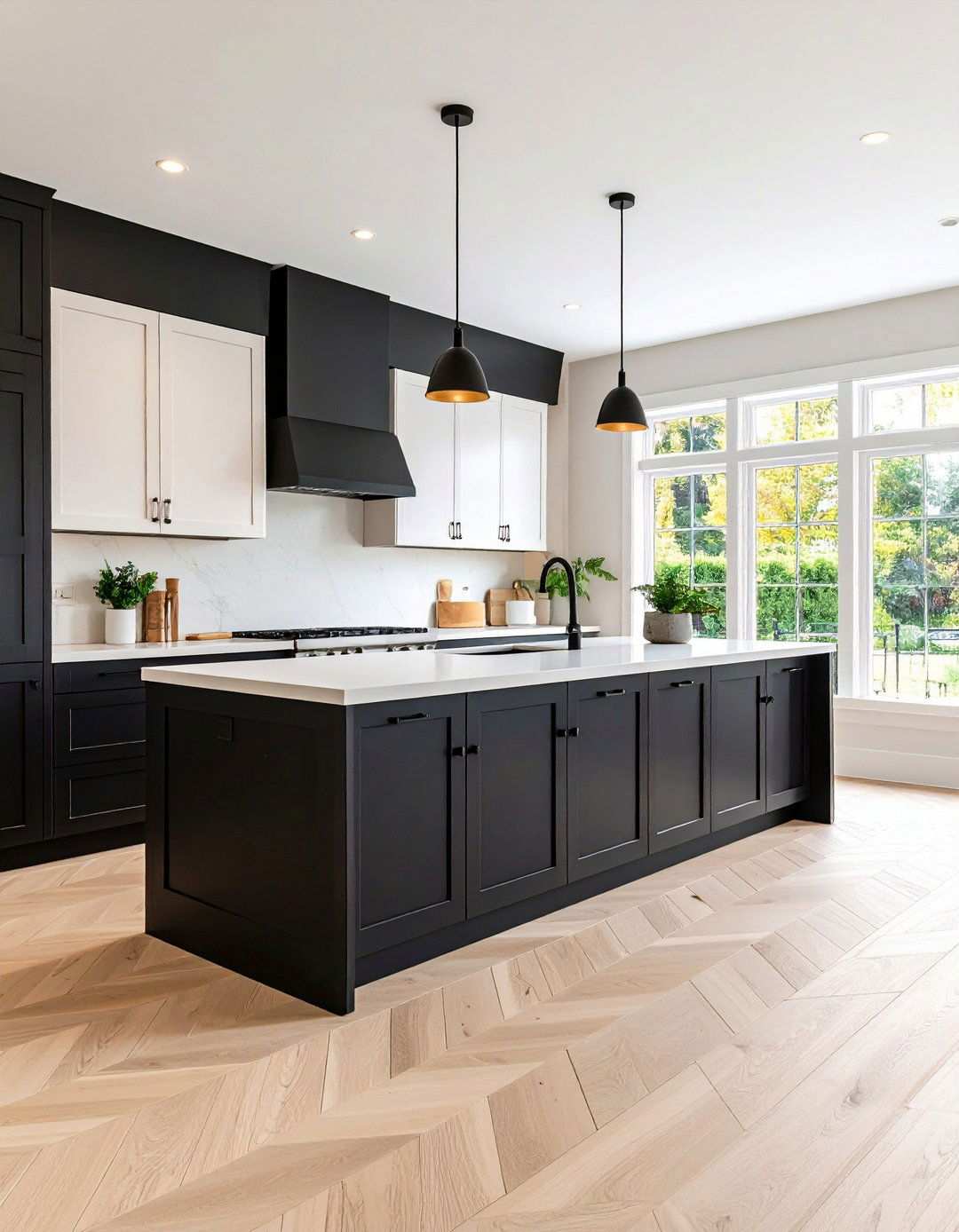
The floor can either complement or clash with the black kitchen cabinets. Designers often recommend white-washed oak, pale maple, or light gray porcelain tiles, as these hues are barely a shade or two lighter than the cabinets and create a harmonious visual flow with white countertops. For added visual interest, patterned cement tiles such as chevrons, checkerboards, or subtle geometrics can be introduced, especially when the palette is limited to charcoal, ivory, and soft beige. To prevent a busy, mirrored appearance, ensure the floor has a matte or low-satin sheen. In galley layouts, continuous planks laid lengthwise can help to reinforce the line and elongate narrow rooms.
10. Bridging the Divide with Backsplash Ideas Behind Black Kitchen Cabinets
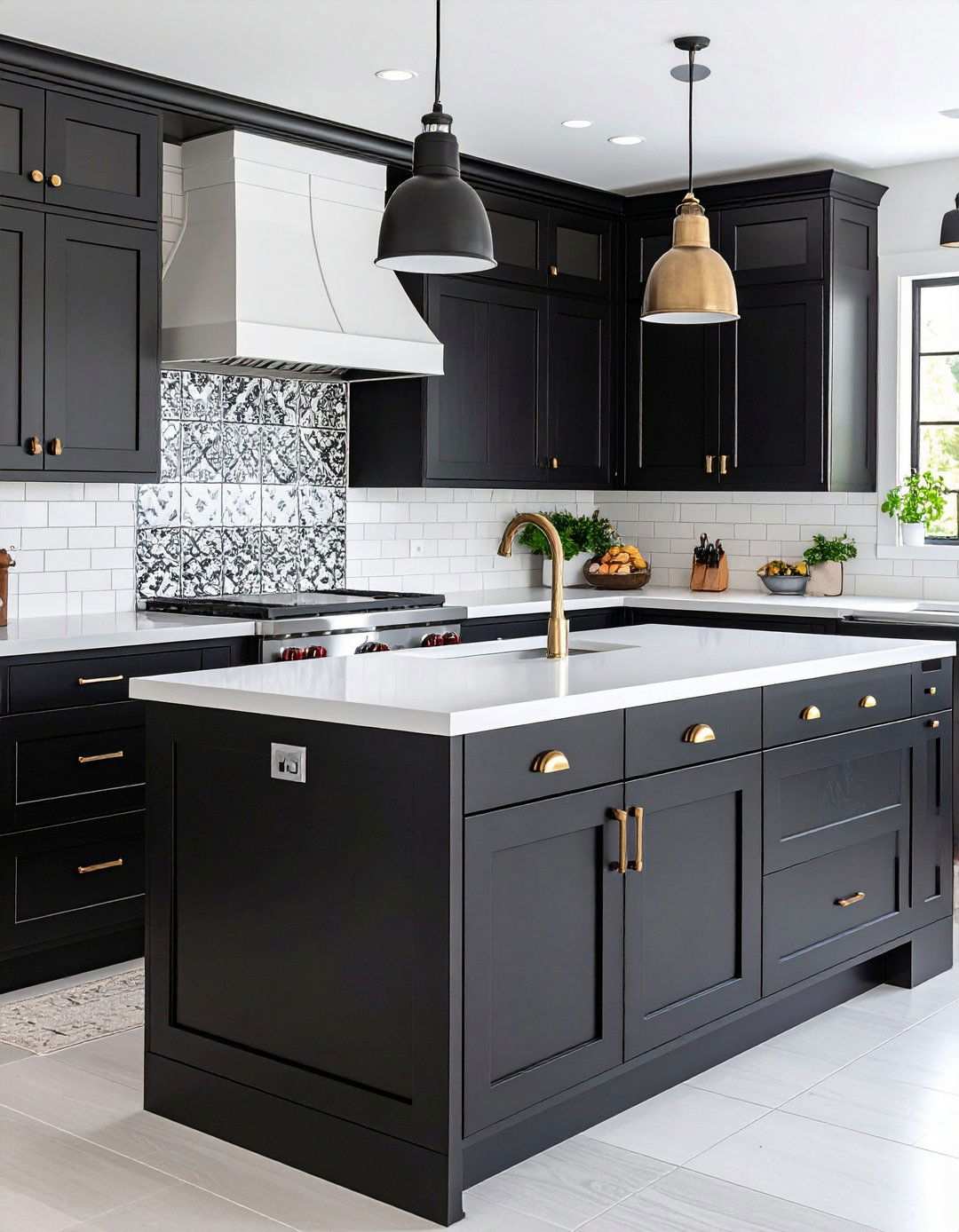
A backsplash not only protects the walls from splatter but also plays a crucial role in bridging the dark-light divide. Glossy white subway tile remains a timeless favorite due to its reflective glaze, which amplifies the brightness of white countertops and echoes cabinet lines. Designers also recommend gray or marble subway tile to soften contrast while retaining elegance. If you prefer a more dramatic look, consider black-and-white encaustic cement tiles or vertical stacked skinny rectangles, which add movement without overwhelming the space. To maintain a cohesive look, keep the grout fine and color-matched to the tile, avoiding a grid that distracts from the cabinetry. By installing the backsplash ceiling-height, you can elongate the walls and frame hood features like a custom piece of art.
11. Maximizing Space with Black Kitchen Cabinets
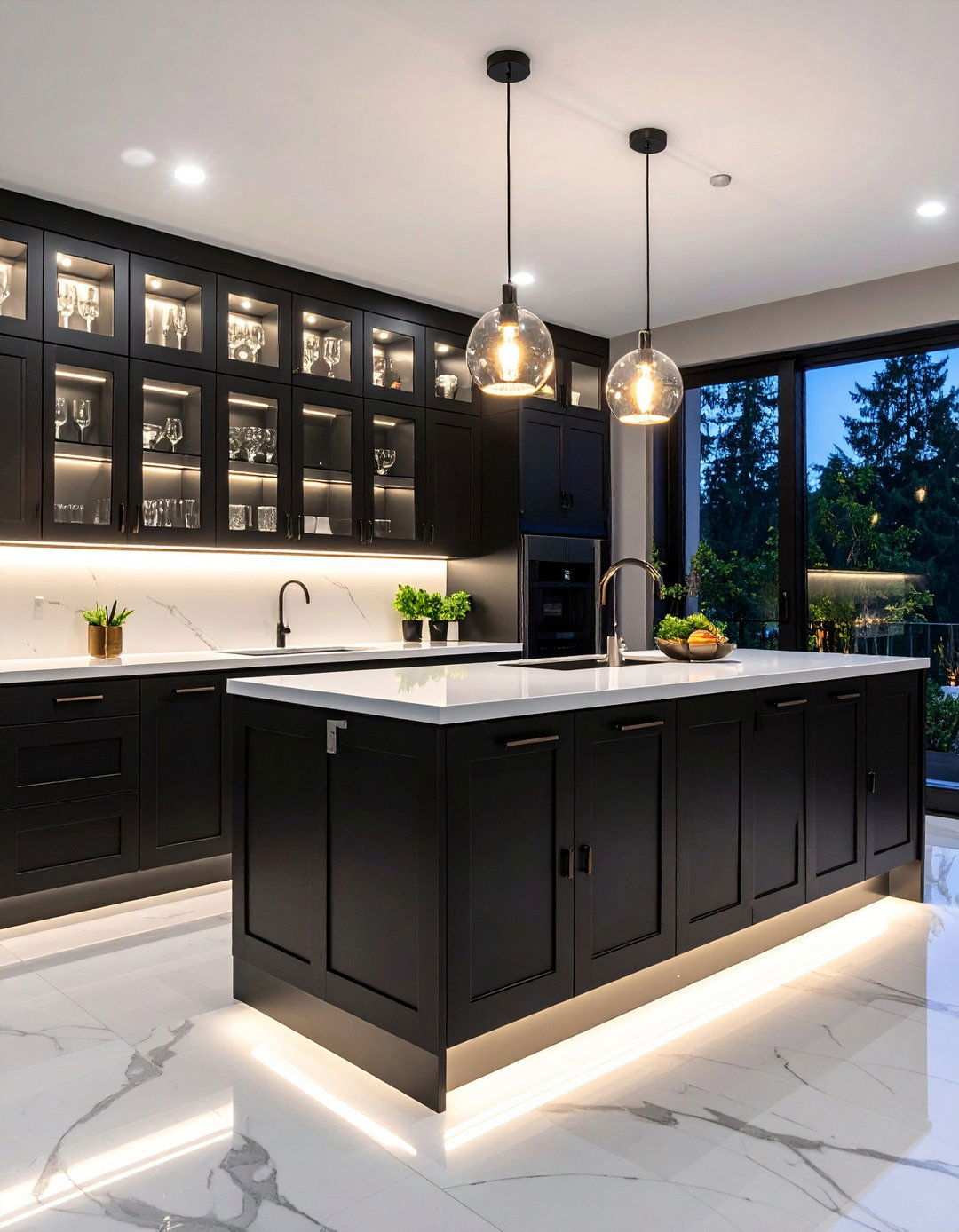
In compact kitchens, black kitchen cabinets require careful consideration to avoid visual compression. One approach is to limit the dark tone to base units while installing white uppers, preserving the dramatic vibe while keeping sightlines open. Mirrored or metallic toe-kicks can create the illusion of floating cabinets, and glass doors on a few uppers can push depth further. As in any kitchen, lighting is critical; one designer trick is to run LED tape along the underside of countertops to create a halo that visually lifts the cabinetry. White countertops with a light vein pattern can add subtle texture, preventing a heavy block of solid white that might overwhelm the space.
12. Refined Expression With Sleek Black Kitchen Cabinets
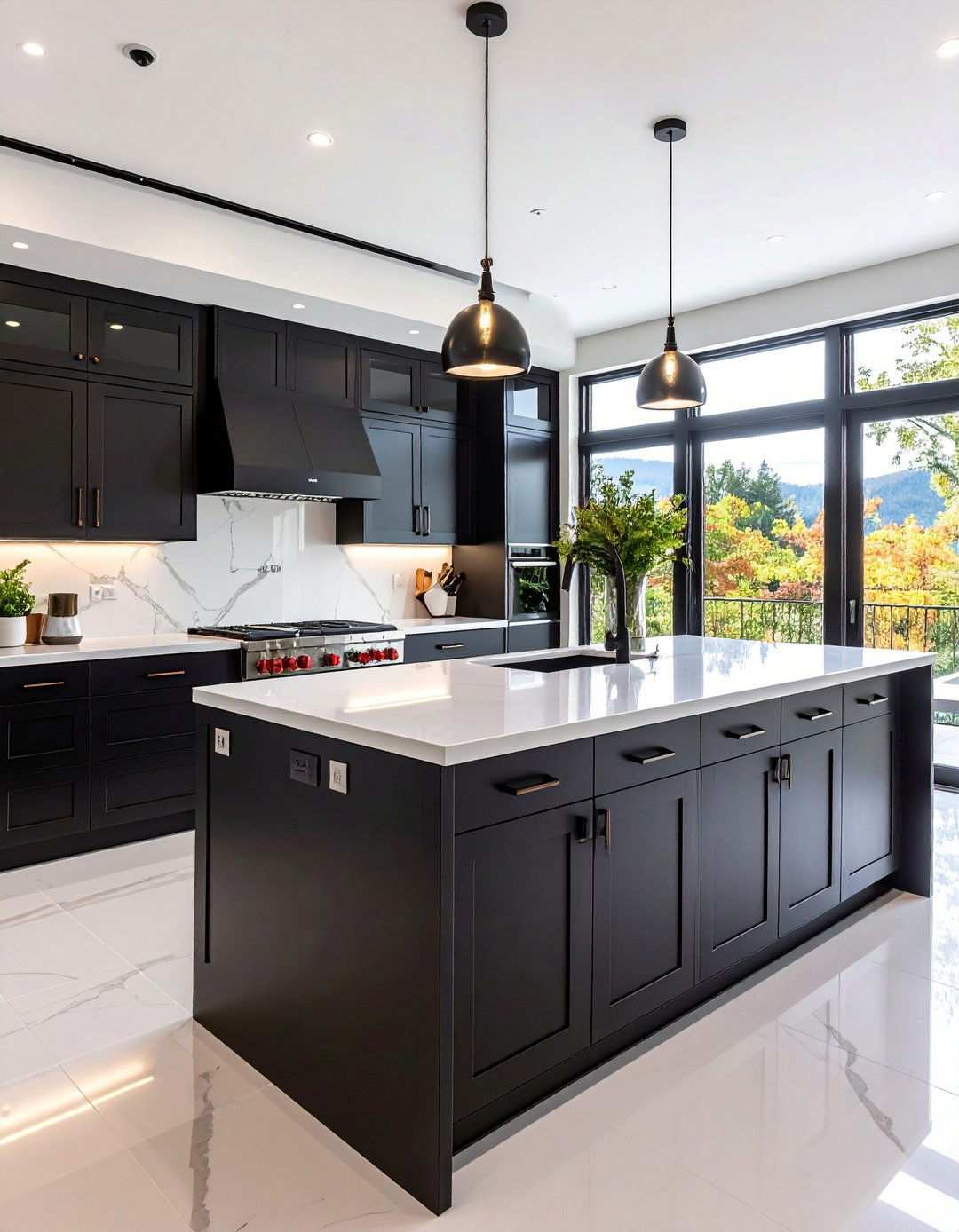
Sleek black kitchen cabinets with integrated finger pulls are a hallmark of modern minimalism, allowing waterfall white countertops to take center stage unobscured. Interior designers hail the aesthetic for its practicality, as it enables homeowners to focus on functional cooking tools rather than decorative elements. The clean lines of low-sheen painted slab fronts visually recede, creating a sense of depth and making the stone island appear more sculptural. For a cohesive look, restrict color to a palette of neutrals like charcoal, chalk, and stainless, and introduce contrast through materials such as honed marble against matte paint. By eliminating countertop clutter and incorporating built-in knife blocks and recessed outlets, the clean plane of the kitchen is preserved.
13. Timeless Charm: Black Kitchen Cabinets and Marble White Tops
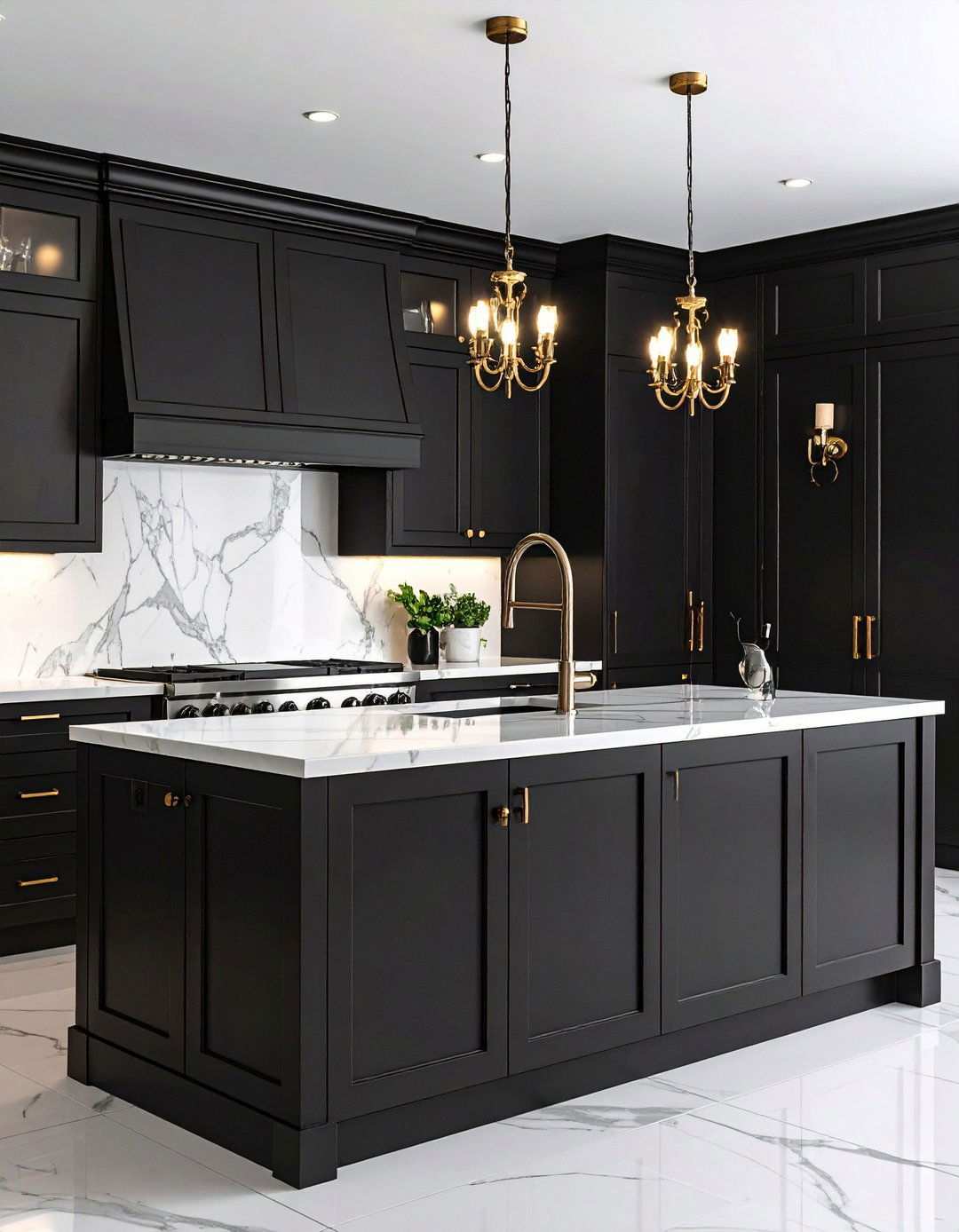
For those seeking a classic, sophisticated look, black kitchen cabinets paired with white marble countertops evoke the allure of European bistros and pre-war townhomes. Architectural experts note the way veined stone introduces a touch of organic pattern, softening the solidity of the dark cabinetry. Polished nickel bridge faucets and candelabra sconces add a hint of heritage, while inset door construction lends a furniture-grade level of sophistication. To balance old-world charm with modern conveniences, incorporate features like soft-close hinges and built-in charging drawers. Effective preservation of the white marble surface requires regular sealing and prompt spill cleanup to maintain its crisp, clean appearance against the moody cabinets.
14. Urban Flair: Black Kitchen Cabinets and Concrete-Inspired Countertops
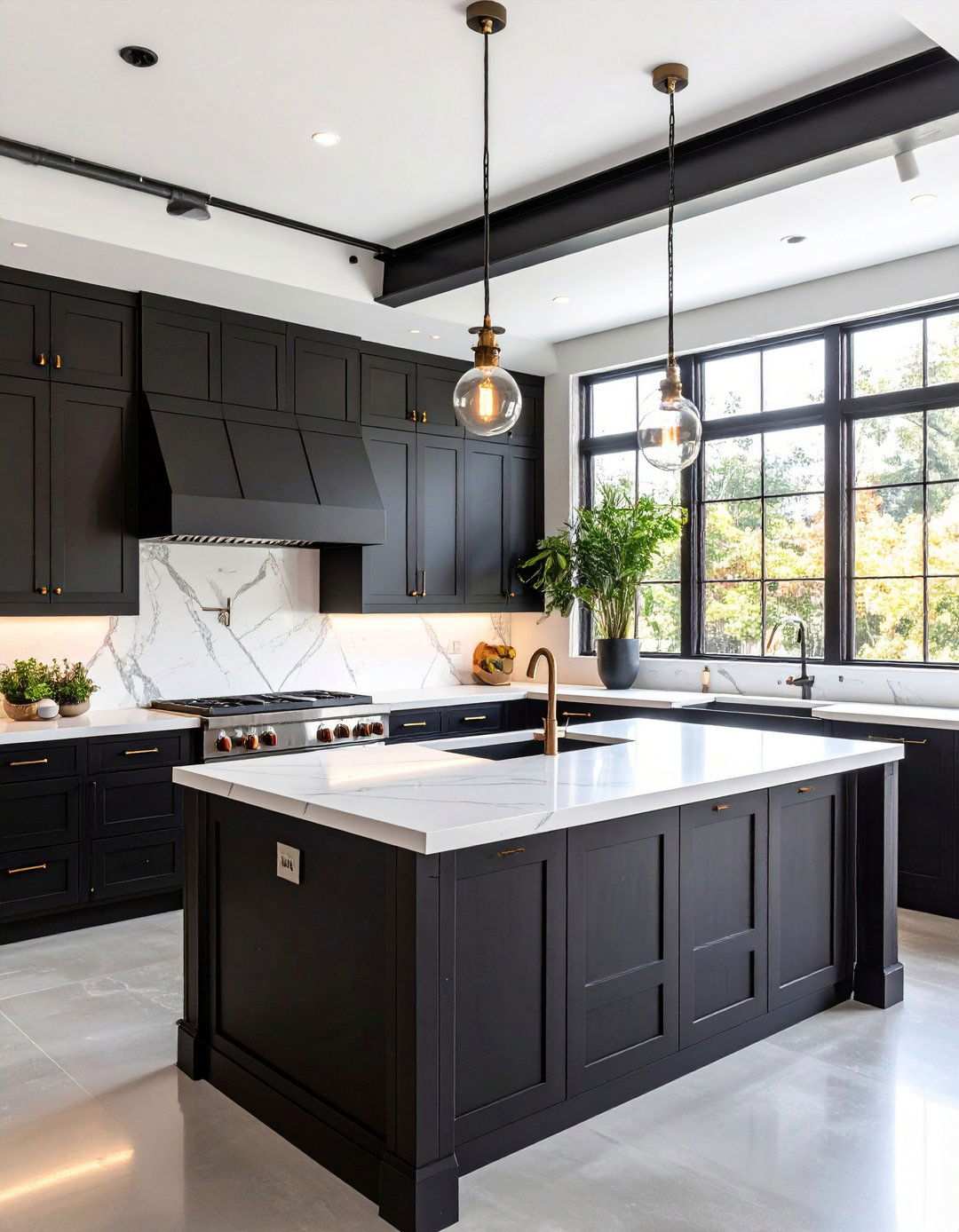
By pairing black kitchen cabinets with white quartz countertops veined to mimic concrete and layering in raw textures like exposed brick or steel pipes, homeowners can achieve a loft-like atmosphere. Design historians attribute the popularity of black kitchens to the influence of warehouse conversions, which incorporated cast iron and slate to create an authentic, industrial look. Vintage filament pendants, riveted stools, and reclaimed timber shelves help soften the harder surfaces, while matte black cabinet pulls blend seamlessly with the doors, allowing rugged fittings like a salvaged iron pot rack to take center stage. To maintain the industrial edge, keep open sightlines to emphasize statement structural elements.
15. Island Contrast: Balancing Black Kitchen Cabinets With Two-Tone Accents
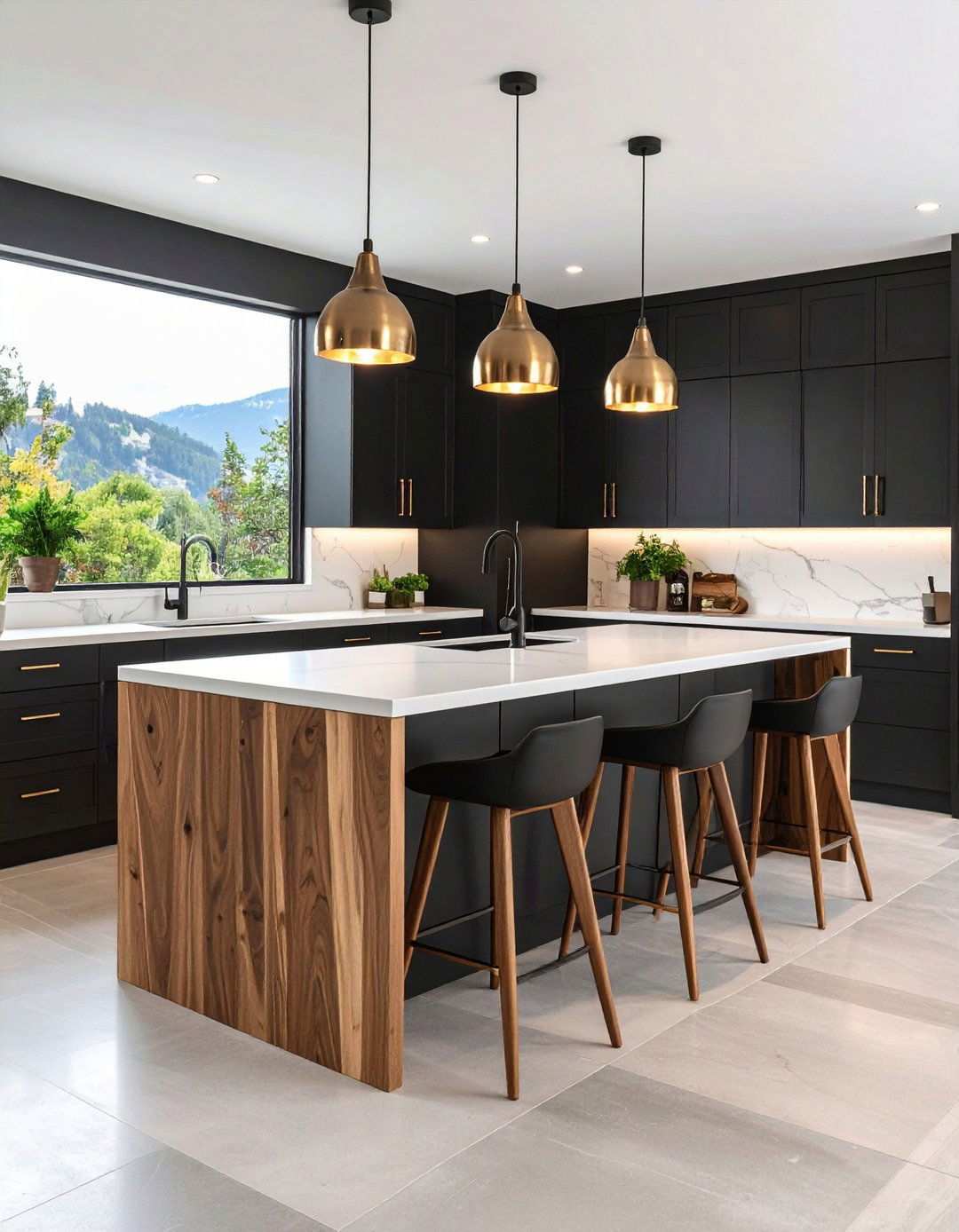
Introducing a contrasting island is a simple way to introduce color while keeping perimeter black kitchen cabinets and white countertops intact. Consider staining the island espresso and capping it with a waterfall white quartz top, or flip the scheme with a white base and honed black granite surface for functional prep. Designers appreciate the versatility of two-tone strategies, as they break visual uniformity and define zones for specific activities. To ensure the island feels cohesive with the rest of the kitchen, crossover through hardware or stool finishes, so it reads as an integral part of the overall design rather than an afterthought.
16. Elevating Black Kitchen Cabinets with Daily Care
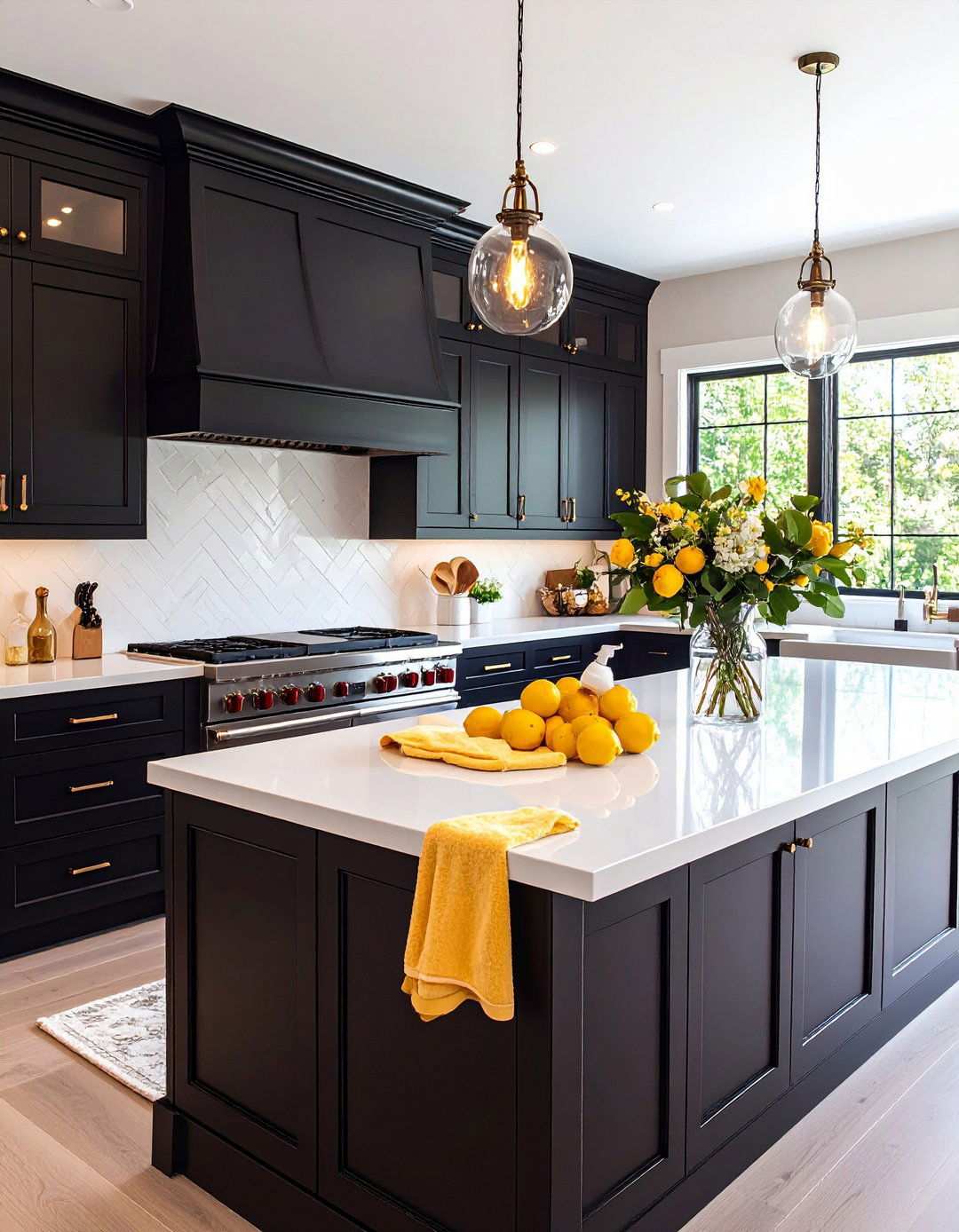
Crisp, spotless black kitchen cabinets stand in stark contrast to pristine white countertops. With the right care, these high-gloss or semi-gloss finishes can be effortlessly cleaned with a microfiber cloth and mild soap, while matte finishes resist scratches, albeit requiring a gentle citrus-based cleaner to erase fingerprints. To maintain their integrity, avoid using abrasive pads that can cloud dark paint, and always follow up with a lint-free towel to prevent unsightly streaks. Regularly maintaining countertop sealant, especially around sinks, will help prevent water stains from becoming noticeable on white surfaces.
17. The Rise of Sustainable Black Kitchen Cabinets
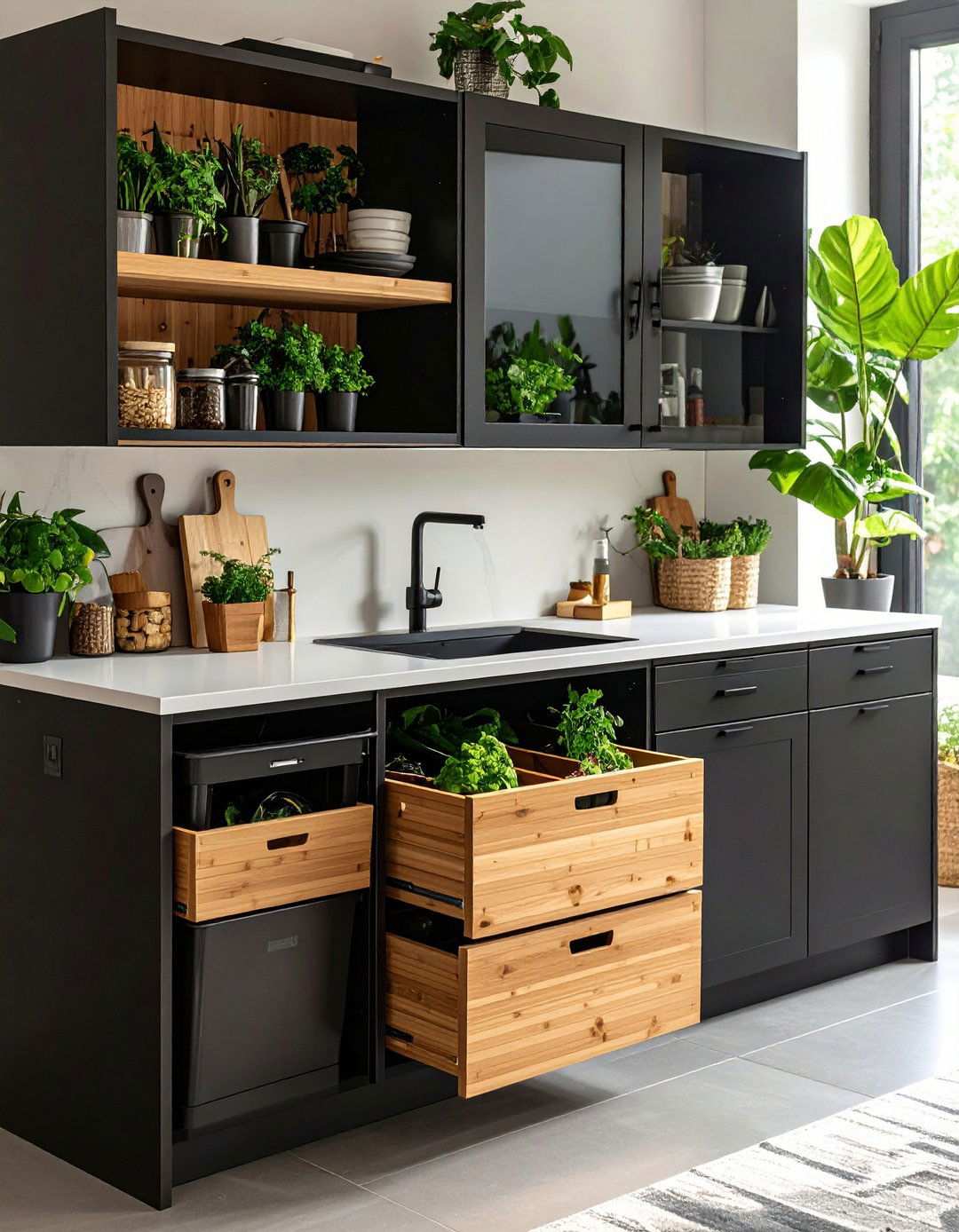
Homeowners seeking eco-friendly options can specify black kitchen cabinets crafted from no-formaldehyde plywood, bamboo veneer, or responsibly sourced hardwoods, finished with low-VOC paints that minimize environmental impact. Industry trends suggest that durability and eco-friendliness will take center stage in the 2025 kitchen landscape, inspiring homeowners to invest in cabinetry that not only meets their needs but also contributes to a more sustainable future. Pairing these greener cabinets with recycled-content white quartz countertops or durable porcelain slab tops that replicate the look of marble without quarrying new stone can further reinforce this commitment to environmental stewardship. By incorporating compost bins and organized recycling centers within drawers, homeowners can extend their eco-friendly intentions to everyday habits.
18. Refurbishing Older Cabinets with a Black Makeover
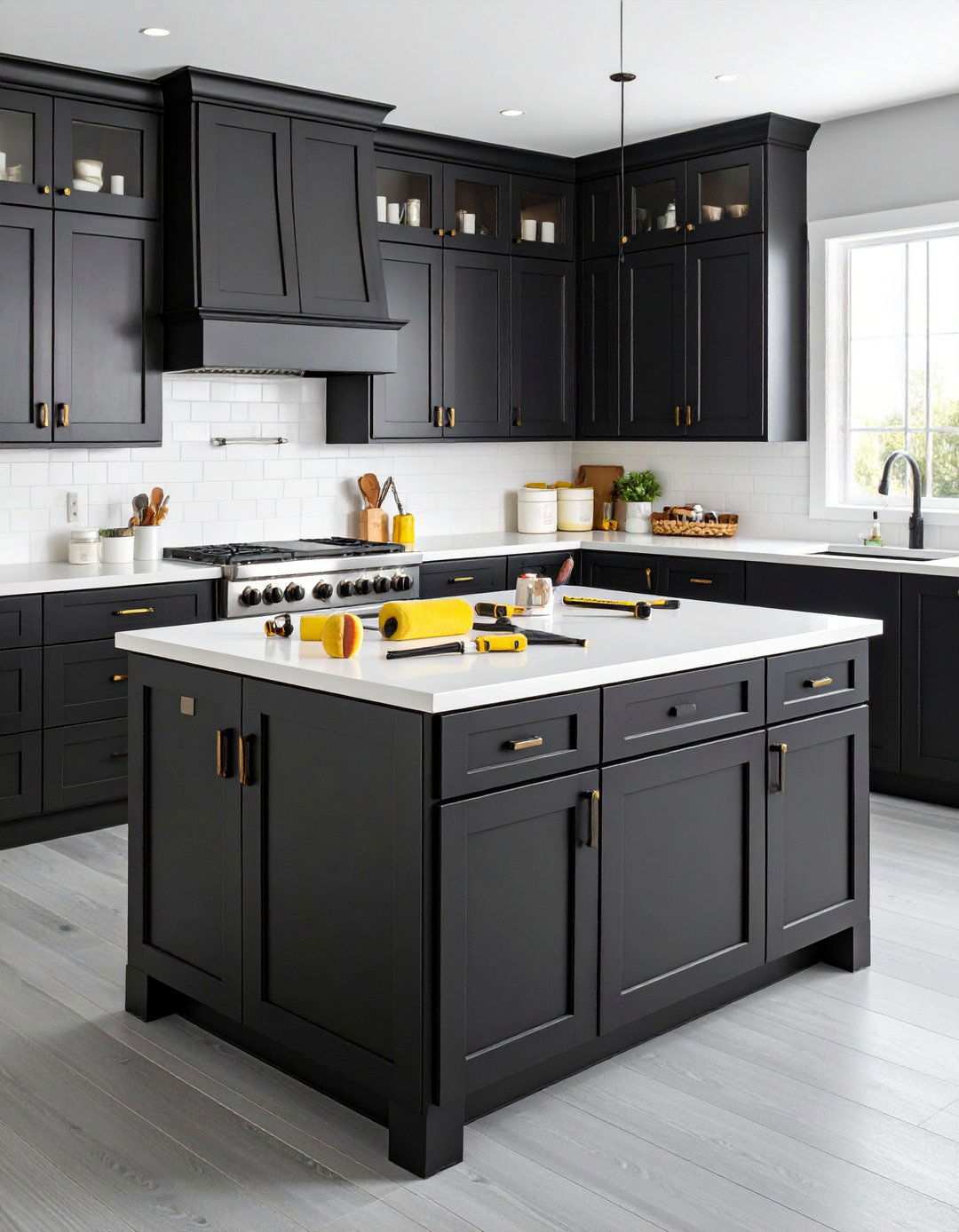
Painting dated oak or maple units can be a cost-effective way to transform black kitchen cabinets, paired with fresh white countertops. Professionals recommend removing doors, labeling hardware, and sanding lightly to facilitate the bonding primer’s adhesion; tinted primer prevents the old finish from bleeding through. Applying two thin coats of high-quality enamel with a foam roller will yield a spray-like finish, allowing ample time for full cure before rehanging doors. Finally, add a water-based polyurethane topcoat for enhanced scuff resistance. Upgrading faded knobs with modern pulls will not only complete the look but also rival the quality of a custom installation at a fraction of the cost.
19. The Financial and Resale Benefits of Black Kitchen Cabinets
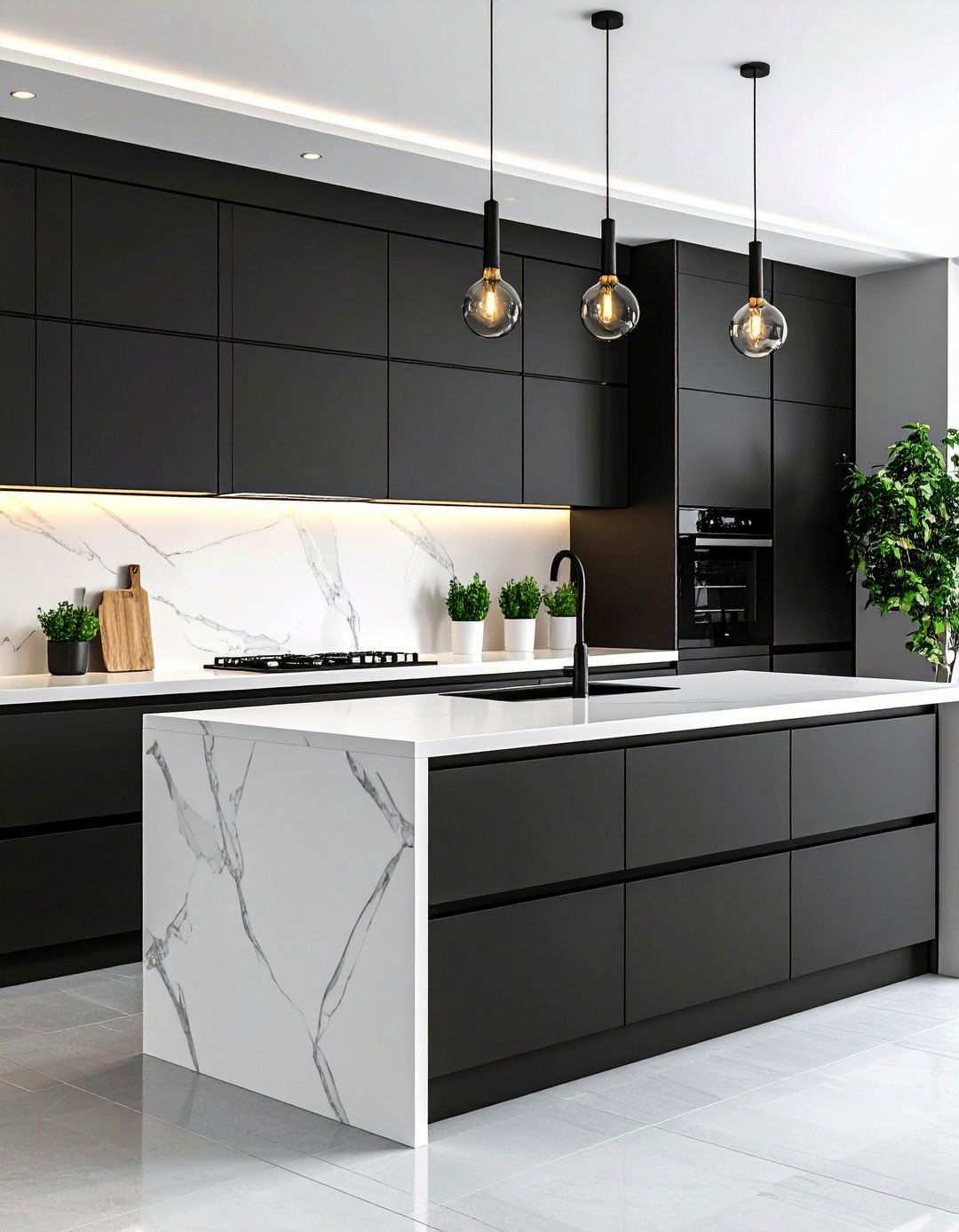
Contrary to concerns that dark palettes limit appeal, real-estate data reveals that charcoal and black kitchen cabinets can increase appraisal values by thousands when expertly balanced with bright elements like white countertops and strategic lighting. Market analysts attribute this to perceptions of luxury, while experts in the “organic modern” style note that natural stone counters and rich cabinet hues help listings stand out in digital feeds. To maximize return on investment, choose classic door profiles and quality hinges – shortcuts in this regard will ultimately erode ROI. Even small galley kitchens can capitalize on the trend and sell faster when staged to highlight contrast, making the investment well worth it.
20. Elevating Ambiance with Customized Kitchen Accents
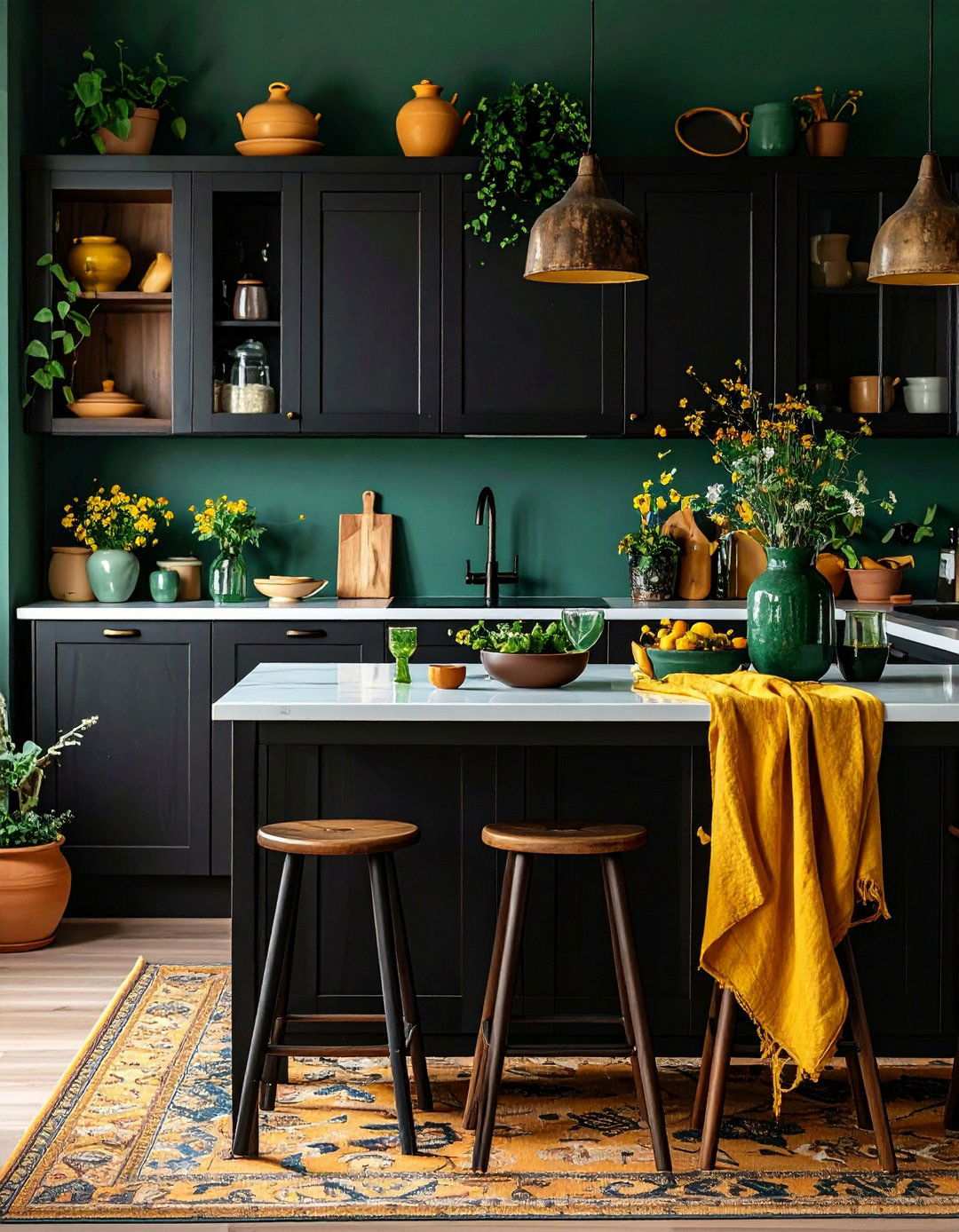
The versatility of a neutral color palette, such as black and white, allows for effortless mood transformations. Accent pieces in vibrant colors or contrasting textures can dramatically alter the atmosphere, making it easy to create distinct looks. Design experts recommend incorporating statement pieces like emerald ceramic vases, terracotta planters in earthy tones, or saffron-hued linens, as these bold hues create a striking visual contrast against black kitchen cabinets and gleam against crisp white countertops. By swapping out decorative elements seasonally, homeowners can refresh the space without committing to costly renovations, such as switching to pastel glassware in the spring, jute runners in the summer, or plush velvet stools adorned with autumnal patterns. To maintain a sense of visual flow, it’s essential to strike a balance between decorative elements and negative space, ensuring that each piece has room to shine while the high-contrast architecture remains the focal point.