1. Timeless Sophistication with a Black Kitchen Floor
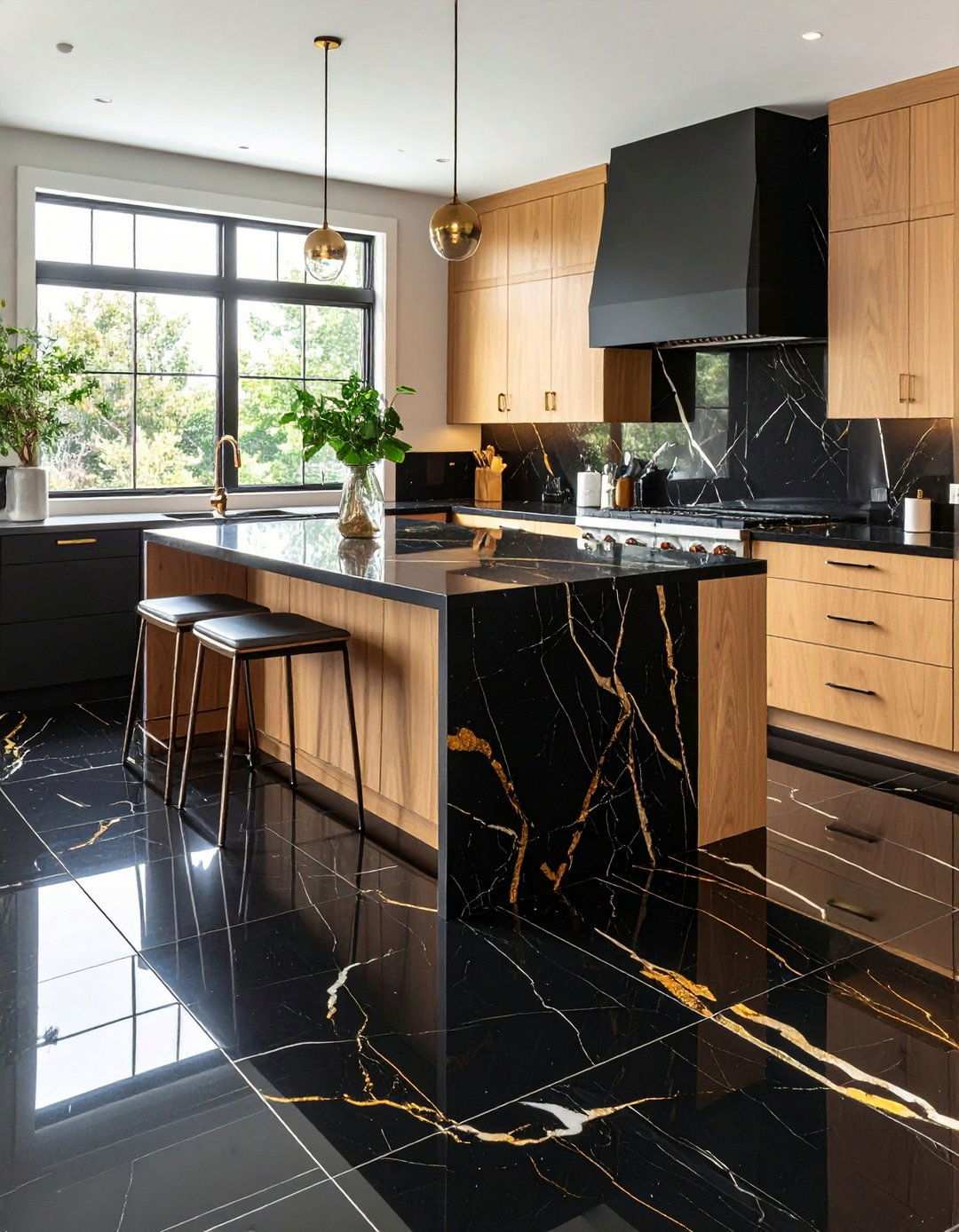
A black kitchen floor can effortlessly transition from understated to bold, depending on the material and pattern chosen. Design experts point out that dark flooring serves as a grounding element, concealing uneven subfloor lines while drawing attention to pale cabinetry or metalwork, resulting in a timeless rather than trendy aesthetic. Furthermore, black surfaces come in a diverse array of materials, including marble, slate, porcelain, terrazzo, sustainable cork, and even rubber, allowing homeowners to select an option that suits their durability, budget, and maintenance requirements.
2. Luxurious Elegance with Large-Format Black Marble
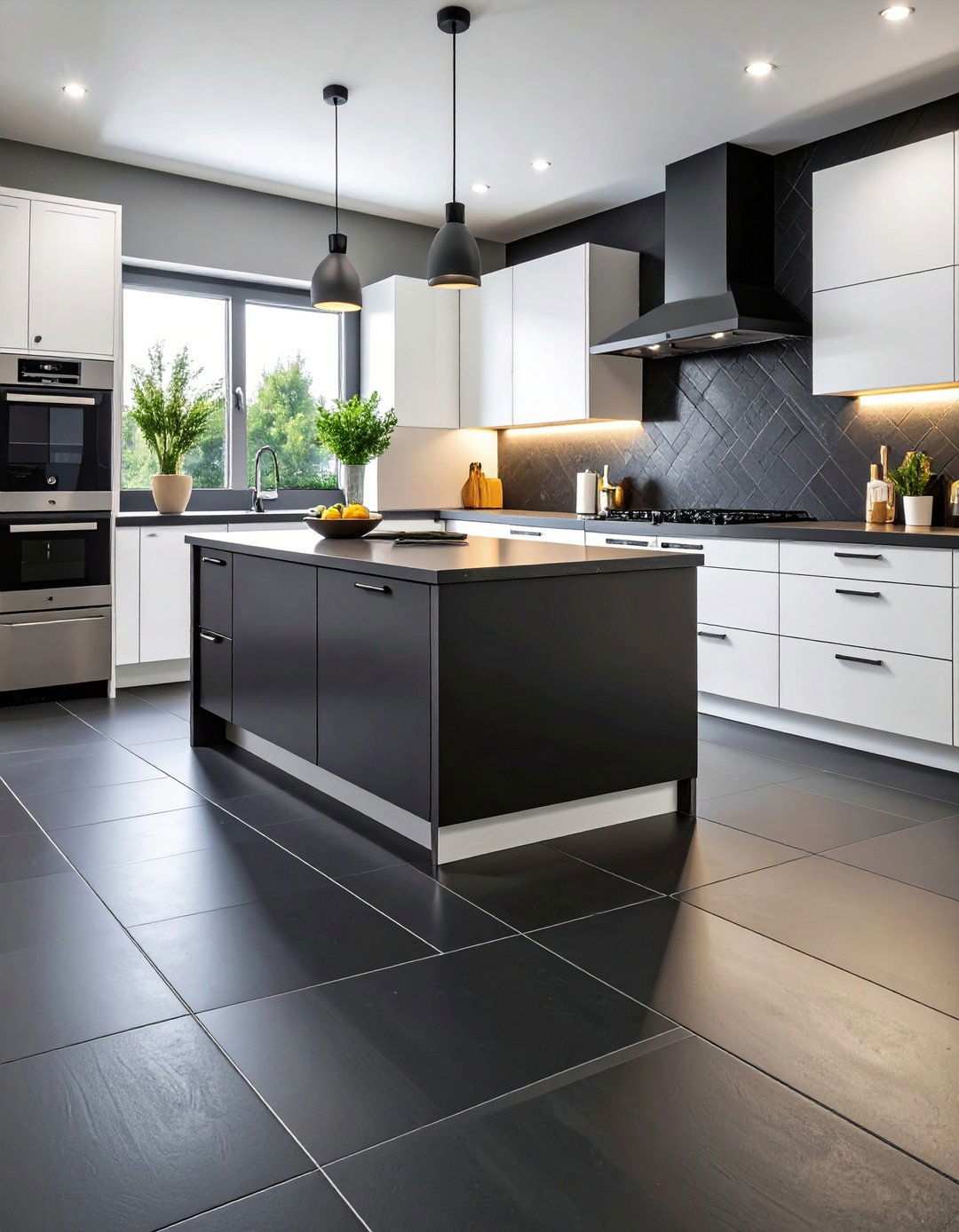
A black kitchen floor adorned with large-format marble exudes high-end sophistication. The stone’s subtle veining adds a touch of artistry, breaking up the darkness and creating a sense of visual interest. To maintain the polished finish and prevent etching from acidic substances, designers recommend specifying rectified edges to minimize grout lines, and sealing the surface annually. Daily care is simpler than expected, requiring only a pH-neutral cleaner and a fluffy dust mop to keep the reflective surface pristine. Pairing the marble floor with matte oak cabinetry allows the gleam to take center stage during evening hours.

As an Amazon Associate I earn from qualifying purchases.
3. Calming Ambiance with Matte Black Porcelain Tiles
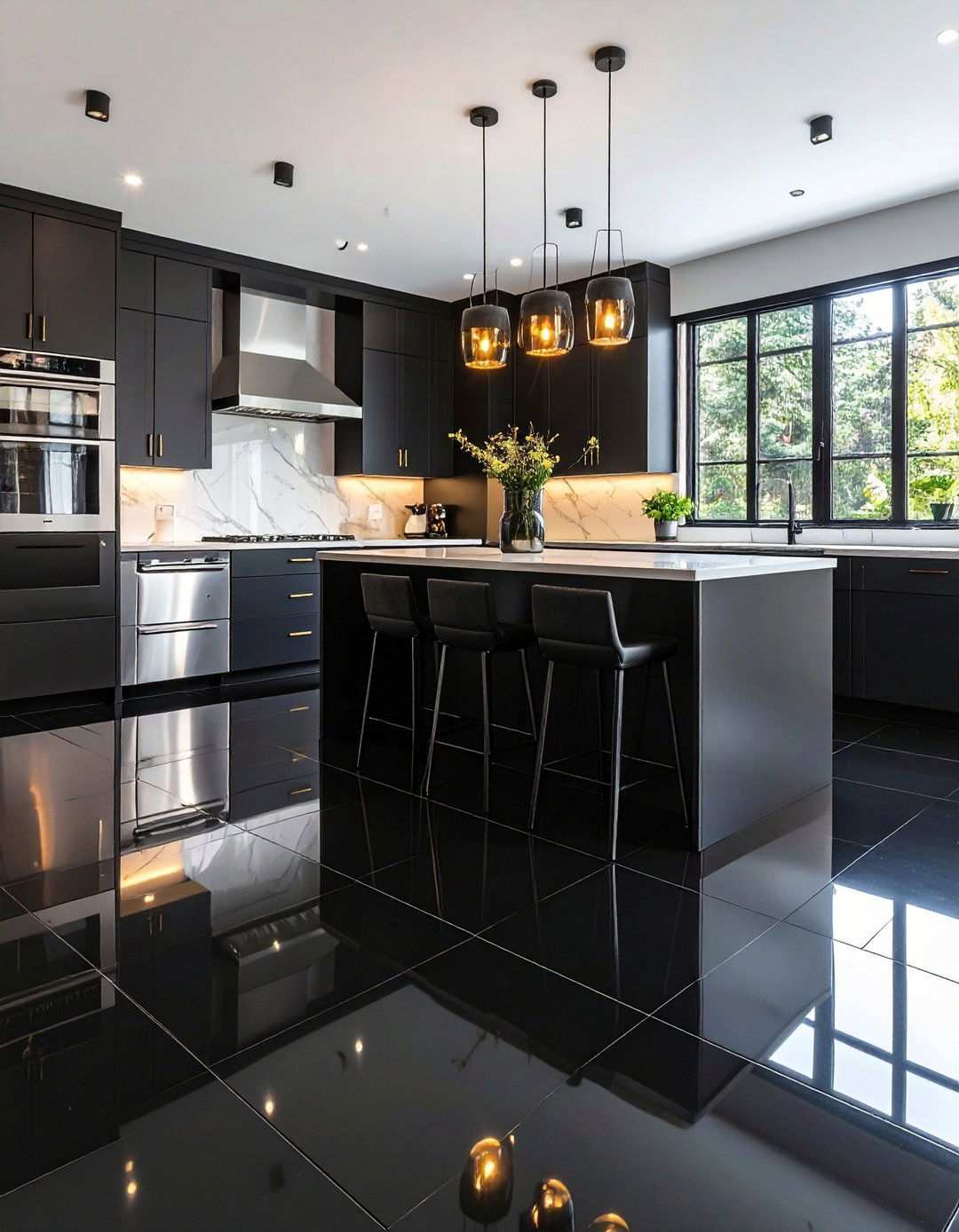
Homeowners seeking a serene atmosphere opt for a matte black kitchen floor composed of affordable porcelain tiles. The micro-texture of the surface disperses reflections, resulting in a visually calm and photo-friendly space that’s ideal for social-media recipe posts. Specialists note that matte porcelain excels in scratch resistance and slip control, making it a safer option when dealing with spills. By installing dark gray grout, the joint lines become nearly imperceptible, creating an uninterrupted slab effect without the expense of stone. Regular vacuuming and damp-mopping with mild detergent are all that’s required to maintain the surface, with no need for sealing or polishing – a perfect solution for busy households.
4. Elevating Ambiance with Character-Rich Black Kitchen Flooring
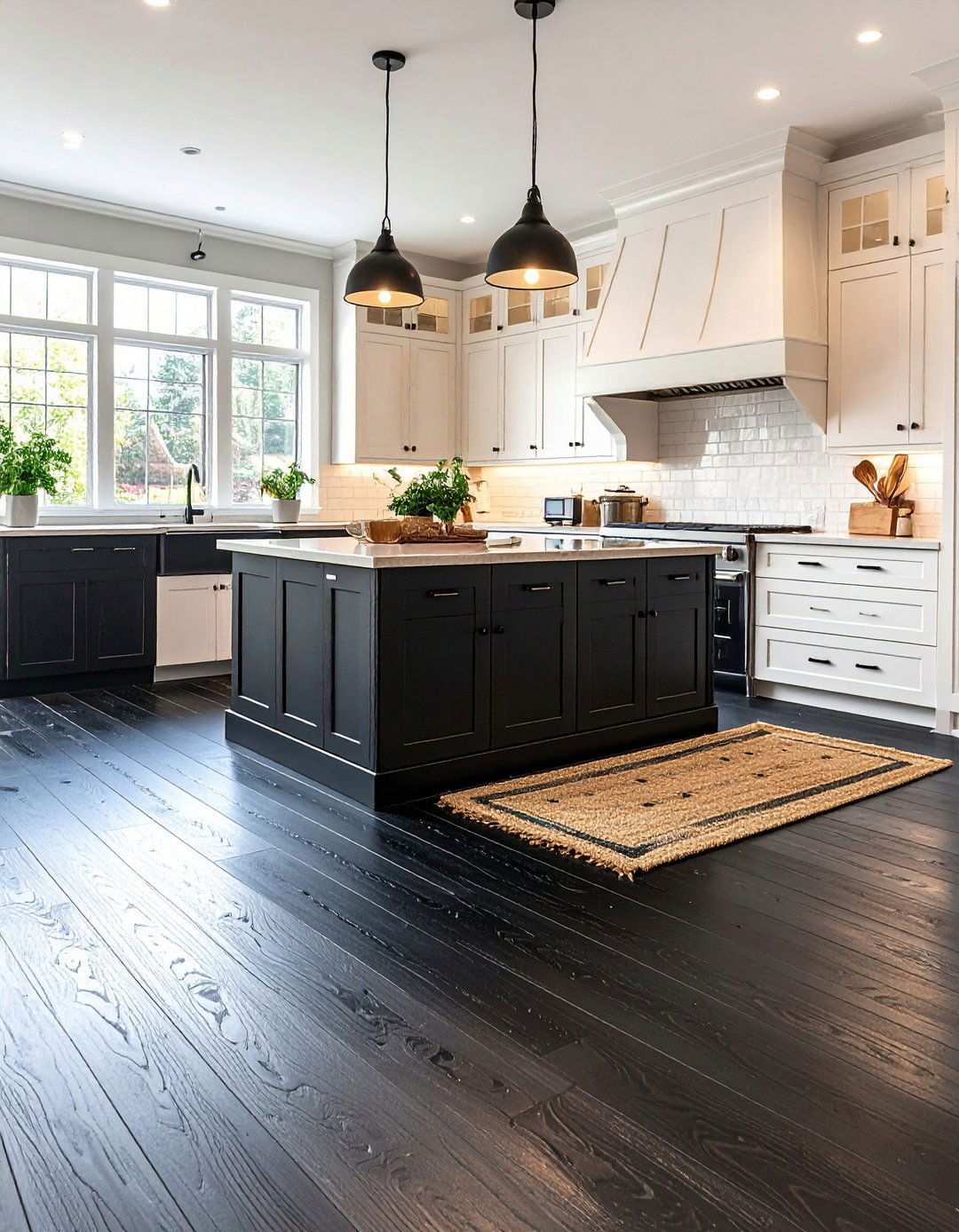
Stained hardwood floors create a captivating black kitchen space that warms the senses while showcasing subtle grain texture even beneath a deep, dark pigment. Flooring experts recommend working with white-oak or maple planks, as their tight grain patterns accept ebony stain evenly without patchiness, and a satin polyurethane topcoat skillfully diffuses glare for a heritage-inspired aesthetic. The natural texture of the wood helps to disguise minor scratches, and a simple buff and recoat can revitalize the finish, eliminating the need for full sanding – a significant advantage for families with pets. To enhance the ambiance further, layering a natural fiber runner, such as jute, along the prep zone not only softens acoustics but also allows the wooden knots to peek through, adding warmth to the space. A regular cleaning routine of monthly vacuuming and occasional use of a hardwood cleaner helps to maintain the patina and keep the flooring rich and vibrant.
5. Rustic Elegance Defined: Charcoal Slate Black Kitchen Flooring
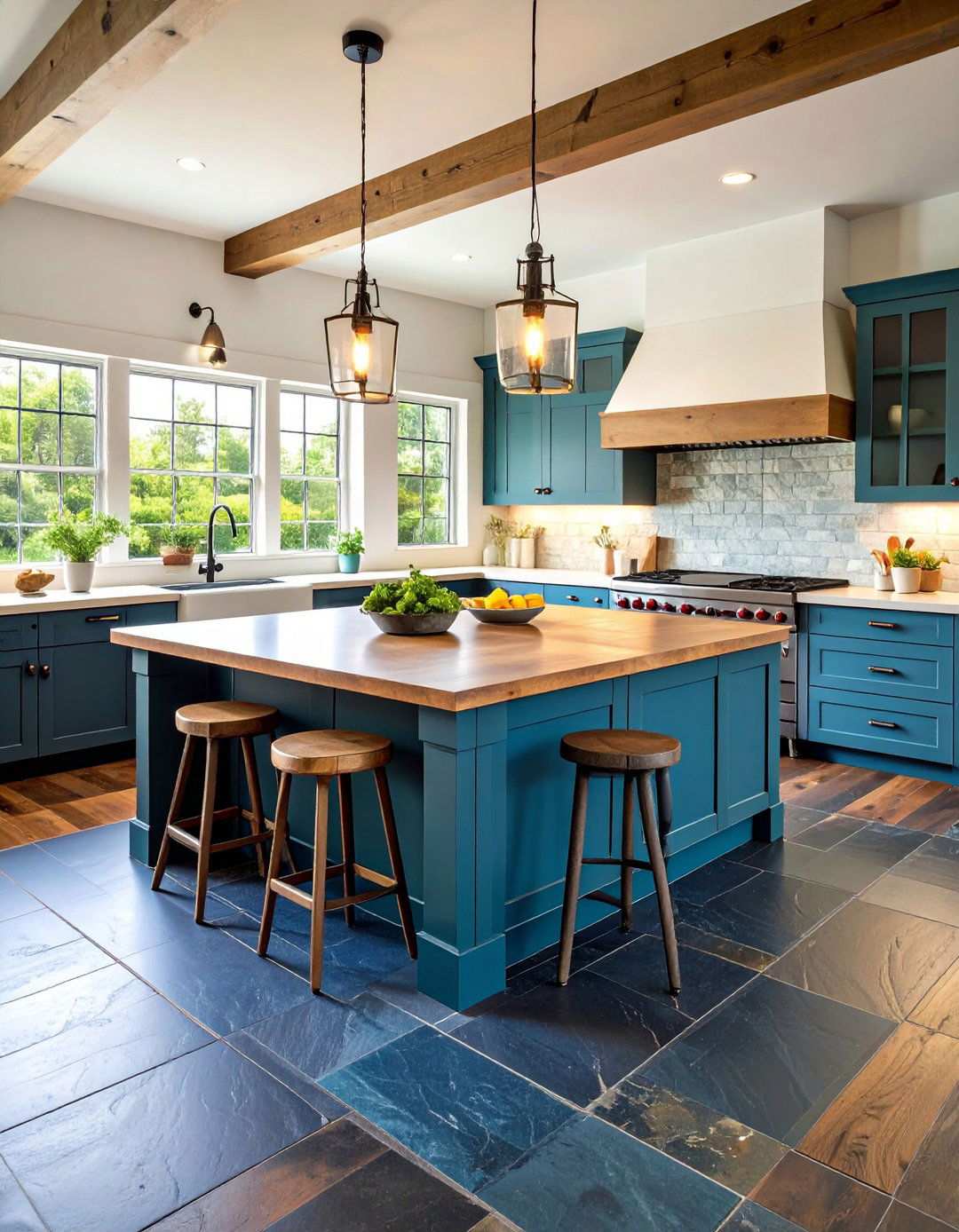
Charcoal slate offers a black kitchen floor that masterfully balances farmhouse charm with modern appeal, thanks to its unique finely cleft texture. Designers praise the slate’s soft color variation, which ranges from ink to graphite and smoky blue, effectively disguising crumbs and adding organic movement to even the most minimalist cabinetry. When paired with limewashed walls or butcher-block counters, the slate’s earthy matte surface appears hand-hewn, yet it also accepts honed finishes for a smoother sweep. To maintain the slate’s integrity, it’s essential to seal the surface annually to resist oil splatters and mop with stone-safe soap; the dense material can shrug off dropped cast-iron pans with ease. For added warmth, consider installing radiant heat coils below the slate, amplifying its natural conductivity and keeping toes warm on winter mornings.
6. Industrial-Chic Black Kitchen Flooring: Poured in Polished Concrete
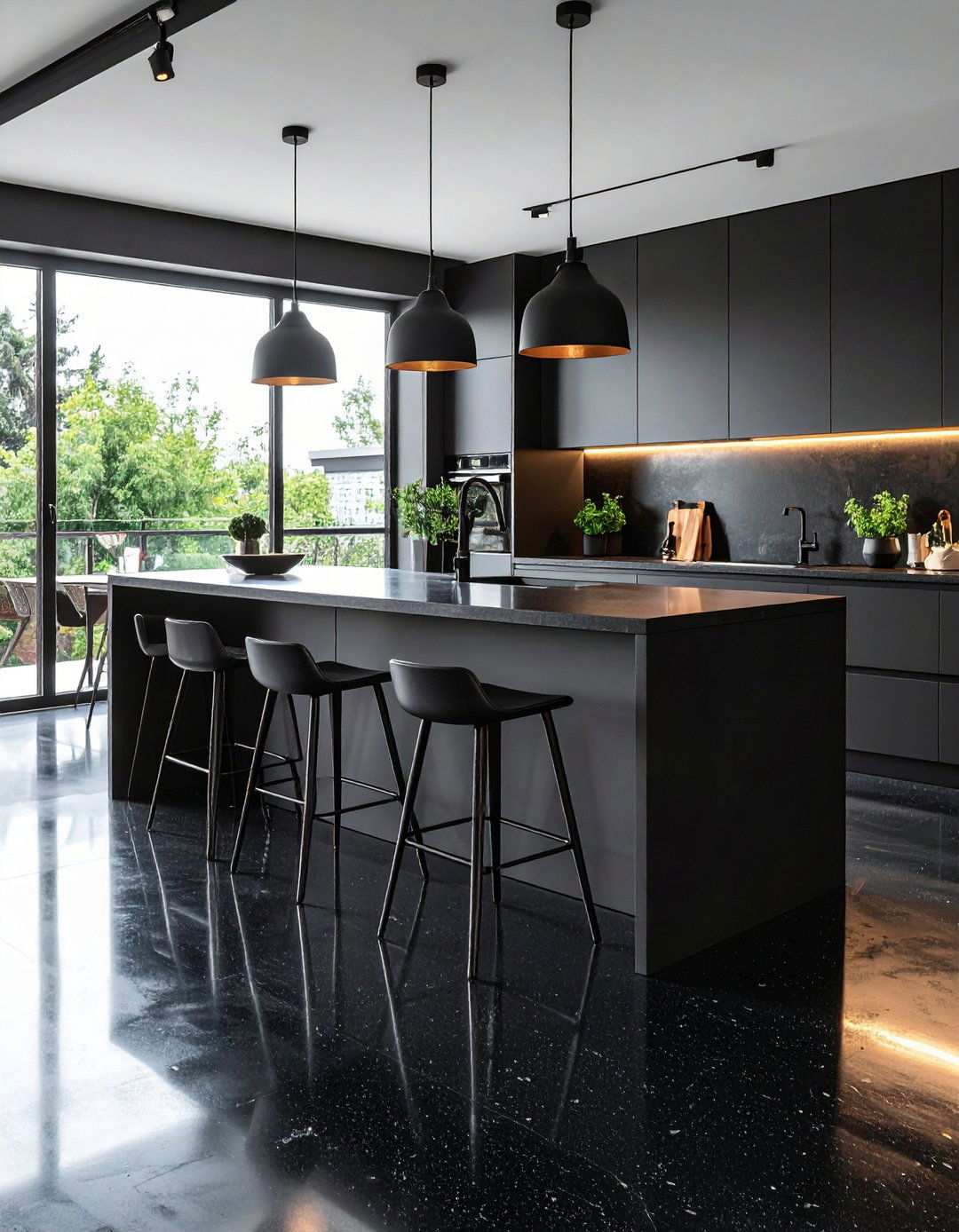
An industrial-inspired black kitchen floor poured in polished concrete offers a durable and budget-friendly solution that only improves in appearance with time, thanks to its high-gloss finish. Comprehensive testing has demonstrated that polished concrete slabs can withstand heavy foot traffic, knife drops, and even pet claws while requiring nothing more than a damp microfiber pad for cleanup. To enhance the concrete’s resistance to staining, a penetrating densifier makes it denser, while the reflective sheen helps to bounce daylight around the space, counterbalancing dark cabinetry. Additionally, the top layer can be tinted with black oxide during pouring or worked into the grind for a more subtle charcoal effect. For optimal comfort, consider pairing the polished concrete with radiant heat coils to prevent the space from feeling chilly.
7. Whimsical Black Kitchen Flooring: Speckled Terrazzo with a Twist
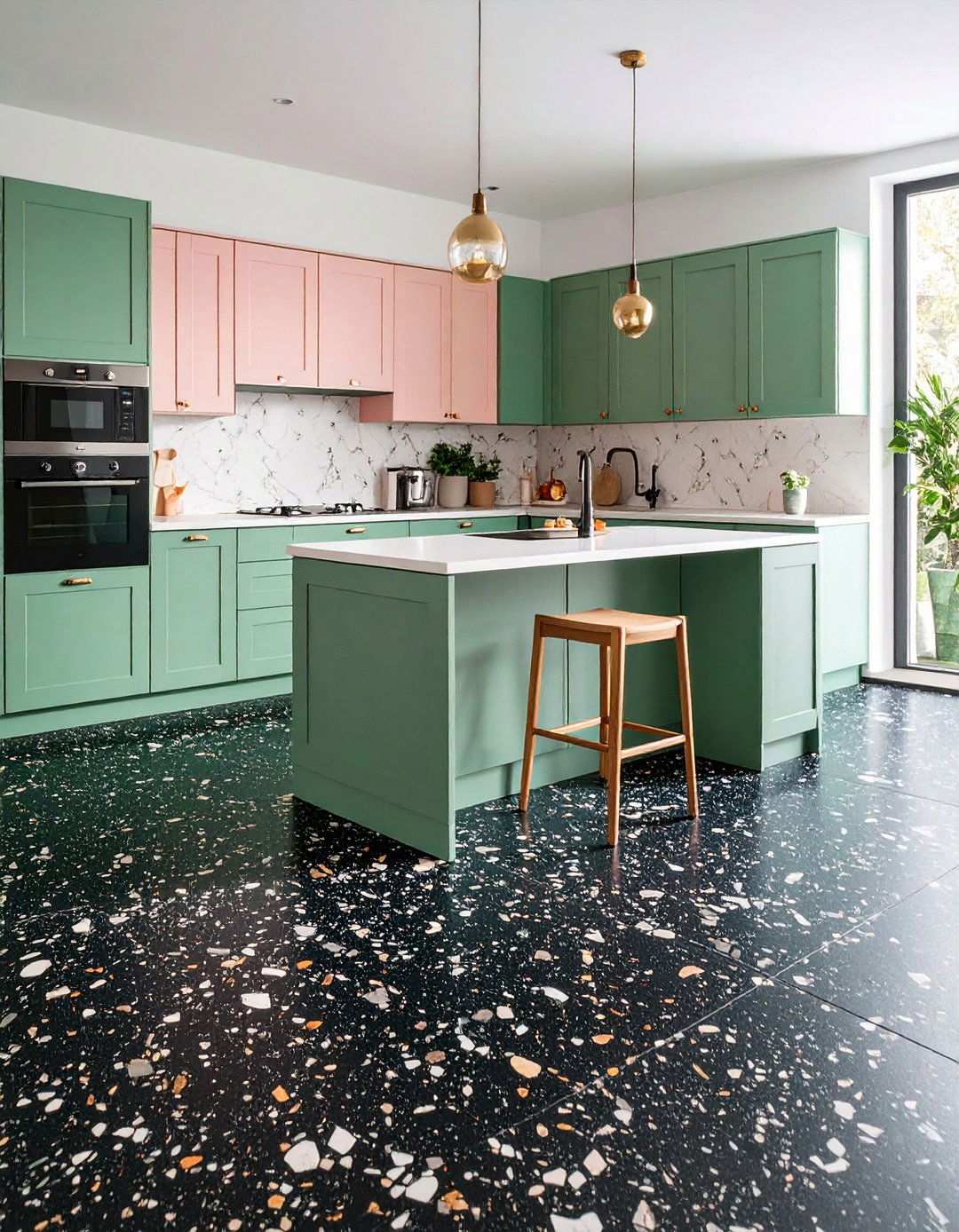
A terrazzo black kitchen floor cleverly scatters light-colored marble or quartz chips through dark cement or epoxy, creating a playful and eye-catching design that hides crumbs with ease. Trend forecasters highlight terrazzo’s resurgence due to its versatility, which allows for pre-cast tiles, poured-on-site applications, or even low-VOC epoxy for retrofit projects. The speckling effectively softens the darkness, making the floor pair effortlessly with colorful cabinets – think sage, blush, or clay – without feeling busy. To ensure the flooring maintains its integrity, seal the surface twice during the first year to close any capillaries, and then refresh annually; many homeowners enjoy decades of service thanks to the aggregate’s inherent hardness and reparability factor.
8. Timeless Checkerboard Black Kitchen Floor Styling
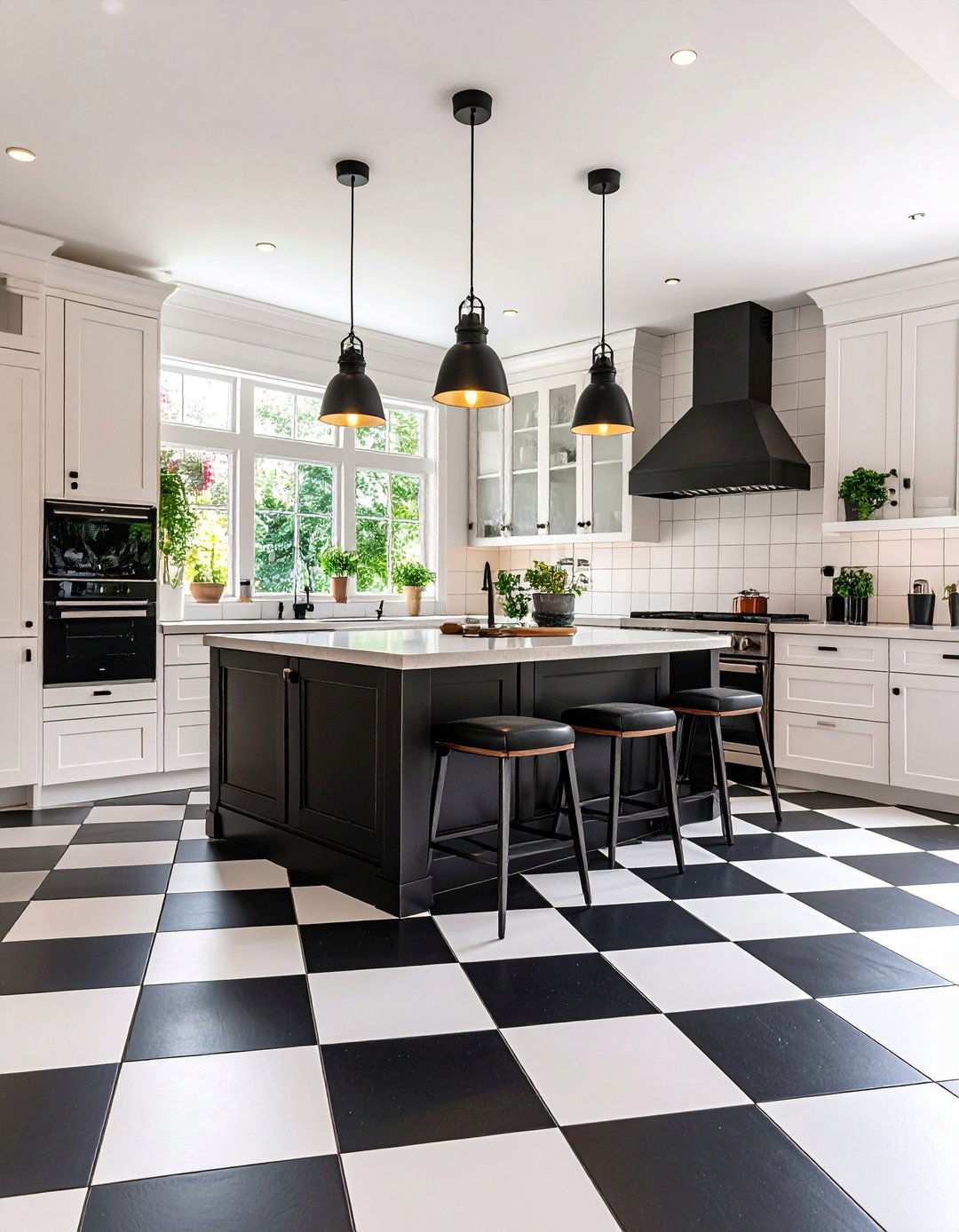
A classic checkerboard pattern in black kitchen floors exudes the charm of Parisian bistros, effortlessly defining the cooking zone and visually expanding narrow galley layouts by drawing the eye from side to side. When it comes to composition, designers suggest using 12- to 18-inch tiles for a refined look or oversized 24-inch slabs for a more contemporary twist. The clever design choice of black and white squares achieves strong contrast without overpowering the entire space, making it an excellent option for north-facing rooms. Additionally, using charcoal grout minimizes maintenance, while a honed finish enhances slip resistance under wet conditions.
9. Dynamic Herringbone Black Kitchen Floor Layout
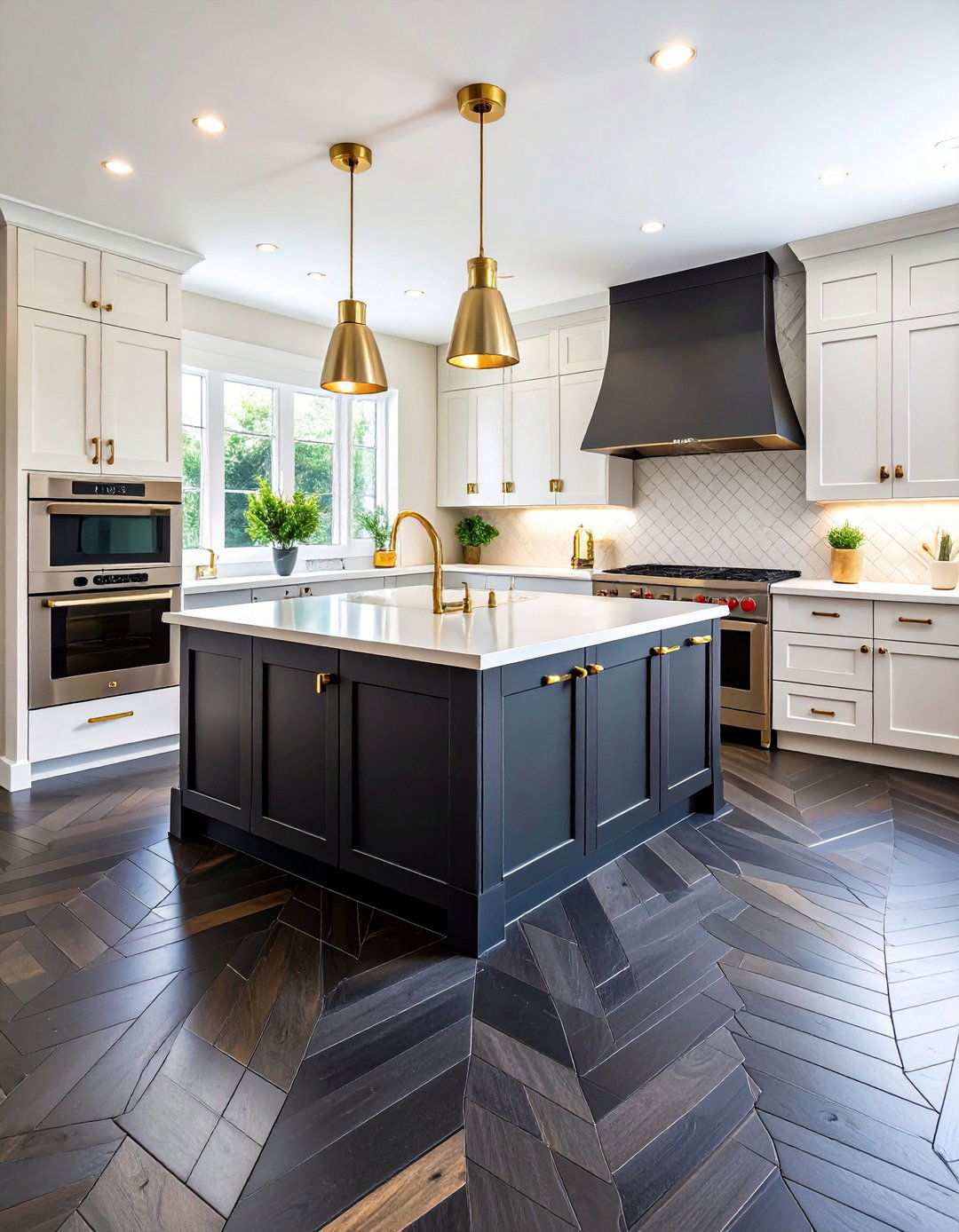
A black kitchen floor laid in a herringbone pattern creates a sense of movement even when the room remains static. The intricate zigzag geometry not only adds an air of craftsmanship but also cleverly conceals scuffs that occur along frequently used paths. To simplify installation, consider using prefabricated porcelain herringbone mosaics on mesh backers; simply press the sheets into thin-set and grout with charcoal to erase joints. Experts advise choosing a matte finish to direct the eye towards the pattern, while under-tile membranes absorb minor subfloor movement, preventing hairline cracks. Pairing this design with shaker cabinets and brass hardware offers an elevated twist on tradition.
10. Soft Eco-Friendly Cork Black Kitchen Floor
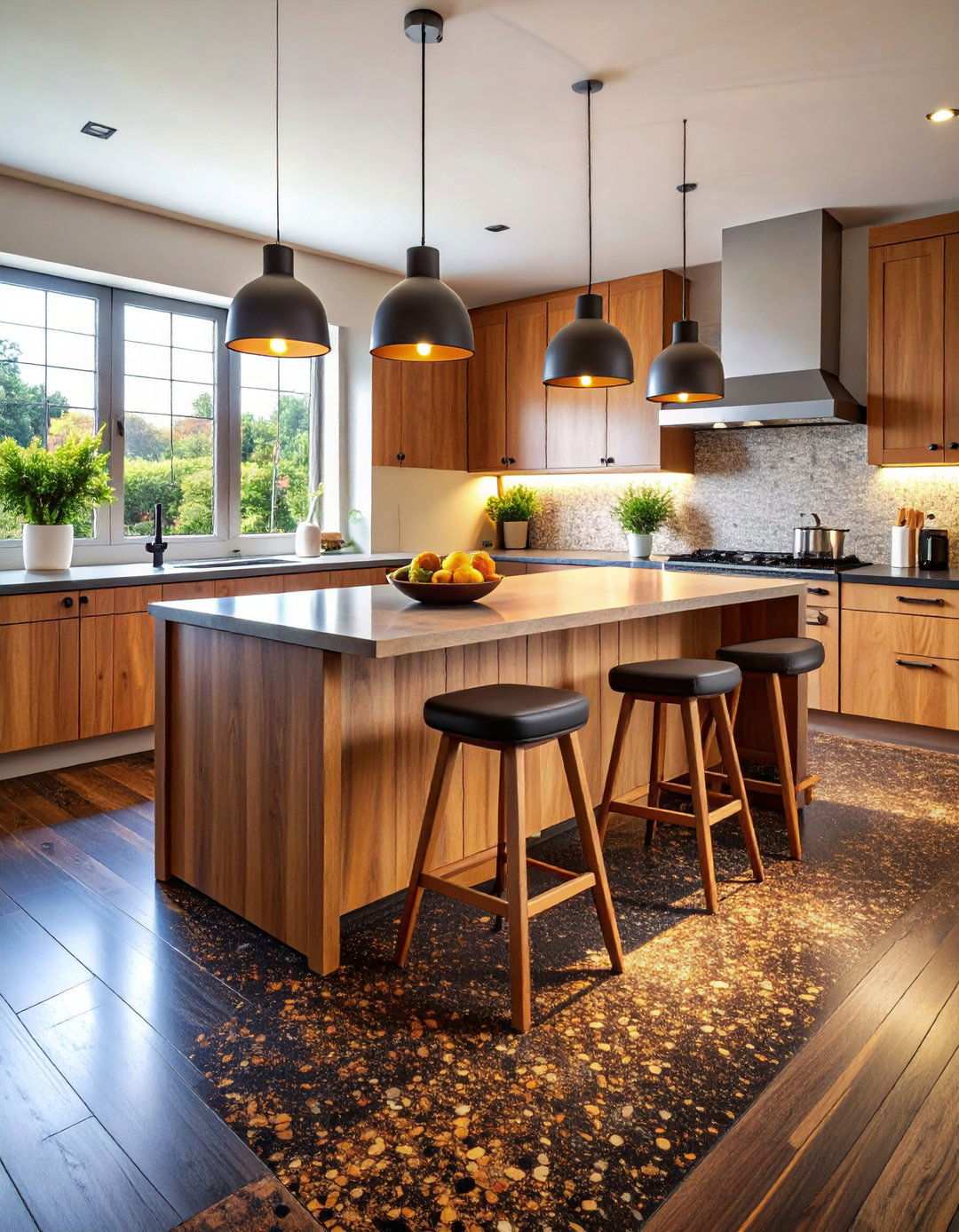
For home chefs who spend hours standing, a black kitchen floor made from cork is a blessing. This eco-friendly material is harvested without harming trees, and its microscopic air pockets provide a gentle cushioning effect, reducing leg fatigue. Moreover, natural resins repel insects and minor spills, ensuring a clean and healthy cooking environment. Manufacturers now offer deep-dyed, UV-cured finishes that lock pigment into the surface, so the rich charcoal tone resists fading even under intense skylights. To maintain the floor’s moisture defense, seal it with water-based polyurethane every five to seven years, and place felt pads under stools to prevent dents. If a section does scratch, you can sand and touch up just that tile instead of replacing the entire floor.
11. Sustainable Marmoleum Black Kitchen Floor Resilience
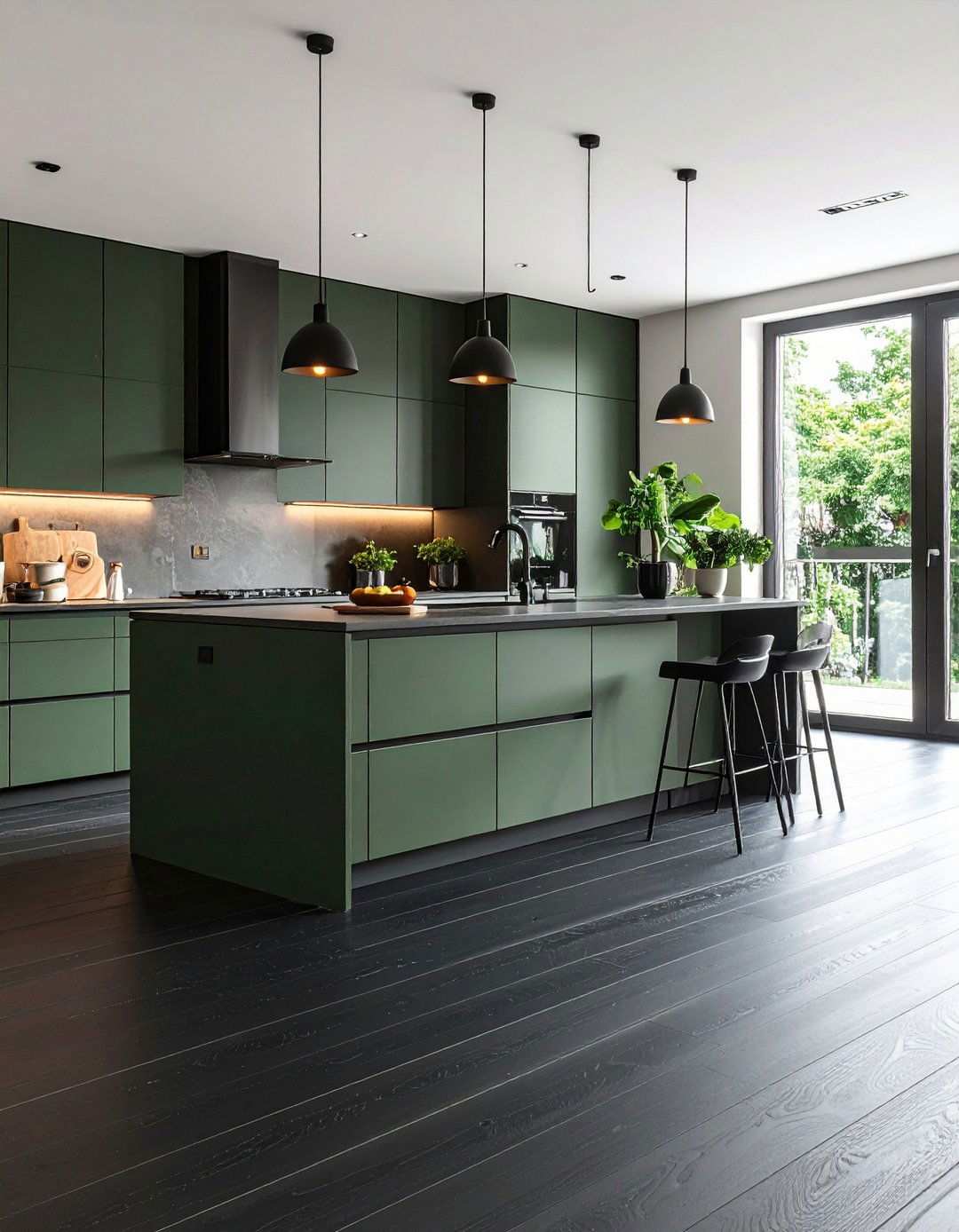
Marmoleum, the modern incarnation of linoleum, yields a black kitchen floor that boasts an impressive climate-positive profile: linseed oil, wood flour, and jute naturally lock more carbon than they emit during manufacture. This eco-friendly material’s antistatic properties make it an excellent choice for allergy sufferers, as dust and pet hair sweep away in seconds. When it comes to installation, choose click-together planks for a weekend project or sheet goods for a watertight membrane under dishwashers. Although the matte surface hides micro-scratches, it can be refreshed with a specialty polish after several years, reducing landfill waste. Furthermore, the silky texture is warm underfoot, especially when installed over quiet-walk acoustic underlayment.
12. Elevating Safety in Home Kitchens with Black Rubber Flooring
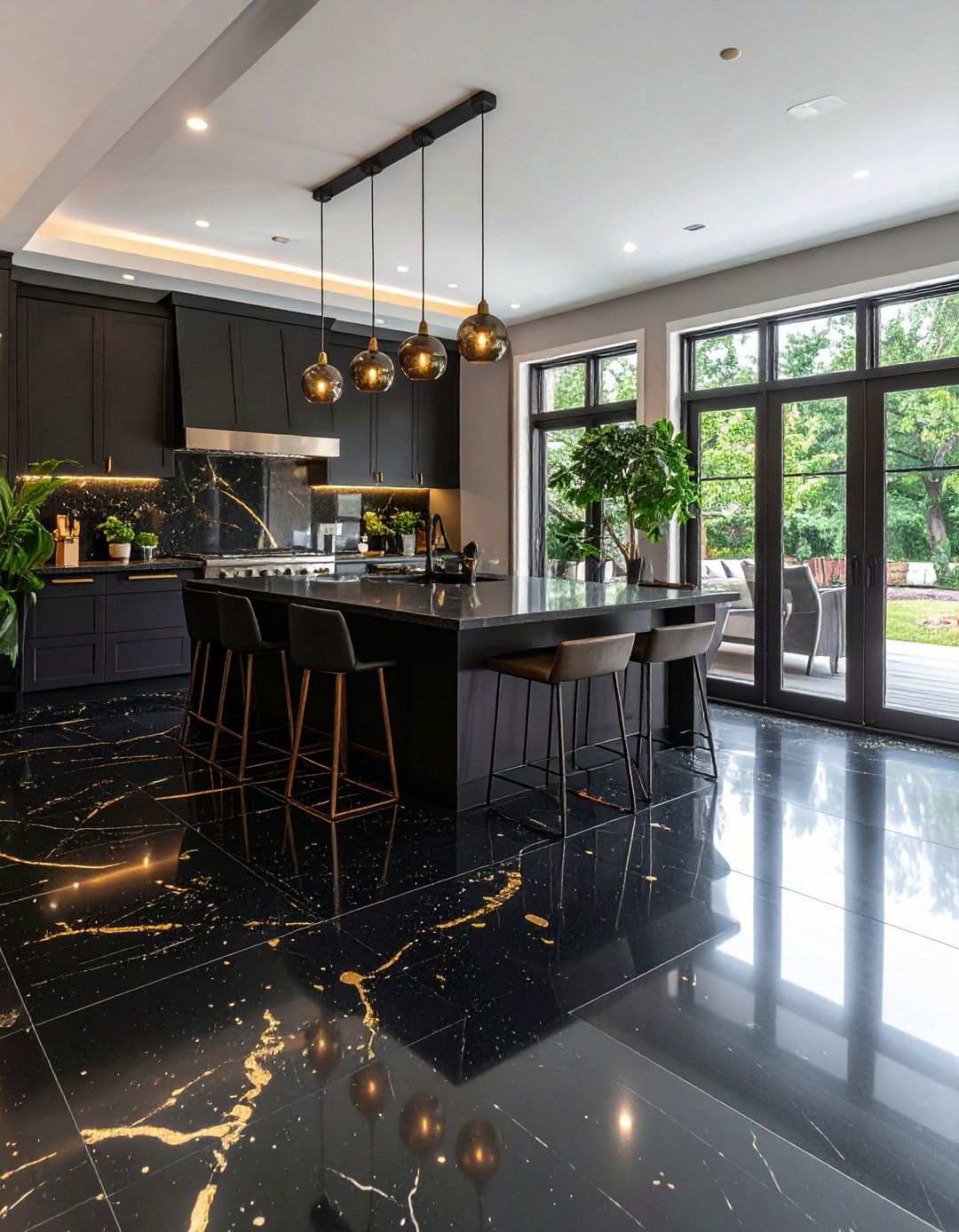
For households with young children, pets, or frequent social gatherings, a black kitchen floor made from commercial-grade rubber provides unmatched traction. This material’s texturing, often featuring coin or diamond patterns, directs spilled liquids towards drains, ensuring compliance with various safety regulations. Furthermore, the shock-absorbing qualities of rubber reduce the likelihood of dropped-glass breakage, and its slight flexibility minimizes strain on knees during extended meal preparation. Many manufacturers now incorporate subtle marbling into their products, which not only conceals fingerprints and smudges but also offers superior cleanability compared to industrial mats. To maintain this floor, simply vacuum loose debris, followed by a gentle wipe-down with a neutral-pH cleaner—no waxing is needed. For open-plan spaces, consider ordering rubber flooring in large 10-foot-wide sheets to minimize seams under kitchen islands.
13. Adding Geometric Flair with Hexagonal Black Kitchen Floor Tiles
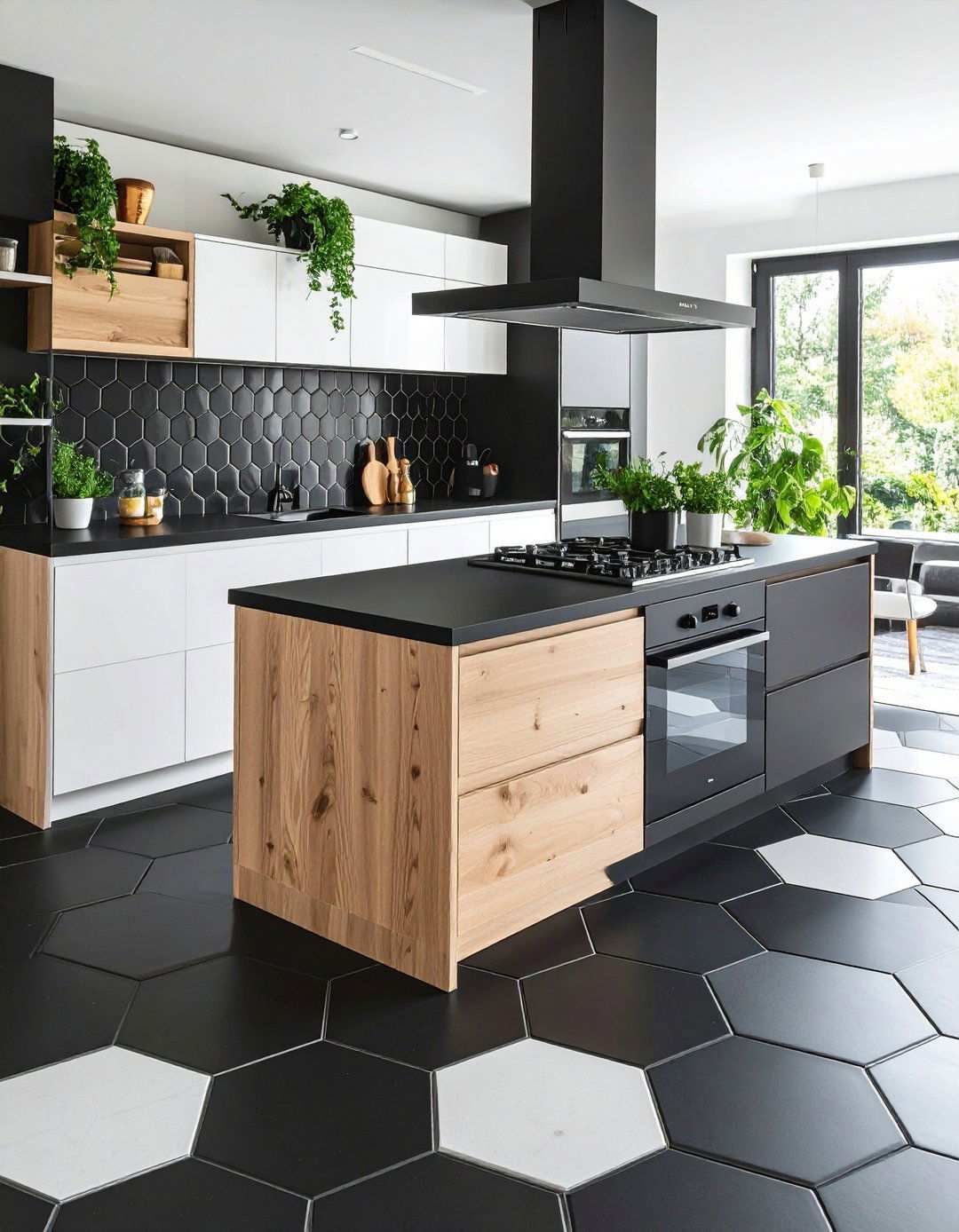
Hexagonal tiles can transform a black kitchen floor into a visually striking, geometric masterpiece reminiscent of honeycomb structures or basalt columns. Whether you opt for 4-inch porcelain tiles with a subtle texture or larger 10-inch encaustic cement tiles with a graphic emphasis, the hexagonal shape naturally breaks up joint lines, creating the illusion of a continuous stone surface. Designers suggest mixing different sheens, such as matte, satin, and gloss, within the same color palette to catch light in unexpected ways without introducing additional color. Large rooms benefit from laying the hexagonal tiles point-to-point across the width, which visually extends the floor plan. A penetrating sealer finished with beeswax enhances the inky tone and adds depth to the design.
14. Creating a Spa-like Experience with Penny-Round Black Kitchen Floor Mosaic
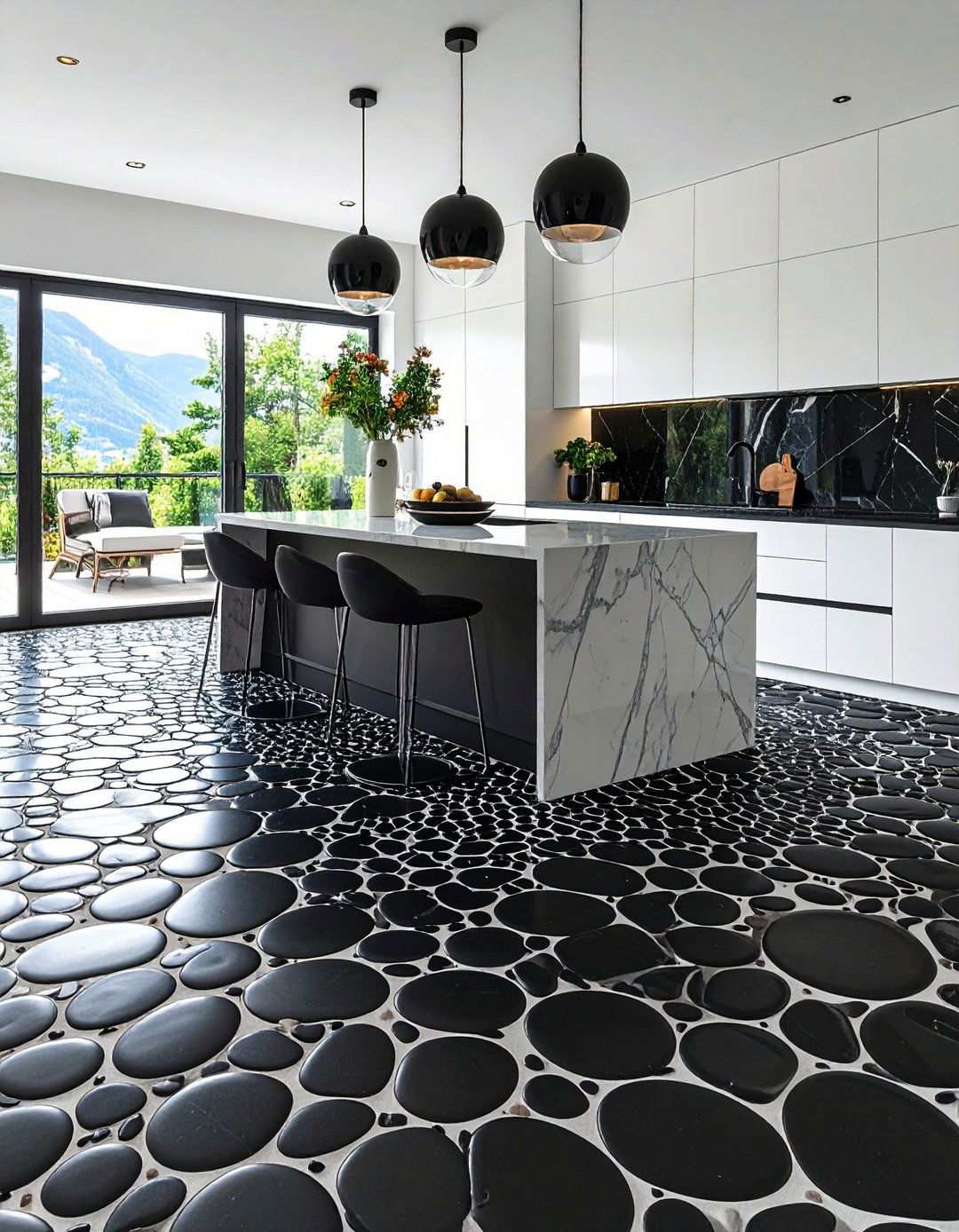
Penny-round mosaics can cover a black kitchen floor with thousands of tiny, circular tiles that provide a spa-like sensory experience under bare feet. The small size of each tile creates a natural grout network that adds slip resistance, allowing chefs to move freely from the sink to the stove without worrying about splashes. Choose a honed basalt or matte porcelain tile for understated elegance, or polished marble for a more reflective, glamorous look. Designers often extend the same penny-round pattern up the island waterfall to blur the line between floor and furniture. Maintenance is simple: vacuum weekly, followed by a gentle cleaning with a stone-safe product and a squeegee; the tiny domes drain quickly after busy meals.
15. Affordable, Style-Conscious Black Kitchen Flooring Solutions for Renters
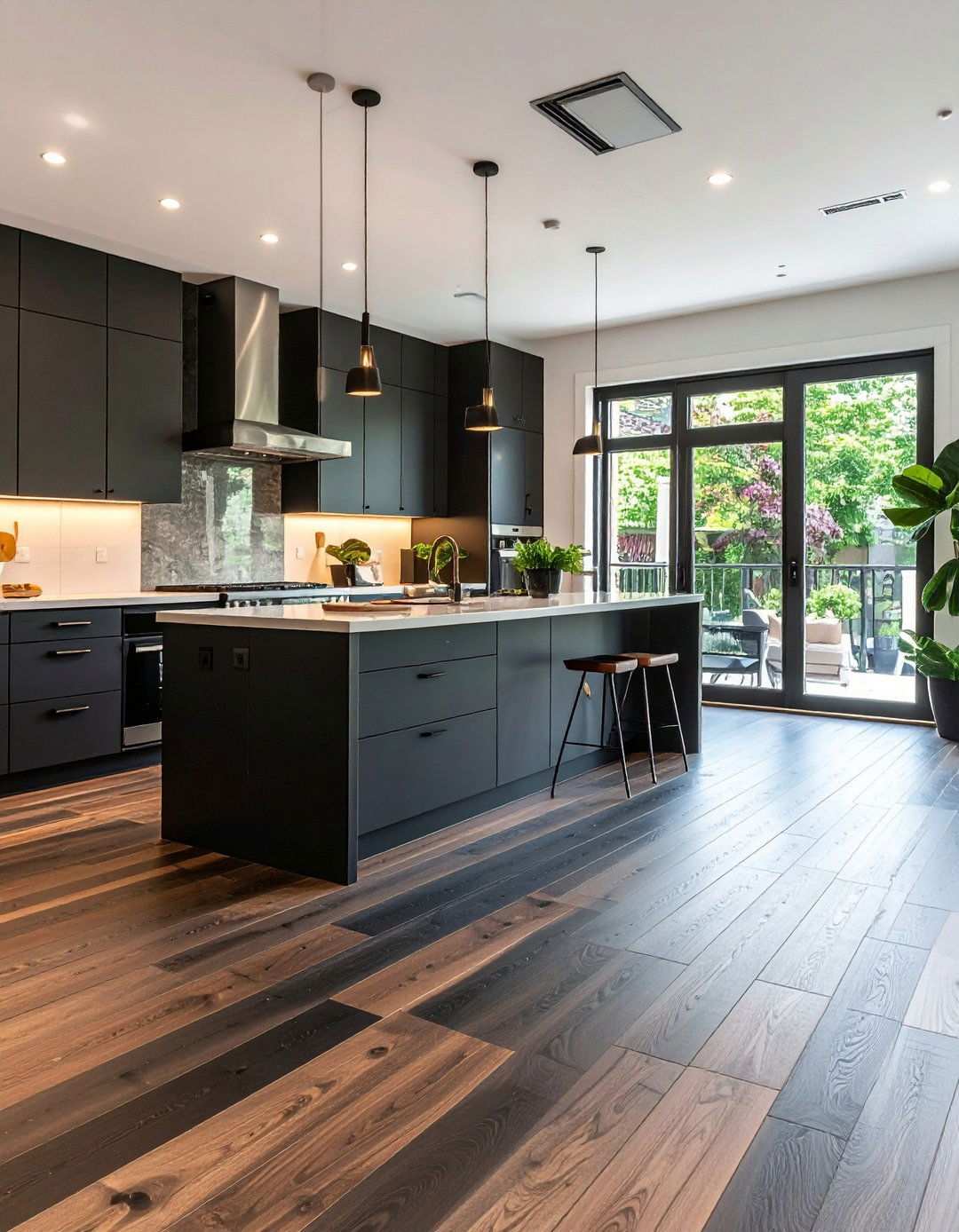
Renters seeking to enhance their kitchen’s style without making long-term commitments can install a black kitchen floor using peel-and-stick vinyl planks in a single afternoon. Modern adhesives provide a strong, tight grip on clean subfloors, yet release easily with gentle heat when it’s time to move, leaving the underlying surface intact. Manufacturers print convincing wood or slate textures in deep ebony, creating a seamless appearance once the pattern repeats. The 5-millimeter core of the vinyl planks cushions footsteps and reduces noise, making them suitable for upstairs flats, while a factory-applied sealer resists standing water for up to 24 hours, providing valuable time to clean spills. Regular maintenance involves sweeping the floor daily and occasional mopping with warm water; avoiding harsh chemicals will help preserve the photographic film finish over time.
16. Slate-Look Luxury Vinyl Tile Black Kitchen Floor Design
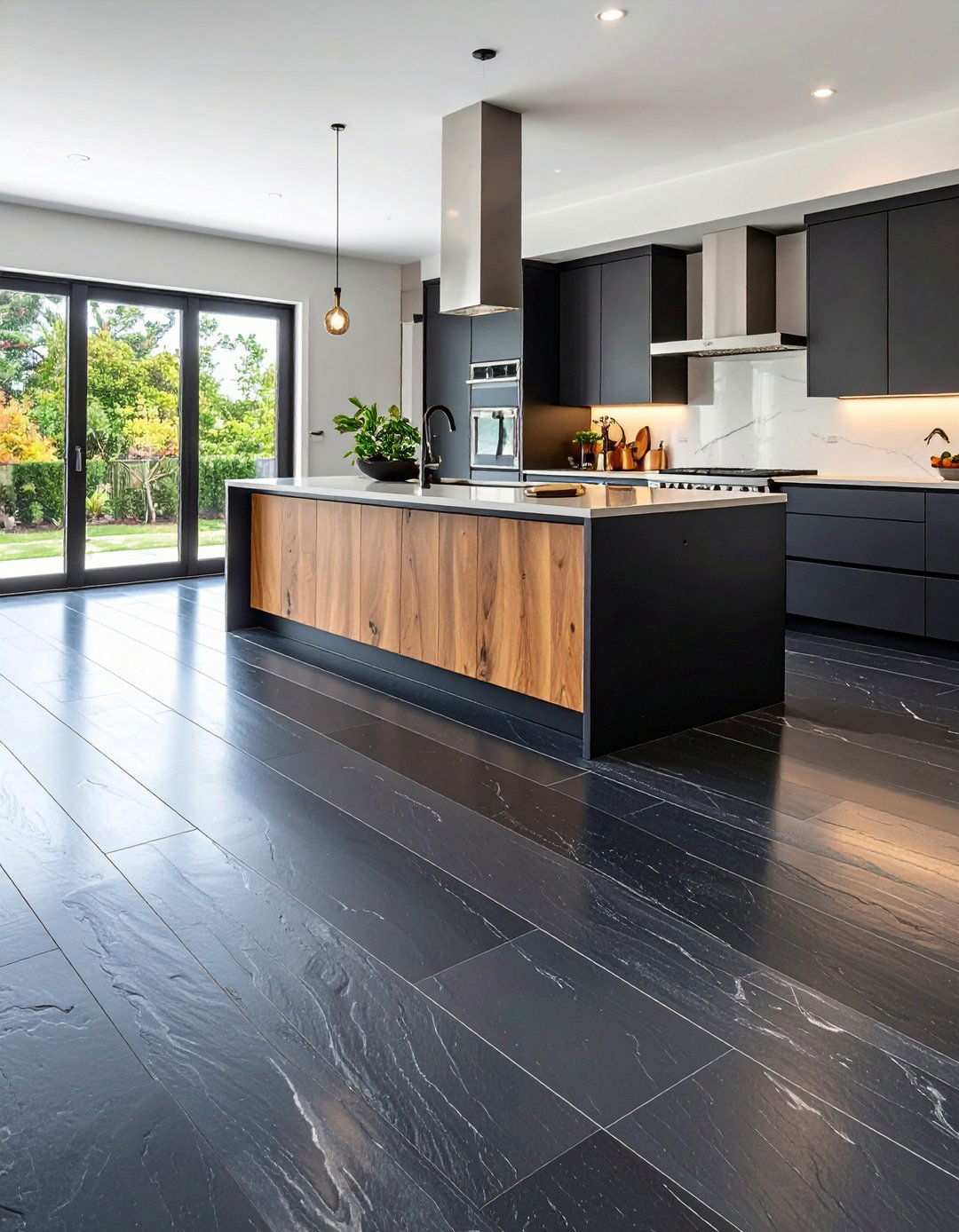
Slate-look luxury vinyl tile (LVT) provides the perfect blend of sophistication and practicality in a black kitchen floor design. By fusing core layers under heat, this 100 percent waterproof plank boasts an impressive resilience against melting ice from the freezer drawer. The embossed-in-register texturing technique creates microscopic grooves that perfectly align with the printed slate face, creating an illusion that convinces both the eyes and fingertips. Thanks to its floating click system installation, you can easily lay LVT over existing ceramic with minimal disruption, even trimming doors with ease. Designers love to create a dramatic effect by using extra-long 48-inch planks, laid staggered to mimic the natural quarry clefts, which also visually elongates small kitchen spaces. Maintaining this look is a breeze, requiring only occasional vacuuming and spot-cleaning, eliminating the need for sealing, special pads, or hefty budgets.
17. Glass-Inlaid Black Kitchen Floor Accents: Where Elegance Meets Function
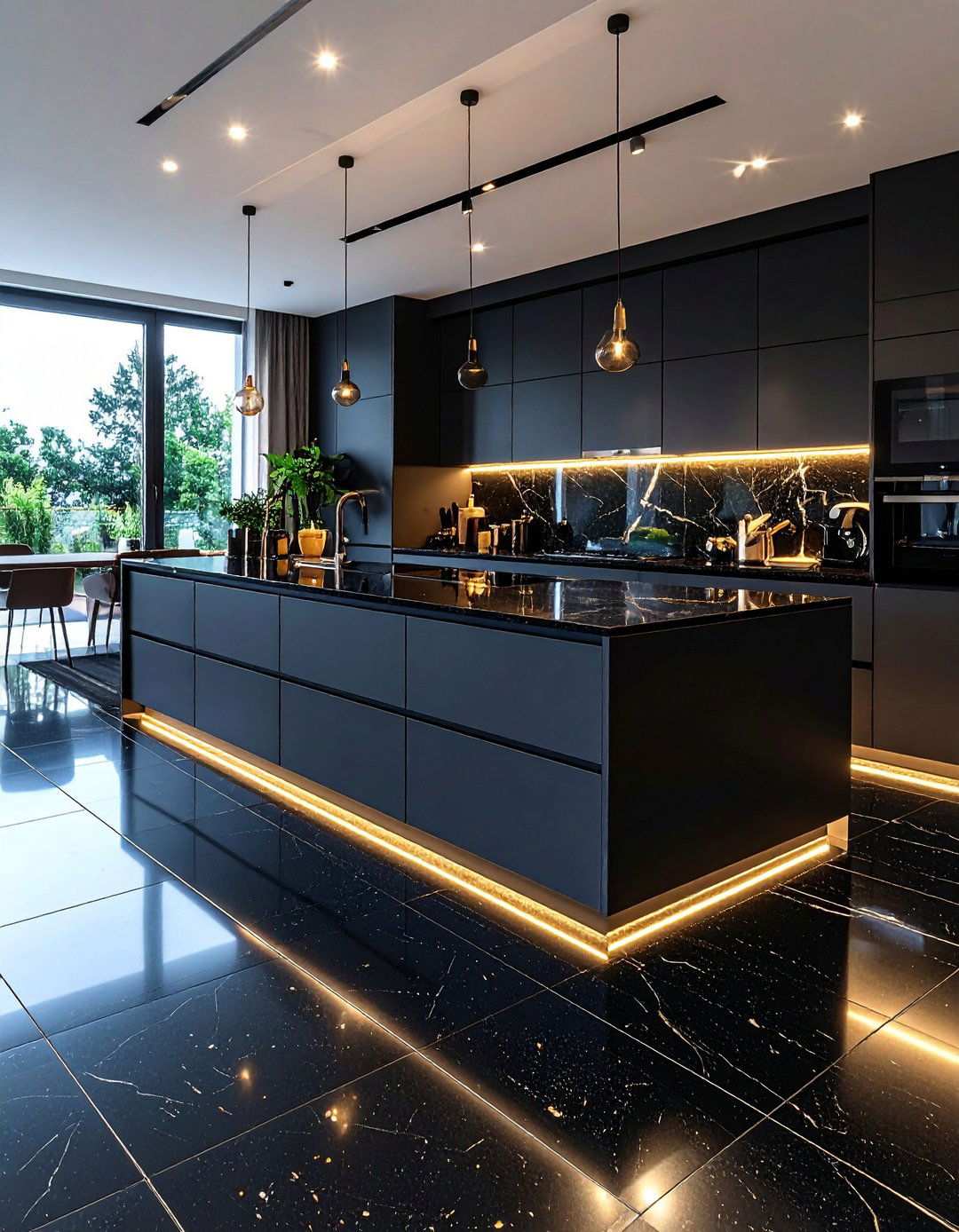
Homeowners seeking a touch of understated glamour can achieve it by incorporating glass-inlaid tiles into their black kitchen floor design. These tiles feature strips of metallic or smoked mirror glass factory-embedded into porcelain field pieces, creating a seamless installation process that mirrors standard tile work. However, the real magic happens when you walk by, as the flashes of light from the glass facets amplify the impact of under-cabinet LEDs, transforming midnight snack trips into a delightful experience. To avoid a disco-like ambiance, designers recommend using the glass inlay sparingly, perhaps as a border around the island or as an accent strip. For maintenance, it’s essential to sweep with a soft broom and avoid using abrasive pads that might micro-scratch the glass facets, preserving its mirror-like gleam for years to come.
18. Timeless Encaustic Black Kitchen Floor Patterns: A Heritage Revival
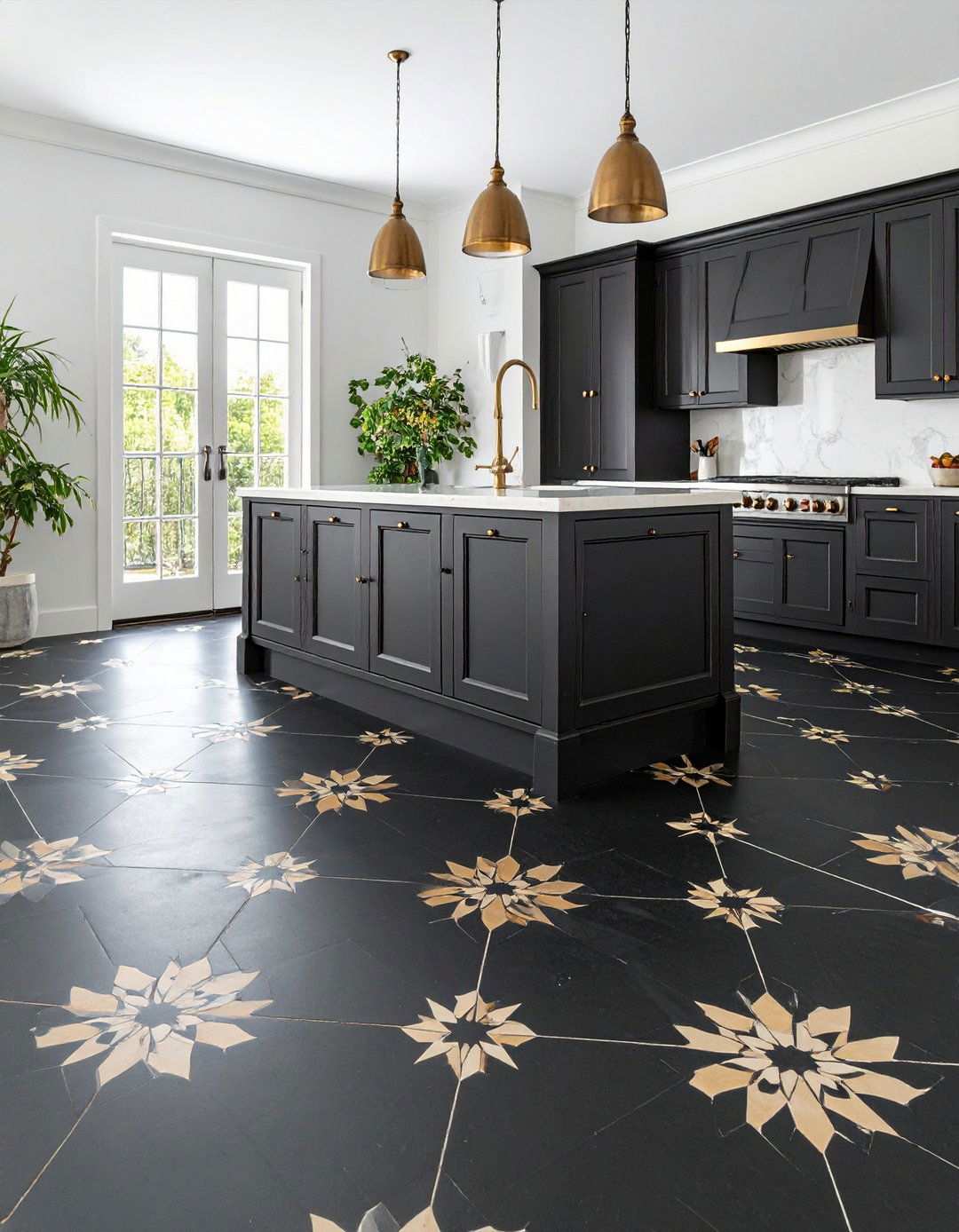
Encaustic cement tiles offer a unique opportunity to infuse a black kitchen floor with a sense of traditional heritage, even in modern builds. By pressing pigmented clay into patterned molds and hydraulically compressing it, the design layer becomes several millimeters deep, allowing for refinishing decades later. Many contemporary makers provide monochrome palettes that cater to small spaces, featuring crisp yet subtle chalky ivory lines against midnight backgrounds. However, it’s crucial to seal the porous cement with a penetrating sealer, followed by a beeswax topcoat that not only enriches the color but also adds a gentle sheen. When it comes to cleaning, be sure to use pH-neutral soap-flakes, avoiding acidic cleaners that might compromise the tile’s integrity.
19. Elegant Contrast: Light Cabinet & Black Kitchen Floor Harmony
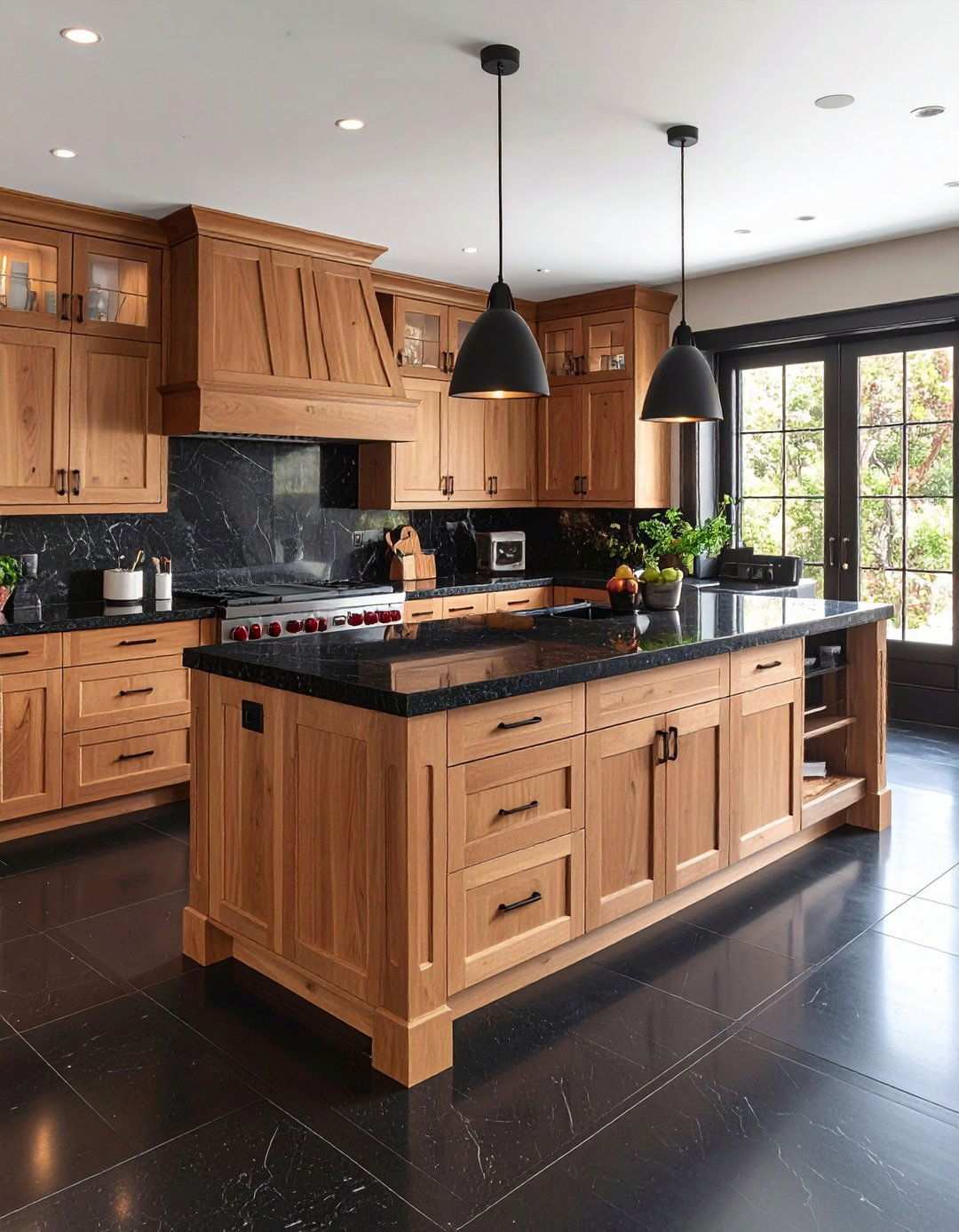
Pairing a black kitchen floor with light, furniture-style cabinetry is an effortless way to create a harmonious and inviting space. Designs featuring pale oak slab fronts or creamy rift-sawn ash cabinetry have gained popularity in recent celebrity remodels, and for good reason – the contrast highlights the grain patterns and makes hardware gleam like jewelry against the matte backdrop. To further enhance this look, designers suggest introducing texture through fluted drawer faces and hand-turned bar stools, keeping the space tactile and engaging. Adding warm white LEDs below cabinets will bounce light onto the inky surface, creating a beautiful visual effect.
20. Embracing Warmth: Black Heated Stone Kitchen Floors
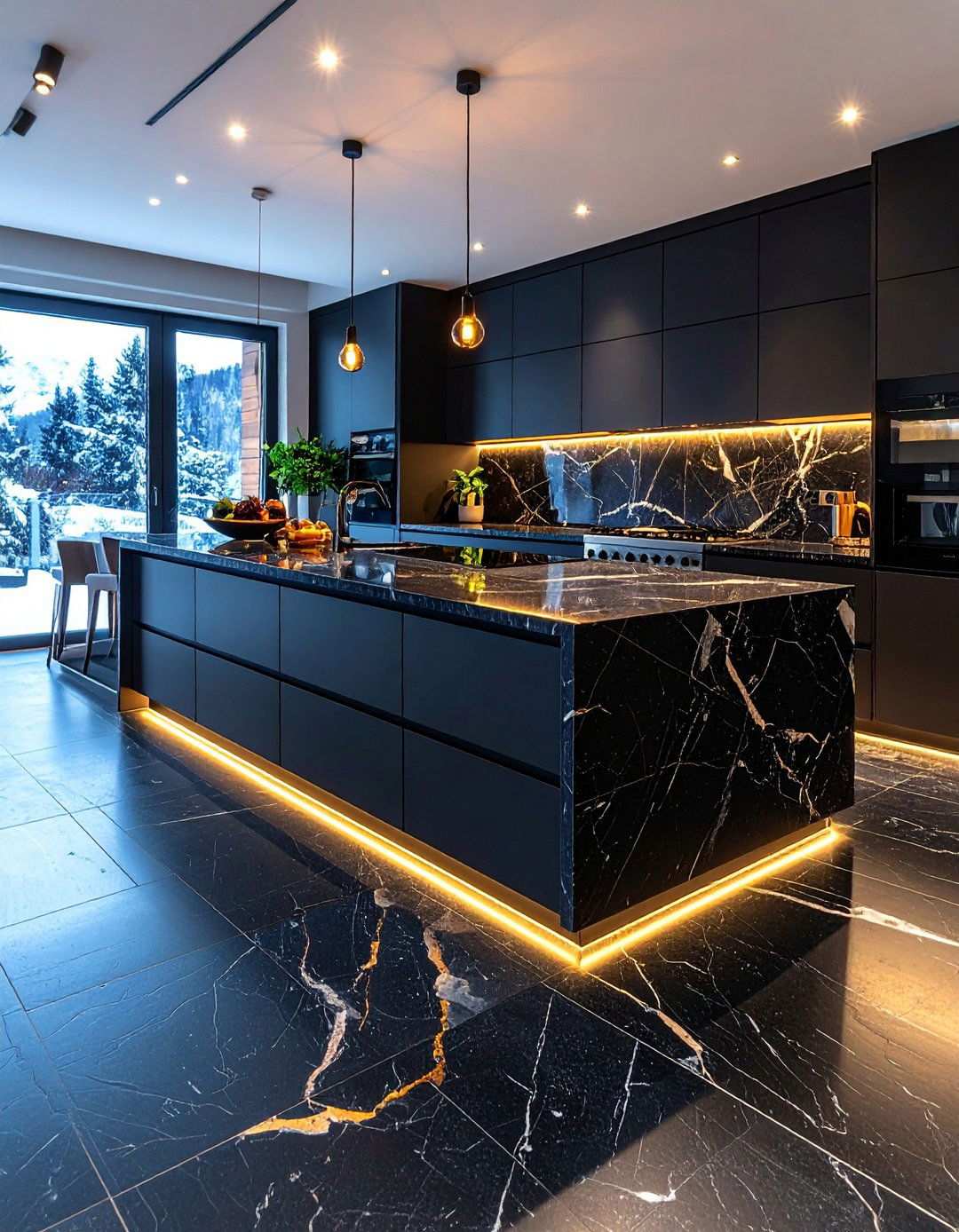
Bring your kitchen comfort to the next level with a black heated stone floor, perfect for January mornings when socks are optional. The thermal mass of natural stone allows for gentle radiant heating, ensuring that warmth is released steadily for hours, keeping energy bills in check. According to experts, the even heat distribution also eliminates cold spots commonly found beneath tall kitchen islands, making marathon baking sessions more enjoyable. Furthermore, radiant heating systems reduce dust circulation since they don’t circulate air, providing relief for those with allergies. By utilizing a programmable thermostat, you can have the tiles warmed to a cozy 25 °C just before breakfast, relying on stored heat until lunchtime.