1. Elevate Your Garden with Pallet Vertical Herb Gardens
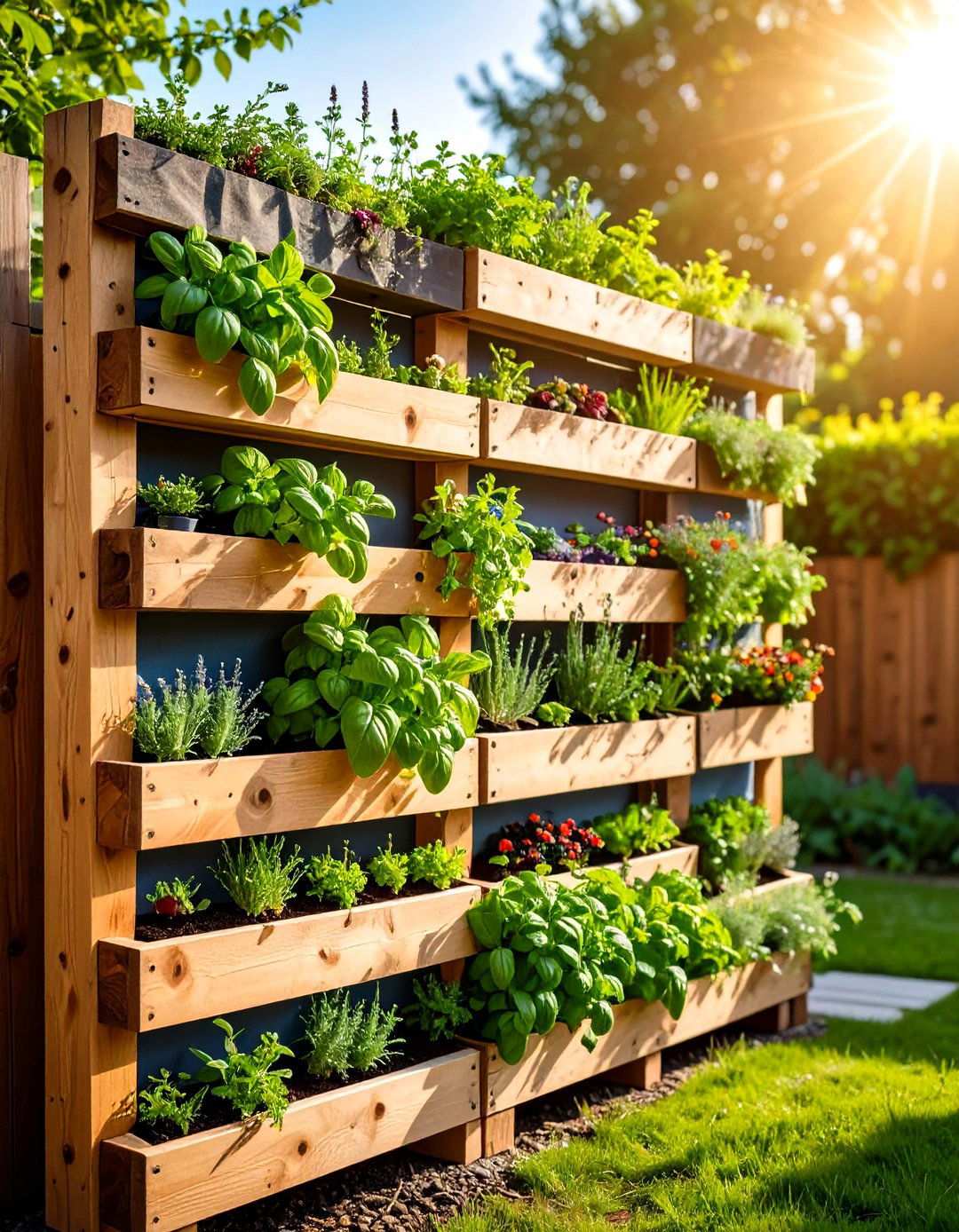
Repurpose wooden pallets into functional and visually appealing gardening solutions that breathe new life into your outdoor space. Originally designed for shipping, these versatile structures have transcended their original purpose to become creative gardening solutions that seamlessly integrate sustainability with practicality. By repurposing discarded materials, you can create custom growing spaces that maximize space, improve plant organization, and add a touch of rustic charm to your garden. Whether you have a compact balcony or a spacious backyard, these innovative ideas will empower you to make the most of every available inch while reducing waste and promoting eco-friendliness.
2. Harvest Fresh Strawberries with Pallet Tower Planters
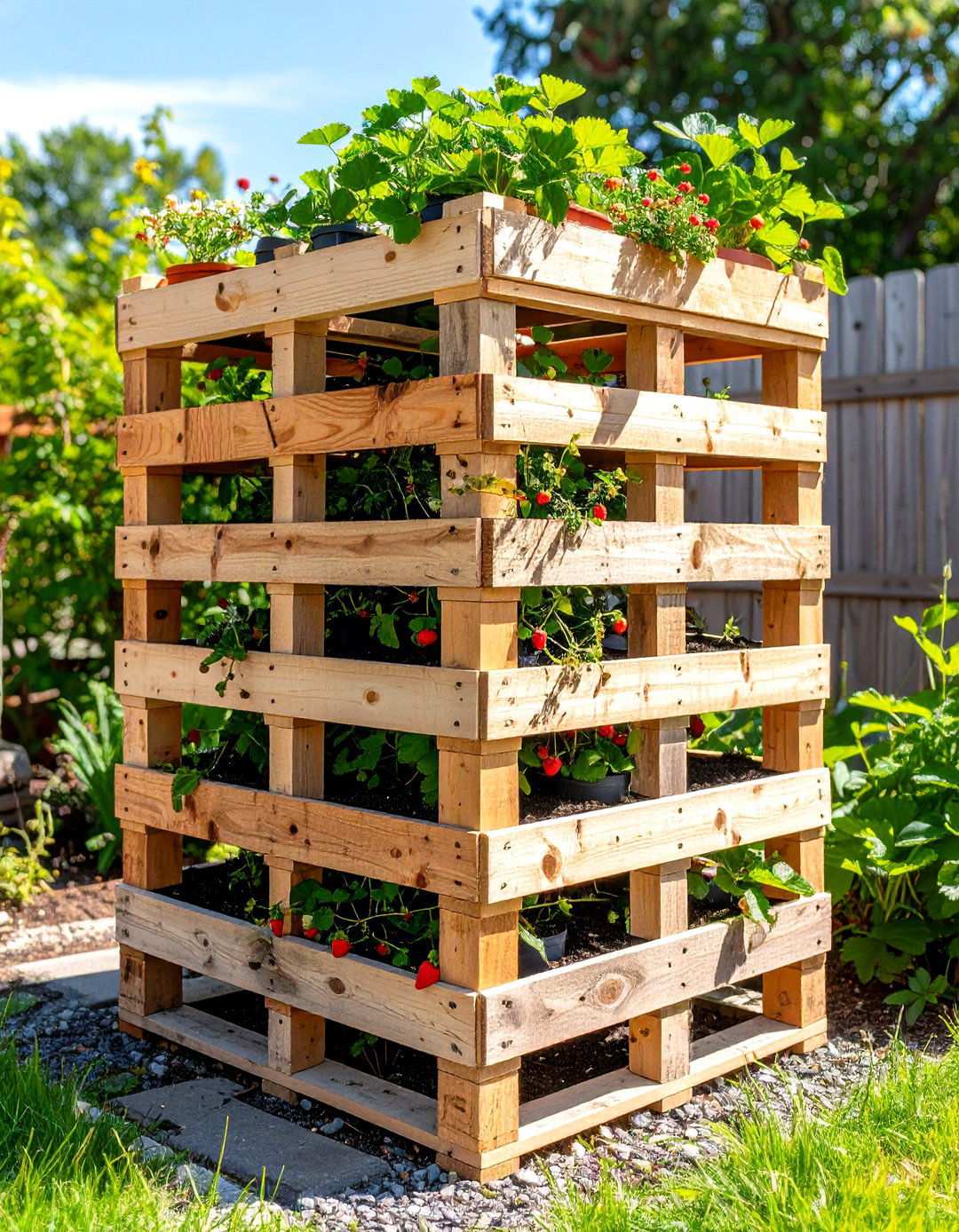
Unlock the full potential of your garden with a multi-level pallet tower planter that offers the perfect conditions for strawberry cultivation. By stacking and securing pallets, filling them with quality soil, and planting strawberries in the slats, you can create a space-saving design that maximizes yield, improves air circulation, and streamlines harvesting. The natural wood barriers between rows prevent weeds from encroaching, while distinct planting zones promote healthy plant growth. Position your tower in a spot that receives at least six hours of direct sunlight daily, and consider installing a drip irrigation system to ensure consistent moisture throughout the growing season. This elevated structure not only protects your crop from pests but also makes picking berries a comfortable and effortless experience.

As an Amazon Associate I earn from qualifying purchases.
3. Pallet Compost Bin System: A Rotating Composting Solution
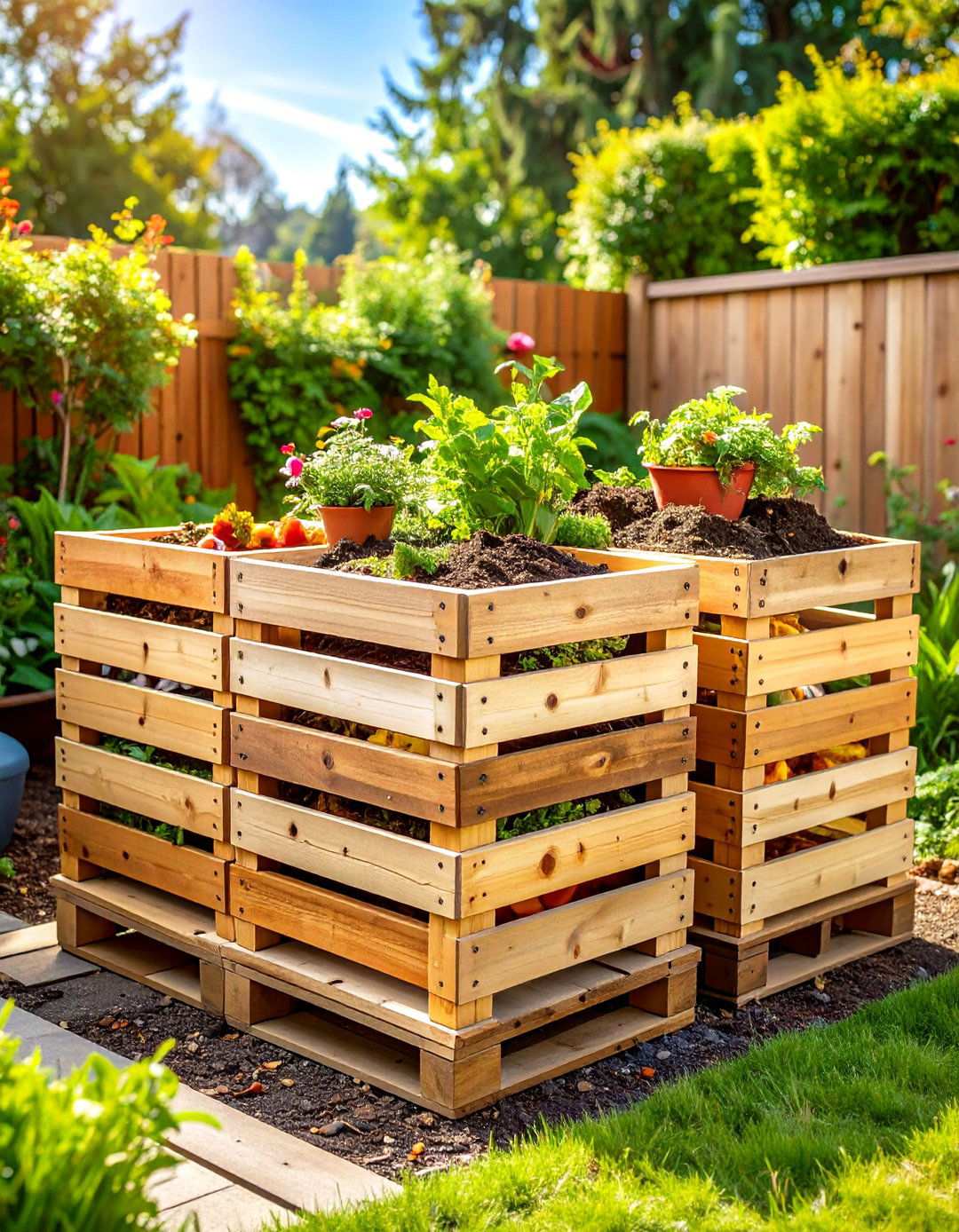
Construct a three-section compost system using seven pallets to efficiently turn kitchen scraps and yard waste into nutrient-rich garden gold. This modular design features separate sections for fresh materials, decomposing matter, and finished compost, ensuring a continuous supply of compost in various stages of decomposition. The pallets’ wooden slats provide excellent airflow, facilitating proper decomposition while keeping materials contained. Secure the pallets together with heavy-duty zip ties for quick assembly or use screws for a more permanent installation. Position the bin in a partially shaded area with easy access to your kitchen and garden, allowing the natural wood appearance to blend seamlessly into your landscape design.
4. Pallet Raised Garden Beds: Elevated Growing Solutions
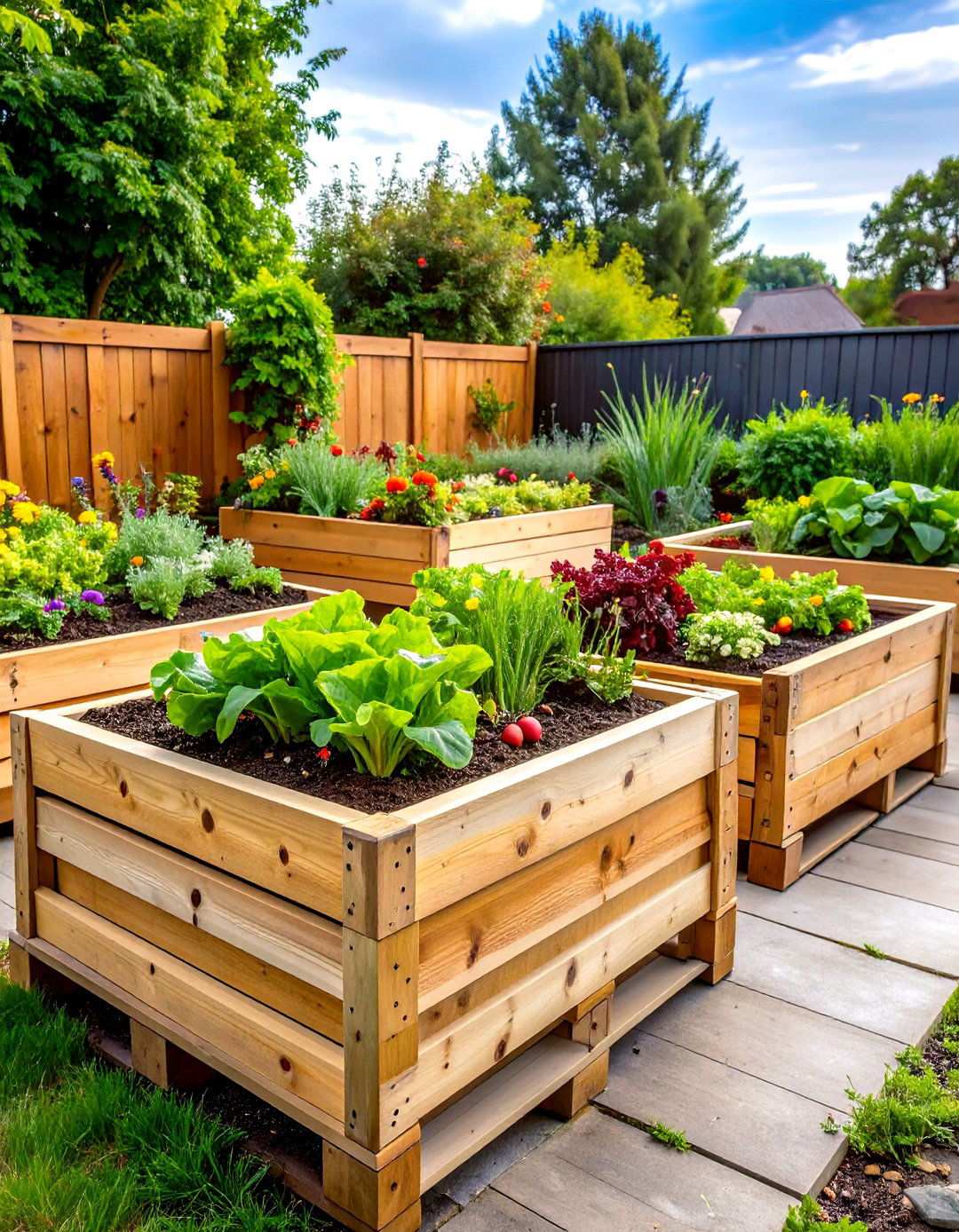
Elevate your vegetable gardening with sturdy pallet raised beds that enhance drainage, soil quality, and accessibility for gardening tasks. By laying pallets flat, you create elevated planting areas that allow for improved drainage and reduced soil compaction. Fill the pallets with soil and compost, then plant vegetables, herbs, or flowers, utilizing the pre-built slat system to organize different crops or companion plantings. These raised beds warm up faster in the spring, extend the growing season, and make weeding and harvesting more comfortable by reducing back strain. To prevent weeds while allowing drainage, line the bottom of the pallets with landscaping fabric.
5. Pallet Hanging Plant Display Systems: Maximizing Vertical Space
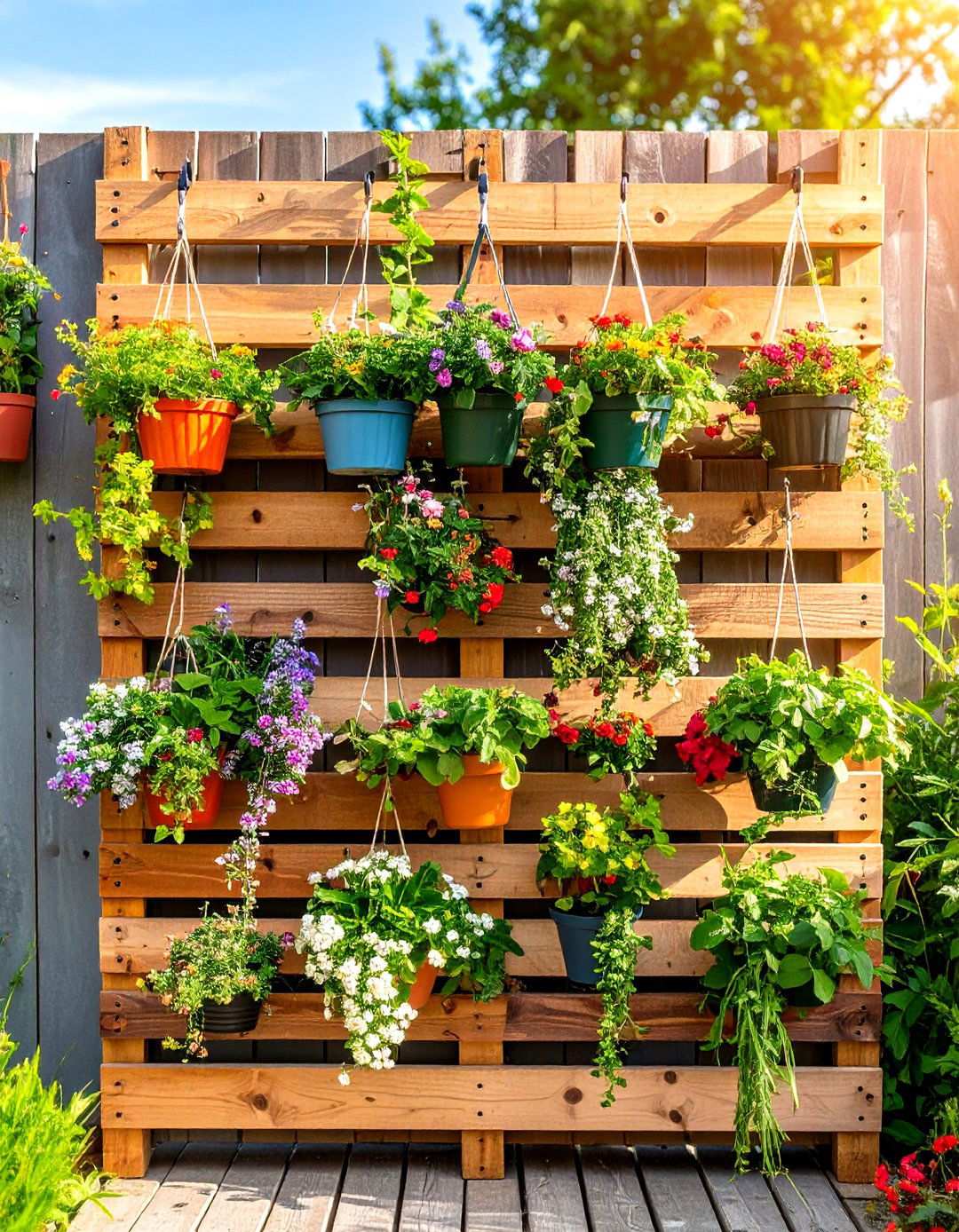
Optimize your garden’s vertical space with an innovative pallet hanging system, showcasing multiple plants while conserving valuable floor space. This versatile approach involves screwing hooks into various places on the pallet to hang planters or using wire to secure planting pots to the slats. The pallet hanging system excels for trailing plants, flowering baskets, or small vegetable containers, allowing you to rotate seasonal displays easily by swapping out different containers throughout the year. Mount the pallet securely to a strong wall or fence, ensuring it can support the weight of multiple planted containers, and enjoy the benefits of unconfined gardening possibilities.
6. Harvest Time: Unleash the Power of Pallet Cold Frames
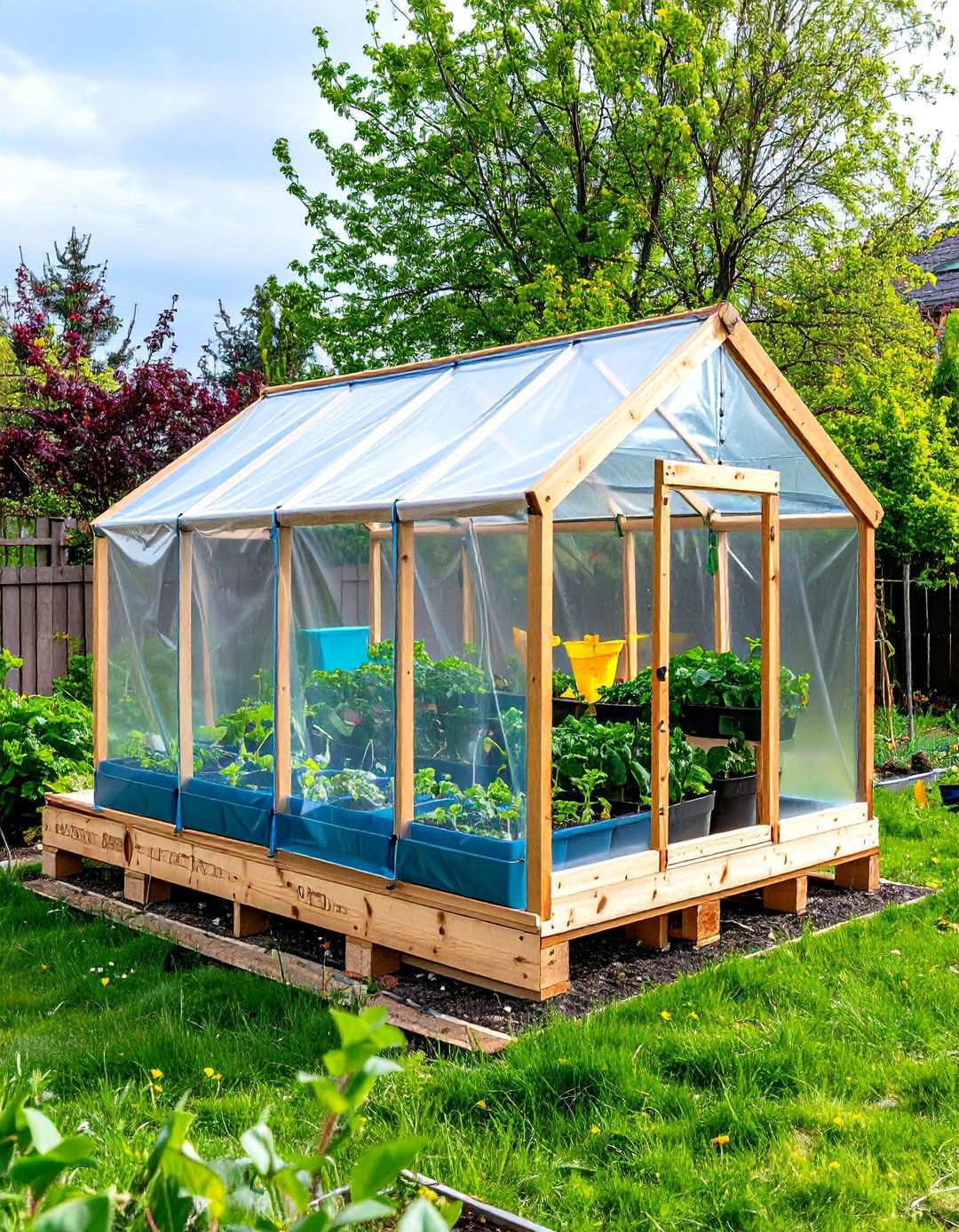
Seize control of the growing season by constructing an uncomplicated pallet cold frame that safeguards plants from inclement weather while harnessing solar energy. A simple frame built around shelves creates a mini cold frame, shielded by clear plastic sheeting for maximum protection. This budget-friendly structure not only shields plants from harsh weather but also makes it possible to accommodate a space heater for extra warmth. Positioning the cold frame to face south optimizes sun exposure and heat retention, and the angled top design allows rain and snow to drain off while creating a greenhouse effect within. The inclusion of a removable front flap with Velcro closures provides effortless access while maintaining a consistent temperature. Ideal for initiating seeds early, safeguarding tender plants, or cultivating cool-season vegetables throughout the winter months.
7. Streamline Your Gardening Routine: Pallet Garden Tool Storage
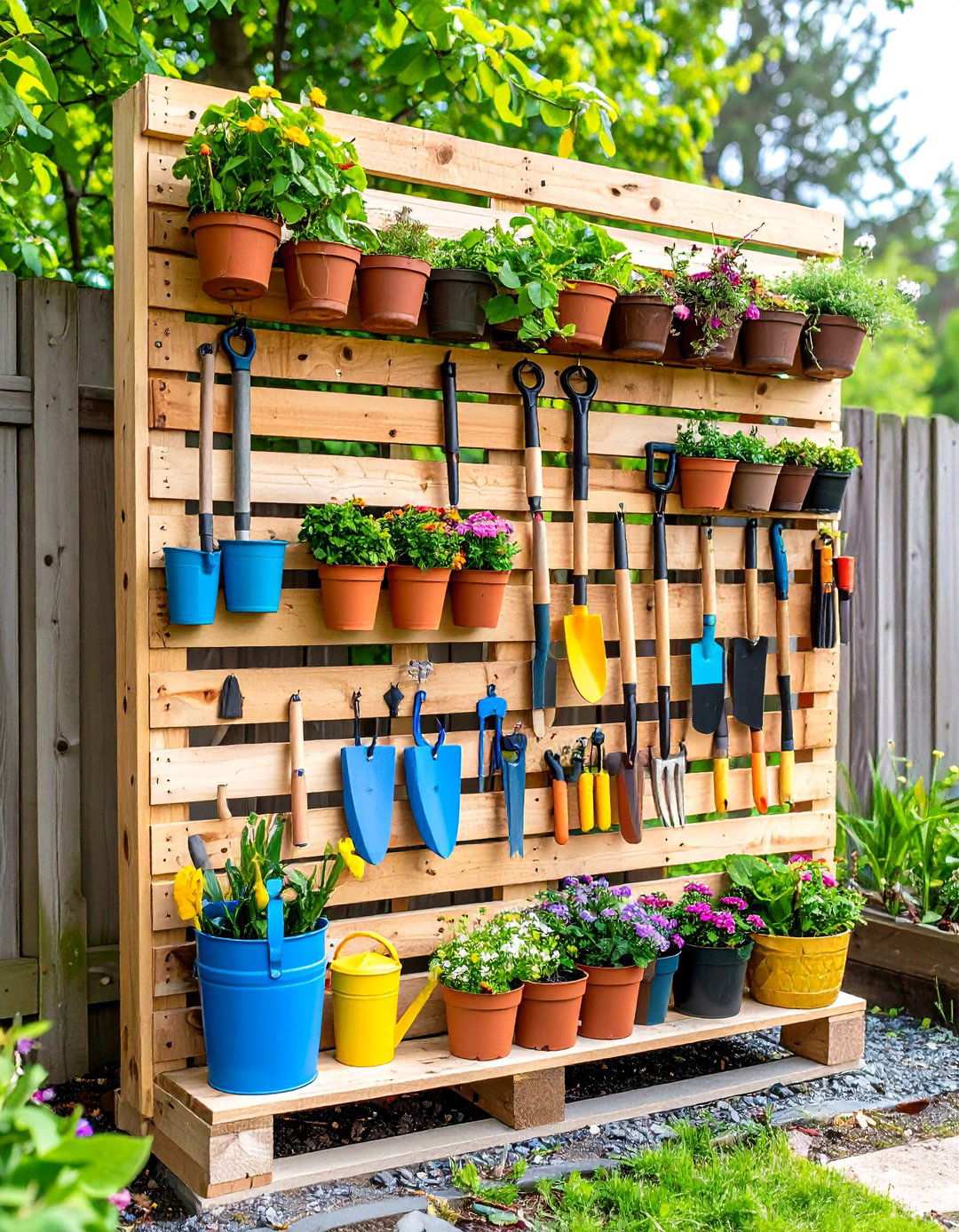
Maintain your gardening tools in pristine condition and within easy reach with a resourceful pallet storage system that conveniently attaches near your work areas. Utilize a wood pallet for vertical storage that can hang both planters and garden tools, ensuring hand rakes and shovels are conveniently stored within arm’s reach. Attach an assortment of hooks, clips, and holders to accommodate different tool sizes and shapes, providing you with the flexibility to customize your storage needs. Position this organizer centrally in your garden workspace or shed to maximize efficiency, and add a compact shelf across the bottom for storing gloves, seed packets, or small containers. The natural wood construction weathers beautifully outdoors while safeguarding essential tools and maintaining their organization.
8. Elegant Solutions for Outdoor Spaces: Pallet Privacy Screen Planters
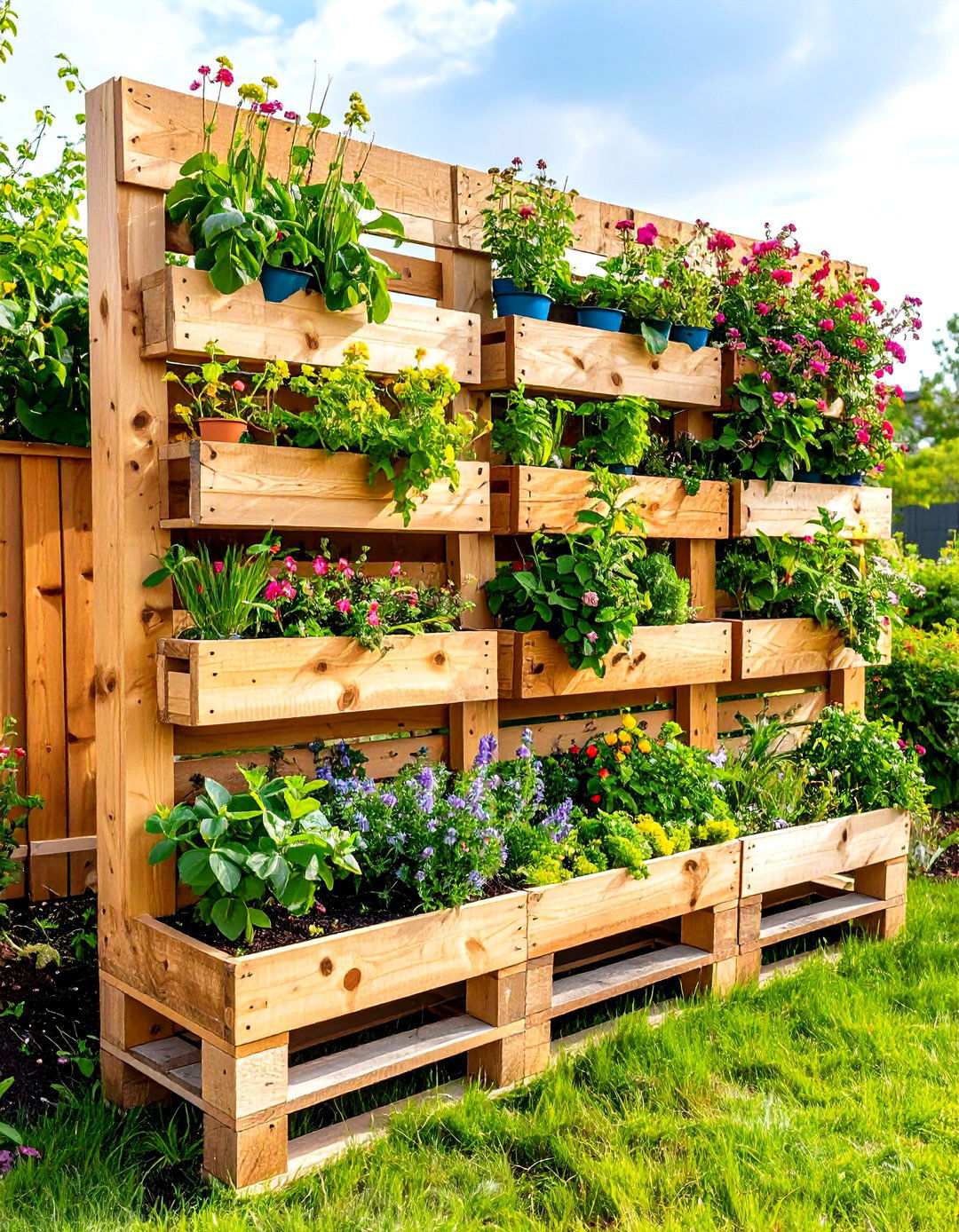
Combine the functionality of a privacy screen with the beauty of a vertical garden feature by creating a pallet fence that doubles as a space for plant growth. Establish visual separation by attaching additional wood slats or cultivating climbing plants like ivy or jasmine along the fence for an added layer of security and natural beauty. Add small planters, such as metal buckets or terra-cotta pots, to the pallet using screws or nails for an integrated growing system that works in perfect harmony. This design excels for blocking unsightly views, creating garden rooms, or establishing boundaries between different landscape areas. By planting flowering vines or climbing vegetables that will grow up and through the structure, you can create a living wall that exudes a unique blend of solid screening and integrated planters, providing both instant privacy and long-term garden interest.
9. Elevated Succulent Garden on a Pallet
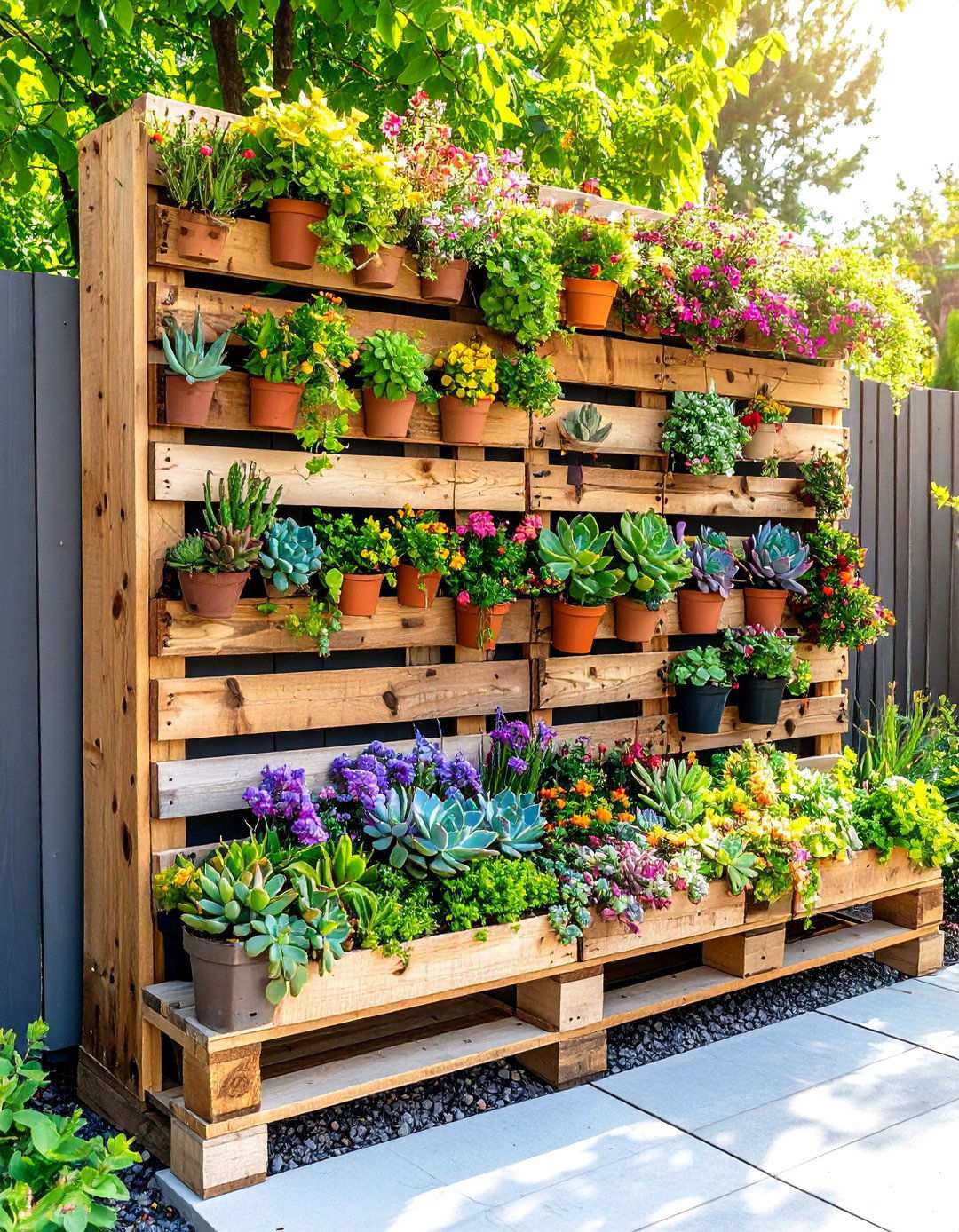
Design a visually striking succulent garden by repurposing a pallet as a planter, specifically tailored for succulents and cacti enthusiasts. Protect the pallet’s wooden slats with landscape fabric to prevent plant growth from getting entangled. Fill the gaps between slats with a well-draining cactus soil mix, allowing for a diverse range of succulents to thrive in this unique setup. Select a variety of shapes, colors, and sizes to create a visually captivating display while minimizing maintenance obligations. One of the advantages of using a pallet is its inherent drainage properties, which prevent root rot that can be problematic for succulent plants. To maximize sunlight exposure, consider mounting the pallet vertically against a sunny wall or positioning it against a fence. When it comes to watering, a delicate touch is essential – allow the soil to dry thoroughly between waterings to ensure the long-term health of your succulent collection.
10. Wheeled Pallet Garden Cart
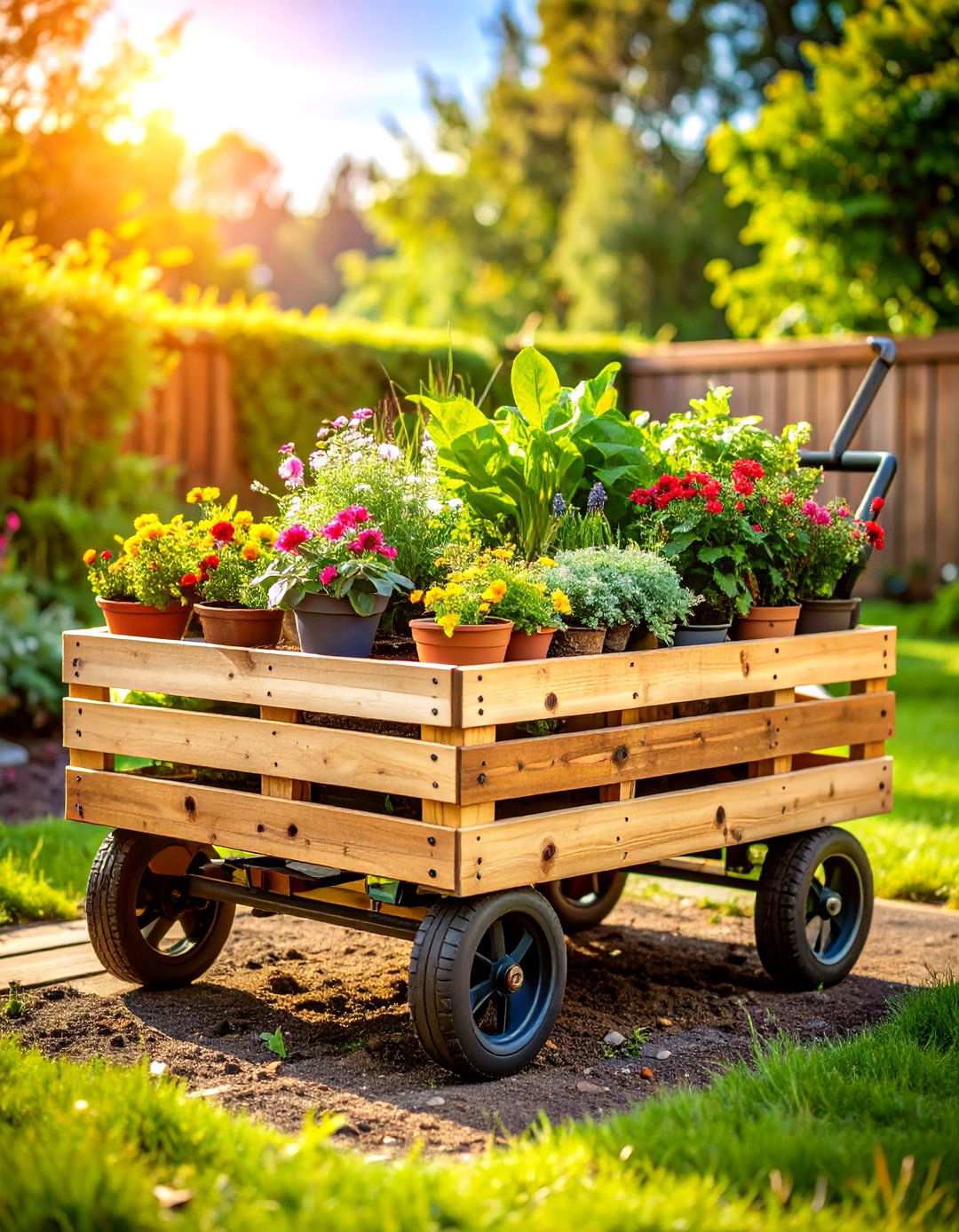
Create a versatile and movable garden system that allows you to adjust your garden’s layout seasonally and follow the sun’s movement. Secure heavy-duty caster wheels to the pallet corners using screws or bolts, ensuring they can be locked in place when needed. Fill the pallet with high-quality soil and plant a diverse array of vegetables, herbs, or flowers in the gaps between slats. This mobile garden setup offers numerous benefits, including the ability to protect your plants from harsh weather conditions and rearrange your garden design as needed. The wheeled base also makes it easier for individuals with limited mobility or strength to manage heavy soil-filled planters. Perfect for renters who want to take their garden with them when they move or anyone seeking maximum flexibility in their garden design.
11. Pallet-Based Mushroom Cultivation System
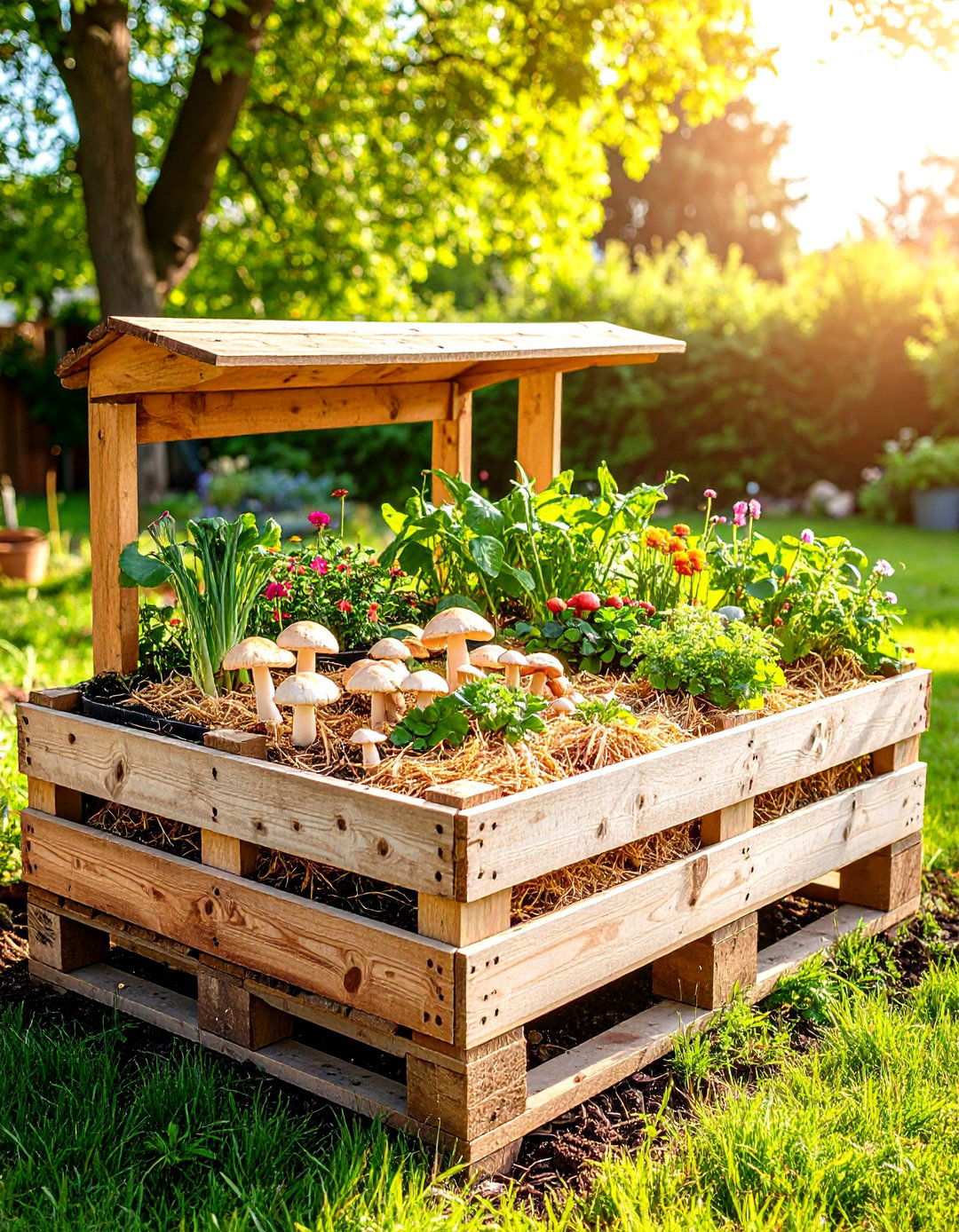
Pursue the rewarding world of specialty crop production by creating an ideal environment for edible fungi to thrive using a dedicated pallet mushroom cultivation system. Line the pallet’s wooden slats with straw or sawdust, maintaining optimal moisture levels through regular misting in shaded areas with high humidity. Position the pallet in a shaded spot and supplement with LED grow lights for additional warmth, while incorporating natural elements like bark mulch to create a unique ecosystem. The wooden structure provides superior air circulation, which is crucial for preventing mold growth while maintaining the humidity required by mushrooms. To begin the cultivation process, inoculate the growing medium with mushroom spawn according to the specific variety requirements. This sustainable approach to mushroom production is well-suited for small spaces and offers a distinctive addition to homegrown food production. To ensure optimal results, carefully monitor moisture levels and harvest mushrooms at their peak ripeness for the best flavor and texture.
12. Pallet Seed Starting Nursery
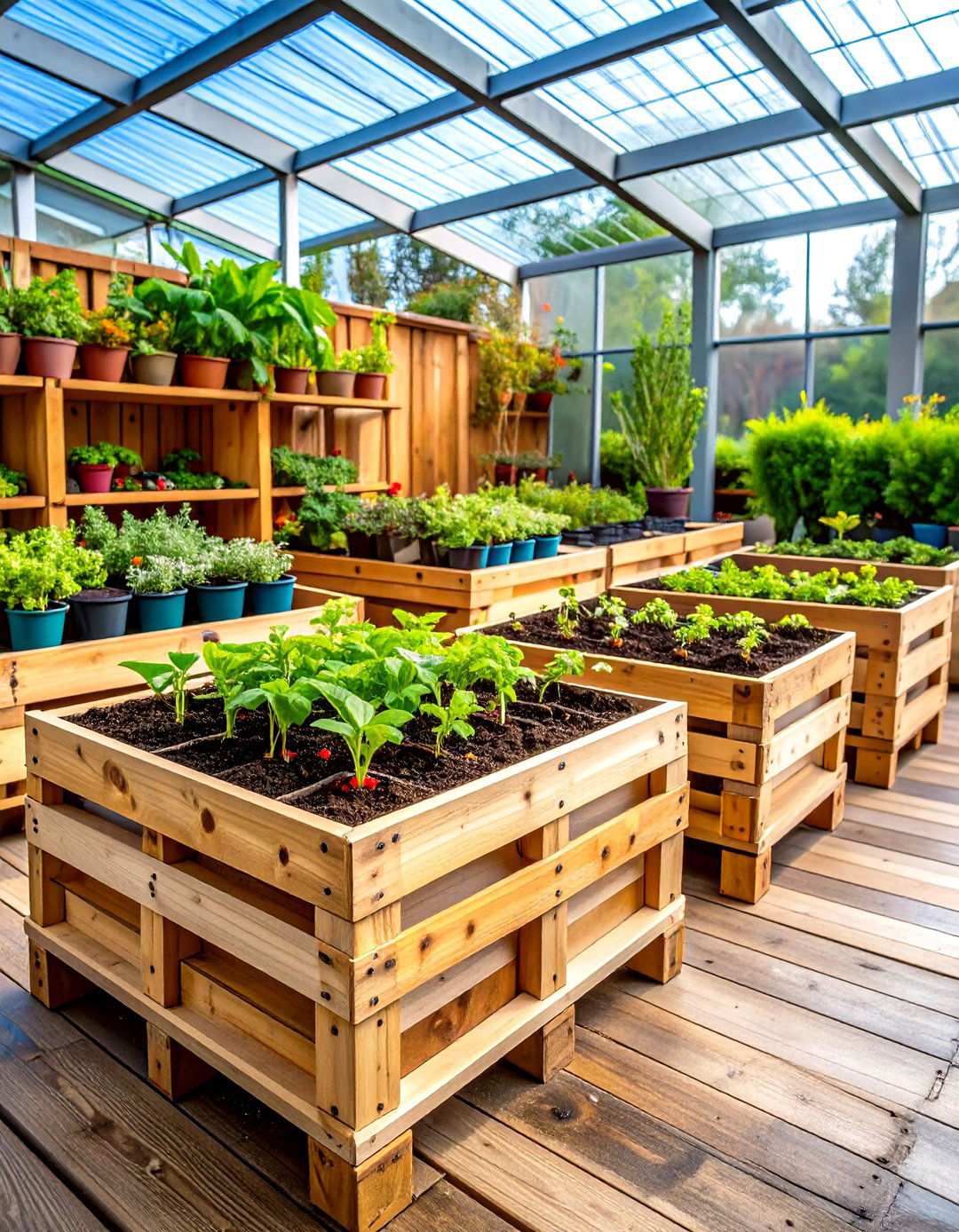
Transform a dedicated space into a thriving seed starting nursery with a pallet-based system that optimizes seedling development. By lining cavities with landscape fabric and filling them with high-quality potting soil, you can achieve precise control over soil depth and seed requirements. The pallet’s compartmentalized design not only prevents root competition but also streamlines the organization of various plant varieties. To further enhance seedling growth, consider adding removable covers or small hoops to create mini-greenhouse conditions for temperature-sensitive seeds. This approach effectively suppresses weeds while providing a well-organized growing space. By labeling each section, you can easily track germination rates and variety performance, laying the groundwork for informed future planning.
13. Pallet Window Box Garden
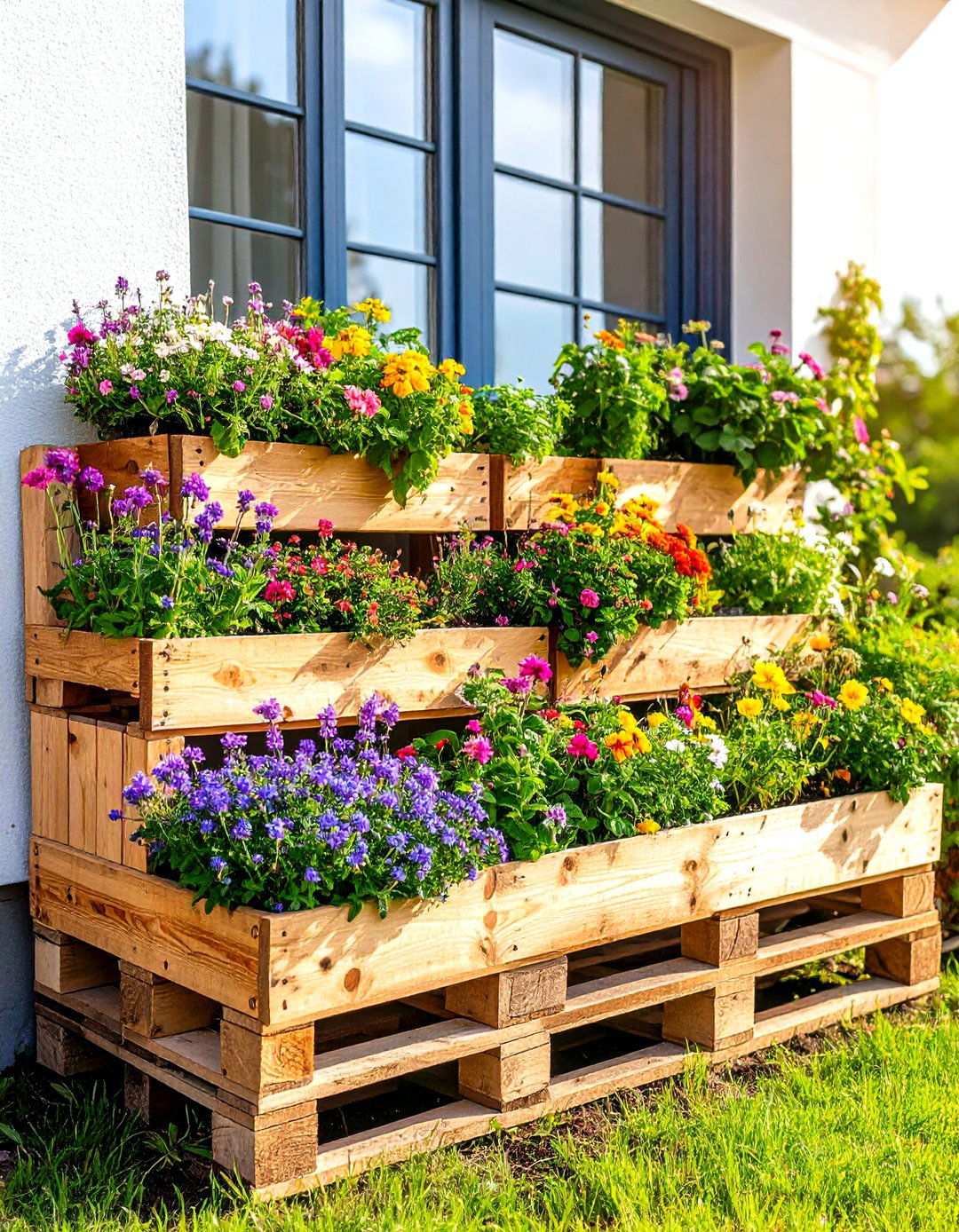
Inject a rustic charm into your home’s exterior with pallet window boxes, which showcase vibrant seasonal blooms and herbs in a beautiful display. By repurposing wooden pallet boards, you can create budget-friendly window boxes that effortlessly update with every season. When crafting your custom boxes, be sure to include proper drainage holes in the bottom to prevent waterlogged soil. Not only are these pallet window boxes more cost-effective than store-bought options, but they also add a classic touch of curb appeal to your home. Take full advantage of your windows’ unique light conditions by planting trailing flowers, compact vegetables, or aromatic herbs that thrive in the available light. The natural wood finish complements most architectural styles, gradually weathering to a captivating silver-gray patina over time. Secure the mounting hardware carefully to ensure the weight of the soil and plants is adequately supported.
14. Pallet Fairy Garden Miniature Landscape
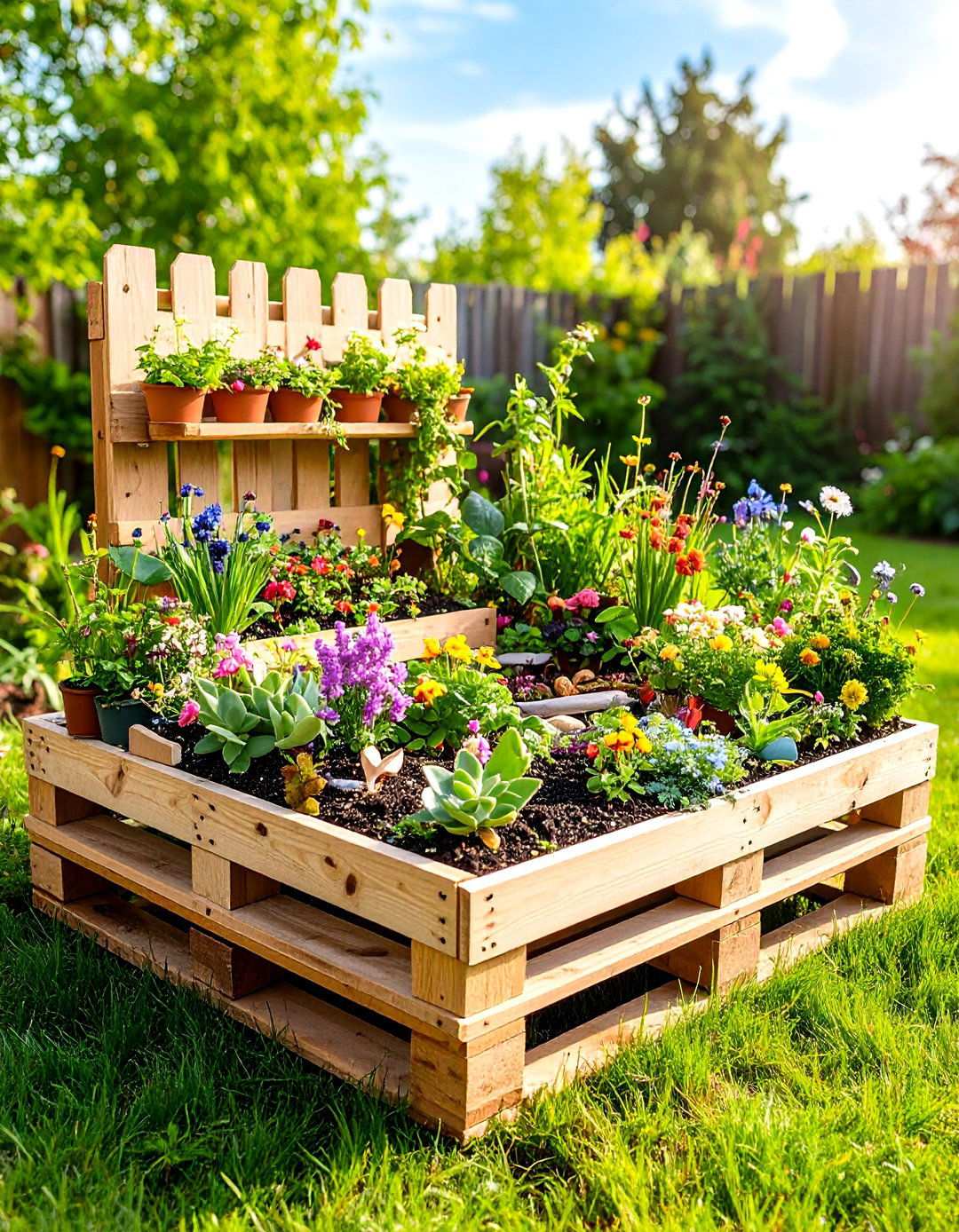
Bring whimsy and wonder to your garden with a pallet fairy garden, which not only delights children but also teaches them essential gardening skills through imaginative play. By repurposing weathered pallets, you can create enchanting miniature worlds with small plants, miniature accessories, and creative landscaping elements. This project is perfect for small spaces, incorporating natural elements and sustainable, low-maintenance practices that encourage creativity and plant care responsibility in young gardeners. Use a combination of small succulents, moss, and miniature plants to create realistic landscapes at a miniature scale. Add pathways made from small stones, tiny bridges, and miniature furniture to complete the fantasy environment. Position the fairy garden in a spot where children can easily access and maintain their magical creation, making it an ideal project for apartment dwellers or those with limited outdoor space.
15. Upscale Vertical Gardening with Pallet Trellises
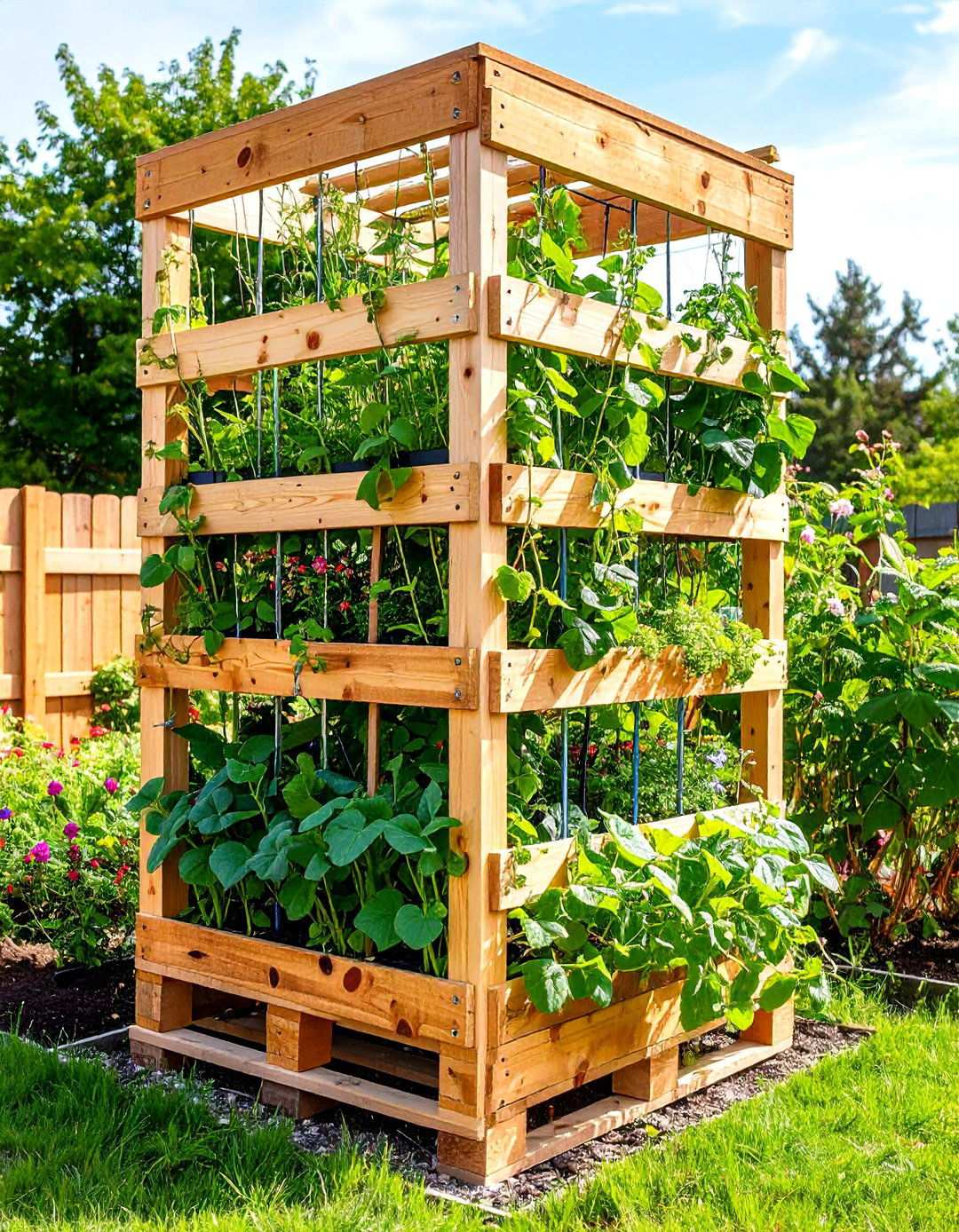
Maximizing vertical space in your garden can be achieved through the strategic use of pallet trellises that not only provide an elegant support system for climbing plants but also optimize garden space utilization. Pallets, as readily available frames, serve as a practical foundation for vertical gardening, offering numerous attachment points for plant ties and supporting the weight of mature vining plants like beans, peas, cucumbers, or morning glories. By securing pallets vertically and firmly in place, you can harness the natural slat structure to guide your plants upwards, creating a visually striking display that adds a touch of rustic charm to your garden. This versatile approach can be employed against fences, walls, or as freestanding supports in garden beds, effortlessly integrating with your existing garden design while delivering essential plant support infrastructure.
16. Functional Pallet Workstations for Gardeners
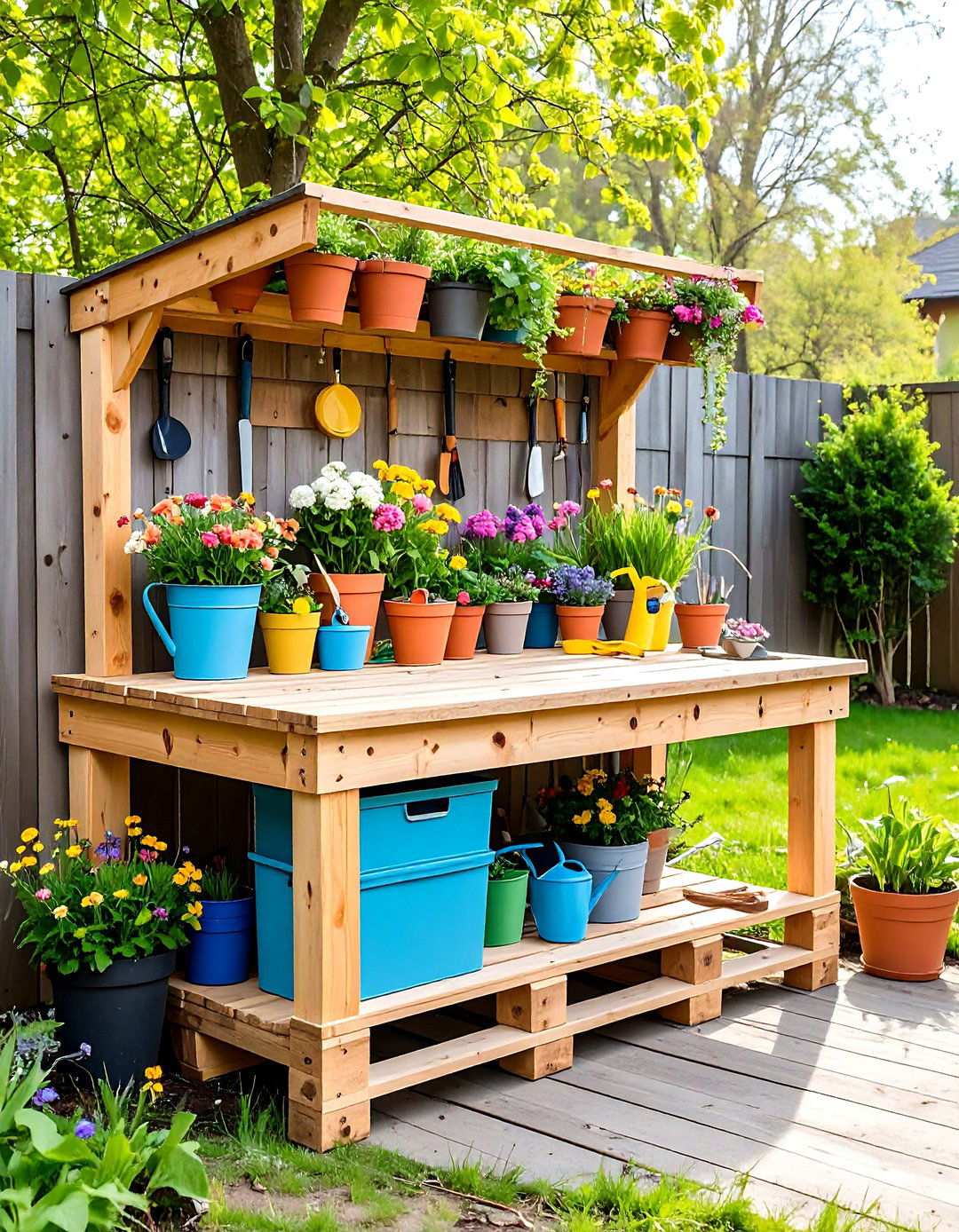
Create a thriving outdoor workspace with a pallet potting bench that seamlessly merges functionality and aesthetics, streamlining your gardening tasks and maintaining your gardening supplies at an easily accessible height. By transforming pallets into work surfaces that accommodate potted plants and garden tools, you can craft a dedicated workspace that encourages efficiency and productivity while showcasing your garden’s rustic charm. Consider adding a solid work surface, installing hooks for hanging tools, and incorporating storage compartments for soil, fertilizer, and small containers on one pallet, reserving the lower shelf for larger items like bags of potting mix or watering cans. Position this workspace near a water source for enhanced convenience, allowing you to tackle transplanting and maintenance tasks with greater ease. This thoughtful design approach adds a touch of character to your garden while serving as an indispensable hub for gardening activities.
17. Pallet Wood Pathways for a Charming Garden Landscape
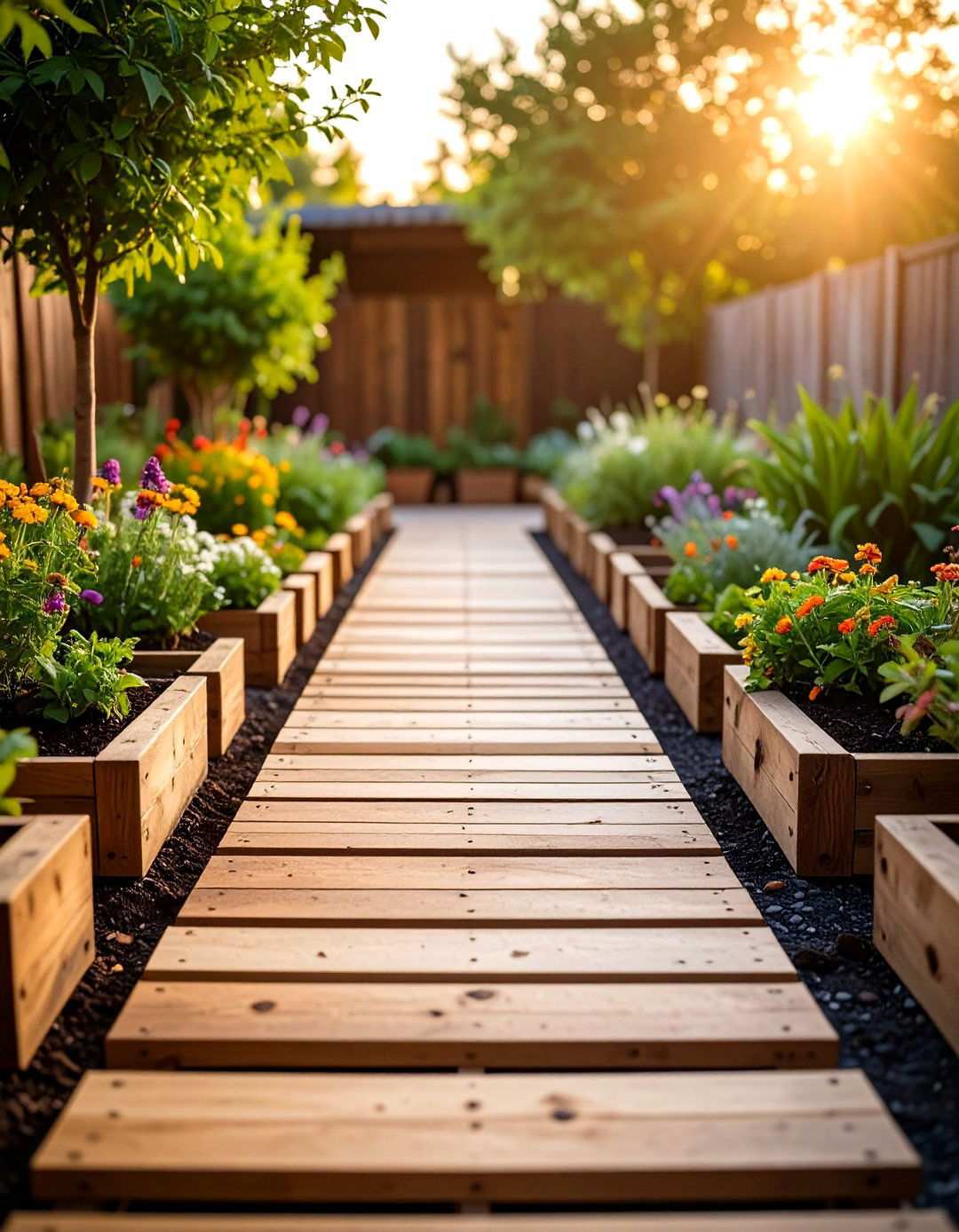
Transform your garden into a picturesque haven by creatively utilizing repurposed pallet wood to craft walkways that not only add rustic flair but also protect plant beds from foot traffic, minimizing the risk of soil compaction and keeping shoes clean. By cutting the pallet boards into pieces, sanding them down, and arranging them in patterns that reflect your garden style, you can create a visually appealing pathway that complements your outdoor space. To ensure a durable and long-lasting installation, excavate the path area and backfill with gravel for improved drainage and longevity. As the pallet wood weathers over time, it develops a beautiful patina that adds character to your garden, while the strategically spaced stones allow plants to flourish between sections, creating a low-maintenance pathway solution that suits casual garden settings where formal paving might seem out of place.
18. Tiered Plant Displays with Pallet Shelving
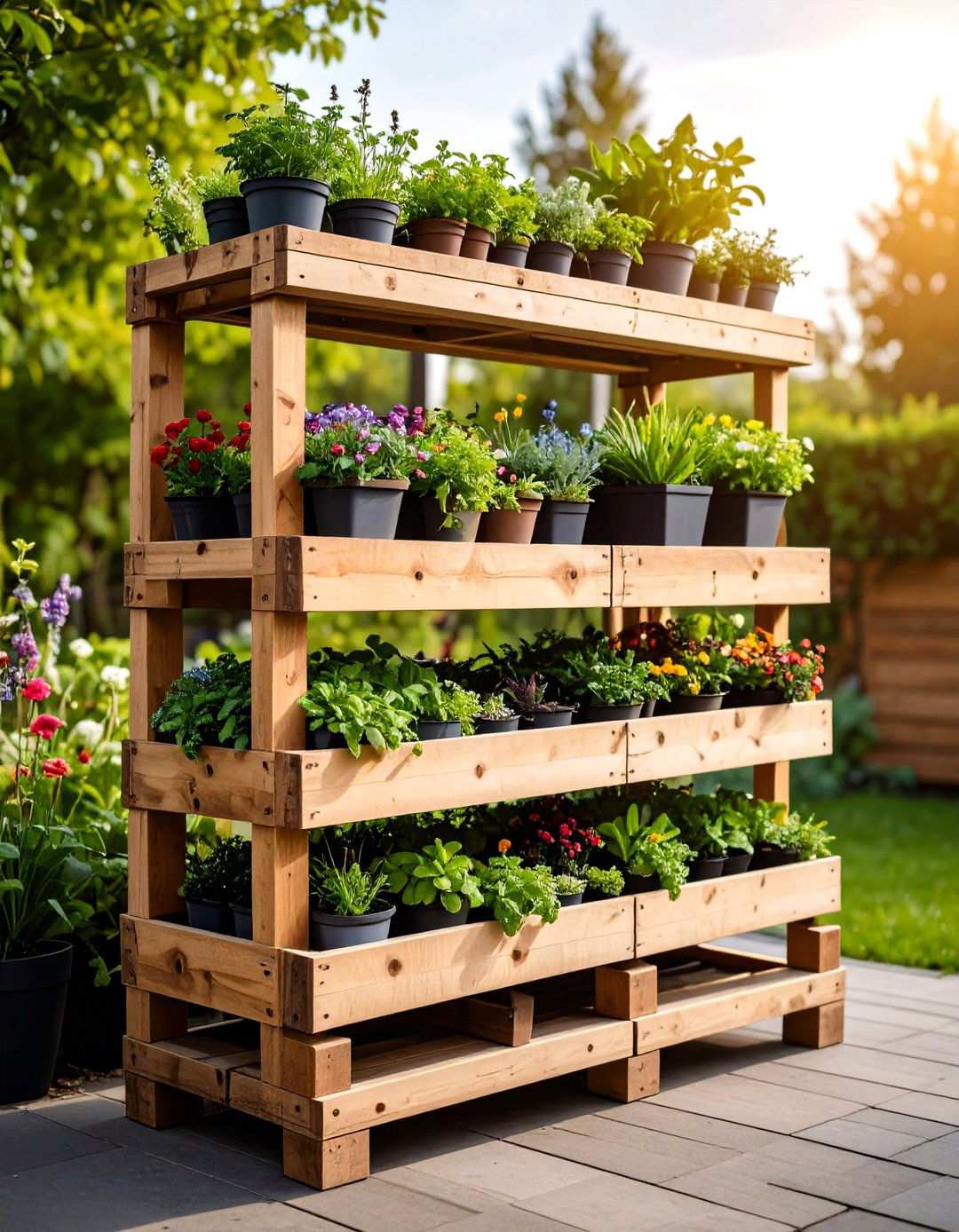
Maximize container plant arrangements with tiered pallet shelving that combines functionality and visual appeal. By repurposing pallets into multi-level plant stands, gardeners can showcase a variety of plants while optimizing growing space. This approach is particularly suitable for balconies or small gardens, where space is limited. Painting pallets in a natural tone, such as green, can create a seamless integration with the surrounding environment. Arrange planters in multiple tiers to create a lush display of seasonal flowers, herb collections, or starting seeds. The tiered design allows plants of varying heights to receive the optimal amount of light, while adding visual interest to the space. Moreover, this approach is ideal for small-scale gardening, as it utilizes vertical space to its fullest potential.
19. Sustainable Pallet Greenhouse Structures
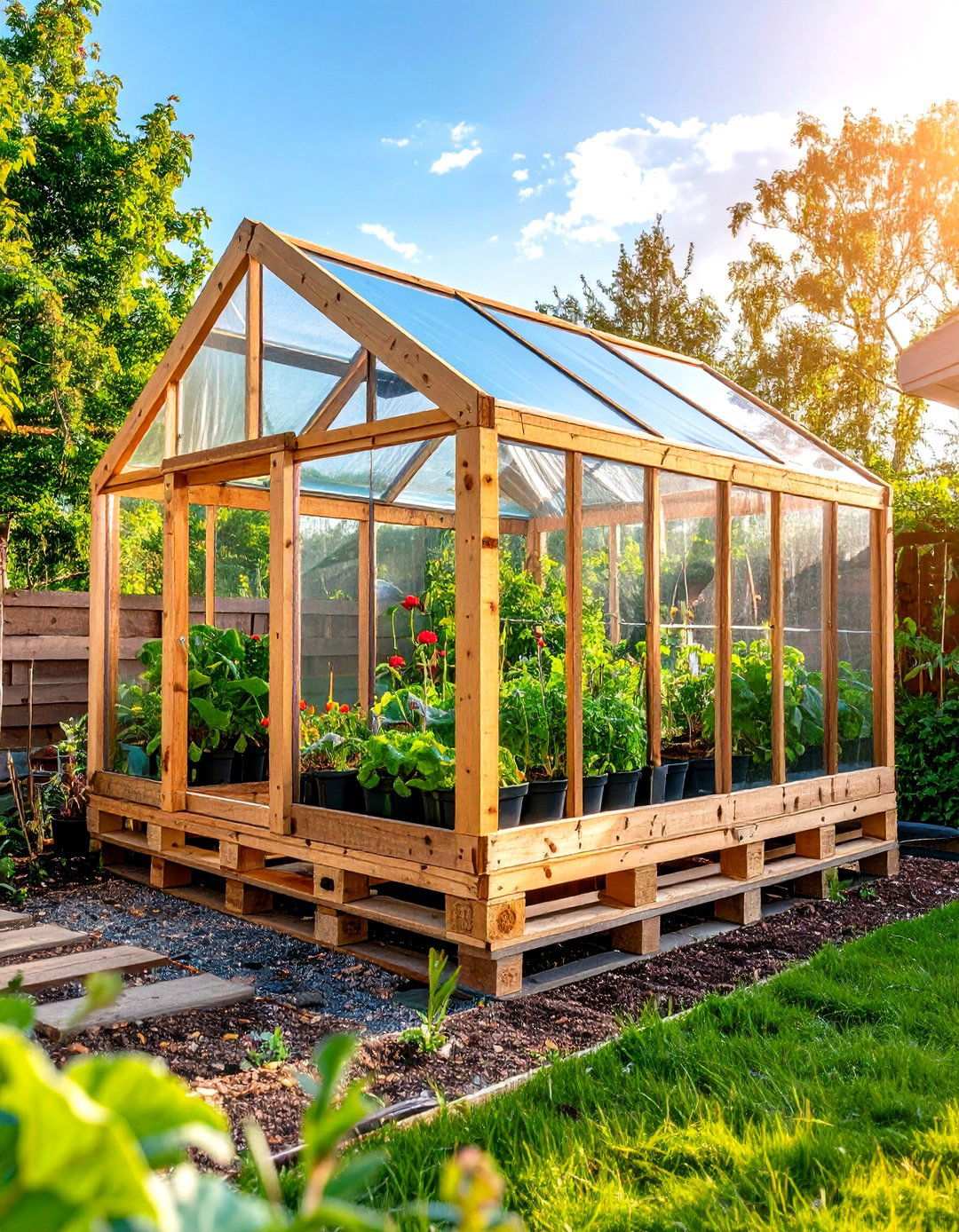
Transform pallets into substantial greenhouse foundations that support year-round cultivation. By repurposing recycled pallets into frameworks, gardeners can create extensive covered growing spaces that are both sustainable and functional. Secure plastic sheeting or glass panels onto the framework using clear tape and scrap wood pieces to ensure a seamless fit. Begin by rolling the plastic sheeting from the top and working down with overlapping layers to create a durable and long-lasting structure. This approach allows for creating substantial growing space for starting seeds, protecting tender plants, or extending growing seasons. To maximize the usable space, consider adding interior shelving made from additional pallet wood. The modular nature of pallet construction enables customization of size and configuration based on available space and growing needs.
20. Whimsical Rainbow Planter Stands with Pallets
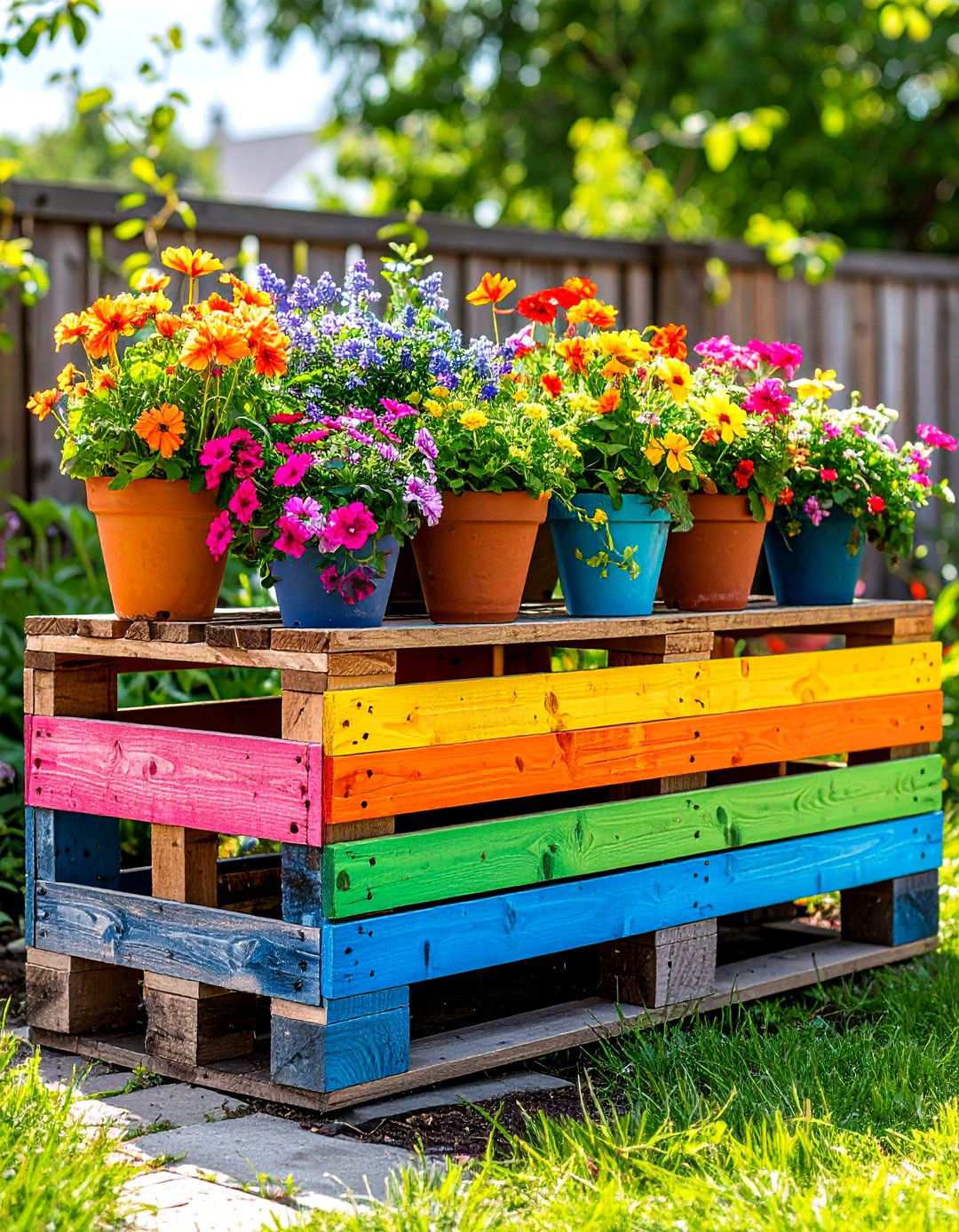
Add a touch of artistic flair and vibrant color to your garden with painted pallet planters that showcase flowers in eye-catching rainbow arrangements. By repurposing free pallets and painting them in bright rainbow colors, gardeners can create colorful standing flower gardens that serve as both functional planters and garden art. A combination of bright paint and timeless terracotta planters creates stylish gardens that can be seamlessly transitioned between indoor and outdoor spaces depending on the seasons. To achieve a striking effect, paint each slat section in different bright colors, creating a graduated rainbow effect that draws attention and creates focal points in garden design. Plant complementary colored flowers or foliage that enhance the painted backdrop, adding depth and visual interest to the space. This project is particularly appealing to children and adds a whimsical charm to serious growing spaces, while the weather-resistant paint ensures long-lasting color and the elevated design protects plants from ground moisture and pests.