1. Timeless A-Frame Cucumber Trellis
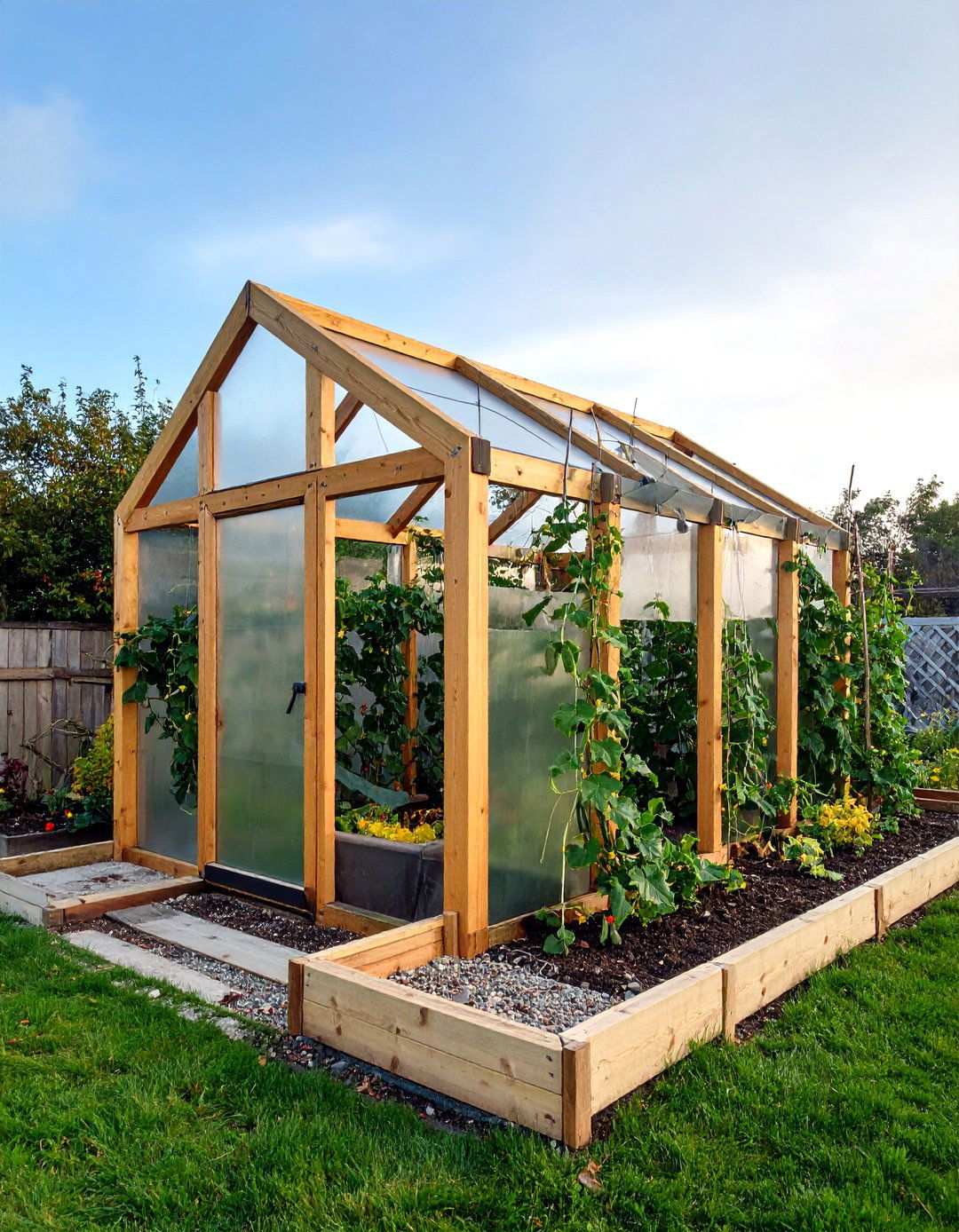
Elevating your cucumber game starts with a sturdy foundation, and a wooden A-frame trellis is the perfect place to begin. This elegant structure combines stability with generous surface area, making it an ideal choice for raised beds and row gardens. By positioning two rectangular panels of lumber or PVC at a 60-degree angle and joining the tops with a hinge, you create a frame that folds flat for winter storage, reducing clutter and maintenance. To maximize yield, simply secure wire mesh or sturdy garden netting across both faces, allowing tendrils to grab onto the open grid and fruit to hang freely for easy picking. As a bonus, this A-frame design allows for even sun distribution from the north and south, ensuring your cucumbers receive the ideal amount of sunlight.
2. Dramatic Cattle Panel Archway Tunnel
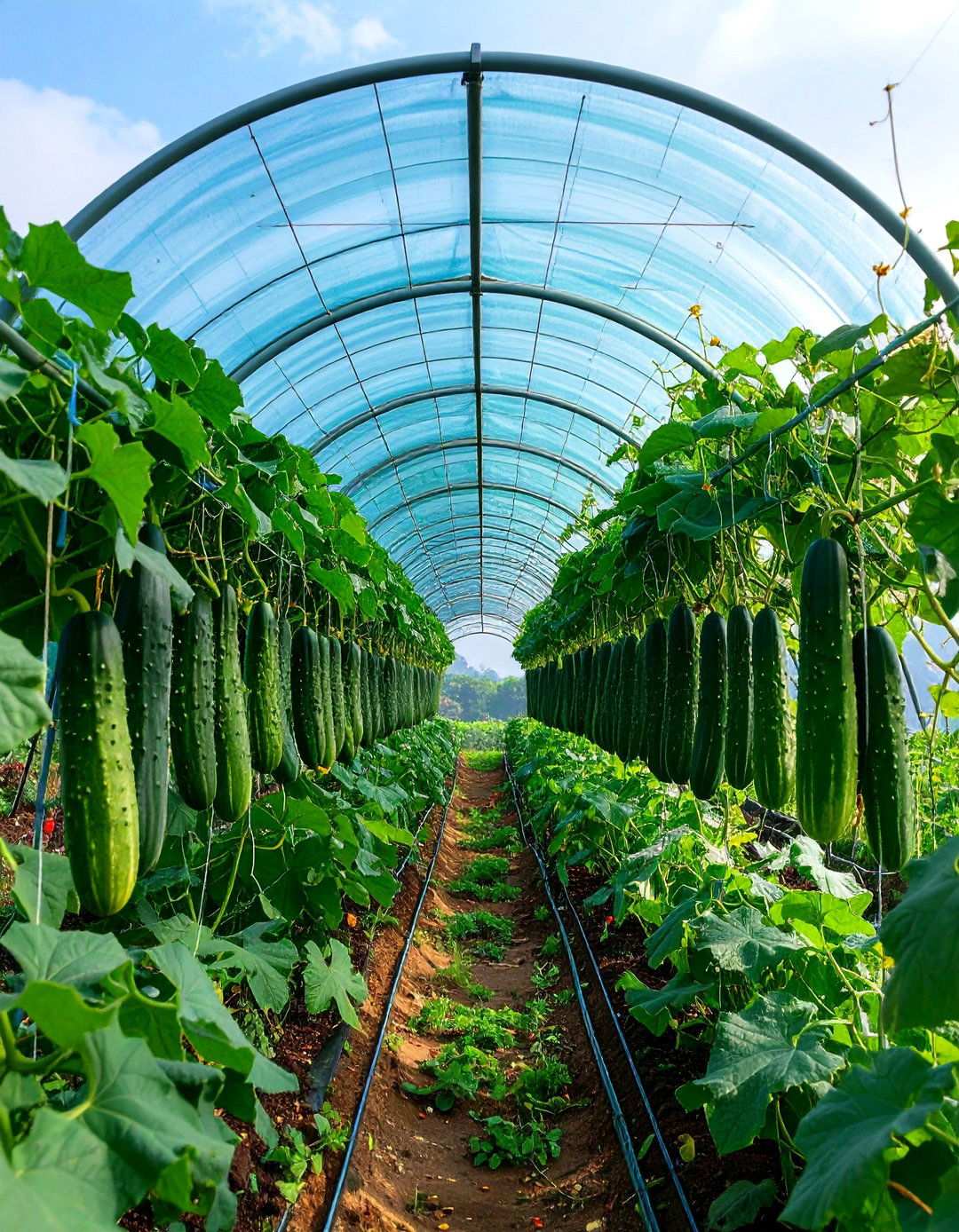
For a show-stopping feature in your garden, consider bending a 16-foot cattle panel into an arch spanning two parallel beds, creating a cucumber trellis tunnel that’s as functional as it is stunning. By hammering rebar stakes outside each bed wall and sliding the panel ends over them, you’ll create rock-solid anchoring that will withstand even the harshest weather conditions. As vines climb up one side, cross the top, and dangle crisp cucumbers at eye level beneath the arch, you’ll be treated to a stroll through a lush, verdant canopy that’s as breathtaking as it is productive. Many growers swear by these tunnels, reporting that they remain usable for a decade or more due to the heavy-gauge galvanized steel’s impressive durability.

As an Amazon Associate I earn from qualifying purchases.
3. Efficient Vertical String Trellis System
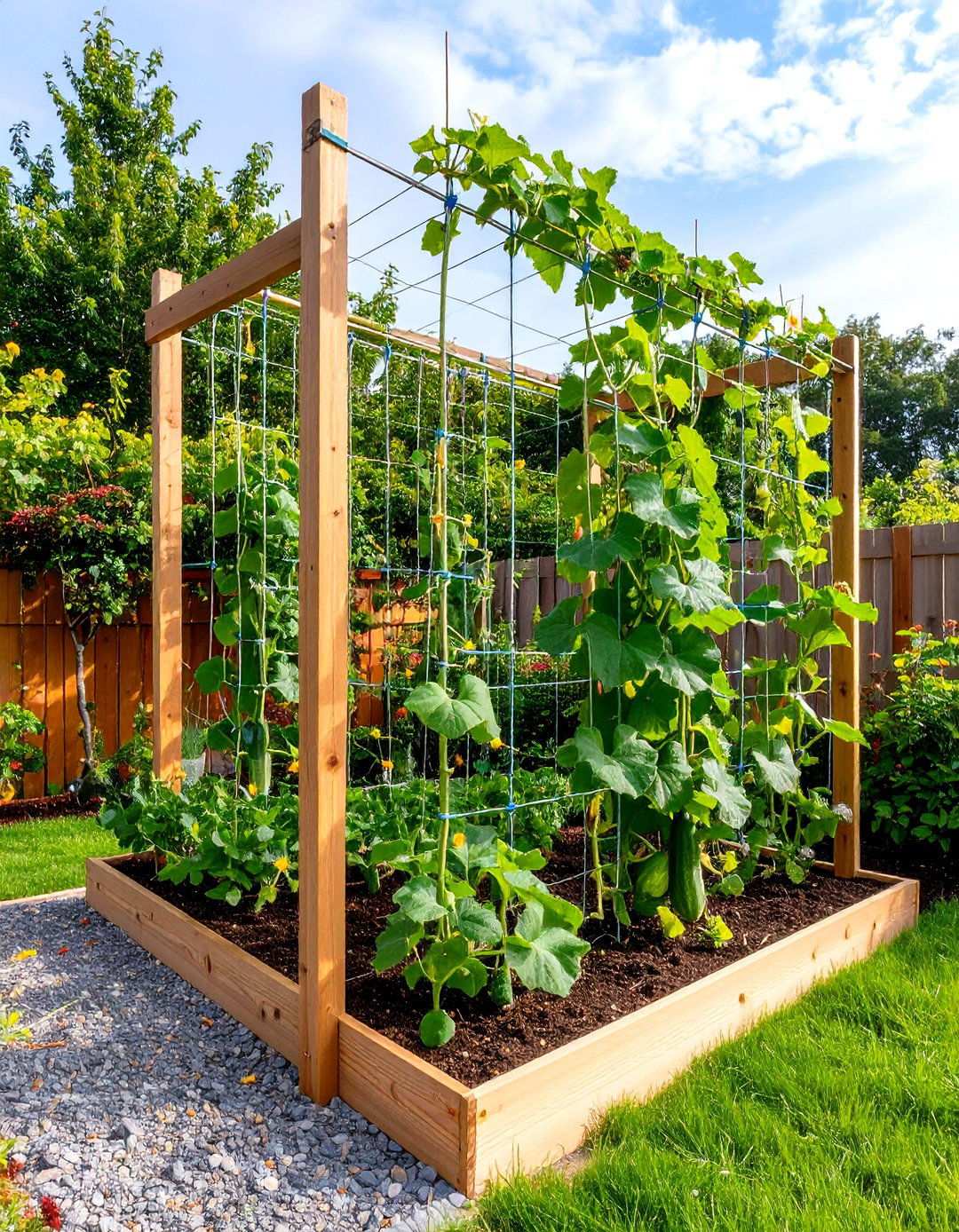
When space is at a premium, it’s time to turn to the experts and create a vertical string trellis, just like those found in commercial greenhouses. By stretching a strong support wire six to eight feet above the soil and tying biodegradable twine to it, you’ll create a framework for your cucumbers to climb. As vines grow, simply twist them around the string, pruning side shoots to keep a single stem climbing straight up. This minimalist approach takes mere minutes to install and promotes superior airflow, which studies have shown can reduce the risk of powdery mildew in humid summers by up to 50%. What’s more, this system is easy to set up and can be adapted to fit a variety of garden layouts.
4. Whimsical Bamboo Teepee Trellis
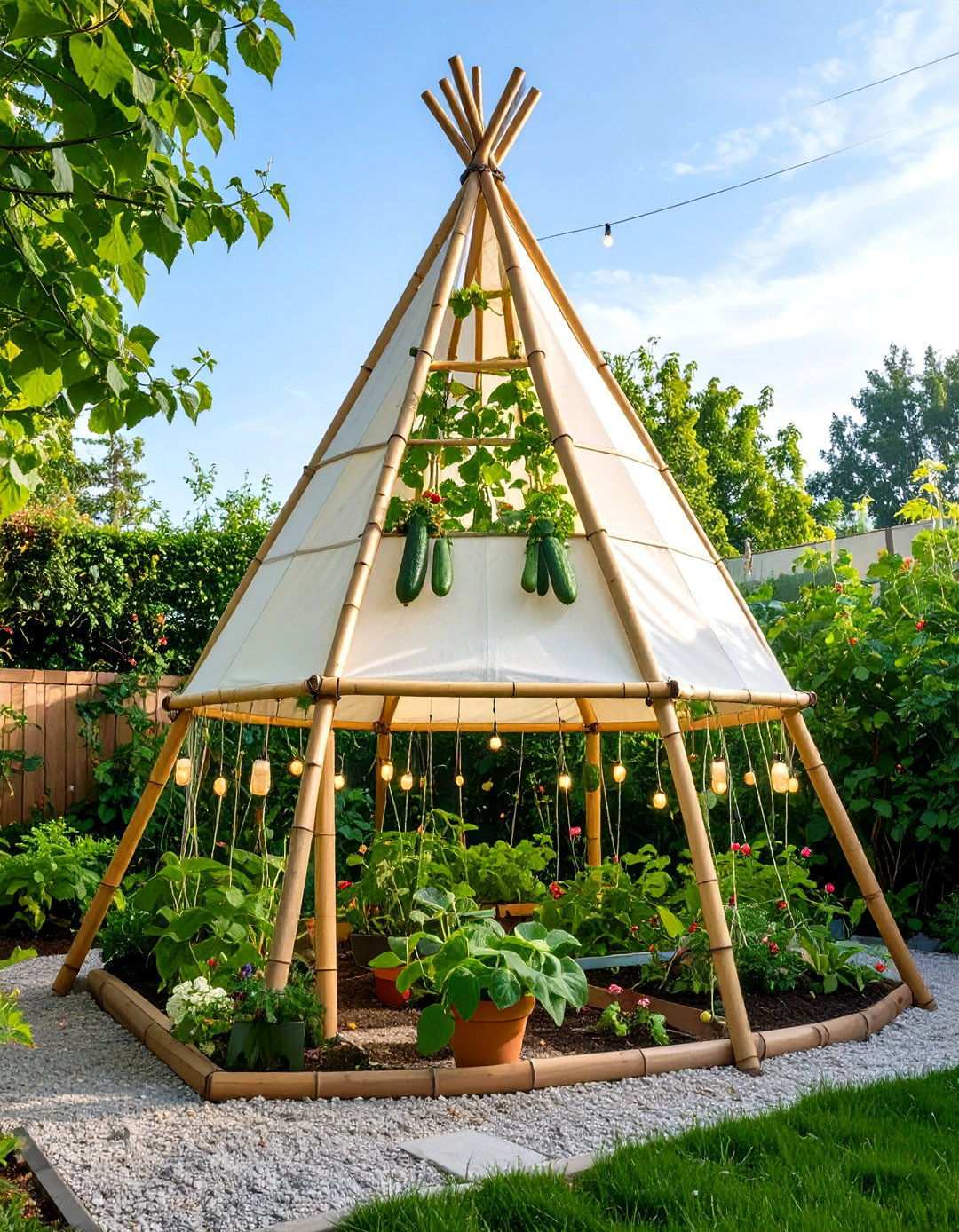
For a rustic, charming addition to your garden, consider building a bamboo teepee trellis. By lashing together three to five tall bamboo poles at the top, you’ll create a unique framework that’s as sturdy as it is visually striking. Wind garden twine in a spiral down the frame, providing tendrils with plenty of handholds to cling to. With its natural rot-resistance, the bamboo structure can last for several seasons, and replacing a pole is as simple as slipping a new cane into the lashings. Builders appreciate that this teepee design also provides shade for lettuce or basil planted inside its cool interior, allowing you to stack crops vertically and maximize your garden’s potential.
5. Upcycled Pallet Lean-To
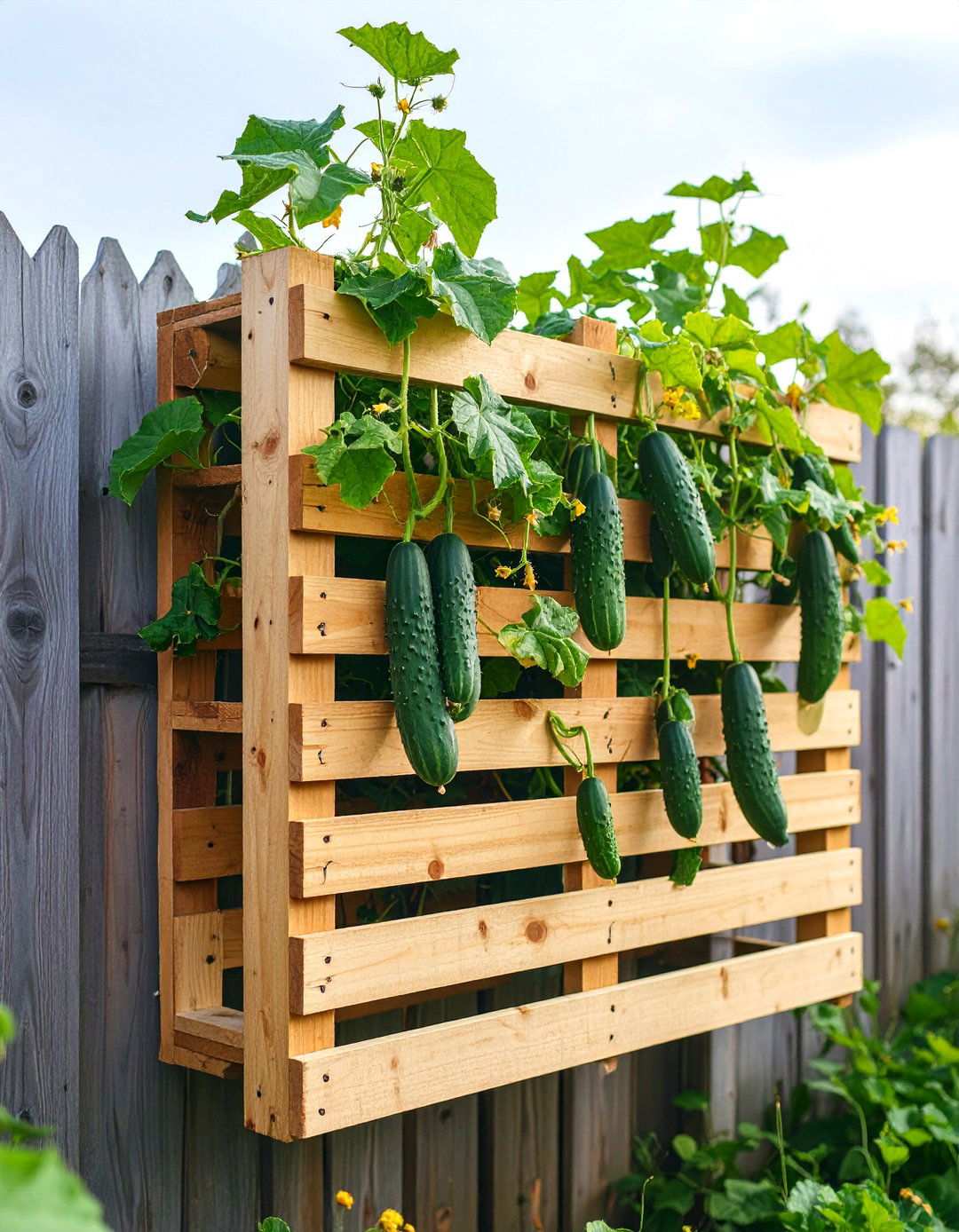
Transforming an intact shipping pallet into a functional cucumber trellis is a cost-effective project that yields impressive results. By leaning the pallet against a south-facing fence at a 70-degree angle and securing it with stakes, you can create a sturdy and functional trellis. The pallet’s slats serve as built-in rungs, providing a natural support system for the cucumber vines. Meanwhile, the gaps between the slats allow the fruit to hang, preventing misshapen curves. Taking it to the next level, you can staple landscape fabric to the back of the pallet to create a beautiful and functional privacy screen. Gardeners who have tried this method have reported notable yield gains compared to traditional ground-grown vines.
6. Repurposed Ladder Trellis
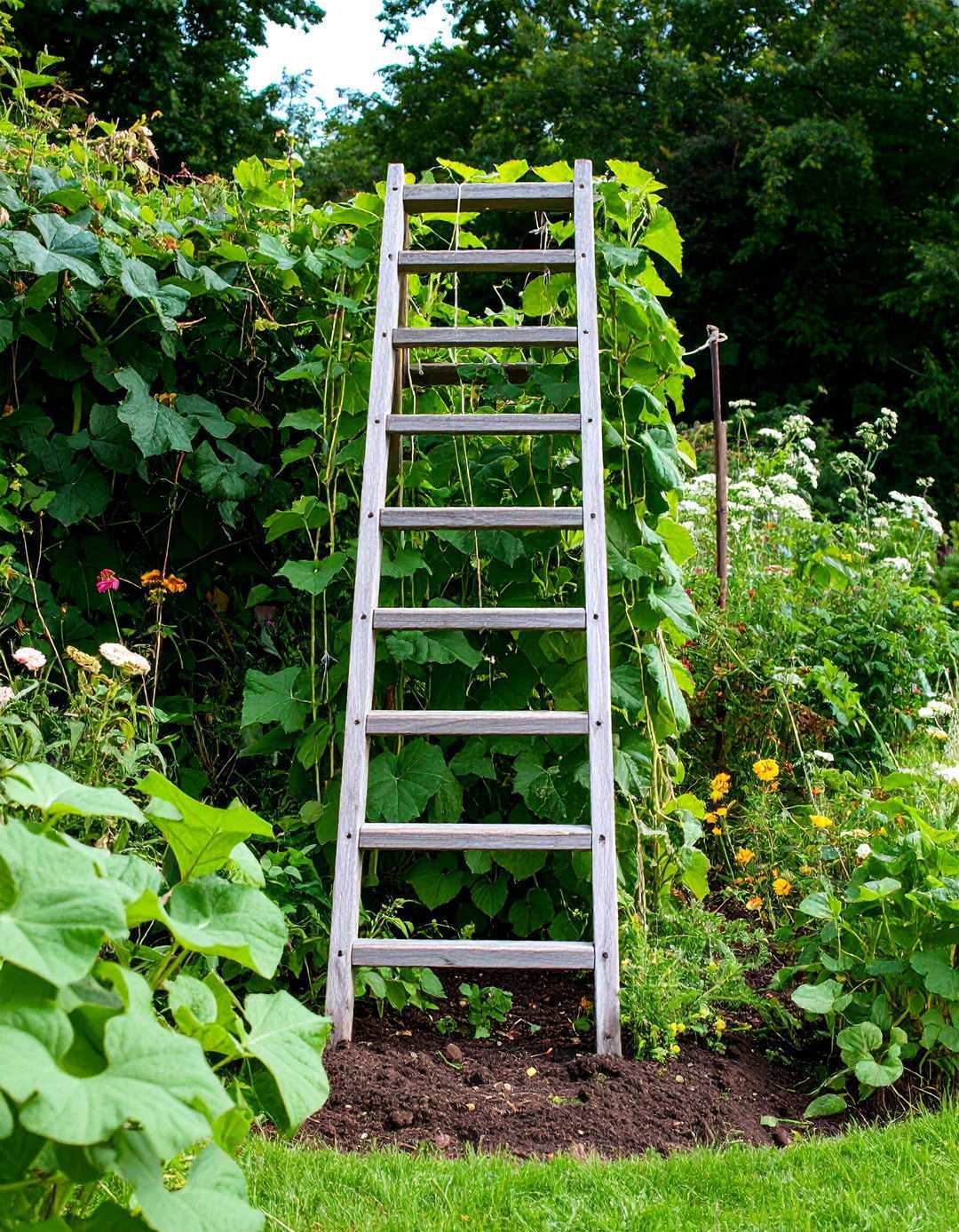
Revamp a retired step ladder and give it new life as a cucumber trellis. Simply place the ladder over a planting hole and thread twine between the rungs to create a sturdy support system. You can add a pop of color by painting it a vibrant hue or maintain its rustic charm by leaving the weathered wood. The A-shape of the ladder provides inherent stability, while the wide top shelf can be used to hold a watering can or a bunch of freshly harvested cucumbers. Upcycling enthusiasts love that even a broken ladder can be repurposed as living garden décor.
7. Tomato Cage Conversion
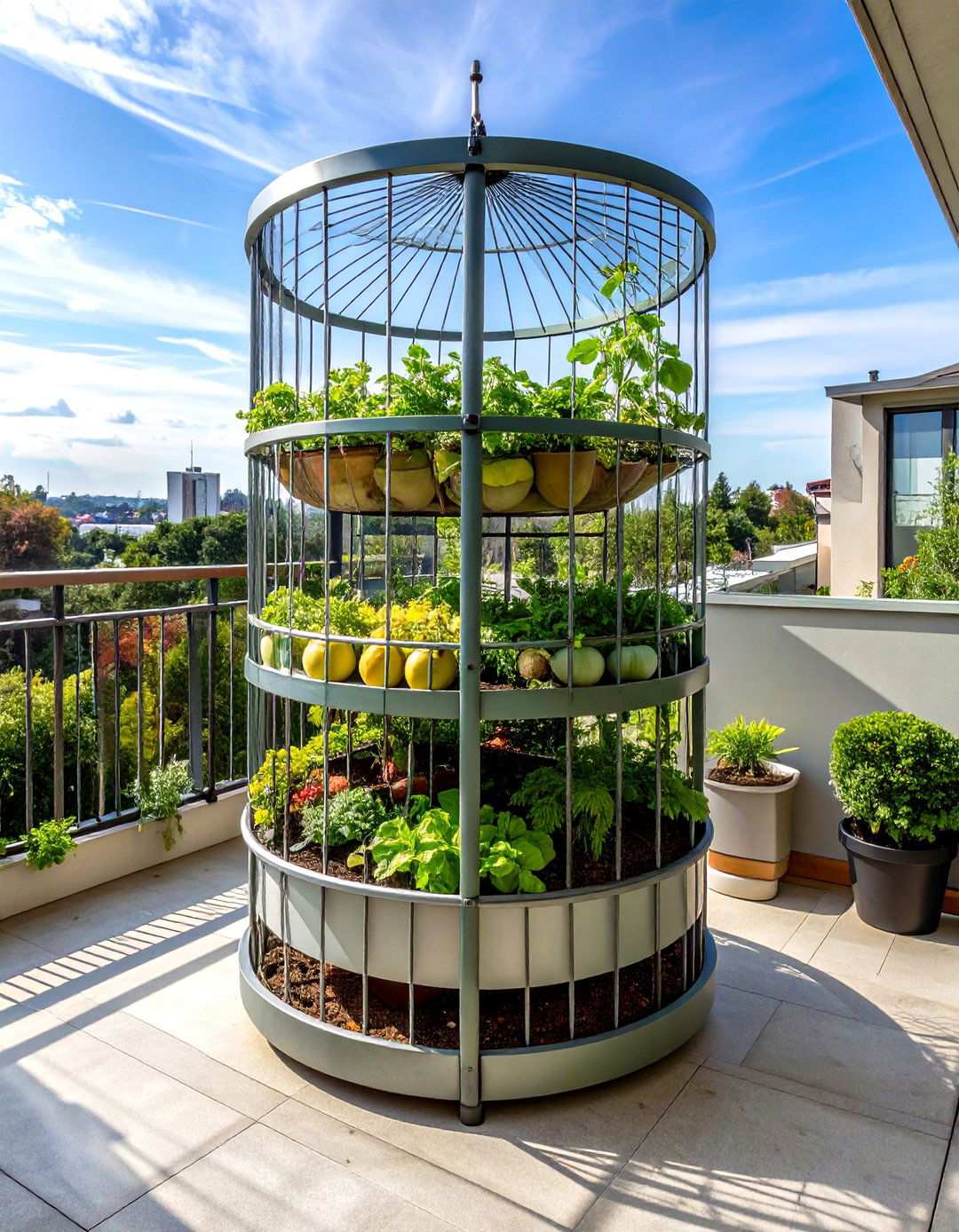
Give new purpose to sturdy conical tomato cages by flipping them upside-down and converting them into narrow, columnar cucumber trellises perfect for containers. Remove the original bottom prongs to form an open crown, then anchor the former top ring into the soil. Wrap the cage with garden twine every six inches to create a continuous spiral ladder, supporting one plant per pot. This approach turns balconies into vertical veggie towers while keeping the fruit off hot concrete surfaces.
8. Overhead "Umbrella" Greenhouse Trellis

Greenhouse growers often utilize overhead supports to suspend cucumbers and spread lateral strings outward like umbrella spokes, guiding vines horizontally across the roof space. By adopting this umbrella cucumber trellis outdoors over a sturdy arbor, you can harvest dangling fruit at chest height and enjoy a living shade canopy beneath. This setup allows for excellent ventilation above the leaves, reducing disease pressure and simplifying pruning to occasional tip pinching.
9. Folding Metal A-Frame
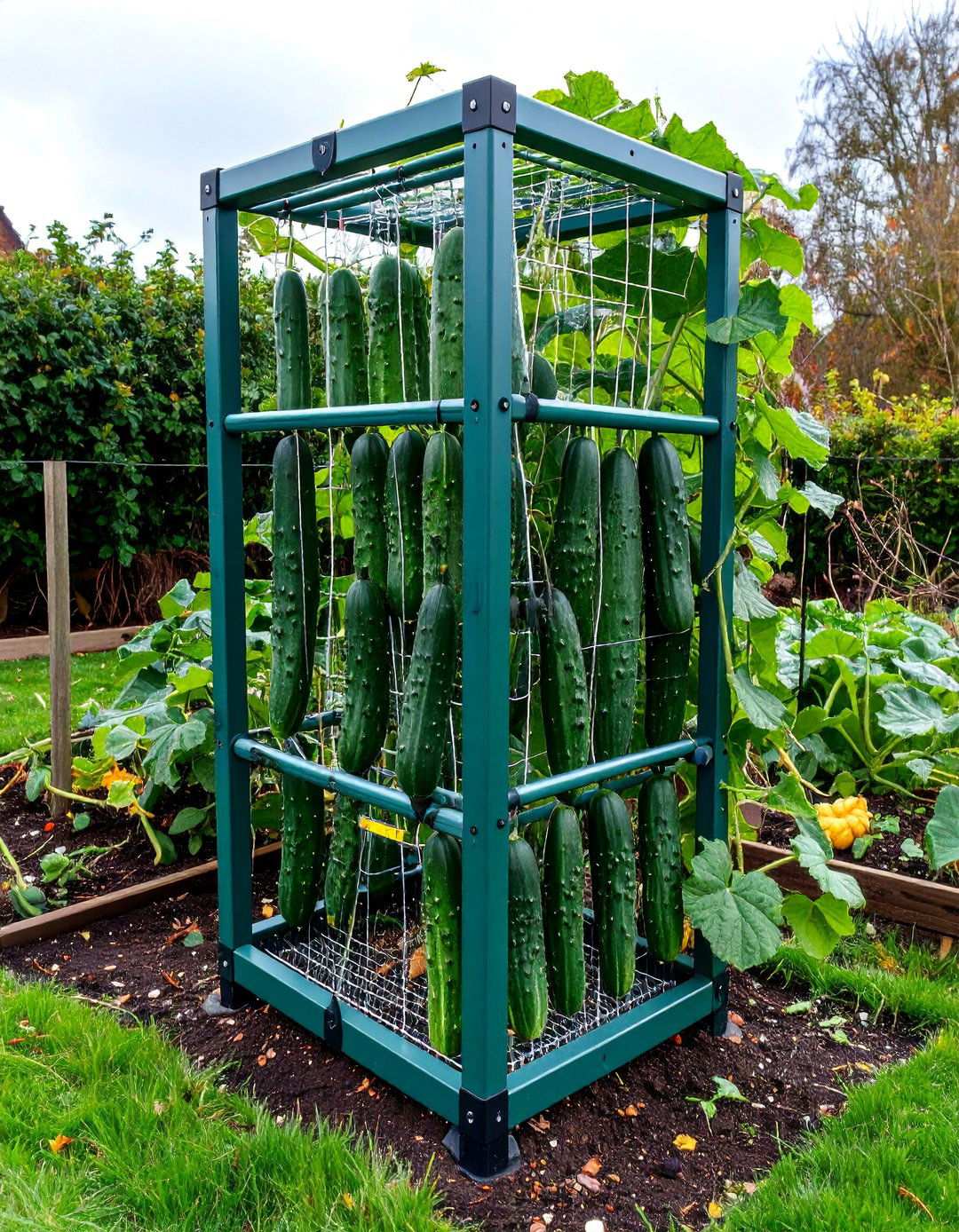
Busy gardeners can benefit from powder-coated steel folding trellis kits that offer plug-and-play convenience. Most of these kits stand four feet wide and six feet tall, hinge in the center, and include mesh panels sized for cucumber tendrils. Owners appreciate that these frames collapse flat for winter storage, resist rust, and handle heavy fruit loads without sagging. Investing in a commercial cucumber trellis once can outlast multiple wooden DIY builds, making it an economical long-term option.
10. Modern Obelisk Inspiration
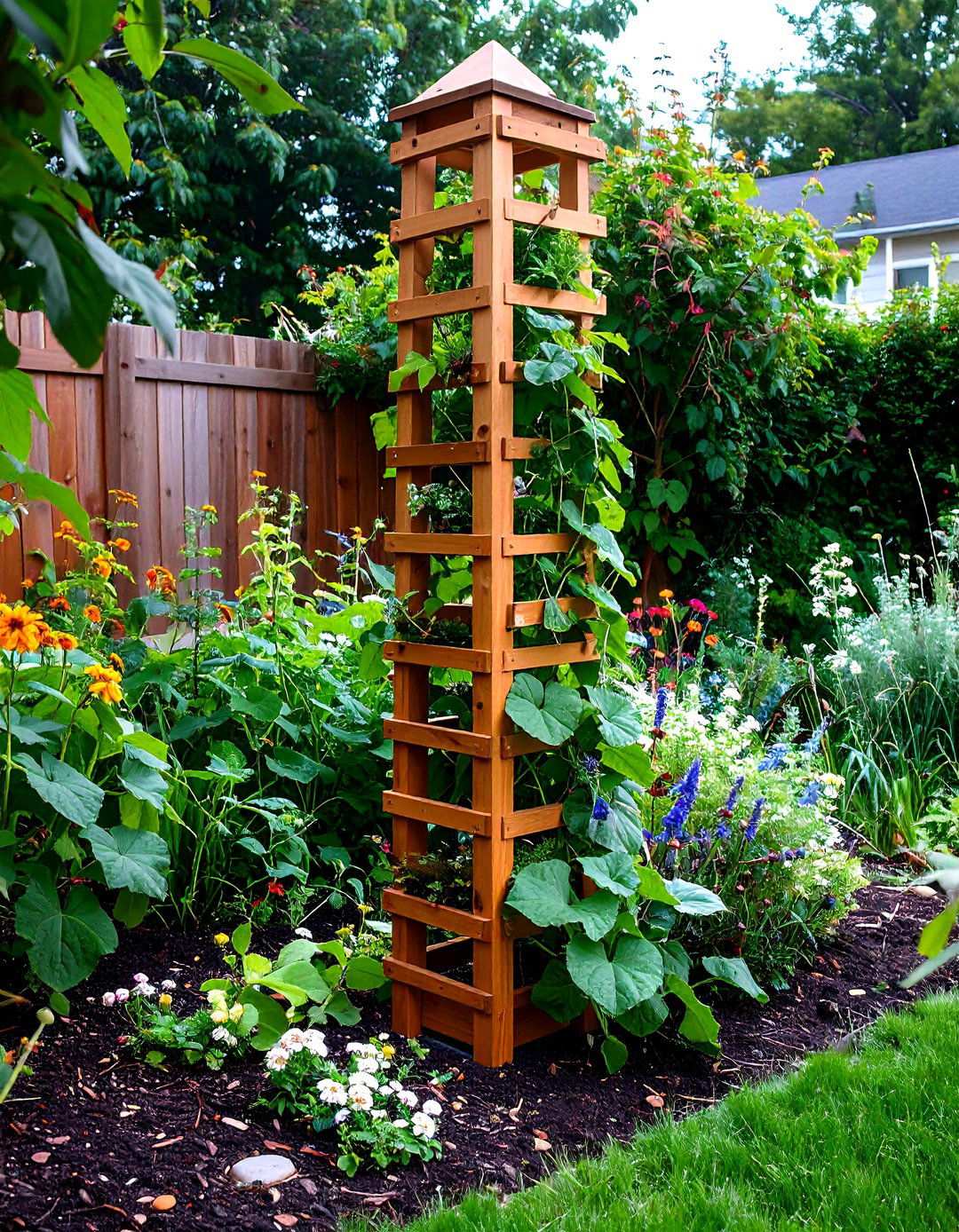
A four-sided obelisk cucumber trellis can be created using assembled cedar strips, tapered into a tower shape with horizontal rungs added every foot. This pyramidal structure not only adds visual interest but also provides a narrow footprint that can easily fit into flower borders. The natural oils in cedar help deter rot and insects, ensuring a long lifespan with minimal maintenance. By using an obelisk, gardeners can enjoy the benefits of vertical growing, resulting in straighter fruit, and enjoy the ornamental value of the tower throughout the year, even in winter when the vines have died back.
11. Lean-To Fence Line Transformation
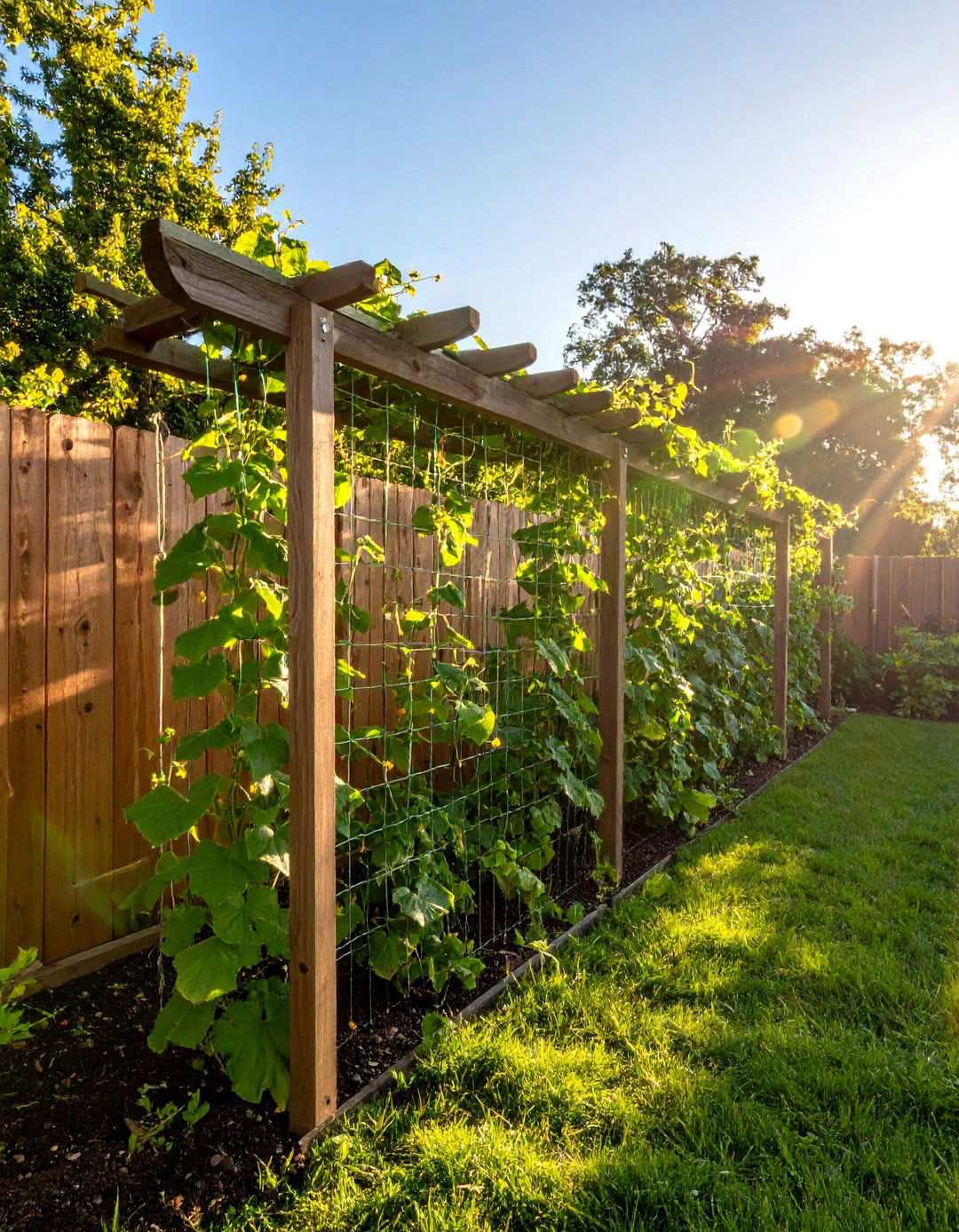
By attaching galvanized hog wire or vinyl lattice to a sunny fence at a slight outward lean, gardeners can turn an otherwise wasted space into a productive lean-to cucumber trellis. The tilted design allows vines to receive better sunlight exposure and directs rainwater runoff away from the roots. As the fence bears most of the load, the materials required are minimal, making this a quick and straightforward upgrade for suburban yards. This innovative solution not only adds functionality but also enhances the aesthetic appeal of the fence.
12. DIY PVC Pipe Framework
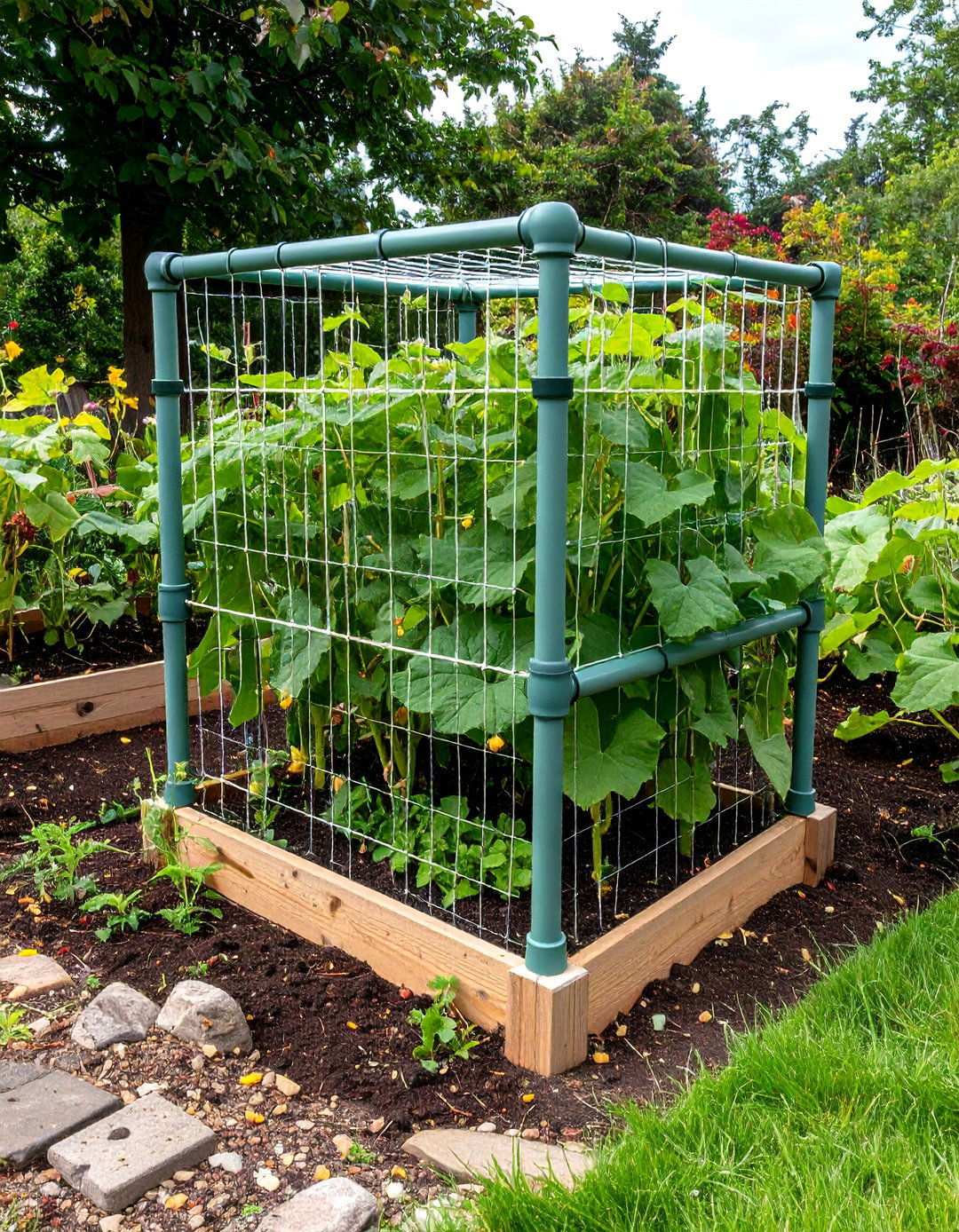
A lightweight PVC conduit system can be assembled into a customizable rectangular frame that snaps together like oversized Tinkertoys. By drilling holes every eight inches along the verticals and threading nylon twine horizontally, gardeners can create a cucumber trellis grid that is not only cost-effective but also resistant to rot. One of the most appealing aspects of this design is its ease of disassembly, making it simple to rotate crops seasonally or expand the trellis as needed. This versatile system is perfect for gardeners who value flexibility and convenience.
13. Hog Wire Panel Solution
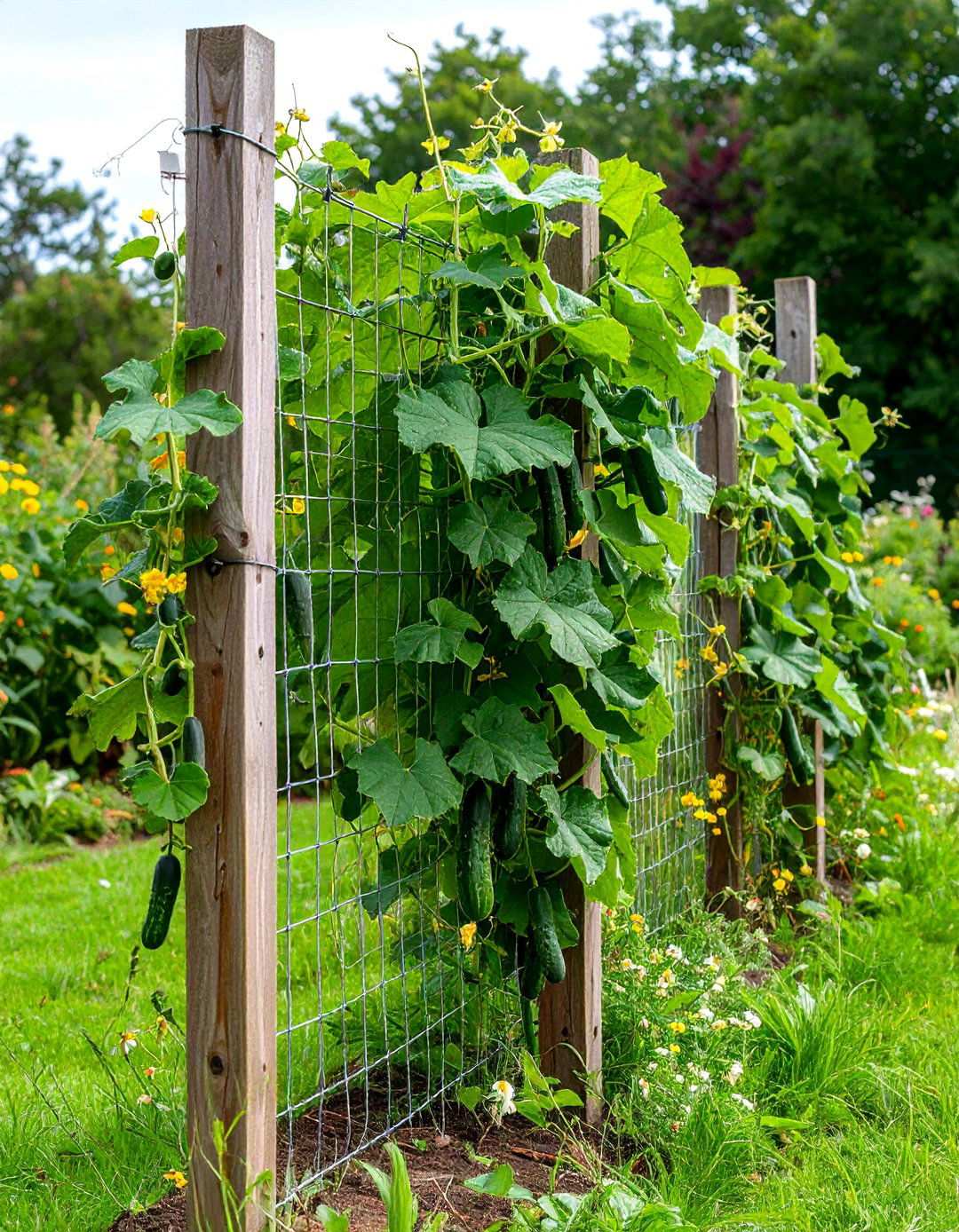
Hog panels, with their rigid welded wire and six-inch openings, can be transformed into industrial-strength cucumber trellises when mounted between pressure-treated 4×4 posts. Once installed, the grid not only provides support for cucumbers but also doubles as a windbreak and support for peas or beans in shoulder seasons. The large openings make it effortless to pick mature cucumbers from either side, eliminating the need to search for hidden monsters that sap plant energy. With a lifespan of over a decade and minimal maintenance required, hog wire panels are a popular choice among DIY enthusiasts.
14. Upcycled Patio Umbrella Trellis
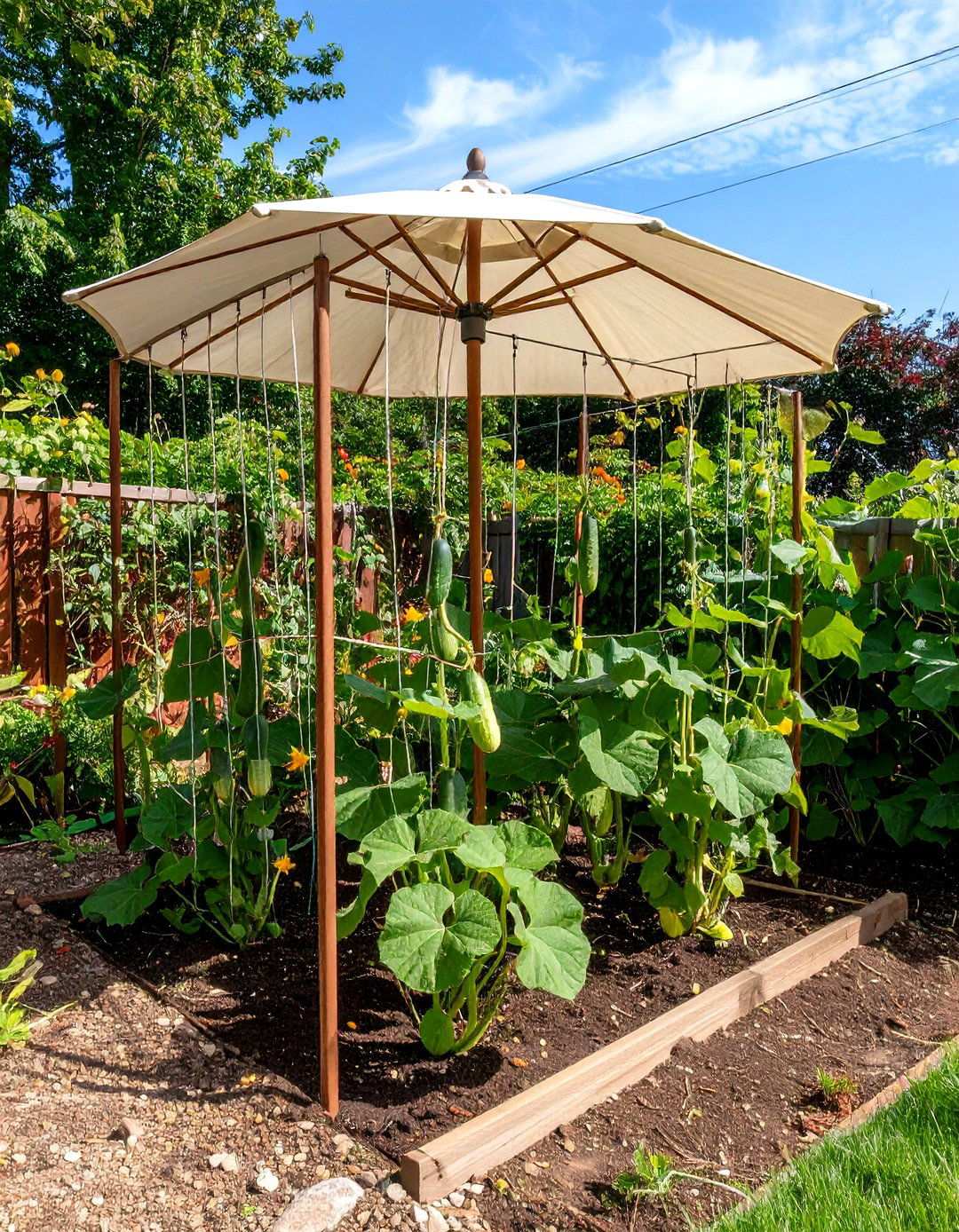
Before discarding that bent patio umbrella, consider stripping the fabric and staking the metal ribs into the soil to create a unique radial cucumber trellis. By tying strings from the center hub to each rib, gardeners can provide a spoke-and-wheel pattern for vines to climb. This creative upcycling hack not only turns junk into a quirky conversation piece but also provides 360-degree access for pruning and harvest. Growers who have adopted this innovative solution appreciate the benefits of repurposing an old umbrella into a functional and aesthetically pleasing trellis.
15. Versatile Garden Lattice Solutions
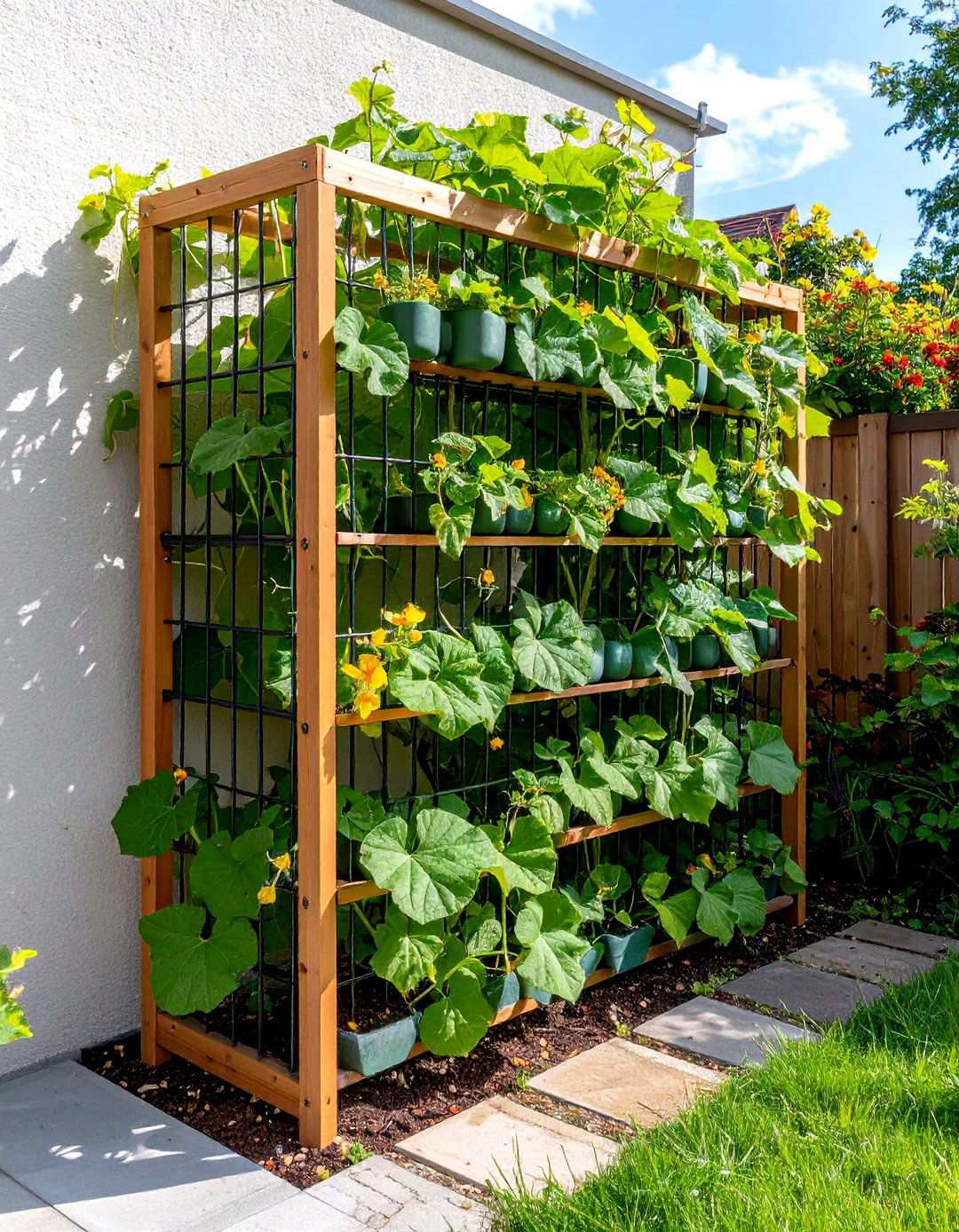
A clever and space-saving approach to cucumber trellis design is the accordion lattice expandable trellis. This innovative product pinches inward for storage and stretches outward to any width, making it perfect for awkward corners. By mounting the base on short stakes and fanning the top against a wall or between posts, gardeners can create a flexible support system for their vines. The adjustable aperture size ensures a secure grip throughout the season, as it can be tightened for young vines and opened wider once stems thicken. This solution is available at Amazon and The Home Depot, catering to the needs of urban and rural gardeners alike.
16. Miniature Trellises for Compact Spaces
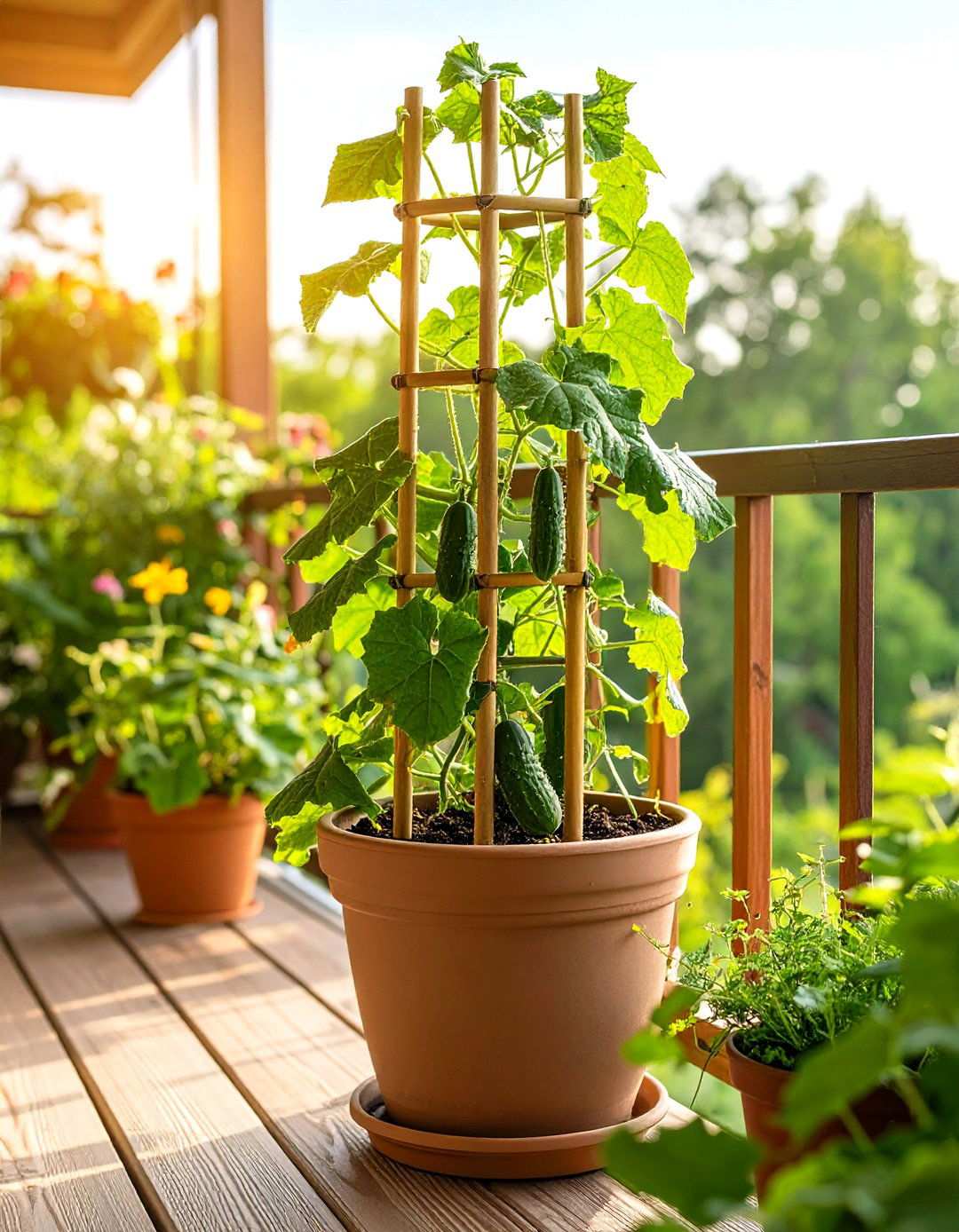
Urban gardeners can create a compact cucumber trellis by slotting a half-height wire panel or bamboo hoop directly into an 18-inch pot. This clever setup is ideal for dwarf vining varieties, which can thrive in such a confined space. By combining high-nutrition potting mix with slow-release fertilizer, gardeners can witness the amazing productivity of a single vine, producing dozens of crisp snacks up a two-foot frame. Frequent watering is crucial, but the fruit hangs outside the pot’s rim, keeping picking neat and balcony railings clean. This miniature trellis solution has been showcased on YouTube, inspiring gardeners to make the most of their urban spaces.
17. Upcycled Trellis Solutions for Eco-Friendly Gardeners
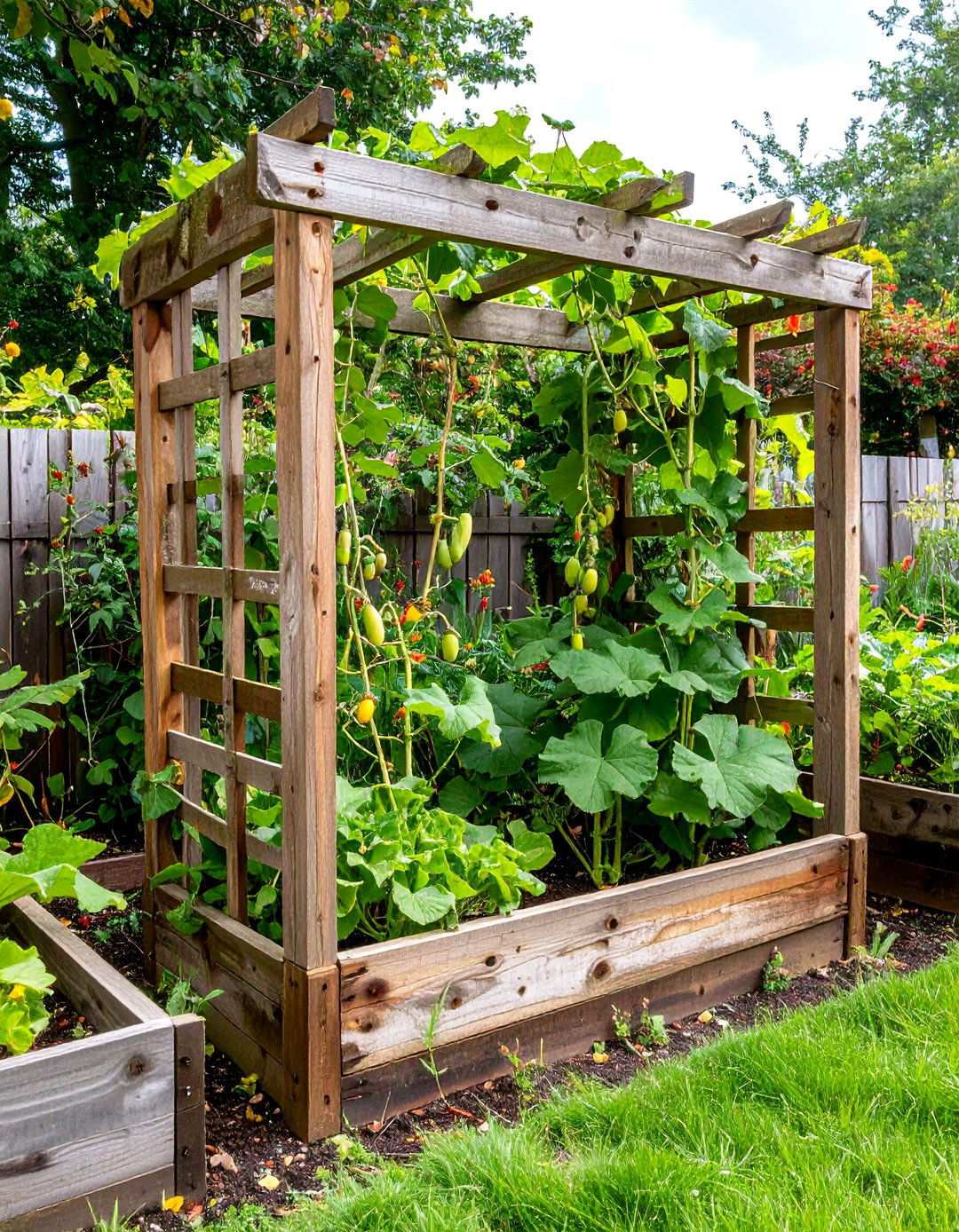
Gardeners looking to create a charming and eco-friendly cucumber trellis can repurpose old wooden crib sides. By stripping the lead paint and sealing the slats, they can create a trellis perfect for lightweight cucumber vines. Two such rails can be used in a “tee-pee” formation for stability or anchored to short rebar stakes for added support. This creative approach not only reduces waste but also allows gardeners to see a piece of their child’s history feed the family anew. The Spruce has featured this upcycled trellis solution, highlighting the potential for creative reuse in gardening.
18. Quick and Easy Trellis Installation
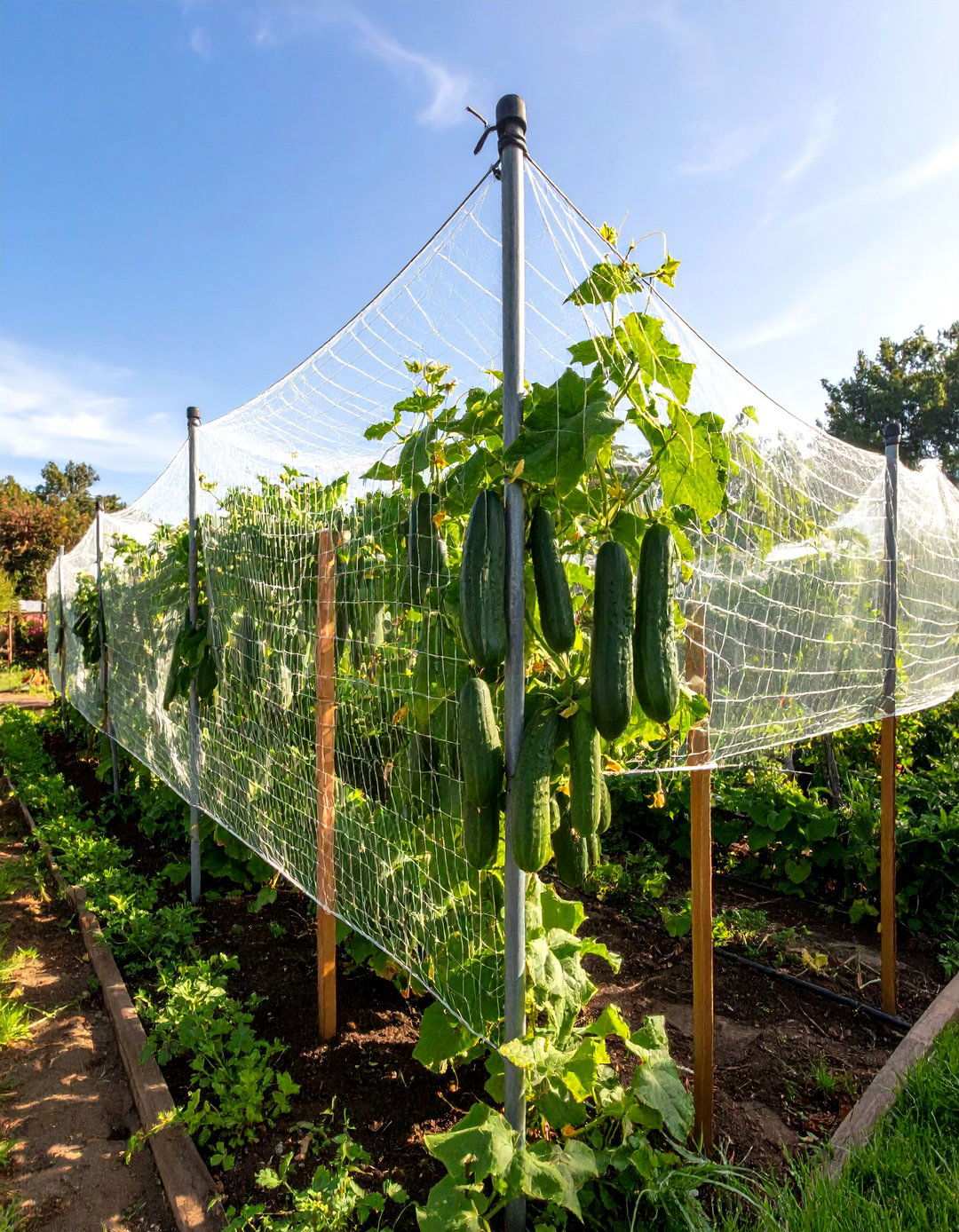
For a fast and hassle-free installation, gardeners can drive metal T-posts every six feet and stretch heavy-duty nylon trellis netting between them. This lightweight cucumber trellis curtain supports fruit up to four pounds and can be composted or recycled at season’s end if damaged. Users have reported that the flexible grid makes storm cleanup easier, as it can be simply re-clipped instead of repairing rigid frames. In fact, Reddit users have praised this solution for its convenience and practicality.
19. Aesthetic Trellis Solutions for Ornamental Gardens
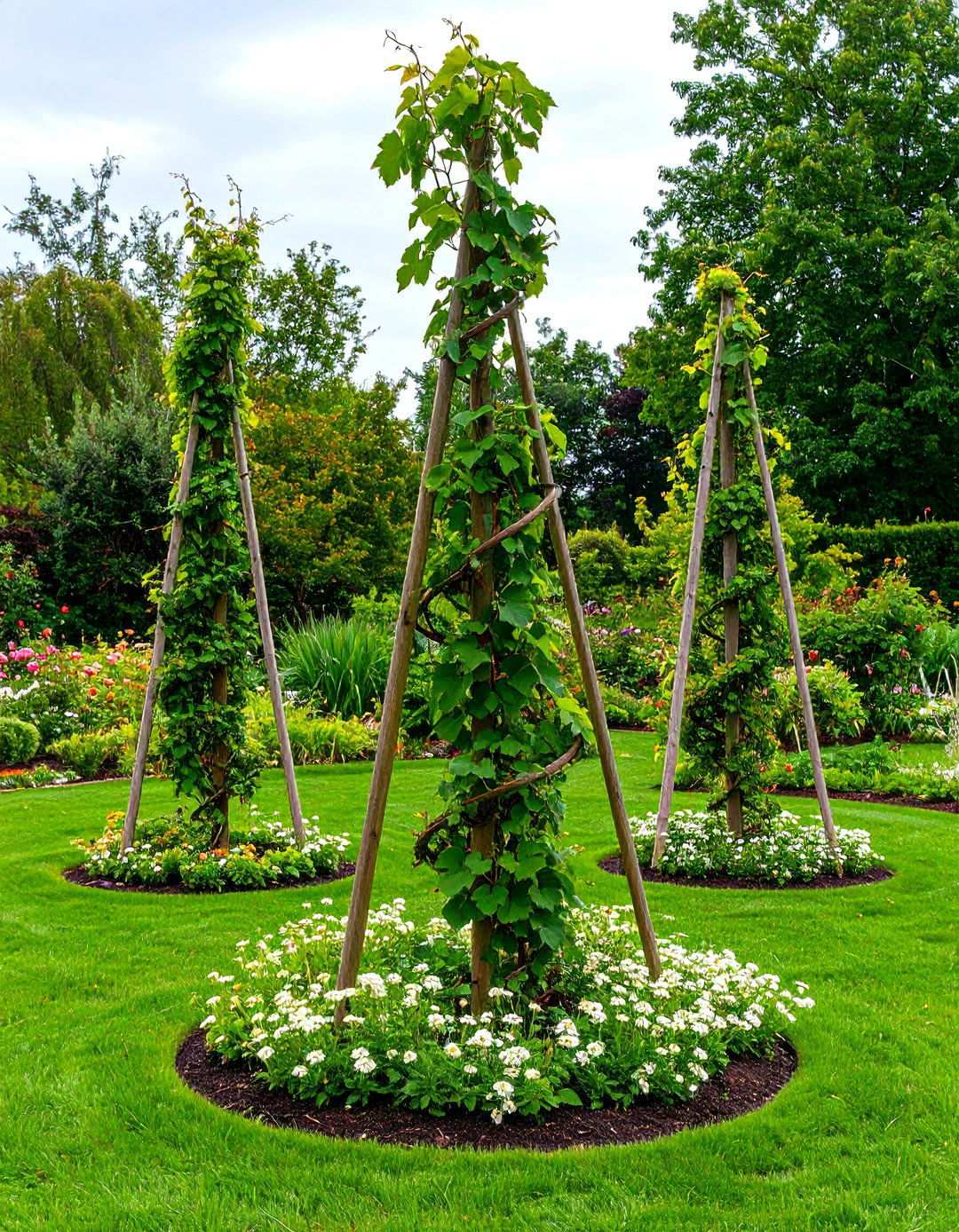
Gardeners looking to add a touch of elegance to their ornamental beds can create a striking triangular cucumber trellis cluster by grouping three slim tuteurs—small obelisk trellises—into a circle and lashing their tops. This sculptural approach shines in gardens where aesthetics matter as much as function, blending edibles and ornamentals seamlessly. By planting one vine at the base of each leg and training them clockwise, gardeners can create a living whirl that adds winter interest once vines die back. Flower Patch Farmhouse, Better Homes & Gardens, and other gardening publications have showcased this unique trellis solution, highlighting its potential for adding visual interest to gardens.
20. Woven Branch Trellis for Sustainable Harvests
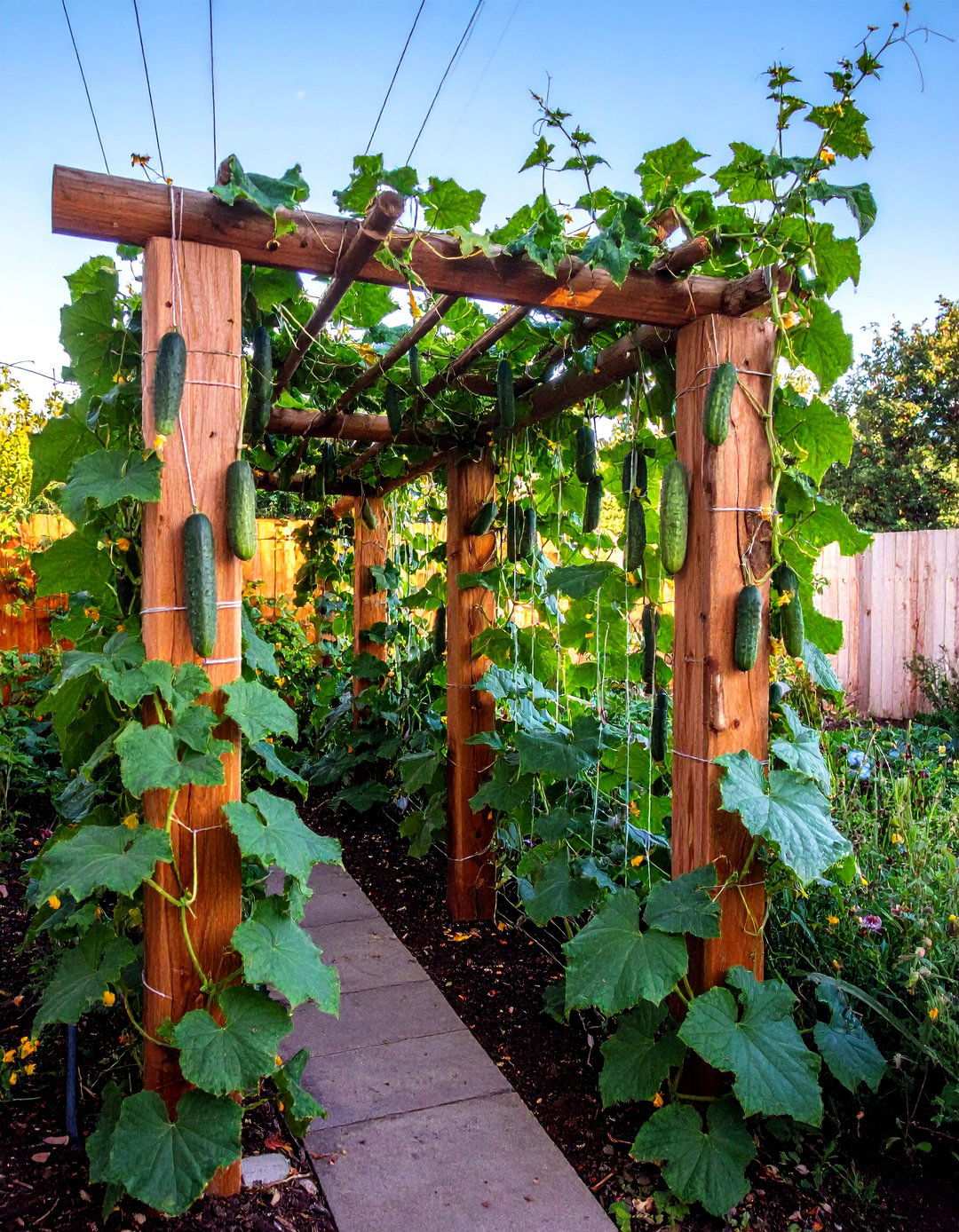
For those who prefer incorporating natural elements into their gardening endeavors, a wattle-style cucumber trellis can be created by skillfully interweaving flexible branches between sturdy upright posts. As the vines grow upward, the organic texture of the woven branches provides ample support, while the entire structure eventually decomposes when its useful life comes to an end – a testament to waste-conscious design. This approach has earned praise from homesteaders who appreciate its eco-friendly aspects, particularly the use of locally sourced materials and the resulting minimal impact on the environment. Furthermore, cucumbers trained to grow on the woven branches often blend seamlessly into native landscapes, adding a charming aesthetic to the overall surroundings.