1. Elevating Curb Appeal with a Brick-Edged Border
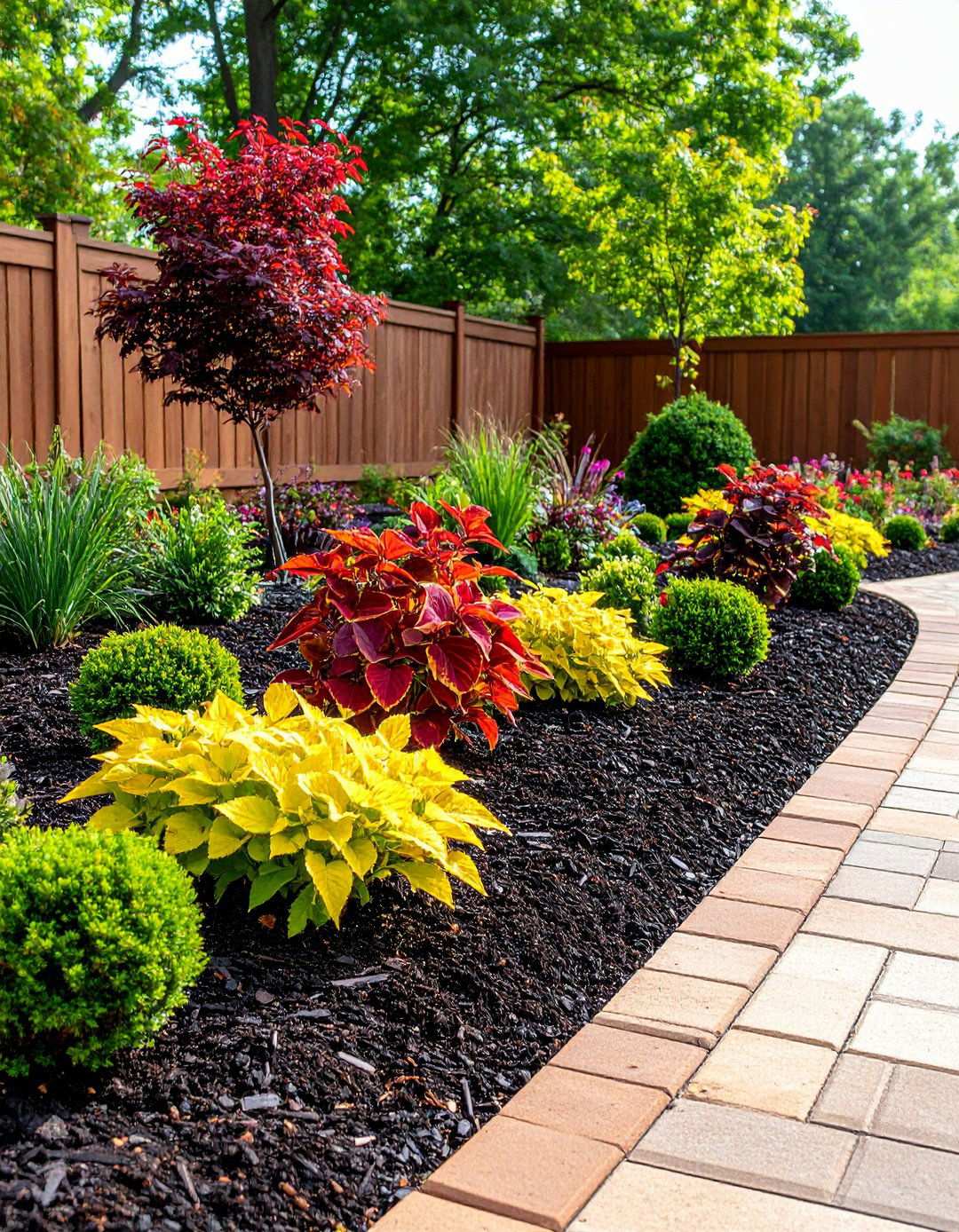
A vibrant first impression is often formed at the curb, and a neatly framed border of precast bricks with inky black mulch creates an instant, sophisticated outline for shrubs and annuals. The dark ground layer has the added benefit of absorbing glare, allowing bright coleus, dwarf boxwoods, or seasonal bulbs to appear almost spotlighted against it. For optimal results, lay bricks flush to grade so the mower wheel rides the edge, eliminating the need for tedious string-trimming. To maintain a weed-suppressing depth without suffocating roots, keep the mulch at two to three inches throughout the season. A light top-dress each spring will ensure the bed retains its sharp, graphic definition long after neighboring yards fade into mid-summer chaos.
2. Modern Minimalism with Gravel & Black Mulch
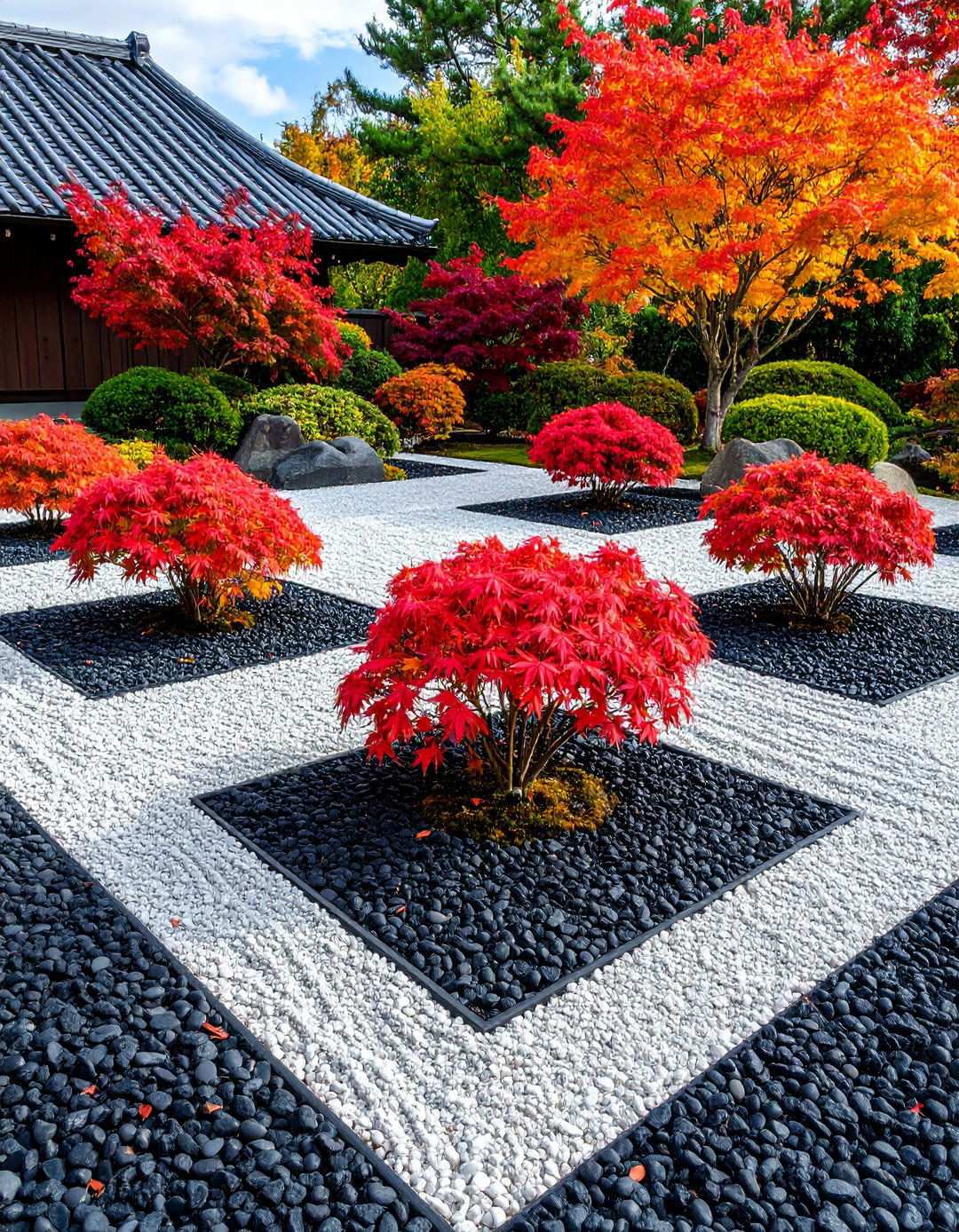
In contrast to a single-texture bed, alternating stripes or checkerboards of river gravel and black mulch create a dynamic and modern “living art” floor that complements sleek hardscapes and contemporary architecture. The mulch provides fertile rooting zones for architectural plants, such as upright dwarf Japanese maples, while the gravel captures roof runoff and reduces splashing on siding. For optimal results, keep planting pockets generous and install a hidden steel edging strip to prevent materials from drifting. To maximize tonal contrast, choose cool-gray stones, then echo that palette in patio furniture or planters to tie the whole vignette together.

As an Amazon Associate I earn from qualifying purchases.
3. Vibrant Hydrangeas & Hostas on a Dramatic Backdrop
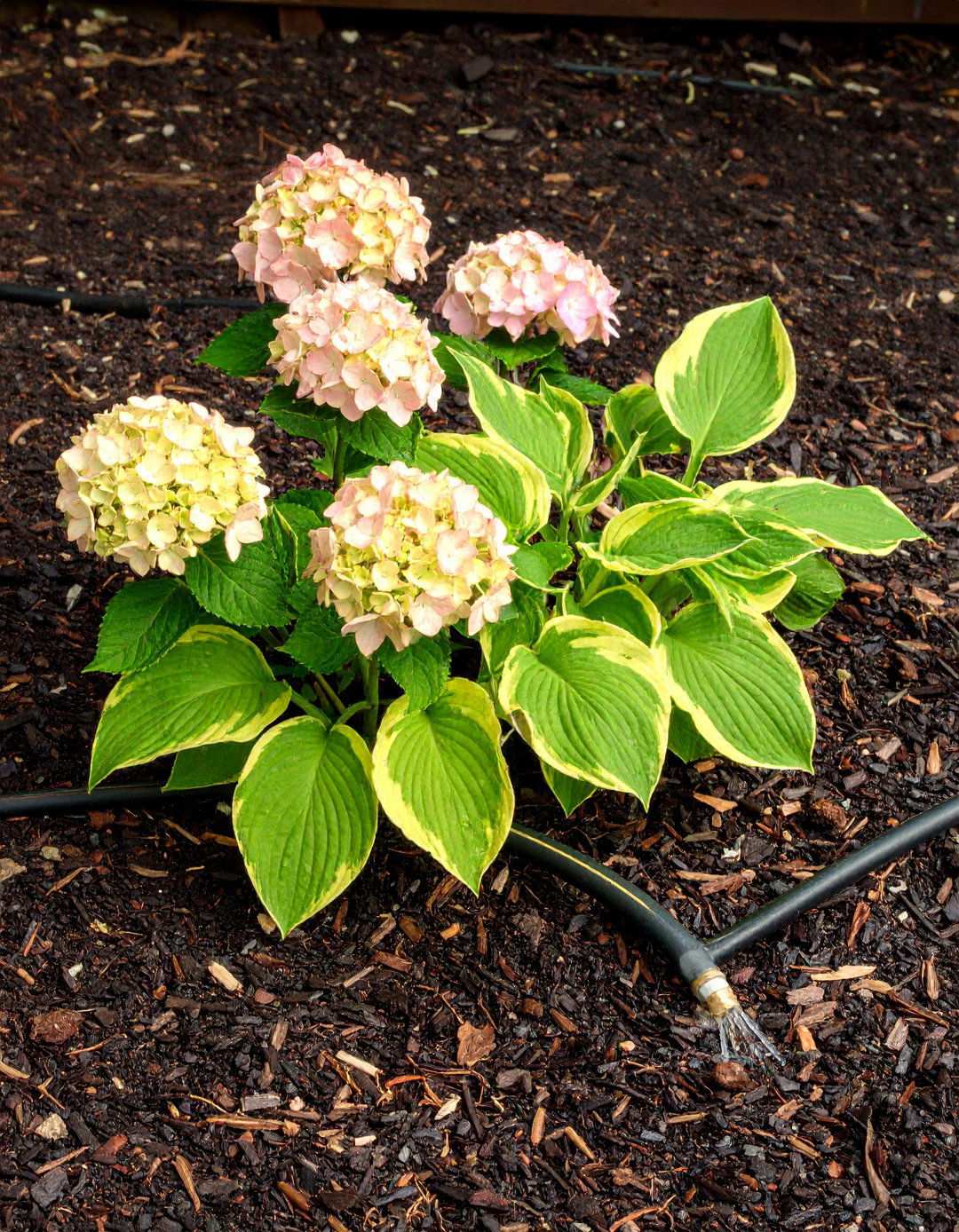
Few plant combinations feel fresher than pastel mop-head hydrangeas billowing over lime-veined hostas, yet both exhibit their best colors when anchored by dark mulch. The near-black background has the added benefit of intensifying petal blues and acid-greens while holding the moisture these shade-loving plants crave. To achieve optimal results, space plants so mature leaves barely kiss, spread mulch in a smooth layer, and drop a slow-release organic fertilizer under the mat each May for bigger blooms. To ensure even watering and spotless foliage, install a discreet soaker hose beneath the mulch.
4. Native Pollinator Patch Wrapped in Ebony Mulch

For those seeking a harmonious blend of ecological impact and low maintenance, a vibrant tapestry of native coneflowers, beardtongue, and little bluestem surrounded by ebony mulch presents a winning combination. The mulch forms a tight bond, effectively suppressing opportunistic weeds that might otherwise outcompete seedlings, while its thermal properties accelerate spring soil warm-up, allowing solitary bees to emerge in perfect synchrony. Edge the bed with reclaimed logs or stone to maintain the wild aesthetic, yet refresh the top half-inch every March to bury weed seeds and restore the deep hue that migratory butterflies use as a visual cue.
5. Moonlit Pathway Framed by Ebony Mulch
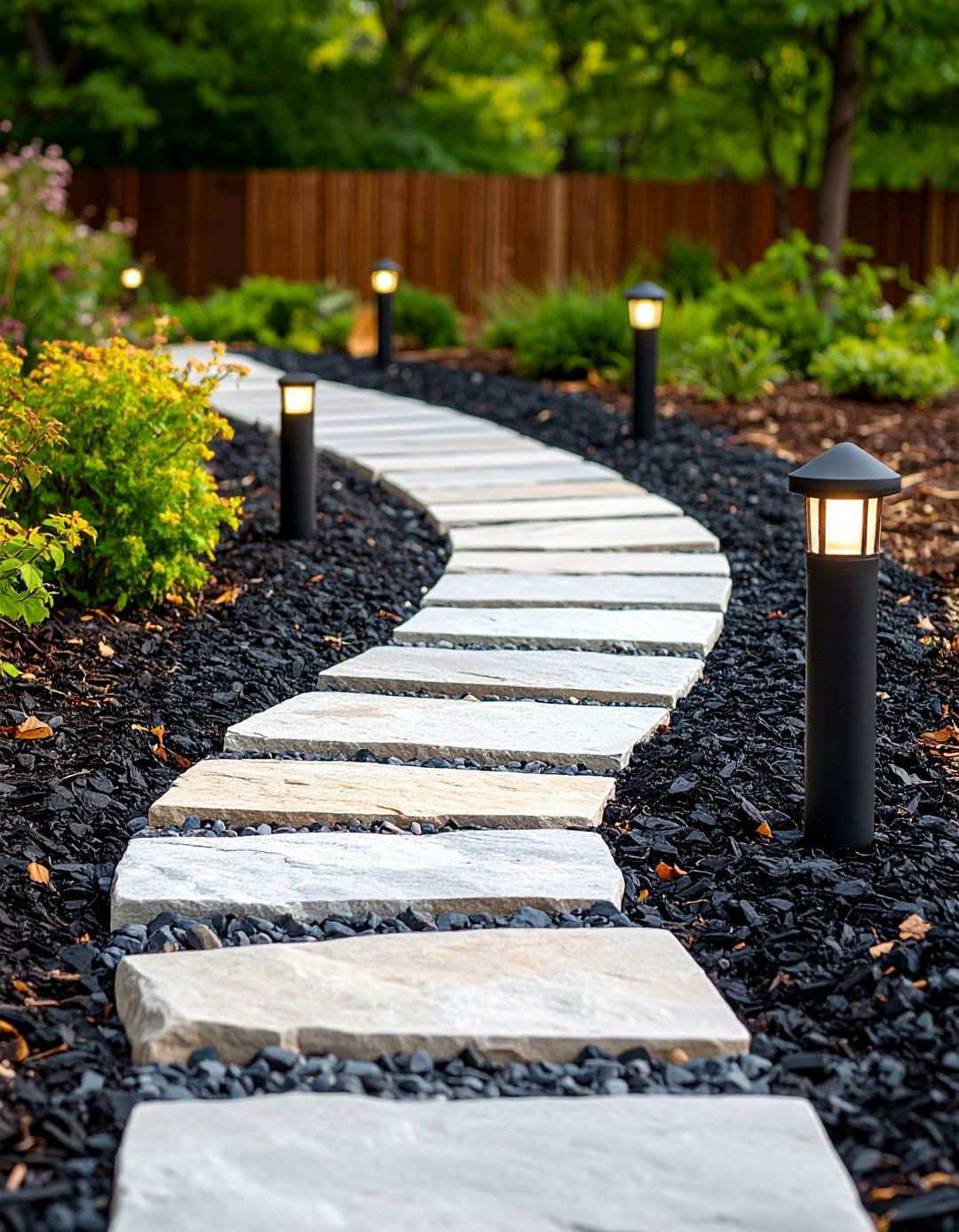
A midnight stroll transforms into a cinematic experience when low-wattage solar path lights bounce off the ebony mulch, creating a runway effect that guides the eye. The dark surface not only hides drip-line tubing but also enhances the brightness of inexpensive fixtures, making it an attractive option for renters or those on a budget. To mirror the path’s curves, use flexible edging, drape lights at staggered heights, and then mulch right up to the pavers’ edge to create a striking shadow-box effect that safely guides guests after dusk.
6. Raised Vegetable Beds Mulched with Ebony for Weed-Free Harvests
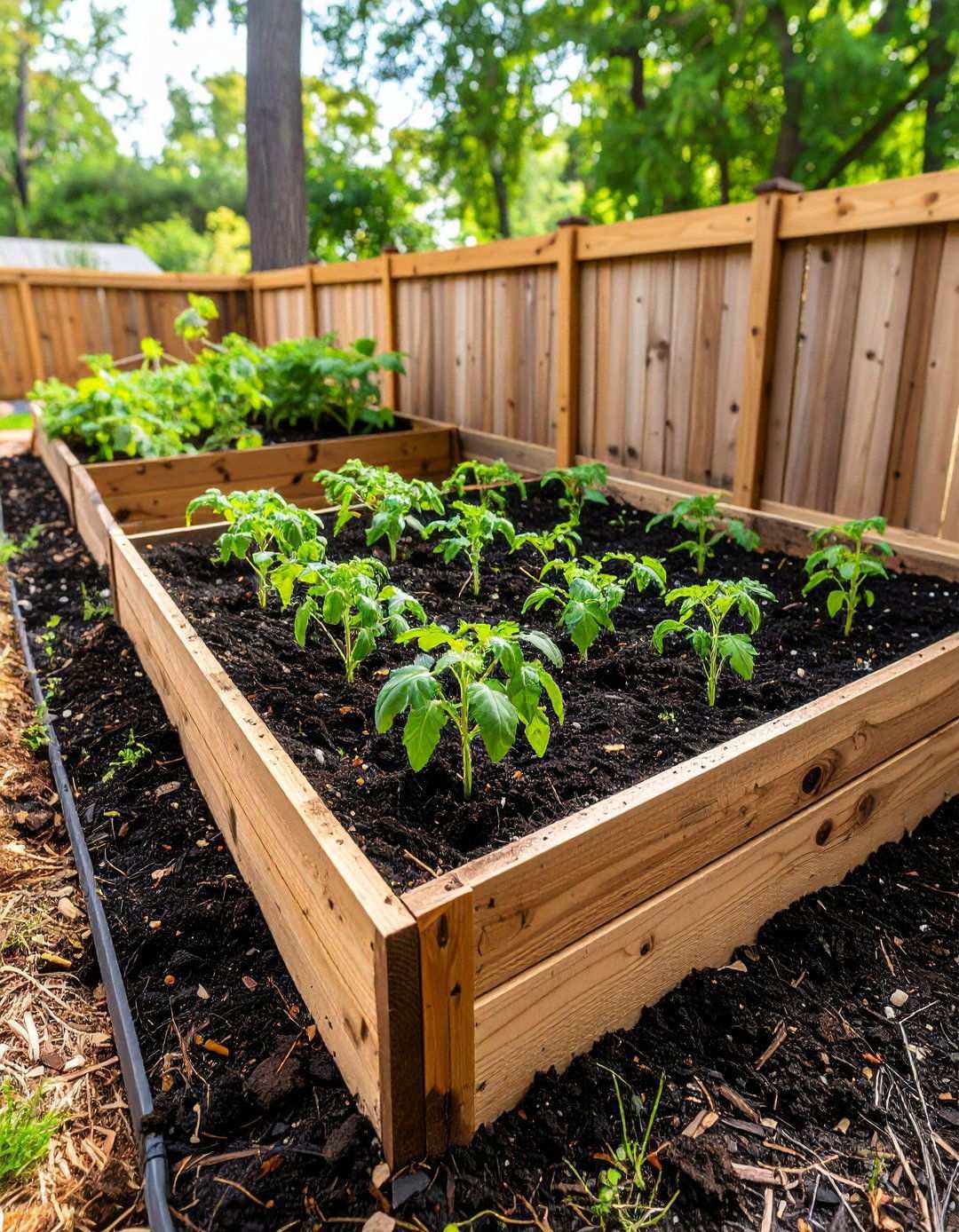
Wood-framed raised beds already enjoy a head start on ground plots when it comes to warming up; topping them with ebony mulch adds an extra layer of insulation that speeds germination and blocks weed seeds. After sowing, pull back the mulch to expose rows until seedlings reach 5 cm in height, then tuck it back around stems. This thoughtful approach reduces water loss by up to 25 percent on hot days, translating to less daily irrigation and fewer cracked tomatoes. At season’s end, rake spent mulch into compost or solarize under clear plastic to reuse it the following year.
7. Terraced Slope Secured with Ebony Mulch Bands
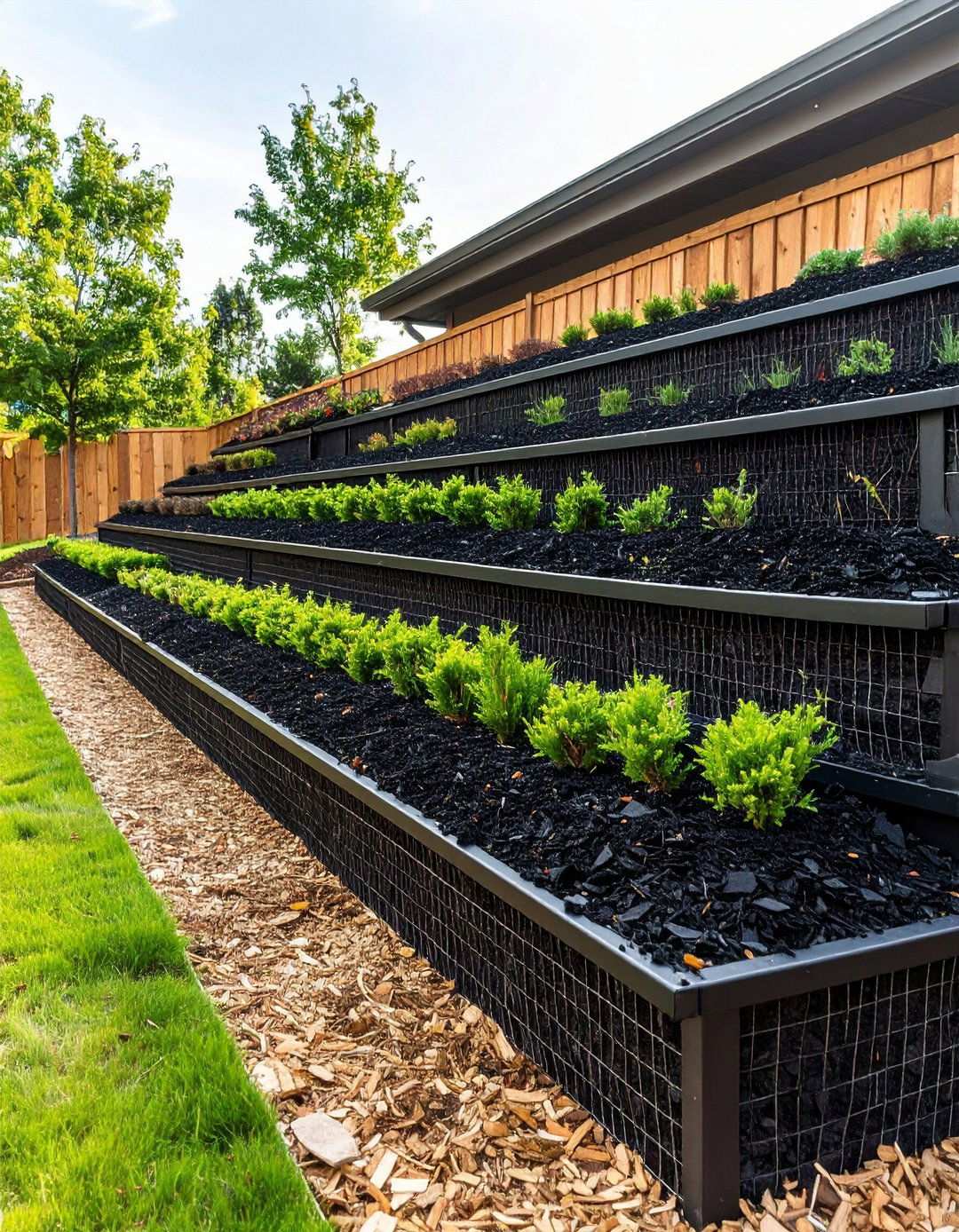
Steep banks often pose a challenge, but tiering them with short retaining timbers and packing each shelf with coarse hardwood mulch dyed ebony locks soil firmly in place. Thicker, mat-forming chips resist runoff, especially when pinned with jute netting and groundcovers like creeping juniper. The dark mulch not only camouflages the net but also visually separates the green cascades on each terrace. Tamp chips lightly to allow rain to soak in rather than sheeting off, and inspect after heavy storms to patch thin spots before erosion resumes.
8. Tree-Ring "Donut" of Ebony Mulch—A Soothing Solution
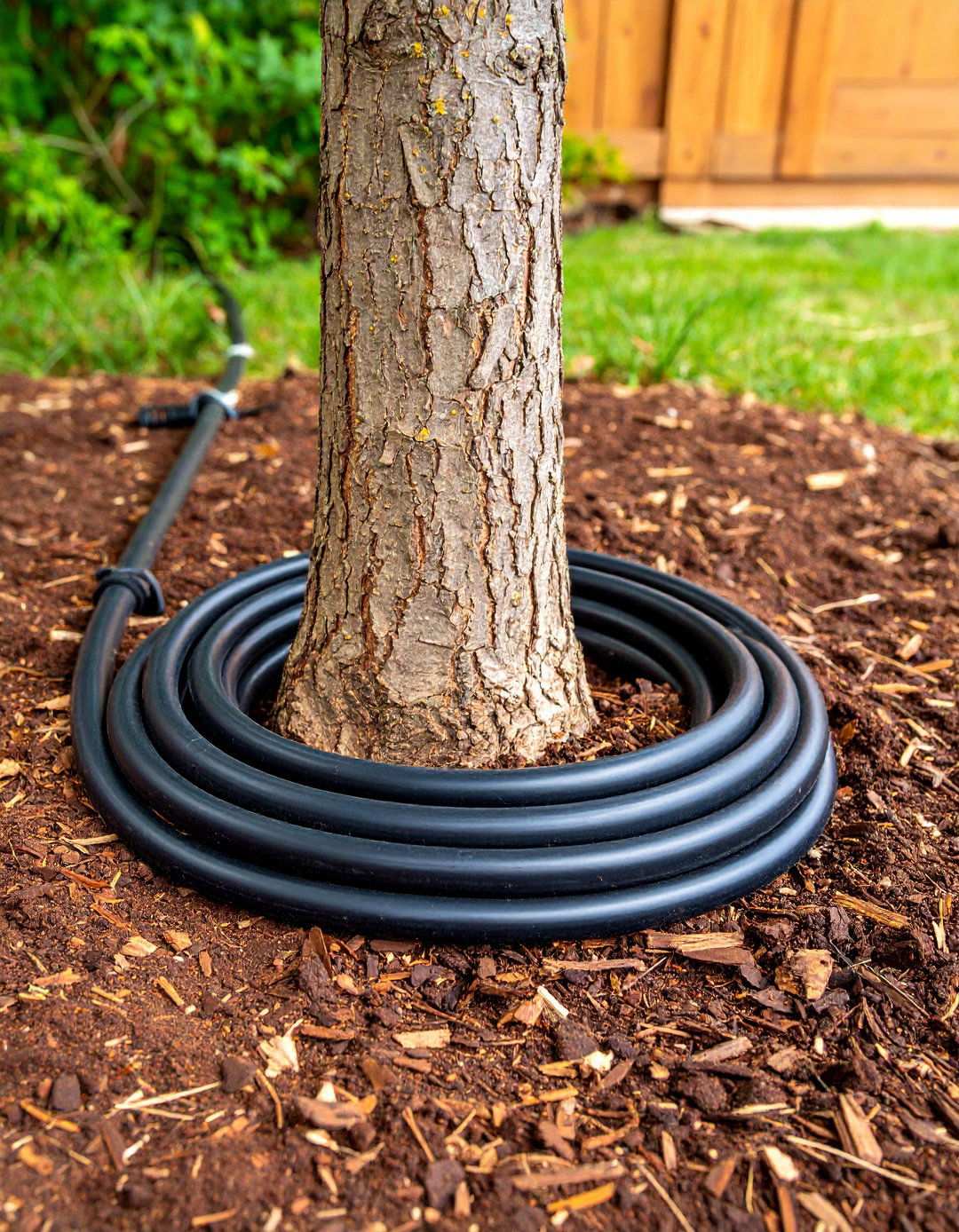
Proper mulching around trunks reduces the risk of mower wounds and boosts moisture levels, yet the traditional “mulch volcano” approach can suffocate bark. Instead, craft a five-to-seven-centimeter-deep ebony mulch donut that clears the root flare, extending to the drip line for mature shade trees. This thoughtful design allows the dark color to absorb spring sun, helping feeder roots wake earlier, while a hidden soaker loop under the ring delivers slow moisture where roots drink most. Refresh the color yearly, but remove excess so depth never exceeds ten centimeters.
9. Rubber Black Mulch for Low-Maintenance Play or Pet Zones

For areas prone to splinters, such as under swings or off-leash runs, rubber black mulch provides a worry-free solution. Its durable, indestructible nuggets prevent tunneling dogs and seasonal blow-off, significantly reducing the need for annual top-ups compared to wood chips. By installing a geotextile fabric beneath the mulch, persistent weeds can be contained, and a smooth surface can be maintained by raking quarterly. Any spills can be easily cleaned with a hose, and the pigments used in the mulch meet playground safety standards. However, it’s essential to ensure the supplier’s certification, particularly if pets are involved.
10. Container-Cluster Courtyard Set on Black Mulch Carpet
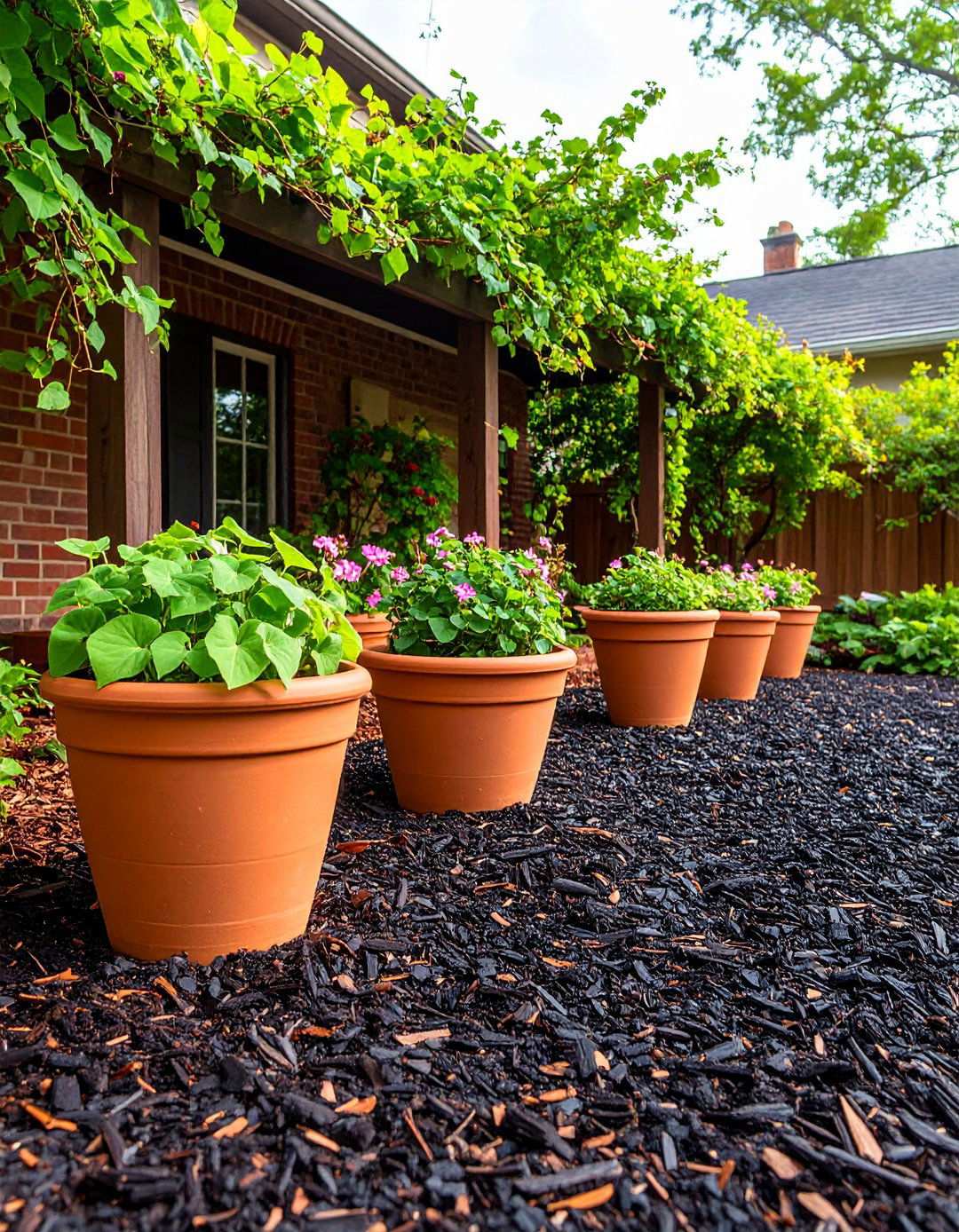
A patio cluttered with terra-cotta pots can look chaotic; a unified look can be achieved by laying a continuous field of black mulch beneath the containers. This not only masks drip stains but also creates a cohesive visual effect. To soften the lines and highlight the leaf colors, plant spillers like sweet potato vine in containers, allowing the foliage to arc over the black floor. Keep a two-centimeter gap between the pot base and the mulch to prevent root-rot, and use a handheld blower weekly to keep the area tidy, as the mulch won’t fling like gravel but will shed fallen petals in seconds.
11. Zen Strip of Ornamental Grass, Rock & Black Mulch
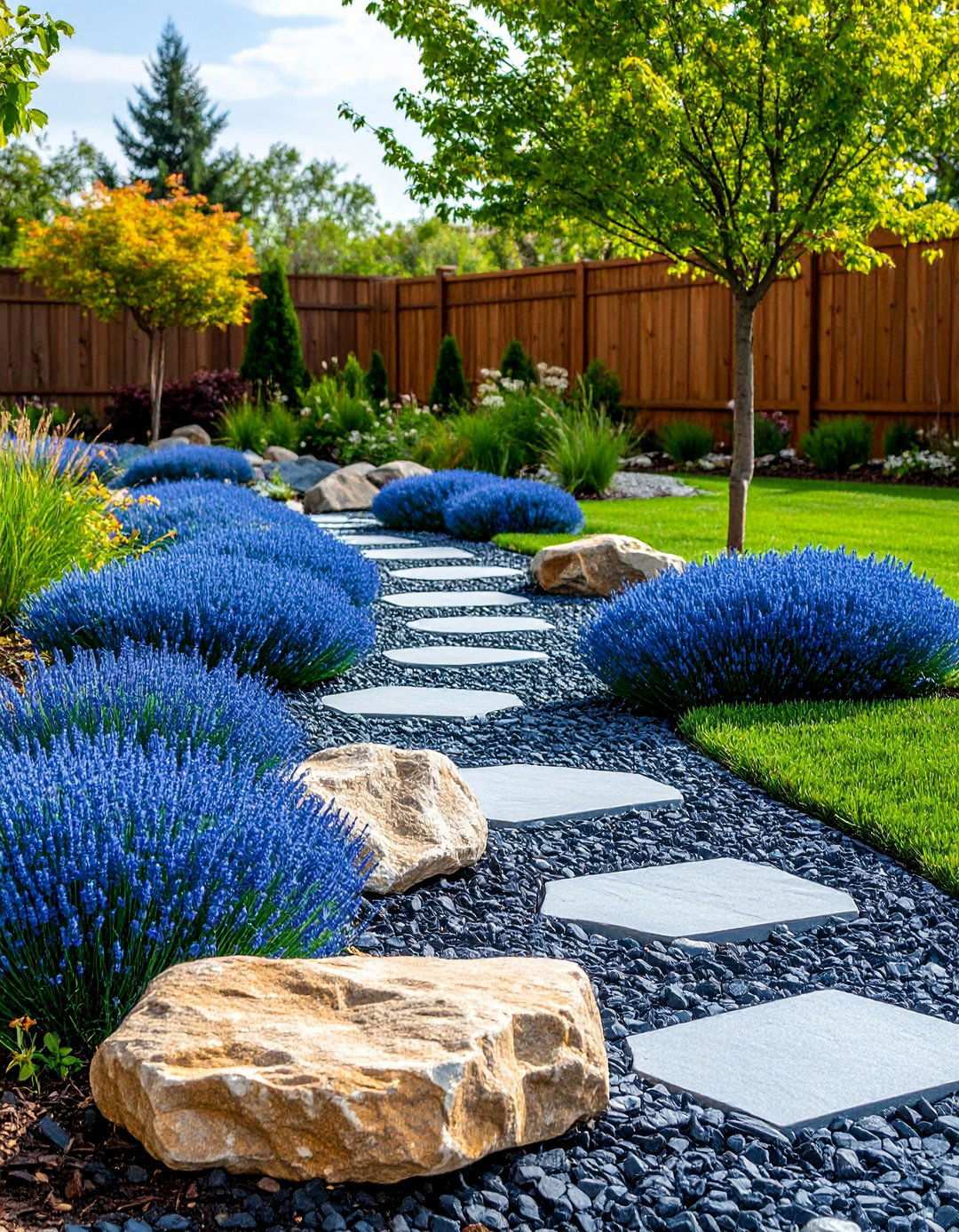
For an instant sense of calm beside a deck, consider combining clumping blue fescue, weathered granite boulders, and a silky bed of black mulch. This low-water design nods to Japanese dry gardens, and the black mulch amplifies the feathery grass silhouettes while catching evening uplights for a subtle glow. To maintain the minimalist rhythm, rake the mulch into flowing lines that echo wind patterns, and promptly thin any self-seeding weeds that may appear.
12. Seasonal Color Swaps Made Bolder by Black Mulch
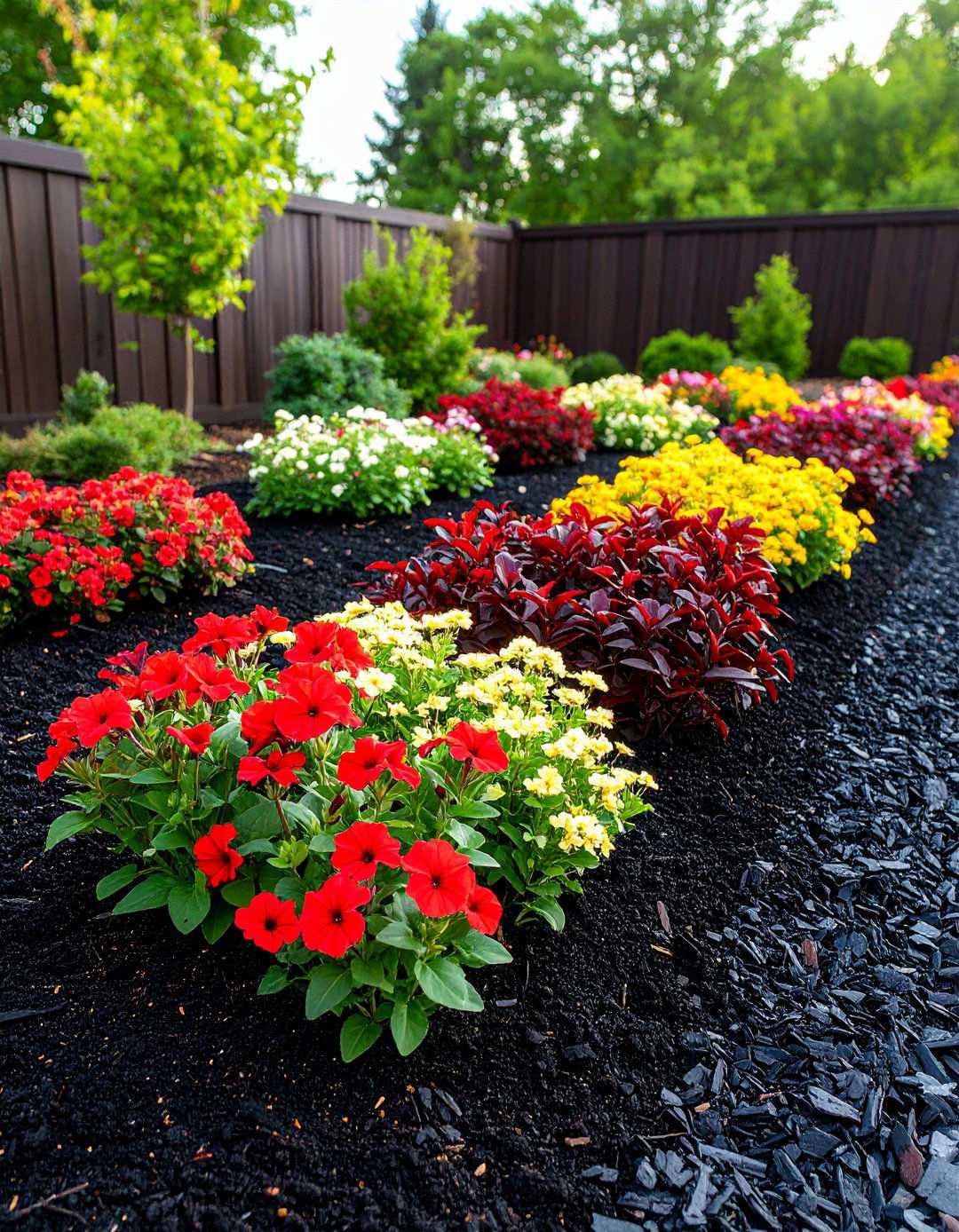
Gardeners who overhaul beds seasonally know that fresh annuals shine harder against the neutral background of black mulch. The dark tones enhance the colors of the flowers, deepening reds, neons, and even pastels, giving store-bought flats an immediate designer polish. However, as dyed chips can fade in UV exposure, it’s essential to rotate or top-dress the mulch after 12 months to maintain uninterrupted saturation and bury spent petunia litter before cold sets in.
13. Sustainable Recycled-Wood Black Mulch Reduces Waste
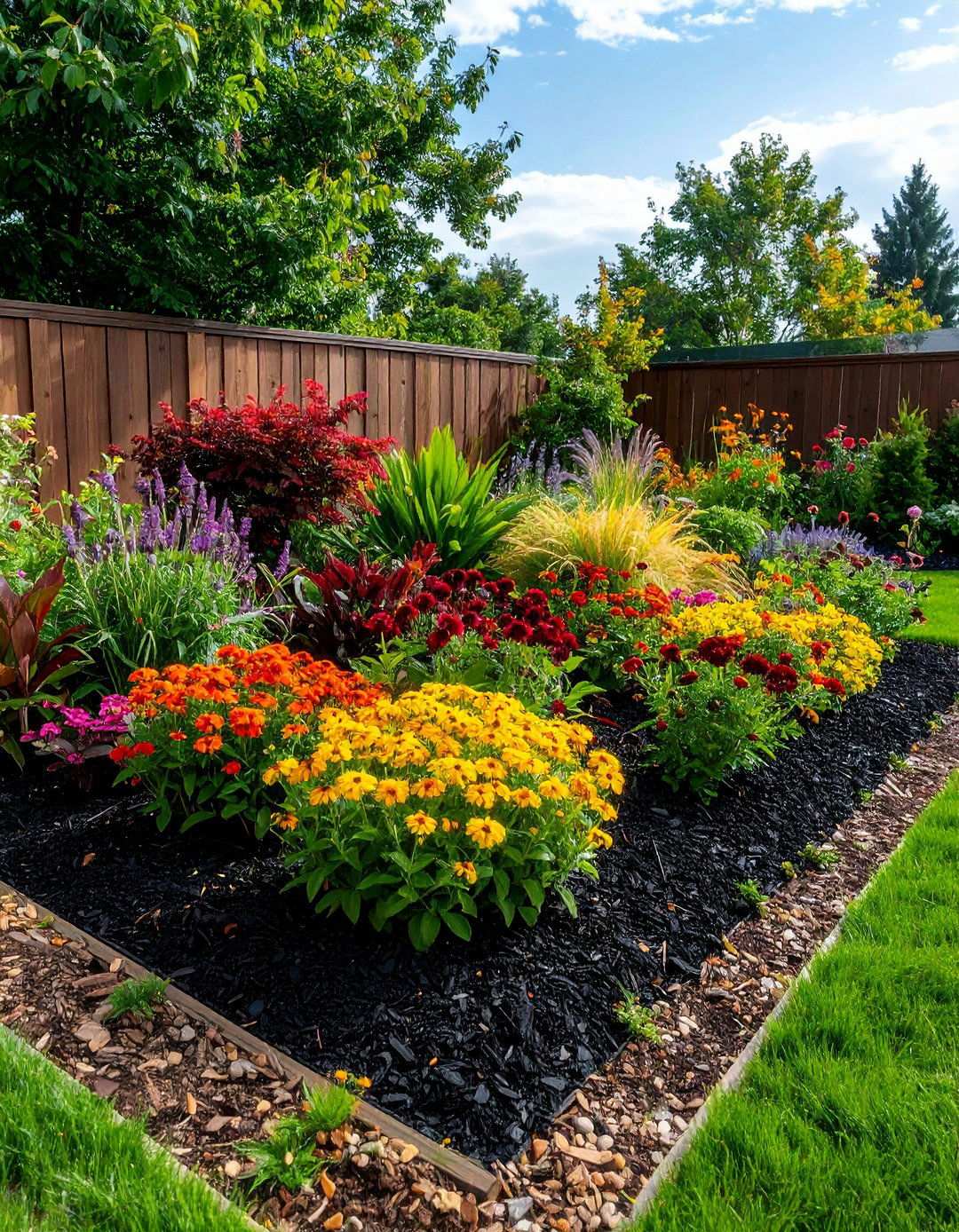
When choosing mulch, consider selecting products made from clean, kiln-dried pallet scrap, which diverts lumber from landfills while delivering the same moisture savings as virgin bark. Many products use carbon-based pigments deemed plant-safe, but it’s crucial to verify that the lumber sources are free of pressure-treated residues for long-term soil health. Before committing to a large area, spread a thin test layer, water well, and check for odor or residue, especially if the mulch will be used in edible beds.
14. Unlocking Herb Potential with a Heat-Absorbing Black Mulch Edge
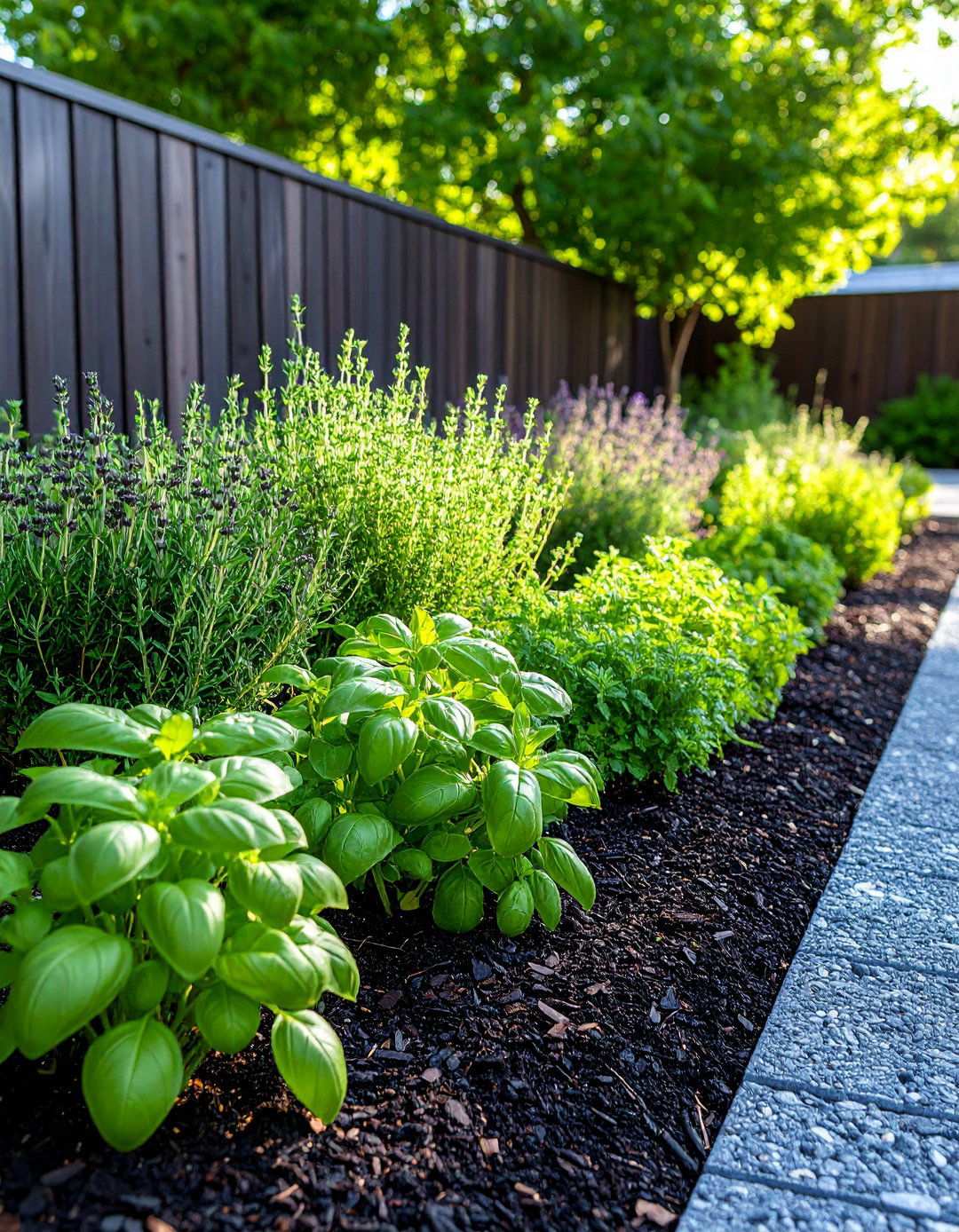
A strategically placed black mulch edge can significantly boost soil temperatures, providing the perfect conditions for Mediterranean herbs that struggle with cold springs. Basil, thyme, and sage planted along a pathway will thrive when their roots stay warm and moist. To avoid waterlogged soil, maintain thin layers of mulch, around five centimeters, and regularly harvest outer stems to encourage vigorous regrowth, which will naturally hide any late-season fading.
15. Waterwise Xeriscape Beds with Black Mulch Mulching
In arid regions, pairing drought-resistant perennials with a deep layer of black mulch can reduce evaporation by up to a quarter compared to bare soil, a crucial advantage during droughts. Combine agastache, yucca, and silvery artemisia for a visually striking display, and group plants by their water requirements to optimize drip irrigation hidden beneath the mulch. Periodically fluff the mulch with a metal rake to break up crusts, allowing thunderstorms to penetrate the soil rather than running off.
16. Moody Monochrome Landscapes with Dark Foliage and Black Mulch
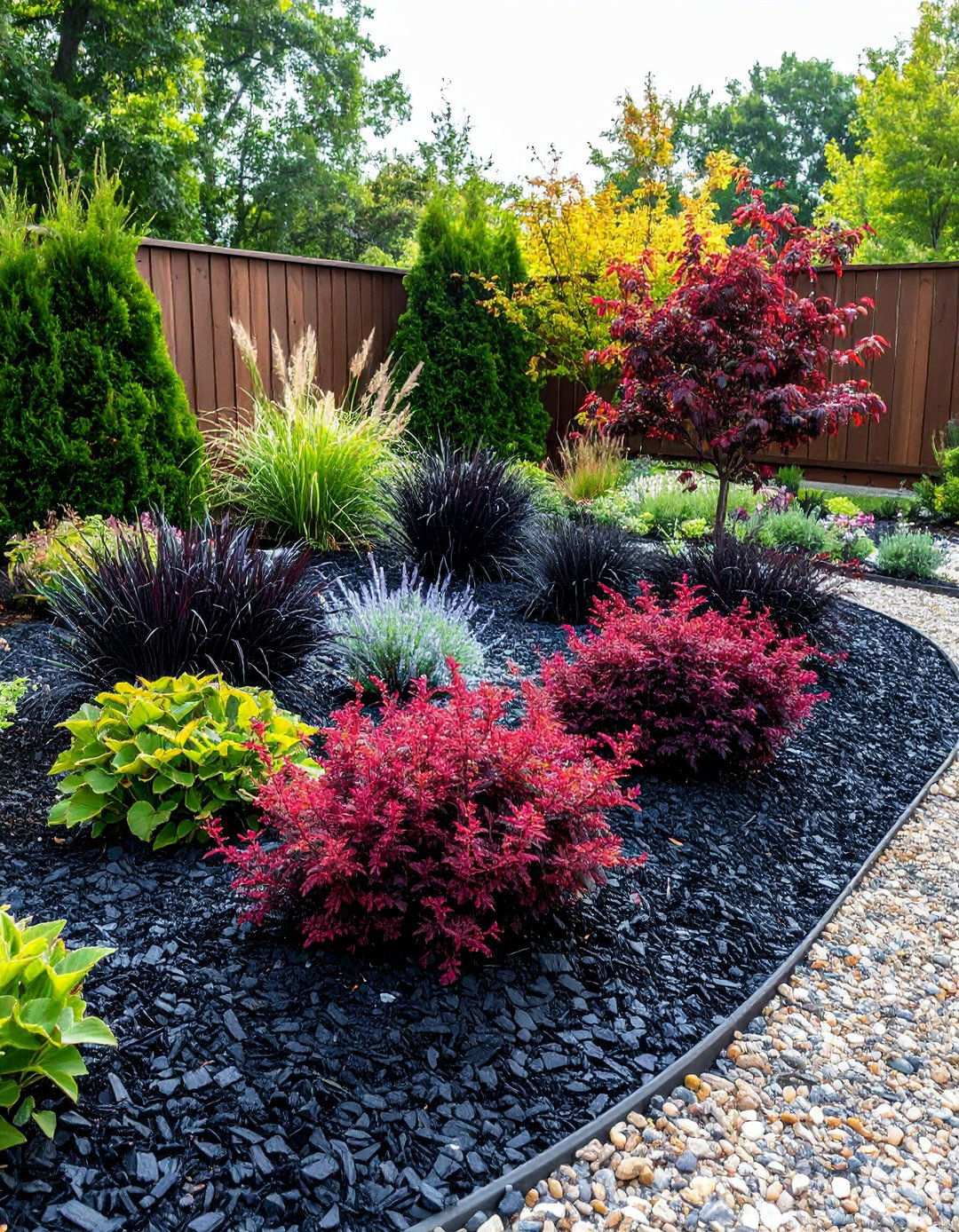
The unexpected harmony of charcoal heuchera, black mondo grass, and burgundy loropetalum paired with black mulch creates a captivating, layered aesthetic that defies a flat, monotonous appearance. Subtle variations in texture and gloss keep the viewer engaged, while light-colored hardscape or café lighting provides the necessary visual interest. To avoid visual monotony, incorporate contrasting leaf shapes, such as strappy, lobed, and tiny, and refresh the mulch edges frequently to maintain the dramatic effect.
17. Engaging Kids with a Chalkboard-Themed Garden Backed by Black Mulch
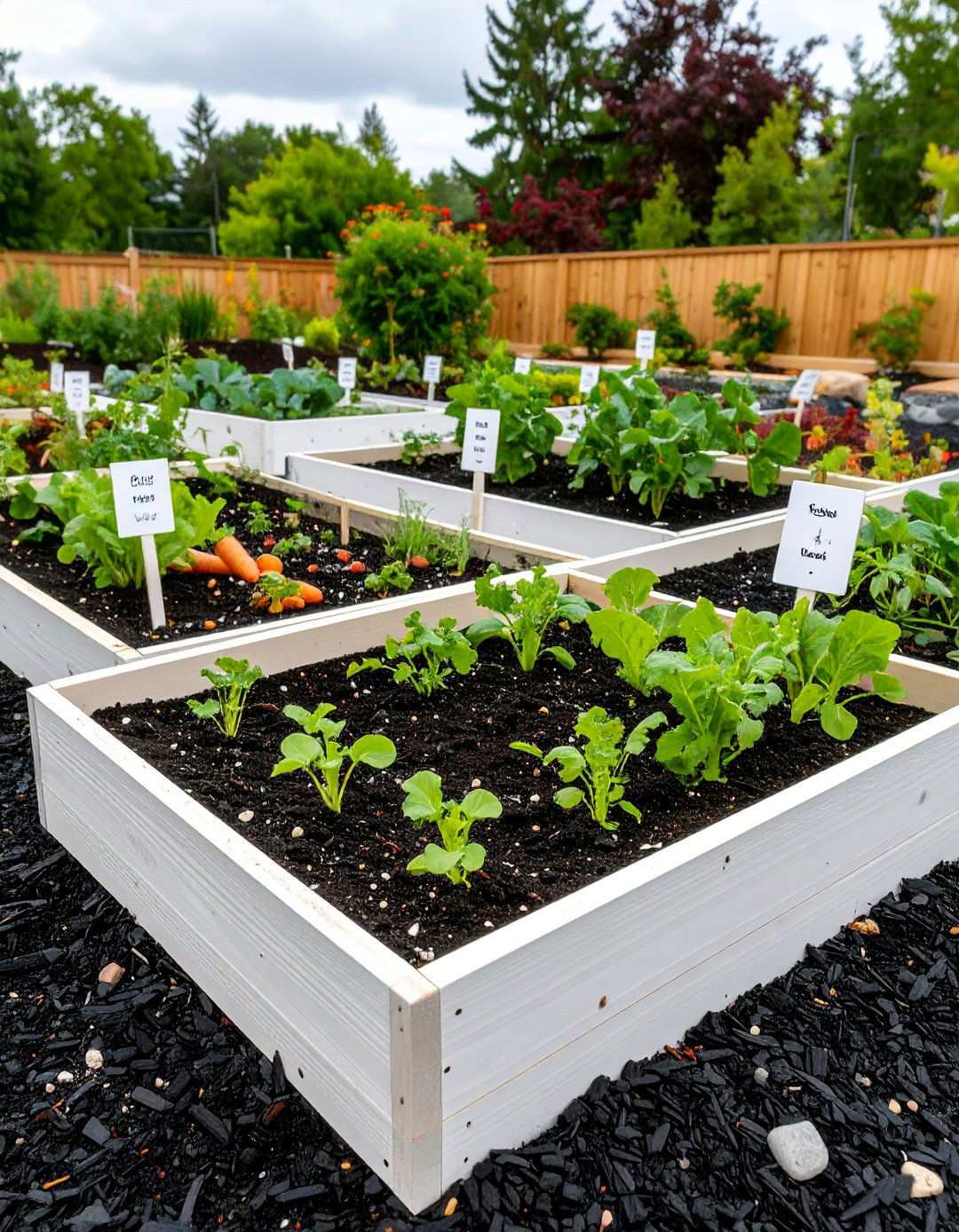
Children love identifying and labeling vegetables; black mulch provides a chalkboard-like background that makes white plant markers or doodled stones stand out. Opt for non-toxic, larger-chip mulch that is less likely to be ingested by curious toddlers, and maintain a shallow depth around seedlings. As plants mature, the dark mulch base highlights their growth progress, converting daily watering into an educational experience. Encourage young gardeners to gently turn the mulch with gloved hands, a tactile activity that also helps to aerate the soil.
18. Low-Impact Island Beds of Black Mulch in Open Lawns
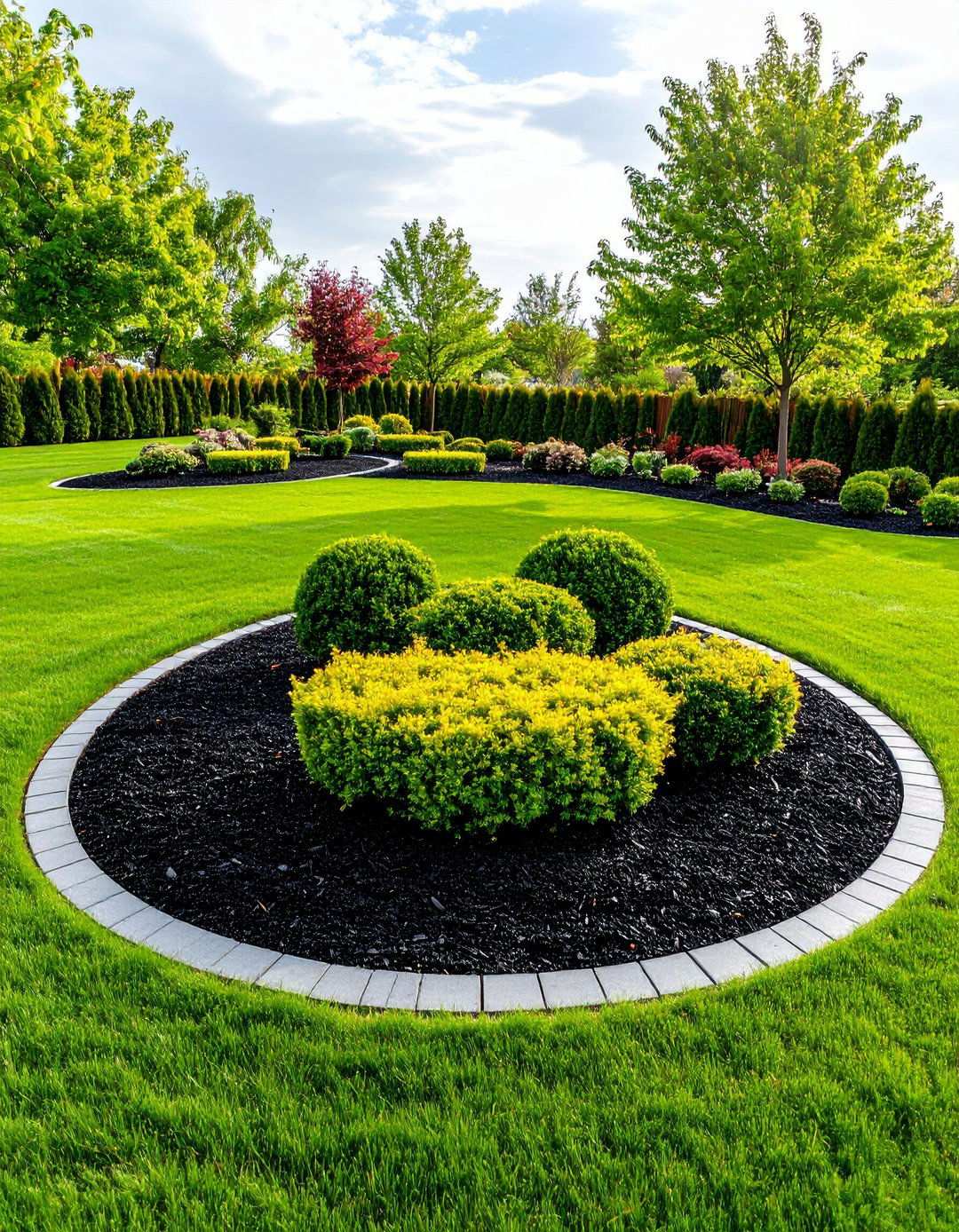
Circular or kidney-shaped island beds anchored by black mulch break up the monotony of a sea of grass while minimizing mowing time. By consolidating shrubs and perennials into a single mass, you reduce edging labor, and the dark mulch effectively blocks volunteer turf runners. Define the bed’s edge with a spade-cut trench or recycled plastic edging, then apply a deeper layer of mulch, around eight to ten centimeters, during the first year. Subsequent maintenance requires little more than a thin layer of color-boosting top-dressing.
19. Enhancing a Hedge with Weed-Suppressing Black Mulch
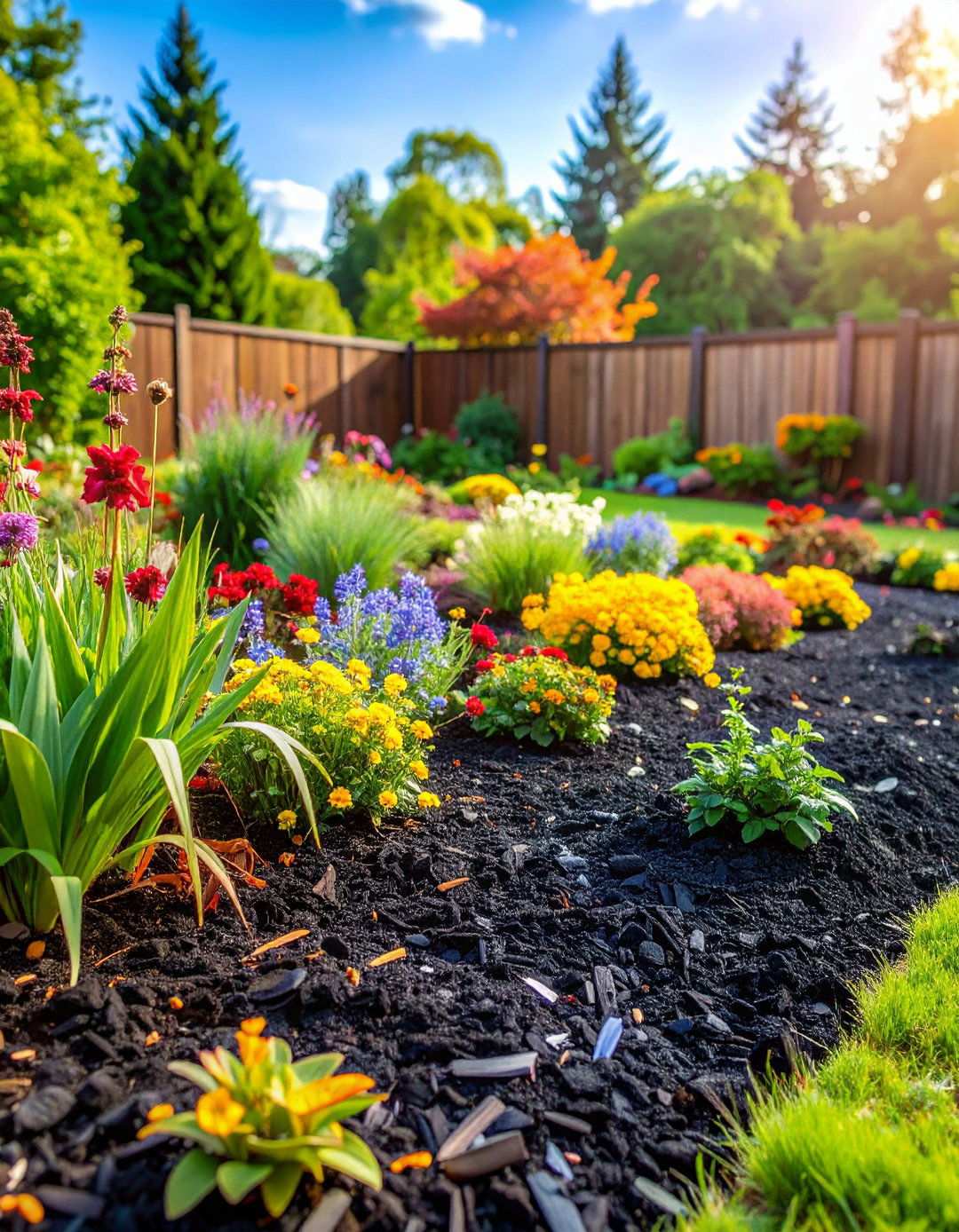
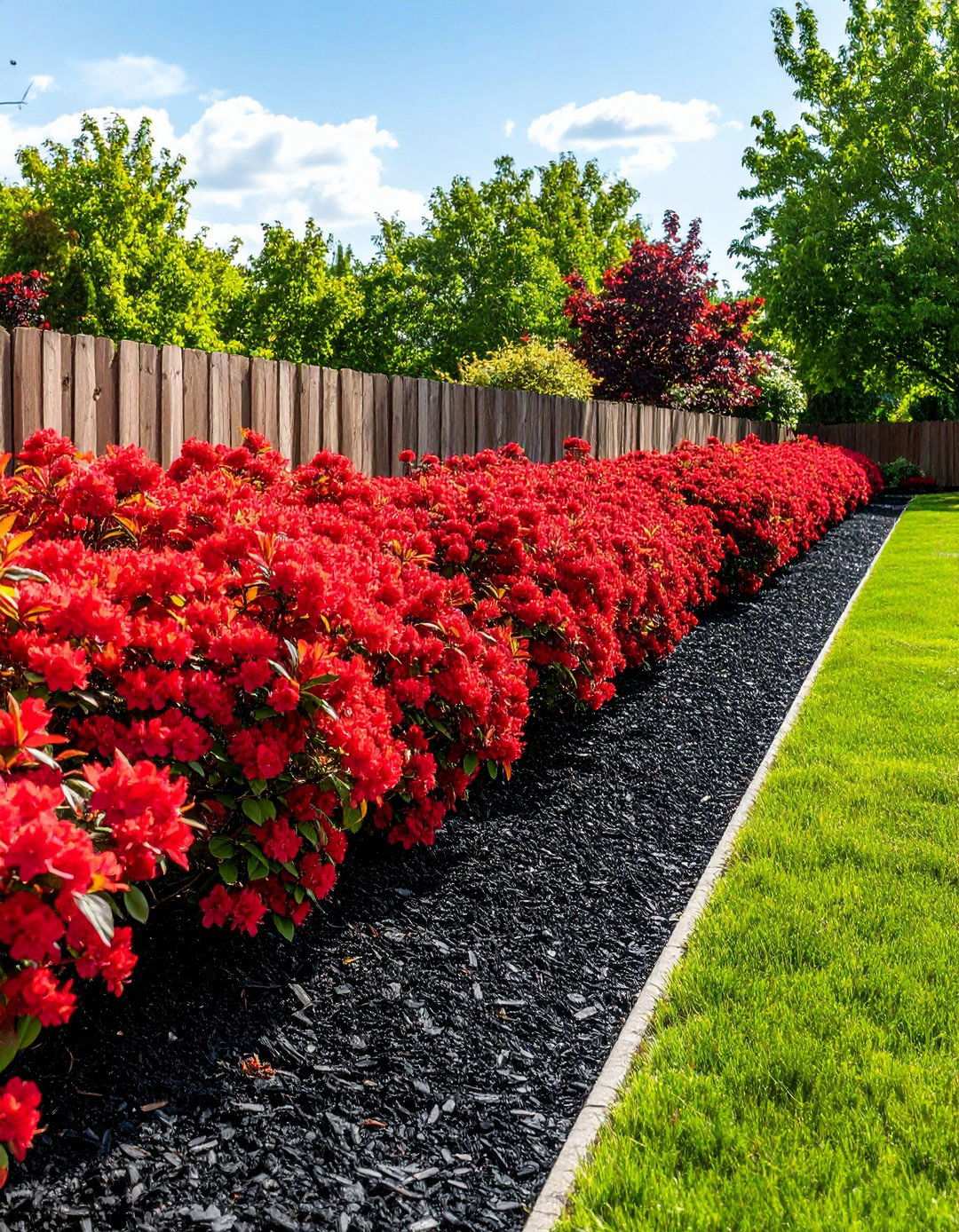
A well-manicured hedge of shrubs like viburnum or photinia requires adequate soil to prevent competing vines from taking hold. One effective way to achieve this is by installing a continuous layer of dark mulch, two meters wide, across the base of the hedge. This not only denies light to germinating weeds but also traps irrigation, where roots tend to spread the widest. To ensure the mulch doesn’t become a hindrance, it’s essential to check its depth annually with a ruler. Over-mulching can invite stem rot, so pull the mulch back five centimeters from the trunks to allow for airflow. The crisp black band surrounding the hedge can also serve as a convenient maintenance path for pruning day.
20. Rejuvenating Aged Black Mulch for Instant Curb Appeal
Time inevitably takes its toll on black mulch, causing it to gray under the effects of UV radiation and rainfall. Instead of replacing the entire layer, consider refreshing the existing mulch. Begin by raking it level and removing any debris that may have accumulated. Next, add a one-inch cap of fresh mulch chips or use an eco-friendly tint specifically formulated for mulch to restore its inky finish. Finally, pressure-wash the bordering hardscape to give it a professional, just-installed appearance. To maintain the look, schedule a refresh for each spring, so the landscape sparkles ahead of peak growing season.