1. Elevating Herb Cultivation with Pallet Vertical Gardens
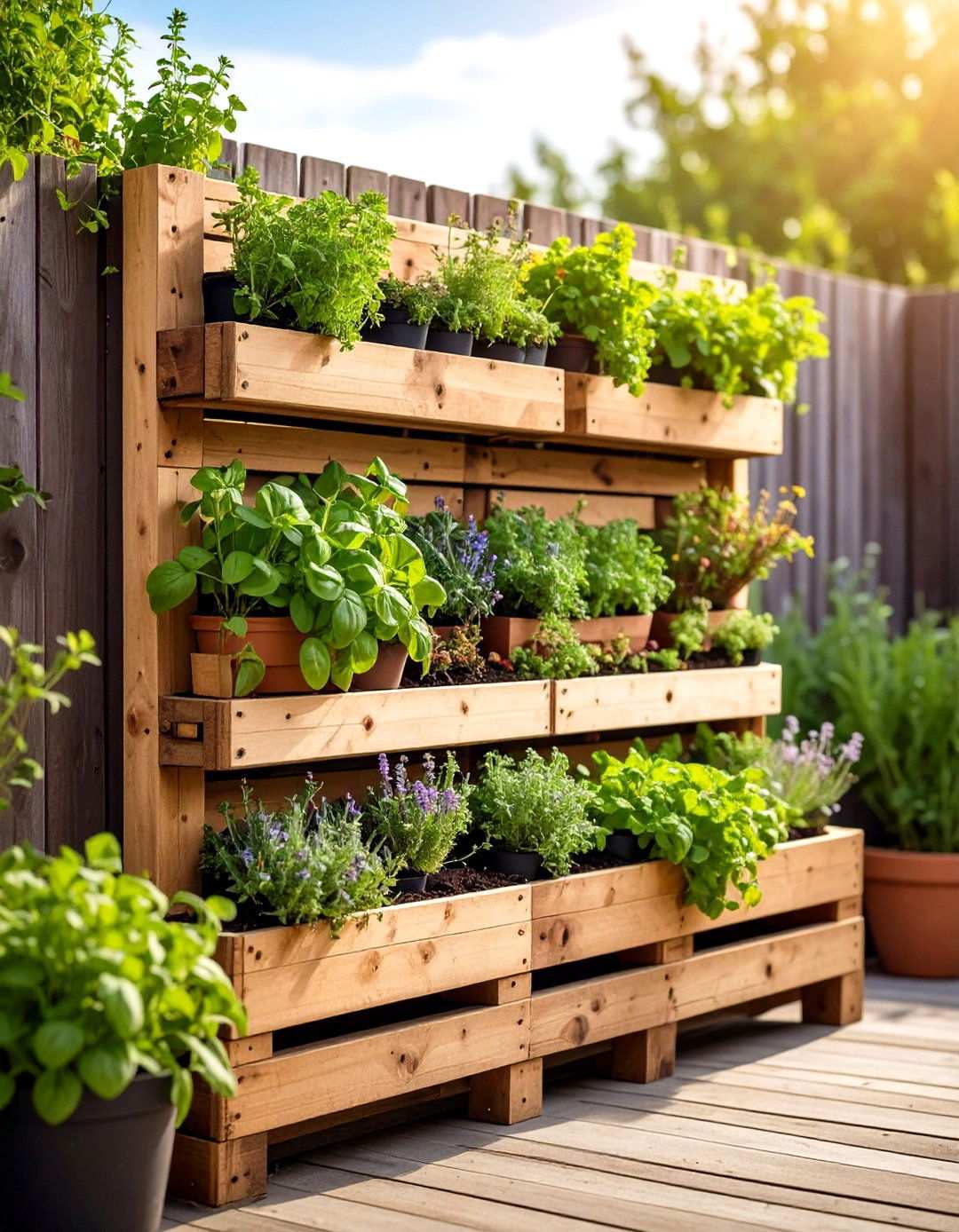
Revamping a wooden pallet into a lush vertical herb garden is a clever way to optimize growing space in even the smallest areas. Attach the pallet to a fence or wall, and cover the lower slats with landscape fabric to create separate planting pockets. Fill each compartment with high-quality potting soil and carefully select herbs based on their specific sunlight needs. This approach can be particularly effective for fragrant herbs like oregano and thyme, as well as the popular cooking herb basil. The pallet’s rustic aesthetic blends seamlessly with outdoor decor, providing effortless access to your fresh harvest.
2. Harvesting Flavor at Your Fingertips with Kitchen Windowsill Gardens
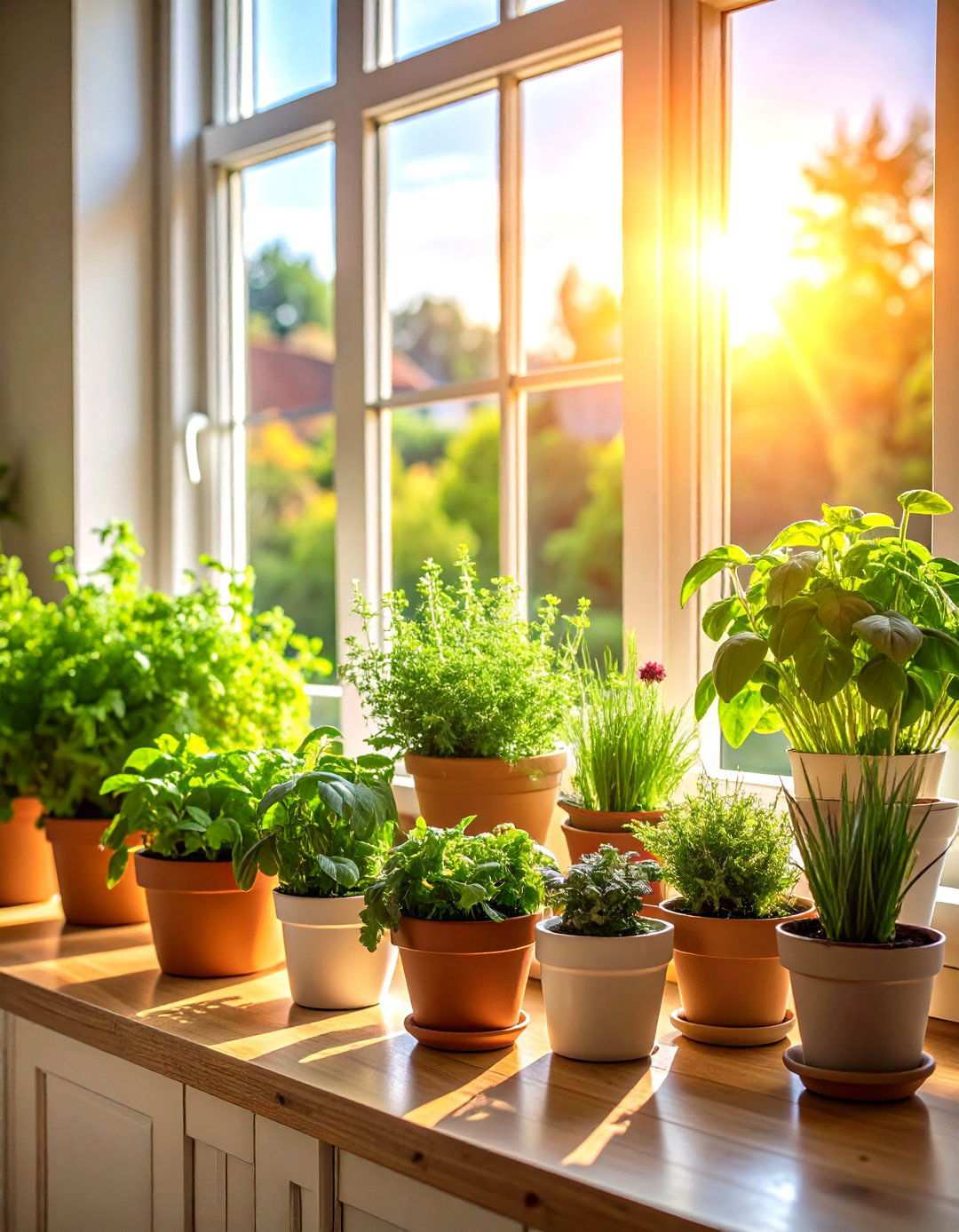
Kitchen windowsills offer the ultimate convenience for home cooks, providing instant access to fresh herbs. Opt for planters that are 4-6 inches deep and feature proper drainage, placing a diverse selection of herbs like basil, parsley, cilantro, and chives in a spot with at least six hours of sunlight exposure. While south-facing windows are ideal, supplemental grow lights can enhance growing possibilities. Water only when the top inch of soil feels dry, and trim flowers regularly to promote continuous leaf production. This setup allows you to snip fresh herbs as you cook, infusing your creations with maximum flavor and nutritional value.

As an Amazon Associate I earn from qualifying purchases.
3. Maximizing Herb Diversity with Spiral Raised Bed Designs
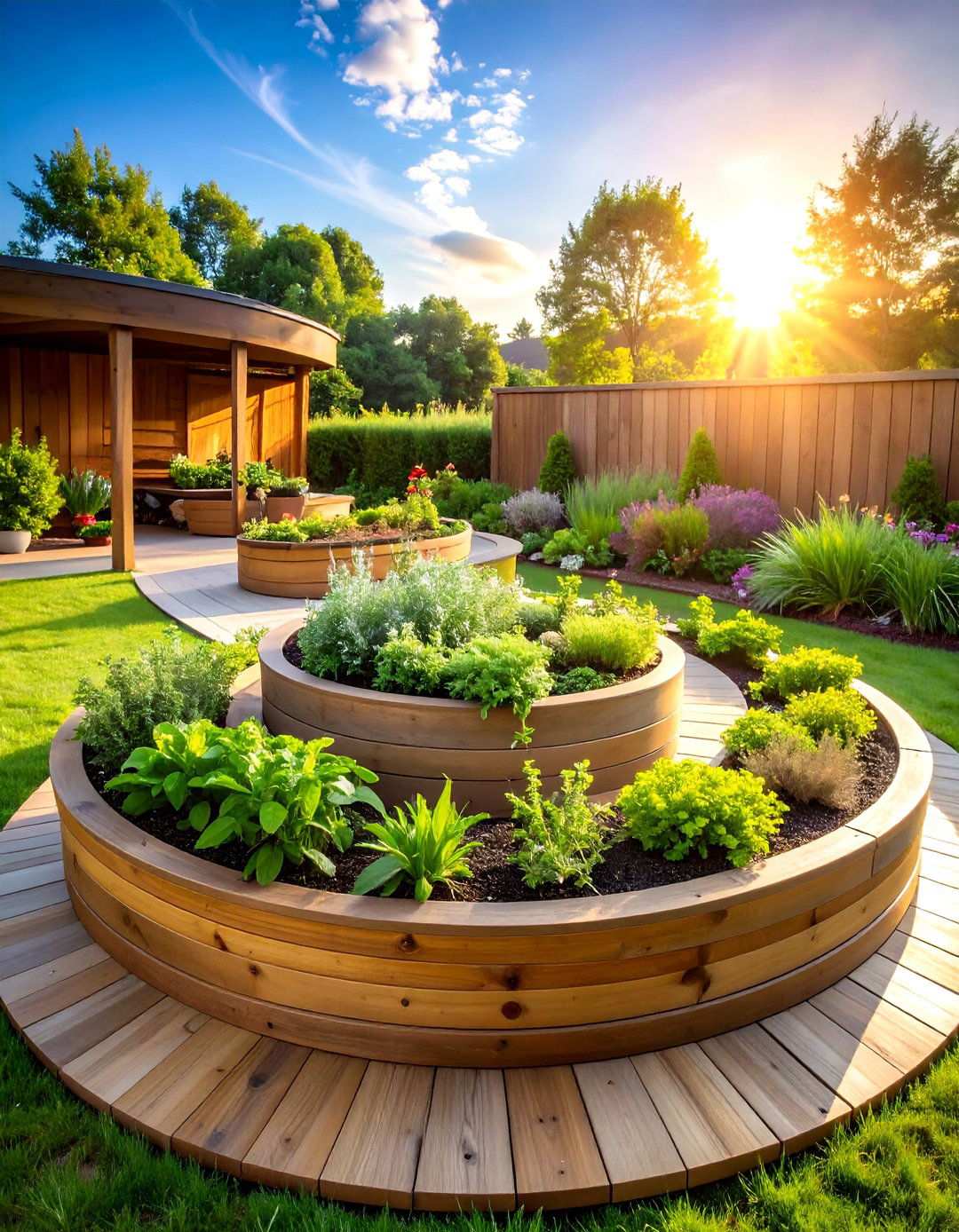
Herb spiral gardens cleverly create multiple microclimates within a compact circular space, enabling you to cultivate a wide variety of herbs with distinct watering and sunlight requirements. Construct your spiral using stones, bricks, or timber, beginning at the outer edge and ascending to approximately three feet at the center. Position sun-loving herbs like rosemary and oregano at the top, where drainage is at its best, while situating moisture-loving herbs like mint and parsley at the bottom. The thermal mass of the stone walls retains heat during the day and releases it at night, extending your growing season and creating an eye-catching garden focal point.
4. Elevating Mason Jars into Herb Gardens
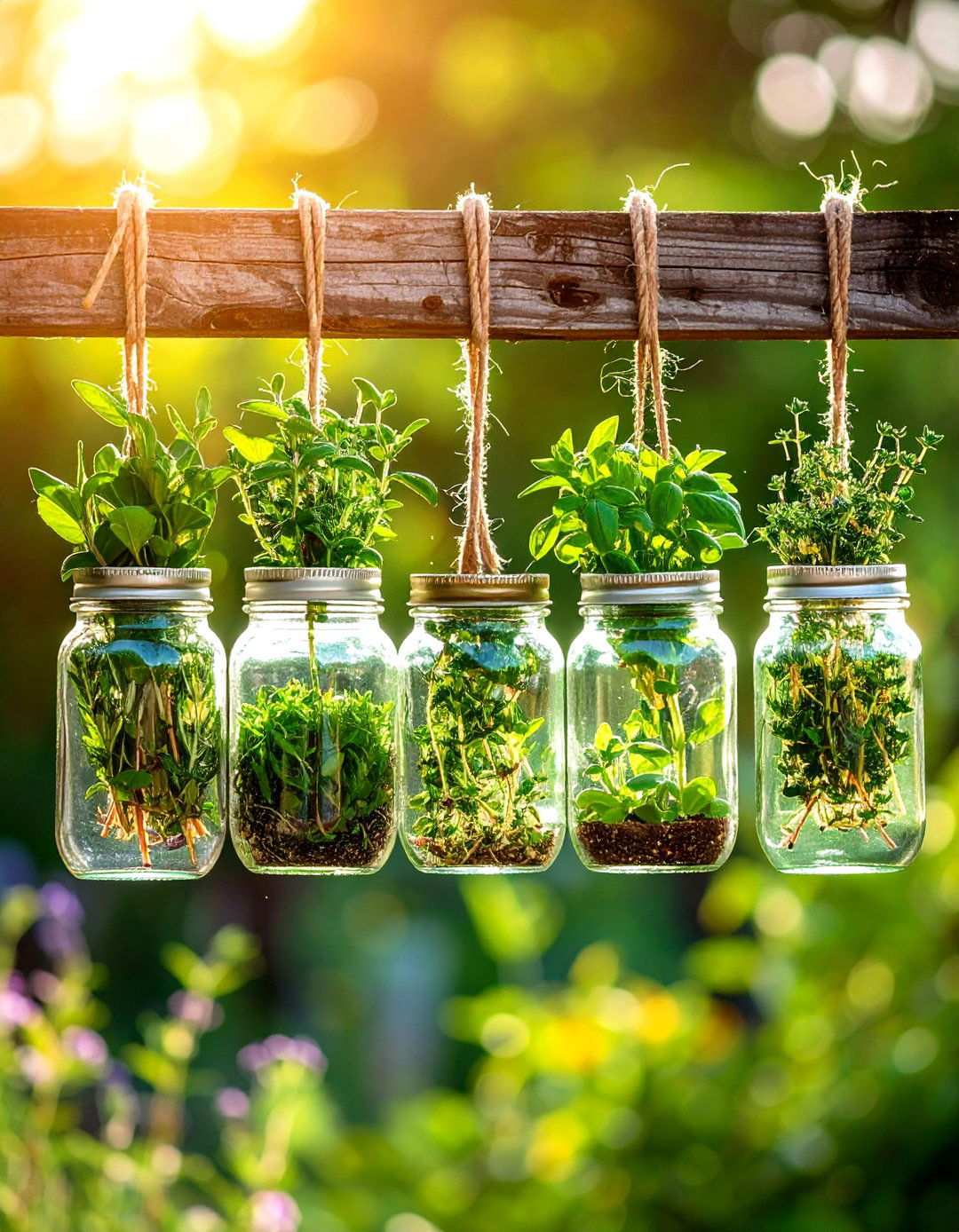
Transform plain mason jars into a charming hanging herb garden that brings a touch of rustic charm to indoor or outdoor spaces. By drilling drainage holes into jar lids and attaching hose clamps or wire hangers, you can create a visually appealing display that complements farmhouse or cottage-style décor. This system excels with smaller herbs like thyme, oregano, and mint, which don’t require extensive root space. The transparent glass enables easy monitoring of soil moisture levels, ensuring that your plants receive the right amount of care. Regular harvesting is essential to keep plants compact and productive throughout the growing season, making this system an excellent choice for herb enthusiasts.
5. Portable Herb Garden Stations
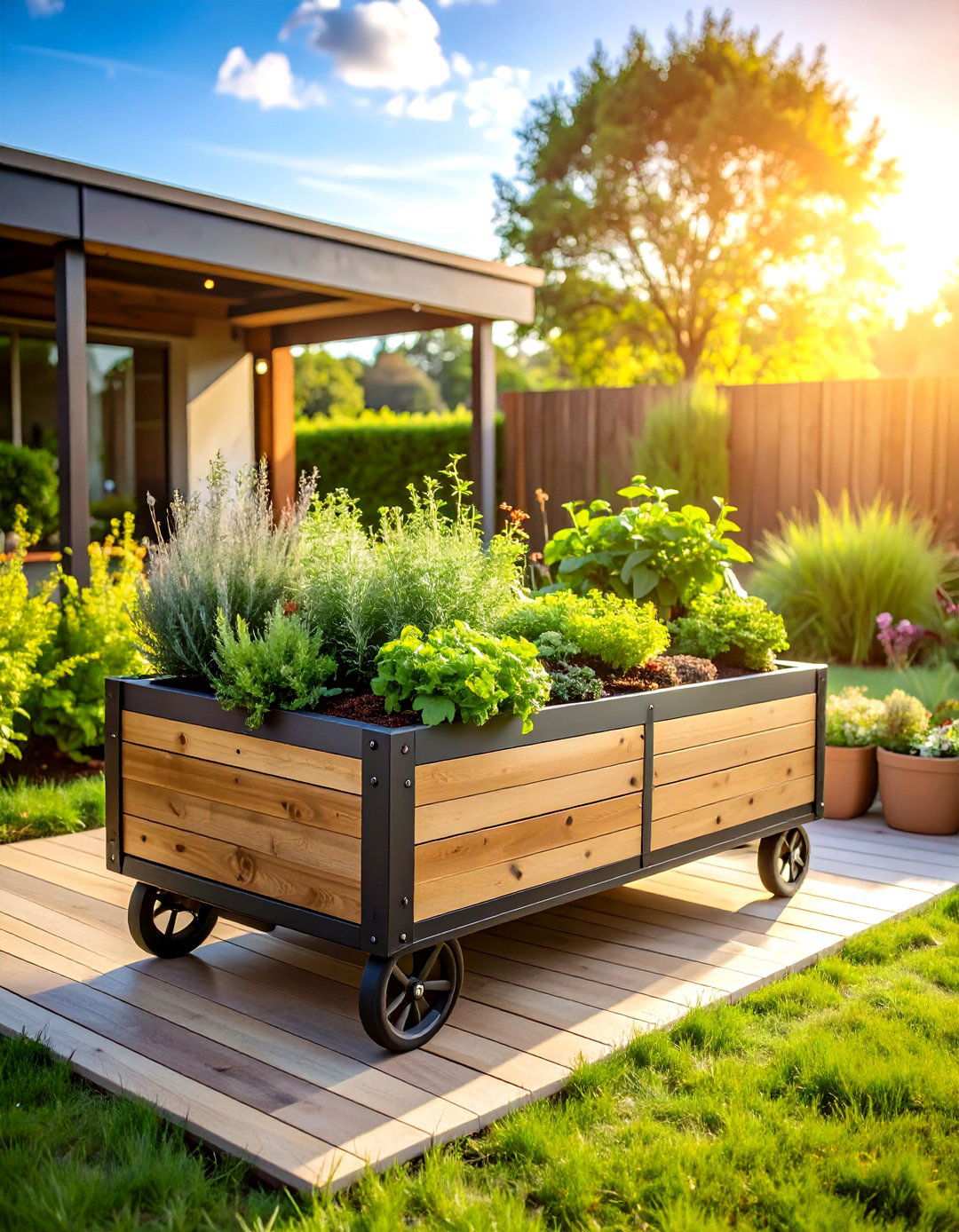
A rolling container herb garden offers unparalleled flexibility, allowing you to chase sunlight throughout the day or move plants indoors during harsh weather conditions. To create one, use a large, mobile planter box or build a unit with casters, ensuring that it has adequate drainage and sufficient soil depth for herb roots. When planting, group compatible herbs together based on their water requirements, separating Mediterranean varieties like lavender, sage, and rosemary from moisture-loving herbs like cilantro and parsley. This mobility proves particularly beneficial for renters or gardeners who want to optimize growing conditions while maintaining easy access to their daily cooking needs.
6. Reviving Vintage Tea Cups into Miniature Herb Gardens
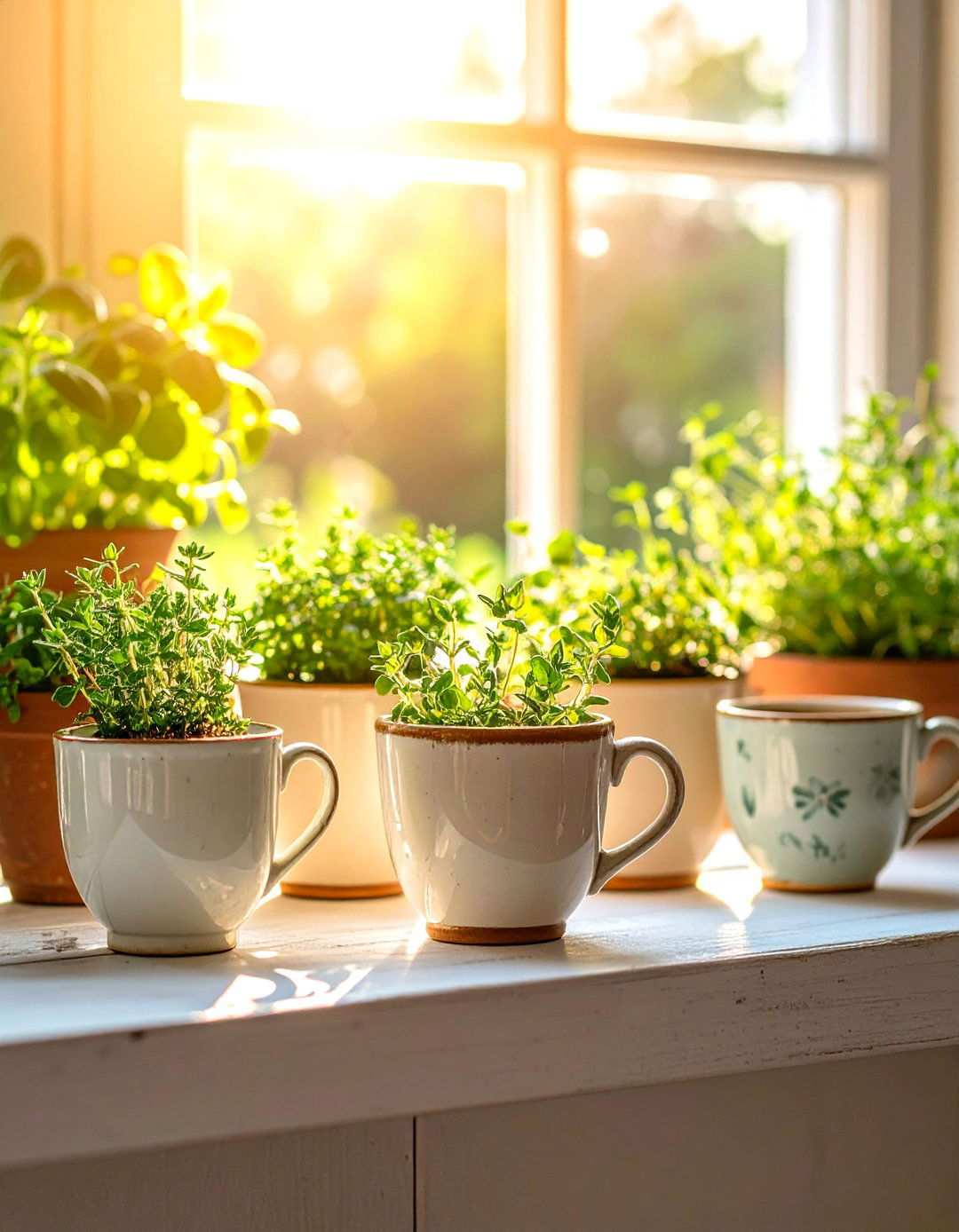
Breathe new life into delicate porcelain tea cups and saucers by repurposing them as miniature growing containers perfect for windowsill displays. Opt for small, shallow-rooted herbs like thyme, oregano, or small basil varieties that won’t outgrow their charming containers swiftly. You can either add small drainage holes or use the tea cups as decorative outer containers for properly draining inner pots. These whimsical gardens work beautifully as kitchen décor, adding elegance while providing fresh herbs for garnishing and flavoring. The vintage aesthetic appeals to antique lovers while offering a unique conversation piece for guests, making them an ideal choice for adding a personal touch to your home.
7. Galvanized Metal Tub Herb Garden Containers
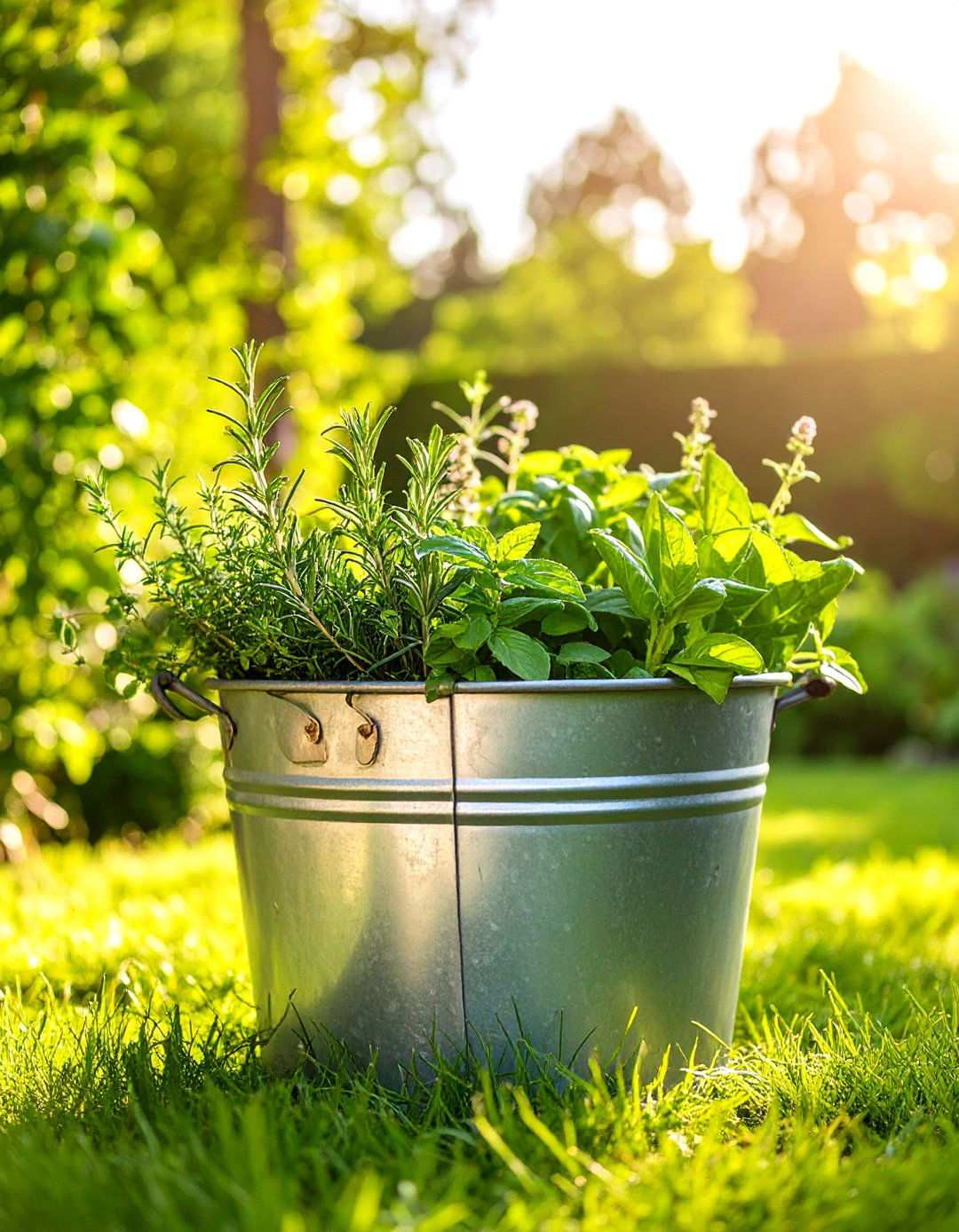
A galvanized metal tub herb garden combines rustic farmhouse style with practical growing space, accommodating multiple herb varieties in one attractive container. When selecting a galvanized tub, ensure that it’s made from food-grade materials to guarantee plant safety. Drill adequate drainage holes throughout the bottom to prevent waterlogged soil. The large surface area of this container style allows for companion planting arrangements, grouping herbs with similar water and light requirements while creating visually appealing combinations. Position taller herbs like rosemary toward the back, with trailing varieties like oregano spilling over the edges. This container style weathers beautifully outdoors while providing enough space for a substantial herb harvest throughout the growing season.
8. Transforming an Old Ladder into a Herb Garden Oasis
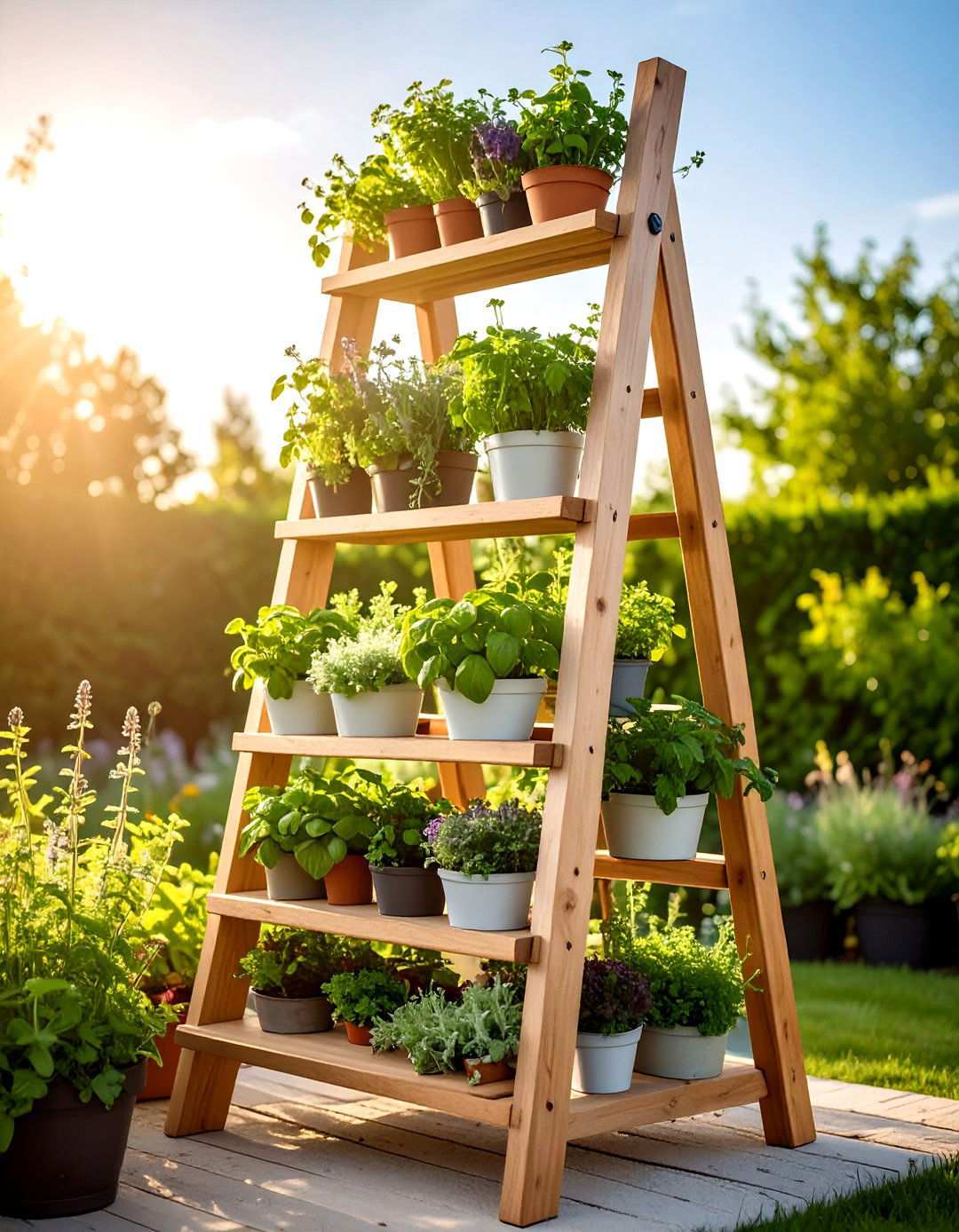
Take an old wooden ladder and turn it into a multi-level herb garden that not only maximizes vertical growing space but also adds architectural interest to your garden or patio. Arrange planters or pots on each ladder rung, taking into account the plant’s height and sun requirements. This tiered approach enables you to grow a diverse range of herb varieties in a compact footprint, while making maintenance and harvesting a breeze. By incorporating varying heights, you can create natural drainage flow and air circulation, thereby reducing the risk of disease while showcasing your herb collection in a beautiful manner. Consider adding a fresh coat of paint or stain to the ladder to complement your outdoor décor and ensure weather resistance for long-term durability.
9. Effortless Herb Gardening with Self-Watering Window Boxes
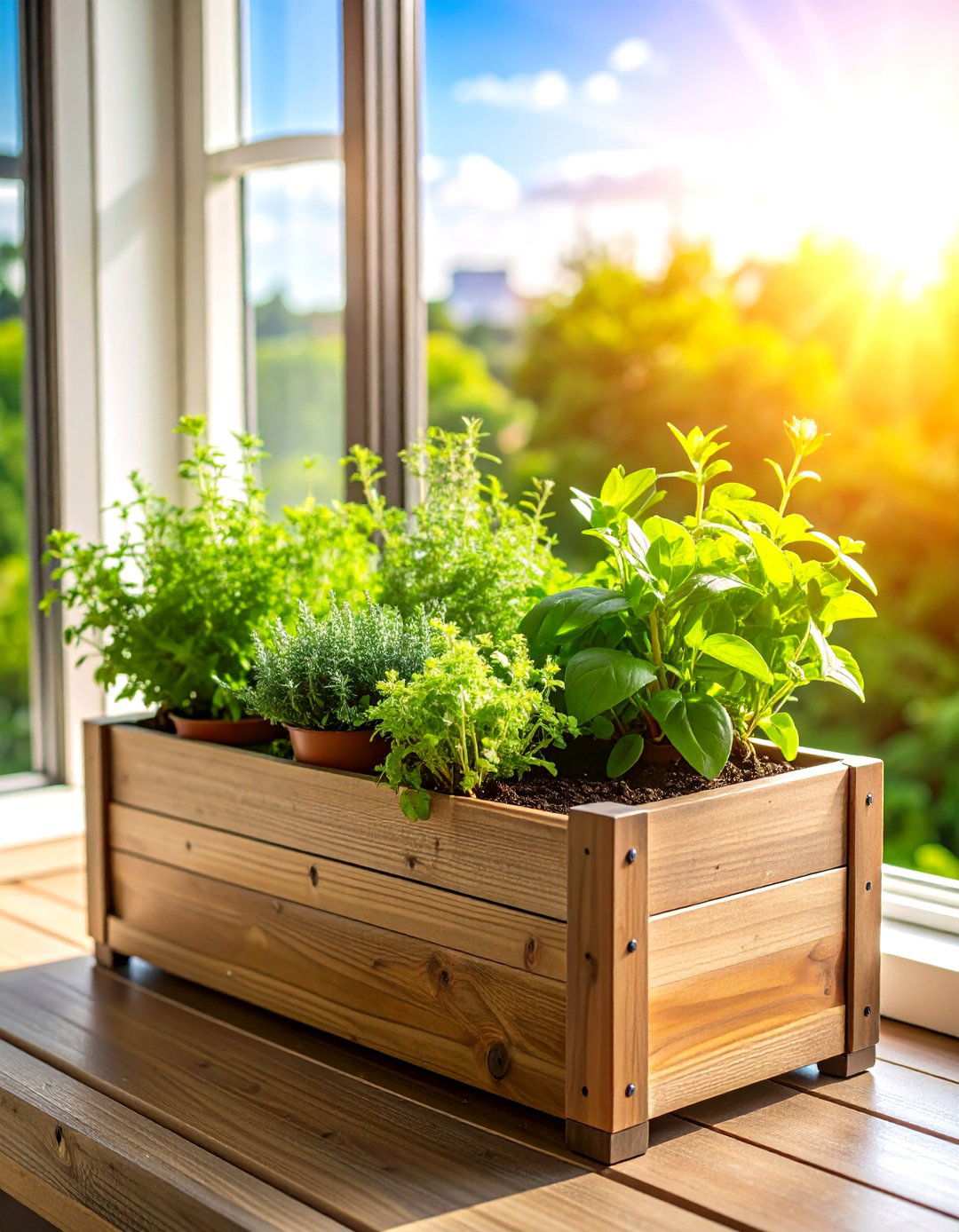
Self-watering window box herb gardens offer consistent moisture control and maximize growing space along sunny windows or deck railings. These specialized containers feature built-in water reservoirs that supply steady moisture through capillary action, making them perfect for herbs like spearmint, oregano, rosemary, and thyme. For optimal light exposure, position the boxes on south or west-facing windows, ensuring a minimum of six hours of direct sunlight daily. The self-watering feature proves particularly valuable during vacation periods or busy schedules, allowing you to maintain healthy plants without daily attention while keeping fresh herbs within easy reach of your kitchen.
10. Innovative Rain Gutter Herb Garden Designs
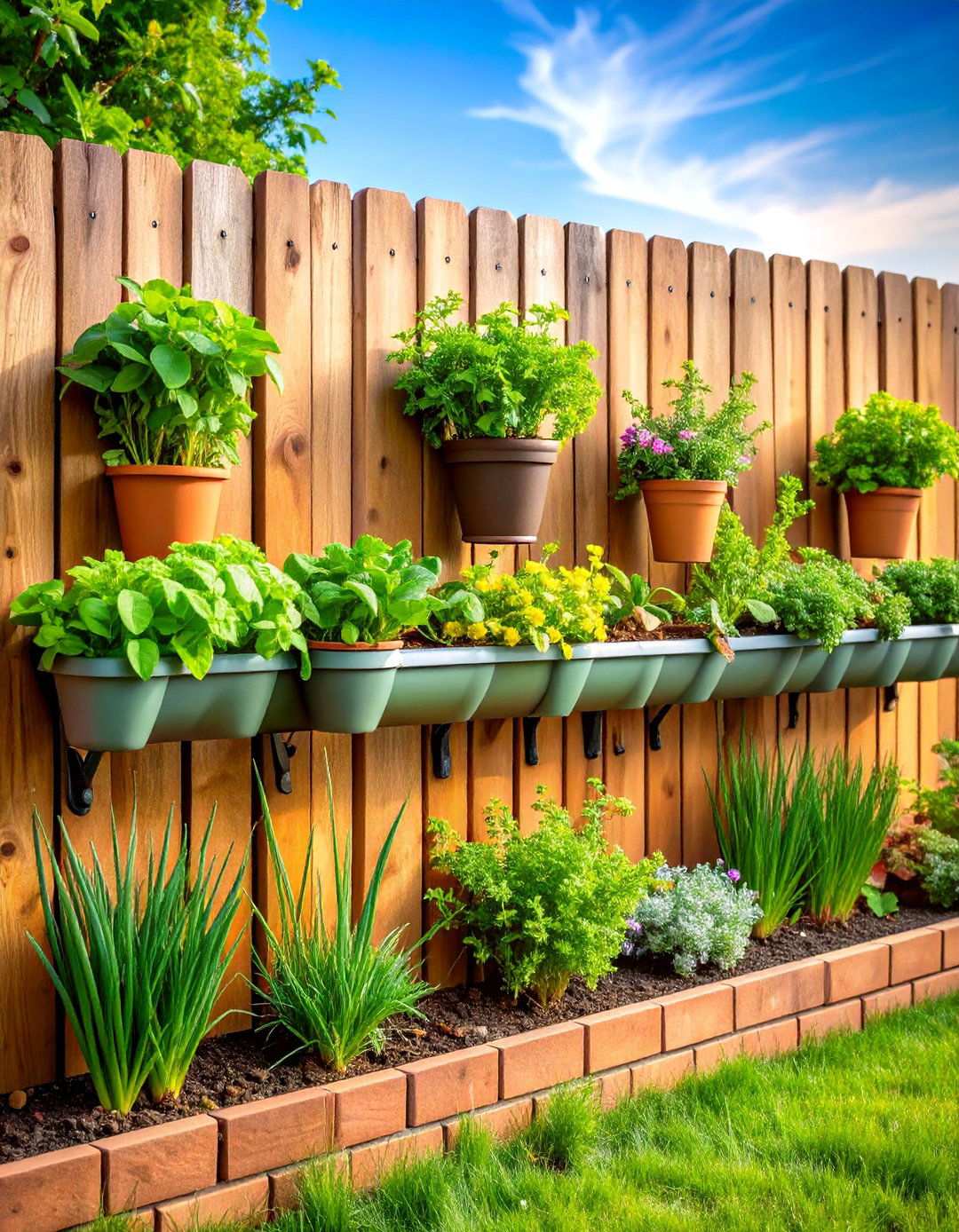
Mount cleaned rain gutters horizontally along fences, deck railings, or walls to create narrow growing channels perfect for shallow-rooted herbs. Cap the ends and drill drainage holes every six inches to prevent water accumulation, then fill with a lightweight potting mix suitable for container growing. This system works exceptionally well for lettuce-style herbs, chives, and small basil plants, providing excellent space efficiency. The linear design allows for organized planting arrangements while maintaining easy access for harvesting and maintenance throughout the growing season.
11. Hanging Fabric Pockets for Compact Herb Gardening
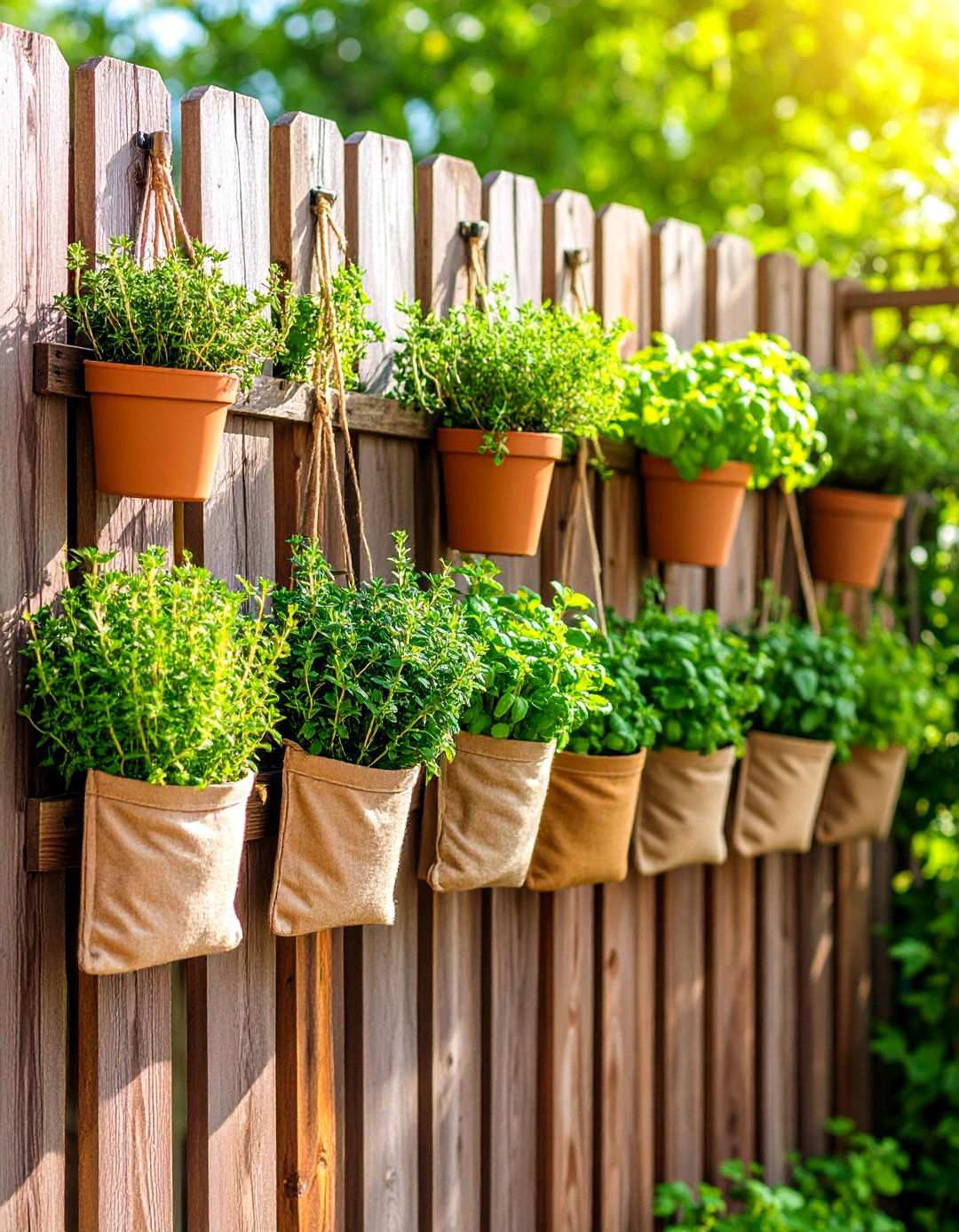
Fabric pocket vertical herb gardens utilize hanging organizers or specially designed felt pouches to create space-efficient growing walls perfect for small patios or indoor spaces. These lightweight systems attach easily to fences, walls, or balcony railings without requiring permanent installation, making them an ideal choice for renters. Plant compact herbs like thyme, oregano, parsley, and chives in individual pockets, ensuring proper drainage to prevent root rot. The fabric material allows for adequate aeration while the vertical arrangement maximizes growing space. Regular harvesting keeps plants compact, while providing fresh herbs for daily cooking needs.
12. Whimsical Wooden Crate Herb Garden Arrangement
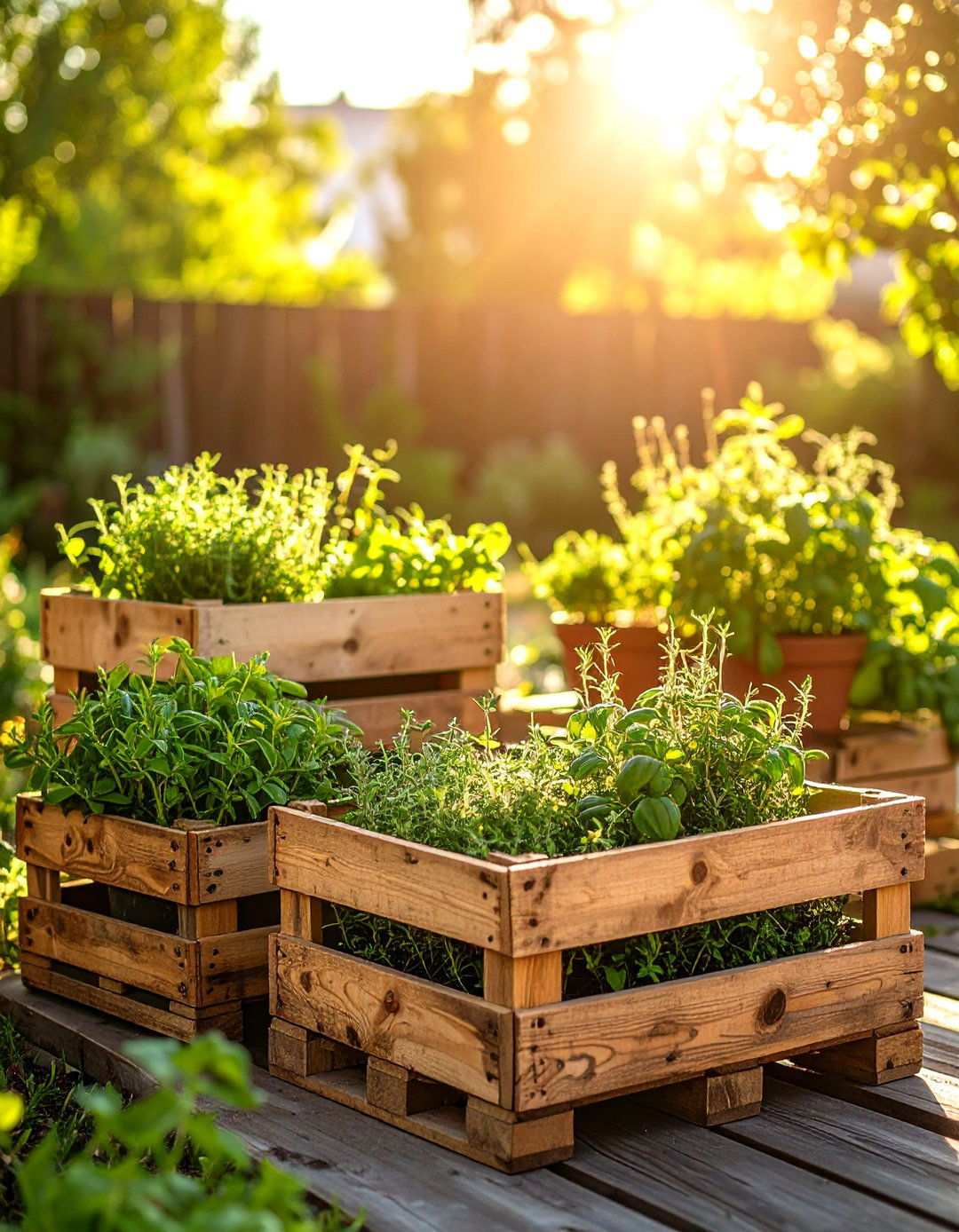
Vintage wooden crates can be repurposed as charming containers for an herb garden, adding a touch of rustic charm while providing ample space for multiple varieties to grow. To create a visually appealing display, line the crates with landscape fabric to retain soil and ensure proper drainage, then arrange them at varying heights to showcase a sense of depth and maximize light exposure. By grouping herbs with similar growing requirements within each crate, you can curate themed collections like Mediterranean herbs, tea herbs, or culinary essentials, which complement farmhouse and cottage garden styles beautifully. Over time, the weathered wood will develop a beautiful patina, serving as a testament to the enduring charm of these rustic containers.
13. Dramatic Hanging Basket Cascade Herb Display
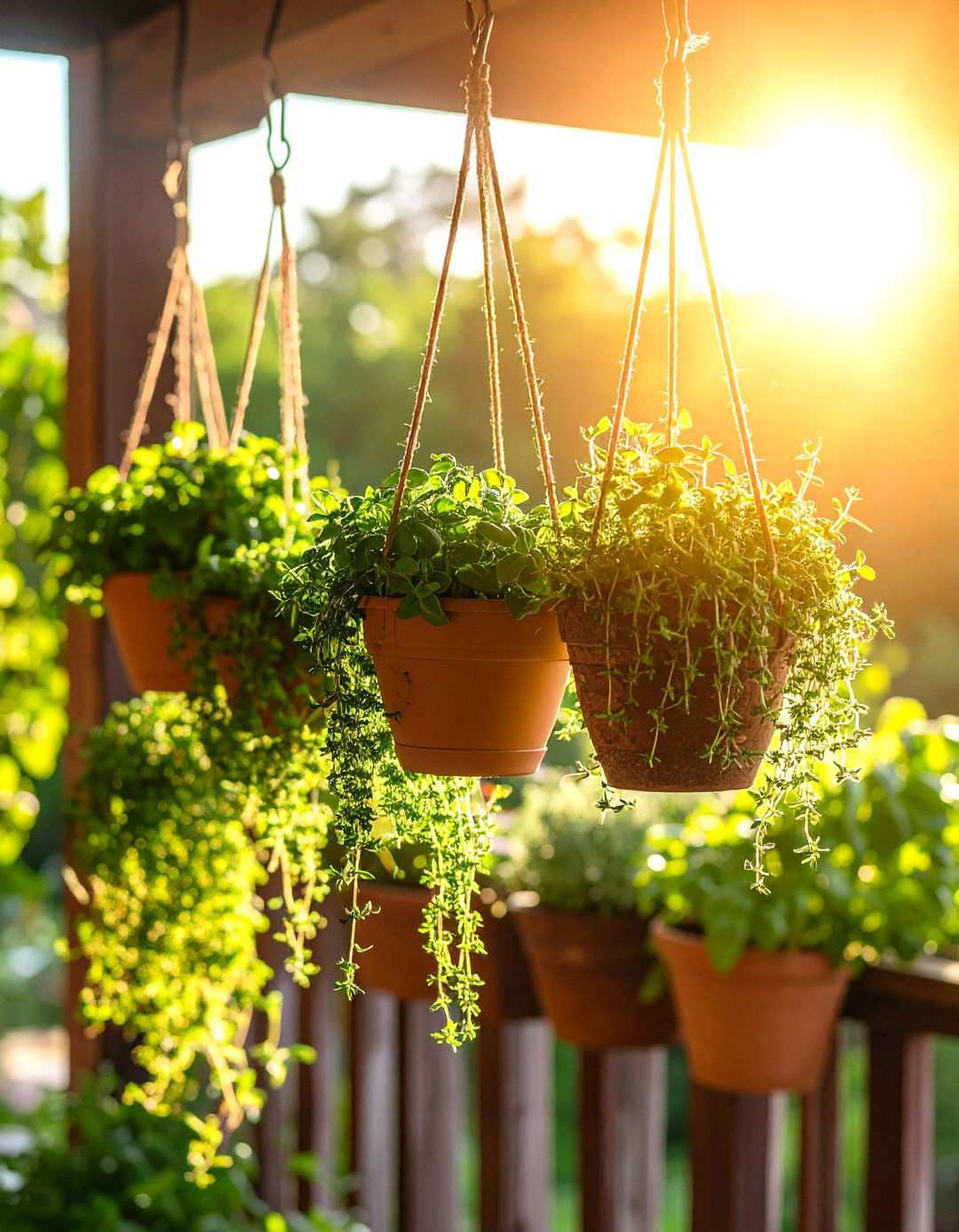
Hanging basket herb gardens can create stunning cascading displays, making the most of vertical growing space in areas where ground room is limited. To achieve this visually striking effect, choose herbs with trailing habits like oregano, thyme varieties, and trailing rosemary, which will spill over the edges of the baskets. By positioning the baskets at varying heights, you can prevent shading while ensuring adequate air circulation between the plants. This elevated growing method not only protects herbs from ground-dwelling pests but also provides excellent drainage and accessibility for daily maintenance, making it an ideal choice for balconies, covered porches, or areas where ground space is restricted but overhead mounting options exist.
14. Elegant Strawberry Pot Tiered Herb Garden Design
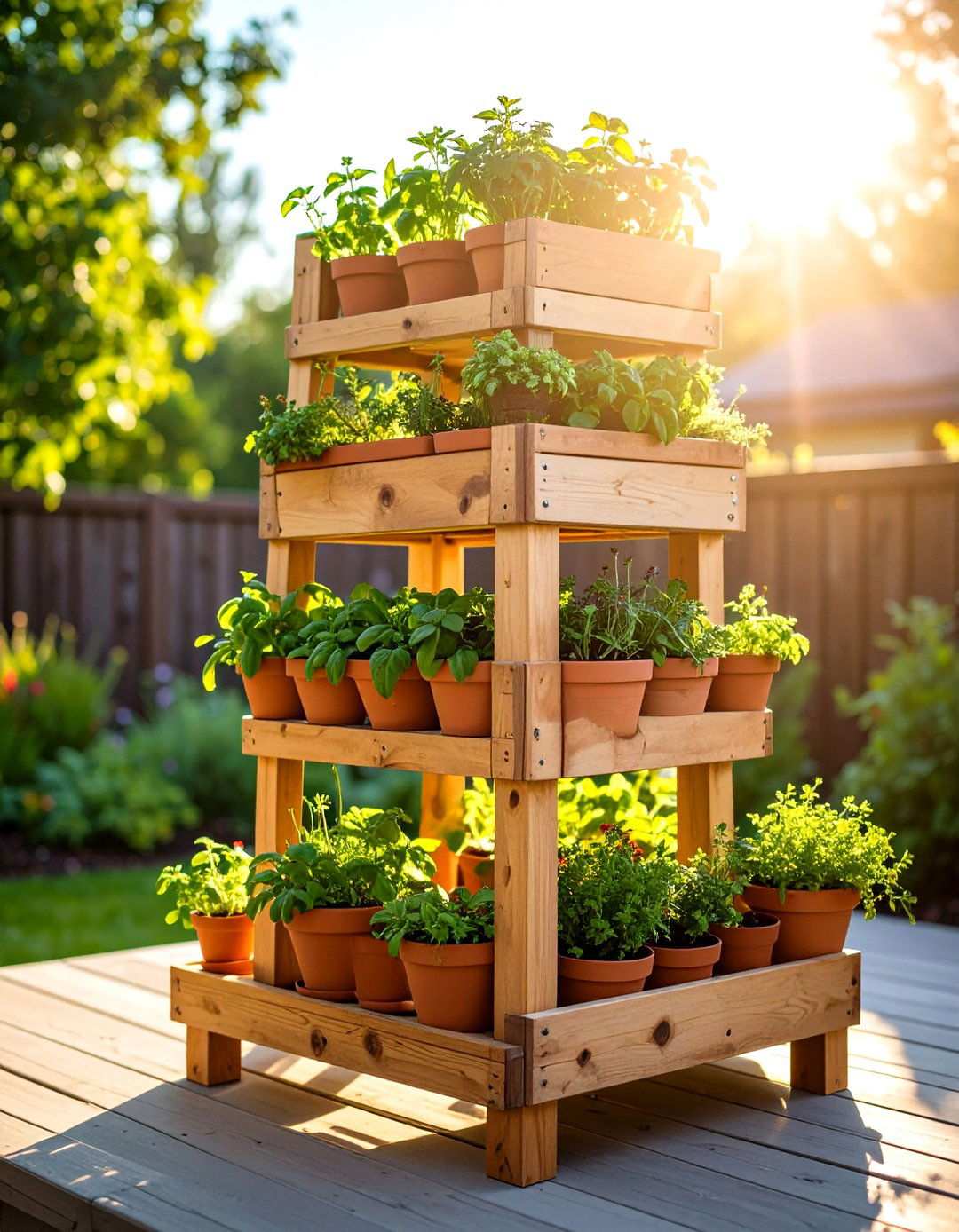
Strawberry pot herb gardens make use of multi-tiered terracotta containers with side pockets to accommodate numerous herb varieties in compact vertical arrangements. Plant trailing herbs like thyme and oregano in the side pockets while reserving the top opening for upright varieties like basil or rosemary. The tiered design allows for natural drainage flow while giving each plant the space it needs for root development. This traditional container style complements Mediterranean and cottage garden aesthetics while providing excellent thermal regulation for plant roots. Regular watering from the top ensures that all levels receive adequate moisture, and the terracotta material allows for proper air circulation, creating a thriving environment for your herbs.
15. Versatile Kitchen Cart Rolling Herb Garden Station
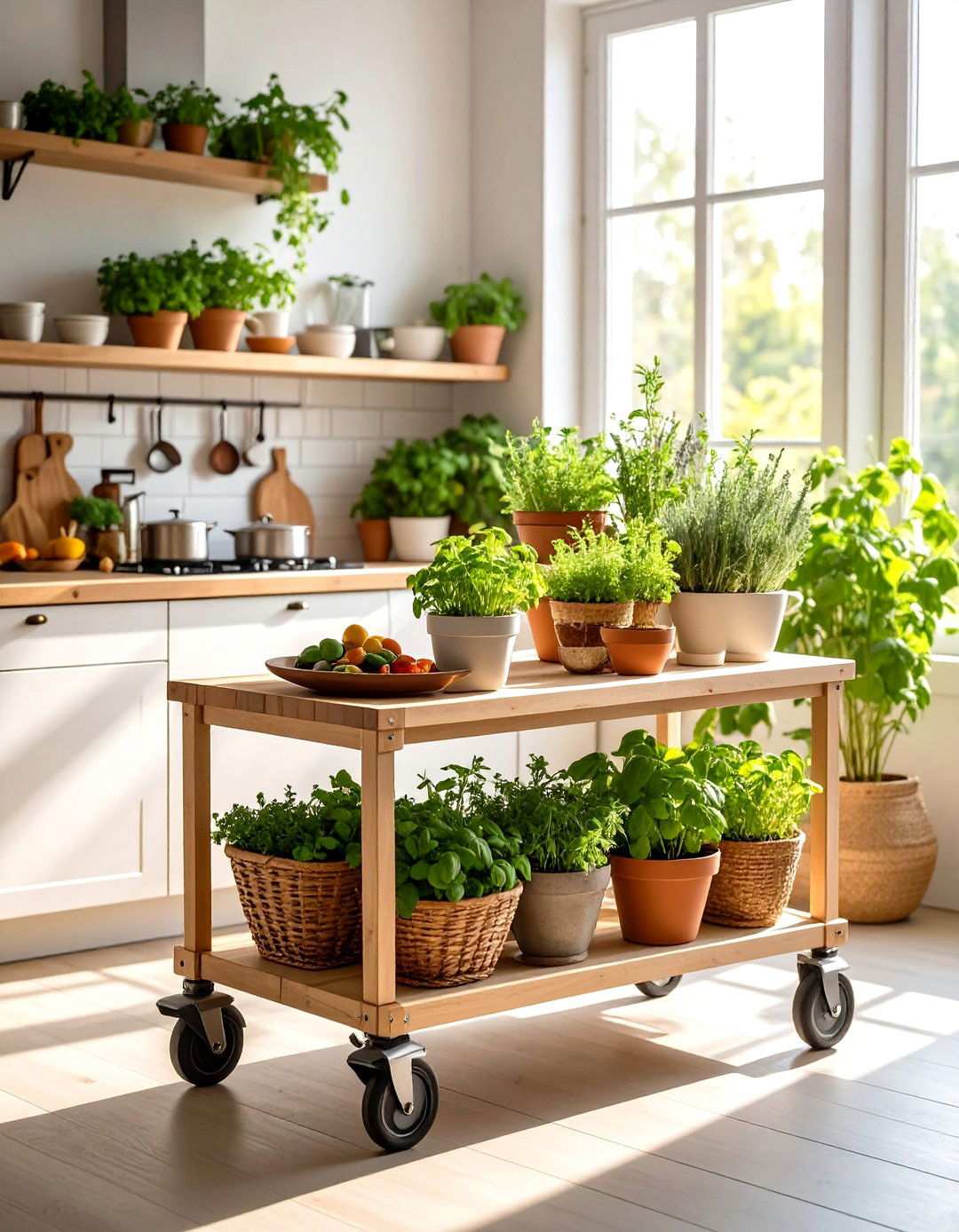
Transform a kitchen cart into a mobile herb garden station that can move seamlessly between indoor and outdoor locations based on weather conditions and growing requirements. Install grow lights underneath the upper shelves for winter growing, and take advantage of natural light during favorable weather. The multiple levels of the cart accommodate various container sizes while providing storage for gardening tools, watering supplies, and harvesting baskets. This system is particularly valuable for urban gardeners or those with limited permanent growing space, offering flexibility while maintaining professional organization, and allowing for optimal light chasing and protection of tender herbs during extreme weather conditions.
16. Elevated Herb Cultivation with Concrete Block Systems
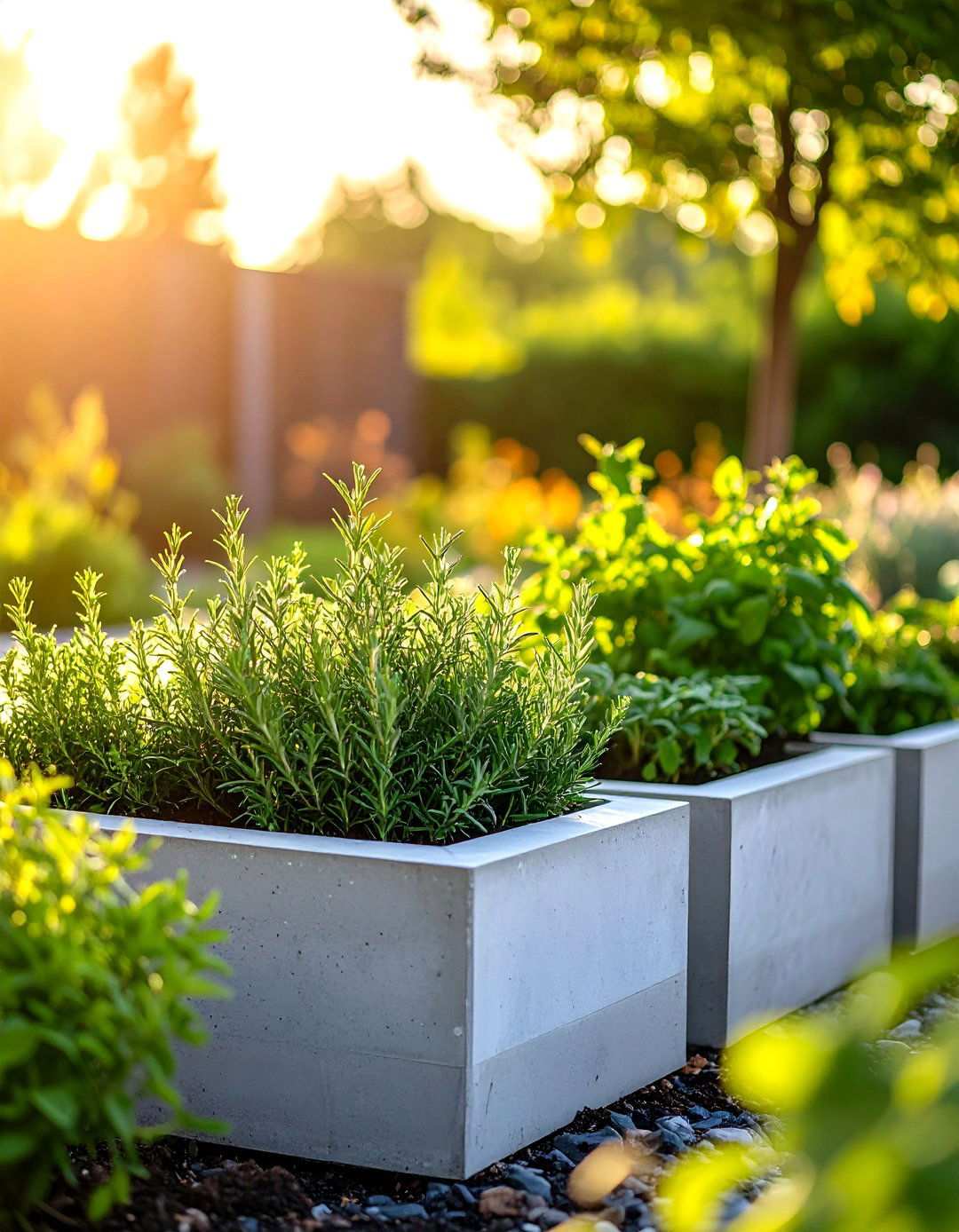
Concrete block herb gardens establish long-lasting, raised bed structures that facilitate optimal drainage, thermal regulation, and organized growing areas for a diverse array of herbs. By stacking blocks of varying heights and incorporating gaps for drainage and root expansion, a sturdy infrastructure is created that can accommodate extensive herb collections. The blocks’ inherent thermal properties help maintain a stable soil temperature, while the elevated design enhances drainage and accessibility, making it easier to plant, maintain, and harvest herbs. By carefully selecting herbs based on their mature size and specific growing requirements, gardeners can create a visually appealing and productive herb garden that flourishes for years to come.
17. Enchanting Wine Barrel Herb Planters
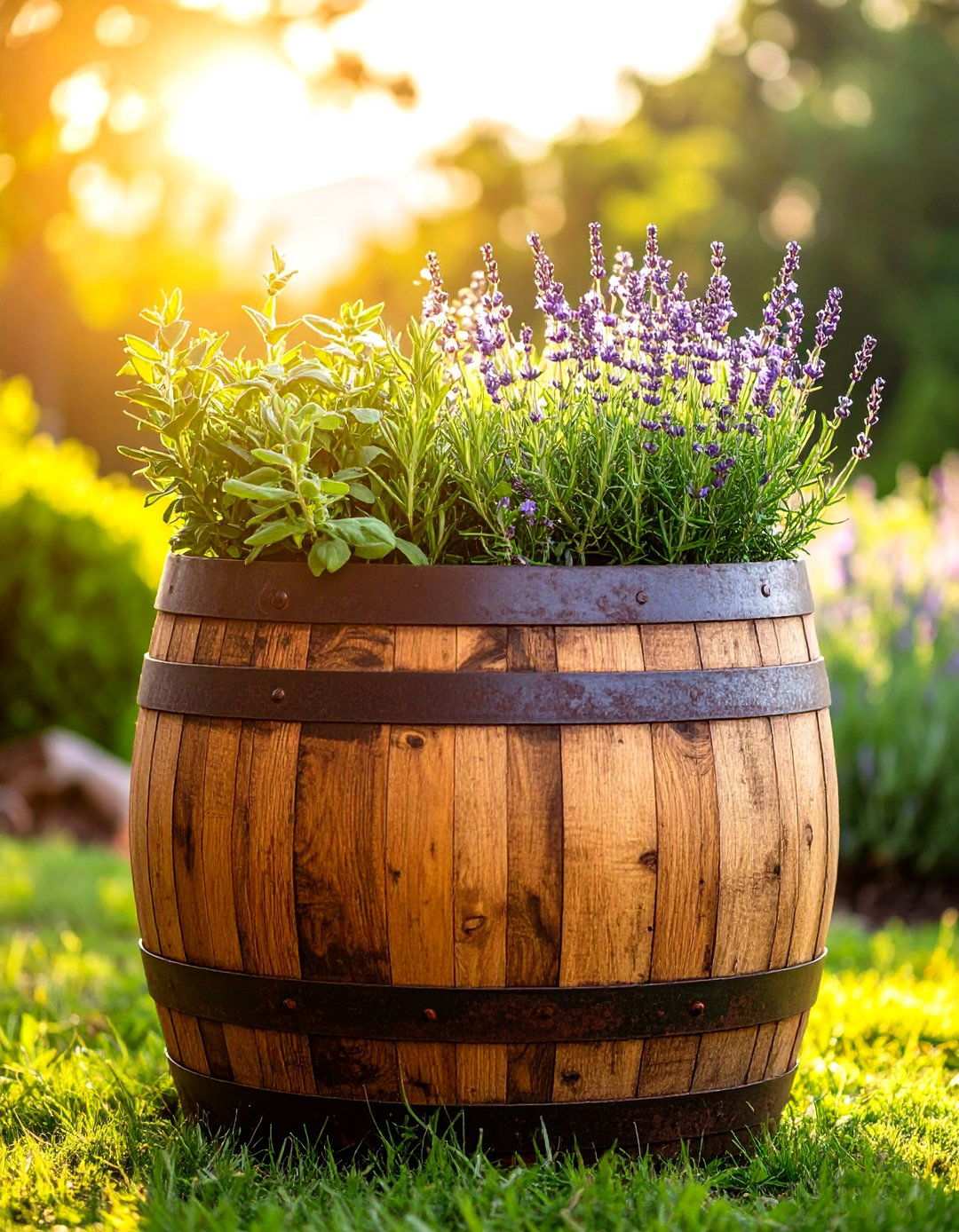
Wine barrel herb gardens seamlessly blend rustic charm with substantial growing capacity, providing the perfect setting for showcasing an extensive array of herbs in attractive, weathered containers. The unique curved design of wine barrels ensures excellent drainage when strategically placed holes are drilled, while the substantial size allows for diverse plantings that cater to a wide range of herb varieties. By thoughtfully positioning wine barrels in the garden, homeowners can create focal points that attract attention while ensuring that their herbs receive optimal sunlight exposure. As the oak construction weathers beautifully over time, it provides insulation for plant roots, ensuring they remain healthy and resilient during temperature fluctuations. This charming container style not only complements the aesthetic of vineyards but also offers professional-quality growing conditions for serious culinary herb enthusiasts.
18. Herb Garden Revitalization through Repurposed Drawers
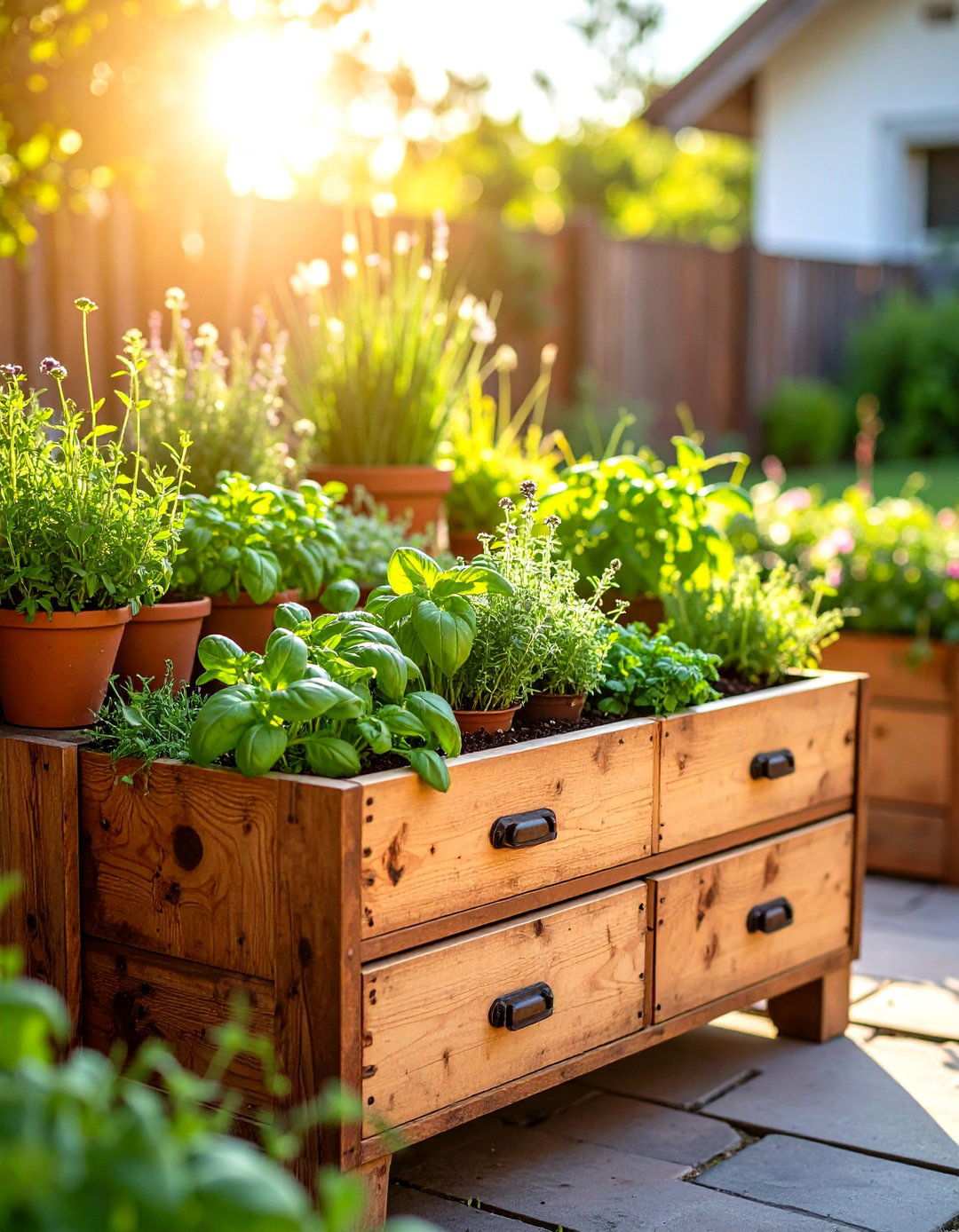
Transforming old dresser drawers into unique herb garden containers is a creative way to add vintage character and provide adequate growing space for shallow-rooted herb varieties. By lining the drawers with landscape fabric, drilling drainage holes, and filling them with quality potting soil suitable for container growing, gardeners can create functional and visually appealing spaces for their herbs to thrive. These repurposed containers work particularly well for themed herb collections like tea herbs, pizza herbs, or salad enhancement varieties, allowing gardeners to showcase their creativity and passion for herb cultivation. The rectangular shape of the drawers provides efficient space utilization, while the vintage aesthetic adds a touch of personality to garden spaces. By positioning multiple drawers at varying heights, gardeners can create interesting displays that not only showcase their herbs but also ensure that they receive the proper light exposure they require.
19. Caged Herb Gardens Offer Year-Round Bounties
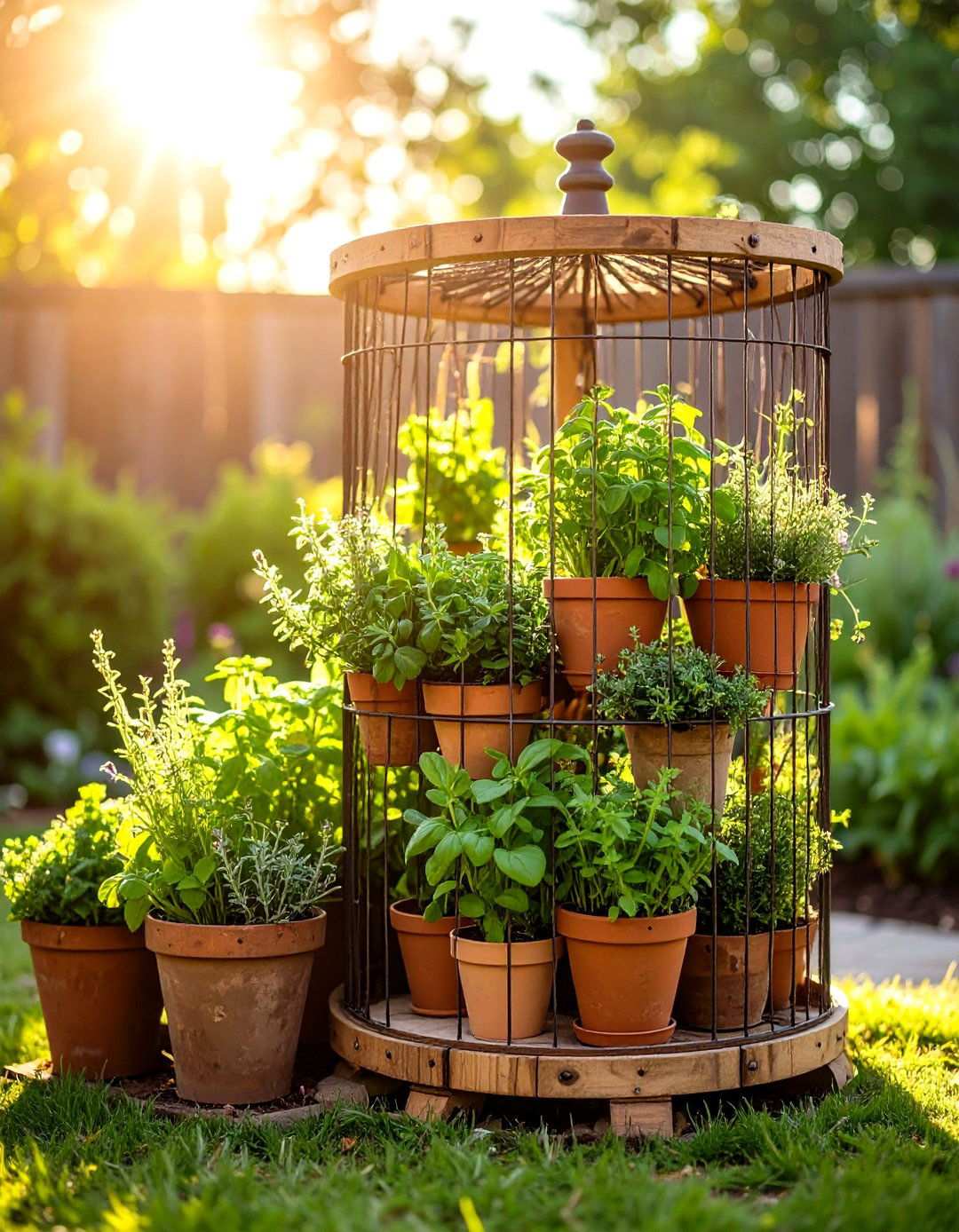
A chicken wire cage herb garden stands out as a unique and protected growing space, elevating the aesthetic appeal of your yard with cylindrical or rectangular wire structures that house a wealth of herbs. By lining the interior with landscape fabric, you can create ample growing volume, perfect for nurturing an extensive collection of herbs. This setup works particularly well for herbs that thrive with the benefits of wind protection combined with optimal air circulation. As the enclosed wire structure supports the growth of climbing or sprawling herbs, it also safeguards them from ground-dwelling pests like rabbits. A well-maintained garden, coupled with the protective structure, enables you to reap a bountiful harvest even in challenging climates.
20. Multi-Tiered Herb Planter Showcases Offer Visual Drama
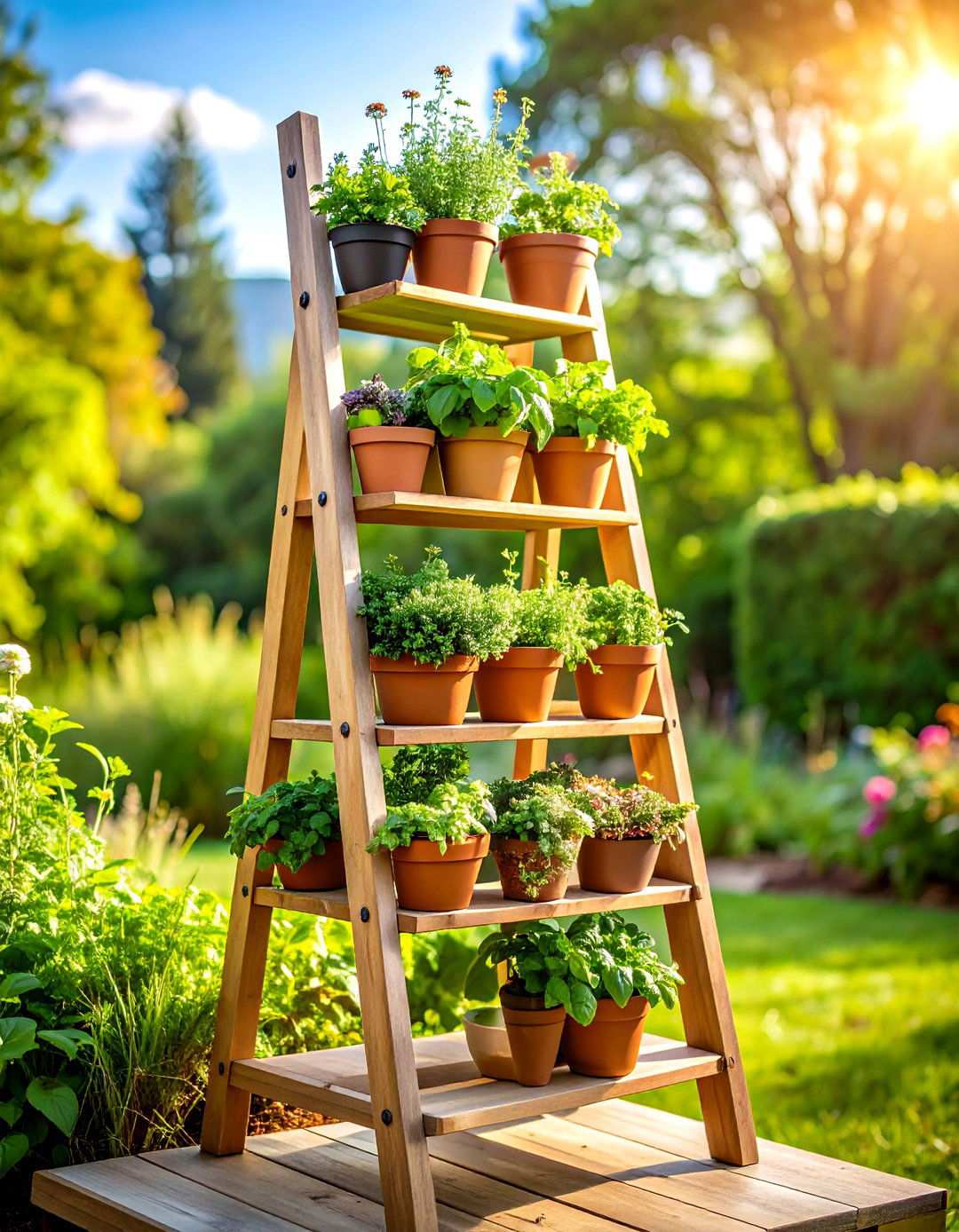
A visually striking tiered ladder planter herb garden is created by arranging progressively smaller containers on wooden ladder rungs, resulting in a pyramid-shaped masterpiece that showcases a wealth of herbs. This carefully designed setup not only optimizes growing space but also produces an impressive visual effect through the varied heights and cascading plant arrangements. For maximum impact, place sun-loving herbs at the top of the pyramid where they receive the most direct sunlight, while positioning shade-tolerant varieties lower down to prevent scorching. By incorporating a tiered design, you can ensure natural drainage flow and allow each level to receive adequate light exposure. This stunning showcase is ideal for herb enthusiasts who desire to display extensive collections within an organized and easily accessible growing environment, perfect for daily harvesting and maintenance.