1. Unleash the Elegance of Geometric Art Deco with Statement Wallpaper
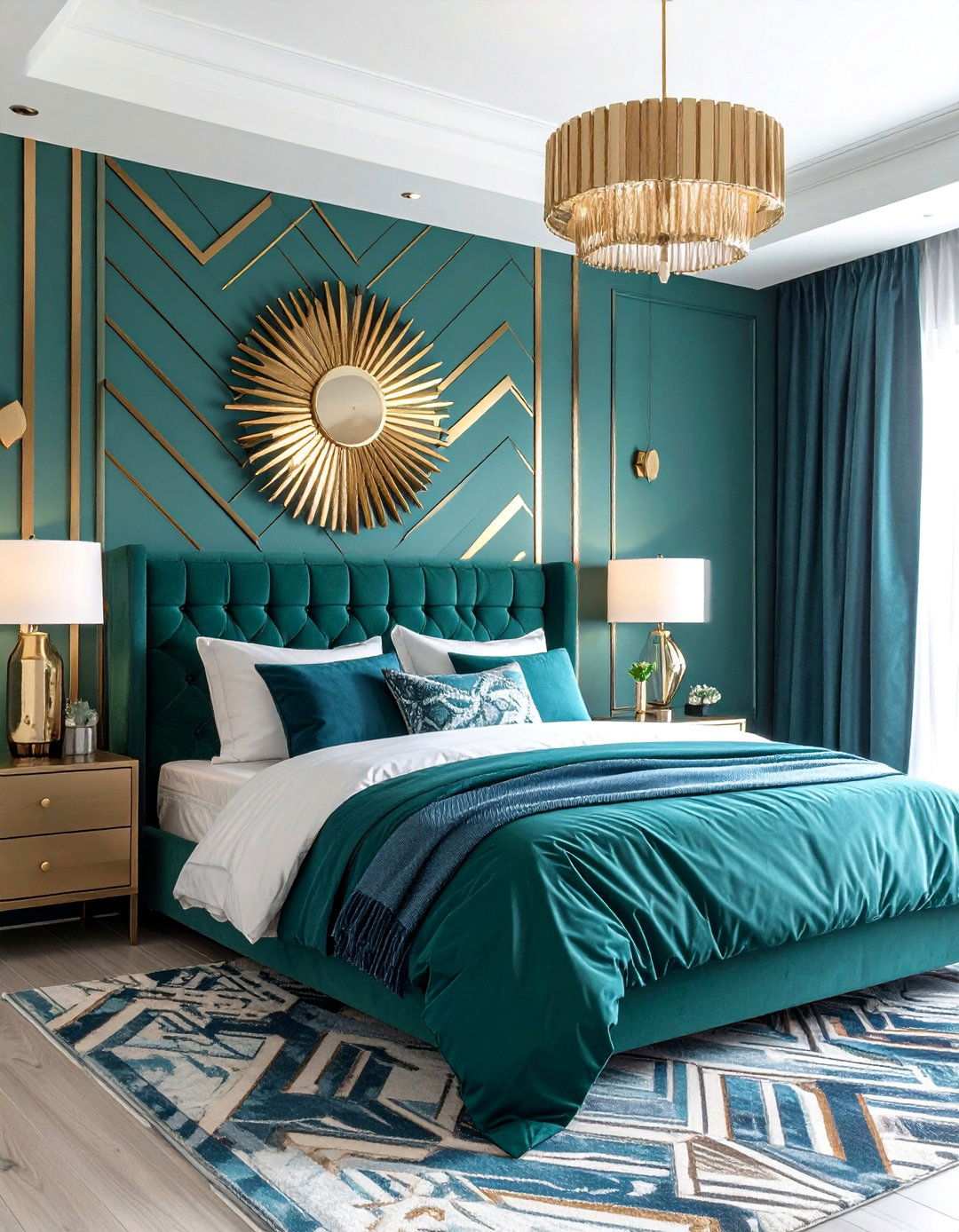
As we step into the vibrant world of Art Deco interior design in 2025, one thing is clear: this iconic style is back with a bang, and its timeless allure is more captivating than ever. The perfect fusion of classic glamour and modern sensibilities, Art Deco is poised to reinvent the way we think about interior design. With its bold geometric patterns, luxurious materials, and opulent details, this aesthetic is the ultimate antidote to years of minimalist neutrality. For those seeking spaces that reflect individual personality and sophisticated glamour, Art Deco’s dramatic flair is a game-changer. By embracing its striking beauty, you can create interiors that feel both timeless and strikingly current.
To give your space an instant Art Deco makeover, feature a statement wallpaper that showcases classic motifs like chevrons, zigzags, or sunburst patterns. These mathematically precise geometric shapes are reminiscent of Aztec pyramids and stylized florals, capturing the essence of 1920s glamour. To amplify the impact, consider pairing rich jewel tones like emerald green or sapphire blue with metallic gold accents. If you prefer a more subtle approach, opt for wallpapers with muted colorways that pay homage to Art Deco without feeling costume-like. By applying wallpaper to a single accent wall, such as behind your bed or dining area, you can anchor the room’s design and create a sophisticated backdrop for your space. This approach allows you to experiment with Art Deco aesthetics while maintaining balance with existing furnishings.

As an Amazon Associate I earn from qualifying purchases.
2. Elevating Spaces with Statement Art Deco Lighting Fixtures
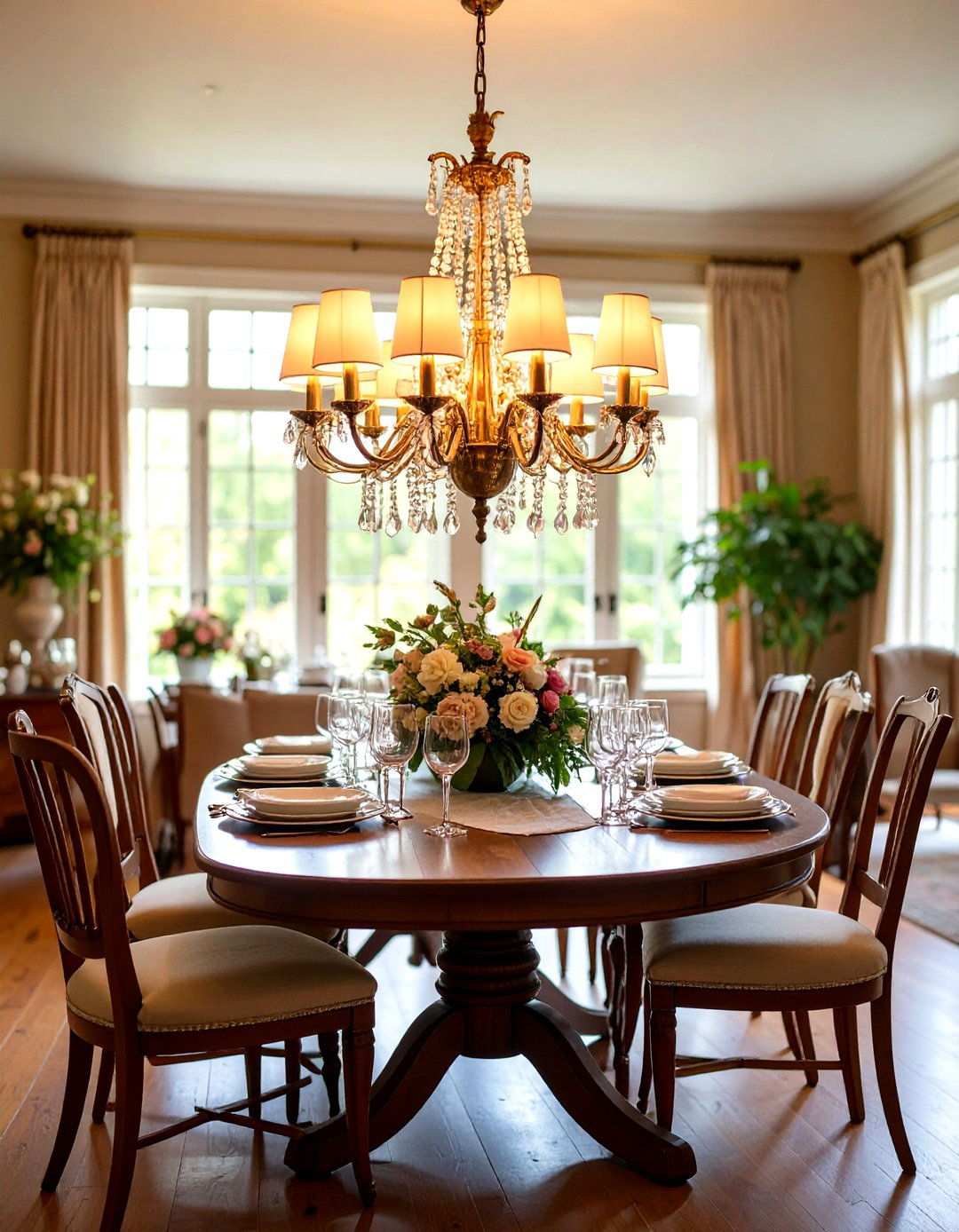
Lighting can be a game-changer when it comes to infusing Art Deco flair into any room, particularly with stylish tiered chandeliers and showstopping pendants that capture the era’s dramatic essence. When selecting fixtures, seek out designs that seamlessly blend functionality with artistic appeal, such as frosted glass globes, polished brass finishes, and geometric patterns that exude a sense of luxury. Classic Art Deco lighting often incorporates striking motifs like sunbursts and stepped patterns, as well as premium materials like crystal and chrome. Opt for fixtures with sleek, streamlined silhouettes rather than overly ornate designs to achieve a fresh, contemporary interpretation that still honors the era’s glamour. Additionally, consider pairing LED smart bulbs with warm color temperatures between 2700K-3000K to enhance the geometric designs while providing energy-efficient operation. Installing dimmer controls is also a great idea, as it will allow you to create ambient lighting that showcases the fixtures’ sculptural qualities during evening hours.
3. Luxurious Art Deco Velvet Furniture: Elevating Interiors with Texture
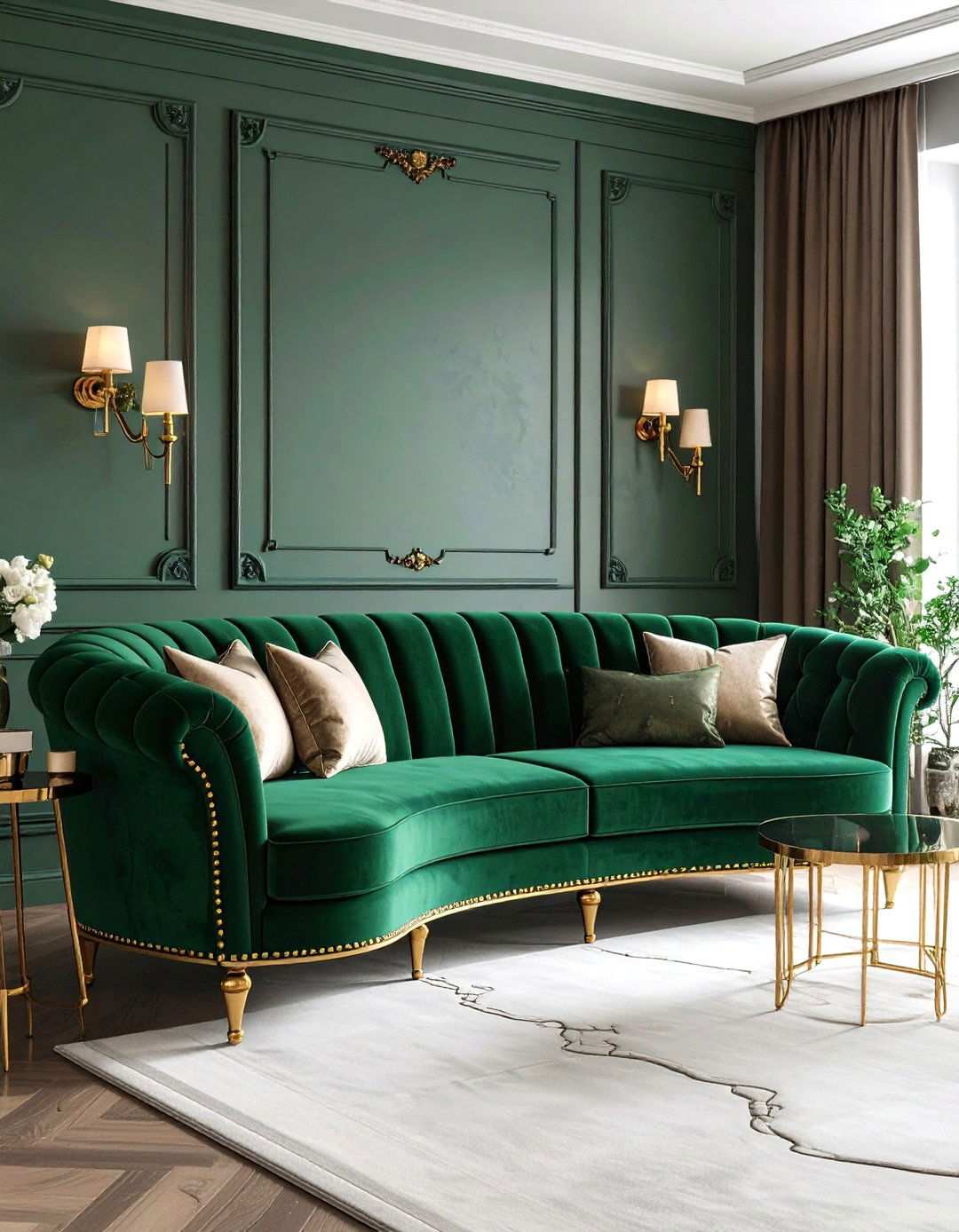
Velvet upholstery plays a vital role in adding warmth and depth to Art Deco interiors, which frequently feature opulent textures and luxurious materials. To create a showstopping focal point, select furniture pieces with rich jewel-toned velvet in deep emerald, sapphire blue, or burgundy. Look for designs that blend curved edges, scalloped details, and lacquered wood frames to embody the era’s streamlined aesthetic. Balancing soft luxury with industrial glamour is also key, so consider pairing velvet pieces with metallic accents like brass legs or chrome trim. What’s more, combining velvet furniture with harder materials like glass and chrome can create the perfect visual tension that defines sophisticated Art Deco spaces. This clever combination results in a room that feels both glamorous and inviting, perfect for modern living while honoring the opulent spirit of the 1920s.
4. Elevating Spaces with Metallic Flourishes
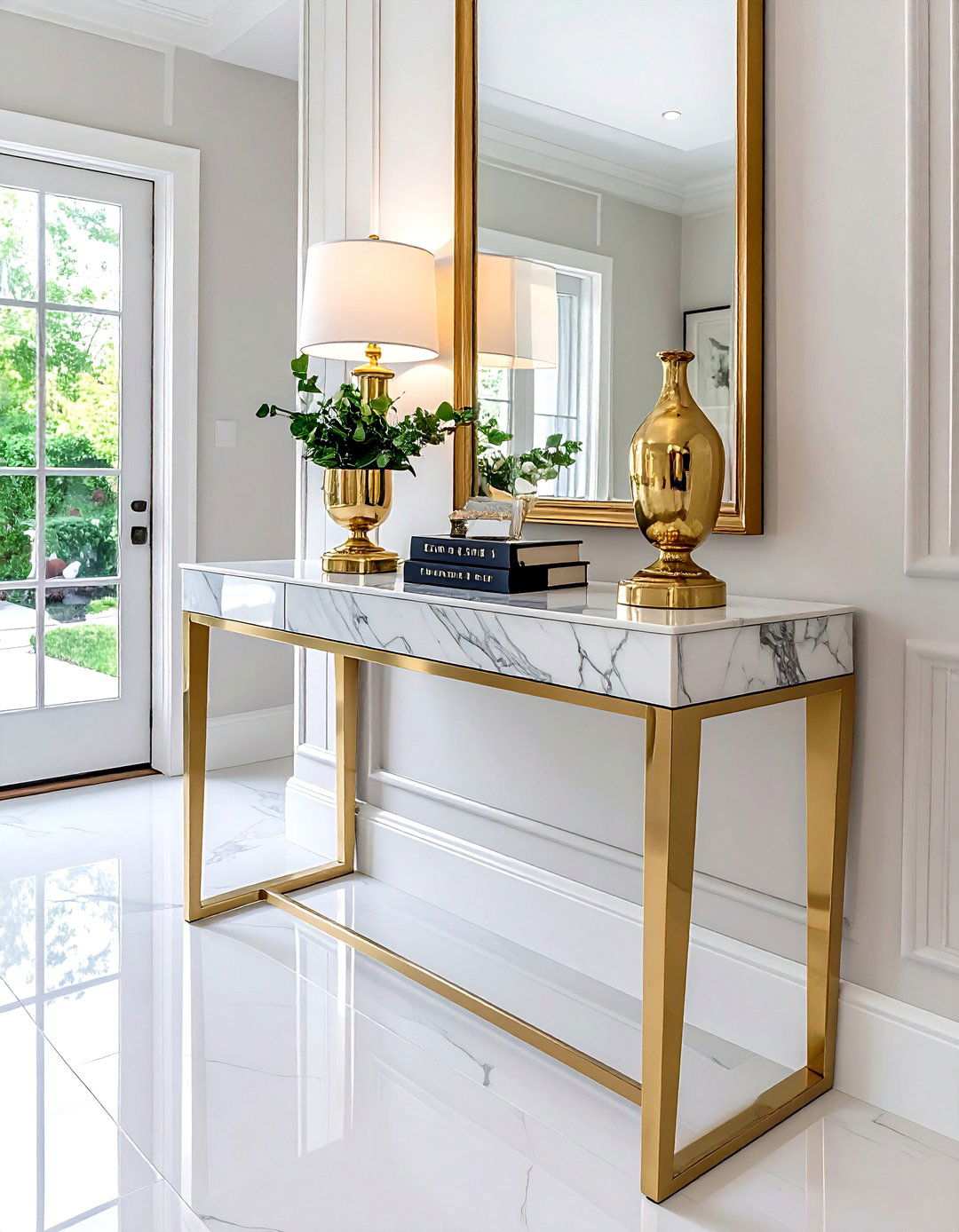
Authentic Art Deco design relies on metallic accents to infuse energy and sophistication into any room. Incorporating metallic elements such as picture frames, decorative objects, and hardware can instantly elevate a space and tie disparate design elements together. Opt for pieces with polished finishes that catch and reflect light, like chrome side tables, brass bookends, or gold-leafed mirrors, to create a sense of depth and visual interest. Even small details like upgrading light switches, cabinet hardware, and drawer pulls to metallic finishes can make a significant impact on the overall aesthetic. For a more striking effect, combine chrome and glass for a sleek, modern look that adds a touch of glamour to any contemporary space. By thoughtfully layering different metallic tones, such as pairing warm brass with cool chrome, you can create dynamic visual interest and a sense of harmony that feels intentional rather than scattered.
5. Radiant Sunburst Mirrors: A Key Art Deco Element
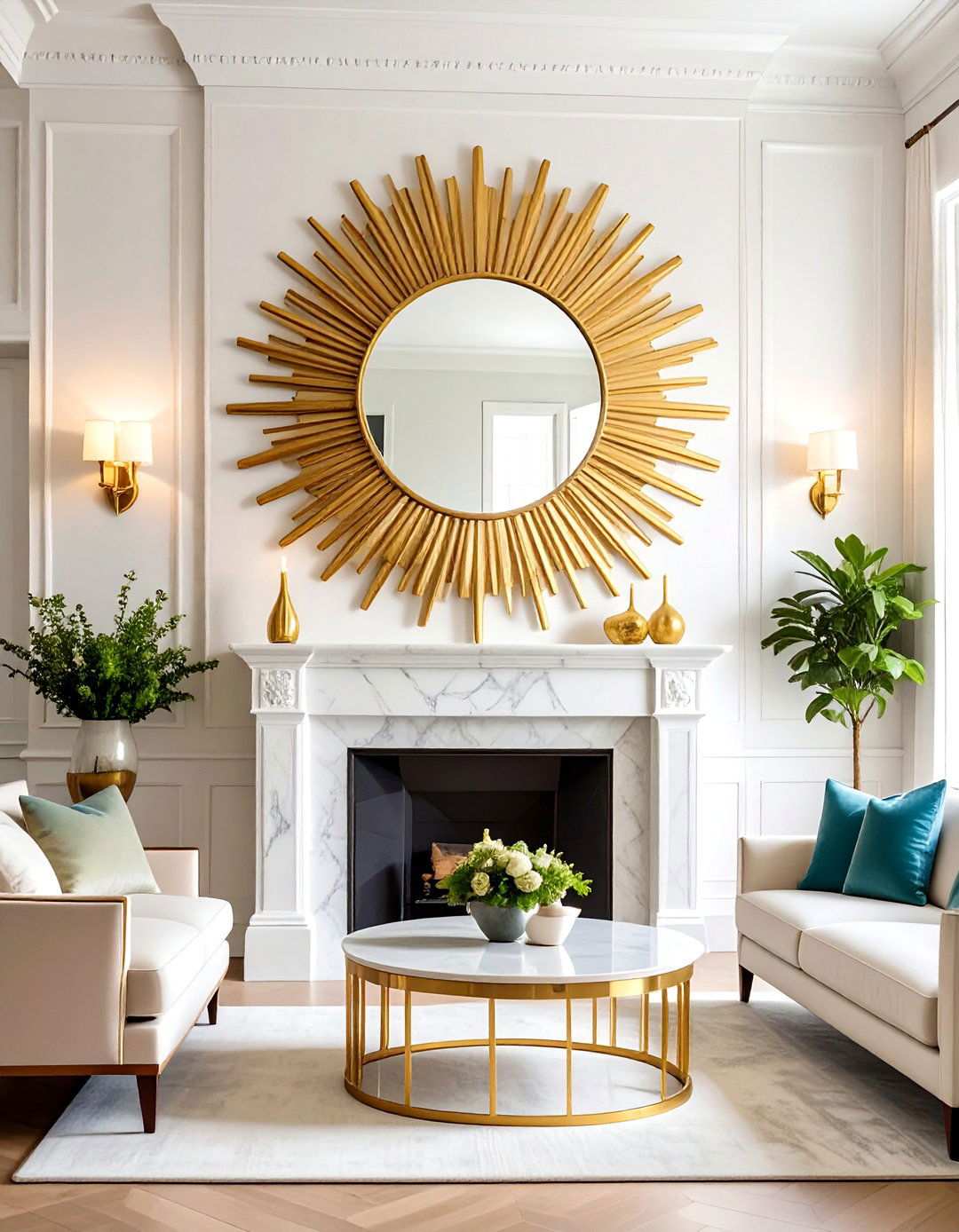
Art Deco design is synonymous with sunburst motifs, which represent the era’s optimism and fascination with progress. These radiating designs often draw inspiration from Egyptian influences and peacock fans, making them a timeless and striking addition to any room. When selecting mirrors featuring sunburst patterns, choose metallic frames in brass or gold finishes to maximize light reflection and create eye-catching focal points. Art Deco’s emphasis on balance and harmony is perfectly captured by the combination of mirrors and geometric patterns, which works to create a sense of visual equilibrium. Position a stunning sunburst mirror above a mantlepiece, in an entryway, or as a centerpiece in a dining room to create a dramatic impact. Alternatively, select mirrors with simplified sunburst patterns to create a more subtle, nuanced look that complements smaller spaces. The reflective quality of these mirrors not only enhances the overall luminosity of a room but also adds a touch of sophistication and glamour, hallmarks of the Art Deco style.
6. Elevating Spaces with Art Deco Geometric Patterns
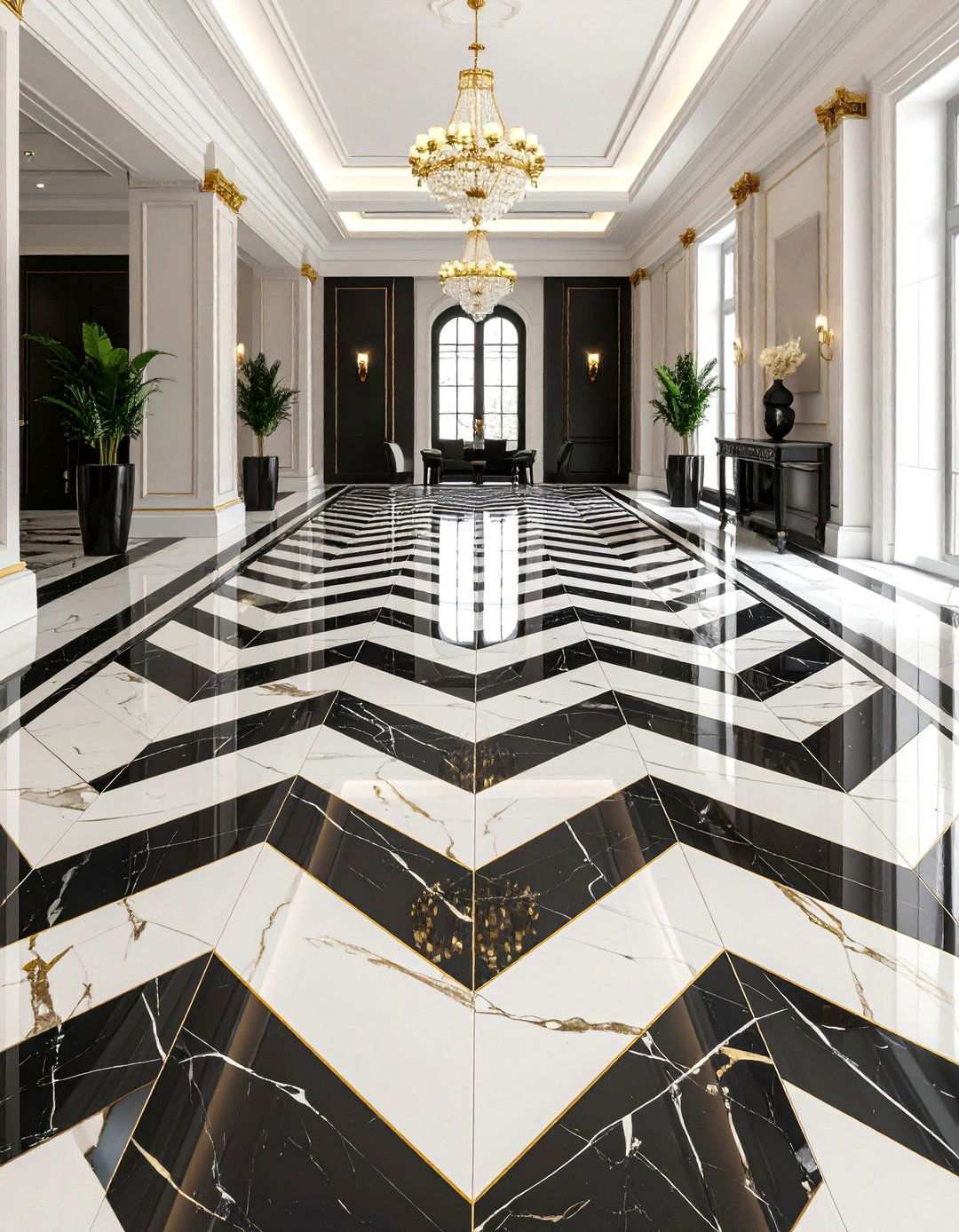
Art Deco’s signature aesthetic begins with geometric floor patterns, instantly setting the tone in any room . These avant-garde designs, originally showcased during the Art Deco era, can be elevated with metallic inlays like gold or brass for an authentic period flair . Introduce octagonal or diamond-shaped tile work in bathrooms and kitchens to capture the style’s mathematical precision, while incorporating bold colors or contrasting patterns for added visual interest . A black and white checkerboard or optical illusion pattern will always create a striking visual effect, while layering geometric area rugs over existing flooring offers an easy way to introduce Art Deco patterns without major renovations . For a sophisticated look, opt for rugs featuring bold geometric designs, contrasting colors, and luxurious materials like silk or wool. Modern takes on these classic patterns can be seen in warm wood tones and geometric shapes that successfully blend past and present sensibilities. These foundational floor treatments pave the way for incorporating more Art Deco elements throughout your space.
7. Mastering the Luxe Look with Jewel-Toned Art Deco Color Schemes
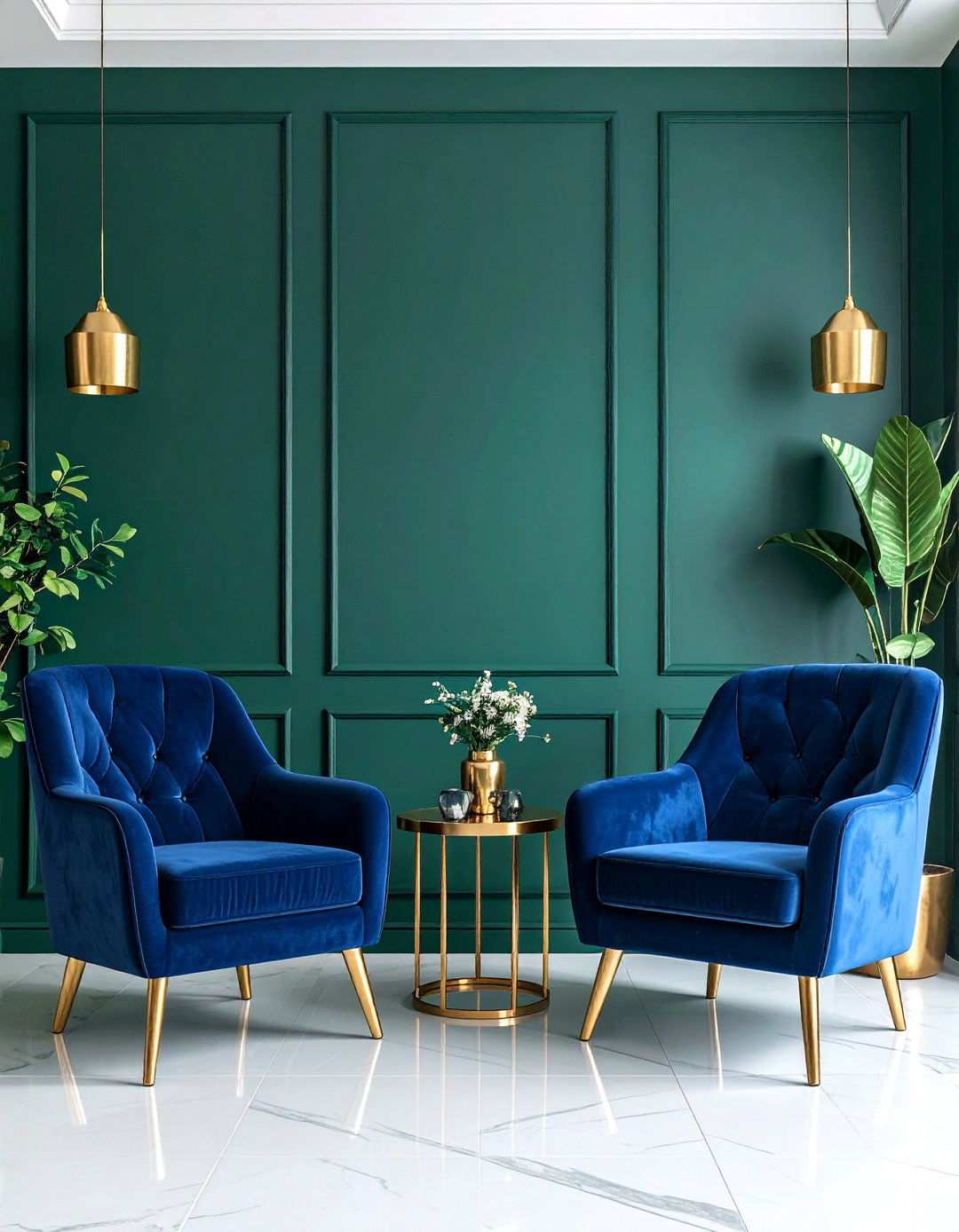
Jewel-toned colors, including emerald green, sapphire blue, and ruby red, form the core of Art Deco color palettes, exuding opulence and pairing beautifully with metallic accents . By emphasizing rich, saturated colors against neutral backgrounds, contemporary applications allow vibrant hues to take center stage and create a dramatic impact. Achieve the sophisticated glamour characteristic of Art Deco style by balancing bold jewel tones with metallic elements in gold, silver, and brass . Consider painting an accent wall in deep teal or burgundy, then complementing it with accessories and artwork in harmonious jewel-toned hues. Neutral tones like cream and black provide essential balance, creating a sophisticated harmony within vibrant color schemes . The addition of earthy accents like terracotta or ochre adds warmth and prevents overly dramatic schemes from feeling cold, ensuring your space feels both luxurious and inviting.
8. Effortless Elegance in Art Deco Furniture Silhouettes
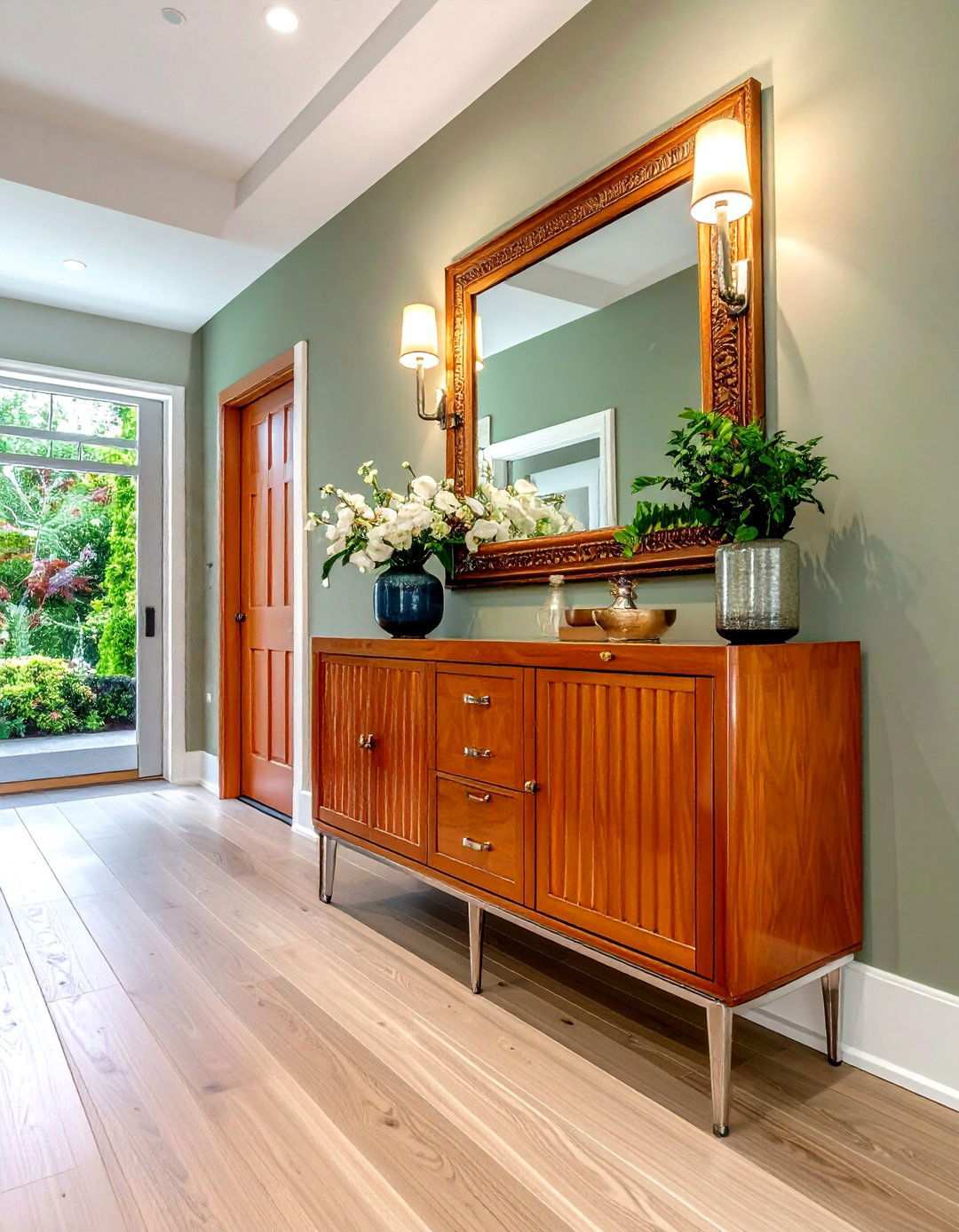
Effortless sophistication is the hallmark of Art Deco furniture, characterized by smooth, flowing curves and an absence of overly ornate decoration. The style’s modern aesthetic is defined by clean lines, curved silhouettes, and symmetrical forms, which emphasize both form and function. Add a touch of luxury to contemporary spaces with furniture that boasts shiny finishes like lacquer, which catches the eye and adds a sophisticated ambiance. Delve into the subtle nuances of subtle metallic accents and simple geometric shapes, which come together to create elegant, organized arrangements. Art Deco furniture often features fluted details, curved edges, and stepped forms that embody the style’s distinctive vocabulary. Lacquered wood pieces with glass or stone surfaces, particularly those featuring gold or chrome legs, epitomize the style’s penchant for luxurious materials. To create a dynamic tension in Art Deco spaces, balance bold geometric lines with softer curved elements, resulting in spaces that feel both structured and inviting.
9. Art Deco Bathroom Tile Designs: A Masterclass in Geometry
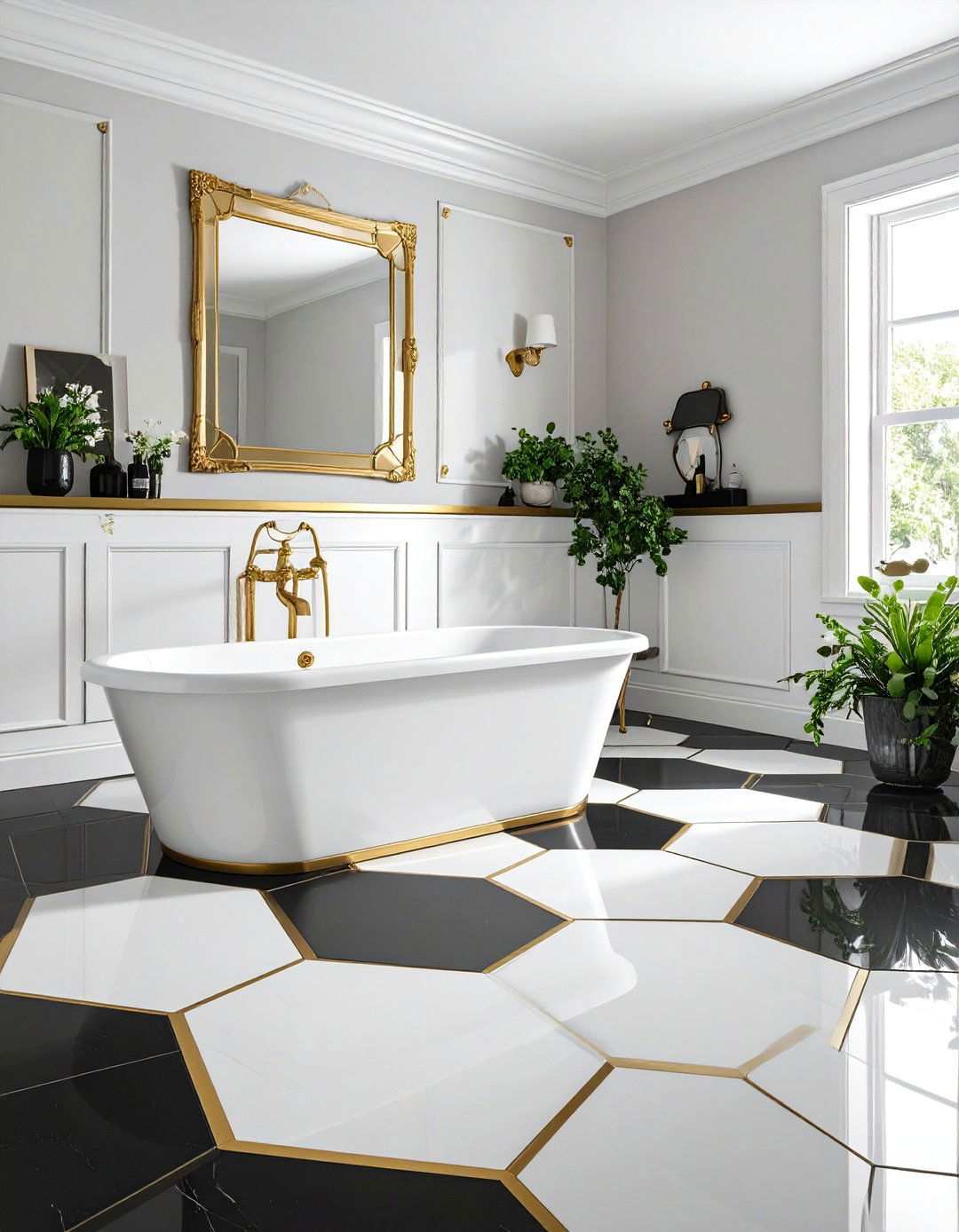
When it comes to creating authentic Art Deco bathrooms, selecting the right tile design is paramount, and classic options like octagonal and diamond patterns tend to reign supreme over trendier alternatives. Geometric tile patterns featuring stepped designs, chevrons, and mathematical precision are a testament to the era’s fascination with industrial progress and technological advancements. Bring in rich, bold colors like deep blues, emerald greens, or classic black and white combinations that evoke the style’s daring aesthetic. Let the tile be the star of the show by choosing shapes, colors, and finishes that inspire other Art Deco elements throughout the bathroom. For a striking contrast, pair hexagonal floor tiles with subway tiles featuring dark grout lines. Add a luxurious touch with metallic tile accents or borders in gold or brass, which will add a touch of vintage glamour to your bathroom. Marble and onyx surfaces will elevate the opulent feel while maintaining the sophisticated elegance that defines the style, ultimately creating spa-like retreats that exude effortless chic.
10. Elevating Interiors with Glass and Crystal Accents
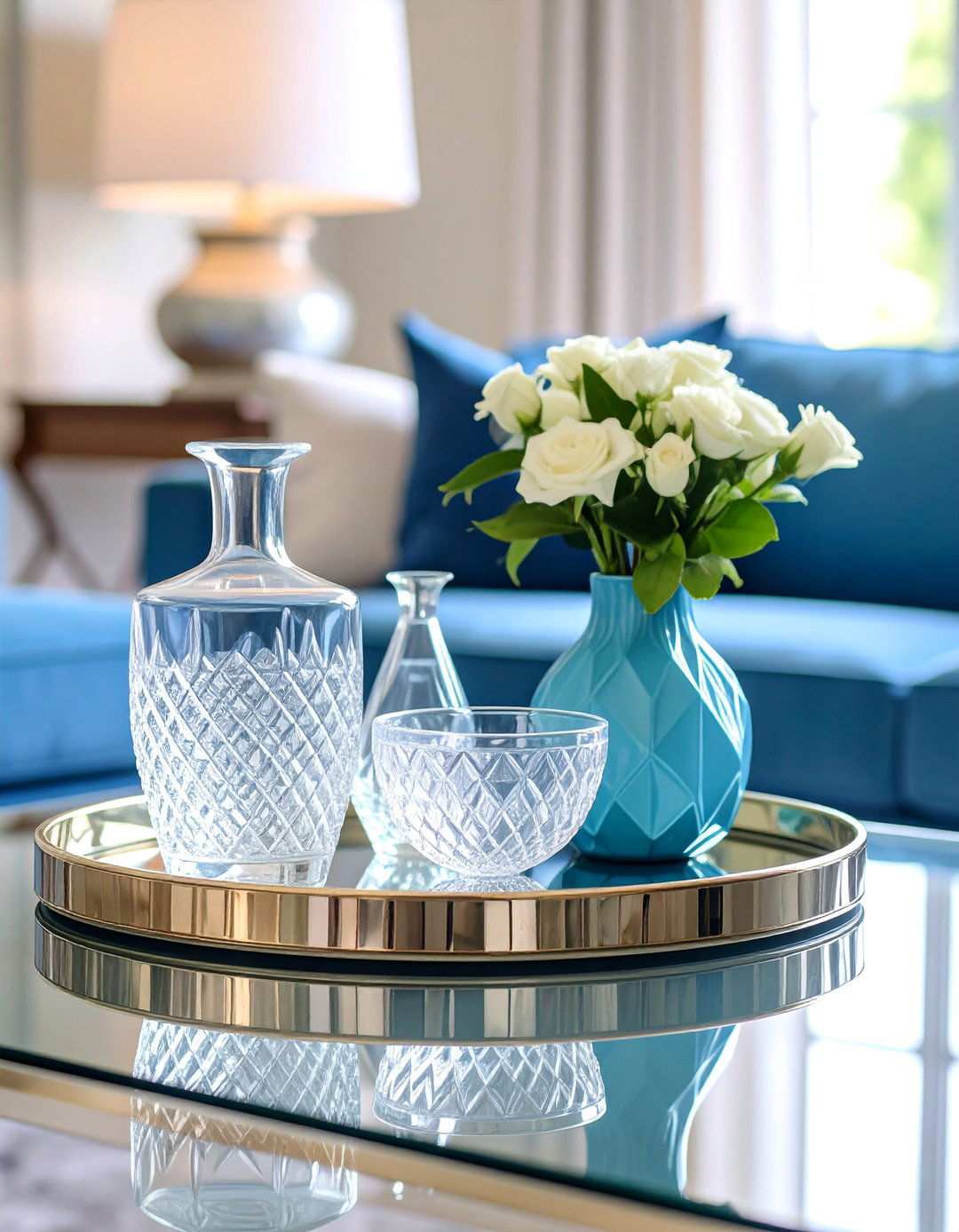
Glass and crystal ornaments bring a touch of opulence and visual appeal to Art Deco-inspired interiors, with their intricate patterns, stepped designs, and sophisticated glass techniques that amplify light reflections. To make the most of these accessories, focus on pieces featuring geometric motifs, advanced glass techniques, and a blend of luxury and craftsmanship. Chrome and glass combinations add an instant touch of sophistication, elevating contemporary spaces. Strategically positioning glass accessories near windows or lighting fixtures highlights their reflective qualities. Authentic Art Deco glassware often boasts ribbed geometric motifs and advanced techniques that create a visually striking impact. Mirrored surfaces and crystal accents work in harmony to enhance the overall luminosity characteristic of successful Art Deco schemes. These decorative accents can be seen as the crowning jewels of your rooms, adding the finishing touches to the glamorous aesthetic.
11. Art Deco Ceiling Design Elements
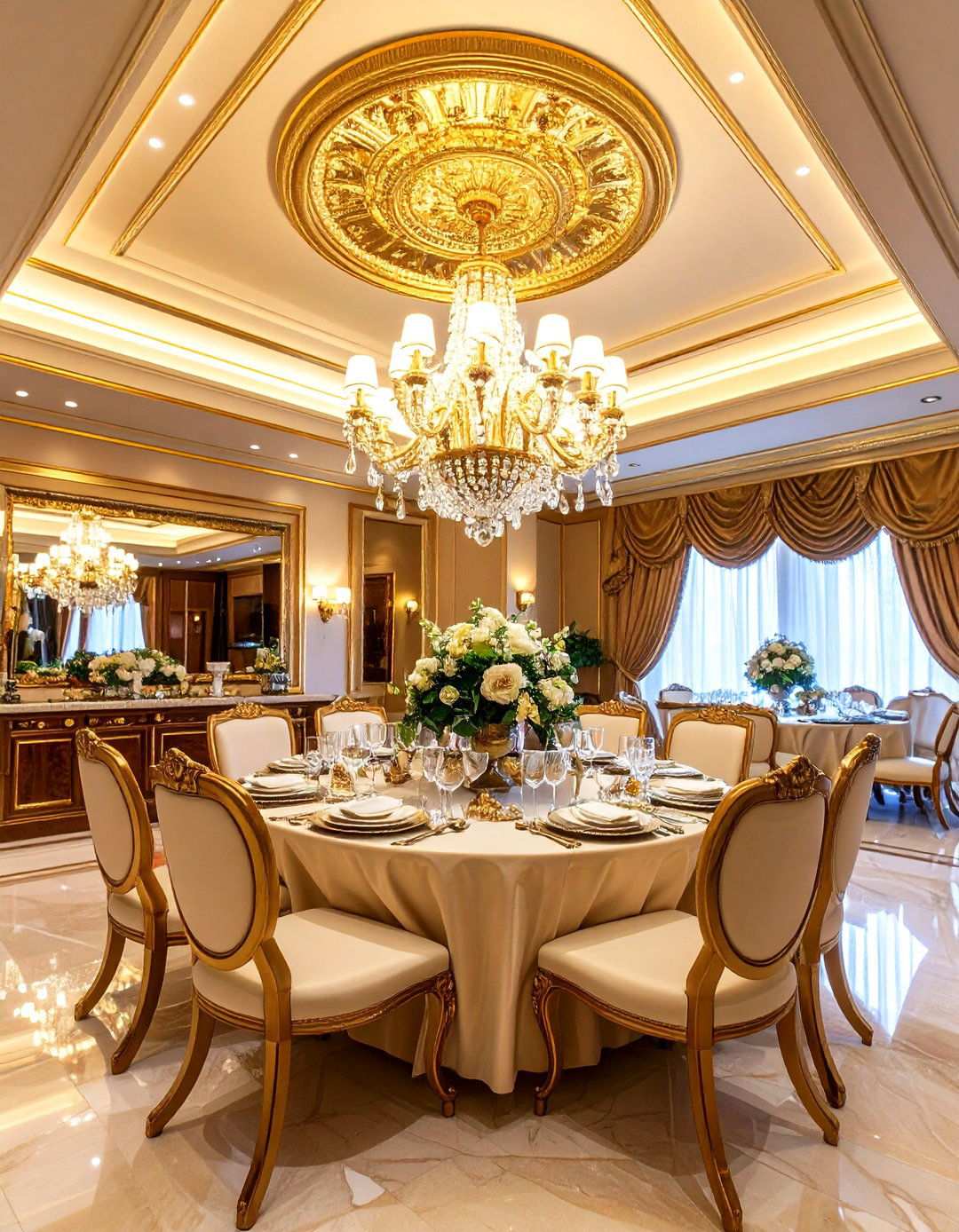
Transforming ordinary rooms into Art Deco showplaces can be achieved with elaborate ceiling treatments, such as medallions, moldings, and painted designs. Breathtaking ceiling murals featuring geometric patterns and metallic finishes in silver and gold leaf epitomize the style’s decorative possibilities. Adding curved panels, stepped moldings, or geometric ceiling designs draws the eye upward, creating architectural interest and adding depth to the space. Custom moldings crafted from carved wood, steel, and metallic finishes can replicate authentic Art Deco motifs. Softening harsh architectural lines can be achieved by incorporating arched elements, curved moldings, or circular patterns that balance geometric precision. Painted ceilings in rich colors or the addition of metallic accents create dramatic contrast with walls and furnishings. Ceiling-mounted lighting fixtures with geometric patterns cast interesting shadows that further enhance the architectural drama. These overhead design elements complete the Art Deco experience by creating a sophisticated atmosphere that engages every surface in the room.
12. Elevating Luxury: Monochromatic Art Deco Color Schemes
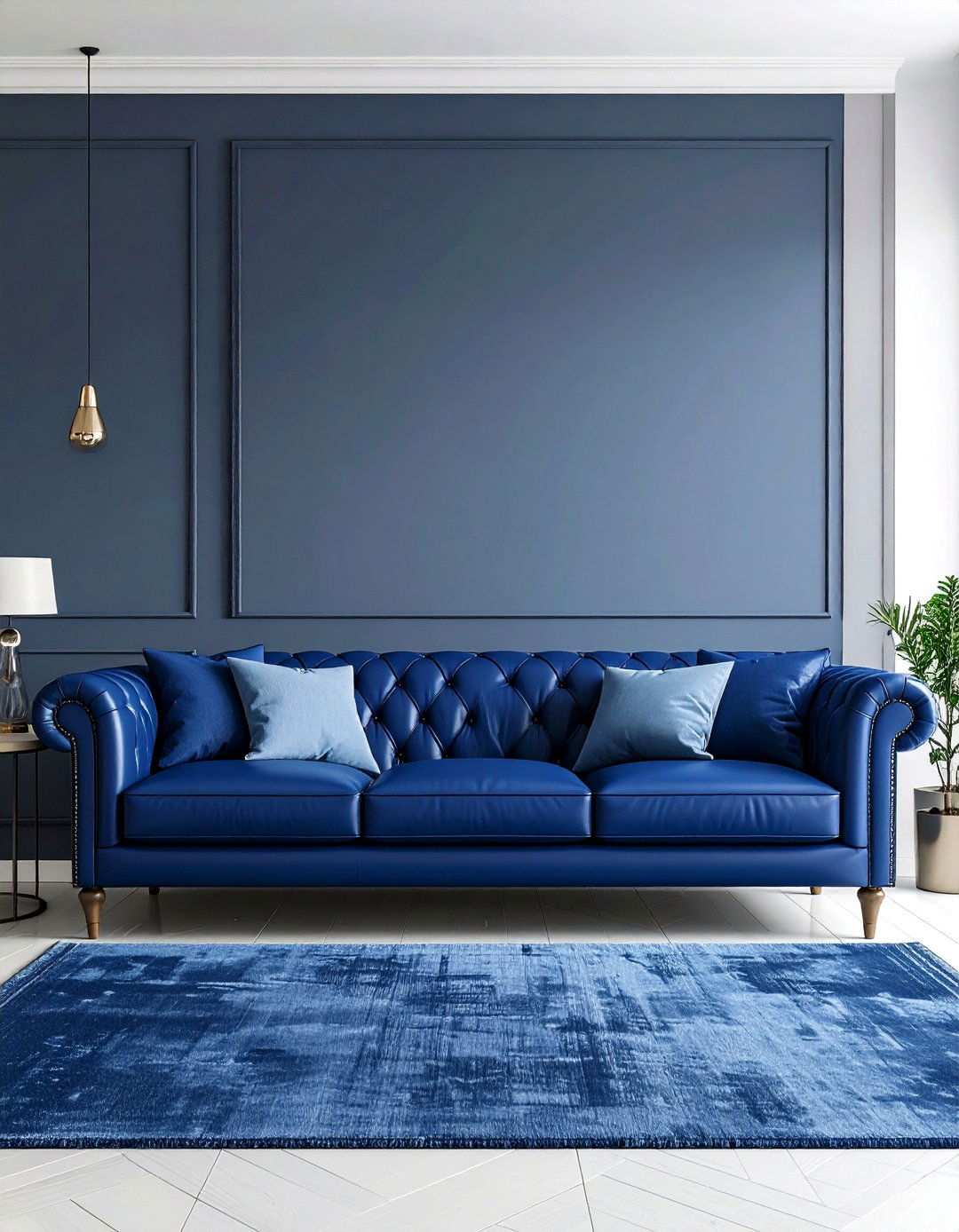
By embracing a single, sophisticated color family, homeowners can create opulent, high-end spaces that exude refinement and poise. This approach involves selecting various shades of the same hue to craft cohesive, impactful designs that seamlessly blend modernity and timeless elegance. The key to success lies in subtly offsetting each element with different shades of the same color family, thus generating visual depth and interest. Consider working with a range of blues, from the deepest navy tones to soft powder blues, or rich greens spanning from forest to sage undertones. To prevent monochromatic schemes from feeling overwhelming or cold, thoughtfully incorporate earthy tones and neutral accents. The addition of diverse textures within your chosen color palette will add dimension and prevent the space from feeling monotonous. Furthermore, judicious use of metallic accents in gold, silver, or brass provides essential contrast, preventing monochromatic schemes from appearing flat. By masterfully applying Art Deco principles, homeowners can create serene, elegant environments that demonstrate a deep understanding of the style.
13. Crafting Glamorous Spaces: Art Deco Bar Carts and Entertainment Areas
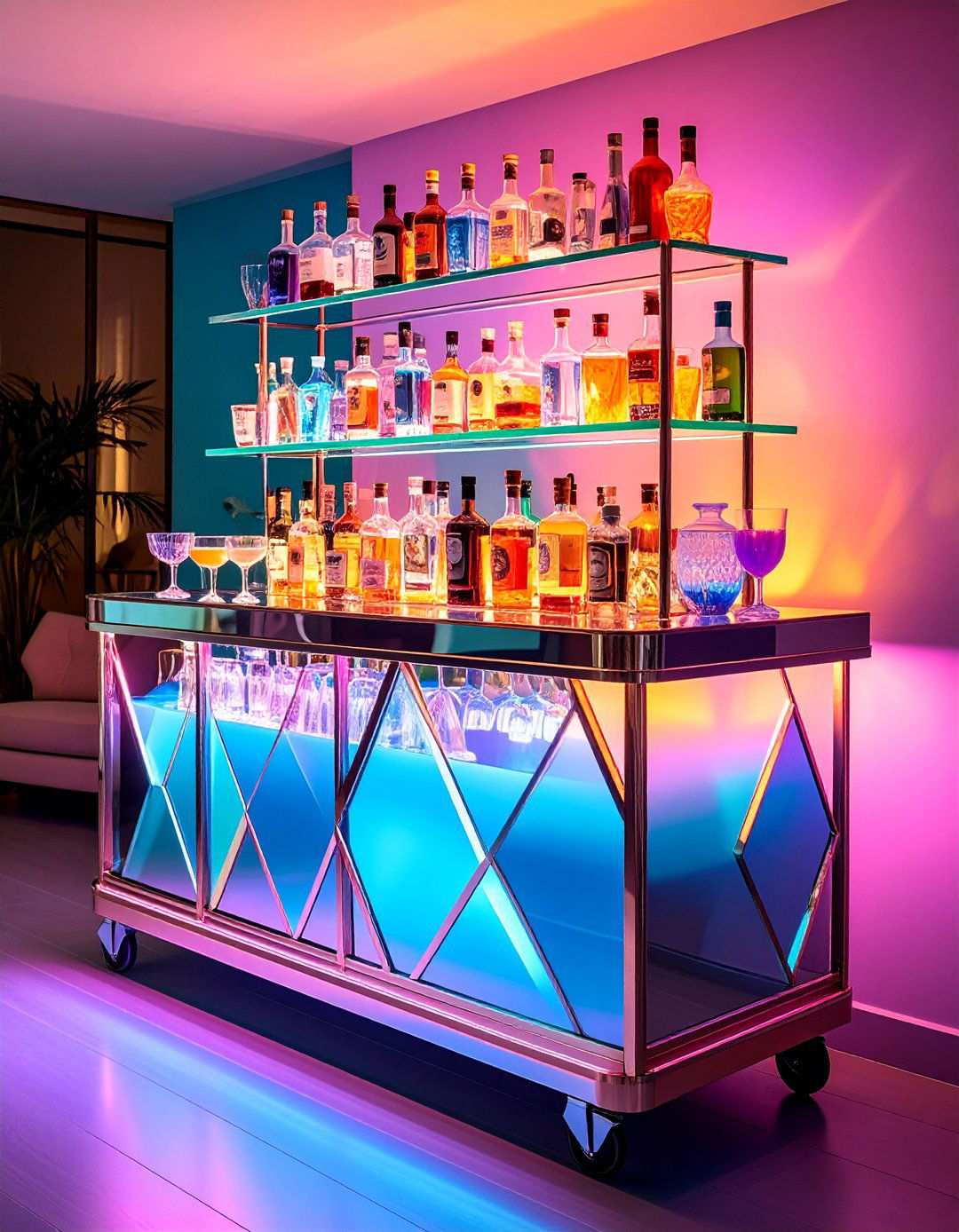
Art Deco’s association with the vibrant culture of the Roaring Twenties makes bar carts and entertainment areas the perfect showcase for the style’s glamorous aesthetic. While the era was characterized by riotous joy, cocktails, and opulence, contemporary interpretations focus on creating sophisticated entertaining spaces that capture the essence of the style, rather than literal references to the Great Gatsby era. Choose bar carts with geometric frames, mirrored surfaces, and metallic finishes that evoke the luxury materials of the era. Incorporate crystal decanters, vintage glassware, and decorative accessories that pay homage to the era’s opulent entertaining traditions. Strategically position bar carts near windows or lighting fixtures to maximize the reflective qualities of glass and metal surfaces. Add geometric pendant lighting or table lamps to create an intimate ambiance for entertaining. Include vintage suitcases or trunks as storage solutions that blend old-world glamour with modern functionality. These dedicated spaces not only celebrate Art Deco’s social spirit but also provide practical entertainment solutions.
14. Art Deco Textile and Fabric Patterns
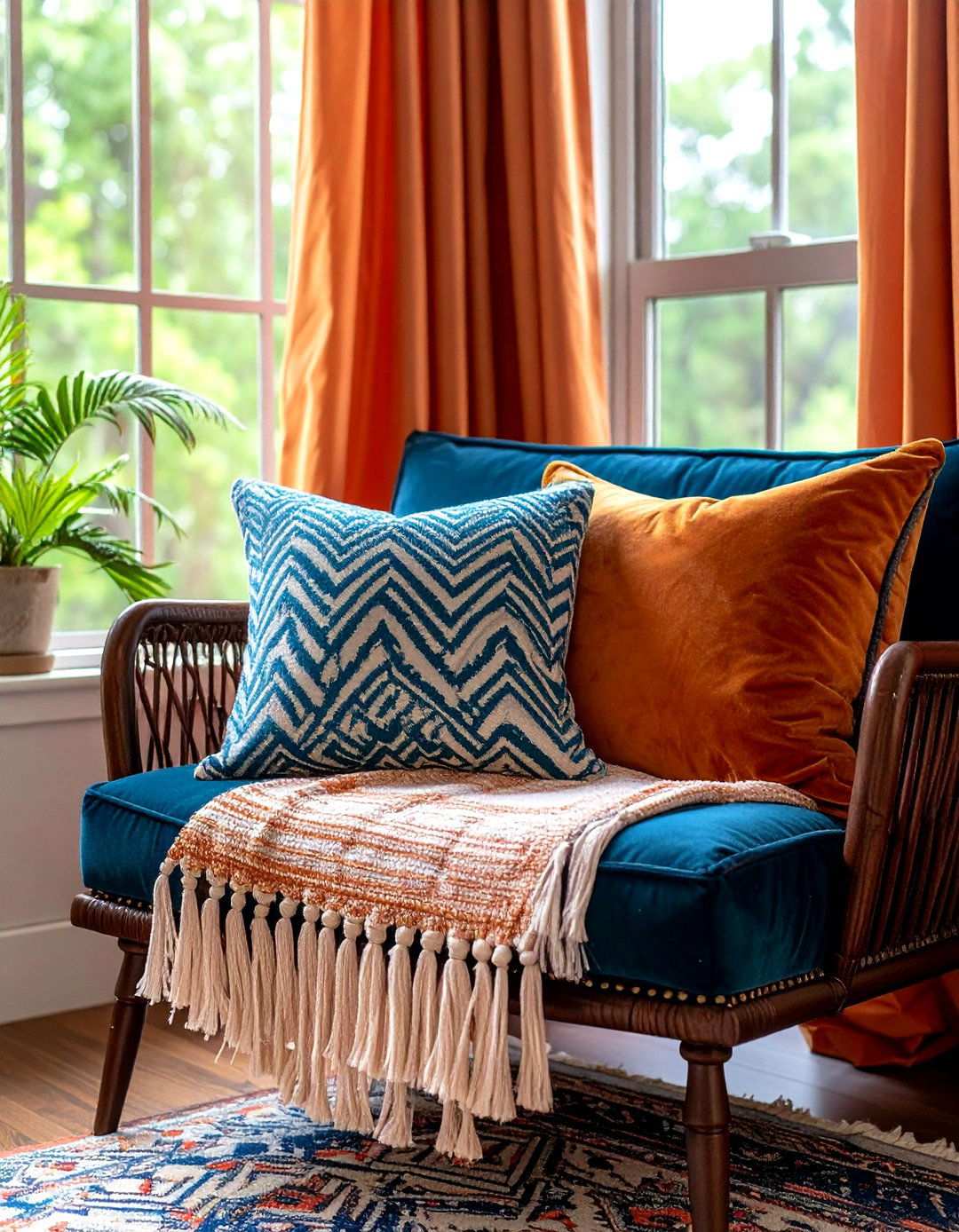
Incorporating rich fabrics and luxurious materials is a great way to add depth and softness to Art Deco interiors, while also balancing their geometric rigidity. Geometric patterns, Art Deco motifs, and plush materials come together to create a sophisticated look that’s quintessential to the style. Use pillows, curtains, and upholstery to feature zigzag patterns, chevrons, and stylized floral designs that pay homage to Art Deco’s opulent character. To create a visually appealing space without overwhelming it, layer different patterns while maintaining a consistent color palette. Fabrics with fringe trim, embossed textures, and metallic threads add an authentic touch to your Art Deco design. For a harmonious contrast, pair high-shine surfaces like lacquered wood with softer materials like velvet or textured plaster. Art Deco-inspired area rugs with geometric patterns, contrasting colors, and luxurious materials like silk or wool can anchor seating areas, creating a sense of visual balance. By choosing textiles thoughtfully, you can ensure your Art Deco space feels both visually striking and physically comfortable for everyday living.
15. Art Deco Kitchen Design Elements
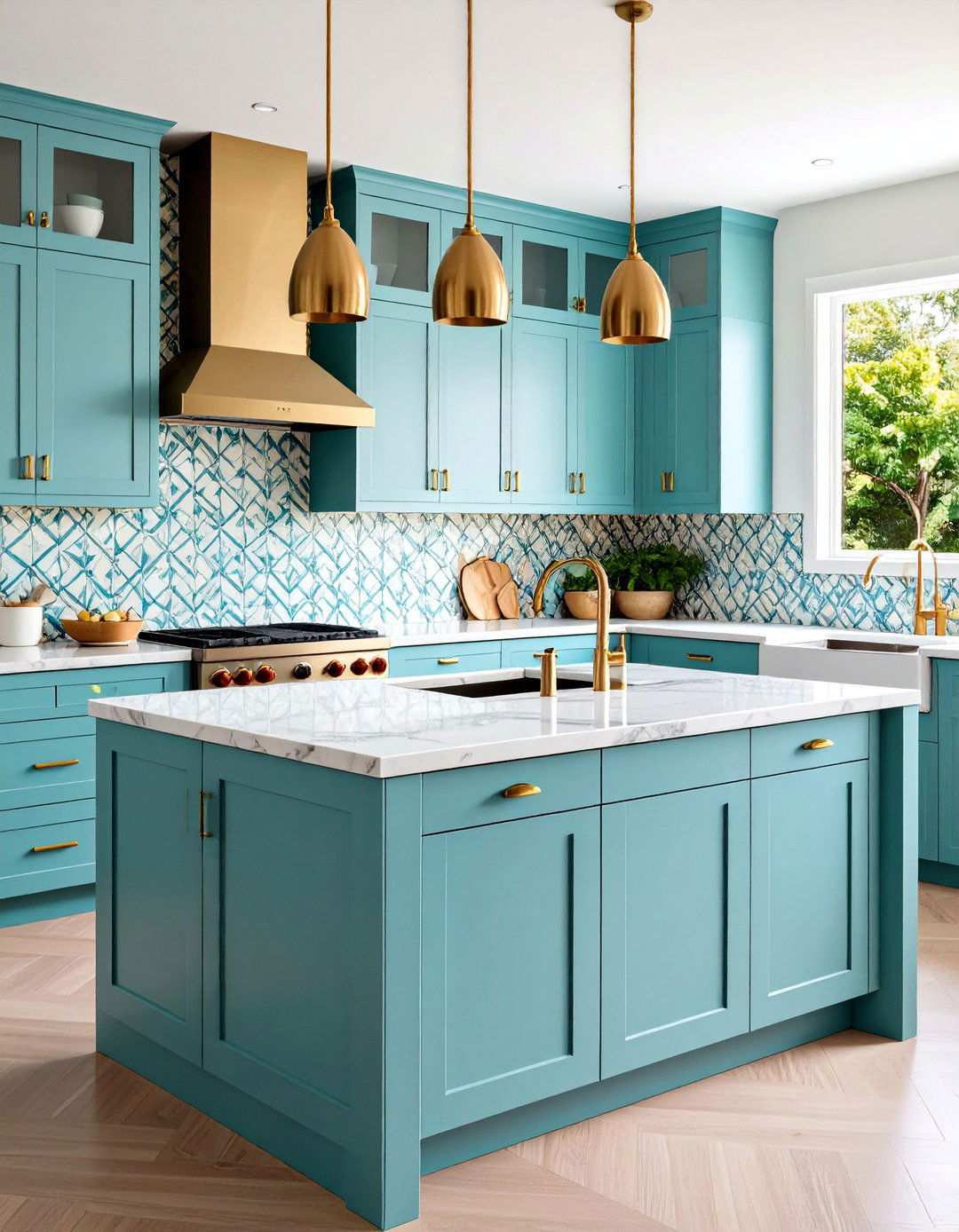
Contemporary Art Deco kitchens strike a perfect balance between form and function, blending streamlined cabinetry with geometric patterns and metallic accents. A great approach involves choosing cabinet hardware in brass or chrome finishes, and incorporating geometric tile backsplashes that pay tribute to the style’s mathematical precision. For a luxurious look, select countertops in marble or other high-end materials that reflect Art Deco’s emphasis on quality finishes. Lacquered wood cabinetry with glass-front doors showcases the style’s love of reflective surfaces, adding a touch of glamour to the kitchen. Consider adding pendant lighting with geometric shapes over kitchen islands or dining areas to create a sophisticated ambiance. To soften angular cabinetry and achieve visual balance, incorporate curved elements like arched doorways or rounded corners. Upgrading standard elements like light switches and cabinet pulls to metallic finishes can add cohesive Art Deco detailing. Use bold colors sparingly as accents while maintaining sophisticated neutral backgrounds to create functional kitchens that exude Art Deco glamour while meeting modern cooking needs.
16. Elevating Bedroom Luxury with Art Deco Elements
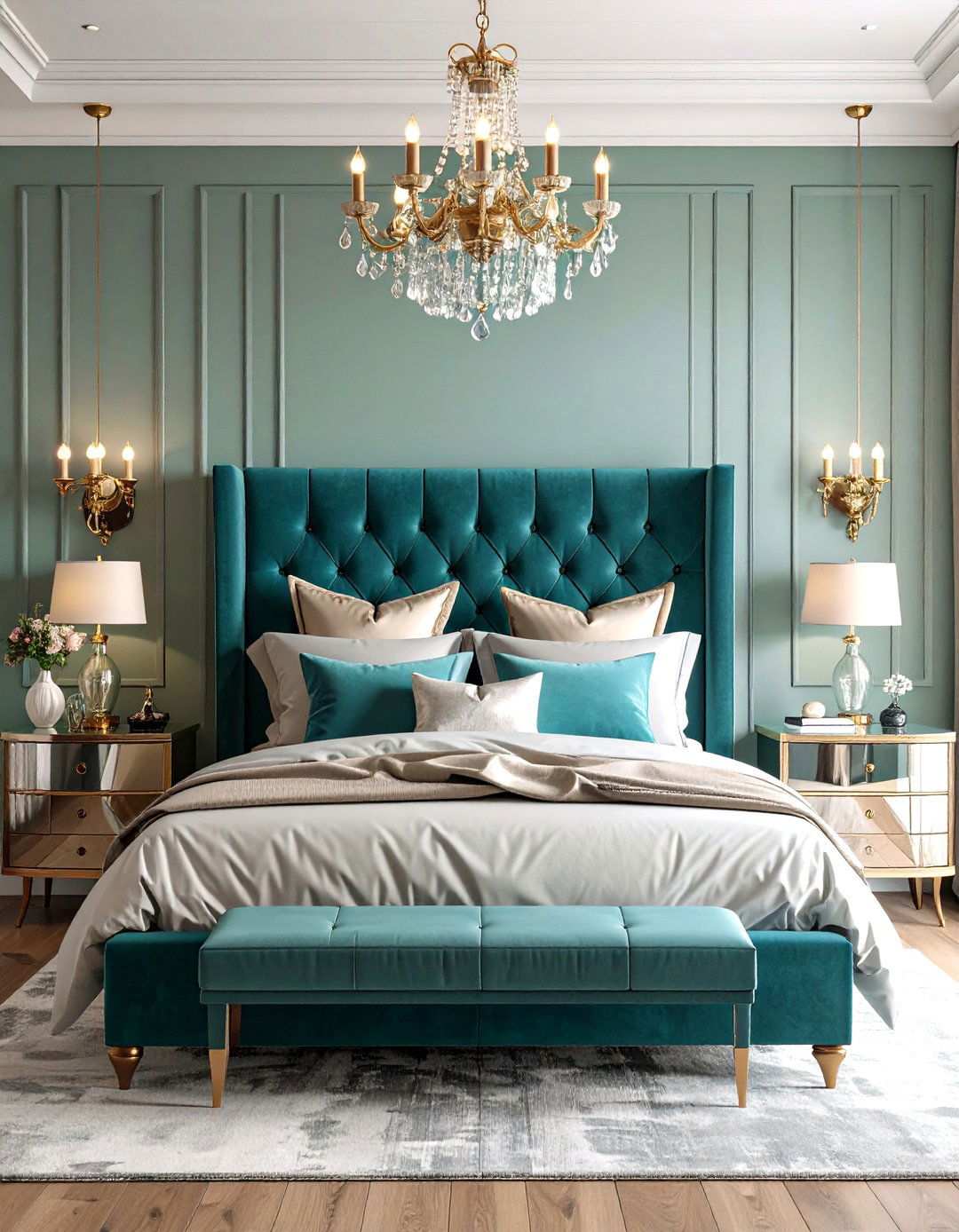
Classic elegance and modern comfort converge in Art Deco bedrooms, defined by tufted headboards, metallic accents, and opulent fabrics. To evoke the style’s refined aesthetic, opt for furniture with lacquered finishes, curved silhouettes, and geometric details. Create showstopping focal points with intricately upholstered headboards set against ornate wall paneling or geometric wallpaper. Add crystal chandeliers or table lamps featuring geometric patterns to provide both functional lighting and decorative flair. Mirrored bedside tables, chrome accents, and sunburst mirrors can further enhance the room’s luxurious ambiance. Layering velvet throws, silk pillows, and metallic accents creates the rich textures that Art Deco design embodies. When selecting colors, strike a balance between bold jewel tones and neutral backgrounds to craft restful yet sophisticated sleeping spaces. Incorporated gilded details and damask patterns lend authentic period references while maintaining contemporary sensibilities. This thoughtful blend transforms bedrooms into serene retreats.
17. Infusing Architectural Details with Art Deco Character
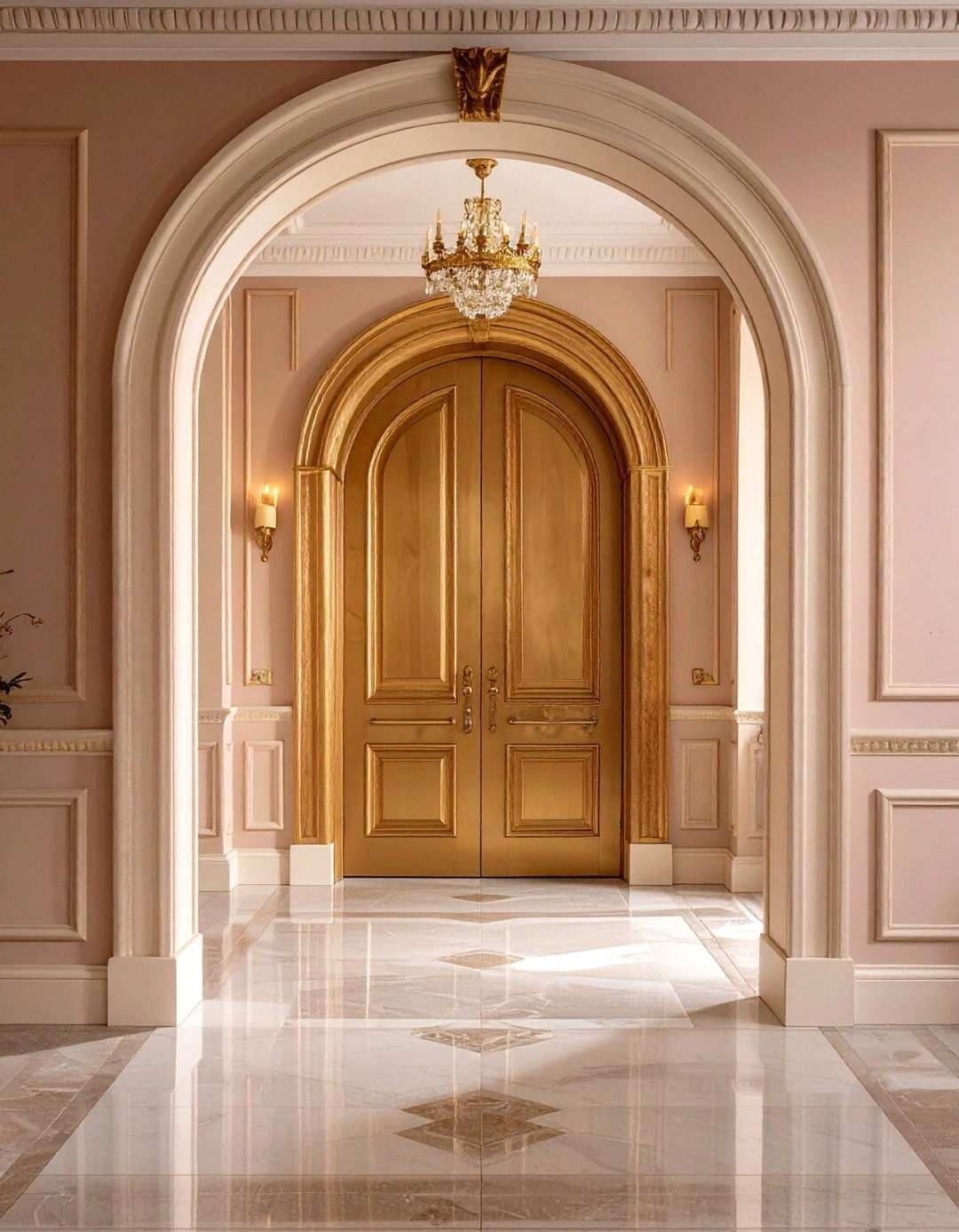
Incorporating authentic Art Deco architectural elements like arched doorways, geometric moldings, and curved details can imbue contemporary homes with a touch of elegance. Whether through doorways, wall cutouts, or decorative panels, arched features create the illusion of height and reference the style’s distinctive syntax. Custom moldings showcasing stepped patterns, fluted details, and metallic finishes replicate the authentic motifs that define Art Deco. By embracing curved elements like rounded corners, circular patterns, and flowing lines, you can balance the style’s geometric precision. Geometric wall paneling or wainscoting creates visual interest without overwhelming smaller spaces. The interplay of vertical and horizontal lines in architectural details generates a sense of stability and grandeur characteristic of Art Deco buildings. Adding metallic trim, brass inlays, or chrome details that catch light and add sophisticated sparkle can further enrich your design. These architectural investments establish a strong foundation that underpins the success of Art Deco interior design.
18. Art Deco Revival: Blending Timeless Elegance with Modern Flair
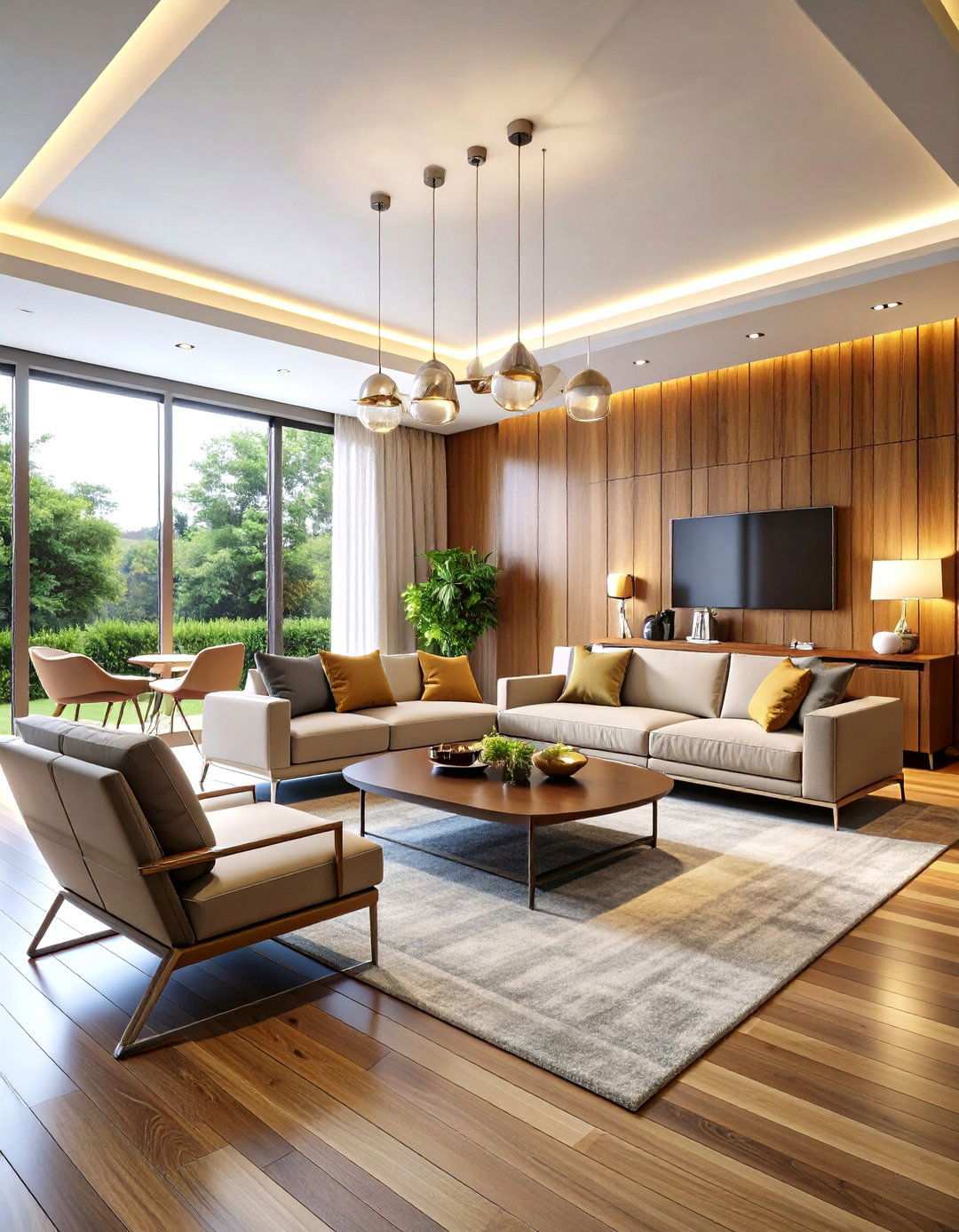
Achieving a harmonious balance between vintage allure and modern practicality is the key to unlocking the secret of contemporary Art Deco. By incorporating natural elements alongside bold, ornate materials, you can create spaces that exude sophistication and feel refreshingly unexpected. The perfect blend of classic Art Deco motifs and modern technologies and furniture with clean lines can be achieved by selecting authentic, statement-making accessories and lighting that pay homage to the era without feeling overly literal. To add visual tension and glamour to your spaces, focus on incorporating curvature as a deliberate counterpoint to geometric patterns. A well-curated approach to design ensures that your spaces not only feel historically informed but also perfectly suited to the demands of modern living. By thoughtfully selecting statement pieces and harnessing the power of smart home technology, you can create a seamless, stylish living experience that effortlessly blends the old with the new.
19. Bringing Art Deco Outside: Elevating Patio and Outdoor Spaces
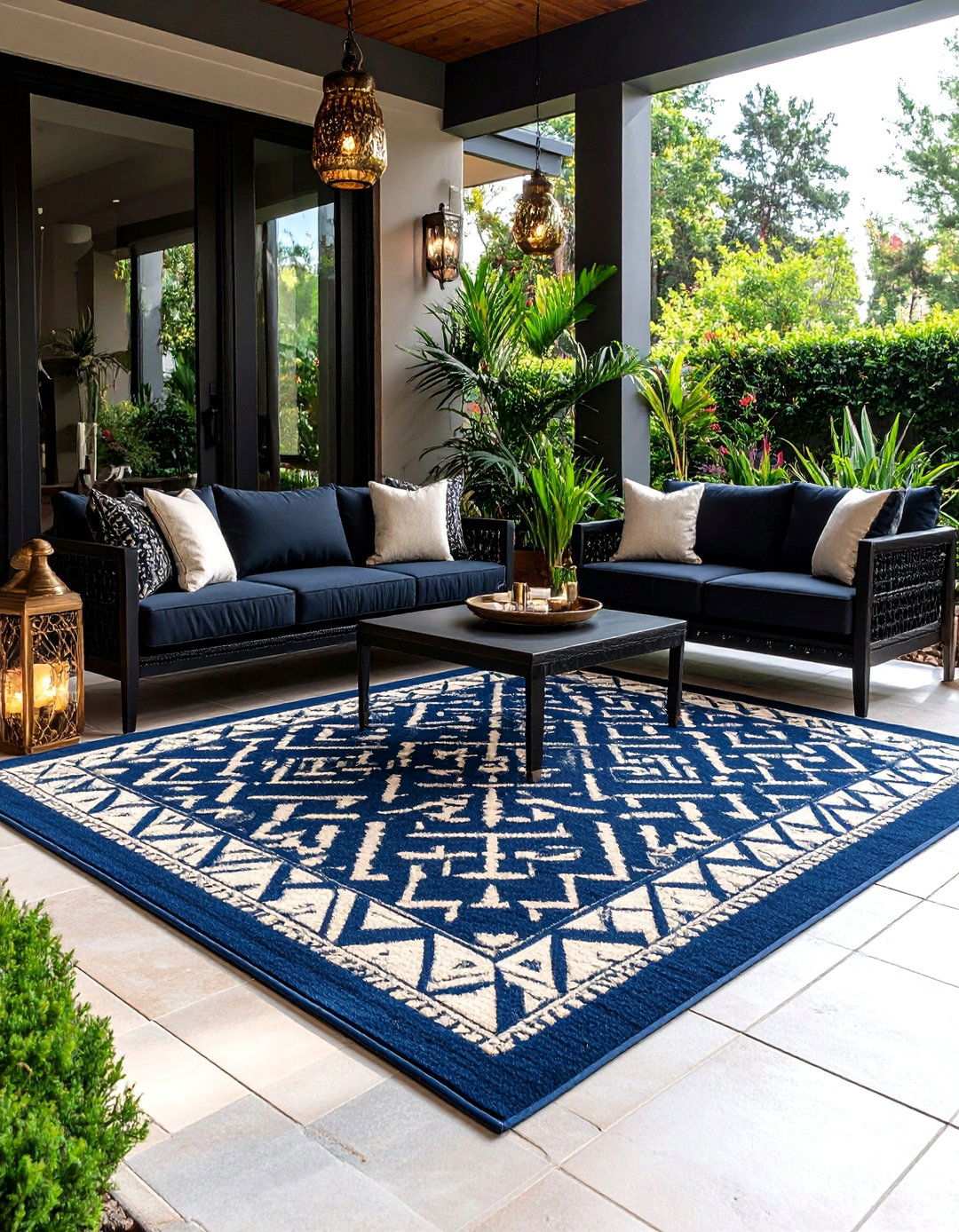
The distinction between indoors and outdoors is becoming increasingly blurred, making Art Deco-inspired patios and outdoor areas a compelling trend for 2025. To extend the style’s sophisticated aesthetic to exterior spaces, consider applying geometric patterns through outdoor rugs, tile work, and architectural elements. Choose weather-resistant lighting fixtures with Art Deco silhouettes, such as lanterns and pendant lights, to create a cohesive look. Metallic finishes on outdoor furniture and accessories can add a touch of glamour, as long as they are selected for their weather-resistance and durability. To create seamless flow between Art Deco interiors and outdoor entertaining areas, consider using retractable glass doors or large windows. Additional touches, such as geometric planters, sunburst-patterned screens, and Art Deco-inspired outdoor sculptures, can further enhance the style’s presence in your outdoor spaces. By selecting outdoor fabrics and cushions in jewel tones and geometric patterns that complement interior Art Deco elements, you can create a cohesive, glamorous living environment that celebrates the style’s timeless appeal in every season.
20. Elevating Spaces with Bold Art Deco Statement Walls
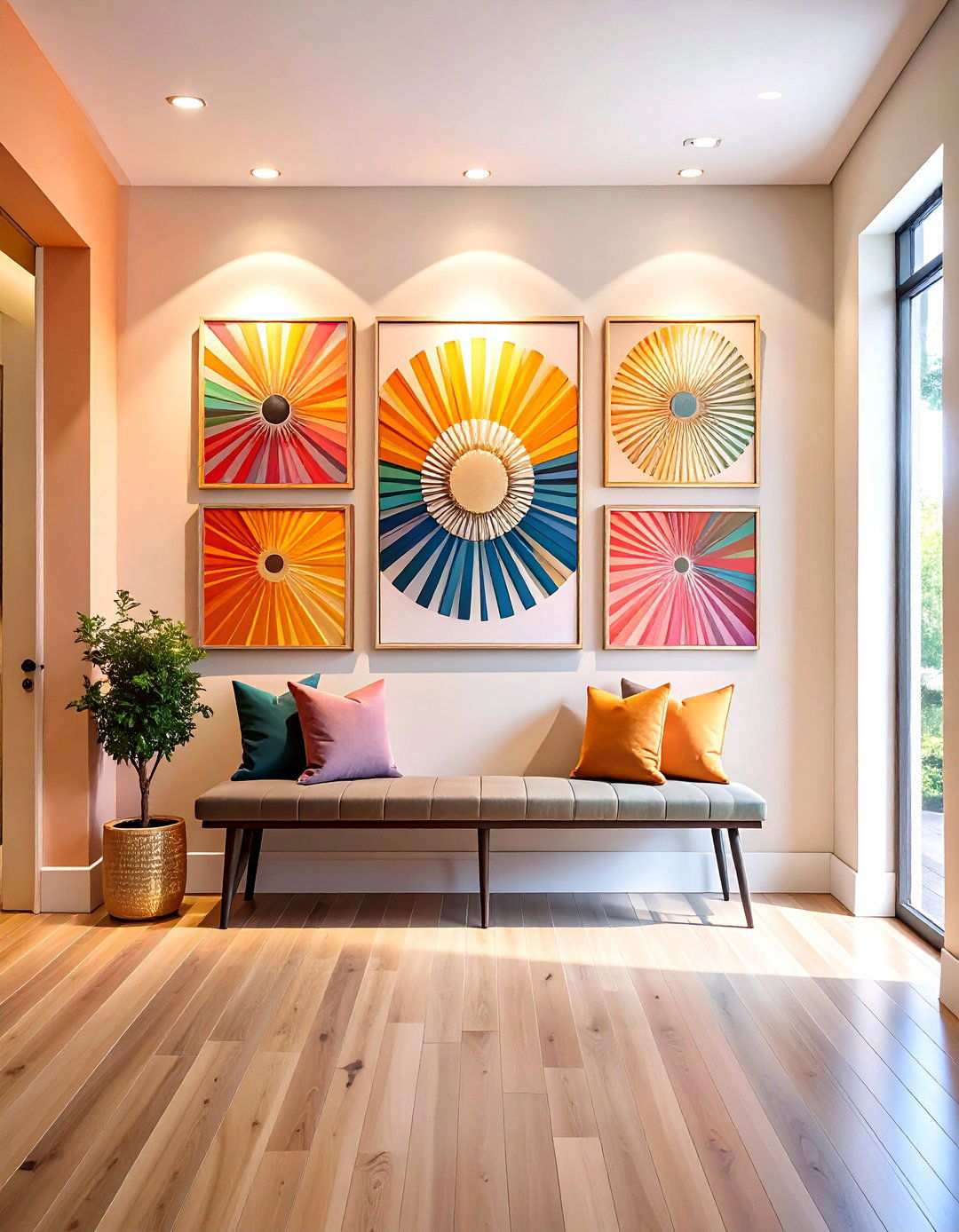
A defining characteristic of Art Deco’s resurgence in 2025 is its bold, eye-catching aesthetic, particularly in the realm of wall art. This revival is driven by individuals seeking unique expression, and nothing captures that essence like visually striking, geometrically shaped wall art in vibrant colors. To create an authentic Art Deco look, opt for artwork that prominently features motifs such as sunbursts, fans, and stylized florals – classic references to the period. Rather than a full-scale room overhaul, select pieces that subtly nod to the era through graphic prints and geometric compositions. Global cultural influences are another key aspect of Art Deco’s international appeal, so look for artwork that incorporates diverse patterns and motifs. Strategically position your chosen pieces to draw attention to architectural features and create focal points that anchor furniture arrangements, then layer lighting to accentuate the wall art and create dramatic shadows that enhance the space’s overall visual impact. For a touch of nostalgia, consider vintage-inspired pieces that blend traditional elements with modern artistic techniques. Framing artwork in metallic finishes or geometric frames that harmonize with other Art Deco elements in the space can be a stylish finishing touch. A well-crafted gallery wall featuring curated Art Deco pieces is a sophisticated way to celebrate the movement’s artistic legacy, creating a stunning focal point that showcases your unique style.