1. Unlocking the Potential of Vertical Balcony Garden Walls
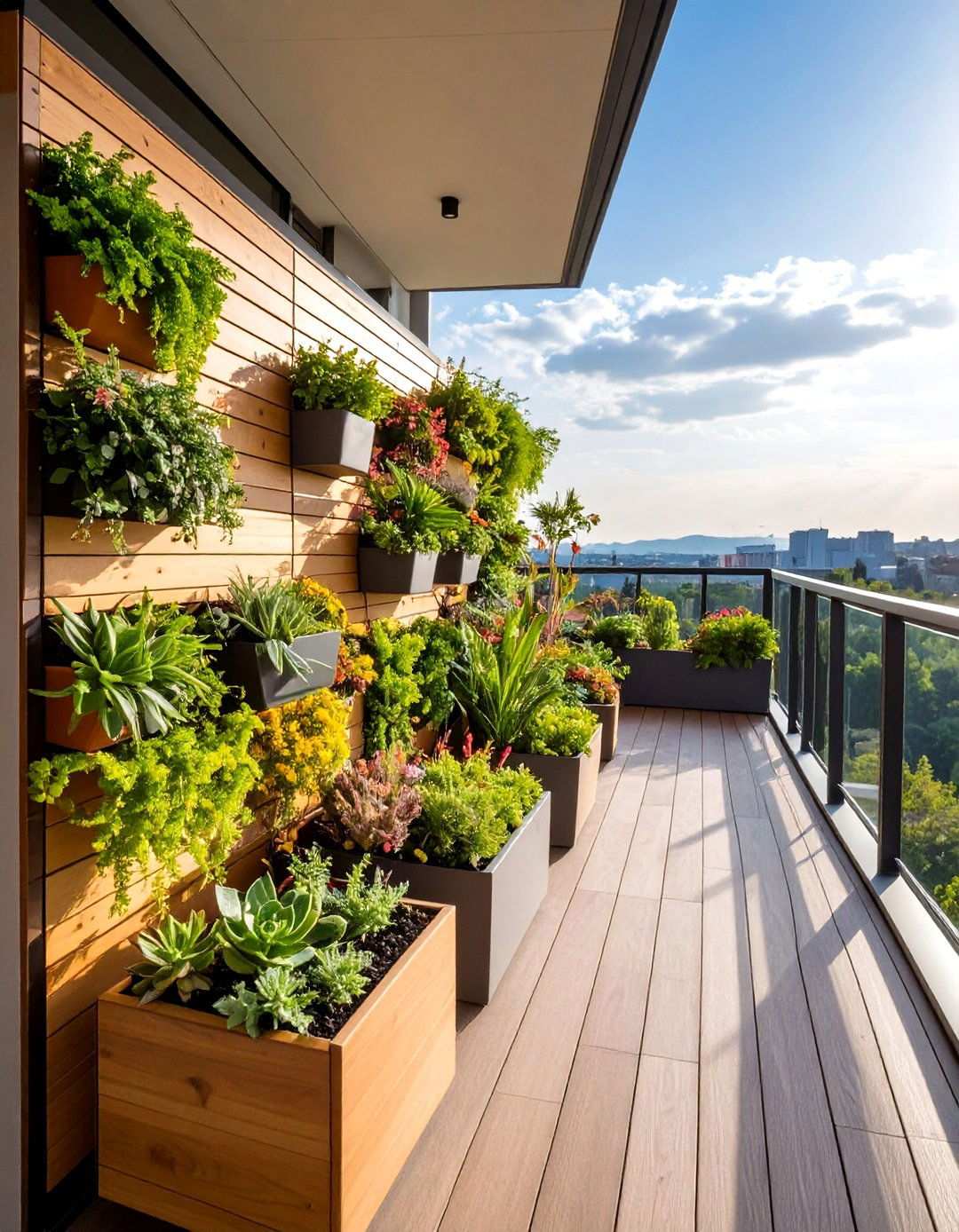
Unleash the full potential of your balcony and transform it into a breathtaking vertical garden haven. By mounting pots, shelves, or trellises to the walls, and incorporating hooks for hanging plants, you can create a captivating display that showcases your green thumb . Modular planters are perfect for crafting patterns and designs with a variety of plants, including succulents, ferns, and air plants, which add visual interest and texture . This innovative solution allows you to cultivate dozens of plants without compromising on floor space. Opt for lightweight containers and ensure they’re equipped with proper drainage to prevent water damage. Hang a pallet board and attach several pots to it, positioning it where it receives optimal sunlight . Installing a user-friendly irrigation system makes watering a breeze, and selecting plants with similar light and water requirements for each section simplifies maintenance.
2. Bringing Fresh Flavors to Your Kitchen with a Herb Balcony Garden
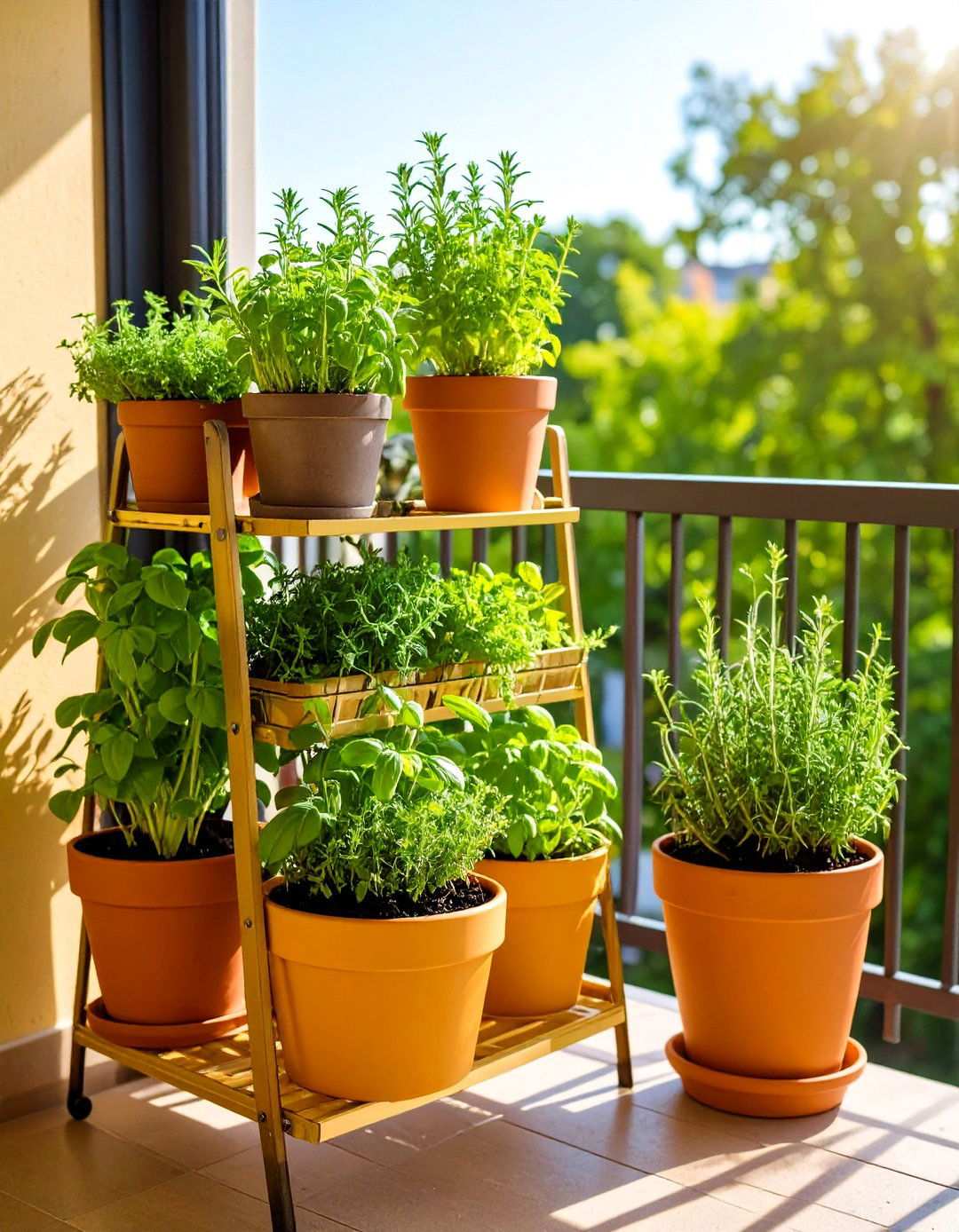
Taking your culinary adventures to new heights begins with a dedicated herb garden right on your balcony. Many herbs thrive in sunny spots and require minimal space to grow, with popular varieties including basil and parsley . Choose containers that are at least 6 inches deep, but ideally a foot deep, especially for herbs in the Apiaceae family like cilantro, dill, and parsley . Perennial herbs in small pots can be easily relocated to a kitchen window when winter arrives . Create a versatile herb station using a rolling cart or tiered stand that can be repositioned to follow the sun. Incorporate hardy varieties like rosemary, chives, and parsley that can grow year-round with proper care . Position frequently used herbs like basil and mint within easy reach of your kitchen door to elevate your cooking experience.

As an Amazon Associate I earn from qualifying purchases.
3. Container Balcony Garden with Seasonal Rotation
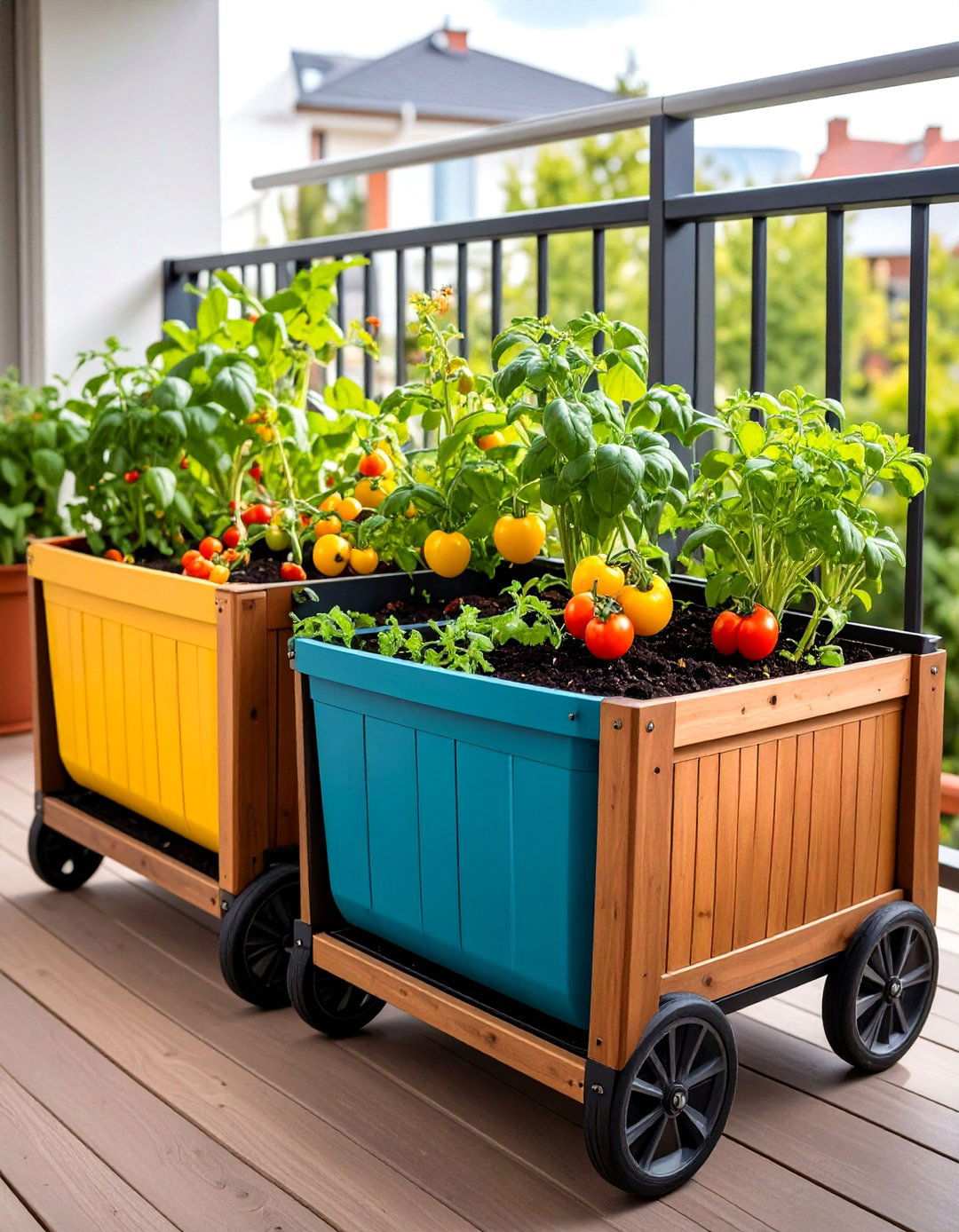
By implementing a container garden system on your balcony, you can seamlessly transition between seasonal plants and optimize space utilization. This design approach is particularly well-suited for balcony gardens, as plastic and fiberglass containers offer a lightweight alternative to terracotta while providing an array of style options. Focusing on compact or bush-type plant varieties, you can incorporate vining plants that can be trained to grow vertically with trellises, creating a visually striking display. To add depth and visual interest, combine containers of varying heights and sizes throughout your balcony space. For a bountiful harvest, choose vegetables like cherry tomatoes, peppers, and cucumbers that thrive on smaller plants. To maximize your harvest, implement a rotation system, replacing cool-season crops like lettuce and spinach with warm-season vegetables as temperatures change. By utilizing wheeled plant caddies, you can easily reposition containers to optimize sun exposure and ensure your plants receive the best possible conditions.
4. Hanging Balcony Garden with Cascading Plants
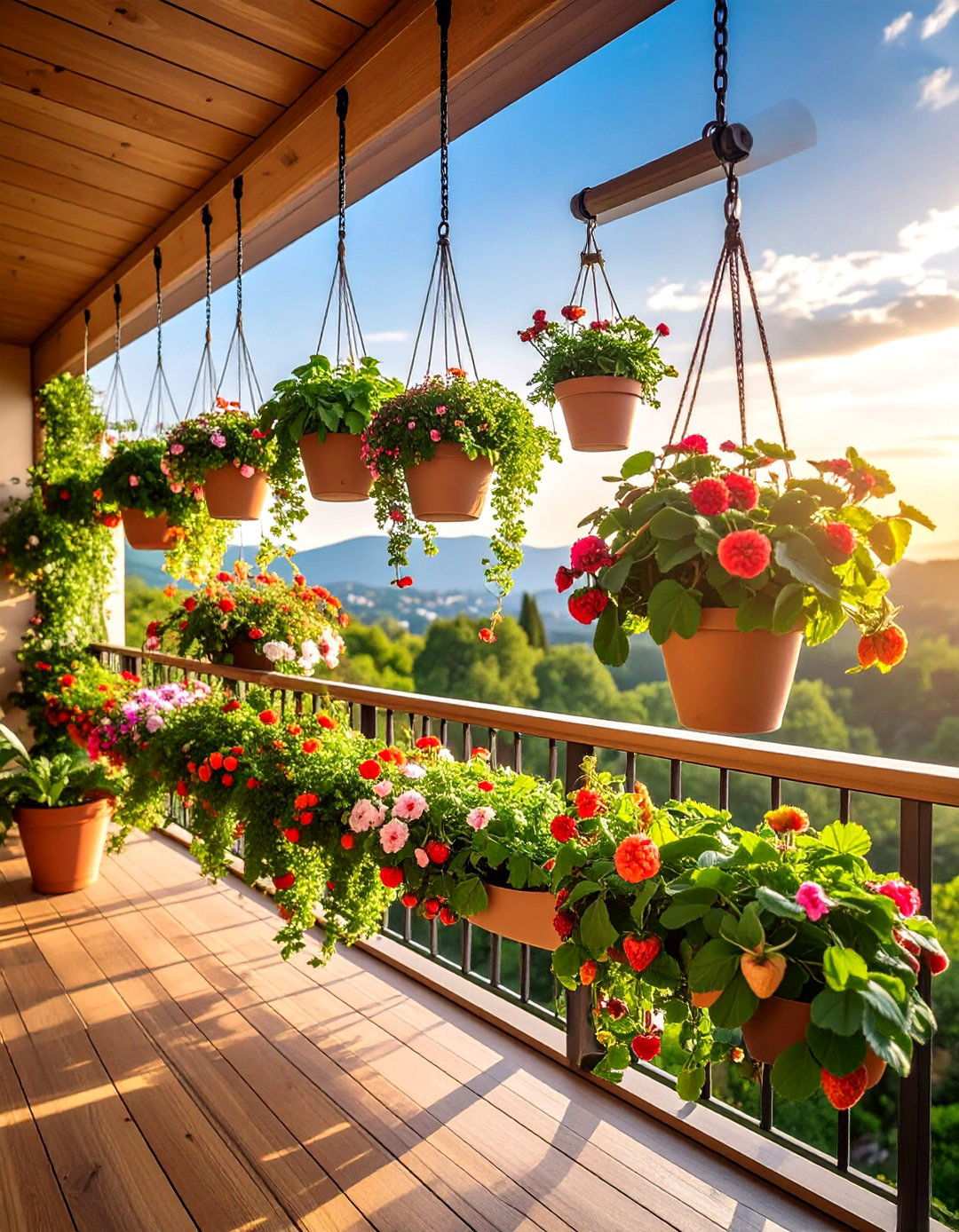
Transforming your balcony into a lush oasis without sacrificing floor area requires creative thinking and a strategic approach. By utilizing hanging baskets and outdoor railing baskets, you can make the most of overhead space, creating a dramatic display that complements your balcony’s aesthetic. These versatile planters can accommodate a wide range of plants, from fragrant herbs to trailing vegetables. To ensure the structural integrity of your hanging garden, install ceiling hooks or suspension systems that can safely support the weight of water-filled containers. By incorporating trellises and hanging planters, you can showcase exotic plants like orchids, bromeliads, and ferns, creating a tropical paradise effect. Choose trailing varieties like cherry tomatoes, strawberries, and cascading petunias that naturally spill over container edges, adding a touch of whimsy to your balcony garden. To create a sense of depth and visual interest, position hanging gardens at varying heights, and consider installing pulley systems or using lightweight, removable containers to ensure easy access for watering and maintenance.
5. Succulent Balcony Garden for Low-Maintenance Beauty
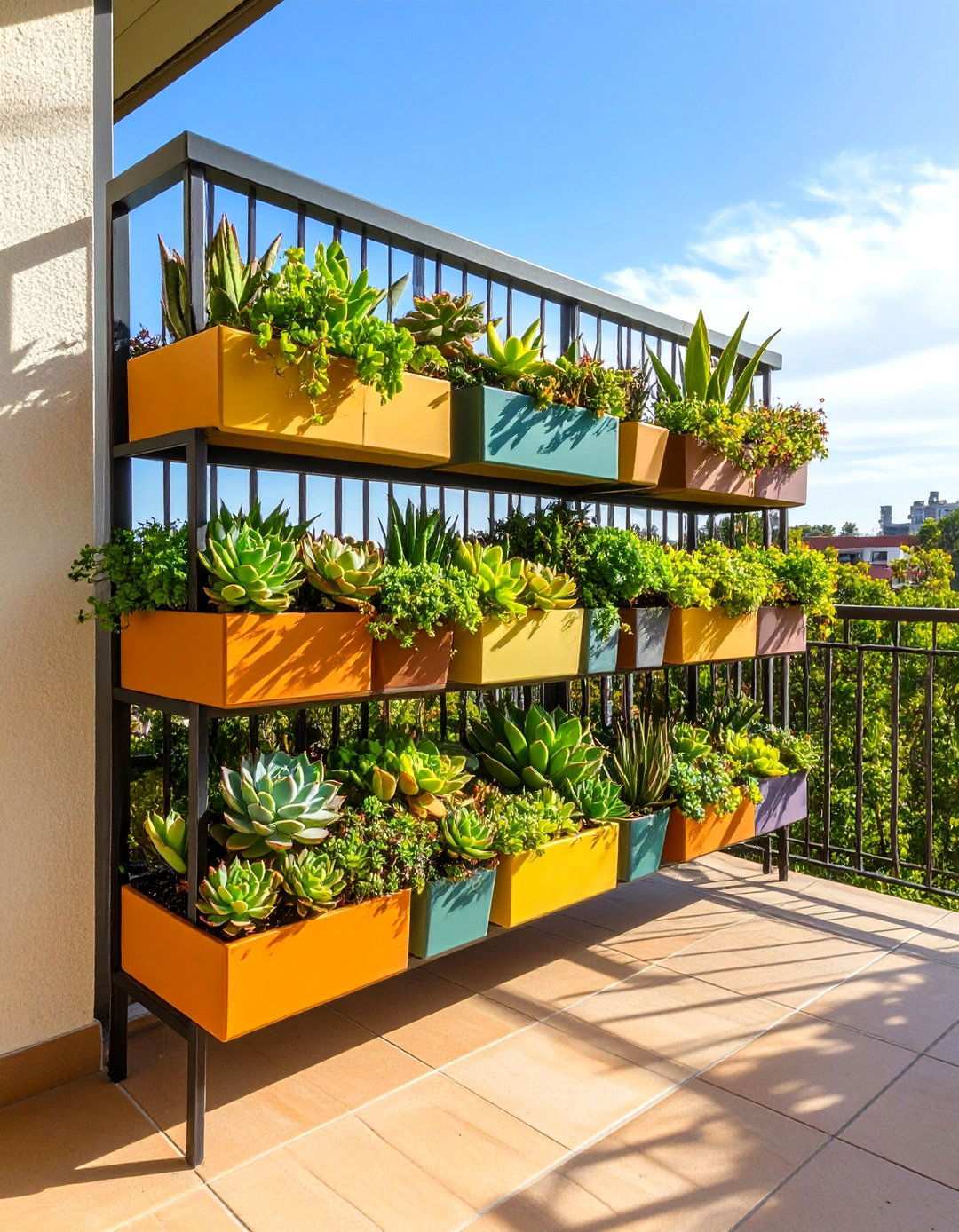
For those seeking a stress-free gardening experience, a succulent-focused garden is an ideal choice. Succulents are remarkably resilient, thriving in small balconies with minimal care, and tolerating a wide range of light conditions. By arranging succulents in shallow containers or creating dramatic displays using tiered arrangements and geometric planters, you can create year-round beauty with minimal effort. These drought-tolerant plants are perfect for busy lifestyles and travel-friendly gardening, as they require infrequent watering and can tolerate neglect. For hot, dry areas, choose drought-tolerant succulents that will thrive on sunny balconies. To add an extra layer of visual interest, combine different textures, colors, and growth habits to create striking arrangements that require watering only once or twice monthly. Finally, use decorative stones, sand, or gravel as top dressing to enhance the desert aesthetic while preventing soil erosion.
6. Railing Balcony Garden with Space-Saving Planters
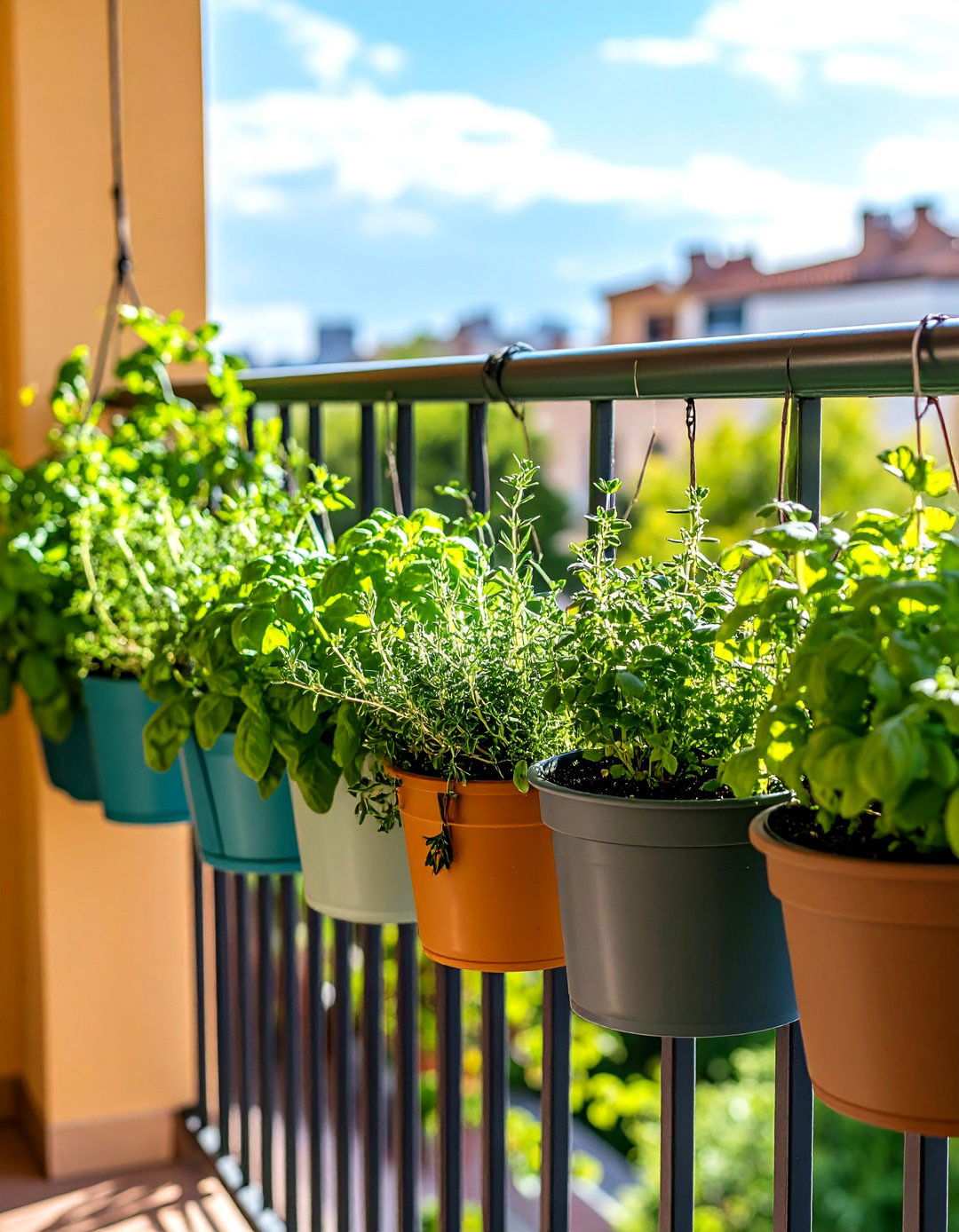
Maximizing balcony railings as growing space multiplies your planting area without taking up precious floor space. By covering railings with chicken wire, you can support climbing plants, or opt for plant hangers that clip onto railing tops for a sleek look . Install deck railing planters that firmly attach to railing structures, creating vertical gardens and providing functional cultivation space. Choose shallow-rooted plants such as herbs, lettuce, and strawberries, which thrive in railing containers and require minimal maintenance. To ensure safety during windy conditions, ensure containers have robust mounting systems in place. By utilizing railing space as a hanging and vertical garden, you can save room for seating areas and create a more open layout. Installing drip irrigation systems along railings helps maintain consistent moisture levels, promoting healthy plant growth. Arrange plants of varying heights on corners and shorter varieties in between to achieve a visually appealing balance.
7. Privacy Screen Balcony Garden with Living Walls
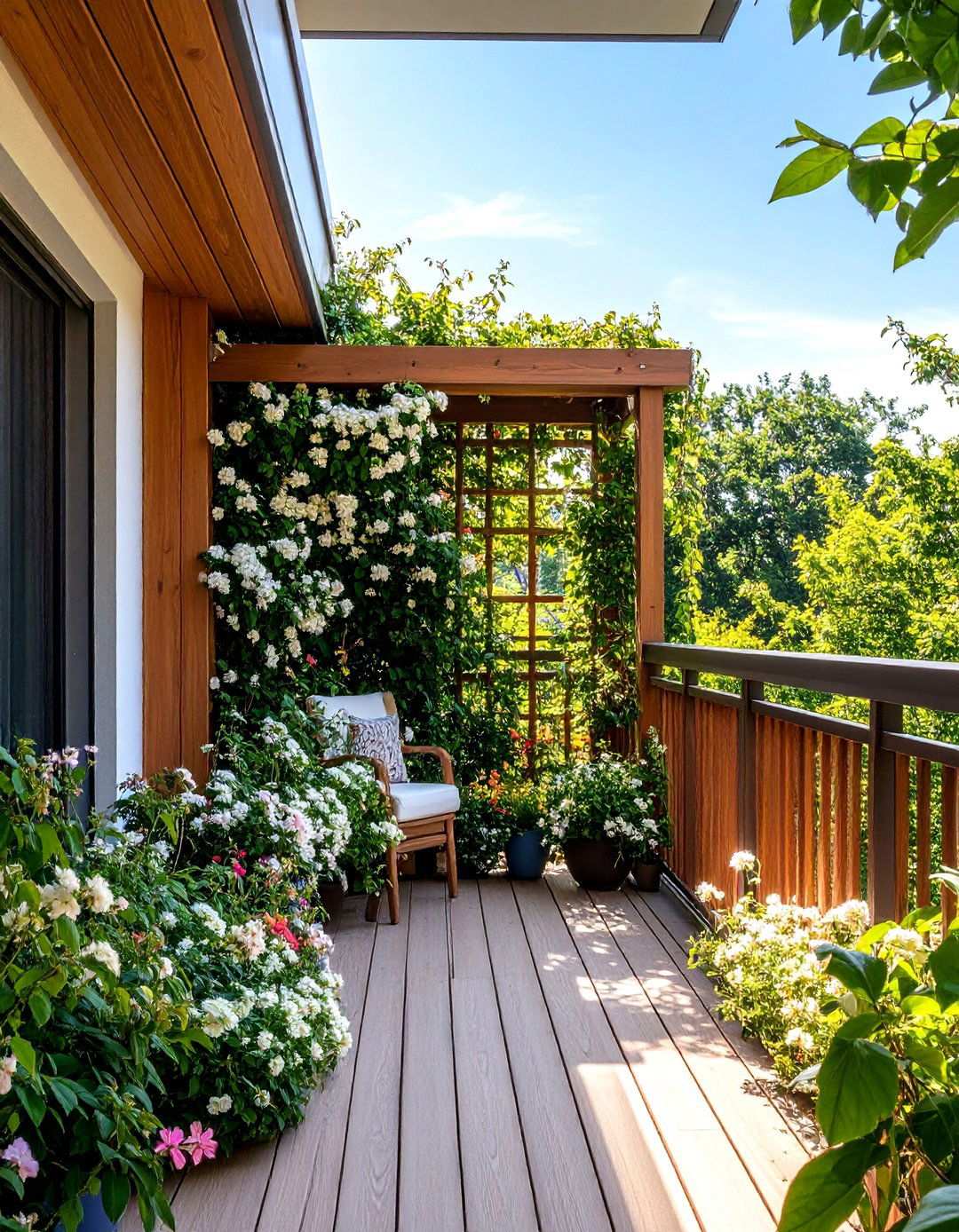
Combining natural beauty with functional design, creating natural privacy screens is a winning approach. Add trellises to support climbing plants for instant privacy, or opt for bamboo and reed fencing for an instant cozy feel . Tall plants, climbing vines, and shrubs help establish a sense of personal space while discreetly concealing nosy neighbors. Installing trellises or mesh panels allows climbing plants like jasmine, clematis, or morning glories to flourish and provide both privacy and beautiful blooms . To create layered privacy, combine tall potted plants with climbing varieties and hanging baskets. Fast-growing options like bamboo or ornamental grasses are ideal for quick screening. Strategically position privacy plants to block sight lines while maintaining airflow and natural light, creating a harmonious balance.
8. Themed Mediterranean Balcony Garden
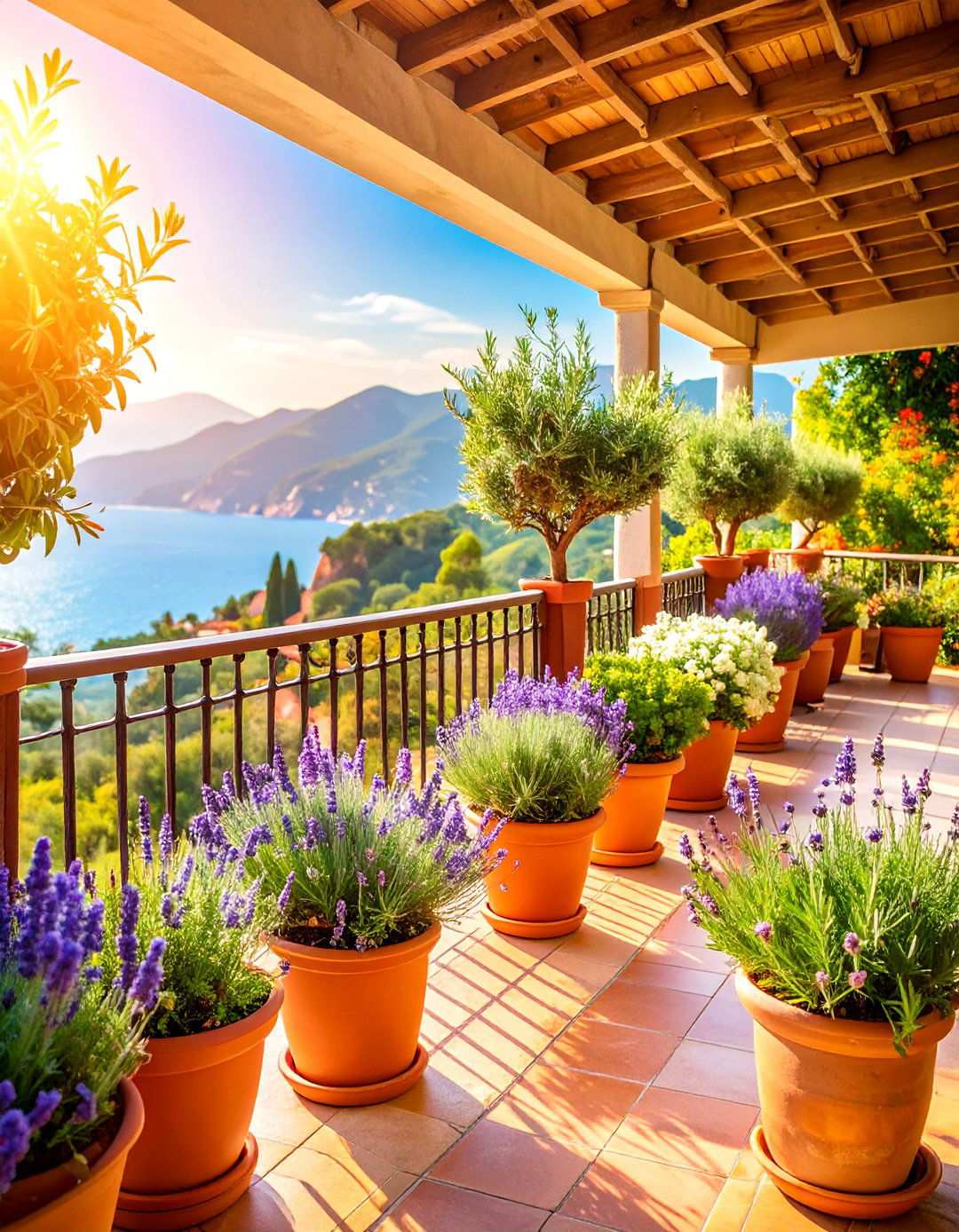
Creating a Mediterranean-inspired garden brings the warmth and charm of the region to your balcony. By incorporating terracotta pots and herbs, you can establish an authentic regional garden aesthetic. Vibrant geraniums in classic terracotta pots set the tone, complemented by large foliage plants and Mediterranean accessories . Classic herbs like rosemary, oregano, thyme, and lavender thrive in hot, dry conditions and are perfect for a Mediterranean theme. Mediterranean herbs like thyme and rosemary love the sun, cope well with short dry spells, and require minimal fertilizer . Add striking focal points with olive trees in large containers and incorporate decorative elements like ceramic tiles, wrought iron accents, and colorful textiles. Drought-tolerant flowering plants like bougainvillea or hibiscus create vibrant color displays, adding a pop of color to your balcony.
9. Cultivating a Thriving Vegetable Garden on Your Balcony
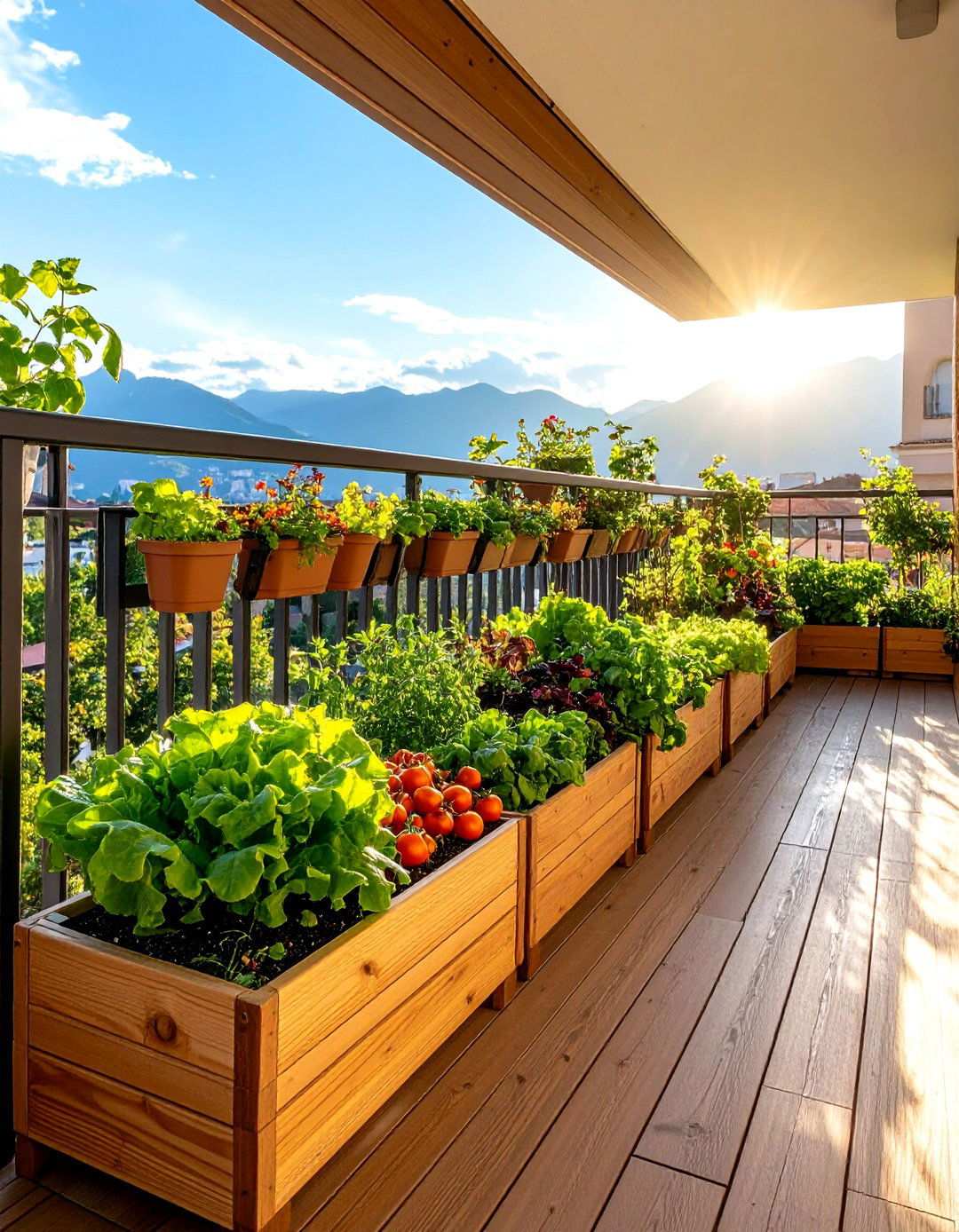
Having a balcony garden provides an abundance of fresh, organic produce right at your fingertips. Ideal vegetables for container gardens include lettuce, leafy greens, and compact varieties of beans and peas, which are incredibly productive . Cherry tomatoes produce an abundance of fruit on smaller plants, while peppers and cucumbers thrive in containers when choosing determinate varieties that stay compact rather than sprawling indeterminate types . Select deeper pots for root vegetables like carrots, radishes, and potatoes to cater to their extensive growing needs . To ensure a continuous harvest throughout the growing season, plan for succession planting, starting with beginner-friendly options like radishes and lettuce that grow quickly and produce multiple harvests . Leveraging companion planting techniques can maximize space while naturally improving plant health.
10. Creating a Tropical Oasis on Your Balcony
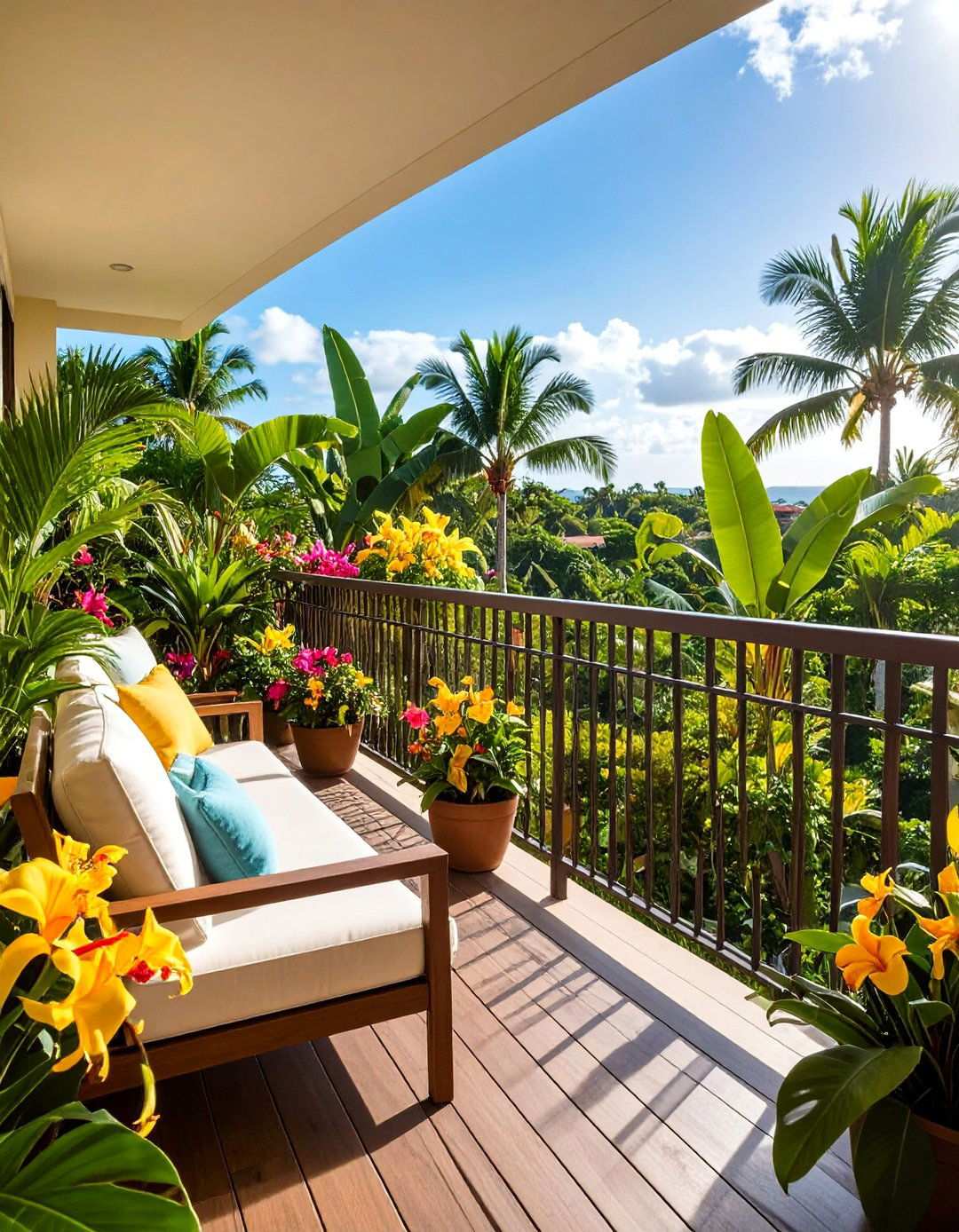
Transforming your balcony into a tropical retreat offers a serene escape with the use of lush, bold plants. A tropical paradise can be created using trellises and hanging planters, perfect for exotic plants like orchids, bromeliads, and ferns . Tropical themes feature bold foliage plants and vibrant flowers to create the desired atmosphere . Incorporating large-leaf plants like banana trees, bird of paradise, and elephant ears as dramatic focal points adds depth to your space. Adding flowering tropical plants such as hibiscus, bougainvillea, and jasmine for vibrant color and fragrance enhances the overall aesthetic. Creating an urban jungle atmosphere brings together French and tropical styles . Utilizing natural materials like bamboo, teak, and rattan for containers and furniture adds warmth and character. To maintain the optimal humidity levels that tropical plants prefer, consider installing misting systems. Layering plants at different heights creates depth and jungle-like density.
11. Designing a Compact Balcony Garden for Limited Spaces
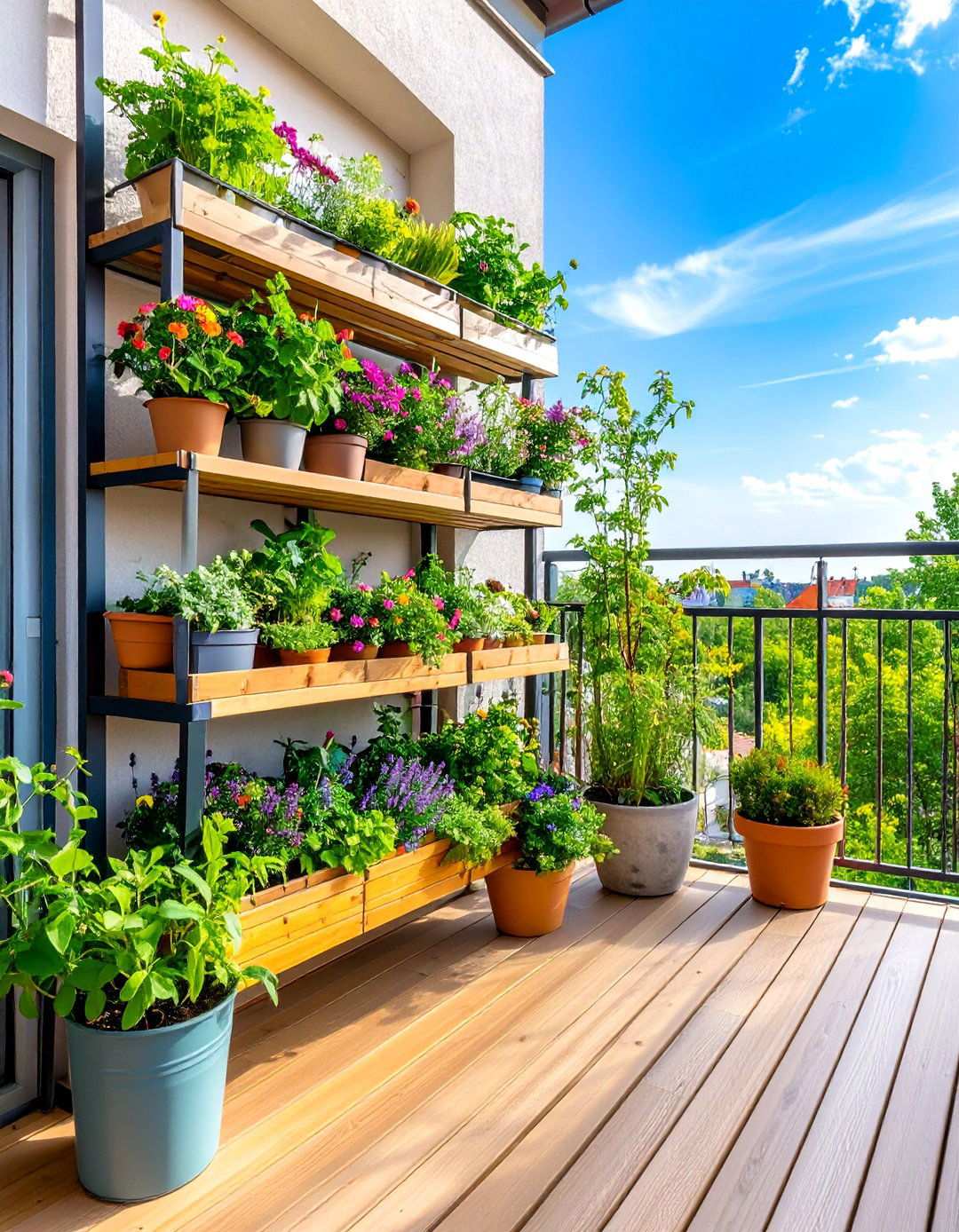
Maximizing extremely limited balcony space demands creative solutions and strategic plant selection. Vertical gardening systems effectively utilize wall space through the use of wall planters, hanging baskets, and trellises to grow upwards instead of outwards. Multi-tiered plant stands enable the display of numerous plants in a small footprint . Choosing compact varieties and dwarf cultivars provides maximum impact without overwhelming the space. Implementing stackable or hanging containers creates vertical growing systems . Folding down shelves or tables that can be stored when not in use maximizes floor space. Considering foldable or stackable furniture provides more room for plants when not in use. By utilizing corners and edges efficiently with custom-fitted containers and triangular planters designed for tight spaces, you can make the most of your balcony’s potential.
12. Seasonal Balcony Garden with Vibrant Year-Round Interest
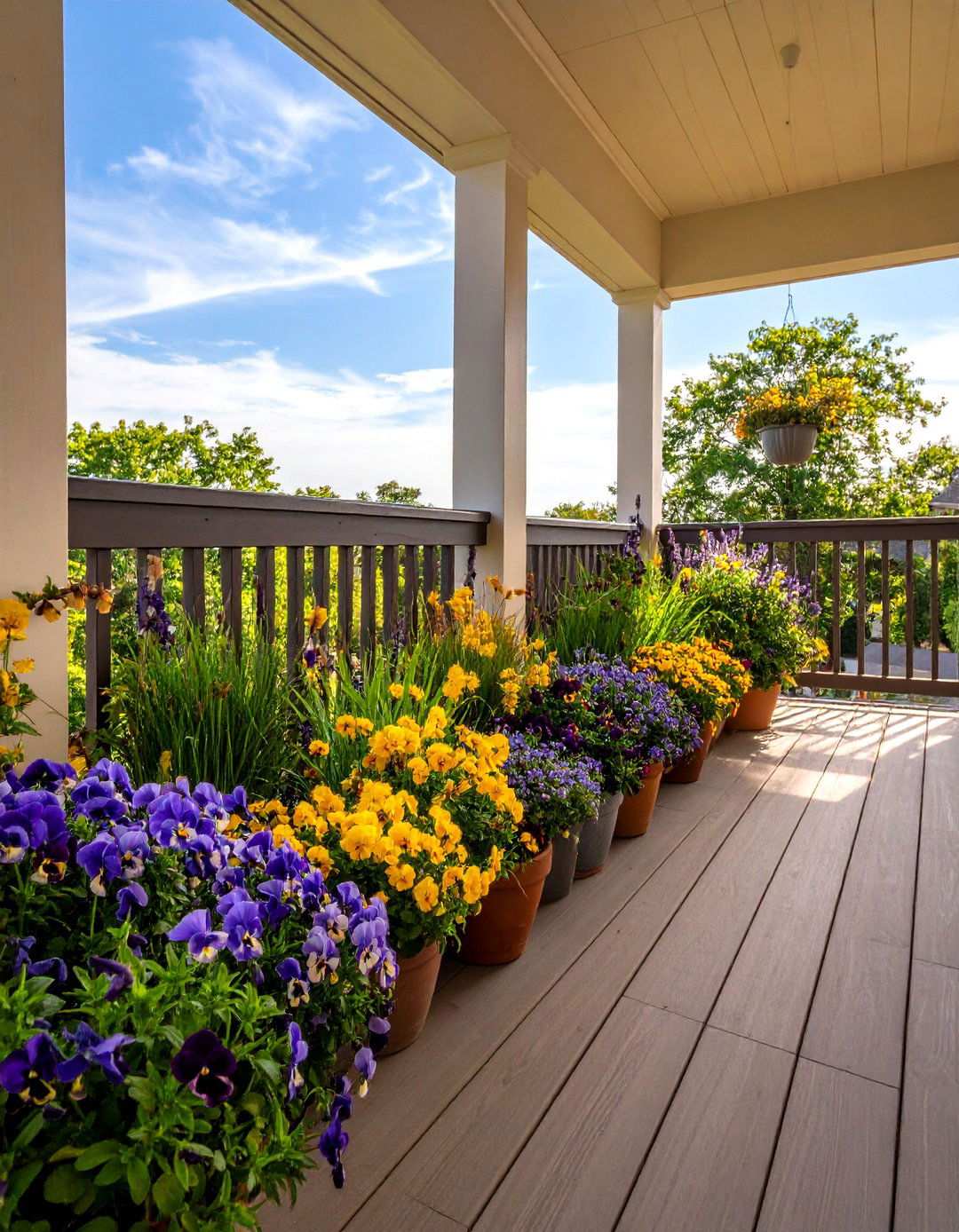
To maximize the appeal of your balcony space, create a garden that showcases beauty throughout every season. By incorporating hardy herbs like rosemary, chives, and parsley that thrive with proper care, you can enjoy a lush display year-round. For added flexibility, consider placing perennial herbs in small pots, allowing you to easily relocate them to kitchen windows as winter sets in. By incorporating cool-season crops like kale and pansies for fall and winter displays, you’ll have the perfect opportunity to experiment with seasonal rotations. To ensure structure and visual interest during dormant months, incorporate evergreen plants and ornamental grasses that maintain their natural beauty. Don’t forget to start growing vegetables and fruit as early as March or April to extend the growing season. Beyond this, supplement your garden with seasonal containers featuring bulbs for stunning spring flowers and holiday decorations. By taking advantage of plant protection methods like cold frames or row covers, you can naturally extend growing seasons and enjoy a thriving garden.
13. Captivating Aromatic Balcony Garden with Sensory Delights
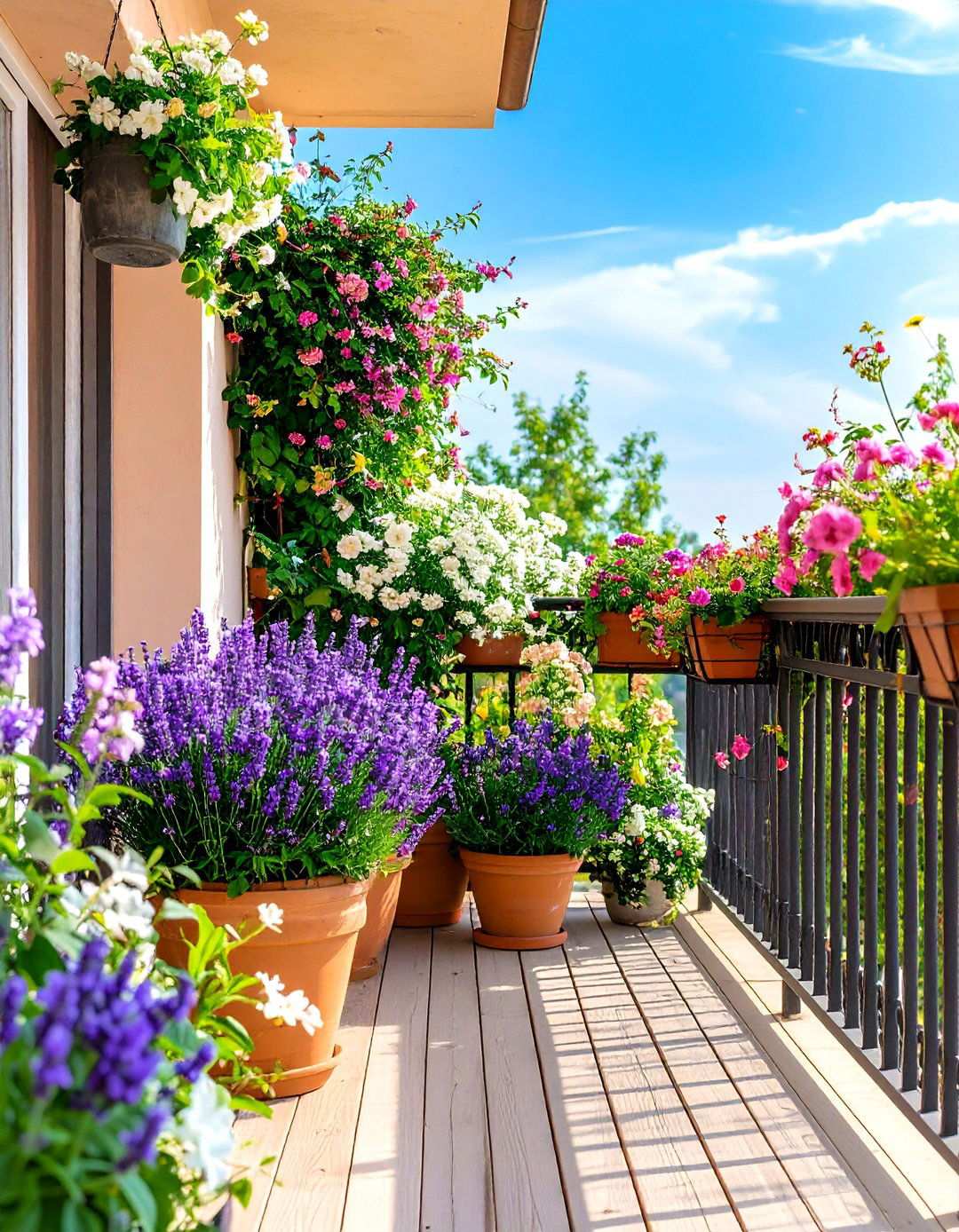
Transform your balcony into a sensory oasis by cultivating a garden featuring an array of fragrant plants. By incorporating herbs with potent scents like mint, which grows exceptionally well under various lighting conditions, you’ll create a tranquil space perfect for relaxation. To further enhance the sensory experience, add a variety of scented flowers such as lavender, jasmine, sweet alyssum, and gardenias that naturally perfume the air. Jasmine and clematis are particularly notable for their ability to provide both breathtaking blooms and delightful fragrances. Strategically position aromatic plants near seating areas to maximize the enjoyment of their scents. For added depth and fragrance, include culinary herbs like basil, rosemary, and thyme that release their aroma when touched or brushed against. Mediterranean herbs like thyme and rosemary not only add wonderful aromas but also require minimal care, making them ideal for a low-maintenance balcony garden. To create an enchanting evening atmosphere, incorporate night-blooming plants like moonflowers or four o’clocks that bloom as temperatures cool.
14. Efficient Self-Watering Balcony Garden Systems
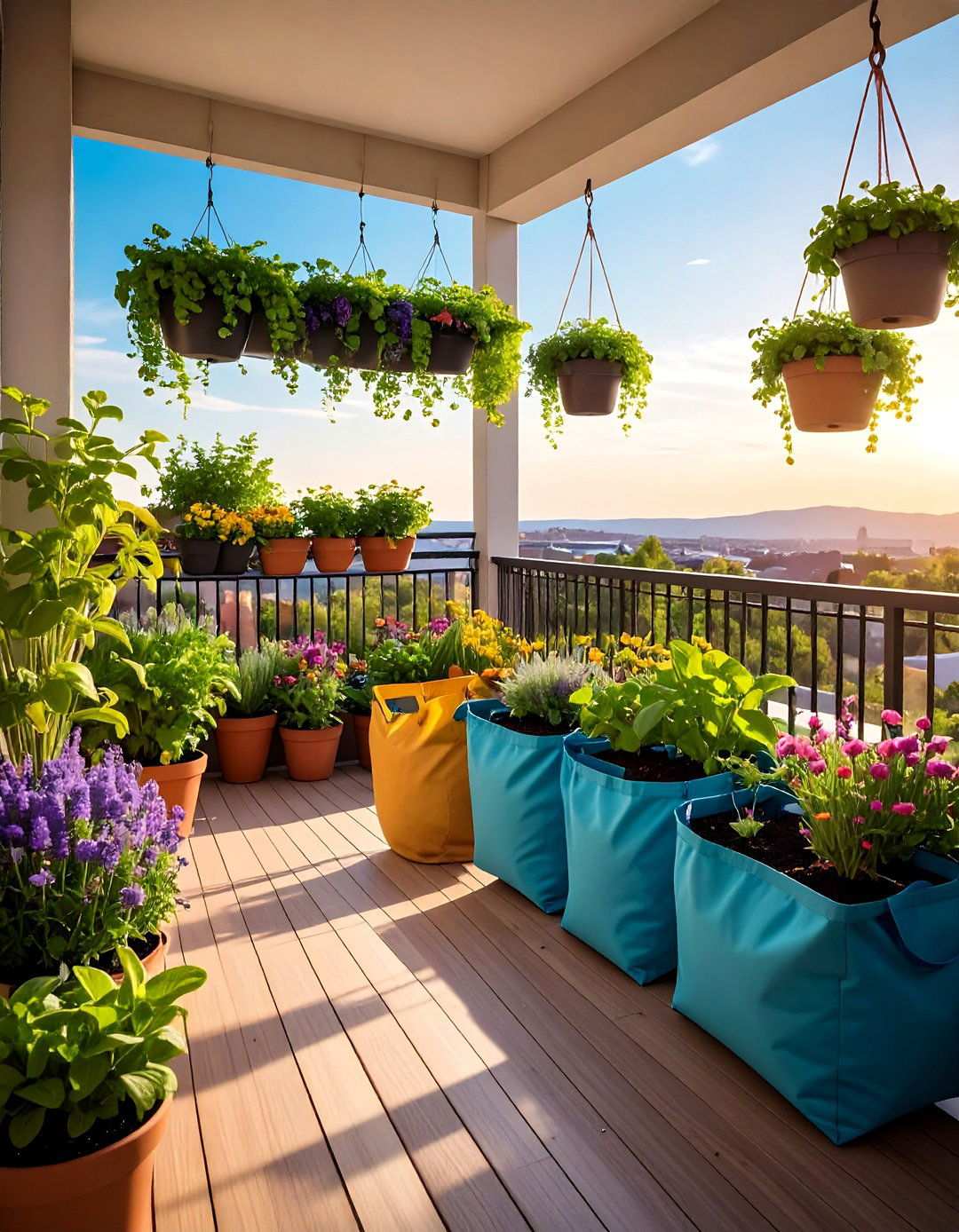
Invest in automation to streamline your balcony garden’s maintenance routine and ensure plant health. Self-watering systems are particularly beneficial for vertical installations, especially for those with limited time to dedicate to daily watering. By setting up drip irrigation systems using timers and emitters that deliver precise water amounts to each container, you can minimize water waste and optimize plant growth. Fabric grow bags offer several benefits, including handles for convenient portability and easy storage after growing seasons. Alternatively, install reservoir systems that store water and gradually release it to plant roots as needed. For a DIY solution, create self-watering containers using plastic bottles, wicking systems, and water reservoirs. Utilize hanging gutter gardens with built-in water channels for efficient irrigation, and don’t forget to position rain collection systems to capture natural precipitation and supplement watering needs during dry periods.
15. Pollinator-Friendly Balcony Garden
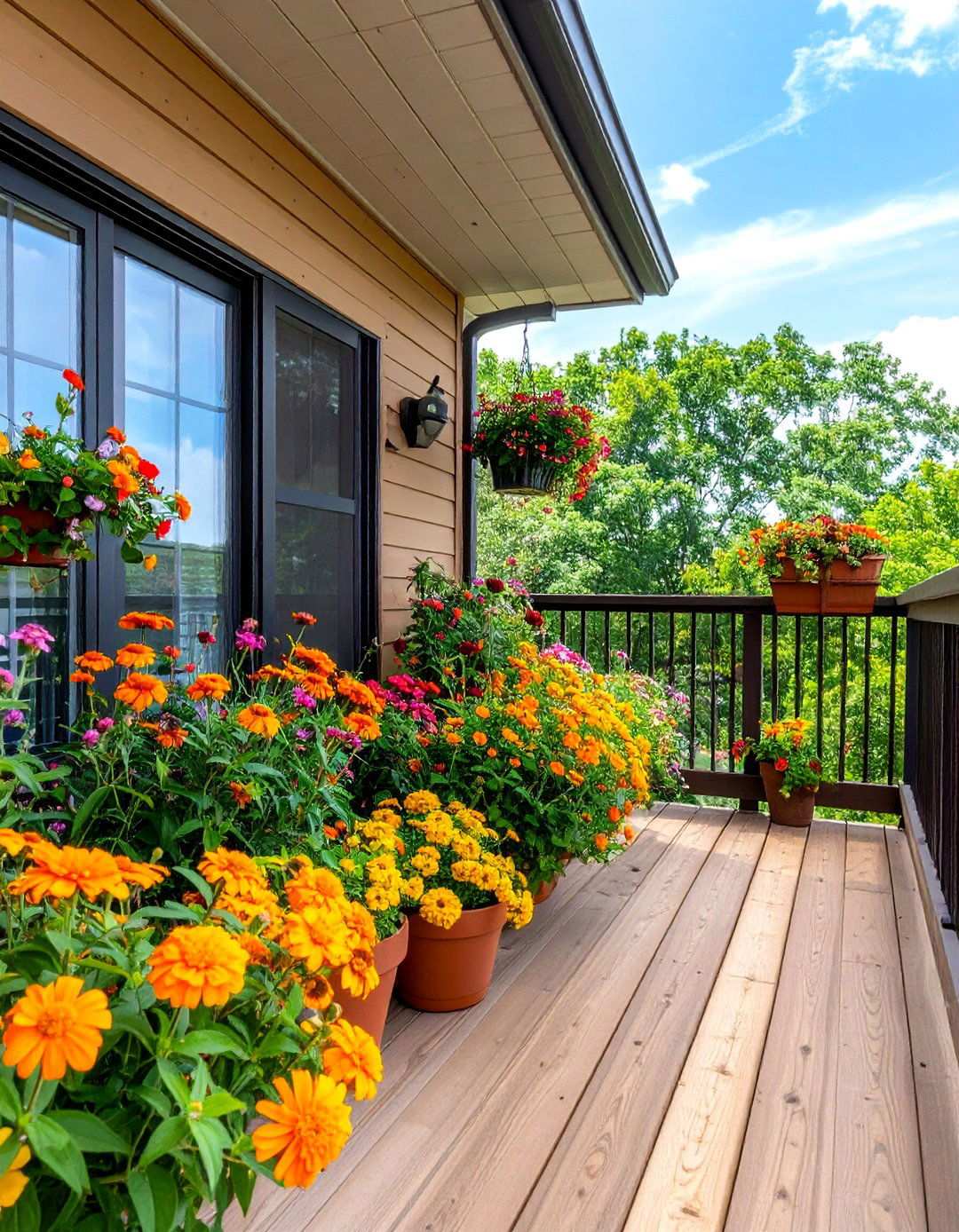
A thriving ecosystem on your balcony can be achieved by designing a garden that attracts a diverse array of beneficial insects, ultimately supporting local wildlife. By incorporating native flowering plants that provide nectar sources throughout the growing season, you’ll be creating a haven for birds and butterflies to visit, adding life to your space. Varying planting schemes offer a rich source of food for numerous species, thereby enhancing biodiversity in urban environments. Consider adding plants like bee balm, salvia, marigolds, and zinnias that specifically attract pollinators. To further support beneficial insects, opt for easy-to-grow flowers like marigolds, which provide vibrant color while also serving as a food source. Shallow water sources like small fountains or dishes can be installed to provide drinking water for visiting wildlife, further supporting the well-being of your pollinator-friendly garden. By adopting a chemical-free approach, you can avoid harming beneficial insects with pesticides and chemicals, instead embracing natural pest control methods and companion planting techniques.
16. Edible Flower Balcony Garden
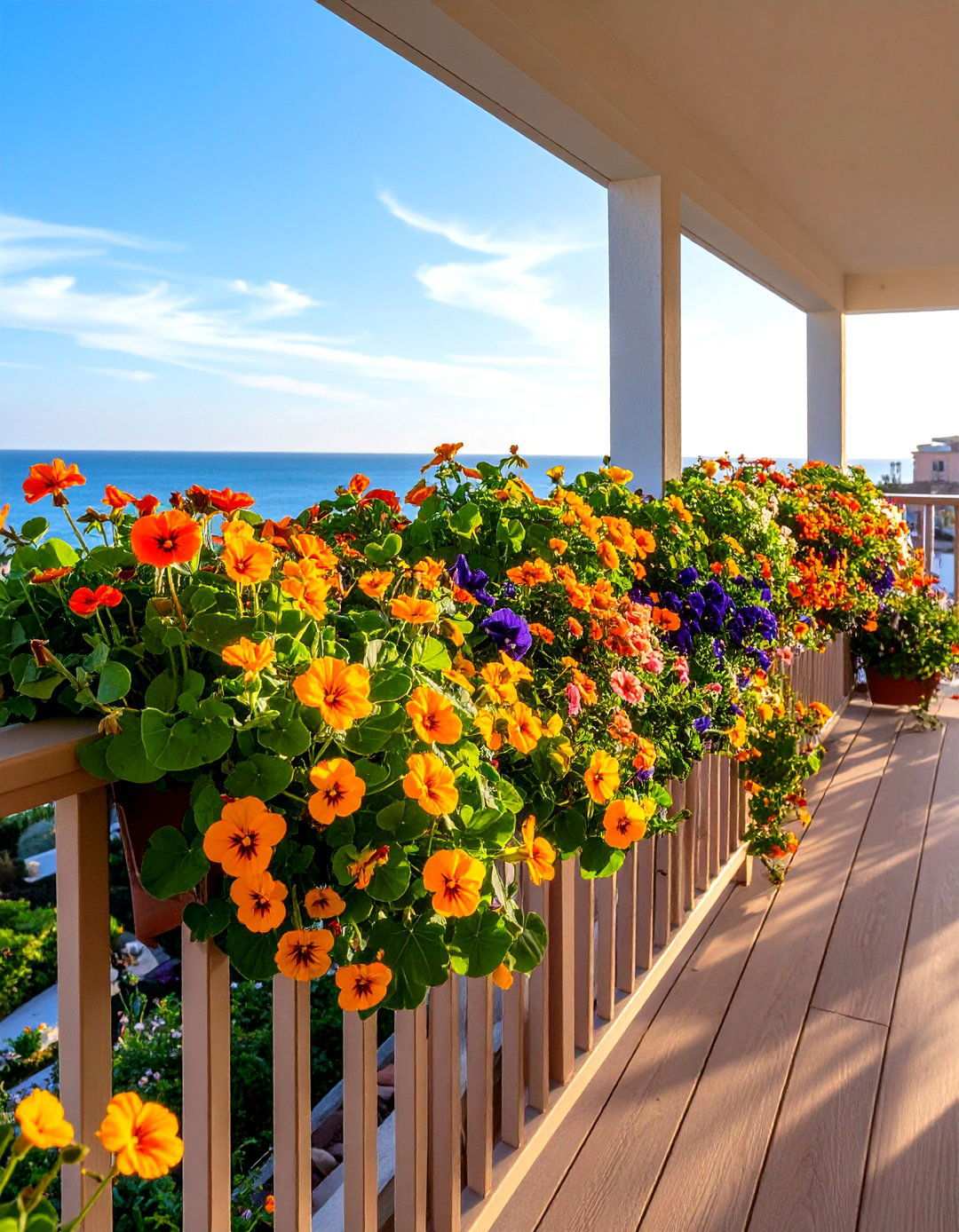
A harmonious blend of visual appeal and culinary functionality can be achieved by cultivating an edible flower balcony garden, providing a feast for the eyes and the palate. Include a range of colorful edible flowers like nasturtiums, pansies, violas, and calendulas, which can add a peppery or sweet twist to salads. To maximize both garden beauty and culinary possibilities, incorporate easy-to-grow flowers like marigolds into your design. Herb flowers like chive blossoms, basil flowers, and oregano flowers can provide both seasoning and visual appeal, making them a perfect addition to your edible flower balcony garden. To ensure a continuous supply of edible flowers, choose varieties that bloom throughout the growing season, allowing for constant harvest opportunities. Consider creating dedicated containers for flowers, herbs, and edible plants that can be harvested regularly, ensuring that you always have a fresh supply at hand. For convenient harvesting during meal preparation, position your edible flower garden near your kitchen, and don’t forget to research proper harvesting techniques and edible portions to guarantee safe consumption of your flower varieties.
17. Drought-Tolerant Balcony Garden
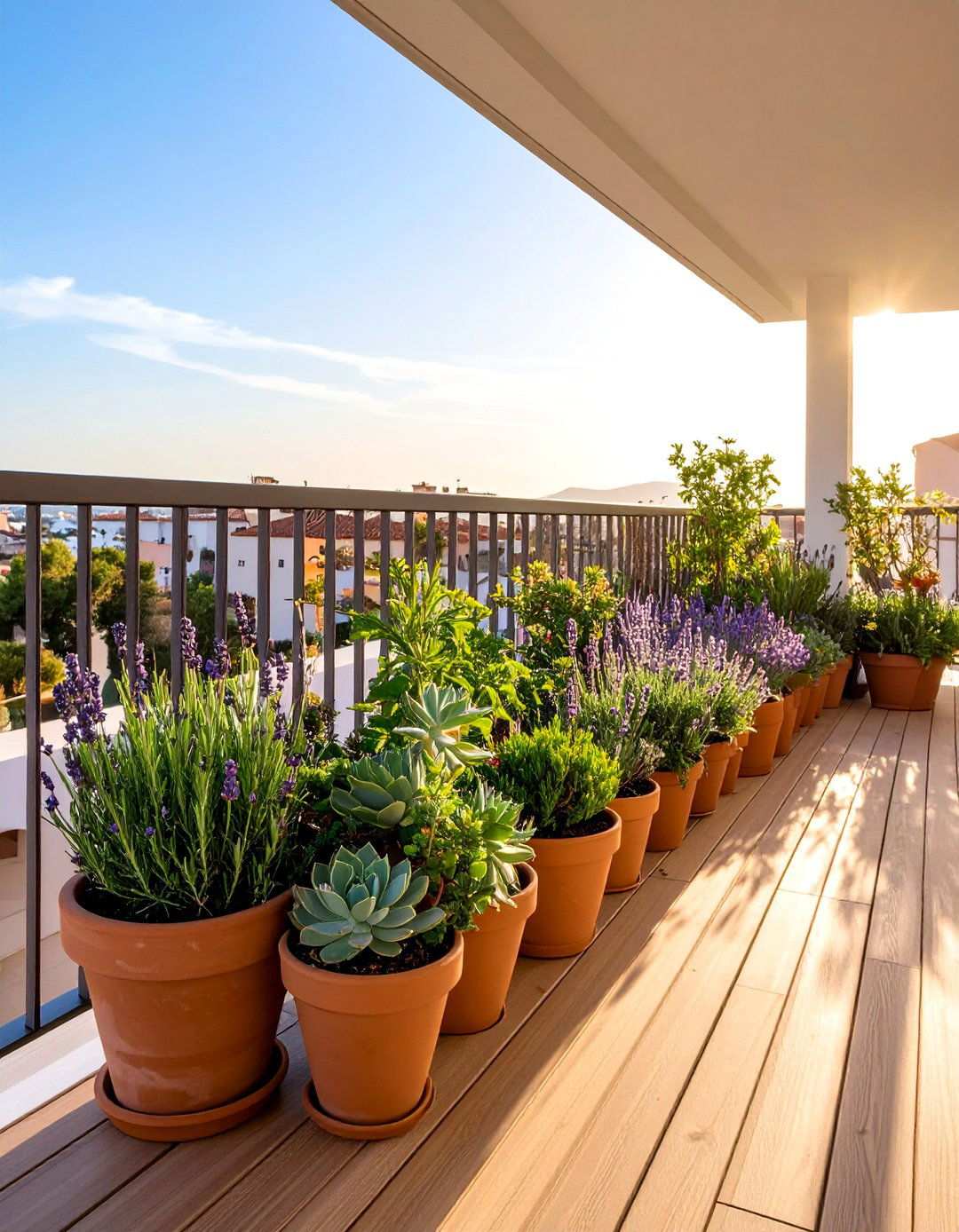
By establishing a water-wise balcony garden, you can reduce maintenance and create resilient plant displays that thrive in challenging conditions. To achieve this, select drought-tolerant succulents that are perfectly suited to hot, dry areas, making them ideal for sunny balconies with minimal watering requirements. Some herbs are surprisingly drought-tolerant, and some even claim to taste better after experiencing mild drought stress. Incorporate Mediterranean plants like lavender, rosemary, and sage that naturally prefer drier conditions, adding to the drought-tolerant charm of your balcony garden. Dwarf olive trees are perfect for balcony gardens due to their low water requirements and resistance to high winds, providing a beautiful and resilient addition to your outdoor space. Mulch and ground covers can be used to retain soil moisture and reduce evaporation rates, further enhancing the water efficiency of your garden. During peak summer months, installing shade structures can protect your plants from excessive heat stress, ensuring that your drought-tolerant balcony garden remains a thriving oasis. Finally, choose containers with water-retention properties and add water-storing crystals to potting mixes to further reduce the need for frequent watering.
18. Illuminating Ambiance: Bringing Light to Your Balcony Garden
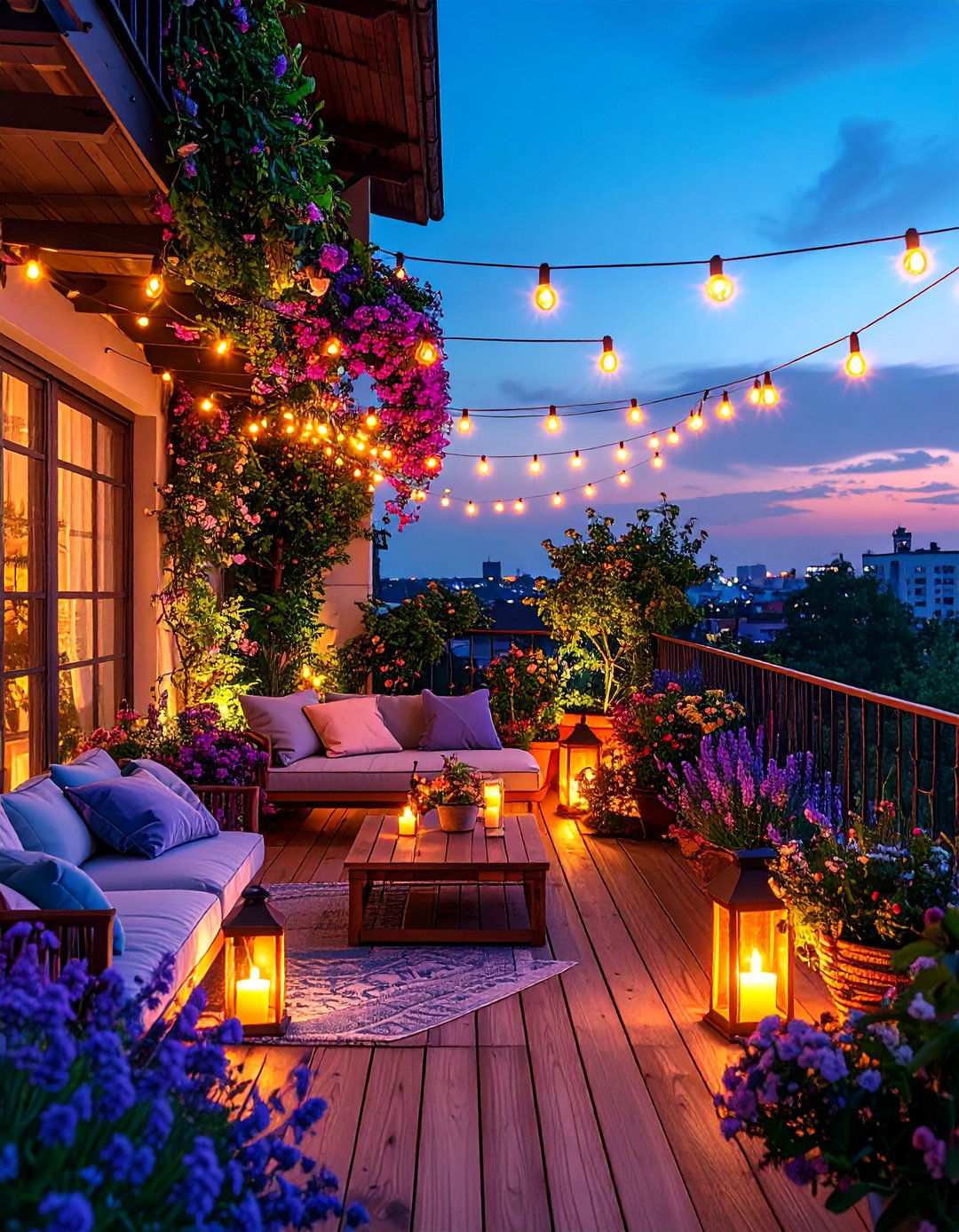
Strategic lighting can elevate your balcony garden experience, extending enjoyment into the evening hours while creating a captivating ambiance. By suspending string lights from branches or structures, you can create an enchanting atmosphere perfect for summertime dinner parties. The soft glow of LED lights provides a serene ambiance in the evening, all while utilizing minimal electricity. Solar-powered lights, on the other hand, offer a waterproof and eco-friendly option that eliminates the need for electrical connections. Installing uplighting can draw attention to specimen plants, casting dramatic shadows on walls or ceilings. The warmth and welcome of lanterns can be felt even on the chilliest nights, while pathway lighting along balcony edges ensures both safety and visual definition. For a more laid-back, beachy vibe, consider using fairy lights or paper ball lights that complement your garden plantings. When positioning lights, be mindful of your neighbors and avoid light pollution that may disturb them.
19. Adaptive Balcony Garden Spaces: Maximizing Functionality
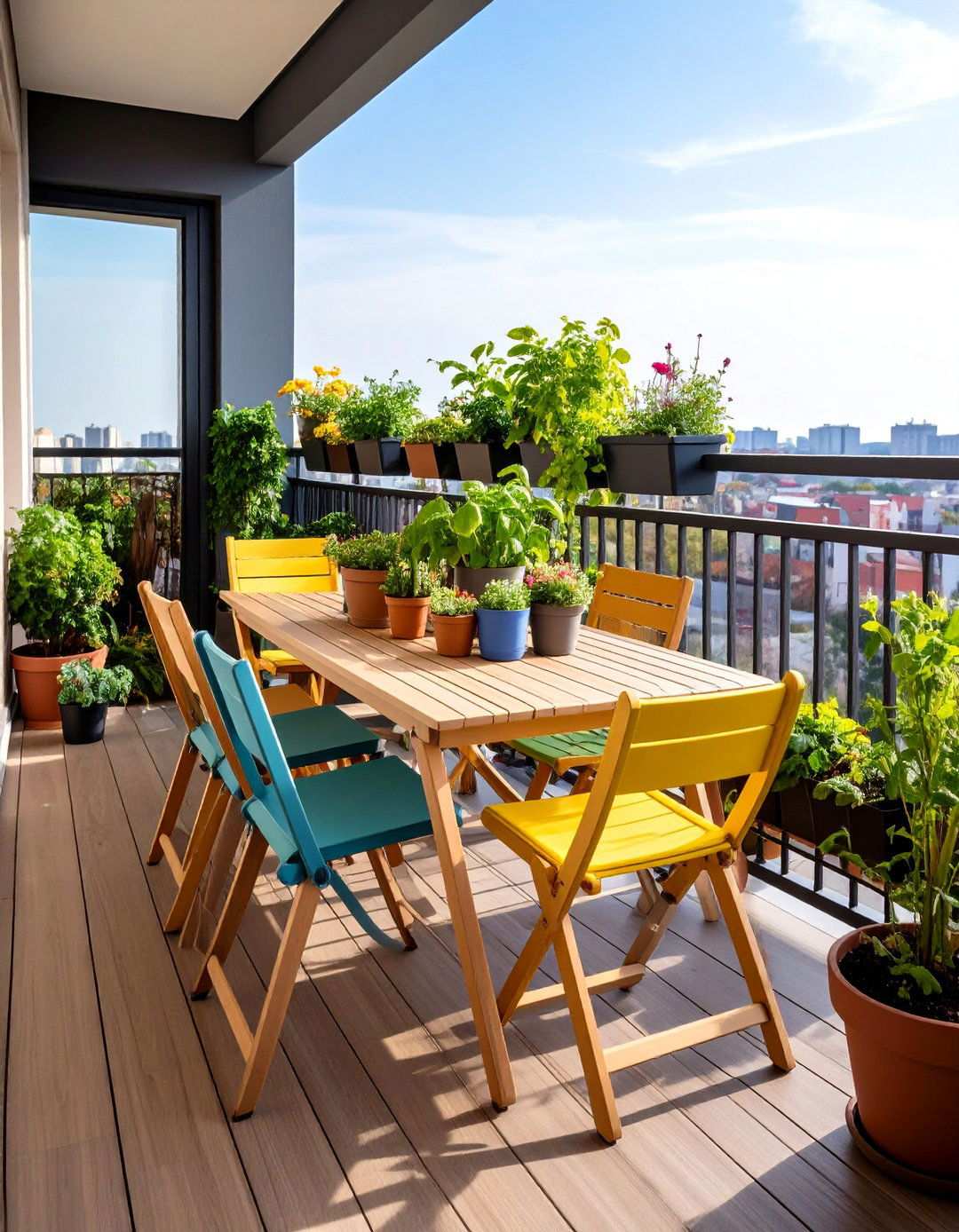
Transforming your balcony garden into a multi-functional oasis not only optimizes space but also maintains its beauty and functionality. By utilizing balcony railings as hanging gardens, you can free up room for dining areas with bistro sets. Select furniture that doubles as storage for outdoor cushions and planting essentials, streamlining your balcony’s workflow. Install fold-down tables that can be easily raised for dining and lowered to create more growing space. Add shelves and tables around seating areas to incorporate additional plant life, creating a thriving ecosystem. Develop vertical storage solutions that hold gardening tools, supplies, and seasonal decorations, keeping your balcony organized and clutter-free. Consider incorporating foldable or stackable furniture to save space when not in use. Design moveable garden elements that can be rearranged for different activities, such as entertaining, relaxing, or working. Strategically position plants to provide natural windbreaks and privacy screens, creating a peaceful retreat.
20. Whimsical Cottage-Style Balcony Gardens: Bringing Romance to Urban Spaces
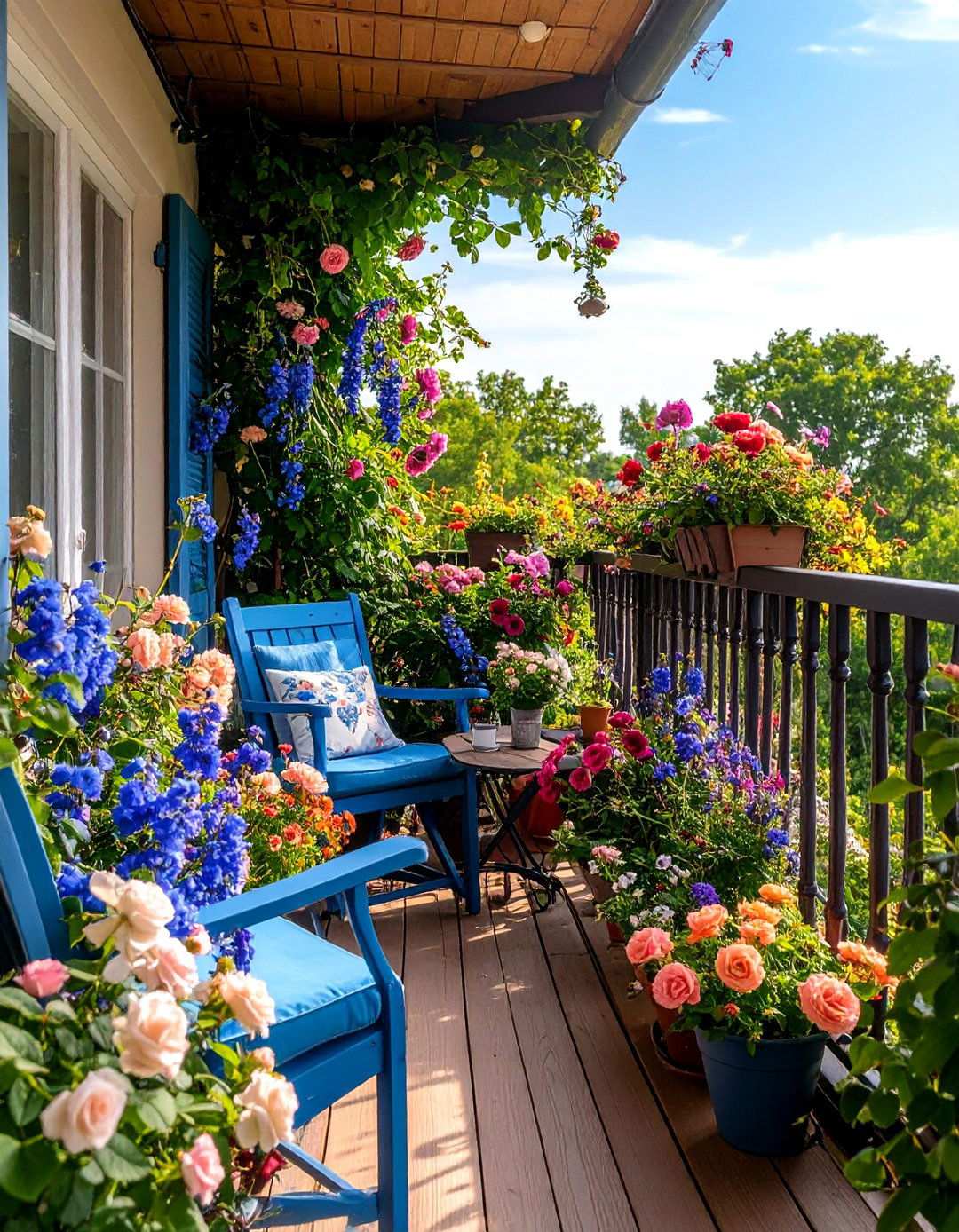
Crafting a charming cottage garden aesthetic can bring a touch of romance and informality to even the most urban balcony spaces. Cottage garden styles are characterized by climbing roses and pastel blooms that create a romantic, whimsical atmosphere. To achieve a fairytale-like ambiance, mix plantings with whimsical decorative elements, such as vintage garden ornaments or antique garden furniture. Traditional cottage plants like hollyhocks, delphiniums, and sweet peas provide height and fragrance, while climbing roses add a touch of elegance. Add colorfully painted wooden furniture and natural woven rugs to complete the authentic cottage charm. Use vintage containers like old watering cans, wooden crates, and galvanized buckets as planters, adding to the charm of your cottage garden. Create homemade wall gardens by mounting flowerpots in wooden frames, adding a personal touch to your balcony oasis. By layering plants at different heights and allowing some controlled spillover, you can achieve a relaxed, abundant look characteristic of cottage gardens.